Search Site

Object of the Month: Globe or Terrestrial Sampler

In 1815, when 14-year-old Ruth Wright embroidered her last stitch in the pale blue silk fabric that she had fitted around an 8-inch spherical form to make a terrestrial globe, did she feel a sense of accomplishment or relief, joy or frustration?

Ruth had sewn the skin of her globe sampler from eight pie-shaped pieces of silk on which she had carefully lettered in ink the names of continents, countries, islands, and oceans. After penciling the boundaries of countries, the equator, the Arctic and Antarctic, Ruth painstakingly embroidered the lines with fine white silk thread. She used red silk thread to delineate the tropics of Capricorn and Cancer and blue silk thread to mark the longitudinal and latitudinal lines.

Close up image of globe or terrestrial sampler
Created from eight pie-shaped pieces of silk, this sampler was embroidered with red, blue, and white silk thread.
Image of globe or terrestrial sampler
A rare globe embroidery sampler, made by Ruth Wright in 1815.

The story behind the object

I am drawn to this piece because, in its simplicity and fragile state, it might not seem very attractive at first glance. But further examination and study of the history and makers of such objects can reveal much more. It’s the story behind the object—the why and the who—that interests me.

Because I started embroidering as a pre-teen, I feel some connection to the maker. I also lived and traveled as a child outside of the continental United States, and through these experiences, I learned to appreciate geography and cultures other than my own.

We do not yet know much about the young woman who created this piece. From a label on the bottom of the globe’s wooden stand and from her school’s records, we know Ruth’s name, that she was from Exeter, Pennsylvania, and that she made her terrestrial or globe sampler while enrolled for just one year (October 1814 to October 1815) at Westtown School in Chester County, a Quaker boarding school 25 miles west of Philadelphia. From research into the curricula at Westtown during this period and an examination of other known examples, we know the globe was both a useful study tool and a practical memento that demonstrated Ruth’s needlework skills and, perhaps more significant, the instruction she had received in astronomy and mathematical geography.

A rare example

Ruth’s terrestrial globe is among 40 known surviving examples of terrestrial and celestial embroidered globes made by Westtown School girls from the early 1800s through the mid-1840s. Enrollment records for documented globe-makers reveal that most girls attended Westtown for only one year during their early- to mid-teens and that they came from homes in Pennsylvania, New Jersey, Maryland, and Delaware. The earliest Westtown embroidered globes date from an era when the few globes the school purchased for classroom use were made in England.

The silk fabric of Ruth’s globe is fragile and the colors are fading, but the piece is still useful as an educational tool. When not included in an exhibition at Winterthur or out on loan to another museum, it rests quietly in study-storage awaiting visits from researchers and special needlework tours. The globe was most recently loaned in 2016 to the Fenimore Art Museum in Cooperstown, New York, for inclusion in the exhibition, The Instruction of Young Ladies: Arts from Private Girls’ Schools and Academies in Early America.

Beth J. Parker Miller

Registrar

Paintings Conservation

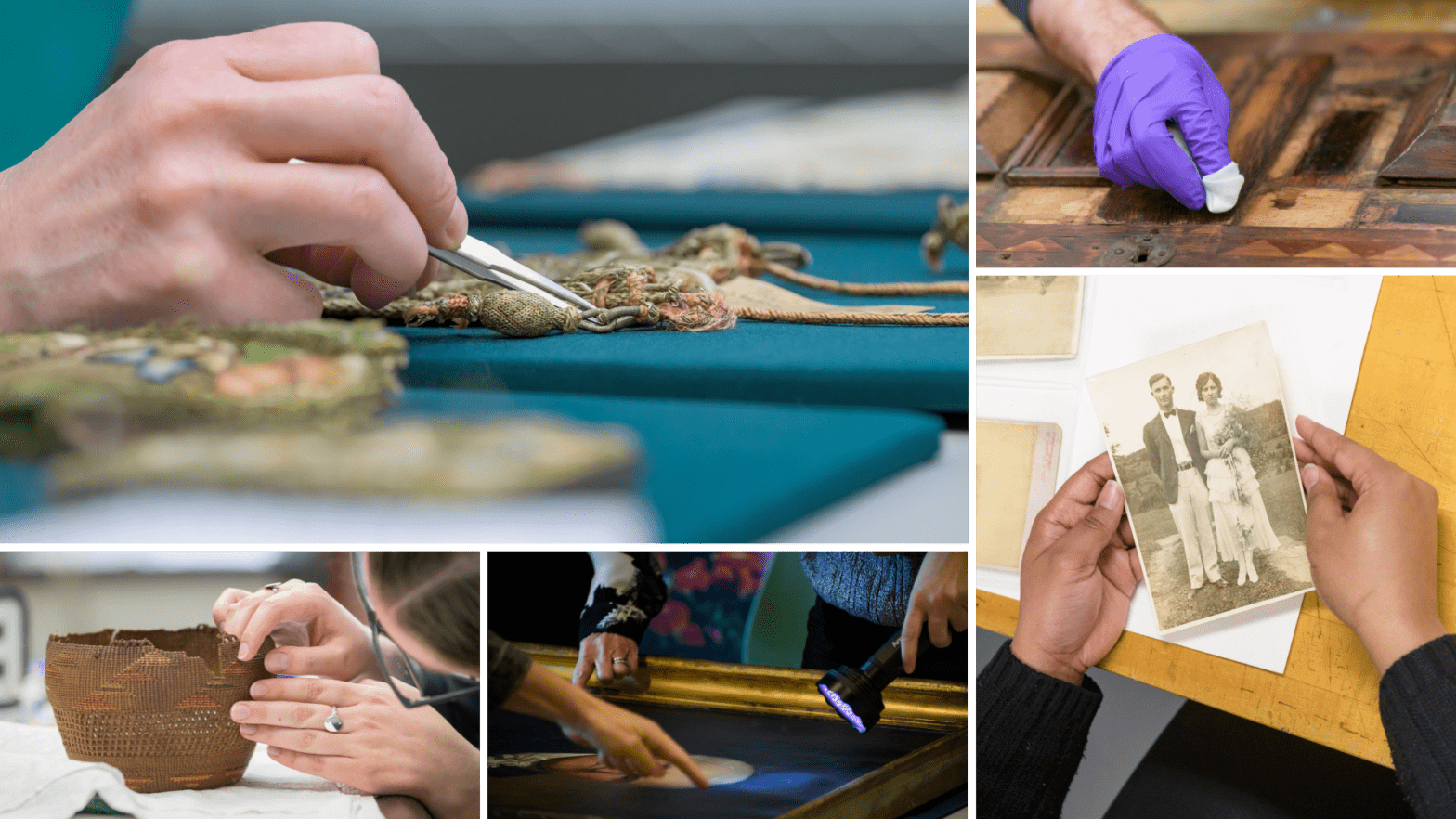
The Paintings conservator is responsible for the care of more than 380 paintings in the Winterthur collection, as well as their frames and painted surfaces on objects such as furniture and clock dials. Paintings conservators address structural problems such as torn or deteriorated canvas or stretchers that cause distortion and loss of the paints and varnishes applied to them. Paint on any substrate (canvas, wood, or metal) may begin to flake due to physical damage, corrosion, or shrinking and swelling in the substrate caused by unstable relative humidity. Wood and fabrics such as canvas absorb and release moisture as the relative humidity fluctuates, which results in dimensional changes. Because the paint layer absorbs moisture at a different rate, it cannot change with the substrate, causing the paint to flake. Varnishes and coatings applied to the surface age and darken with time and may require cleaning or removal and replacement.

Visually and structurally, frames are an integral part of paintings because they provide protection and the means to hang a painting. Traditional frames are composed of wood, compo (a plaster-like mixture of chalk, glue, resin, and oil) and various gilt and painted finishes that are subject to abrasion and physical damage that causes breakage and loss of decorative elements.

Preventive Conservation

Like other parts of Winterthur’s collection, paintings are maintained at a stable temperature and relative humidity of 50 percent and protected from excessive light that can accelerate aging of varnish and fading of pigments. Proper framing requires a backing board to protect the canvas and secure hardware to ensure safe hanging.

Textiles Conservation

Textile conservators at Winterthur are responsible for about 20,000 objects such as window treatments, bed curtains, rugs, costumes, quilts and coverlets, needlework, and upholstery. Damage to textiles comes from many sources. Unstable environmental conditions that cause mold and exposure to excessive light weaken and discolor textile fibers and fade dyes and colorants. Abrasive, acidic soil from the environment that becomes embedded in the fibers also weakens and disfigures the textile. Stains and wear from past usage contribute to deterioration. Some dyes and finishes used in the production of textiles are inherently unstable and may case serious damage. Textile conservators support and stabilize the structure of textiles while reducing stains and degradation wherever possible.

Preventive Conservation

Winterthur’s textiles are stored in stable environmental conditions using acid-free archival quality tissues, boxes, and fabrics. To prevent creases that cause localized damage to the fibers, textiles are rolled or padded with acid-free tissue. Textiles on open exhibit are cleaned regularly by careful low-suction vacuuming to remove dust. Lighting specialists are especially vigilant in lighting textiles and keep the levels very low.  If a textile becomes too weak to remain on exhibit, it is retired to the study collection and replaced with a textile in better condition or a reproduction fabric. Textile conservators also work with furniture conservators to preserve existing upholstery fabrics or replace them with reproductions.

Furniture Conservation

The Furniture Conservation Lab cares for and treats about 9,000 pieces of furniture and wooden objects in the collection. Historic surfaces, both transparent and painted, change and deteriorate over time, resulting in crackling, flaking, uneven darkening, fading, blanching, scratches, and stains. Furniture conservators are concerned with both structural and surface issues. Conservators maintain and stabilize the structure of objects that may have been damaged or poorly repaired in the past, that suffered an insect infestation, or were weakened by exposure to water or a poor environment. They balance preserving early surfaces and the history they embody with maintaining an aesthetic appearance that respects the intent of the original maker.

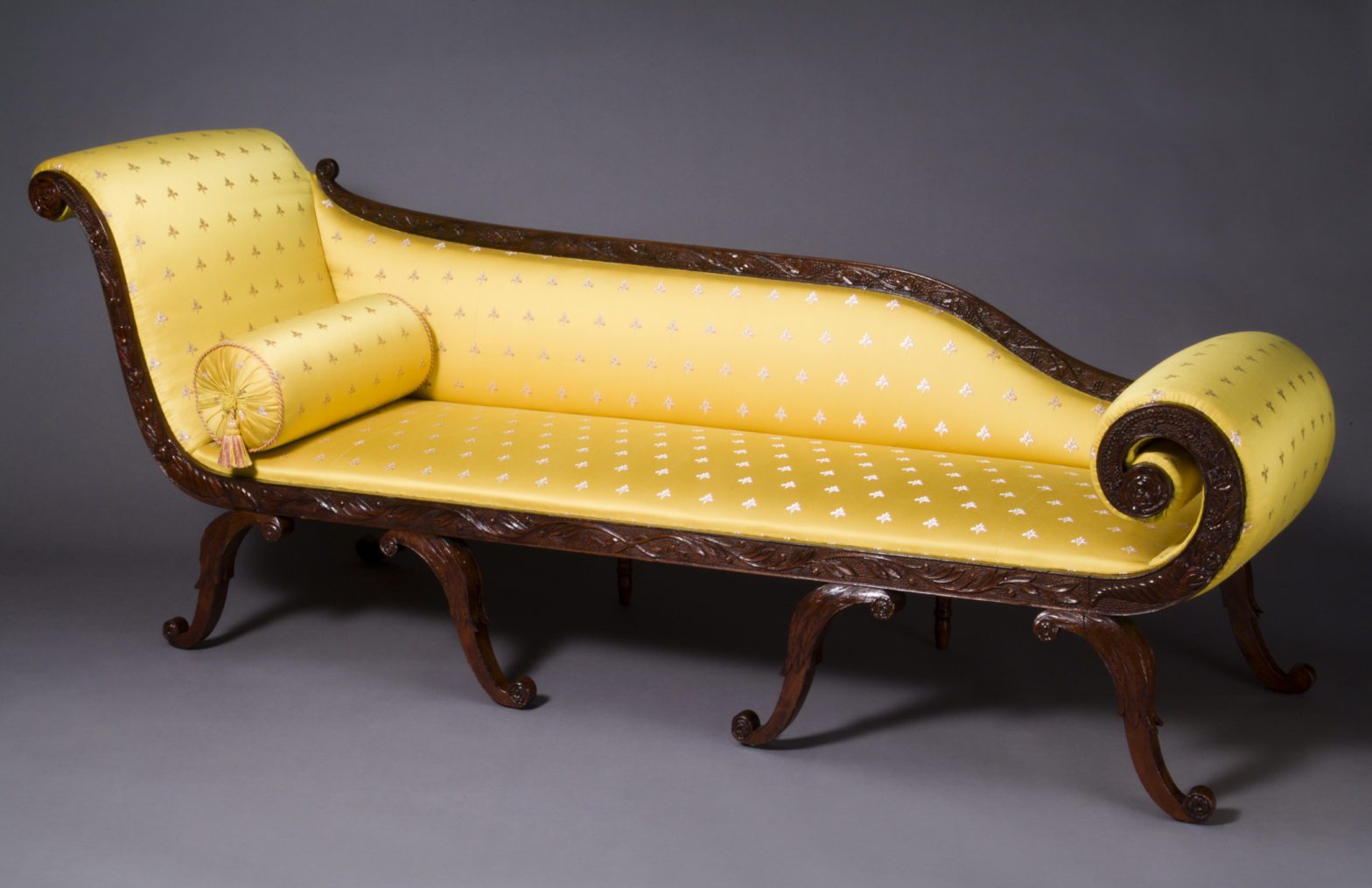
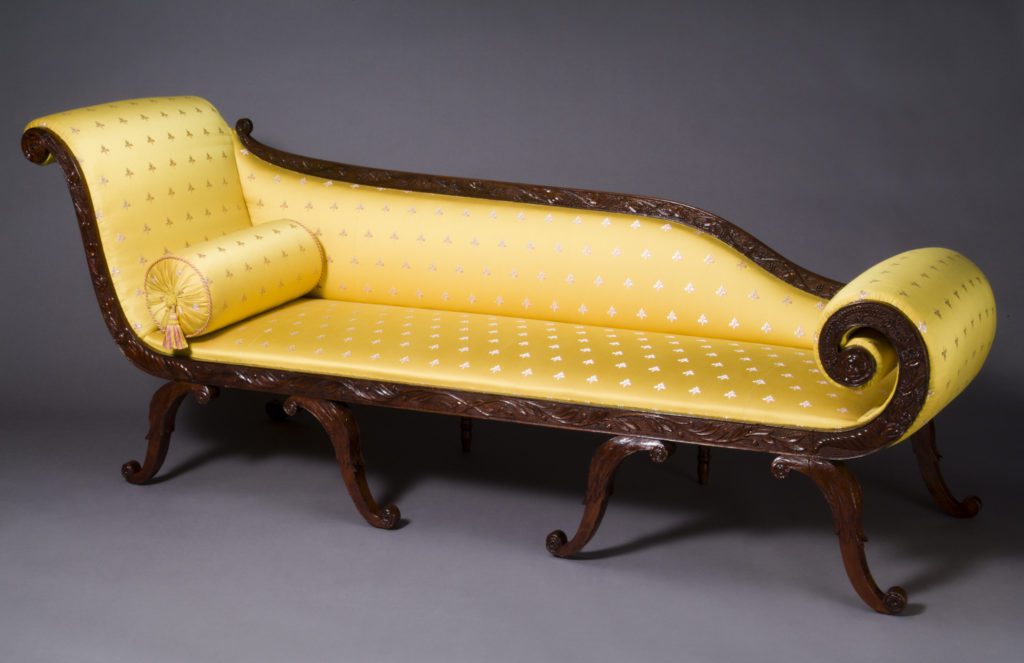
Working with textile conservators, furniture conservators also care for upholstered furniture. They preserve and stabilize existing upholstery structures and show fabrics when they are historically appropriate and in stable condition. When the upholstery is inappropriate and/or the structure or show fabric is too deteriorated, conservators replace it with a non-invasive structure that avoids nailing or tacking into the original wood.

Preventive Conservation

To reduce the risk of damage to its furniture collection, Winterthur maintains a stable environment with an average temperature of 68 degrees to 70 degrees and a relative humidity of 45 percent to 55 percent. A stable relative humidity is especially important to furniture since rapid changes cause different parts of the object to expand and contract at different rates and to different degrees, causing problems such as detached veneers, cracks, and flaking paint. Since insects like the powder post beetle can cause serious damage to wooden objects, preventive conservation aides carefully monitor for evidence of insect activity. Excess light can cause surfaces and upholstery fabrics to fade or darken so exterior windows are modified to reduce ultraviolet and visible light. Wintethur lighting specialists design interior lighting to minimize damage.

Garden – Livestock Volunteer

Winterthur’s Natural Lands team is looking for volunteers to assist with the daily care of our five goats and five sheep. This is a great opportunity for families, folks looking to gain experience with small ruminants, or anyone who loves animals. This is a long-term position, with limited supervision.

Currently all shifts have been filled.  If you would like to be
considered for future openings, please fill out the online volunteer
application and indicate your availability. 

• Morning feeding, which involves separating the sheep and the goats for different feeding routines and letting goats and sheep into the pasture for the day.
• Afternoon, make sure the sheep and the goats have water, are separated, and secured in the barn for the night.
• Filling/cleaning water containers, as needed
• Sweeping/cleaning the barn, as needed
• Observing goats and sheep and reporting any signs of injury or illness.

Qualifications:
Interested volunteers must be able to commit at least one morning or afternoon per week. Experience working with livestock is a plus, but not needed; all training will be provided. Ability to lift ~50lbs and handle large animals (between 60lbs and 160lbs) is useful; while the livestock are very friendly and generally gentle, they are animals and can act as such. Must be willing to get a little dirty!

Hours:
• Weekday and/or weekends: Mornings, anytime between 6 am and 9 am. Afternoons, anytime between 4 pm and 7 pm. The average volunteer time per shift is ½—1 hour.

Interested? Apply now!

If you are already a volunteer, log in online!

Paper Conservation

Paper conservation cares for almost 5,000 prints and drawings, including some of the most important prints of the early national era by artists such as Peter Pelham and Paul Revere. The collection also includes pastel paintings on paper, early German American fraktur, and paper-based materials such as hat boxes and several rooms of historic wallpaper. Winterthur’s prints and drawings are found on display in museum rooms and on reserve in a large study collection that is a rich resource for scholars in many disciplines. Paper is vulnerable to damage including tears, creases, soiling, overall discoloration, and stains. Exposure to excessive light, heat, and high humidity accelerate its deterioration. Such conditions also threaten images on paper and may cause flaking media, color shifts, or fading of inks and other design materials. Paper objects suffer additional damage in storage or on exhibit when in contact with acidic mats, folders, and boxes. Frames that are too small or that do not provide adequate space between the glazing and the object can also cause damage. Repairs with pressure sensitive tapes and poor-quality adhesives often must be removed to prevent ongoing damage. Paper conservators focus on repairing and supporting the structure of the paper object, reducing discoloration and acidity when appropriate. 

Preventive Conservation

Winterthur’s paper collections are kept in a controlled environment in the museum and a preservation environment of 65 degrees and 45 percent relative humidity in the Maps and Prints study collection. This environment reduces the rate at which paper deteriorates and prevents the growth of mold. All objects are stored in alkaline mats or folders that help protect them during handling and study. A Preservation Housing Specialist ensures that all framing is safe and appropriate for the object.

Books and Library Material Conservation

This conservation lab is responsible for the care of collections in the Winterthur Library. The collections include books, manuscripts, printed ephemera, and photographs. Winterthur’s staff, outside researchers, and graduate students depend on these resources, so maintaining access while preserving the collection is a high priority.  The collection includes 87,000 volumes of current and rare publications; more than 1 million manuscripts, printed ephemera, and photographs in the Joseph Downs Manuscript Collection; and 2,200 linear feet of archives, including manuscripts and archives.

Deterioration of library materials can result from poor environmental conditions, poor storage, and careless handling. High temperature and humidity accelerate chemical reactions that cause paper, photographs, and leather to deteriorate. Contact with poor storage enclosures such as acidic folders, unstable plastic, and corrugated storage boxes cause paper and photographs to weaken, discolor, and fade. Careless handling can cause torn, soiled paper and loose, broken bindings. Papers and leathers were poorly made quickly become brittle and deteriorated.

Preventive conservation

Preventive conservation is especially important for Library collections because the materials need to be used. The library stacks are maintained at 65 degrees and 45 percent relative humidity to extend the life of the collection. Researchers use book supports and other aids to help them handle collections safely. The librarians and conservators work together to provide protective enclosures for damaged collections and those in need of extra protection. Brittle or heavily used material may be reformatted to provide digital copies so the original can be retired except for those scholars who need access to the original.

From left: Toned Japanese paper strip ready to reattach the book’s front cover. Repair paper ready to reinforce the inside hinge of the front cover. Repaired book for return to the library.

Rare Books

The collection ranges from 16th-century leather- and vellum-bound books to 19th-century cloth-case bindings and elaborate design books in finely tooled Morocco leather to trade catalogs in paper wrappers. Before 1800, most books were sold in sheets, then bound to the specifications of scattered booksellers and purchasers, so each binding is unique. In the 19th century, publishers began to bind books before they were sold, but often issued the same book in different bindings to appeal to different audiences. Each book and its binding in the collection has a story to tell about its time and place, so conservators repair and reuse original bindings whenever possible.

Thomas Wilson, dancing master, wrote An Analysis of County Dancing (GV1763 W75 S) for publication in London in 1808. In it he notes that “even persons of the meanest capacity” may acquire “a complete knowledge of that rational and polite amusement” and illustrates his instructions with woodcuts. The book was bound in a gold-tooled full-calf binding that afforded excellent protection for the text but succumbed to years of wear. The leather is worn and abraded and both boards are detached. Using toned, hand-made Japanese paper and reversible archival adhesives, the boards were reattached without compromising the original binding.

Object credit: RBR GV1763 W75 S Courtesy, The Winterthur Library: Printed Book and Periodical Collection

Manuscripts and Archives

book before treatment
Exercise book before treatment

The manuscript and archives collections contain everything from the daybooks of 18th-century silversmiths to late 19th-century tradecards for sewing machines; from architectural drawings for early 19th-century town houses to rare autochromes of Winterthur’s gardens; from photographs of Shaker communities to the exercise books of school children.

Peggy Clayton, who lived near Halifax, NC,  created her calligraphy mathematics exercise book (Doc 1442) in the 1770s, ornamenting it with pictures of American ships, flags, and patriotic sentiments as well as standard exercises such as addition, subtraction, multiplication, rule of three, and simple and compound interest.  She used the common writing materials of the period — hand-made laid paper, a quill pen and iron gall ink. The folded leaves were sewn into a soft cover composed of a canvas laminated between a heavy outer paper and newsprint on the inside.

The cover is detached from the manuscript and it is soiled, torn and dog-eared from years of use. Except for minor tears, the major problem is the unstable and corrosive iron gall ink.  The acidity and related chemical reactions of the ink weaken and embrittle paper to the point where the paper splits or fragments in areas of heavy application, even when the paper is handled carefully. Research on processes to chemically stabilize the ink are ongoing but not yet ready for application to documents like this. To prevent additional damage, areas of severe corrosion needed reinforcement. Because moisture increases the rate of deterioration, standard mending techniques using water-based adhesives could not be used. Instead, conservators coated a thin, toned Japanese paper with an adhesive activated with ethanol to reinforce damaged area. This material is easily reversible and will not cause additional damage. After treatment, the manuscript returned to storage in climate-controlled stacks were the low relative humidity will slow the deterioration of the ink.

Object credit: Doc 1442 Courtesy, The Winterthur Library: Joseph Downs Collection of Manuscripts and Printed Ephemera

Photographic Documentation

Documentation is part of every conservation assessment or treatment. Photographic documentation—the creation of accurate images—is the core of the process. 

Each object is photographed before conservation treatment to record its condition and visible damage, then photographed after to document repairs. Images usually capture both overall views and details. Photographs may be taken during treatment, especially before inpainting or other forms of compensation. To record damage as accurately as possible, photographs may be taken in both reflected and raking light, which reveals surface texture and planar distortions. Special equipment and procedures are used for highly reflective objects such as silver or large objects like quilts.

Winterthur’s digital image capture and storage follows guidelines set by the American Institute for Conservation. Digital files are processed and stored using the most durable formats and methods available.

Painting viewed in normal light

Painting viewed in ultraviolet light reveals patches and inpainting

Lighting Specialists

Because the energy from fluorescent lamps, visible light, and sunlight causes chemical changes that result in weakening, embrittlement, darkening, or fading of museum objects, conservation lighting is a specialty that is extremely important to their preservation. 

Some materials such as paper and textiles are highly sensitive to light; they are exhibited at 5 footcandles. Materials such as metals and ceramics are safe at higher levels. They can be exhibited at 20 footcandles. Specialists must work within these limitations to light exhibits in a way that complement the objects and allow the public to see them clearly.

(Left) The Flock Room before lighting upgrades appears dark due to uneven lighting. (Right) The Flock Room after lighting upgrades is evenly lit by a system that allows lights to be set at different levels that enhance both guest viewing and preservation.

Member Activities

Relax with an online puzzle!

Jigsaw Puzzles

Each month we will debut two new digital jigsaw puzzles, featuring photos from Winterthur’s iconic rooms, rare objects and gorgeous gardens!

How to use the jigsaw puzzle

The toolbar at the top gives you three options: the first adds or removes pieces from the screen, the second allows you to only see the edge pieces, the third allows you to preview the completed picture. If you want to modify the puzzle, hit the menu bar in the upper left corner and hit ‘modify this puzzle.’ Three options will pop up in the center of your screen: the first increases the number of pieces to make the puzzle more challenging, the second rotates the pieces, and the third changes the background color. If you have further questions, click the question mark in the upper right corner of the screen and a screen with a few tips and tidbits will pop up. Enjoy puzzling!

Puzzles are now sorted from Newest to Oldest.

December 2025 – Pine-adorned bridge and holiday lights
Puzzle #1      Puzzle #2

November 2025 – Fall fence and autumn tunnel
Puzzle #1      Puzzle #2

October 2025 – Autumn trees and the East Terrace in Fall
Puzzle #1      Puzzle #2

September 2025 – Flowers in greenhouse and flowering dogwood
Puzzle #1      Puzzle #2

August 2025 – Historical instruments and a refreshing respite
Puzzle #1      Puzzle #2

July 2025 – Bird on fence and bench by koi pond
Puzzle #1      Puzzle #2

June 2025 – Pollination and a serene meadow
Puzzle #1      Puzzle #2

May 2025 – Azaleas and the Peony Garden
Puzzle #1      Puzzle #2

April 2025 – Quince and lavender azaleas
Puzzle #1      Puzzle #2

March 2025 – Japanese pieris and starflowers
Puzzle #1      Puzzle #2

February 2025 – Orange camellia and shimmering pond
Puzzle #1      Puzzle #2

January 2025 – The grand staircase and delicate hydrangeas
Puzzle #1      Puzzle #2

December 2024 – Holiday joy at the greenhouses and the snow-dusted Tulip Tree House
Puzzle #1      Puzzle #2

November 2024 – The 1750 House and fall foliage
Puzzle #1      Puzzle #2

October 2024 – Sunlit autumn leaves and pumpkins at the greenhouse
Puzzle #1      Puzzle #2

September 2024 – Rudbeckias and Enchanted Woods
Puzzle #1      Puzzle #2

August 2024 – Goldfinch on sunflowers and dazzling zinnias
Puzzle #1      Puzzle #2

July 2024 – Purple lilies and a basking turtle
Puzzle #1      Puzzle #2

June 2024 – Fairy girl and busy bee
Puzzle #1      Puzzle #2

May 2024 – Azaleas and Point-to-Point fashion
Puzzle #1      Puzzle #2

April 2024 – Cherry blossoms and the Sundial Garden
Puzzle #1      Puzzle #2

March 2024 – Swallowtail print and bloom print
Puzzle #1      Puzzle #2

February 2024 – Amur Adonis and delicate snowflakes
Puzzle #1      Puzzle #2

January 2024 – Pearlbush pods and a snowy lane
Puzzle #1      Puzzle #2

December 2023 – Chinese Parlor and our Dried-Flower Tree
Puzzle #1      Puzzle #2

November 2023 – Lower pond and woodland trees
Puzzle #1      Puzzle #2

October 2023 – Costumed children and autumn leaves
Puzzle #1      Puzzle #2

September 2023 – Yellowthroat warbles and crocuses
Puzzle #1      Puzzle #2

August 2023 – Butterfly and cockscomb
Puzzle #1      Puzzle #2

July 2023 – Furled fern and hydrangea flowers
Puzzle #1      Puzzle #2

June 2023 – Azaleas and a fairy girl
Puzzle #1      Puzzle #2

May 2023 – Kousa dogwoods and Peonys
Puzzle #1      Puzzle #2

April 2023 – Daffodils and Sargent cherry trees
Puzzle #1      Puzzle #2

March 2023 – Bloodroot and Japanese Pieris
Puzzle #1      Puzzle #2

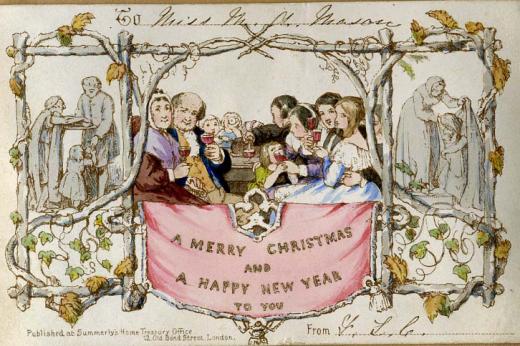
February 2023 – Witch hazel and a valentine
Puzzle #1      Puzzle #2

January 2023 – Red-tailed hawk and meadow path in winter
Puzzle #1      Puzzle #2

December 2022 – Dreaming of a white Christmas and the colorful Dried-Flower Tree
Puzzle #1      Puzzle #2

November 2022 – Camellia ‘Snow Flurry’ and Magnolia ‘Elizabeth’
Puzzle #1      Puzzle #2

October 2022 – Autumn beckons and fall crocus
Puzzle #1      Puzzle #2

September 2022 – Anemone and Eagle
Puzzle #1      Puzzle #2

August 2022 – Sunflower and Reflecting Pool
Puzzle #1      Puzzle #2

July 2022 – Spicebush swallowtail and Winterthur waterway
Puzzle #1      Puzzle #2

June 2022 – East Barn and Fairy at Enchanted Woods
Puzzle #1      Puzzle #2

May 2022 – Peony and Azaleas
Puzzle #1      Puzzle #2

April 2022 – Daffodils and Magnolia Bend
Puzzle #1      Puzzle #2

March 2022 – Hellebore and Witch Hazel
Puzzle #1      Puzzle #2

February 2022 – Spring Snowflakes and Valentine Fan
Puzzle #1      Puzzle #2

January 2022 – Fine-feathered Friends and Ornate Imagery
Puzzle #1      Puzzle #2

December 2021 – Dried-flower Tree and Spring’s First Flowers
Puzzle #1      Puzzle #2

November 2021 – Fall Color
Puzzle #1      Puzzle #2

October 2021 – Stone Arch and Wier
Puzzle #1      Puzzle #2

September 2021 – Anemone and golden bright Rudbeckia
Puzzle #1      Puzzle #2

August 2021 – Cardinal Flower and Indian Cup
Puzzle #1      Puzzle #2

July 2021 – Koi in Their Pond and Hydrangeas
Puzzle #1      Puzzle #2

June 2021 – Enchanted Woods Cottage and Children at Enchanted Woods
Puzzle #1      Puzzle #2

May 2021 – Dogwood blossom and Azaleas
Puzzle #1      Puzzle #2

April 2021 – Daffodil’s signaling spring at Winterthur
Puzzle #1      Puzzle #2

March 2021 – Glory of the Snow and du Pont Dining Room (detail)
Puzzle #1      Puzzle #2

February 2021 – Sheep and Valentine (detail)
Puzzle #1      Puzzle #2

January 2021 – The Pinetum on a Snowy Day and a Painted and Flocked Wallcovering (detail)
Puzzle #1      Puzzle #2

December 2020 – A Festive Chinese Parlor and a Snow-Draped Cut Leaf Maple
Puzzle #1      Puzzle #2

November 2020 – Fall Colors on Upper Pond and Autumn Woodland
Puzzle #1      Puzzle #2

October 2020 – Fall Berries and Meadows
Puzzle #1      Puzzle #2

September 2020 – Butterflies
Puzzle #1      Puzzle #2

August 2020 – Resurrection Lillys
Puzzle #1      Puzzle #2

July 2020 – Winterthur Barns
Puzzle #1      Puzzle #2

June 2020 – Primroses in the Quarry Garden
Puzzle #1      Puzzle #2

May 2020 – Peonies
Puzzle #1      Puzzle #2

Backgrounds for your Zoom calls

Now you can take your video calls from the elegant rooms of Winterthur or from our stunning gardens!  Download the images below and follow the directions from Zoom on how to add a custom background to your call.

House

Garden
All Garden photos by Bob Leitch

Wallpapers for your desktop

Hippocampus
• 800×600
• 1024×768
• 1280×800
• 1280×1024
• 1440×900
• 1920×1200

 
wallpaper-hippocampus


Magic Lillies
• 800×600
• 1024×768
• 1280×800
• 1280×1024
• 1440×900
• 1920×1200

 
wallpaper-magic lillies


Rhododendron
• 800×600
• 1024×768
• 1280×800
• 1280×1024
• 1440×900
• 1920×1200

 
wallpaper-rhododendron


Peony
• 800×600
• 1024×768
• 1280×800
• 1280×1024
• 1440×900
• 1920×1200

 
wallpaper-peony