October 7–9, 2026
For over three decades, the Infrared and Raman Users Group (IRUG) has been at the forefront of advancing spectroscopic analysis in cultural heritage conservation. Every few years, this vibrant international community gathers to share groundbreaking research, innovative techniques, and the latest developments in infrared and Raman spectroscopy for the analysis and conservation of cultural materials. In October 2026, IRUG 16 will bring together an international cohort of conservation scientists, conservators, researchers, and industry specialists working across diverse collections. This conference will showcase cutting-edge research and methodologies that are essential for advancing our understanding and preservation of cultural heritage materials.
For inquiries about IRUG 16, please contact the organizing committee at IRUG16@winterthur.org.
For conference booklet, including program and abstracts, visit www.irug.org.
Registration
Register for keynote lecture only
Register for the virtual conference
- Workshop: October 6, 2026
- Conference: October 7–9, 2026
- Virtual registration deadline: October 6, 2026
We aim to make IRUG16 accessible to all. If registration costs present a financial hardship, please contact us at irug16@winterthur.org to explore available options.
Workshop
Applications are now closed for the IRUG16 pre‑conference workshop on October 6, 2026.
Dr. Liora Mael, University of Delaware
Dr. Anikó Bezur, Institute for the Preservation of Cultural Heritage, Yale University
Dr. Greg Smith, Newfields
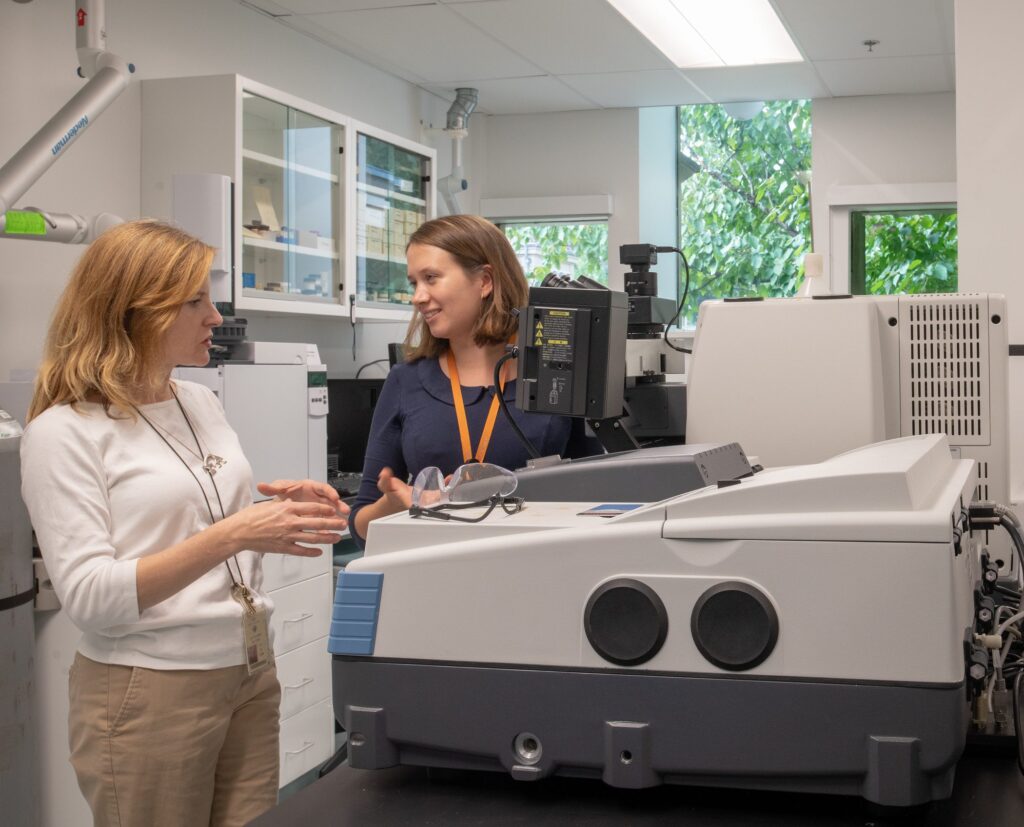
Develop a deeper understanding of reflectance-FTIR capabilities in contrast to other modes. Problem solve and troubleshoot common data collection and interpretation errors through theory and hands-on activities. The workshop is designed for scientists and conservators with foundational knowledge of vibrational spectroscopies, experience collecting and interpreting reflectance-FTIR data, and actively using it (or planning to) in their work. $50. Limited to 20 participants. Application deadline is July 1. Applicants will be notified whether they have been accepted after July 1 and will receive a link to register. Workshop participants are strongly encouraged to attend the IRUG16 conference.
Program Schedule
October 7–9, 2026
The program will include oral and poster presentations; networking events; time for museum, garden, and gallery visits; and an optional tour of the Winterthur conservation department.
There will be an optional conference workshop on Tuesday, October 6.
Schedule subject to change.
Wednesday, October 7
| Time | Event |
| 8:00–9:00 am | Registration & Coffee (VC) |
| 9:00–9:30 am | Welcome, Opening Remarks & Conference Overview Rosie Grayburn and Catherine Matsen, Winterthur IRUG Board Welcome David Thickett, English Heritage Winterthur Welcome and Keynote Lecture Introduction Catharine Dann Roeber, Director of Academic Affairs, and Brock W. Jobe Associate Professor of Decorative Arts and Material Culture, Winterthur |
| 9:30–10:30 am | Keynote Lecture: Spectroscopy as Cultural Heritage Dr. Roger Turner, Curator of Instruments and Artifacts, Science History Institute in Philadelphia |
| 10:30–11:00 am | Coffee |
| 11:00 am–12:00 pm | Poster lightning round |
| 12:00–1:30 pm | Lunch Break |
| 1:30–3:00 pm | Session 1. Case Studies: Works on Paper Non-invasive Paper Analysis: External Reflection Fourier Transform Infrared Spectroscopy and Chemometrics (PCA) Applied to the Study of Cultural Heritage Collections Arthur McClelland, Center for Nanoscale Systems, Harvard University Identification of the Papers Used in Edvard Munch’s Prints by ER-FTIR Katherine Eremin, Harvard Art Museums Spectroscopic Evaluation of tert-Butylamine Borane (TBAB) and Sodium Borohydride in Stain-Reduction Treatments: A Ten-Year Natural Aging Study of 19th-Century Didactic Prints Diógenes Vedoy, Canadian Conservation Institute |
| 3:00–3:30 pm | Coffee Break and Posters |
| 3:30–4:30 pm | Session 1. Case Studies: Works on Paper (cont.) Decoupling Diffuse and Specular Reflection Contributions to External Reflectance FTIR Signals of Pigments on Paper Erin Mysak, Harvard Library Session 2. IRUG Database Presentation The IRUG Spectral Database Initiative: Update & Tutorial Suzan de Groot, Cultural Heritage Agency of the Netherlands |
| 4:30–7:00 pm | Conference Reception (Reflecting Pool) |
| 7:00 pm | Bus departs Winterthur for downtown accommodation |
Thursday, October 8
| Time | Event |
| 9:00–10:30 am | Session 3. Databases and Data Science Enabling ATR Library Matching for Delicate Samples: Machine Learning Conversion of External Reflectance FTIR Data Arthur McClelland, Center for Nanoscale Systems, Harvard University What’s in a color? Building a reference pigment database comparing transmission, ATR, DRIFT and ER-FTIR methods Amanda K Satorius, Library of Congress Identifying Historical Lippmann Color Emulsions: A Non-Invasive Approach Using Micro-FTIR in Reflectance and Machine Learning Francesco Caruso, Conservation Center of the Institute of Fine Arts (IFA), New York University (NYU) |
| 10:30–11:00 am | Coffee Break and Posters |
| 11:00 am–12:00 pm | Session 4. Case Studies: Modern Materials Plastic personalities: Non-destructive identification of plastics in dolls Suzan de Groot, Cultural Heritage Agency of the Netherlands Optimizing Non-invasive FTIR Identification of Unstable Cine Films David Thickett, English Heritage |
| 12:00–1:30 pm | Lunch Break |
| 1:30–3:30 pm | Session 5. Case Studies: Painted Surfaces Scientific Study of Surface-transferred Crayon Wax in a 20th-Century Painting by Clyfford Still Hitomi Fujii, Department of Scientific Research, The Metropolitan Museum of Art Bocour Casein Colors and the Making of Jacob Lawrence’s Hospital Series Abed Haddad, Museum of Modern Art Tradition and Transformation: Colorant Use in the Work of Woo Chong Yung and the Modern Guohua Movement Joan M. Esson, Otterbein University The Application of Confocal Raman and ATR-FTIR Mapping Techniques in the Scientific Analysis and Study of Painting Techniques in Qing Dynasty Imperial Oil Paintings Guanghua Li, The Palace Museum |
| 3:30–4:00 pm | Coffee Break and Posters |
| 4:00–5:00 pm | Session 6. Pigment Studies, Part 1 Characterization of Emerald Green Synthesis and Degradation by FTIR and Raman Spectroscopy Jasper Montgomery, Queen’s University Early technologies of lead-tin yellow pigments: An experimental materials study Maia Hannahs, California Institute of Technology |
| 5:00 pm | Poster Session and Refreshments (Visitor Center) |
| 7:00 pm | Bus departs Winterthur for downtown accommodation |
Friday, October 9
| Time | Event |
| 9:00–10:00 am | Session 6. Pigment Studies, Part 2 One pigment with two types: Infrared and Raman analysis of cobalt yellow Stephanie J. Poland, Rose Hulman University Mortar than meets the eye: A technical examination of Carthalite colourants used in the Minisa Bridge, Wichita, Kansas Kyna Biggs, LACMA |
| 10:00–10:30 am | Coffee Break |
| 10:30 am–12:00 pm | Session 7. Instrument Innovations Conservation science on wheels: bringing the lab to Dutch museum collections Olivia van Rooijen, Cultural Heritage Agency of the Netherlands In-Situ Raman Imaging: From Stone Monuments to Paintings Jennifer Ferguson, Renishaw plc. NIR and Mid-IR Reflectance Imaging Spectroscopy of Paintings to Map Artist Materials John K Delaney, National Gallery of Art |
| 12:00–1:00 pm | Roundtable discussion and closing remarks |
| 1:00–2:00 pm | Lunch |
| 2:00–4:00 pm | Tours of Winterthur conservation labs (40 people max.), garden, house, and galleries |
| 4:00 pm | Bus departs Winterthur for Wilmington accommodation |
Keynote Speaker
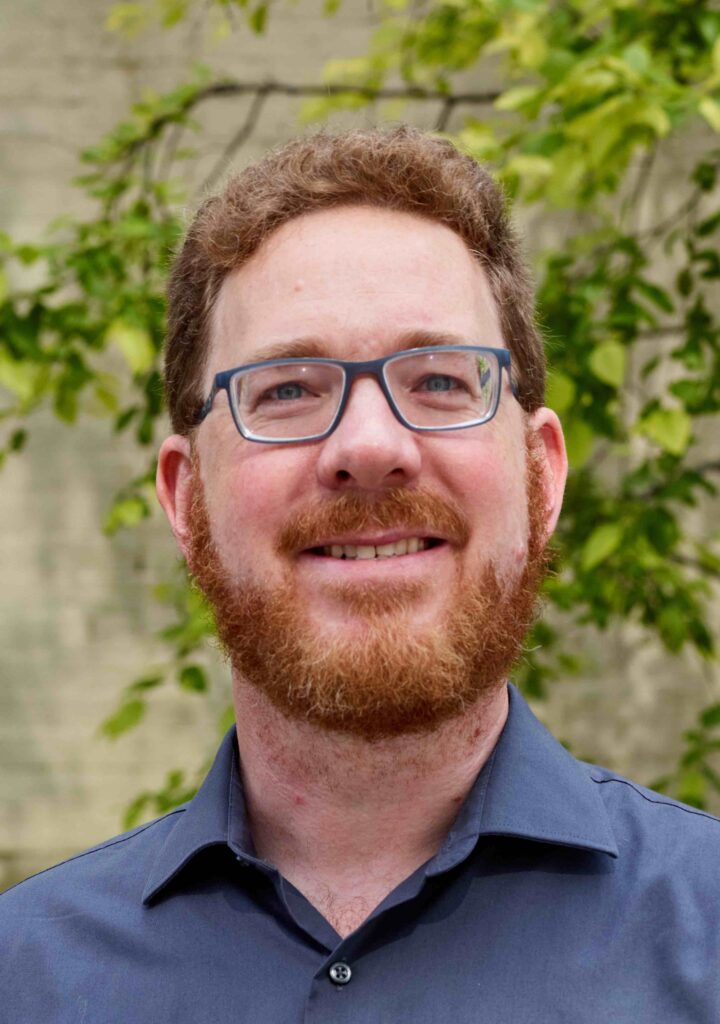
Dr. Roger Turner | Spectroscopy as Cultural Heritage
The history of spectroscopy is much more than a timeline of landmark papers and advances in instrumentation. Scientific instruments can also be markers that people use to organize themselves and define systems of meaning. What does spectroscopy look like when we view it as a set of cultural practices and social groups? While celebrated figures like Bunsen and Kirchhoff still matter, a social and cultural perspective reveals significant contributions by less famous, and sometimes minoritized, individuals. Women played crucial roles by coordinating groups to create shared community resources, like Clara Smith Craver’s work in building spectra libraries. Communities of spectroscopists were created through short courses like the Fisk University Infrared Spectroscopy Institute founded by James Raymond Lawson and Nelson Fuson. The Science History Institute’s collections offer a window on spectroscopy’s surprising and playful cultural heritage, from a 1954 photo of brawling spectrophotometer salesmen to an aftermarket label warning users about an NMR spectrometer’s “Emotional Crisis Detector.”
Biography
Dr. Roger Turner is the curator of instruments and artifacts at the Science History Institute in Philadelphia. He enjoys translating the history of science for different audiences, from chemists at Pittcon to museum visitors and students of all ages. He has recently written museum displays that situate spectrophotometry as part of the Institute’s temporary exhibits Downstream and Lunchtime. He holds a Ph.D. in the History and Sociology of Science from the University of Pennsylvania
Location, Travel & Accommodations
Wilmington, Delaware, is conveniently located just 40 minutes from Philadelphia International Airport and is served by rail connections to major cities along the East Coast. Winterthur is located about 6 miles north of Wilmington at 5105 Kennett Pike (Rt. 52), Winterthur, DE 19735.
Getting to Winterthur
Complimentary shuttle buses will run daily between the Hyatt Place Wilmington Riverfront and Winterthur for all registered attendees. There will be one morning shuttle trip to deliver attendees to the conference and one evening shuttle to return attendees to Wilmington Riverfront.
If you prefer to drive, ample free parking is available at Winterthur. Directions can be found online.
Please note that Winterthur is not accessible by public transportation. Attendees with accommodations other than the Wilmington Riverfront will need a car or will need to rely on rideshare services or taxis for easy and reliable transportation to the site (e.g., Delaware Express).
International attendees who require a temporary U.S. nonimmigrant visa should apply as early as possible, as processing times vary. Details on visa requirements and current wait times are available from the nearest U.S. embassy or consulate. General information can be found at https://travel.state.gov/content/travel/en/us-visas.html.
Accommodations
Options are available for short-term housing rentals in Wilmington and the nearby area. Below are hotel options for Wilmington and the Wilmington Riverfront.
Riverfront
- Hyatt Place Wilmington Riverfront
760 S. Justison St., Wilmington, DE 19801 - Westin Wilmington
818 Shipyard Dr., Wilmington, DE 19801
Wilmington
- Sheraton Suites Wilmington Downtown
422 Delaware Ave., Wilmington, DE 19801 - Courtyard Wilmington / Downtown by Marriott
1102 West St., Wilmington, DE 19801 - DoubleTree by Hilton Downtown
700 N. King St., Wilmington, DE 19801 - Residence Inn Wilmington Downtown
1300 North Market St., Wilmington, DE 19801
If you will not have a car, we suggest staying in Wilmington or the Wilmington Riverfront for access to restaurants and public transportation. The conference will provide shuttle service to and from Winterthur for all attendees staying at the Wilmington Riverfront.
This symposium is made possible with the support of the following partners: