Search Site

How to Dry Flowers the Winterthur Way

Inspired by Henry Francis du Pont’s love of flowers, Winterthur’s Dried-Flower Tree is a phenomenon of color, texture, and floral artistry. Thousands of brillant spring and summer blooms are perfectly preserved throughout the year, reprising their roles each holiday season to delight spellbound visitors.

To create the “largest bouquet” ever made at Winterthur, we chose a wide variety of flowers and plant material from the Winterthur cutting gardens and fields and used two methods of drying: silica gel and hanging.

Silica Gel

One method for drying flower heads calls for “flower dri” (silica gel). Silica gel is a desiccant, a substance that has a great affinity for water; it rapidly absorbs moisture from flowers. The white powder has small blue crystals and is reusable indefinitely. As the powder absorbs moisture, the blue crystals turn pink, indicating that they can absorb no more moisture. Simply put silica gel in a 350-degree oven for an hour or so and the crystals will turn blue and be ready for another use.

General considerations with this method of drying:

  • All flowers should be absolutely fresh.
  • Dry flowers in several stages of bloom: buds, partially open, fully open, and some with foliage.
  • Before drying, flowers must be wired since they become fragile once dried.
  • Put similar types of plant material in the same box.
  • Flowers shrink when dried and many also darken.
  • Small, fragile flowers will take two or three days to dry.
  • Most will take five to seven days.
  • If the material feels slightly limp, it is not dry. Bury in the gel for several more days.

Steps to follow:

  1. Cut off flower heads.
  2. Insert wire through the center of the flower, loop, pull down through the flower head so that the head is secure.
  3. Place two inches flower dri in bottom of pan.
  4. Place flower head “heads up” in flower dri.
  5. Pour flower dri over flower heads and between each layer of petals. Cover completely.
  6. For long stems such as snapdragon and delphinium, place horizontally on flower dri. Cover completely.
  7. Cover and seal flowers in airtight pan.
  8. Mark flower type on pan.
  9. Allow ample time for flowers to dry.
  10. When flowers are dry, remove carefully. Gently pull flower heads up while dusting off flower dri.
  11. Store in covered box.
  12. Mark flower type on box.

Hanging Method

A second method of drying is hanging flowers in small bunches until dry.

Experience Yuletide at Winterthur

Experience the beauty of Winterthur’s Dried-Flower Tree during Yuletide, and join us next year for an exciting lineup of floral classes and workshops!

Udderly Magnificent

This year’s gingerbread display is based on the farming operations that once formed a vital component of life at Winterthur when it was a private home. A dairy herd, animal husbandry, and agricultural crops were as integral then to the world of Winterthur as museum operations are today. 

Cows were a part of the Winterthur landscape from its earliest days, grazing contentedly in the shadow of the mansion. In 1917, Henry Francis du Pont purchased four bulls and two cows for the astounding sum of $70,000 (about $1.6 million today). The breed was Holstein-Friesian, considered to be the most prolific milkers. That group became known at Winterthur as the “Foundation Herd.”

To house the herd, du Pont constructed a huge barn complex at the top of Farm Hill. Staff included a farm manager, resident veterinarian, dairy manager, and herdsmen. A creamery across from the dairy barn could process 10,000 pounds of milk a day. An electric cable tramway capable of transferring six milk cans at a time connected the second level of the dairy barn to the top of the creamery, where the milk was sterilized and pasteurized before being sold as “Winterthur Special Holstein Milk” in bottles carrying the motto “Better Milk for Better Babies from Winterthur Farms.” The milk was celebrated throughout the local area for its high quality.

Following H. F. du Pont’s death in 1969, and per his instructions, the Winterthur herd was sold at auction, ending a memorable chapter in Winterthur’s history.

The gingerbread representation of Farm Hill includes the various barns, as well as some of the workers’ homes. Weighing in at more than 300 pounds, the display includes more than 108 pounds of gingerbread! It is the creation of the skilled hands of artisans from Bredenbeck’s Bakery in Philadelphia.

This is the third year that Bredenbeck’s has dazzled Yuletide visitors with their artistry. In 2022, they presented an impressive gingerbread house of the Winterthur mansion, followed by a model made to replicate Enchanted Woods. We are grateful to Bredenbeck’s head sugar artist Diana Anello and bakery co-owners Jacob Boyd and Irvin Boyd for this wonderful Yuletide display. Don’t miss it!

See the display on view through January 5, 2024 in the Galleries. Plan your visit today!

Floral Design at Winterthur

Workshops

<p>Winterthur's floral legacy is an integral part of the estate's tradition. Whether inside or out, the cultivation and enjoyment of nature's bounty has been of utmost importance to the generations of du Ponts who called the estate home.</p> <p> We invite you to discover the history, admire the beauty, and create your own traditions with our floral classes and workshops!</p>
Event: Garden to Vase: Wake Up Spring!
Event start date
Mar.
18
Event time 5:30 pm-
8:00 pm

Audience: Adult, Member

Celebrate the awakening of spring with an arrangement full of all the…

Event: Garden to Vase: Spring Basket
Event start date
Apr.
01
Event time 1:30 pm-
4:00 pm

Audience: Adult, Member

Use herbs and flowers to design a mixed basket that will bring…

Event: Garden to Vase: Branching Out
Event start date
Apr.
15
Event time 5:30 pm-
8:00 pm

Audience: Adult, Member

Discover how to use branches as a design element in a natural…

Event: Garden to Vase: Opulent Peonies
Event start date
May.
20
Event time 1:30 pm-
4:00 pm

Audience: Adult, Member

Uncover the beauty and elegance of using one type of flower per…

Event: Garden to Vase: Modern Botanical Art
Event start date
Jun.
17
Event time 5:30 pm-
8:00 pm

Audience: Adult, Member

Visit the At Home at Winterthur exhibition, then draw inspiration from pictures…

Event: Garden to Vase: Sensational Summer Flowers
Event start date
Jul.
22
Event time 5:30 pm-
8:00 pm

Audience: Adult, Member

Henry Francis du Pont often used nontraditional containers for his flower arrangements.…

Event: Garden to Vase: Cut Flower Workshop
Event start date
Aug.
05
Event time 5:30 pm-
8:00 pm

Audience: Adult, Member

Snip fresh flowers from our garden, hear about H. F. du Pont’s…

Event: Garden to Vase: Modern Mechanics
Event start date
Aug.
19
Event time 5:30 pm-
8:00 pm

Audience: Adult, Member

Create a beautiful arrangement using a design armature as the structural base,…

Event: Garden to Vase: Cut Flower Workshop
Event start date
Sep.
02
Event time 9:00 am-
10:30 am

Audience: Adult, Member

Snip fresh flowers from our garden, hear about H. F. du Pont’s…

Event: Garden to Vase: Diverse Dahlias
Event start date
Sep.
17
Event time 5:30 pm-
8:00 pm

Audience: Adult, Member

Dahlias are breathtakingly beautiful, and they present a unique design challenge.  Join…

Event: Garden to Vase: Haunted Halloween Design
Event start date
Oct.
21
Event time 5:30 pm-
8:00 pm

Audience: Adult, Member

Get your spooky on by using a festive Halloween element with the…

Event: Garden to Vase: Holiday Centerpiece
Event start date
Dec.
17
Event time 4:30 pm-
8:00 pm

Audience: Adult, Member

Take a special Yuletide Tour with the floral designers and gain insider…

Behind the Blooms

Go behind the blooms with Winterthur Floral Supervisor Heidi Militana and her talented team of designers.

Bancroft Woodcock and the Delaware Antiques Show

For more than sixty years, the Delaware Antiques Show’s recognizable trademark has been the image of a dove with an olive branch in its beak. This stylized motif derives from the design on the underside of a spoon in the Winterthur collection made by Bancroft Woodcock (1732–1817), a Quaker silversmith who worked in Wilmington, Delaware, from 1754 to the early 1790s. 

But why decorate the underside of a spoon? According to Donald L. Fennimore, Winterthur curator emeritus in Flights of Fancy: American Silver Bird-Decorated Spoons, the reason stems from a technical issue. On silver spoons, the juncture of the bowl and handle is a potential point of weakness because of the softness of the metal. Silversmiths therefore thickened that juncture to provide increased rigidity. They then made the area more attractive by ornamenting it with a variety of decorative motifs, including scrolls, shells, and images of birds. 

As Fennimore wrote, “In a brief but intriguing period between 1750 and 1830, imagery on the backs of English and American silver teaspoon and tablespoon bowls soared on the wings of birds.” Although numerous varieties of birds appear on English spoons, silversmiths in America invariably chose the dove with olive branch—a symbol of renewal and regeneration that has been used for millennia in both a religious and secular context. 

The Bancroft Woodcock dove with olive branch design was registered as the official trademark of the Delaware Antiques Show in 1964, the first year of the show. Since that time, the familiar insignia has continued to symbolize the quality and professionalism exhibited at this annual event.

Delaware Antiques Show: Meet the Dealers

Dan and Karen Olson Antiques

What drew you to the Delaware Antiques Show?

The Delaware show is considered the premier show for fine Americana, and our past attendance at this show affirms its stellar reputation. 

What had you heard about the Delaware Antiques Show?     

Collectors value this show as the place to purchase the finest antiques for their collections. Both collectors and dealers hold it in the highest regard. 

What will visitors see in your booth?     

High-country furniture and accessories, folk art, and paintings, especially portraits of children.

 Family Portrait of Four Children, attributed to John S. Blunt (1798–1835). American School, early 19th century oil on canvas, 48 3/4″ x 55 1/2″ in a molded gilt frame.

Oliver Garland

What drew you to the Delaware Antiques Show?

The quality and eclectic mix of dealers that exhibit, coupled with the excitement of participating in a show that is associated with Winterthur. My great uncle, O.D. Garland, sold many wonderful objects to Henry Francis du Pont over the years, some that are on display in the museum. It is a thrill that a couple of generations on, we are exhibiting and creating another connection to the museum.

What had you heard about the Delaware Antiques Show?     

The reputation of the Delaware show is stellar and unparalleled. Attendees will find a curated, eclectic mix of European and American material culture. 

What will visitors see in your booth?        

We will bring objects ranging in date from the 1580s through to the 19th century, including early paintings, pottery, decorative smalls, and works of art. We look forward to sharing our recent finds and discoveries with a new audience of enthusiastic, knowledgeable collectors and fellow dealers.

 A 19th-century trompe l’oeil painting, “The Fish Is On The Other Side.”
The ingenuity of design in this painting is what drew us to it, along with its excellent execution. You would be hard pressed to find another trompe l’oeil painting similar to this rare piece on the market at the moment.

Aronson of Amsterdam

What drew You to the Delaware Antiques Show this year?

The Delaware Antiques Show has long been on our radar due to its reputation for excellence and its discerning audience. This year, we felt it was the perfect opportunity to showcase our collection to a new and appreciative audience, particularly given the show’s location in a region with a rich historical heritage that aligns with the stories our pieces tell.

What had you heard about the Delaware Antiques Show?     

We had heard that it is one of the premier events in the country, known for its high standards and its ability to attract both knowledgeable collectors and passionate enthusiasts. The show’s emphasis on quality and authenticity resonates deeply with our own values.

What will visitors see in your booth?     

Attendees can expect a curated selection of 17th- and 18th-century Dutch Delftware, each piece meticulously researched and chosen for its historical and aesthetic significance. Our display will include rare examples of chargers, vases, and other decorative objects, showcasing the artistry and craftsmanship that define Delftware.

 A Chinoiserie charger, circa 1680. Inspired by Chinese transitional porcelain, this piece is a testament to the global influences on Dutch pottery during this period. Measuring an impressive 18.3 inches in diameter, it serves as both a decorative masterpiece and a symbol of the cultural exchange between East and West in the 17th century.

The Best of Americana

Explore the full list of exhibitors in our Annual Delaware Antiques Show Program and join us at the Chase Center on the Riverfront from November 15-17 for a full schedule of exciting show features sure to captivate the sophisticated and new collector alike.

“The Peale Painters: Global Perspectives in the Winterthur Collection” Now on View

WINTERTHUR, DE (October 17, 2024)—Works by Charles Willson Peale and members of the Peale family, regarded as America’s first family of artists, are currently on view at Winterthur Museum, Garden & Library.

While best known for its collection of American decorative arts, the seven oil paintings and four smaller case objects bring to light Winterthur’s premier collection of American paintings from the eighteenth and nineteenth centuries.

“The featured works come from various rooms in the house and other locations at Winterthur,” said Kedra Kearis, Ph.D., associate curator of art and visual culture. “Brought into close viewing proximity, these paintings form a conversation with one another. In addition, the artists themselves are placed in conversation with artistic traditions of the past and contemporary trends across the Atlantic.”

A distinguished American inventor, painter, politician, scientist, and soldier in the Revolutionary War, Charles Willson Peale established a painting studio in Philadelphia in 1776 and was a key member of the Sons of Liberty. His portraits of prominent Americans from the late 18th century remain widely recognized today. In 1784, he established one of the first museums in America, located in Philadelphia, which members of the extended family helped to run.

“Charles Willson Peale changed the course of American art through his artistic practice, his museum business, and the mentorship of his family in the arts. He led the Peale painters in fashioning the face of a new nation.” The family’s artistic legacy spans more than a century, from the colonial period through the Victorian era.

“Each artist in this prolific, multigenerational family honed their craft within a collaborative environment, sharing global perspectives,” said Kearis. “It is my hope that, by emphasizing the various pathways for education taken by the Peale artists across the generations, a picture might emerge of how artistic formation differed according to period, race, and gender.”

“In this sense, the three generations of Peale family artists paints a picture of a changing nation, one full of opportunity and encouragement, but also with its own sets of limitations and challenges.”

Winterthur’s founder, Henry Francis du Pont, collected works by Charles Willson Peale, his brother James Peale, and his son Rembrandt Peale. Over the years, Winterthur has expanded the collection to include works by Sarah Miriam Peale and Mary Jane Peale. Both women remained unmarried to pursue painting professionally.

Among the works on display is The Edward Lloyd Family (1771) by Charles Willson Peale. “About fifty years after Charles painted this portrait of Maryland planter Edward Lloyd, the enslaved Frederick Douglass was brought by his grandmother to live at Wye House, a reminder that the prosperity of the Lloyds was built upon an economy of enslavement,” added Kearis.

Other highlights include two portraits of women of the du Pont family as well as still life paintings. The gallery interpretation features a rich array of graphics, either self-portraits by the artists or portraits completed by another family member, illustrating this remarkable and ongoing conversation among the close-knit generations of Peale artists. The exhibit also includes a silhouette from the early 1800s thought to be produced by profile cutter Moses Williams, a formerly enslaved member of the Peale household.

The installation displays some of the many Peale works in the Winterthur collection which will be part of an upcoming large-scale exhibition in 2027. “The range of works by the Peales and related archival resources on the family here at Winterthur are the subject of new research,” said Kearis.

“The Peale Painters: Global Perspectives in the Winterthur Collection” is part of Conversations with the Collection. In this exhibition, visitors learn how Winterthur staff and students use the museum collection to understand America’s material past, see what’s new in the collection, and look closely at objects to better understand the past and the present.

# # #

ABOUT WINTERTHUR MUSEUM, GARDEN & LIBRARY

Winterthur—known worldwide for its preeminent collection of American decorative arts, naturalistic garden, and research library for the study of American art and material culture— offers a variety of tours, exhibitions, programs, and activities throughout the year.

Winterthur is located on Route 52, six miles northwest of Wilmington, Delaware, and five miles south of U.S. Route 1. Winterthur is committed to accessible programming for all. For information, including special services, call 800.448.3883 or visit winterthur.org.

Winterthur Appoints Merissa Courtright as Chief Development Officer

WINTERTHUR, DE (October 14, 2024)—Winterthur Museum, Garden & Library has appointed Merissa Courtright as its first Chief Development Officer, a newly created position aimed at enhancing the institution’s philanthropic efforts.

Chris Strand, Charles F. Montgomery Director and CEO of Winterthur, shared his excitement about the appointment, stating, “Merissa is a respected and accomplished philanthropic leader with deep experience in donor cultivation and in mentoring development teams to achieve substantial fundraising goals. Her background in capital campaigns, major gifts, planned gifts, corporate gifts and individual donor programs will be instrumental to Winterthur’s growth.”

Courtright brings a wealth of experience from her previous role as Chief Development Officer at Duke University School of Medicine’s Preston Robert Tisch Brain Tumor Center. During her tenure, she successfully raised over $10 million annually and led her team to secure an additional $19 million in philanthropic revenue each year.

In addition to her work at Duke, Courtright has made significant contributions to renowned organizations such as Johns Hopkins University, World Wildlife Fund, the National Law Enforcement Museum, and the National Building Museum.

Courtright holds a Master of Arts in Art History from the University of Delaware and a Bachelor of Arts in History from Tulane University.

# # #

ABOUT WINTERTHUR MUSEUM, GARDEN & LIBRARY

Winterthur—known worldwide for its preeminent collection of American decorative arts, naturalistic garden, and research library for the study of American art and material culture— offers a variety of tours, exhibitions, programs, and activities throughout the year.

Winterthur is located on Route 52, six miles northwest of Wilmington, Delaware, and five miles south of U.S. Route 1. Winterthur is committed to accessible programming for all. For information, including special services, call 800.448.3883 or visit winterthur.org.

The Peale Painters, Conversations in American Art

Figure 1. The Edward Lloyd Family, Charles Willson Peale, Talbot County, Md., 1771. Museum purchase 1964.0124 A

By Kedra Kearis, Ph.D., associate curator of art and visual culture

Not long after his return from the London studio of Benjamin West in 1771, Charles Willson Peale noted that he painted “Mr. Loyd [sic] a conversation,” a reference to the impressive, large-scale figural group, now in Winterthur Museum’s collection. The painting depicts Maryland planter Lloyd, his wife Elizabeth Tayloe, and their daughter Anne. Now recognized as The Edward Lloyd Family (fig. 1), his note “conversation” references a fashionable British portrait style that portrayed wealthy families engaged in conversation or leisure activities. Eager to display their wealth and status, this conversation piece features the Lloyds surrounded by objects that signal their wealth and sophistication, including rich imported textiles, elegant furniture, a handsomely carved cittern, or early English guitar à la mode. Charles referenced their estate—the Wye River estate located in Maryland— with an English garden pavilion based on a drawing in architect Isaac Ware’s well-known book of designs. A Winterthur favorite, this painting is now featured in the first-floor galleries as part of The Peale Painters: Global Perspectives in the Winterthur Collection. Details of the portrait can now be examined closely, revealing the contrasting pale green silk lining Edward’s scarlet and gold embroidered coat, the light reflected from Elizabeth’s jeweled hair comb and necklace, and the Palladian arches of the imagined Wye estate house. 

Beyond the conversation in the painting between these fascinating sitters, another develops around the artist himself, head of the multi-generational clan of painters. Charles was responsible for mentoring his sons and daughters in the art of painting and the business of running the Philadelphian Peale’s Museum. This echoes a hallmark of the Peale family–the practices of teaching and learning, copying and collaboration. Besides the Lloyd portrait, the exhibit features works by his lesser-known brother James Peale, and those of subsequent generations of Peales. Two portraits from the early nineteenth century of du Pont women by Rembrandt Peale invite additional conversations about European art traditions of the past and the contemporary painting trends in Paris embraced by Rembrandt on his many travels abroad. Additionally, a case of small collection objects displays a silhouette from the early 1800s thought to be produced by profile cutter Moses Williams, a formerly enslaved member of the Peale household. 

Figure 2. Still Life with Fruit, Mary Jane Peale, Philadelphia, Pa., 1862. Museum purchase with funds provided by the Henry Francis du Pont Collectors Circle 2017.0025 A

Another conversation arises from the exhibition around two recent acquisitions by the Museum completed by two female members of the Peale family, Sarah Miriam Peale and Mary Jane Peale, who both remained unmarried to pursue painting professionally. Mary Jane Peale’s Still Life with Fruit highlights her engagement with the Peale tradition of still life painting led by her uncles, Raphaelle and James (fig. 2). Mary Jane arrived at her talents under the mentorship of her Uncle Rembrandt and her cousin, Sarah Miriam. The experiences of Sarah and Mary, both in education and art production, mark important differences between the male and female artists of the family. The gallery interpretation includes a rich array of graphics, either self-portraits by the artists or portraits completed by another family member, illustrating this remarkable and ongoing conversation among the close-knit, generations of Peale artists. In addition, the story of their extraordinary artistic output paints a picture of a changing nation, one full of opportunity and encouragement, but also limitations and challenges.

See The Peale Painters: Global Perspectives in the Winterthur Collection on view in the first-floor galleries.

Almost Unknown, The Afric-American Picture Gallery

May 3, 2025 – January 4, 2026

Inspired by an 1859 essay written by a free black journalist and educator named William J. Wilson, this exhibition takes visitors on a tour of Wilson’s imagined gallery of prints, paintings, sculptures, books, and other decorative objects that represent Black life in the United States and across the Diaspora, as interpreted by curator and historian Dr. Jonathan Michael Square. 

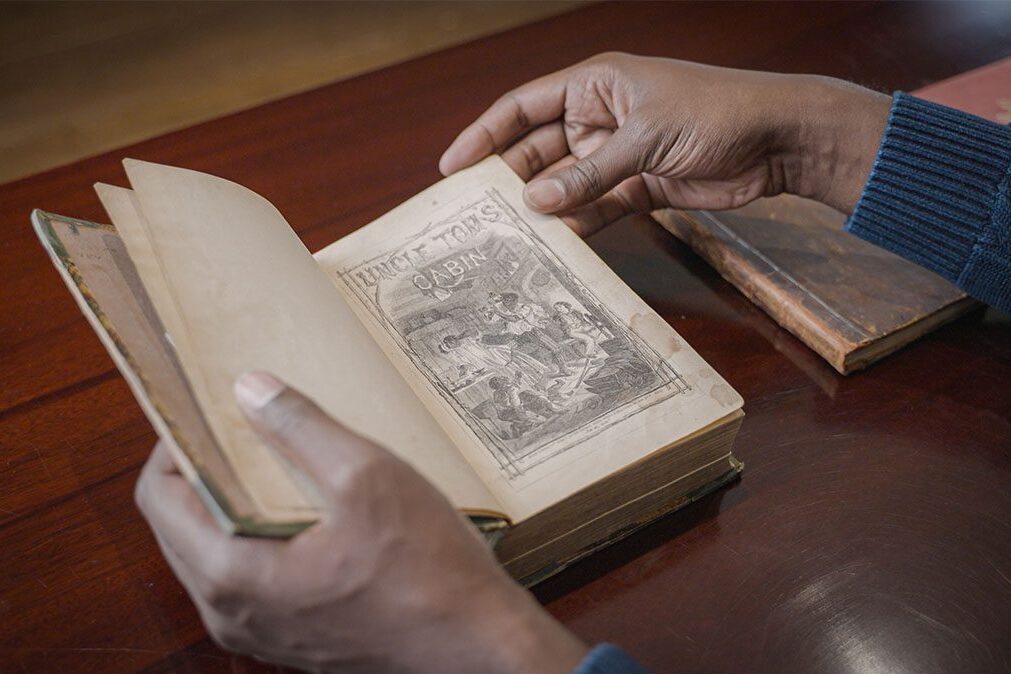
Winterthur will for the first time bring this gallery to fruition, using objects from the collections to represent Wilson’s displays. These include a silhouette attributed to Moses Williams, the portrait of George Washington and his family painted by Edward Savage, and copies of Harriet Beecher Stowe’s Uncle Tom’s Cabin and Phillis Wheatley’s Poems on Various Subjects, among others. 

The exhibition extends beyond the gallery walls and features books that will be displayed in the library and on Almost Unknown: Continue the Journey, an exclusive tour of selected objects in the house. Through this multifaceted presentation, the exhibition sheds light on stories that have long been overlooked in American museums and history. 

About the Curator

Dr. Jonathan Michael Square

Almost Unknown, The Afric-American Picture Gallery is guest curated by historian Dr. Jonathan Michael Square, assistant professor of Black visual culture at Parsons School of Design. He lectures and writes on Black fashion history and material and visual culture.

House Tour

Almost Unknown: Continue the Journey

Go beyond the galleries and into the house to see spaces that highlight architecture and objects with connections to the African American experience.

Symposium

Looking Back to the Future: Realizing the “Afric-American Picture Gallery”

The symposium will take place at Winterthur on November 14 and 15, 2025. It will explore broader approaches to how William J. Wilson’s essay can be integrated into American history and how it connects to the legacy of Henry Francis du Pont and the history of Winterthur. The symposium is designed for a diverse audience of professionals, scholars, and enthusiasts of African American history and the wider Wilmington community.

Learn More.

Enhance Your Visit

Get the most of your visit to Winterthur with these activities, included with your General Admission ticket, which is good for two consecutive days!

Take the Self-Paced House Tour. Discover Winterthur’s untold stories about the du Pont family, the many people who shaped Winterthur, and the history of the objects displayed in the rooms. 

Explore the galleries and garden. Take a stroll in the world-renowned 60-acre garden or explore one of our walking trails throughout the 1,000-acre estate. And, no visit is complete without our garden tram tour. Our guides share highlights of the garden and the history of Winterthur on this 30-minute narrated tour. Then, head inside to be inspired by the galleries, featuring two floors of the finest examples of American decorative arts.

From Our Blog

Showing of 4 results
A Sampler’s Story from Sierra Leone
By Matthew Monk, Linda Eaton Associate Curator of Textiles at Winterthur On…

<a href="https://www.winterthur.org/a-samplers-story-from-sierra-leone/" class="read-more" ><span class="sr-only">Click to read more</span>More Info</a>

“A Superior Looking Man”: Power, Portraiture, and Pageantry
Faustin Soulouque plays a central role in my exhibition at Winterthur—Almost Unknown,…

<a href="https://www.winterthur.org/a-superior-looking-man-power-portraiture-and-pageantry/" class="read-more" ><span class="sr-only">Click to read more</span>More Info</a>

Unlocking the Past
Keys often symbolize access, opening portals to the past, present, and future.…

<a href="https://www.winterthur.org/unlocking-the-past/" class="read-more" ><span class="sr-only">Click to read more</span>More Info</a>

A Historical Collaboration
Priscilla (Ballenger) Leedom, a Quaker abolitionist and unionist, crafted the quilt in…

<a href="https://www.winterthur.org/a-historical-collaboration/" class="read-more" ><span class="sr-only">Click to read more</span>More Info</a>

Photo Gallery

Exhibition Playlist

This playlist is inspired by the 1859 essay “Afric-American Picture Gallery” and the Winterthur exhibition it helped shape. Just as the essay describes powerful scenes of resistance, resilience, and creativity, these tracks weave together sonic textures of liberation and ancestral memory.