Search Site

Rob Finn

The art of Rob Finn is a bittersweet reminder that life is short—even for the oldest of trees.

Over his career as a portraitist of trees, watercolor painter Rob Finn has seen several variations on a peculiar theme. It began a few years ago with a large oak at the Northern California home where Jack London wrote Call of the Wild.

“I loved that tree,” says Finn. “It was gorgeous. The next time I went back, it was gone, because it was going to crush the house. I didn’t know that was going to happen when I took the picture. I didn’t know that when I started the painting.”

“Brown’s Meadow Oak” by painter Rob Finn commemorates a 300-old-year tree that was felled by a tornado in August 2020.

Nor did he know it would happen to a 300-year-old oak that he photographed in Brown’s Meadow at Winterthur. “I was interested in about a hundred trees on the estate,” says Finn. When he heard the old giant was destroyed by a tornado in August 2020, he thought, “I have to paint that tree now.”

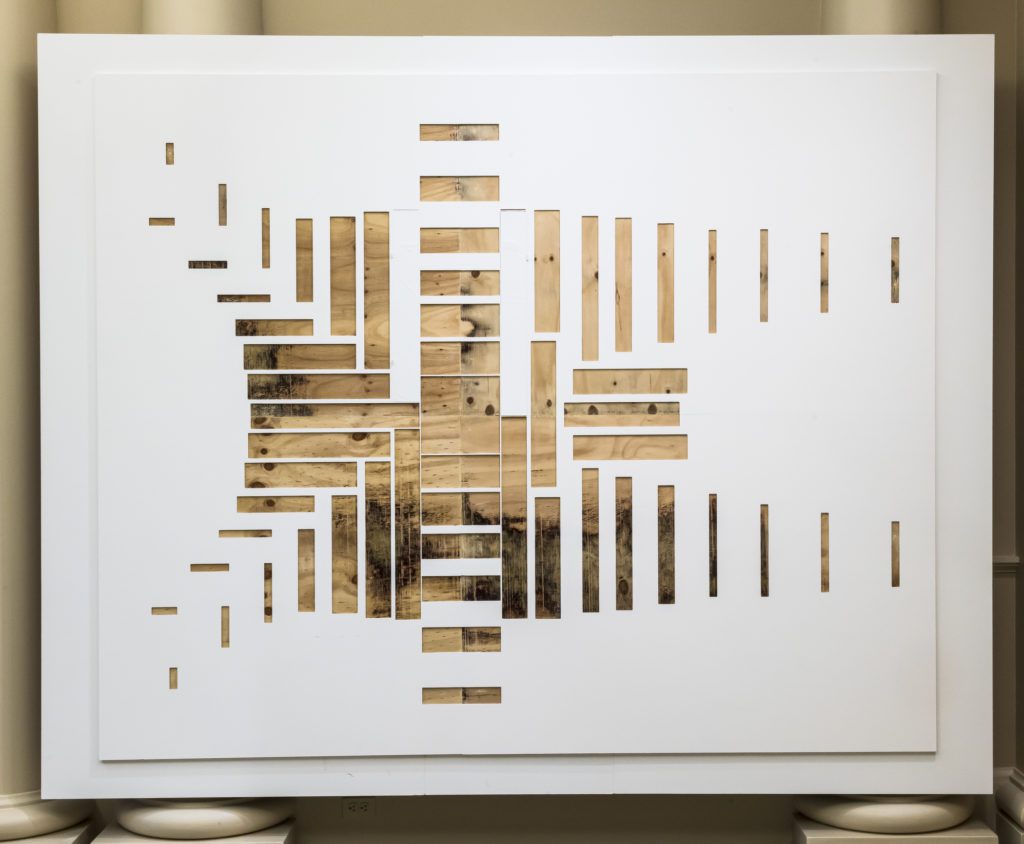
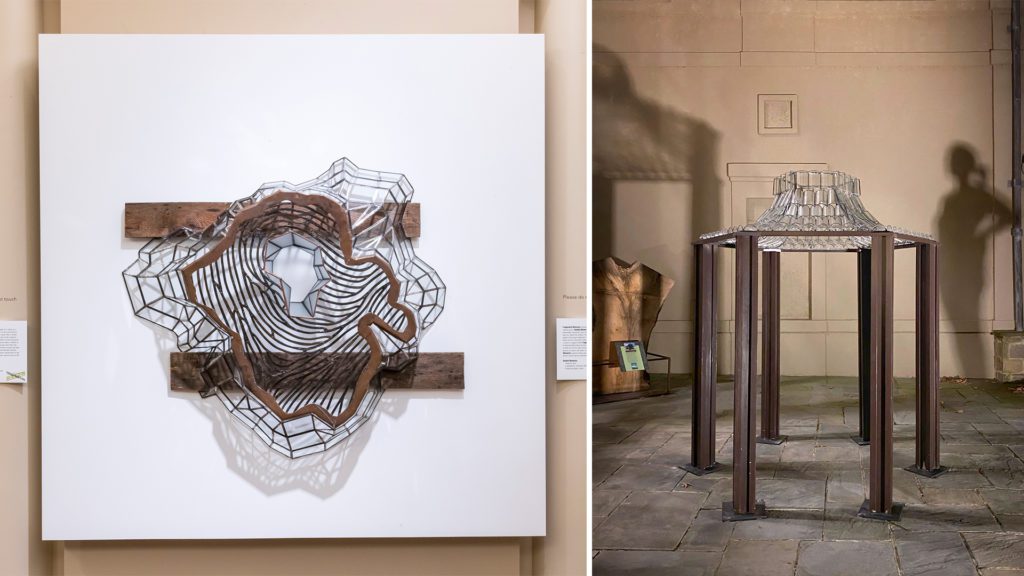
His portrait of the Brown’s Meadow oak now hangs in the Winterthur Galleries as part of the Transformations installation of works by contemporary artists. The painting depicts what he calls one of his “memorial trees,” images of icons that once were, like another beautiful tree at Winterthur, a Japanese pine that fell in 2021.

“While sitting here looking at all this splendor, trees seem like part of the landscape but they’re living creatures who are only on this earth for a short time, like us,” Finn says. “It’s a very poignant view into the life of a place like this, how it changes, how everyone is trying to preserve it, at least in spirit. You’re not going to have that 250-year-old tree again. It’s a little scary, a little sad, but it’s life. It’s a good way to show folks how sweet and fleeting it is.”

Finn’s career started with two years of study into sculpture and painting at Parsons School of Design in New York City. After taking time off to travel across the county, he enrolled in the College of the Atlantic in Bar Harbor, Maine, where he earned a bachelor’s degree in human ecology. He then moved to San Francisco, where he worked as a painting contractor renovating the famous Victorian houses known as “painted ladies” and occasionally making art.

While in California, Finn began what would become a series of 12 small watercolors that depicted some of his favorite trees. “I found a lot of meat in that subject matter,” Finn says. “I just really got into that. I realized it was more than landscape painting. That’s when I came up with this portrait concept. It’s not just a painting of a tree. It’s a portrait of a character.”

After Finn and his young family moved to Philadelphia in 2017, he was finally able to devote several years exclusively to his art. He later learned of Winterthur’s Maker-Creator Research Fellowship, a program that provides a stipend and gives access to all of Winterthur and some of its staff for research that inspires the work of creative professionals. The 1,000-acre Winterthur property with its variety of tree species was a perfect place to resume the portrait series—in a big way. 

 “Now most of my paintings are 35 by 52 inches, so they’re as big as a small person,” Finn says. “It’s a whole other thing.”

Unlike most watercolor painters, Finn does not work on a horizontal surface. “I do it on the wall,” he says. “It’s pretty fun to see it happen. The water and the pigment move a lot, but I paint in a way that keeps it from dripping. It’s generally a very controlled dance of danger, making these big pieces.”

Finn is aided in his art by digital photography. When working where there is not enough focal distance for the camera to register an entire tree in one frame, he can photograph it in sections and then assemble them digitally into an undistorted top-to-bottom view for reference in his studio.

“My work is contemporary because these trees couldn’t be painted this way before,” he says. “In close spaces, the artist’s perspective would have been foreshortened from any vantage point. It needs that extra layer of digital editing. I call it new naturalism or synthetic naturalism. It’s not about the piece. It’s about us experiencing the piece.” He pauses, then chuckles. “So it’s good to get the trees up on the wall and let people see them in real life.”

Finn’s work, as well as the work of the other Transformations artists, is currently on view in the Winterthur Galleries. 

Judith and John Herdeg Receive Henry Francis du Pont Award

Winterthur recently presented the Henry Francis du Pont Award to Judith and the late John Herdeg, in recognition of their longtime support of the decorative arts and their commitment to collecting, research, and philanthropic leadership in the field.

“This award is Winterthur’s highest honor, and it is made with considerable care,” said Chris Strand, Interim CEO of Winterthur. “There are no two individuals more deserving than John and Judy, who have meant so much to Winterthur and so much to the community of collectors and supporters of the decorative arts.”

The Herdegs’ shared passion started in 1963 with the reconstruction and restoration of the William Peters House, a 1750s Georgian brick structure, which, through their efforts, is listed on the National Register of Historic Places. They spent their lives collecting, furnishing, and decorating it with 18th-century New England furniture, English ceramics, American paintings, and 17th- and 18th-century needlework. Their love of 18th-century design expanded into the landscape surrounding their house with an emphasis on native flora and plants introduced before 1775.

At Winterthur, John served on the Board of Trustees for 50 years, including as Chair of the Board from 1977 to 1986. Judy has served for many years on the Collections Committee and was instrumental in bringing the Delaware Antiques Show to Winterthur, serving in various leadership roles for more than 40 years. They generously donated more than 150 museum objects to the museum and numerous gifts to the library.

They have been active members of many other historical organizations committed to the preservation and celebration of American history. John served as trustee at Historic Deerfield, Inc., in Massachusetts, among other organizations. Judy was a regent of Gunston Hall Plantation in Virginia for 12 years. She served as first regent for five of those years, during which she oversaw a re-focusing of the collection to highlight George Mason’s life. Judy also oversaw the planning, construction, and fundraising for the George Mason Memorial on the National Mall in Washington, D.C.

John and Judy researched their collection, travelling to both American and British historic sites, societies, and libraries to conduct research. John was the author of several scholarly articles, including “Son of Whom? A Collector’s Journey” and “The Story of a Serendipitous Find” as well as a forthcoming book, The Stories They Tell…from the Herdeg Collection. Judy is a member of the Embroiderers Guild of America. Her research into 17th- and 18th-century needlework has resulted in impressive reproductions of historic pieces and the design and stitch of a reproduction 17th-century English raised-work casket.

The award celebrates the vision and genius of Henry Francis du Pont, creator of Winterthur, the great American country estate, by recognizing individuals who have made contributions of national significance to the knowledge, preservation, and enjoyment of American decorative arts, architecture, landscape design, and gardens, du Pont’s genius and legacy are honored.

Previous Recipients
2016—Morrison H. Heckscher
2013—John L. & Marjorie P. McGraw
2007—George A. “Frolic” Weymouth
2003—Francis H. Cabot
2002—Linda H. Kaufman & George M. Kaufman
2001—William H. Frederick, Jr.
1999—Nancy Goslee Power
1999—Ralph Emerson Carpenter
1998—Abbott Lowell Cummings
1996—Israel Sack & sons Harold, Albert, and Robert
1994—Wendell D. Garrett
1992—Clement E. Conger
1990—Alice Winchester
1989—Frank Liipfert Horton
1986—Pamela Cunningham Copeland
1984—Bertram K. Little & Nina Fletcher Little

ABOUT WINTERTHUR MUSEUM, GARDEN & LIBRARY
Winterthur—known worldwide for its preeminent collection of American decorative arts, naturalistic garden, and research library for the study of American art and material culture—offers a variety of tours, exhibitions, programs, and activities throughout the year. Admission includes the Winterthur garden, galleries, and a museum tour (by reservation).


Winterthur, located on Route 52, six miles northwest of Wilmington, Delaware, and five miles south of U.S. Route 1, is closed on Mondays (except during Yuletide), Thanksgiving, and Christmas. Winterthur is committed to accessible programming for all. For information, including special services, call 800.448.3883, or visit winterthur.org.


For the most updated information about Covid safety protocols, visit winterthur.org/faq.

Contact: Mark Nardone
Mnardone@winterthur.org
302.888.4803 O 302.500.2559 M

Books and Periodicals

In our Collection of Printed Books and Periodicals, you will find more than 100,000 volumes and about 20,000 rare American and European imprints, most focused on the documentation of decorative arts and design and the material culture of everyday life in America from the 17th through the early 20th centuries.

The holdings of rare books are especially strong in architecture and design books, travel narratives, American painting and graphics, children’s books, descriptions of craft techniques, women’s magazines, the literature of domestic economy and etiquette, periodicals that promote or describe lifestyles, and city directories and guidebooks. A significant portion of the rare book collection offers insights into the European influences on American taste and design. Trade catalogs from American and British manufacturers and retailers provide an invaluable record of product designs, technological developments, and marketing strategies.

The collection also offers current periodicals, as well as auction and exhibition catalogues

Image Requests – Rights and Reproductions

Winterthur Museum, Garden & Library is committed to making its collections and resources available as widely as possible. In most instances, Winterthur will provide hi-res images without charge.

Charges may be applied to large orders or to commercial ventures. Please see “Images for Licensed or Commercial Projects” (below) for additional details. Requests that significantly impact staff time and resources may be subject to fees. If fees apply, you will be notified in advance of image delivery. Pre-payment is required.

Nonstandard image sizes or formats must be noted on the request form and are subject to approval.

While Winterthur tries to fulfill every image request, sometimes it is not possible to create new imagery due to an object’s fragility or ability to be moved, conservation concerns, or donor agreement.

Image requests will be processed in the order that they are received. The anticipated turnaround time for fulfillment is 6–8 weeks.

If rush requests are needed, please contact the Image Management Coordinator, nschne@winterthur.org. Rush requests are determined on a case-by-case basis, are subject to staff capacity, and will incur a fee.

Copyright

While we may provide images from our collections, in many instances, Winterthur does not hold the copyright to materials in its collections and cannot grant or deny permission to publish or use them. It is the responsibility of the user to determine the rights status and to satisfy any permissions required by copyright law. Appropriate attribution is expected and helpful to other researchers.

Images for Personal Research Use

Users may download images free of charge from Winterthur’s online collections portals:

These images are generally suitable for digital display, presentations, and personal research use. To request publication-quality images (300-600dpi) or images that are not currently available through Winterthur’s digital collections portals, please fill out the Request an Image form.

For materials in which Winterthur owns the copyright; when copyright is unknown; in the Public Domain; or held by someone other than Winterthur, researchers do not need anything further from Winterthur to move forward with use. However, we do ask that you cite Winterthur as the holder of the original material. Directions for citation may be found in the Attribution section below. If you have any questions about how to properly cite Winterthur’s collections, please email the Image Management Coordinator at imagerequest@winterthur.org.

Images for Publication or Exhibition

Hi-res images suitable for publication, exhibition, or other print projects are available upon request. Images for publication are provided as standard 300-600dpi TIFFs. Please allow up to three weeks of processing time for publication images and up to six weeks if new photography or scanning is necessary.

There is no charge for non-profit or scholarly use of images. Requests for commercial use, including for-profit projects and publications, film and television production, licensing, and merchandising are subject to approval and will incur fees. Please fill out the Image Request Form (https://forms.office.com/r/wZbnmCvEz3) with as much information as possible, and staff will follow up with you shortly.

Images requested for publication or commercial use will be provided with a letter including an object description and the proper credit line. Please see the Attribution section below for the information that we ask to appear in the citation. Citations may be in any format, as long as all the object information as well as the credit line is present.

Attribution

Please cite Winterthur as the holder of the original material in all uses. To cite Winterthur, please include:

  • identifying information about the object or collection (including creator, title [if applicable], and date)
  • the object number or call number for the collection
  • donor or purchase fund information (if applicable)
  • the credit line: Courtesy Winterthur Museum, Garden & Library

For museum objects: Donor or purchase information can be found in the object’s online catalog record (http://museumcollection.winterthur.org/).

If you have questions about how to credit or cite an image, please email the Image Management Coordinator at imagerequest@winterthur.org.

Request an Image: Use this form https://forms.office.com/r/wZbnmCvEz3 to request images from Winterthur’s collections.

Images for Licensed or Commercial Projects

All other requests to use images from Winterthur’s collections for licensed products or commercial ventures are subject to approval.

Permission is granted for one-time use in a single format only. Winterthur does not grant open-ended or multi-year permissions, or rights in perpetuity. Additional permissions or subsequent uses must be requested separately.

For requests or questions regarding licensed products, please contact Kris DeMesse at kdemes@winterthur.org.

Media Requests and Guidelines

To view Winterthur’s online Press Room, visit https://www.winterthur.org/news-press/. Members of the media may view information for current, past, and upcoming exhibitions and programs.

Obtaining permission to film or photograph at Winterthur

Please email a detailed request to: pressroom@winterthur.org. Let us know your preferred location(s), a proposed time, and whether or not you’ll be using any film or photography. You will receive a response from us within one to three days. For media-related questions, please send an email to pressroom@winterthur.org.

Contact Information

If you have questions that are not answered here or if you are unable to access the online request form, please submit your request to the Image Management Coordinator:

Nicole Schnee
5105 Kennett Pike
Winterthur, DE 19735
imagerequest@winterthur.org
302.888.4634

Winterthur Acquires Recently Discovered Anna Pottery Liberty Monument

Object depicts racial massacre in the Reconstruction Era.

Winterthur Museum, Garden & Library has acquired the recently discovered Liberty Monument, a unique 150-year-old stoneware masterwork that dramatically depicts a racially motivated massacre in Colfax, Louisiana, in 1873.

Winterthur acquired the Liberty Monument during the Summer 2021 auction of American stoneware and redware pottery by Crocker Farm, which described it as “one of the greatest American ceramic discoveries to come to light in recent decades.” A consigner who lives near Boise, Idaho, discovered the monument.

The Liberty Monument was created by Wallace and Cornwall Kirkpatrick, owners of Anna Pottery in Anna, Illinois, from 1859 to 1896. The brothers were known to be socially progressive. Vocal about their views, they often commented caustically on events and politics through their work.

The primary scene depicted on the Liberty Monument is the massacre of Black citizens who acted against efforts to overturn the result of the 1872 gubernatorial election in Louisiana. The commentary touches on political scandal, the struggle of Black Americans for basic human rights, the cost of the American Civil War, and other themes. The figure of Lady Liberty crowning the monument gives the work its contemporary name. “The Colfax massacre has been largely ignored by mainstream history books,” notes Leslie Grigsby, senior curator of ceramics and glass at Winterthur.

“I am proud of Alexandra Deutsch, Leslie Grigsby, and our entire curatorial team for recognizing the potential presented by the monument,” said Chris Strand, Interim CEO. “By adding it to our collection, Winterthur will be able to unlock many other stories lying dormant within similar objects that we have collected over the years and give us opportunities to reach new audiences. I am happy that the Board and staff have supported this acquisition.”

“We are working to create a multivocal interpretation for this object by engaging with scholars, students, and others. We expect the interpretation of this complex object to evolve over time,” said Alexandra Deutsch, John L. and Marjorie P. McGraw Director of Collections. “We fully recognize the responsibility we have to depict the multilayered history this object represents.”

The scholars’ responses Winterthur has received, so far, have celebrated the acquisition.

“This is an important object through which we can help uncover more of the history of this understudied massacre. I grew up in Baton Rouge (just two hours from Colfax) and we did not talk about these kinds of traumatic historical episodes. The 100th anniversary of the Tulsa Race Massacre sparked a conversation about the history of racial violence in this country. Winterthur too can contribute to these much-needed conversations.”

—Dr. Jonathan Michael Square, Assistant Professor of Black Visual Culture at Parsons School of Design and Fellow in History of Art and Visual Culture at the Costume Institute at The Metropolitan Museum of Art. Square runs the digital humanities platform “Fashioning the Self in Slavery and Freedom.”

After further research and cleaning in Winterthur’s conservation labs, the Liberty Monument will be placed on display in Winterthur’s galleries.

ABOUT WINTERTHUR MUSEUM, GARDEN & LIBRARY

Winterthur is known worldwide for its preeminent collection of American decorative arts, naturalistic garden, and research library for the study of American art and material culture. It offers a variety of tours, exhibitions, programs, and activities throughout the year. Admission includes the Winterthur garden, galleries, and a museum tour (by reservation).

Winterthur, located on Route 52, six miles northwest of Wilmington, Delaware, and five miles south of U.S. Route 1, is closed on Mondays (except during Yuletide), Thanksgiving, and Christmas. Museum hours are 10:00 am–5:00 pm, Tuesday–Sunday. $20 for adults; $18 for students and seniors; $6 for ages 2–11. Memberships are available for free and discounted admission. Winterthur is committed to accessible programming for all. For information, including special services, call 800.448.3883, or visit winterthur.org.

Winterthur follows state and national protocols for the health and safety of all visitors and staff.

Contact: pressroom@winterhur.org
302.888.4803

View the PDF press release online.

Scientific Research & Analysis Laboratory

Winterthur’s state-of-the-art Scientific Research & Analysis Laboratory is a research and teaching facility housed in the Department of Conservation. Scientific analysis of objects is carried out to answer questions about their condition, technology of manufacture, and history. Answers to these questions are critical for formulating appropriate conservation treatments. 

One of only 18 similar museum labs in the country, the SRAL is equipped with instruments for materials characterization, with a focus on elemental and molecular analysis of cultural heritage materials. The laboratory also has portable equipment that can be used for scientific investigations in the Winterthur Museum and other heritage collections. Many types of analysis can be done non-destructively without taking a sample. In other cases, technology has advanced so that only a tiny sample is necessary.

The laboratory employs two conservation scientists who work closely with Winterthur curators and conservators, academic staff at the University of Delaware, Winterthur research fellowsresearch students, and students in the University of Delaware doctoral Program in Preservation Studies, the Winterthur/University of Delaware Program in Art Conservation, and Winterthur Program in American Material Culture. Amazing volunteers with extensive backgrounds in science aid in the work of the lab. The lab staff also teaches concepts about the interface of art and science to museum visitors of all ages. 

Conservation Clinic

September–April

Select Thursdays | 1:00–4:00 pm

Presented by Winterthur Museum and the University of Delaware.

Bring in cherished objects and learn how to preserve them for future generations. From family quilts and photo albums to ceramics, portraits, furniture, and everything in between, conservation staff and students will hear the stories of your objects and share condition assessments, treatment recommendations, and display and storage advice.

Your advance registration allows us to match you with someone who specializes in conservation of your object, whether it is a painting, textile, works of art on paper, book, archival document, photograph, furniture, or three-dimensional object (glass, ceramics, metals, organics).

Call 800.448.3883 x7029 to register for a free 30-minute consultation.

Individuals and groups can schedule a one-hour tour of the Conservation Department on selected Wednesdays during the academic year. To reserve a space for you or your group or for more information, please call Visitor Services at 302.888.4600 x7029.

Kindly consider donating to Winterthur’s Conservation Department to advance the education and training of future conservators.


Event: Conservation Clinic
Event start date
Mar.
05
Event time 1:00 pm-
4:00 pm

Audience: Adult, Member

Bring in cherished objects and learn how to preserve them for future…

Event: Conservation Clinic
Event start date
Apr.
09
Event time 1:00 pm-
4:00 pm

Audience: Adult, Member

Bring in cherished objects and learn how to preserve them for future…

Research Guides

Guide to the Downs Collection and Winterthur Archives

The online book Guide to the Winterthur Library: The Joseph Downs Collection and the Winterthur Archives provides detailed information about holdings in the Downs Collection and in the Winterthur Archives, as well as a comprehensive index of names, places, and subjects.

Download Formats:

Zipped series of PDFs
HTML

Guide to the Maxine Waldron Collection of Children’s Books and Paper Toys

Link to the Guide

Research Area Guides

Advertising
Arts and Crafts Movement
Botanical Illustration
Collectors and Collecting
Colonial Revival
Curators’ Papers
DuPont Family Papers
Garden History and Design
Jewelry
Textile Production