Bloom Report #15
April 13, 2022
79 F, Sunny
Check these out:
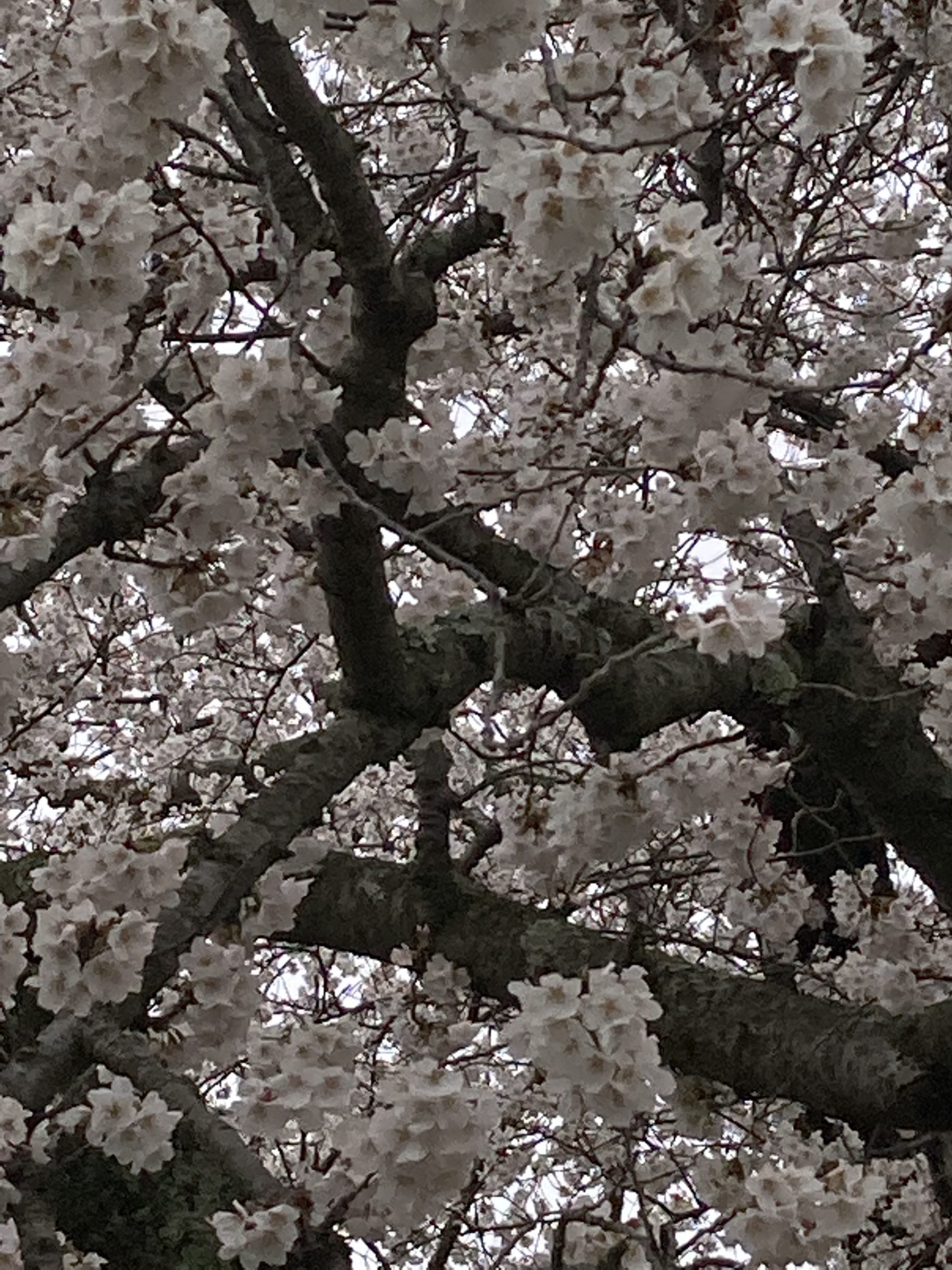
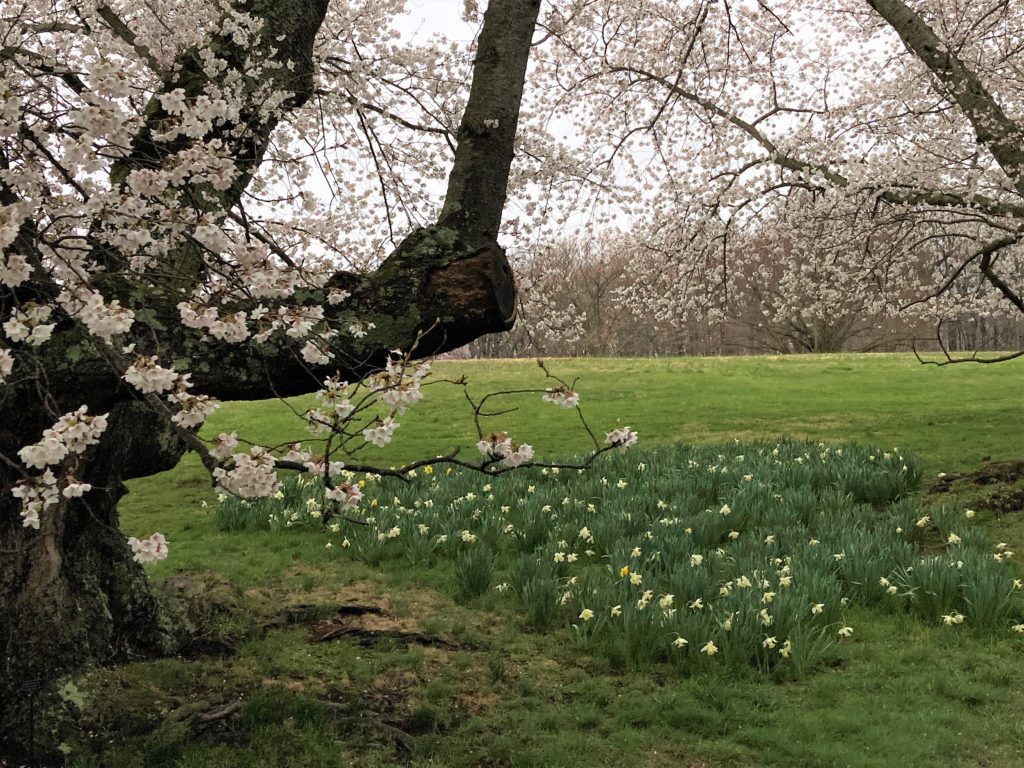
- Cherries!: This week the cherry trees are at peak bloom. The white expanse of Yoshino weeping cherry (Prunus yedoensis ‘Shidari Yoshino’) is a cloud of delicate blossoms at the upper edge of the visitor’s parking lot. Along Garden Lane, the performance includes the white large Sargent cherry trees (Prunus sargentii) and the delicate white-to-pink of the Accolade (Prunus ‘Accolade’) and autumn rosebud (Prunus subhirtella ‘Autumnalis’) cherries.
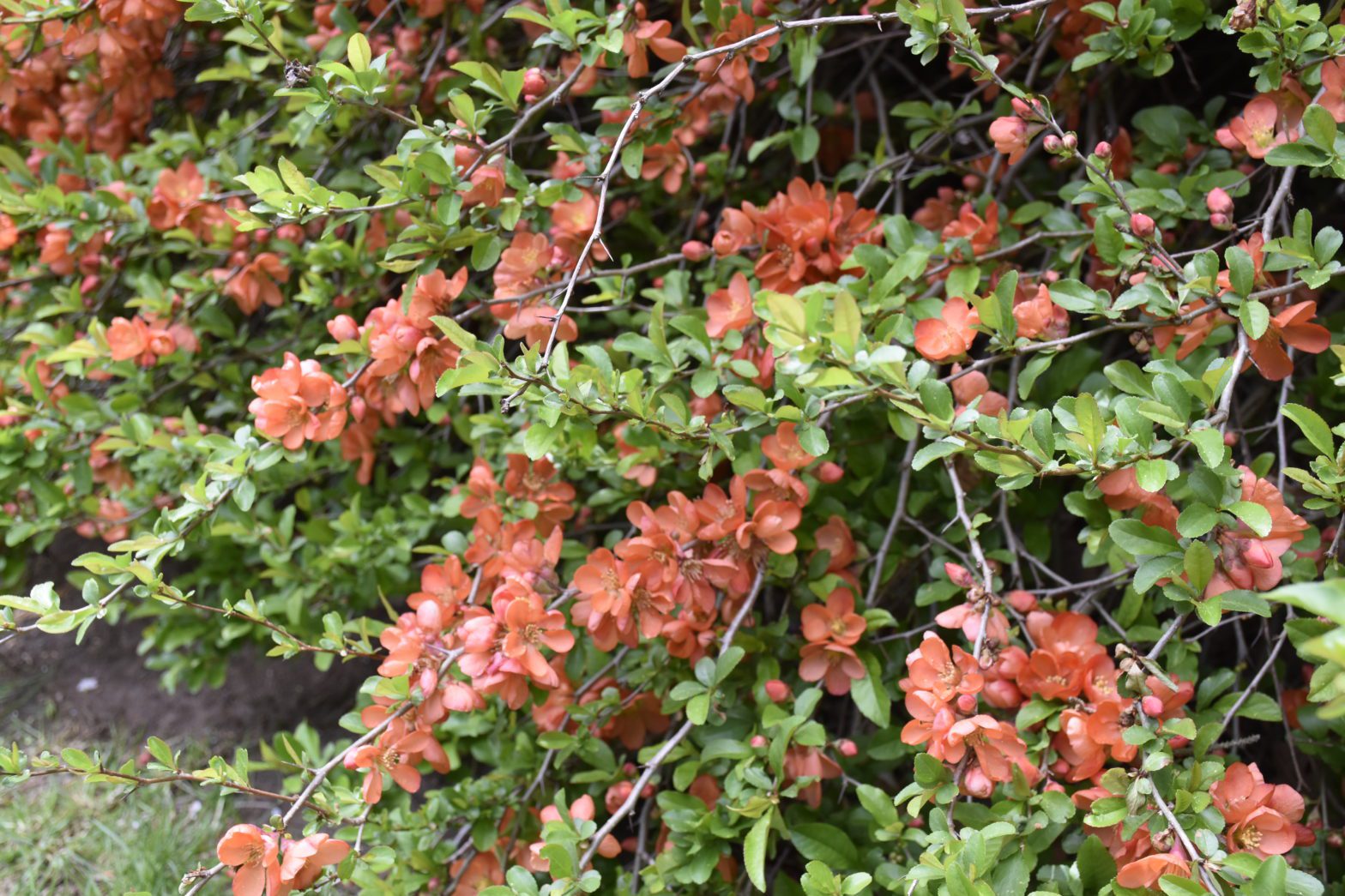
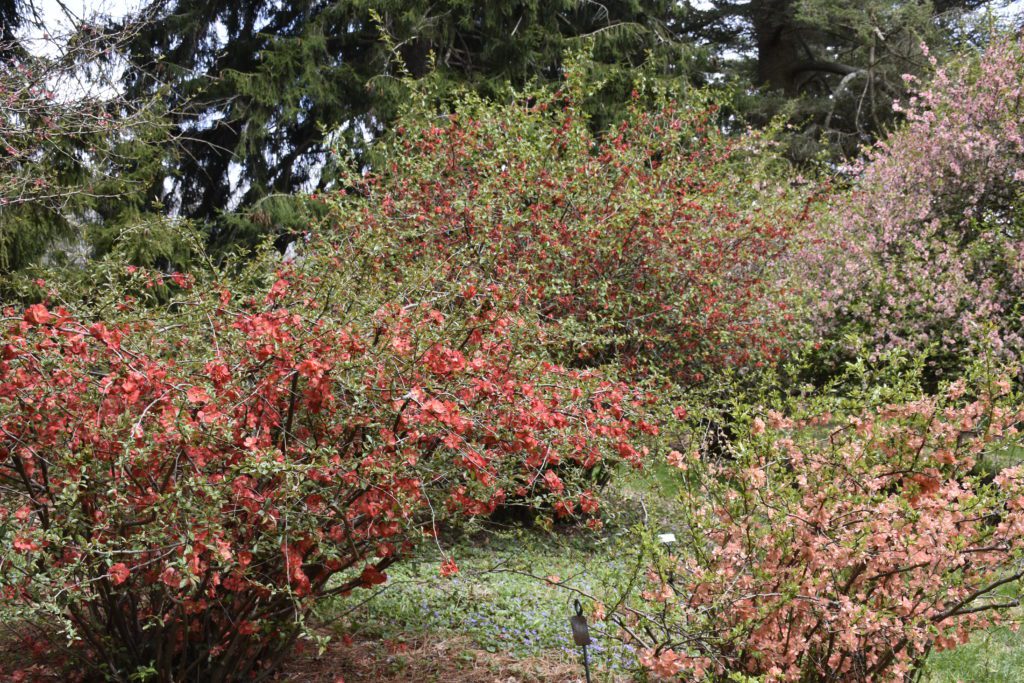
- Sundial Garden and Quince Walk: A flurry of flowers with the flowering quince (Chaenomeles cultivars) showing off in blazing red-orange, orange, red and cooler pale orange & white with a supporting cast of white spiraea (Spiraea x arguta & Spiraea prunifolium cultivars) and a carpet of pale blue starflower (Ipheion uniflorum).
- Funny names: This year there is an abundance of bright white bloodroot (Sanguinaria canadensis) and golden yellow trout lily (Erythronium species). There is a dense group of bloodroot flowers in the lawn at the sidewalk edge of the visitors parking lot midway between the Picnic House and the walkway to the Visitor Center. There is a golden carpet of trout lily flowers on the slope across the stream opposite the Magnolia Bend entrance to the March Walk.
- Amazing anemones: Italian windflowers – (Anemone apennina) form a blue & white carpet extending throughout Azalea Woods, down the March Bank to the stream, & up the opposite bank into Icewell Terrace. They accent other parts of the garden.
- Spring beauties: The native spring beauties (Claytonia virginica) form a white carpet on the lawn sloping down to the Museum and on parts of Oak Hill. Their small, star-shaped white to pale pink flowers can be found throughout the Estate.
- Violets: Blue, blue & white, & yellow violets (Viola species) are blooming throughout the gardens and fields. They are mentioned only here.
.
ENTRANCE DRIVE AND PARKING AREA
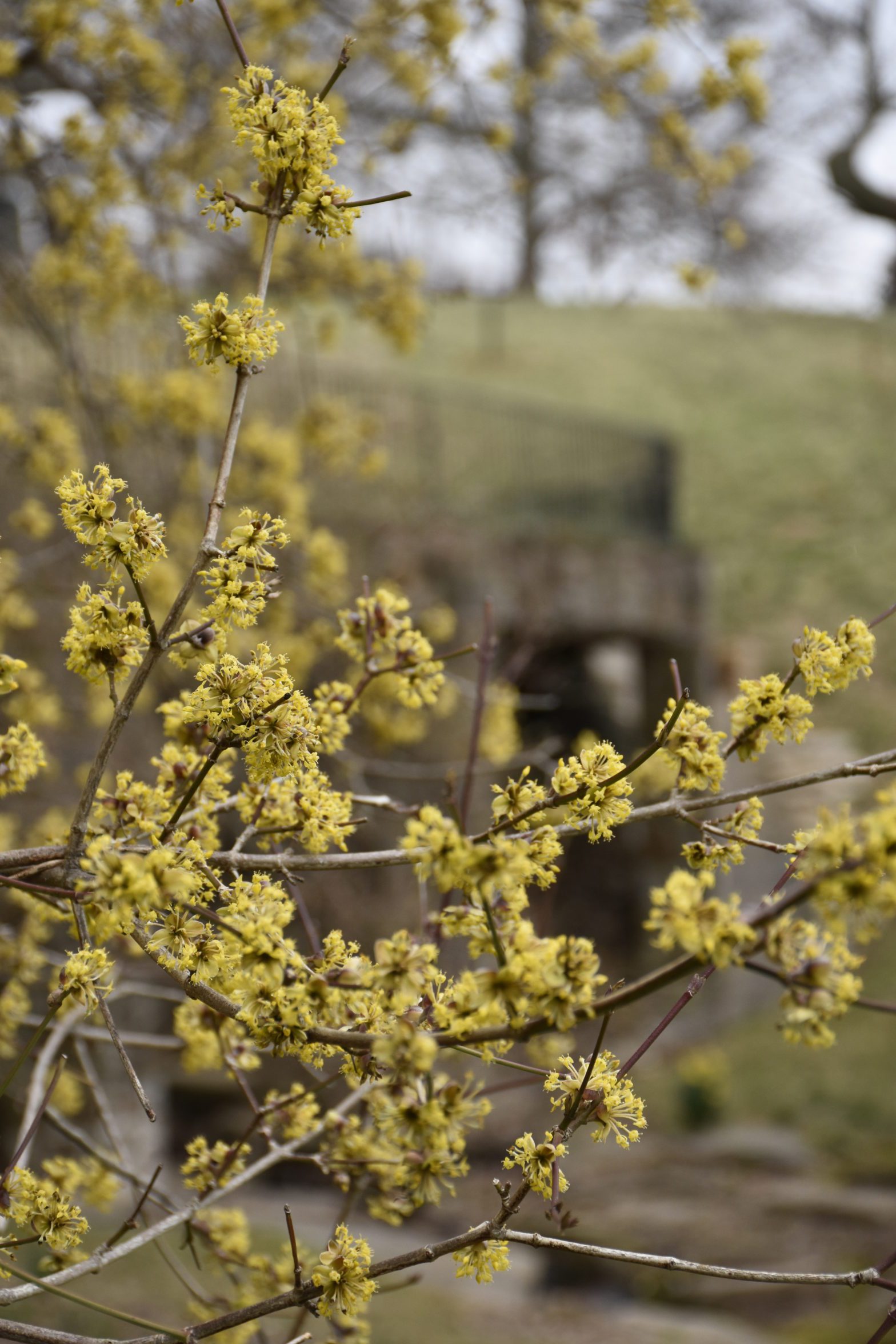
pf Cornus officinalis (Japanese cornel dogwood – yellow)
pb Corylopsis ‘Winterthur’ (Winterthur winter hazel – pale yellow)
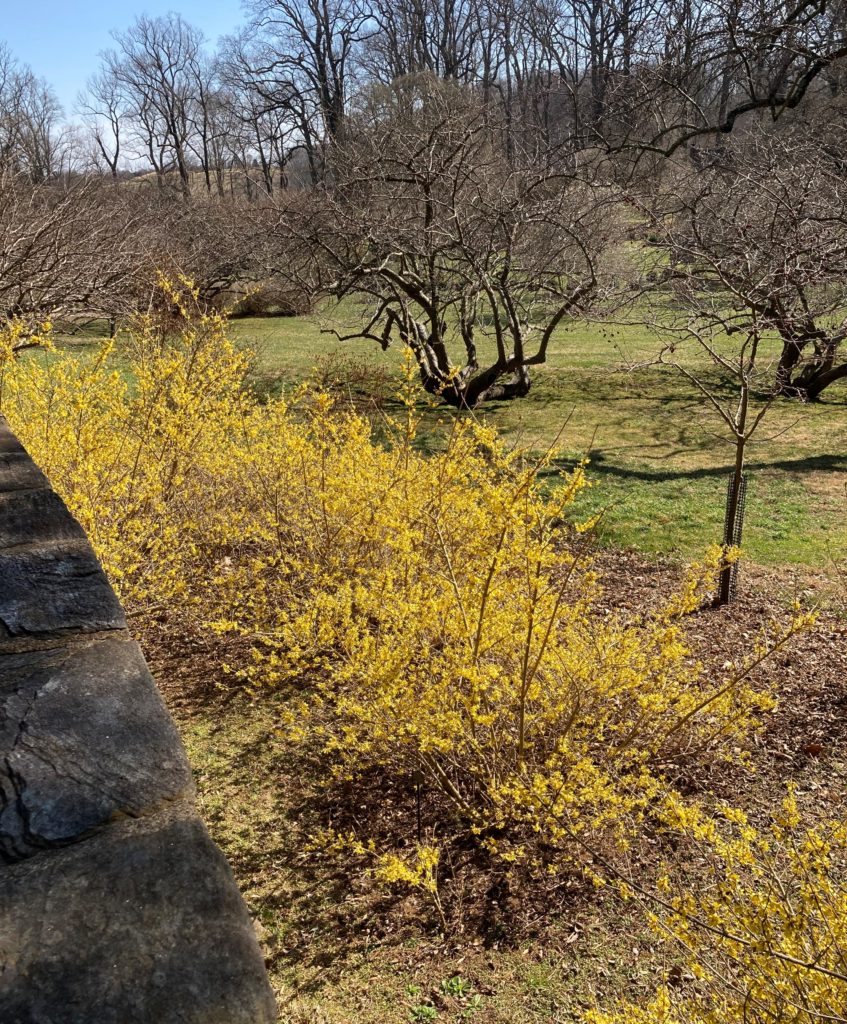
fb Forsythia x intermedia (Border forsythia – yellow)
fb,+ Narcissus species (Daffodil – yellow, white)
fb Prunus yedoensis ‘Shidari Yoshino’ (Yoshino weeping cherry – white)
fb,+ Sanguineria canadensis (Bloodroot – white – in sloping lawn west of Picnic House)
fbb Narcissus species (Daffodil – along Clenny Run)
fb Prunus species (Flowering cherry – pale pink to white – along Clenny Run)
fb,+ Scilla siberica ‘Spring Beauty’ (Siberian squill – royal blue – along Clenny Run)
SUMMER SHRUB SLOPE
fb Narcissus species (Daffodil – white)
PARKING AREA TO VISITOR CENTER
pb Chionodoxa forbesii (Glory-of-the-snow – lavender-blue)
fb Claytonia virginica (Spring beauty – white to pale pink)
b Mertensia virginica (Virginia bluebells – blue)
fb Narcissus species (Daffodil – yellow, white)
fb Pieris japonica (Andromeda – white, pink)
fb Sanguineria canadensis (Bloodroot – white)
WALK FROM VISITOR CENTER TO UNDERPASS
fb Anemone apennina (Italian windflfower – white)
pb Chionodoxa forbesii (Glory-of-the-snow – lavender-blue)
pb Galanthus nivalis ‘Flore Pleno’ (Double snowdrop variety – white & green)
fb Lindera benzoin (Spicebush – yellow)
b Mertensia virginica (Virginia bluebells – blue)
fb Petasites japonicus (Giant butterbur – ivory-white)
fb Sanguineria canadensis (Bloodroot – white)
fb,+ Scilla mischtschenkoana (Squill – white with palest blue stripes)
fb,+ Scilla siberica ‘Spring Beauty’ (Siberian squill – royal blue)
WALK FROM UNDERPASS TO MUSHROOM
fb Anemone apennina (Italian windflfower – pink, white)
pf Chionodoxa forbesii (Glory-of-the-snow – lavender-blue)
fb Claytonia virginica (Spring beauty – white to pale pink)
fb Dentaria laciniata (Cut-leaved toothwort – white)
fbb Mertensia virginica (Virginia bluebells – blue)
fb Narcissus poeticus (Poet’s daffodil – white with yellow cup and bright red rim)
fb Narcissus species (Daffodil – yellow)
fb Prunus species (Flowering cherry – pale pink to white)
fb Scilla mischtschenkoana (Squill – white with palest blue stripes)
SLOPE DOWN TOWARDS MUSEUM
fb Anemone apennina (Italian windflfower – blue, white)
pb Chionodoxa forbesii (Glory-of-the-snow – lavender-blue)
fb,++ Claytonia virginica (Spring beauty – white to pale pink)
fb Mertensia virginica (Virginia bluebells – blue)
pf Scilla bifolia (Two-leaf squill – blue)
pf Scilla siberica ‘Spring Beauty’ (Siberian squill – royal blue)
PEONY GARDEN
fb Claytonia virginica (Spring beauty – white to pale pink)
fb Forsythia suspensa (Weeping forsythia – yellow)
fb Forsythia viridissima (Greenstem forsythia – yellow)
fb Forsythia x intermedia (Border forsythia – yellow)
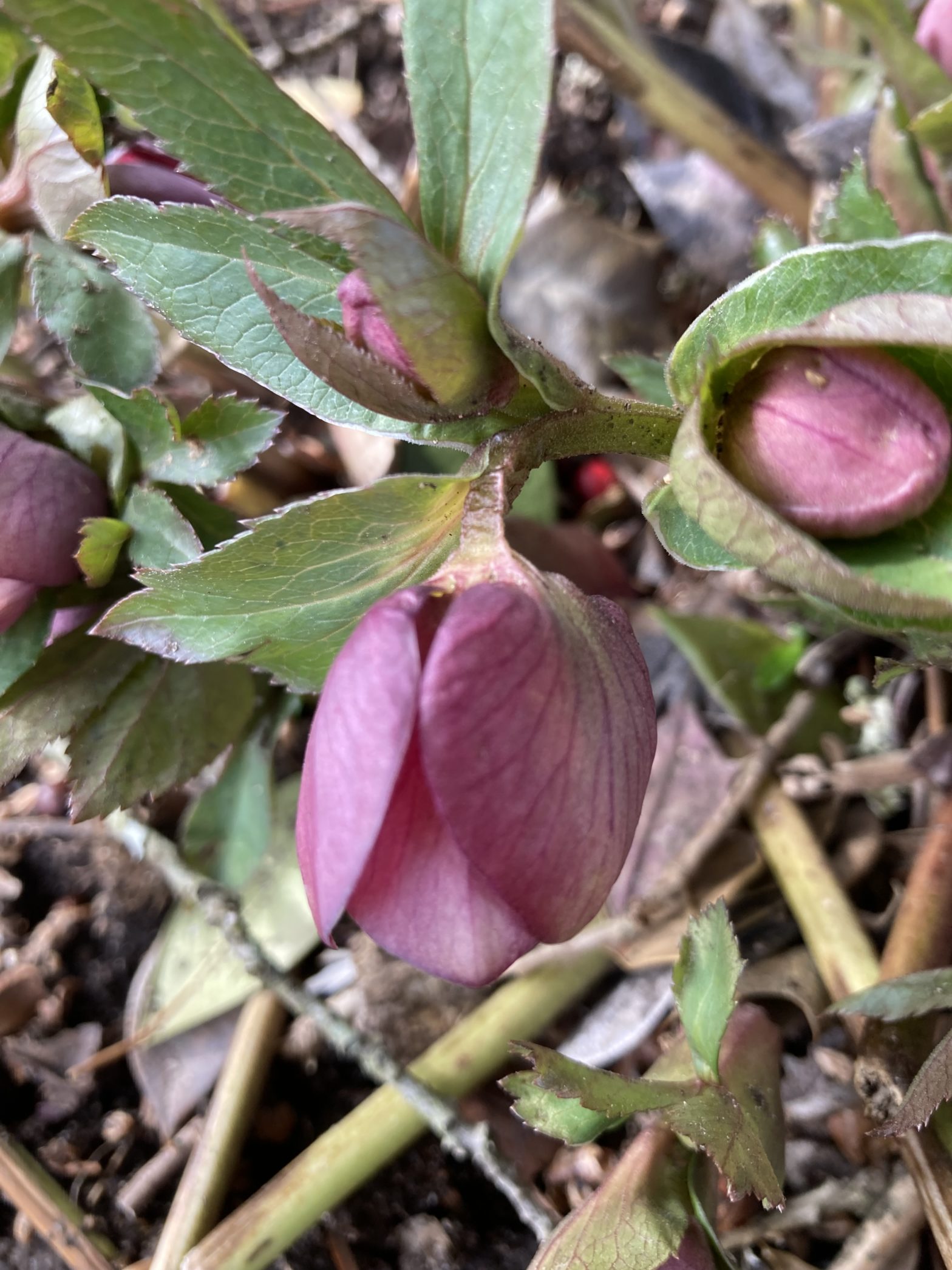
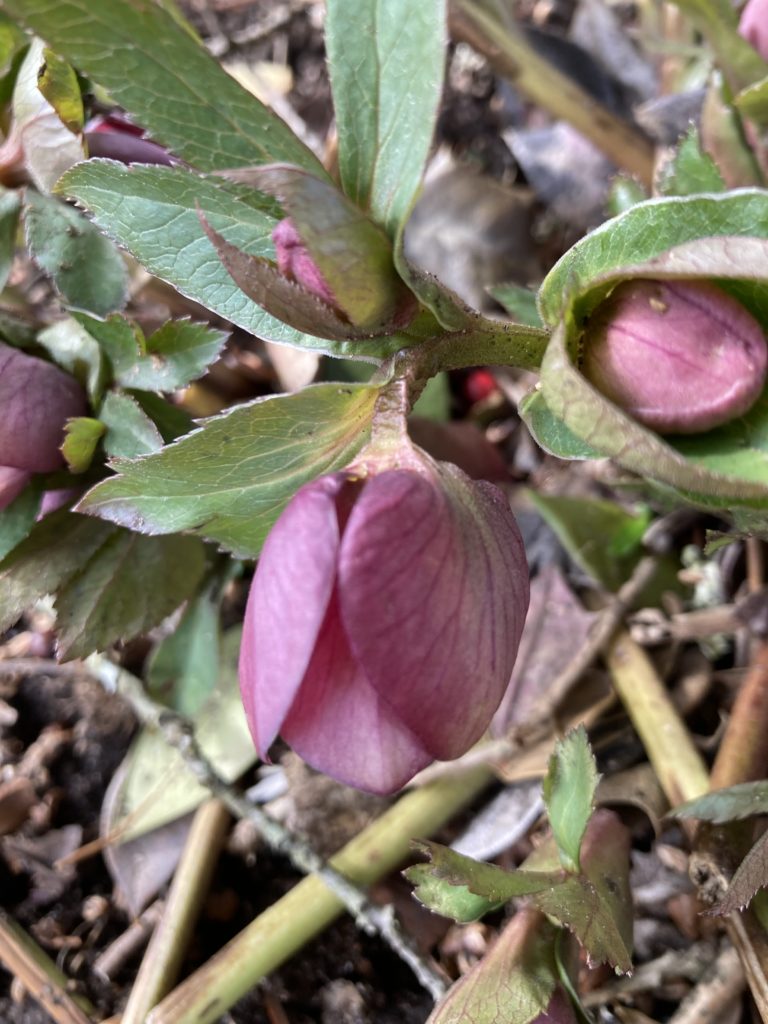
fb Helleborus x hybridus (Lenten rose – pink, white)
fb Lonicera fragrantissima (Fragrant honeysuckle – white)
fb Narcissus species (Daffodil – white – along lower end of walkway)
pf Pieris japonica (Andromeda – white)
b Syringa vulgaris (Lilac – lilac)
AZALEA WOODS
fb,+ Anemone apennina (Italian windflfower – blue, white)
fb Anemonella thalictroides (Rue anemone – white)
b Cercis canadensis f. alba (White flowering redbud – white)
pf,+ Chionodoxa forbesii (Glory-of-the-snow – lavender-blue)
fb Claytonia virginica (Spring beauty – white to pale pink)
fb Dentaria laciniata (Cut-leaved toothwort – white)
fb Erythronium species (Trout lily – yellow)
fb Forsythia x intermedia (Border forsythia – yellow – at field edge of woods)
fb Helleborus x hybridus (Lenten rose – pink, white)
fb Hepatica acutiloba (Hepatica – white)
fb Mertensia virginica (Virginia bluebells – blue)
pf Narcissus species (Daffodil – yellow)
fbb Phlox divaricata (Wild blue phlox – lavender-blue)
b Polemonium reptans (Jacob’s ladder – soft blue – few flowers)
fb Primula elatior (Oxlip primrose – pale yellow)
b Rhododendron ‘Taurus’ (Rhododendron variety – bright red)
fb Sanguineria canadensis (Bloodroot – white)
fb Scilla siberica ‘Spring Beauty’ (Siberian squill – royal blue)
pf Scilla siberica ‘Spring Beauty’ (Siberian squill – royal blue)
b Trillium grandiflorum (Great white trillium – white)
b Trillium sessile (Toadshade – dark red)
fb Uvularia grandiflorum (Great merry bells – yellow)
fbb Viburnum carlesii (Fragrant viburnum – pale pink to white – at field edge of woods)
LOWER AZALEA WOODS
fb Anemone apennina (Italian windflfower – blue, white)
pb Chionodoxa forbesii (Glory-of-the-snow – lavender-blue)
fb Claytonia virginica (Spring beauty – white to pale pink)
b Mertensia virginica (Virginia bluebells – blue)
fb Primula elatior (Oxlip primrose – pale yellow)
fb Rhododendron fargesii (Rhododendron – light pink)
b Rhododendron species (Rhododendron – red)
fb Sanguineria canadensis (Bloodroot – white)
fb,+ Scilla siberica ‘Spring Beauty’ (Siberian squill – royal blue)
b Trillium luteum (Yellow trillium – yellow)
b Trillium sessile (Toadshade – dark red)
UPPER/EAST TERRACE AND STEPS
fb Adonis amurensis (Amur adonis – golden yellow)
pf Buxus sinica var. insularis nana (Boxwood – pale yellow)
fb Camellia japonica ‘April Remembered’ (Camellia cultivar ‘April Remembered‘ – pale pink)
fb Claytonia virginica (Spring beauty – white to pale pink)
fb Corylopsis pauciflora (Winterhazel – pale yellow)
pb Galanthus ‘Starling’ (Snowdrop variety – double white)
fb Leucojum aestivum (Summer snowflake – white ‘bells’)
pb Lonicera fragrantissima (Fragrant honeysuckle – white)
fb Mertensia virginica (Virginia bluebells – blue)
fb Narcissus poeticus (Poet’s daffodil – white with yellow cup and bright red rim)
fb Narcissus variety (Dwarf daffodil – yellow – at top of Glade below Terrace wall)
pf Pieris japonica (Andromeda – white)
pf Pieris japonica ‘Dorothy Wycoff’ (Andromeda cultivar – pale pink)
EAST FRONT OF MUSEUM & Around Corner
pf,+ Helleborus ‘Brandywine’ (Lenten rose varieties – pink, wine, white)
fb Lonicera fragrantissima (Fragrant honeysuckle – white – along Garden Lane across from Bath House)
WALK FROM GLASS CORRIDOR TO REFLECTING POOL
fb Adonis amurensis (Amur adonis – golden yellow)
fb Claytonia virginica (Spring beauty – white to pale pink)
fb Erythronium species (Trout lily – yellow)
pb Galanthus nivalis ‘Flore Pleno’ (Double snowdrop variety – white & green)
fb Mertensia virginica (Virginia bluebells – blue)
pb Narcissus species (Daffodil – yellow)
WALK FROM FISH PONDS – THE GLADE – TO BRIDGE
fb,+ Anemone apennina (Italian windflfower – blue, white, pink)
fb Anemonella thalictroides (Rue anemone – white)
pb Chionodoxa forbesii (Glory-of-the-snow – lavender-blue)
fb Claytonia virginica (Spring beauty – white to pale pink)
fb Corydalis cheilanthifolia (Fern leaf corydalis – yellow)
fb Dentaria laciniata (Cut-leaved toothwort – white)
fb Dicentra cucullaria (Dutchman’s breeches – white)
fb Epimedium x versicolor ‘Sulphureum’ (Fairy wings – soft yellow)
fb Erythronium species (Trout lily – yellow)
fb Erythronium species (Trout lily – white – 1 plant)
pb Lonicera fragrantissima (Fragrant honeysuckle – white)
fb,+ Mertensia virginica (Virginia bluebells – blue)
pb Narcissus species (Dwarf daffodil – yellow)
fbb Phlox divaricata (Wild blue phlox – lavender-blue)
fbb Primula species (Candelabra primrose – red)
pb Scilla siberica ‘Spring Beauty’ (Siberian squill – royal blue)
fbb Tiarella species (Foamflower – white)
fb Uvularia grandiflorum (Great merry bells – yellow)
MARCH BANK
fb,++ Anemone apennina (Italian windflower – blue, white)
fb,+ Anemone ranunculoides (Buttercup windflower – yellow)
pb Chionodoxa forbesii (Glory-of-the-snow – lavender-blue)
fb Claytonia virginica (Spring beauty – white to pale pink)
pf Cornus officinalis (Japanese cornel dogwood – yellow)
fb Dentaria laciniata (Cut-leaved toothwort – white)
fb Dicentra cucullaria (Dutchman’s breeches – white)
fb Erythronium species (Trout lily – yellow)
fb Magnolia stellata (Star magnolia – pale pink to white – along stream)
fb Mertensia virginica (Virginia bluebells – blue)
fb Narcissus poeticus (Poet’s daffodil – white with yellow cup and bright red rim)
pb Narcissus species (Daffodil – yellow)
fb Sanguineria canadensis (Bloodroot – white)
pb Scilla siberica ‘Spring Beauty’ (Siberian squill – royal blue)
fb Stylophorum diphyllum (Celandine poppy – golden yellow)
fb Trillium sessile (Toadshade – dark red)
fb Uvularia grandiflorum (Great merry bells – yellow)
MAGNOLIA BEND AND WALK ON SOUTH SIDE OF STREAM
pb Chionodoxa forbesii (Glory-of-the-snow – lavender-blue)
fb Claytonia virginica (Spring beauty – white to pale pink)
fb Dentaria laciniata (Cut-leaved toothwort – white)
fb Dicentra cucullaria (Dutchman’s breeches – white)
fb,+ Erythronium species (Trout lily – yellow)
b Magnolia x soulangeana (Saucer magnolia – pink)
fb Narcissus poeticus (Poet’s daffodil – white with yellow cup and bright red rim)
pb Narcissus species (Daffodil – yellow)
pb Prinsepia sinensis (Cherry prinsepia – yellow)
fb Rhododendron ‘Conewago’ (Conewago rhododendron – pinkish lavender)
fb Sanguineria canadensis (Bloodroot – white)
pb Scilla siberica ‘Spring Beauty’ (Siberian squill – royal blue)
fb Prunus ‘Accolade’ (Flowering cherry hybrid – light pink)
fb Prunus sargentii (Sargent’s cherry – white)
fb Prunus subhirtella ‘Autumnalis’ (Autumn rosebud cherry – pale pink to white)
pb Prunus tomentosa (Manchu cherry – white, pink)
fb Rhododendron ‘Keiskrak’ (Azalea variety – white)
pf Rhododendron mucronulatum ‘Cornell Pink’ (Korean rhododendron – pink)
fb Scilla siberica (Siberian squill variety – white)
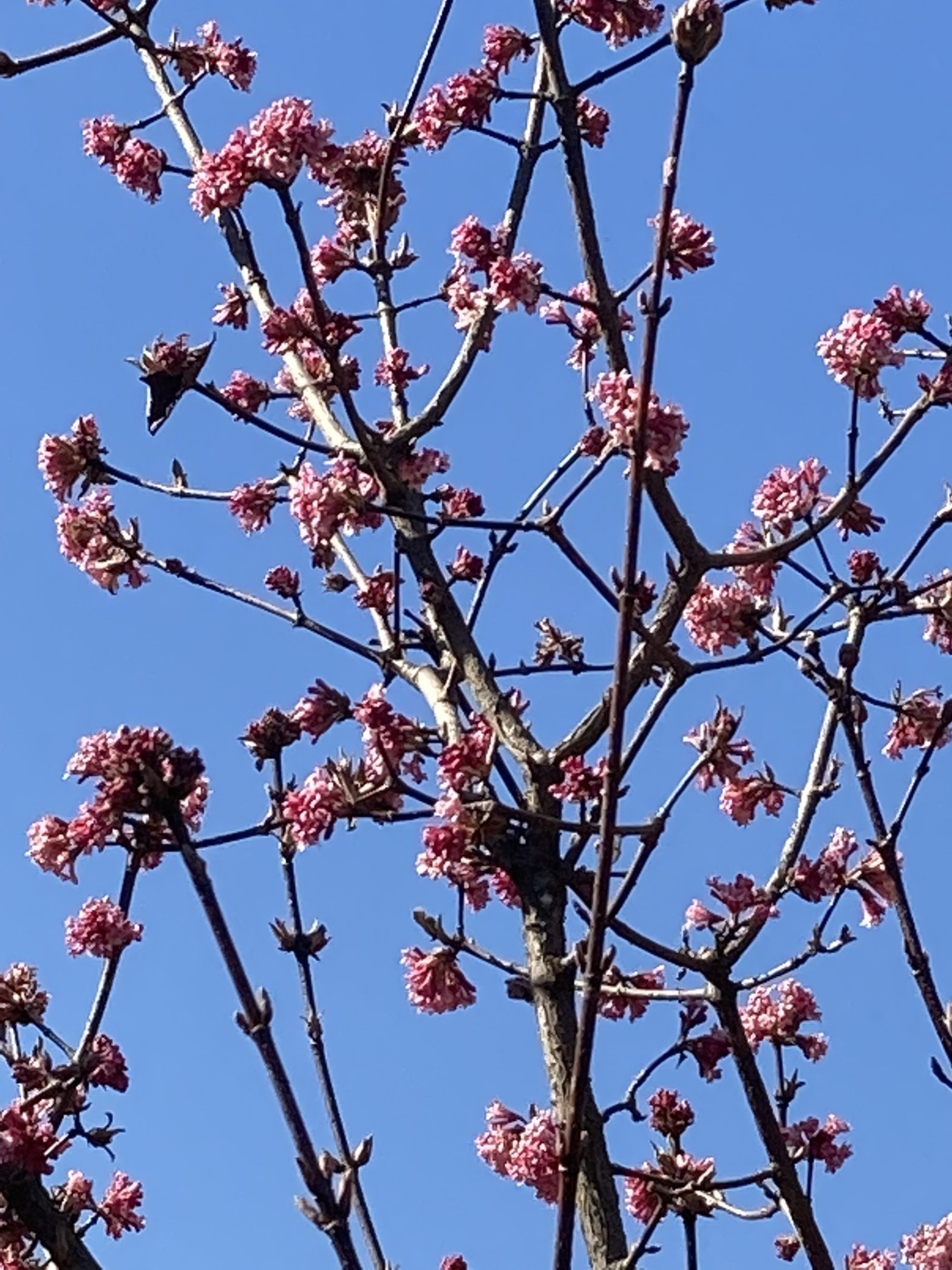
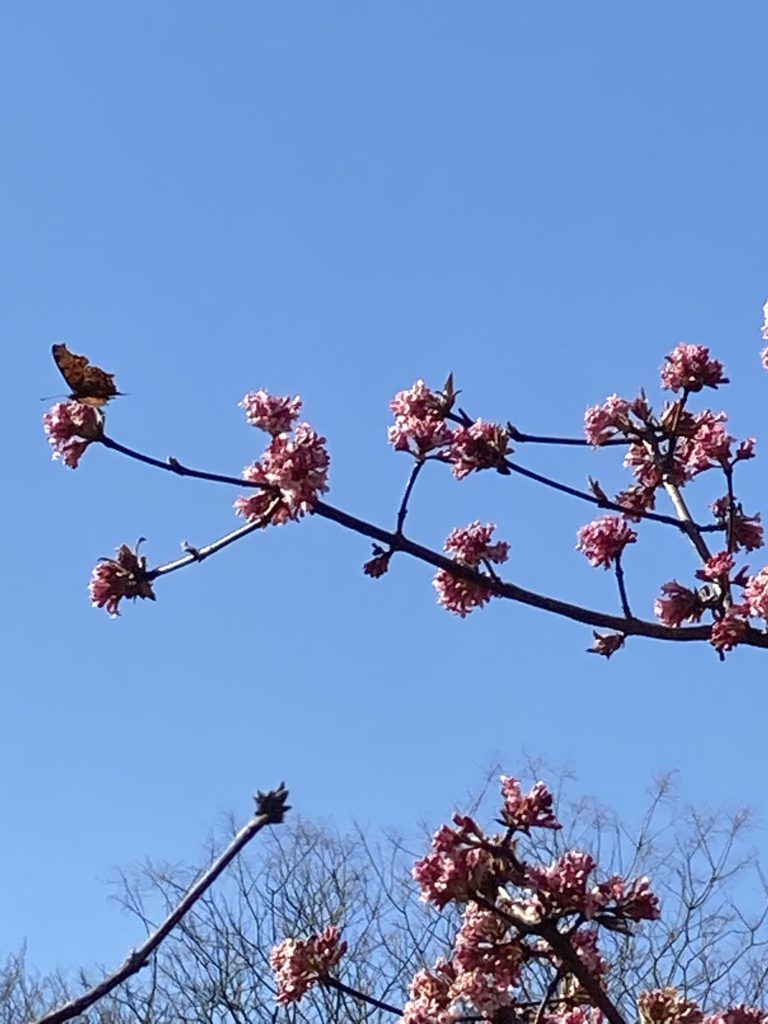
fb Viburnum farreri (Fragrant viburnum – pink to white)
WINTERHAZEL WALK
fb Cephalotaxus harringtonii var. ‘Drupacea Duke Gardens’ (Japanese plum yew – creamy yellow)
pb Chionodoxa forbesii (Glory-of-the-snow – lavender-blue)
fb Corydalis solida subspecies densiflora (Bulb corydalis – mauve)
pf Corylopsis platypetala (Large flowered winter hazel – greenish yellow)
fb Corysopsis species (Winter hazel – pale yellow)
pf Corylopsis spicata (Spiked winter hazel – greenish yellow)
b Helleborus foetidis (Bear’s foot hellebore – greenish)
fb Helleborus x hybridus (Lenten rose – pink, white – few flowers)
fb Hepatica acutiloba (Hepatica – white)
fb Jeffersonia diphylla (Twinleaf – white)
fb Lathyrus vernus (Spring vetchling – pink)
fb Narcissus poeticus (Poet’s daffodil – white with yellow cup and bright red rim)
fb Primula abchasica (Primrose – cerise)
pb Prinsepia sinensis (Cherry prinsepia – yellow)
fb Rhododendron carolinianum Gable hybrid #3 (Hybrid azalea – lavender-pink)
b Rhododendron ‘Keiskrak’ (Azalea variety – white)
pf Rhododendron mucronulatum (Korean rhododendron – rosy lavender)
pb Scilla siberica ‘Spring Beauty’ (Siberian squill – royal blue)
ICEWELL TERRACE
fb,+ Anemone apennina (Italian windflfower – white)
pb Chionodoxa forbesii (Glory-of-the-snow – lavender-blue)
fb,+ Claytonia virginica (Spring beauty – white to pale pink)
fb Corydalis solida subspecies densiflora (Bulb corydalis – mauve)
fb Forsythia suspensa (Weeping forsythia – yellow)
fb Hepatica acutiloba (Hepatica – white)
fb Jeffersonia diphylla (Twinleaf – white)
fb Lathyrus vernus (Spring vetchling – purple, pink)
fb Lindera benzoin (Spicebush – yellow)
fb Mertensia virginica (Virginia bluebells – blue)
fb Narcissus poeticus (Poet’s daffodil – white with yellow cup and bright red rim)
fb Primula elatior (Oxlip primrose – pale yellow)
fb Sanguineria canadensis (Bloodroot – white)
pf Scilla siberica ‘Spring Beauty’ (Siberian squill – royal blue)
fbb Trillium luteum (Trillium – yellow)
b Trillium sessile (Toadshade – dark red)
fb Uvularia grandiflorum (Great merry bells – yellow)
PINETUM
fb Chaenomeles cultivars (Flowering quince – red, orange, peach, white)
pb Chionodoxa forbesii (Glory-of-the-snow – lavender-blue)
fbb Exochorda giraldii x wilsonii (Wilson pearlbush – white)
fb Helleborus x hybridus (Lenten rose – pink, white, wine red)
fb,+ Ipheion uniflorum (Starflower – pale blue)
fbb Kerria japonica ‘Golden Guinea’ (Japanese kerria variety – golden yellow)
fb Malus x ‘Cardinal’ (Flowering crabapple variety – red)
fb Malus halliana ‘Parkmanii’ (Flowering crabapple variety – pink)
fb Pachysandra procumbens (Native pachysandra – cream ‘bottlebrush’ flowers emerging from the soil)
fb Prunus ‘Accolade’ (Flowering cherry – pale pink to white)
pf Rhododendron mucronulatum ‘Cornell Pink’ (Korean rhododendron – pink)
b Rhododendron schlippenbachii (Royal azalea – pale pink to white)
b Rhododendron schlippenbachii ‘Polly Hill’(Royal azalea variety – white)
fb Spiraea x arguta (Garland spiraea – white)
fb Spiraea prunifolia ‘Plena’ (Bridal wreath spiraea – double white)
b Viburnum carlesii (Mayflower viburnum – pink to white)
b Viburnum macrocephalum ‘Sterile’ (Snowball viburnum variety – greenish-white)
fb Viburnum x ‘Eskimo’ (Viburnum variety – pale pink to white)
SUNDIAL GARDEN
fb Chaenomeles cultivars (Flowering quince – orange, peach)
fb Chionodoxa luciliae ‘Alba’ (Glory-of-the-snow – white)
pf Forsythia viridissima ‘Bronxensis’ (Greenstem forsythia – yellow)
fb Ipheion uniflorum (Starflower – pale blue)
pf Magnolia stellata ‘Royal Star’ (Star magnolia variety – white)
pf Magnolia stellata ‘Waterlily’ (Star magnolia variety – pale pink to white)
pf Magnolia stellata ‘Centennial’ (Star magnolia variety – white)
pf Magnolia ‘Wada’s Memory’ (Wada’s memory magnolia – white)
pf Magnolia x loebneri ‘Merril’ (Merril magnolia – white)
b Magnolia x soulangeana (Saucer magnolia – pink)
pb Magnolia x soulangeana ‘Alexandrina’ (Saucer magnolia variety – dark pink)
b Magnolia x soulangeana ‘San Jose’ (Saucer magnolia variety – pink)
fb Narcissus species (Daffodil – white)
fb Prunus ‘Hally Jolivette’ (Cherry variety)
fb Rhododendron ‘Conewago’ (Conewago rhododendron – pinkish lavender)
fb Scilla siberica (Siberian squill variety – white, few royal blue)
fb Spiraea x arguta (Garland spiraea – white)
fb Spiraea prunifolia ‘Plena’ (Bridal wreath spiraea – double white)
fb Syringa hyacinthiflora (Lilac species – lilac-pink – few flowers)
fbb Tiarella species (Foamflower – white)
b Viburnum carlesii (Mayflower viburnum – pink to white)
b Viburnum macrocephalum ‘Sterile’ (Snowball viburnum variety – greenish-white)
fbb Viburnum x carlcephalum (Viburnum hybrid – white)
TRAFFIC CIRCLE
pf Chionodoxa forbesii (Glory-of-the-snow – lavender-blue)
fb Claytonia virginica (Spring beauty – white to pale pink)
pf Scilla siberica ‘Spring Beauty’ (Siberian squill – royal blue)
ENCHANTED WOODS
fb Anemone apennina (Italian windflfower – white, blue)
fb Anemone nemorosa (European wood anemone – white)
pb Chionodoxa forbesii (Glory-of-the-snow – lavender-blue)
fb Claytonia virginica (Spring beauty – white to pale pink)
fb Epimedium x versicolor ‘Sulphureum’ (Fairy wings – soft yellow)
fb Helleborus x hybridus (Lenten rose – dark pink, light pink, white)
fb,+ Mertensia virginica (Virginia bluebells – blue, few pink)
fb Narcissus species (Daffodil – yellow, white)
fb Rhododendron ‘Alight’ (Glenn Dale hybrid azalea – white with purple)
fb Sanguineria canadensis (Bloodroot – white)
OAK HILL–East Side
fbb Cercis canadensis (Eastern redbud – pinkish lavender)
pf Chionodoxa forbesii (Glory-of-the-snow – lavender-blue)
fb,+ Claytonia virginica (Spring beauty – white to pale pink)
fb,+ Leucojum aestivum (Summer snowflake – white ‘bells’)
fb Mertensia virginica (Virginia bluebells – blue)
fb Narcissus variety (Daffodil – bi-color)
fbb Phlox divaricata (Wild blue phlox – lavender-blue)
fb Sanguineria canadensis (Bloodroot – white)
pf Scilla siberica ‘Spring Beauty’ (Siberian squill – royal blue)
fb Trillium sessile (Toadshade – dark red)
fb Uvularia grandiflorum (Great merry bells – yellow)
OAK HILL-West Side
fb,+ Claytonia virginica (Spring beauty – white to pale pink)
fb Mertensia virginica (Virginia bluebells – blue)
pf Narcissus species (Daffodil – yellow)
fb Sanguineria canadensis (Bloodroot – white)
QUARRY, ADJACENT WALKS, AND OUTLET STREAM
b Cercis canadensis (Eastern redbud – pinkish lavender)
fb Claytonia virginica (Spring beauty – white to pale pink)
pf Cornus officinalis (Japanese cornel dogwood – yellow)
pf Corylopsis pauciflora (Winterhazel – pale yellow)
fb,+ Epimedium x versicolor ‘Sulphureum’ (Fairy wings – soft yellow)
pb Mahonia bealei (Leatherleaf mahonia – yellow)
fb Mertensia virginica (Virginia bluebells – blue)
pf Narcissus jonquilla (Wild jonquil – yellow)
fb Narcissus species (Daffodil – white, yellow)
fbb Phlox divaricata (Wild blue phlox – lavender-blue)
fb Pieris ‘Forest Flame’ (Andromeda variety – white)
fb Pieris japonica (Andromeda – white)
fb Primula sieboldii (Japanese primrose – bright pink)
b Primula species (Candelabra primrose – red – 1 plant)
fb Sanguineria canadensis (Bloodroot – white)
pb Scilla siberica ‘Spring Beauty’ (Siberian squill – royal blue)
fbb Trillium species (Trillium)
b Uvularia grandiflorum (Great merry bells – yellow)
Acer palmatum ‘Seigai’ (Japanese maple variety – has bright peach colored leaves this week
fbb Cercis canadensis (Eastern redbud – pinkish lavender)
pb Chionodoxa forbesii (Glory-of-the-snow – lavender-blue)
fb Forsythia ‘Winterthur’ (Forsythia variety – yellow)
fb Muscari armeniacum (Grape hyacinth – dark blue)
fb Narcissus species (Daffodil – yellow, white)
fb Rhododendron mucronulatum (Korean rhododendron – rosy-lavender)
pb Scilla siberica ‘Spring Beauty’ (Siberian squill – royal blue)
fbb Viburnum buddleiafolium (Wolly viburnum – dark pink buds, few flowers)
b/fbb Viburnum macrocephalum ‘Sterile’ (Snowball viburnum variety – greenish-white)
b Viburnum rhytidophylloides (Leatherleaf viburnum – off-white)
b Viburnum x burkwoodii (Burkwood viburnum – white)
WEST FRONT OF MUSEUM, COTTAGE, AND CLENNY RUN
fb Forsythia x intermedia (Border forsythia – yellow)
fb Helleborus x hybridus ‘Pine Knot Select-Our Best’ (Hellebore varieties/Lenten Rose – apricot, pink, pink spotted)
fbb Magnolia ‘Elizabeth’ (Magnolia hybrid – pale yellow)
fb Magnolia x soulangeana (Saucer magnolia – pink, white – along Clenny Run)
fb Narcissus species (Daffodil – yellow)
fb Prunus species (Flowering cherry – white – across Clenny Run)
GREENHOUSE AREA
fb Narcissus ‘Beryl’ (Cyclamineus daffodil – white corolla, yellow cup)
fb Narcissus ‘Bittern’ (Daffodil – yellow)
pf Narcissus ‘Cragford’ (Daffodil – white corolla, orange cup)
fb Narcissus ‘Hawera’ (Triandrus daffodil – yellow)
fb Narcissus ‘Horace’ (Poeticus daffodil)
pf Narcissus ‘Julia Jane’ (Daffodil – yellow)
pf Narcissus ‘Minnow’ (Tazetta daffodil – yellow)
fb Narcissus ‘Oxford Gold’ (Daffodil variely – golden yellow ‘hoop skirt’ corolla)
fb Narcissus ‘Picoblanco’ (Large cup daffodil – white)
fb Narcissus ‘Toto’ (Miniature daffodil – yellow)
fb Narcissus ‘Sweetness’ (Jonquilla daffodil – yellow)
fb Narcissus ‘Sweet Smiles’ (Jonquilla daffodil – yellow)
fb Narcissus ‘White Lady’ (Small cup daffodil – white)
GARDEN LANE MEADOW – below Brown’s Woods
fb,++ Narcissus species (Daffodil – yellow, white)
fb Prunus species (Flowering cherry – white)
Bloom Report presented by: Pauline Myers