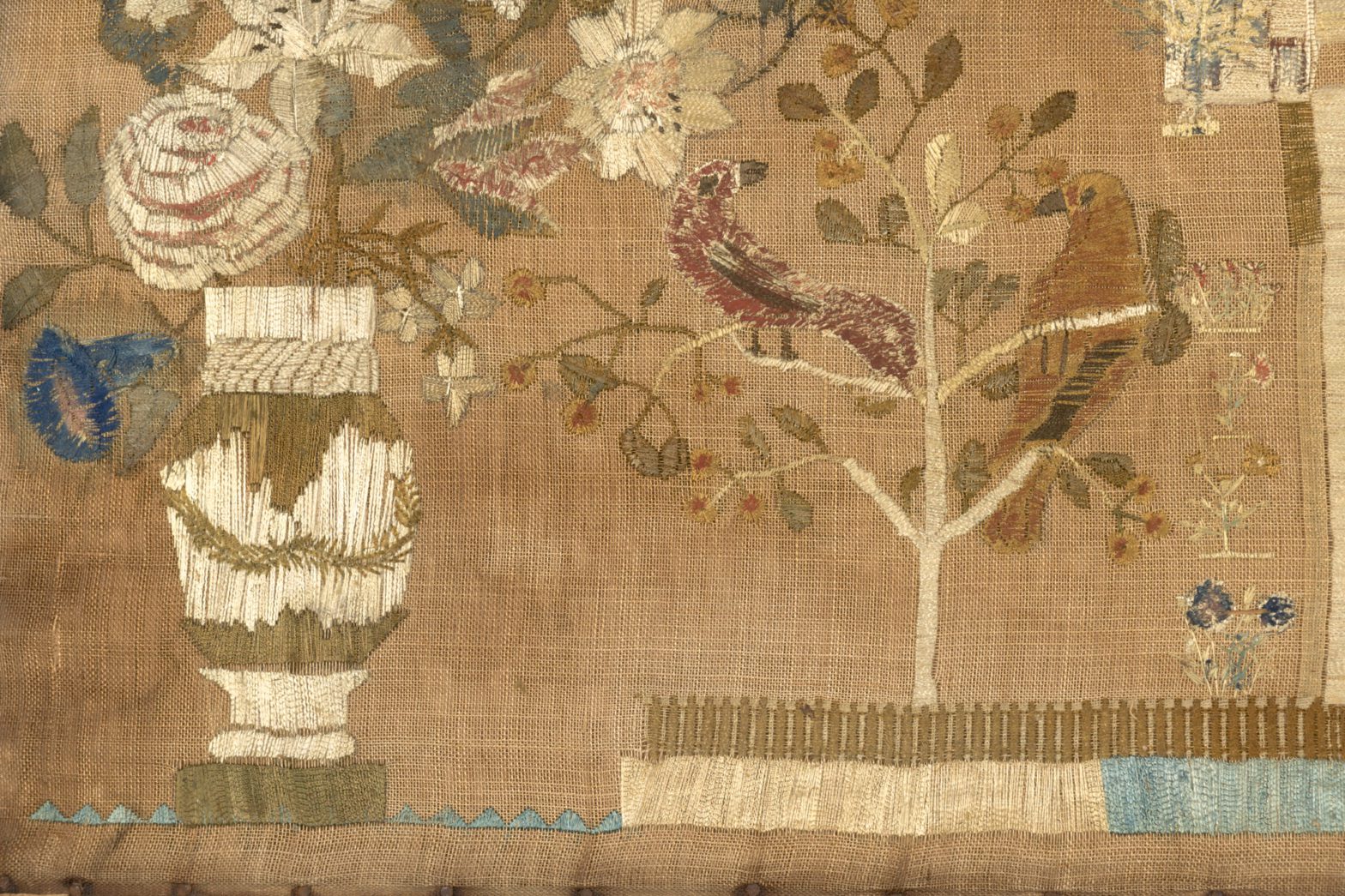
The Needle’s I: Stitching Identity examines how we work with needles and thread to create a sense of self. From historic samplers and clothing to contemporary pieces, the exhibition presents stitchers and stitchery from the 18th century to the present day and explores these makers, their marks, and their stories through themes of family, memory, and craft tradition. The exhibit is inspired by The Needle’s Eye: Women and Work in the Age of Revolution, Marla Miller’s important examination of 18th and early 19th-century identity, gender, and craft and moves it to the present day.
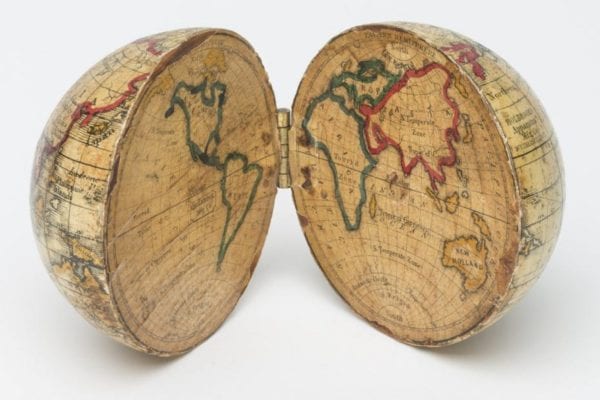
This path-breaking exhibition charts objects and imagery related to America’s historical fascination with maps. Created by Martin Brückner, Professor in English and American Literature at the University of Delaware, Common Destinations was displayed in the Winterthur Galleries from April 2013 to January 2014. It features more than 100 Winterthur library and museum objects as well as loans from other collections.
Exhibition to tell story of the designer and her decades-long career
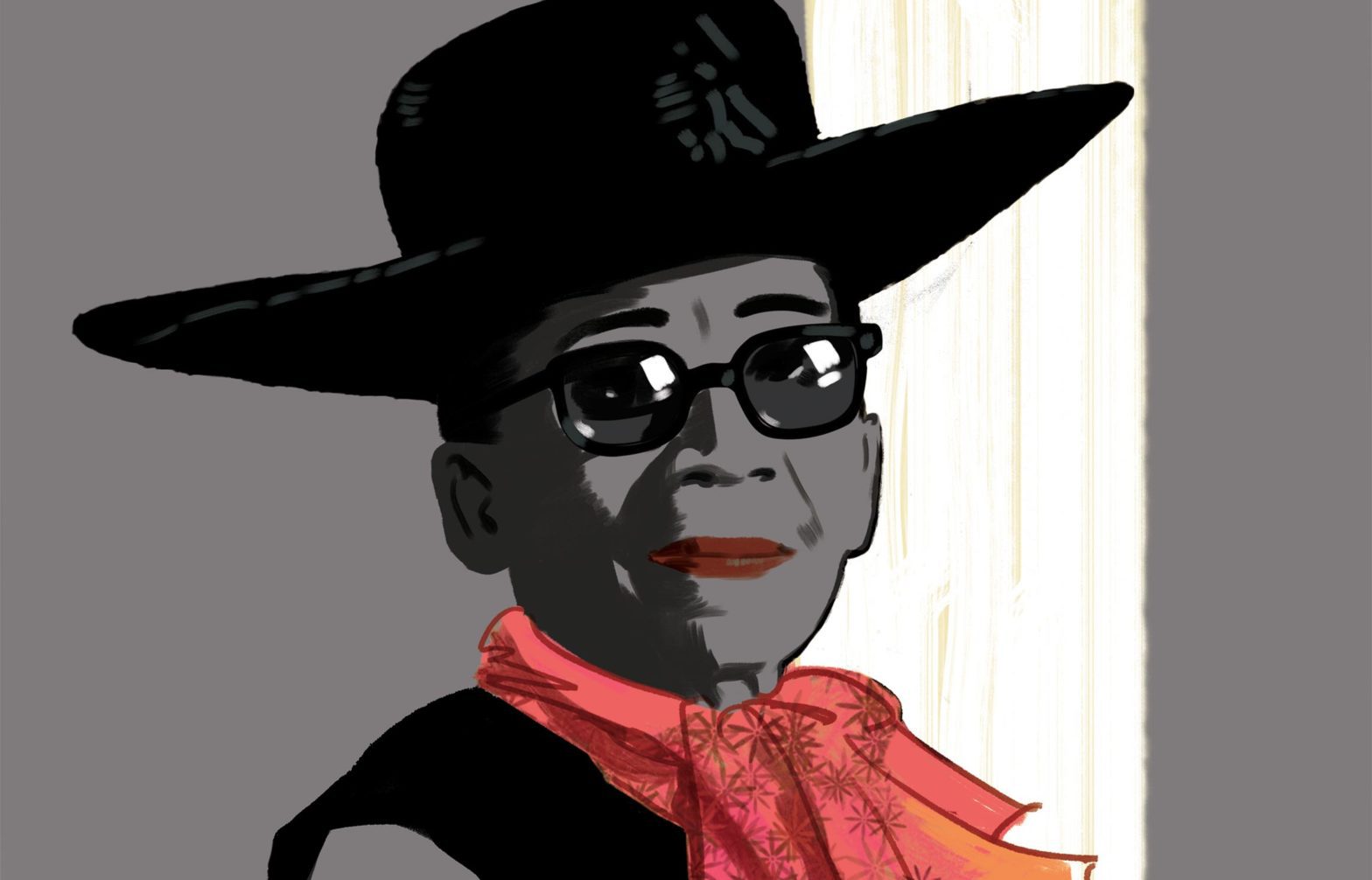
WINTERTHUR, DE (September 12, 2022) – An exhibit entitled Ann Lowe: American Couturier will present the life and work of the remarkable and influential American designer who designed couture gowns for debutantes, heiresses, actresses, and society brides, including Jacqueline Kennedy, Olivia de Havilland, and Marjorie Merriweather Post. The exhibit will be open at Winterthur Museum, Garden, & Library from September 9, 2023, to January 7, 2024.
In 1964, The Saturday Evening Post referred to fashion designer Ann Lowe as “Society’s Best-Kept Secret.” Lowe made gowns that influenced international style—intricately constructed, beautifully designed, and custom-made for each client. For decades, she remained virtually unknown to the wider public. Since then, too little recognition has been given to her influence on American fashion. The exhibition will reveal her evolution as a designer from the 1920s to the 1960s, illuminating her ongoing engagement with fashion trends and shifting cultural moments.
This is the largest exhibition of Lowe’s work to date, featuring 40 gowns, many never before on public view. Ann Lowe’s recently emerging visibility as a designer stands in contrast to much of her career and the countless unrecognized Black dressmakers and designers who have contributed to American fashion for generations, including her own grandmother and mother. She blazed a path for others to follow and her legacy is still felt in fashion culture.
The exhibition will also feature the work of contemporary couturiers and fashion designers whose current design practices, perspectives, and career paths reflect the trajectory of American fashion emanating from Lowe’s foundation. These include B Michael, Tracy Reese, Amsale Aberra, and Bishme Cromartie. Elizabeth Way, associate curator at The Museum at the Fashion Institute of Technology, is guest curator of the exhibition.
This exhibition is made possible through support from the Terra Foundation for American Art, the Coby Foundation, Ltd., and the National Endowment for the Humanities.
Arrive on time. Programs start and end at scheduled times. If you arrive late, we are unable to extend the program.
Review museum manners before your visit. Students should walk, use quiet voices, and only touch objects when instructed. The gardens are also part of the museum collection, so students should not climb trees, throw stones, or pick flowers.
Adults should model positive behavior. Staff and chaperones are most helpful when they remain with their assigned groups, manage student behavior, allow students to answer questions, and encourage good museum manners.
Name tags are required for all students.
No cell phones or headphones should be used by students, chaperones, or school staff during the visit.
Food and personal items. Food, drinks, gum, pens, and coats are not allowed in the Museum or Galleries. Water is permitted—and encouraged—for outdoor programs.
Chaperone Policy
You may bring as many school staff for free as you feel necessary.
You may bring one parent/guardian chaperone for every five students.
Group assignments. You will receive an email one to two weeks before your visit with instructions on how to divide students into groups. Group sizes are determined by museum policy and staffing.
Bag Policy
No bag restrictions for Wonder & Wander in Enchanted Woods, Garden Explorers, Hike, and Careers at the Museum programs.
Bags may be carried only by school staff on Adopt an Object, Bugs in the Museum, House Tour, Gallery Tour, and Highlights Tour programs. Bags must be carried on the front of the person.
No bags allowed on Maker & Marketplace, Discover the Science of Museum Collections, and Making a Museum programs. Hats and lanyards are also not permitted. If school staff attending one of these programs need to carry medication in a bag, it must be placed in a pocket, carried by hand, or transferred to a plastic bag provided by Winterthur.
In-Class Programs
Make sure students are wearing name tags.
Encourage students to practice good classroom manners.
Encourage respectful handling of demonstration items.
Model active listening and participation.
Virtual Programs
Log on a few minutes before your program begins.
Ensure all names appear accurately.
When applicable, use the chat function appropriately.
Celebrate the 25th anniversary of our children’s garden with this 45-minute garden walk. $10 with admission; $5 for Members. Registration recommended; capacity limited.
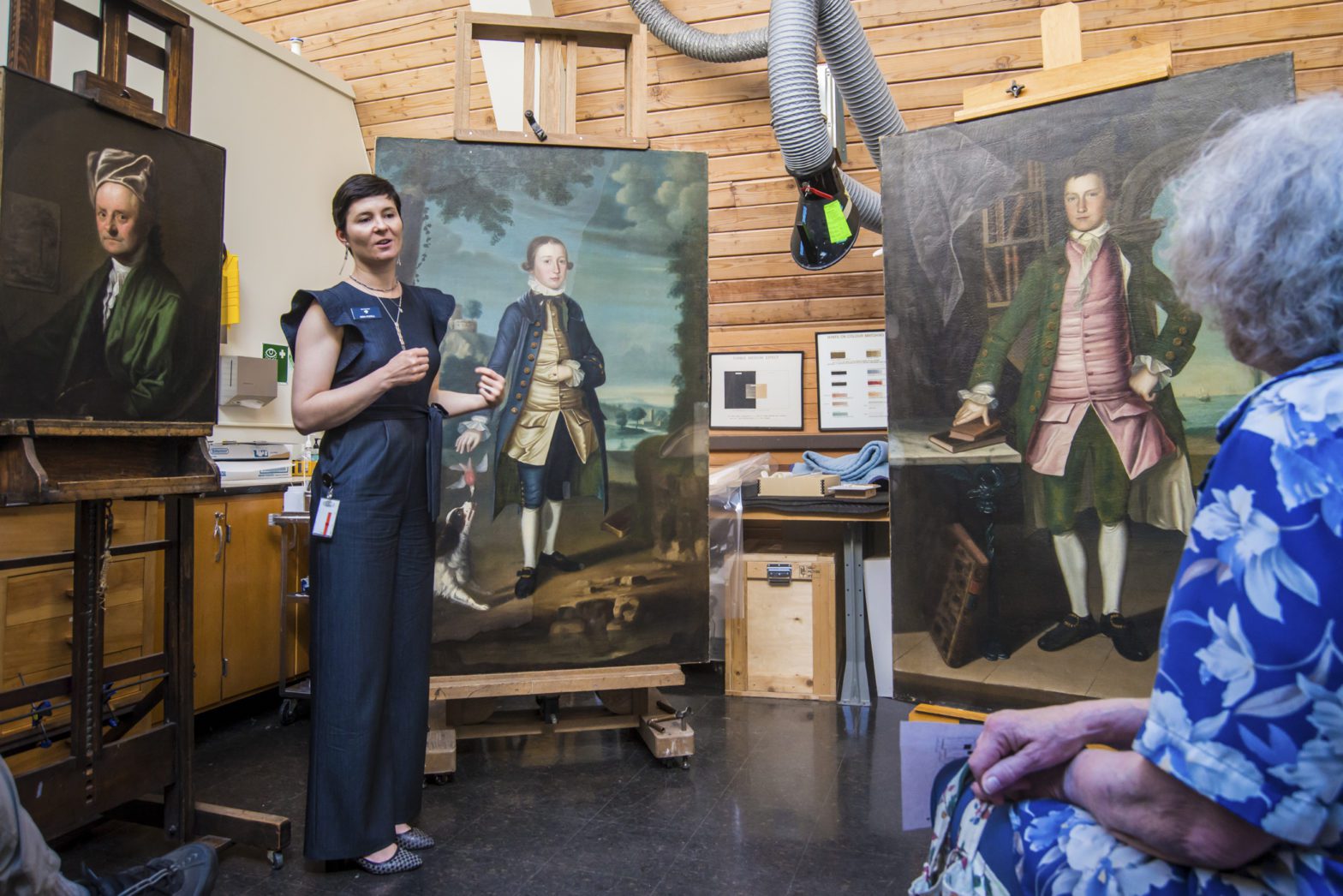
Learn about behind-the-scenes work happening in Winterthur’s conservation laboratories, where works of art and cultural heritage are examined, studied, and cared for by your tour hosts, our conservators, scientists, and graduate students. Registration required; capacity limited. For ages 8 and up. $10 with admission; $5 for Members.
Select Wednesdays | 1:00–2:30 pm
March 4: Paper, Textiles, and Preventive Labs | Sold out.
April 1: Objects, Research & Analysis, and Library Labs | Register now.
Explore this place of beauty, history, and learning! Winterthur offers special rates for groups of 15 or more people. We are happy to work with you to customize your visit. To book your tour, please call 800.448.3883 or email grouptours@winterthur.org
Admission includes: a self-guided tour of elegantly furnished rooms in which Henry Francis du Pont entertained his family and friends in grand style; a narrated tram tour* through the 60-acre garden and its succession of show-stopping blooms; the Campbell Collection of Soup Tureens; exhibitions; and access to Winterthur’s world-class research library. Please plan to spend about three hours.
Winterthur has on-site dining in the Visitor Center Cafeteria. Boxed lunches are available by pre-order (see below) or your group may go through the line.
Group Rates
A minimum of 15 visitors are required per group to receive the General Admission group rate of $24 ($28 during Yuletide at Winterthur). Receive two complimentary tickets for 15 paid admissions.
No deposit is required. Payment in full is due one week prior to tour date. Group Tours are available by advance reservation only. We recommend booking your group tour at least four to six weeks prior to your desired tour date.
*March through December, weather permitting. Trams are shared with the general public and are available on a first-come, first-served basis.
Boxed Lunches
Select Two
$17.50 per box
Roasted turkey with applewood smoked bacon, tomato, and lettuce with garlic aioli on a brioche
Grilled chicken with romaine lettuce, pecorino cheese, and Caesar dressing in a tortilla wrap
Roast beef with caramelized onions and arugula with blue cheese aioli on a ciabatta
Honey-baked ham with tomato, lettuce, Swiss cheese, and honey Dijon mustard on a brioche
Balsamic-roasted squash with tomato confit, red onion, feta cheese, sundried-tomato pesto, and spinach on a ciabatta
Grilled portobello mushroom with roasted bell pepper, Boursin cheese, arugula, and balsamic vinaigrette in a tortilla wrap
Smashed-chickpea and avocado with feta cheese, tomato, red onion, watercress, and green goddess dressing on seven-grain bread
Mixed-greens salad with citrus segments, shaved fennel, and toasted pine nuts with a citrus vinaigrette
Spinach salad with strawberries, red onion, and candied pecans with strawberry balsamic dressing
$19.00 per box
Genoa salami with spicy soppressata, tomato confit, marinated artichokes, mozzarella, arugula, and lemon-basil pesto on a ciabatta
Cilantro-lime shrimp with romaine lettuce, avocado, and chipotle slaw on a tortilla wrap
Grilled marinated steak with sautéed peppers and onions, provolone cheese, and herbed mayo on a ciabatta
All boxed lunches include a bag of chips, fresh fruit, house-baked cookie, a bottle of water, and eco-friendly cutlery.
Sandwich selections and counts are due 5 business days prior to your visit. Please ask your catering representative about private seating, delivery, or customized options.
Explore dozens of Winterthur’s iconic rooms and acres of stunning Brandywine Valley landscape through Winterthur’s 360-degree panoramic virtual tour! Zoom in close to examine Winterthur’s unparalleled collection of American decorative arts and significant architectural elements, or take a wider view of the gorgeous landscape.
You are in control of the tour. Use your mouse, trackpad, or finger to move left or right and up and down.
Some of the rooms in the tour may not be currently open to the public, so the virtual tour gives you unparalleled access and convenience. Get a taste of what Winterthur has to offer and then book a visit to see it all in person!
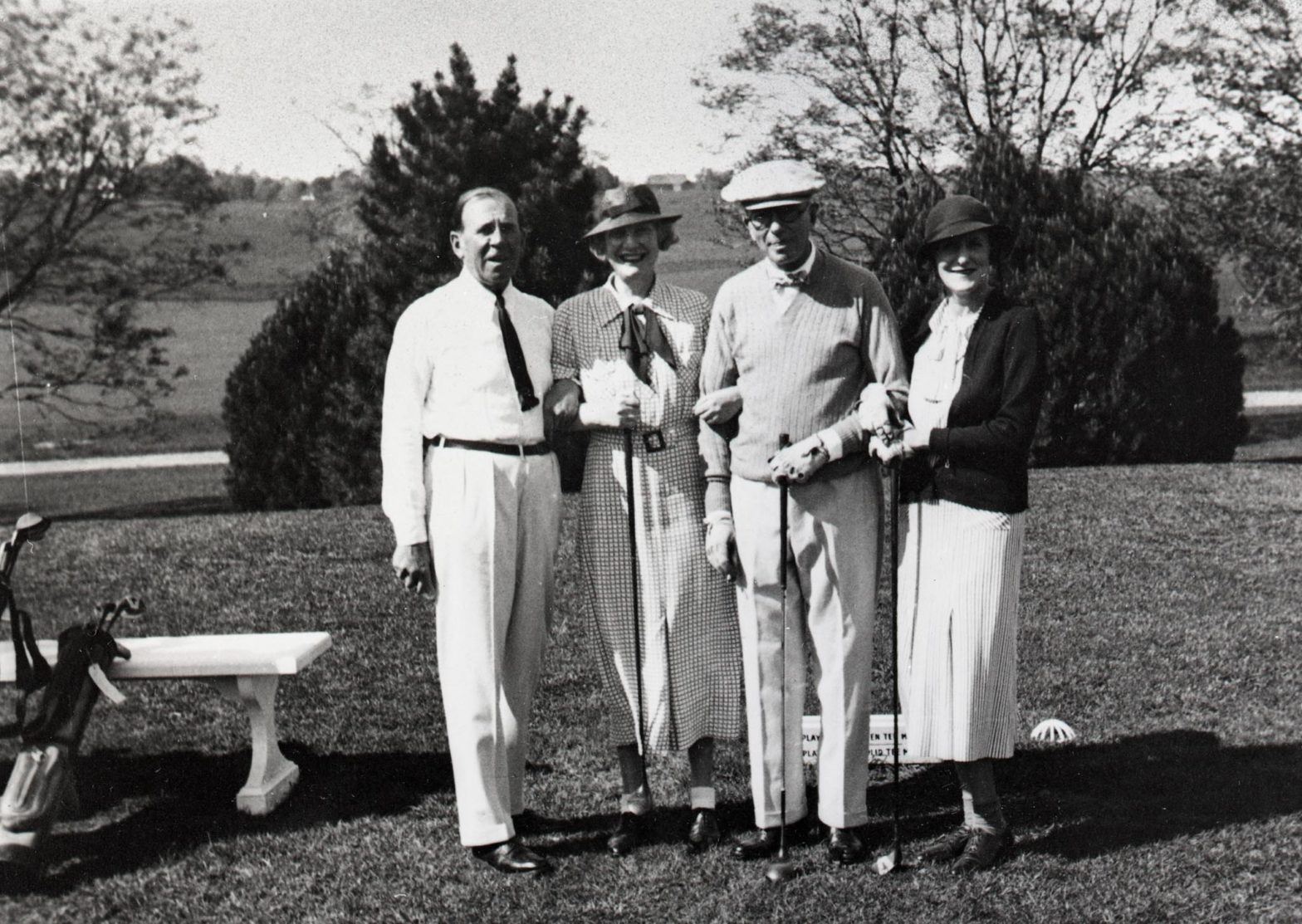
Henry Francis du Pont loved golf so much, he built his own course, and it’s still one of the best.
Famed golf course architect Dick Wilson had barely finished building a new course at Wilmington Country Club in 1964, when he got to work on his next project: expansion of the course right next door at Winterthur. Once called the most exclusive golf course in the country, its lone member for the prior 30-plus years was Henry Francis du Pont.
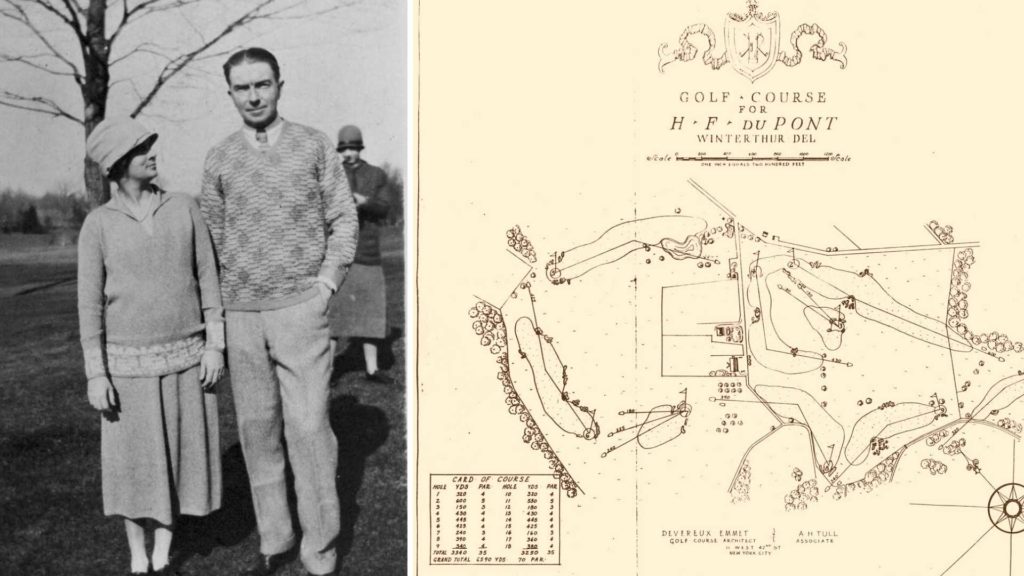
Though a renowned horticulturist who created a world-class naturalistic garden, as well as the country’s foremost authority on American decorative arts and founder of Winterthur Museum, du Pont also loved a good round of golf as much as the next guy. So in 1928, he asked New York golf architect Devereux Emmet to build him his very own 10-hole, 17-tee course on 160 acres of his vast property.
Completed in February 1929 at a cost of $59,000, the course opened with a family party in June 1929. From then on, du Pont played almost every other day while home at Winterthur. On weekends, he regularly hosted 18 to 20 golfing guests—Vanderbilts, Kelloggs, Auchinschlosses, and others. Estate employees worked as caddies. As he played on Sundays, du Pont often listened to live concerts from the Metropolitan Opera, blasted from a powerful tower in Azalea Woods.
Du Pont also hired his own personal pro, Percy Vickers. In the late 1920s, du Pont had taken lessons from Vickers at an indoor golf school in New York City. When Vickers later signaled that he was looking for a new gig, du Pont hired him right away. He so esteemed Vickers’s service as a coach and greenskeeper that he made him one of the highest-paid of the 250 employees at Winterthur. Their relationship lasted 40 years, until du Pont’s passing in 1969.
In 1964, he told a local sports reporter, “I still like to play. I’m not interested in scoring—I know my limitations. I’m happy to just finish a round and enjoy the exercise.” He even hit an ace once, earning him membership in the PGA Hole-In-One Club in 1941.
Du Pont claimed to have no idea what his best score was, though Vickers placed the 84-year-old at an average in the low 90s. “And he walks all the time,” Vickers told the newspaper. “No carts for him…I just try to keep him swinging right, and he amazes me. I’ll be glad if I’m swinging at all, at his age.”
In light of du Pont’s advancing age, a cousin, convinced there was a need for a private golf-only club, proposed building an 18-hole course that incorporated the Winterthur track. Another cousin provided some of her adjacent property for the project, making the total size 300 acres. Dick Wilson was hired to design the new course.
When completed, Vickers rated it “maybe six strokes harder than the Old Wilmington Country Club course” (now the club’s South Course, where the BMW Championship will be played). A player noted, “You need to hit every club in your bag to play here.”
Du Pont proposed naming the club after Antoine Bidermann, son-in-law of the DuPont Co. founder, a company executive, and the original owner of the Winterthur house and property. A farmhouse and barn on the estate were converted to a clubhouse and shop. Thus, Bidermann Golf Club was born.
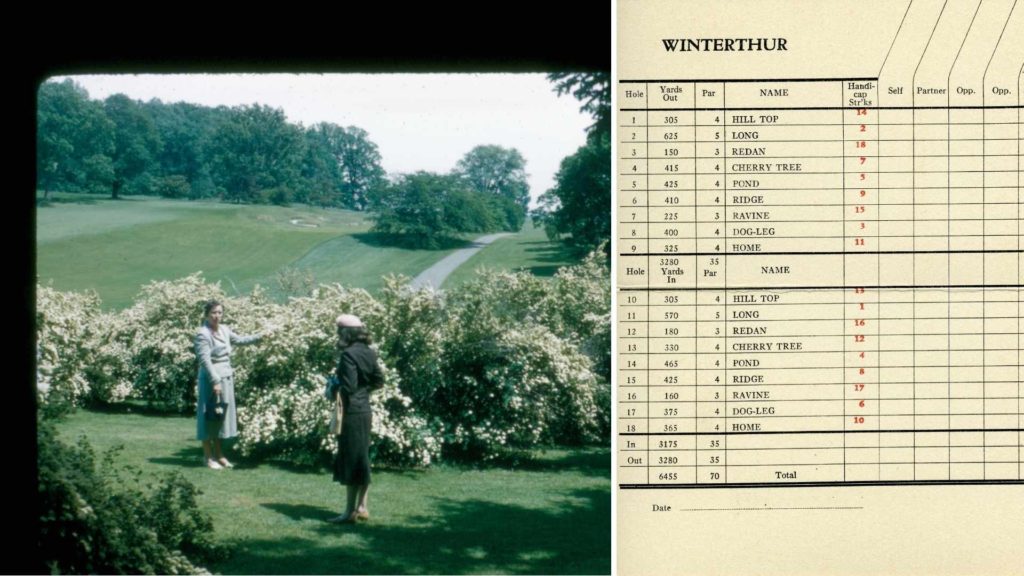
Today, with about 200 members, Bidermann is still exclusive. It sees about 8,000 rounds a year on its par-72, 6,421 yards of play, according to top100golfcourses.com, and it is considered a design masterpiece.
“The Bidermann people are getting a lovely, exacting course,” Vickers told the paper in 1964—one that is slightly hillier than the course at Wilmington Country Club, which was once part of the Winterthur estate. A Bidermann club member once wrote, “By listening to the land, Wilson fashioned a design that would challenge, even inspire, the best players, yet one a 12-handicap could, indeed, still be charmed by.”
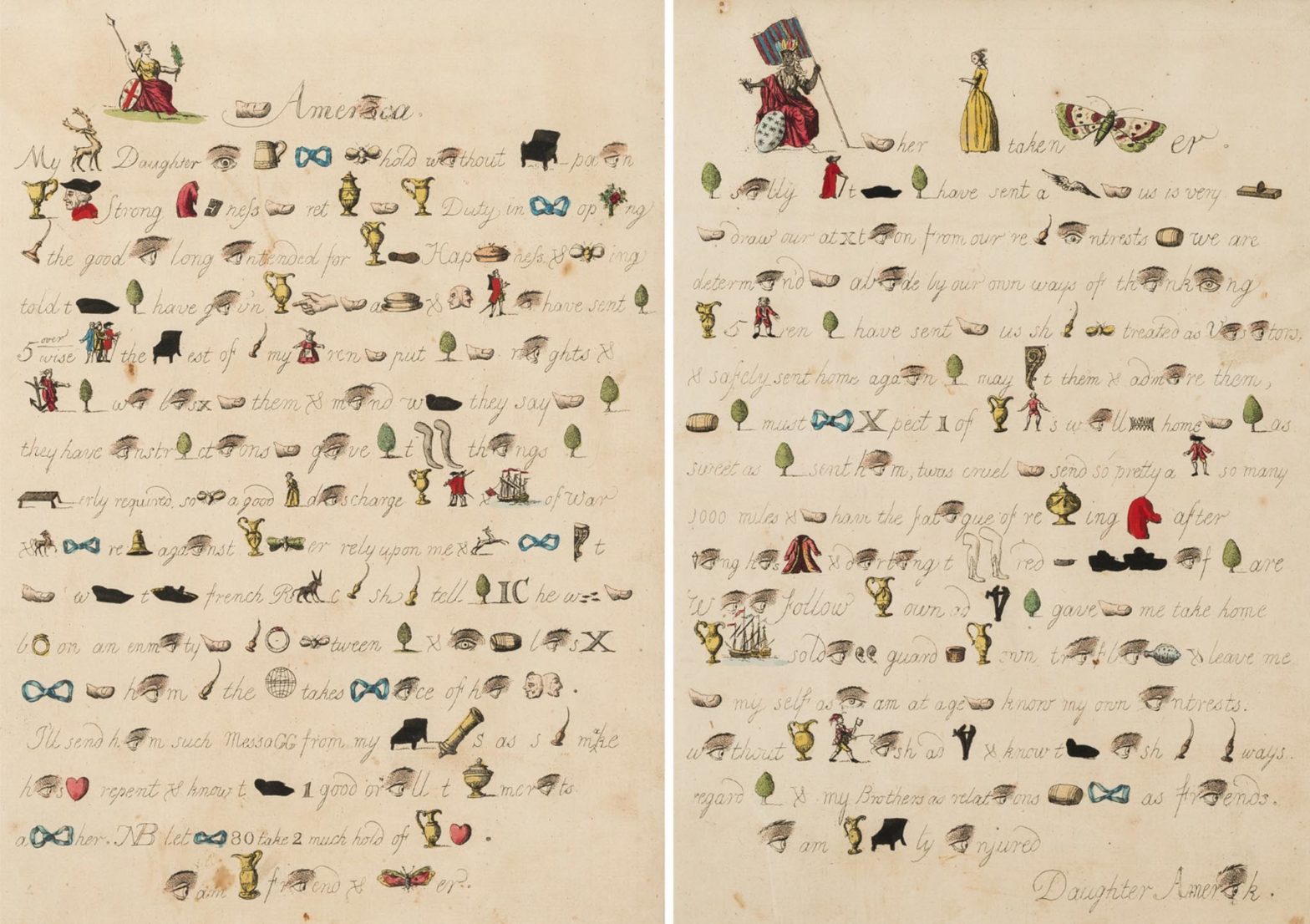
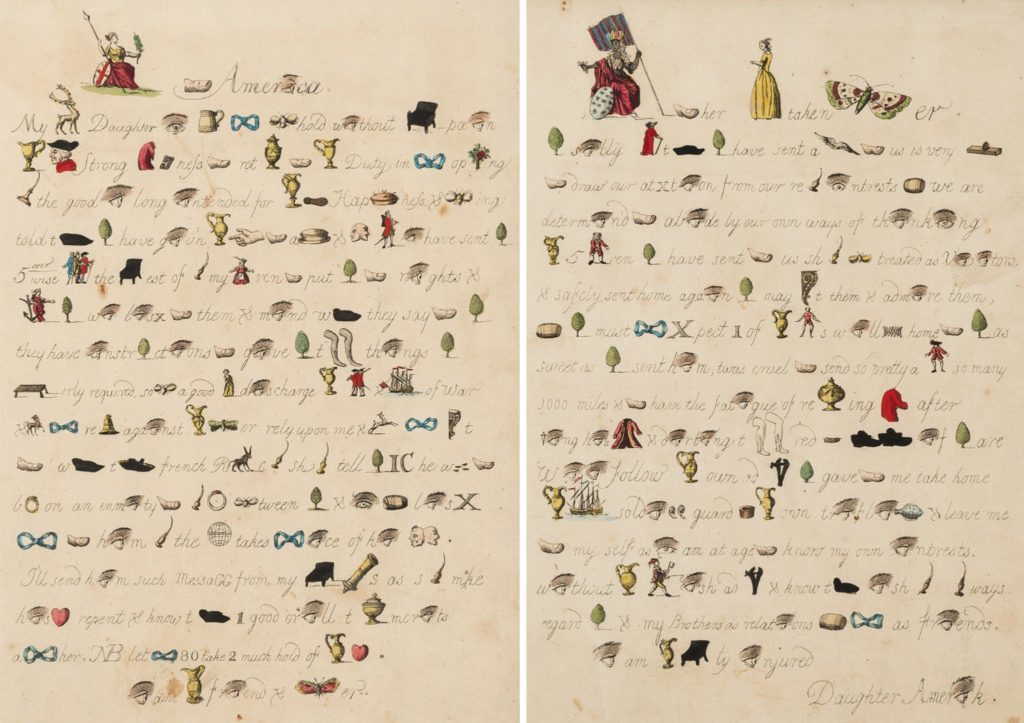
I find these objects amazingly relatable to today’s communications, a revolutionary sort of social media for the time (1778). These works on paper, known as rebuses, contain a combination of words and images that translate into words or phonetics—a fun form of an emoji. These portray the opposing views of Great Britain and the American colonies about the American Revolution. The accepted translations are:
Britannia to America
My dear daughter, I cannot behold without great pain your headstrong backwardness to return to your duty in not opposing all the good I long intended for your sole happiness, and being told that you have given your hand to a base and two-faced Frenchman, I have sent you over five wise men, the greatest of all my children, to put you to rights and hope you will listen to them and mind what they say to you. They have instructions to give you those things you formerly required. So be a good girl, discharge your soldiers and ships of war, and do not rebel against your mother. Rely upon me and do not trust to what that French rascal shall tell you. I see he wants to bring on an enmity to all unity between you and I, but listen not to him. All the world takes notice of his two faces. I’ll send him such messages from my great cannons as shall make his heart repent and know that one good or ill turn merits another. N.B. Let not hate take too much hold of your heart. I am your friend & mother.
America to her mistaken mother
America to her mistaken mother. You silly old woman, that you have sent a dove to us is very plain, to draw our attention from our real interests, but we are determined to abide by our own ways of thinking. Your five children you have sent to us shall be treated as visitors and safely sent home again. You may trust them and admire them, but you must not expect one of your puppets will come home to you as sweet as you sent him. ‘Twas cruel to send so pretty a man so many thousand miles and to have the fatigue of returning back after bobbing his coat and dirtying those red-heeled shoes. If you are wise, follow your own advice you gave to me. Take home your ships [and] soldiers. Guard well your own trifling and leave me to my self, as I am at age to know my own interests without your foolish advice, and know that I shall always regard you and my brothers as relations but not as friends. I am your greatly injured Daughter Amerik.