Damon Smith

About the Artist
Aberdeen, Maryland
Damon G. Smith works in Aberdeen, Maryland, and is an accomplished quilter and gardener. His quilts have been featured on the Ricky Tim’s LIVE Men’s Quilt Exhibit and he participates in Quilts for Heroes, a nonprofit group who donates quilts to Wounded Warriors and other service members. Damon is a board member of the North American Clivia Society, and he presents about raising Clivia and the process of creating his custom greenhouse. In addition to raising his own flowers, Damon judges flower shows, including the esteemed Philadelphia Flower Show.
Social Media: @DamonSmith

Artist Statement
Quilts blend tradition and innovation. The intricate patterning and colorful palette of Stream Float echoes the detailed piecing of Gee’s Bend quilts. Damon Smith saw the Gee’s Bend quilt at Winterthur in March and created his own quilt demonstrating his eye for color and unique style. “In this work, the colors that make up the pineapple blocks appear to float above the shimmering leaves of gold, bronze, and green . . . giving the illusion of leaves floating atop a shallow pool of water,” explains Smith.
Spring at Winterthur

As we welcome a new season, we also begin a year of reflection, marking the 250th anniversary of our nation, Winterthur Museum’s 75th, and the 25th for Enchanted Woods. A festive May gathering for our 75th anniversary will celebrate Winterthur’s past, present, and future. Our new exhibition At Home at Winterthur honors our legacy as a museum, garden, and library. And you can explore our shared history through objects from diverse origins that shaped early America in two new tours. On the An American Legacy tour, discover how spaces, stories, and objects reflect the nation’s evolution and the transformation of a private home into a museum. The Architecture of Independence tour highlights the founding era through the lens of the original thirteen colonies. In April, commemorate 25 years of wonder on a Garden Walk to Enchanted Woods. All spring long, enjoy the vibrant garden blooms when you visit for your favorite or new programs and events. Join us. There’s beauty at every turn.
Tickets are valid for two consecutive days.
Special Programs & Events
We hope you will be inspired and delighted by our many offerings this spring at Winterthur, where there’s always something new to discover!

Daffodil Day
April 11
Enjoy heirloom daffodils in cloudlike drifts on Sycamore Hill and beyond. Includes walking tours of the daffodil collection.

Spring Fling
March 31–April 3 & April 7–10
Join us during spring break to celebrate the things that make the season special and discover the ways springtime has been celebrated throughout the ages. Play games, make crafts, hear stories, and see demonstrations that explore the new life emerging at Winterthur—from bluebirds to daffodils.

Bourbon and Bluegrass
May 8
Join us as we bring Kentucky Derby style to Delaware. Enjoy a bourbon tasting, live bluegrass by the Dill Pickle Old Time Orchestra, and access to the garden.
From Our Blog
From a carefully curated list of spring blooms to vibrant stories from the estate, learn more and enjoy Winterthur your way this season!
Daffodils and Winterthur

The Forgotten Story of Daffodils, Inside and Outside the Gardens
If you visit Winterthur between mid-March and May, one of the first things you’ll see as you drive past the gate are the tens of thousands of daffodils in bloom along Pavilion Drive. These are only a small fraction of the daffodils growing at Winterthur today.
Spring Playlist
A soundtrack for celebrating spring’s symphony of color.
Fall at Winterthur

“Every leaf speaks bliss to me, fluttering from the autumn tree.”
Emily Brontë
This sentiment by Emily Brontë perfectly expresses our fascination with fall, surely among the best times to visit Winterthur. Along with the beautiful colors in the garden, equally stunning are Winterthur’s magnificent 175-room house and collection of American decorative arts.
As always, we’re excited to welcome you to experience the beauty and hospitality of this great American country estate.
Come one, come all—and come often this fall.
Special Programs & Events
From the Truck & Tractor Day and Tram & Treat to birding walks and Discover Winterthur (with free admission all day!), there’s something for everyone this season. Explore all fall events.
From Our Blog
From a carefully curated list of autumn blooms to spooky stories from the estate, learn more and enjoy Winterthur your way this season!
Fall Playlist
A soundtrack for wandering among the falling leaves.
Poison Book Project earns worldwide publicity
A recent feature by The Washington Post on the Poison Book Project has been picked up by news outlets around the world. The Poison Book Project is an interdisciplinary research initiative at Winterthur Museum, Garden & Library and the University of Delaware.
This ongoing investigation explores the materiality of Victorian-era publishers’ bindings. Research focuses on identifying potentially toxic pigments used in bookbinding components and how to handle and store potentially toxic collections more safely.
The Post article is behind a paywall, but you can read the full article in The Seattle Times, The San Diego Union-Tribune, The Spokesman-Review, and elsewhere.

An excerpt from the article:
The Poison Book Project began after Melissa Tedone’s own chance encounter with a curious emerald tome.
At the time, Tedone was the head of the library conservation lab at Winterthur, a historical estate and museum affiliated with the University of Delaware, where she assessed and restored objects in the institution’s collection. In 2019, for an exhibition on Victorian aquariums, she was tasked with repairing a book called “Rustic Adornments for Homes of Taste.” “It was a bright green book, and the covers had fallen off,” Tedone said. It was her job to put them back on, but she noticed something strange while working.
“There was something about the way the pigment was behaving. I could see it flaking off under the microscope,” she said. At the time, she was reading a book about arsenical wallpaper common in the 19th century. “It was a serendipity moment. I thought that maybe we should test this pigment and make sure it’s not full of arsenic.”
It turned out the book was full of arsenic. “Really quite a lot of arsenic,” she said…
About 50% of the books that have been analyzed have tested positive for lead, which is present in multiple pigments as well as pigment enhancers. Chromium has shown up in Victorian yellows, and mercury in the era’s intense reds. Arsenic, the most toxic of these chemicals, has been found in 300 books, including those with benign titles such as The Grammar School Boys and Friendship’s Golden Altar.
“Arsenic is in its own category,” Tedone said. “Not only is it more toxic than the other heavy metal pigments, but we are finding that measurable levels of arsenic are coming off on your hands.”
The findings have led large institutions, including the National Library of France and the University of Southern Denmark, to remove books from circulation and place them in quarantine.
Embracing New Acquisitions with Historical Significance
Many visitors to Winterthur are surprised to learn that our collection is continually expanding with new acquisitions. Contrary to the perception of museum pieces as merely “old and dusty,” our collection encompasses a dynamic range of items, including contemporary and historically significant pieces.
“Winterthur’s collection is far more expansive than many people realize,” says Alexandra Deutsch, director of collections at Winterthur Museum. “While the museum is the home of some of the finest 18th- and 19th-century decorative arts made and used in America, Henry Francis du Pont’s visionary collecting created a foundation that has allowed Winterthur’s curators to expand the collection in innovative and inspiring ways.
“Today, guided by a collections policy that acknowledges the global nature of the collection, acquisitions that significantly expand Winterthur’s ability to share complete histories with our visitors, students, and scholars are a top priority. This selection of objects provides a glimpse of recent acquisitions, which document histories previously untold in Winterthur’s galleries and museum rooms.”
A Glimpse into Baltimore’s Free Black Community
One of the museum’s recent acquisitions is an 1857 oil painting in remarkable condition depicting an identifiable free Black member of the regional Baltimore community. This painting is on display now in the Galleries at Winterthur. We wrote extensively about the painting earlier this year.

Researching a Captain
Another fascinating addition is the oil painting titled Don Juan de Dios de Parreno y Pardo, likely created between 1800 and 1830. The painting’s title is inscribed in the lower left corner of the portrait.
“An arresting portrayal of a dark-haired naval captain, Don Juan de Dios de Parreno y Pardo intimates the history of maritime politics of Europe and the Americas in the early part of the 1800s,” says Kedra Kearis, Winterthur’s associate curator of art and visual culture. “Seated at a table with navigational tools spread over an indeterminate map, the confident Pardo gestures to his offshore frigate that bears the pre-Republic flag of Spain.
“We look forward to interpreting this painting beginning with conservation efforts,” Kearis says. “Visible under black light, the background of the portrait has coats of arms just below the surface layer.”
These images may unlock the painting’s secrets or lead Kearis to further insights about the man in the painting. She poses several questions: “Who is this captain? Is his vessel heading out to sea or returning? What does this portrait tell us about Spain’s presence in the Americas?”
Currently housed in our Research Building, the painting is under scholarly examination to uncover its secrets. For now, this blog is the only place you can view it. Once enough research is completed, it could be displayed in the Galleries.
“Sure to intrigue visitors, this picture joins Winterthur’s strong holdings of early 19th-century portraits painted in the U.S.,” Kearis adds. “It allows for important conversations about the exchange of art traditions across the Atlantic and contact between Spain and indigenous people of the Americas.”

A Quilting Legacy
Winterthur has also acquired a quilt by mother and daughter artists Sharon and Jemica Williams from Gee’s Bend, Alabama. Sharon learned to quilt from her mother and grandmother, passing the tradition to her daughter, Jemica.
Gee’s Bend quilters are renowned for their innovative use of available materials, such as sacks and clothing, to create quilts that provided comfort to their families. They trace their roots to enslaved ancestors forcibly relocated from a plantation in Halifax County, North Carolina.
The Montmorenci plantation in a neighboring county was once the home of the staircase and architecture that can now be found in Montmorenci Stair Hall at Winterthur Museum, Garden & Library. Enslaved and free individuals at Montmorenci played an active role in the design, construction, and everyday use of this staircase.
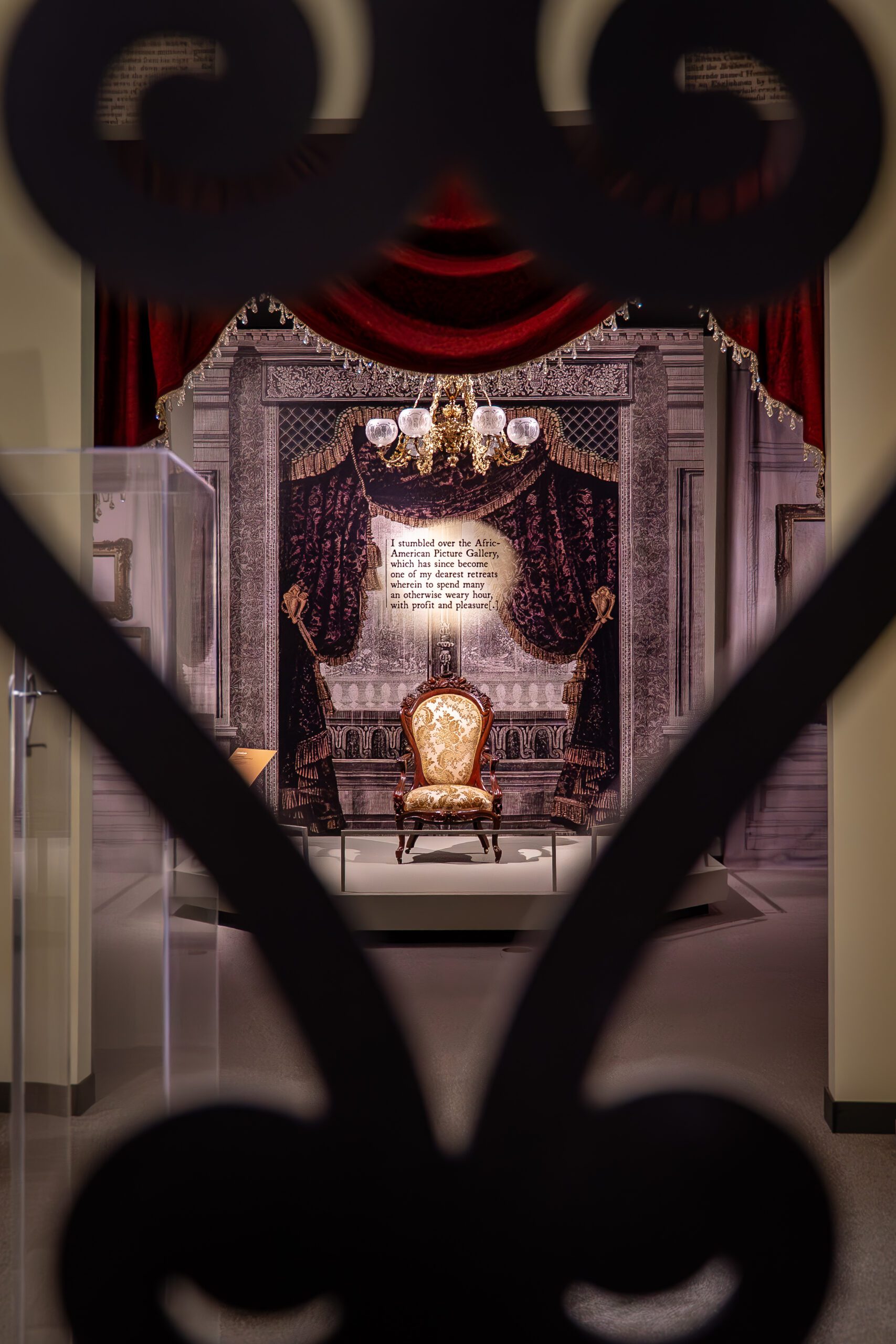
The Gee’s Bend quilt made by Sharon and Jemica is juxtaposed with the staircase, cementing a connection between these three separate regions. The quilt is part of the Winterthur’s current exhibition, Transformations: Contemporary Artists at Winterthur.
“This quilt by Sharon and Jemica Williams is the first quilt by a known Black designer and maker to enter Winterthur’s collection,” says Alexnadra Deutsch. “The design is a fresh interpretation of the ‘My Way’ style of freeform piecing and quilting, for which the quilters of Gee’s Bend, Alabama, descendants of enslavement, are famous. Sharon Williams, the designer and maker, says she ‘puts her colors together, puts the quilt together just how it goes.’ She ‘wants people to see these colors and admire them’ and that would bring her joy.”


A Golden Addition
Ann Wagner, Winterthur’s curator of decorative arts, highlights a 1915 gilded silver hot chocolate set by Gorham Manufacturing Company, Providence, R.I., and retailed by Shreve, Treat & Eacret, San Francisco, Calif., as a notable recent acquisition.
“California’s state flower, the golden poppy (the ‘cup of gold’ or ‘copa de oro’ in Spanish) is the dominant inspiration for each vessel of this gilded beverage bouquet,” Wagner says. “It was a special commission created for a prominent, patriotic Californian, Anita May Baldwin (1876–1939). Baldwin lived in Arcadia on the vast Anoakia Ranch that she inherited from her father Elias J. “Lucky” Baldwin, but she also socialized and shopped in San Francisco. This luxurious set was likely designed with Anita Baldwin’s input and created in Rhode Island by Gorham, whose connection with the Lenox Ceramic Art Company provided the fitted white porcelain liners for the dainty silver poppy cup frames.”
The chocolate set’s history is actively being researched. In the meantime, the set is now on view in the museum’s Galleries.
Winterthur’s ongoing commitment to expanding and diversifying its collection ensures that visitors, students, and scholars can engage with a broad and inclusive array of historical narratives.

Conversations with the Collection
Explore recent acquisitions that feature works from different craft practices— painting, metalwork, ceramic, furniture, and literary arts—all engaging with the arts and crafts movement’s goal of harmonizing beauty with functionality. These objects highlight women artists, designs exploring non-Western influences, and items made specifically for children. Plus, enjoy an installation that highlights toxic pigments used in bookbinding and other potentially toxic objects in the collection, and learn how to spot potential hazards in your own collections.
On view in the First-Floor Galleries.
Outside In: Nature-inspired Design at Winterthur

Collecting and Creating Beauty
On view through December 7, 2025
Beginning in childhood, Henry Francis du Pont was a collector, gathering birds’ eggs, plants, and other natural objects in the gardens and woods of Winterthur and beyond. In later years, that same drive to gather and create beauty with objects was translated on a grand scale into his remarkable collections of decorative arts.
In partnership with the Delaware Museum of Nature & Science, the exhibition brings selections from their collection of natural specimens together with collections drawn from Winterthur’s museum and library holdings, demonstrating the powerful connection between nature and the decorative arts.
Outside In considers how du Pont’s interiors looked to the outside and brought it inside in an aesthetic that has inspired designers ever since. The enduring theme of nature in design is captured through objects featuring naturalistic elements and, in some instances, objects such as shells and feathers found in nature. Organic objects such as ladles made from coconut shells and busks made from whale bone are included in the exhibition, inspiring visitors to consider current discussions about preservation and conservation of the natural world. This visually eclectic and immersive installation will capture the imagination of visitors of all ages with objects ranging from a hornet’s nest to shells, minerals, and fossils to exquisite inlaid cabinetry and shellwork grottos.
Explore the Exhibition
New Library Acquisition: The Kendall Family Receipt Book
By George Drake

Nowadays, a purchase at many stores concludes with the question, “Would you like your receipt emailed or printed?” But in 18th- and 19th-century America, the customer would often handwrite their purchases in blank books which would then be signed by the vendor to certify the transaction.
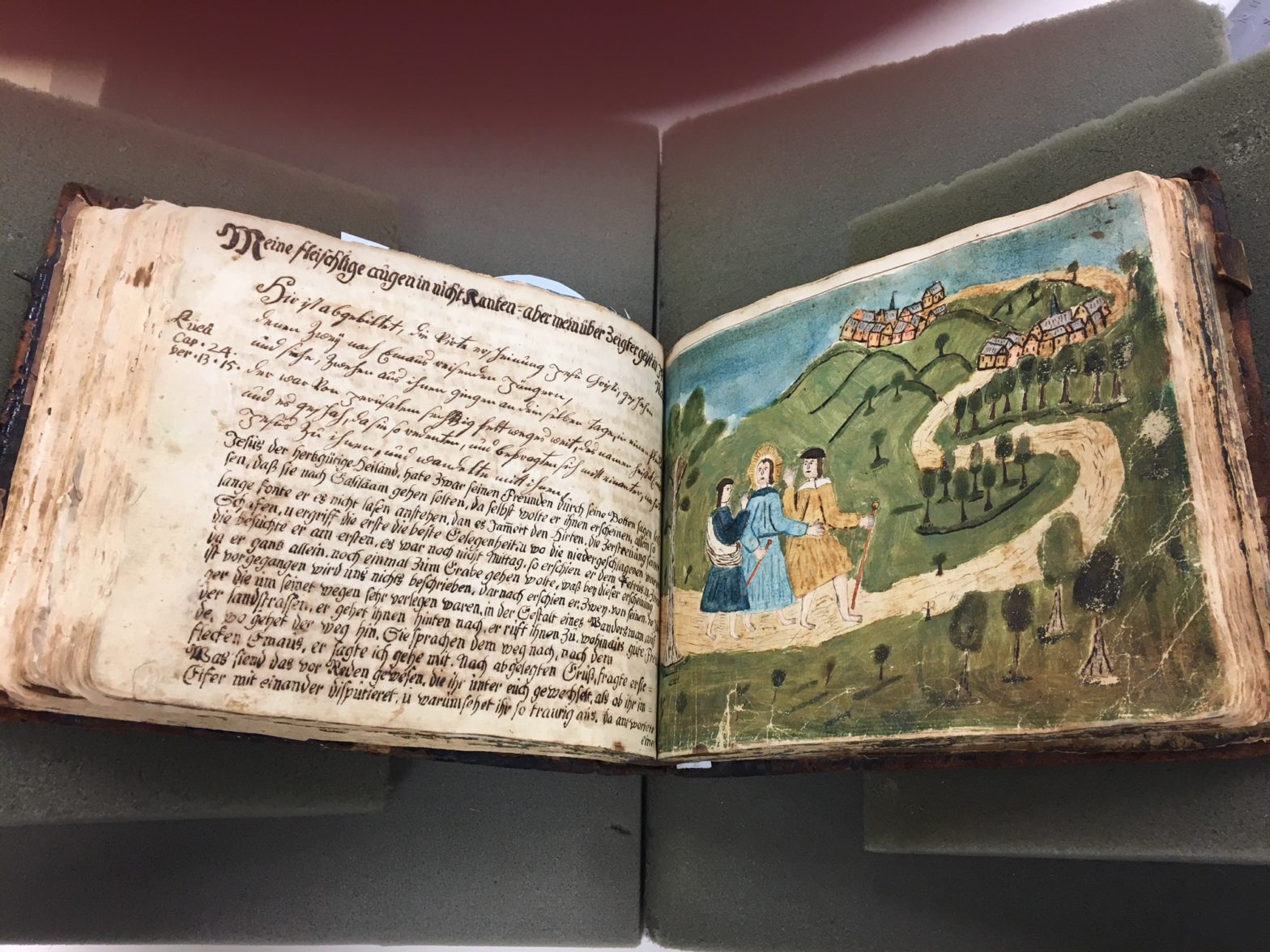
The Winterthur Library recently acquired an unexpectedly personal example of how receipts were recorded before every shop had a small printer on the counter. This Delaware manuscript receipt book is a pocket-sized, leather-bound volume used as a daybook from 1768 to 1853 by several generations of the Kendalls, a Quaker family from New Castle County, Delaware, and holds records for purchases and other financial matters.
Jesse Kendall (1741–1769) was the first to use the book. Jesse was born in Wilmington, Delaware, the son of a cordwainer (a shoemaker specializing in working with new leather). According to Quaker wedding records held by the Winterthur Library, Jesse was also a cordwainer when he married Mary Marshall in 1763. However, the 23 receipts he recorded between 1768 and his death in 1769 suggest he may have changed vocations at some point, since most of the receipts are for the purchase of molasses, rum, imported goods from Jamaica, and copious barrels of flour. Jesse’s final entry listed a payment of his taxes for 1768.

The end of Jesse’s life at age 27 is poignantly recorded in this same receipt book. His widow, Mary (1743–1802) used the volume briefly to record receipts related to the settlement of Jesse’s estate, funeral, and medical bills. Through Mary’s payment records of 23 shillings for a winding sheet for her husband’s body, 7 shillings for digging and “turfing” his grave, and medical expenses of more than £2 paid to Dr. Nicholas Way, we are given a glimpse into a difficult time for the Kendall family. Though the receipts lack any overt emotion, they invite us to reflect on the events behind the words. These records also situate the Kendall family in American history—less than two decades later, Dr. Way was a signatory on documents providing Delaware’s ratification of the U.S. Constitution.
Jesse and Mary’s son, John Kendall (1766–1845), was the third family member to use the volume. His period of use was the longest (1789–1837) and the most diverse. Receipts include those for foodstuffs (e.g., oats, beef, and flour); goods (e.g., cow, watch, wagon, and staves); services (e.g., shoemaking, hauling, and carpentry); and financial matters (e.g., tax payments, interest payments, and estate payments).

The final member of the Kendall family to use the receipt book was Jesse’s grandson, Gibbons Kendall (1801–1864). He used the volume from mid-1852 to late 1853, over 80 years after his grandfather’s first entry. Instead of recording personal transactions as his predecessors did, Gibbons used the volume to detail financial transactions in the estate of his sister, Rebecca G. Kendall, who died on July 13, 1852.
Though it is impossible to know the day-to-day details of the Kendall family’s lives, this receipt book provides interesting examples of the macroworld of early American financial recordkeeping practices, and the microworld of one Delaware Quaker family.
Research into the volume is ongoing as part of the cataloguing process that new library acquisitions go through before being added to the library’s online catalogue, Wintercat.
Magic and Memories: Story Time Adventures in Enchanted Woods
Two-year-old Miles toddled into the Story Stones area in Enchanted Woods at Winterthur and immediately spotted something intriguing. He grabbed a scoop from a bucket of potting soil and began to dig. The adults around him laughed and gently reminded him that he would have to wait until after story time to start the activity related to the book of the day.
He sat on a stone with his grandmother, Pat Caplan, and patiently waited as other children began to find their way to the clearing from different parts of the three-acre children’s garden. Caplan, a Winterthur Member, explained that she was babysitting for the day and checked Winterthur’s website to find an activity to entertain Miles.
Story time, included with admission to Winterthur, fit the bill perfectly.

Story Time in Enchanted Woods is designed for children aged 3‒6 and takes place every Thursday at 11:00 am from April through October among the Story Stones, one of many magical features of the garden.
After each nature-centered story, children enjoy a sensory station with objects and activities that match the day’s story. On the day Miles and his grandmother visited, the activity involved planting seeds in a biodegradable paper cup for the children to take home.

Even without story time, Enchanted Woods is the perfect place to bring young children to let their imaginations run free. Designed to appear as though it was crafted by fairies, Enchanted Woods weaves its own tale, free of references to popular children’s stories, making the garden feel timeless and like a blank slate that children can fill with their imaginations. Its creation myth speaks of the fairies and sprites—missing the laughter of children who once played there—gathering artifacts from the Winterthur estate to build a spellbinding haven.
Recently, the Atlas Obscura podcast devoted an episode to Enchanted Woods, highlighting its unique charm.
Story time enhances this wonderful experience, often led by volunteers like Michele Weiner, a Winterthur Member and teacher who has worked with students struggling to read. As a story time volunteer, Weiner emphasizes the pictures in the books she reads and stays animated to keep the children’s attention. She is one of more than 250 volunteers who give their time to Winterthur.
On this day in Enchanted Woods, Weiner captivated the children, especially Miles, whom she addressed by name several times during the reading, having met him only moments earlier. For Miles, this personal touch made the day with his grandmother even more special.