Search Site
Featured

Millions of Bulbs?

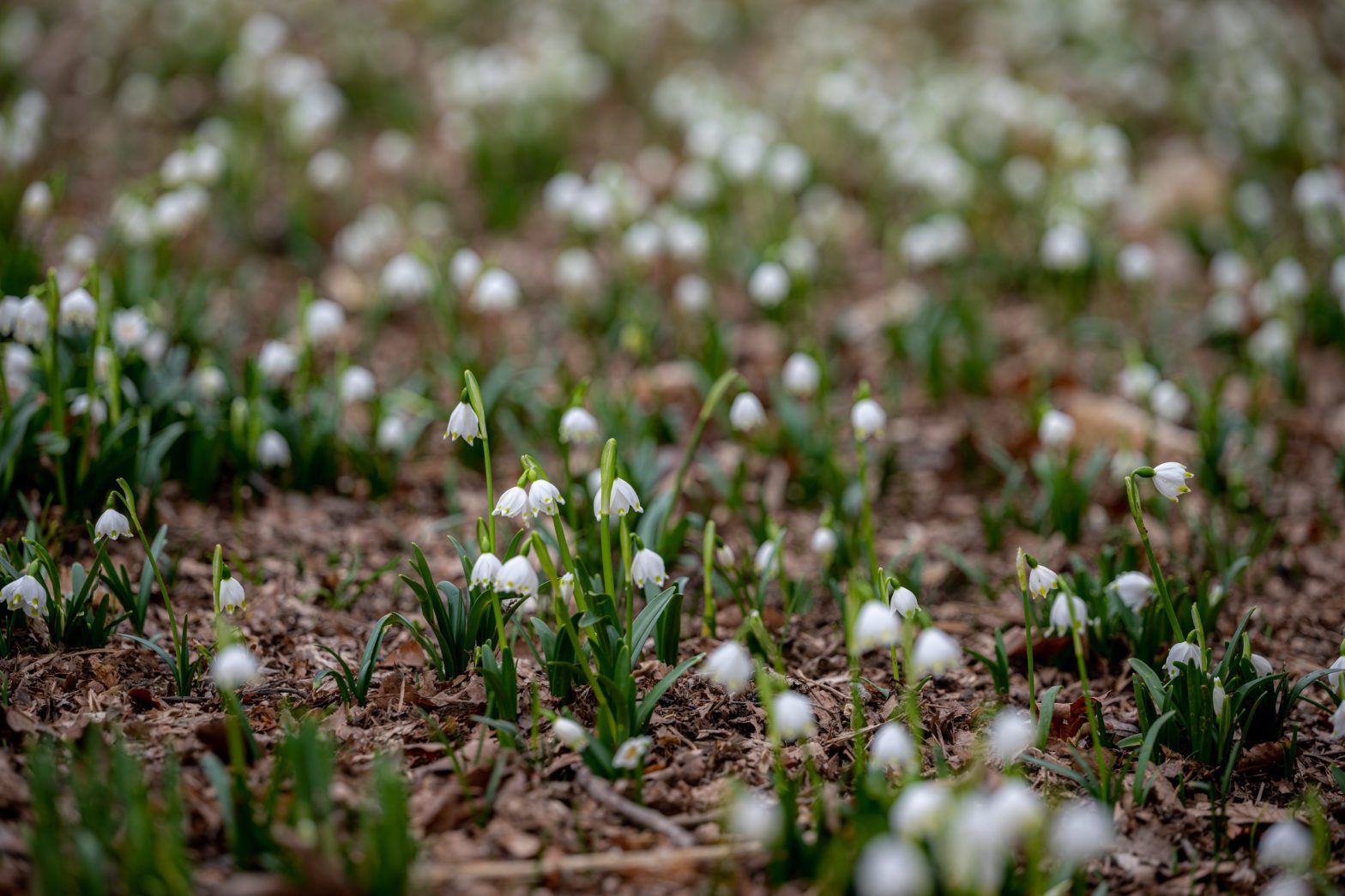
The upcoming Bank to Bend event on March 11, 2023, celebrates the snowdrops on the March Bank, which also features winter aconites, snowflakes, and crocuses—and this year, because of the mild weather we are already seeing daffodils, scilla, and squill popping through the leaf litter. One of the questions that comes up often but that I am always a little hesitant to answer is, “How many bulbs are there in the March Bank?” I always say millions, with my fingers crossed behind my back because, after all, I have not counted them.

I finally decided to resolve this nagging doubt. Using Google Earth, I plotted the area of the March Bank, following the general boundaries of the area that we used for its restoration, but decreased them slightly. I drew a line from the Scroll Garden to the 1750 House, then over to Magnolia Bend, but I excluded the Glade. The area enclosed by this measurement is 6.9 acres, or 300,564 square feet.

Looking at one square foot of the March Bank, I chose an estimate of 10 bulbs per square foot. This number is very conservative—some areas have as many as 40–50 bulbs in a square foot, whereas others have only a few or no bulbs, including the paths and watercourses. So, 10 is probably a fair guess.

Next, I multiplied 300,564 (the number of square feet) by 10 (the average number of bulbs per square foot) and got 3,005,640 bulbs. Even if my assumptions are off by half, it would still be more than a million bulbs. I propose that saying the March Bank has “millions of bulbs” is well within the margin of error.

Please join us on March 9 to see these beautiful bulbs for yourself on a guided or self-guided walk.

Post by Chris Strand, Charles F. Montgomery Director and CEO of Winterthur

Winterthur Museum, Garden & Library Opens At Home at Winterthur Exhibition May 23

Traces 200 years of family history and Winterthur’s evolution from a home, country farm, and estate to a world-renowned decorative arts museum, garden, library, research and academic institution

WILMINGTON, Del. (May 22, 2026)—On May 23, Winterthur Museum, Garden & Library opens At Home at Winterthur, a major new exhibition that invites visitors to experience the full story of Winterthur as a landscape, a home, a place of work, and a world-renowned center for decorative arts, scholarship, and conservation. The exhibition coincides with the 75th anniversary of the museum, which founder Henry Francis du Pont opened to the public in 1951.

Before Winterthur became a premier museum of American decorative arts, it was home to three generations of du Ponts. This exhibition explores the people, objects, and places that have shaped this remarkable estate across generations, from the Lenape Indians who hunted and gathered along Clenny Run to the du Pont family who settled the Brandywine Valley in 1800 to the staff, scholars, artists, and visitors who make Winterthur a living institution today.

“Winterthur aims to foster a sense of home and belonging by sharing stories of the people, plants, animals, and objects that have shaped it,” said Chris Strand, Charles F. Montgomery Director and CEO. “This exhibition honors that spirit by telling the full, layered history of Winterthur, including its beauty, its complexity, its legacy, and progress. We invite every visitor to see themselves as part of its ongoing story.”

ABOUT THE EXHIBITION

Curated by a cross-departmental team that included exhibitions, interpretation and engagement, the garden, and library, along with consultant Kim Collison, At Home at Winterthur unfolds as visitors move through 15 sections in the first-floor galleries, each exploring a different dimension of the estate’s history and significance. The exhibition is designed around the visitor’s journey from the founding of the property to its present-day mission and features two annually rotating spotlights, one on a du Pont family member and one on a key Winterthur collaborator, giving repeat visitors new stories to discover each year.

Interactive touch screens encourage visitors to engage directly with some exhibits to learn more. Guests can listen to oral histories and hear first-hand accounts of what it was like to live, work, and visit Winterthur through the years. Included are employees who worked closely with H. F., some who worked at Winterthur in the 1980s and 90s, and one current employee who resides on the property. Four of the recordings are part of the FAIC Oral History Project, a database of hundreds of oral histories housed in the Winterthur Archives in the research library.

“We have long needed a space devoted to this rich and fascinating story. As visitors explore this beautiful, immersive exhibition designed by Charles Mack, Inc. and Sally Comport of Art at Large, they will be captivated by the vastness of Winterthur’s legacy—past, present, and future,” said Alexandra Deutsch, Winterthur’s John L. and Marjorie P. McGraw Director of Collections. “It was important to bring the history up to the present day because Winterthur has never stopped evolving as a place of inspiration and education, beauty, and community.”

A Legacy in the Brandywine Valley: The du Pont Family

The exhibition opens with a sweeping family timeline tracing the du Pont legacy from Pierre Samuel du Pont de Nemours (1739–1817), a writer, economist, and statesman who arrived in America on New Year’s Day 1800, through the generations who built Winterthur into a country estate. Irénée du Pont founded E. I. du Pont de Nemours and Company in 1802 and established the first 450 acres that would become Winterthur. His daughter Evelina and her husband Jacques Antoine Bidermann built the original Greek Revival house in 1839 and named it Winterthur after the Swiss ancestral home of the Bidermann family. Subsequent generations expanded the property to more than 2,400 acres at its height. Among the objects on view are Pierre Samuel’s wedding ring and that of his first wife Nicole, a portrait miniature of Sophie Madeleine Dalmas du Pont, and the family’s invitation to their 150th anniversary celebration in America in 1950.

Family Focus: Henry Algernon du Pont (Rotating Annual Spotlight)

A dedicated section in the gallery, one of the exhibition’s two annually rotating spotlights, opens with a focus on Colonel Henry Algernon du Pont (1838–1926), a Civil War Medal of Honor recipient, U.S. Senator, president of the Wilmington and Northern Railroad, and the father who shaped Henry Francis (H. F.) du Pont’s passion for gardening, farming, and preservation. Featured objects include the Colonel’s sword and scabbard and his portrait on loan from Hagley Museum and Library. Each year this section will turn its lens on a different member of the du Pont family, offering returning visitors a deeper look at the people behind Winterthur’s history.

Henry Francis du Pont at Home

“I was born at Winterthur and have always loved everything connected with it,” H. F. du Pont wrote in 1962. A central section of the exhibition places his extraordinary life and vision at its heart. Beginning in his early twenties, he devoted himself to Winterthur’s interiors, garden, and farm. After inheriting the estate in 1926, he undertook its most sweeping transformation, a 1929–30 expansion that essentially tripled the size of the house to 175 rooms to house his ever-growing collection of decorative arts made or used in America from 1640 to 1860. The walls, halls, doorways, and even a grand stairwell are adorned with salvaged American architecture from historic and colonial-era homes.

Visitors will encounter du Pont’s portrait by Aaron Shikler, the portrait of his wife Ruth Wales du Pont and daughter Pauline Louise du Pont by Harrington Mann, his well-traveled trunk (later used to smuggle rare cherry trees from England), his bamboo chair, a personal suit, cane, hat, and one of many garden observation notebooks, among other well-used personal belongings.

Together, this vignette conveys the life of a man whose collecting, designing, gardening, and farming were inseparable from one another and from his home. His appointment by First Lady Jacqueline Kennedy as Chairman of the Fine Arts Committee for the White House restoration is documented with photographs and her celebrated letter: “All I can say is I will never recover from it or forget one tiny detail,” she wrote of her visit to Winterthur.

Winterthur Farms

“I have always made it clear that the museum, the garden, and the farm were one big family,” du Pont said. The Winterthur Farms section chronicles the estate’s agricultural heritage from Irénée du Pont’s Merino sheep, whose imported ram Don Pedro is credited as the father of the American sheep industry, to the world-famous Holstein dairy herd that H. F. built beginning in 1918. A trunk for shipping produce, the Winterthur Farms herd record book, milk bottles, prize ribbons, show trophies, and branding irons document a farm program that employed hundreds and earned international recognition. Today, Merino sheep and goats continue the Winterthur farm legacy, visible to visitors as they arrive on the estate.

At Home in the Winterthur Garden

Du Pont considered himself Winterthur’s “head gardener” until his death in 1969. His sixty acres of naturalistic and formal garden were shaped by daily observation, collaboration with landscape architect Marian Cruger Coffin, and the influence of William Robinson and Gertrude Jekyll. Winterthur is one of the world’s largest naturalistic-style gardens in the country and remains one of the most celebrated horticultural achievements in America. Lead cherub garden ornaments from the late 1920s, a plant label embossing machine used to document the collection, white directional arrows still posted each spring since 1952 to mark the path to the best blooms, and du Pont’s monogrammed pruning shears evoke a garden that was as meticulously curated as any room in the house. Winterthur is renowned for du Pont’s understanding of color theory and his love of daffodils. Both are highlighted in the exhibition, including a photograph of the estate’s daffodil display that was among the 115 images carried into interstellar space aboard Voyager 1 in 1977 as part of NASA’s Golden Record.

Entertaining at Home

Du Pont used his collections of objects and plants to create dramatic experiences for his guests, personally designing the place settings for every lunch and dinner served at Winterthur. He provided meticulous instructions for selecting and arranging china place settings, glassware, linens, and which flowers to use from the cutting garden and greenhouses. He owned more than 50 complete sets of dinnerware and maintained precise records of which month each was used and which flowers accompanied it. The exhibition’s entertainment section highlights the family’s most celebrated occasions, including H. F. and Ruth’s lavishly planned 25th wedding anniversary party around the swimming pool, which is now the Reflecting Pool. On display is the silver-lamé sailor suit worn by the young boy who rowed an accordion player across the pool for the occasion.

The Winterthur Creative Community

Du Pont’s vision for Winterthur required the collaboration of hundreds of creative partners, including designers, horticulturists, architects, dealers, and craftspeople. That creative energy continues today. Beginning in 2018, Winterthur added the Maker-Creator Fellowship to its research opportunities, welcoming artists, writers, and other creatives to study the collection for inspiration. The exhibition features an original mural by Maker-Creator fellows Kimberly Hall and Justin Hardison from the Nottene Studio, whose botanical imagery grew directly from sketchbooks filled during daily walks on the estate. Ceramic works by research fellow Joey Quiñones explore ideas of who is seen and unseen in the history of decorative arts, referencing Winterthur’s transferware collection through a contemporary lens.

At Home at Play

Weekend entertainment at Winterthur included tennis, golf, swimming, bowling, sleighing, and badminton. The estate also had its own baseball team, the Winterthur Tossers, which competed in the Diamond State Baseball League against teams from Longwood, Hockessin, and Rockland. Ruth Wales du Pont’s monogrammed golf clubs and bag and a wool Tossers jersey, both on view, capture the sporting life of the estate community. The annual kickball tournament held by Winterthur staff today, with team names like the Purple Pedro and the Mighty Milkmen, keeps that playful tradition alive.

At Home at Work

Winterthur was always a community, not just a house. Before the Great Depression, farm and garden staff numbered more than 200. The estate included nearly 90 residences, a post office, a train station designed by the same architect who added the fourth floor to the Winterthur house, and a fire station. A fire helmet belonging to the estate’s first fire chief, George Colman, and the original Winterthur Train Station sign anchor this section. Stories of postmistress Anna May Norris Upright, the longest-serving federal postmaster in Delaware, and the families who worked for generations at Winterthur bring individual voices to the estate’s history.

Collaborator Corner: Marian Cruger Coffin (Rotating Annual Spotlight)

Like the Family Focus case, the Collaborator Corner rotates annually to feature a different key figure in Winterthur’s making. This year’s spotlight falls on Marian Cruger Coffin (1876–1957), the landscape architect who was also a childhood friend of H. F. du Pont. Together they worked for nearly thirty years on the landscape surrounding the house including the Box Scroll Garden, the East Terrace, the Reflecting Pool, and the Sundial Garden, all of which survive today. The section features cast iron stove figures of George Washington and Columbia that du Pont and Coffin together sited in an iris garden as documented through their warm and witty correspondence. Future years will spotlight other essential collaborators in Winterthur’s history.

An American Collection and a House of Many Homes

Du Pont’s 1923 visit to fellow collector Electra Havemeyer Webb’s home, where he saw a pine dresser filled with pink Staffordshire ceramics, ignited his passion for American antiques. His earliest recorded American purchase, a walnut chest of drawers dated 1737, and a hooked rug from his Southampton house, called Chestertown House, anchor the American Collection section. The adjacent House of Many Homes section reveals how the Winterthur museum building itself was constructed from salvaged American architecture, including the door, Palladian window, dormers, and rooftop fencing of the Port Royal house in Frankford, Pennsylvania. An original Port Royal dormer from the 1760s, recently stabilized by Winterthur conservators, is on view alongside blueprints and photographs documenting the extraordinary process of transforming a private home into a museum.

Invitation to Winterthur, A Collection for Study, and In the Community

The exhibition’s final sections trace Winterthur’s evolution into one of America’s most significant cultural institutions. On display are early tickets to visit Winterthur issued a decade before the museum officially opened in 1951, and the November 1951 issue of The Magazine Antiques, which was devoted entirely to the opening. These artifacts document the museum’s immediate national impact.

The Collection for Study section celebrates the graduate programs in American material culture (WPAMC) and art conservation (WUDPAC) that have trained thousands of curators, conservators, and scholars, including professionals who have helped preserve the Liberty Bell, the Emancipation Proclamation, the Star-Spangled Banner, and the Dead Sea Scrolls.

The exhibition closes with In the Community, celebrating the institution’s environmental stewardship, partnerships across the Brandywine Valley, and commitment to education, represented by a 1964 Delaware Antiques Show catalogue and a shell snuff box that opens a conversation about freshwater mussel conservation in the Delaware River Watershed.

Exhibition Highlights

Among the objects on view, including some rarely seen or never before seen images, documents, and objects:

•  The wedding rings of Pierre Samuel du Pont de Nemours and his first wife Nicole, France, 1766

•  Colonel Henry Algernon du Pont’s Congressional Medal of Honor and his Civil War sword and scabbard

•  Henry Francis du Pont’s portrait by Aaron Shikler (1965), his traveling trunk, bamboo chair, and monogrammed pruning shears

•  The Winterthur Farms herd record book and a produce shipping trunk stamped “Henry F. du Pont, Winterthur, Delaware”

•  Lead cherub garden ornaments (ca. 1915) and the plant label embossing machine used to document Winterthur’s collection

•  A child’s silver-lamé sailor suit worn at du Pont’s 25th wedding anniversary party (1941)

•  Cast iron stove figures of George Washington and Columbia, placed in the former Iris Garden by du Pont and Marian Coffin

•  An original Port Royal house dormer (ca. 1765), whose design was replicated 53 times across the Winterthur building

•  Ceramic works by Maker-Creator Fellow Joey Quiñones and the Nottene Studio mural, both inspired by the Winterthur collection

Visitor Information

At Home at Winterthur opens May 23, 2026, in The Galleries at Winterthur Museum, Garden & Library, 5105 Kennett Pike, Wilmington, Delaware. The exhibition is included with general museum admission. Guided gallery walks are available Tuesdays through Sundays, 1:15–1:45 pm.


###

About Winterthur Museum, Garden & Library
Winterthur—known worldwide for its preeminent collection of American decorative arts, naturalistic garden, and research library for the study of American art and material culture—offers a variety of tours, exhibitions, programs, and activities throughout the year. Admission includes a self-paced house tour, exhibitions, a narrated tram ride (weather and space permitting), and the Winterthur Garden.

Winterthur is located on Route 52, six miles northwest of Wilmington, Del., and five miles south of U.S. Route 1. Winterthur is committed to accessible programming for all. For information, including special services, call 800.448.3883 or visit winterthur.org. Winterthur is closed seasonally from early January through late February.
 

Winterthur Expands Peale Collection with Landmark Acquisition, Strengthening Holdings of First Family of American Art Ahead of Major 2027 Exhibition

Paintings, works on paper, and a series of rare letters drawn from the personal collection of artist Mary Jane Peale now part of Winterthur’s permanent collection

WINTERTHUR, Del. (May 21, 2026)—Winterthur Museum, Garden & Library recently acquired eight rare works of art and a series of personal correspondence, nearly all from the collection of artist Mary Jane Peale (1827–1902), bolstering the museum’s already distinguished Peale family holdings ahead of a major exhibition of these works scheduled for 2027.

The acquisition brings to Winterthur a collection of firsts: the institution’s first miniature by Anna Claypoole Peale, its first work by Rubens Peale, its first Peale landscape, and the first portraits of Mary Jane, Rubens, and Charles Willson Peale to enter the permanent collection. Together, these objects deepen Winterthur’s capacity to tell a fuller, more equitable story of one of America’s most consequential artistic dynasties.

Led by portrait painter Charles Willson Peale, the first family of American art included his brothers, sons, daughters, nieces, nephews, and grandchildren, including Mary Jane, as well as Moses Williams, a formerly enslaved artist who made thousands of silhouettes for visitors to Peale’s Philadelphia Museum, which Charles founded in 1784.

A Collection-Defining Acquisition

With this new acquisition, Winterthur’s already impressive lineup of Peale material now numbers about 50 paintings and works on paper, along with a rich archive of Peale letters, manuscripts, and photographs. The collection consists of foundational works purchased by museum founder Henry Francis du Pont with strengths in colonial and Revolutionary portraiture by Charles Willson and his brother James Peale. Charles Willson’s son, Rembrandt Peale, painted the du Pont family in the first half of the 19th century.

The new acquisitions build directly on that foundation, adding works that span portraiture, landscape, silhouette, and a miniature, across multiple generations and branches of the extended Peale family. Acquired at Doyle Auctioneer’s two-day An American Story sale on April 14 in New York:

  • Portrait of Mary Jane Peale (1859) by Rembrandt Peale is a self-commissioned portrait Mary Jane ordered from her uncle to support her own art studies, accompanied by seven letters documenting the commission from December 1857 through April 1859. The letters are now entering the Winterthur Library collection.
  • Portrait of Mrs. Rubens Peale, née Eliza Burd Patterson (ca. 1820) by Charles Willson Peale is a portrait of Mary Jane’s mother, Eliza, painted by her father-in-law on the occasion of her marriage to Rubens Peale.
  • Portrait of Rubens Peale with Spectacles (before 1829) by his niece Anna Claypoole Peale is a watercolor-on-ivory miniature and the museum’s first work by this celebrated Peale woman artist.
  • View of Juniata River (1860) by Rubens Peale is an oil-on-canvas landscape with an original artist-made frame (1860). This is Winterthur’s first Peale landscape.
  • Portrait of George Peale Wearing a Black Coat Over a White Stock and Blue Bow-Knot (before 1858) by Mary Jane Peale is an oil-on-mother-of-pearl miniature of her artist-brother George, a rare and delicate example of the artist’s work in miniature.
  • Three silhouettes with Peale family provenance, including two by Moses Williams (1776–1830), one of which depicts Charles Willson Peale, mark a significant addition to Winterthur’s holdings related to the formerly enslaved silhouette artist.

Winterthur’s Charles F. Montgomery Director and CEO Chris Strand shared, “We could not be more pleased to bring such an outstanding representation of the personal collection of artist Mary Jane Peale to Winterthur.”
Re-examining the Story of American Art’s First Family

Alexandra Deutsch, Winterthur’s John L. and Marjorie P. McGraw Director of Collections, notes that the acquisition is a major win for the museum, which holds one of the most robust collections of American decorative arts in the country. The timing is also serendipitous, as planning is well underway for Becoming Peale, scheduled to run September 18, 2027–January 9, 2028.

“Not only does this constellation of recently acquired Peale works strengthen Winterthur’s nineteenth-century collection of American paintings and works on paper, but it also deepens the focus of the 2027 exhibition on the Peale women painters and the formerly enslaved silhouette artist Moses Williams,” said Deutsch.

Featuring Winterthur’s collection of Peale art and archival treasures assembled for the first time on a large scale, this groundbreaking exhibition will reveal how each generation redefined the act of Becoming Peale.

The exhibition, curated by Dr. Kedra Kearis, associate curator of arts and visual culture at Winterthur, harnesses a growing interest in the art of the Peale women and Moses Williams by bringing their contributions into closer view. Winterthur Museum, in collaboration with the University of Delaware, is conducting technical studies on paintings by the Peale women and the cut profile work of Moses Williams, which will incorporate the new acquisitions.

The exhibition will feature approximately 50 paintings and works on paper from the Winterthur collection, alongside costumes, furniture, and decorative arts objects that will illuminate the family’s creative legacy across time, place, and medium. The museum is also securing loans for more than 60 additional pieces from institutions and private lenders, several of which have never been publicly exhibited. Together, these works will offer a richer, more comprehensive retelling of the artistic legacy of the multigenerational Peale family.

“Until recent years, many contributions by lesser-known Peales have been overlooked. Some of the Peale women have been identified as assistants or copyists. In actuality, they had their own established artistic practices,” said Kearis. “My goal is to give voice to the underrepresented artists of this famous family. This is where Mary Jane Peale, Moses Williams, and other marginal figures of the Peale circle will step forward.”

The seven letters between Rembrandt Peale and his niece Mary Jane offer rare primary-source documentation of a practicing woman artist working within a family art dynasty. Together with the portrait commission they describe, the letters will anchor one of the exhibition’s central narratives, according to Kearis.

Beginning in 1857, Mary Jane corresponded with Rembrandt, requesting a commissioned portrait of herself for the purpose of studying his latest techniques. All signed, the seven letters represent Rembrandt’s side of the correspondence. The letters recount that Rembrandt had largely abandoned portrait painting, but he agreed to the commission upon learning it was intended to further his niece’s artistic development.

The letters also build on the Winterthur Library’s strong holdings documenting art and artists in early America, some well known, others less known but equally important, according to Dr. Catharine Dann Roeber, director of academic affairs and Brock W. Jobe Associate Professor of Decorative Arts and Material Culture at Winterthur, who oversees the library. The correspondence from Rembrandt to Mary Jane adds an intriguing narrative concerning a female Peale artist to the library’s collection of material surrounding the artistic production of Charles Willson, Rubens, and Rembrandt Peale, said Roeber.

###

About Winterthur Museum, Garden & Library
Winterthur—known worldwide for its preeminent collection of American decorative arts, naturalistic garden, and research library for the study of American art and material culture—offers a variety of tours, exhibitions, programs, and activities throughout the year. Admission includes a self-paced house tour, exhibitions, a narrated tram ride (weather and space permitting), and the Winterthur Garden. Winterthur is located on Route 52, six miles northwest of Wilmington, Del., and five miles south of U.S. Route 1. Winterthur is committed to accessible programming for all. For information, including special services, call 800.448.3883 or visit winterthur.org. Winterthur is closed seasonally from early January through late February.

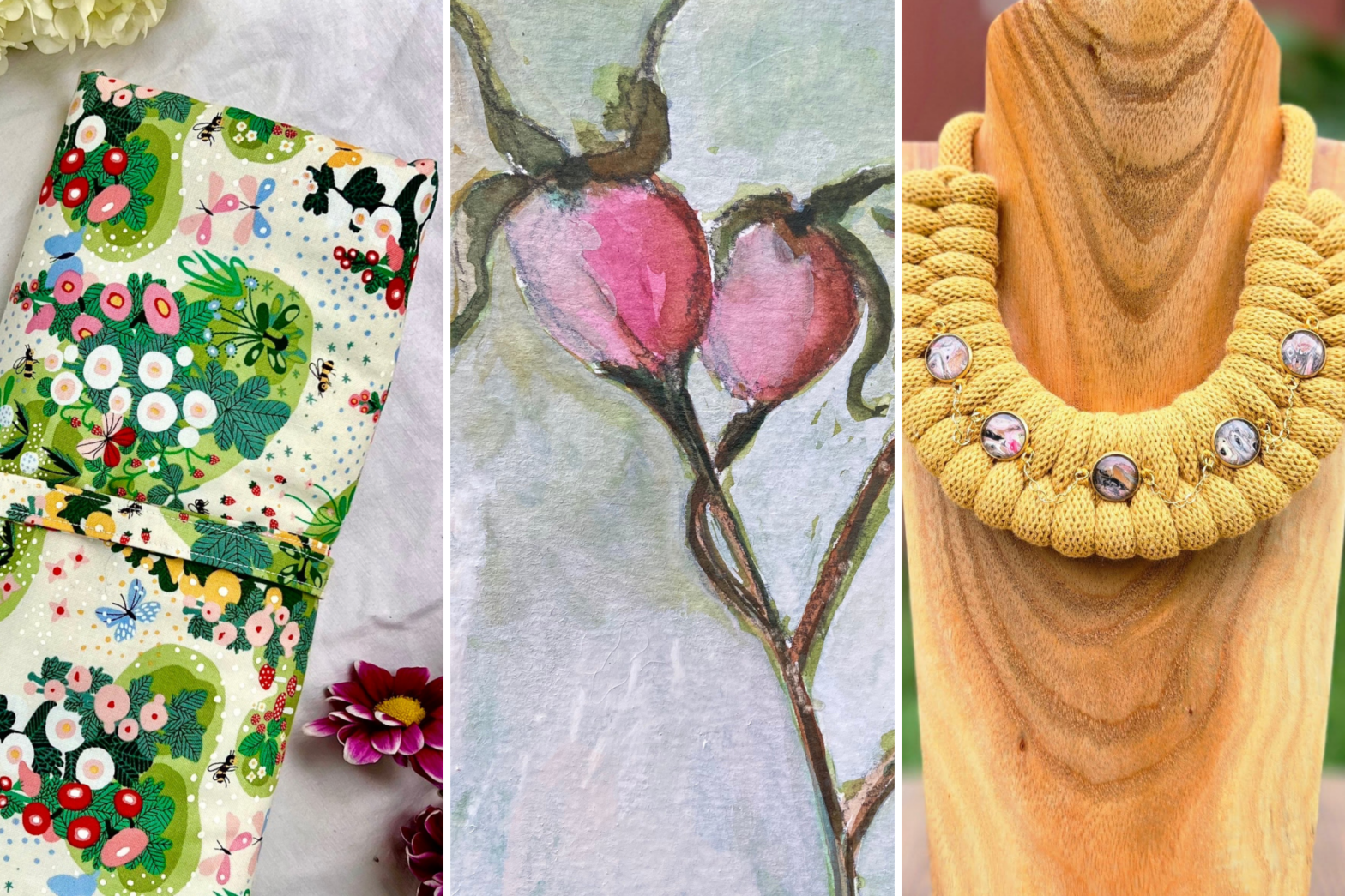
Artisan Market: Get to Know the 2026 Grant Recipients

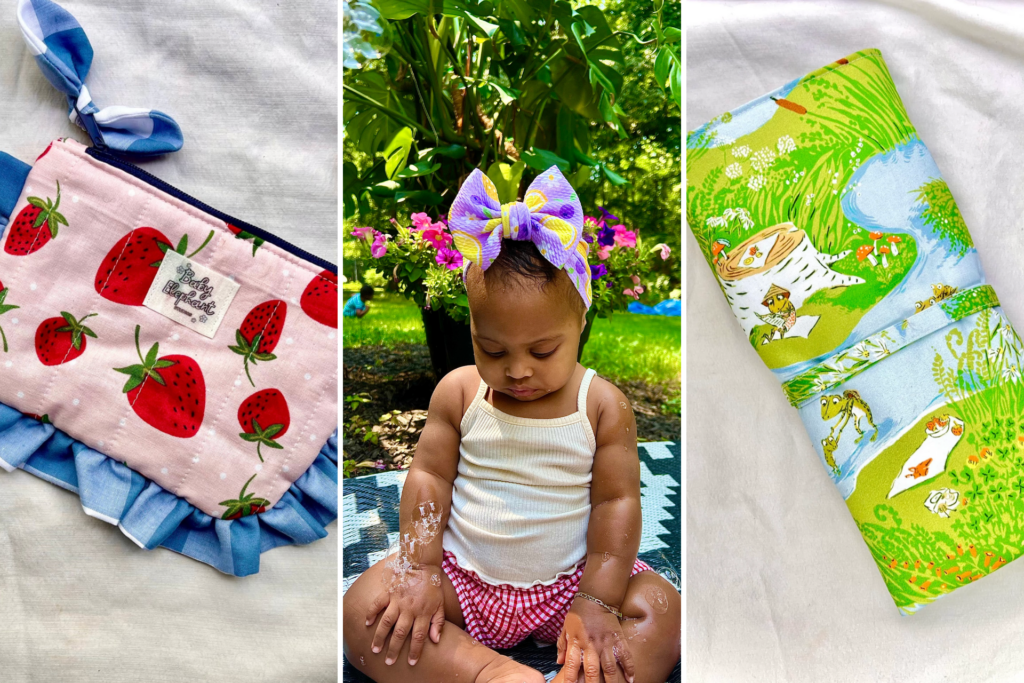
Each year, several artisans are awarded an Artisan Market Grant based on their craft, connection to Winterthur’s mission and history, and need for support. Read more about the talented artisans awarded grants in 2026.

Samara Santiago

Baby Elephant Studios

How did you begin your work, and what is the message told behind your artwork?

I began my work when my daughter was just two months old, during a season when I felt deeply lost in motherhood. Learning to sew became a way to reconnect with myself while still caring for my family—it gave me a sense of identity, purpose, and creativity at a time when everything felt new and overwhelming. As my skills grew, so did my desire to build something meaningful with my hands. Over time, my work became shaped by motherhood, including navigating my child’s autism diagnosis and the realities of caregiving. The message behind my artwork is one of care, joy, and intention—creating playful, functional pieces meant to be used, loved, and woven into everyday family life.

What would receiving this grant mean to you?

Receiving this grant would mean the opportunity to continue building my work during a demanding season of motherhood, rather than having to pause or step away from it. It would provide the support needed to invest in materials and inventory needed for participation in Artisan Market, while gaining exposure to an audience that values craftsmanship and handmade tradition. Beyond the practical support, this grant would be a meaningful affirmation that my work and story have a place in this community. It would give me the ability to keep building something meaningful for my family while sharing my work with care, purpose, and love.

How does your work connect to Winterthur’s mission?

My work connects to Winterthur’s mission through a shared respect for craftsmanship, intentional design, and the role handmade objects play in everyday life. Winterthur celebrates the artistry and care behind objects made to be used, cherished, and passed through generations. In a similar way, my work focuses on thoughtfully made, functional pieces for families—items designed to bring joy while withstanding daily use. By creating handmade accessories and clothing rooted in care, tradition, and purpose, my work reflects the belief that well-made objects enrich daily life and carry meaning beyond their material form.

Tracy Williamson

Petals and Paper Botanical Studio

What is the message told behind your artwork?

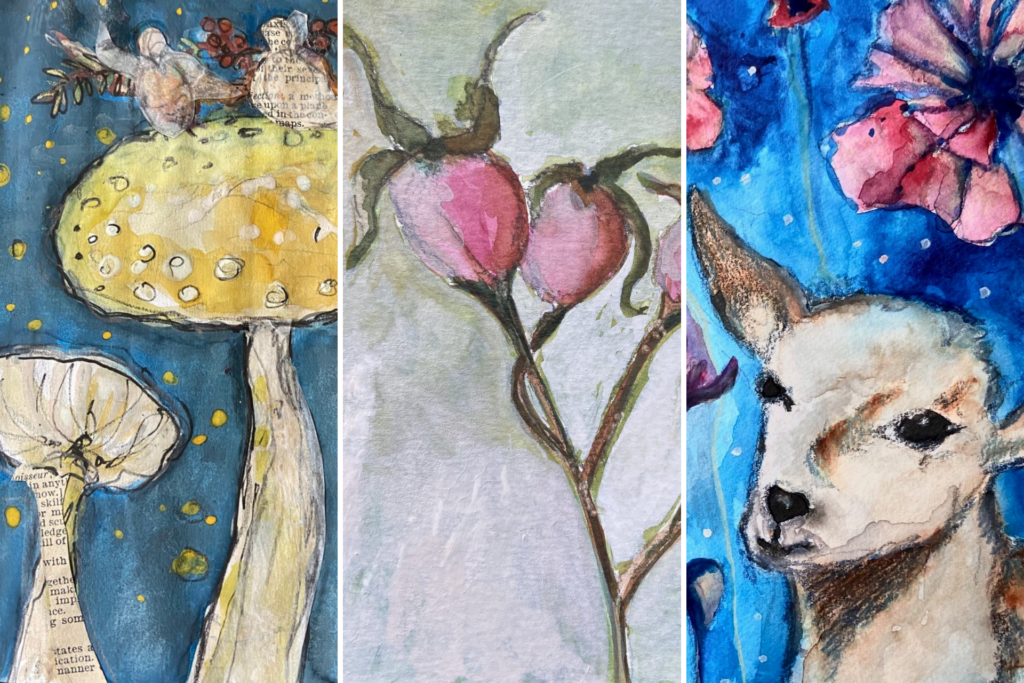
I use a variety of media to create a visual story. I am inspired by nature, botanical elements, art history, animals, and children’s literature. I am weaving these contextual elements together with different media—my artwork is expressive. It explores visual elements and illustrative storytelling with a whimsical approach. I often use the simplistic nature of a pencil and paper to begin creating my ideas and artwork. My artwork unravels into a visual expression by adding color, composition, and design elements into the thought process. 

How does your work connect to Winterthur’s mission?

My work aligns with Winterthur’s mission by integrating botanical imagery, animals, and natural elements to explore the relationship between self, object, and environment. Nature serves as both subject and guide, helping me create work that connects cultural memory, personal identity, and the living world around me.

Yuli Vinces

ArtesinA

How did you begin your work, and what is the message told behind your artwork?

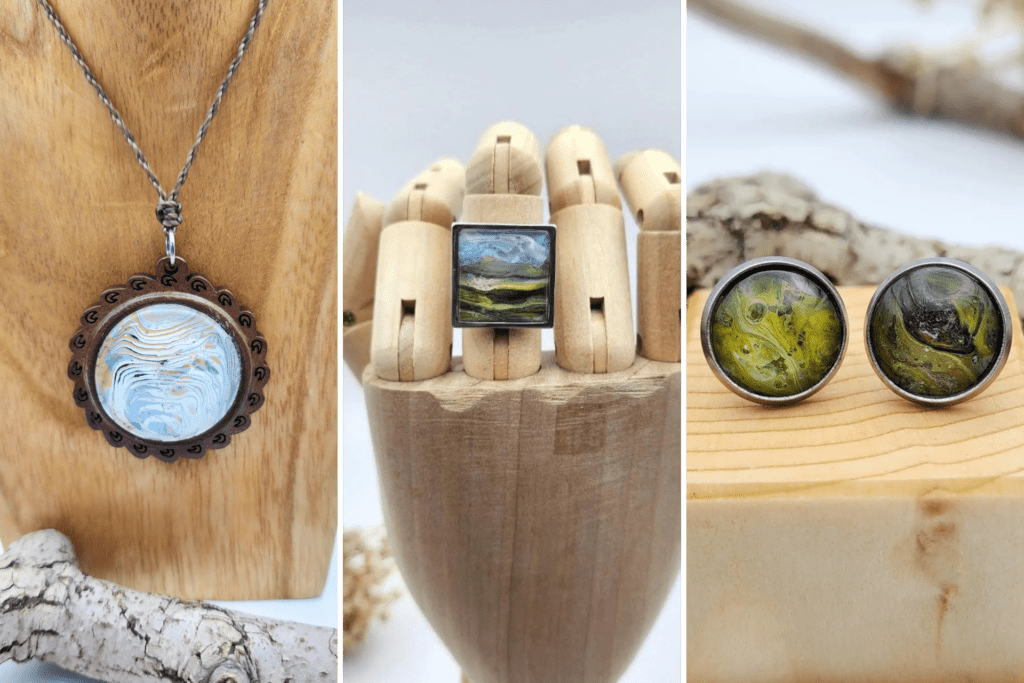
ArtesinA began from a desire to bring people together through a shared love for nature, art, and social causes. The project started as an exploration of combining traditional techniques like macramé with contemporary artistic processes, including transforming fragments of original paintings into wearable pieces. A key part of the practice is the thoughtful use of materials, giving new life to remnants of artwork and working with natural elements to reduce waste. Because of this process, each piece carries its own story and results in patterns that cannot be repeated, making every creation truly one of a kind. In addition, a portion of each purchase helps support dog and cat rescue initiatives.

What would receiving this grant mean to you?

Receiving this grant would make it possible for ArtesinA to participate in a high-quality artisan market like Winterthur’s, which would be an important step for our growth as an independent artisan business. It would allow us to share our work with a broader audience that values handmade craftsmanship, one-of-a-kind pieces, and thoughtful use of materials. It would also give us the opportunity to represent our approach of transforming original artwork into wearable pieces while supporting animal rescue causes. For a small emerging business like ours, opportunities like this help us continue developing our practice and building connections with a wider creative community.

How does your work connect to Winterthur’s mission?

Our work connects with Winterthur’s mission through a deep appreciation for handmade craftsmanship, creativity, and the cultural value of things created with care and intention. Through ArtesinA, we create pieces that bring together art, nature, and thoughtful design, encouraging people to connect with meaningful handmade work rather than mass-produced items. In this way, our work celebrates the idea that everyday pieces can carry stories, creativity, and human connection.


Interested in applying? Learn more.

All Under One Roof: The Architecture of Independence Tour

By Tyler Horne, Winterthur Tour Program Assistant

There are many ways to view Winterthur: as the home of Henry Francis du Pont, as a world-class museum of decorative arts, and as a gorgeous garden and natural landscape. For our current guided tour, Architecture of Independence, we invite you to think beyond a single home and explore the architectural collection H. F. assembled to decorate the walls. The tour traces a patchwork of rooms and fragments brought together from across the young United States. It offers a rare opportunity for visitors to discover the architectural styles and details that represent all thirteen original colonies, all gathered in one museum.

Wentworth Room

Wentworth Room

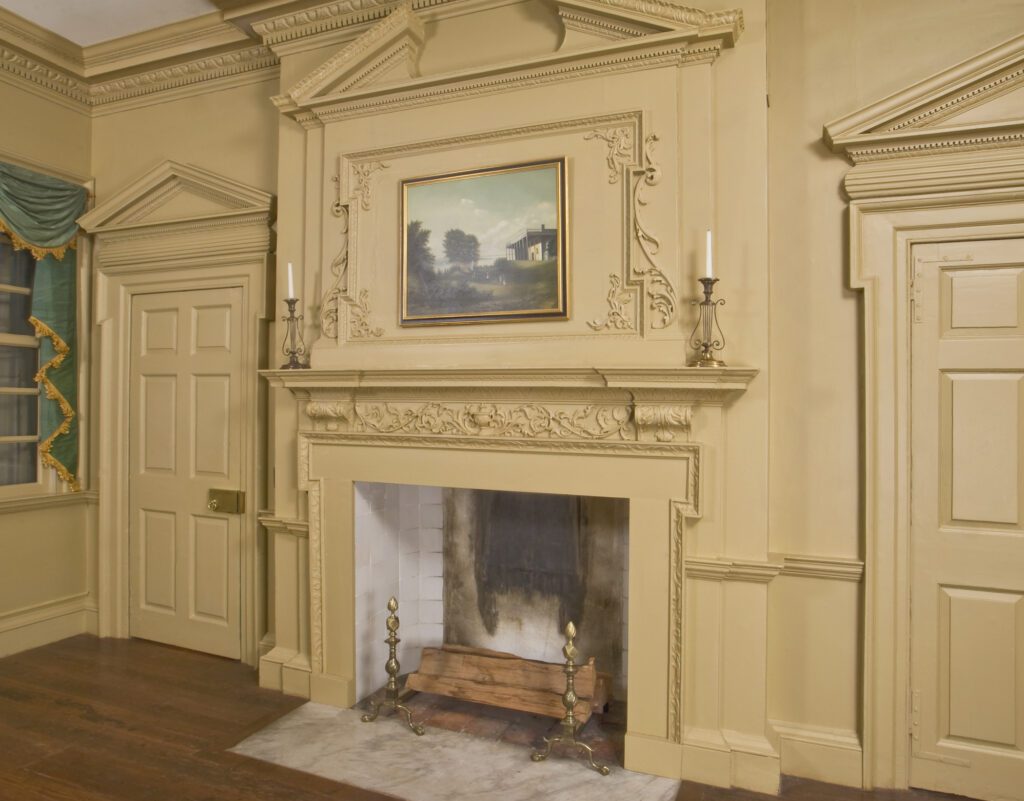
Winterthur’s architectural collection contains elements from seventy-seven historical properties: moldings, paneling, mantels, porches, and other decorative details that once belonged to houses across Colonial America. On this tour, we open doors usually kept closed, exploring seldom-seen spaces, and encourage visitors to consider how styles, materials, and craftsmanship reveal social and political life in the late 18th and early 19th centuries.

McIntire Porch

McIntire Porch

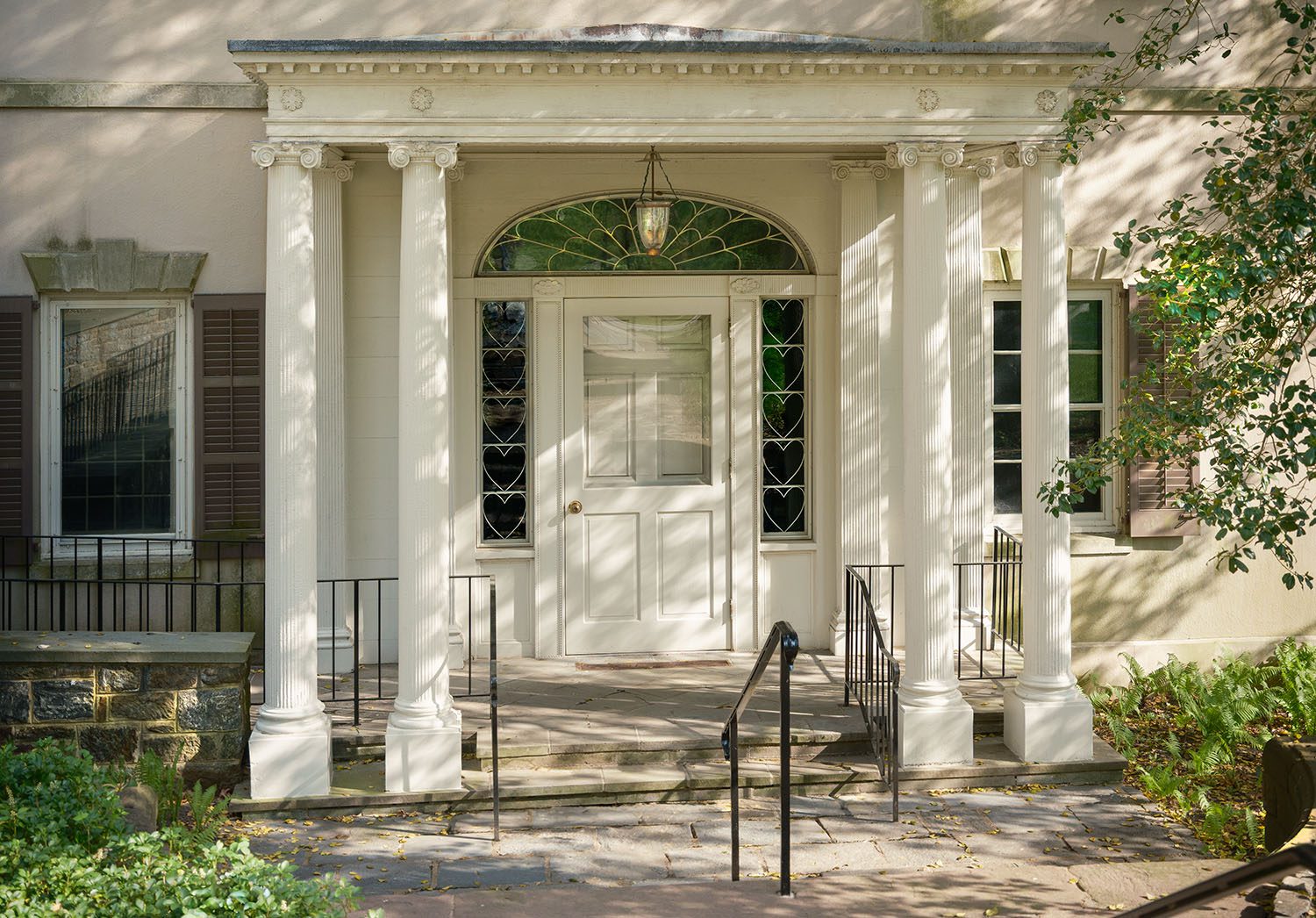
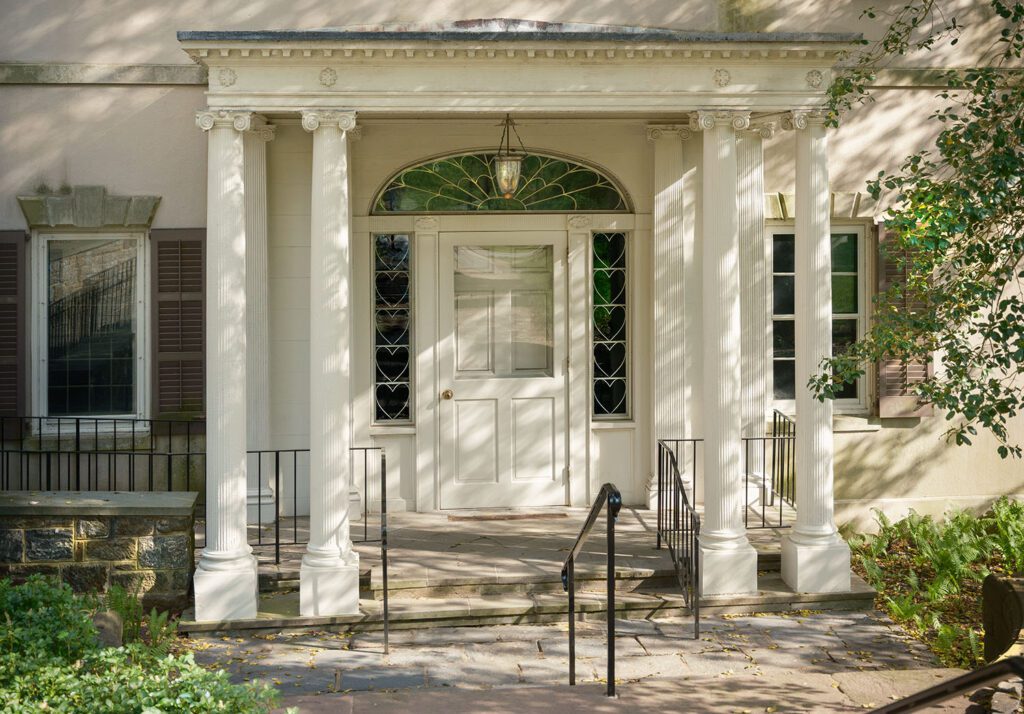
Visitors will enter the house through the rarely used South Wing via the McIntire Porch and explore rarely visited spaces, including the Federal Parlor, a masterpiece of Federal architecture designed by influential architect Asher Benjamin.

Federal Parlor

Federal Parlor

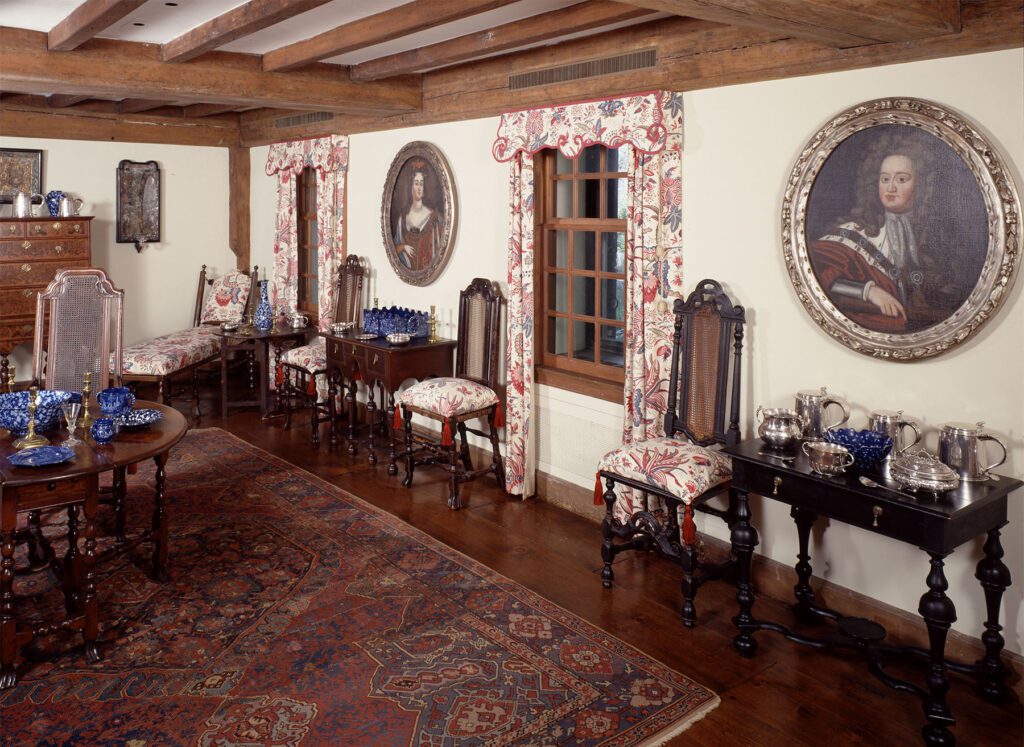
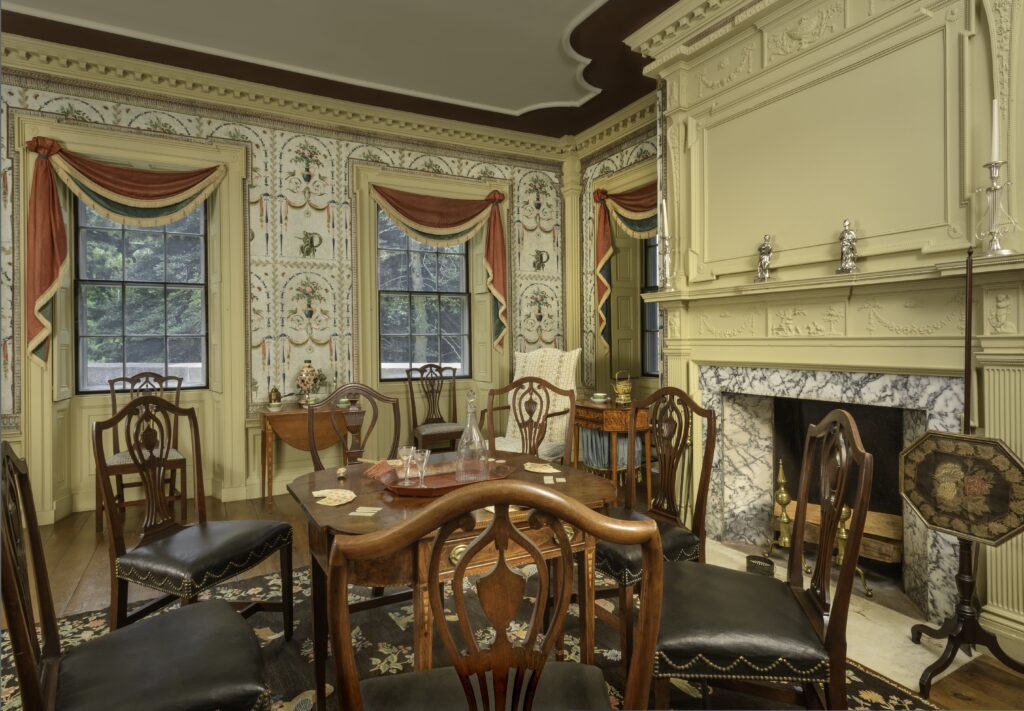
Around the corner, they will also see the Charleston Dining Room, a space decorated with architecture from a historical Georgian hotel operated by Jehu Jones, a free African American man living in Charleston, South Carolina in the early 1800s. 

Charleston Dining Room

Charleston Dining Room

As Winterthur marks 75 years as a center for decorative arts and scholarship, and as the country commemorates its 250th anniversary, Architecture of Independence offers visitors a timely way to examine how Americans of the founding era expressed ideas through design and consider the many hands that made these expressions possible. We welcome you to experience our collection of colonial architectural treasures, all under one roof. 

Explore these rooms and other seldom-seen spaces on the Architecture of Independence Tour.

Winterthur Celebrates Museum’s 75th Anniversary with a Grand Garden Party on May 16

WINTERTHUR, Del. (April 27, 2026)—Winterthur Museum, Garden & Library is celebrating the museum’s 75th anniversary with an elegant garden party on May 16 that features a 20-piece big band, a parade down Garden Lane, picnicking in the meadow by Azalea Woods, and a display of about 15 antique cars and Rolls-Royces on the Conservatory Lawn.

Field & Fête: Winterthur Celebrates 75 Years is scheduled for Saturday, May 16, 2026, from 10:00 a.m. to 4:00 p.m. on the breathtaking grounds of one of America’s great country estates. Tickets are $29; $15 for members. Rain date is May 17.

“In 1951, Henry Francis du Pont opened his extraordinary 175-room family home as a museum of American decorative arts, an act of remarkable generosity rooted in his belief that Winterthur’s beauty and history should inspire all who encountered it,” said Chris Strand, Charles F. Montgomery Director and CEO. “A true Renaissance man, ‘Harry’ pursued three great passions here: agriculture, horticulture, and collecting. He became an innovator and icon in all three.

“Today, his legacy continues through nearly 90,000 objects artfully displayed in the rooms where he once lived and entertained, gardens he considered his greatest canvas, and programs that carry his passion for learning and curiosity forward,” said Strand. “Field & Fête is our joyful tribute to that enduring vision and is an invitation to members and guests to experience everything he made possible.”

A Big Band, Parade, and Rolls-Royce Show
At the heart of the 75th anniversary garden party is the Unforgettable Big Band, a 20- piece ensemble with vocalists who will perform beneath a tent on Azalea Lawn from 11:00 a.m. to 3:00 p.m. The music sets the backdrop for the celebration, with a special performance by the BlueBallRoom Dance Studio swinging onto the floor at 12:30 p.m.

The band is scheduled to play four 15-song sets featuring a mix of popular songs that span the decades from the 1930s onward, with a large selection of music from the 1950s and ’60s, some ’70s and ’80s hits, and several contemporary titles. Styles include swing, ballad, waltz, pop, rock, Latin, and a few country songs.

Titles from 1951, the year Henry Francis du Pont (H.F.) opened his former house-turned museum to the public, include “Blue Moon,” “Blue Tango,” and “Unforgettable.” Other crowd-pleasing titles include Glen Miller’s “In the Mood;” Sinatra classics “Fly Me to the Moon,” “My Way” and “New York, New York;” “Boogie Woogie Bugle Boy” by the Andrews Sisters; and Aretha Franklin’s anthem, “Respect.” Modern crowd participation favorites “Sweet Caroline” and “Take Me Home, Country Roads” are also on the set list.

After the dance team’s performance, all eyes will turn to Garden Lane at 1:00 p.m. for the Chapters of Winterthur Parade, a charming 30-minute procession featuring one of Winterthur’s signature estate vehicles alongside gleaming vintage automobiles, stately Rolls-Royces, tractors, and the Delaware State Police Mounted Patrol.

Vintage Rolls-Royces and more will be lined up on the Conservatory Lawn from 10:00 a.m. to 4:00 p.m., showcasing the du Pont family’s passion for automotive excellence and luxury engineering. H.F. and his wife Ruth Wales du Pont owned more than 40 luxury vehicles during their lifetime, notably several Cadillacs and three Rolls-Royces, including a Phantom V.

Among the cars scheduled to be displayed by private collectors are a 1996 Bentley Brookland and 1956 Rolls-Royce Silver Wraith. Winterthur currently owns two Rolls Royces built in the United States, a 1927 dark green Phantom I Ascot Tourer and a 1927 burgundy Rolls-Royce Phantom I Pall Mall. These were donated to Winterthur and not owned by the du Ponts. The Ascot Tourer is scheduled to be in the parade and will be parked outside the Port Royal Entrance Hall.

Bring Your Own Picnic or Book a Private Tent

Guests can bring their own chairs and/or blankets and pack their own picnic or purchase food and beverages under the food tent. A limited number of 10-foot by 10-foot private picnic tents are available for rent, situated right in the center of the music and merriment. Guests in private tents, which include a 48-inch round table with linens, six chairs, and flowers, can opt for butler service.

Restaurant Associates, Winterthur’s on-site catering partner, brings an upscale grazing menu for purchase to the fields, including lobster bao buns, salmon rillettes, franks in a blanket, French-inspired charcuterie boxes, and truffle potato chips.

Winterthur’s culinary team will be on the grill serving Wagyu beef sliders, classic hot dogs, and hamburgers, alongside a skewer station featuring rhubarb miso-glazed shrimp, chicken with herbs de Provence and ramp chimichurri, along with tomato-marjoram glazed vegetables with halloumi cheese.

The frankfurters are a nod to the museum’s early days, when H.F. reportedly sold hot dogs to guests from the side porch of the Cottage, the 50-room English Regency-style residence designed by Thomas Waterman that H.F. and Ruth moved into in 1950, a year prior to the museum opening to the public.

For dessert, Field & Fête guests can savor chocolate strawberries layered with pistachios and shredded kataifi, beautifully presented in stemless wine glasses for strolling and savoring.

In addition, Woodside Creamery in Hockessin, Del., is crafting two small-batch, hand dipped ice cream treats for the event, available only at Winterthur. The Winterthur Swiss Avalanche flavor, originally created to commemorate the museum’s 50th anniversary in 2001, pays homage to both the origin of the estate’s name and its early days as an award-winning dairy farm. When H.F.’s ancestors Jacques Antoine and Evelina du Pont Bidermann settled the property in 1839 and built the original 12-room Greek Revival manor house, they named it Winterthur after the Swiss town where Jacques Antoine’s family originated.

Cows were a part of the Winterthur landscape since its earliest days. H.F. became farm manager in 1914, and in 1917, after much research and experimentation, he began breeding Holstein-Friesian cattle to improve the herd’s butterfat content.

Winterthur Swiss Avalanche ice cream is made from sweet cream and features mini chocolate cows made from Neuchatel chocolate. The moniker Neuchatel was taken from the Swiss city of Neuchatel, which is also known for its chocolates. Neuchatel chocolatier Albert A. Lauber V happens to have settled locally in Oxford, Pa. The limited-edition flavor will be featured at Winterthur throughout the year while supplies last.

The Winterthur Faeries flavor is a mint chocolate chip ice cream that Woodside Creamery originally created for May Day as an ode to Enchanted Woods children’s garden, which is celebrating its 25th anniversary this June. This limited-time special flavor features Swiss chocolate leaves and bugs mixed in with white chocolate toadstools. Vanilla ice cream with sprinkles and Rita’s Italian cherry water ice will also be available for purchase.

Toasts to Winterthur’s anniversary will be raised at the Sparkling Wine Bar. Options include Chandon Garden Spritz, Torresella Prosecco, and Chandon Sparkling Rosé, along with two signature cocktails, an Elderflower Spritz and H.F. du Pont 75. The latter is Winterthur’s version of the classic French 75, a popular cocktail in the 1950s that includes gin, lemon juice, and simple syrup combined in a shaker and topped with a splash of champagne.

Wilmington Brew Works, a local microbrewery with two taprooms in Wilmington, Del., has joined the celebration by issuing their Superfluous Nomenclature American pale ale with special-edition labels that honor Winterthur’s museum collection and 75 years of art, history, and nature. Featured are images of silver tankards made by Paul Revere on display in the museum’s Du Pont Dining Room; the sweeping, spiral Montmorenci staircase from North Carolina and installed in the family home-turned-museum; rare books from the Winterthur Library collection; and a photo of Winterthur’s daffodil drifts that have dazzled garden guests for more than 120 years.

Secret Spaces Tours — Limited Availability
Available only this weekend, the Secret Spaces Tour will take guests on a rare behind-the scenes journey through Winterthur’s hidden museum spaces, conservation areas, floral processing room, and more, concluding with a sparkling toast overlooking the Reflecting Pool. Limited tickets remain for 4:00 to 6:00 p.m. Friday, May 15, and Sunday, May 17. ($110; $100 for members. Includes Field & Fête admission on May 16.) Reservations required.

While The Court is a surprising delight seen on the More to Explore Tour, those on the Secret Spaces Tour will get to peek inside the Banister House and Montmorenci facades. Tourgoers will also get an insider view of the Flower Room and cold storage, which H.F. added during the 1928 expansion of the house. This was the main base of operations for former estate staffers who would follow his meticulous instructions for creating floral arrangements when the house was a home.

Textile and design lovers will get rare access to Winterthur’s Curtain Storage, which gives insight into H.F.’s design aesthetic and belief that textiles brought his collection and home to life. He developed detailed plans for changing elements like curtains and bedcovers for each season. This space houses curtains and valances that reflect the design tastes and history of textile collecting and use at Winterthur. See the work of Ernest LoNano, Winterthur’s upholsterer and curtain maker when the mansion was a family home.

Secret Spaces also includes a tour of Winterthur’s Needlework Storage, where guests will see exquisite examples of the textiles in the vast collection. These objects are often not on view due to the delicate nature of the fabrics, which are susceptible to light and other stressors.

More to Discover Throughout the Day

Beyond the big-ticket highlights, Field & Fête is packed with memorable experiences:
• Garden Exploration (10:00 a.m.–4:00 p.m.): Spring blooms will be on full display primrose in the Quarry Garden, late-flowering rhododendrons and azaleas through Enchanted Woods and Azalea Woods, Jacob’s ladders and Spanish bluebells in the woodlands, and a showy Peony Garden (if weather is consistent with past bloom cycles!). Guests can stroll around the Reflecting Pool and East Terrace, where staff have reinstalled newly restored lead garden ornament.
• Guided Garden Walks (11:00 a.m. and 2:00 p.m.): Guided walks through the best of what’s in bloom. Included with admission.
• Live Fashion Illustration by Dallas Shaw: Illustrator Dallas Shaw, known for live-sketch events around the world with clients Dior, Gucci, and Louboutin, will transform guests’ garden-party looks into one-of-a-kind keepsake illustrations. Available for a fee; spaces fill quickly. Find the artist day of to reserve.
• Bouquet Making with Barb’s Backyard Blooms: Guests can visit Barb’s Flower Bar to create their own fresh bouquet after strolling the gardens. Available for a fee, while supplies last.
• House Tours (10:00 a.m.–3:30 p.m.): Self-guided and guided tours of Winterthur’s celebrated house collection, including An American Legacy (self-guided, included with admission) and Architecture of Independence (guided, reservation required).
• Library Open House (11:00 a.m.–2:00 p.m.): Special collections on view, including stylish 1950s catalogs and archival photographs. Included with admission.

About Winterthur Museum, Garden & Library

Winterthur—known worldwide for its preeminent collection of American decorative arts, naturalistic garden, and research library for the study of American art and material culture —offers a variety of tours, exhibitions, programs, and activities throughout the year. Admission includes a self-paced house tour, exhibitions, a narrated tram ride (weather and space permitting), and the Winterthur Garden.
Winterthur is located on Route 52, six miles northwest of Wilmington, Del., and five miles south of U.S. Route 1. Winterthur is committed to accessible programming for all. For information, including special services, call 800.448.3883 or visit winterthur.org. Winterthur is closed seasonally from early January through late February.
Beyond Bones, Shells, and Teeth

By Ellery Coleman

Wandering around a Winterthur hallway in low-level conservation lighting, you notice a lot of gleaming wood, metal, glass, and porcelain. However, sometimes (even as a guide) you might come across an object where the material is a bit of a mystery. Very often what you have found is an organic material. Is it bone? Horn? Porcupine quill? Shells? On our latest tour, Focus on Bones, Shells, and Teeth, you can learn more about these unusual materials which were once popular and  are often absent from our homes today.

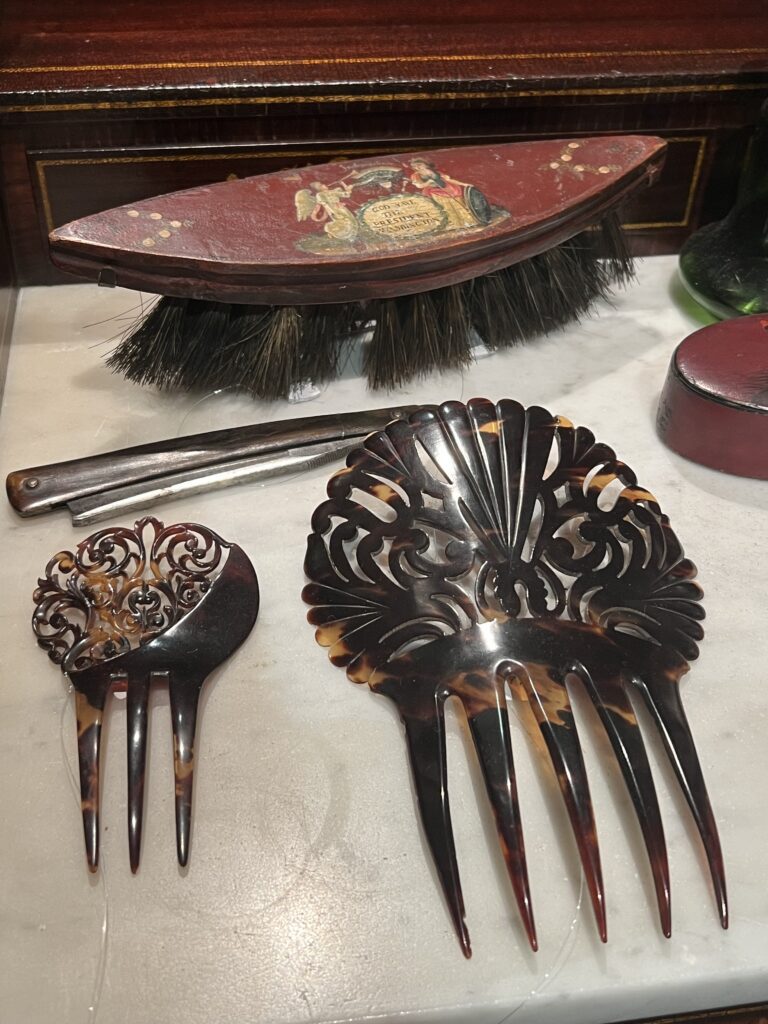
Combs, Eastern United States, 1850–1900. Tortoise shell. Gifts of Greta Layton Schutt in memory of Greta Barksdale Brown 1994.0055 and 1994.0056

Organic materials (organic meaning something that came from an animal) are often unfamiliar, sometimes even unrecognizable to us at first because many of these substances are legally protected today. Some of the most valuable and beautiful organics—tortoiseshell, ivory, and rhino horn, for example—come from animals that are critically endangered, like the hawksbill sea turtle, the African elephant, and the white rhino (the northern variety of which is extinct). Other materials like porcupine quills and ostrich feathers are not endangered but rarely appear in a modern home. The exception is leather, also an organic, which is almost as ubiquitous now as it was in the past.

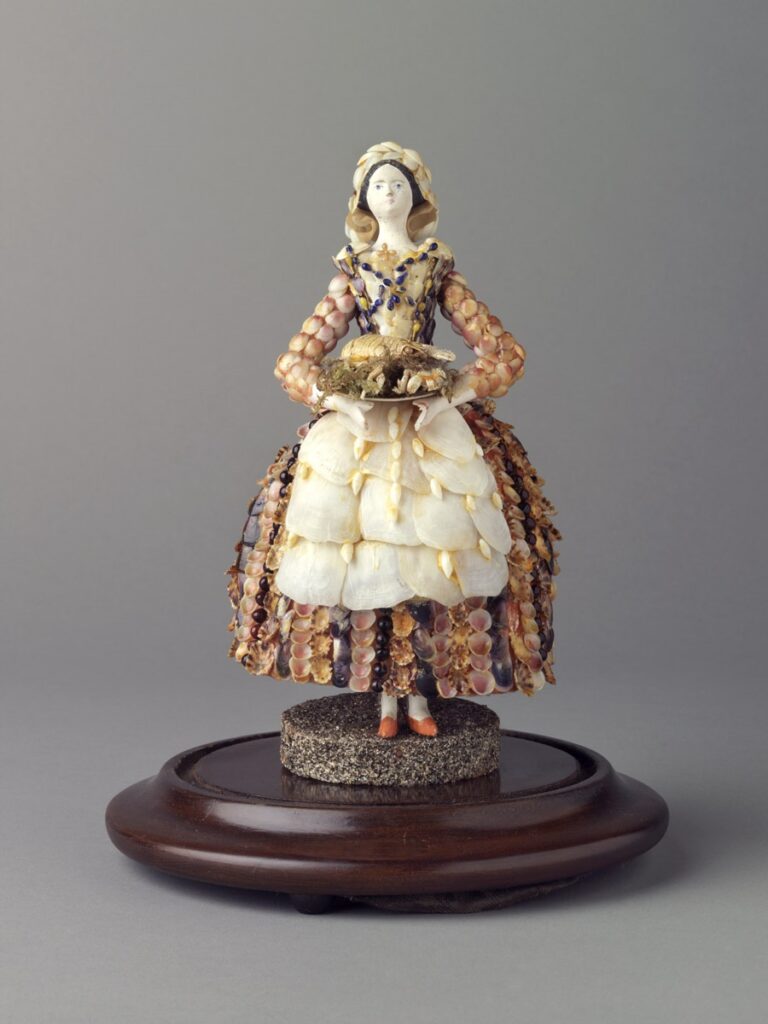
Figure of a woman, Eastern United States, 1760–1850. Earthenware, shell, glass, wood, paint, and mica. Bequest of Henry Francis du Pont 1959.1596

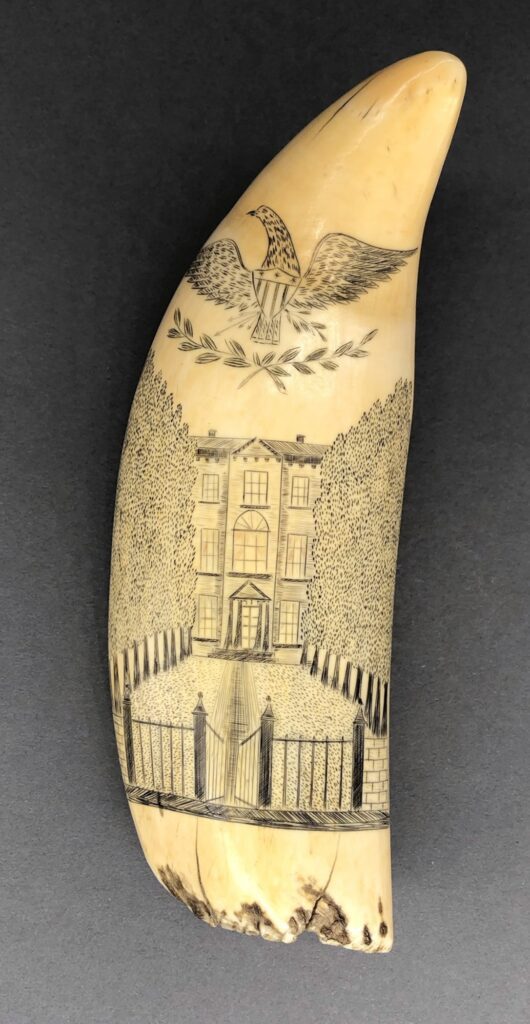
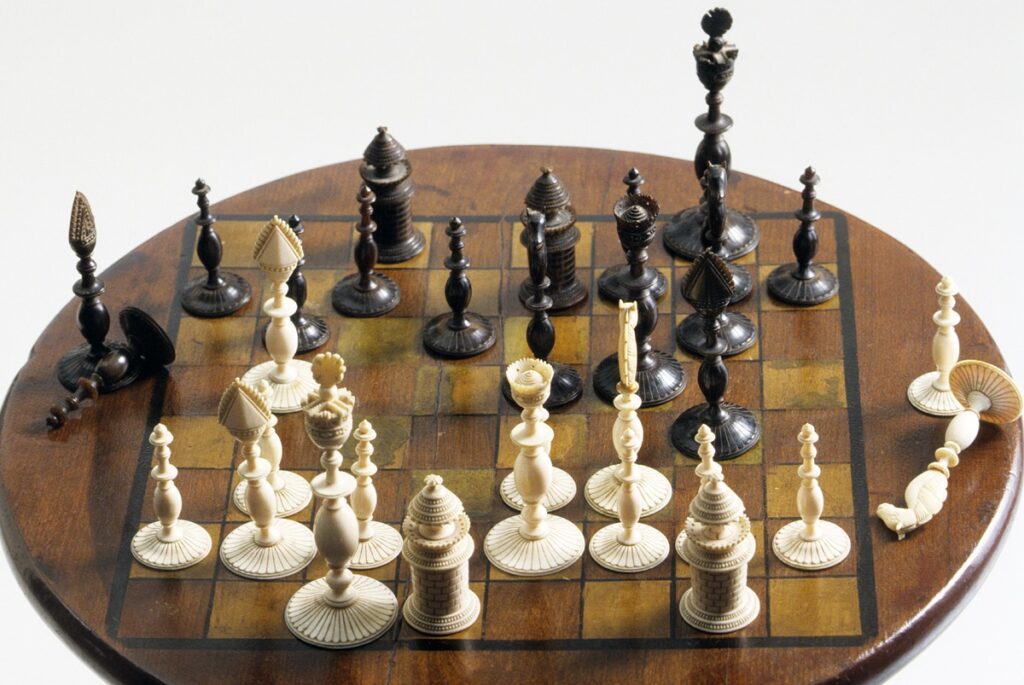
Animals and art intersect on this tour, which also features some of my favorite rooms in the house. It was a delight to research and come to understand objects like horn cups and flasks, elephant ivory chess pieces, leather chairs and pitchers, engraved whale teeth, statuettes made of seashells, and more. Many of these pieces are stunningly beautiful not only for their aesthetic value, but also because of the sad yet resilient story of the species sacrificed for the object.

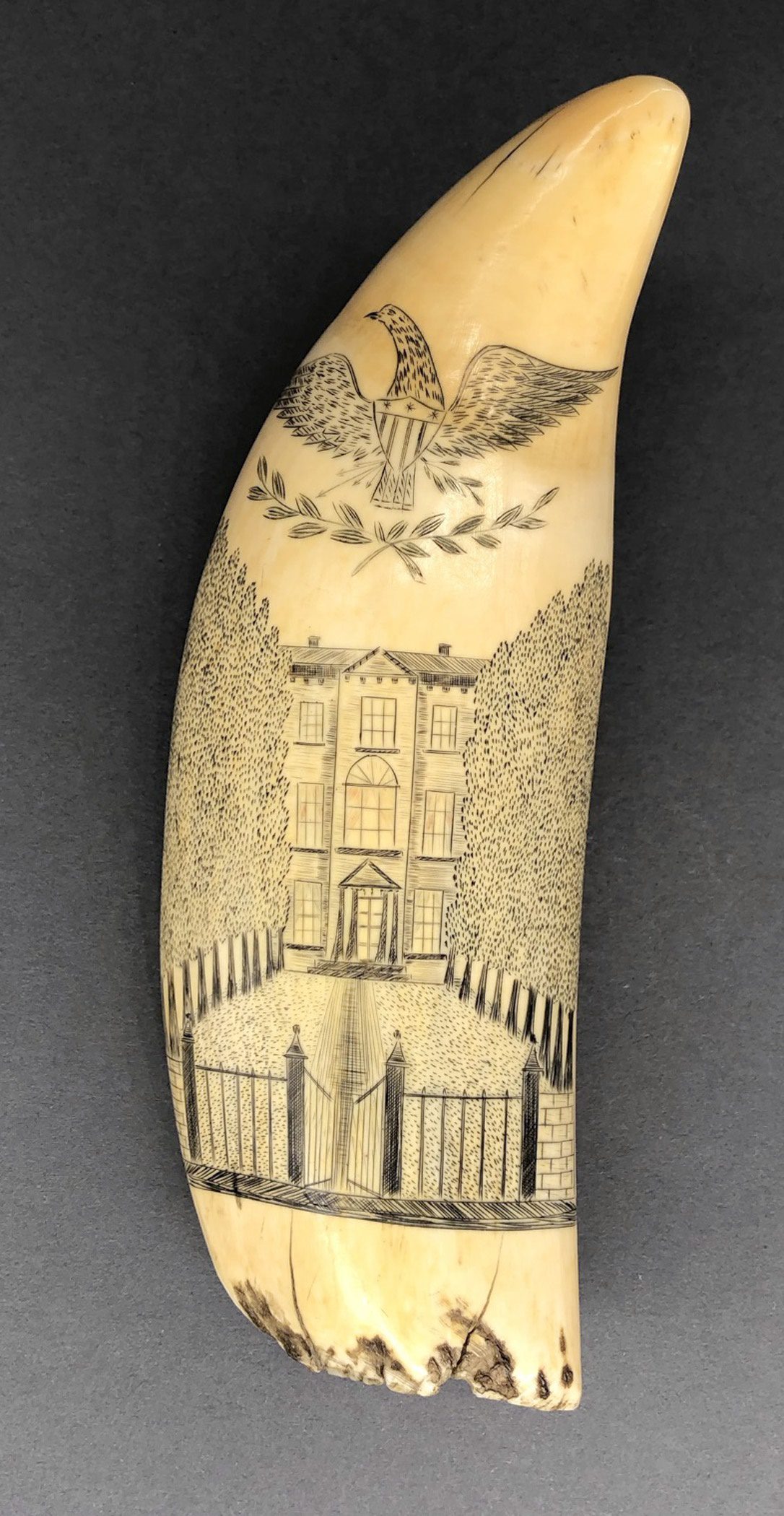
Whale tooth (scrimshaw tooth), probably New England, United States, 1825–40. Ivory (sperm whale) and ink. Bequest of Henry Francis du Pont 1967.0875

Of course, the topic of organic materials raises questions about sustainability and reducing our reliance on plastics and petroleum-based materials. Before modern plastics existed, people used natural materials like horn, tortoiseshell, and leather because they offered the flexibility that plastics have; for example, when heated, horn and tortoiseshell can be molded much like plastic. Ironically, plastic waste now harms some of the very animals whose materials it was meant to replace. 

Today we commonly see plastic versions of natural materials—faux tortoiseshell glasses, imitation bone buttons, and plastic “mother-of-pearl.” Even leather can be synthetic, and many types of vegan leather are made from plastics rather than plants.

Chess pieces, China, 1800–1900. Ivory (white pieces) and horn (black pieces). Bequest of Henry Francis du Pont  959.0539 A-P and 1959.0539 AA-PP (set)

Although attitudes toward using organic materials have changed over time, the aesthetic appeal of these traditional materials remains strong, and designers continue to replicate their look in new, modern forms.

Join me or one of my colleagues for a thought-provoking tour of unique objects located on four floors of the house. Lions and tigers and bears—not quite. Whales and rhinos and cows, oh my!

NOTE: CITES (the Convention on International Trade in Endangered Species of Wild Fauna and Flora), signed in 1973, is an international agreement that aims to ensure that international trade in specimens of wild animals and plants does not threaten the survival of the species. It accords varying degrees of protection to more than 40,000 species of animals and plants, whether they are traded as live specimens, fur coats or dried herbs

Bringing Lead Garden Sculptures Back to Winterthur

By Lauren Fair, objects conservator and assistant director of conservation

At Winterthur, art conservation doesn’t stop at the museum and gallery doors; it also extends into the garden. With more than 450 garden items—including fountains, cisterns, and sculptures as well as planters, gates, chairs, benches, and more—caring for these objects requires continual collaboration.

Over the past two decades, a team led by the conservation and garden departments has developed a robust maintenance program and a system for tracking object moves. The team has also been restoring pieces that were relegated to storage, preparing them to return to their original design locations.

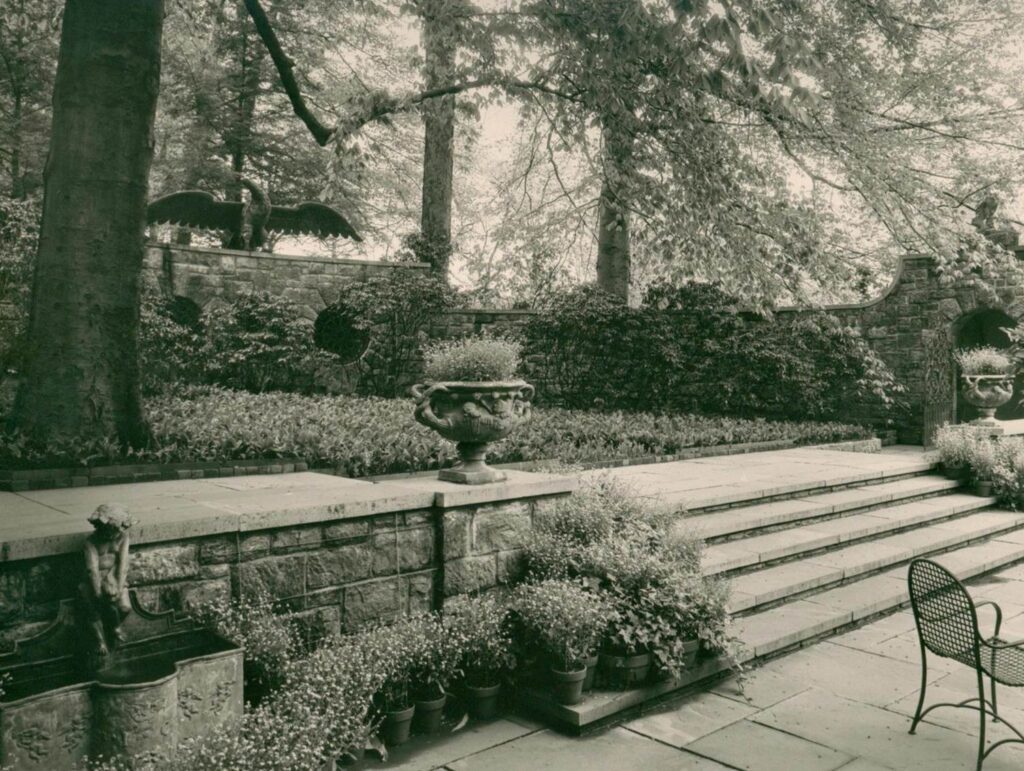
An ongoing project involves restoring two dozen lead garden objects that once embellished spaces such as the Reflecting Pool. Historical images bring to life how these sculptures complemented the landscape, enhancing the overall garden experience.

East end of Reflecting Pool, 1932, showing various lead garden objects: two fountains against the stone wall, two Warwick vases flanking the stairs, and one rooster above the covered walkway.

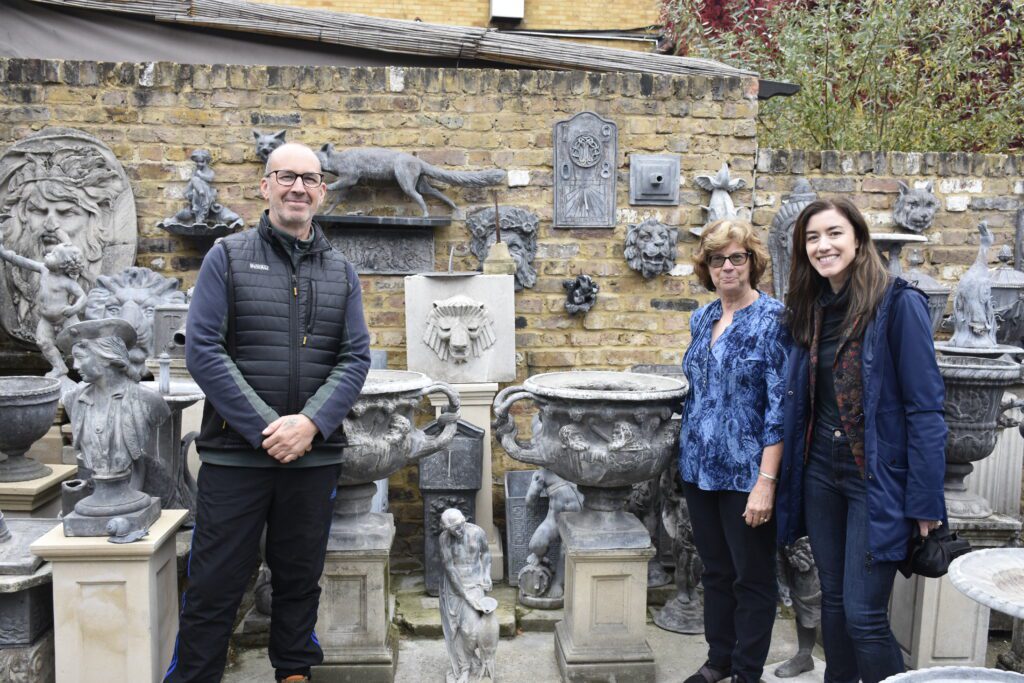
Restoring the lead collection has become an international collaboration. Winterthur is partnering with H. Crowther Ltd. in London, the studio where Henry Francis du Pont originally purchased most of the museum’s lead garden objects. Crowther’s head restorer, Peter McBride, visited here in 2023 and offered critical insights into our sculptures’ provenance, distinguishing 18th-century originals from 19th-century assemblages and copies.

Peter McBride at H. Crowther Ltd. Studio in October 2025, showing the first group of restored lead sculptures to Linda Eirhart, Winterthur’s Alice Cary Brown Director of Garden, and Objects Conservator and Assistant Director of Conservation Lauren Fair.

Thanks to generous donor support, twelve lead objects from Winterthur were recently restored at the Crowther studio and will be reinstalled around the Reflecting Pool in late March. Another group of twelve has recently arrived in London and will be restored and returned later this year.

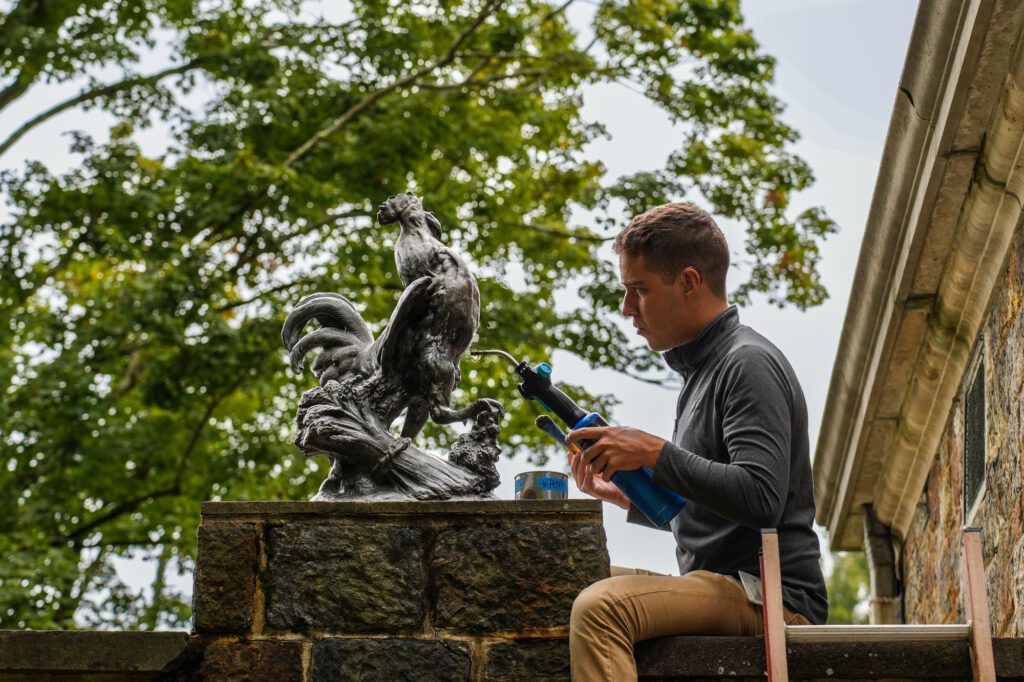
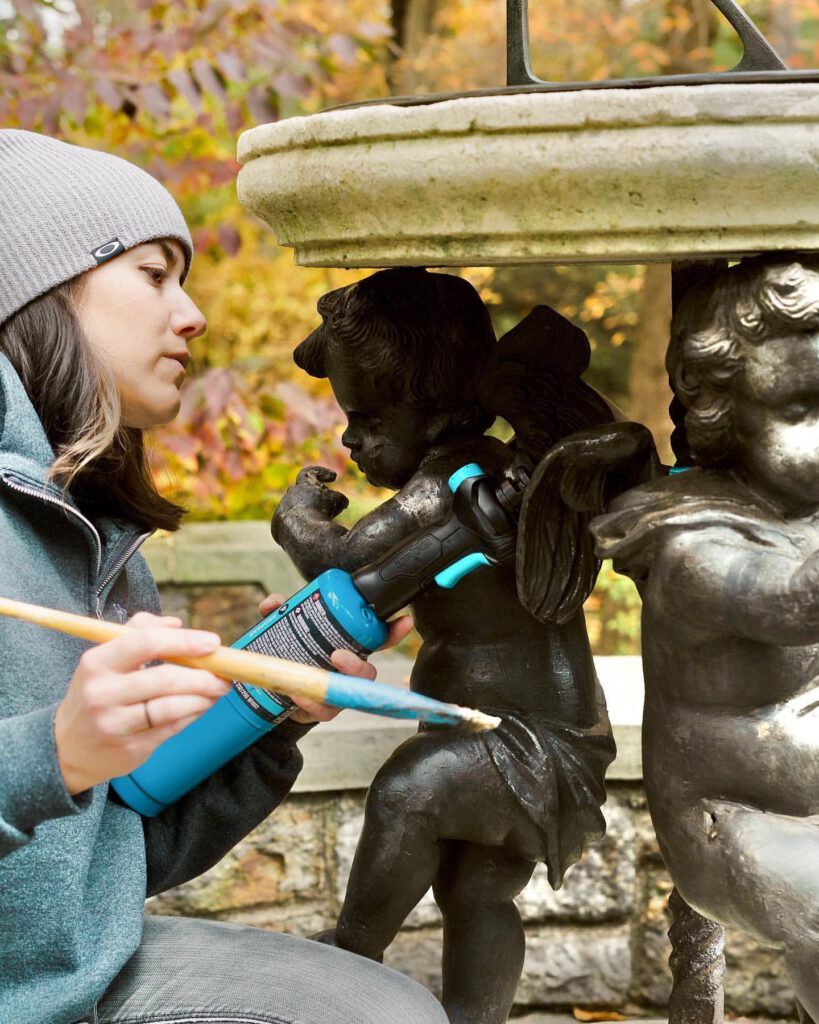
Lead is surprisingly stable outdoors, developing a protective patina over time. Its vulnerability lies in its softness, internal reinforcements that can fail, and—unexpectedly—squirrels. Their extensive chewing damage prompted the conservators to adopt a cayenne-infused wax coating, now applied annually, which has successfully deterred them.

William McHugh, preventive technician, applying protective pepper wax to lead garden objects at Winterthur.


Lauren Fair applying protective pepper wax to lead garden objects at Winterthur.

These treatments mark a major step toward reinvigorating historic garden spaces, while reminding us that restoration also brings responsibility. Each returning sculpture requires long-term planning, resources, and consistent care to ensure it can be safely enjoyed outdoors for generations to come. Our conservation and garden teams are committed to doing just that.

We are pleased to welcome our freshly restored sculptures back over the coming months and invite you to enjoy them as they return to their places at Winterthur—as beautiful as ever.

#AllinfortheSemiquin

By Eleanor Shippen, a Lois. F. McNeil Fellow in the Winterthur Program in American Material Culture

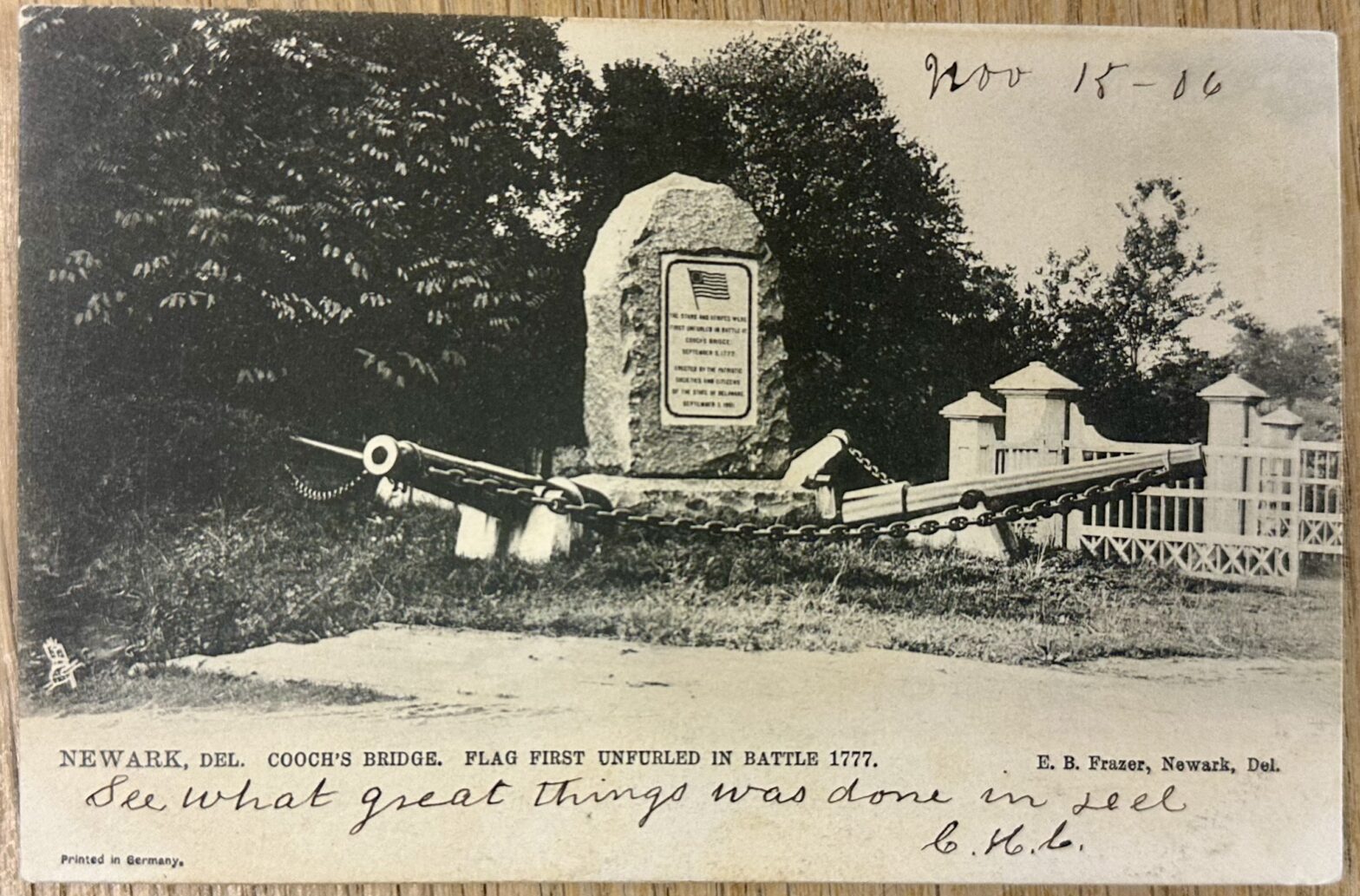
Flickering candlelight illuminates the soft red, white, and blue hues of an American flag. While this might at first seem to be a scene from a bygone colonial past, the object at the center of this patriotic vignette was created nearly two hundred years after the signing of the Declaration of Independence. This hold-to-light postcard, produced for the Bicentennial in 1976, is one of many commemorative objects that visitors will see in #AllinfortheSemiquin: Postcards and Public Memory at Delaware 250. On view just outside the library, the exhibit explores how people commemorate the past through objects and reveals how postcards, despite their small size and ephemeral nature, can carry complex layers of meaning and memory found at the heart of commemoration.

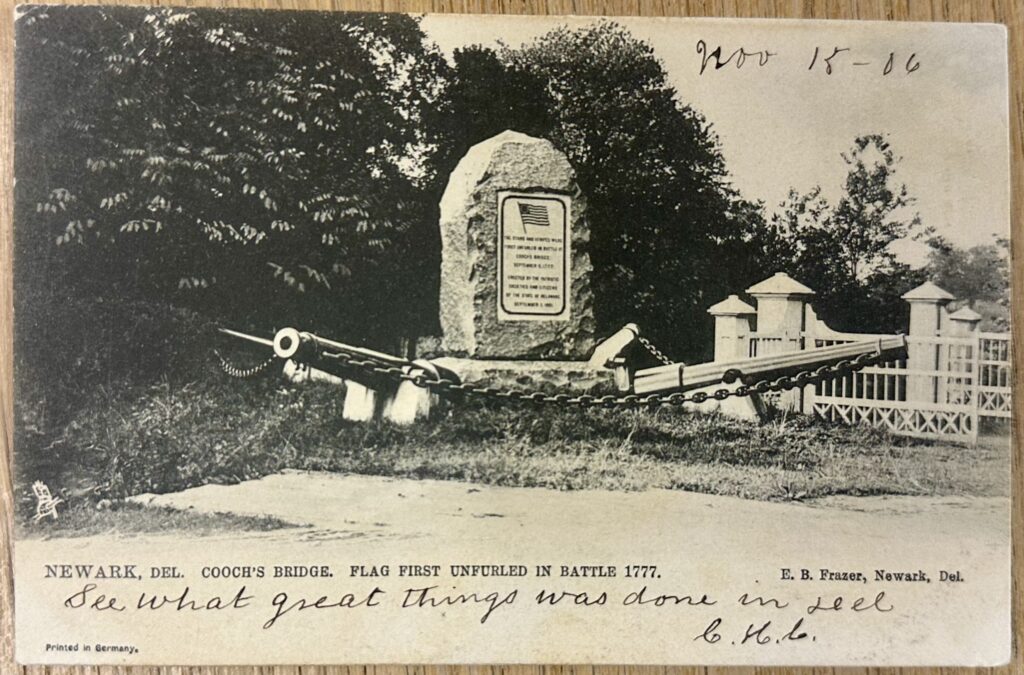
Postcard of the monument at Cooch’s Bridge. c. 1900–1910. Gordon A. Pfeiffer Delaware Postcard and Ephemera Collection, Box 7, Folder 9. Courtesy of the University of Delaware Special Collections.
 

This exhibition considers those questions as Delaware—the first state to join the Union—marks 250 years of independence alongside the nation’s own semiquincentennial (250th), anniversary. My experience as both a Lois F. McNeil Fellow in the Winterthur Program in American Material Culture and the marketing and engagement intern for Delaware 250, the state’s commission for celebrating both semiquincentennial anniversaries, inspired this exhibition as I had a unique opportunity to examine firsthand the intersections between commemoration, materiality, and meaning in the First State as experienced by its citizens.

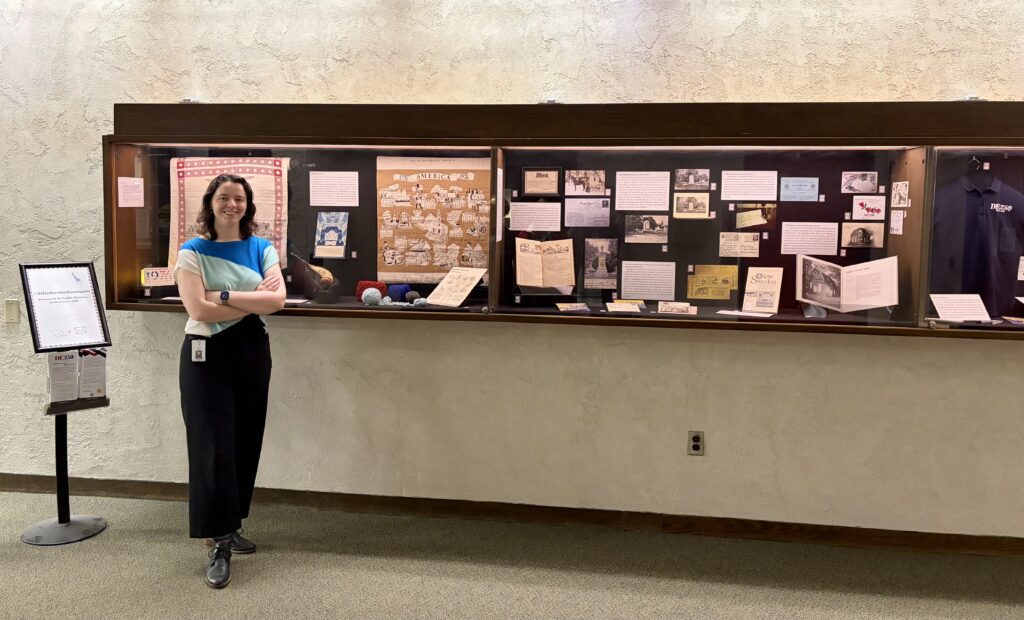
Eleanor Shippen stands next to the display case for #AllinfortheSemiquin: Postcards and Public Memory at Delaware 250, which she curated.

While the postcards, handkerchiefs, embroidery kits, and other souvenirs on display by no means illustrate the breadth of commemorative objects or fully represent the diverse ways people have used such objects to celebrate the 1876 centennial, 1926 sesquicentennial, and 1976 bicentennial, these objects demonstrate shifting state, national, and commercial interpretations of which histories are commemorated, and how those histories were communicated to the American public. Other objects draw attention to the everyday, highlighting the ordinary yet incredibly special moments where someone, somewhere, felt something was worth remembering. Delaware 250’s “To me, Delaware is…” initiative prompted me to consider how postcards speak directly to moments like these and add to our understanding of past commemorations.

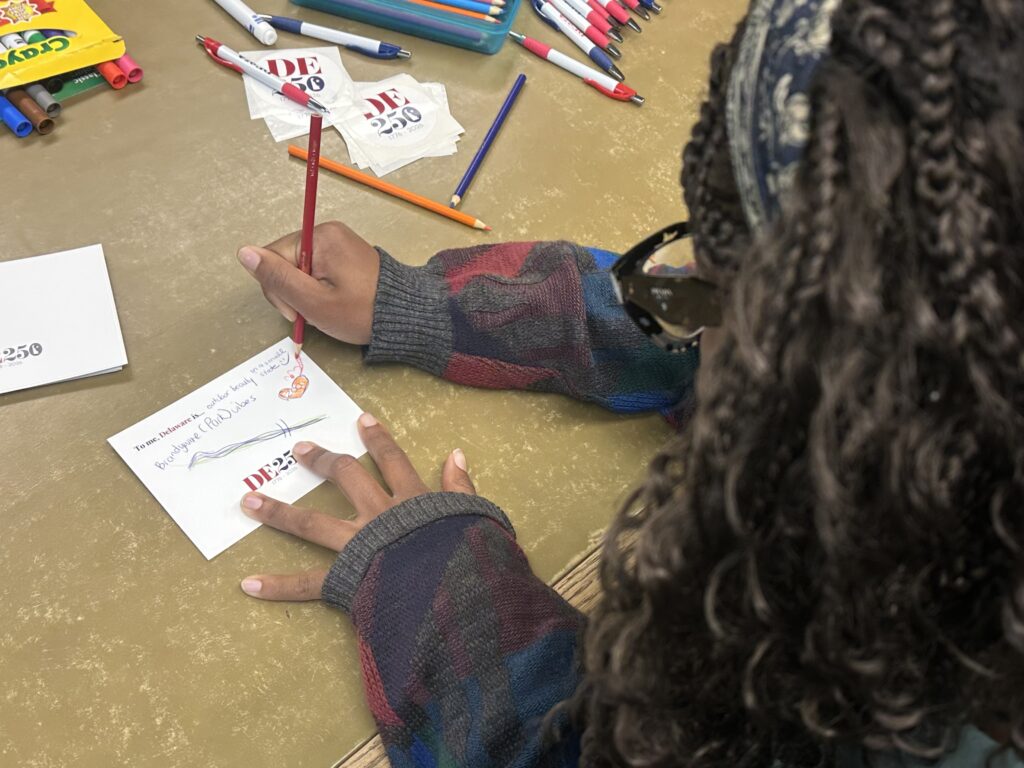
Camille Williams, Lois F. McNeil Fellow, completing a “To me, Delaware is…” postcard at the library’s recent program Off the Shelf: Greetings from Winterthur!

This Delaware 250 public outreach program was created to promote the semiquincentennial celebrations, encouraging participants to reflect and share on a postcard what Delaware means to them. These postcards describe Delaware as everything from a “world of history” to “home.” Submitted at local festivals, museum programs, and state fairs, the postcards are a record of how today’s Delawareans view the state, understand the role their memories play within its history, and share their hopes for the future. When considered alongside early twentieth-century postcards, it is clear that generations of Delawareans have and will continue to add their own interpretations of the past to their local memory of historical sites, figures, and events.

Working with such an actively growing archive has been both a privilege and a challenge. While this exhibition reflects only a fraction of the commemorative celebrations and postcards shared by Delawareans across decades, everyone has the opportunity to help shape what the state’s future holds and create their own piece of Delaware history.

In Her Own Key: The Life of Ruth Wales du Pont

By Ellery Coleman, Tour Program Assistant at Winterthur

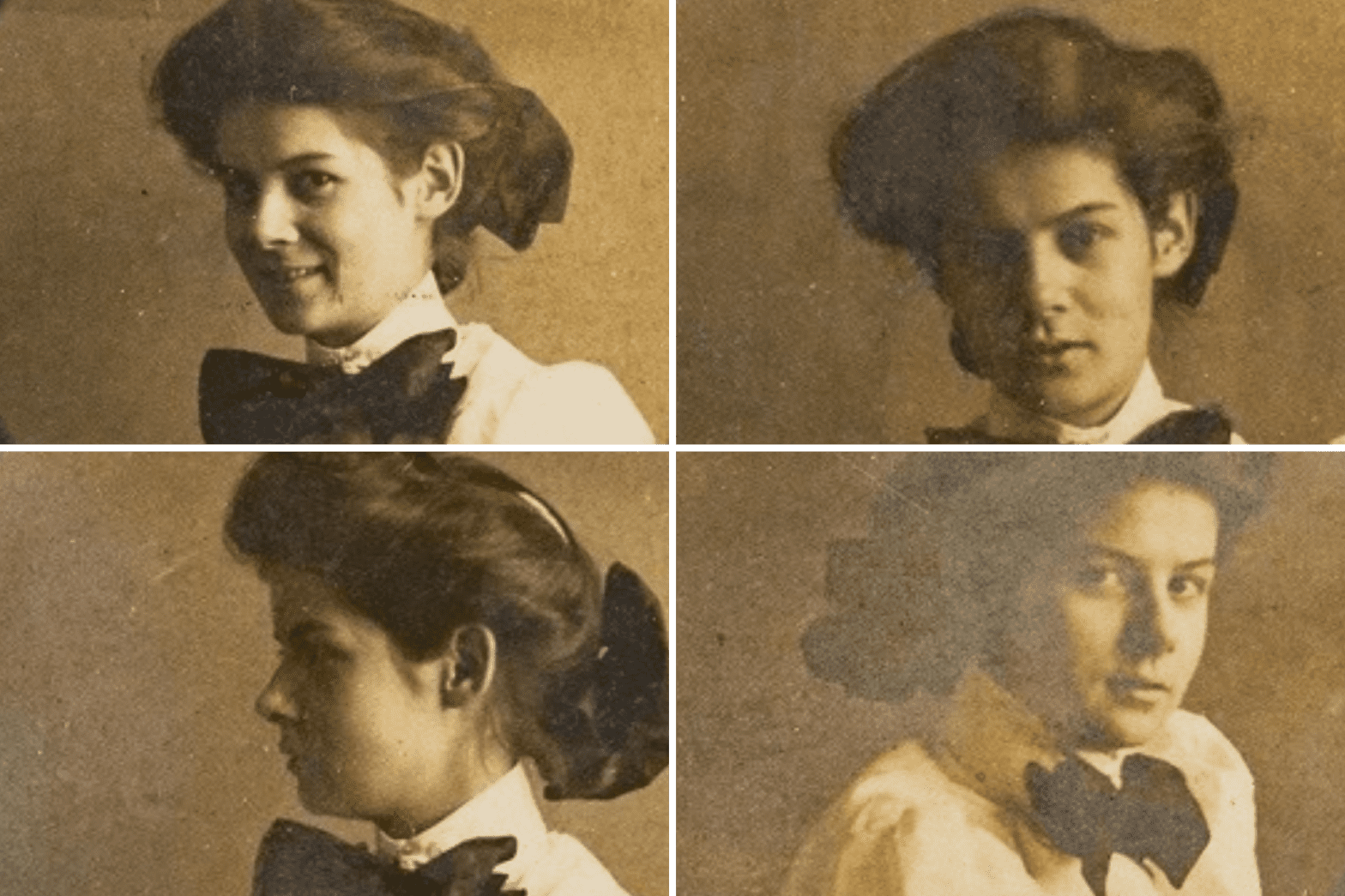
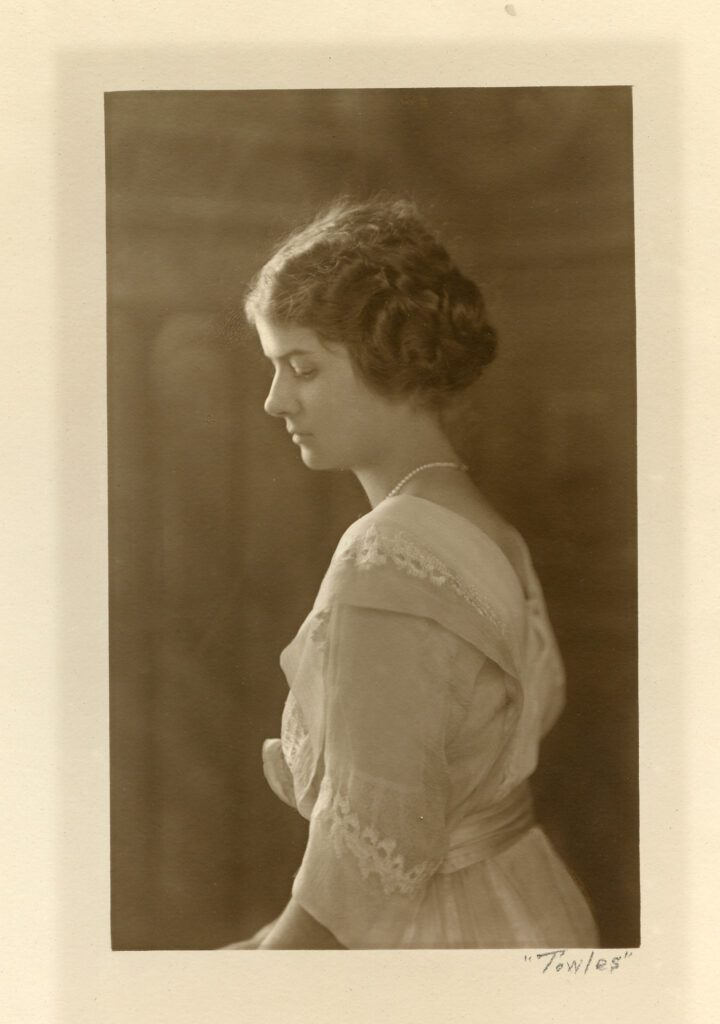
Ruth Wales du Pont was “musically gifted, industrious, and intelligent,” endowed with a witty sense of humor, and perfectly paired with her husband, Winterthur Museum founder Henry Francis du Pont.

Young Ruth

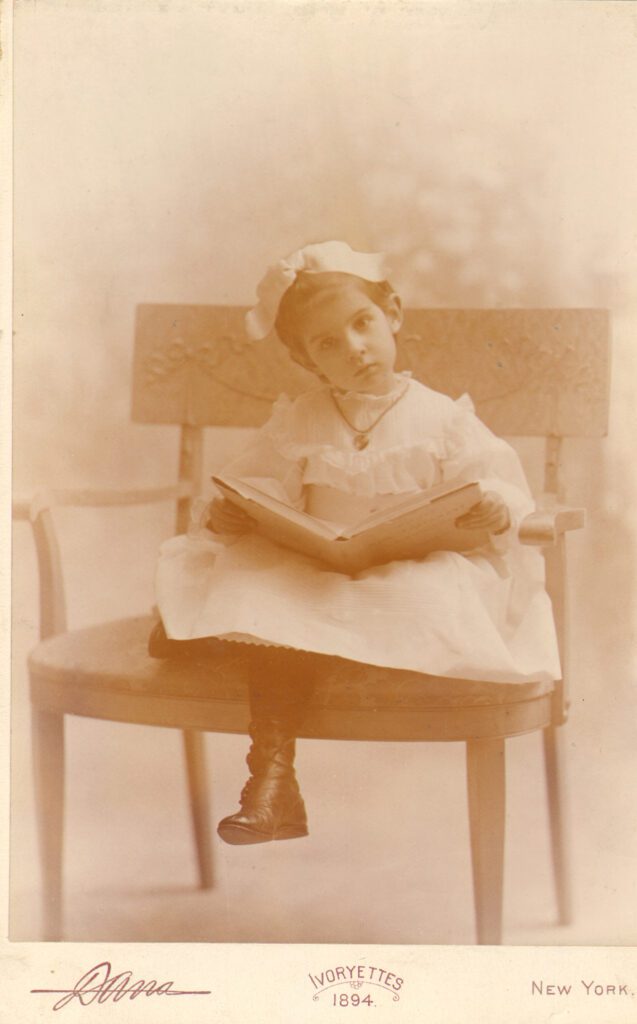
Born into New York high society in June 1889, Ruth grew up in Hyde Park, near Franklin Delano Roosevelt’s family. An only child, she was raised primarily by her mother, and they were very close. Even as an adult, she and her mother wrote to each other daily any time they were apart, correspondence Ruth’s daughter later described as “unfailingly tender.” Her grandmother, and to a much lesser extent, her father, also played a role in her upbringing. Ruth attended Miss Spence’s School in New York City, where she excelled in her studies and made many lifelong friends. As a child, she took to the piano easily and began taking lessons at thirteen, cultivating a lasting love of music. 

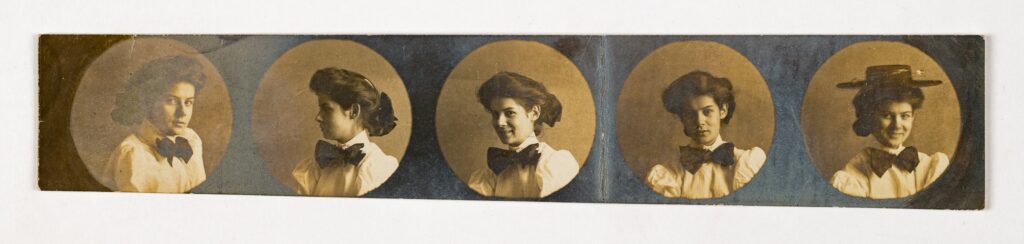
Ruth in an undated photo

She and Henry Francis du Pont met and started developing a friendship when she was twenty, and in 1912, she attended her first of several house parties at Winterthur. Ruth’s daughter recounted in her book that her mother “never expected to marry,” and had once even tried to play matchmaker for Henry Francis, who was nine years her senior. They eventually fell in love and tied the knot in June 1916. 

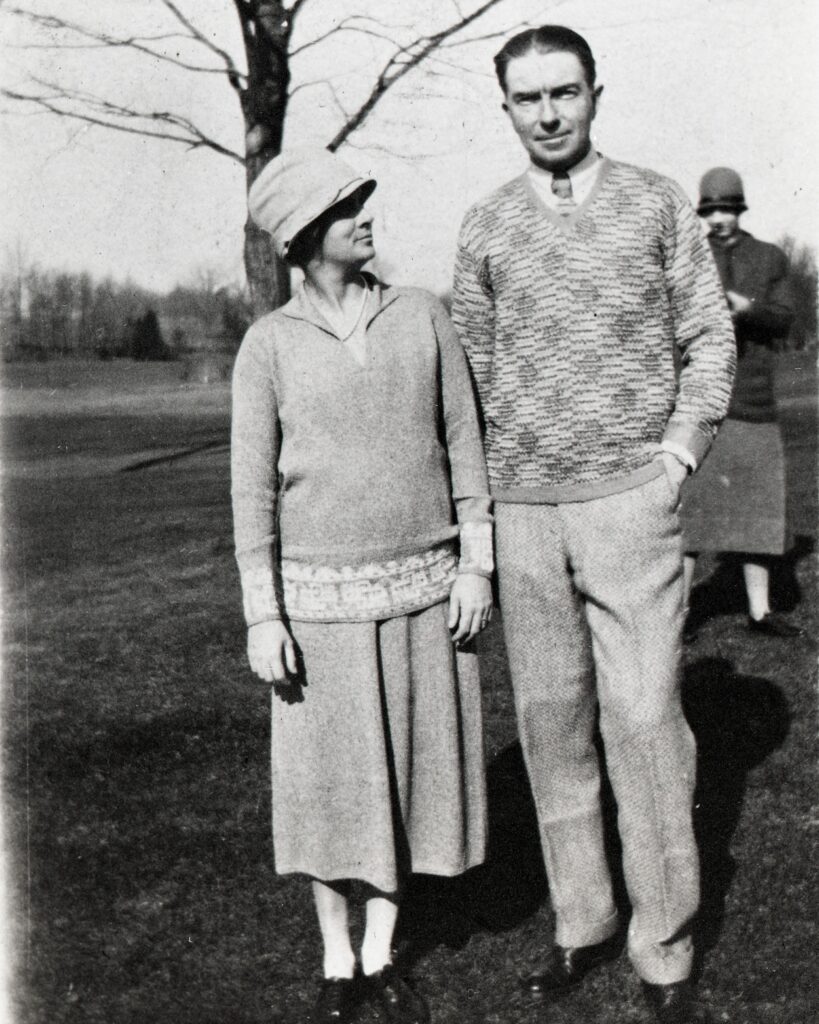
Ruth and her husband, Henry Francis du Pont

In their early years of marriage, H. F., not yet invested in collecting antiques, was focused on his cattle and the dairy operation, horticulture, and breaking ground on new garden projects. Ruth, though a city girl by birth and by preference, agreed to live at Winterthur with her husband and father-in-law, Colonel Henry Algernon du Pont. The couple remained close, but her father-in-law proved to be a difficult person, and Ruth’s mental condition suffered as a result.

To help alleviate her distress, the couple bought a Park Avenue apartment in 1921, where Ruth spent much of her time. Over the years, they added more homes, spending winters in New York, summers in Southampton, Long Island, and weekends and holidays at Winterthur, along with an occasional winter retreat in Florida.

Studio portrait of Ruth

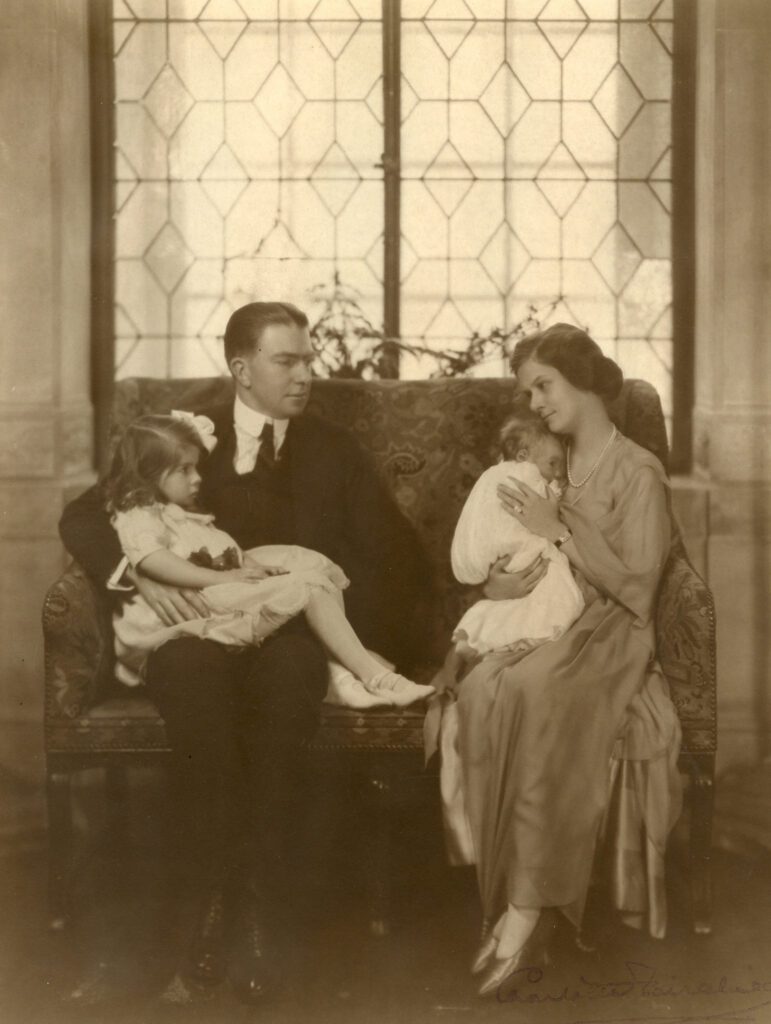
During their first year of marriage, Ruth, a skilled pianist and composer, traveled weekly to take lessons at the Peabody Conservatory (now the Peabody Institute) in Baltimore, and wrote various musical compositions. She continued composing throughout the 1920s, including fashionable ragtime music, dances, and part of an opera based on a book by Edith Wharton. In 1918, the couple’s first daughter, Pauline Louise, was born and named after H. F.’s mother and sister. Ruth’s namesake, Ruth Ellen, was born in 1922. 

Henry Francis and Ruth Wales du Pont with their daughters Pauline Louise and Ruth Ellen

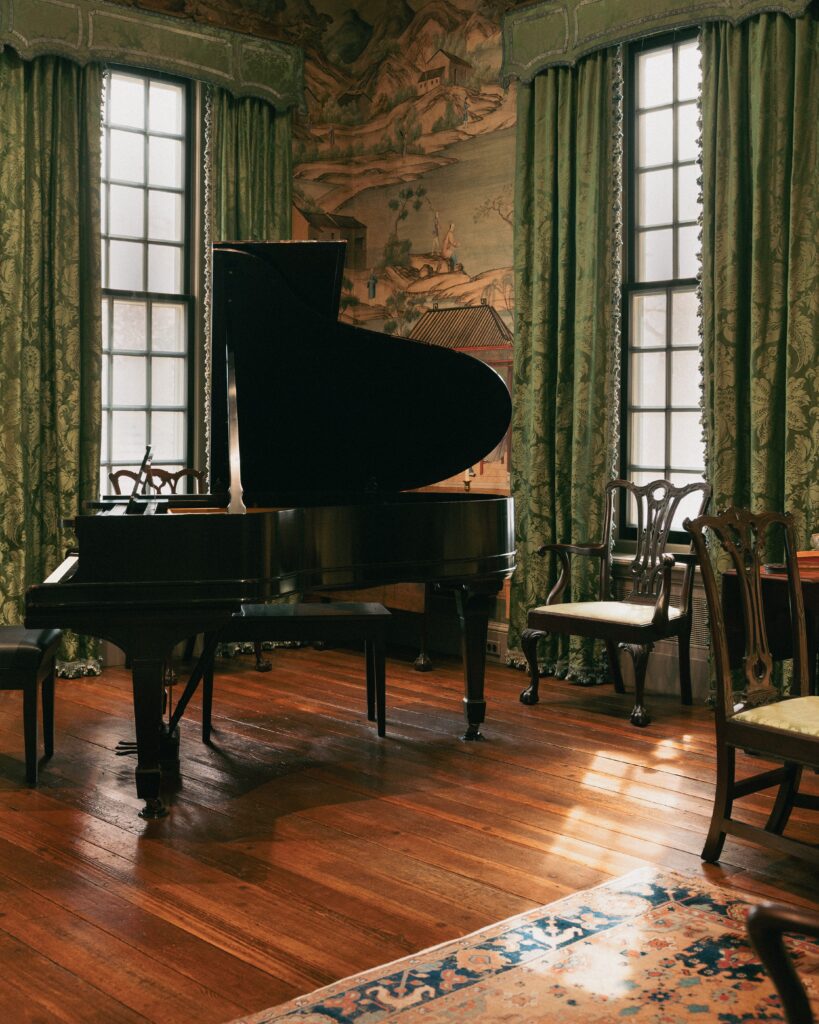
At times, Ruth struggled with her mental health. Beginning around 1918, she took “nerve medicine,” and when Ruth Ellen was still a toddler, Ruth sought treatment at a talk therapy clinic in Massachusetts. A busy mother with many social and household obligations, Ruth set aside her studies at the Peabody, though she continued playing and singing at her grand piano in the Chinese Parlor throughout her life. She and H. F. hosted guests frequently, and she oversaw her daughters’ education, content with letting her husband create the museum. The Winterthur home, which she sometimes called Frog Hollow, was not always a place of refuge for her, as she sometimes found it too expansive. 

Photo by Holden Barnes

As she grew older, she continued to travel and entertain. Music was often a respite from her darker moments, and she played piano for her family into her elder years despite arthritis in her fingers. As with her mother, Ruth and H. F. also exchanged letters every day they were apart. Their daughter attributed the success of their long relationship to “an emphasis on loyalty and mutual thoughtfulness.” 

Ruth Wales du Pont died in 1967. Her partnership with Henry Francis helped make Winterthur the gracious place it is today.  

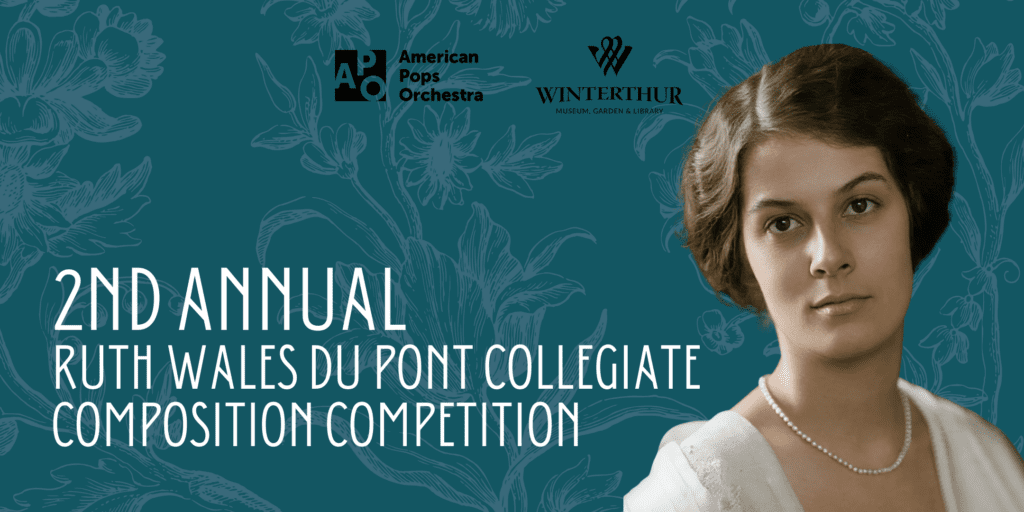
Ruth Wales du Pont Collegiate Composition Competition

March 29, 2026 | 2:00-5:00 pm

Join the American Pops Orchestra for the premiere of original works by the finalists in the orchestra’s competition. Each composition is inspired by Winterthur’s collections, garden, and history. The competition is named for Ruth Wales du Pont, wife of Henry Francis du Pont, who studied music at the Peabody Conservatory in Baltimore. She composed dozens of musical pieces throughout her life and enjoyed entertaining her family and guests by playing on her grand piano.

Learn more.

 1 Peabody Conservatory of Music, Pupils’ Record for Season of 1917, Archives, Peabody Institute of the Johns Hopkins University, Baltimore.

2 Ruth Lord, Henry F. du Pont and Winterthur: A Daughter’s Portrait (New Haven, CT: Yale University Press, 1999), 95. 

3 Ibid., 100.

4 Ibid., 71.

Winterthur Ushers in First Wave of Spring with Bank to Bend on March 14

Event rooted in founder Henry Francis du Pont’s family tradition of walking along the March Bank to Magnolia Bend to marvel at the first waves of color in his wild garden


WINTERTHUR, DE (March 9, 2026)—Winterthur Museum, Garden & Library kicks off the 2026 season and the Museum’s 75th anniversary year with Bank to Bend on March 14, featuring a guided walk through the early spring garden and the bulb display on the March Bank, a plant sale, clivia exhibit, library open house, and a talk by local author and horticulturist Rick Darke, who will speak on the dynamic nature of Winterthur’s renowned “wild garden” and how the style is relevant in a range of modern landscapes.

The event gets its name from the long-standing du Pont family tradition of walking the path along the March Bank to Magnolia Bend to find and report the first flowers of the new year.

Winterthur’s March Bank is a superb example of the wild garden concept promoted by 19th-century British gardener and writer William Robinson, whose 1870 book “The Wild Garden” advocated for planting native and exotic hardy plants in groupings that mimic wild landscapes.

Robinson challenged the English gardening tradition of arranging plants in fixed patterns by suggesting that naturalizing plants in self-perpetuating communities would enable plants to become established, take care of themselves and create durable, resilient landscapes.

Winterthur’s founder Henry Francis du Pont embraced Robinson’s ideas in his plans for the March Bank, which du Pont began planting in 1902 when he was 22 years old. Begun with a few thousand bulbs under a canopy of woodland trees, the bank has grown into an extensive naturalistic display that is now a showcase for millions of late winter-flowering bulbs.

Bank to Bend March 14, 10 am–3 pm

Admission on March 14 includes access to a plant sale of snowdrops, cyclamens, and perennials, a clivia exhibit, and a Director’s Garden and Estate Walk with CEO Chris Strand. Guests can also wander through the garden paths on their own, enjoy the self-paced “An American Legacy” tour of the museum and attend the library open house.

10:00 am–3:00 pm: Plant Sale of cyclamens, perennials and unusual snowdrops. Clivia exhibit

11:00 am–12:00 pm: Talk by Rick Darke “The Wild Garden in Our Time” Copeland Lecture Hall ($10) additional

12:15 pm–1:00 pm: Book sale and signing

1:00 pm: Director’s Garden & Estate Walk: Snowdrops and Other Minor Bulbs (start at Visitor Center Patio)

1:30–3:00 pm: Library Collection Open House

Local Author, Garden Designer to Speak on “The Wild Garden in Our Time”

For an additional $10, visitors can attend “The Wild Garden in Our Time” lecture presented by Landenberg, Pennsylvania-based Rick Darke from 11:00 am–12:00 pm.

Darke is an accomplished design consultant, author, and photographer who blends ecology, horticulture, and cultural geography to steward living landscapes. His projects include public parks and gardens, transportation corridors, and residential landscapes.

In this lecture, Darke will illustrate the dynamic nature and continuing relevance of wild gardening in a wide range of modern global landscapes.

Darke wrote additional chapters and contributed 112 photos to “The Wild Garden: Expanded Edition,” a 2009 redesign of Willam Robinson’s book. 

His other books include “The American Woodland Garden: Capturing the Spirit of the Deciduous Forest;” “The Living Landscape: Designing for Beauty and Biodiversity in the Home Garden, co-authored with Doug Tallamy;” and “Gardens of the High Line: Elevating the Nature of Modern Landscapes,” co-authored with Piet Oudolf.

March Bank’s Cascade of Color

The March Bank color scape, which evolves from late January through early May, begins with white giant snowdrops followed by yellow Amur adonis and winter aconite, mixed with white common snowdrops and spring snowflakes. Du Pont planted these bulbs in large drifts of separate mass plantings.

The bank then transitions to a brilliant carpet of lavender blue glory-of-the snow and royal blue squills. Both are excellent multipliers in the wild garden. Interplanted by H. F. du Pont in large numbers, the latter two are delightful when they flower together. In some years, they instead emerge in succession.

Sprinkled along the March Bank are several drifts of yellow daffodils. Purple and white Dutch hybrid crocus then make their appearances, while white bloodroot arrives later. By the end of March, the bank is thick with the leaves of emerging Virginia bluebells, Italian windflowers, and other naturalized plants.

Maintaining the Wild Garden
One of the last 20th century wild gardens in the United States, the practice of managing its authentic wildness remains a core principle of the garden at Winterthur today.

The flora, naturalized exotics and natives planted in large drifts and grouped with other plants that harmonize in color and form, is arranged to appear as if it grew spontaneously.

“Color is the thing that really counts more than any other,” du Pont once said of the garden he designed, grew and maintained for nearly 70 years.

Much evolves on its own. Winter aconites and merry bells continue to spread. Joe-Pye weed and white wood asters add more color now for summer and fall.  However, maintaining the full 60-acre garden in the manner du Pont envisioned takes quite a bit of time, expertise and intervention from garden staff.

“It’s a meticulous process that requires an understanding of the original design intent and keen observations to preserve its character,” says Linda Eirhart, Alice Cary Brown Director of Garden at Winterthur. “The wild garden style requires continuous care to maintain its desired appearance.”

Eirhart says garden staff maintain color combinations, historic cultivars, and vistas to ensure the garden remains a true representation of du Pont’s vision.

In April of each year, for example, Garden Manager Carol Long watches for developing seed heads of spring bulbs that she wants to increase on the March Bank. As they ripen, Long distributes the seeds where she wants them to grow. Later in the year, she helps spread wildflowers the same way.

Long calls this practice Johhny Appleseeding. It’s a refinement of the theories of William Robinson, who advocated allowing plants to spread as they would naturally.

###

About Winterthur Museum, Garden & Library

Winterthur—known worldwide for its preeminent collection of American decorative arts, naturalistic garden, and research library for the study of American art and material culture—offers a variety of tours, exhibitions, programs, and activities throughout the year. Admission includes a self-paced house tour, exhibitions, a narrated tram ride (weather and space permitting), and the Winterthur Garden.

Winterthur is located on Route 52, six miles northwest of Wilmington, Del., and five miles south of U.S. Route 1. Winterthur is committed to accessible programming for all. For information, including special services, call 800.448.3883 or visit winterthur.org. Winterthur is closed seasonally from early January through late February.