Paintings, works on paper, and a series of rare letters drawn from the personal collection of artist Mary Jane Peale now part of Winterthur’s permanent collection
WINTERTHUR, Del. (May 21, 2026)—Winterthur Museum, Garden & Library recently acquired eight rare works of art and a series of personal correspondence, nearly all from the collection of artist Mary Jane Peale (1827–1902), bolstering the museum’s already distinguished Peale family holdings ahead of a major exhibition of these works scheduled for 2027.
The acquisition brings to Winterthur a collection of firsts: the institution’s first miniature by Anna Claypoole Peale, its first work by Rubens Peale, its first Peale landscape, and the first portraits of Mary Jane, Rubens, and Charles Willson Peale to enter the permanent collection. Together, these objects deepen Winterthur’s capacity to tell a fuller, more equitable story of one of America’s most consequential artistic dynasties.
Led by portrait painter Charles Willson Peale, the first family of American art included his brothers, sons, daughters, nieces, nephews, and grandchildren, including Mary Jane, as well as Moses Williams, a formerly enslaved artist who made thousands of silhouettes for visitors to Peale’s Philadelphia Museum, which Charles founded in 1784.
A Collection-Defining Acquisition
With this new acquisition, Winterthur’s already impressive lineup of Peale material now numbers about 50 paintings and works on paper, along with a rich archive of Peale letters, manuscripts, and photographs. The collection consists of foundational works purchased by museum founder Henry Francis du Pont with strengths in colonial and Revolutionary portraiture by Charles Willson and his brother James Peale. Charles Willson’s son, Rembrandt Peale, painted the du Pont family in the first half of the 19th century.
The new acquisitions build directly on that foundation, adding works that span portraiture, landscape, silhouette, and a miniature, across multiple generations and branches of the extended Peale family. Acquired at Doyle Auctioneer’s two-day An American Story sale on April 14 in New York:
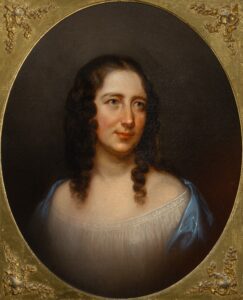
- Portrait of an Artist (1859) by Rembrandt Peale is a self-commissioned portrait Mary Jane ordered from her uncle to support her own art studies, accompanied by seven letters documenting the commission from December 1857 through April 1859. The letters are now entering the Winterthur Library collection.
- Portrait of Mrs. Rubens Peale, née Eliza Burd Patterson (ca. 1820) by Charles Willson Peale is a portrait of Mary Jane’s mother, Eliza, painted by her father-in-law on the occasion of her marriage to Rubens Peale.
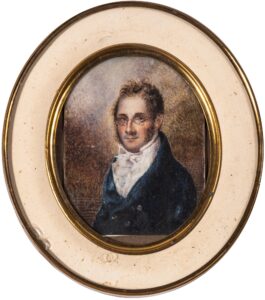
- Portrait of Rubens Peale with Spectacles (before 1829) by his niece Anna Claypoole Peale is a watercolor-on-ivory miniature and the museum’s first work by this celebrated Peale woman artist.
- View of Juniata River (1860) by Rubens Peale is an oil-on-canvas landscape with an original artist-made frame (1860). This is Winterthur’s first Peale landscape.
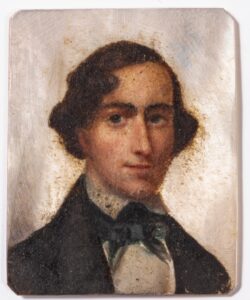
- Portrait of George Peale Wearing a Black Coat Over a White Stock and Blue Bow-Knot (before 1858) by Mary Jane Peale is an oil-on-mother-of-pearl miniature of her artist-brother George, a rare and delicate example of the artist’s work in miniature.
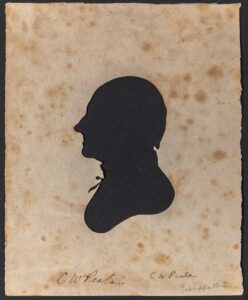
- Three silhouettes with Peale family provenance, including two by Moses Williams (1776–1830), one of which depicts Charles Willson Peale, mark a significant addition to Winterthur’s holdings related to the formerly enslaved silhouette artist.
Winterthur’s Charles F. Montgomery Director and CEO Chris Strand shared, “We could not be more pleased to bring such an outstanding representation of the personal collection of artist Mary Jane Peale to Winterthur.”
Re-examining the Story of American Art’s First Family
Alexandra Deutsch, Winterthur’s John L. and Marjorie P. McGraw Director of Collections, notes that the acquisition is a major win for the museum, which holds one of the most robust collections of American decorative arts in the country. The timing is also serendipitous, as planning is well underway for Becoming Peale, scheduled to run September 18, 2027–January 9, 2028.
“Not only does this constellation of recently acquired Peale works strengthen Winterthur’s nineteenth-century collection of American paintings and works on paper, but it also deepens the focus of the 2027 exhibition on the Peale women painters and the formerly enslaved silhouette artist Moses Williams,” said Deutsch.
Featuring Winterthur’s collection of Peale art and archival treasures assembled for the first time on a large scale, this groundbreaking exhibition will reveal how each generation redefined the act of Becoming Peale.
The exhibition, curated by Dr. Kedra Kearis, associate curator of arts and visual culture at Winterthur, harnesses a growing interest in the art of the Peale women and Moses Williams by bringing their contributions into closer view. Winterthur Museum, in collaboration with the University of Delaware, is conducting technical studies on paintings by the Peale women and the cut profile work of Moses Williams, which will incorporate the new acquisitions.
The exhibition will feature approximately 50 paintings and works on paper from the Winterthur collection, alongside costumes, furniture, and decorative arts objects that will illuminate the family’s creative legacy across time, place, and medium. The museum is also securing loans for more than 60 additional pieces from institutions and private lenders, several of which have never been publicly exhibited. Together, these works will offer a richer, more comprehensive retelling of the artistic legacy of the multigenerational Peale family.
“Until recent years, many contributions by lesser-known Peales have been overlooked. Some of the Peale women have been identified as assistants or copyists. In actuality, they had their own established artistic practices,” said Kearis. “My goal is to give voice to the underrepresented artists of this famous family. This is where Mary Jane Peale, Moses Williams, and other marginal figures of the Peale circle will step forward.”
The seven letters between Rembrandt Peale and his niece Mary Jane offer rare primary-source documentation of a practicing woman artist working within a family art dynasty. Together with the portrait commission they describe, the letters will anchor one of the exhibition’s central narratives, according to Kearis.
Beginning in 1857, Mary Jane corresponded with Rembrandt, requesting a commissioned portrait of herself for the purpose of studying his latest techniques. All signed, the seven letters represent Rembrandt’s side of the correspondence. The letters recount that Rembrandt had largely abandoned portrait painting, but he agreed to the commission upon learning it was intended to further his niece’s artistic development.
The letters also build on the Winterthur Library’s strong holdings documenting art and artists in early America, some well known, others less known but equally important, according to Dr. Catharine Dann Roeber, director of academic affairs and Brock W. Jobe Associate Professor of Decorative Arts and Material Culture at Winterthur, who oversees the library. The correspondence from Rembrandt to Mary Jane adds an intriguing narrative concerning a female Peale artist to the library’s collection of material surrounding the artistic production of Charles Willson, Rubens, and Rembrandt Peale, said Roeber.
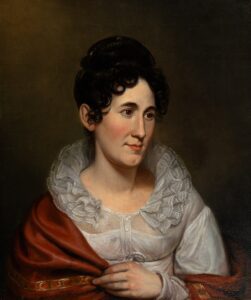
Charles Willson Peale (1741–1827), Portrait of Mrs. Rubens Peale, ca.1820. Oil on canvas.
Museum purchase with funds drawn from the Centenary Fund. 2026.0006.001 A, B.
Rembrandt Peale Portrait of Mary Jane Peale, Rubens’ Daughter, 1859. Oil on canvas. Museum purchase with funds drawn from the Centenary Fund. 2026.0006.003 A, B
Anna Claypoole Peale (1791–1878), Portrait of Rubens Peale with Spectacles, before 1829. Watercolor on ivory, 2 3/4 x 2 1/4 inches. Estate of J. Ashley & Pamela Patterson Roach; Museum purchase with funds drawn from the Centenary Fund. 2026.0006.002
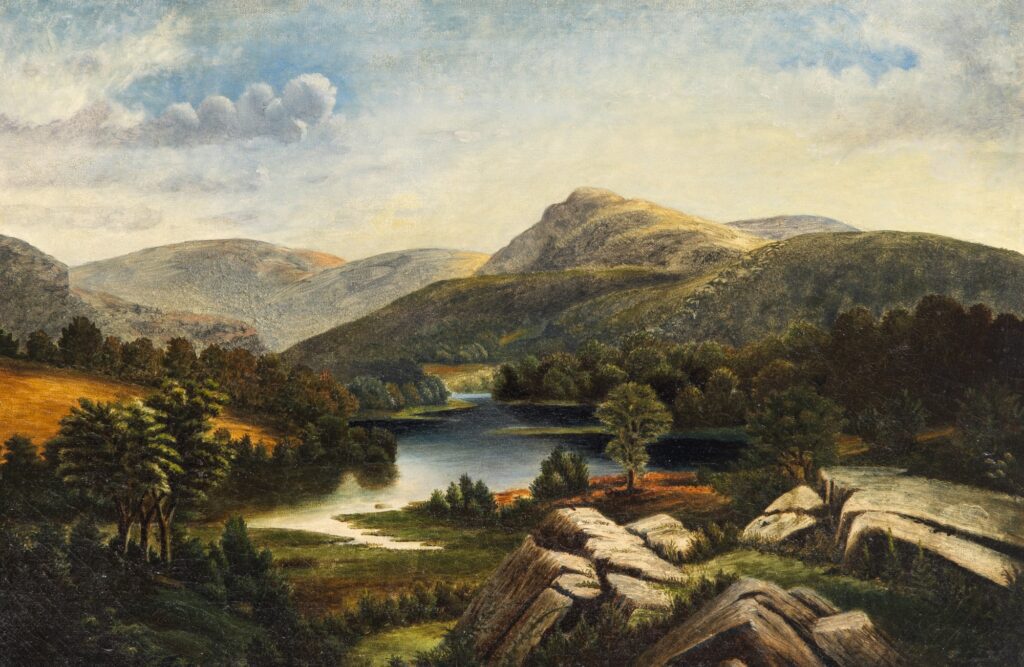
Rubens Peale (1784–1865), View of Juniata River, 1860. Oil on canvas, 13 1/8 x 19 1/4 inches. Inscribed on verso “View on the Juniata / from Weber / by Rubens Peale / for his son J.B. M.D. / 1860.” Museum purchase with funds drawn from the Centenary Fund. 2026.0006.006 A, B
Mary Jane Peale (1827–1902), Portrait of George Peale Wearing a Black Coat Over a White Stock and Blue Bow-Knot, before 1858. Oil on mother-of-pearl, 1 1/2 x 1 1/4 inches. Inscribed on verso “George Peale” Museum purchase with funds drawn from the Centenary Fund. 2026.0006.005
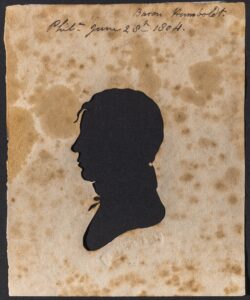
A Group of Two Silhouettes with Peale Family Provenance; Moses Williams (1776–1830) inscribed Baron Humboldt. / Phil. June 20th, 1804 and stamped MUSEUM. Museum purchase with funds drawn from the Centenary Fund. 2026.0006.004.002
Moses Williams (1776–1830) inscribed C W Peale. Museum purchase with funds drawn from the Centenary Fund. 2026.0006.004.001
###
About Winterthur Museum, Garden & Library
Winterthur—known worldwide for its preeminent collection of American decorative arts, naturalistic garden, and research library for the study of American art and material culture—offers a variety of tours, exhibitions, programs, and activities throughout the year. Admission includes a self-paced house tour, exhibitions, a narrated tram ride (weather and space permitting), and the Winterthur Garden. Winterthur is located on Route 52, six miles northwest of Wilmington, Del., and five miles south of U.S. Route 1. Winterthur is committed to accessible programming for all. For information, including special services, call 800.448.3883 or visit winterthur.org. Winterthur is closed seasonally from early January through late February.