Search Site

Delaware Antiques Show: Meet the Dealers

Dan and Karen Olson Antiques

What drew you to the Delaware Antiques Show?

The Delaware show is considered the premier show for fine Americana, and our past attendance at this show affirms its stellar reputation. 

What had you heard about the Delaware Antiques Show?     

Collectors value this show as the place to purchase the finest antiques for their collections. Both collectors and dealers hold it in the highest regard. 

What will visitors see in your booth?     

High-country furniture and accessories, folk art, and paintings, especially portraits of children.

 Family Portrait of Four Children, attributed to John S. Blunt (1798–1835). American School, early 19th century oil on canvas, 48 3/4″ x 55 1/2″ in a molded gilt frame.

Oliver Garland

What drew you to the Delaware Antiques Show?

The quality and eclectic mix of dealers that exhibit, coupled with the excitement of participating in a show that is associated with Winterthur. My great uncle, O.D. Garland, sold many wonderful objects to Henry Francis du Pont over the years, some that are on display in the museum. It is a thrill that a couple of generations on, we are exhibiting and creating another connection to the museum.

What had you heard about the Delaware Antiques Show?     

The reputation of the Delaware show is stellar and unparalleled. Attendees will find a curated, eclectic mix of European and American material culture. 

What will visitors see in your booth?        

We will bring objects ranging in date from the 1580s through to the 19th century, including early paintings, pottery, decorative smalls, and works of art. We look forward to sharing our recent finds and discoveries with a new audience of enthusiastic, knowledgeable collectors and fellow dealers.

 A 19th-century trompe l’oeil painting, “The Fish Is On The Other Side.”
The ingenuity of design in this painting is what drew us to it, along with its excellent execution. You would be hard pressed to find another trompe l’oeil painting similar to this rare piece on the market at the moment.

Aronson of Amsterdam

What drew You to the Delaware Antiques Show this year?

The Delaware Antiques Show has long been on our radar due to its reputation for excellence and its discerning audience. This year, we felt it was the perfect opportunity to showcase our collection to a new and appreciative audience, particularly given the show’s location in a region with a rich historical heritage that aligns with the stories our pieces tell.

What had you heard about the Delaware Antiques Show?     

We had heard that it is one of the premier events in the country, known for its high standards and its ability to attract both knowledgeable collectors and passionate enthusiasts. The show’s emphasis on quality and authenticity resonates deeply with our own values.

What will visitors see in your booth?     

Attendees can expect a curated selection of 17th- and 18th-century Dutch Delftware, each piece meticulously researched and chosen for its historical and aesthetic significance. Our display will include rare examples of chargers, vases, and other decorative objects, showcasing the artistry and craftsmanship that define Delftware.

 A Chinoiserie charger, circa 1680. Inspired by Chinese transitional porcelain, this piece is a testament to the global influences on Dutch pottery during this period. Measuring an impressive 18.3 inches in diameter, it serves as both a decorative masterpiece and a symbol of the cultural exchange between East and West in the 17th century.

The Best of Americana

Explore the full list of exhibitors in our Annual Delaware Antiques Show Program and join us at the Chase Center on the Riverfront from November 15-17 for a full schedule of exciting show features sure to captivate the sophisticated and new collector alike.

“The Peale Painters: Global Perspectives in the Winterthur Collection” Now on View

WINTERTHUR, DE (October 17, 2024)—Works by Charles Willson Peale and members of the Peale family, regarded as America’s first family of artists, are currently on view at Winterthur Museum, Garden & Library.

While best known for its collection of American decorative arts, the seven oil paintings and four smaller case objects bring to light Winterthur’s premier collection of American paintings from the eighteenth and nineteenth centuries.

“The featured works come from various rooms in the house and other locations at Winterthur,” said Kedra Kearis, Ph.D., associate curator of art and visual culture. “Brought into close viewing proximity, these paintings form a conversation with one another. In addition, the artists themselves are placed in conversation with artistic traditions of the past and contemporary trends across the Atlantic.”

A distinguished American inventor, painter, politician, scientist, and soldier in the Revolutionary War, Charles Willson Peale established a painting studio in Philadelphia in 1776 and was a key member of the Sons of Liberty. His portraits of prominent Americans from the late 18th century remain widely recognized today. In 1784, he established one of the first museums in America, located in Philadelphia, which members of the extended family helped to run.

“Charles Willson Peale changed the course of American art through his artistic practice, his museum business, and the mentorship of his family in the arts. He led the Peale painters in fashioning the face of a new nation.” The family’s artistic legacy spans more than a century, from the colonial period through the Victorian era.

“Each artist in this prolific, multigenerational family honed their craft within a collaborative environment, sharing global perspectives,” said Kearis. “It is my hope that, by emphasizing the various pathways for education taken by the Peale artists across the generations, a picture might emerge of how artistic formation differed according to period, race, and gender.”

“In this sense, the three generations of Peale family artists paints a picture of a changing nation, one full of opportunity and encouragement, but also with its own sets of limitations and challenges.”

Winterthur’s founder, Henry Francis du Pont, collected works by Charles Willson Peale, his brother James Peale, and his son Rembrandt Peale. Over the years, Winterthur has expanded the collection to include works by Sarah Miriam Peale and Mary Jane Peale. Both women remained unmarried to pursue painting professionally.

Among the works on display is The Edward Lloyd Family (1771) by Charles Willson Peale. “About fifty years after Charles painted this portrait of Maryland planter Edward Lloyd, the enslaved Frederick Douglass was brought by his grandmother to live at Wye House, a reminder that the prosperity of the Lloyds was built upon an economy of enslavement,” added Kearis.

Other highlights include two portraits of women of the du Pont family as well as still life paintings. The gallery interpretation features a rich array of graphics, either self-portraits by the artists or portraits completed by another family member, illustrating this remarkable and ongoing conversation among the close-knit generations of Peale artists. The exhibit also includes a silhouette from the early 1800s thought to be produced by profile cutter Moses Williams, a formerly enslaved member of the Peale household.

The installation displays some of the many Peale works in the Winterthur collection which will be part of an upcoming large-scale exhibition in 2027. “The range of works by the Peales and related archival resources on the family here at Winterthur are the subject of new research,” said Kearis.

“The Peale Painters: Global Perspectives in the Winterthur Collection” is part of Conversations with the Collection. In this exhibition, visitors learn how Winterthur staff and students use the museum collection to understand America’s material past, see what’s new in the collection, and look closely at objects to better understand the past and the present.

# # #

ABOUT WINTERTHUR MUSEUM, GARDEN & LIBRARY

Winterthur—known worldwide for its preeminent collection of American decorative arts, naturalistic garden, and research library for the study of American art and material culture— offers a variety of tours, exhibitions, programs, and activities throughout the year.

Winterthur is located on Route 52, six miles northwest of Wilmington, Delaware, and five miles south of U.S. Route 1. Winterthur is committed to accessible programming for all. For information, including special services, call 800.448.3883 or visit winterthur.org.

Winterthur Appoints Merissa Courtright as Chief Development Officer

WINTERTHUR, DE (October 14, 2024)—Winterthur Museum, Garden & Library has appointed Merissa Courtright as its first Chief Development Officer, a newly created position aimed at enhancing the institution’s philanthropic efforts.

Chris Strand, Charles F. Montgomery Director and CEO of Winterthur, shared his excitement about the appointment, stating, “Merissa is a respected and accomplished philanthropic leader with deep experience in donor cultivation and in mentoring development teams to achieve substantial fundraising goals. Her background in capital campaigns, major gifts, planned gifts, corporate gifts and individual donor programs will be instrumental to Winterthur’s growth.”

Courtright brings a wealth of experience from her previous role as Chief Development Officer at Duke University School of Medicine’s Preston Robert Tisch Brain Tumor Center. During her tenure, she successfully raised over $10 million annually and led her team to secure an additional $19 million in philanthropic revenue each year.

In addition to her work at Duke, Courtright has made significant contributions to renowned organizations such as Johns Hopkins University, World Wildlife Fund, the National Law Enforcement Museum, and the National Building Museum.

Courtright holds a Master of Arts in Art History from the University of Delaware and a Bachelor of Arts in History from Tulane University.

# # #

ABOUT WINTERTHUR MUSEUM, GARDEN & LIBRARY

Winterthur—known worldwide for its preeminent collection of American decorative arts, naturalistic garden, and research library for the study of American art and material culture— offers a variety of tours, exhibitions, programs, and activities throughout the year.

Winterthur is located on Route 52, six miles northwest of Wilmington, Delaware, and five miles south of U.S. Route 1. Winterthur is committed to accessible programming for all. For information, including special services, call 800.448.3883 or visit winterthur.org.

The Peale Painters, Conversations in American Art

Figure 1. The Edward Lloyd Family, Charles Willson Peale, Talbot County, Md., 1771. Museum purchase 1964.0124 A

By Kedra Kearis, Ph.D., associate curator of art and visual culture

Not long after his return from the London studio of Benjamin West in 1771, Charles Willson Peale noted that he painted “Mr. Loyd [sic] a conversation,” a reference to the impressive, large-scale figural group, now in Winterthur Museum’s collection. The painting depicts Maryland planter Lloyd, his wife Elizabeth Tayloe, and their daughter Anne. Now recognized as The Edward Lloyd Family (fig. 1), his note “conversation” references a fashionable British portrait style that portrayed wealthy families engaged in conversation or leisure activities. Eager to display their wealth and status, this conversation piece features the Lloyds surrounded by objects that signal their wealth and sophistication, including rich imported textiles, elegant furniture, a handsomely carved cittern, or early English guitar à la mode. Charles referenced their estate—the Wye River estate located in Maryland— with an English garden pavilion based on a drawing in architect Isaac Ware’s well-known book of designs. A Winterthur favorite, this painting is now featured in the first-floor galleries as part of The Peale Painters: Global Perspectives in the Winterthur Collection. Details of the portrait can now be examined closely, revealing the contrasting pale green silk lining Edward’s scarlet and gold embroidered coat, the light reflected from Elizabeth’s jeweled hair comb and necklace, and the Palladian arches of the imagined Wye estate house. 

Beyond the conversation in the painting between these fascinating sitters, another develops around the artist himself, head of the multi-generational clan of painters. Charles was responsible for mentoring his sons and daughters in the art of painting and the business of running the Philadelphian Peale’s Museum. This echoes a hallmark of the Peale family–the practices of teaching and learning, copying and collaboration. Besides the Lloyd portrait, the exhibit features works by his lesser-known brother James Peale, and those of subsequent generations of Peales. Two portraits from the early nineteenth century of du Pont women by Rembrandt Peale invite additional conversations about European art traditions of the past and the contemporary painting trends in Paris embraced by Rembrandt on his many travels abroad. Additionally, a case of small collection objects displays a silhouette from the early 1800s thought to be produced by profile cutter Moses Williams, a formerly enslaved member of the Peale household. 

Figure 2. Still Life with Fruit, Mary Jane Peale, Philadelphia, Pa., 1862. Museum purchase with funds provided by the Henry Francis du Pont Collectors Circle 2017.0025 A

Another conversation arises from the exhibition around two recent acquisitions by the Museum completed by two female members of the Peale family, Sarah Miriam Peale and Mary Jane Peale, who both remained unmarried to pursue painting professionally. Mary Jane Peale’s Still Life with Fruit highlights her engagement with the Peale tradition of still life painting led by her uncles, Raphaelle and James (fig. 2). Mary Jane arrived at her talents under the mentorship of her Uncle Rembrandt and her cousin, Sarah Miriam. The experiences of Sarah and Mary, both in education and art production, mark important differences between the male and female artists of the family. The gallery interpretation includes a rich array of graphics, either self-portraits by the artists or portraits completed by another family member, illustrating this remarkable and ongoing conversation among the close-knit, generations of Peale artists. In addition, the story of their extraordinary artistic output paints a picture of a changing nation, one full of opportunity and encouragement, but also limitations and challenges.

See The Peale Painters: Global Perspectives in the Winterthur Collection on view in the first-floor galleries.

Almost Unknown, The Afric-American Picture Gallery

May 3, 2025 – January 4, 2026

Inspired by an 1859 essay written by a free black journalist and educator named William J. Wilson, this exhibition takes visitors on a tour of Wilson’s imagined gallery of prints, paintings, sculptures, books, and other decorative objects that represent Black life in the United States and across the Diaspora, as interpreted by curator and historian Dr. Jonathan Michael Square. 

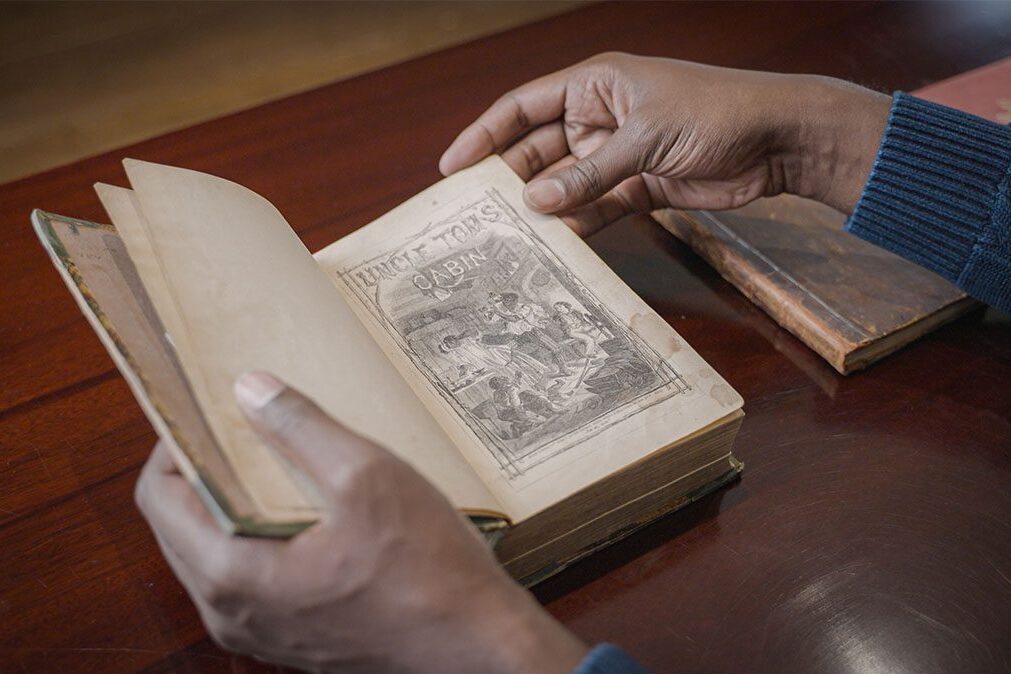
Winterthur will for the first time bring this gallery to fruition, using objects from the collections to represent Wilson’s displays. These include a silhouette attributed to Moses Williams, the portrait of George Washington and his family painted by Edward Savage, and copies of Harriet Beecher Stowe’s Uncle Tom’s Cabin and Phillis Wheatley’s Poems on Various Subjects, among others. 

The exhibition extends beyond the gallery walls and features books that will be displayed in the library and on Almost Unknown: Continue the Journey, an exclusive tour of selected objects in the house. Through this multifaceted presentation, the exhibition sheds light on stories that have long been overlooked in American museums and history. 

About the Curator

Dr. Jonathan Michael Square

Almost Unknown, The Afric-American Picture Gallery is guest curated by historian Dr. Jonathan Michael Square, assistant professor of Black visual culture at Parsons School of Design. He lectures and writes on Black fashion history and material and visual culture.

House Tour

Almost Unknown: Continue the Journey

Beginning May 3, go beyond the galleries and into the house to see spaces that highlight architecture and objects with connections to the African American experience.

Learn More.

Symposium

Looking Back to the Future: Realizing the “Afric-American Picture Gallery”

The symposium will take place at Winterthur on November 14 and 15, 2025. It will explore broader approaches to how William J. Wilson’s essay can be integrated into American history and how it connects to the legacy of Henry Francis du Pont and the history of Winterthur. The symposium is designed for a diverse audience of professionals, scholars, and enthusiasts of African American history and the wider Wilmington community.

Learn More.

Enhance Your Visit

Get the most of your visit to Winterthur with these activities, included with your General Admission ticket, which is good for two consecutive days!

Take the Self-Paced House Tour. Discover Winterthur’s untold stories about the du Pont family, the many people who shaped Winterthur, and the history of the objects displayed in the rooms. 

Explore the galleries and garden. Take a stroll in the world-renowned 60-acre garden or explore one of our walking trails throughout the 1,000-acre estate. And, no visit is complete without our garden tram tour. Our guides share highlights of the garden and the history of Winterthur on this 30-minute narrated tour. Then, head inside to be inspired by the galleries, featuring two floors of the finest examples of American decorative arts.

From Our Blog

Showing of 4 results
A Sampler’s Story from Sierra Leone
By Matthew Monk, Linda Eaton Associate Curator of Textiles at Winterthur On…

<a href="https://www.winterthur.org/a-samplers-story-from-sierra-leone/" class="read-more" ><span class="sr-only">Click to read more</span>More Info</a>

“A Superior Looking Man”: Power, Portraiture, and Pageantry
Faustin Soulouque plays a central role in my exhibition at Winterthur—Almost Unknown,…

<a href="https://www.winterthur.org/a-superior-looking-man-power-portraiture-and-pageantry/" class="read-more" ><span class="sr-only">Click to read more</span>More Info</a>

Unlocking the Past
Keys often symbolize access, opening portals to the past, present, and future.…

<a href="https://www.winterthur.org/unlocking-the-past/" class="read-more" ><span class="sr-only">Click to read more</span>More Info</a>

A Historical Collaboration
Priscilla (Ballenger) Leedom, a Quaker abolitionist and unionist, crafted the quilt in…

<a href="https://www.winterthur.org/a-historical-collaboration/" class="read-more" ><span class="sr-only">Click to read more</span>More Info</a>

Photo Gallery

Exhibition Playlist

This playlist is inspired by the 1859 essay “Afric-American Picture Gallery” and the Winterthur exhibition it helped shape. Just as the essay describes powerful scenes of resistance, resilience, and creativity, these tracks weave together sonic textures of liberation and ancestral memory.

Damon Smith

About the Artist 

Aberdeen, Maryland

Damon G. Smith works in Aberdeen, Maryland, and is an accomplished quilter and gardener. His quilts have been featured on the Ricky Tim’s LIVE Men’s Quilt Exhibit and he participates in Quilts for Heroes, a nonprofit group who donates quilts to Wounded Warriors and other service members. Damon is a board member of the North American Clivia Society, and he presents about raising Clivia and the process of creating his custom greenhouse. In addition to raising his own flowers, Damon judges flower shows, including the esteemed Philadelphia Flower Show. 

Social Media: @DamonSmith

Artist Statement

Quilts blend tradition and innovation. The intricate patterning and colorful palette of Stream Float echoes the detailed piecing of Gee’s Bend quilts. Damon Smith saw the Gee’s Bend quilt at Winterthur in March and created his own quilt demonstrating his eye for color and unique style. “In this work, the colors that make up the pineapple blocks appear to float above the shimmering leaves of gold, bronze, and green . . . giving the illusion of leaves floating atop a shallow pool of water,” explains Smith. 

Spring at Winterthur

As we welcome a new season, we also begin a year of reflection, marking the 250th anniversary of our nation, Winterthur Museum’s 75th, and the 25th for Enchanted Woods. A festive May gathering for our 75th anniversary will celebrate Winterthur’s past, present, and future. Our new exhibition At Home at Winterthur honors our legacy as a museum, garden, and library. And you can explore our shared history through objects from diverse origins that shaped early America in two new tours. On the An American Legacy tour, discover how spaces, stories, and objects reflect the nation’s evolution and the transformation of a private home into a museum. The Architecture of Independence tour highlights the founding era through the lens of the original thirteen colonies. In April, commemorate 25 years of wonder on a Garden Walk to Enchanted Woods. All spring long, enjoy the vibrant garden blooms when you visit for your favorite or new programs and events. Join us. There’s beauty at every turn.

Tickets are valid for two consecutive days.

Special Programs & Events

We hope you will be inspired and delighted by our many offerings this spring at Winterthur, where there’s always something new to discover!

Explore all spring events.

Daffodil Day

April 11

Enjoy heirloom daffodils in cloudlike drifts on Sycamore Hill and beyond. Includes walking tours of the daffodil collection.

Learn more.

Spring Fling

March 31–April 3 & April 7–10

Join us during spring break to celebrate the things that make the season special and discover the ways springtime has been celebrated throughout the ages. Play games, make crafts, hear stories, and see demonstrations that explore the new life emerging at Winterthur—from bluebirds to daffodils. 

Learn more.

Bourbon and Bluegrass

May 8

Join us as we bring Kentucky Derby style to Delaware. Enjoy a bourbon tasting, live bluegrass by the Dill Pickle Old Time Orchestra, and access to the garden.

Learn more.

From Our Blog

From a carefully curated list of spring blooms to vibrant stories from the estate, learn more and enjoy Winterthur your way this season!

Daffodils and Winterthur

The Forgotten Story of Daffodils, Inside and Outside the Gardens

If you visit Winterthur between mid-March and May, one of the first things you’ll see as you drive past the gate are the tens of thousands of daffodils in bloom along Pavilion Drive. These are only a small fraction of the daffodils growing at Winterthur today.

Read more.

Spring Playlist

A soundtrack for celebrating spring’s symphony of color.

Fall at Winterthur

“Every leaf speaks bliss to me, fluttering from the autumn tree.” 

Emily Brontë

This sentiment by Emily Brontë perfectly expresses our fascination with fall, surely among the best times to visit Winterthur. Along with the beautiful colors in the garden, equally stunning are Winterthur’s magnificent 175-room house and collection of American decorative arts.

As always, we’re excited to welcome you to experience the beauty and hospitality of this great American country estate.

Come one, come all—and come often this fall.

Special Programs & Events

From the Truck & Tractor Day and Tram & Treat to birding walks and Discover Winterthur (with free admission all day!), there’s something for everyone this season. Explore all fall events.

Truck & Tractor Day

October 4

Get up close to big equipment, suit up in firefighter gear, take a hayride, and more on this day of farm-style fun.

Learn More.

Hops and Harvest

October 18

Celebrate autumn, Oktoberfest-style. Stroll through the garden and savor craft beers from local breweries while enjoying lively music and the charm of festive German-inspired décor. It’s the perfect way to toast fall in a setting as vibrant as the season itself. 

Learn More.

Tram & Treat

October 25

Dress your goblins and ghosts in their Halloween finest and come trick-or-treating in the garden. Enjoy crafts, games, and music.

Learn More.

Delaware Antiques Show

November 7-9

One of the nation’s most highly acclaimed antiques shows presents a spectacular showcase of art, antiques, and design!

Learn More.

From Our Blog

From a carefully curated list of autumn blooms to spooky stories from the estate, learn more and enjoy Winterthur your way this season!

Fall Playlist

A soundtrack for wandering among the falling leaves.

Poison Book Project earns worldwide publicity

A recent feature by The Washington Post on the Poison Book Project has been picked up by news outlets around the world. The Poison Book Project is an interdisciplinary research initiative at Winterthur Museum, Garden & Library and the University of Delaware.

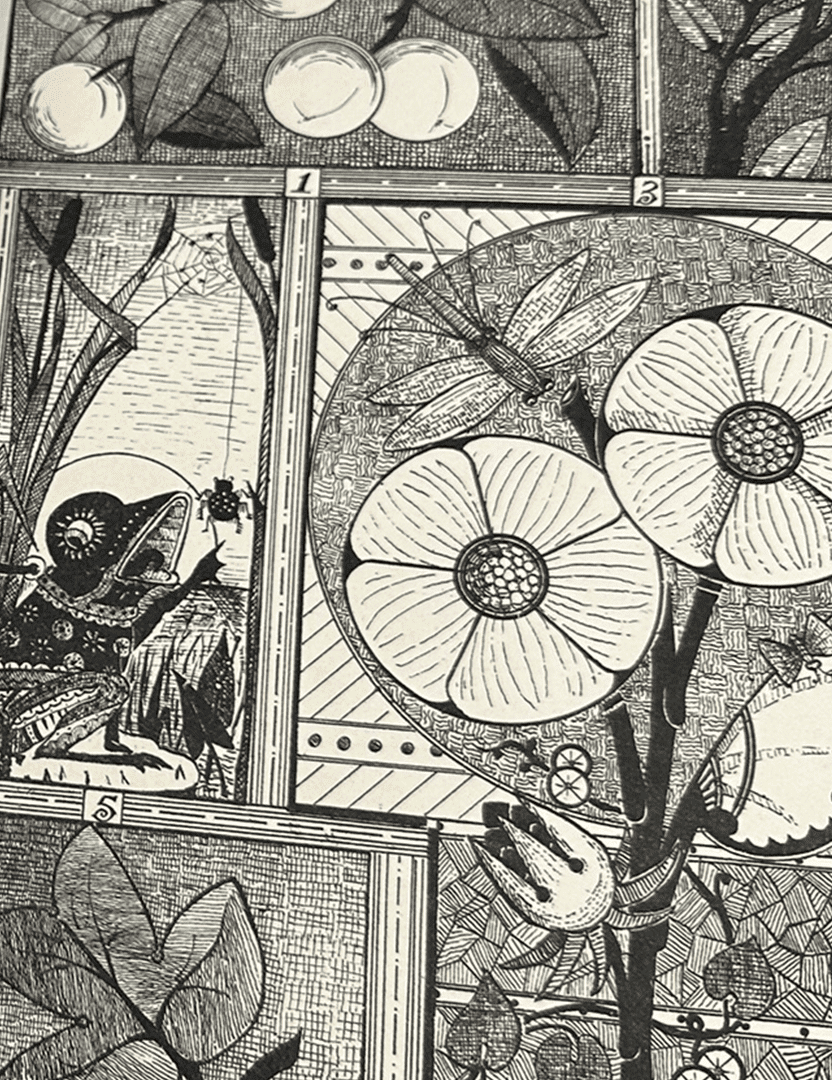
This ongoing investigation explores the materiality of Victorian-era publishers’ bindings. Research focuses on identifying potentially toxic pigments used in bookbinding components and how to handle and store potentially toxic collections more safely.

The Post article is behind a paywall, but you can read the full article in The Seattle Times, The San Diego Union-Tribune, The Spokesman-Review, and elsewhere.

Melissa Tedone, former head of the library conservation lab at Winterthur, now Assistant Professor of Library/Archives Conservation and Associate Director of the Winterthur/University of Delaware Program in Art Conservation, examines the toxic covers of books in the library at Winterthur.

An excerpt from the article:

The Poison Book Project began after Melissa Tedone’s own chance encounter with a curious emerald tome.

At the time, Tedone was the head of the library conservation lab at Winterthur, a historical estate and museum affiliated with the University of Delaware, where she assessed and restored objects in the institution’s collection. In 2019, for an exhibition on Victorian aquariums, she was tasked with repairing a book called “Rustic Adornments for Homes of Taste.” “It was a bright green book, and the covers had fallen off,” Tedone said. It was her job to put them back on, but she noticed something strange while working.

“There was something about the way the pigment was behaving. I could see it flaking off under the microscope,” she said. At the time, she was reading a book about arsenical wallpaper common in the 19th century. “It was a serendipity moment. I thought that maybe we should test this pigment and make sure it’s not full of arsenic.”

It turned out the book was full of arsenic. “Really quite a lot of arsenic,” she said…

About 50% of the books that have been analyzed have tested positive for lead, which is present in multiple pigments as well as pigment enhancers. Chromium has shown up in Victorian yellows, and mercury in the era’s intense reds. Arsenic, the most toxic of these chemicals, has been found in 300 books, including those with benign titles such as The Grammar School Boys and Friendship’s Golden Altar.

“Arsenic is in its own category,” Tedone said. “Not only is it more toxic than the other heavy metal pigments, but we are finding that measurable levels of arsenic are coming off on your hands.”

The findings have led large institutions, including the National Library of France and the University of Southern Denmark, to remove books from circulation and place them in quarantine.