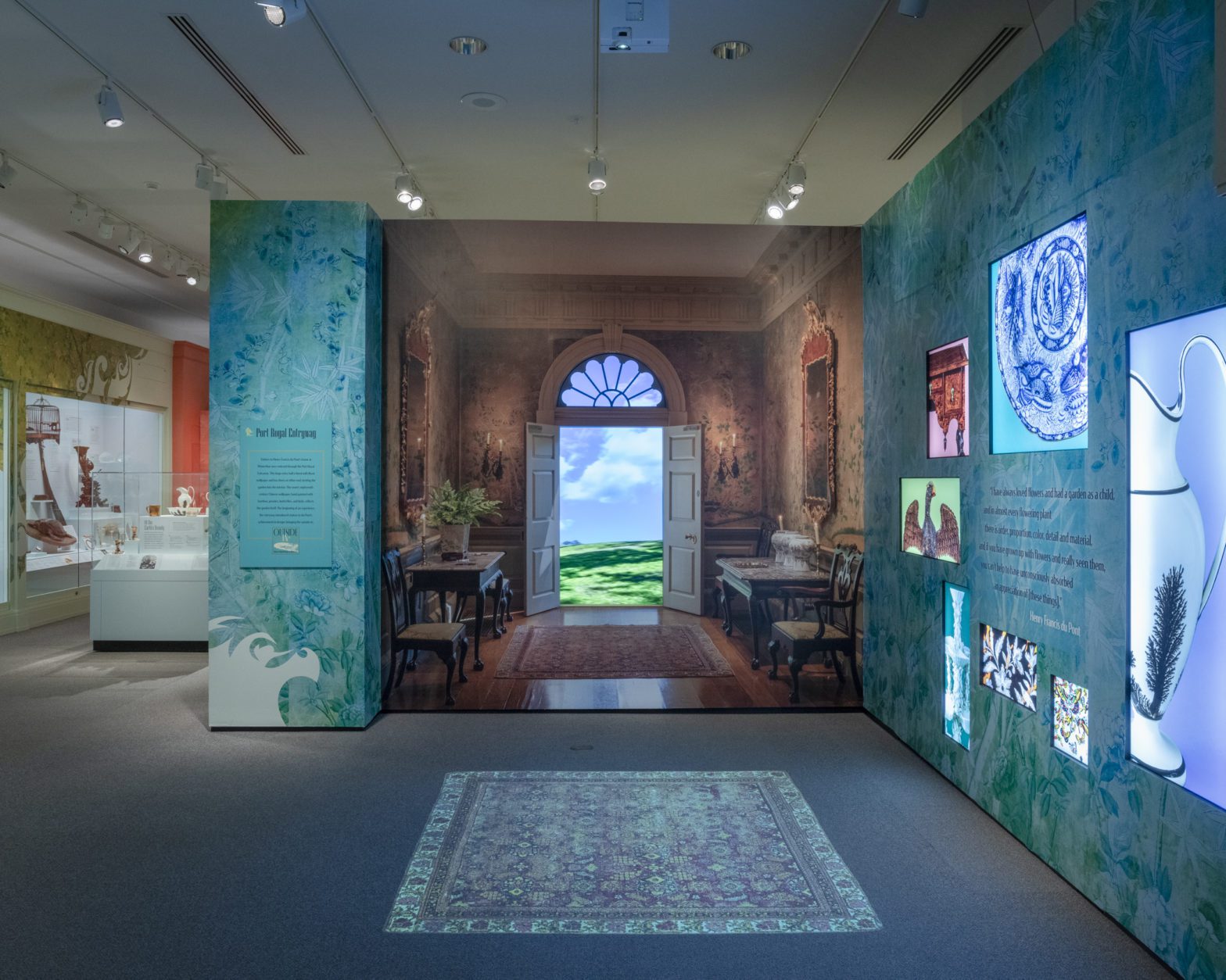
Exhibitions manager Kim Collison discusses H.F. du Pont’s inspirations and enduring influence on design.
History of the Garden
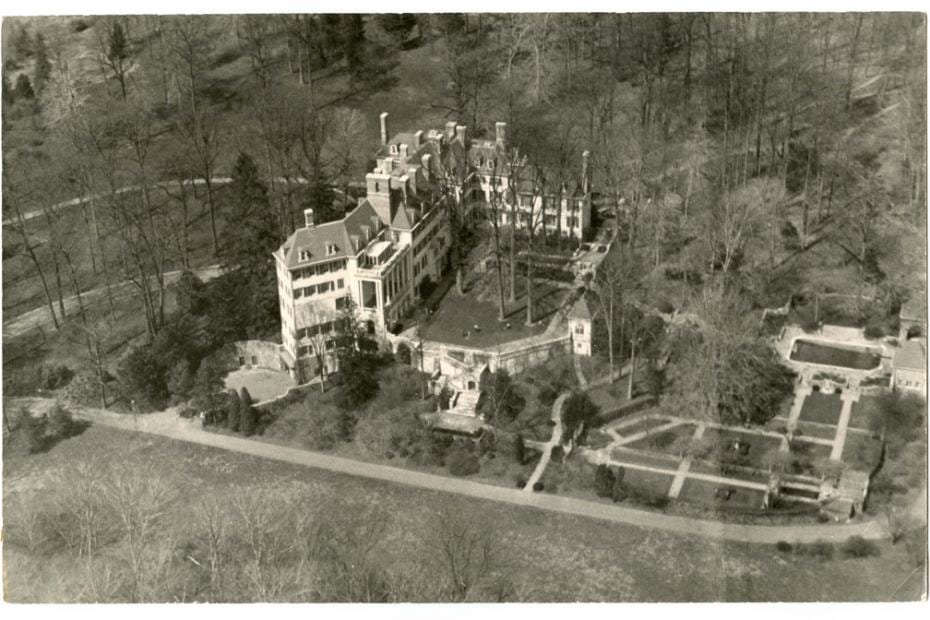
Henry Francis du Pont had three lifelong passions: gardening, cattle breeding, and collecting American antiques. Gardening was his greatest. Even after he turned his home into a museum in 1951, he kept ownership of the garden until his death in 1969. He often said that though he was a mere visitor to the museum, he was always Winterthur’s head gardener.
Three generations of the du Pont family gardened at Winterthur beginning in 1839, when Evelina du Pont and her husband, Antoine Bidermann, came to live here. Before they named the estate, built the house, or even chose the site for the well, the Bidermanns considered flowers.
Flowers were Evelina’s passion, and the same is true of all the owners of Winterthur. Each generation built on the work of its predecessors, all preferring a garden that made the most of the natural landscape.
The Big Ideas Behind the Winterthur Garden
The most formally landscaped and gardened areas at Winterthur are those closest to the house, and were designed by du Pont and his dear friend Marian Cruger Coffin, the first woman in the country to own a landscape architecture firm. As you move farther away, the tame, cultivated garden gives way to the freer Wild Garden style.
The Wild Garden, a book by William Robinson, inspired a new type of garden design in Great Britain, Ireland, and America at the turn of the 20th century. An idea that appealed to large landowners such as du Pont, the Wild Garden realizes gardening on a broad scale, “placing perfectly hardy exotic plants under condition where they will thrive.”
At Winterthur, “Color is the thing that really counts more than any other,” du Pont said. The flora, mainly naturalized exotics planted in large drifts and grouped with other plants that harmonize in color and form, is arranged to appear as if it grew spontaneously.
The 60-acre Winterthur Garden is surrounded by nearly 1,000 acres of meadows, farmland, and
waterways. The views in every direction are carefully designed and important to the whole. The paths are an integral part of the overall design, curving rather than straight, following the contours of the land, passing around trees, drawing walkers into the garden.
H. F. du Pont as Master Gardener
H. F. du Pont said a garden “should fit in so well with the natural landscape that one should hardly be conscious that it has been accomplished.” He took inspiration from the landscape he grew up in. The Winterthur Garden is built out of the fields, streams, hills, and woodlands of the beautiful Brandywine Valley.
After gardening at Winterthur for almost 70 years, du Pont was awarded with Garden Club of America Medal of Honor in 1956. The club proclaimed him “one of the best, even the best, gardener this country has ever produced.” The award noted the garden’s woodland layers, which du Pont had opened to create beautiful vistas.
“The woodland trees under planted with a profusion of native wildflowers and rhododendron, acre upon acre of dogwood, great banks of azaleas, lilies and peonies, iris and other rare specimens from many lands, each planted with taste and discrimination, each known, loved and watched, looking as though placed there by nature, forms one of the great gardens.”
Most early 20th century Wild Gardens have since yielded to land development and natural disasters. Winterthur is one of the last. It is surrounded by nearly 1,000 acres of farmland, all of it protected under a conservation easement so the property can never be commercially developed. We manage the garden today as though H. F. du Pont were alive, and his vision still informs our every decision. We hope you enjoy it.
Become a Delaware Master Naturalist
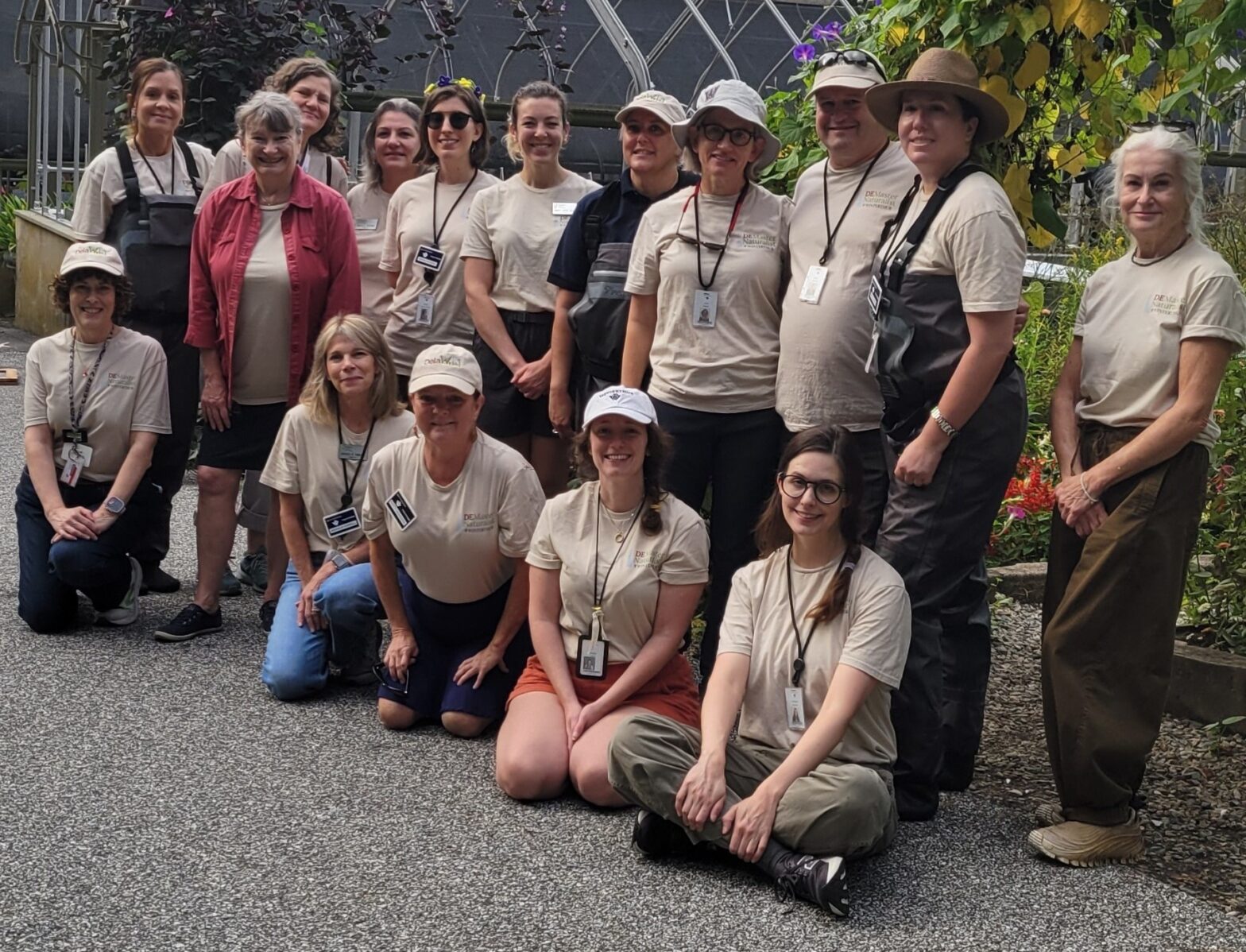
Winterthur is a Local Organizing Partner (LOP) for the Delaware Master Naturalist program, offered by the University of Delaware. Zoom class sessions run from January through March. Registration for the 2026 class is now closed. If you are interested in applying for the 2027 class beginning January 2027, please check back later in the year. You can also fill out an online volunteer application form and note your interest in participating in next year’s class. We will begin meeting with new candidates in late fall.
As part of the program, candidates must serve 40 volunteer hours over the course of the calendar year at their LOP. If you are interested in the program and serving your volunteer hours at Winterthur, please contact Nicole Schmid at nschmi@winterthur.org. Candidates should be comfortable being outdoors for extended periods and actively participating in garden projects, such as invasive plant removal.
To learn more about the program, visit Delaware Master Naturalist website at http://www.udel.edu/master-naturalist.
Bloom Report #08
WINTERTHUR BLOOM REPORT #08
March 3, 2021
53F, SUNNY
+: Abundant
fbb: Flower-bud breaking
b: Some bloom
fb: Full Bloom
pf: Petals falling/drying
pb: Past bloom (few remain)
ber: Berries, fruits
Check these out:
- It’s starting! Terrific Tapestries of color:
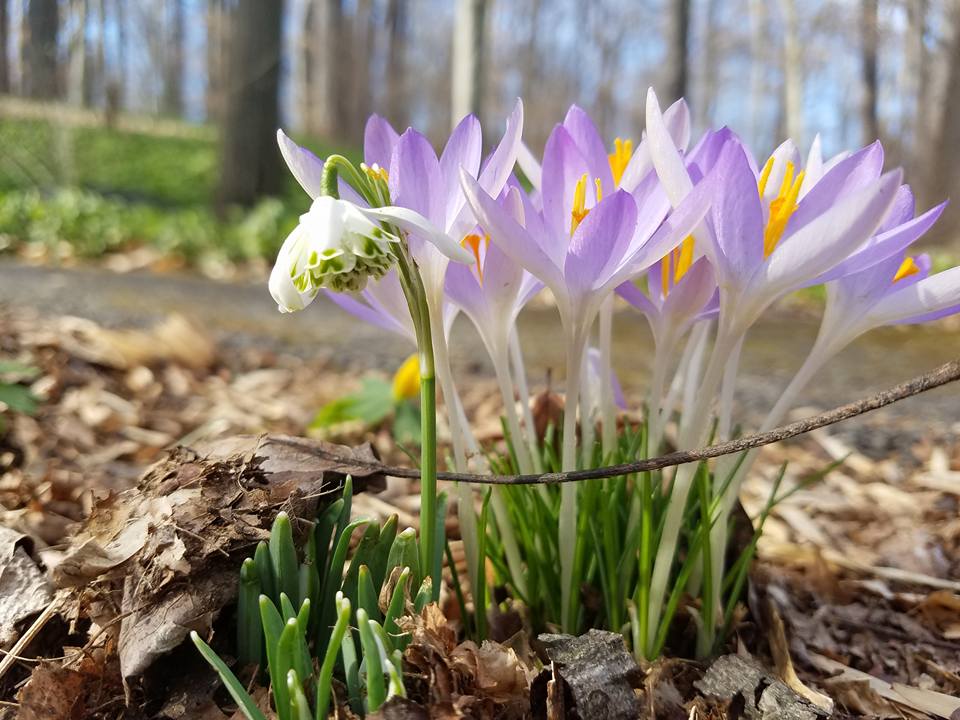
- The early crocus, ‘Tommies’ (Crocus tommasianus) are carpeting the East Upper Terrace of the Museum lawn in lavender and silver.
- The winter aconites (Eranthis hyemalis) are creating a carpet of gold from Garden Lane across the lawn down to the East Upper Terrace of the Museum and also along the March Bank, in Azalea Woods, and along the walk to the Glade and koi ponds.
- The yellow winter aconites and golden yellow Amur adonis (Adonis amurensis) merge into the white carpet of snowdrops (Galanthus elwesii & Galanthus nivalis) along the March Bank.
- Snowdrops:
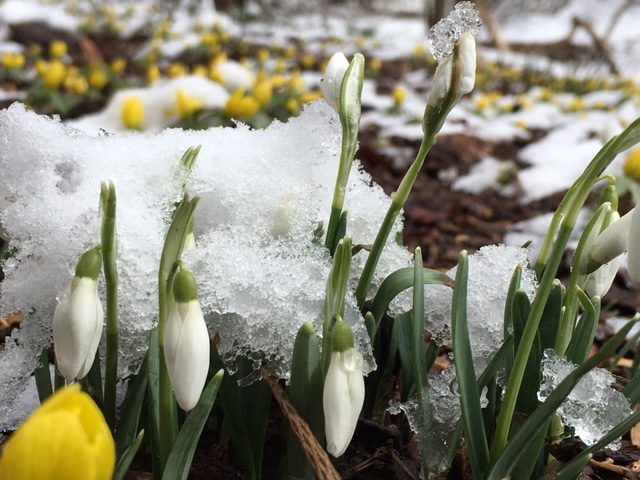
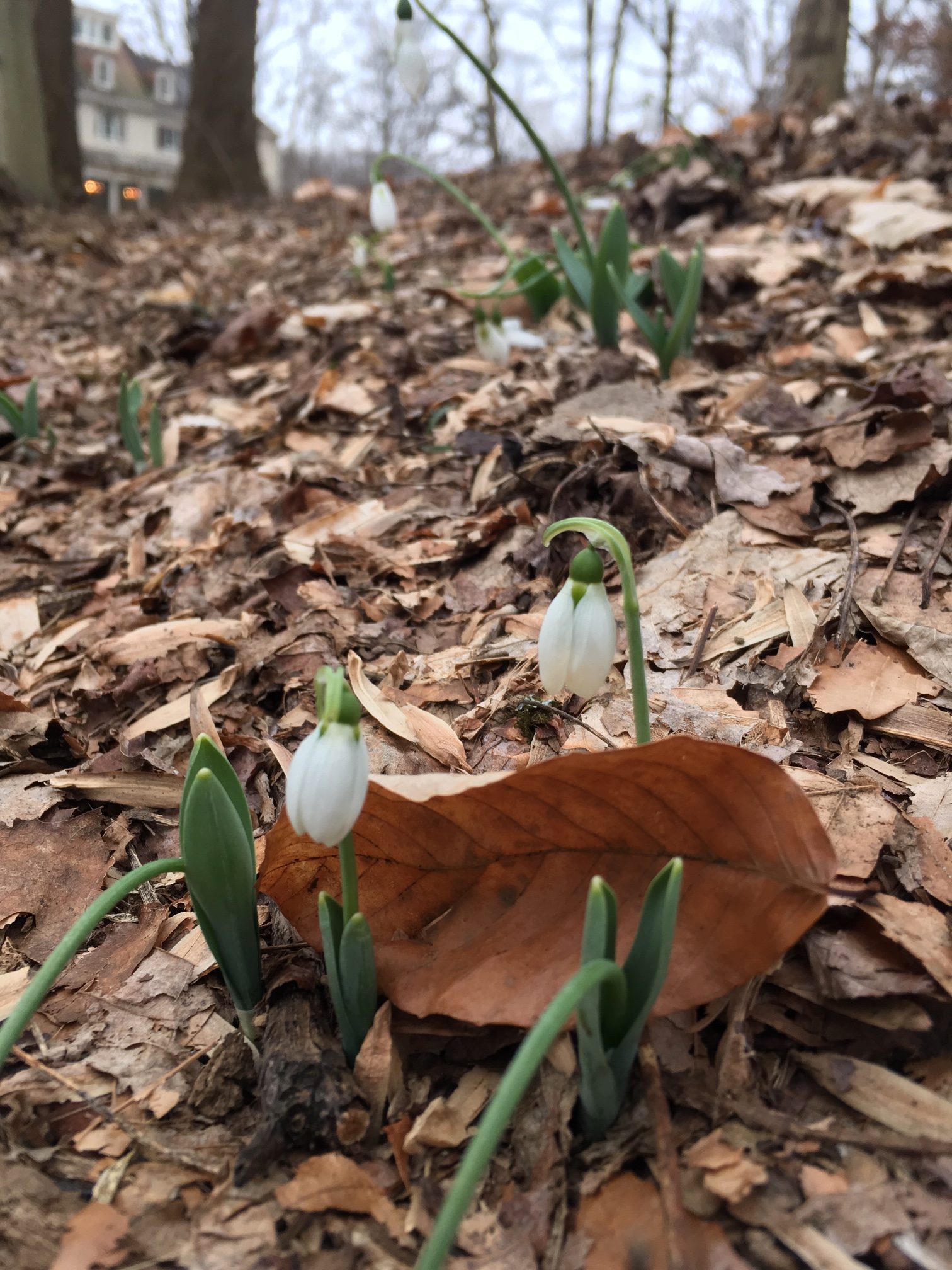
- Snowdrops (Galanthus elwesii & Galanthus nivalis) are blooming throughout the estate, from the great drifts along the March Bank to small clumps and even individual flowers.
- Many varieties of snowdrops (Galanthus varieties) in the collection in the raised beds along the East Museum terrace are in full bloom.
PARKING AREA TO VISITOR CENTER
b Crocus tommasinianus (‘Tommies’ – lavender and silver)
b Galanthus nivalis (Common snowdrop – white)
fb Galanthus nivalis ‘Flore Pleno’ (Double snowdrop variety – white & green)
fb Hamamelis mollis ‘February Gold’ (Witch hazel variety – yellow ‘ribbons’)
WALK FROM VISITOR CENTER TO UNDERPASS
b Eranthis hyemalis (Winter aconite – yellow)
fb Galanthus elwesii (Giant snowdrop – white)
b Galanthus nivalis (Common snowdrop – white)
b Galanthus nivalis ‘Flore Pleno’ (Double snowdrop variety – white & green)
fb Hammamelis mollis ‘Pallida’ (Pale Chinese witch hazel – light yellow ‘ribbons’)
fb Hammamelis mollis ‘Wisley Supreme’ (Chinese witch hazel variety – yellow ‘ribbons’)
fb Hammamelis vernalis (Vernal witch hazel – rusty-red ‘ribbons’)
WALK FROM UNDERPASS TO MUSHROOM
b Crocus tommasinianus (‘Tommies’ – lavender and silver)
b Eranthis hyemalis (Winter aconite – yellow)
fb Galanthus elwesii (Giant snowdrop – white)
b Galanthus nivalis (Common snowdrop – white)
b Leucojum vernum (Spring snowflake – white ‘bells’)
SLOPE DOWN TOWARDS MUSEUM
fb,++ Eranthis hyemalis (Winter aconite – yellow)
AZALEA WOODS
b,+ Eranthis hyemalis (Winter aconite – yellow)
fb Galanthus elwesii (Giant snowdrop – white)
b Galanthus nivalis (Common snowdrop – white)
LOWER AZALEA WOODS
fb Galanthus elwesii (Giant snowdrop – white)
UPPER/EAST TERRACE AND STEPS
fb Adonis amurensis (Amur adonis – golden yellow)
fbb Camellia japonica ‘April Remembered’ (Camellia cultivar ‘April Remembered‘ – white to pale pink – 1 flower)
fb,++ Crocus tommasianus (‘Tommies’ – lavender and silver)
fbb Galanthus ‘Alan’s Treat’ (Snowdrop variety – white)
fbb Galanthus ‘Chthonic’ (Snowdrop variety – white)
fbb Galanthus ‘E. A. Bowles’ (Snowdrop variety – white)
pf Galanthus ‘Louise Ann Bromley’ (Snowdrop variety – white)
b Galanthus ‘Madelaine’ (Snowdrop variety – white)
fb Galanthus nivalis (Common snowdrop – white)
fb Galanthus ‘Phantom’ (Snowdrop variety – white)
b Galanthus ‘Puck’ (Snowdrop variety – white)
fb Galanthus ‘Starling’ (Snowdrop variety – white)
fb Galanthus ‘Trymlet’ (Snowdrop variety – white)
fb Galanthus ‘Wasp’ (Snowdrop variety – white)
fbb Galanthus ‘Windsley Hall’ (Snowdrop variety – white)
fbb Galanthus ‘Yashmak’ (Snowdrop variety – white)
pf Jasminum nudiflorum (Winter jasmine – yellow)
fbb Pieris japonica ‘Dorothy Wycoff’ (Andromeda cultivar – dark pink buds)
EAST FRONT OF MUSEUM & Around Corner
fb Galanthus alpinus var. bortkewitschianus – 1 flower)
pf Galanthus ‘Castelgar’ (Snowdrop variety – white)
b Galanthus ‘Cowhouse Green’ (Snowdrop variety – white)
fb Galanthus elwesii ‘Green Brush’ (Snowdrop variety – white)
fb Galanthus elwesii ‘Grumpy’ (Snowdrop variety – white)
fb Galanthus elwesii ‘Natalie Garton’ (Snowdrop variety – white)
fb Galanthus elwesii var. monostichtus (Snowdrop variety – white)
pb Galanthus ‘Farmingdon Double’ (Snowdrop variety – white)
fb Galanthus ‘Fieldgate Prelude’ (Snowdrop variety – white)
fb Galanthus ‘Fieldgate Superb’ (Snowdrop variety – white – 2 flowers)
pb Galanthus ‘Gabriel’ (Snowdrop variety – white)
fb Galanthus ‘Galatea’ (Snowdrop variety – white)
fb Galanthus ‘George Elwes’ (Snowdrop variety – white)
fbb Galanthus ‘Hill Poe’ (Snowdrop variety – white)
fb Galanthus ‘Imbolc’ (Snowdrop variety – white)
fb Galanthus ‘John Gray’ (Snowdrop variety – white)
fb Galanthus ‘Marjorie Brown’ (Snowdrop variety – white)
fb Galanthus ‘Miller’s Late’ (Snowdrop cultivar – white)
fb Galanthus ‘Mrs. Thompson’ (Snowdrop variety – white)
fbb Galanthus nivalis ‘Blewbury Tart’ (Snowdrop variety – white)
fb Galanthus nivalis ‘Elfin’ (Snowdrop variety – white)
fb Galanthus plicatus ‘Percy Picton’ (Snowdrop variety – white)
fb Galanthus plicatus ‘Diggory’ (Snowdrop variety – white)
fb Galanthus plicatus ‘Trym’ (Snowdrop variety – white – 1 flower)
fbb Galanthus plicatus ‘Trymposter’ (Snowdrop variety – white)
fb Galanthus samothracicus (Snowdrop species – white)
fb Galanthus ‘Spindlestone Surprise’ (Snowdrop variety – white)
fb Helleborus ‘Brandywine’ (Lenten rose variety – pink, white)
pf Lonicera fragrantissima (Fragrant honeysuckle – white – along Garden Lane across from Bath House)
WALK FROM GLASS CORRIDOR TO REFLECTING POOL
fb Eranthis hyemalis (Winter aconite – yellow)
fb Galanthus elwesii (Giant snowdrop – white)
b Galanthus nivalis (Common snowdrop – white)
WALK FROM FISH PONDS – THE GLADE – TO BRIDGE
fb,+ Eranthis hyemalis (Winter aconite – yellow)
fb Galanthus elwesii (Giant snowdrop – white)
b Galanthus nivalis (Common snowdrop – white)
b Leucojum vernum (Spring snowflake – white ‘bells’) b
b Scilla siberica (Siberian squill – deep blue – 1 plant)
MARCH BANK
fb Adonis amurensis (Amur adonis – golden yellow)
fb Crocus tommasinianus (‘Tommies’ – lavender and silver)
fb,+ Eranthis hyemalis (Winter aconite – yellow)
fb,+ Galanthus elwesii (Giant snowdrop – white)
b,+ Galanthus nivalis (Common snowdrop – white)
b Galanthus nivalis ‘Flore Pleno’ (Double snowdrop variety – white & green)
b Leucojum vernum (Spring snowflake – white ‘bells’)
MAGNOLIA BEND AND WALK ON SOUTH SIDE OF STREAM
b Eranthis hyemalis (Winter aconite – yellow)
fb Galanthus elwesii (Giant snowdrop – white)
fbb Galanthus nivalis (Common snowdrop – white)
WINTERHAZEL WALK
fb Helleborus foetidis (Bear’s foot hellebore – greenish)
fbb Helleborus x hybridus (Lenten rose – pink)
ICEWELL TERRACE
fb Adonis amurensis (Amur adonis – golden yellow)
b Eranthis hyemalis (Winter aconite – yellow)
fb Galanthus elwesii (Giant snowdrop – white)
fbb Leucojum vernum (Spring snowflake – white ‘bells’)
PINETUM
fbb Chaenomeles ‘Pink Lady’ (Flowering quince cultivar – pink)
fbb Chaenomeles x superba ‘Crimson & Gold’ (Flowering quince cultivar – crimson)
fbb Chaenomeles x superba ‘Texas Scarlet’ (Flowering quince cultivar – scarlet)
fb Helleborus x hybridus (Lenten rose – pink)
fbb Viburnum farreri (Fragrant viburnum – pale pink to white)
ENCHANTED WOODS
fb Eranthis hyemalis (Winter aconite – yellow)
fb Galanthus elwesii (Giant snowdrop – white)
b Galanthus nivalis (Common snowdrop – white)
fbb Helleborus x hybridus (Lenten rose – pink)
OAK HILL–East Side
fb Eranthis hyemalis (Winter aconite – yellow)
fb Galanthus elwesii (Giant snowdrop – white)
fb Galanthus nivalis (Common snowdrop – white)
QUARRY, ADJACENT WALKS, AND OUTLET STREAM
fb Crocus tommasinianus (‘Tommies’ – lavender and silver)
fb Galanthus elwesii (Giant snowdrop – white)
fb Galanthus nivalis (Common snowdrop – white)
fb Mahonia bealei (Leatherleaf mahonia – yellow-green)
SYCAMORE HILL
fb Galanthus elwesii (Giant snowdrop – white)
b Galanthus nivalis (Common snowdrop – white)
WEST FRONT OF MUSEUM, STORE, AND CLENNY RUN
fb Adonis amurensis (Amur adonis – golden yellow)
fb Chimonanthus praecox ‘Lutea’ (Wintersweet variety – pale yellow)
fb Galanthus elwesii (Giant snowdrop – white)
b Galanthus nivalis (Common snowdrop – white)
fb Hamamelis x intermedia ‘Sunburst’ (Witch hazel variety – yellow ‘ribbons’)
fb Hamamelis mollis (Chinese witch hazel – yellow ‘ribbons’)
fb Hammamelis mollis ‘Pallida’ (Pale Chinese witch hazel – light yellow ‘ribbons’)
fbb Helleborus x hybridus ‘Pine Knot Select-Our Best’ (Hellebore varieties/Lenten Rose – apricot, pink, pink spotted)
GREENHOUSE AREA
fb Crocus tommasinianus (‘Tommies’ – lavender and silver)
b Galanthus woronowii (Snowdrop variety – white)
fbb Helleborus x hybridus (Lenten rose – pink)
Bloom Report presented by Pauline Myers
Bloom Report #07
WINTERTHUR BLOOM REPORT #07
February 24, 2021
51F, SUNNY
+: Abundant
fbb: Flower-bud breaking
b: Some bloom
fb: Full Bloom
pf: Petals falling/drying
pb: Past bloom (few remain)
ber: Berries, fruits
snow: Under snow cover – special for this week
This week it is definitely Winterthur: Most of the estate is blanketed in snow glazed with ice. It is a wondrous sight to behold.
Check these out:
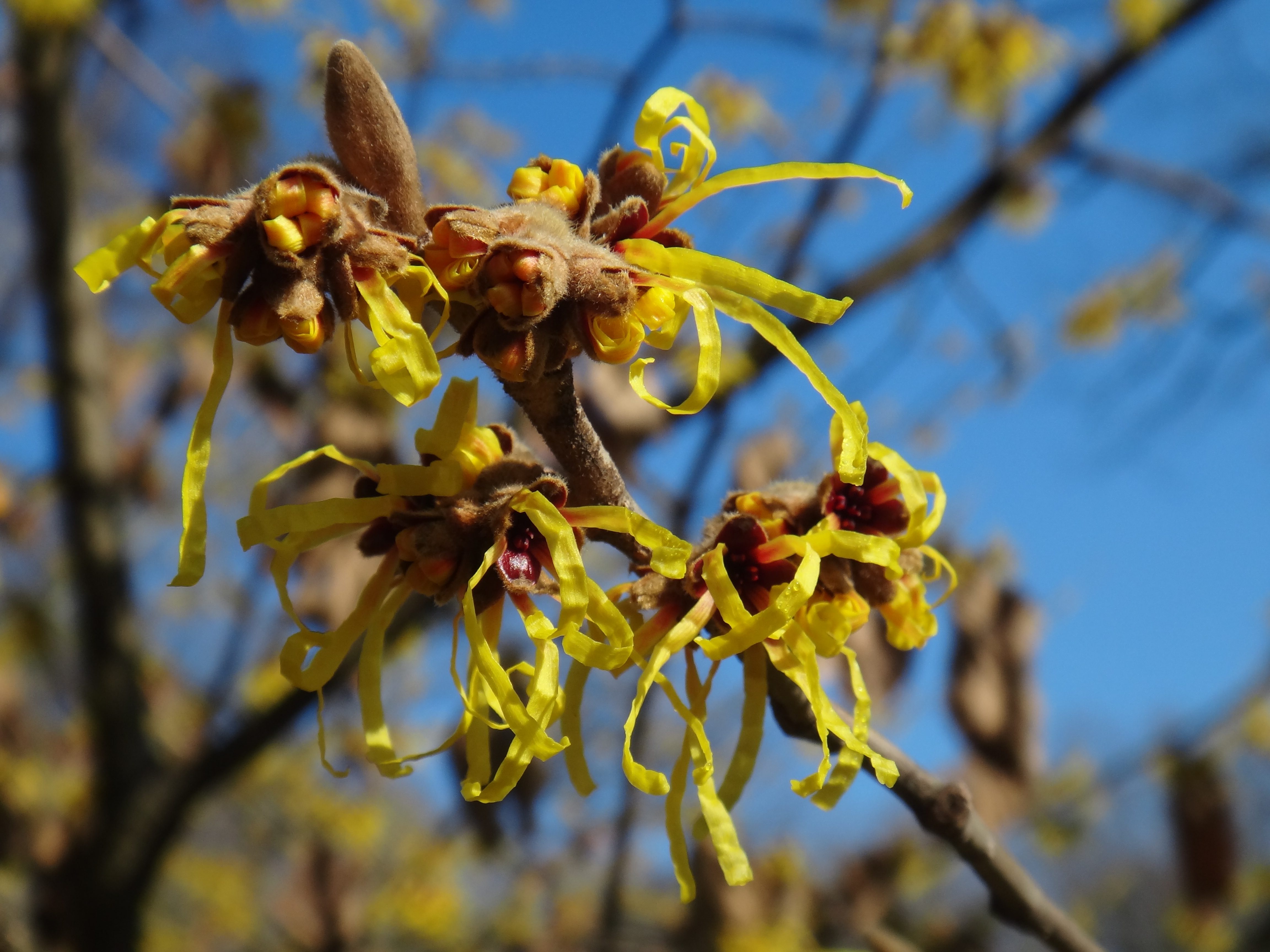
- Best Show and Fragrance in the Gardens – Witch hazel (Hamamelis species & varieties) are in full bloom in the Visitor Center lawn, waving their yellow or rust colored blossoms that look like clusters of tiny ribbons. They look and smell magnificent this week!
- Snowdrops:
- Snowdrop (Galanthus elwesii & Galanthus nivalis) leaves and buds and some flowers are emerging throughout the gardens. Most are under snow cover this week; however, a few can be found blooming through the snow.
- The snowdrops (Galanthus elwesii) under the shrubs at the east end of Oak Hill are in full bloom this week.
- Many varieties of snowdrops (Galanthus varieties) in the collection in the raised beds along the East Museum terrace are in full bloom.
- Tommies – The early crocus (Crocus tommasinianus) that fill the lawn on the terrace behind the Museum are under snow cover this week.
ENTRANCE DRIVE AND PARKING AREA
ber Catalpa species (Catalpa – long, brown, string-bean-like seed pods)
ber Paulownia tomentosa (Princess tree – clusters of round brown seed pods)
SUMMER SHRUB SLOPE
pb Hydrangea paniculata ‘Grandiflora’ (Pee Gee hydrangea – brown)
PARKING AREA TO VISITOR CENTER
snow Galanthus nivalis (Common snowdrop – white)
WALK FROM VISITOR CENTER TO UNDERPASS
snow Galanthus elwesii (Giant snowdrop – white)
fb Hammamelis mollis ‘Pallida’ (Pale Chinese witch hazel – light yellow)
fb Hammamelis mollis ‘Wisley Supreme’ (Chinese witch hazel variety – yellow)
fb Hammamelis vernalis (Vernal witch hazel – rusty-red)
WALK FROM UNDERPASS TO MUSHROOM
snow Galanthus elwesii (Giant snowdrop – white)
snow Galanthus nivalis (Common snowdrop – white)
AZALEA WOODS
b Galanthus elwesii (Giant snowdrop – white)
snow Galanthus nivalis (Common snowdrop – white)
LOWER AZALEA WOODS
fbb Galanthus elwesii (Giant snowdrop – white)
UPPER/EAST TERRACE AND STEPS
snow Camellia japonica ‘April Remembered’ (Camellia cultivar ‘April Remembered‘ – white to pale pink)
snow Crocus tommasianus (‘Tommies’ – lavender and silver)
snow Galanthus ‘Louise Ann Bromley’ (Snowdrop variety – white)
snow Galanthus ‘Madelaine’ (Snowdrop variety – white)
snow Galanthus ‘Phantom’ (Snowdrop variety – white)
snow Galanthus ‘Starling’ (Snowdrop variety – white)
snow Galanthus ‘Trymlet’ (Snowdrop variety – white)
snow Galanthus ‘Wasp’ (Snowdrop variety – white)
pf Jasminum nudiflorum (Winter jasmine – yellow)
pb Lonicera fragrantissima (Fragrant honeysuckle – white)
fbb Pieris japonica ‘Dorothy Wycoff’ (Andromeda cultivar – dark pink buds)
EAST FRONT OF MUSEUM & Around Corner
fb Galanthus alpinus var. bortkewitschianus
fbb Galanthus ‘Bess’ (Snowdrop variety – white)
fb Galanthus ‘Castelgar’ (Snowdrop variety – white)
fbb Galanthus ‘Cowhouse Green’ (Snowdrop variety – white)
fb Galanthus elwesii ‘Green Brush’ (Snowdrop variety – white)
fb Galanthus elwesii ‘Grumpy’ (Snowdrop variety – white)
fb Galanthus elwesii ‘Natalie Garton’ (Snowdrop variety – white)
fb Galanthus elwesii var. monostichtus (Snowdrop variety – white)
fb Galanthus ‘Farmingdon Double’ (Snowdrop variety – white)
fb Galanthus ‘Fieldgate Prelude’ (Snowdrop variety – white)
fb Galanthus ‘Fieldgate Superb’ (Snowdrop variety – white – 2 flowers)
pb Galanthus ‘Gabriel’ (Snowdrop variety – white)
fb Galanthus ‘Galatea’ (Snowdrop variety – white)
fb Galanthus ‘George Elwes’ (Snowdrop variety – white)
fbb Galanthus ‘Hill Poe’ (Snowdrop variety – white)
fb Galanthus ‘Imbolc’ (Snowdrop variety – white)
fb Galanthus ‘John Gray’ (Snowdrop variety – white)
fb Galanthus ‘Marjorie Brown’ (Snowdrop variety – white)
fbb Galanthus ‘Miller’s Late’ (Snowdrop cultivar – white)
fb Galanthus ‘Mrs. Thompson’ (Snowdrop variety – white)
fbb Galanthus nivalus ‘Blewbury Tart’ (Snowdrop variety – white)
fbb Galanthus nivalus ‘Elfin’ (Snowdrop variety – white)
b Galanthus plicatus ‘Percy Picton’ (Snowdrop variety – white)
fb Galanthus plicatus ‘Diggory’ (Snowdrop variety – white)
b Galanthus plicatus ‘Trym’ (Snowdrop variety – white – 1 flower)
b Galanthus ‘Spindlestone Surprise’ (Snowdrop variety – white)
fb Helleborus ‘Brandywine’ (Lenten rose variety – pink, white)
pf Lonicera fragrantissima (Fragrant honeysuckle – white – along Garden Lane across from Bath House)
WALK FROM GLASS CORRIDOR TO REFLECTING POOL
snow Adonis amurensis (Amur adonis – golden yellow)
snow Galanthus elwesii (Giant snowdrop – white)
snow Galanthus nivalis (Common snowdrop – white)
WALK FROM FISH PONDS – THE GLADE – TO BRIDGE
snow Eranthis hyemalis (Winter aconite – yellow)
snow Galanthus elwesii (Giant snowdrop – white)
snow Galanthus nivalis (Common snowdrop – white)
snow Leucojum vernum (Spring snowflake – white)
MARCH BANK
snow Adonis amurensis (Amur adonis – golden yellow)
snow Eranthis hyemalis (Winter aconite – yellow)
snow Galanthus elwesii (Giant snowdrop – white)
snow Galanthus nivalis (Common snowdrop – white)
MAGNOLIA BEND AND WALK ON SOUTH SIDE OF STREAM
snow Galanthus elwesii (Giant snowdrop – white)
snow Galanthus nivalis (Common snowdrop – white)
WINTERHAZEL WALK
fb Helleborus foetidis (Bear’s foot hellebore – greenish)
ICEWELL TERRACE
snow Adonis amurensis (Amur adonis – golden yellow)
snow Galanthus elwesii (Giant snowdrop – white)
PINETUM
fbb Chaenomeles ‘Pink Lady’ (Flowering quince cultivar – pink)
fbb Chaenomeles x superba ‘Crimson & Gold’ (Flowering quince cultivar – crimson)
fbb Chaenomeles x superba ‘Texas Scarlet’ (Flowering quince cultivar – scarlet)
fbb Helleborus x hybridus (Lenten rose – pink)
fbb Viburnum farreri (Fragrant viburnum – pale pink to white)
SUNDIAL GARDEN
ber Paulownia tomentosa (Princess tree – clusters of round brown seed pods)
ENCHANTED WOODS
b Galanthus elwesii (Giant snowdrop – white)
fbb Galanthus nivalis (Common snowdrop – white)
snow Helleborus x hybridus (Lenten rose – pink)
pb Hydrangea serrata (Mountain hydrangea – tan)
OAK HILL–East Side
fb Galanthus elwesii (Giant snowdrop – white)
b Galanthus nivalis (Common snowdrop – white)
QUARRY, ADJACENT WALKS, AND OUTLET STREAM
fb Galanthus elwesii (Giant snowdrop – white – few flowers)
b Galanthus nivalis (Common snowdrop – white)
fb Mahonia bealei (Leatherleaf mahonia – yellow-green)
SYCAMORE HILL
ber Cotoneaster salicifolia (Cotoneaster – red berries)
b Galanthus elwesii (Giant snowdrop – white)
WEST FRONT OF MUSEUM, STORE, AND CLENNY RUN
fbb Camellia ‘Survivor’ (Camellia variety – very few white with pink-tinged buds)
fb Chimonanthus praecox ‘Lutea’ (Wintersweet variety – pale yellow)
b Galanthus elwesii (Giant snowdrop – white)
b Hamamelis x intermedia ‘Sunburst’ (Witch hazel variety – yellow ‘ribbons’)
fb Hamamelis mollis (Chinese witch hazel – yellow ‘ribbons’)
fbb Helleborus x hybridus ‘Pine Knot Select-Our Best’ (Hellebore varieties/Lenten Rose – apricot, pink, pink spotted)
pb Hydrangea quercifolia (Oakleaf hydrangea – dried brown – in Clenny Run at Museum bridge)
Bloom Report presented by Pauline Myers
Bloom Report #06
WINTERTHUR BLOOM REPORT #06
February 17, 2021
31F, SUNNY
+: Abundant
fbb: Flower-bud breaking
b: Some bloom
fb: Full Bloom
pf: Petals falling/drying
pb: Past bloom (few remain)
ber: Berries, fruits
Check these out:
- Best Show in the Gardens – Witch hazel (Hamamelis species & varieties) are in full bloom in the Visitor Center lawn, waving their yellow or rust colored blossoms that look like clusters of tiny ribbons. They are magnificent this week!
- Snowdrops:
- Snowdrop (Galanthus elwesii & Galanthus nivalis) leaves and buds and some flowers are emerging throughout the gardens.
- The snowdrops (Galanthus elwesii) under the shrubs at the east end of Oak Hill are in full bloom this week.
- Many varieties of snowdrops (Galanthus varieties) in the collection in the raised beds along the East Museum terrace are in full bloom.
- Tommies: The early crocus (Crocus tommasinianus) that fill the lawn on the terrace behind the Museum are in bud & those closest to the Museum are blooming.
ENTRANCE DRIVE AND PARKING AREA
ber Catalpa species (Catalpa – long, brown, string-bean-like seed pods)
pb Hydrangea paniculata ‘Grandiflora’ (Pee Gee hydrangea – brown)
ber Paulownia tomentosa (Princess tree – clusters of round brown seed pods)
LAGOONS
SUMMER SHRUB SLOPE
pb Hydrangea paniculata ‘Grandiflora’ (Pee Gee hydrangea – brown)
PARKING AREA TO VISITOR CENTER
fbb Galanthus nivalis (Common snowdrop – white)
WALK FROM VISITOR CENTER TO UNDERPASS
fbb Galanthus elwesii (Giant snowdrop – white)
fb Hammamelis mollis ‘Pallida’ (Pale Chinese witch hazel – light yellow)
fb Hammamelis mollis ‘Wisley Supreme’ (Chinese witch hazel variety – yellow)
fb Hammamelis vernalis (Vernal witch hazel – rusty-red)
WALK FROM UNDERPASS TO MUSHROOM
fbb Galanthus elwesii (Giant snowdrop – white)
fbb Galanthus nivalis (Common snowdrop – white)
SLOPE DOWN TOWARDS MUSEUM
PEONY GARDEN
AZALEA WOODS
fbb Galanthus elwesii (Giant snowdrop – white)
fbb Galanthus nivalis (Common snowdrop – white)
LOWER AZALEA WOODS
fbb Galanthus elwesii (Giant snowdrop – white)
UPPER/EAST TERRACE AND STEPS
fbb Camellia japonica ‘April Remembered’ (Camellia cultivar ‘April Remembered‘ – white to pale pink)
fbb/b Crocus tommasianus (‘Tommies’ – lavender and silver)
Galanthus – Some under snow cover today
fb Galanthus ‘Louise Ann Bromley’ (Snowdrop variety – white)
b Galanthus ‘Madelaine’ (Snowdrop variety – white)
b Galanthus ‘Phantom’ (Snowdrop variety – white)
fbb Galanthus ‘Starling’ (Snowdrop variety – white)
fbb Galanthus ‘Trymlet’ (Snowdrop variety – white)
fbb Galanthus ‘Wasp’ (Snowdrop variety – white)
fb Jasminum nudiflorum (Winter jasmine – yellow)
pb Lonicera fragrantissima (Fragrant honeysuckle – white)
fbb Pieris japonica ‘Dorothy Wycoff’ (Andromeda cultivar – dark pink buds)
EAST FRONT OF MUSEUM & Around Corner
fbb Galanthus ‘Bess’ (Snowdrop variety – white)
fb Galanthus ‘Castelgar’ (Snowdrop variety – white)
fbb Galanthus ‘Cowhouse Green’ (Snowdrop variety – white)
fb Galanthus elwesii ‘Green Brush’ (Snowdrop variety – white)
fb Galanthus elwesii ‘Grumpy’ (Snowdrop variety – white)
fb Galanthus elwesii ‘Natalie Garton’ (Snowdrop variety – white)
b Galanthus elwesii var. monostichtus (Snowdrop variety – white)
fb Galanthus ‘Farmingdon Double’ (Snowdrop variety – white)
fb Galanthus ‘Fieldgate Prelude’ (Snowdrop variety – white)
fb Galanthus ‘Fieldgate Superb’ (Snowdrop variety – white – 2 flowers)
pf Galanthus ‘Gabriel’ (Snowdrop variety – white)
b Galanthus ‘Galatea’ (Snowdrop variety – white)
fb Galanthus ‘George Elwes’ (Snowdrop variety – white)
fb Galanthus ‘Imbolc’ (Snowdrop variety – white)
fb Galanthus ‘John Gray’ (Snowdrop variety – white)
fbb Galanthus ‘Marjorie Brown’ (Snowdrop variety – white)
fbb Galanthus ‘Miller’s Late’ (Snowdrop cultivar – white)
b Galanthus ‘Mrs. Thompson’ (Snowdrop variety – white)
b Galanthus plicatus ‘Percy Picton’ (Snowdrop variety – white)
b Galanthus plicatus ‘Diggory’ (Snowdrop variety – white)
b Galanthus plicatus ‘Trym’ (Snowdrop variety – white – 1 flower)
fbb Galanthus ‘Spindlestone Surprise’ (Snowdrop variety – white)
fb Helleborus ‘Brandywine’ (Lenten rose variety – pink, white)
pf Lonicera fragrantissima (Fragrant honeysuckle – white – along Garden Lane across from Bath House)
WALK FROM GLASS CORRIDOR TO REFLECTING POOL
Adonis – Under snow cover today
b Galanthus elwesii (Giant snowdrop – white)
fbb Galanthus nivalis (Common snowdrop – white)
WALK FROM FISH PONDS – THE GLADE – TO BRIDGE
fbb,+ Eranthis hyemalis (Winter aconite – yellow)
b Galanthus elwesii (Giant snowdrop – white)
fbb Galanthus nivalis (Common snowdrop – white)
b Leucojum vernum (Spring snowflake – white)
MARCH BANK
b Adonis amurensis (Amur adonis – golden yellow)
fbb Eranthis hyemalis (Winter aconite – yellow)
b,+ Galanthus elwesii (Giant snowdrop – white)
b,+ Galanthus nivalis (Common snowdrop – white)
MAGNOLIA BEND AND WALK ON SOUTH SIDE OF STREAM
b Galanthus elwesii (Giant snowdrop – white)
fbb Galanthus nivalis (Common snowdrop – white)
GARDEN LANE
WINTERHAZEL WALK
fb Helleborus foetidis (Bear’s foot hellebore – greenish)
ICEWELL TERRACE
b Adonis amurensis (Amur adonis – golden yellow)
fbb Galanthus elwesii (Giant snowdrop – white)
PINETUM
fbb Chaenomeles ‘Pink Lady’ (Flowering quince cultivar – pink)
fbb Chaenomeles x superba ‘Crimson & Gold’ (Flowering quince cultivar – crimson)
fbb Chaenomeles x superba ‘Texas Scarlet’ (Flowering quince cultivar – scarlet)
fbb Helleborus x hybridus (Lenten rose – pink)
fbb Viburnum farreri (Fragrant viburnum – pale pink to white)
SUNDIAL GARDEN
ber Paulownia tomentosa (Princess tree – clusters of round brown seed pods)
TRAFFIC CIRCLE
ENCHANTED WOODS
b Galanthus elwesii (Giant snowdrop – white)
fbb Galanthus nivalis (Common snowdrop – white)
fbb Helleborus x hybridus (Lenten rose – pink)
pb Hydrangea serrata (Mountain hydrangea – tan)
OAK HILL–East Side
fb Galanthus elwesii (Giant snowdrop – white)
fbb Galanthus nivalis (Common snowdrop – white)
OAK HILL-West Side
QUARRY, ADJACENT WALKS, AND OUTLET STREAM
b Galanthus elwesii (Giant snowdrop – white – few flowers)
fbb Galanthus nivalis (Common snowdrop – white)
fb Mahonia bealei (Leatherleaf mahonia – yellow-green)
SYCAMORE HILL
ber Cotoneaster salicifolia (Cotoneaster – red berries)
b Galanthus elwesii (Giant snowdrop – white)
WEST FRONT OF MUSEUM, STORE, AND CLENNY RUN
fbb Camellia ‘Survivor’ (Camellia variety – white with pink-tinged buds)
fb Chimonanthus praecox ‘Lutea’ (Wintersweet variety – pale yellow)
b Galanthus elwesii (Giant snowdrop – white)
fbb Hamamelis x intermedia ‘Sunburst’ (Witch hazel variety – yellow ‘ribbons’)
b Hamamelis mollis (Chinese witch hazel – yellow ‘ribbons’)
fbb Helleborus x hybridus ‘Pine Knot Select-Our Best’ (Hellebore varieties/Lenten Rose – apricot, pink, pink spotted)
pb Hydrangea quercifolia (Oakleaf hydrangea – dried brown – in Clenny Run at Museum bridge)
GREENHOUSE AREA
BACK MEADOW – Top of Sycamore Hill to back ponds
GARDEN LANE MEADOW – below Brown’s Woods
Bloom Report presented by Pauline Myers
Bright Red or Scarlet?
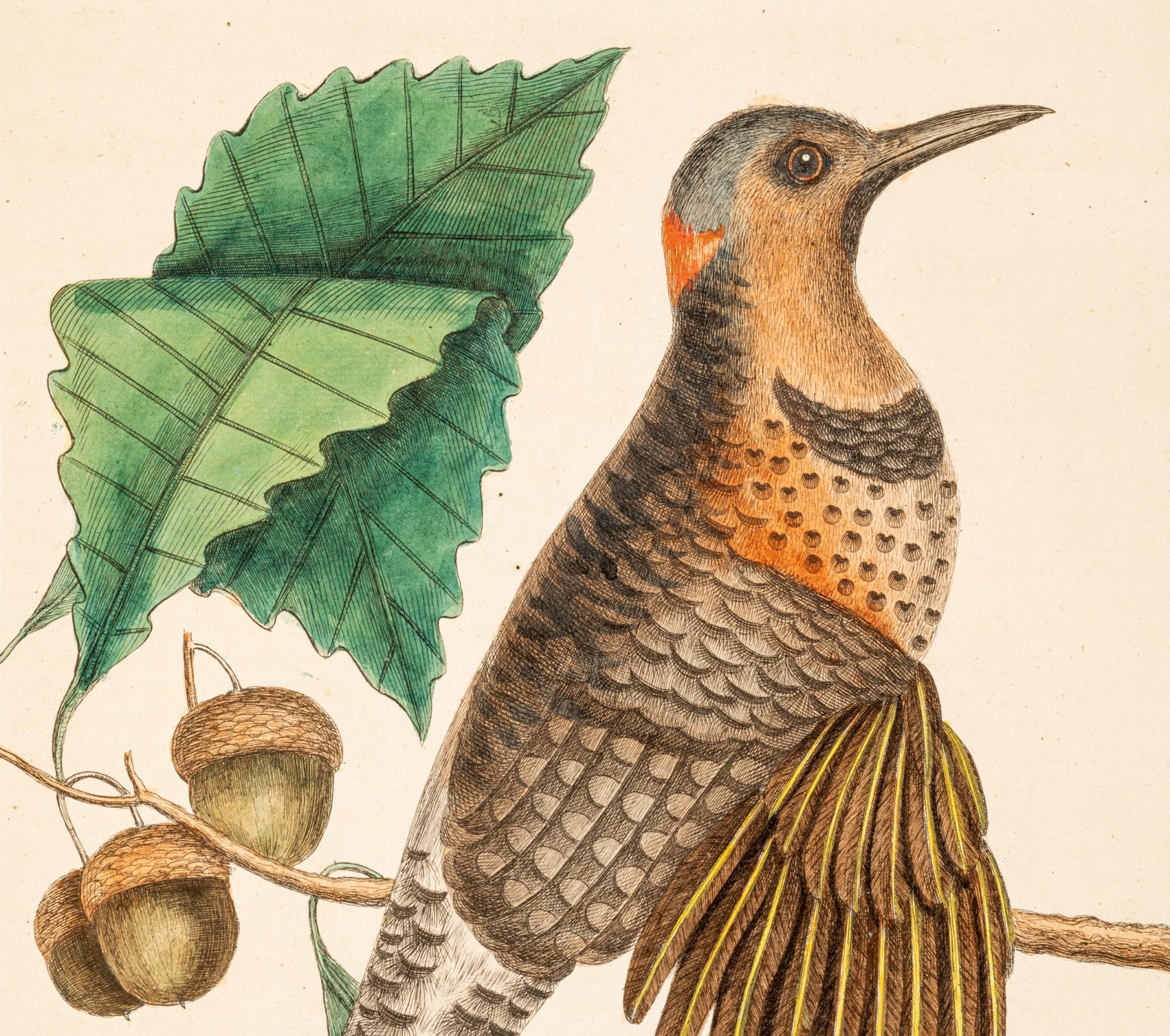
Mark Catesby’s The Natural History of Carolina, Florida and the Bahama Islands: Containing the Figures of Birds, Beasts, Fishes, Serpents, Insects, and Plants is the first comprehensive natural history work to appear in print. More than two decades in the making, and published in parts from 1729–1747, Catesby’s Natural History received praise as “the most splendid of its kind that England had ever produced.”
Although this work has been the subject of numerous scholarly studies, none have focused on Catesby’s specific color palette and pigment choices. The text that Catesby wrote to accompany each illustration included detailed descriptions of colors for each figure—flora and fauna. Are Catesby’s particular words for describing color matched by the color palette found in the illustrations? For example, when Catesby used the term “scarlet” or “bright red,” did he mean specific pigments?
Pigment analysis of a first edition of the Natural History in Winterthur’s library collection is under way in the Scientific and Analytical Research Laboratory, using X-ray fluorescence spectroscopy (XRF) and fiber optic resonance spectroscopy (FORS).
Study is ongoing and preliminary results are intriguing. The nuanced vocabulary is somewhat matched by application, where the “bright red” is red lead alone, which tends to orange, and “deep red,” “scarlet,” and “crimson,” are mixtures of red lead and larger portions of vermilion, as shown by the stronger XRF signal of mercury in these color mixes. The shades of red are sometimes visually discernable, as in the “bright red” of the “Red-bellied Wood-pecker,” identified by XRF as red lead alone. “Scarlet,” which is a mixture of red lead and vermillion, appears in the head of the “Gold-winged Wood-pecker.”
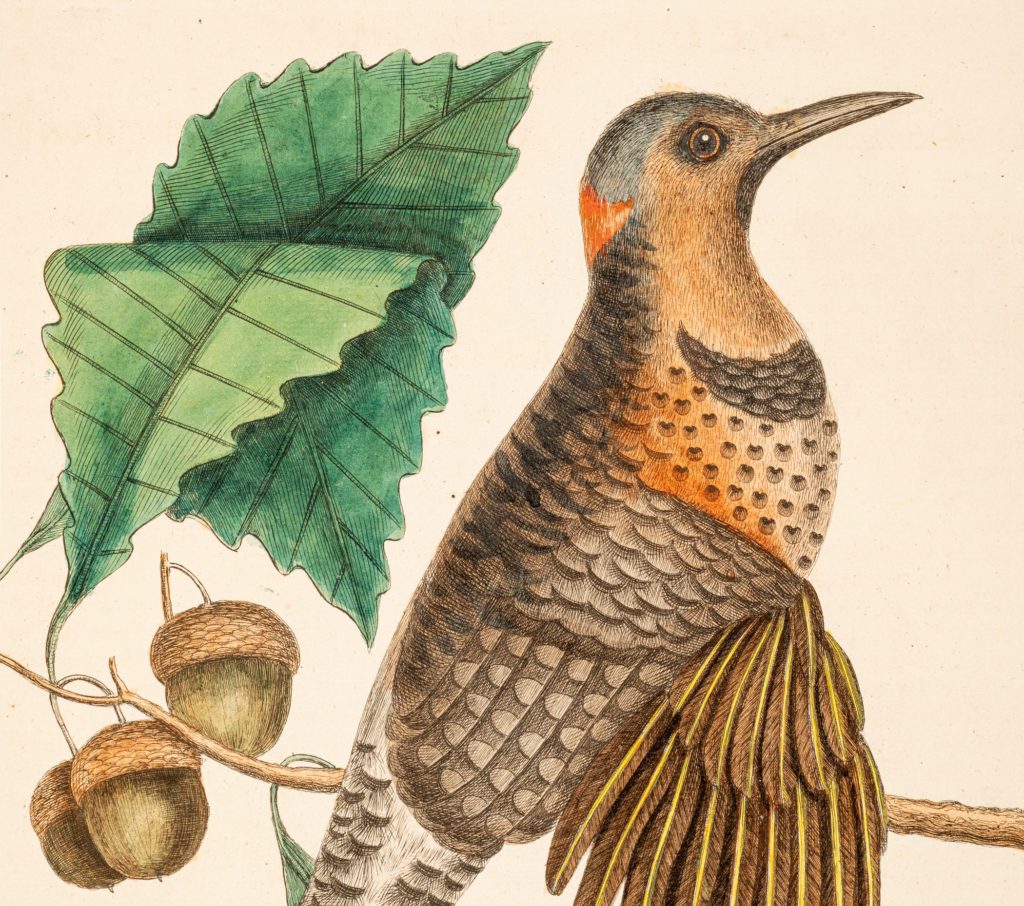
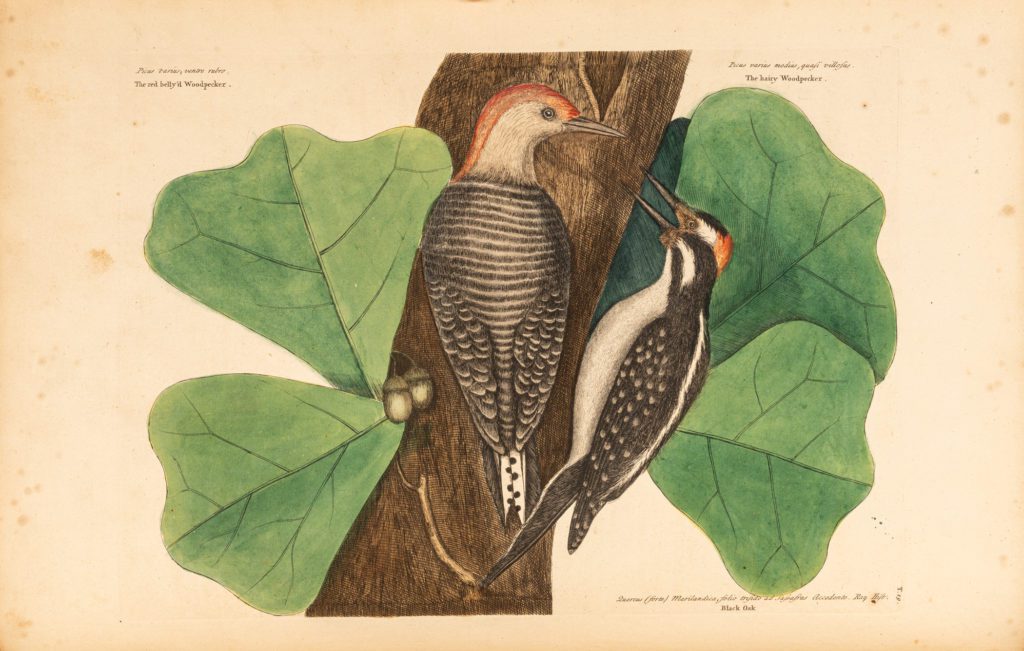
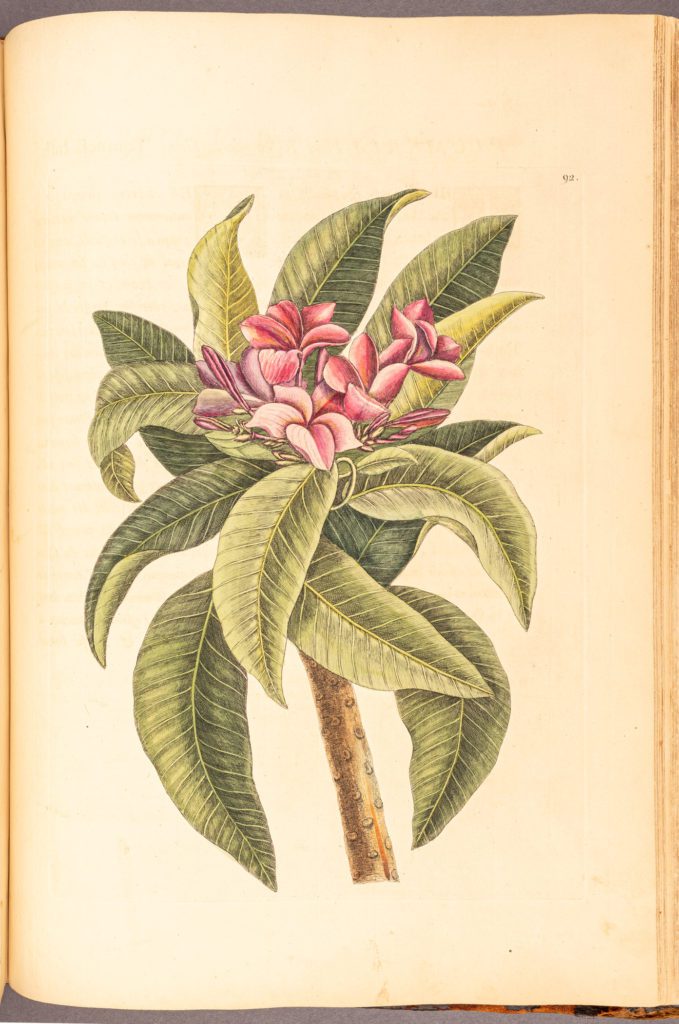
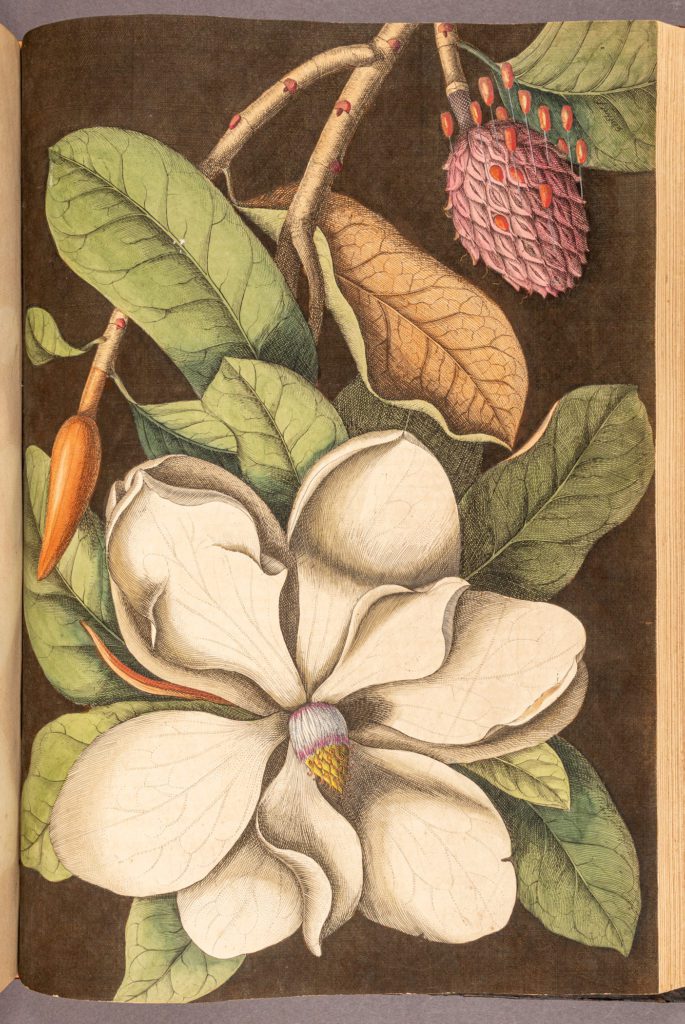
Scientists used a relatively new analytical technique, FORS, to identify the insect-based red colorant called cochineal, obtained from insects that live on cactus plants in Central and South America. Carmine, made from cochineal, was a vibrant colorant favored for tinting prints, likely because it was relatively inexpensive and easy to make. Catesby used the term “purple,” to describe this color, seen in the deep pink-purple hue of the magnolia’s seed pod. He used the term “rose” where he applied a vegetable-based colorant, likely madder, seen in the dark pink petals of the plumeria.
The volumes show a heavy dependence on body color or opaque pigments, particularly in the birds but sometimes in the fish and flowers. Colors such as massicot, red lead, white lead, and “liquid gold,” were generally used more often by the limner or miniaturist than the 18th-century print colorist. These mineral pigments, however, embodied the figures, especially the birds, with vibrant and durable color. Luminous, yet fugitive, transparent liquid color is occasionally present, most often in the plants, the map, and in very small touches, in a few birds. Together, these opaque pigments and liquid tinctures produced stunning, corporeal, representations of flora and fauna that may inform our interpretation of the works as illuminated prints, watercolor paintings, or an interesting hybrid of the two.
Bloom Report #05
Winterthur Museum, Gardens & Library
WINTERTHUR BLOOM REPORT #05
February 10, 2021
36F, cloudy
+: Abundant
fbb: Flower-bud breaking
b: Some bloom
fb: Full Bloom
pf: Petals falling/drying
pb: Past bloom (few remain)
ber: Berries, fruits
Check these out:
- Best Show in the Gardens – Witch hazel (Hamamelis species & varieties) are in full bloom in the Visitor Center lawn, waving their yellow or rust colored blossoms that look like clusters of tiny ribbons. They are magnificent this week!
- Snowdrops:
- Snowdrop (Galanthus elwesii & Galanthus nivalis) leaves and buds and some flowers are emerging throughout the gardens.
- The snowdrops (Galanthus elwesii) under the shrubs at the east end of Oak Hill are in full bloom this week.
- Many varieties of snowdrops (Galanthus varieties) in the collection in the raised beds along the East Museum terrace are in full bloom.
ENTRANCE DRIVE AND PARKING AREA
ber Catalpa species (Catalpa – long, brown, string-bean-like seed pods)
pb Hydrangea paniculata ‘Grandiflora’ (Pee Gee hydrangea – brown)
ber Paulownia tomentosa (Princess tree – clusters of round brown seed pods)
LAGOONS
SUMMER SHRUB SLOPE
pb Hydrangea paniculata ‘Grandiflora’ (Pee Gee hydrangea – brown)
PARKING AREA TO VISITOR CENTER
fbb Galanthus nivalis (Common snowdrop – white)
WALK FROM VISITOR CENTER TO UNDERPASS
fbb Galanthus elwesii (Giant snowdrop – white)
fb Hammamelis mollis ‘Pallida’ (Pale Chinese witch hazel – light yellow)
fb Hammamelis mollis ‘Wisley Supreme’ (Chinese witch hazel variety – yellow)
fb Hammamelis vernalis (Vernal witch hazel – rusty-red)
WALK FROM UNDERPASS TO MUSHROOM
fbb Galanthus elwesii (Giant snowdrop – white)
fbb Galanthus nivalis (Common snowdrop – white)
SLOPE DOWN TOWARDS MUSEUM
PEONY GARDEN
AZALEA WOODS
fbb Galanthus elwesii (Giant snowdrop – white)
fbb Galanthus nivalis (Common snowdrop – white)
LOWER AZALEA WOODS
fbb Galanthus elwesii (Giant snowdrop – white)
UPPER/EAST TERRACE AND STEPS
fbb Camellia japonica ‘April Remembered’ (Camellia cultivar ‘April Remembered‘ – white to pale pink)
fbb Crocus tommasianus (‘Tommies’ – lavender and silver)
Galanthus – All under snow cover today
fb Jasminum nudiflorum (Winter jasmine – yellow)
b Lonicera fragrantissima (Fragrant honeysuckle – white)
fbb Pieris japonica ‘Dorothy Wycoff’ (Andromeda cultivar – dark pink buds)
EAST FRONT OF MUSEUM & Around Corner
fbb Galanthus ‘Bess’ (Snowdrop variety – white)
fb Galanthus ‘Castelgar’ (Snowdrop variety – white)
fbb Galanthus ‘Cowhouse Green’ (Snowdrop variety – white)
b Galanthus elwesii ‘Green Brush’ (Snowdrop variety – white)
fb Galanthus elwesii ‘Grumpy’ (Snowdrop variety – white)
b Galanthus elwesii ‘Natalie Garton’ (Snowdrop variety – white)
b Galanthus elwesii var. monostichtus (Snowdrop variety – white)
fb Galanthus ‘Farmingdon Double’ (Snowdrop variety – white)
fb Galanthus ‘Fieldgate Prelude’ (Snowdrop variety – white)
fb Galanthus ‘Fieldgate Superb’ (Snowdrop variety – white – 2 flowers)
pf Galanthus ‘Gabriel’ (Snowdrop variety – white)
b Galanthus ‘Galatea’ (Snowdrop variety – white)
b Galanthus ‘George Elwes’ (Snowdrop variety – white)
b Galanthus ‘Imbolc’ (Snowdrop variety – white)
b Galanthus ‘John Gray’ (Snowdrop variety – white)
fbb Galanthus ‘Marjorie Brown’ (Snowdrop variety – white)
fbb Galanthus ‘Miller’s Late’ (Snowdrop cultivar – white)
b Galanthus ‘Mrs. Thompson’ (Snowdrop variety – white)
fbb Galanthus plicatus ‘Percy Picton’ (Snowdrop variety – white)
b Galanthus plicatus ‘Diggory’ (Snowdrop variety – white)
b Galanthus plicatus ‘Trym’ (Snowdrop variety – white – 1 flower)
fbb Galanthus ‘Spindlestone Surprise’ (Snowdrop variety – white)
fb Helleborus ‘Brandywine’ (Lenten rose variety – pink, white)
pf Lonicera fragrantissima (Fragrant honeysuckle – white – along Garden Lane across from Bath House)
WALK FROM GLASS CORRIDOR TO REFLECTING POOL
Adonis – Under snow cover today
b Galanthus elwesii (Giant snowdrop – white)
fbb Galanthus nivalis (Common snowdrop – white)
WALK FROM FISH PONDS – THE GLADE – TO BRIDGE
fbb,+ Eranthis hyemalis (Winter aconite – yellow)
b Galanthus elwesii (Giant snowdrop – white)
fbb Galanthus nivalis (Common snowdrop – white)
fbb Leucojum vernum (Spring snowflake – white)
MARCH BANK
b Adonis amurensis (Amur adonis – golden yellow)
fbb Eranthis hyemalis (Winter aconite – yellow)
b,+ Galanthus elwesii (Giant snowdrop – white)
b,+ Galanthus nivalis (Common snowdrop – white)
MAGNOLIA BEND AND WALK ON SOUTH SIDE OF STREAM
b Galanthus elwesii (Giant snowdrop – white)
GARDEN LANE
WINTERHAZEL WALK
fb Helleborus foetidis (Bear’s foot hellebore – greenish)
ICEWELL TERRACE
fbb Galanthus elwesii (Giant snowdrop – white)
PINETUM
fbb Chaenomeles ‘Pink Lady’ (Flowering quince cultivar – pink)
fbb Chaenomeles x superba ‘Crimson & Gold’ (Flowering quince cultivar – crimson)
fbb Chaenomeles x superba ‘Texas Scarlet’ (Flowering quince cultivar – scarlet)
bbb Helleborus x hybridus (Lenten rose – pink)
b Viburnum farreri (Fragrant viburnum – pale pink to white)
SUNDIAL GARDEN
ber Paulownia tomentosa (Princess tree – clusters of round brown seed pods)
TRAFFIC CIRCLE
ENCHANTED WOODS
b Galanthus elwesii (Giant snowdrop – white)
fbb Galanthus nivalis (Common snowdrop – white)
pb Hydrangea serrata (Mountain hydrangea – tan)
OAK HILL–East Side
fb Galanthus elwesii (Giant snowdrop – white)
fbb Galanthus nivalis (Common snowdrop – white)
OAK HILL-West Side
QUARRY, ADJACENT WALKS, AND OUTLET STREAM
b Galanthus elwesii (Giant snowdrop – white – few flowers)
fbb Galanthus nivalis (Common snowdrop – white)
fb Mahonia bealei (Leatherleaf mahonia – yellow-green)
fbb Pieris japonica ‘Forest Flame’ (Andromeda cultivar – eye-catching red buds)
SYCAMORE HILL
ber Cotoneaster salicifolia (Cotoneaster – red berries)
fbb Galanthus elwesii (Giant snowdrop – white)
WEST FRONT OF MUSEUM, STORE, AND CLENNY RUN
pb Camellia ‘Survivor’ (Camellia variety – white with pink-tinged buds)
fb Chimonanthus praecox ‘Lutea’ (Wintersweet variety – pale yellow)
b Galanthus elwesii (Giant snowdrop – white)
b Hamamelis mollis (Chinese witch hazel – yellow ‘ribbons’)
fbb Helleborus x hybridus ‘Pine Knot Select-Our Best’ (Hellebore varieties/Lenten Rose – apricot, pink, pink spotted)
pb Hydrangea quercifolia (Oakleaf hydrangea – dried brown – in Clenny Run at Museum bridge)
GREENHOUSE AREA
BACK MEADOW – Top of Sycamore Hill to back ponds
GARDEN LANE MEADOW – below Brown’s Woods
Bloom Report presented by Pauline Myers
Getting Dressed with Ann Lowe

May 20, 2023 through Jan 7, 2024
Second-floor Galleries
In anticipation of the fall opening of Ann Lowe: American Couturier, peek behind the scenes at the work of fabricating, shaping, and dressing the mannequins in the exhibition. Learn about the special collaboration between the University of Delaware MakerGym and Winterthur’s textile conservation lab to create the custom mannequins for the gowns.
This exhibit will be closed on August 25, 2023.
Winterthur Garden & Landscape Society
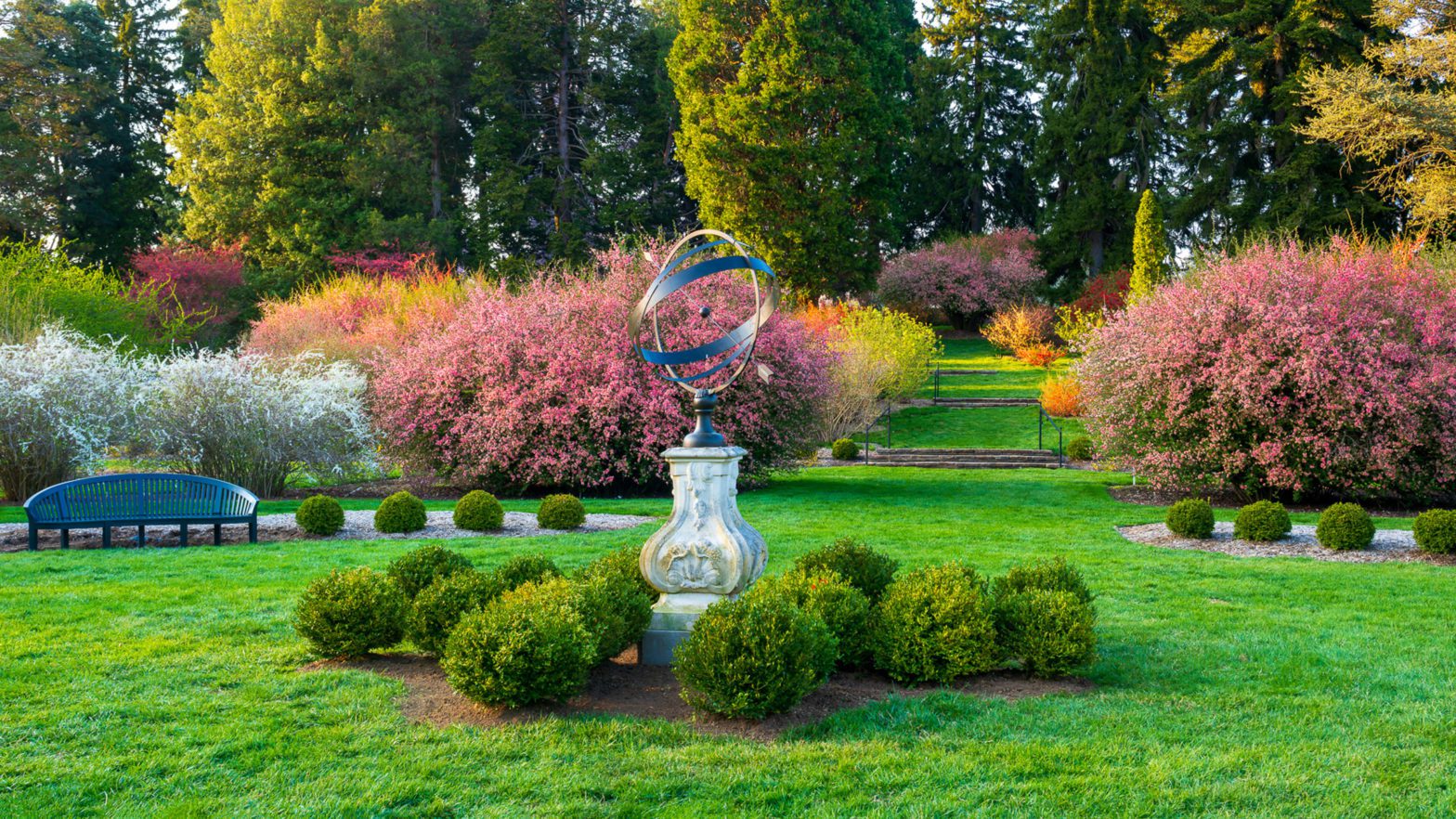
Make Winterthur Bloom!
We invite you to join an enthusiastic group of Winterthur Garden supporters! Established in 2003, this generous donor society provides essential resources for Henry Francis du Pont’s naturalistic masterpiece. Join now to help us complete key projects that restore the original design of the historic garden, inspire the next generation of public horticulturists through our internship program, and support ongoing maintenance to keep the estate beautiful year-round for the many visitors who enjoy it today. Membership starts at $2,500 annually and directly supports the garden.
In appreciation for your generosity, Winterthur Garden & Landscape Society donors enjoy unique access to the garden as well as all the benefits of general membership. Highlights include
- Invitations to exclusive Garden & Landscape Society events
- Private tours with Winterthur horticulturists
- Advice on your home garden from our experts
- Travel opportunities in partnership with the Henry Francis du Pont Collectors Circle, the museum counterpart to the Garden & Landscape Society.
For more information, please contact the Garden & Landscape Society office at 302.888.4673 or contributions@winterthur.org.