Search Site

Stefania Urist

Transformations, Fragmented Memories

Stefania Urist wants people to think about the importance of trees.

A resident of Vermont, Stefania Urist is keenly interested in trees and old-growth forests. She was exploring Winterthur in 2020 learning from staff conservators how to preserve outdoor sculptures, when she saw an Instagram post that changed her direction. In the post, there was a photo of a staff member counting the rings of a 300-year-old oak that had been felled by a tornado that summer. “The tree was a wide as the staff member was tall,” Urist. “I knew right away it was old. When I saw it, I said, ‘I need a piece of that.’”

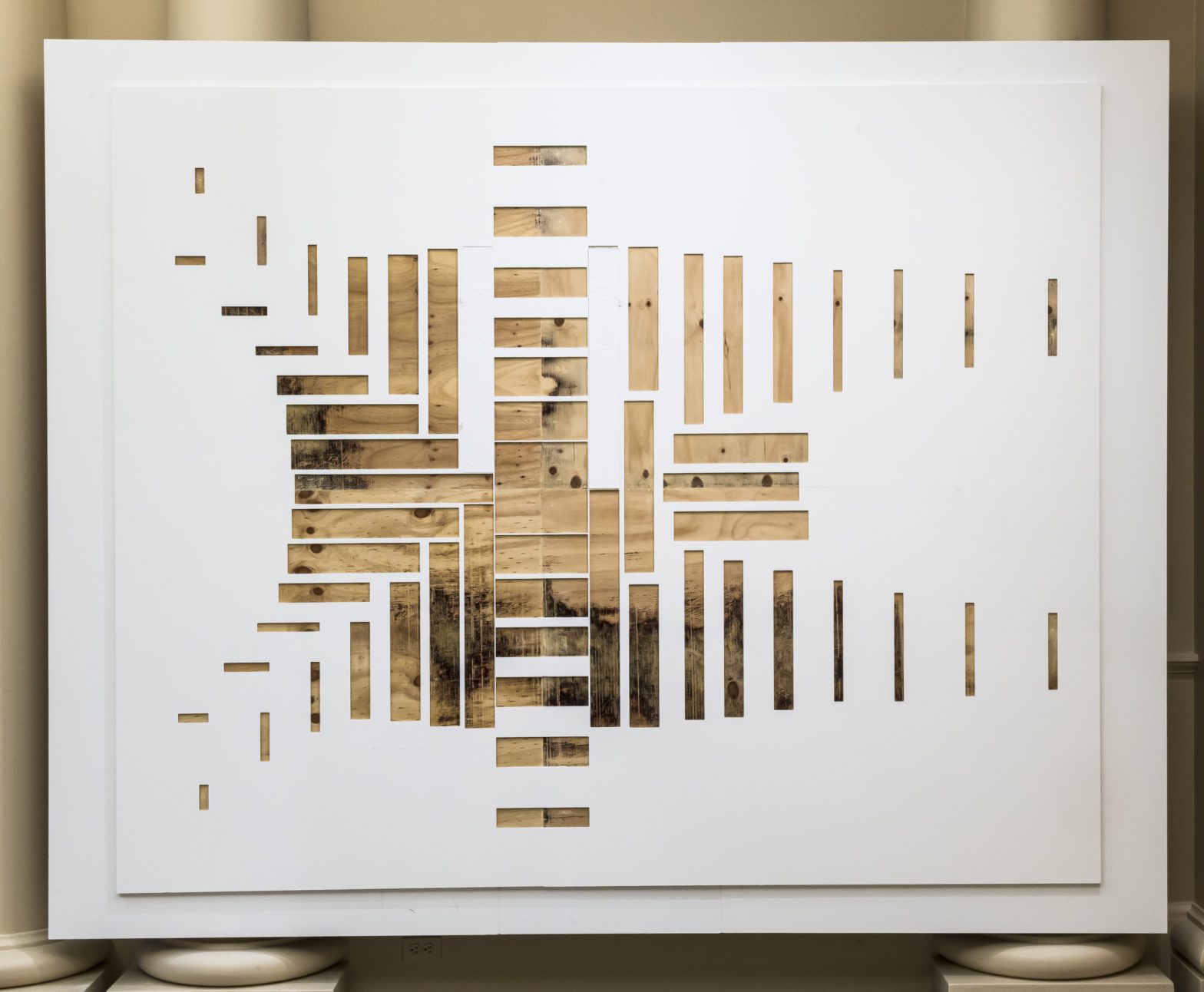
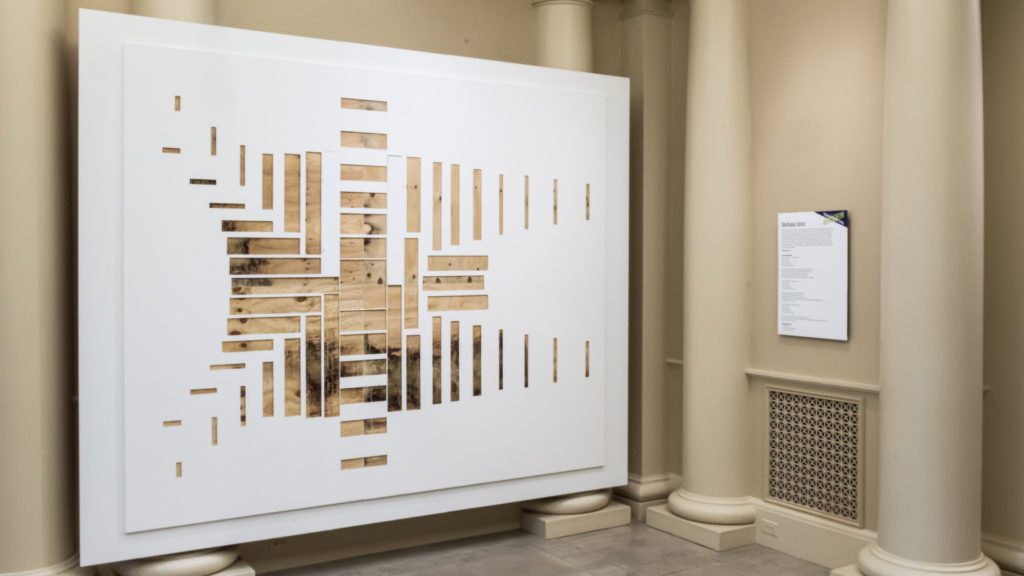
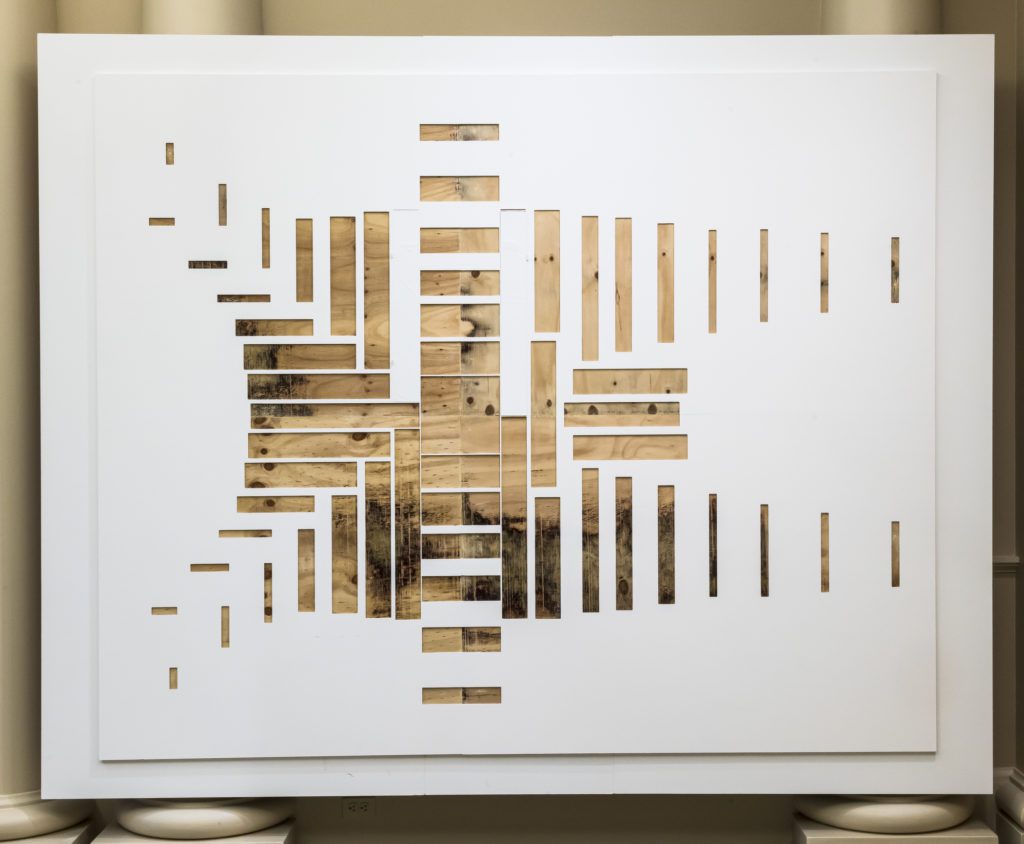
Among other things, Urist’s art addresses ideas about the environment, in part by using materials in unusual ways. She used parts of the tree she discovered on Instagram, known as the Brown’s Meadow Oak, to create one of two related works in TransformationsFragmented Memories, made of paper over wood, expands a milling pattern into pieces the viewers can remove and keep, thus involving them in the work’s evolution. Bonded Memories, made of paper embossed with the oak’s rings, imagines the tree reassembled.

“Fragmented Memories” turns a milling pattern into something beautiful.

“I wasn’t searching for something like that tree at that time,” Urist says. “But I was letting my research guide me in terms of being interested in old-growth trees. And I was actually trying to find some up here in Vermont, so it was kind of serendipitous.”

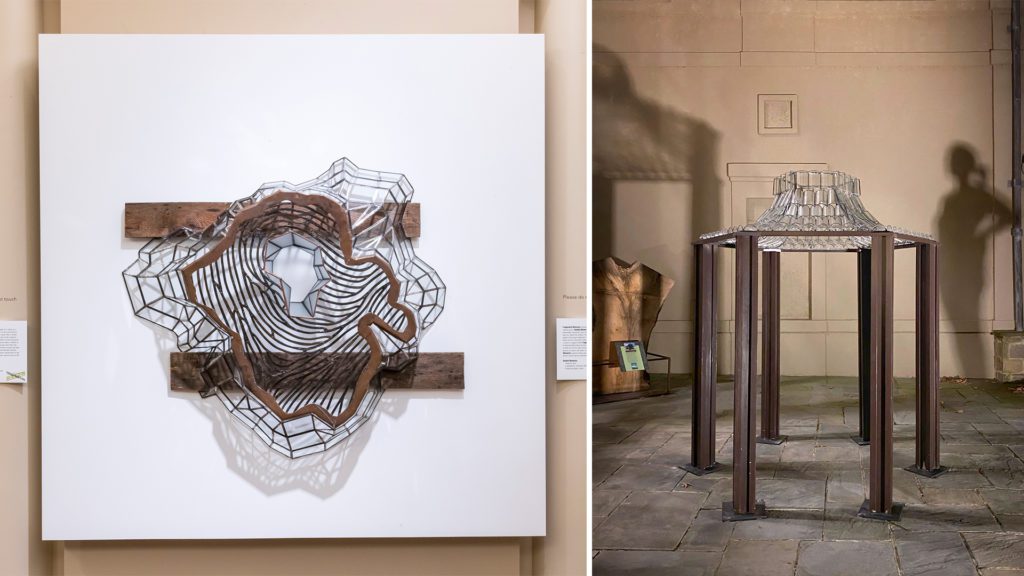
The work is now on display in the Winterthur galleries area as part of Transformations: Contemporary Artists at Winterthur, which showcases current responses to the traditional forms and objects the institution is known for. The six artists currently represented in Transformations were all part of Winterthur’s Maker-Creator Research Fellowship, a program that provides a stipend and gives access to Winterthur and its staff for research that inspires the work of creative professionals. Also on view is Urist’s Mapping the Impact, a sculpture of leaded glass, copper, and reclaimed wood that resembles a tree stump, and The Ceiling, on the patio of the Galleries Reception Atrium entrance.

“Mapping the Impact” (left) and “The Ceiling” (right).

It was living in the Green Mountain State that kicked Urist’s interest in trees into high gear. Since colonial days, Vermont has been clear cut many times for mining, agriculture, settlement, and other purposes. Much forest has grown back, but there is no true old growth, so the ecosystem has changed. Urist wants to call attention to the intelligence of trees—the way they communicate chemically, the way they support each other, and their key role in healthy ecosystems. Art is one way to do that. 

“I came to the milling patterns by being interested in the interaction between humans and nature, how we turn natural, curvy, inconsistent shapes into linear, industrialized products,” Urist says. “You can see different artistic shapes in there, almost like art deco patterns, and I found that really beautiful but also really sad.”

In other work, Urist lifts the “fingerprints” of trees. From freshly cut logs and stumps that still ooze sap, Urist imprints paper, then dusts it with graphite to highlight the ring pattern. Each is as unique as a human fingerprint.

“My interest in art in general is about connecting, seeing patterns in life and nature that maybe other people don’t see, or just connecting them in different ways than other people do,” Urist says. “The tree rings are the lifeline and literal timeline of the tree made into a physical shape. I just want people to think about it in a different way, think about our own consumption and how we use these beings to be objects and building materials when they existed for so long before that.”

Urist’s work, and the work of the other Transformations artists, is currently on view in the galleries area. 

Teen Volunteer Program

Interested in Art? History? Science? Museums?

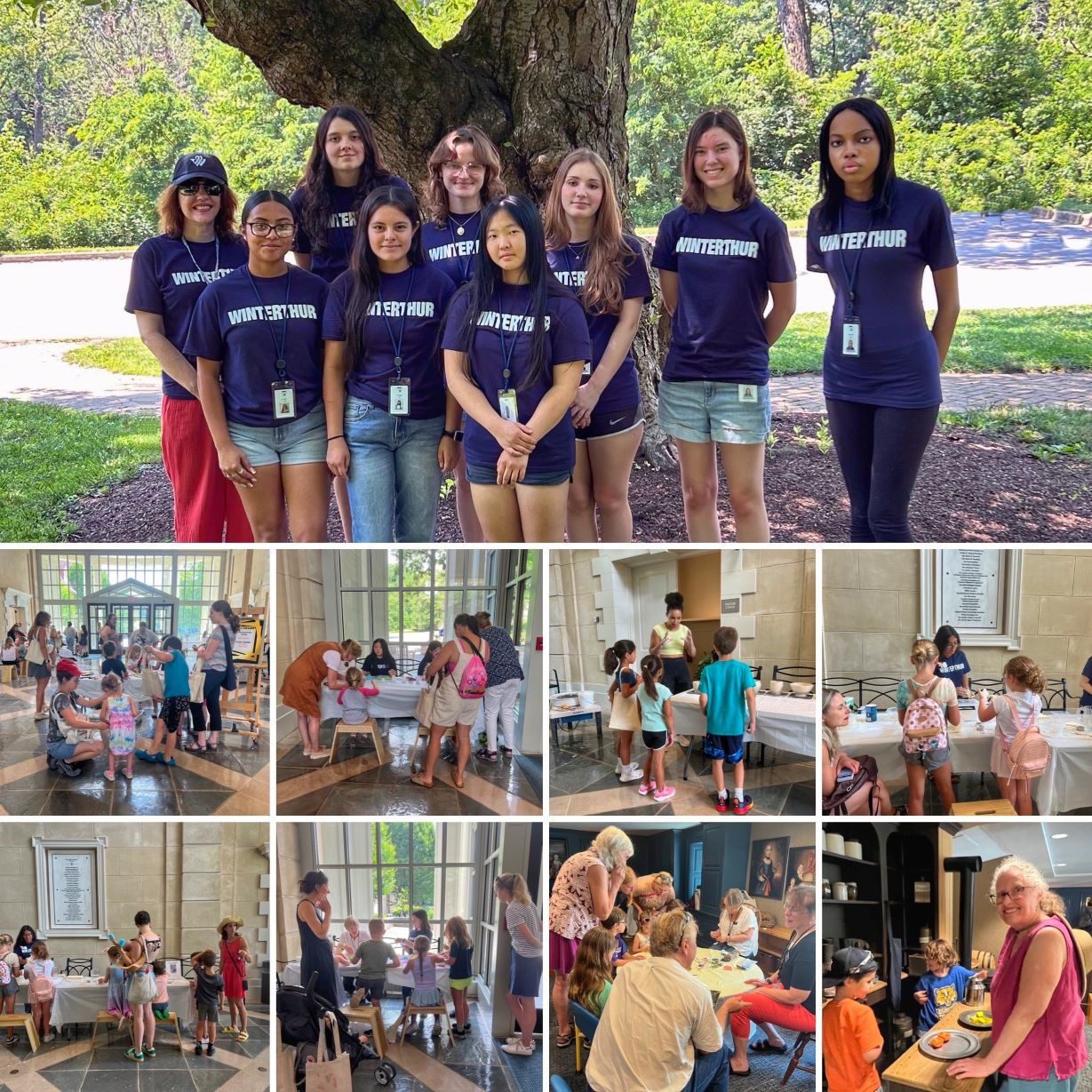
If you answered “yes” to the above, consider applying to the 2025 Teen Volunteer Program. Participants in this program will meet the curators and conservators behind Winterthur’s new exhibit Almost Unknown: the Afric-American Picture Gallery and will share what they learn about design, history, and art with their community! Application is due by April 14, 2025.

What you’ll do

● Go behind the scenes at a world-class museum in your own backyard

● Learn about objects in the museum, how we care for them, and how they inspire new works of art

● Guide young children through hands-on activities and demonstrations

● Develop leadership skills while serving your community

The time required

The time required
Training week: June 24–28, 9 am–3 pm

Tuesdays & Thursdays, July 1–August 7, 9 am–3 pm.
Tuesday programs take place at Winterthur.
Thursday programs travel from Winterthur into Wilmington.

How to apply

Complete the online application here: https://forms.office.com/r/qRBZaEtct7

Object of the Month: Frog Mug

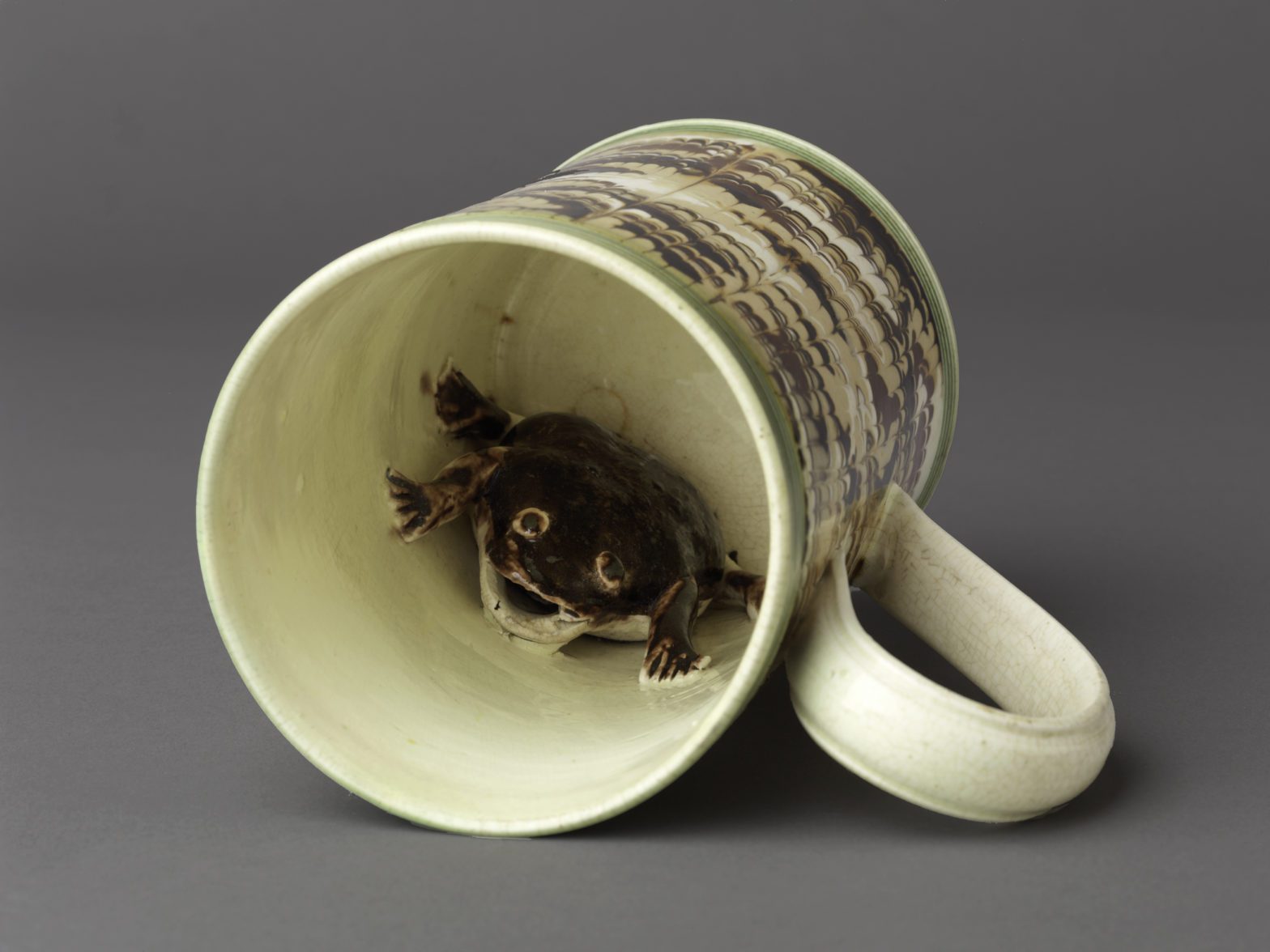
This English earthenware mug from the late 18th century, created with the practical joker in mind, has a fun secret: a fake frog inside seems poised to leap at the face of the unsuspecting user—a sort of precursor of the ice cube with the fake fly. Fill the mug with a dark liquid, hand to a friend, then enjoy the show. One can only guess how much joy the reaction gave the joker.  

Tyler Johnson, Estate Guide

Frog Mug

England, 1770-1790

Gift of Osborne R. and Mary M. Soverel in memory of Lilian Wilkinson Boschen, 1992.0040

Michael Kalmbach and Creative Vision Factory

A new outdoor bench at Winterthur connects communities through history, memories, and stories.

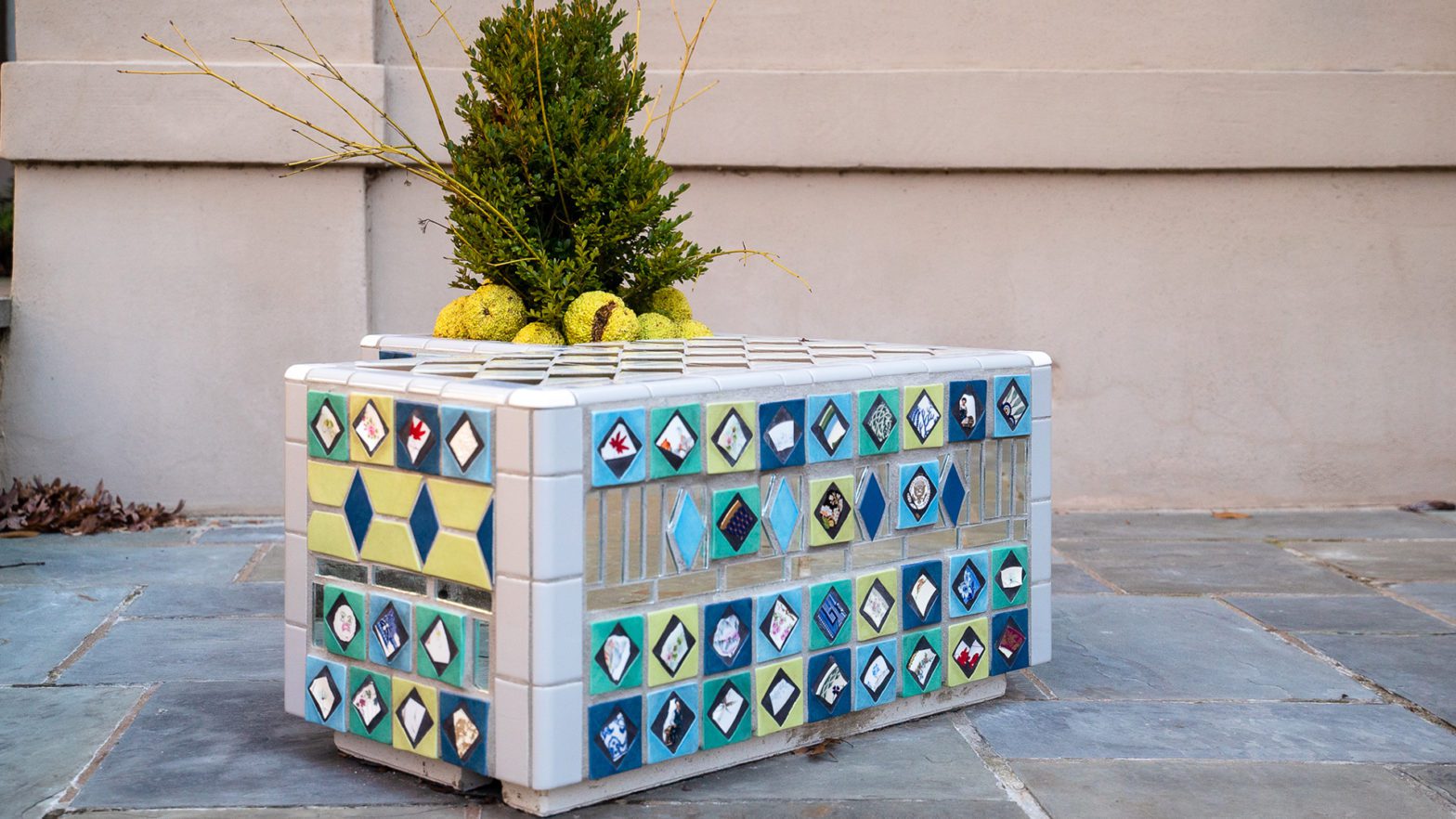
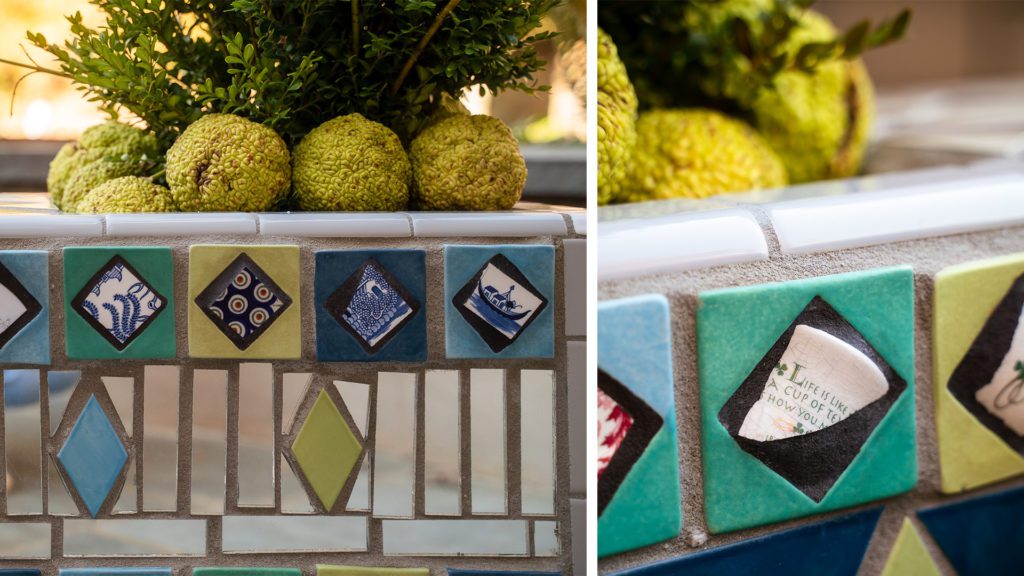
When you take a seat on the new, beautifully tiled mosaic bench on the patio of the Galleries Reception Atrium, there is much to reflect on.

There is The Ceiling, a gazebo-like sculpture with a glass roof that is part of Transformations: Contemporary Artists at Winterthur, which represents creator Stefania Urist’s interest in the intersection of people and nature.

There is a section of trunk from the Brown’s  Meadow Oak, a 300-year-old tree toppled by a tornado on the estate in 2020. The ancient giant inspired other works by Urist and another Transformations artist, Rob Finn, who painted its portrait in watercolor, a striking memorial to the stately tree.

Then there is the bench itself. 

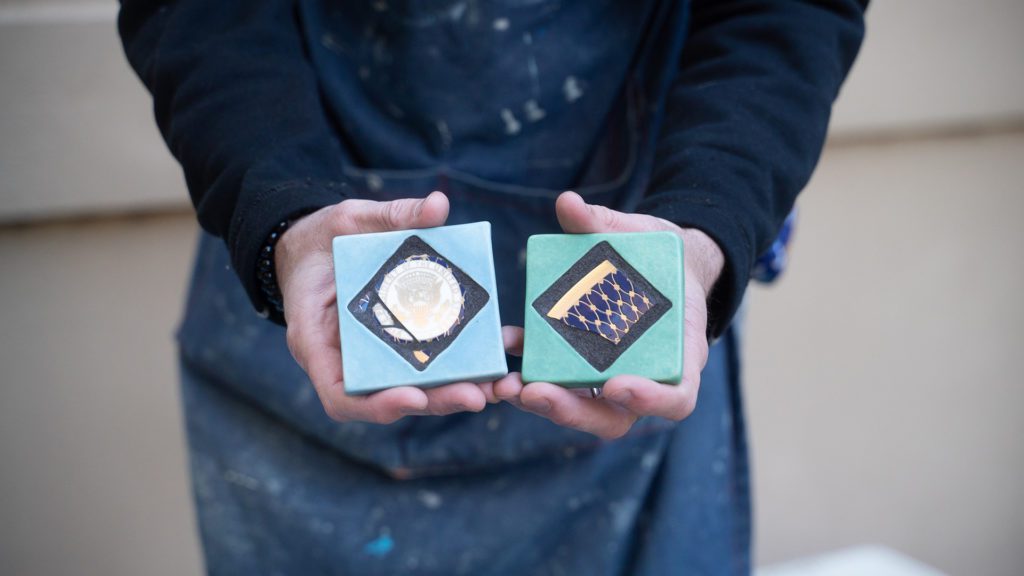
Obviously contemporary, the bench has more connections to Winterthur’s world-class collection of traditional American decorative arts than meets the eye. On closer inspection, one can see references to the Winterthur collection in the many tiles that incorporate bits of ceramic dishware and in the bench design itself, which reflects a continuum of fine craftsmanship and design often associated with the museum objects inside. This is Winterthur reimagined in tile and concrete.

The mosaic bench is part of a new exhibition, Upcycled!, which asks viewers to consider how old things can be reused creatively while also creating a community by working with local nonprofit organizations to make and display works of art. The work of many hands, the bench is an expression of caring that unites Winterthur and project partner Creative Vision Factory with Duffy’s Hope Garden in Wilmington and the New Castle County Hope Center, which provides transitional housing for the homeless. Winterthur’s collaboration with these partners included support and supplies for Creative Vision Factory artists to create benches at Winterthur, Duffy’s Hope Garden, and the Hope Center, as well as support for a tile monument at the Delaware State Hospital’s historic Spiral Cemetery that memorializes more than 700 souls who died in state care without being claimed by family between 1891 and 1983. 

At Winterthur, the mosaic tiling on the bench includes fragments of donated dinnerware and other ceramics—even some pieces from Joe and Jill Biden’s vice-presidential home—all associated with the feelings, thoughts, memories, and homes of their donors and the experience of volunteers who made them into something new.

“All of this is about telling the stories of people’s lives, both in the past and the present, and connecting them, often by either using things to remember them by or by thinking about the things that surrounded their lives and what their lives were like,” says Catharine Dann Roeber, interim director of Academic Programs at Winterthur. “For example, the people living at the Delaware State Hospital, what were their lives like? How can we learn from that and improve them?”

The question is especially poignant at Winterthur. A former family home filled with 90,000 historical objects ranging from everyday domestic items to the finest examples of decorative arts, Winterthur co-sponsors two graduate programs with the University of Delaware, one in material culture studies and one in conservation. In both programs, students study, care for, and interpret the belongings and lifeways of people in the past. Every object—a bit of a plate or a fancy piece of furniture—can reveal clues to past lives.  

“That scholarship connects to thinking about people who are trying to set up a home in the Hope Center or someplace else, who just need that space to call home to be able to live their lives to the fullest,” Roeber says. “That is totally connected in a really exciting way to the things that we think about in a historical sense here.

“The process of making and craft is something that we study. There is a value not only from the aesthetics of things, but the actual process of making serves a purpose. Each tile has a story to tell.”

Two alumni of the Winterthur/University of Delaware Program in Material Culture, Benét Burton and Molly Mapstone, originated the effort as students by identifying partners in a community art project that would make people aware of Winterthur and strengthen community connections and caring.

They found Michael Kalmbach and Creative Vision Factory, whose mission is to foster the creative potential of individuals on the behavioral health spectrum in a studio art environment that cultivates integration with the local art community through exhibitions, workshops, and communal workspace. Creative Vision Factory in turn identified Friends of the Spiral Cemetery, Duffy’s Hope, and the Hope Center as partners and project sites. It also coordinated workshops where volunteers and clients could create the tiles. Eliza Jarvis and Jonathan Whitney of Flux Creative added additional support and community connections to the project.

“We did what we had hoped to do, create a ripple effect at every stage. It is a beautifully unfolding partnership,” Roeber says. “We’re connecting threads and beginning to set the stage for future collaborations.”

One future collaboration may be the tiling of a tunnel on the Jack Markell Trail that cuts through an extensive Potters Field near the existing Spiral Cemetery, which was disrupted during the construction of route I-295. The murals can bring attention to important history at the site and complement additional endeavors to create a place of memory for those who rest there.

Explore the Winter Garden

Without the adornment of leaves and flowers, the structure of the landscape is laid bare in intimate, vivid details and provides a clear view of far-reaching vistas. Its imposing tree trunks show off their powerful roots, shining in the spotlight of a winter sun. The fragrant and vibrant evergreens, no longer overpowered by showy blooms, take center stage. And the landscape, in its naked beauty, offers a true connection to nature.

Each season at Winterthur offers its own unique delights, but winter is perhaps the most inimitable of all as the bones of the landscape are exposed, offering an appreciation for the raw beauty of nature, sprinkled with little treasures of color from winter berries and flowers. The quiet solitude is a peaceful retreat from the busyness of everyday life.

Become a Member and enjoy the transformative experience of the winter landscape during our seasonal closing in January and February, when Members are able to walk the garden and grounds daily, dawn to dusk (weather permitting).

Beyond Transformations: Daniel Feinberg

Dan Feinberg’s Radish Project could prove a solution where asphalt paving is a problem. 

When Dan Feinberg sees a large expanse of unused asphalt such as the parking lot of an abandoned big box store, he sees damage he’d like to mitigate. So Dan and a colleague from Berea College, soil scientist Mary Parr, are experimenting with a way to break up that surface through plants. 

In a corner of the parking lot at the Brown Horticulture Learning Center and on a short stretch of road leading to the Dairy Barn, Feinberg has planted about 1,500 tillage radishes in patterns inspired by the parquet floor of the Empire Parlor and rugs in the Marlboro Room and the Port Royal Parlor. Tillage radishes were bred to relieve soil compaction. At Winterthur, Feinberg hopes they will break up the asphalt. 

Visitors can view the project as part of Transformations: Contemporary Artists at Winterthur, which shows how the collection inspires makers and creators today. Feinberg came to Winterthur though its Maker-Creator Fellowship program, which provides special access to the collections and staff for research and inspiration. Opened in September 2021, Transformations is a multi-year commitment to showing the work of contemporary artists and makers in the galleries and garden.

If successful, the project will encourage greening, revitalize nutrients in the underlying soil for the benefit of plants that will eventually replace the radishes, and promote drainage to reduce pollution and other environmental damage from the runoff of surface water. 

Feinberg saw the problems created by large areas of asphalt paving at home in the historic village of Paint Lick, Kentucky, where a buildup of asphalt increases problems during heavy rains and floods. 

“I look at this big parking lot every day and see plants growing through the cracks,” Feinberg says. “Then I started to wonder if we could use plants to help mitigate the problem.”

With a special interest in patterns, Feinberg, a professor of art at Berea, found Winterthur rich with examples in its collections of wallpapers and textiles. Most people see vegetation growing through asphalt as a sign of dereliction or neglect. “By planting radishes in patterns, we send an intentional signal that a problem is being addressed,” Feinberg says. 

In spring 2021, he spent about a month mapping the planting area, marking the patterns, drilling an estimated 1,500 holes—three-quarters of an inch in diameter—through the asphalt, planting radish seeds with compost from Winterthur and help from Winterthur staff, and then waited while nature took its course. 

Fracturing around some holes mean the first planting of radishes is working. The holes will be re-seeded every fall and spring. Feinberg is studying light cycles and other conditions as he determines when best to plant. Winterthur staff will document the project’s progress.

Photographic documentation will result in a surprising, augmented reality project that will be revealed in the house in coming years. For now, visitors can see the radishes growing on the Winterthur property.

Elissa Edwards and Élan Ensemble 

Elissa Edwards combines historic music and sounds from nature to create a unique soundtrack.

While researching the wide range of historical scores in the Winterthur Library, Elissa Edwards found many pieces that celebrated the rich tradition of nature-themed music.

“I just wanted to look at everything,” Edwards says. “I dug deeply into the music collections and really took a lot of notes, documenting what was there because I was delighted to find this wonderful collection and knew I wanted to revisit it.”

Edwards is an operatically trained exponent of early music, who has a particular interest in historical music manuscript collections owned by women as well as historical music made by women, both of which she wants to raise awareness among modern audiences. Edwards breathed new life into forgotten works from the Winterthur Library by weaving parts of them with sounds from nature to create a soundtrack for the exhibition Outside In: Nature-inspired Design. Her musical creation is part of the Transformations installation of works by contemporary artists. 

Transformations highlights work by Winterthur’s Maker-Creator Fellows, who get special access to the collections and staff for research and inspiration. The installations in Transformations celebrate how Winterthur’s landscape and material culture moved the Maker-Creator Fellows to turn their impressions of the past into artistic and experiential representations that comment on the present. Outside In, with its display of bird nests, seashells, and other natural objects, explores how objects from nature inform design motifs of wallpapers, textiles, China, furniture carving, and more, and the ways those themes are integrated into interior designs.

To create the Outside In soundtrack, Edwards first selected the scores from the Winterthur collection that she wanted to record, intending to convey some sense of the breadth of the Winterthur collection. Dr. Basil Considine, a renowned musicologist and former Winterthur fellow, transcribed hand-written scores into modern editions, which made for an effortless collaboration between the musicians.

“I also knew that I wanted to work with female collaborators, then create a variety of different instrumental textures to express the playfulness of the different characteristics that you hear in the music,” she says. These included mimicking birdsong with a flute or plucking the strings of a harpsichord.

“I love the idea of using the harp because there is a beautiful early pedal harp in the Winterthur collection, and while we recorded on a modern harp, I think the sound of the harp has such an alluring quality and really highlights the sumptuousness of the collection,” Edwards says.

In various outdoor locations at Winterthur, Edwards and her husband, Jeremy Sheeler, of Awarehouse Productions, recorded the nature soundscape, capturing the burbling of Clenny Run, the buzzing of insects, and breezes blowing through the trees and meadows. He also recorded Edwards singing, embellished with baroque ornamentation techniques. They were all mixed into the soundtrack by Edwards’s brother, Ryan Edwards, of Coincident Sound. 

“I approached the project as if I were the listener, thinking about what would be emotionally gripping to someone who is experiencing all of this for the first time,” Edwards says. “I think the sensory experience of that Brandywine Valley area, being by the river, takes you out of your day-to-day self and allows you to come into a place with a more thoughtful approach to what you’re doing. It’s my hope that the music transports visitors to a place of heightened historical whimsy, this kind of pastoral romanticism, which is experienced whenever you walk the Winterthur grounds and garden. It’s an absolutely delightful place to experience, and I wanted the music to have unique surprises and to captivate the listener.” 

Hear Edwards’s composition in Outside In: Nature-inspired Design at Winterthur. See the work of the other Transformations artists in the galleries area.

Kim Hall and Justin Hardison, Nottene 

The Winterthur landscape inspires Nottene’s redesign of the galleries lounge.

Kimberly Hall and Justin Hardison of the artist studio Nottene were looking for a way to expand their pattern design business when they decided to explore wallpaper. They both grew up in houses with wallpaper and had built memories around the images and motifs, and they carried those memories with them into the new venture. They liked wallpaper. They knew how it was made.

“But outside of that, we didn’t the history of it and why people had it,” Hardison says. “We wanted to know more.”

Online searches for more information revealed only one book. Then Hall saw a posting for the Winterthur Maker-Creator Fellowship at the Office of Research at Maryland Institute College of Art, where she is on the faculty. “The idea of being able to use the Winterthur archive and learn about old wallpaper was really appealing,” Hall says. “We found there was so much more to discover.”

Sample books and business records in the Winterthur Library quickly became key sources for understanding the history, design, and trade of wallpaper. Pennsylvania German art and Fraktur became important inspirations, as did frequent walks in the Winterthur Garden, which was a sanctuary to the young family during the Covid-19 pandemic.

“There were just endless things to discover,” Hardison says. “We spent tons of time in the research library, in the collections, going into the galleries, walking the grounds, in the storage areas. Everything felt inspiring.”

The result of their research is reflected in a redesign of the West Galleries Lounge, part of the Transformationsinstallation of works by contemporary artists. Transformations highlights work by Winterthur’s Maker-Creator Fellows, who receive special access to the collections and staff for research and inspiration. The work in Transformationscelebrates how Winterthur’s landscape and material culture moved the Maker-Creator Fellows to turn their impressions of the past into artistic and experiential representations that comment on the present. 

In the lounge, usually furnished in a modern style, Hall painted a folk art mural of the Winterthur landscape with depictions of Canada geese, blossoming tree limbs, leaves, twigs, and other objects that found their way into their sketchbooks and photo library while they wandered the grounds. Hardison decorated the shelves with woodblocks carved with similar natural imagery to acknowledge their work as printmakers.

“It almost seemed too obvious that we would do wallpaper in there,” Hardison says. “What are the other options? And because we were so inspired by the grounds and some of the other things in the collection and given the theme of the exhibition, we thought it would be a perfect opportunity to build a mural with a similar kind of aesthetic.”

The effect is as pleasing as that in any Winterthur room where wallpaper—some patterned, some mural-like—plays a key role in the design. 

Among what the couple learned at Winterthur, “I was impressed that, for some, wallpaper was very much a prized possession,” Hardison says. “I was very surprised to find out how wallpaper was transported, as opposed to the removable and disposable stuff nowadays. These were prized works of art that people would have pulled back down, carefully packaged, shipped across the Atlantic, and then reinstalled. That was really interesting.”

A close look at the Chinese Parlor at Winterthur, for example, shows how highly regarded the wallpaper was by Winterthur founder Henry Francis du Pont. Made in the early 18th century, du Pont discovered the paper, unused, in a warehouse in Paris. It was so old and so beautiful, he couldn’t bear to cut it to fit the walls of his parlor, so he had the ceilings coved to accommodate its full length.

“One of the things that is so special about the Maker Creator Fellowship is that it makes the collections come alive,” Hall says. “Artists and designers can use the collection to make new things. These objects are meant to be renewed. Learning the history of wallpaper made us feel stronger and more confident in what we were doing. So much of what artists struggle with is that our work is not valued in the way other things are valued. We’re carrying on a tradition that has a history and lineage. It’s culture.”

Nottene’s work, as well as the work of the other Transformations artists, is currently on view. See their lounge design in the gallery of Outside In: Nature-inspired Design at Winterthur.

Object of the Month: Ceramic Turkey Tureen

In the 1500s, Spaniards introduced domesticated turkeys from the Americas to the world. In other countries, the bird was valued for its exotic appearance as well as its tasty meat. Here, turkeys would come to represent the American Thanksgiving.

This ceramic tureen in the form of a turkey was created in France in the mid-1700s at the Strasbourg factory. (Others were made in Germany and elsewhere.) Though it is tempting to assume it was intended specifically for serving a stew or soup made from turkey, it probably was used to contain a range of tempting hot foods.

Tureens in naturalistic animal and vegetable shapes were popular elements of fashionable table settings. Such a tureen would have been at home on a table with dishes shaped like cabbages or cauliflowers and dinner plates painted with designs inspired by nature. In some cases, moss, potted plants, or flowers helped to complete the theatrical quality of the dinner display.

Winterthur curator Leslie Grigsby has long embraced the idea of bringing nature to her dinner table. For special meals, she often creates a centerpiece by arranging her favorite ceramic animal figures among greenery and fall leaves gathered from outside her home.

Leslie B. Grigsby, senior curator of ceramics and glass

Ceramic turkey tureen, Strasbourg factory, France, 1750-1760

1996.0004.269 A, B

Object of the Month: Hornware Basket

“Autumn and apple-picking are always paired thoughts in my mind, and the squared form of this basket when made by tinsmiths was used for apples, but this one is made from translucent cattle horn. The S-curved sides are engraved and pierced with the American national eagle and stars surrounded by leaves and blooming flowers very much in the manner of lady’s high back combs of the 1830s. I knew the hair comb industry was prolific, but horn baskets are unusual survivors. When I found this one in an antique shop, it was a natural fit for the collection. With a little help from Winterthur’s conservators to make new laces and stabilize the sides, it is now ready for display.”

Ann Wagner, senior curator

Basket, probably made in Rhode Island or Massachusetts, ca. 1830-50

Museum purchase with funds drawn from the Centenary Fund, 2016.0020