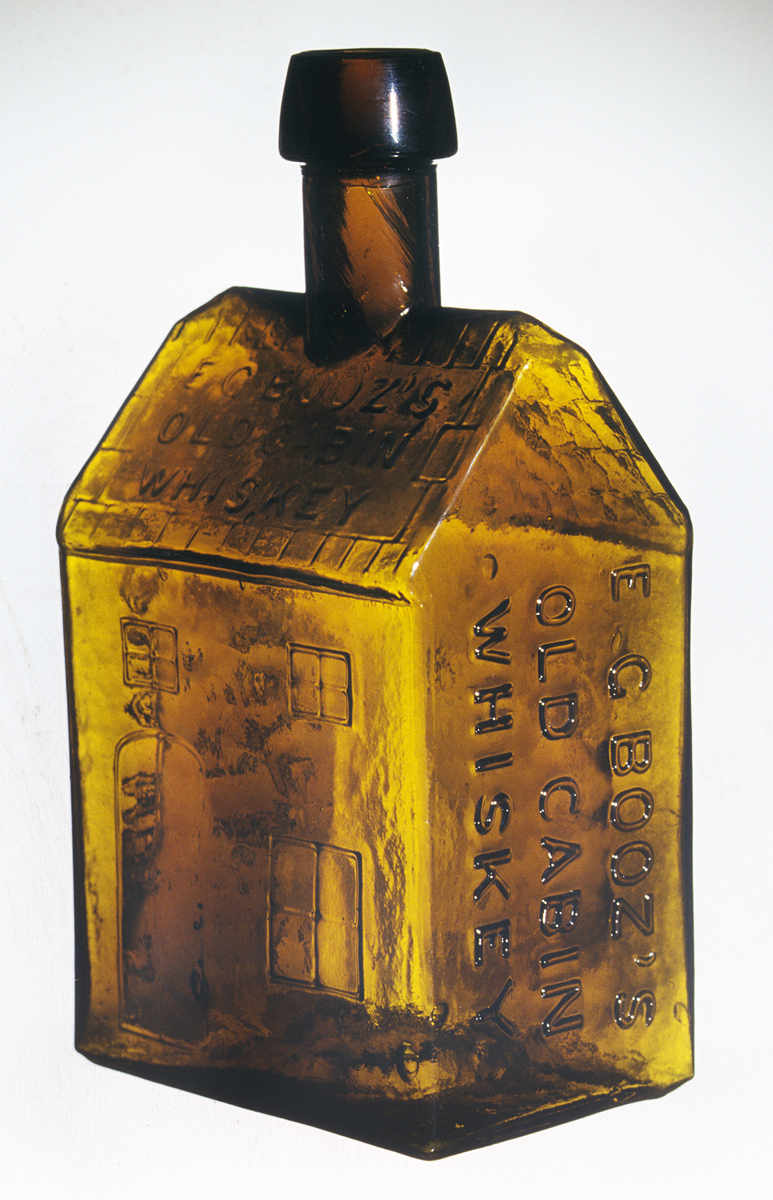
As the morning sun spills through the east-facing windows of the Hall of Statues, you might catch a glimpse of this object casting a warm amber light. This mold-blown, house-shaped flask, made between 1860 and 1870 by the Whitney Glass Works, holds a spot on my Winterthur favorite objects list because it was made in my hometown of Glassboro, New Jersey. Made to house E. G. Booz’s Old Cabin Whiskey, the flask, to me, does not necessarily look like a cabin but instead a house that is remarkably similar to the small two-story glassworker houses that I can remember seeing in my youth. Those houses have mostly disappeared due to redevelopment. Here’s a fun fact. There is a tradition that these flasks helped popularize the word “booze” despite etymological evidence that the term has been in use since the 14th century, with the spelling we know today emerging in the 17th century.
Winterthur Research Fellowship staff are available to talk with you about potential projects and your application. Please contact Academic Programs staff with any questions.
Applications are due January 15, 2026. Applications will be available online on November 1, 2025.
Selected fellows will be notified by April 1, 2026.
Fellowships can be completed between September 1, 2026 and August 31, 2027.
Fellowships Offered
Long-Term Fellowships • Winterthur Postdoctoral Fellowships for terminal degree holders • Dissertation Fellowships for current doctoral students actively registered as a student at a university
Short-Term Fellowships • Faith Andrews Fellowship for the study of Shaker life and material culture • William Seale Fellowship for research related to architecture and landscape • Ephemera Society of America—Winterthur Fellowship • Conservation Research Fellowship for research related to conservation and technical studies • Conservation Residency for conservation projects aligned with departmental goals • The American Trust for the British Library (ATBL) Research Fellowship • Maker-Creator Fellowship for creative professionals • Affiliated Researchers for self-funded researchers not asking for fellowship aid
Fellowship Requirements
Fellows are asked to participate in Winterthur’s research community by attending and contributing to weekly Research Fellowship Program talks.
Fellows are required to give one presentation at the Research Fellowship Program weekly talks. We prefer this requirement to be completed during the residency but will work with fellows to schedule this at a mutually agreeable time after the fellowship is completed.
Winterthur’s public programming is scheduled 9 to 12 months in advance. If there is a desire to present a public program or engage Winterthur visitors, these ideas should be conceived and shared with program staff prior to starting the fellowship.
Fellows are asked to compose one social media post about their research and share this via their personal social media channels, tagging #researchatwinterthur and the @winterthurmuse social media account.
Fellows cannot accept teaching assignments or undertake any other major work or research activities during their fellowship tenure.
Fellows are required to participate in their fellowships on-site at Winterthur at least four days per week. Fellows working remotely during hybrid portions of their fellowships are expected to spend the equivalent time dedicated to their projects. We are unable to fully support remote fellowships but can work with fellows to devise a flexible schedule of remote and in-person participation.
Fellows may hold non-Winterthur fellowships or grants during the fellowship tenure, including sabbaticals and grants from their own institutions, so long as they do not impede their ability to meet the requirements of the Winterthur fellowship.
Long-Term Fellowships
Winterthur Postdoctoral Fellowship Stipend: $4,500 per month.
Applicants at any level or rank who complete their Ph.D. before September 1, 2026, may apply for a four-month fellowship to pursue advanced research or revise research for publication. Applicants may still be Ph.D. candidates at the time of the application (January 15, 2026). Please contact us if you have any questions about qualifying for this fellowship based on the timing in which your degree will be conferred. Hybrid completion of this fellowship is possible.
Dissertation Fellowships
Stipend: $2,500 per month.
Winterthur’s dissertation fellowships support doctoral candidates conducting research or writing their dissertation and receive four-to-eight-month fellowships. Hybrid completion of this fellowship is possible. Students completing an external Ph.D. (defined as those who conduct research independently and are not actively registered or enrolled at a university) are not eligible for dissertation awards but may apply in the short-term fellowship category.
Short-Term Fellowships
Stipend: $2,500 per month.
Open to independent or institutional researchers and scholars of all levels, including graduate students completing Ph.D. and M.A. degrees. Applicants may apply for fellowship periods ranging from four to six weeks. Hybrid completion of this fellowship is possible.
Applicants need not apply for a named fellowship, but we do designate the following awards:
Faith Andrews Fellowships for the study of Shaker life and material culture
William Seale Fellowship for research related to architectural, landscape and gardens, and White House/Presidential history.
Ephemera Society of America—Winterthur Fellowship
The American Trust for the British Library (ATBL) Research Fellowship
Ephemera Society of America—Winterthur Fellowship Now in its third year, the fellowship is jointly sponsored by the Ephemera Society of America (ESA) and Winterthur Museum, Garden & Library. Open to graduate and undergraduate students, the fellowship supports a visiting researcher at Winterthur for up to four weeks. We welcome projects that reflect a scholarly interest in ephemera and make use of Winterthur’s extensive ephemera holdings, including trade cards, greeting cards and postcards, cigar box labels, die-cuts, scrap, and thousands of other library and museum collections.
In addition to the Winterthur Fellowship requirements, the ESA-Winterthur fellowship recipient will be expected to propose a talk for the next ESA conference following their fellowship and/or submit an article for publication in the Ephemera Society of America Journal.
No special application is required; please indicate in your essay that you wish to be considered for the ESA-Winterthur Fellowship. Indicating interest does not preclude your consideration for other Winterthur fellowships.
Conservation Research Fellowship
Open to independent or institutional conservators or conservation scientists interested in pursuing projects that advance their research interest and professional development goals. Any topic is welcome, provided our facilities and resources can support the chosen project.
We encourage outreach to relevant Winterthur staff to think through your needs and project suitability for staff expertise and use of lab resources. In your application, please indicate your area of interest and the staff member(s) in our Conservation Department with whom you have corresponded.
Conservation Residency
Open to conservation professionals with an established project in alignment with a departmental priority detailed below, the program supports visiting experts for up to four weeks, hosted at Winterthur by a member of the Conservation Department. These residencies are designed to foster meaningful exchange, bring fresh perspectives and specialized expertise that can accelerate research, advance strategic projects, and enrich student learning—while also offering Winterthur staff the rare opportunity to pause, reflect, and reinvest their energy in the work they do best.
For the 2027–2028 term, we welcome projects that support expertise in the following areas:
upholstery conservation
stain reduction of ceramics
quantitative analysis of historical glass
mechanics and structural treatments of paintings
20th-century synthetic textiles
dye analysis
instrumental analysis of leather tanning processes
microscopy of plant materials
conservation of photo albums and scrapbooks
Visiting experts will have access to Winterthur’s full conservation facilities, analytical equipment at both the museum and the University of Delaware, and Winterthur’s museum, garden and library collections. In addition to the Winterthur Fellowship requirements, the Conservation Residency recipient will be expected to engage in sharing with faculty, staff, and students in their identified area of expertise.
Interested applicants must contact us in December and identify their host when submitting their formal application by January 15.
Funding for the stipend of $2,500 per month plus all travel and lodging is generously supported by alumni of the Winterthur/University of Delaware Program in Art Conservation.
The American Trust for the British Library (ATBL) Research Fellowship Beginning in 2025, Winterthur’s Research Fellowship Program is a partner institution with the American Trust for the British Library Research Fellowship Program.
The ATBL’s Research Fellowship Program is a short-term, $2,500 research stipend that supports research projects that make use of collections in any department in the British Library.
The Program partners with American collections-based institutions that currently have established, competitive short-term research fellowships or stipends on offer. This is an add-on option to Winterthur short-term research fellowship applications, ensuring that ATBL’s research program candidates conduct research in dialogue between an American collection and that of the British Library. If awarded a short-term research fellowship at Winterthur, the incumbent can later be considered for an ATBL fellowship. ATBL Fellowship recipients will be notified directly by ATBL on or before May 1, 2026.
Please direct any questions about the ATBL Research Fellowship Program to fellowships@atbl.us and check the organization’s website for information about this year’s competitive cycle.
“My lunchtime talk gave me the opportunity to pose very specific questions to a very knowledgeable audience… hearing from a group of experts has made me feel more confident about my own understanding and interpretations.”
Cambra Sklarz, Ph.D. Candidate, University of California, Riverside, 2023-2024 Short-Term Research Fellow
Maker-Creator Fellowship
Stipend: $2,500 per month.
HOW WILL WINTERTHUR INSPIRE YOU?
Our four-to-six-week research fellowships are designed for artistic and creative professionals to examine, study, and immerse themselves in Winterthur’s vast collections to inspire their practices. Past fellows have utilized the museum’s landscape, gardens, museum collections, and library for inspiration, precedent, instruction, and material for their creations. See our Current and Past Research Fellows page for a list of all Maker-Creator Fellowship recipients. The Winterthur Fellows’ Projects page has more information on the range of creative projects shaped by experiences at Winterthur.
This fellowship is designed to enhance artists’ practices through time with the institution’s collections. Winterthur has no dedicated studio space and there is no expectation that new work will be produced on site during the fellowship. Occasionally, modest on-site creation may be possible depending on the practice, and program staff are available to talk through your goals prior to applying.
Maker-Creator applicants are encouraged to contact Academic Programs staff with any questions about project feasibility or the application process and will review drafts of application narratives received before December 1.
Directions to apply can be found here. Maker-Creator Fellowship applicants will need to supply photos of work samples in addition to the application form, essay, bibliography, CV, and letters of reference required for the other fellowships.
“The duet of primary source research and object-driven house tours grounded my time and provided me with a solid, sturdy footing for the next step of translating research into artworks. Without Winterthur’s Maker-Creator Fellowship and all that it encompassed, I know my project might not be a reality.”
Brece Honeycutt, artist and 2023-2024 Maker-Creator Fellow
Affiliated Researchers
We reserve a limited number of spaces for Affiliated Researchers who can provide their own financial support to be in residence. We welcome affiliated researchers at any stage of their career or artistic practice. Benefits of Affiliated Researcher status mirror those of funded researchers with access adjusted to the scope and needs of the project.
There is no application form. An email of interest should be sent to Academic Programs staff with the following information:
details of your current project or research subject
dates of intended time in residence at Winterthur
a copy of your current résumé or curriculum vitae
and a letter of reference that addresses your project, record of accomplishment, and ability to work with a collegial group. If you are working closely with Winterthur staff as part of your project, the letter of reference should come from that staff member.
Requests are reviewed by staff on a rolling basis. Please allow at least two months for processing a status request before the intended start date of your research here.
Image (left): Johnson Publishing Company Archive. Courtesy Ford Foundation, J. Paul Getty Trust, John D. and Catherine T. MacArthur Foundation, Andrew W. Mellon Foundation and Smithsonian Institution.
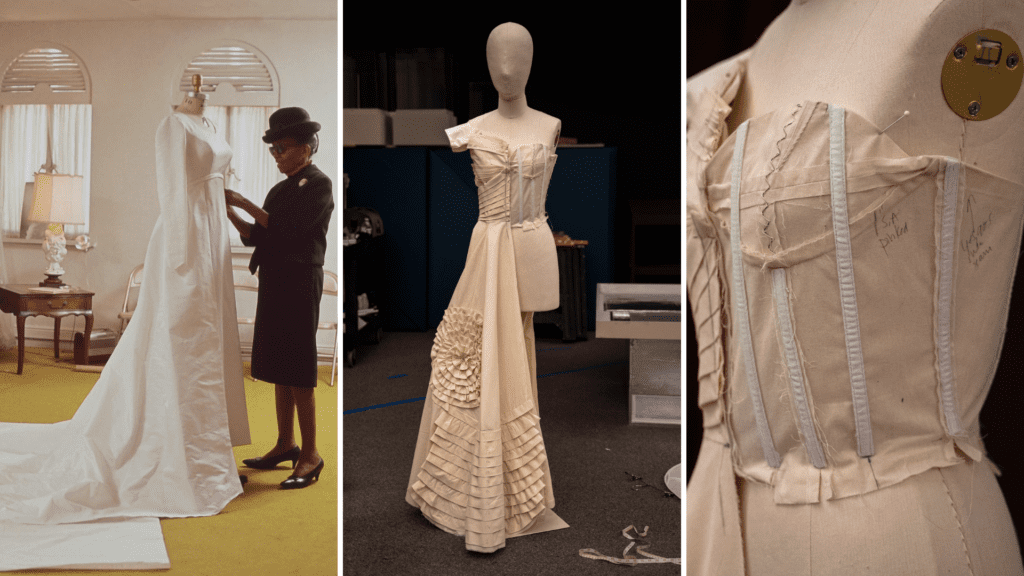
In 1953, American couturier Ann Lowe designed the wedding dress for future First Lady Jacqueline Bouvier’s marriage to John F. Kennedy, a dress that became one of the most recognizable and beloved wedding dresses in America. As a Black designer, Lowe didn’t receive proper credit for her work at the time.
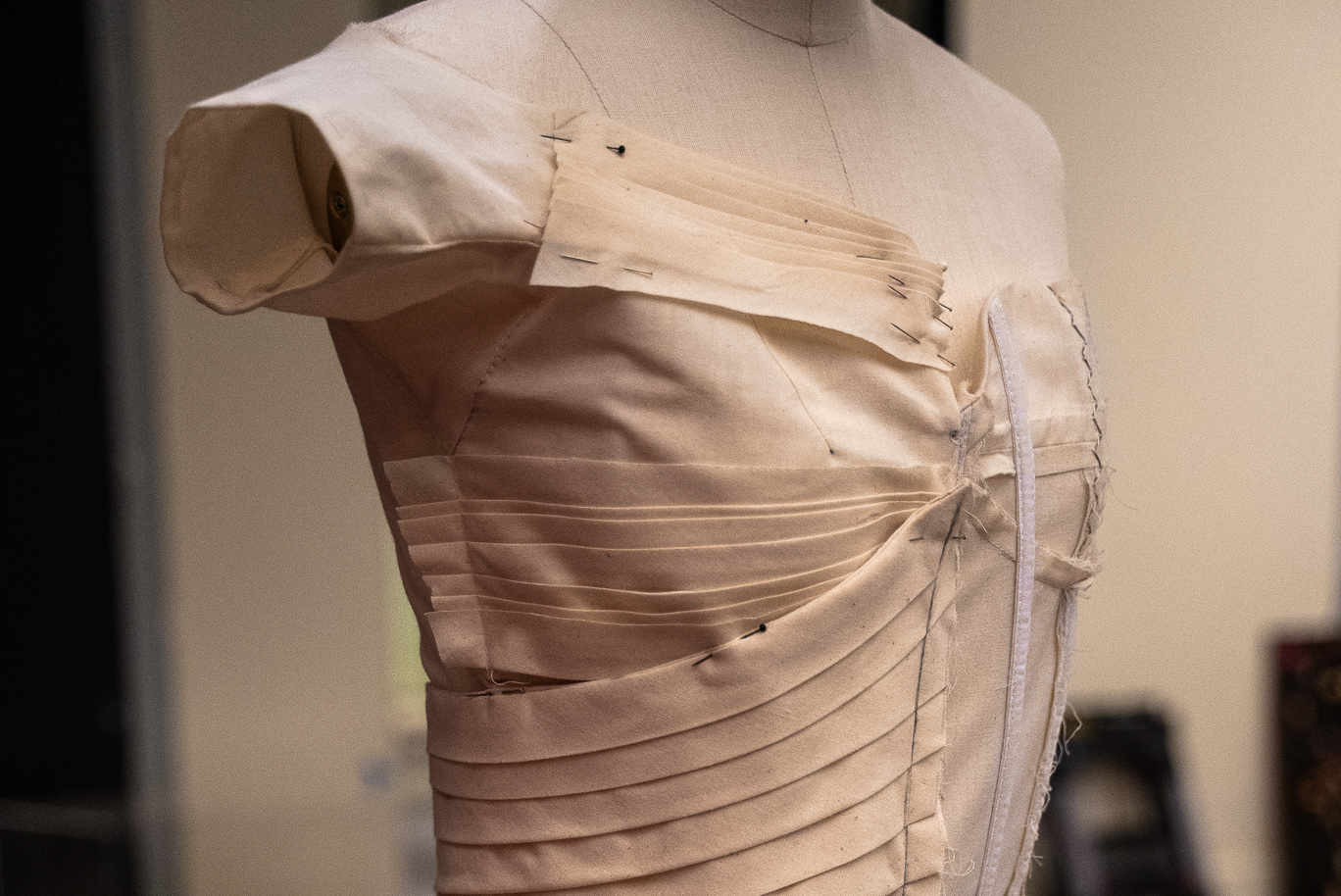
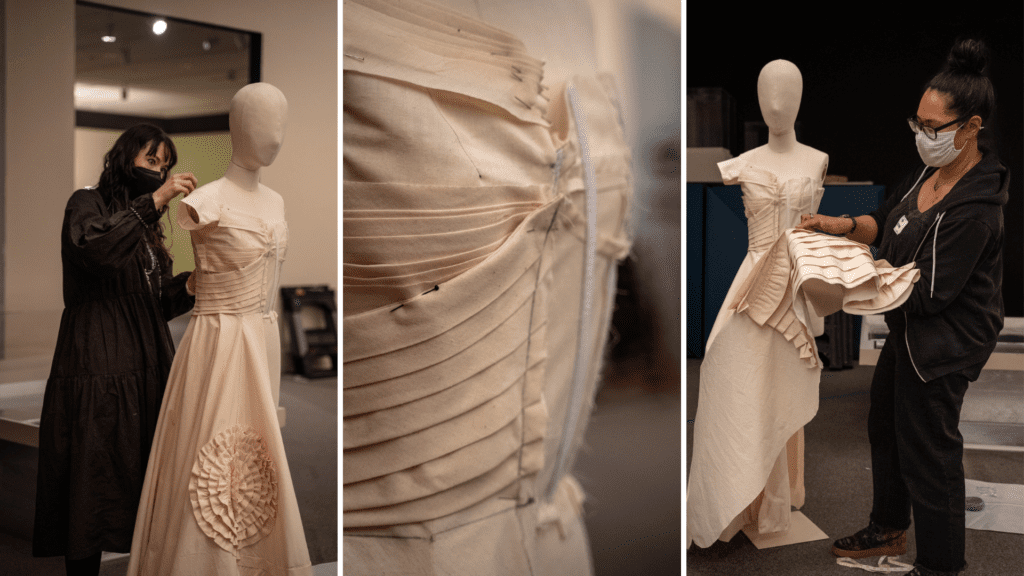
Textile conservator Kate Sahmel accompanied University of Delaware Fashion and Apparel Studies professor Katya Roelse for a recent visit to the John F. Kennedy Presidential Library and Museum in Boston to examine and document the construction of the original dress, which is too fragile to display on a form. Working with University students, Roelse will use the information gathered from this visit to create a reproduction of the dress for the Winterthur exhibition Ann Lowe: American Couturier, opening September 2023.
Katya Roelse (left) University of Delaware Instructor of Fashion and Apparel Studies, with the muslin prototype of the wedding gown she created, and Elizabeth Way (right) Associate Curator, The Museum of FIT, and guest curator of the 2023 exhibition, Ann Lowe: American Couturier, examining the muslin prototype.
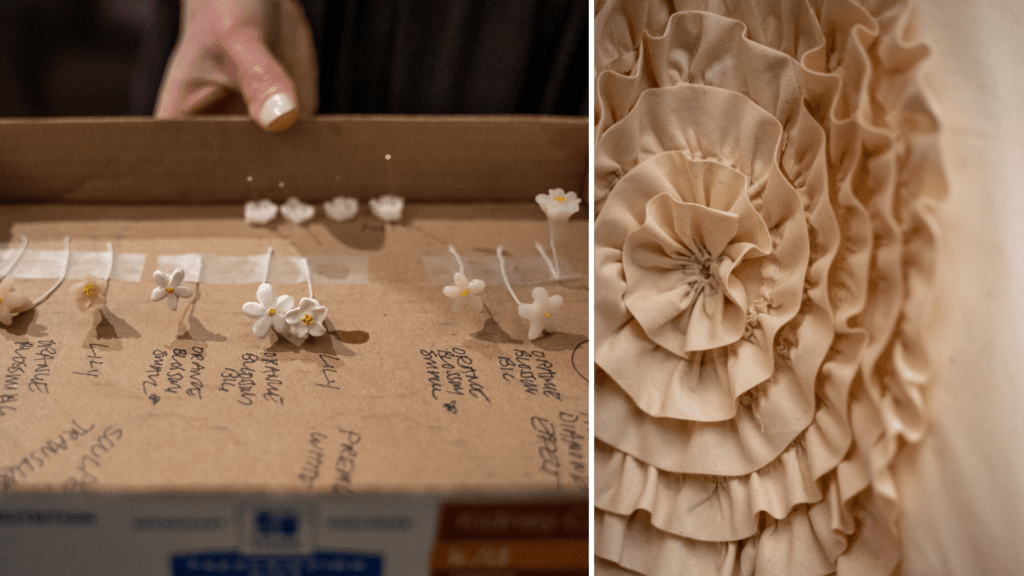
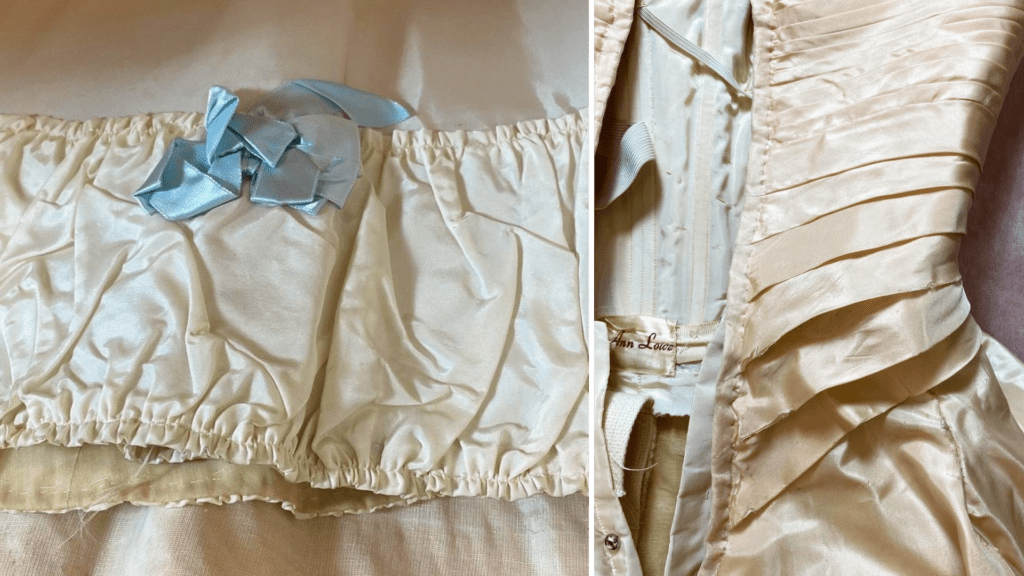
The dress features several details characteristic of Lowe’s work, such as the ornate rosettes that embellish the skirt, each with a small spray of wax flowers at the center. A blue ribbon hidden under the skirt at the hem was a delightful surprise and completed the dress with a hopeful charm for her new marriage.
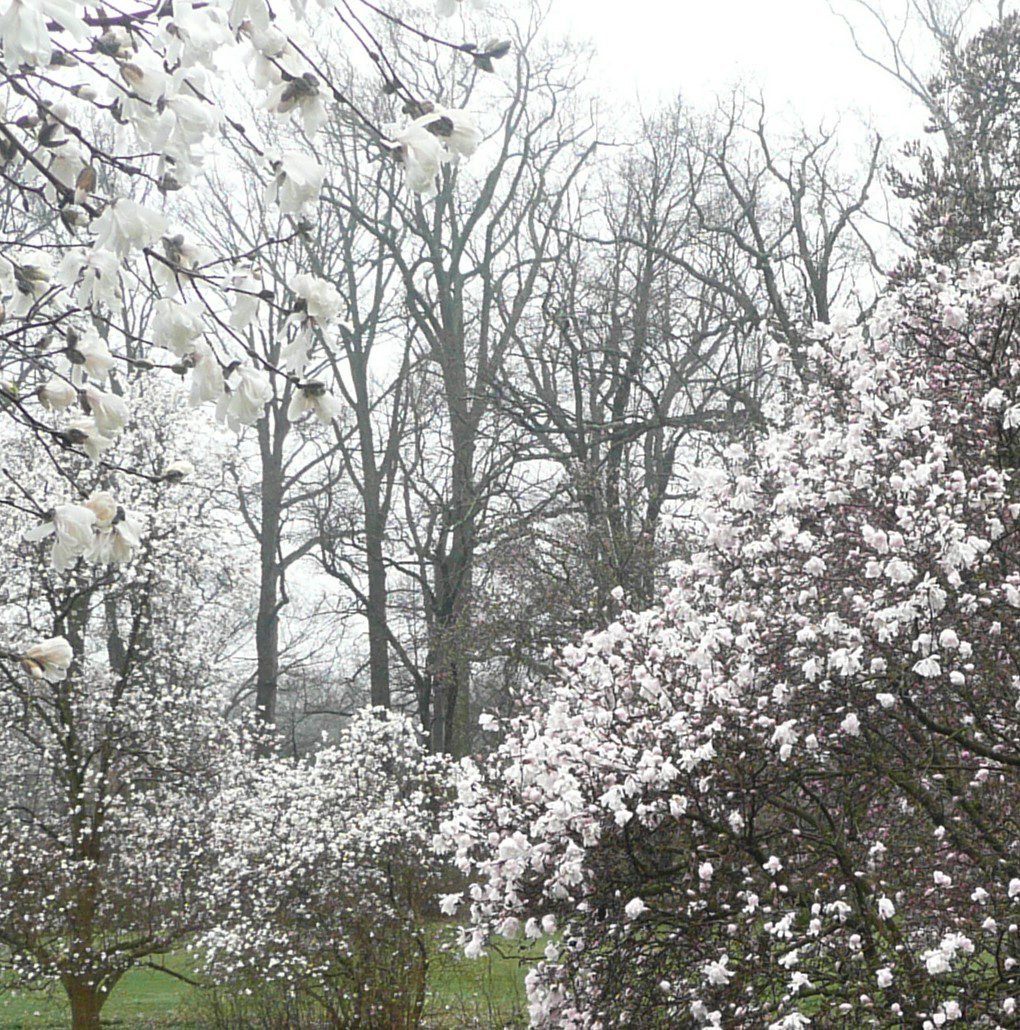
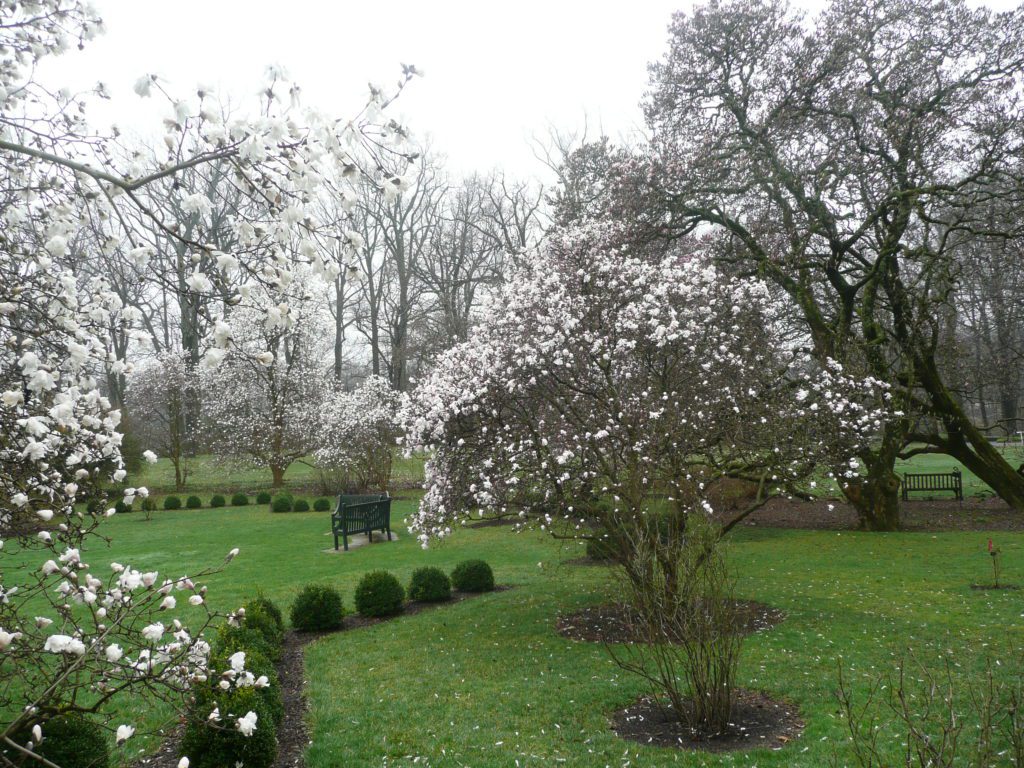
Magnolias in Pinetum. The sight and smell is intoxicating!
Check these out:
Blue carpet: A lavender-blue expanse of glory-of-the-snow (Chionodoxa forbesii) extendsthrough Azalea Woods, down the hill towards the Museum and down the March Bank, across the stream and up the hill through Icewell Terrace. In many places, he blue carpet includes royal blue Siberian squill (Scilla siberica).
Dazzling show: This week areas of the garden are aglow in the golden radiance of forsythias (Forsythia x intermedia, Forsythia ovata, Forsythia suspensa, Forsythia viridissima, Forsythia ‘Winterthur’). They start at the upper edge of the visitor parking lot, with masses along the drive behind the carriage houses, along the lower side of Chandler Farm Road below the Fire House, along the Museum lawn edge of the Peony Garden, along the field edge of Azalea Woods, along the Pinetum overlook wall, and on the Quarry edge of Sycamore Hill. The soft yellow glow of winter hazel (Corylopsis ‘Winterthur’, Corylopsis platypetala, Corylopsis spicata, Corylopsis pauciflora) starts with masses of blooms at the upper edge of the visitor parking lot and along the Winterhazel Walk, with accents in the woods from the Visitor Center to the Underpass, at the East Upper Terrace of the Museum, and along the Quarry walkway.
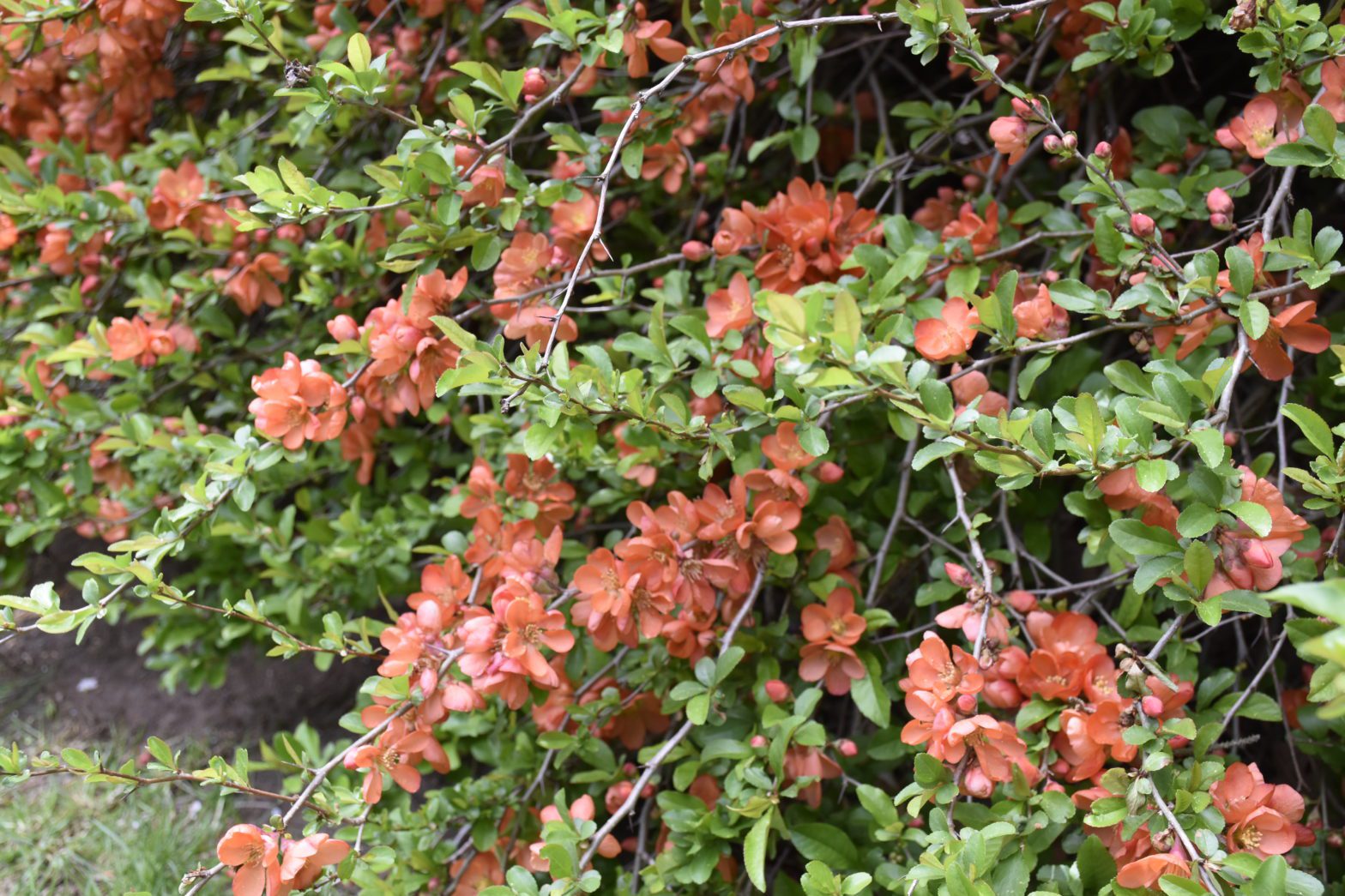
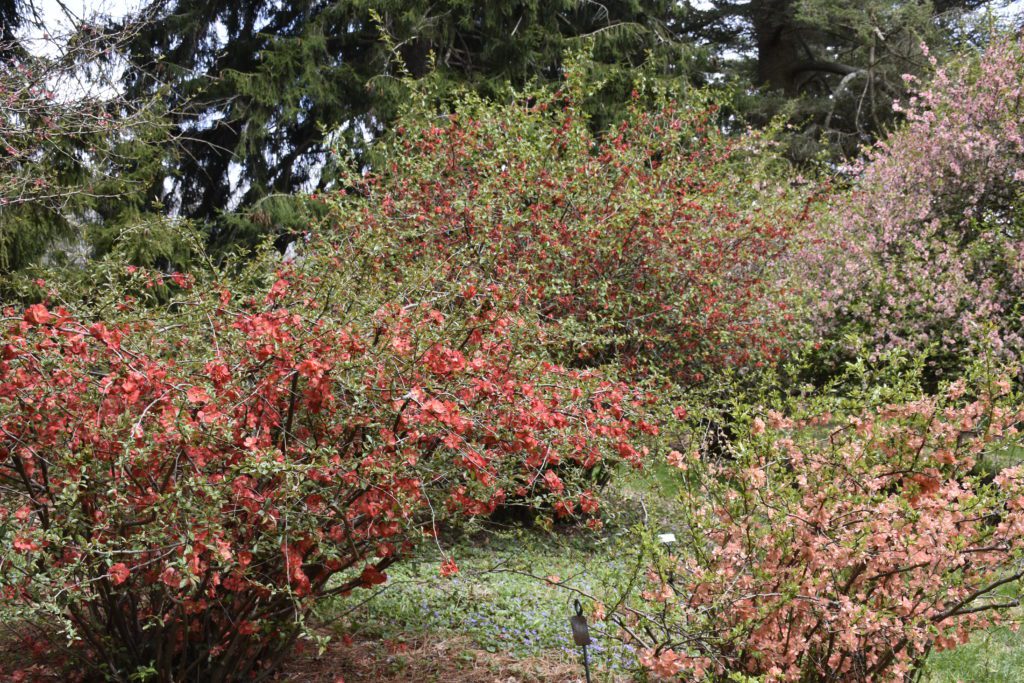
The Flowering Quince in the Pinetum. The wide variety of colors are stunning!
Check these out:
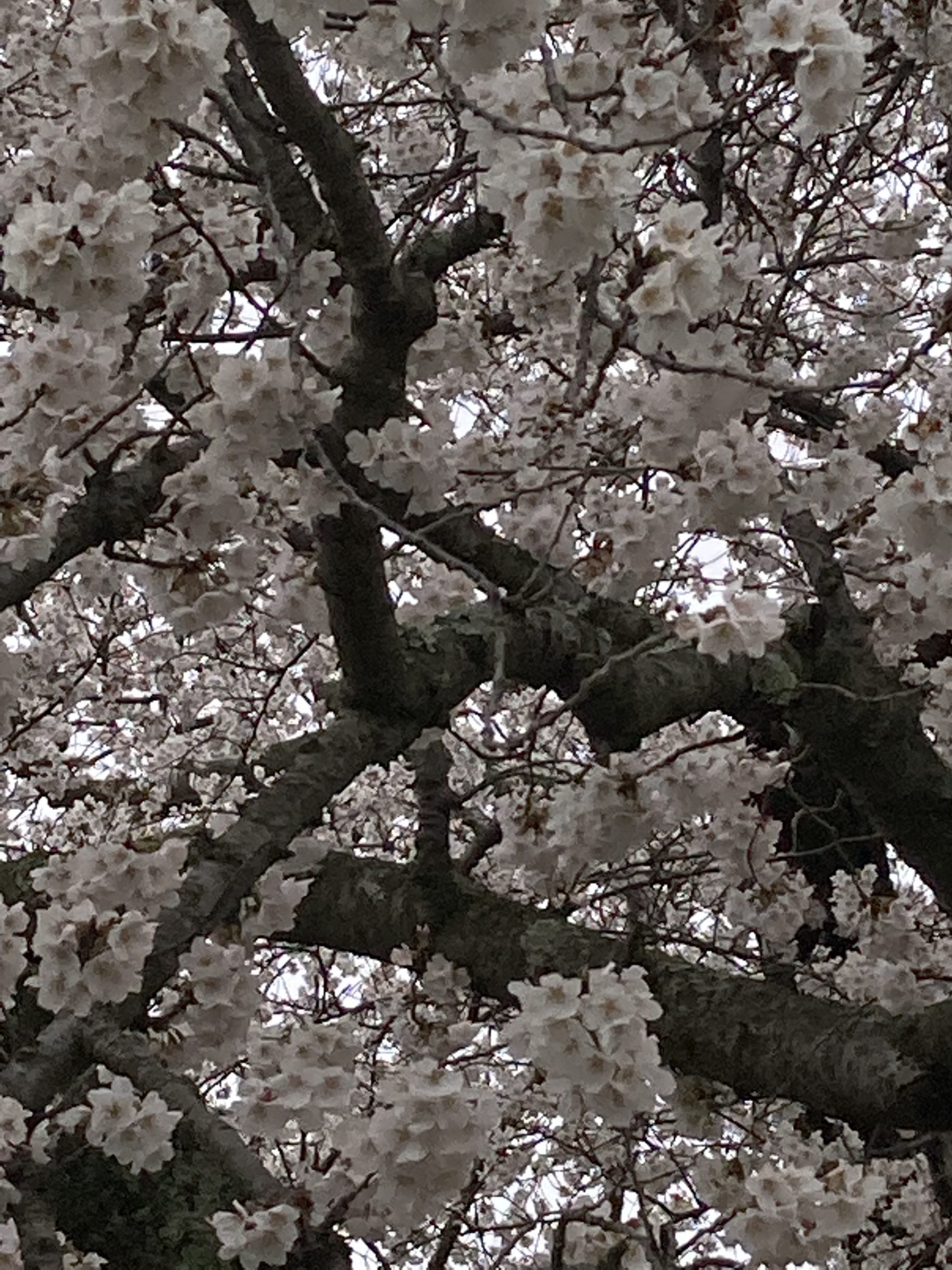
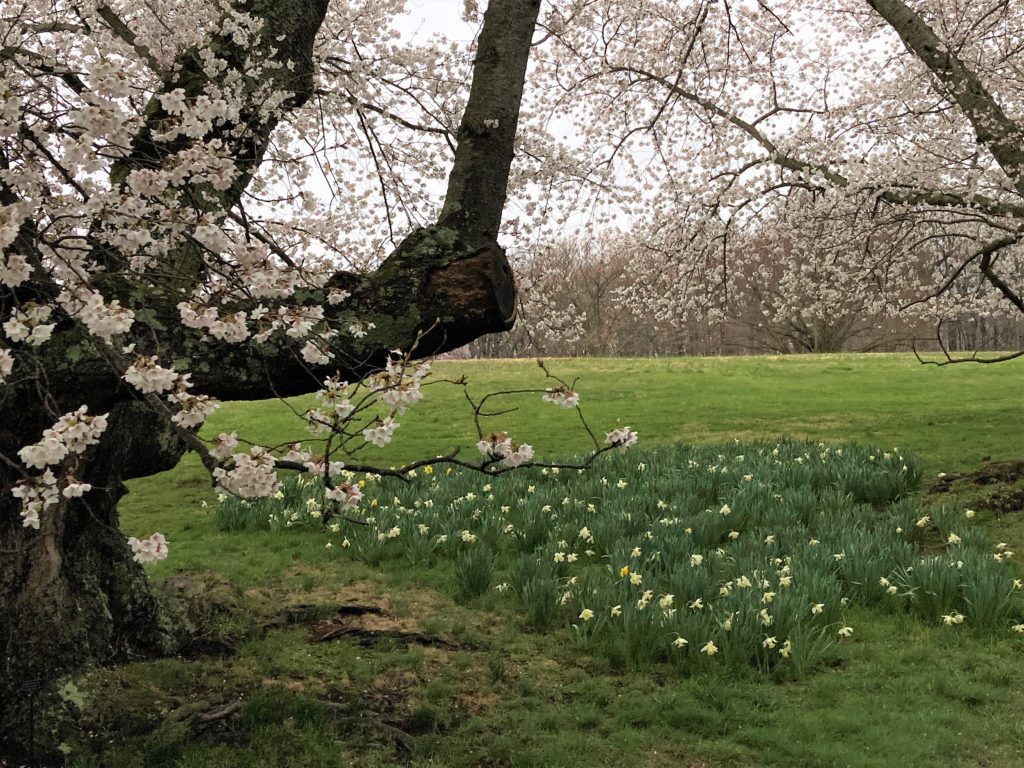
Cherries!: This week the cherry trees are at peak bloom. The white expanse of Yoshino weeping cherry (Prunus yedoensis ‘Shidari Yoshino’) is a cloud of delicate blossoms at the upper edge of the visitor’s parking lot. Along Garden Lane, the performance includes the white large Sargent cherry trees (Prunus sargentii) and the delicate white-to-pink of the Accolade (Prunus ‘Accolade’) and autumn rosebud (Prunus subhirtella ‘Autumnalis’) cherries.
Sundial Garden and Quince Walk: A flurry of flowers with the flowering quince (Chaenomeles cultivars) showing off in blazing red-orange, orange, red and cooler pale orange & white with a supporting cast of white spiraea (Spiraea x arguta & Spiraea prunifolium cultivars) and a carpet of pale blue starflower (Ipheion uniflorum).
Funny names: This year there is an abundance of bright white bloodroot (Sanguinaria canadensis) and golden yellow trout lily (Erythronium species). There is a dense group of bloodroot flowers in the lawn at the sidewalk edge of the visitors parking lot midway between the Picnic House and the walkway to the Visitor Center. There is a golden carpet of trout lily flowers on the slope across the stream opposite the Magnolia Bend entrance to the March Walk.
Amazing anemones: Italian windflowers – (Anemone apennina) form a blue & white carpet extending throughout Azalea Woods, down the March Bank to the stream, & up the opposite bank into Icewell Terrace. They accent other parts of the garden.
Spring beauties: The native spring beauties (Claytonia virginica) form a white carpet on the lawn sloping down to the Museum and on parts of Oak Hill. Their small, star-shaped white to pale pink flowers can be found throughout the Estate.
Violets: Blue, blue & white, & yellow violets (Viola species) are blooming throughout the gardens and fields. They are mentioned only here.
Sargent Cherry Tree (Prunus sargentii) on Garden Lane
Check these out:
Cherries!: This week the cherry trees are at peak bloom. The white expanse of Yoshino weeping cherry (Prunus yedoensis ‘Shidari Yoshino’) is a cloud of delicate blossoms at the upper edge of the visitor’s parking lot. Along Garden Lane, the performance includes the white large Sargent cherry trees (Prunus sargentii) and the delicate white-to-pink of the Accolade (Prunus ‘Accolade’) and autumn rosebud (Prunus subhirtella ‘Autumnalis’) cherries.
Sundial Garden and Quince Walk: A flurry of flowers with the flowering quince (Chaenomeles cultivars) showing off in blazing red-orange, orange, red and cooler pale orange & white with a supporting cast of white spiraea (Spiraea x arguta & Spiraea prunifolium cultivars) and a carpet of pale blue starflower (Ipheion uniflorum).
Blue carpet: A lavender-blue expanse of glory-of-the-snow (Chionodoxa forbesii) extends through Azalea Woods, down the hill towards the Museum and down the March Bank, across the stream and up the hill through Icewell Terrace. In many places, the blue carpet includes royal blue Siberian squill (Scilla siberica) and the blue and white flowers of Italian windflower (Anemone apennina).
Dazzling show: This week areas of the garden are aglow in the golden radiance of forsythias (Forsythia x intermedia, Forsythia suspensa, Forsythia viridissima, Forsythia ‘Winterthur’). They start at the upper edge of the visitor parking lot, with masses along the drive behind the carriage houses, along the lower side of Chandler Farm Road below the Fire House, along the Museum lawn edge of the Peony Garden, along the field edge of Azalea Woods, and on the Quarry edge of Sycamore Hill.
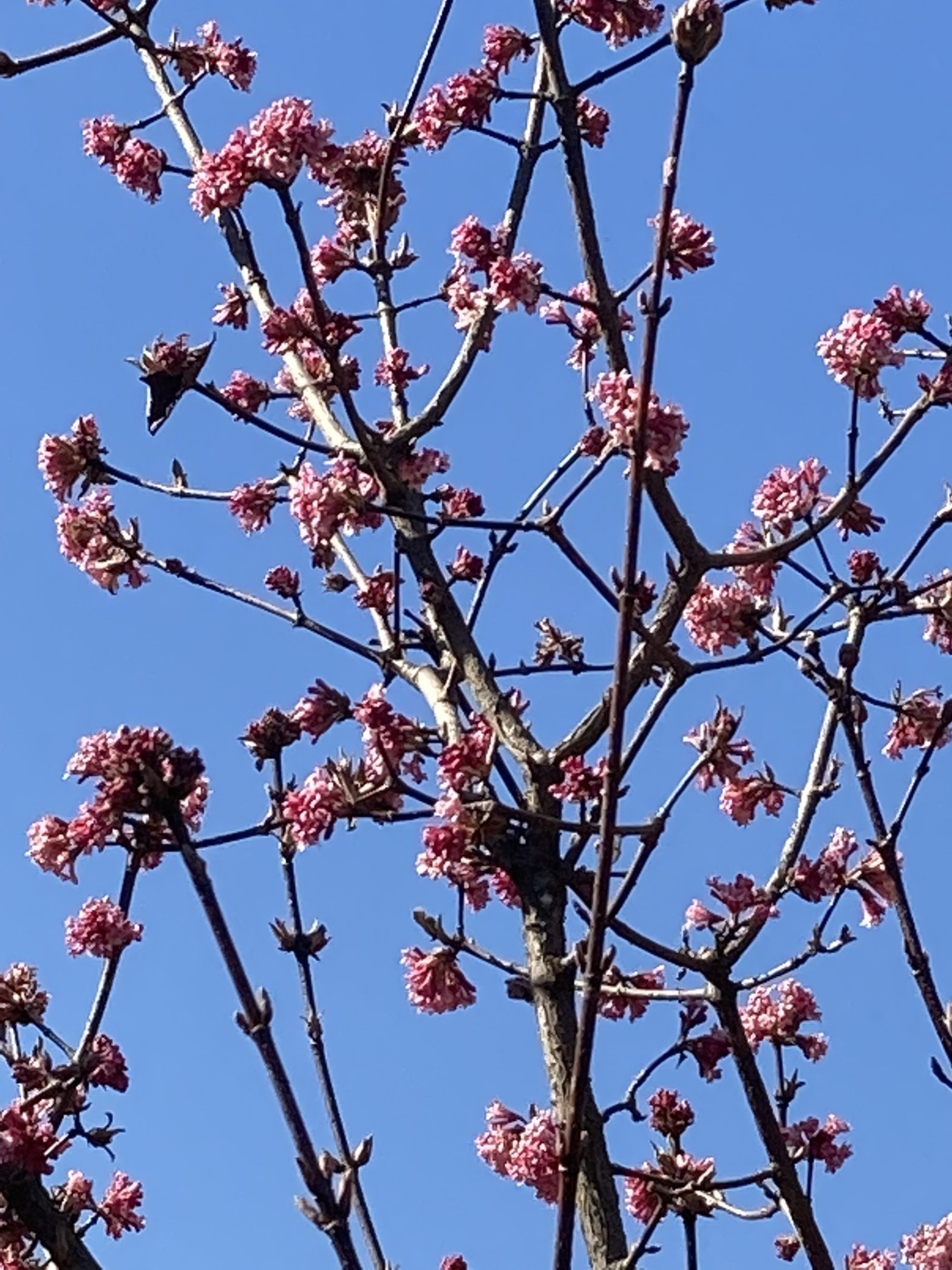
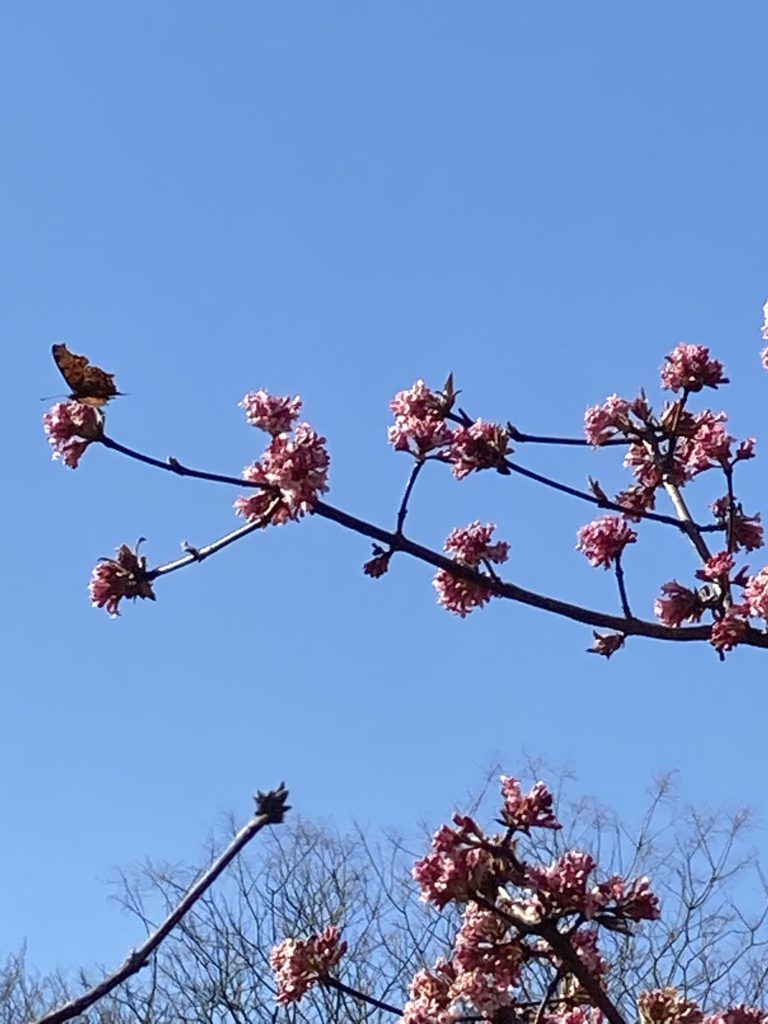
Viburnum farreri-Fragrant viburnum with pollinator friend on Garden Lane
Check these out:
Ring in Spring: The spring snowflakes (Leucojum vernum) are in full bloom in many areas of the gardens, but most abundantly at Icewell Terrace and along the walk to the Glade and koi ponds. There must be millions of them! Look for their downward facing bells with pointed edges and green markings on the tips.
Terrific Tapestries of color:
The East Upper Terrace of the Museum lawn is covered in lavender blue glory-of-the-snow (Chionodoxa forbesii) & royal blue Siberian squill (Scilla siberica).
The early crocus, ‘Tommies’ (Crocus tommasianus) are still blooming in lavender and silver in the lawn at the Parking Lot entrance to the Visitor Center walkway and the sloping lawns at both sides of Chandler Farm Road below the Fire House.
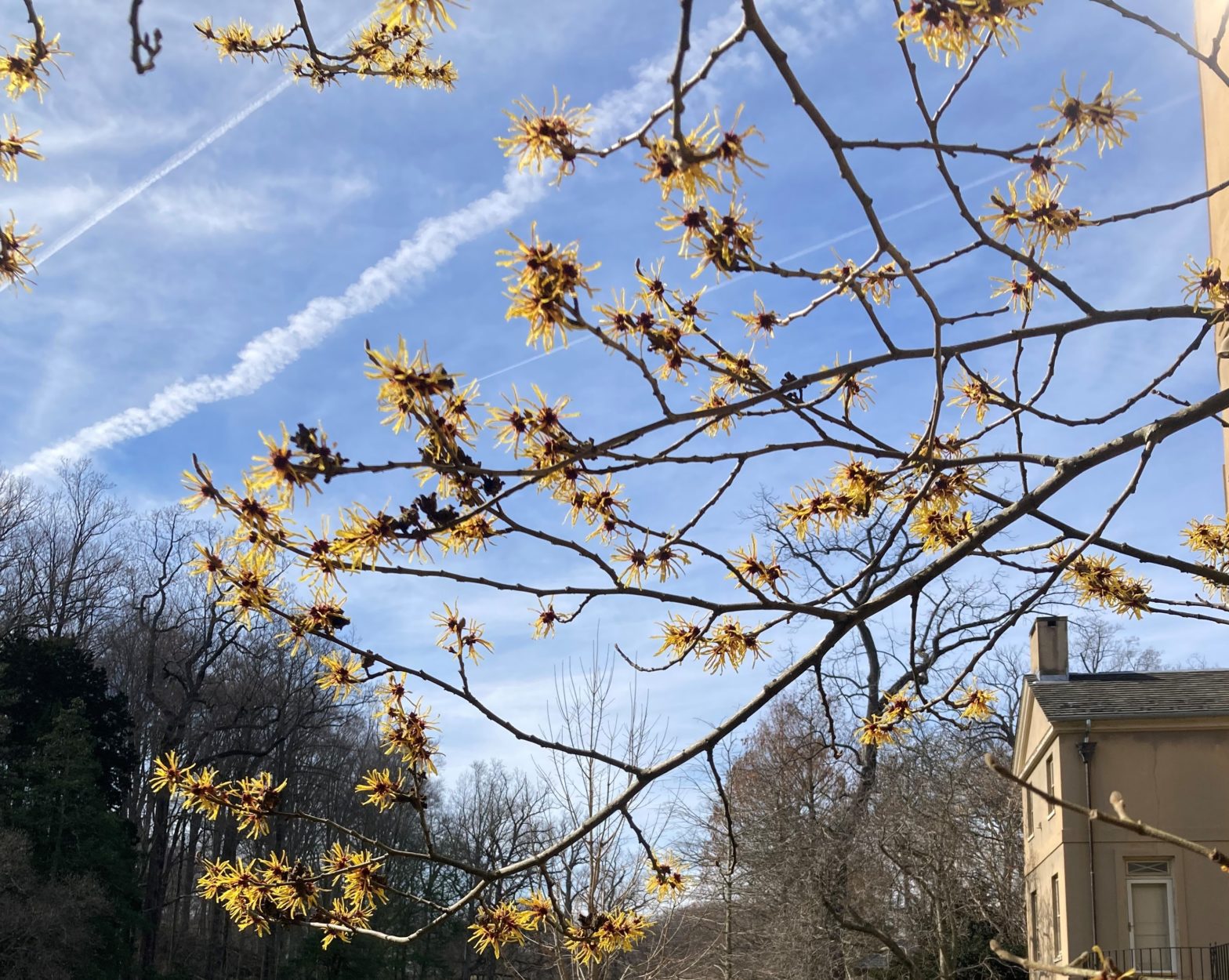
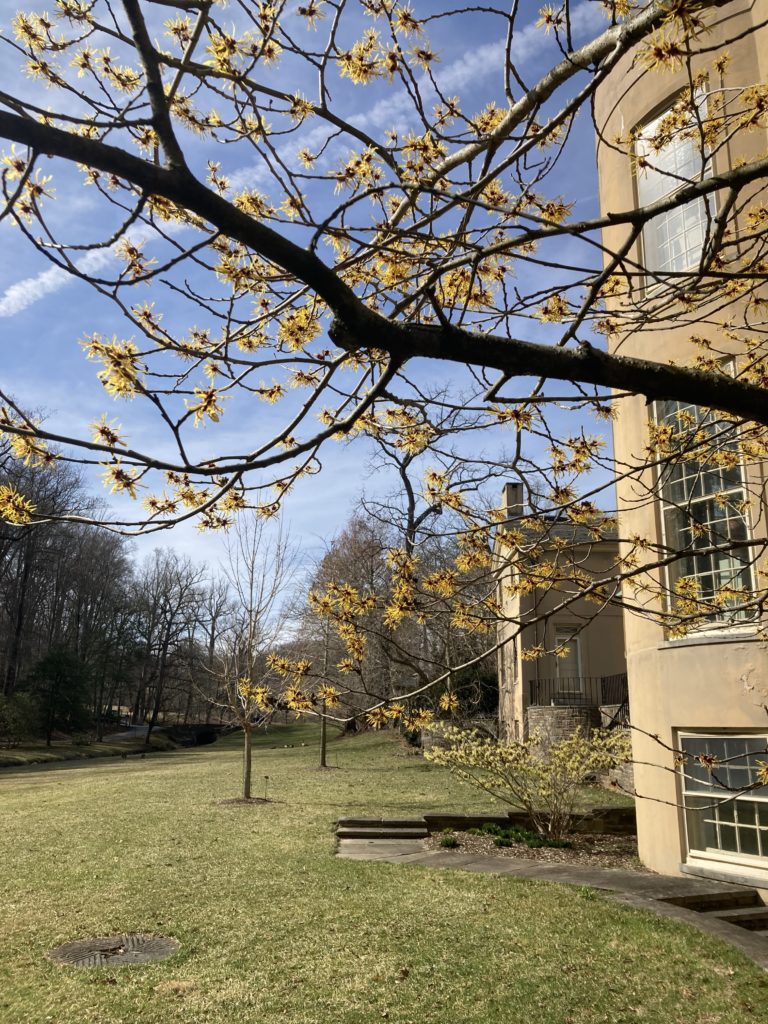
Witch hazel (Hamamelis species & varieties) are in full bloom in the Visitor Center lawn, in the Gallery lawn along Clenny Run, and on the Clenny Run side of the Museum Store, waving their blossoms that look like clusters of tiny ribbons. They look and smell magnificent!
ENTRANCE DRIVE AND PARKING AREA
fbb Corylopsis ‘Winterthur’ (Winterthur winter hazel – pale yellow)
b Sarcoccoca hookeriana var. humilis ‘SarSid2’ (Himalayan mountain sweet box – fragrant white ‘threads’)
Blue carpet: A lavender-blue expanse of glory-of-the-snow (Chionodoxa forbesii) extends through Azalea Woods, down the hill towards the Museum and down the March Bank, across the stream and up the hill through Icewell Terrace. In many places, the blue carpet includes royal blue Siberian squill (Scilla siberica). The East Upper Terrace of the Museum lawn is also covered in lavender blue glory-of-the-snow & royal blue Siberian squill.
Magnificent Magnolias! : The magnolias have started their display in the Sundial garden. This week the dramatic white oval of Wada’s Memory magnolia (Magnolia ‘Wada’s Memory’) is impossible to miss. The star magnolias (Magnolia stellata) are in full bloom in white and pink at the edge of the Sundial Garden. And the saucer magnolias (Magnolia soulangeana species and varieties) are in bud and beginning to add their beauty to the scene.
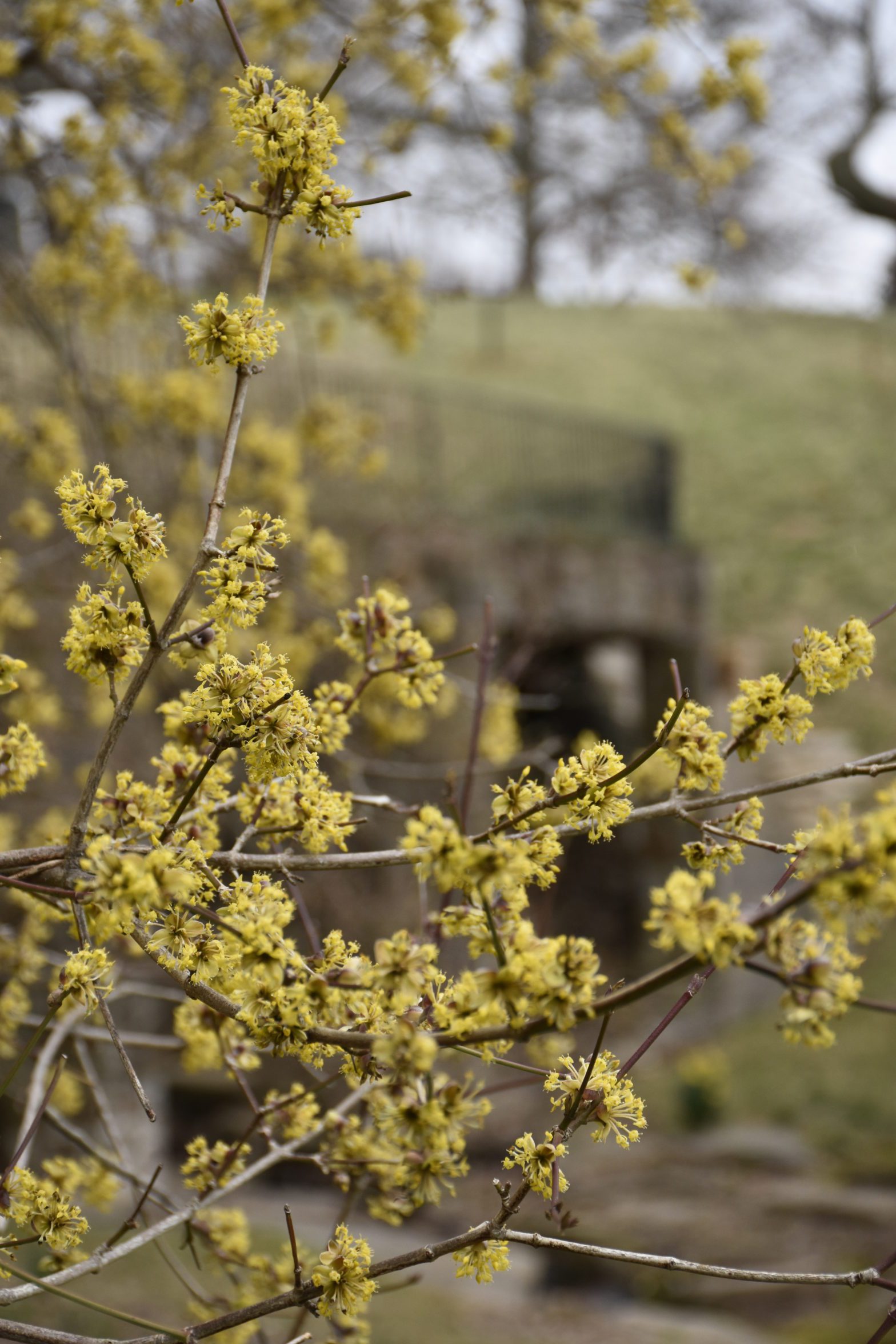
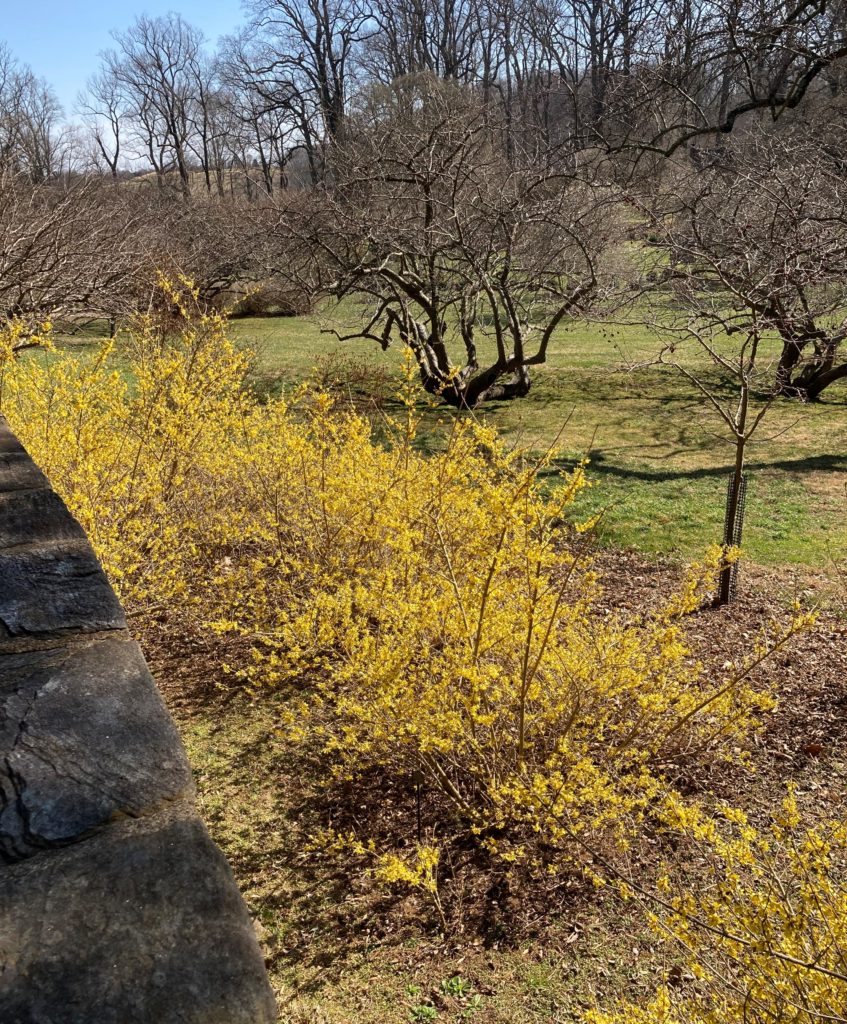
Dazzling show: This week areas of the garden are aglow in the golden radiance of forsythias (Forsythia x intermedia, Forsythia ovata, Forsythia suspensa, Forsythia viridissima, Forsythia ‘Winterthur’). They start at the upper edge of the visitor parking lot, with masses along the drive behind the carriage houses, along the lower side of Chandler Farm Road below the Fire House, along the Museum lawn edge of the Peony Garden, along the field edge of Azalea Woods, along the Pinetum overlook wall, and on the Quarry edge of Sycamore Hill. The soft yellow glow of winter hazel (Corylopsis ‘Winterthur’, Corylopsis platypetala, Corylopsis spicata, Corylopsis pauciflora) starts with masses of blooms at the upper edge of the visitor parking lot and along the Winterhazel Walk, with accents in the woods from the Visitor Center to the Underpass, at the East Upper Terrace of the Museum, and along the Quarry walkway.
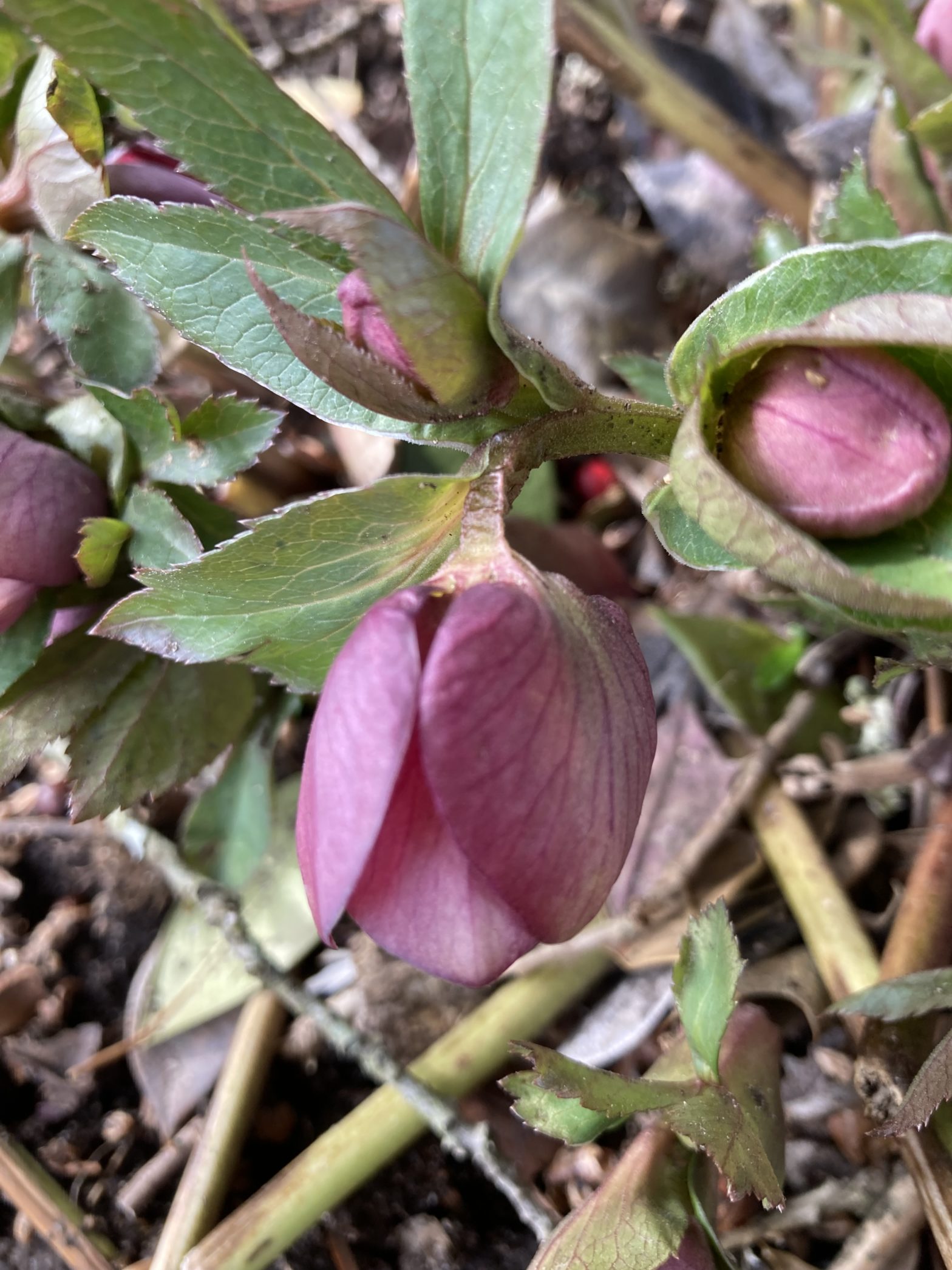
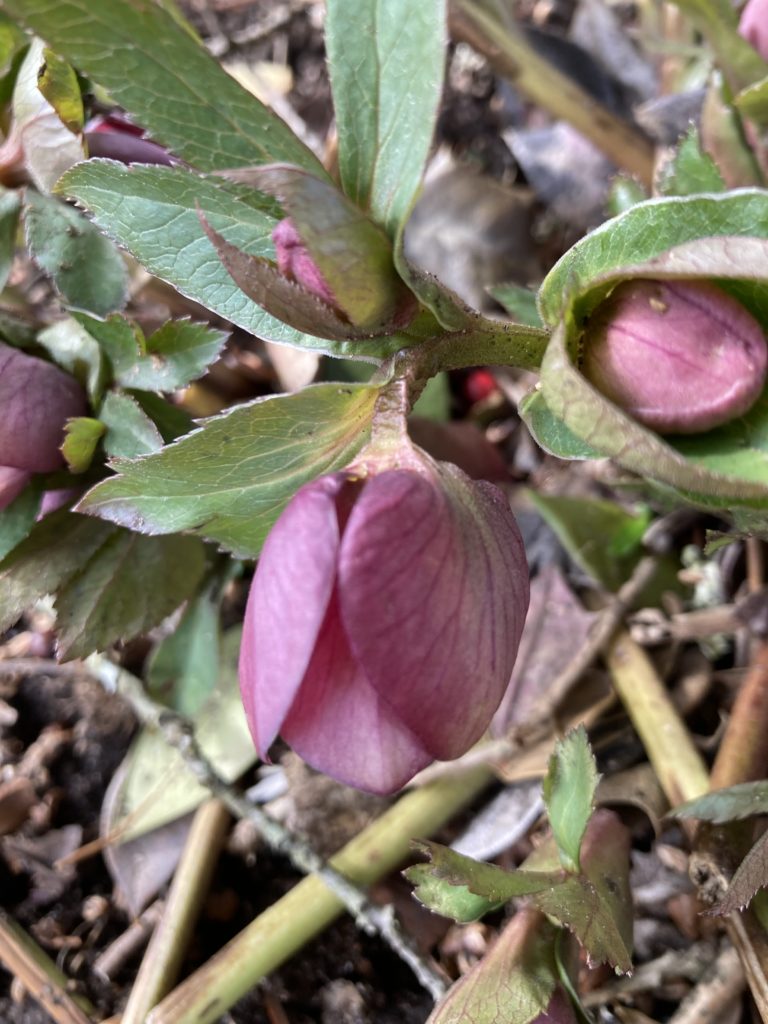
Pink Spotted Helleborus X Hybridus Lawn in front of the Museum Store
Check these out:
Terrific Tapestries of color:
The early crocus, ‘Tommies’ (Crocus tommasianus) are blooming throughout the gardens including carpeting the East Upper Terrace of the Museum lawn and the sloping lawns on both sides of Chandler Farm Road below the Fire House in lavender and silver.
The fragrant winter aconites (Eranthis hyemalis) are creating a carpet of gold from Garden Lane across the lawn down to the East Upper Terrace of the Museum and also along the March Bank, in Azalea Woods, and along the walk to the Glade and koi ponds, in Enchanted Woods and in many other places in the gardens.
The yellow winter aconites and golden yellow Amur adonis (Adonis amurensis) merge into the white carpet of snowdrops (Galanthus elwesii & Galanthus nivalis) along the March Bank.
Snowdrops:
Snowdrops (Galanthus elwesii & Galanthus nivalis) are blooming throughout the estate, from the great drifts along the March Bank to small clumps and even individual flowers.
Many varieties of snowdrops (Galanthus varieties) in the collection in the raised beds along the East Museum terrace are in full bloom.
Witch hazel (Hamamelis species & varieties) are in full bloom in the Visitor Center lawn, in the Gallery lawn along Clenny Run, and on the Clenny Run side of the Museum Store, waving their blossoms that look like clusters of tiny ribbons. They look and smell magnificent!
PARKING AREA TO VISITOR CENTER
fb,+ Crocus tommasinianus (‘Tommies’ – lavender and silver)
Hamamelis ‘Primavera’ Witchhazel Clenny Run, left side of the Museum Store
Check these out:
Ring in Spring: The spring snowflakes (Leucojum vernum) are starting to bloom in many areas of the gardens, but most abundantly at Icewell Terrace, along the walk to the Glade and koi ponds, and along the walk between the Quarry and the east end of Oak Hill. Look for their downward facing bells with pointed edges and green markings on the tips.
Terrific Tapestries of color:
The early crocus, ‘Tommies’ (Crocus tommasianus) are blooming in lavender and silver throughout the gardens including carpeting the Parking Lot entrance to the Visitor Center walkway, the sloping lawns at both sides of Chandler Farm Road below the Fire House, and in the East Upper Terrace of the Museum lawn, where they are now mixing with lavender blue glory-of-the-snow (Chionodoxa forbesii) & royal blue Siberian squill (Scilla siberica).
The fragrant winter aconites (Eranthis hyemalis) are creating a fading carpet of gold from Garden Lane across the lawn down to the East Upper Terrace of the Museum and also along the March Bank, in Azalea Woods, and along the walk to the Glade and koi ponds, in Enchanted Woods and in many other places in the gardens.
Snowdrops: Many varieties of snowdrops (Galanthus varieties) are still blooming in the East Upper Terrace Boxwood Garden and in the collection in the raised beds along the East Museum terrace.
Witch hazel (Hamamelis species & varieties) are in full bloom in the Visitor Center lawn, in the Gallery lawn along Clenny Run, and on the Clenny Run side of the Museum Store, waving their blossoms that look like clusters of tiny ribbons. They look and smell magnificent!
ENTRANCE DRIVE AND PARKING AREA
b Sarcoccoca hookeriana var. humilis (Sweet box – fragrant white ‘threads’
PARKING AREA TO VISITOR CENTER
fb,+ Crocus tommasinianus (‘Tommies’ – lavender and silver)