Search Site

A Mansion Made of Paper

By Quinn Hammon, academic affairs intern

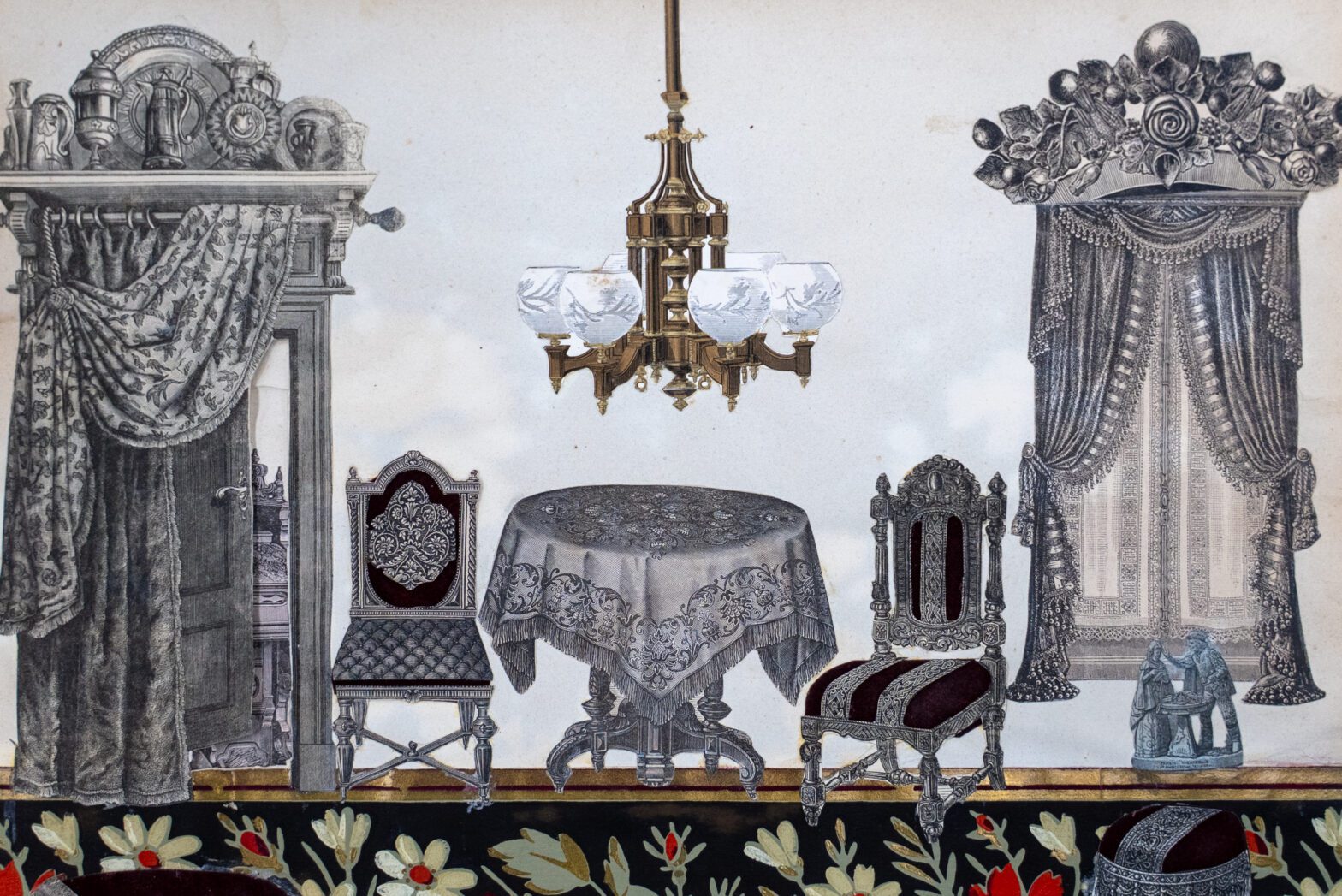
We don’t usually confuse a child’s toy for a surreal piece of art, but this item in the Winterthur Library collection finds itself in a strange and whimsical middle ground. Known officially as Folio 288, this large hardcover book is called a collage album, or, perhaps more aptly, a paper dollhouse. Paper dollhouses were a popular toy for girls during the late 19th and early 20th centuries. Made in the 1880s or ‘90s, Folio 288 most likely belonged to a girl who used the pages as a home for her paper dolls. In fact, this book is accompanied in the collection by three tiny paper girls, each no more than two inches tall.
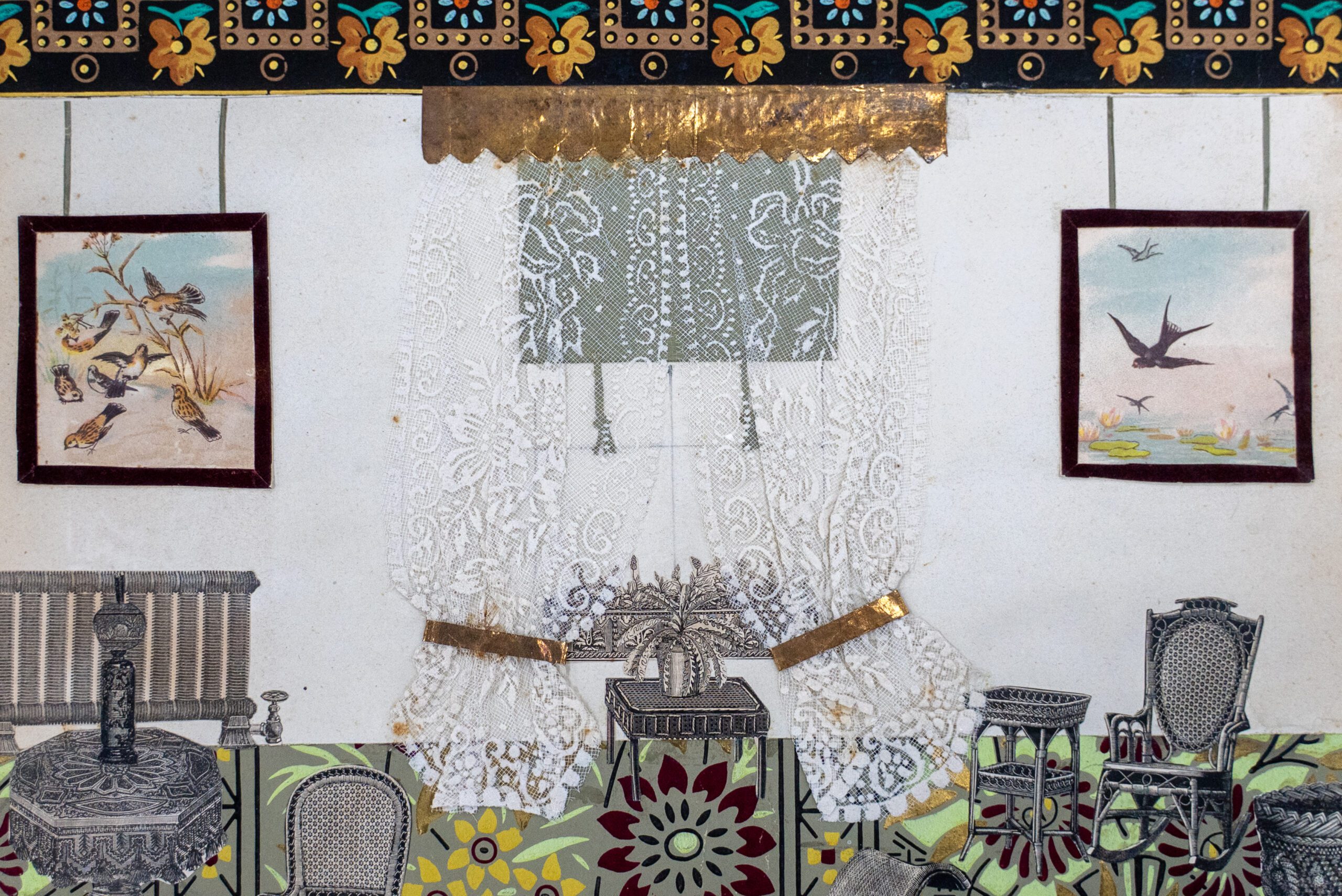
Collage album – Scrapbook house, 1879–99 (Folio 288), Winterthur Library

Making paper dollhouses like this one allowed children to flex their imaginations through interior design and provided an affordable setting for paper doll play. The images throughout the book were cut from furniture catalogs, wallpaper samples, and other free or inexpensive print sources. Even the paste was handmade with water and flour.

Every page in the album represents a unique room in this abstract sort of dollhouse, complete with carefully arranged paper furniture and even interactive features like moveable curtains and textured floors and cushions. Although each room exists on a two-dimensional plane, the folio’s owner found imaginative ways to bring the flat spaces to life. Some rooms have windows or doorways cut out of the page, allowing the viewer a glimpse into the next area. Others include all sorts of decorations covering the figurative walls.
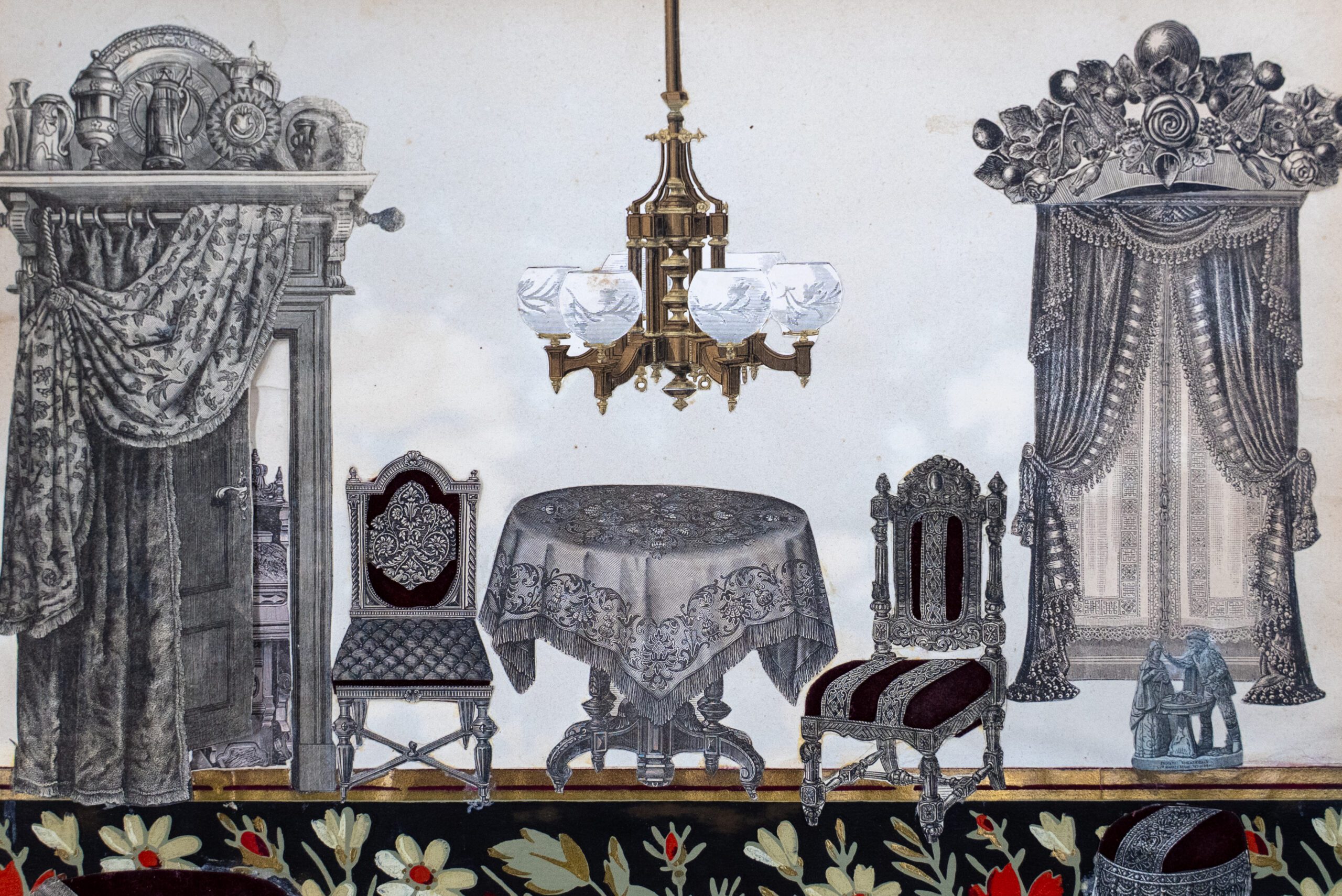
Folio 288 was created mainly as a toy but survives now as a piece of art in its own right. The creator of the collage rooms put obvious care into the construction of each imaginary space. On the page labeled “nursery,” the author took the time to paste several woodgrain-patterned bits of paper into the fireplace as if for fuel to keep the paper children warm. Several pillows in the book feature a hand-drawn “B” insignia, the author further customizing items as her own.

Because of the found material used in the collages, some of the rooms play with scale and perspective in uncanny, visually interesting ways. For example, the kitchen features an image of what appears to be a pocket watch pasted halfway up the wall. The scale of the watch compared to the chairs and tables pasted below, however, allows it to read effectively as a wall clock. One bedroom features an image of a kitten on a massive scale compared to the rest of the room. Another room has a giant sunflower and huge hairbrushes. And another has a tiny chair at a humongous table. The mixed-media, highly textured, adds to the often strange visual appeal of these dollhouse rooms, which make them striking pieces of visual art. Yet, at the same time, they retain an aura of childlikeness that is very cute.
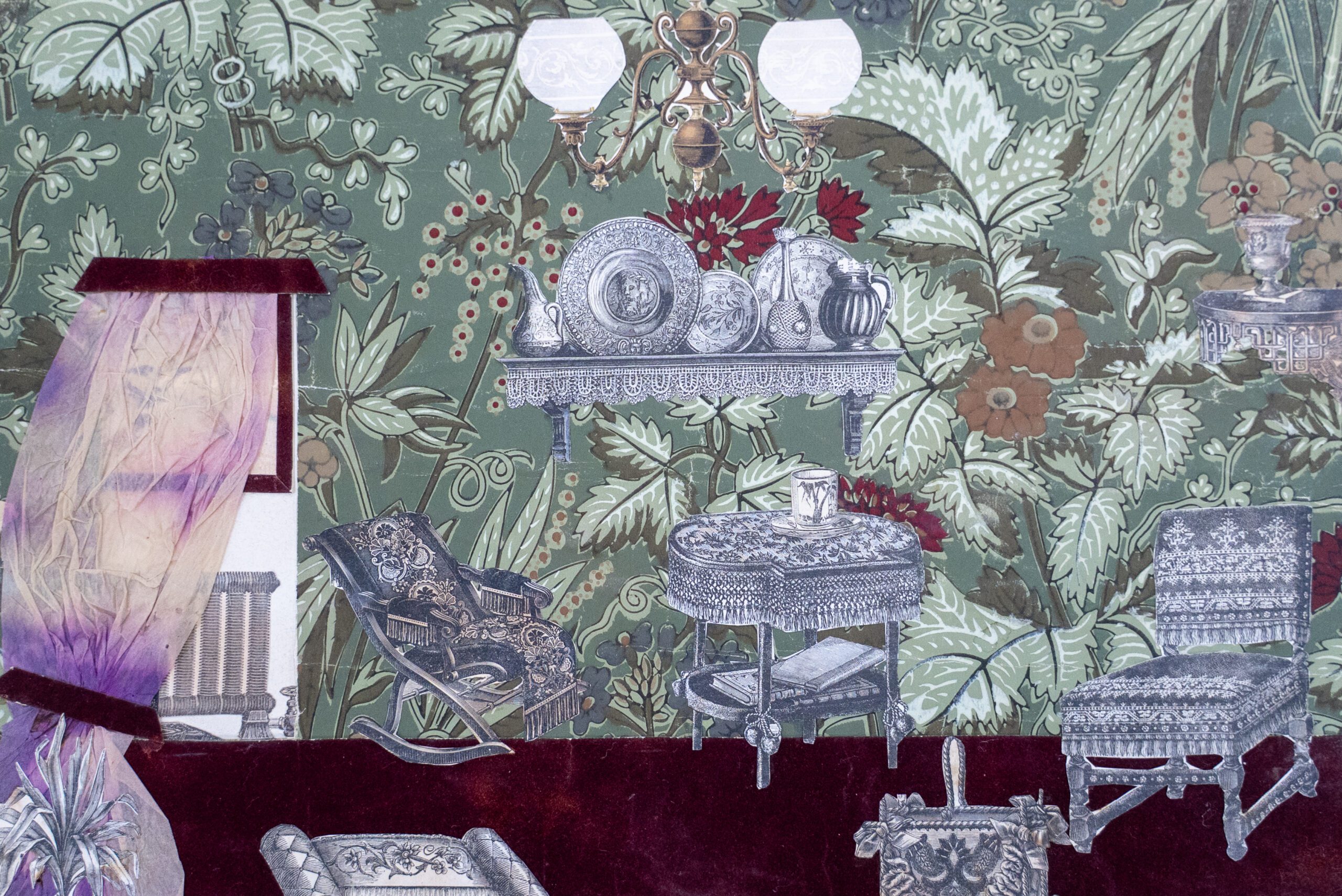
At once skillfully crafted and unabashedly nonsensical, Folio 288 is fascinating as an artifact of visual culture as well as a wonderful insight into the adorably familiar mind of a late-19th-century child. You can view Folio 288 in our Digital Collection, or in person at the library with an appointment.
A Sampler’s Story from Sierra Leone

By Matthew Monk, Linda Eaton Associate Curator of Textiles

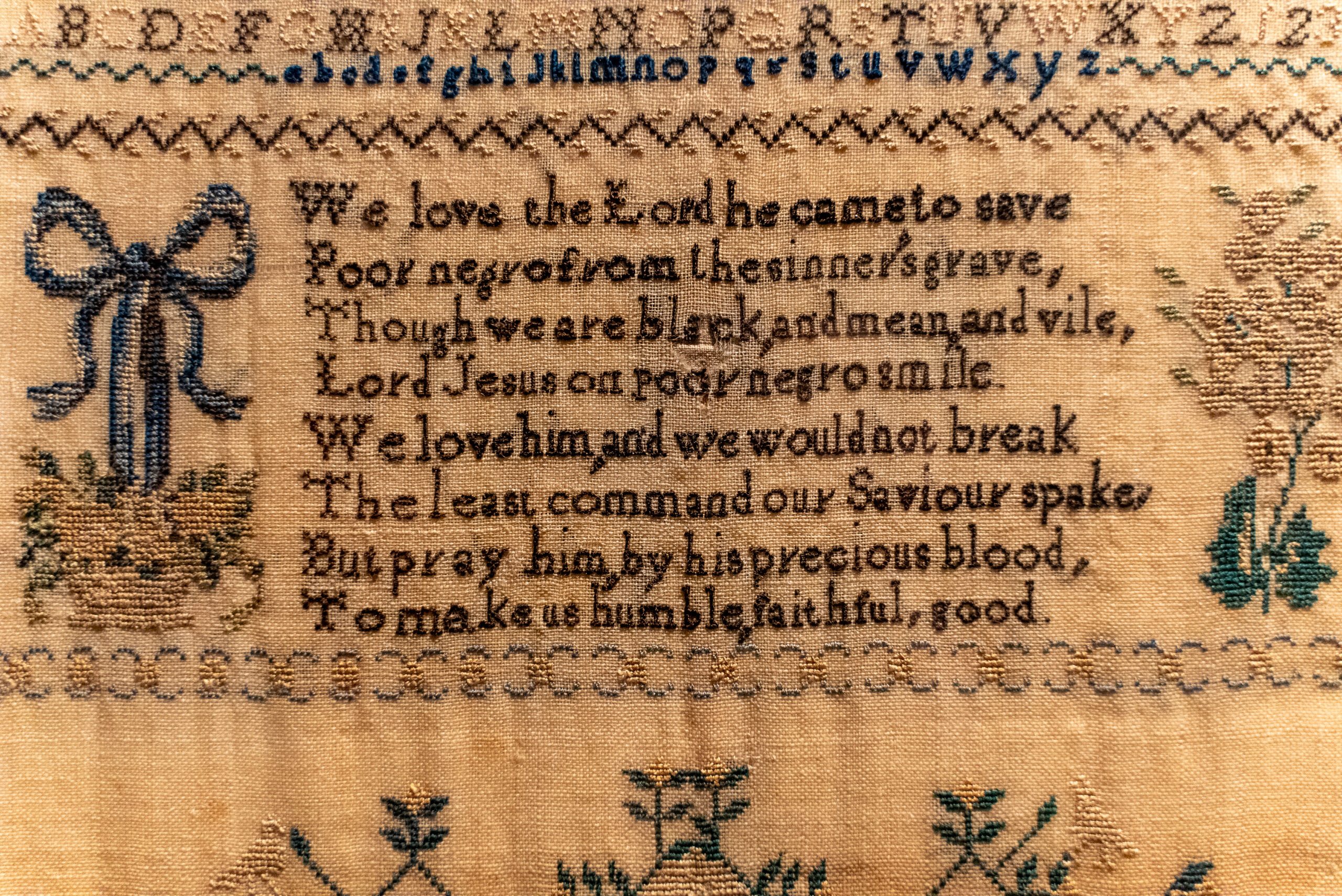
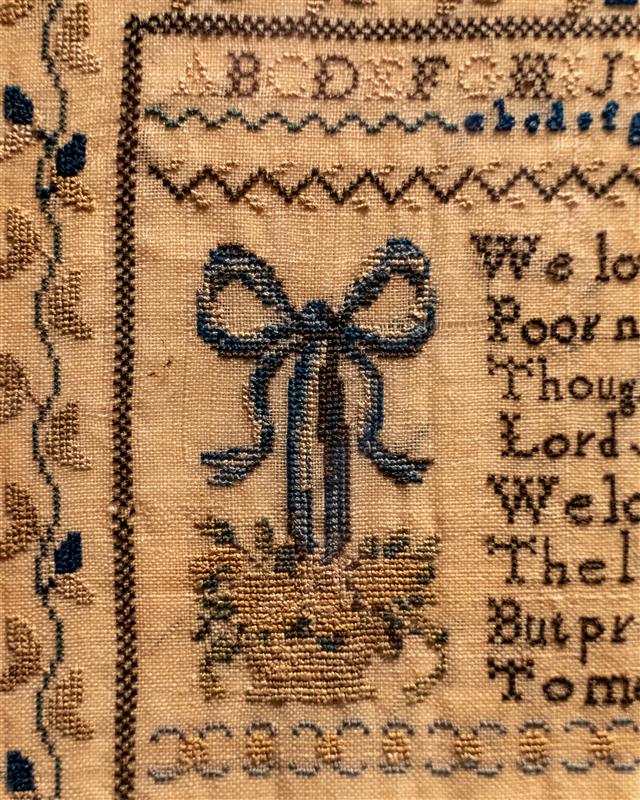
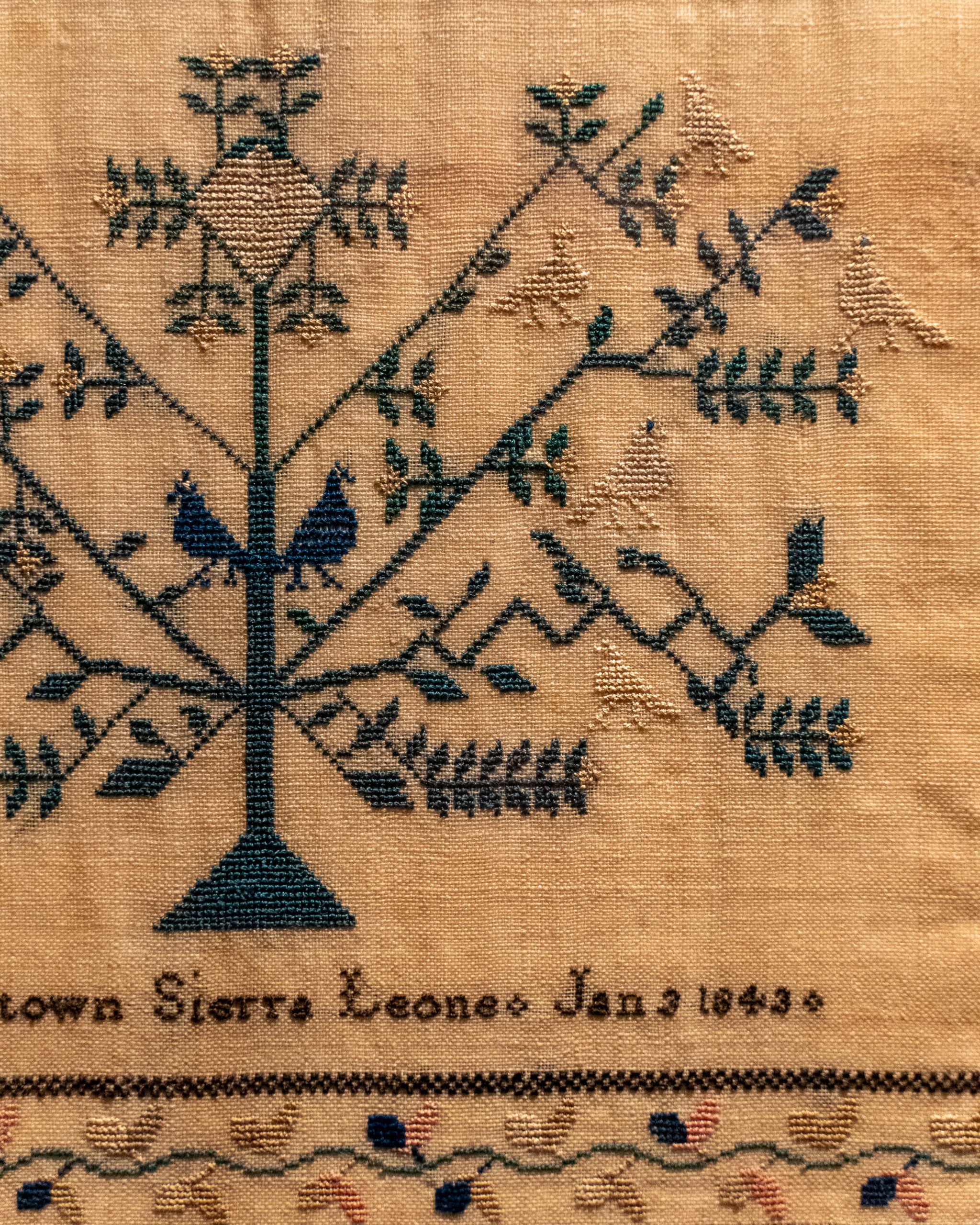
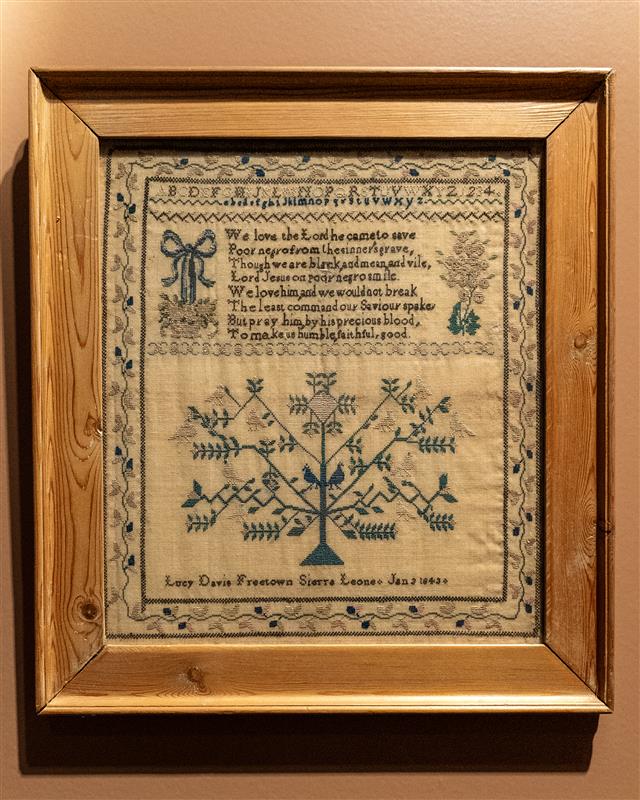
Sampler, Africa, 1843. Museum purchase with funds provided by the Henry Francis du Pont Collectors Circle 2018.0007

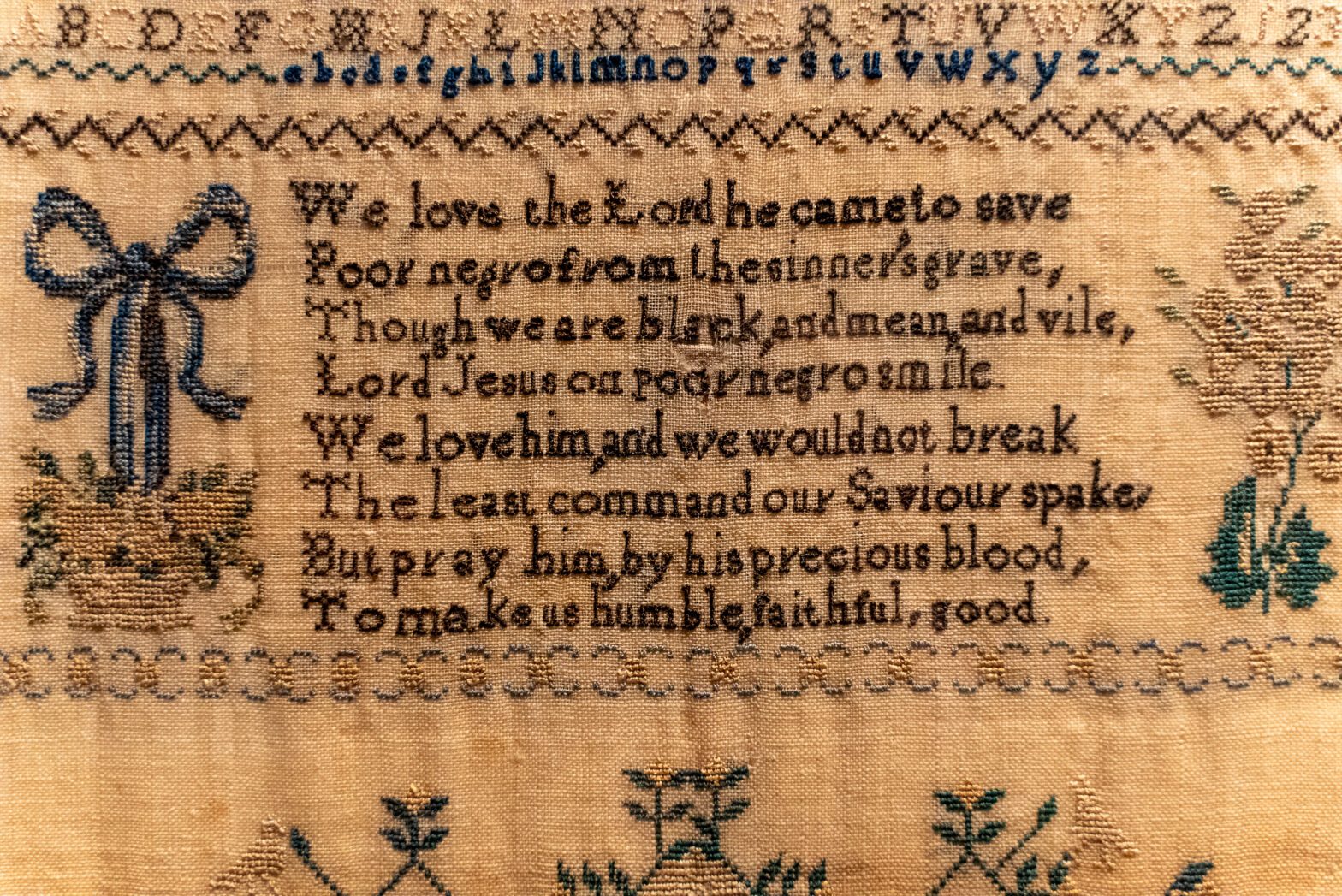
On January 3, 1843, Lucy Davis, a Black African girl, completed this sampler at a Church Missionary Society (CMS) school in Freetown, Sierra Leone. Her needlework features a central field divided by a cross-stitched border of repeating X motifs. The upper half contains a verse from Hymn for a Poor Negro, a poem printed in The Missionary Repository for Youth, and Sunday School Missionary Magazine.1 Missionaries across the expanding British Empire used literature like this to Christianize and anglicize African youth and reinforce British colonial hierarchies of race and class:

“We love the Lord he came to save
Poor negro from the sinner’s grave,
Though we are black, and mean, and vile,
Lord Jesus on poor negro smile.
We love him, and we would not break
The least command our Saviour spake,
But pray him, by his precious blood,
To make us humble, faithful, good.”

Flanking the verse are a basket of flowers tied with a bow on the right and a spray of blooms on the left. The lower half of the linen ground features a stylized tree filled with birds with Davis’s name, location, and the date stitched below. A leafy vine border, framed by long-arm cross stitches, surrounds the entire composition.

Only twenty-six samplers from CMS schools are known to survive, and few student records exist beyond the needlework itself. However, one teacher’s name is known: Jane Hickson Boston Young (1810–1841), a Eurafrican woman educated at a CMS school in the Rio Pongo region (now the Republic of Guinea). Jane learned needlework from an African American colonist—referred to only as “Nova Scotian”—who had remained loyal to Britain during the American Revolution and later immigrated to British-controlled Africa from Nova Scotia.2

Jane Young went on to teach at CMS schools in Kissy, Gloucester, Bathurst, and eventually Freetown and Waterloo, where she and her second husband founded a school in 1836. Though she died in 1841, just two years before Davis stitched her sampler, it’s likely that Davis was taught by a liberated African woman who had been trained by Young—continuing a lineage of needlework instruction that began with a formerly enslaved African American woman.3

CMS schools were established to educate native-born Africans and “recaptives” or “liberated Africans”—those freed by the British Navy after the Empire banned the transatlantic slave trade in 1806. These children were relocated to Sierra Leone and educated in CMS schools, often sponsored by British abolitionists. By the 1830s, the schools primarily served native-born Sierra Leoneans, and after Jane Young’s death, the needlework teacher in Freetown and Waterloo was likely one of these liberated African women whose name has been lost to history.4

Lucy Davis’s sampler reflects both the constraints and the aspirations of colonial education. While the verse and format were shaped by British missionary ideals, Davis’s work also represents the emergence of an educated Sierra Leonese elite—young Black Africans who were being trained for roles within the colonial administrative structure. Her sampler embodies the paradox of colonial education: devotional verse stitched in thread, at once reinforcing racial hierarchies and preserving the presence of Black girls in the historical record and is featured in our exhibition Almost Unknown, The Afric-American Picture Gallery.

Sources:

  1. Periodical Publications. 1839. “The Missionary Repository for Youth, and Sunday Scholar’s Book of Missions.” In Nineteenth-Century Short Title Catalogue.
  2. Silke Strickrodt, PhD, “Mission Samplers from Sierra Leone: Traces of a Black Woman’s Career in the Church Missionary Society, c. 1811 to 1841,” Spotlight: In-Depth Dive into Noteworthy Needlework. Samplings.com (Philadelphia: M. Finkel & Daughter, 2025); Silke Strickrodt, “African Girls’ Samplers from Mission Schools in Sierra Leone (1820s to 1840s),” History in Africa. 2010;37:189-245.  
  3. Strickrodt, “Mission Samplers from Sierra Leone.” 
  4. Ibid.

Impact

Contributions to Winterthur directly impact every aspect of our mission and provide us with critical resources to make our vision to inspire exploration of American culture and landscapes through compelling stories and experiences a reality.

Learn more about the impact of your philanthropy.


Showing of 6 results
Expanding Educational Outreach
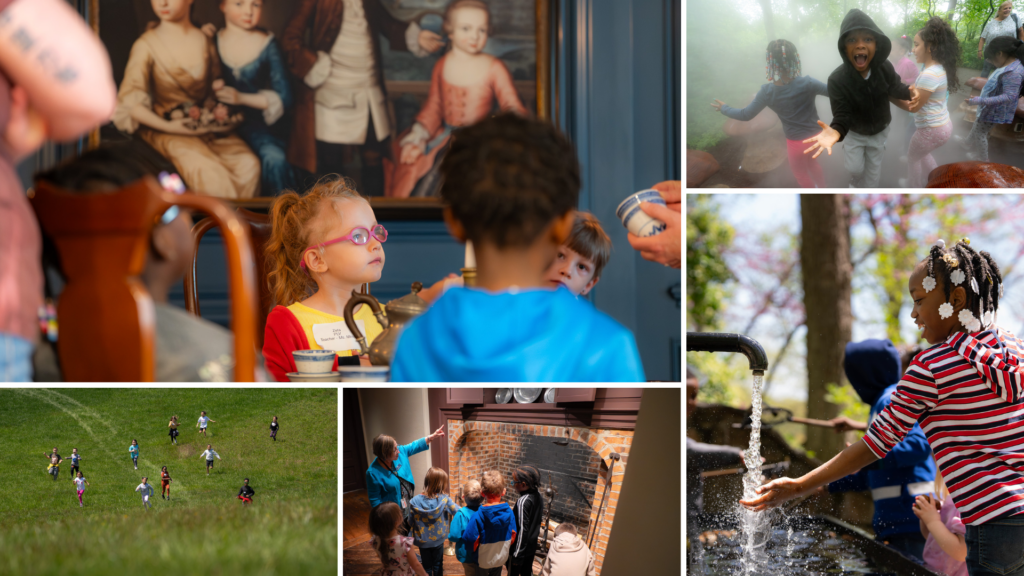
Winterthur held 130 programs for 3,500 students with its school offerings in…

<a href="https://www.winterthur.org/expanding-educational-outreach/" class="read-more" ><span class="sr-only">Click to read more</span>More Info</a>

Making An Impact: Ann Lowe: American Couturier
Conservators and technicians worked for nearly two years to stabilize and prepare…

<a href="https://www.winterthur.org/making-an-impact-ann-lowe-american-couturier/" class="read-more" ><span class="sr-only">Click to read more</span>More Info</a>

Year in Review
Winterthur is undergoing a renaissance in its ability to connect with diverse…

<a href="https://www.winterthur.org/year-in-review/" class="read-more" ><span class="sr-only">Click to read more</span>More Info</a>

Poison Book Project earns worldwide publicity
A recent feature by The Washington Post on the Poison Book Project…

<a href="https://www.winterthur.org/poison-book-publicity/" class="read-more" ><span class="sr-only">Click to read more</span>More Info</a>

Embracing New Acquisitions with Historical Significance
Many visitors to Winterthur are surprised to learn that our collection is…

<a href="https://www.winterthur.org/embracing-acquisitions/" class="read-more" ><span class="sr-only">Click to read more</span>More Info</a>

Magic and Memories: Story Time Adventures in Enchanted Woods
Two-year-old Miles toddled into the Story Stones area in Enchanted Woods at…

<a href="https://www.winterthur.org/story-time-enchanted-woods/" class="read-more" ><span class="sr-only">Click to read more</span>More Info</a>

Expanding Educational Outreach

Winterthur held 130 programs for 3,500 students with its school offerings in 2022.

By 2023, with a grant allowing the programs to be held for free, 532 programs (263 on-site, 242 in-classroom, 27 virtual) were held for 10,630 unique students from 109 schools/organizations and 24 public school systems. The number of students served jumps to 14,169 when accounting for students who participated in multiple programs.

All school programs:

  • address Common Core and Delaware curriculum standards.
  • use a cross-disciplinary approach to guide learning in science, social
    studies, history, literacy, language arts, and the visual arts.
  • emphasize student-centered, interactive approaches to learning.
  • facilitate small-group collaboration.
  • are open to students of all abilities.

Making An Impact: Ann Lowe: American Couturier

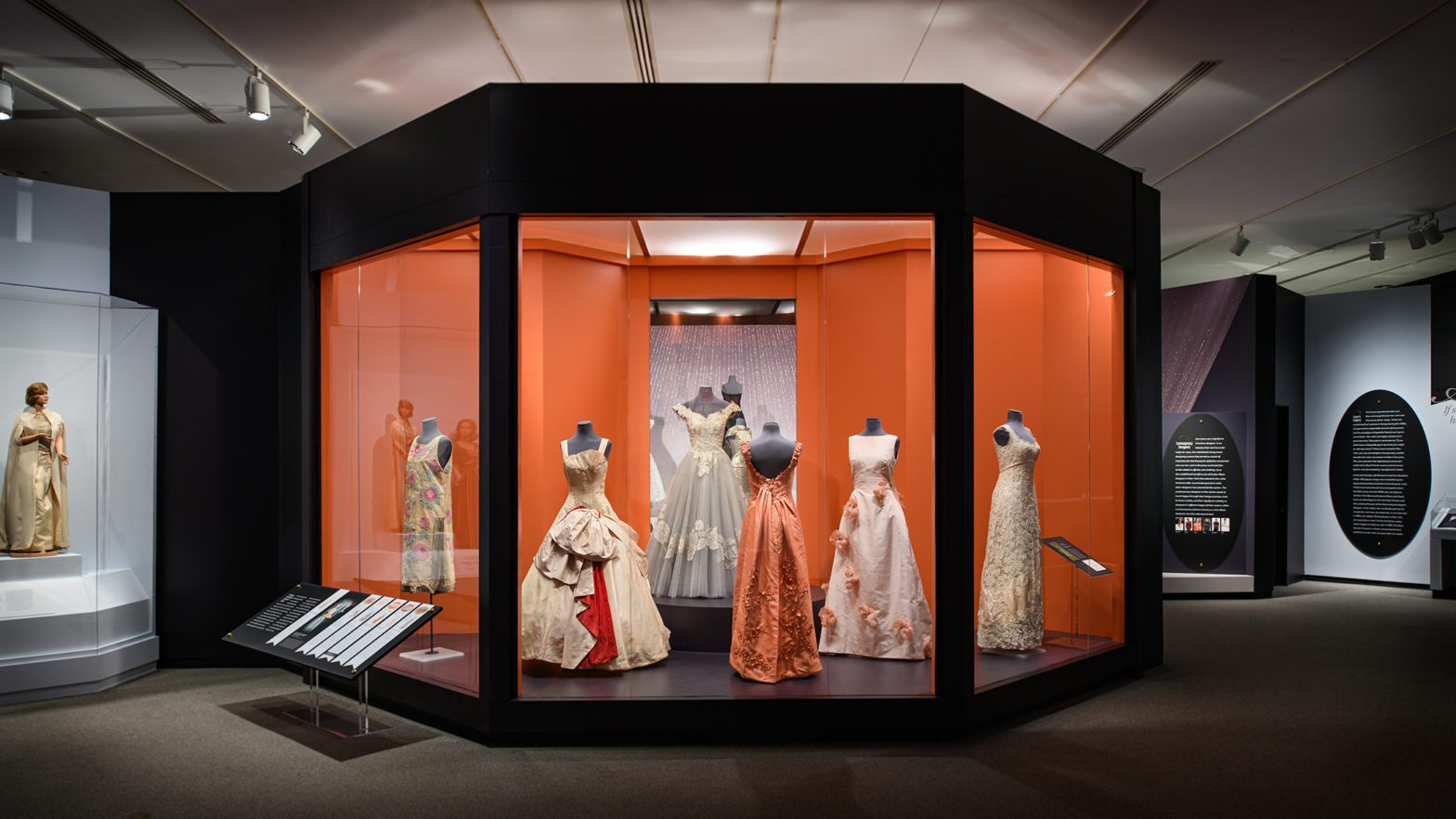
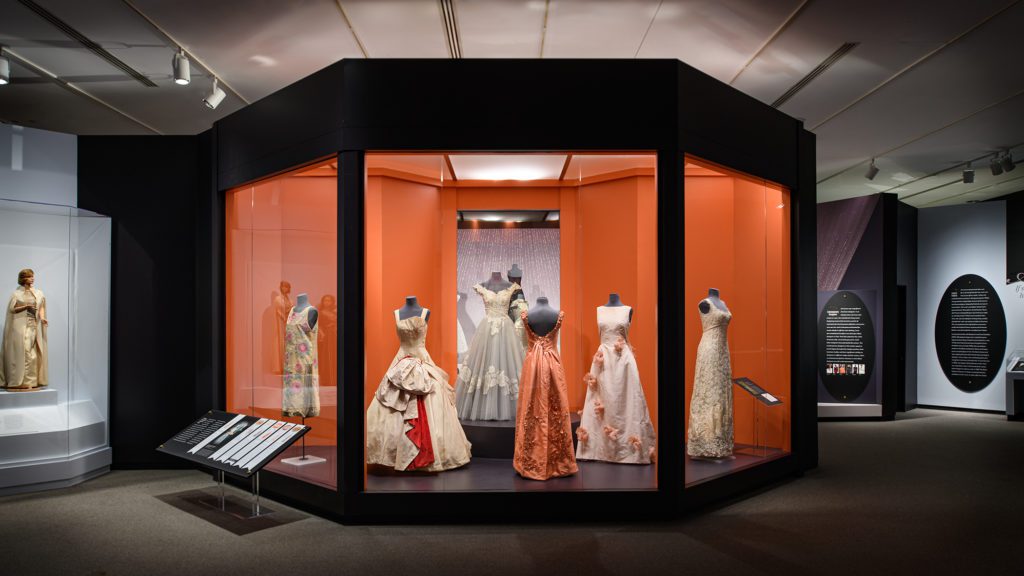
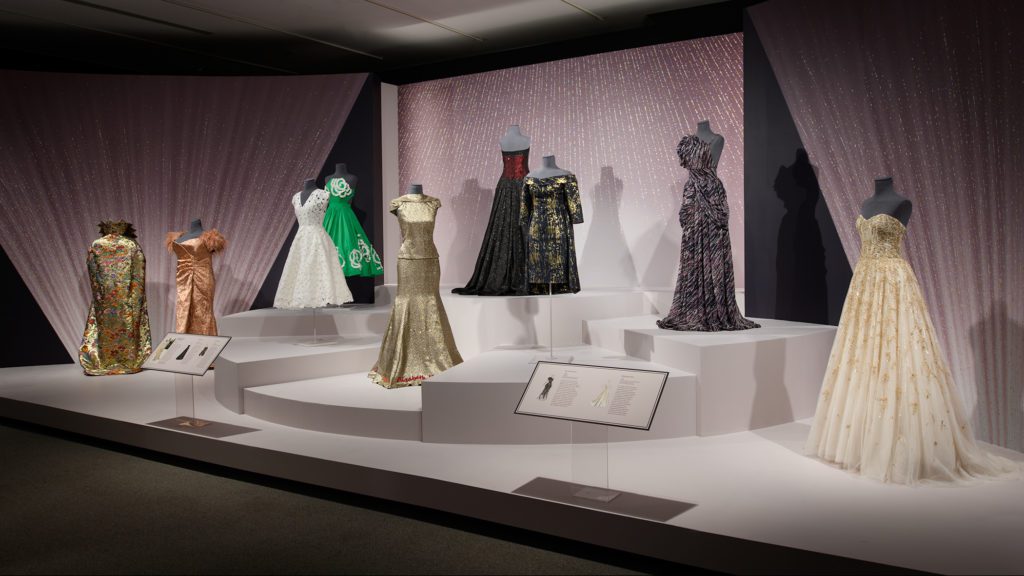
Conservators and technicians worked for nearly two years to stabilize and prepare the forty dresses and mannequins for the highly praised Ann Lowe: American Couturier exhibition at Winterthur. Conversations, research, and planning for a revolutionary new mannequin-making project began even earlier.

To display Lowe’s historic dresses, Winterthur’s textile lab partnered with Katya Roelse, an instructor of fashion and apparel studies at the University of Delaware (UD), and with UD’s MakerGym, an interdisciplinary design and fabrication studio, to develop mannequins that are both cost effective and archival quality.

The exhibition presented the life and work of the remarkable and influential American designer who created couture gowns for debutantes, heiresses, actresses, and society brides, including Jacqueline Kennedy, Olivia de Havilland, and Marjorie Merriweather Post.

Elizabeth Way, associate curator at The Museum at the Fashion Institute of Technology, served as guest curator of the exhibition. It was the largest exhibition of Lowe’s work to date, featuring gowns never before on public view.

Way delivered a sold-out lecture when the exhibition opened in September 2023.

“The event was stunning. I couldn’t believe the level of connection everyone had with her story.”

Allison Tolman, associate director of collections management, National Museum of African American History and Culture, Smithsonian, on the opening reception for the Lowe exhibition.

A highly acclaimed symposium on Lowe followed in October and drew an international audience of fashion scholars and journalists.

Leading up to and during the exhibition, Winterthur also led a successful hunt for previously “undiscovered” or “forgotten” original Lowe dresses.

Ann Lowe’s recently emerging visibility as a designer stands in contrast to much of her career and the countless unrecognized Black dressmakers and designers who have contributed to American fashion for generations, including her own grandmother and mother. She blazed a path for others to follow, and her legacy is still felt in fashion culture.

The exhibition also featured the work of contemporary couturiers and fashion designers whose current design practices, perspectives, and career paths reflect the trajectory of American fashion emanating from Lowe’s foundation.

Why was Winterthur the right place to mount such a substantial effort to celebrate a fashion designer?

  • Winterthur is a place that celebrates stories of American craft and achievement. The story of Ann Lowe was one Winterthur was uniquely positioned to tell.
  • It started here. Margaret Powell, whose three-year tenure at Winterthur from 2013 to 2016 as a cataloguing assistant for a grant-funded project with the Institute of Museum and Library Services (IMLS), coincided with the early stages of Margaret’s research into Lowe’s life and legacy. The exhibition was a tribute to Margaret.
  • Winterthur has the skill. Internationally renowned conservators conducted critical treatment of many of the gowns featured in the exhibition.
  • Winterthur has the connections. Winterthur’s longtime partnership with the University of Delaware enabled the recreation of Jacqueline Bouvier Kennedy’s 1953 wedding gown. The original is too fragile to display. Winterthur donated the recreation to the John F. Kennedy Presidential Library and Museum so the public can continue to see this iconic gown.
  • Winterthur is leading the field. Working with UD, Winterthur pioneered a 3D printing technique to create customized mannequins for the exhibition. Other museums and institutions will benefit from this work.
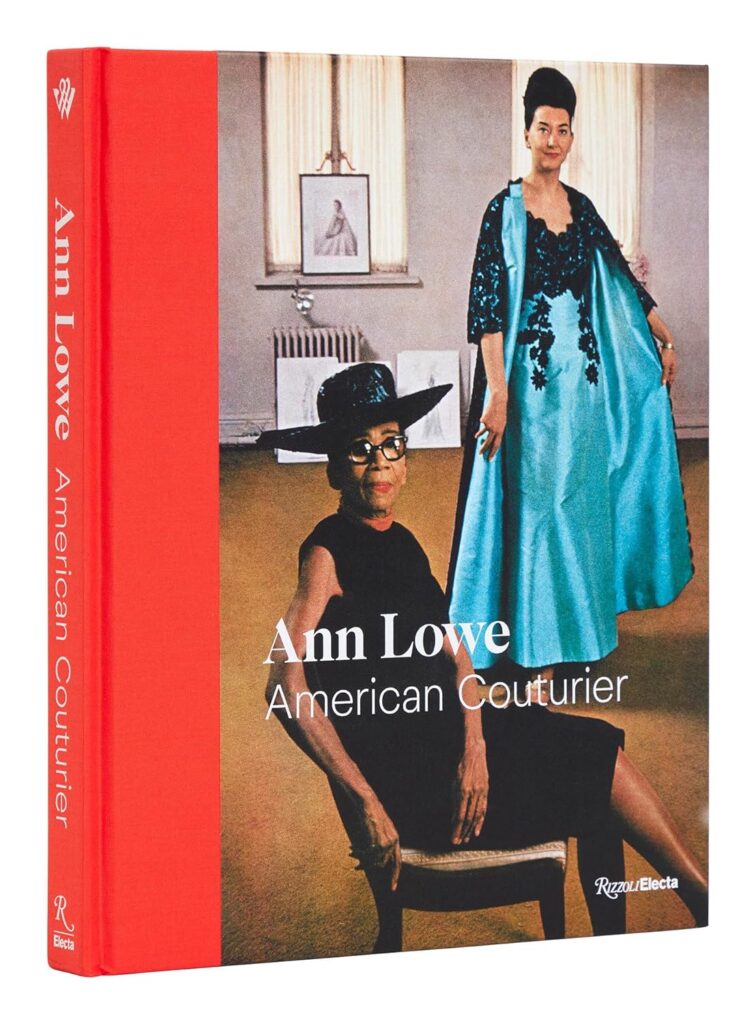
  • Winterthur left a legacy. Winterthur’s publication Ann Lowe, American Couturier (Rizzoli) was the first scholarly representation of Lowe’s contributions to twentieth-century couture in the United States. The book received the Costume Society of America’s 2024 Millia Davenport Publication Award and sold out and was reprinted by Rizzoli within months of its first printing.

“I think it’s a testament to Margaret (Powell) that she made connections strong enough to withstand her passing. It truly took a village of women committed to Margaret and Ann Lowe to ensure that the work continued.”

Rachel Delphia, Alan G. and Jane A. Lehman Curator of Decorative Arts and Design, Carnegie Museum of Art, on Margaret Powell and her research

The day the Lowe exhibition opened on September 9, 2023, saw Winterthur welcome 88% more people and a 37% increase in self-paced tours than on a normal day.

The week of the exhibition’s opening saw a 54% increase in overall visitation and a 96% increase in self-paced tours. The exhibition was featured in worldwide media coverage.

Giving Societies

Winterthur celebrates those who are closely involved with the institution through philanthropy. 

Founder’s Circle

Founder’s Circle is an active community of Winterthur’s most generous patrons who make an annual contribution of $2,500 or more. Founder’s Circle members share the vision of our founder, Henry Francis du Pont, to inspire and educate through Winterthur’s collection, estate, and academic programs. 

Learn more.

Port Royal Society

Port Royal Society recognizes donors who have aligned their legacies to the mission and vision of Winterthur through a planned gift commitment.

Learn more.

Preserving Oral Histories for 50 Years and Still Going Strong

By Molly Mapstone, academic affairs intern

Our memories are wells of invaluable information. The basic facts of our lives, skills we learned in school, and important events are all stored in our minds and inflected by our unique experiences and perspectives. Through oral history, we record and collect these memories for future generations. Following the death of their colleague, Rutherford John Gettens, early career art conservators Tom Chase and Joyce Hill Stoner spearheaded an oral history project to collect firsthand accounts of their profession.

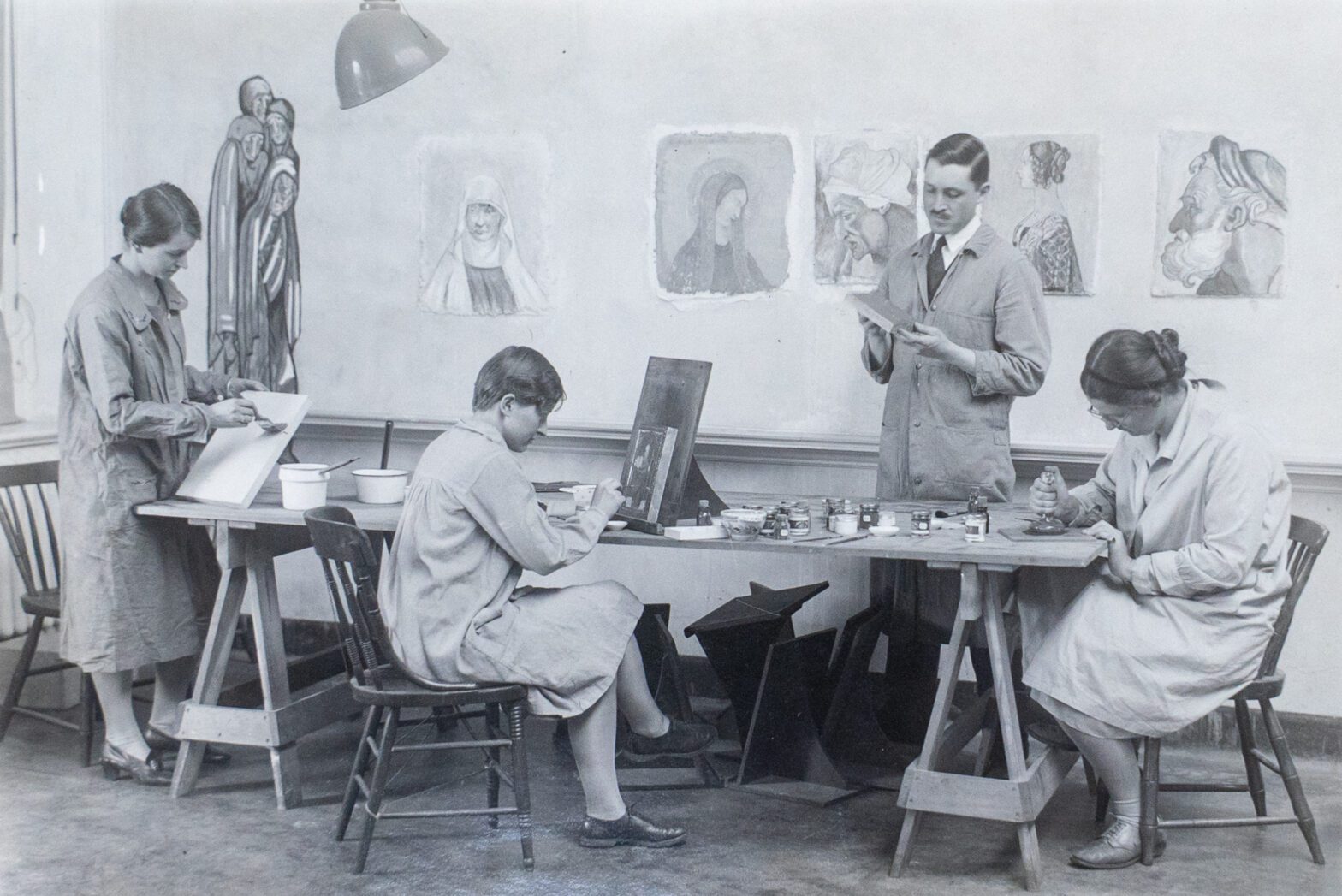
Three unnamed women from Radcliffe College with George Leslie Stout (center right) learning about historical painting techniques in the course “Methods and Processes of Painting,” circa 1928–29.

On September 4, 1975, Chase and Stoner conducted a roundtable discussion at a conservation conference with conservators Richard Buck, Katherine Gettens, and George Leslie Stout. Chase and Stoner were curious about their subjects’ experiences as conservators during a time of immense change and asked them to discuss their mentors, first jobs, technical approaches to caring for material culture, and thoughts on the future. This roundtable discussion grew into the Foundation for Advancement in Conservation (FAIC) Oral History Project.

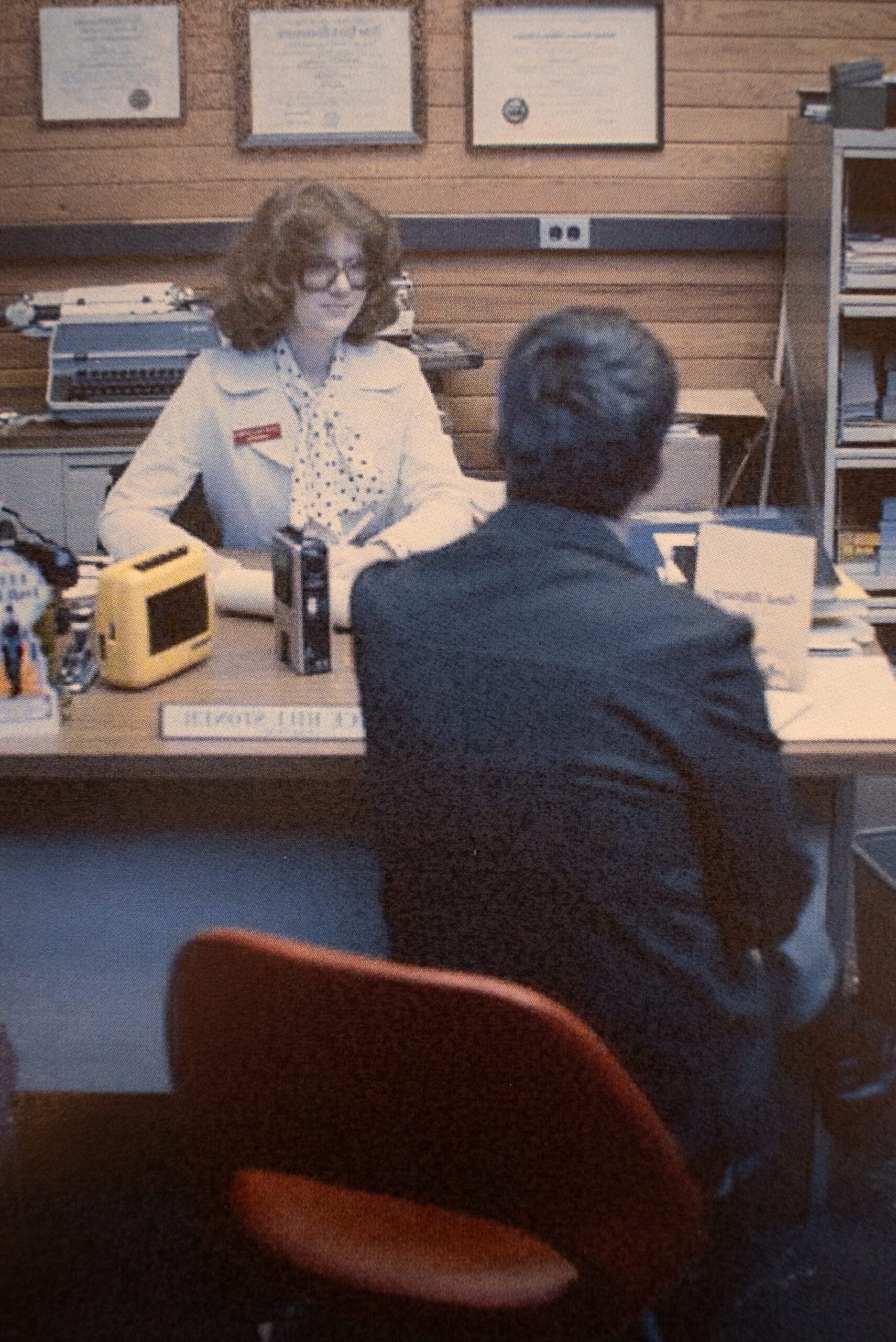
Joyce Hill Stoner with unidentified speaker, ready to record and file interviews for the FAIC Oral History Project, circa late 1970s.

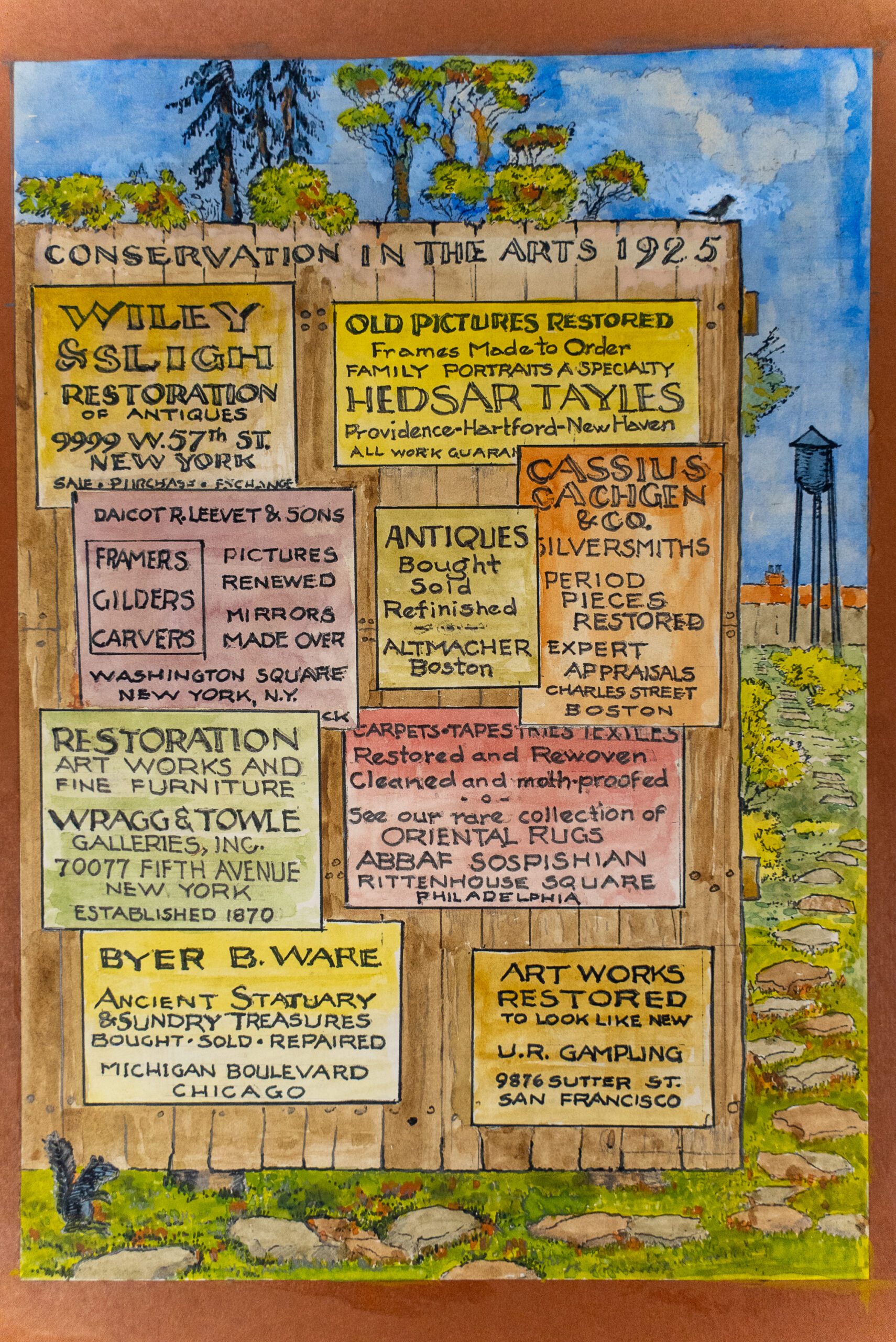
The FAIC Oral History Project documents developments in the field of conservation through firsthand accounts. When the project officially began in 1975, conservation was a relatively recent development in cultural heritage work. Prior to the mid-20th century, historically significant objects that needed treatment in America were typically worked on by restorers who wanted to preserve and restore them to their original state.  

Watercolor painting illustrating restoration-focus of restorers, created by George Leslie Stout for a 1976 presentation.

Two events in American history accelerated the transition from restoration to conservation—World War II and Italy’s 1966 Florence Flood. During both events, Americans traveled abroad and joined international experts to recover, repatriate, and provide appropriate treatments on objects of cultural significance. Roundtable interviewee George Leslie Stout served in the “Monuments Men” division of the Civil Affairs and Military Government Sections of the Allied armies during World War II. One of the first Monuments Men to land in Normandy after D-Day, Stout helped conserve thousands of works of art stolen and hidden by the Nazis across Europe.

By the late 20th century, museums, libraries and other cultural institutions hired conservators to work on their collections and ensure the long-term preservation of the objects that connect us to our shared past. Conservators today focus on using reversible treatments and preventing future damage to objects.

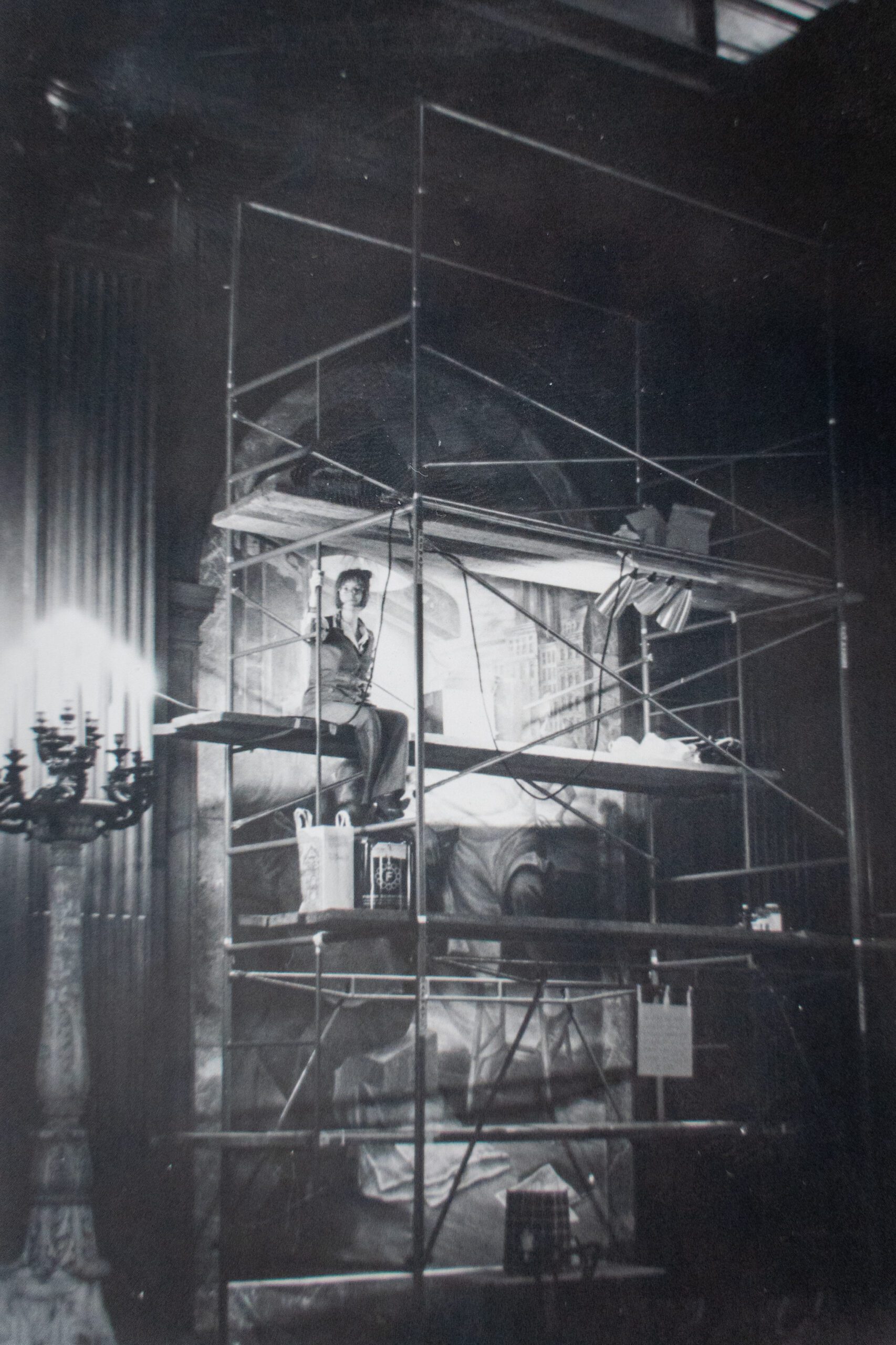
Joyce Hill Stoner on scaffolding constructed for her to conduct a conservation treatment by removing discolored varnish on a mural in the New York Public Library in the 1970s.

Since 1975, hundreds of interviews have been held with conservators and allied professionals in America and abroad. Rebecca Rushfield, associate director of the project, conducted more than one hundred interviews and continues this work today. These interviews provide insights into the history of object treatments, issues in the field, and eyewitness accounts of numerous historical events. Now housed in the Winterthur Library, the FAIC Oral History Collection archive can be accessed online through the Winterthur Library Digital Collection or on-site at the Winterthur Library by appointment.
Explore the digital collection.

Access the annotated transcript of the first interview conducted in 1975 by Stoner and Chase of Stout, Buck and Gettens.

Explore the finding aid for the complete collection.

Winterthur thanks the Berger Foundation for supporting work to make this collection accessible to a broad public.

Yuletide House Tour

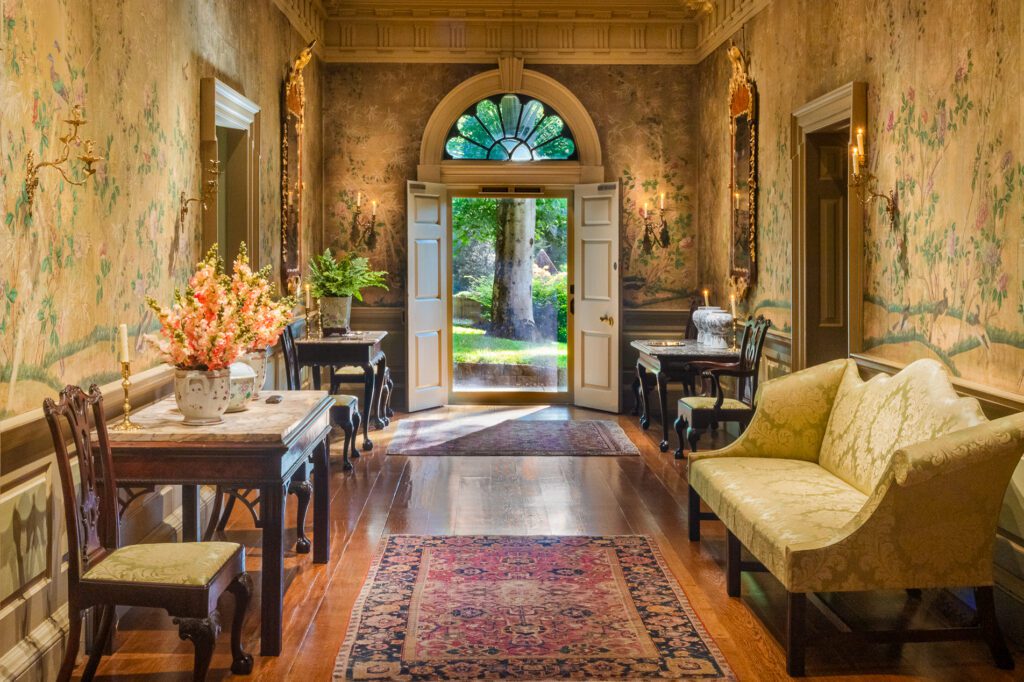
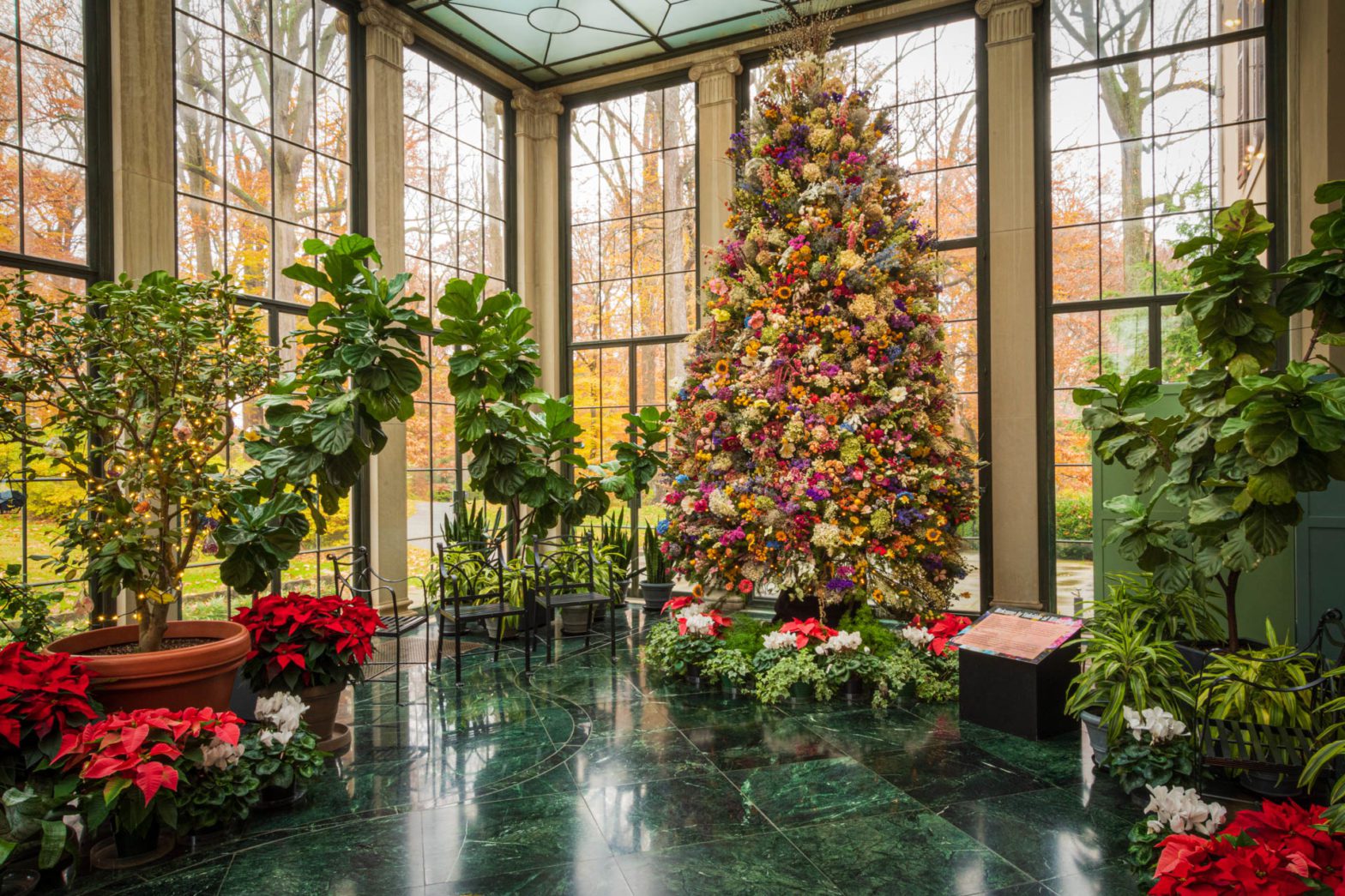
Home is a reflection of who we are and what we hold dear. Our Yuletide Tour celebrates home and all things home can mean—a place, the people, the food, the music, the traditions, and more. Self-paced tour. Reservations recommended. Included with admission. Members free. Purchase tickets online or call 800.448.3883.

Tuesday–Thursday and Sunday
10:00 am–5:00 pm (last tour at 4:15 pm)

Holiday Nights

Extended hours on select Fridays and Saturdays
10:00 am–8:00 pm (last tour at 7:15 pm)

No extended hours on December 25, December 26, and January 1.


On December 24
10:00 am–2:00 pm (last tour at 1:15 pm)

On January 1
10:00 am–5:00 pm (last tour at 4:15 pm)


Closed Thanksgiving and Christmas Day.

Cultivating a Cutting Garden

By Natasha Vadas, horticulturist

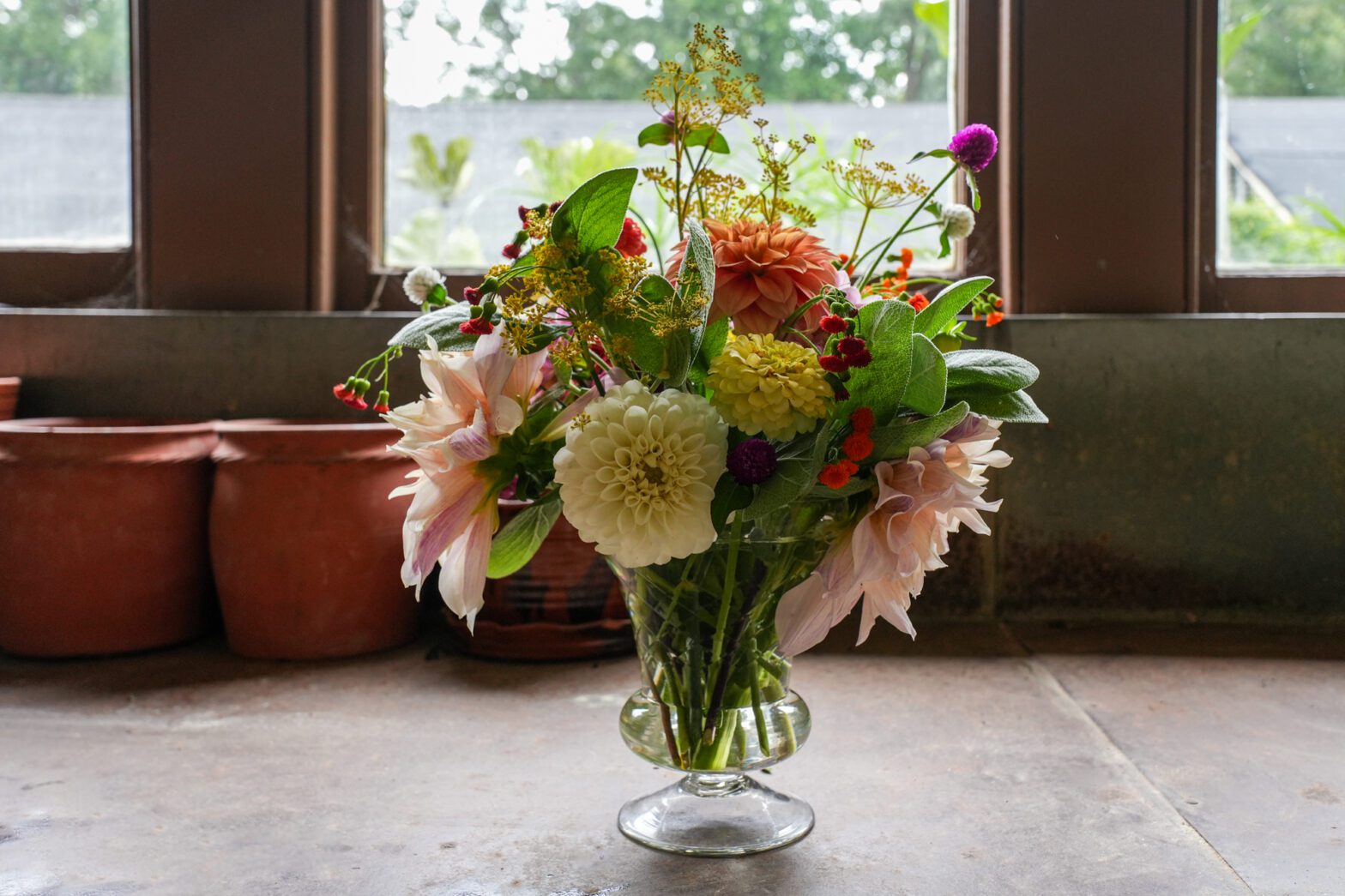
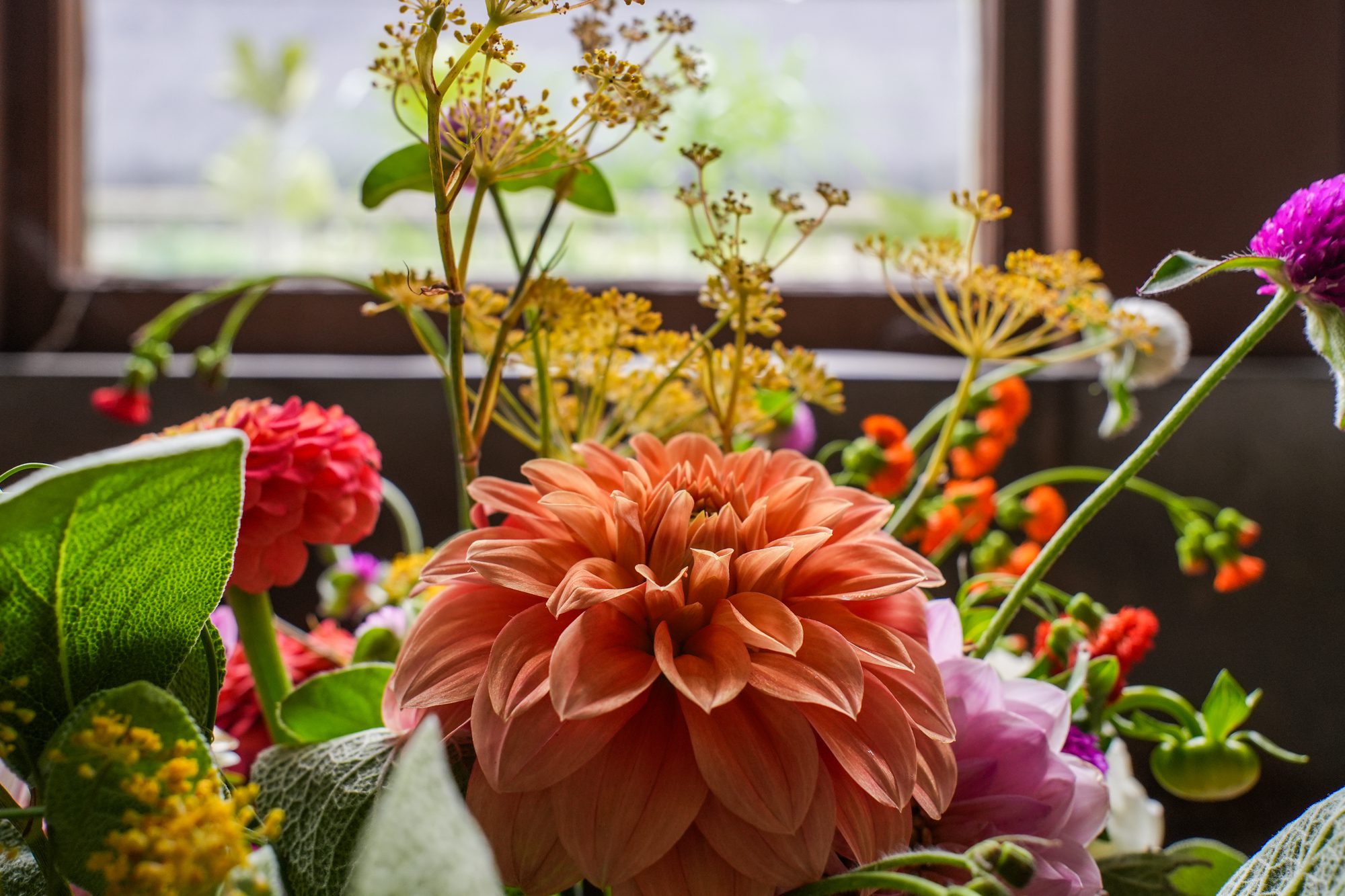
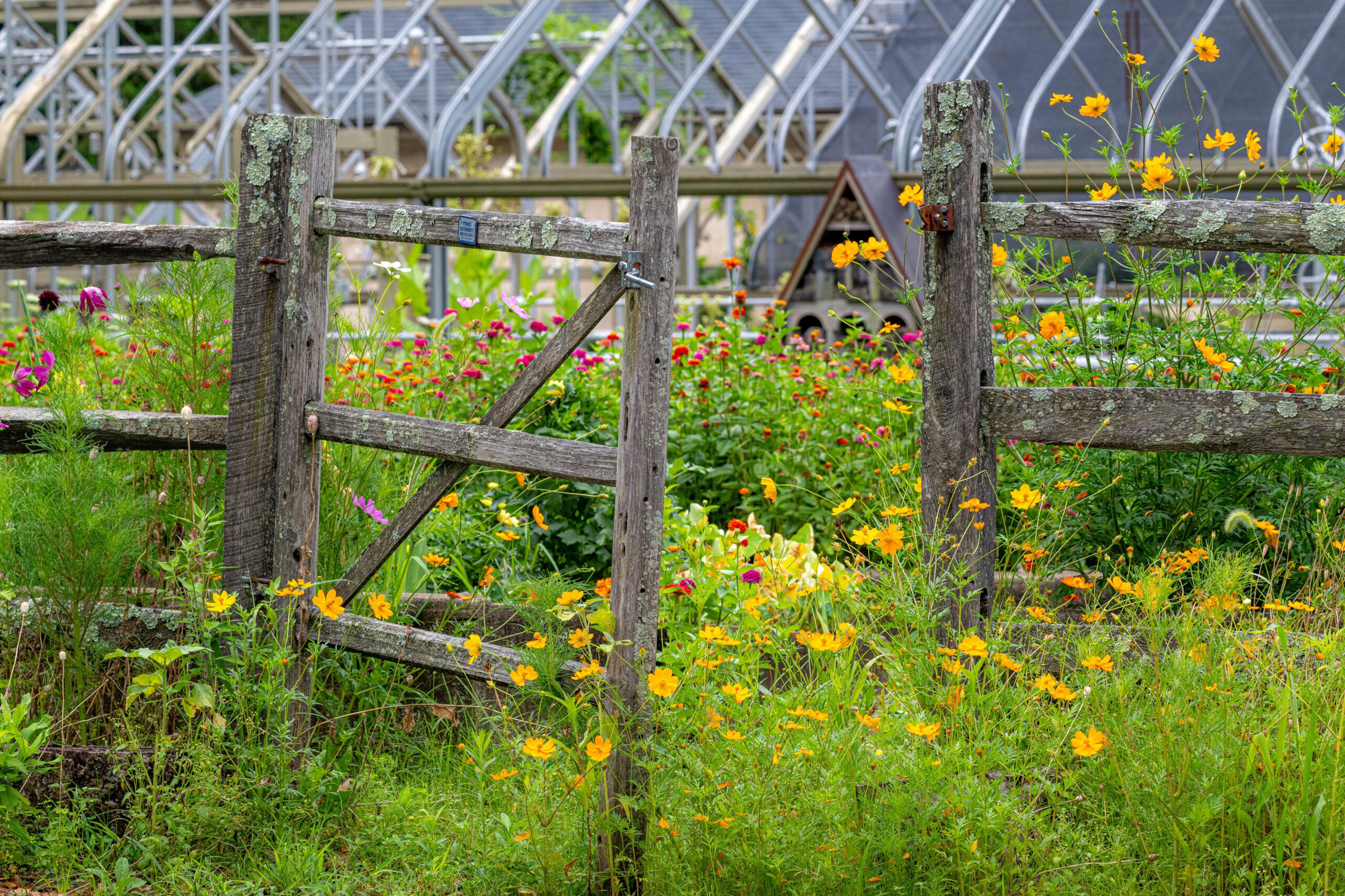
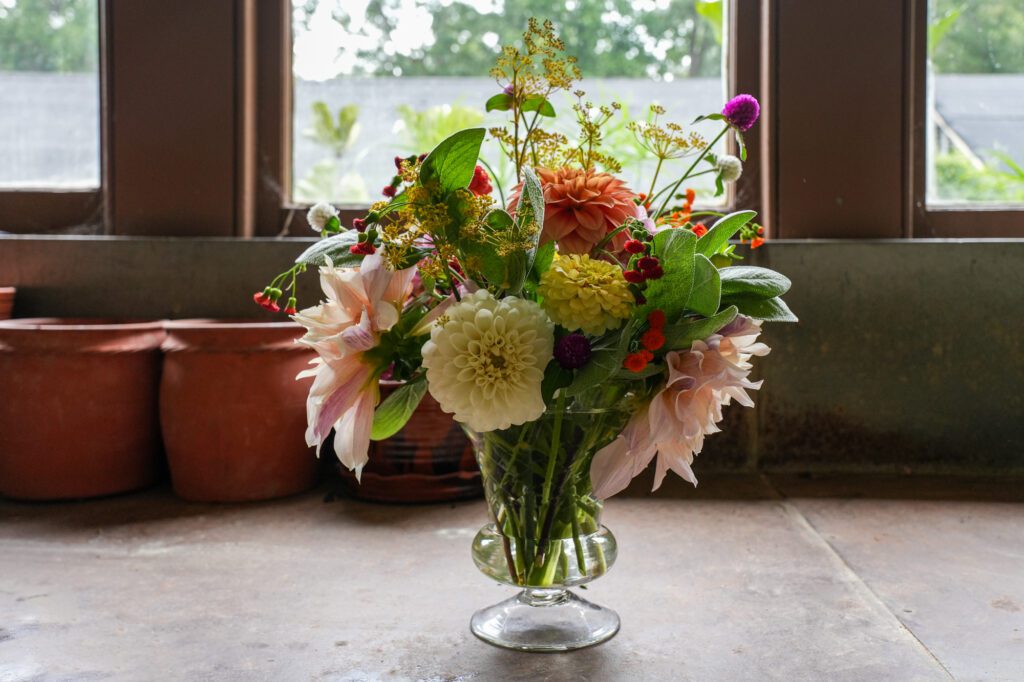
While each season of gardening is sure to bring its own unique experience, I find there are a few things I consistently do when cultivating a cutting garden. My first rule, as simple as it may sound, is to have fun with my cut flower garden—so I grow flowers I truly enjoy working with and watching bloom. My recent favorites have been dahlias, whose unique colors and beautiful symmetry go well in almost any floral arrangement.

Another rule I like to follow is to grow something I know will perform well, year after year. I often choose zinnias, which are fantastic and dependable flowers to grow in a cutting garden. Not only are they amazingly easy to grow from seed, but they will also bloom continuously up until the first frost of the fall season.

Beyond an array of colors, I enjoy growing various textures in my cutting garden to add more dimension to both the garden and flower arrangements. The lacy caps of false Queen Anne’s lace or the papery blooms of early-season poppies add dimension and delicate texture to any display.  I also love to add an element of surprise by using herbs such as sage, nasturtium, or variegated basil to provide aroma and greenery to an arrangement.

Because my cutting garden receives full sun for much of the day, I typically choose plants that will thrive in that environment. Of course, with full sun comes the prospect of soil drying out, so I keep my plants watered by running a sprinkler on them during the early morning hours when they can absorb the most water.

When the time comes to make an arrangement, I prefer to cut the flowers before the heat of the day. Using clean flower cutters, I snip flowers that are either freshly blooming or about to open their buds, cutting above the next node of growth. This will allow the plant to continue blooming into the growing season. After cutting the flowers, I allow them to sit in room-temperature water to acclimate for a while. Then, when it’s time to create an arrangement, I invoke my first rule of the cutting garden—to have fun.

There is no “correct” way to create a floral arrangement. Each is as different as the flowers themselves, and it’s always exciting to allow the artistic process to unfold into a beautiful display.

Join Natasha for Garden to Vase: Cut Flower Workshop on September 2 to create your own stunning floral arrangement from Winterthur flowers.

IRUG16: 16th Conference and Workshop of the Infrared and Raman User’s Group

October 7–9, 2026

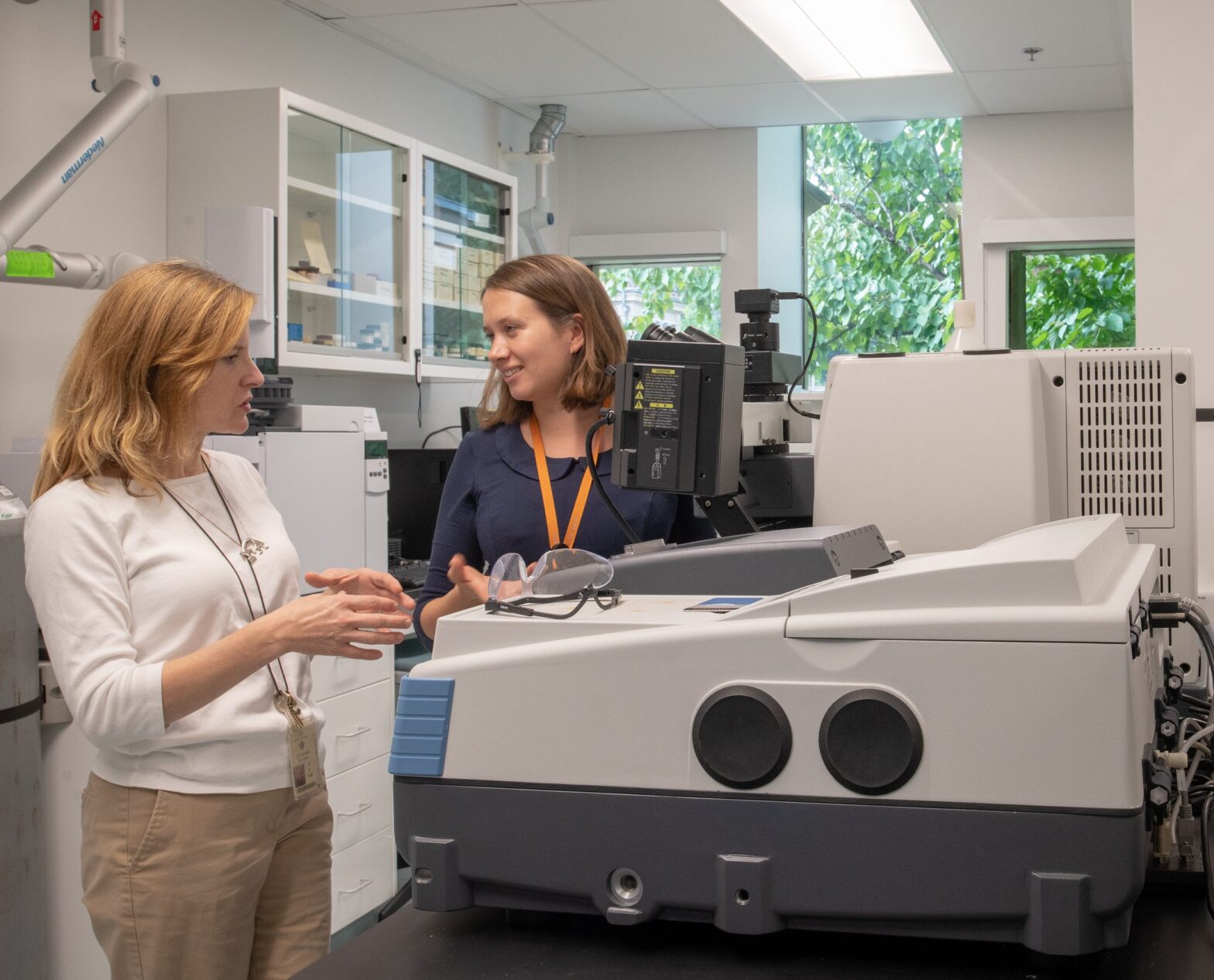
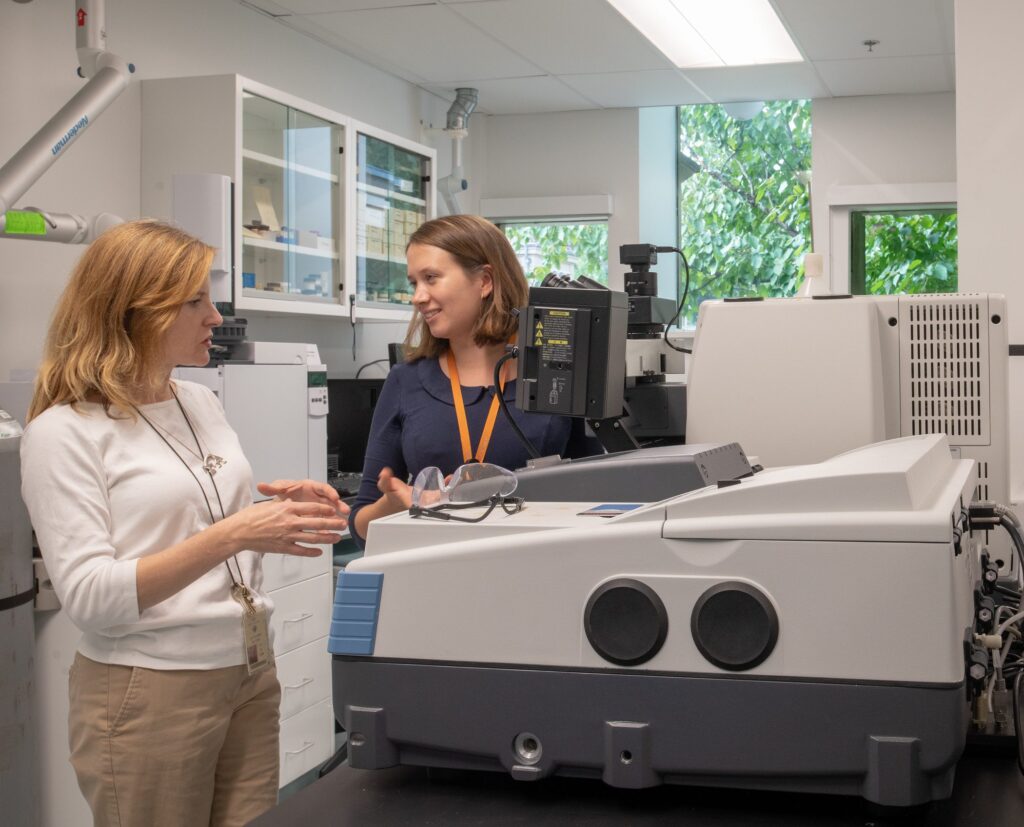
For over three decades, the Infrared and Raman Users Group (IRUG) has been at the forefront of advancing spectroscopic analysis in cultural heritage conservation. Every few years, this vibrant international community gathers to share groundbreaking research, innovative techniques, and the latest developments in infrared and Raman spectroscopy for the analysis and conservation of cultural materials. In October 2026, IRUG 16 will bring together an international cohort of conservation scientists, conservators, researchers, and industry specialists working across diverse collections. This conference will showcase cutting-edge research and methodologies that are essential for advancing our understanding and preservation of cultural heritage materials.

For inquiries about IRUG 16, please contact the organizing committee at IRUG16@winterthur.org.

For conference booklet, including program and abstracts, visit www.irug.org.

Registration

Register for keynote lecture only

Register for the virtual conference  

  • Workshop: October 6, 2026
  • Conference: October 7–9, 2026
  • Virtual registration deadline: October 6, 2026

We aim to make IRUG16 accessible to all. If registration costs present a financial hardship, please contact us at irug16@winterthur.org to explore available options. 


Workshop

Applications are now closed for the IRUG16 pre‑conference workshop on October 6, 2026.

Dr. Liora Mael, University of Delaware
Dr. Anikó Bezur, Institute for the Preservation of Cultural Heritage, Yale University
Dr. Greg Smith, Newfields

Develop a deeper understanding of reflectance-FTIR capabilities in contrast to other modes. Problem solve and troubleshoot common data collection and interpretation errors through theory and hands-on activities. The workshop is designed for scientists and conservators with foundational knowledge of vibrational spectroscopies, experience collecting and interpreting reflectance-FTIR data, and actively using it (or planning to) in their work. $50. Limited to 20 participants. Application deadline is July 1. Applicants will be notified whether they have been accepted after July 1 and will receive a link to register. Workshop participants are strongly encouraged to attend the IRUG16 conference. 


Program Schedule

October 7–9, 2026

The program will include oral and poster presentations; networking events; time for museum, garden, and gallery visits; and an optional tour of the Winterthur conservation department.

There will be an optional conference workshop on Tuesday, October 6.

Schedule subject to change.

Wednesday, October 7

TimeEvent
8:00–9:00 amRegistration & Coffee (VC)
9:00–9:30 amWelcome, Opening Remarks & Conference Overview
Rosie Grayburn and Catherine Matsen, Winterthur

IRUG Board Welcome
David Thickett, English Heritage

Winterthur Welcome and Keynote Lecture Introduction
Catharine Dann Roeber, Director of Academic Affairs, and Brock W. Jobe Associate Professor of Decorative Arts and Material Culture, Winterthur
9:30–10:30 amKeynote Lecture: Spectroscopy as Cultural Heritage
Dr. Roger Turner, Curator of Instruments and Artifacts, Science History Institute in Philadelphia
10:30–11:00 amCoffee 
11:00 am–12:00 pmPoster lightning round
12:00–1:30 pmLunch Break
1:30–3:00 pmSession 1. Case Studies: Works on Paper
Non-invasive Paper Analysis: External Reflection Fourier Transform Infrared Spectroscopy and Chemometrics (PCA) Applied to the Study of Cultural Heritage Collections 
Arthur McClelland, Center for Nanoscale Systems, Harvard University
 
Identification of the Papers Used in Edvard Munch’s Prints by ER-FTIR 
Katherine Eremin, Harvard Art Museums
 
Spectroscopic Evaluation of tert-Butylamine Borane (TBAB) and Sodium Borohydride in Stain-Reduction Treatments: A Ten-Year Natural Aging Study of 19th-Century Didactic Prints Diógenes Vedoy, Canadian Conservation Institute 
3:00–3:30 pmCoffee Break and Posters
3:30–4:30 pmSession 1. Case Studies: Works on Paper (cont.)
Decoupling Diffuse and Specular Reflection Contributions to External Reflectance FTIR Signals of Pigments on Paper
Erin Mysak, Harvard Library

Session 2. IRUG Database Presentation
The IRUG Spectral Database Initiative: Update & Tutorial
Suzan de Groot, Cultural Heritage Agency of the Netherlands
4:30–7:00 pmConference Reception (Reflecting Pool)
7:00 pmBus departs Winterthur for downtown accommodation

Thursday, October 8

TimeEvent
9:00–10:30 amSession 3. Databases and Data Science
Enabling ATR Library Matching for Delicate Samples: Machine Learning Conversion of External Reflectance FTIR Data
Arthur McClelland, Center for Nanoscale Systems, Harvard University

What’s in a color? Building a reference pigment database comparing transmission, ATR, DRIFT and ER-FTIR methods
Amanda K Satorius, Library of Congress

Identifying Historical Lippmann Color Emulsions: A Non-Invasive Approach Using Micro-FTIR in Reflectance and Machine Learning
Francesco Caruso, Conservation Center of the Institute of Fine Arts (IFA), New York University (NYU)
10:30–11:00 amCoffee Break and Posters
11:00 am–12:00 pmSession 4. Case Studies: Modern Materials
Plastic personalities: Non-destructive identification of plastics in dolls
Suzan de Groot, Cultural Heritage Agency of the Netherlands

Optimizing Non-invasive FTIR Identification of Unstable Cine Films
David Thickett, English Heritage
12:00–1:30 pmLunch Break
1:30–3:30 pmSession 5. Case Studies: Painted Surfaces
Scientific Study of Surface-transferred Crayon Wax in a 20th-Century Painting by Clyfford Still
Hitomi Fujii, Department of Scientific Research, The Metropolitan Museum of Art

Bocour Casein Colors and the Making of Jacob Lawrence’s Hospital Series
Abed Haddad, Museum of Modern Art

Tradition and Transformation: Colorant Use in the Work of Woo Chong Yung and the Modern Guohua Movement
Joan M. Esson, Otterbein University

The Application of Confocal Raman and ATR-FTIR Mapping Techniques in the Scientific Analysis and Study of Painting Techniques in Qing Dynasty Imperial Oil Paintings
Guanghua Li, The Palace Museum
3:30–4:00 pmCoffee Break and Posters
4:00–5:00 pmSession 6. Pigment Studies, Part 1
Characterization of Emerald Green Synthesis and Degradation by FTIR and Raman Spectroscopy
Jasper Montgomery, Queen’s University

Early technologies of lead-tin yellow pigments: An experimental materials study
Maia Hannahs, California Institute of Technology
5:00 pmPoster Session and Refreshments (Visitor Center)
7:00 pmBus departs Winterthur for downtown accommodation

Friday, October 9

TimeEvent
9:00–10:00 amSession 6. Pigment Studies, Part 2
One pigment with two types: Infrared and Raman analysis of cobalt yellow
Stephanie J. Poland, Rose Hulman University

Mortar than meets the eye: A technical examination of Carthalite colourants used in the Minisa Bridge, Wichita, Kansas
Kyna Biggs, LACMA
10:00–10:30 amCoffee Break
10:30 am–12:00 pmSession 7. Instrument Innovations
Conservation science on wheels: bringing the lab to Dutch museum collections
Olivia van Rooijen, Cultural Heritage Agency of the Netherlands
 
In-Situ Raman Imaging: From Stone Monuments to Paintings
Jennifer Ferguson, Renishaw plc.
 
NIR and Mid-IR Reflectance Imaging Spectroscopy of Paintings to Map Artist Materials
John K Delaney, National Gallery of Art
12:00–1:00 pmRoundtable discussion and closing remarks
1:00–2:00 pmLunch
2:00–4:00 pmTours of Winterthur conservation labs (40 people max.), garden, house, and galleries
4:00 pmBus departs Winterthur for Wilmington accommodation

Keynote Speaker

Dr. Roger Turner | Spectroscopy as Cultural Heritage

The history of spectroscopy is much more than a timeline of landmark papers and advances in instrumentation. Scientific instruments can also be markers that people use to organize themselves and define systems of meaning. What does spectroscopy look like when we view it as a set of cultural practices and social groups? While celebrated figures like Bunsen and Kirchhoff still matter, a social and cultural perspective reveals significant contributions by less famous, and sometimes minoritized, individuals. Women played crucial roles by coordinating groups to create shared community resources, like Clara Smith Craver’s work in building spectra libraries. Communities of spectroscopists were created through short courses like the Fisk University Infrared Spectroscopy Institute founded by James Raymond Lawson and Nelson Fuson. The Science History Institute’s collections offer a window on spectroscopy’s surprising and playful cultural heritage, from a 1954 photo of brawling spectrophotometer salesmen to an aftermarket label warning users about an NMR spectrometer’s “Emotional Crisis Detector.”

Biography

Dr. Roger Turner is the curator of instruments and artifacts at the Science History Institute in Philadelphia. He enjoys translating the history of science for different audiences, from chemists at Pittcon to museum visitors and students of all ages. He has recently written museum displays that situate spectrophotometry as part of the Institute’s temporary exhibits Downstream and Lunchtime. He holds a Ph.D. in the History and Sociology of Science from the University of Pennsylvania


Location, Travel & Accommodations

Wilmington, Delaware, is conveniently located just 40 minutes from Philadelphia International Airport and is served by rail connections to major cities along the East Coast. Winterthur is located about 6 miles north of Wilmington at 5105 Kennett Pike (Rt. 52), Winterthur, DE 19735.

Getting to Winterthur

Complimentary shuttle buses will run daily between the Hyatt Place Wilmington Riverfront and Winterthur for all registered attendees. There will be one morning shuttle trip to deliver attendees to the conference and one evening shuttle to return attendees to Wilmington Riverfront.

If you prefer to drive, ample free parking is available at Winterthur. Directions can be found online.

Please note that Winterthur is not accessible by public transportation. Attendees with accommodations other than the Wilmington Riverfront will need a car or will need to rely on rideshare services or taxis for easy and reliable transportation to the site (e.g., Delaware Express).

International attendees who require a temporary U.S. nonimmigrant visa should apply as early as possible, as processing times vary. Details on visa requirements and current wait times are available from the nearest U.S. embassy or consulate. General information can be found at https://travel.state.gov/content/travel/en/us-visas.html.

Accommodations

Options are available for short-term housing rentals in Wilmington and the nearby area. Below are hotel options for Wilmington and the Wilmington Riverfront.

Riverfront

Wilmington

If you will not have a car, we suggest staying in Wilmington or the Wilmington Riverfront for access to restaurants and public transportation. The conference will provide shuttle service to and from Winterthur for all attendees staying at the Wilmington Riverfront.


This symposium is made possible with the support of the following partners: