Search Site

Artisan Market: Get to Know the 2025 Grant Recipients

Artisan Market reflects Winterthur’s mission by celebrating local artisans and their handmade creations across a wide range of disciplines, including art, textiles, ceramics, glass, woodworking, antiques, jewelry, artisanal and small-batch gourmet goods, and gardening, and more.

This year, following a highly competitive grant application process, three Artisan Market Grants were awarded to recipients whose work embodies and extends Winterthur’s mission in meaningful ways.

Visit the Galleries Stairhall to meet the 2025 Artisan Market Grant Recipients and experience their inspiring work firsthand.

Folkloric Jewelry | Elena Carey Ochs

@FolkloricJewelry

How did you begin your artistic journey, and what story or message does your work convey?

My artistic journey began with a love for storytelling, a background in classical music and ballet, and a lifelong enchantment with history, art, and beautiful, handcrafted objects. Folkloric Jewelry grew out of a desire to hold onto life’s fleeting, beautiful moments—small, cherished talismans that carry pieces of the past or embody those ineffable things that make you instinctively place a hand over your heart.

As a child, I would gaze at the ornate details of 18th- and 19th-century architecture and wish I could wear them. Now, I work with historical imagery sourced from antique auction catalogs, history books, and vintage ephemera, preserving each fragment under resin and pairing it with gemstones, pearls, and metals. My work is an act of preservation and reimagining, inviting the wearer to carry a piece of history with them, something that reflects and illustrates their unique story. Above all else, my message is one of whimsey and beauty—two things that I find to be essential in lifting every person up in what can often be a harsh and difficult world. 

What does receiving this grant mean to you?

Receiving this grant is both a practical support and a deeply personal gift. It eases the financial challenges of participating in a major show as an independent artist and allows me to present my work with the level of care and intention I always strive for.

It also feels like a vote of confidence from a discerning jury with impeccable taste—an outward sign that what I create in solitude is understood and appreciated. Sharing my work at Winterthur affirms that I’ve oriented myself toward exactly where I want to be.

Even more meaningfully, this grant makes it possible for my family to join me. My children will have the chance to explore Winterthur—a place where history, craftsmanship, and beauty are celebrated. As both an artist and a mother, I’m deeply grateful for this opportunity to share such a rich and inspiring experience with them.

How does your work connect to Winterthur’s mission?

My work aligns closely with Winterthur’s mission of preserving and celebrating art, history, and material culture. Each piece I create is a tiny, faerie-sized act of preservation—transforming historical imagery into wearable forms while honoring the original art and stories behind them, all in a delightfully miniature scale.

I’m continually inspired by decorative arts, antique textiles, centuries-old prints, and botanical illustrations—all of which echo the spirit of Winterthur’s collections. Sharing my work at Winterthur feels like a natural meeting of minds and hearts, grounded in a shared reverence for beauty, storytelling, and preservation.

Artist booth generously funded by Debra Hess Norris and Bob Norris. 

Julia Harrison

@ByJuliaHarrison

How did you begin your work and what is the message told behind your artwork? 

My business officially started in 2017, but I’ve been making and selling jewelry and accessories since I was in high school. I strive to make work that honors the everyday, featuring materials and shapes that are both familiar and intriguing, handled with sensitivity and care. My jewelry and objects set the stage for communication, connection, and celebration. 

Travel and walks are important parts of my process. New places let me see with new eyes; even taking a slightly different route between work and home can do the trick! When I pay attention I’m repaid with inspiration, ideas, and beautiful found materials to experiment with. Patience and curiosity are essential ingredients in my work, and I hope that in turn my work invites wearers and viewers to notice and appreciate their surroundings. 

What does receiving this grant mean to you? 

My business was affected by Hurricane Helene; many months on, I’m still working to establish new retail opportunities and reach a wider audience. This will be my first time participating in a craft show on this scale, and receiving the Artisan Market grant is a huge help in both practical and emotional ways. This grant has reduced the anxiety and uncertainty that comes with trying something new, while allowing me to focus all my resources on creating products and on honing my vision for sharing my work with market visitors. 

How does your work connect to Winterthur’s mission

I spent two months in 2024 living and working on the Winterthur estate as a Maker/Creator Fellow; this program allows creative artists to conduct research using Winterthur’s museum collection, garden, library, and archives, and it was an enormous privilege to be immersed in so much of what Winterthur has to offer. Through both my research and my creative work, I demonstrate that impeccably made objects can connect the people who make them with the people who appreciate them, even when they’re separated by time or distance. I like to think that Henry Francis du Pont would have agreed!

Artist booth funded in honor of Grayce Medici Hess and her excitement for emerging artists.  

Prison Arts Program | Alexis Blocksom

How did you begin your work and what is the message told behind your artwork?

The prison arts program went on a hiatus for several years after the previous coordinator quit. I took over the program in late 2023, after I was offered the position by then-warden Robert May. Having a lifelong passion for art, he knew that it would be a great fit for me. This program is all about giving the offenders a therapeutic and creative outlet during their incarceration. This program has been praised by the artists and the community alike. The artists are given an outlet to express themselves, learn new skills, and find a productive way to spend their time, all while being able to make some profit. 

What does receiving this grant mean to you?

After having been denied by so many other art galleries and events, it means the world to be given the chance to get these incredible artists’ work out to the public. They will be so thrilled to hear that their art will be featured in the beautiful Winterthur Garden.

How does your work connect to Winterthur’s mission?

Henry Francis du Pont was keen on inspiring and educating others with the subjects displayed at Winterthur. The Prison Arts Program goes right along with this mission, because these incarcerated artists are bringing more awareness and education to the community. While inmates are often depicted as talentless, bad people in the media, the art created by the artists in our program has inspired many and led to great conversations with members of the public. People see the beautiful works of art that these artists create, and suddenly they aren’t just inmates but men with great talent, passion, and purpose in the world. I hope to continue to show their art to the world and bring more awareness to the realities of prison life.

Welcome to Winterthur

A delicate pavilion with panoramic views and soaring ceilings, the Visitor Center is a hub of activity. Thousands of people pass through it each year to start their visit. Dozens of brides and grooms celebrate their new lives with family and friends here. 

Henry Francis du Pont began planning for what is now known as the Visitor Center in the late 1950s to serve spring garden visitors, whose numbers had soared to 25,000 in April and May. At that time, the Spring Tour offered visitors the chance to see the house without reservations—the reserved tours were sold out at least 18 months in advance. Modern in concept, but with natural materials, the glass and timber-frame building was designed by architects Samuel and Victorine du Pont Homsey to “look as if it was not there,” just as du Pont wished.

The Homseys had already designed the South Wing of the museum, which included office space and the Two Centuries Tour and opened in 1960. Victorine was a cousin of du Pont and the firm had also done work for many family members. Their reputation went far beyond the Wilmington area, and they were widely published at the time. “The Pavilion” was designed in what was then called the Bay Region style, which took its name from the San Francisco and Monterey Bay areas where it was first introduced. Elements of Asian influence are characteristic of the style. 

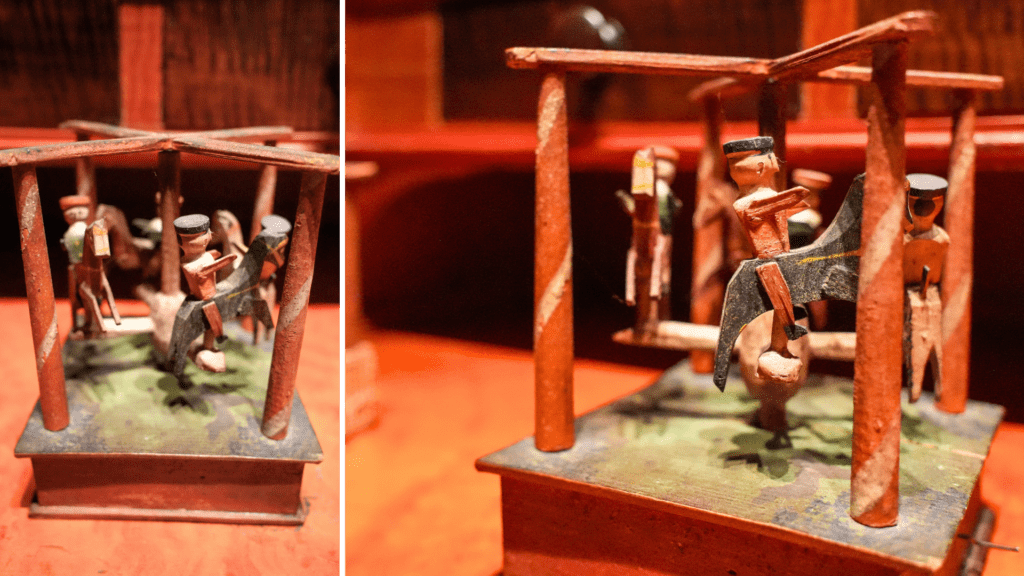
The building opened April 25, 1961, in time for the tenth annual Spring Tour. Herman Miller furniture—stacked chairs in red, two shades of grey, and tan placed around white tables—filled the dining room. As a whimsical touch, du Pont added carousel figures in one corner. Sliding wood dividers screened the cafeteria area and could create smaller seating areas if desired. The large glass window panels could slide open to let the outside in. The tall atrium space held towering potted palm trees.

Soon after its completion, the Pavilion began to be used more frequently throughout the year, not just in spring. In 1966, the Homseys completed the addition of the Copeland Lecture Hall to fill the need for a large space for conferences and lectures. It was named in honor of du Pont’s cousin Lammot du Pont Copeland and his wife Pamela, long-time supporters of Winterthur. (The Copelands’ more traditional-style residence, Mt. Cuba, is also the work of the Homseys.) In addition to the auditorium, there was a small room near the entrance, called the Crystal Dining Room, that could be used for a special gathering; later the space was the bookstore section dedicated to children’s books and gifts. 

When the Pavilion opened, it included a ticketing desk (in a different formation), a cafeteria, and an orientation space that later was the bookstore (1977–2020). This month, Winterthur will again have an orientation gallery in the very same space. We are eager to welcome you and all who arrive in the Visitor Center into the gallery for a brief introduction to Winterthur and all it has to offer. Stop in and take a look! 

This blog is based on research by Jeff Groff, a former estate historian.

A Love of Tulips

By Josh Horowitz

As an estate guide at Winterthur, I’m often asked which flower is my favorite. It’s a hard question to answer, like asking which child you love the most, but I found my favorite flower here—not in the gardens, but in the Winterthur Library.

During a wander through the stacks sometime in early 2023, I came across the book Tulipomania by Mike Dash. Within the first five pages I was hooked. I purchased my own copy and over the next few months learned about the history and spread of tulips throughout the world. Tulipomania explores when tulip bulbs in the Netherlands became a hotly traded commodity in the early 17th century. This led to a mania, skyrocketing prices, and eventually an economic crash.  

Through reading this book, I gained a deep passion for tulips. These humble bulbs endured a journey from the steep mountains of modern-day Kyrgyzstan in central Asia, through the royal gardens of the Ottoman empire, and into the sandy soil of the Netherlands where they became a part of the Netherlands’ national identity.

In April of 2024, I hosted a virtual Member lecture connecting Tulipomania to the Winterthur collection. I discovered that Henry Francis du Pont served as a member of the National Tulip Association from 1947–1951 and found orders for dozens of different varieties of bulbs that were grown in the Winterthur greenhouses and later displayed in the home.

While present-day tulips at Winterthur are mostly only planted in potted arrangements designed by the horticultural department, they appear on nearly every floor of the museum. In the Readbourne Parlor on the fourth floor, for example, a fireplace is surrounded by English delft tiles depicting tulips and fritillaria.

Tulips were a popular motif for the tile markets of Europe from the 17th through the19th centuries. When German and Dutch immigrants moved to Pennsylvania, they brought elements of their culture with them, and tulips are a common design motif on ceramics, furniture, fabric, and works on paper in the collection.

Inspired by my research, my wife and I chose the Netherlands as the destination for our elopement in 2024. Though we missed the tulips in bloom, we visited the floating flower market along the canals on our wedding day in Amsterdam. We bought a few dozen bulbs that day, whose leaves have recently appeared in our garden in Germantown. I planted around one hundred tulips that year and get to enjoy their display this year as spring greets us all.

NEH Grant Terminated

April 7, 2025

Late last week we learned that our $71,880 multiyear federal grant from the National Endowment for the Humanities (NEH), which supports Winterthur’s independent research fellowship program, has been terminated effective immediately. The term for this grant was approved in 2023 to fund $20,000 stipends for three visiting research fellows over three years, along with related administrative costs.

We’ve assured our current NEH fellow that we’ll secure alternative funding to support her research, which is scheduled to end in mid-June. We’ve also committed to funding the next fellowship through other means if the candidate accepts the position that we offered a few days prior to receiving the grant termination notice from DOGE.

Given the current situation, we’ve been taking proactive steps to reduce Winterthur’s reliance on federal and state grants. Our annual operating budget has typically included $300,000 to $600,000 in funding from various sources, including the NEH, the Institute of Museum and Library Services (IMLS), the National Endowment for the Arts (NEA), the National Park Service, Delaware Humanities, and the Delaware Division of the Arts.

Winterthur has used NEH grants to fund exhibition and research project planning, large cataloguing projects, and to underwrite the prestigious fellowships we’ve offered through Fellowship Programs at Independent Research Institutions (FPIRI) back to 2004 and beyond. Federal funds enabled us to make description and access enhancements to the museum collections database of more than 90,000 objects.

In addition to the direct impact on Winterthur’s budget allocation, we’ve also been notified that the University of Delaware’s NEH grant funds have been terminated. Among other university programs, this cut impacts some students in the joint graduate-level Winterthur/University of Delaware Program in Art Conservation. The university is working to identify new funding streams, and Winterthur will support those efforts in whatever way we can.

With continued federal and state pass-through funding in doubt for the foreseeable future, we will recalibrate and find ways to continue to offer our programs. I’m committed to working with all of you so that our important programs and research will find support through other avenues.

To start, we’ve spoken with U.S. Senator Chris Coons and other state officials to share the impact of these federal cuts on Winterthur’s programs and people. We’re also communicating with our Board of Trustees, partners, and supporters. We will continue this advocacy.

We also know our strength lies in our community—people like you who care deeply about our mission. Here are the ways you can help:

Stay Informed: We will keep you updated. In addition, you can visit the National Humanities Alliance and Delaware Humanities websites.

Engage with Our Programming: Support and attend exhibitions and events.

Advocate for Winterthur & Other Cultural Institutions: Champion our cause within your networks.

Thank you for your ongoing support. Together, we’ll continue to thrive and ensure current and future generations enjoy Winterthur’s gardens, museum, library, cultural and educational offerings.

Learn more about our independent research fellowship program and or contribute by visiting https://my.winterthur.org/donate/q/academic-programs .

Tattooable Designs in the Winterthur Library

By Allie Avis

The Winterthur Library is a  global center for the study of decorative arts. But what about the art of decorating … yourself? Among the more than 1 million books and manuscripts that pack the Winterthur Library’s shelves, unassuming gray acid-free boxes guard the once-taboo contents of two very special sketchbooks—original designs for tattoos. But these pieces of art, purpose-made to be permanently inked on the skin of sailors and adventurous individuals, are far from the only tattoo-worthy designs in our collection. The library is a veritable treasure trove of ink inspiration.

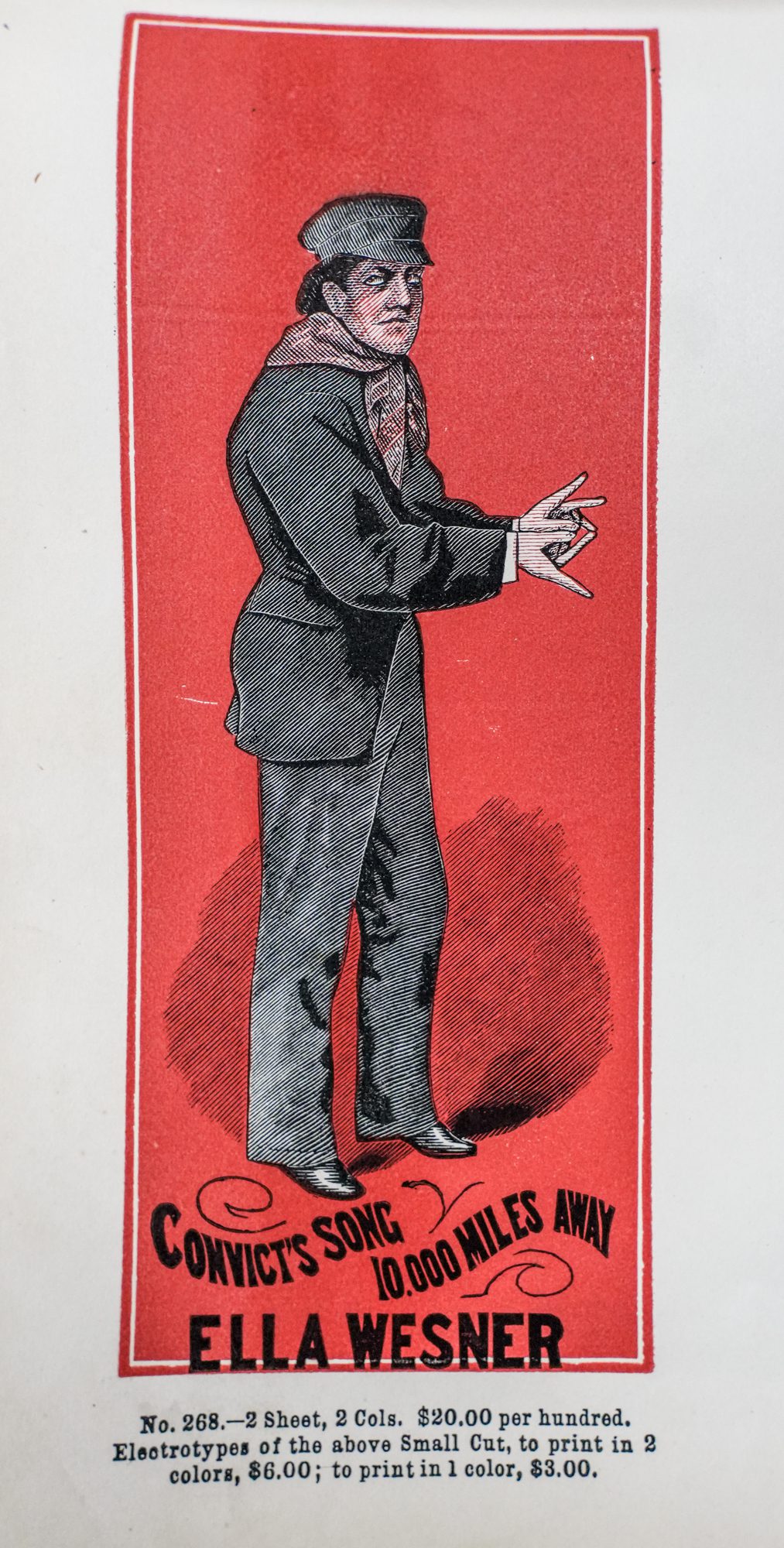
Let’s begin with the tattoo pattern books. Both dating from the 19th century, these objects are truly remarkable survivals. Also called flash books—a term borrowed from the eye-catching advertisements produced to promote traveling circuses—they were created by artists as a catalogue of sorts, a repository of ready-to-tattoo designs (as opposed to custom designs). Modern tattoo artists still produce flash designs, or flash for short, which can often be seen decorating the walls of their shops. All you need to do is walk in and point to what you want.

The older of the two books lacks both artistic attribution and a definite date, although scholars have speculated it may have been created as early as the 1850s. It does, however, record the artist’s recipe for tattoo ink. Its designs will be immediately familiar to tattoo aficionados as belonging to the American traditional (or old school) style—think Sailor Jerry—that is marked by strong black outlines, a relatively limited color palette, and little shading. This artist’s primary clientele was likely sailors, and it’s possible he even plied his trade aboard a ship at some point. The mixture of strong patriotic motifs was particularly appealing to those in the Navy, and religious and sentimental designs speak to the emotional priorities of the sailors, who would be away from home in potentially dangerous conditions for long periods of time.

The newer book is dated 1897 and is attributed to W. Christiansen, a Danish immigrant. Christiansen’s designs share some stylistic and subject overlap with those in the anonymous pattern book, with the addition of some Danish national devices. A notable difference is that Christiansen helpfully included the prices for his flash. A more visual difference is Christiansen’s apparent predilection for subjects from the theater and circus; a lovely trapeze artist, a clown, a dancer identified as Dagmar Hansen, and other beauties fall between anchors, flags, and various trade tools.

While a design from Christiansen’s flash has made it onto the forearm of your humble author, these two pattern books are only the tip of the iceberg of possibilities for library-inspired tattoos. From grammars of ornament to books of calligraphy to botanical illustrations, if you’ve got a theme in mind, the library has something for you! In fact, we have so many possibilities for bibliographic tattoos that we’re holding an open house on Saturday, April 12, from 10:00 am–12:00 pm to show off dozens of design highlights from our special collections. This event is open to all, including tattoo artists, people looking for new ink, and folks who simply want to spend the morning looking at beautiful books. No reservations are needed, but if you have any questions about this event or about the library’s tattooable design sources, please reach out to Allie Alvis, curator of special collections, at aalvis@winterthur.org.

Caring for Your Collections: Textile Conservation Tips

As this coverlet is prepared for storage in a box, the folds are supported with padded rolls to prevent creases and tears. 

Textiles are more than just fabric; they weave together the stories of our homes, families, and personal journeys. Whether it is a hand-stitched rug or needlework, or a cherished heirloom like a wedding dress, these pieces hold special meaning. To keep your treasured textiles looking their best for years to come, here are some helpful tips you can use at home.

If you want to display your textiles, think about where and how to show them, to reduce the risk of damage and ensure their long-term care. Light exposure is a key factor to consider, as both ultraviolet (UV) and visible light can harm textiles, with UV being particularly damaging. We suggest putting UV filters on windows and using specialized glass or acrylic for frames. Make sure your framer uses archival materials and avoids having any adhesives directly touch historic textiles.

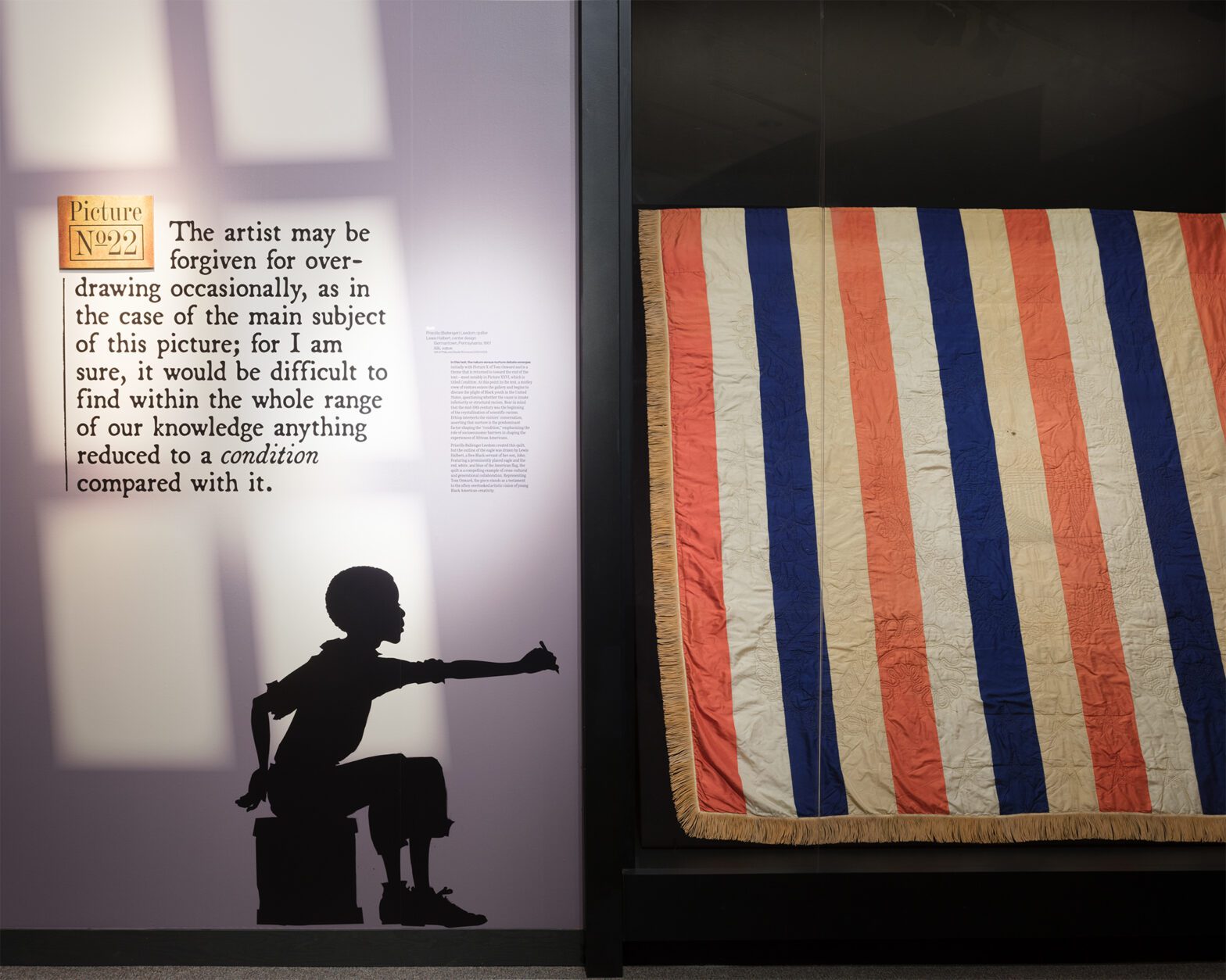
You may want to showcase larger items like quilts and tapestries by mounting them on the wall using hook-and-loop fasteners like Velcro®. The softer loop side can be machine-sewn onto cotton twill tape, which can then be hand-stitched onto the top edge of the textile. This will provide even support along the entire length of the piece.

1. Display

Caring for curtains, rugs, and upholstery can be challenging as they are constantly in use. As with other textiles, limit light exposure as much as possible, especially direct sunlight. Curtains can be lined with less precious fabric and rotated if possible. Carpet protectors under furniture feet can help reduce damage to the pile by distributing weight. Remember, any textiles subjected to regular use will naturally show signs of wear and tear over time.

2. Storage

Storage systems for textiles that are not on display should effectively protect against light damage and dust buildup. While various textiles may require different types of support, all benefit from a stable environment, avoiding extreme temperatures and humidity levels. We recommend not storing valuable items in basements or attics. We suggest keeping these textiles where you live—storing them in a bedroom is a good option.

3. Boxes

At Winterthur, we store textiles in archival boxes. Polyethylene plastic bins can be a cost-effective alternative for home textile collectors. This type of plastic is ideal because it’s more stable and doesn’t emit volatile gases. No matter the box you use, line it with a large piece of cotton muslin or an undyed bed sheet. This lining acts as a supportive sling, making it easier to lift items out of the box. Folded textiles may eventually suffer from fiber breaks along the fold line. To minimize harsh creasing, we pad the folds with unbuffered acid-free tissue. You can also use a rolled undyed cotton textile such as a pillowcase, terry cloth towel, or bed sheet.

Light damage has caused the color of this jacket to fade and has contributed to tears in the brittle silk.

4. Hangers

Although many garments can be stored in boxes, some items are better suited for hanging. These include those that are in good structural condition, have three-dimensional parts that could be crushed if stored in a box, and are not made of stretchy materials. A good hanger will evenly distribute the weight without distorting the collar, shoulders, or sleeves. Many museums opt for plastic hangers, although wooden hangers are a good option if the wood is covered with an aluminum foil barrier. Cover the hanger with polyester batting to create a padded shoulder support, then cover the padding with medical stockinette or cotton fabric for added protection. For pants or skirts, choose hangers with wide clamps for optimal support. Avoid hangers with small slips, as they can lead to distortions and tears.

5. Rolls

Some textiles, such as carpets, are best stored rolled. Long and narrow items, like lace, are also suited for this type of storage. While museums use archival tubes, home collectors can use a cardboard tube wrapped in aluminum foil to create a protective barrier. The weight and diameter of the tube should match the size of the textile. Start by wrapping a small piece of cotton around the tube completely, then overlap the edge of your textile with this fabric. This cotton header will help make it easier to roll the textile more evenly. Once rolled, cover the textile with clean cotton muslin or an undyed bed sheet. To keep out light and dust, secure the rolled package with cotton twill tape. Don’t forget to attach a photo and label to the twill tape so you can easily identify what it is.

6. Care and Cleaning

Textiles displayed in your home should be monitored for dust accumulation. Dust attracts insects and moisture, and over time it may become embedded in the surface, potentially causing chemical alterations. To clean the dust, use a soft brush or a puffer tool, carefully guiding the dust into a vacuum nozzle. Be careful with the vacuum to avoid suction that is too powerful and avoid using abrasive upholstery brushes on delicate textile surfaces. If you do use an upholstery brush, use a gentle up-and-down tapping motion. Or place a fiberglass screen over the textile before vacuuming to provide an extra layer of protection.

Washing or wet cleaning historic textiles is a considerable intervention and should only be attempted cautiously. Textile conservators perform extensive and thorough testing before any wet cleaning to ensure that the dyes and materials are safe for water exposure. If we decide that wet cleaning is safe and appropriate, we often use deionized water and Orvus WA paste, which is a surfactant without any optical brighteners or additives. More information is available in the book Caring for Your Cherished Objects. We recommend that you consult a textile conservator if you have any questions about whether a textile is suitable for wet cleaning.

A hook-and-loop fastener is used as a hanging system to display a quilt on a wall.

For more conservation tips, see our book Caring for your Cherished Objects which can be purchased in the Museum Store.

Explore More at Winterthur!

Visit our Conversations with the Collection exhibition in the Galleries.

Interested in visiting the conservation labs? Join one of our monthly behind-the-scenes tours

Sign up for a free consultation with our conservation staff and students to learn about how to take care of your family treasures. 

Useful links:

Need professional advice? Use this tool to find a professional conservator near you!

Setting the Table

By El Clauss

When Henry Francis du Pont designed a dinner table setting, he always began with flowers. Several days before the party, his head gardener, Joseph Feliciani, would bring him cuttings from the garden so he could choose the centerpiece flower. Once that was decided, all other iterations of that flower would be removed from the house so as not to ruin the surprise. For my design, however, the flowers were the last piece I figured out.

When asked to create a setting that had an H. F. design feel, I wanted to connect the display to our Focus On: Ceramics Tour. I also wanted to highlight the different colors in the dining room—green, blue, yellow, and pink. Collaborating with Leslie Grigsby, senior curator of ceramics and glass, I discovered the charming green glass goblets. From there we chose from the wide array of items in the collection with the famille rose–patterned china, which is featured in the Focus on Ceramics tour.

Symmetry and balance were key elements of H. F.’s designs, which I also incorporated. Since he preferred to dine by candlelight, candle holders needed to be included. The two ladles I chose connect the outdoors with the indoors, as H. F. often did. One ladle’s handle features a basket of flowers, to represent the garden; the other shows an image of George Washington, to represent the collection.

H. F. purchased most of the blue linens from Marshal Fry, a prominent New York-based ceramist, teacher, and American impressionist painter, who turned to creating colorful linens for tablescapes in the early 20th century. As Maggie Litz notes in her article “The Politics of Placemats,” “In mid-twentieth-century America, Fry was who you called if you took entertaining seriously.”[1] The blue with dark blue borders set was chosen because it brings out the blue on the ceramics beautifully. Lastly, I worked with our head florist, Heidi Militana, to design the centerpiece, which is bursting with yellow roses and blue hydrangeas.

We hope visitors will agree that we have set a table fit for a du Pont. Come see the display in the Du Pont Dining Room on the Self-Paced House Tour and let us know if we captured H. F.’s penchant for a well-laid table.


[1]Read more about Marshal Fry, his connection to H. F. du Pont, and how he revolutionized table linens in America in “The Politics of Placemats,The Magazine Antiques, January 3, 2025.

H. F. du Pont’s Enduring Legacy: 5 Lessons in Timeless Design

By Allie Kochinsky | @TheGrandmillennialLifestyle

Winterthur Museum, Garden & Library stands as a testament to the vision and artistry of Henry Francis du Poet, a man whose influence on American design continues to captivate and inspire. His carefully curated estate is a treasure trove of antiques and decorative arts and a living lesson in the principles of timeless design. For those who adore history-rich interiors with lots of charm, du Pont’s legacy offers invaluable insights. Let’s explore five lessons from Winterthur that remain as relevant today as they were in du Pont’s time.

Embrace a Sense of Place

H.F. du Pont’s design choices were rooted—no pun intended—in his surroundings. He celebrated the landscape, incorporating nature into the estate’s interiors through botanical motifs, floral arrangements, and garden-inspired palettes. His thoughtful integration of indoor and outdoor spaces reminds us to honor the character of our own homes and draw inspiration from their natural settings.

Curate Intentionally

Every room at Winterthur tells a story, with each element meticulously chosen for its historical significance, craftsmanship, or personal meaning. H.F.’s approach teaches us the power of purposeful curation—selecting items that reflect our stories and values rather than following fleeting trends.

Layer

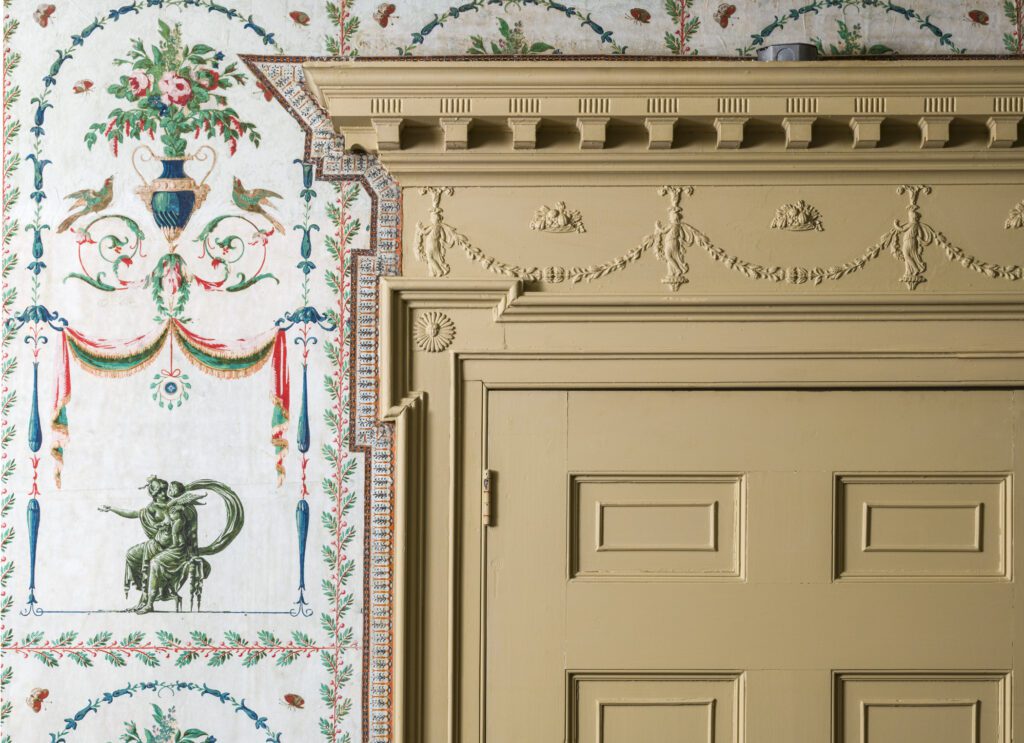
Du Pont was a masterful layerer of fabrics, wallpapers, and textiles. He seemingly effortlessly combined prints and patterns, creating dynamic and harmonious spaces. Modern design lovers experiment with layering today, using texture and pattern to add depth and personality to their rooms.

Celebrate Craftsmanship

Winterthur’s collection showcases the artistry of early American craftspeople, from intricate woodwork to hand-painted ceramics. Du Pont’s reverence for quality craftsmanship reminds us to seek out well-made, enduring pieces—whether antique or contemporary—that honor the hands and history behind them.

Continue reading on The Grandmillennial Lifestyle blog, and listen to my interview with Alexandra Deutsch, Director of Collections, on Grandma’s Silver.

“Full many a flower is born to blush unseen…”

By Julie Hadsell

“It is a truth universally acknowledged” that Jane Austen is a fan favorite for literature lovers all over the world.[1] Known for her beloved stories centering on themes of love, class, and social expectations set in Regency era England, Austen penned six novels that stand the test of time. In Emma, the last to be published before Austen’s death, our titular character experiences troubles and triumphs as she practices her matchmaking skills and perhaps even ends up with a match herself.

Austen lovers (also known as Janeites) may be interested to learn that the Winterthur Library holds a rare Austen in its collections. Published in Philadelphia in 1816 by Mathew Carey, this edition of Emma was the first Jane Austen work to be published in the United States, with only six known copies still surviving.[2] At the time, an American publisher reprinting a British work without informing the original publisher and author was fully legal, so we can assume Austen never knew about this first U.S. edition.  

What makes this edition so special? Mathew Carey immigrated to the United States from Ireland in 1784, and was a publisher, businessman, political writer, and self-proclaimed lover of novels and romances. In late 1816, he published Emma with a print run of 500 copies, almost a year to the day after the original edition was published in England. The book was credited on the title page to “the author of Pride and Prejudice,” though American readers did not yet have a reprint of Austen’s earlier works.  

Publishing Emma was a significant financial risk for Carey, and unfortunately no documentation exists to explain his decision to reprint the novel. At the time, Austen was an anonymous author never published in the States, and Carey and his printers took several economic shortcuts to save money on their risk. Some of these included condensing the novel into two volumes—it had originally been published in England in three—and using cheap paper and bindings. This, combined with sometimes rushed work assumed to be done by a young and inexperienced apprentice, likely explains why only six copies of the original 500 are known to still exist. In her book Reading Austen in America, Juliette Wells explains, “given the (understandably) low production values of Carey’s reprinted Emma, volumes would likely have disintegrated unless an owner cared enough to invest in having them rebound well.”  

Despite the shortcuts taken in its production, Winterthur’s copy of Emma, bound in calf leather and bearing the signature of E. I. du Pont, is in great condition. This lack of wear or significant markings sets Emma apart from other titles in the du Ponts’ personal libraries, and suggests that Emma was either not frequently read, or not enjoyed. Despite this possible lack of interest on the du Ponts’ part, E. I. du Pont was a contemporary of Mathew Carey and owned many of his publications. 

Interested in viewing Winterthur’s copy of Jane Austen’s Emma? Contact the Winterthur Library at reference@winterthur.org, but don’t delay. Emma will be traveling to the Morgan Library in New York for their exhibition A Lively Mind: Jane Austen at 250 from May through September 2025. 

Interested in learning more about the six surviving copies? Find Reading Austen in America by Juliette Wells at the Winterthur Library during any drop-in visit, Monday–Friday.  


[1] Opening line from Jane Austen’s Pride and Prejudice: a Novel.

[2] Read more about Mathew Carey and how he published the U.S. reprint of Emma in Juliette Wells,  Reading Austen in America, 2017.