Search Site

NEH Grant Terminated

April 7, 2025

Late last week we learned that our $71,880 multiyear federal grant from the National Endowment for the Humanities (NEH), which supports Winterthur’s independent research fellowship program, has been terminated effective immediately. The term for this grant was approved in 2023 to fund $20,000 stipends for three visiting research fellows over three years, along with related administrative costs.

We’ve assured our current NEH fellow that we’ll secure alternative funding to support her research, which is scheduled to end in mid-June. We’ve also committed to funding the next fellowship through other means if the candidate accepts the position that we offered a few days prior to receiving the grant termination notice from DOGE.

Given the current situation, we’ve been taking proactive steps to reduce Winterthur’s reliance on federal and state grants. Our annual operating budget has typically included $300,000 to $600,000 in funding from various sources, including the NEH, the Institute of Museum and Library Services (IMLS), the National Endowment for the Arts (NEA), the National Park Service, Delaware Humanities, and the Delaware Division of the Arts.

Winterthur has used NEH grants to fund exhibition and research project planning, large cataloguing projects, and to underwrite the prestigious fellowships we’ve offered through Fellowship Programs at Independent Research Institutions (FPIRI) back to 2004 and beyond. Federal funds enabled us to make description and access enhancements to the museum collections database of more than 90,000 objects.

In addition to the direct impact on Winterthur’s budget allocation, we’ve also been notified that the University of Delaware’s NEH grant funds have been terminated. Among other university programs, this cut impacts some students in the joint graduate-level Winterthur/University of Delaware Program in Art Conservation. The university is working to identify new funding streams, and Winterthur will support those efforts in whatever way we can.

With continued federal and state pass-through funding in doubt for the foreseeable future, we will recalibrate and find ways to continue to offer our programs. I’m committed to working with all of you so that our important programs and research will find support through other avenues.

To start, we’ve spoken with U.S. Senator Chris Coons and other state officials to share the impact of these federal cuts on Winterthur’s programs and people. We’re also communicating with our Board of Trustees, partners, and supporters. We will continue this advocacy.

We also know our strength lies in our community—people like you who care deeply about our mission. Here are the ways you can help:

Stay Informed: We will keep you updated. In addition, you can visit the National Humanities Alliance and Delaware Humanities websites.

Engage with Our Programming: Support and attend exhibitions and events.

Advocate for Winterthur & Other Cultural Institutions: Champion our cause within your networks.

Thank you for your ongoing support. Together, we’ll continue to thrive and ensure current and future generations enjoy Winterthur’s gardens, museum, library, cultural and educational offerings.

Learn more about our independent research fellowship program and or contribute by visiting https://my.winterthur.org/donate/q/academic-programs .
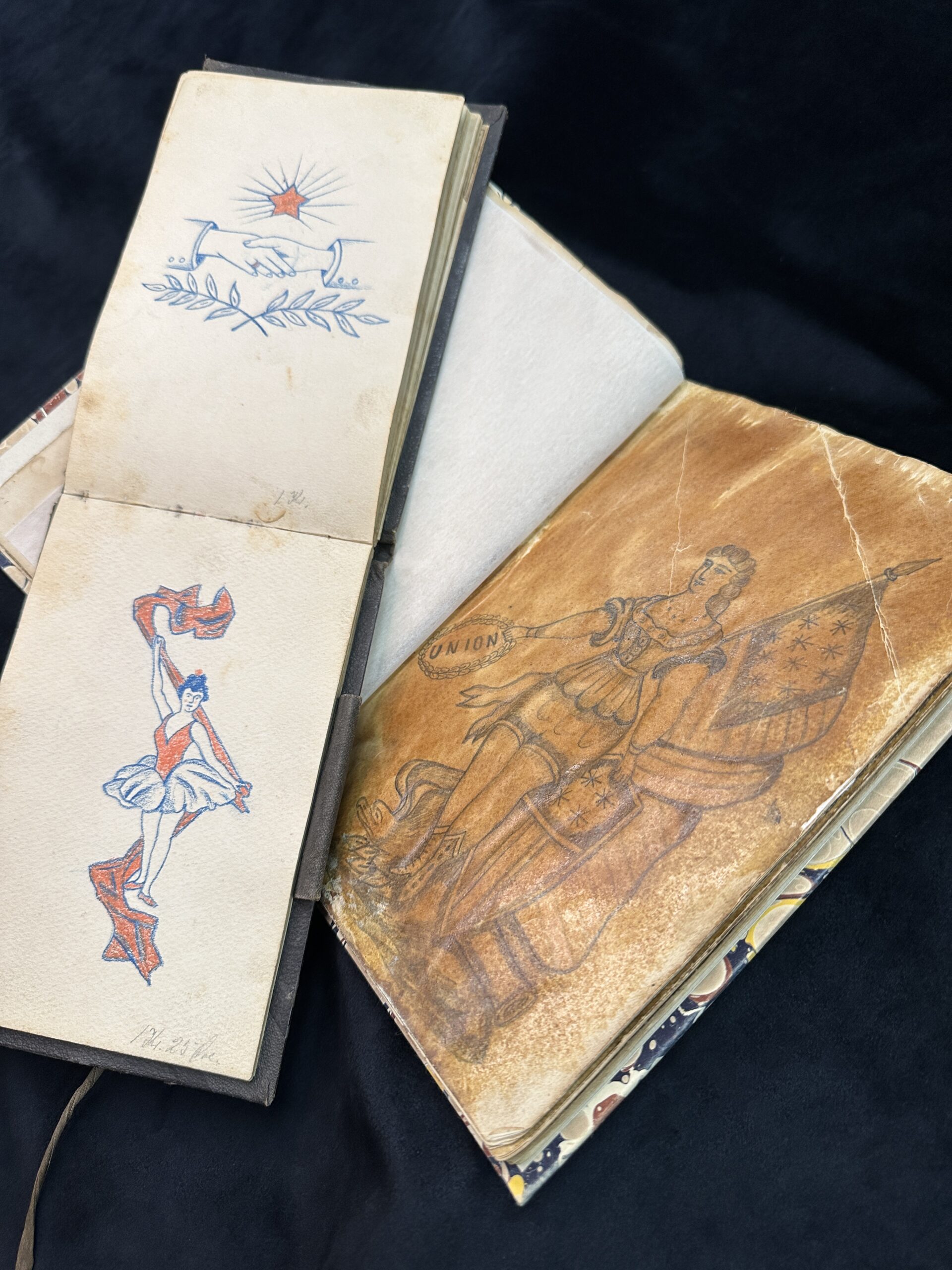
Tattooable Designs in the Winterthur Library

By Allie Avis

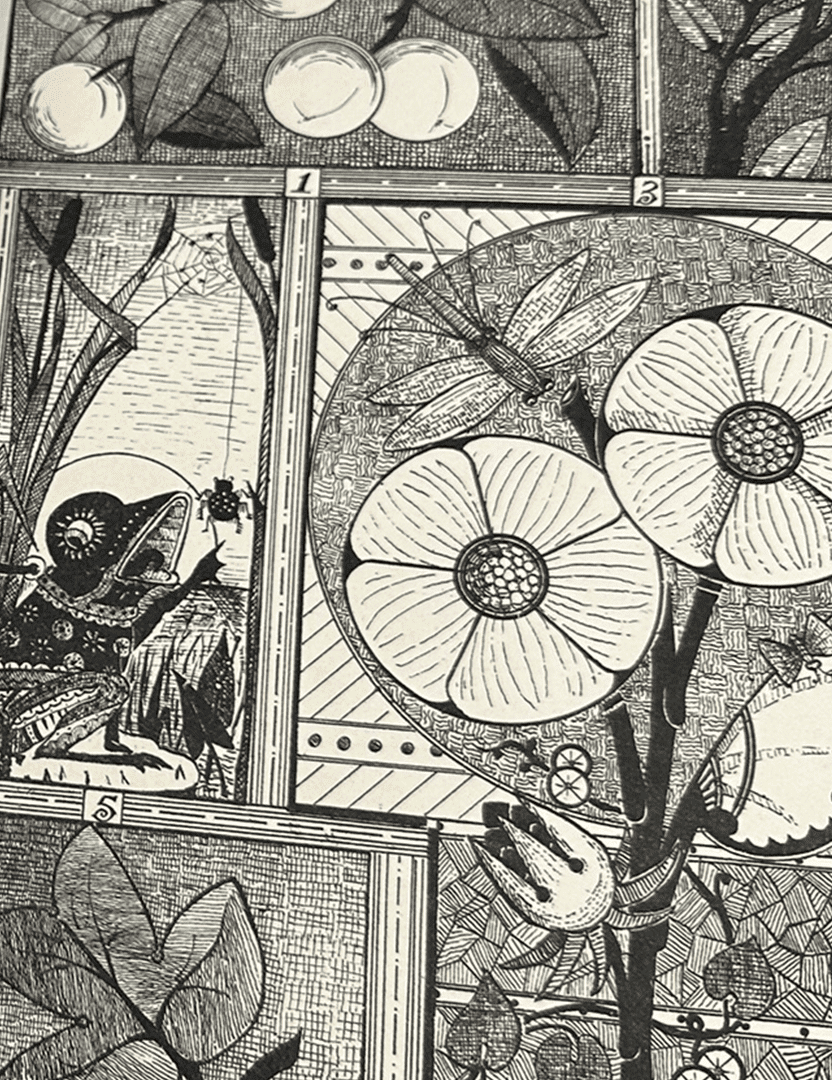
The Winterthur Library is a  global center for the study of decorative arts. But what about the art of decorating … yourself? Among the more than 1 million books and manuscripts that pack the Winterthur Library’s shelves, unassuming gray acid-free boxes guard the once-taboo contents of two very special sketchbooks—original designs for tattoos. But these pieces of art, purpose-made to be permanently inked on the skin of sailors and adventurous individuals, are far from the only tattoo-worthy designs in our collection. The library is a veritable treasure trove of ink inspiration.

Let’s begin with the tattoo pattern books. Both dating from the 19th century, these objects are truly remarkable survivals. Also called flash books—a term borrowed from the eye-catching advertisements produced to promote traveling circuses—they were created by artists as a catalogue of sorts, a repository of ready-to-tattoo designs (as opposed to custom designs). Modern tattoo artists still produce flash designs, or flash for short, which can often be seen decorating the walls of their shops. All you need to do is walk in and point to what you want.

The older of the two books lacks both artistic attribution and a definite date, although scholars have speculated it may have been created as early as the 1850s. It does, however, record the artist’s recipe for tattoo ink. Its designs will be immediately familiar to tattoo aficionados as belonging to the American traditional (or old school) style—think Sailor Jerry—that is marked by strong black outlines, a relatively limited color palette, and little shading. This artist’s primary clientele was likely sailors, and it’s possible he even plied his trade aboard a ship at some point. The mixture of strong patriotic motifs was particularly appealing to those in the Navy, and religious and sentimental designs speak to the emotional priorities of the sailors, who would be away from home in potentially dangerous conditions for long periods of time.

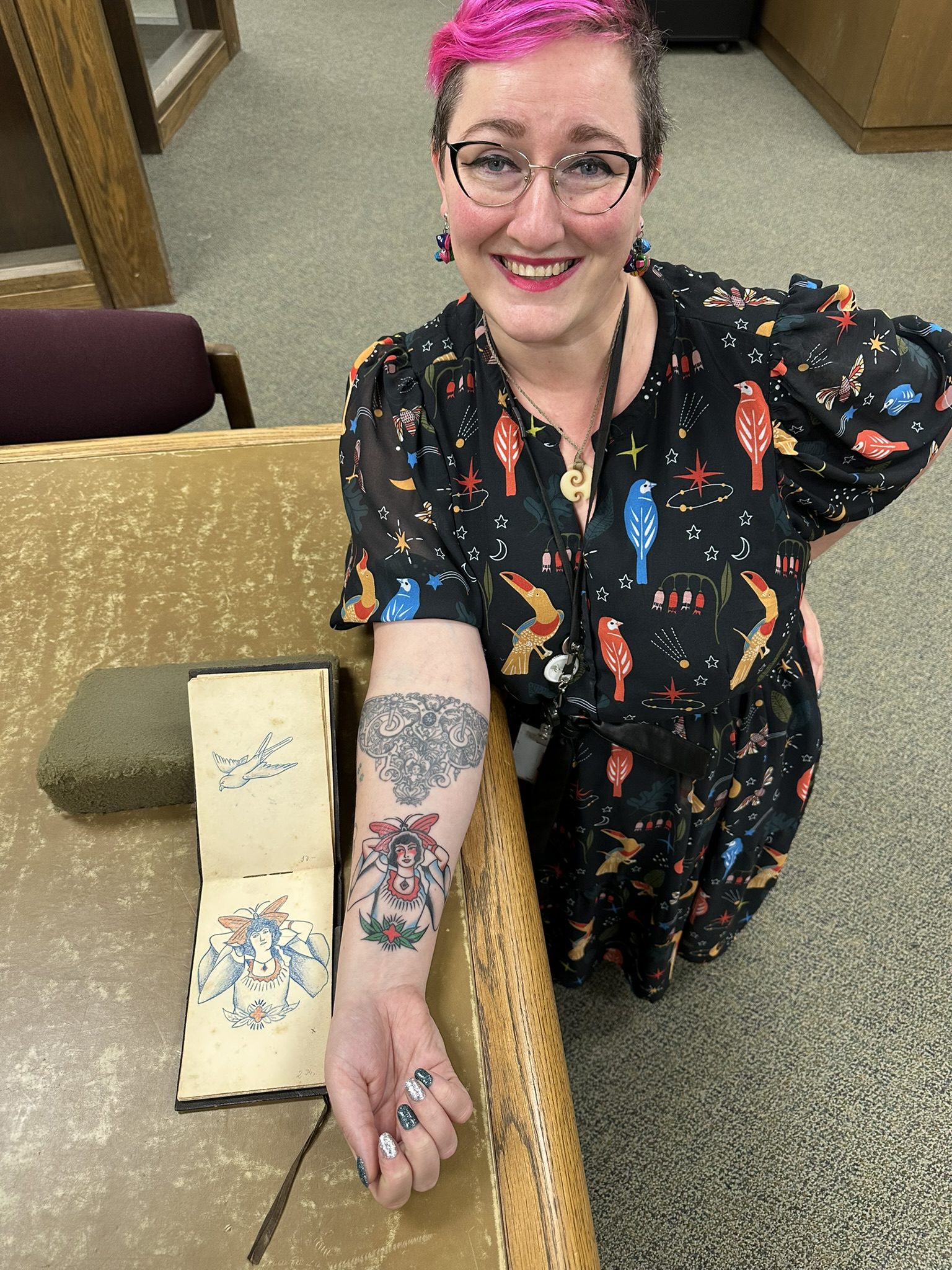
The newer book is dated 1897 and is attributed to W. Christiansen, a Danish immigrant. Christiansen’s designs share some stylistic and subject overlap with those in the anonymous pattern book, with the addition of some Danish national devices. A notable difference is that Christiansen helpfully included the prices for his flash. A more visual difference is Christiansen’s apparent predilection for subjects from the theater and circus; a lovely trapeze artist, a clown, a dancer identified as Dagmar Hansen, and other beauties fall between anchors, flags, and various trade tools.

While a design from Christiansen’s flash has made it onto the forearm of your humble author, these two pattern books are only the tip of the iceberg of possibilities for library-inspired tattoos. From grammars of ornament to books of calligraphy to botanical illustrations, if you’ve got a theme in mind, the library has something for you! In fact, we have so many possibilities for bibliographic tattoos that we’re holding an open house on Saturday, April 12, from 10:00 am–12:00 pm to show off dozens of design highlights from our special collections. This event is open to all, including tattoo artists, people looking for new ink, and folks who simply want to spend the morning looking at beautiful books. No reservations are needed, but if you have any questions about this event or about the library’s tattooable design sources, please reach out to Allie Alvis, curator of special collections, at aalvis@winterthur.org.

Caring for Your Collections: Textile Conservation Tips

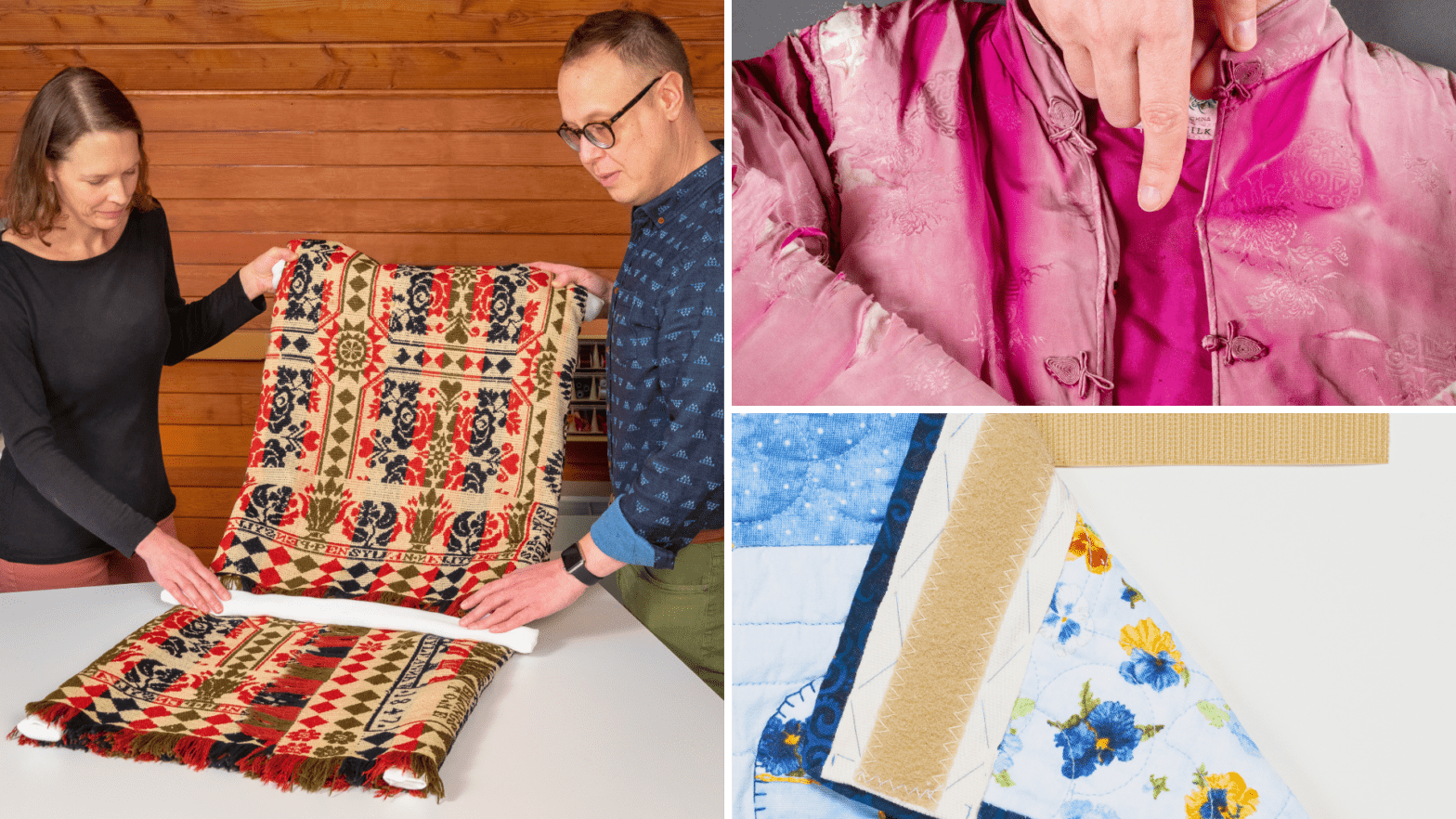
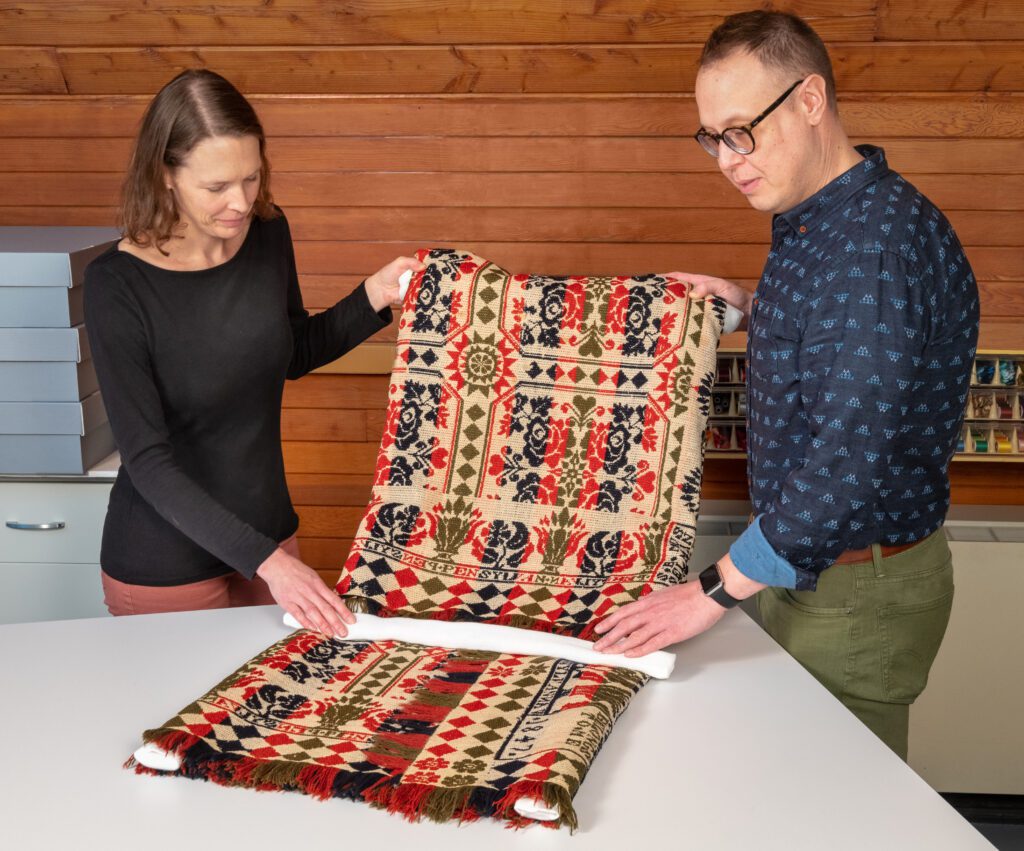
As this coverlet is prepared for storage in a box, the folds are supported with padded rolls to prevent creases and tears. 

Textiles are more than just fabric; they weave together the stories of our homes, families, and personal journeys. Whether it is a hand-stitched rug or needlework, or a cherished heirloom like a wedding dress, these pieces hold special meaning. To keep your treasured textiles looking their best for years to come, here are some helpful tips you can use at home.

If you want to display your textiles, think about where and how to show them, to reduce the risk of damage and ensure their long-term care. Light exposure is a key factor to consider, as both ultraviolet (UV) and visible light can harm textiles, with UV being particularly damaging. We suggest putting UV filters on windows and using specialized glass or acrylic for frames. Make sure your framer uses archival materials and avoids having any adhesives directly touch historic textiles.

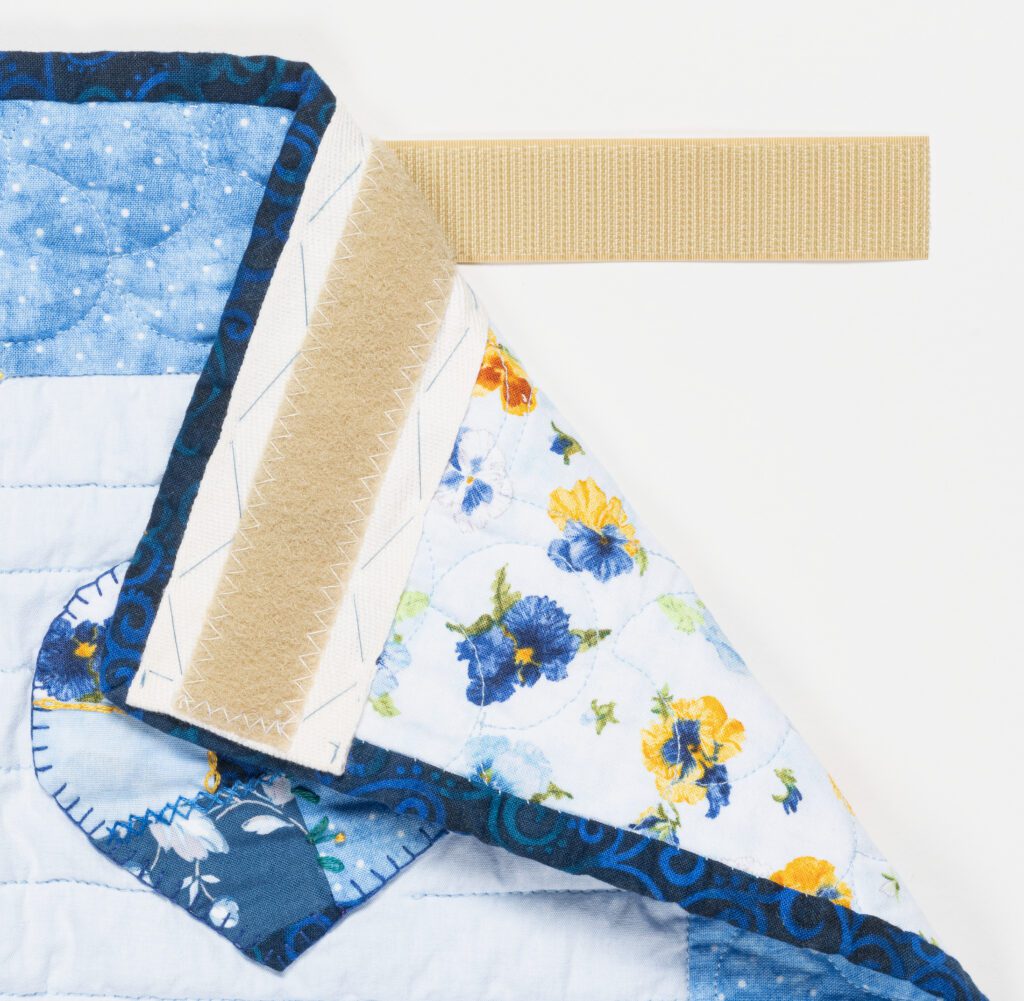
You may want to showcase larger items like quilts and tapestries by mounting them on the wall using hook-and-loop fasteners like Velcro®. The softer loop side can be machine-sewn onto cotton twill tape, which can then be hand-stitched onto the top edge of the textile. This will provide even support along the entire length of the piece.

1. Display

Caring for curtains, rugs, and upholstery can be challenging as they are constantly in use. As with other textiles, limit light exposure as much as possible, especially direct sunlight. Curtains can be lined with less precious fabric and rotated if possible. Carpet protectors under furniture feet can help reduce damage to the pile by distributing weight. Remember, any textiles subjected to regular use will naturally show signs of wear and tear over time.

2. Storage

Storage systems for textiles that are not on display should effectively protect against light damage and dust buildup. While various textiles may require different types of support, all benefit from a stable environment, avoiding extreme temperatures and humidity levels. We recommend not storing valuable items in basements or attics. We suggest keeping these textiles where you live—storing them in a bedroom is a good option.

3. Boxes

At Winterthur, we store textiles in archival boxes. Polyethylene plastic bins can be a cost-effective alternative for home textile collectors. This type of plastic is ideal because it’s more stable and doesn’t emit volatile gases. No matter the box you use, line it with a large piece of cotton muslin or an undyed bed sheet. This lining acts as a supportive sling, making it easier to lift items out of the box. Folded textiles may eventually suffer from fiber breaks along the fold line. To minimize harsh creasing, we pad the folds with unbuffered acid-free tissue. You can also use a rolled undyed cotton textile such as a pillowcase, terry cloth towel, or bed sheet.

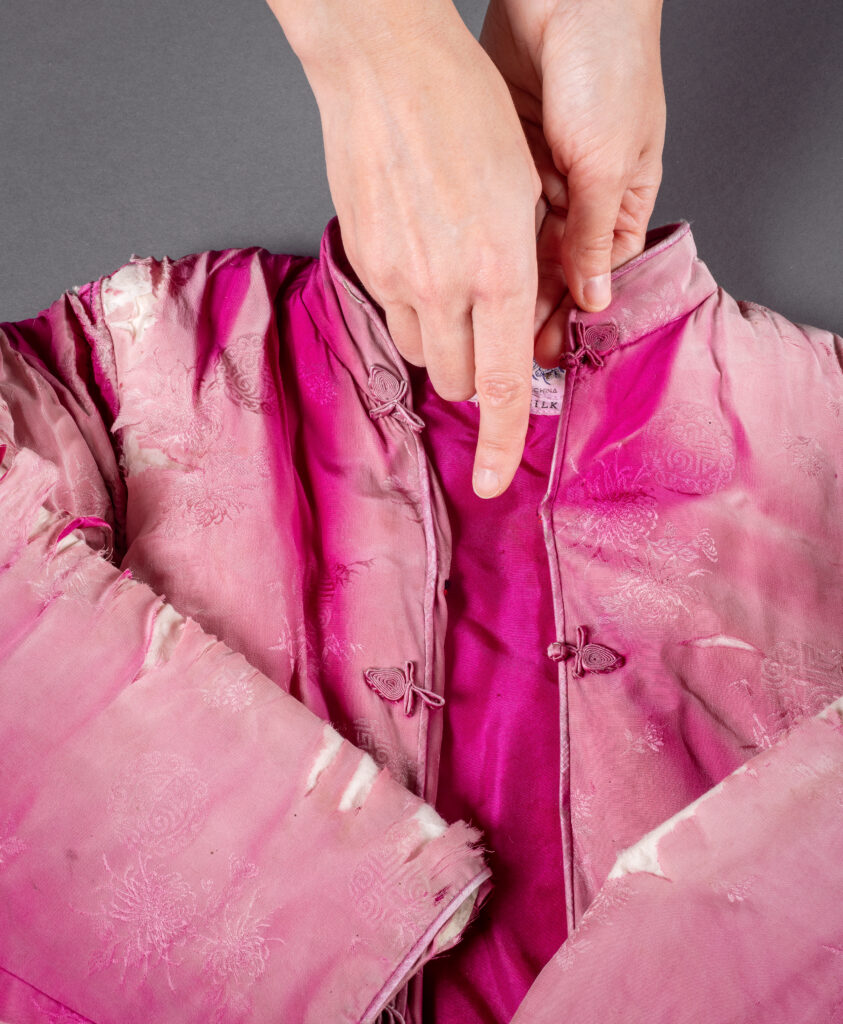
Light damage has caused the color of this jacket to fade and has contributed to tears in the brittle silk.

4. Hangers

Although many garments can be stored in boxes, some items are better suited for hanging. These include those that are in good structural condition, have three-dimensional parts that could be crushed if stored in a box, and are not made of stretchy materials. A good hanger will evenly distribute the weight without distorting the collar, shoulders, or sleeves. Many museums opt for plastic hangers, although wooden hangers are a good option if the wood is covered with an aluminum foil barrier. Cover the hanger with polyester batting to create a padded shoulder support, then cover the padding with medical stockinette or cotton fabric for added protection. For pants or skirts, choose hangers with wide clamps for optimal support. Avoid hangers with small slips, as they can lead to distortions and tears.

5. Rolls

Some textiles, such as carpets, are best stored rolled. Long and narrow items, like lace, are also suited for this type of storage. While museums use archival tubes, home collectors can use a cardboard tube wrapped in aluminum foil to create a protective barrier. The weight and diameter of the tube should match the size of the textile. Start by wrapping a small piece of cotton around the tube completely, then overlap the edge of your textile with this fabric. This cotton header will help make it easier to roll the textile more evenly. Once rolled, cover the textile with clean cotton muslin or an undyed bed sheet. To keep out light and dust, secure the rolled package with cotton twill tape. Don’t forget to attach a photo and label to the twill tape so you can easily identify what it is.

6. Care and Cleaning

Textiles displayed in your home should be monitored for dust accumulation. Dust attracts insects and moisture, and over time it may become embedded in the surface, potentially causing chemical alterations. To clean the dust, use a soft brush or a puffer tool, carefully guiding the dust into a vacuum nozzle. Be careful with the vacuum to avoid suction that is too powerful and avoid using abrasive upholstery brushes on delicate textile surfaces. If you do use an upholstery brush, use a gentle up-and-down tapping motion. Or place a fiberglass screen over the textile before vacuuming to provide an extra layer of protection.

Washing or wet cleaning historic textiles is a considerable intervention and should only be attempted cautiously. Textile conservators perform extensive and thorough testing before any wet cleaning to ensure that the dyes and materials are safe for water exposure. If we decide that wet cleaning is safe and appropriate, we often use deionized water and Orvus WA paste, which is a surfactant without any optical brighteners or additives. More information is available in the book Caring for Your Cherished Objects. We recommend that you consult a textile conservator if you have any questions about whether a textile is suitable for wet cleaning.

A hook-and-loop fastener is used as a hanging system to display a quilt on a wall.

For more conservation tips, see our book Caring for your Cherished Objects which can be purchased in the Museum Store.

Explore More at Winterthur!

Visit our Conversations with the Collection exhibition in the Galleries.

Interested in visiting the conservation labs? Join one of our monthly behind-the-scenes tours

Sign up for a free consultation with our conservation staff and students to learn about how to take care of your family treasures. 

Useful links:

Need professional advice? Use this tool to find a professional conservator near you!

Setting the Table

By El Clauss

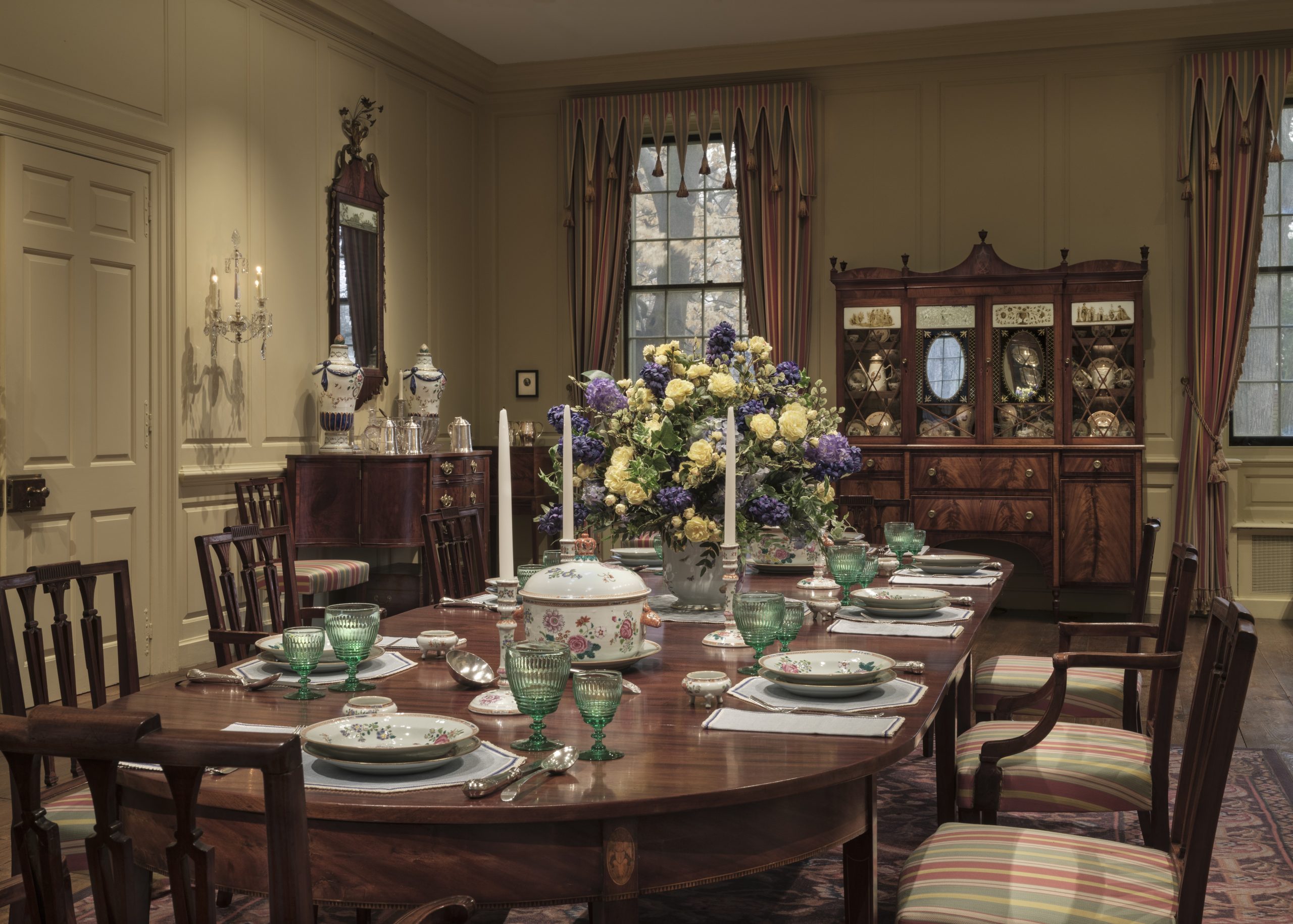
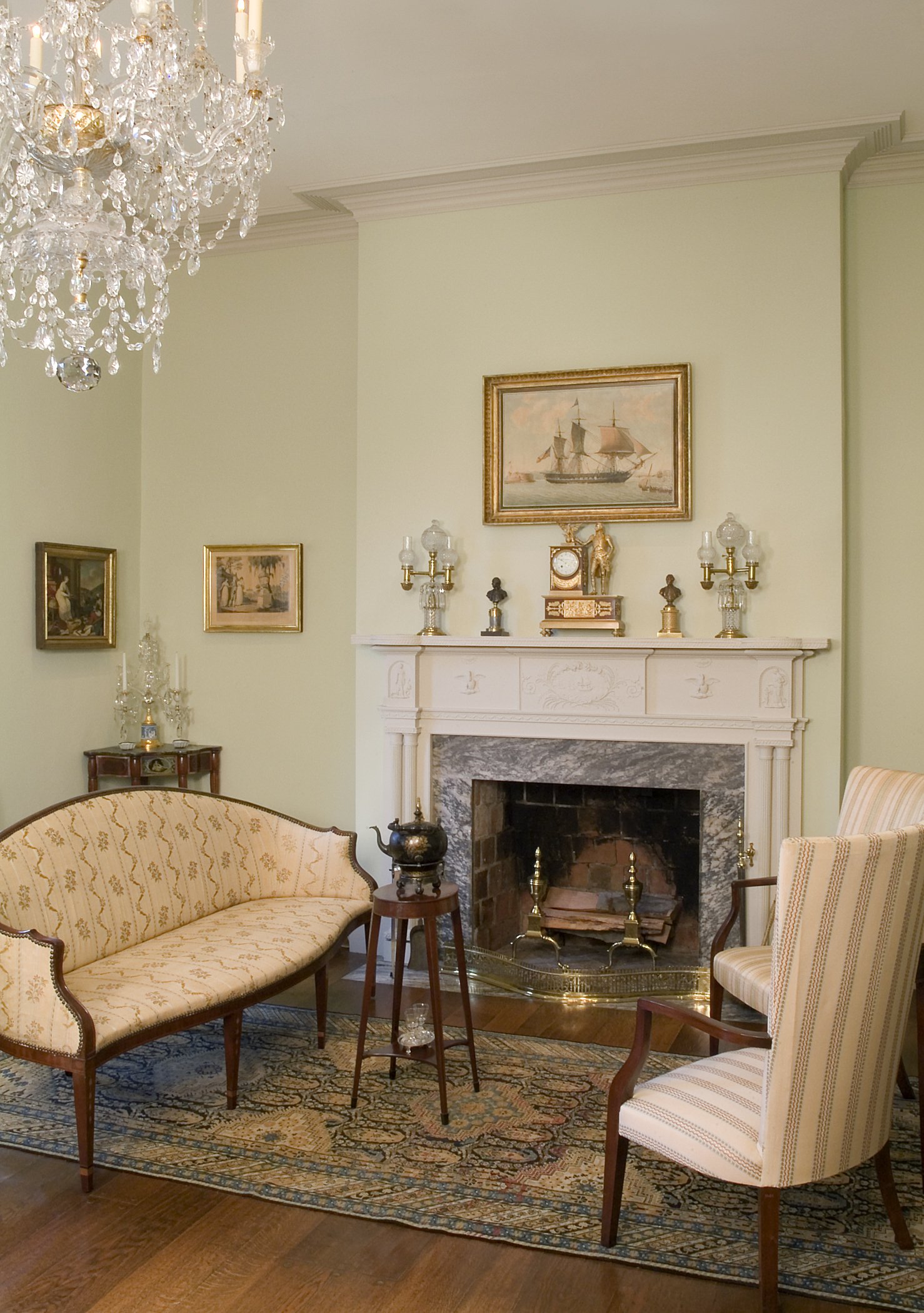
When Henry Francis du Pont designed a dinner table setting, he always began with flowers. Several days before the party, his head gardener, Joseph Feliciani, would bring him cuttings from the garden so he could choose the centerpiece flower. Once that was decided, all other iterations of that flower would be removed from the house so as not to ruin the surprise. For my design, however, the flowers were the last piece I figured out.

When asked to create a setting that had an H. F. design feel, I wanted to connect the display to our Focus On: Ceramics Tour. I also wanted to highlight the different colors in the dining room—green, blue, yellow, and pink. Collaborating with Leslie Grigsby, senior curator of ceramics and glass, I discovered the charming green glass goblets. From there we chose from the wide array of items in the collection with the famille rose–patterned china, which is featured in the Focus on Ceramics tour.

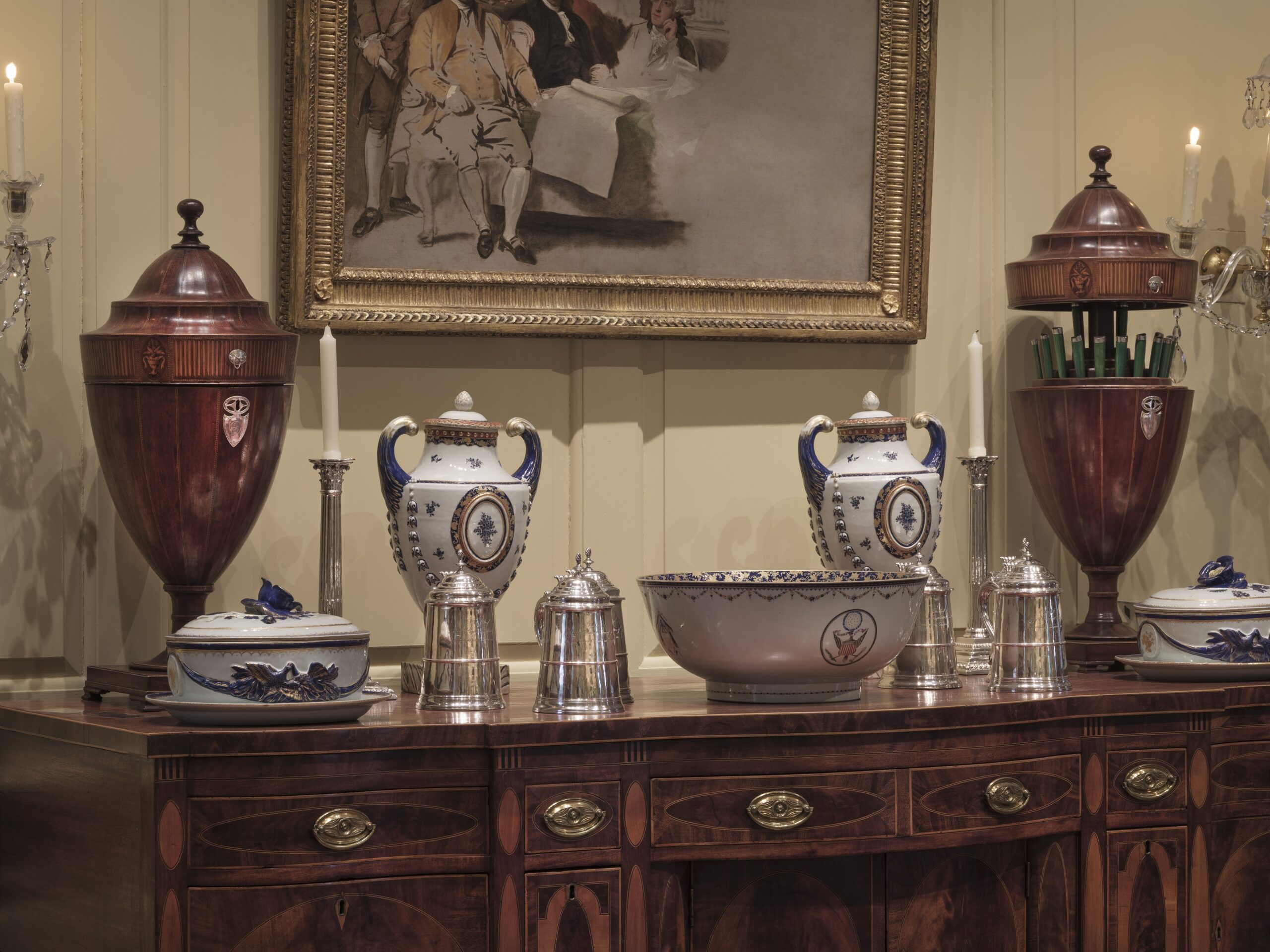
Symmetry and balance were key elements of H. F.’s designs, which I also incorporated. Since he preferred to dine by candlelight, candle holders needed to be included. The two ladles I chose connect the outdoors with the indoors, as H. F. often did. One ladle’s handle features a basket of flowers, to represent the garden; the other shows an image of George Washington, to represent the collection.

H. F. purchased most of the blue linens from Marshal Fry, a prominent New York-based ceramist, teacher, and American impressionist painter, who turned to creating colorful linens for tablescapes in the early 20th century. As Maggie Litz notes in her article “The Politics of Placemats,” “In mid-twentieth-century America, Fry was who you called if you took entertaining seriously.”[1] The blue with dark blue borders set was chosen because it brings out the blue on the ceramics beautifully. Lastly, I worked with our head florist, Heidi Militana, to design the centerpiece, which is bursting with yellow roses and blue hydrangeas.

We hope visitors will agree that we have set a table fit for a du Pont. Come see the display in the Du Pont Dining Room on the Self-Paced House Tour and let us know if we captured H. F.’s penchant for a well-laid table.


[1]Read more about Marshal Fry, his connection to H. F. du Pont, and how he revolutionized table linens in America in “The Politics of Placemats,The Magazine Antiques, January 3, 2025.

H. F. du Pont’s Enduring Legacy: 5 Lessons in Timeless Design

By Allie Kochinsky | @TheGrandmillennialLifestyle

Winterthur Museum, Garden & Library stands as a testament to the vision and artistry of Henry Francis du Poet, a man whose influence on American design continues to captivate and inspire. His carefully curated estate is a treasure trove of antiques and decorative arts and a living lesson in the principles of timeless design. For those who adore history-rich interiors with lots of charm, du Pont’s legacy offers invaluable insights. Let’s explore five lessons from Winterthur that remain as relevant today as they were in du Pont’s time.

Embrace a Sense of Place

H.F. du Pont’s design choices were rooted—no pun intended—in his surroundings. He celebrated the landscape, incorporating nature into the estate’s interiors through botanical motifs, floral arrangements, and garden-inspired palettes. His thoughtful integration of indoor and outdoor spaces reminds us to honor the character of our own homes and draw inspiration from their natural settings.

Curate Intentionally

Every room at Winterthur tells a story, with each element meticulously chosen for its historical significance, craftsmanship, or personal meaning. H.F.’s approach teaches us the power of purposeful curation—selecting items that reflect our stories and values rather than following fleeting trends.

Layer

Du Pont was a masterful layerer of fabrics, wallpapers, and textiles. He seemingly effortlessly combined prints and patterns, creating dynamic and harmonious spaces. Modern design lovers experiment with layering today, using texture and pattern to add depth and personality to their rooms.

Celebrate Craftsmanship

Winterthur’s collection showcases the artistry of early American craftspeople, from intricate woodwork to hand-painted ceramics. Du Pont’s reverence for quality craftsmanship reminds us to seek out well-made, enduring pieces—whether antique or contemporary—that honor the hands and history behind them.

Continue reading on The Grandmillennial Lifestyle blog, and listen to my interview with Alexandra Deutsch, Director of Collections, on Grandma’s Silver.

“Full many a flower is born to blush unseen…”

By Julie Hadsell

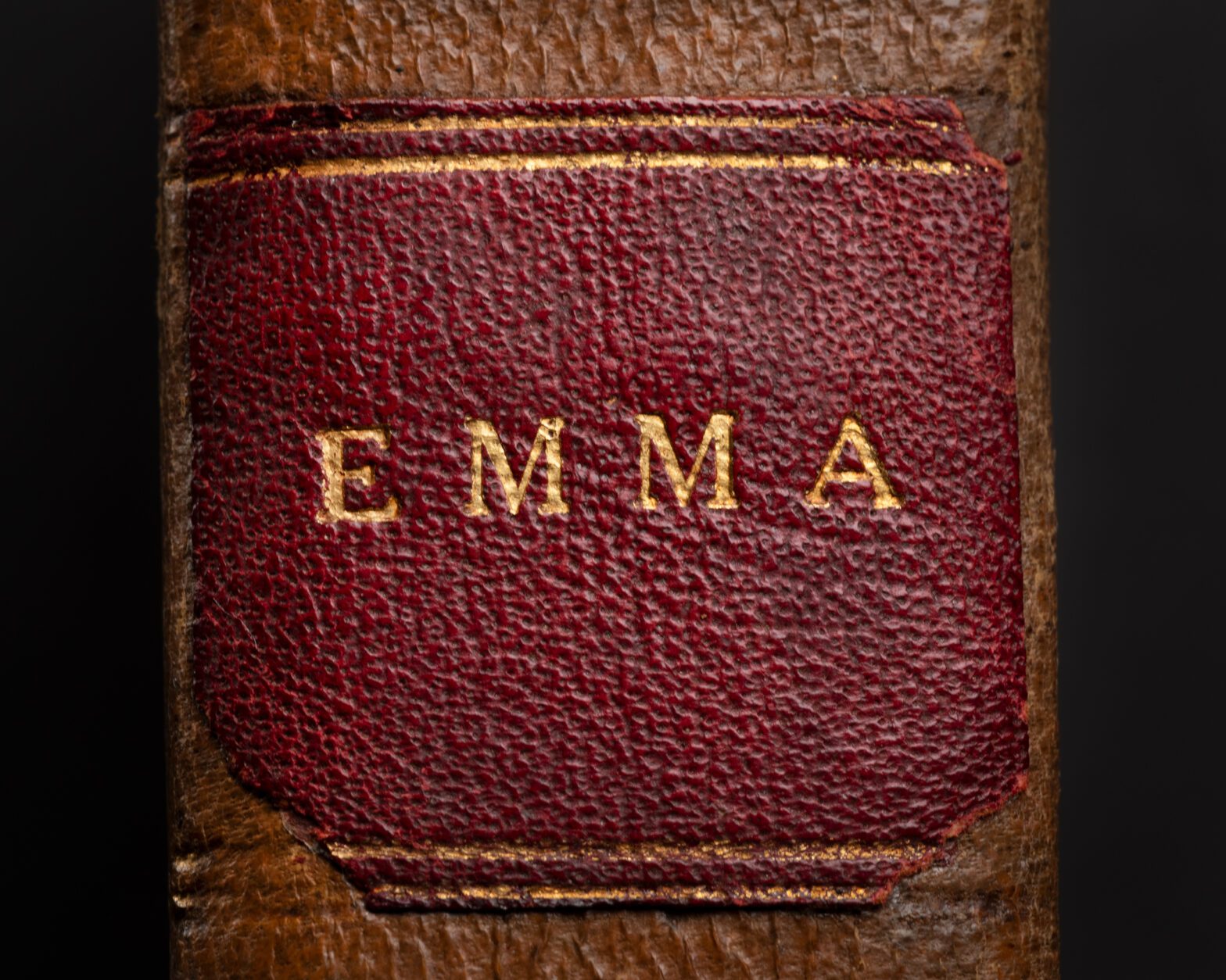
“It is a truth universally acknowledged” that Jane Austen is a fan favorite for literature lovers all over the world.[1] Known for her beloved stories centering on themes of love, class, and social expectations set in Regency era England, Austen penned six novels that stand the test of time. In Emma, the last to be published before Austen’s death, our titular character experiences troubles and triumphs as she practices her matchmaking skills and perhaps even ends up with a match herself.

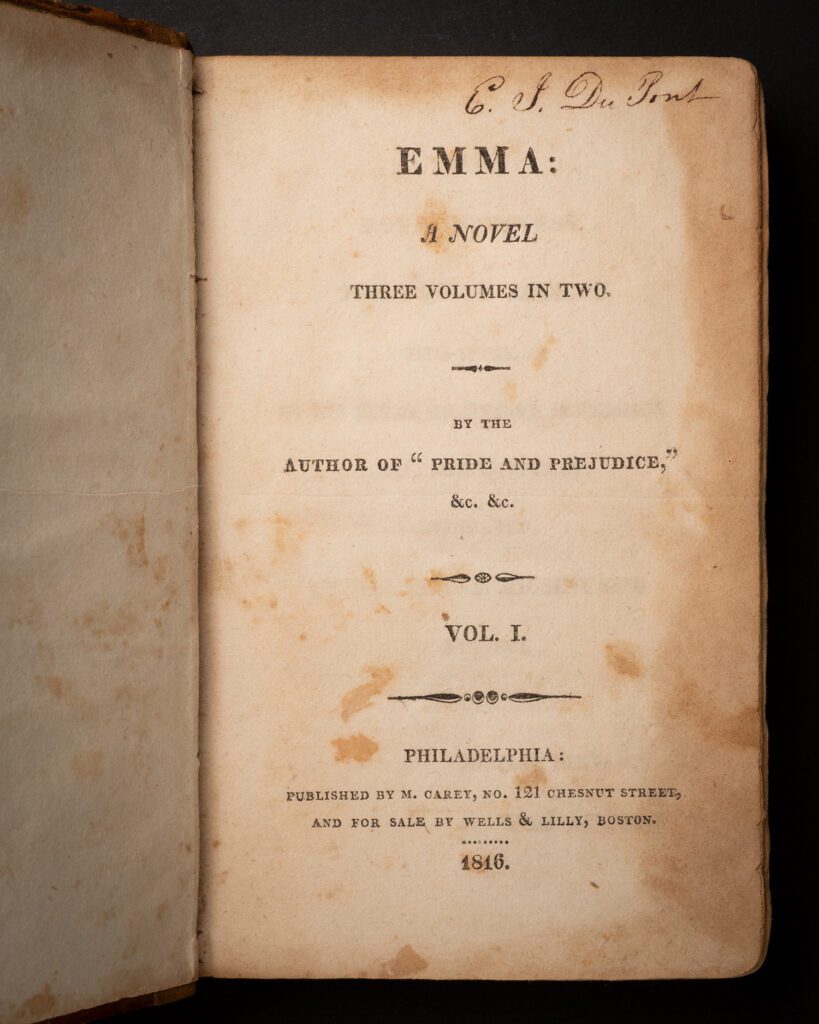
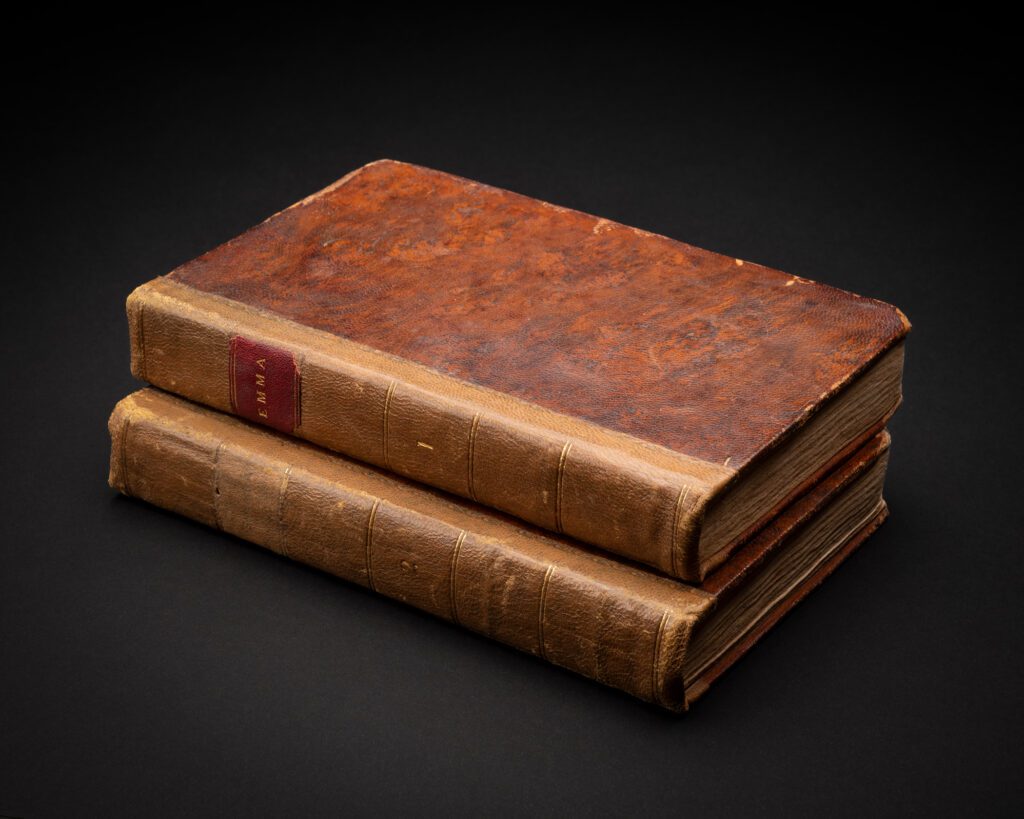
Austen lovers (also known as Janeites) may be interested to learn that the Winterthur Library holds a rare Austen in its collections. Published in Philadelphia in 1816 by Mathew Carey, this edition of Emma was the first Jane Austen work to be published in the United States, with only six known copies still surviving.[2] At the time, an American publisher reprinting a British work without informing the original publisher and author was fully legal, so we can assume Austen never knew about this first U.S. edition.  

What makes this edition so special? Mathew Carey immigrated to the United States from Ireland in 1784, and was a publisher, businessman, political writer, and self-proclaimed lover of novels and romances. In late 1816, he published Emma with a print run of 500 copies, almost a year to the day after the original edition was published in England. The book was credited on the title page to “the author of Pride and Prejudice,” though American readers did not yet have a reprint of Austen’s earlier works.  

Publishing Emma was a significant financial risk for Carey, and unfortunately no documentation exists to explain his decision to reprint the novel. At the time, Austen was an anonymous author never published in the States, and Carey and his printers took several economic shortcuts to save money on their risk. Some of these included condensing the novel into two volumes—it had originally been published in England in three—and using cheap paper and bindings. This, combined with sometimes rushed work assumed to be done by a young and inexperienced apprentice, likely explains why only six copies of the original 500 are known to still exist. In her book Reading Austen in America, Juliette Wells explains, “given the (understandably) low production values of Carey’s reprinted Emma, volumes would likely have disintegrated unless an owner cared enough to invest in having them rebound well.”  

Despite the shortcuts taken in its production, Winterthur’s copy of Emma, bound in calf leather and bearing the signature of E. I. du Pont, is in great condition. This lack of wear or significant markings sets Emma apart from other titles in the du Ponts’ personal libraries, and suggests that Emma was either not frequently read, or not enjoyed. Despite this possible lack of interest on the du Ponts’ part, E. I. du Pont was a contemporary of Mathew Carey and owned many of his publications. 

Interested in viewing Winterthur’s copy of Jane Austen’s Emma? Contact the Winterthur Library at reference@winterthur.org, but don’t delay. Emma will be traveling to the Morgan Library in New York for their exhibition A Lively Mind: Jane Austen at 250 from May through September 2025. 

Interested in learning more about the six surviving copies? Find Reading Austen in America by Juliette Wells at the Winterthur Library during any drop-in visit, Monday–Friday.  


[1] Opening line from Jane Austen’s Pride and Prejudice: a Novel.

[2] Read more about Mathew Carey and how he published the U.S. reprint of Emma in Juliette Wells,  Reading Austen in America, 2017.

Caring for Your Collections: Caring for Your Family’s Gravestones

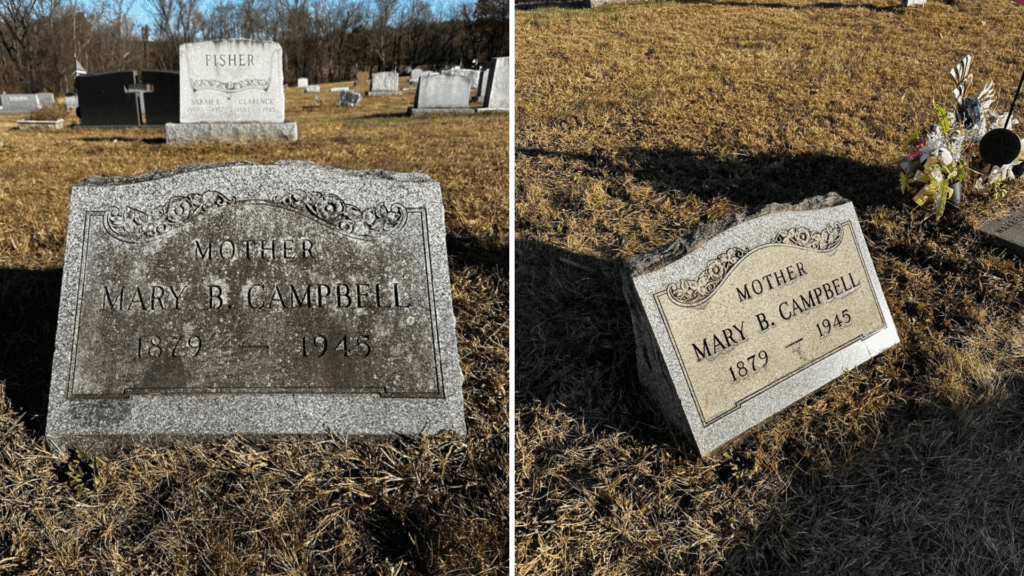
Left: Binh-An Nguyen lightly scrubbing Mary Campbell gravestone; Right: Binh-An Nguyen rinsing Mary Campbell gravestone.

This edition of Caring for Your Collections blog posts comes from Binh-An Nguyen, a student in the Winterthur/University of Delaware Program in Art Conservation. Binh-An specializes in preventive conservation, which focuses on slowing down deterioration of objects by setting up good rules and habits for how to care for them.

Why should I clean my family’s gravestones?

There are many reasons why you may want to clean your family’s gravestones. Cleaning can make the names and inscriptions more easily readable so you can find the gravestone more easily, now and in the future. Cleaning them is also a way to show care or respect for loved ones who have passed. 

What substances need to be cleaned from headstones?

Lichen, moss, or other living organisms that grown on gravestones are known as biogrowth. Biogrowth does not just exist on gravestones, it can exist on any surface with the right conditions—you may have noticed it on the roof of your house, for example.

Why is the biogrowth there?

Biogrowth loves moist environments. Rougher surfaces can cause moisture to be retained on the surface, creating ideal conditions for biofilms, lichens, etc. to grow. Gravestones with smoother, more polished finishes, on the other hand, may be less susceptible to biogrowth. Some gravestones use a combination of rough and smooth stones; you may notice that the biogrowth seems to prefer the rougher areas. Other environmental factors, such as location under a shady tree or in a rainy area, may also make a gravestone retain moisture, contributing to biogrowth. 

Left: Mary Campbell gravestone before cleaning; Right: Mary Campbell gravestone after cleaning.

What supplies do I need to clean a gravestone?

  • D/2 biological cleaner: A quart-sized bottle can clean many medium-sized gravestones
  • Clean water
  • Two hand pump sprayers or spray bottles, one for clean water and one for diluted D/2 biological cleaning solution. A garden sprayer may be more useful if you are cleaning many gravestones in one day.
  • Kitchen gloves
  • Nylon scrub brushes
  • Wooden or plastic popsicle sticks or spatulas
  • Orvus, a nonionic surfactant (optional)

Do I need to ask for permission before cleaning a gravestone?

If the gravestone is for someone in your immediate family and located in a cemetery, it is a good idea to ask the cemetery for permission or let them know what you are doing. 

If the gravestone is not for someone in your immediate family, make sure to also ask the immediate family or descendants of the person whose gravestone you want to clean. 

How do I clean my family’s gravestones?

We recommend doing this on a warmer day/week. If the weather is too cold, the water used to clean/rinse the gravestone may freeze and create cracks in the stone. Cleaning outside in the cold may not be enjoyable for you either! 

First, check the gravestone for any condition issues such as crumbling, separation of layers, “sugaring” (the stone crumbles when touched), etc., which may have affected the stability of the gravestone. If the gravestone is unstable, proceed with caution—cleaning it may cause further damage it. If it appears stable, then proceed to clean the gravestone using these steps:

  1. Trim any weeds from the base of the gravestone and brush away loose leaves or dirt.
  2. Wet the surface of the gravestone with clean water using the spray bottle or hand pump sprayer. Wetting the surface ensures that the cleaning solution stays on the surface and does not saturate the stone.
  3. Wearing kitchen gloves, apply a 1:1 solution of D/2 Biological Cleaner and clean water using a hand pump sprayer or spray bottle to saturate the surface. Allow the solution to sit for ~5 minutes and apply more as necessary to ensure the surface stays wet.
  4. Use a soft, nylon brush in slow circular motions to gently agitate the surface to allow the cleaning solution to saturate, and eventually remove, the biogrowth.
  5. Small amounts of Orvus can be applied directly to the stone and gently agitated with a soft, nylon brush to remove biofilm staining as needed. Rinse off the Orvus with clean water.
  6. Remove thicker lichen/biogrowth with wooden or plastic spatulas/popsicle sticks.
  7. Rinse the stone with clean water using a hand spray pump or spray bottle.
  8. Repeat steps 2–7 until desired cleaning level is achieved.

How often should I do this? 

Repetitive cleaning can result in damaging the stone by making it unstable or wearing it down, so we recommend doing this no more than once a year. Additionally, using the biocide cleaning solution too often could result in biogrowth forming a resistance to the cleaner. 

What are some things I should NOT do?

Do not use bleach; it can chemically interact with the stone and cause unintentional erosion/degradation.

Do not use metal scrapers or metal brushes to clean. They can scratch the stone surface. A good rule of thumb is “whatever is safe to clean the hood of your car is safe for the gravestone!”

Want to learn more about this topic? Sign up for a free consultation with our conservation staff and students to learn about how to take care of your family treasures. Be sure to read our other Caring for Your Collections blogs, Protecting and Preserving Family Heirlooms and Hazardous Objects.

Useful links:

Journey Through a Jug: Decoding Design

September 9, 2025–November 1, 2026, in the Society of Winterthur Fellows Gallery

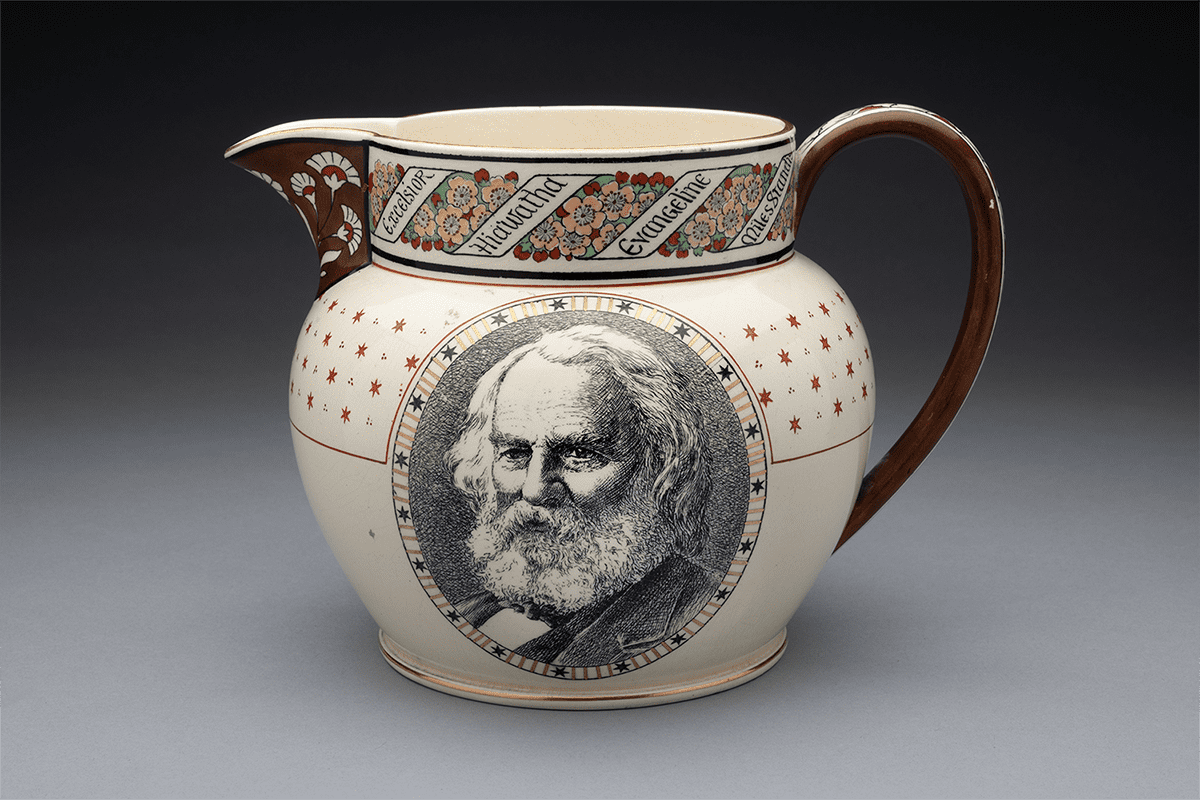
Explore a 145-year-old jug that once sat on the shelves of a Boston china and glass store. By looking closely at each decorative detail and by considering the time and place that this jug was popular, what at first glance might seem odd or puzzling will unravel to tell the tale of the “Longfellow jug.” By the time you leave the gallery, you will have answers to questions such as, Why do things look the way that they do? How did they come to look that way? What can we learn from an object’s design and decoration? You’ll be ready to ask these same questions of other objects at Winterthur and beyond.

Bringing the “Afric-American Picture Gallery” to Life for the First Time

Bringing the “Afric-American Picture Gallery” to Life for the First Time: Winterthur Presents Exhibition Inspired by 19th-Century Essay by Black Educator and Journalist

WINTERTHUR, DE (February 5, 2025)—Almost Unknown, The Afric-American Picture Gallery, a new exhibition at Winterthur inspired by a 19th-century essay by William J. Wilson, a free Black journalist and educator, will be on view starting May 3, 2025. Interpreted by curator and historian Jonathan Michael Square, the exhibition presents—for the first time ever—the gallery imagined by Wilson.

Square has assembled drawings, paintings, sculptures, and objects from across the Winterthur collections to represent Wilson’s gallery and Black life in the United States and across the Diaspora. The exhibition is on view May 3, 2025–January 4, 2026.

Wilson’s essay “The Afric-American Picture Gallery” was published in 1859 under the pen name “Ethiop” as a series of installments in the Anglo-African Magazine. It describes an imagined gallery space that Ethiop has curated. He leads a tour of the artworks that both celebrate and critique the experience of free and enslaved Black Americans in the 19th century.

Square was invited to Winterthur to develop an exhibition that aligned with his scholarship and interests, drawing from Winterthur’s collection of nearly 90,000 decorative art objects. This multifaceted exhibition presents Wilson’s envisioned gallery and sheds light on stories that have long been overlooked in American museums and history.

“William J. Wilson’s essay is a curious text that challenges us to consider our past, reflect on our present, and imagine a more inclusive future,” said Square. “The objects visitors will see may not be the exact ones that Wilson described. Instead, they reflect my reading of the text and its relevance today as it is revealed in the Winterthur collection.”

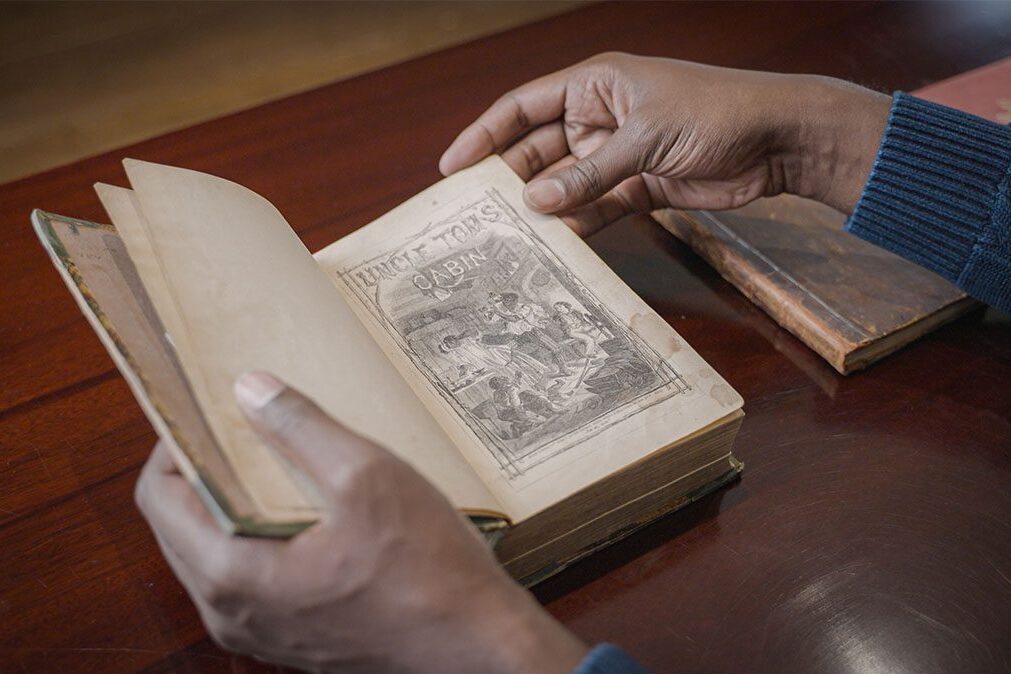
Almost Unknown brings to light what Wilson’s essay described as an “almost unknown Gallery” by sharing objects from Winterthur’s collection. They include a silhouette attributed to Moses Williams, a modest trivet made in early America in the form of an African symbol, and copies of Harriet Beecher Stowe’s Uncle Tom’s Cabin and Phillis Wheatley’s Poems on Various Subjects, among others.

Jonathan Michael Square is assistant professor of Black Visual Culture at Parsons School of Design. He holds a Ph.D. from New York University, an M.A. from the University of Texas at Austin, and a B.A. from Cornell University. He was previously a lecturer in the Committee on Degree in History and Literature at Harvard University and a fellow in the Costume Institute at the Metropolitan Museum of Art. He curated Past is Present: Black Artists Respond to the Complicated Histories of Slavery at the Herron School of Art and Design (2022–23), Freedom from Truth: Self Portraits of Nell Painter (2019–20), Odalisque Atlas: White History as Told Through Art (2019–20), and Slavery in the Hands of Harvard (2019). He has been published extensively in academic journals and popular press. A proponent in the power of social media as a platform for radical pedagogy, Square founded and runs the digital humanities project Fashioning the Self in Slavery and Freedom.

A special house tour will highlight Square’s interpretation of the essay. In addition, the symposium Looking Back to the Future: Realizing “The Afric-American Picture Gallery” will take place at Winterthur on November 14 and 15, 2025. The symposium is designed to engage a diverse audience including educators at both college and secondary levels, museum professionals, scholars and enthusiasts of African American history, and the wider community. The keynote speaker will be Fred Wilson, curator of Mining the Museum, the seminal 1992 exhibition at what is now the Maryland Center for History and Culture. Wilson used that museum’s collections to confront and challenge perceptions about history, culture, and race, and the installation continues to influence scholars and museum professionals today.

# # #

ABOUT WINTERTHUR MUSEUM, GARDEN & LIBRARY

Winterthur—known worldwide for its preeminent collection of American decorative arts, naturalistic garden, and research library for the study of American art and material culture—offers a variety of tours, exhibitions, programs, and activities throughout the year. Admission includes an introductory house tour, exhibitions, a narrated tram ride (weather and space permitting), and the Winterthur Garden.

Winterthur is located on Route 52, six miles northwest of Wilmington, Delaware, and five miles south of U.S. Route 1. Winterthur is committed to accessible programming for all. For information, including special services, call 800.448.3883 or visit winterthur.org. Winterthur is closed seasonally from early January through late February.

Contact: Lisa McVey
lmcvey@winterthur.org
302.888.4803 O 484.888.1727 M

Memorializing Friendship

By El Clauss

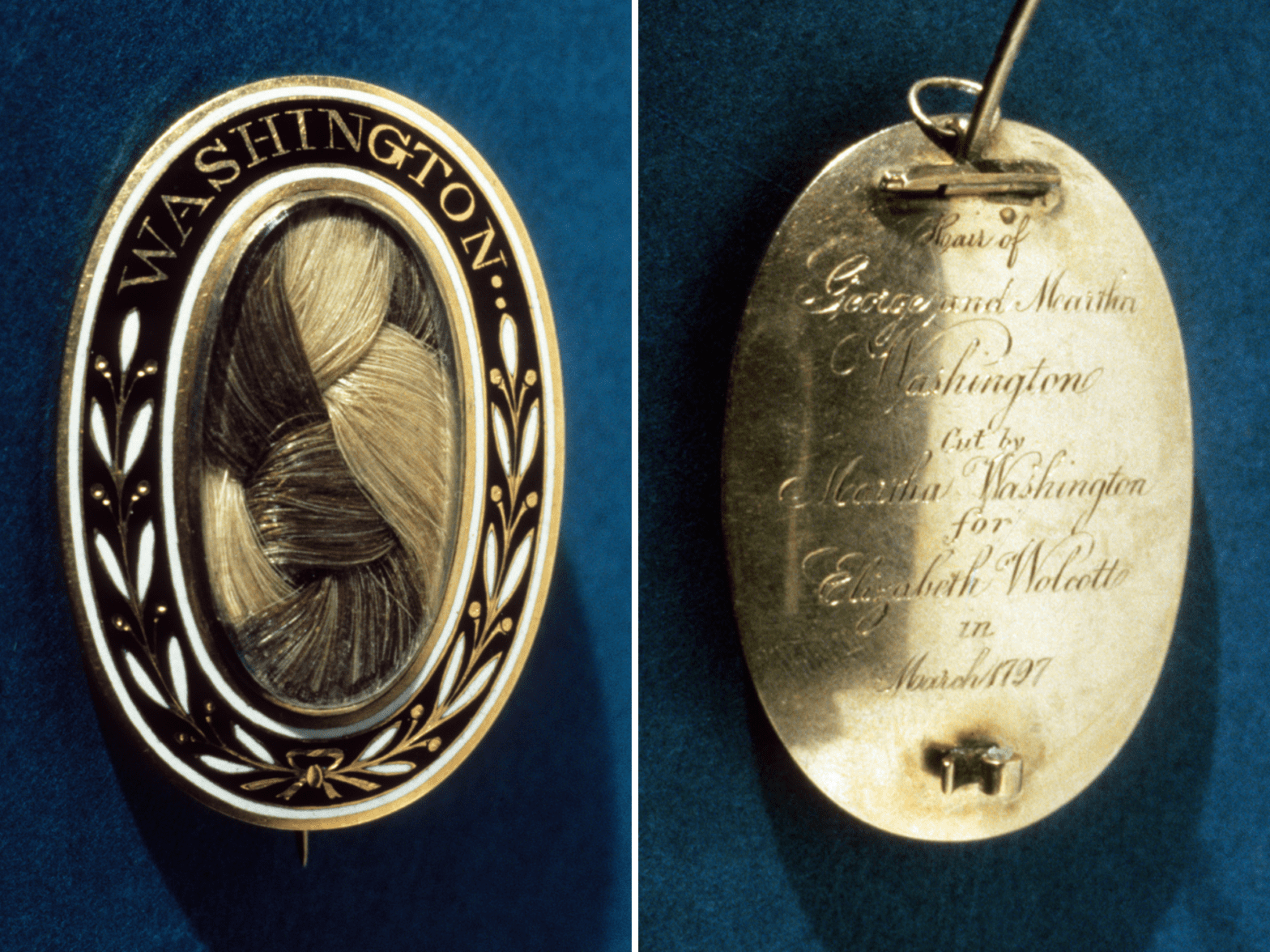
Imagine you got a letter from your dear friend requesting a lock of your husband’s hair. Once you received it, you picked up a pair of scissors and cut not only a lock of his hair but also a lock of your own. After entwining them, you sent them off to your friend. Upon receiving the hair, your friend enclosed the locks in a brooch and engraved it with the story commemorating your friendship.

This probably sounds strange to us in the 21st century when we share photos with friends and family hundreds or thousands of miles away. However, prior to photography, exchanging locks of hair was a common token of friendship.

This is a true story about Mrs. Elizabeth Stoughton Wolcott of Connecticut. She was married to Oliver Wolcott Jr., the first auditor of the United States and the second treasurer after Alexander Hamilton. She wrote a letter to her close friend Martha Washington asking for a token of their friendship. It is said that Mrs. Washington instantly took her scissors and, with a happy smile, cut a large lock of her husband’s hair, added to it one of her own, and presented them to her “fair friend.” While we are unsure exactly when Mrs. Wolcott had a brooch made with the hair enclosed, it would have celebrated their friendship. However, when George Washington died it took on a new role: mourning jewelry.

Mourning brooch or pin
1797: Washington City, United States
Gold; Enamel on copper; Hair; Leather; Glass
Gift of Mrs. Paul Hammond 1962.0084

Mourning jewelry are unique personal adornments worn during a period of mourning to commemorate someone who died. Originating in the Middle Ages, this jewelry tradition grew in popularity and the designs changed greatly over the years. The jewelry could be a ring, a necklace, a cane handle, a watch fob, a bracelet, or a brooch and were worn by everyone regardless of gender. People gave them to close relatives and friends at a funeral, even leaving money in their will to pay for them. It was also common to use mourning jewelry to commemorate political figures like George Washington.

After Washington died, there was an outpouring of memorial pieces created to honor him. Winterthur features numerous examples in the collection, crafted in a wide variety of media. It can be argued that the brooch made for Mrs. Elizabeth Stoughton Wolcott, while perhaps not initially intended as mourning jewelry, would certainly have become one upon his death. Mrs. Wolcott would have felt honored not just by the token of friendship it represented but also by her ability to wear such an important piece of jewelry to honor the loss of President Washington. Thanks to her family treasuring the piece for generations before they donated it to Winterthur, we are now able to share in its rich history. In doing so, we memorialize not just George and Martha Washington but also their lasting friendship with the Wolcotts.