Search Site

Winterthur’s “Looking Back to the Future” Symposium Nov. 14-15 Explores Visionary 19th-Century “Afric-American Picture Gallery” Essay and How Museums Shape Collective Memory

WINTERTHUR, DE (September 29, 2025)—Winterthur Museum, Garden & Library will host a symposium, “Looking Back to the Future: Realizing the ‘Afric-American Picture Gallery,’” on November 14–15, 2025. Featuring leading scholars and conceptual artist-curator Fred Wilson, the event explores William J. Wilson’s little known but monumental 1859 essay as a framework for understanding Black visual culture, historical memory, and museum practice.

This two-day deep dive will culminate in a Q&A with Fred Wilson, an internationally recognized mixed-media and museum installation artist, whose groundbreaking 1992 exhibition Mining the Museum at the Maryland Historical Society (now the Maryland Center for History and Culture) critically examined the museum’s vast collections, unlocking long-ignored histories, and sparking new dialogues.

Alexandra Deutsch, John L. and Marjorie P. McGraw director of collections at Winterthur, will join Wilson in conversation to explore his artistic practice, history of intervention in museum spaces, and approach to interpreting collections.

Dr. Jonathan Michael Square, assistant professor of Black visual culture at Parsons School of Design and curator of Winterthur’s current exhibition Almost Unknown, The Afric-American Picture Gallery, is a co-creator and leading voice in the symposium.

Almost Unknown is Square’s interpretation of William J. Wilson’s seven-part essay, which guides readers on a tour through an imaginary collection of artworks that both celebrates and critiques the experience of free and enslaved Black Americans in the 19th century.

According to Square, Fred Wilson’s pioneering vision for the role objects can play in creating dialogues about the past, the present, and the future was one of the many influences he drew upon when selecting objects from Winterthur’s collection for his immersive, theatrical, and multisensory installation that brings the pre-Civil War essay to life.

Square juxtaposes objects like a portrait of John Singleton Copley and a slave badge, and a bust of George Washington placed on pedestal wrapped in a Kente cloth-patterned fabric. Originating in Ghana, Kente symbolizes the complex cultural heritage of the African Diaspora.

Square also brings lesser-known stories forward while examining essay themes like Black childhood. At the exit from the exhibition, he’s included a message that encourages visitors to add their own object to the gallery by filling out a blank frame with their suggestions.

According to Square, a primary objective for the November symposium is to bring William J. Wilson’s essay into wider public conversation by examining how the text intersects with American history, museum practice, and Winterthur’s own legacy.

“We hope participants leave with new insights into how historical narratives are constructed and how they can be reimagined to center African American voices and experiences,” said Square. “I’m particularly excited about the expertise our speakers bring, ranging from leading scholars to artists like Fred Wilson, who challenge us to think critically about the role of museums in shaping collective memory.

“This gathering offers a rare opportunity for museum professionals, educators, scholars, and community members to come together in dialogue, exchange ideas, and consider how we can build more inclusive interpretations of the past,” Square said. “Conversations like these help us see that history is never fixed. It is continuously reinterpreted through the questions we ask, the voices we amplify, and the connections we make between past and present.”

Symposium Day One, November 14

Day one features a powerful lineup of speakers and concludes with an evening reception from 4:30-6:00 pm at Winterthur Museum’s Galleries Reception Area. Almost Unknown, The Afric-American Picture Gallery exhibition will be open for viewing.

The Afric-American Picture Gallery and Antebellum Afro-bohemia | 9:20 am
Britt Rusert, a Professor of Afro-American Studies at the University of Massachusetts Amherst and Executive Editor of the Massachusetts Review, will kick off day one following opening remarks. Rusert has been teaching and researching William J. Wilson and his picture gallery for the past 10 years.

Sketch as History: History as Sketch in the Anglo-African Magazine | 10:10 amDerrick R. Spires, Associate Professor of English at the University of Delaware

Artworks Made, Unmade, and Remade: Ephemerality and Iconoclasm | 11:30 amJennifer Van Horn, Professor of Art History and History at the University of Delaware

Almost Unknown: Colored Conventions and the Art of Memory | 1:20 pmP. Gabrielle Foreman, Professor of American Literature and Professor of African American Studies and History at Penn State

From Picture Galleries to Underground Archives in the Black Intellectual Tradition | 2:10 pmLaura E. Helton, Assistant Professor of English and History at the University of Delaware

Sarah Shimm’s Wonderful Sofa: Stitching L’Ouverture in Silk at the Cotton Centennial | 3:00 pmMariah Kupfner, Assistant Professor of American Studies and Public Heritage at Penn State University

Unseen Images in the Gardens of Atlantic Melancholy | 3:50 pmJonathan D. S. Schroeder, Lecturer in Literary Arts and Studies at the Rhode Island School of Design

Symposium Day Two, November 15

These Walls Can Talk: Reclaiming the Picture Gallery Through Black Imagination | 9:00 am
Square will open day two of the symposium exploring how Black artists, intellectuals, and curators have reimagined the gallery as a space not just for aesthetic contemplation but for historical intervention. From Fred Wilson’s Mining the Museum exhibition to Faith Ringgold’s Dancing at the Louvre and Beyoncé and Jay-Z’s modern interventions, he will consider how the gallery becomes a site of resistance, memory, and speculative possibility.

A Look Back to the Future | 9:50 am
Square and Reed Gochberg, Curator at the Boston Athenaeum, will discuss how Gochberg introduced Square to William J. Wilson’s essay, their collaborative work through the lens of the text, and how it has shaped their scholarship, teaching, and curatorial practice.

Moving Pictures: Looking for Tom in the Picture Gallery
| 11:10 am
John Ernest, Professor of English at the University of Delaware

Through Gimlet Holes: New Visions for American Art | 1:00 pm Stephanie Sparling Williams, Ph.D. Andrew W. Mellon Curator of American Art at the Brooklyn Museum

Building Communion: Black Place-Making, Sacred Kinships, and the Spirit of Delaware | 1:50 pm Hannah Grantham, Director of the Jane and Littleton Mitchell Center for African American Heritage at the Delaware Historical Society

Mining the Museum . . . Again | 2:50 pm
Fred Wilson, Mixed-Media Artist Q&A with Alexandra Deutsch

Event Details & Registration

“Looking Back to the Future: Realizing the ‘Afric-American Picture Gallery’” will take place at Winterthur Museum’s Copeland Lecture Hall on Friday, November 14 and Saturday, November 15, 2025. Registration is open now at www.winterthur.org, with general admission priced at $150 and discounted rates available for members and students.

Livestream Access: Join us virtually for the two-day symposium via livestream. This $40 ticket provides real-time access to most scheduled sessions and presentations as they happen.* Please note: Livestream access is available only during the event. There will be no recordings provided afterward.

The symposiumis intended for a broad audience: educators at university and secondary levels, museum professionals, scholars, enthusiasts of African American history, and the local Wilmington community.

Speaker bios, presentation summaries, and full schedules are listed on the event website.

Co-hosted by Winterthur’s Continuing Education and Collections & Interpretation divisions, this symposium is made possible with the support of the Terra Foundation for American Art.

Additional Background

Published under the pen name Ethiop, William J. Wilson’s “Afric-American Picture Gallery” first appeared in the pages of the Anglo-African Magazine. The text guides readers on a meandering and sometimes fantastical tour through an imagined collection of artworks. Though never physically realized, his concept prefigures modern-day calls for inclusive museums and community-driven curation.
In Winterthur’s Almost Unknown exhibition, guest curator Dr. Jonathan Michael Square has assembled prints, paintings, sculptures, books, and other decorative objects to represent Wilson’s gallery and Black life in the United States and across the African Diaspora.

Almost Unknown includes 25 objects from Winterthur’s collection and four on loan from other institutions. The selected objects do not directly replicate Wilson’s descriptions. Instead, the exhibition reflects Square’s interpretation of the text, highlighting its contemporary relevance and the resonances he has drawn between Wilson’s vision and the selected works.

Prior to joining Winterthur in 2019, where she oversees exhibitions, public programming, and interpretation, Alexandra Deutsch enjoyed a long tenure at the Maryland Center for History and Culture, where the impact of Mining the Museum still lingers decades after installation.

Deutsch first collaborated with Square at the Maryland Center for History and Culture while working on the Spectrum of Fashion exhibition. At the time, Square was an instructor at Harvard University. He helped Deutsch and museum staff identify and interpret livery worn in the 19thcentury by formerly enslaved individuals at Hampton Mansion in Towson, Maryland.

* Speaker Gabrielle Foreman’s session will not be aired on the livestream. The opening reception and exhibition tour will also not be shown via livestream.

###

About Winterthur Museum, Garden & Library
Winterthur—known worldwide for its preeminent collection of American decorative arts, naturalistic garden, and research library for the study of American art and material culture—offers a variety of tours, exhibitions, programs, and activities throughout the year. Admission includes a self-paced house tour, exhibitions, a narrated tram ride (weather and space permitting), and the Winterthur Garden.

Winterthur is located on Route 52, six miles northwest of Wilmington, Del., and five miles south of U.S. Route 1. Winterthur is committed to accessible programming for all. For information, including special services, call 800.448.3883 or visit winterthur.org. Winterthur is closed seasonally from early January through late February.
About the Terra Foundation for American Art 

The Terra Foundation for American Art expands narratives of American art through our grants, collection, and initiatives. With offices in Chicago and Paris, we work with organizations to foster intercultural dialogues and encourage transformative practices, locally and globally.

Winterthur’s 62nd Annual Delaware Antiques Show Returns to Wilmington, November 7–9, 2025

Opening Night Party November 6 Kicks Off Weekend of Shopping, Lectures, and Design Inspiration

WINTERTHUR, DE (September 17, 2025)—A treasured tradition in the world of American decorative arts, the Delaware Antiques Show returns for its 62nd year from November 7 to 9, 2025, at the Chase Center on the Riverfront in Wilmington, Delaware. Presented by Wilmington Trust, a Member of the M&T Family, this three-day event features more than 60 of the nation’s leading dealers in American antiques, fine art, silver, jewelry, porcelain, rugs, and furniture. An Opening Night Party on Thursday, November 6, provides early access to the show floor, with cocktails and conversation among collectors, designers, and connoisseurs.

Keynote Lecture by Nadia Watts of Nadia Watts Interior Design
Saturday, November 8, 10:00–11:15 am
Nadia Watts, principal of Nadia Watts Interior Design and great-great-granddaughter of Louis C. Tiffany, will deliver the keynote lecture titled “Designing with Soul: How Legacy, Nature, and Antiques Shape Interiors.” With two decades of experience and national acclaim, she’ll share how her family’s artistic heritage has influenced her creative vision and how legacy, a reverence for nature, and the thoughtful integration of antiques inspire her timeless interior designs. Based in Denver, Nadia launched her firm in 2009 after early roles with Elaine Stephenson Interiors in Virginia and the American Decorative Arts Department at The Metropolitan Museum of Art. Her projects, which blend antiques and artistry with livable elegance, have appeared in Architectural Digest, House Beautiful, Luxe Interiors + Design, Elle Décor, The Wall Street Journal, Galerie Magazine, and more.


Additional Lectures Throughout Weekend
Chipstone Lectures
Friday, November 7, 2025, 9:00–10:15 am

The Chipstone Lectures feature authors of articles in Ceramics in America 2024 and American Furniture 2024. Published annually since 2001 and 1993 respectively, these award-winning journals have been considered the journals of record for their fields and further the Chipstone Foundation’s mission to promote appreciation and understanding of American material culture. Ceramics in America 2024 is edited by Ronald W. Fuchs II and Robert Hunter and American Furniture 2024 is edited by Martha H. Willoughby. After the lectures, the speakers will be on hand to sign copies of the 2024 journals.

  • Brock Jobe, Professor Emeritus of American Decorative Arts, Winterthur Museum, Garden & Library: “The ‘capricious, unprincipled, and ingenious’ William King, Furniture Maker of Salem, Massachusetts”
  • Adam Erby, Executive Director of Historic Preservation and the Martha Washington Chief Curator, George Washington’s Mount Vernon: “La Peinture: The Rediscovery of George and Martha Washington’s Presidential Biscuit Porcelain Figures and Their Incredible Provenance”

Historic Ceramic Patterns & Modern Design Lecture, Plus Book Signing
Saturday, November 8, 2:00–3:00 pm
Wendy Kvalheim, CEO and Design Director of Mottahedeh, will present “Not Your Grandma’s China: A Contemporary Look at Historic Ceramic Patterns.” She’ll highlight historic pieces and patterns, and how historic decorative arts collections like those at Winterthur can inspire contemporary tableware design for the next generation. Kvalheim has used her training in art history, design, ceramics, and printmaking to inform more than 30 years of her work at Mottahedeh. A signing for her book, Splendid Settings: 100 Years of Mottahedeh Design (Pointed Leaf Press, 2024), will follow.


Americana Insights Lectures
Saturday, November 8, 4:00–5:00 pm
Three researchers featured in Americana Insights 2025, the third volume of an annual series that presents the latest discoveries in traditional Americana, folk art, and material culture, will share their insights. Book signing to follow.

  • Lisa Minardi, Editor, Americana Insights and Executive Director, Historic Trappe, “From Hubener to Medinger: Redware Potters of Southeastern Pennsylvania”
  • Christopher Malone, Curator, Historic Trappe, “Black, White, and Green All Over: The Potter Once Known as Solomon Grim”
  • Laini Farrare, University of Delaware, “‘God Bless You All in Food and Drink’: Sgraffito Teaware in Pennsylvania”


Student Scholars Lectures
Sunday, November 9, 2:00–3:30 pm
Sponsored by The Decorative Arts Trust, this program showcases new research by Lois F. McNeil Fellows from the Winterthur Program in American Material Culture, established in 1952 by Winterthur and the University of Delaware to promote the interdisciplinary study of American decorative arts and material culture. The program’s alumni hold distinguished positions internationally in museums, antiques and auction houses, preservation organizations, historical societies, colleges and universities, and libraries.

  • Eleanor Shippen explores Southern cabinetmaking in “An American Story: Interpreting Regionality in an East Tennessee Desk”
  • Ashley Vernon analyzes the intersection of Shakespeare and ceramics in “Just Being Theatrical: Elements of the Stage Portrayed on Delftware Tiles”


Other Details for the 62nd Annual Delaware Antiques Show
Opening Night Party

Thursday, November 6, 6:00–9:00 pm

Celebrate the opening of the show with early access and cocktails.

Show Hours

  • Friday, November 7: 11:00 am–6:00 pm
  • Saturday, November 8: 11:00 am–6:00 pm
  • Sunday, November 9: 11:00 am–5:00 pm

General Admission
$25; $20 for Winterthur Members. Free for children under 12. Tickets valid for all three days of the show and for admission to Winterthur Museum, Garden & Library on show days.

Location
Chase Center on the Riverfront, 815 Justison Street, Wilmington, Delaware. Conveniently located less than one hour south of Philadelphia and midway between New York City and Washington, D.C.

Sponsorship & Proceeds
The Delaware Antiques Show is presented by Wilmington Trust, a Member of the M&T Family. Sponsored by Chubb and Freeman’s | Hindman

Proceeds support Winterthur’s mission of educational programming, including free school visits, reduced-price tickets for qualifying families through Museums for All, and Discover Winterthur, a free day of exploration for the local community.


Tickets & Information

All lectures are included with admission. More information is on the event website, including the list of antique dealers. To purchase tickets, visit winterthur.org/DAS. Email das@winterthur.org or call 800.448.3883 for assistance or questions.

###

ABOUT WINTERTHUR MUSEUM, GARDEN & LIBRARY

Winterthur—known worldwide for its preeminent collection of American decorative arts, naturalistic garden, and research library for the study of American art and material culture— offers a variety of tours, exhibitions, programs, and activities throughout the year. Admission includes an introductory house tour, exhibitions, a narrated tram ride (weather and space permitting), and the Winterthur Garden.

Winterthur is located on Route 52, six miles northwest of Wilmington, Delaware, and five miles south of U.S. Route 1. Winterthur is committed to accessible programming for all. For information, including special services, call 800.448.3883 or visit winterthur.org. Winterthur is closed seasonally from early January through late February.

Contact: Lisa McVey
lmcvey@winterthur.org
302.888.4803

A Mansion Made of Paper

By Quinn Hammon, Winterthur Academic Affairs intern

We don’t usually confuse a child’s toy for a surreal piece of art, but this item in the Winterthur Library collection finds itself in a strange and whimsical middle ground. Known officially as Folio 288, this large hardcover book is called a collage album, or, perhaps more aptly, a paper dollhouse. Paper dollhouses were a popular toy for girls during the late 19th and early 20th centuries. Made in the 1880s or ‘90s, Folio 288 most likely belonged to a girl who used the pages as a home for her paper dolls. In fact, this book is accompanied in the collection by three tiny paper girls, each no more than two inches tall.

Collage album – Scrapbook house, 1879–99 (Folio 288), Winterthur Library

Making paper dollhouses like this one allowed children to flex their imaginations through interior design and provided an affordable setting for paper doll play. The images throughout the book were cut from furniture catalogs, wallpaper samples, and other free or inexpensive print sources. Even the paste was handmade with water and flour.

Every page in the album represents a unique room in this abstract sort of dollhouse, complete with carefully arranged paper furniture and even interactive features like moveable curtains and textured floors and cushions. Although each room exists on a two-dimensional plane, the folio’s owner found imaginative ways to bring the flat spaces to life. Some rooms have windows or doorways cut out of the page, allowing the viewer a glimpse into the next area. Others include all sorts of decorations covering the figurative walls.

Folio 288 was created mainly as a toy but survives now as a piece of art in its own right. The creator of the collage rooms put obvious care into the construction of each imaginary space. On the page labeled “nursery,” the author took the time to paste several woodgrain-patterned bits of paper into the fireplace as if for fuel to keep the paper children warm. Several pillows in the book feature a hand-drawn “B” insignia, the author further customizing items as her own.

Because of the found material used in the collages, some of the rooms play with scale and perspective in uncanny, visually interesting ways. For example, the kitchen features an image of what appears to be a pocket watch pasted halfway up the wall. The scale of the watch compared to the chairs and tables pasted below, however, allows it to read effectively as a wall clock. One bedroom features an image of a kitten on a massive scale compared to the rest of the room. Another room has a giant sunflower and huge hairbrushes. And another has a tiny chair at a humongous table. The mixed-media, highly textured, adds to the often strange visual appeal of these dollhouse rooms, which make them striking pieces of visual art. Yet, at the same time, they retain an aura of childlikeness that is very cute.

At once skillfully crafted and unabashedly nonsensical, Folio 288 is fascinating as an artifact of visual culture as well as a wonderful insight into the adorably familiar mind of a late-19th-century child. You can view Folio 288 in our Digital Collection, or in person at the library with an appointment.

A Sampler’s Story from Sierra Leone

By Matthew Monk, Linda Eaton Associate Curator of Textiles at Winterthur

Sampler, Africa, 1843. Museum purchase with funds provided by the Henry Francis du Pont Collectors Circle 2018.0007

On January 3, 1843, Lucy Davis, a Black African girl, completed this sampler at a Church Missionary Society (CMS) school in Freetown, Sierra Leone. Her needlework features a central field divided by a cross-stitched border of repeating X motifs. The upper half contains a verse from Hymn for a Poor Negro, a poem printed in The Missionary Repository for Youth, and Sunday School Missionary Magazine.1 Missionaries across the expanding British Empire used literature like this to Christianize and anglicize African youth and reinforce British colonial hierarchies of race and class:

“We love the Lord he came to save
Poor negro from the sinner’s grave,
Though we are black, and mean, and vile,
Lord Jesus on poor negro smile.
We love him, and we would not break
The least command our Saviour spake,
But pray him, by his precious blood,
To make us humble, faithful, good.”

Flanking the verse are a basket of flowers tied with a bow on the right and a spray of blooms on the left. The lower half of the linen ground features a stylized tree filled with birds with Davis’s name, location, and the date stitched below. A leafy vine border, framed by long-arm cross stitches, surrounds the entire composition.

Only twenty-six samplers from CMS schools are known to survive, and few student records exist beyond the needlework itself. However, one teacher’s name is known: Jane Hickson Boston Young (1810–1841), a Eurafrican woman educated at a CMS school in the Rio Pongo region (now the Republic of Guinea). Jane learned needlework from an African American colonist—referred to only as “Nova Scotian”—who had remained loyal to Britain during the American Revolution and later immigrated to British-controlled Africa from Nova Scotia.2

Jane Young went on to teach at CMS schools in Kissy, Gloucester, Bathurst, and eventually Freetown and Waterloo, where she and her second husband founded a school in 1836. Though she died in 1841, just two years before Davis stitched her sampler, it’s likely that Davis was taught by a liberated African woman who had been trained by Young—continuing a lineage of needlework instruction that began with a formerly enslaved African American woman.3

CMS schools were established to educate native-born Africans and “recaptives” or “liberated Africans”—those freed by the British Navy after the Empire banned the transatlantic slave trade in 1806. These children were relocated to Sierra Leone and educated in CMS schools, often sponsored by British abolitionists. By the 1830s, the schools primarily served native-born Sierra Leoneans, and after Jane Young’s death, the needlework teacher in Freetown and Waterloo was likely one of these liberated African women whose name has been lost to history.4

Lucy Davis’s sampler reflects both the constraints and the aspirations of colonial education. While the verse and format were shaped by British missionary ideals, Davis’s work also represents the emergence of an educated Sierra Leonese elite—young Black Africans who were being trained for roles within the colonial administrative structure. Her sampler embodies the paradox of colonial education: devotional verse stitched in thread, at once reinforcing racial hierarchies and preserving the presence of Black girls in the historical record and is featured in our exhibition Almost Unknown, The Afric-American Picture Gallery.
Sources:

  1. Periodical Publications. 1839. “The Missionary Repository for Youth, and Sunday Scholar’s Book of Missions.” In Nineteenth-Century Short Title Catalogue.
  2. Silke Strickrodt, PhD, “Mission Samplers from Sierra Leone: Traces of a Black Woman’s Career in the Church Missionary Society, c. 1811 to 1841,” Spotlight: In-Depth Dive into Noteworthy Needlework. Samplings.com (Philadelphia: M. Finkel & Daughter, 2025); Silke Strickrodt, “African Girls’ Samplers from Mission Schools in Sierra Leone (1820s to 1840s),” History in Africa. 2010;37:189-245.  
  3. Strickrodt, “Mission Samplers from Sierra Leone.” 
  4. Ibid.

Impact

Contributions to Winterthur directly impact every aspect of our mission and provide us with critical resources to make our vision to inspire exploration of American culture and landscapes through compelling stories and experiences a reality.

Learn more about the impact of your philanthropy.
 

Showing of 6 results
Expanding Educational Outreach
Winterthur held 130 programs for 3,500 students with its school offerings in…

<a href="https://www.winterthur.org/expanding-educational-outreach/" class="read-more" ><span class="sr-only">Click to read more</span>More Info</a>

Making An Impact: Ann Lowe: American Couturier
Conservators and technicians worked for nearly two years to stabilize and prepare…

<a href="https://www.winterthur.org/making-an-impact-ann-lowe-american-couturier/" class="read-more" ><span class="sr-only">Click to read more</span>More Info</a>

Year in Review
Winterthur is undergoing a renaissance in its ability to connect with diverse…

<a href="https://www.winterthur.org/year-in-review/" class="read-more" ><span class="sr-only">Click to read more</span>More Info</a>

Poison Book Project earns worldwide publicity
A recent feature by The Washington Post on the Poison Book Project…

<a href="https://www.winterthur.org/poison-book-publicity/" class="read-more" ><span class="sr-only">Click to read more</span>More Info</a>

Embracing New Acquisitions with Historical Significance
Many visitors to Winterthur are surprised to learn that our collection is…

<a href="https://www.winterthur.org/embracing-acquisitions/" class="read-more" ><span class="sr-only">Click to read more</span>More Info</a>

Magic and Memories: Story Time Adventures in Enchanted Woods
Two-year-old Miles toddled into the Story Stones area in Enchanted Woods at…

<a href="https://www.winterthur.org/story-time-enchanted-woods/" class="read-more" ><span class="sr-only">Click to read more</span>More Info</a>

Expanding Educational Outreach

Winterthur held 130 programs for 3,500 students with its school offerings in 2022.

By 2023, with a grant allowing the programs to be held for free, 532 programs (263 on-site, 242 in-classroom, 27 virtual) were held for 10,630 unique students from 109 schools/organizations and 24 public school systems. The number of students served jumps to 14,169 when accounting for students who participated in multiple programs.

All school programs:

  • address Common Core and Delaware curriculum standards.
  • use a cross-disciplinary approach to guide learning in science, social
    studies, history, literacy, language arts, and the visual arts.
  • emphasize student-centered, interactive approaches to learning.
  • facilitate small-group collaboration.
  • are open to students of all abilities.

Making An Impact: Ann Lowe: American Couturier

Conservators and technicians worked for nearly two years to stabilize and prepare the forty dresses and mannequins for the highly praised Ann Lowe: American Couturier exhibition at Winterthur. Conversations, research, and planning for a revolutionary new mannequin-making project began even earlier.

To display Lowe’s historic dresses, Winterthur’s textile lab partnered with Katya Roelse, an instructor of fashion and apparel studies at the University of Delaware (UD), and with UD’s MakerGym, an interdisciplinary design and fabrication studio, to develop mannequins that are both cost effective and archival quality.

The exhibition presented the life and work of the remarkable and influential American designer who created couture gowns for debutantes, heiresses, actresses, and society brides, including Jacqueline Kennedy, Olivia de Havilland, and Marjorie Merriweather Post.

Elizabeth Way, associate curator at The Museum at the Fashion Institute of Technology, served as guest curator of the exhibition. It was the largest exhibition of Lowe’s work to date, featuring gowns never before on public view.

Way delivered a sold-out lecture when the exhibition opened in September 2023.

“The event was stunning. I couldn’t believe the level of connection everyone had with her story.”

Allison Tolman, associate director of collections management, National Museum of African American History and Culture, Smithsonian, on the opening reception for the Lowe exhibition.

A highly acclaimed symposium on Lowe followed in October and drew an international audience of fashion scholars and journalists.

Leading up to and during the exhibition, Winterthur also led a successful hunt for previously “undiscovered” or “forgotten” original Lowe dresses.

Ann Lowe’s recently emerging visibility as a designer stands in contrast to much of her career and the countless unrecognized Black dressmakers and designers who have contributed to American fashion for generations, including her own grandmother and mother. She blazed a path for others to follow, and her legacy is still felt in fashion culture.

The exhibition also featured the work of contemporary couturiers and fashion designers whose current design practices, perspectives, and career paths reflect the trajectory of American fashion emanating from Lowe’s foundation.

Why was Winterthur the right place to mount such a substantial effort to celebrate a fashion designer?

  • Winterthur is a place that celebrates stories of American craft and achievement. The story of Ann Lowe was one Winterthur was uniquely positioned to tell.
  • It started here. Margaret Powell, whose three-year tenure at Winterthur from 2013 to 2016 as a cataloguing assistant for a grant-funded project with the Institute of Museum and Library Services (IMLS), coincided with the early stages of Margaret’s research into Lowe’s life and legacy. The exhibition was a tribute to Margaret.
  • Winterthur has the skill. Internationally renowned conservators conducted critical treatment of many of the gowns featured in the exhibition.
  • Winterthur has the connections. Winterthur’s longtime partnership with the University of Delaware enabled the recreation of Jacqueline Bouvier Kennedy’s 1953 wedding gown. The original is too fragile to display. Winterthur donated the recreation to the John F. Kennedy Presidential Library and Museum so the public can continue to see this iconic gown.
  • Winterthur is leading the field. Working with UD, Winterthur pioneered a 3D printing technique to create customized mannequins for the exhibition. Other museums and institutions will benefit from this work.
  • Winterthur left a legacy. Winterthur’s publication Ann Lowe, American Couturier (Rizzoli) was the first scholarly representation of Lowe’s contributions to twentieth-century couture in the United States. The book received the Costume Society of America’s 2024 Millia Davenport Publication Award and sold out and was reprinted by Rizzoli within months of its first printing.

“I think it’s a testament to Margaret (Powell) that she made connections strong enough to withstand her passing. It truly took a village of women committed to Margaret and Ann Lowe to ensure that the work continued.”

Rachel Delphia, Alan G. and Jane A. Lehman Curator of Decorative Arts and Design, Carnegie Museum of Art, on Margaret Powell and her research

The day the Lowe exhibition opened on September 9, 2023, saw Winterthur welcome 88% more people and a 37% increase in self-paced tours than on a normal day.

The week of the exhibition’s opening saw a 54% increase in overall visitation and a 96% increase in self-paced tours. The exhibition was featured in worldwide media coverage.

Giving Societies

Winterthur celebrates those who are closely involved with the institution through philanthropy. 

Founder’s Circle

The Founder’s Circle is an active community of Winterthur’s most generous patrons who make an annual contribution of $2,500 or more. Founder’s Circle members share the vision of our founder, Henry Francis du Pont, to inspire and educate through Winterthur’s collection, estate, and academic programs. 

Learn more.

Port Royal Society

The Port Royal Society recognizes donors who have aligned their legacies to the mission and vision of Winterthur through a planned gift commitment.

Learn more.

Preserving Oral Histories for 50 Years and Still Going Strong

By Molly Mapstone, Winterthur Academic Affairs Intern

Our memories are wells of invaluable information. The basic facts of our lives, skills we learned in school, and important events are all stored in our minds and inflected by our unique experiences and perspectives. Through oral history, we record and collect these memories for future generations. Following the death of their colleague, Rutherford John Gettens, early career art conservators Tom Chase and Joyce Hill Stoner spearheaded an oral history project to collect firsthand accounts of their profession.

Three unnamed women from Radcliffe College with George Leslie Stout (center right) learning about historical painting techniques in the course “Methods and Processes of Painting,” circa 1928–29.

On September 4, 1975, Chase and Stoner conducted a roundtable discussion at a conservation conference with conservators Richard Buck, Katherine Gettens, and George Leslie Stout. Chase and Stoner were curious about their subjects’ experiences as conservators during a time of immense change and asked them to discuss their mentors, first jobs, technical approaches to caring for material culture, and thoughts on the future. This roundtable discussion grew into the Foundation for Advancement in Conservation (FAIC) Oral History Project.

Joyce Hill Stoner with unidentified speaker, ready to record and file interviews for the FAIC Oral History Project, circa late 1970s.

The FAIC Oral History Project documents developments in the field of conservation through firsthand accounts. When the project officially began in 1975, conservation was a relatively recent development in cultural heritage work. Prior to the mid-20th century, historically significant objects that needed treatment in America were typically worked on by restorers who wanted to preserve and restore them to their original state.  

Watercolor painting illustrating restoration-focus of restorers, created by George Leslie Stout for a 1976 presentation.

Two events in American history accelerated the transition from restoration to conservation—World War II and Italy’s 1966 Florence Flood. During both events, Americans traveled abroad and joined international experts to recover, repatriate, and provide appropriate treatments on objects of cultural significance. Roundtable interviewee George Leslie Stout served in the “Monuments Men” division of the Civil Affairs and Military Government Sections of the Allied armies during World War II. One of the first Monuments Men to land in Normandy after D-Day, Stout helped conserve thousands of works of art stolen and hidden by the Nazis across Europe.

By the late 20th century, museums, libraries and other cultural institutions hired conservators to work on their collections and ensure the long-term preservation of the objects that connect us to our shared past. Conservators today focus on using reversible treatments and preventing future damage to objects.

Joyce Hill Stoner on scaffolding constructed for her to conduct a conservation treatment by removing discolored varnish on a mural in the New York Public Library in the 1970s.

Since 1975, hundreds of interviews have been held with conservators and allied professionals in America and abroad. Rebecca Rushfield, associate director of the project, conducted more than one hundred interviews and continues this work today. These interviews provide insights into the history of object treatments, issues in the field, and eyewitness accounts of numerous historical events. Now housed in the Winterthur Library, the FAIC Oral History Collection archive can be accessed online through the Winterthur Library Digital Collection or on-site at the Winterthur Library by appointment.

Explore the digital collection.

Access the annotated transcript of the first interview conducted in 1975 by Stoner and Chase of Stout, Buck and Gettens.

Explore the finding aid for the complete collection.

Winterthur thanks the Berger Foundation for supporting work to make this collection accessible to a broad public.

Yuletide House Tour

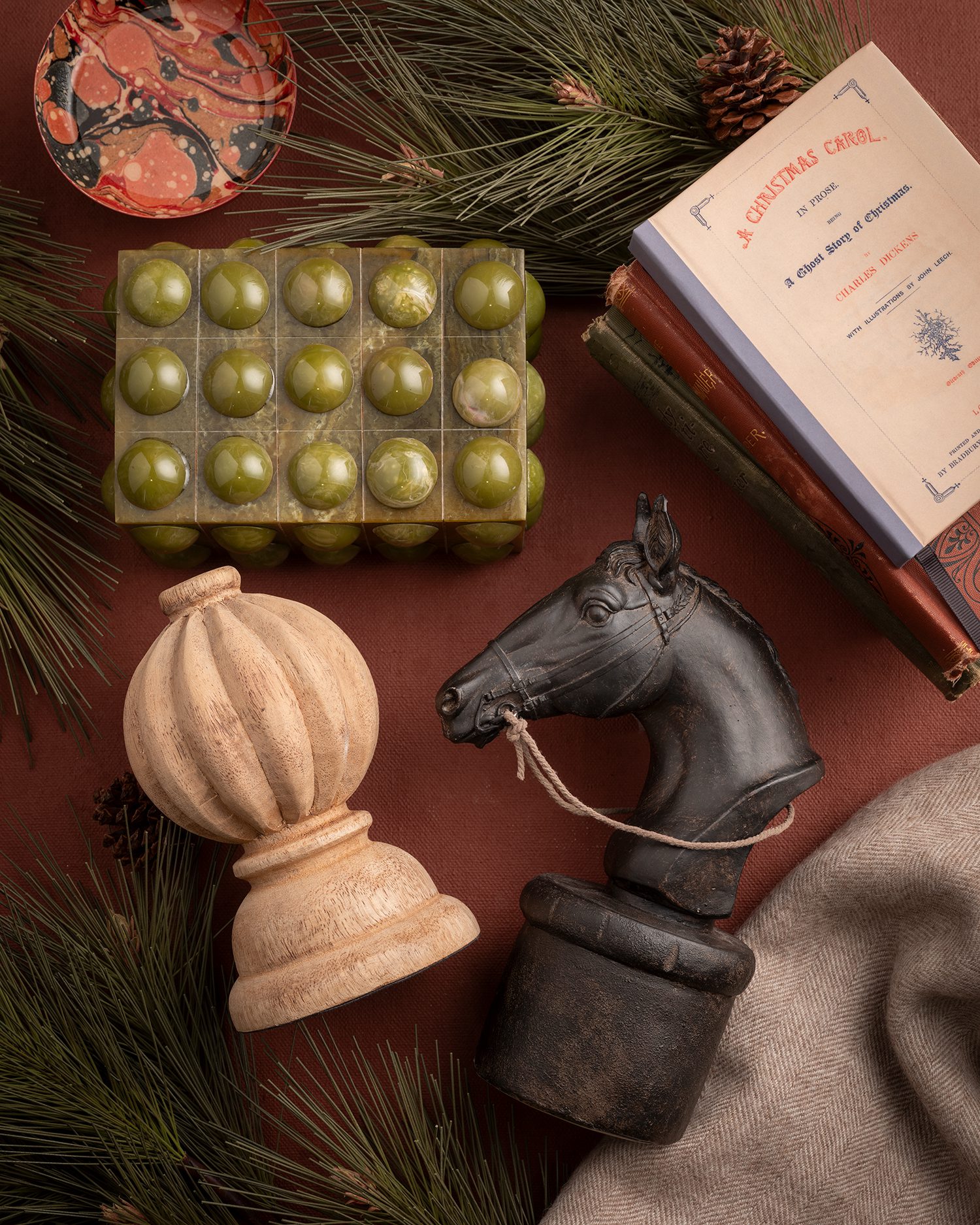
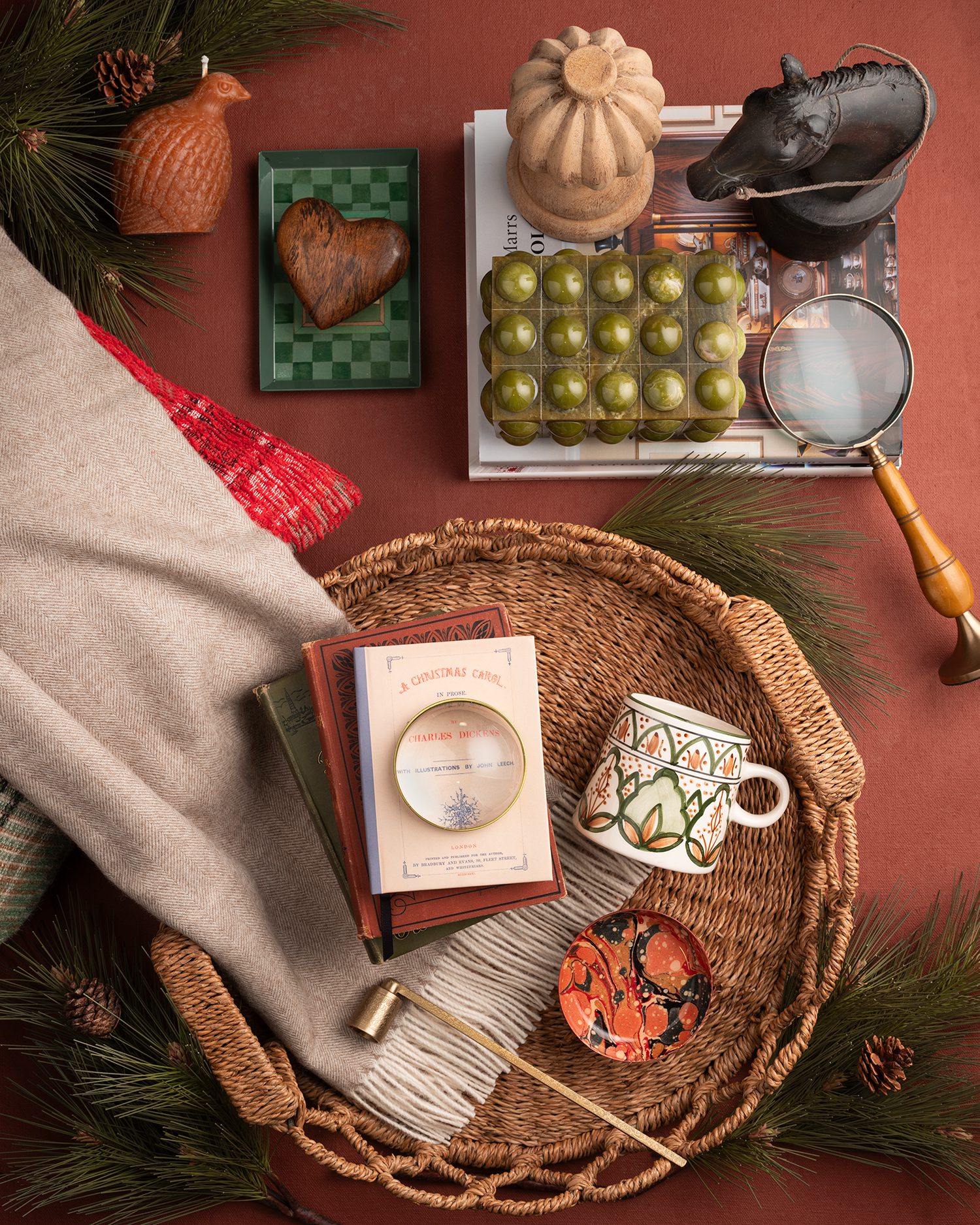
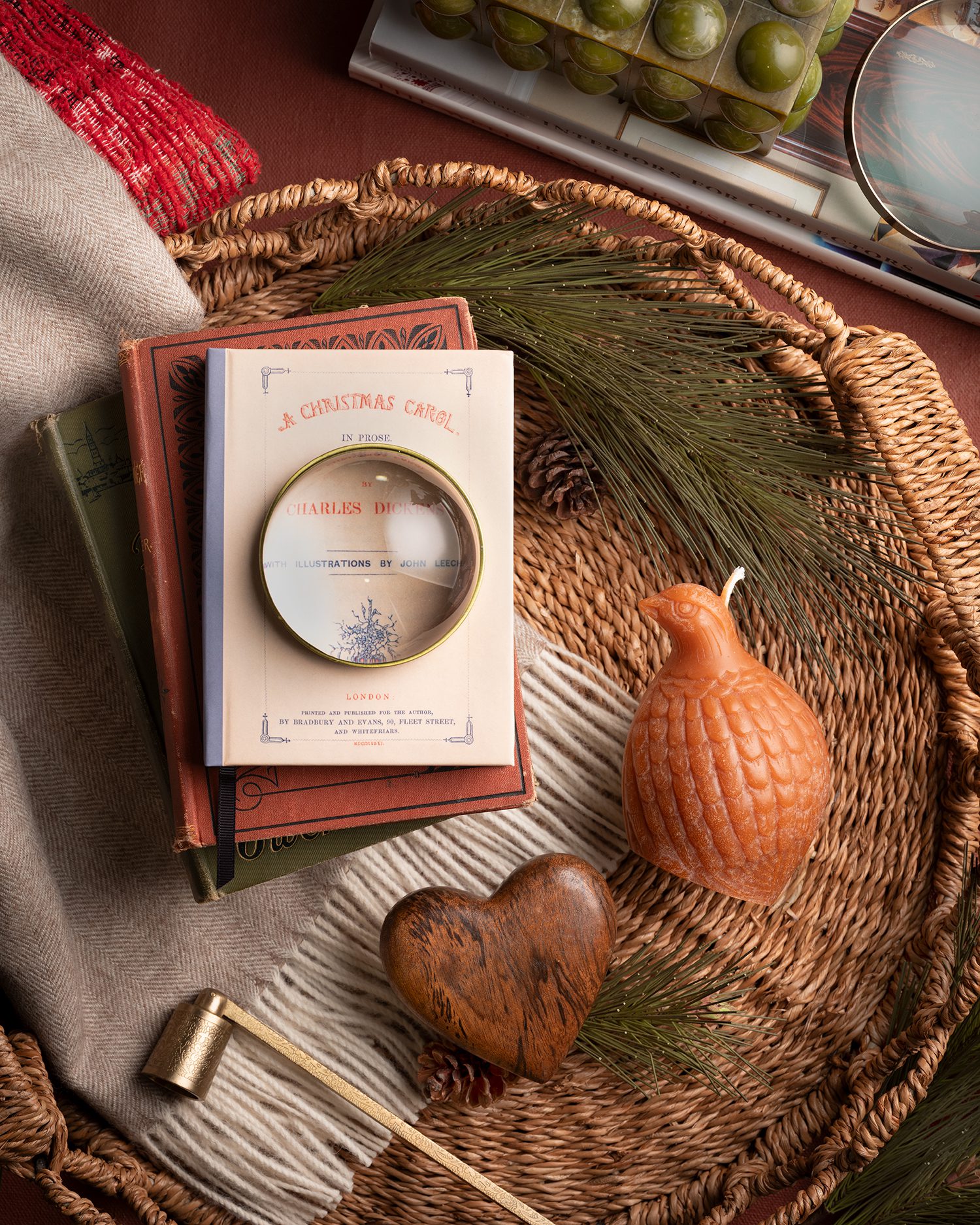
Celebrate the season in a storybook setting where literature, history, and holiday magic meet. Artful displays inspired by classic tales uniquely connect to Winterthur with rarely seen collection objects and tributes to the estate’s rich history. Self-paced tour. Reservations recommended. Included with admission. Members free. Purchase tickets online or call 800.448.3883.

Tuesday–Thursday and Sunday
10:00 am–5:00 pm (last tour at 4:15 pm)

Holiday Nights

Extended hours on Friday and Saturday
10:00 am–8:00 pm (last tour at 7:15 pm)

On December 24
10:00 am–2:00 pm (last tour at 1:15 pm)

On January 1
10:00 am–5:00 pm (last tour at 4:15 pm)