Search Site

“A Superior Looking Man”: Power, Portraiture, and Pageantry

By Dr. Jonathan Michael Square

Portrait of Faustin Soulouque (Faustin I, 1849–69), 9th Chief of Haiti, Louis Rigaud, Haiti, 1878. ANTAR.028691 Courtesy of the Yale Peabody Museum

Faustin Soulouque plays a central role in my exhibition at Winterthur—Almost Unknown, The Afric-American Picture Gallery. While Toussaint Louverture is the more familiar figure featured in “Afric-American Picture Gallery,” the 1859 essay by William J. Wilson that serves as the foundation of Almost Unknown, Soulouque was the reigning monarch of Haiti when the essay was published. His reign, which began in 1847 and culminated in his self-coronation as Emperor Faustin I in 1849, marked a period of intense visual and political spectacle. While some saw him as a symbol of Black empowerment and resistance to neocolonial influence, others—both in Haiti and abroad—viewed his rule as a caricature of monarchy and a descent into despotism.

Known for his affinity for ritual, ceremonial dress, and imperial pageantry, Soulouque cultivated a public image that exuded opulence and authority. This is vividly captured in a posthumous portrait of him featured in what I call the “Haiti section” of the exhibition. The painting is one of fifteen oil portraits of Haitian heads of state completed by artist Louis Rigaud between 1877 and 1881. The portraits were exhibited at the World’s Industrial and Cotton Centennial Exposition in New Orleans and were acquired by the Smithsonian in 1885. However, the portraits were determined to be of questionable value because they were assessed through a Western art-historical framework that privileged originality, formal innovation, and linear notions of artistic development. The Smithsonian transferred them to the Yale Peabody Museum in 1963, where they remain in the museum’s collection as an important visual archive of Haitian political history.

Portrait of Faustin Soulouque (Faustin I, 1849–69), 9th Chief of Haiti, Louis Rigaud, Haiti, 1878. ANTAR.028691 Courtesy of the Yale Peabody Museum

Wilson describes Soulouque as “a superior looking man,” which speaks to his physical appearance and the aura of regality that he projected. In Rigaud’s painting, Soulouque is depicted in full regalia, wearing a vivid red military coat adorned with medals and gold epaulettes, as well as a blue sash. Like his public persona, his garments were strategic visual assertions of Black sovereignty in the post-emancipation Atlantic world, designed to reframe the terms of power, liberation, and legitimacy on Haiti’s own terms.

One of the most striking artifacts that further illuminates Soulouque’s political performance through dress is a ceremonial sword presented to him by the Grand Masonic Lodge of Haiti in 1850. Later gifted to US Consul Henry Delafield, this opulent weapon functioned as a diplomatic gesture and an emblem of imperial authority. It is currently on display in my exhibition Superfine: Tailoring Black Style, at the Metropolitan Museum of Art, where it helps frame a conversation about the global entanglements of Black fashion, political aesthetics, and statecraft. 

Sword with Scabbard of Faustin I (1782–1867), Emperor of Haiti, Robert Mole, Birmingham, UK, 1850. Bequest of William S. Delafield Sr. 2012.204 A, B

Faustin Soulouque’s legacy, both in terms of his image and material culture, offers a powerful counternarrative to the dominant Western histories of sovereignty. His visual performance of power is essential to understanding the intersection of fashion, freedom, and Black political imagination.


Experience Almost Unknown, The Afric-American Picture Gallery on view in the Winterthur Galleries through January 4, 2026.

Apply to Holiday Market

November 22, 2025 | 10:00 am–6:00 pm

Celebrate the spirit of the season and showcase your craft at one of the region’s most beloved holiday traditions. Holiday Market at Winterthur marks the festive beginning of the Yuletide season, drawing thousands of visitors eager to experience the magic of handmade artistry and timeless holiday charm.

Rooted in Winterthur’s rich heritage, this event highlights the work of talented regional artisans across a variety of disciplines including art, textiles, ceramics, glass, woodworking, antiques, and gardening—categories that reflect the museum’s legacy and mission.

We invite you to apply to be part of this cherished seasonal celebration and unique opportunity to connect with an appreciative and enthusiastic audience.

Applications for the 2025 Holiday Market are currently closed. Sign up to receive a reminder when applications are live.

Vendor Details


Date & Time

Holiday Market 2025 is a one-day market on November 22, 10:00 am – 6:00 pm. Timed tickets will be sold to guests for morning and afternoon time slots. All artisans must join for the entire day of the market.


Application Details 

  • Applications open on July 14, 2025, with a deadline to apply of September 1. Final decisions will be made by September 10, 2025. 
  • Accepted artisans will receive an acceptance letter via email by September 10, 2025, and will have five (5) business days to submit payment to reserve their space. Review the payment link in your acceptance email. After September 15, 2025, any artisan who has not submitted payment will relinquish their space.
  • The deadline to cancel space for Holiday Market is September 22. No refunds will be given after this date. No exceptions will be made.
  • Should an artisan no longer be able to attend, written notice must be made to Winterthur no later than September 22, 2025, to receive a full refund. After September 22, 2025, no refunds will be issued. No exceptions are able to be made.
  • Should an artist not be accepted because spaces are filled, artists may re-apply for the summer Artisan Market July 17–19, in January 2026.

Types of Artisans

Please note that all artisans of the Holiday Market must craft handmade items to be considered. Examples of such include:

  • Antiques
  • Artwork (any medium)
  • Clothing and Accessories (handcrafted)
  • Garden and floral items
  • Glasswork
  • Gourmet packaged culinary goods (small batch, artisanal style)
  • Handcrafted Beauty Products
  • Handmade Furniture and home décor items
  • Jewelry
  • Metalwork
  • Pet accessories
  • Pottery
  • Sculptures
  • Textiles
  • Woodworking

How Applications Are Evaluated

  • Artisans must create handcrafted products only. (See “Types of Artisans” for more information.) We hope to showcase innovative items that are differentiated, small-batch and connect to Winterthur’s history and mission.
  • Applicants are reviewed based on ingenuity, originality, design, and aesthetic with the hope of weaving the connection of modern-day wares with that of Winterthur and its history.
  • A connection to your community and an active social media presence are required since this is a collaborative market with many cross-promotional opportunities to engage and connect communities.The Holiday Market Team reviews all social media for each applicant, and this is a factor when considering artisans each year.
  • We strongly consider artisans with a positive, energetic, and collaborative attitude.
  • Artisans must remain for the full day of the market. No shows or early departures will result in not being welcomed back in the future.
  • The Holiday Market team will visit artisans’ websites and social media channels during the review process to determine the wares, aesthetic, style, and quality align with the goals of the Holiday Market. With acceptance to the Holiday Market, Winterthur reserves the right to select any brand, product or company-related photos from the artisan’s website and/or social media to use for marketing and promotional purposes for this year’s Holiday Market at Winterthur. Winterthur will tag/credit the artisan in any photography or videography used for promotional purposes.

Artisan Locations, Spaces, and Fees

Artisans will be located under shared Marquee tents at the Visitor Center Patio, Greenhouse Area, or West Gallery Circle. Each space includes an 8′ table, chair, and linen. There will be a total of about 50+ artisans joining the Holiday Market. The space fee to join is $300 per artisan.


Load-In/Breakdown

  • Load-In takes place the morning of the market, 8:00–9:00 am. Artisans should arrive no later than 7:30 am to check-in at the Picnic House to be escorted to their location for the day. Spaces must be ready for guest arrival at 10:00 am.
  • After check-in, all artisans will park in the Greenhouse Parking Lot for the day. This will be within walking distance to each of the hub spaces in case there is a need to replenish inventory throughout the day. There are many one-way roads throughout Winterthur, please do not navigate away from your designated areas.
  • Cars can be parked within 50 feet of tent area. Artisans are responsible for their own setup and breakdown. Please be adequately prepared. Accepted artisans are welcome to visit Winterthur prior to the market to view their location and consider logistics. Vehicles may not be driven during the Market Hours to replenish—please make your way on foot for any replenishment needs.
  • Winterthur staff cannot provide assistance. Should you need help with Load-In or Load-Out, you are welcome to have helpers accompany you during those times.
  • Artisans must remain in their spaces all day. Winterthur cannot provide “booth sitters” for breaks. Please plan accordingly with additional assistance or become friendly with your booth neighbors. Restrooms and water are located nearby to each location for a quick trip when needed and as always, we encourage you to make friends with your fellow artisan neighbors! Each artisan will receive (2) two “Vendor Artisan Badges” to allow additional assistance in their space. For any additional help required, please plan to reserve a ticket for Holiday Market either online or with the reservations team over the phone (800.448.3888 ext. 7029).
  • All artisans are expected to present a clean and aesthetically pleasing space for the entirety of the Market (no trash, boxes, clutter, etc., should be visible to guests).
  • Electricity and wifi are not available to you for the Market. Please be sure to provide your own hotspot or necessary means to process electronic payments (credit cards + cash to be accepted). Where available on the estate, Winterthur’s wifi is spotty and unpredictable. Winterthur’s guest wifi password is “winterthur” 
  • While Winterthur has 24-hour security, we cannot assume responsibility for your items. Please plan accordingly. Insurance is required for all vendors (COI).
  • As this Market will proceed rain or shine (within safety parameters), please come prepared with tarps, bins, or other water protective materials.
  • No booths or items may be taken down or removed prior to the end of each day of the Market. Should an artisan dismantle their space prior to the end of the day, that artisan will not be welcomed back.
  • All load-out must occur on Saturday, November 22 by 7:00 pm. Artisan should be off the property by 7:30 pm. We are not able to arrange for next-day pick up of your inventory. 
  • Lighting will be sparse, given the early sunset, so we encourage you to move as quickly as possible. Please pack all items from your space prior to moving your car close by to load. If you are able to move items via dolly or similar, please do so. There will be lingering guests on the estate so be mindful of pedestrians. 
  • Trash cans will be located throughout the vendor spaces. All boxes must be broken down and no trash is to remain at or near your space each day. Please leave the space as you found it. Once you have finished breaking down your space, you may depart Winterthur grounds.
  • This day is about community and showcasing the exceptional talent of all of you. It is a large undertaking for the Winterthur team, and we strive to create a positive and enjoyable atmosphere for artisans, staff, and guests. We expect the same from all vendors that join. Any vendor that does not reciprocate will not be welcomed back.

Terrain

The terrain at Winterthur varies, with uneven surfaces and unpaved paths. All artisan spaces will require you to walk some distance to transport items during Load-In/Load-Out. Cars cannot be parked near artisan spaces. 

Please be mindful that Winterthur is a historic garden, and all areas of the estate should be respected and navigated by the rules put in place by staff. No driving on grass is permitted. Should you wish to visit ahead of time to see the space and plan logistics, you are welcome to do so.


Fees 

The space fee to join is $300 per artisan.


Notification of Acceptance

Artisans are notified via the email address listed on the application. Should an artisan not be selected, they will be placed on a waitlist and may be contacted should a space become available. We do not offer rolling acceptance; instead we will review and then contact all applicants at the same time (no later than September 10).


Payment

  • After the acceptance notification emails have gone out (by September 10, 2025, via email), artisans will have five (5) business days to remit payment in full for their space(s). After September 15, 2025, if payment has not been received, that artisan space will be relinquished and offered to another artisan.
  • A specialized link will be included with the acceptance notification email that will direct artisans to a payment portal. Payment may be made online with a credit or over the phone with Winterthur’s reservation team (800.448.3883 ext. 7029). 
  • For questions about payment, please contact Abigail Miller at amiller@winterthur.org.

Waitlists

  • A small waitlist of applicants who submitted materials by the application deadline is kept to fill cancellations and artisans may be contacted up until the day preceding Holiday Market day to fill last-minute openings. 
  • We thank you for your interest in joining Holiday Market at Winterthur. If you are not accepted, please do not be discouraged from applying again. The goal of the market is to allow an equal opportunity for all artisans to share their craft with visitors while connecting the event to Winterthur’s history and mission.

Cancellations

Should an artisan no longer be able to attend, written notice must be made to Winterthur no later than September 22, 2025, to receive a full refund. No refunds will be given after September 22, 2025, to artisans who can no longer attend. No exceptions will be made.


Insurance and Licenses

Winterthur is not responsible for insuring artisan items or displays and cannot accept responsibility for theft or damage. All accepted artisans are required to have liability insurance, and artisans must add Winterthur Museum, Garden & Library to their liability insurance and provide documentation showing this addition, along with a copy of their liability insurance declaration page. All products requiring licensing must have a copy of the appropriate license on file with Winterthur Museum, Garden & Library.

You are welcome to use whatever insurance you wish. Should you need assistance with insurance options, we have negotiated a discount with Artist Crafters & Tradesmen (ACT) insurance for non-food liability coverage and Food Liability Insurance Program (FLIP) for food vendor liability coverage. The discount coupon code for $5 off your policy is winterthur5. Use the links below to purchase coverage:

Accepted artisans only, please submit proof of insurance by November 1, 2025.

Artisans are expected to obtain any and all licenses or permits required for offsite events for their respective business and have a hard copy onsite.


Promotion

Holiday Market will be promoted through an integrated marketing strategy across paid, owned, and earned channels.

The Holiday Market will be featured in Winterthur’s Calendar of Events, which is mailed to 22,000 homes each quarter and in weekly emails, which go to approximately 62K recipients. 

Vendor photos will be used to promote each artisan on social media. Acceptance and payment for a vendor location grants Winterthur and its agents the right to videotape, film, and photograph you and use your likeness and any photos submitted in connection with the commercial production and in the distribution and exhibition thereof. Please contact amiller@winterthur.org with questions. 

All artisans are expected to actively partner with Winterthur to help promote Holiday Market. Ticketing for Holiday Market opens November 3, 2025! Reservations are required and the potential to sell-out is likely.  

Please share Holiday Market details through emails, printed promotional materials and social media channels. When posting on social media, please tag @winterthurmuse and location (Winterthur Museum, Garden & Library) for reposting and sharing opportunities.


Photography

The Winterthur Holiday Market team will visit artisans’ websites and social media channels during the review process to determine the wares, aesthetic, style, and quality align with the goals of the Holiday Market. With acceptance to the Holiday Market, Winterthur reserves the right to select any brand, product, or company-related photos from the artisan’s website and/or social media to use for marketing and promotional purposes for this year’s Holiday Market at Winterthur. Winterthur will tag/credit the artisan in any photography or videography used for promotional purposes.


Weather and Refunds

The Holiday Market will take place rain or shine or snow. In preparation for inclement weather, please plan accordingly for your spaces. As display areas will be under marquee tents with no sides, it is subject to weather. No refunds will be given should the Holiday Market have to be canceled or shortened due to unpredicted threatening or unsafe weather. 


Concierge Service

For guests who purchase any items that are oversized (e.g. furniture, lawn items, paintings, etc.) and unable to be carried by hand or taken on the tram/shuttle, guests are welcome to use the Concierge Product Delivery service provided by the Winterthur team. 

To request this service, a contact will be provided for you within the welcome packet. Within the text include: 

  • Artisan Location (VC Patio, Greenhouse, or West Gallery) 
  • Artisan Name 
  • Item description (painting, sculpture, etc.) 

Please text—do not call—with the details stated above. Winterthur is an expansive estate and navigating the grounds does take time. Please be mindful of that when waiting for an item to be retrieved. 

Please communicate this service to your guests as they visit your space, it’s a great selling tool! 

Items will be delivered to the Visitor Center Lobby where guests can pick them up as they depart for the day. Let guests know to visit the front desk as they depart. They will need their slip as well to retrieve their item, so make sure all are filled out properly.


Security

Winterthur is not responsible for insuring artisan items or displays and cannot accept responsibility for theft or damage. All artisans are required to have their own Certificate of Insurance (COI) for the Holiday Market.


Artisan Market Press Release

New at Winterthur’s fifth annual Artisan Market July 18–20: 50 more vendors, make-and-take workshops, signature cocktails, wine tasting & an open-air farmers market

WINTERTHUR, DE (June 26, 2025) —Winterthur Museum, Garden & Library continues to expand and enhance its wildly popular Artisan Market, now in its fifth year. Scheduled for July 18–20, this year’s event includes 150 vendors—an increase of 50—along with new custom fragrance and candlemaking workshops, wine tastings, signature cocktails, and an open-air farmers market.

In addition to antiques, furniture, home décor, architectural salvage, and garden items, Artisan Market vendors will sell a variety of unique handcrafted goods including jewelry, pottery, textiles, photography, prints and original art in various media, refashioned sustainable clothing, artisanal and small-batch gourmet food products, and much more.

Artisans will be in several locations throughout the estate. Guests can also enjoy live music, pause for a bite to eat, and meander through Winterthur’s lush 60-acre wild garden.

“The Artisan Market showcases exceptional craftsmanship and reflects Winterthur’s mission to inspire and educate through decorative arts and design,” said Abigail Miller, associate manager of audience engagement. “Each market location offers immersive experiences in an idyllic country estate setting. Guests can also explore the museum and galleries. There’s truly nothing like it.”

Artisan Market Vendors

From handmade soaps and leather goods, baby products, pet placemats, wind chimes, fire cresset baskets, wood bowls and cutting boards, to wearable fashion and artwork in every style —Artisan Market truly offers something for everyone.

About 70 merchants are repeat vendors and customer favorites. Fairhope Graphics, from New England, joins Artisan Market again this year, offering cards, wrapping paper, and more featuring natural history illustrations of plants and animals from woodlands to oceans.

Among dozens of new vendors this year is artisan Tia Tumminello from Husk Brooms, who creates brooms and brushes from natural materials and driftwood from the shores of Lake Erie.

Also new are Beth Kephart and William Sulit of Bind Arts, a husband-and-wife duo who have been creating award-winning paper art, ceramics, and other art for nearly four decades. New York-based Otto Finn will offer sustainable fashion products, including tops, vests, accessories, and handcrafted Anoushka jackets made from upcycled kantha quilts.

Self-taught oil painter Jon Carraher  from Lancaster County, Pa., who creates works that blend nature, folklore, myth and magic, will participate for the first time, as will encaustic artist AnnMarie Carmack from Havertown, Pa. Encaustic is an ancient technique that combines beeswax and resin paint with other media that Carmack uses to create dreamy, delicate nature paintings.

Participating artists who have been featured in national consumer press such as Vogue, InStyle, Town & Country, and more include SantM luxury footwear; Jennifer Hoertz Millinery; LouLou Clayton Custom Pet Portraits; and Home & Loft, which sells pajamas, kaftans, and Turkish towels and napkins.

Johanna Howard Home, which offers sustainably produced table linens, throws, pillows, candles, and apparel, is also scheduled to participate, along with jewelry artist Alex Hossick, who has designed for Tiffanys, Tory Burch, and now luxury jewelry brand John Hardy based in Bali, Indonesia.

Activities & Tours

Each day, three plein air artists located throughout the estate will capture Winterthur’s tranquil beauty and picturesque scenery as they create original works of art in real time. The completed artwork will be available for purchase.

Damon Smith, horticulturalist, Philadelphia Flower Show judge, and quilter, will demonstrate basketweaving and share how his love of plants influences his quiltmaking. Smith was among the 30-plus artists whose works were showcased in the Transformations: Contemporary Artists at Winterthur exhibition in 2024.

Also included with Artisan Market admission is the self-paced tour of Henry Francis du Pont’s former family home-turned-museum, as well as access to Almost Unknown, The Afric-American Picture Gallery and all exhibitions. House tours begin at 10 a.m. and the last tour starts at 3:15 p.m. Capacity is limited.

Creativity in Bloom Workshops

Make-and-take experiences for an additional cost include the Signature Scent Workshop from 11 a.m. to noon each day, where participants will create two custom 30 mL bottles of perfume or cologne using premium essential oils. The Candle-Making Workshop is scheduled from 1 p.m. to 2 p.m. each day. Participants will create their own one-of-a-kind soy candle from a selection of scents and dried flowers.

For an additional fee, guests can enjoy a wine tasting and talk by the Reflecting Pool. Tickets include a curated tasting of three wines from Penns Woods Winery and a stemless wine glass. In addition, participants will learn about winemaking using grapes grown in Pennsylvania’s climate and soil, innovative techniques, and the stories behind each bottle. The 45-minute tastings begin at 11 a.m., 1 p.m. and 3 p.m.

“Through these interactive experiences, we invite guests to dive into the creative process,” said Miller. “The celebration of artistry throughout the market is designed to engage all the senses.”

Musical Entertainment & Epicurean Delights

The weekend will feature live musical performances by CMZ Jazz Trio, John Emil, Matt Richards, The Midnighters, Naked Blue, Newark Ukesters, Nicole Zell, Sharon & Shawn, and Will Ott.

Food trucks, including Lucky Shot Coffee Co., Dixie’s Down Home Cooking, Natalie’s Fine Foods, Circe Fine Foods, Cousins Maine Lobster, Koi on the Go, On the Roll, Buddy’s Burgers, Gotta Lotta Gelata, and The Missing Piece, will be in various areas throughout the estate. 

Epicurean delights for purchase range from all-American, Asian-inspired, and Greek foods, including burgers, crab cakes, fish tacos, lobster roll sandwiches, pulled pork, pit beef, chicken tenders, cheesesteaks, crab fries, mac and cheese, and more.

New this year, Artisan Market guests aged 21 and older can purchase handcrafted, botanical-inspired cocktails from three Bloom Bar locations. Spirit-free versions of each signature drink will be available.

The cocktails and mocktails include a hibiscus spiked lemonade with an edible flower garnish, lavender-infused daiquiris garnished with dried lavender sprigs from Winterthur’s organic herb garden, and a gin-based cocktail made with pink grapefruit juice, elderflower liqueur, homemade lavender syrup, a splash of sparkling water, and garnished with a sprig of Winterthur-grown lavender.

Open-air Farmers Market

A nod to Winterthur’s agricultural roots, this year’s Artisan Market introduces a new farmers market experience. A working farm in its heyday, Winterthur welcomes a select group of local growers and culinary artisans to this open-air market, where guests can pick up fresh produce, honey, and other seasonal goods.

General Information

Visit Winterthur’s Artisan Market event website for more information, including food and vendor locations, music schedules and featured artisans. Artisan Market hours are 10 a.m. to 4 p.m. July 18, 19 and 20. Winterthur is open until 5:00 p.m. Event is rain or shine. Tickets are good only for the date purchased. Advance purchase is required. Tickets and add-ons can be purchased online at winterthur.org or by calling 800.448.3883.

###

About Winterthur Museum, Garden & Library
Winterthur—known worldwide for its preeminent collection of American decorative arts, naturalistic garden, and research library for the study of American art and material culture—offers a variety of tours, exhibitions, programs, and activities throughout the year. Admission includes a self-paced house tour, exhibitions, a narrated tram ride (weather and space permitting), and the Winterthur Garden.

Winterthur is located on Route 52, six miles northwest of Wilmington, Del., and five miles south of U.S. Route 1. Winterthur is committed to accessible programming for all. For information, including special services, call 800.448.3883 or visit winterthur.org. Winterthur is closed seasonally from early January through late February.
Unlocking the Past

Keys from the Mount Salem Methodist Church, New Castle, Delaware, 1878–1900.

By Dr. Jonathan Michael Square

Keys often symbolize access, opening portals to the past, present, and future. This set of seven brass keys, representing Picture XIX in the Almost Unknown, The Afric-American Picture Gallery exhibition, dates to the late 19th century and originates from the now-closed Mount Salem United Methodist Church in New Castle, Delaware. Founded in 1854 by the local African American community, the church served as a vital spiritual and social anchor for generations. In its later years, however, the congregation declined, and the church eventually closed, due to an aging membership and the prohibitive costs of repairing the 19th-century building. The keys were donated to the Delaware Historical Society by Rev. Vernon M. Bryant, current pastor of the Hockessin United Methodist Church. 

They had previously belonged to Edward View Henry. A longtime member of Mount Salem United Methodist Church, Henry played an active role in the life of the congregation. “Mr. Henry,” as he was affectionately known, was born in North Carolina in 1913. He moved to Wilmington and attended Howard High School. He served in the U.S. Army during World War II and later established an upholstery business. He married an artist, Pearl Day, and they had two children: Peter and Pamela. Passionate about history and craftsmanship, Mr. Henry was also an avid collector of antiques. He passed away on July 16, 2009, at the Veterans Hospital in Elsmere, Delaware.

His deep faith and generous spirit left a lasting impression on his community. Rev. Bryant, who knew him personally, described Henry as kind, mild-mannered, and resourceful. “If you met him, you would like him,” Bryant recalled. Henry was someone who never discarded items he believed still had value or meaning. When Constance J. Cooper, co-author of Forging Faith, Building Freedom: African American Faith Experiences in Delaware, 1800–1980, reached out in search of material culture related to the African American church in Delaware, Bryant offered the keys and later donated them to the Delaware Historical Society. Today, these keys are featured in a section of Almost Unknown that focuses on the Black Church. Their presence affirms how everyday Black lives, and seemingly ordinary objects can serve as powerful conduits of memory, preservation, and historical imagination.

Historical Fun and Games at Winterthur

By Lauren Ullman

The Game of Rip Van Winkle, Milton Bradley & Co., 1909. Winterthur Library Col. 220 acc. 93×30 

The Collections

Historic games in the house and library collections cultivate a lively and carefully designed environment, and their preservation helps us understand how people of all ages entertained themselves in the past. 

Children’s Games and Toys

Throughout history, games have engaged children in learning lessons about right and wrong as well as developing life skills. The historical game collection in the library includes many examples. The Rip Van Winkle game, released by the Milton Bradley Company in 1909, features a storybook printed with several words left blank, an instruction booklet, and 50 cards. Children used the cards to fill in the spaces with the correct words. 

In the Strawbridge & Clothier Child’s Shopping Game from 1908, children “shopped” in Philadelphia’s foremost department store—whose interior is featured on the game board—by visiting several departments. The first child to complete the circuit went to Toyland. The game encouraged department store shopping, and in the process of playing, children practiced budgeting skills. 

Strawbridge & Clothier Child’s Shopping Game, Strawbridge & Clothier, 1908. Winterthur Library Col. 220 acc. 88×132

Another game in the library’s collection is Avilude or Game of Birds, designed by the West & Lee Game and Printing Co. and patented in 1873. In the game, players used the 64 printed cards to correctly pair species of birds with their vivid descriptions.

Games for Adults

Musical Dominoes was published by Theodore Presser Co. of Pennsylvania in 1893 and is in the library collection. It contains two sets of directions: one with game instructions, and the other with instructions for how to throw a musical domino party. The party instructions include invitation outlines and directions and dialogue cues for game “conductors.” It recommends awarding prizes “of a musical nature, viz.: busts and photographs of the great tone-masters, books of musical history, biography, fiction, or nicknacks [sic] relating in some way to music.” 

While Winterthur was still a private home, H. F. du Pont entertained weekend guests with tea on the terrace, elaborate dinner parties, recreation on the estate grounds, and constant bridge games. The display in the Bertrand Room on the third floor includes an 18th-century bridge table with cut-outs for counters, felted covers to prevent cards from sliding, and special indents to hold candles. 

Merry-go-round, Europe or North America, 1800–60. Bequest of Henry Francis du Pont 1964.2053 

Many other game-related objects are sprinkled throughout the house, including various miniature portable game sets, ranging from dominoes to dice cups. Some games, like the Circular System of Major and Minor Keys game board in the Imlay Room, were intended to teach serious skills like reading sheet music. A carved ivory chess set is also on display here.

Children’s toys, games, and more are displayed on the seventh and eighth floors. On the seventh floor, a glass case holds miniature cards, houses, and tea sets. In the Child’s Room on the eighth floor, cards, dolls, a tabletop croquet game, a spinning top, and more create a fascinating picture of childhood from long ago.

Ella Wesner: “An Excellent Man upon the Stage”

By Allie Alvis, Curator of Special Collections

Imagine that you, a young Victorian lady, are spending a night out with friends at the theater. As the playhouse dims, a spotlight illuminates the figure of Champagne Charlie, the picture of swaggering, stylish masculinity. Charlie captivates the audience with amusing tales of chivalry and his ability to please women, accompanied by a parade of chorus girls in “bright but somewhat abbreviated habiliments.”1 You swoon; if only you could find a man like that! But that would be difficult—for, you see, Champagne Charlie is a woman by the name of Ella Wesner.

Advertisement images for Ella Wesner, in Specimens of Theatrical Cuts, by Ledger Job Printing Office (Philadelphia: Ledger Job Printing Office, 1872). 

The drag show is not a modern phenomenon. In fact, the term “drag” likely dates to the stages of Elizabethan England, referring to male actors playing women’s roles in plays including those of Shakespeare.2 And almost as soon as women were legally allowed to be professional actors on the English stage in the mid-17th century, there emerged the “breeches role”—a male part written for or cast as a woman, who would don a masculine costume.

At various points, laws and edicts banned the practice of performing roles outside one’s gender, but the intrepid players persisted, and some even used this restriction as a marketing tool. The roving variety entertainers of the 19th century refined their response into the male impersonator act.

Advertisement images for Ella Wesner, in Specimens of Theatrical Cuts, by Ledger Job Printing Office (Philadelphia: Ledger Job Printing Office, 1872). 

Ella Wesner (she/her) was one such performer at the peak of her fame in the 1870s and ‘80s. Born in Philadelphia in 1841 to a family of actors and dancers, Wesner began her career in ballet and performed “Bel Demonio” in 1864 alongside Felicita Vestvali, who acted in a breeches role in the show.3 Wesner watched Vestvali and learned and later earned a place as a dresser for Annie Hindle, the first male impersonator to make it big in America.

Wesner made it big herself in 1870, sauntering across stages as male characters, including the debonaire Champagne Charlie, the cigarette-smoking Sweet Caporal, Jinks the Jovial Showman, and the amusingly drunk Teetotal. Reviews proclaimed her “a Beau Brummell par excellence” 4 and “an excellent man upon the stage,”5 and she became one of the highest-paid variety performers of the period.6 An 1870 review of her act celebrated her “almost faultless form, a face quite masculine and jet black curling hair, which she wears cut short.”7  Her success was the result of not just hard work, but of advertising. This is where the Winterthur Library comes in.

Advertisement images for Ella Wesner, in Specimens of Theatrical Cuts, by Ledger Job Printing Office (Philadelphia: Ledger Job Printing Office, 1872). 

The library special collections holds a copy of an 1872 trade catalog titled Specimens of Theatrical Cuts, which is a compendium of thousands of illustrations produced by the Philadelphia-based Ledger Job Printing Office. These illustrations were created to be used by newspapers, theaters, and various other agents to advertise the acts and shows coming through town. Many were quite formulaic and could be used for any play or performance that even vaguely touched upon the dramatic or comedic scenes depicted. Among these stock images are illustrations of particularly well-known performers of the day, including four different depictions of Ella Wesner.

Advertisement images for Ella Wesner, in Specimens of Theatrical Cuts, by Ledger Job Printing Office (Philadelphia: Ledger Job Printing Office, 1872). 

Her inclusion in this volume speaks not just to how prolific Wesner was as a performer, but to her dominance of the genre in the 1870s. Her illustrations are all captioned with her name, making it impossible to reuse them to advertise other male impersonators. Although her career had several ups and downs—at one point, she ran off to Paris with the mistress of a robber baron—her act was deeply influential for later generations of male impersonators, including Vesta Tilley and Ella Shields.

Wesner didn’t just dress as a man onstage; she “preferred men’s apparel” throughout her life and was buried in a suit per her request.8  This physical evidence of Wesner’s fame is one of many LGBTQIA+ stories found in the library collections.

Sources:

1. “Yesterday’s Concerts.”  Clipping.  1885.  Digital Transgender Archivehttps://www.digitaltransgenderarchive.net/files/6q182k40p

2. David A Gerstner. Routledge International Encyclopedia of Queer Culture. London: Routledge, 2006, page 191.

3. Gillian M. Rodger. Just One of the Boys: Female-to-Male Cross-Dressing on the American Variety Stage. Champaign: University of Illinois Press, 2018, pages 35–36.

4. Tom Gillen.  “DO YOU REMEMBER?”  Clipping.  1926.  Digital Transgender Archivehttps://www.digitaltransgenderarchive.net/files/wp988k17c

5. “MISS ELLA WESNER, The Acknowledged Beau-ideal of Society Entertainment, Surnamed ‘THE CAPTAIN.’.”  Clipping.  1910.  Digital Transgender Archivehttps://www.digitaltransgenderarchive.net/files/bg257f356

6. “OUR VARIETY ARTISTS.”  Clipping.  1881.  Digital Transgender Archivehttps://www.digitaltransgenderarchive.net/files/gt54kn32b

7. Catherine Smith and Cynthia Greig. Women in Pants: Manly Maidens, Cowgirls, and Other Renegades. New York: Harry N. Abrams, 2003, page 90.

8. “Ella Wesner Lies in Man’s Garb.”  Clipping.  1917.  Digital Transgender Archivehttps://www.digitaltransgenderarchive.net/files/xg94hp908

A Historical Collaboration

By Matthew Monk, Linda Eaton Associate Curator of Textiles

As you near the end of the Almost Unknown, The Afric-American Picture Gallery exhibition, you’ll see a large, red, white, and blue striped quilt. The colors may capture your attention at first, but many of its details are only seen up close.

Quilt, Germantown, Penn., 1861. Gift of Philip and Noelle Richmond 2020.0006

Priscilla (Ballenger) Leedom, a Quaker abolitionist and unionist, crafted the quilt in 1861 to protest the outbreak of the American Civil War. She wrote in her memoirs that Lewis Halbert, a free Black employee of her son, Dr. John Leedom, was the talented artist who drew the central motif for the quilt. In 1863, two years after drawing the eagle, he left Dr. Leedom’s employment to enlist in the Union Army.

Halbert’s drawing depicts an eagle clutching a leafy branch in its right talons and a bundle of arrows in its left. The eagle, projected on the wall beside the quilt in the Almost Unknown exhibition, reflects Halbert’s skills in intricate detail.

The quilt measures 81 inches high and 92 inches long. Its top was made from strips of plain weave red, white, and blue striped silk alternating with cream/gold-toned lighter-weight plain weave silk, finished with a gold silk fringe on three sides. It’s filled with thin cotton batting, and its backing is made of blue and white chambray. The center design features Lewis Halbert’s drawing joined with Priscilla Leedom’s sewing in an embroidered eagle worked in silk floss. The eagle’s body is sewn in white, while its eye and nostril are sewn in black and gold/brown. Halbert’s eagle is surrounded by Leedom’s quilted stars and ivy borders worked in white.

Halbert’s pencil design shows through in several areas under the embroidery, and the gray and blue chalk lines reveal Leedom’s quilting pattern. Interestingly, the needlework-quilted eagle acts as the thread that holds the entire textile together.

Priscilla Leedom’s father was an abolitionist who hid self-emancipated Black Americans in the family’s southern New Jersey home. Priscilla’s formal education in Philadelphia included attending various prestigious schools and studying drawing. The Ballenger and Leedom families employed Black domestic workers from the community of Free Black Americans who lived in Philadelphia. Priscilla Leedom spoke fondly of many of these family employees in her memoirs, and she and other women abolitionists created fancy goods, some depicting abolitionist motifs, to sell at anti-slavery fairs. The money they raised went to support the cause of abolition and those fighting to emancipate themselves and their families.

As you wend your way through the exhibition, be on the lookout for this remarkable quilt. Consider its meaning as marking a unique moment in history and how its story adds to the narrative of Almost Unknown, The Afric-American Picture Gallery.

Challenging Masterpieces: Art and Identity in American Furniture

Opening September 26, 2026

In 2026, Winterthur Museum will celebrate its 75th anniversary—and America’s 250th—with a bold and beautiful exhibition showcasing more than 40 standout pieces from the collection, each chosen for its exceptional craftsmanship, inventive design, or use of rare or unexpected materials.

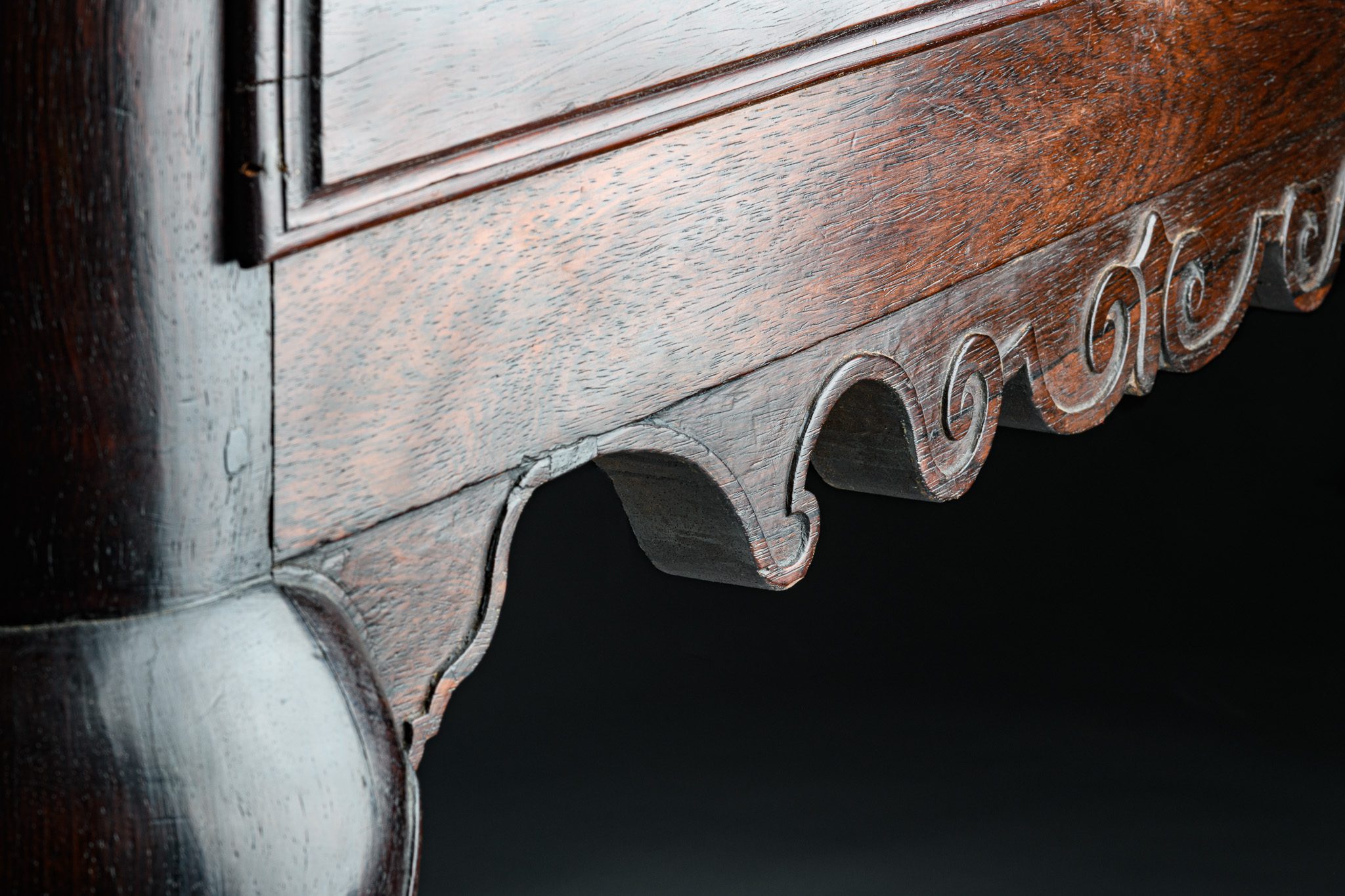
But this isn’t just about admiring fine furniture. It’s about rethinking what makes something a “masterpiece.” Through immersive displays and up-close looks at construction details, the exhibition invites you to explore deeper questions: Who gets to decide what’s considered great design? Whose stories have been left out? And is the term “masterpiece” still appropriate today?

Whether you’re drawn to the artistry of a hand-carved leg, the cleverness of a hidden drawer, or the cultural stories behind a chair’s design, Challenging Masterpieces offers a fresh perspective that celebrates creativity, identity, and the evolving legacy of American furniture—designed to spark curiosity and conversation.

Garden Club of America Inducts Winterthur CEO Chris Strand as 2025 Honorary Member

WINTERTHUR, DE – May 20, 2025—The Garden Club of America (GCA) recently inducted Chris Strand, Charles F. Montgomery Director and CEO of Winterthur Museum, Garden & Library, as one of its four new honorary members for 2025.

Since 1916, the GCA has recognized the extraordinary achievements of more than 400 honorary members who have made significant contributions in the fields of horticulture, conservation, or whose knowledge and interests align with and help achieve the GCA’s purpose.

Kim Cory, GCA awards committee chair and president of the Albemarle Garden Club in Virgina, formally introduced Strand as an honorary member at the GCA’s Annual Meeting on April 28 in Ponte Vedra, Fla.

The GCA selects a small number of individuals each year for the honor from among 12 geographic zones. Candidates are nominated by GCA member clubs nationwide and undergo a thorough review by the Awards Committee and Executive Board.

The Garden Club of Wilmington in Wilmington, Del., proposed Strand for induction as a national honorary member and President Wendy Mahoney Russell endorsed him. The nomination was seconded by The Gardeners in Villanova, Pa., and endorsed by its President Michele Jameson.

One nomination letter for Strand noted that he combines “horticulture knowledge with vision and determination” and “is an ideal ambassador for horticulture at Winterthur and beyond.” 

Throughout his career, Strand has demonstrated a unique ability to connect people with gardens. His work has included initiatives that supported community gardeners and farmers markets in Virginia; guiding summer interns and educational programs at Callaway Gardens in Georgia; and creating meaningful experiences for visitors of all ages at Winterthur.

“I am very grateful and humbled for this extraordinary honor. My journey through gardens has been an exceptional privilege. From the historic landscapes of the Arnold Arboretum to the breathtaking grounds of Winterthur, each step has been an opportunity to connect people with wonder-inspiring narratives written in leaves, branches, and blooming landscapes,” said Strand upon being inducted.

“Whether working with community gardeners, guiding summer interns, or coordinating volunteer programs, I have always believed that gardens are more than collections of plants,” he added. “They are living classrooms, sources of inspiration, and bridges between human experience and the natural environment.”

In 2021, Strand became the first Winterthur director and CEO to rise through the organization’s ranks—an achievement reflecting his dedication, leadership, and deep understanding of its mission.

Prior to becoming CEO, he served as the Brown Harrington Director of Garden and Estate at Winterthur for almost 16 years. In that role, Strand managed Winterthur’s 60-acre wild garden and nearly 1,000 acres of woodlands, meadows and waterways, working with the horticulture, natural lands, facilities, and security teams.

Significant contributions include working with the garden team to maintain and preserve what founder Henry Francis du Pont created throughout Winterthur’s naturalistic garden, which was inspired by William Robinson’s wild garden style. The garden team also began planting trees again in the early 2000s, ending a hiatus of several decades following du Pont’s death in 1969. For example, the team propagated two new trees from the pair of Sargent cherry trees that have graced Garden Lane since Charles Sargent gifted them to du Pont in 1918. Doing so ensures future generations can enjoy these specimens once the original trees meet the end of their lifecycle.

“Gardens are fragile,” said Strand. “We’re trying to hold onto the way this was designed even as climate is changing, life cycles of plants are changing, and even as fashion changes. We’ve been pretty good at navigating. There’s always that pressure for us to make sure the garden is recognized as the garden he created.”

Before joining Winterthur, Strand was director of Green Spring Gardens in Fairfax County, Va., from 1998 to 2005, where he managed the garden’s continuing evolution from a private property to a public garden and historic site. He was an outreach horticulturalist at the Arnold Arboretum at Harvard University from 1993 to 1998, where he oversaw a 265-member volunteer corps.

Strand earned a bachelor’s degree in Environmental, Population, and Organismic Biology from the University of Colorado in 1989. He also earned a master’s degree in Public Horticulture Administration with a certificate in Museum Studies through the Longwood Graduate Program Fellowship of the University of Delaware in 1992.

In 1956, the GCA awarded du Pont with a Medal of Honor for outstanding service to horticulture. The awards committee lauded his knowledge of plants, placement, and use of rare specimens planted with taste and discrimination throughout Winterthur, “where he established a botanical garden of dramatic beauty” that’s regarded as “one of the world’s great gardens.”

In accepting the award, du Pont highlighted his horticultural beginnings, how the garden progressed over six-plus decades, and his more recent work. He closed with an invitation: “I’m counting on your visiting Winterthur many times to see what I am trying to do.”

After Strand’s induction as an honorary member, he echoed that sentiment to 600 members in attendance at the GCA 2025 annual meeting. “I am fortunate to be a steward of Winterthur,” said Strand. “Let me repeat Mr. du Pont’s invitation. We hope that you will visit us and see what Henry Francis du Pont was trying to do. Thank you for this. This honor is not just a recognition of my work, but a celebration of every gardener, volunteer, and passionate individual who understands and promotes the transformative power of gardens.”

###

About the Garden Club of America
Founded in 1913, the GCA is a nonpartisan, issue-oriented advocate for a beautiful, healthy planet. It is a nonprofit national organization recognized for leadership in horticulture, conservation, creative arts, historic preservation, and environmental protection. Its mission is to bring its 200 member clubs together to cultivate a bond among people, plants, and the environment. The GCA member clubs consist of 18,000 club members who devote energy and expertise to projects in their communities and across the country. For more information about The Garden Club of America and its honorary members, visit www.gcamerica.org.

About Winterthur Museum, Garden & Library
Winterthur—known worldwide for its preeminent collection of American decorative arts, naturalistic garden, and research library for the study of American art and material culture—offers a variety of tours, exhibitions, programs, and activities throughout the year. Admission includes a self-paced house tour, exhibitions, a narrated tram ride (weather and space permitting), and the Winterthur Garden.

Winterthur is located on Route 52, six miles northwest of Wilmington, Delaware, and five miles south of U.S. Route 1. Winterthur is committed to accessible programming for all. For information, including special services, call 800.448.3883 or visit winterthur.org. Winterthur is closed seasonally from early January through late February.