Search Site

A Butler’s Story

Winterthur served as home to three generations of the du Pont family and was a self-sufficient community with more than 250 people living here and a thriving farming operation that included beef and dairy cattle, sheep, pigs, poultry, horses, fruit, and vegetables.

Today we’re going to tell you some stories that were collected in 1973 from Maurice Gilliand, who began in 1944 to serve as a footman to Winterthur founder Henry Francis du Pont. As Gilliand would quickly learn, du Pont was a renowned horticulturist with specific tastes, a love of food, an eye for décor, and a complicated disposition that could be both prickly and kind, often simultaneously.

Gilliand came from France to America in 1930 and worked in houses on Long Island before coming to Winterthur. His wife, Doris, was hired as a chambermaid, and the couple lived in a small house on the estate. At the time, there were about five footmen and a butler among a staff of twenty. After two years, Gilliand was promoted to butler. Gilliand was flattered when du Pont made the offer, although he noted that du Pont warned him at the time that he was demanding and expected perfection. Gilliand nonetheless accepted and went on to learn a lot from du Pont.

“My duties were to set the table, of course, serve the meals, serve the teas, and serve cocktails and all that, and I was the man responsible to Mr. du Pont for the rest of the staff,” Gilliand recalled during an interview that is part of ongoing initiatives to preserve the history of the estate.
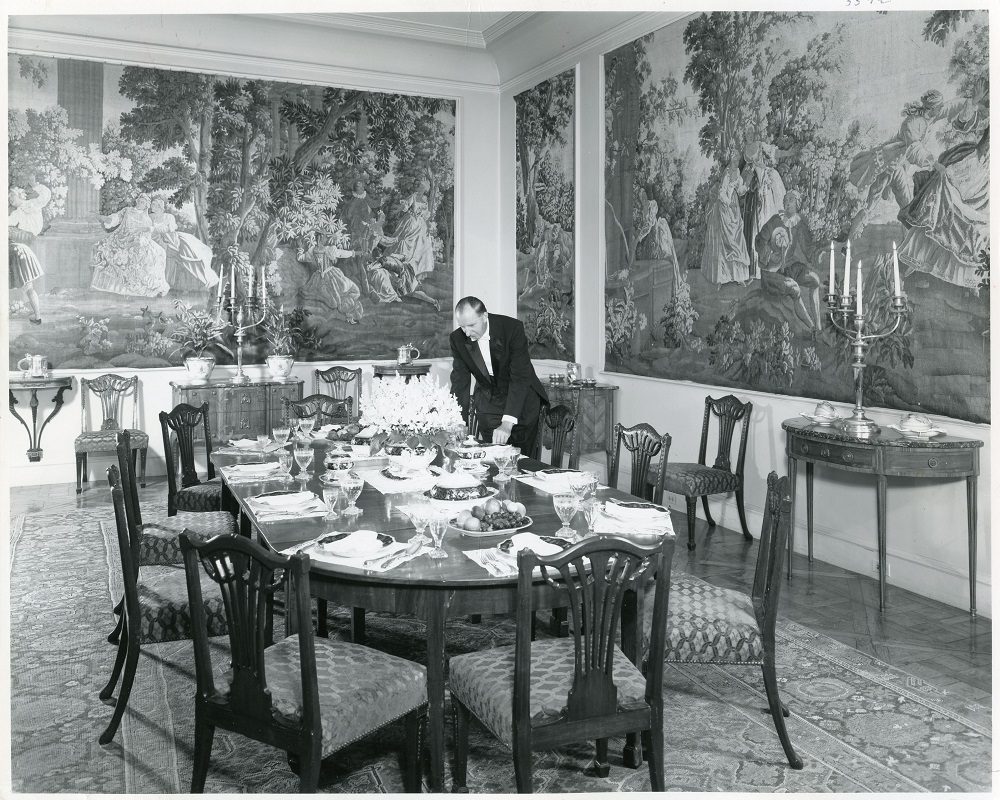
Maurice Gilliand prepares for guests

“And you directed the rest of the staff?” the interviewer inquired.

“I must say Mr. du Pont was the head butler,” Gilliand replied.

“Just as he was head gardener,” the interviewer observed. “Was the operation here different in any way from the other houses you had worked in? Was Mr. du Pont special in his approach?”

“Well, yes, much more so because any other house where I worked, the lady was in charge, but here Mr. du Pont was in complete charge of the house and planned everything, planned all the menus, and planned all the table settings,” Gilliand said.

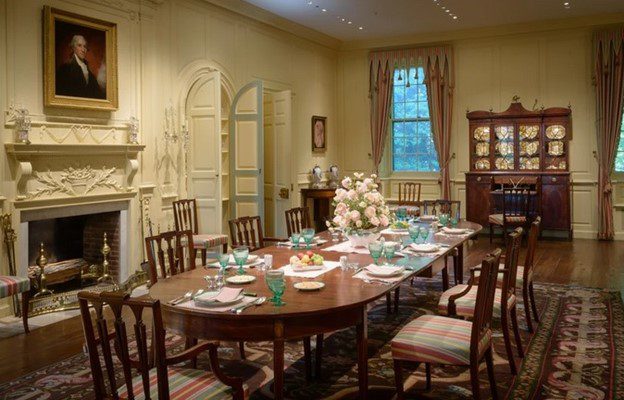
On the weekends, the house would be filled with 16 to 18 house guests, with other visitors invited for meals, making two dozen people for a formal dinner. On Wednesdays, a gardener would bring flower samples into the house for du Pont and Gilliand to match with the china, table mats, and glassware for dinner.

“Sometimes Mr. du Pont would ask me my opinion and then would say, ‘Maurice, Maurice, you must be color blind!’,” Gilliand remembered. “Now and again, Mr. du Pont would give me a free hand to make a selection. On one occasion, when guests entered the dining room, they exclaimed, ‘Oh, Harry, Harry what a beautiful combination,’ and Mr. du Pont replied, ‘Oh yes, I have had this set of china for a long time, and this is the first that I was able to match it successfully.’ As I was standing nearby, he looked at me with the corner of his eye and winked, but he said, ‘I must admit to you it was Maurice who achieved this masterpiece.’ After dinner, Mr. du Pont put his hand on my shoulder and said, ‘Maurice, you have learned your lessons well; you are not color blind any longer.’ This shows you that when you knew Mr. du Pont’s likes and dislikes, it did not take much to make him happy.”
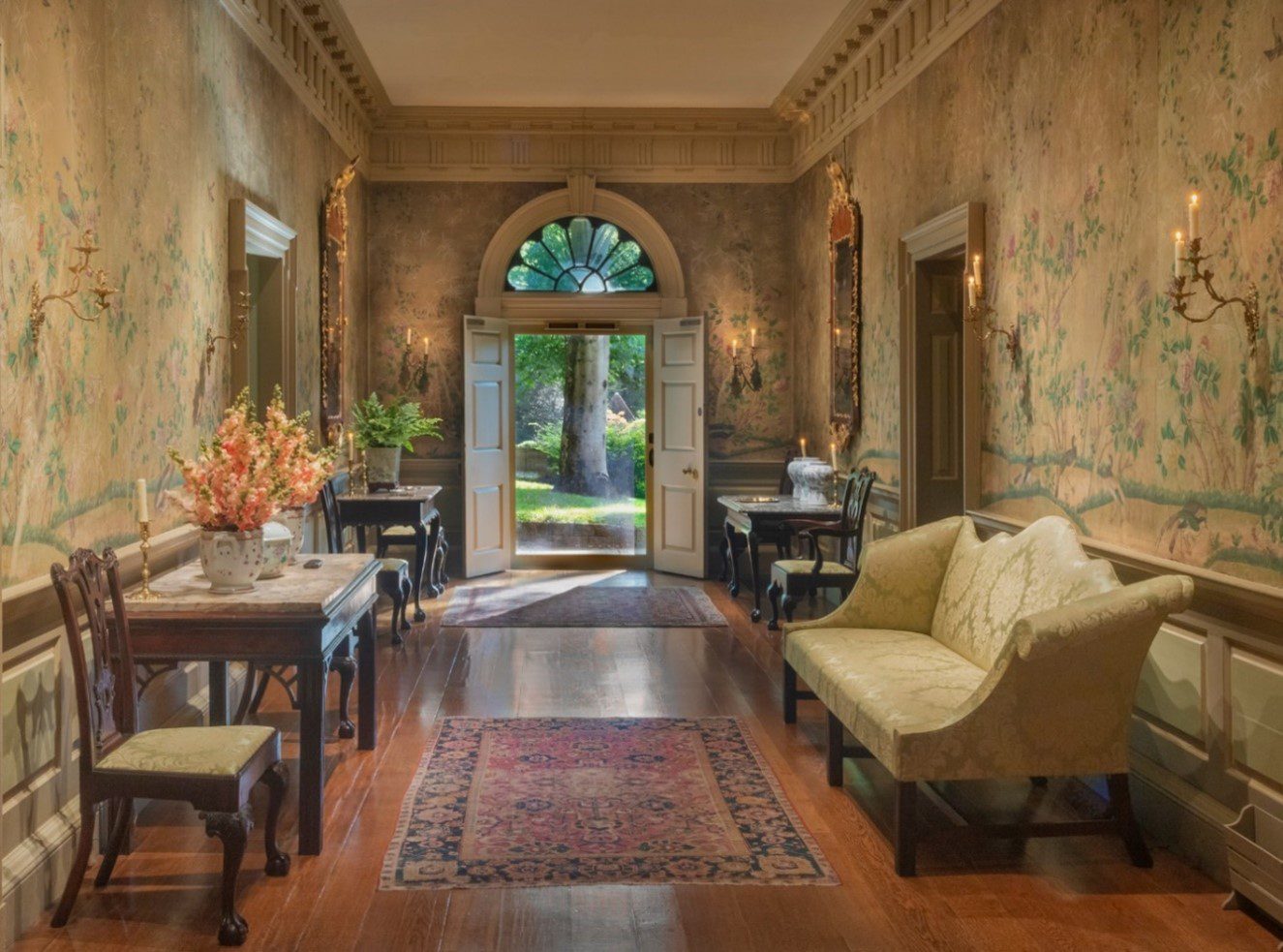
Port Royal Hall
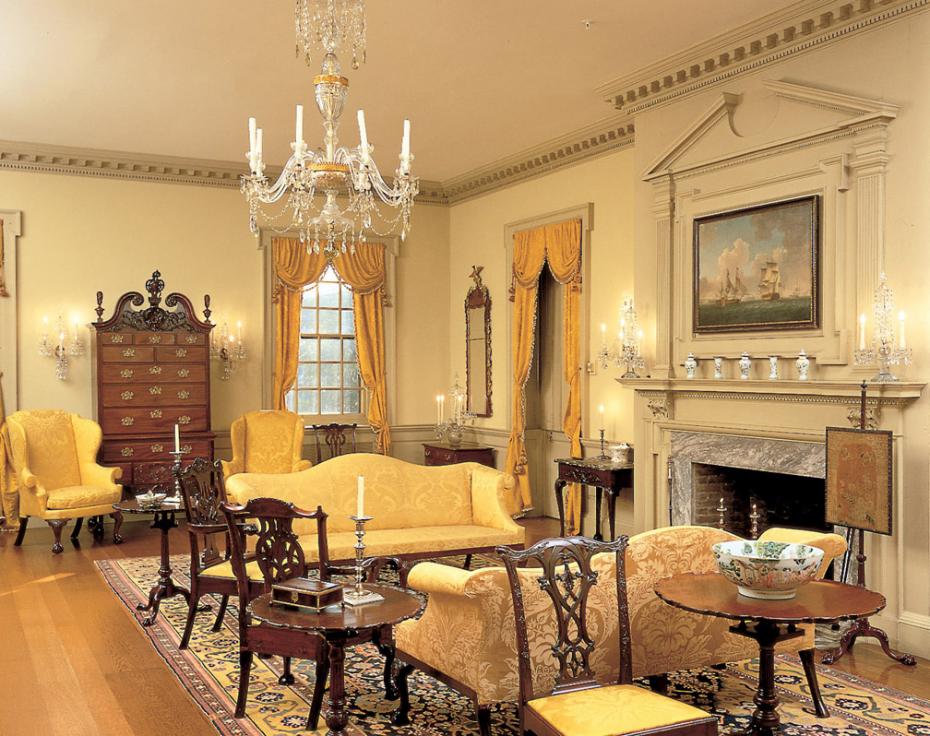
Port Royal Parlor

The weekend guests arrived on Friday afternoons and were received in Port Royal Hall, where it was mandatory for them to sign the guestbook. Then tea was served in the adjacent Port Royal Parlor, after which guests were taken to their rooms. The footmen served cocktails at 8:00 pm in the Chinese Parlor and dinner at 8:30 pm in the Du Pont Dining Room.

“The food was plain, but the best, as it was nearly all produced on Winterthur Farms,” Gilliand recalled.
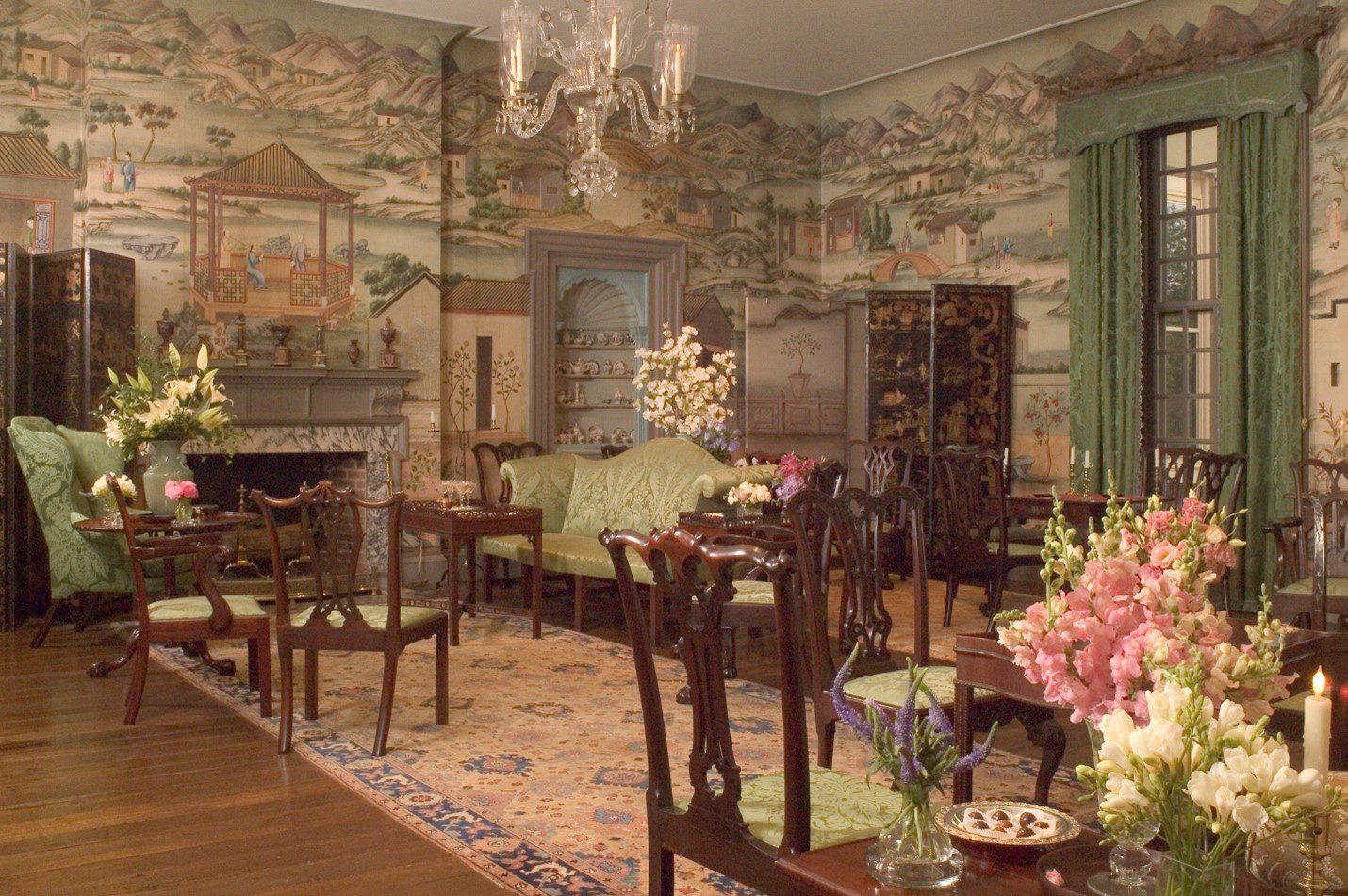
Chinese Parlor
Du Pont Dining Room

While the guests were dining, footmen and chambermaids took turns scrambling upstairs to tidy the guests’ bedrooms and put away all their clothes and belongings. They also removed the “good bedspreads” so no one would lie on them. Those bedspreads were just for decoration.

The du Ponts and their guests played bridge after dinner (du Pont was an expert) in the Chinese Parlor and the Marlboro Room.
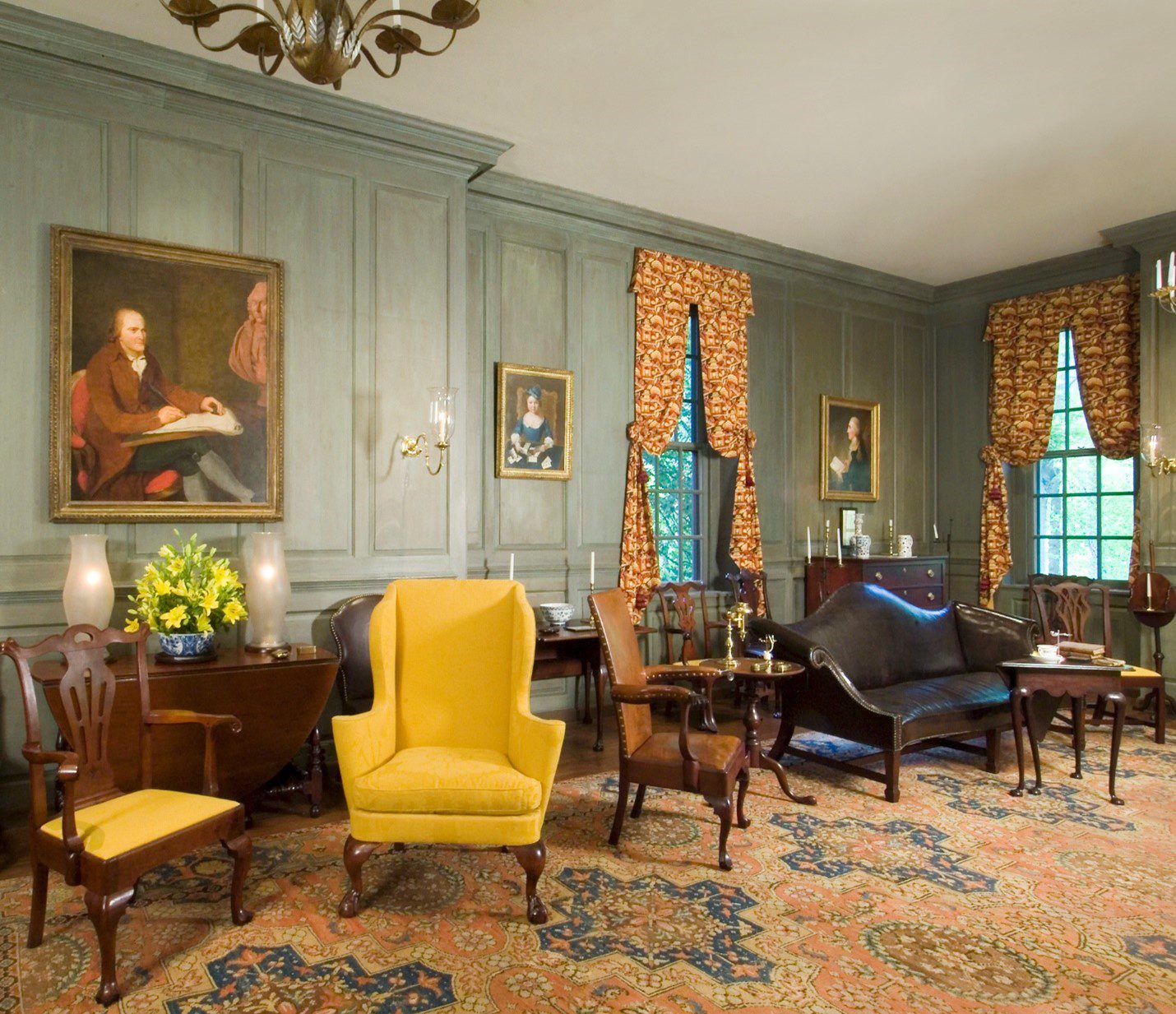
Marlboro Room

Footmen served refreshments and sandwiches at 11:00 pm, and the game would resume until the wee hours of the morning.

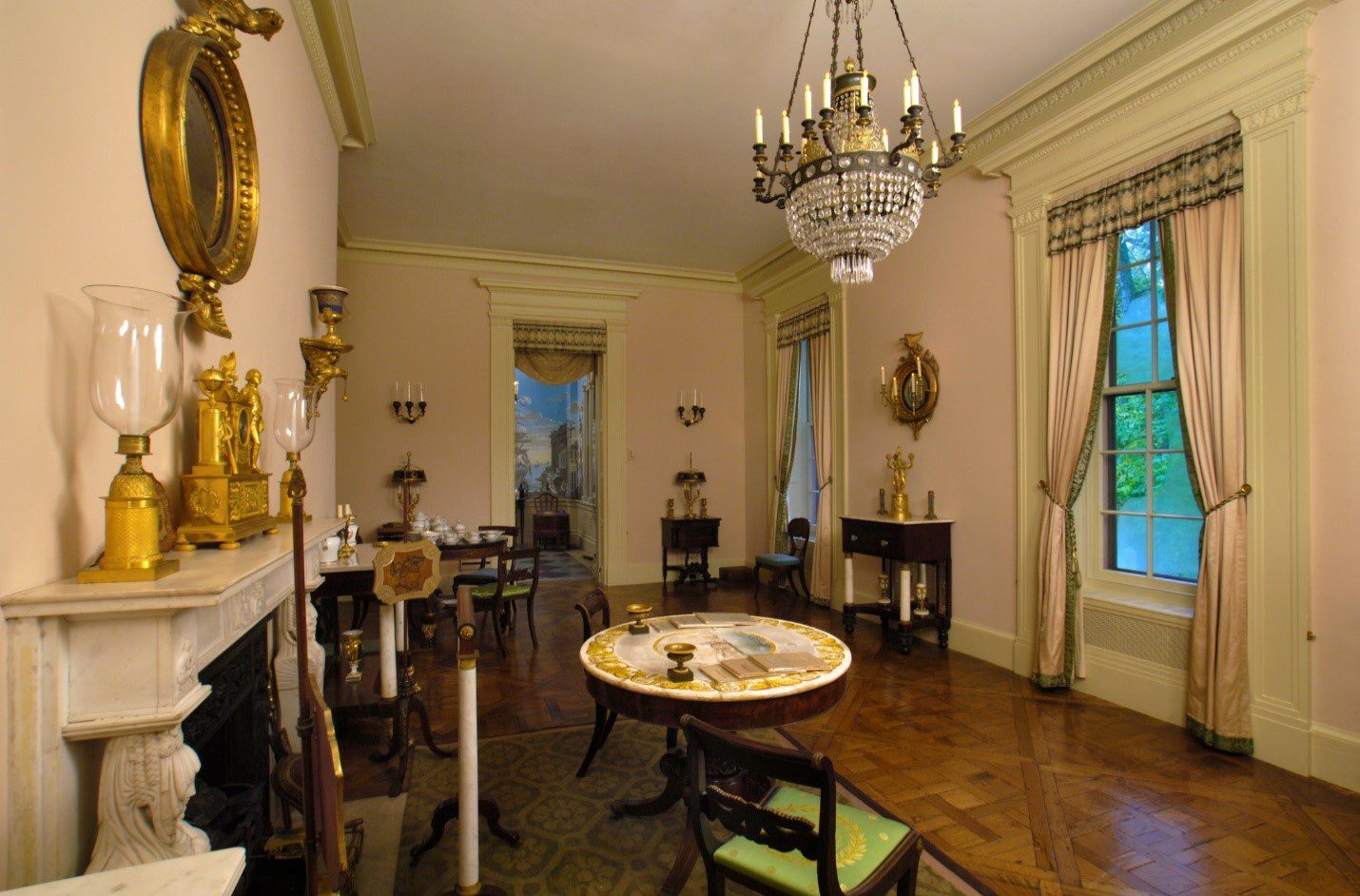
Other nearby rooms—the Baltimore Room, Chestertown Room, and Empire Parlor—were never used for entertaining.
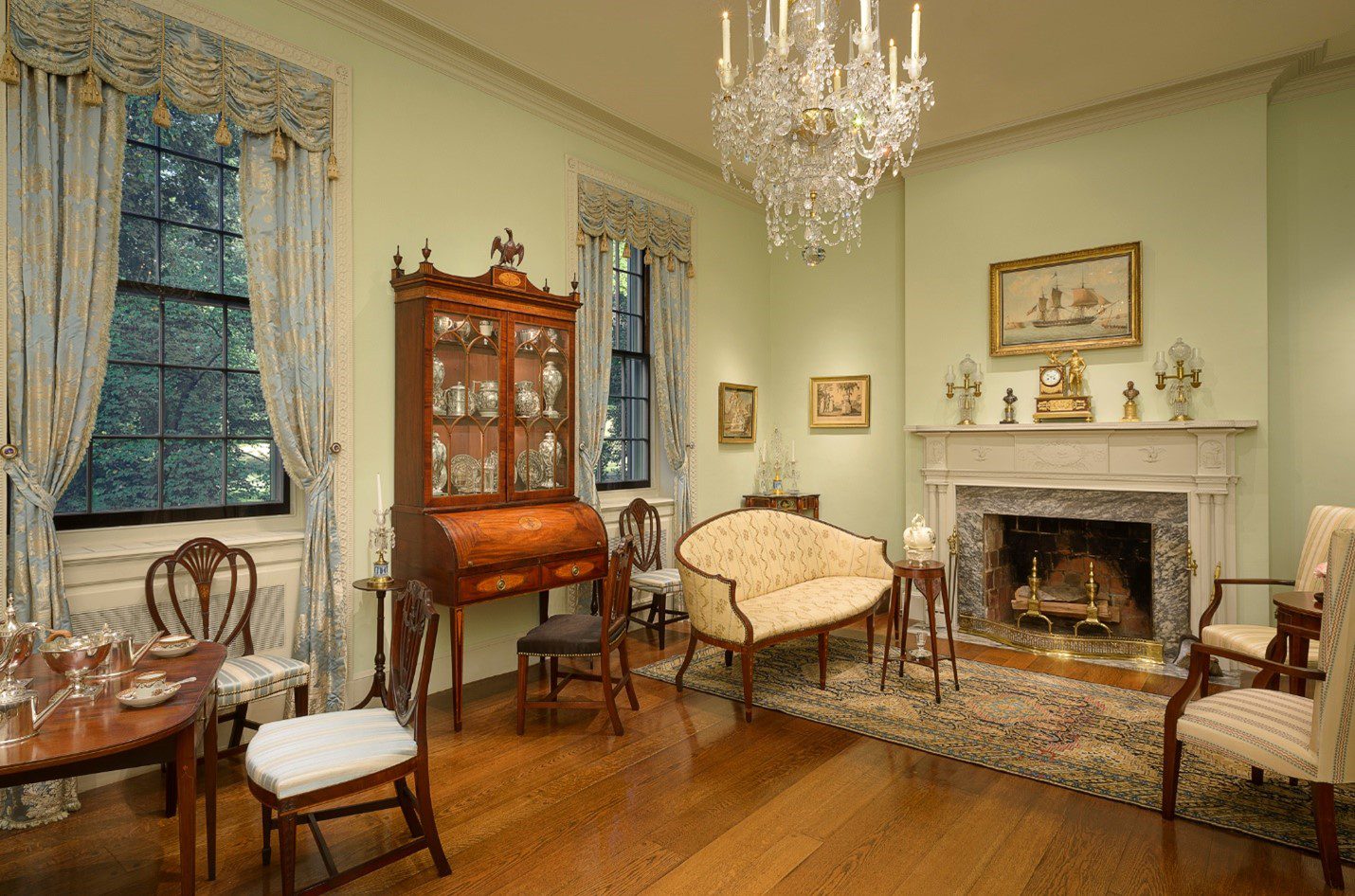
Baltimore Room
Empire Parlor

“Guests were never allowed to sit. Mr. du Pont was very strict about that. If he caught any sitting or leaning—no, those were not used.”
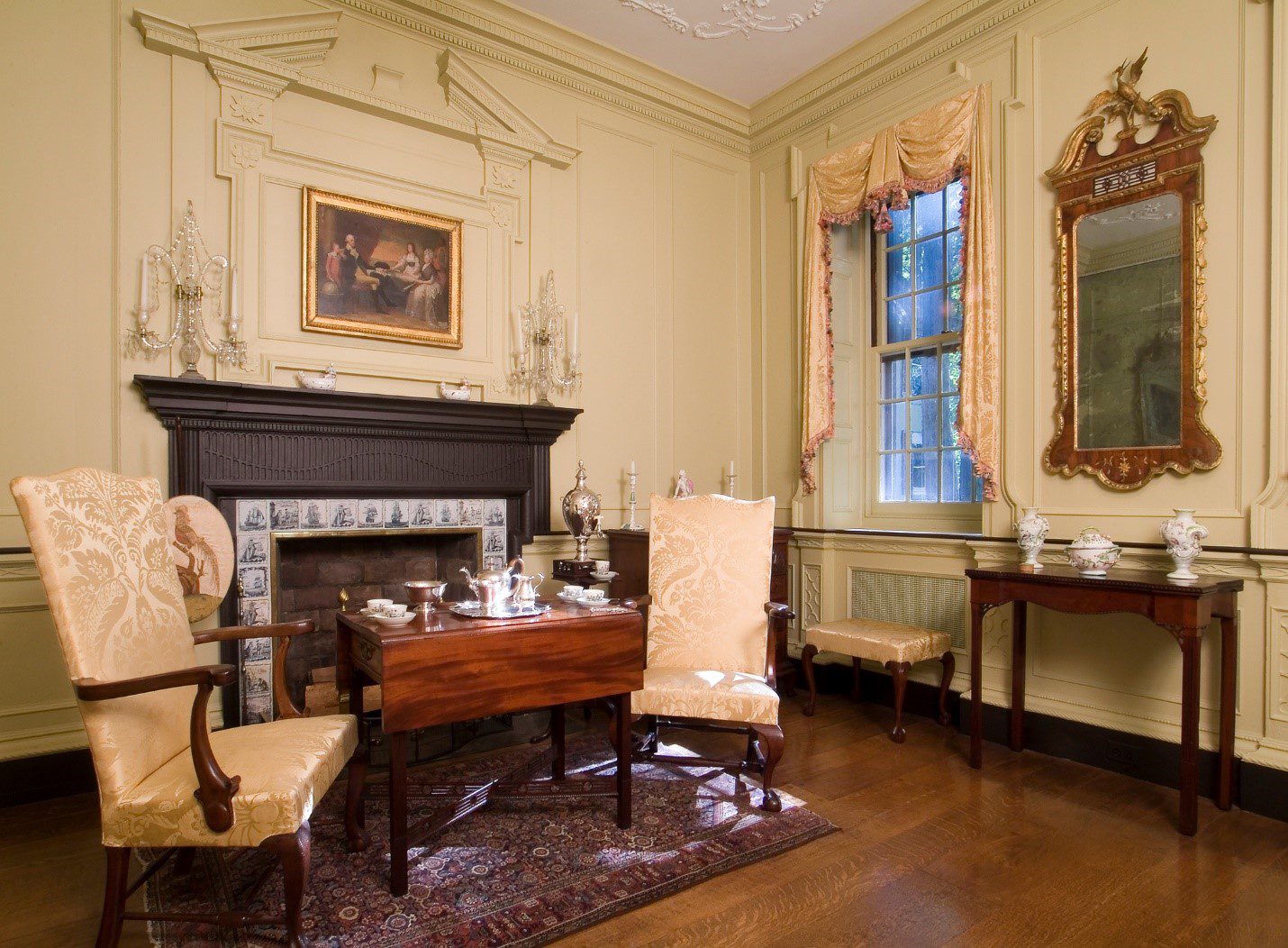
Chestertown Room

Though the Chestertown Room was referred to as the “breakfast room,” the du Ponts and guests never ate there. They were always served breakfast in their bedrooms.

Gilliand said he believed he had only ever made one serious mistake for Mr. du Pont, and it wasn’t leaning on the furniture.

“I’ll never forget it the rest of my life,” Gilliand said.

Du Pont had told Gilliand to telephone a woman and include her on the guest list for an upcoming occasion. Unfortunately, Gilliand misunderstood the name.

“I came back to Mr. du Pont, and I said, ‘Mr. du Pont, Mrs. So-and-So accepts with pleasure,’” Gilliand said. “He said, ‘What lady?’ I said, “Mrs. So-and-So you invited.’ He said, ‘Maurice, damnation, damnation, how could you do such a thing, how could you? I didn’t want that lady for this dinner.’”

At that point, it was up to Gilliand to find a gentleman who could accompany the woman to the dinner. Or, at least, those were Mr. du Pont’s orders. But Gilliand chose to solve the problem in a more straightforward way: He called her back and admitted his mistake. He asked the woman if he could tell Mr. du Pont that she had overlooked a scheduling conflict and could not attend. He also asked whether she would keep the matter between herself and Gilliand.

She said, “Oh, don’t worry, Maurice, it won’t go any further.”

Gilliand returned to the study where du Pont was speaking with someone. He immediately told Gilliand to enter, as he always did, and the butler explained, “Mrs. So-and-So didn’t realize she had a previous engagement, and she will not be able to keep your dinner date.”

Du Pont replied, “Maurice, too bad, too bad, sorry to hear about that.”

Gilliand said he did not know du Pont’s wife, Ruth, very well because she dealt exclusively with the female servants. But Gilliand did know that she liked to tease her husband by pretending she could not hear him.

“So, he would repeat it, and she would say, ‘What did you say, Harry?’ and he would blow his top,” Gilliand said. His wife would laugh and smile.

One time, du Pont yelled at Gilliand for something similar. Gilliand legitimately did not understand something du Pont was saying, partly because he was speaking while holding a cigarette in his mouth. After Gilliand twice asked du Pont to repeat himself, du Pont began to yell.

“So, I just walked out very quietly into the pantry and stayed there for a couple of seconds, and I walked back and said, ‘Now, sir, what is it you are trying to tell me?’ Very nicely he came and told me what he wanted. After that, he never shouted at me, never.”

Du Pont treated his staff well and worked alongside them, Gilliand said. During the week, du Pont would be up at 6:00 am and have a simple breakfast of “a glass of milk and a glass of orange juice.” He would then receive all the supervisors of the estate in his study to get an update on operations.

On the occasion of a large wedding with several hundred guests at the estate, du Pont threw a party for the staff when the wedding and reception were over.

“He left me enough wine, champagne, and whiskey to share with the staff,” Gilliand said.
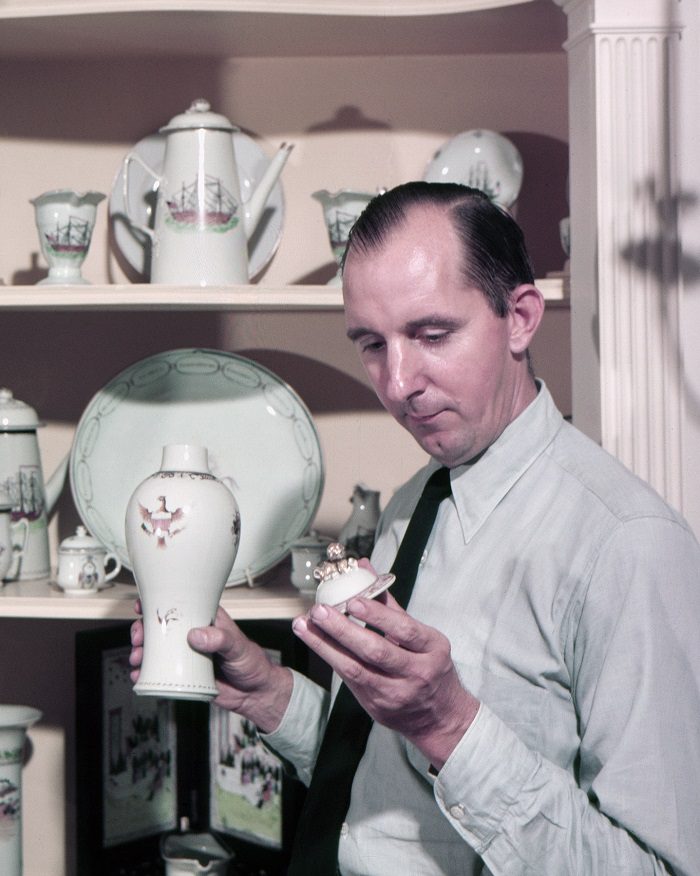
Maurice Gilliand

“Mr. du Pont was a very good employer, kept many of his people for a lifetime,” Gilliand said. “He never was too busy to chat, or discuss problems, if any, and help you if he could. To me, he was a friend. I am still grateful for all the knowledge he gave me of American art, and he is missed by many of us.”
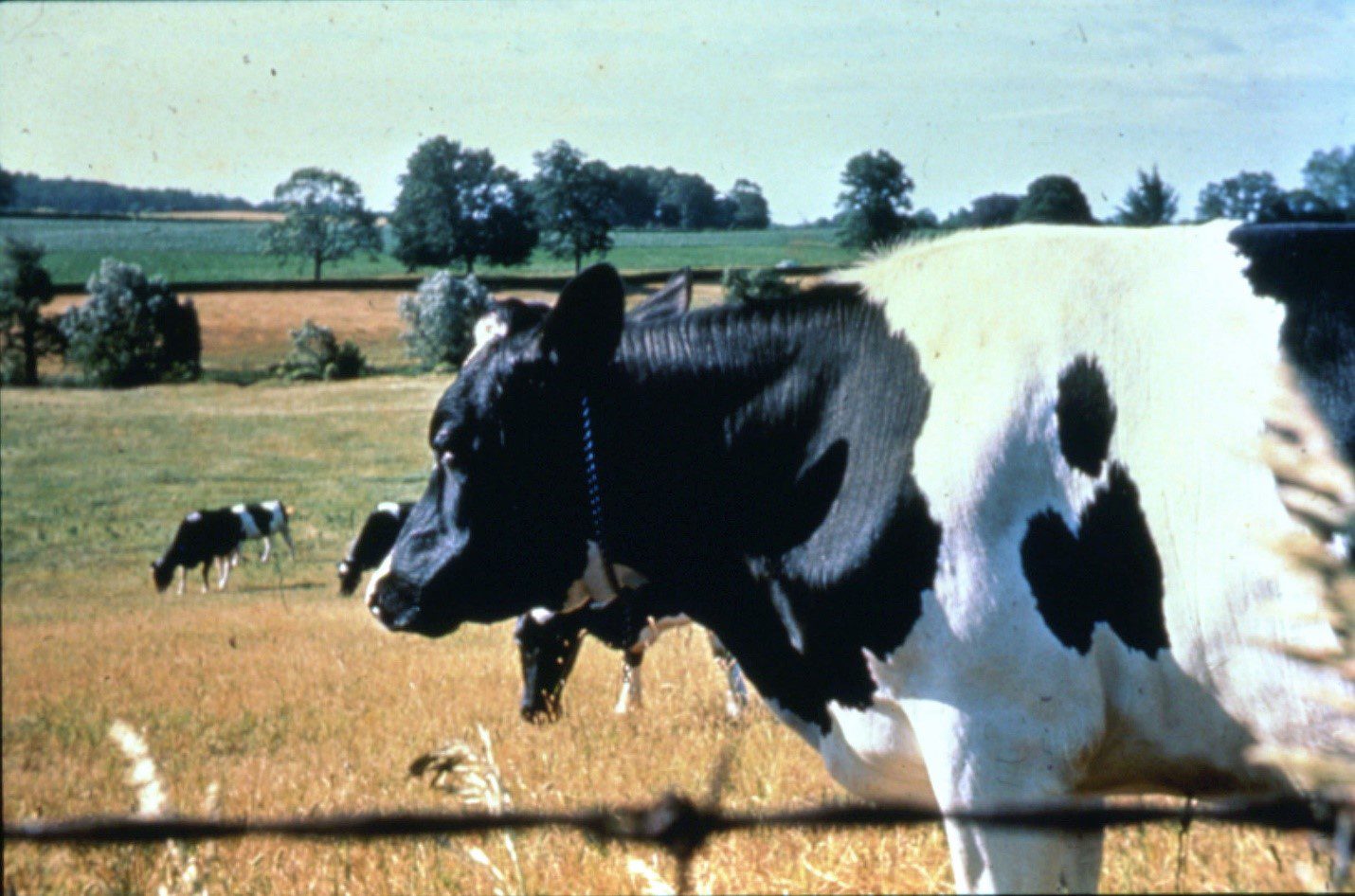
Cows on Winterthur farm

Sounds of the Summer

Photo by Lois Mauro.

Have you ever wandered around Winterthur and felt like it all wasn’t real, as if you were on a movie set? But one thing was missing—the soundtrack. Inspired by the magical garden and grounds, we decided to make some playlists to capture the moods of summer at this glorious country estate.

 There’s something about the early days of summer, especially in June when the temps haven’t risen too high. Our June playlist is full of country and folk music. Upbeat and full of rhythm, it’s perfect for moving your body and taking a hike around the estate. We hope this kickoff-to summer playlist will give you the feeling of reaching the highest peak and then finding satisfaction in coming back down the mountainside. The sounds of The Chicks, Shania Twain, Waxahatchee, boygenius, and more will accompany you on your journey.

By July, we’re in the mood for picnics, lazing in the sun or lounging in the grass, and finding the perfect shady spot to read this summer’s best seller. That feeling of fun and freedom on hot summer days spent with the best of friends and loved ones is told through the music of MUNA, Snail Mail, Hoku, Tessa Violet, and many more. This July is all about upbeat pop.

Before we know it, the dwindling days of summer will arrive, bringing images of one last blowout of the season—think Gatsby-esque parties and big band music and decadence in the sweltering air. A little bit of jazz and big band mixed with elements of pop and hip-hop sound just about right to wrap up the hottest of days.

As the days unfold outside and inside at Winterthur, we’ll continue sharing playlists that paint pictures like these and help you create new stories of your visits here.

Follow Winterthur’s Spotify

Delaina’s Debut

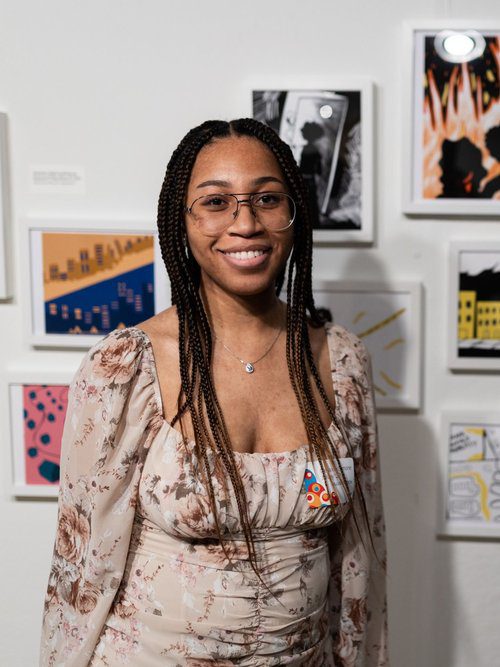
Delaina Jolley has always felt like an artist. “I remember being five and saying my career would be as an artist,” she recalled recently. “My mom, Yvonne, is an artist. She did a lot of portraits. So, I’ve always been an artist, but now I am learning how to be a working, professional artist,” said Delaina, now 23.

Growing up in Newark, Delaware, Delaina spent hours looking through books just for the illustrations, creating her own mini-comics, and thriving in her art classes.

“This passion led me to attend the Pennsylvania College of Art & Design, where I graduated in May of 2022 with a Bachelor of Fine Arts degree, majoring in illustration,” Delaina said. “I learned not only how to be an artist and designer but also the importance of using my work to create positive changes in my community and those around me.”

Delaina will be one of the more than 100 artists, musicians, and vendors featured in Winterthur’s Artisan Market on July 15 and 16. She received an Artisan Market grant to participate. The grants encourage emerging artists and start-up businesses to take part in the event.

“Receiving this grant means that the first step in my career as an artist starts in my home state,” said Delaina, an admissions counselor at Delaware College of Art and Design in Wilmington. “This will be my first time creating my own booth and showcasing my own work. I’m just excited about being around other artists, designers, and artisans. This is kind of like my first rodeo.”

Receiving the grant is also about serving as an example to artisans who, like her, are just starting out. As she explains, “I can show other young local artists that they can take chances, create what they love, and even sell their work, too.”

Artist Delaina Jolley (photo courtesy of Nick Gould Photography team)

Check out Delaina’s work at her website: https://www.delainajolley.com/

“I enjoy incorporating portraits with bold colors and abstract shapes, and a lot of my work includes writing, lyrics, and songs,” Delaina said. “Sometimes I just want to convey what I am feeling, and sometimes I am inspired by different songs, quotes, or people. I recently did a portrait of (poet, author, and activist) Amanda Gorman.”

“Amanda Gorman” by Delaina Jolley

Delaina said her work has two different sides – catching people’s attention with color and raising awareness about broader issues.

“Sometimes there is the pressure of having to create a finished piece. But sometimes you just need to take out your sketchbook and just draw. Sometimes I just need something to do that’s not being on my phone. I just want to sit and let my mind be free. It helps with my mental wellness.”

Maintaining a schedule of creation is key to succeeding as an artist, Delaina said.

“That starts you on a path to success,” she said. “Being able to continue to communicate through my work is a big thing. If I need to communicate something, I need to do it through art.”

In addition to selling her own work, Delaina has ambitions to become a creative director, leading projects through a creative process.

“I would love to do book covers as well,” she said. “If I could get my art on a book cover, that would be something amazing.”

Self-portrait by Delaina Jolley

Whirlwind Weekend Stop at Winterthur

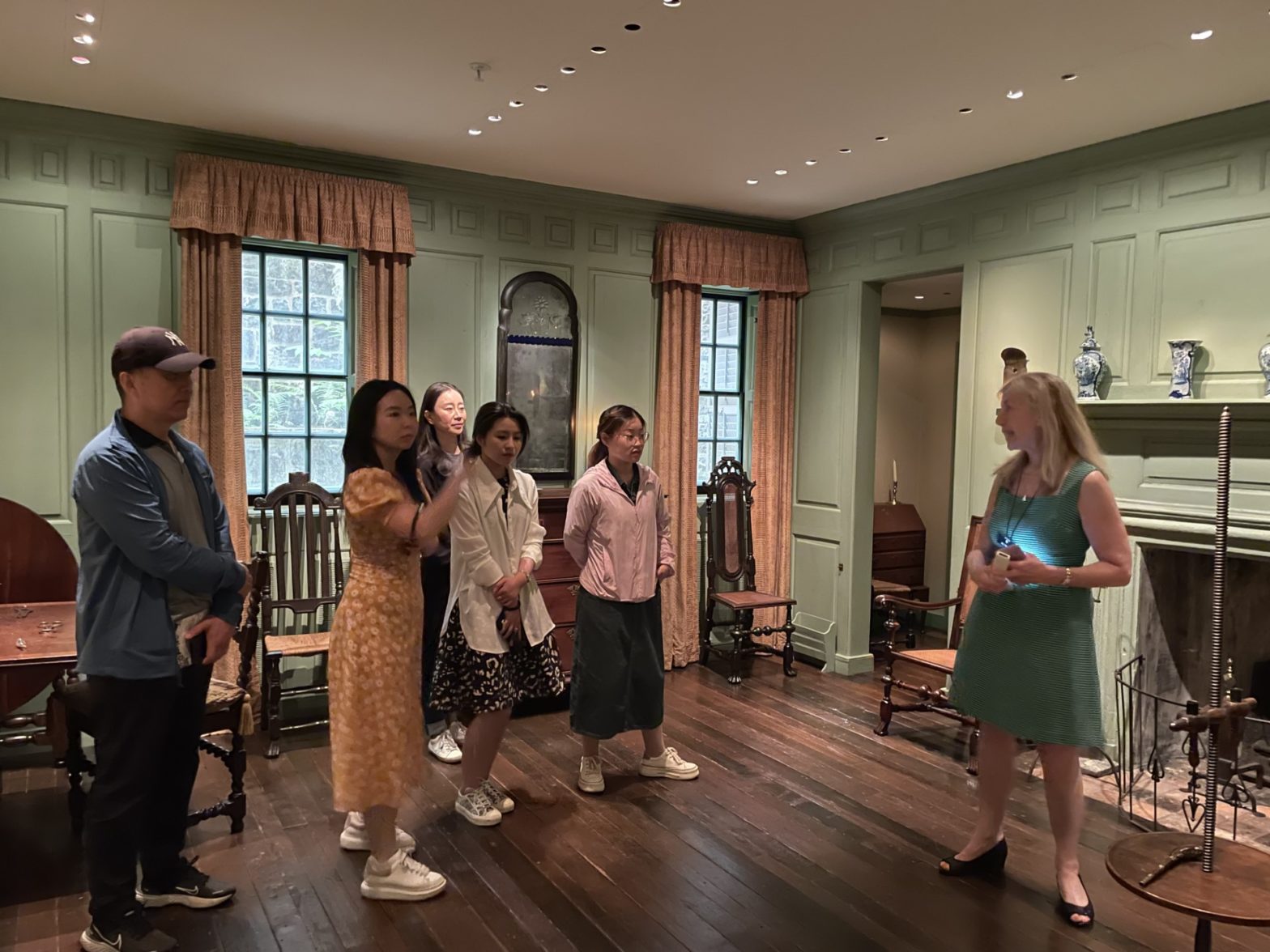
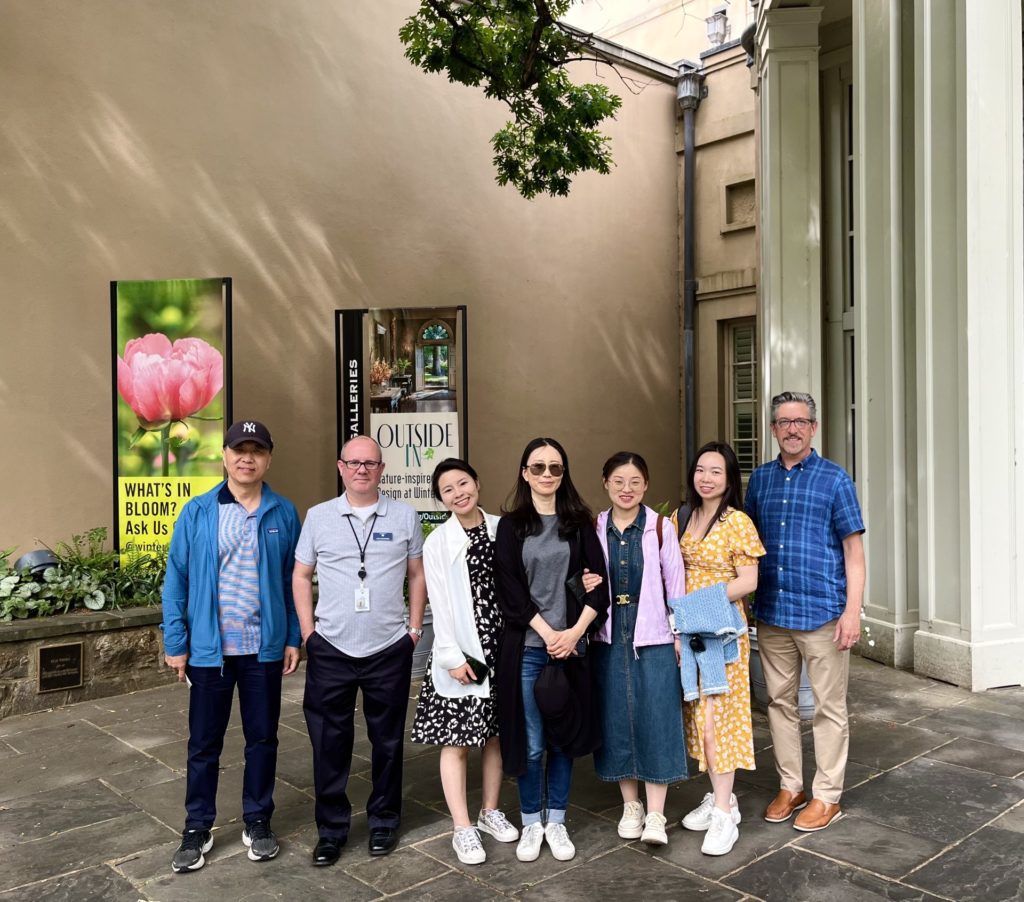
Five people who organize group excursions from China disembarked a little late from a chartered van that pulled up to our Visitor Center. They were on a mission to scout the region for potential stops on tours they could bring here from China, the largest outbound tourism market in the world. The group was escorted by Greg Edevane, director of global development for Chester County Tourism, which promotes the entire Brandywine Valley.

The five guests had already seen other area attractions that weekend and had more to enjoy later in the day. So with their ambitious schedule in mind, we set out to experience everything Winterthur offers. Unfortunately, we didn’t have time to do it all.

First, we took a house tour, which allows visitors to see highlights of the 175-room former home of museum founder H. F. du Pont. They delighted in the décor, photographed the furniture, and appreciated the antiques.

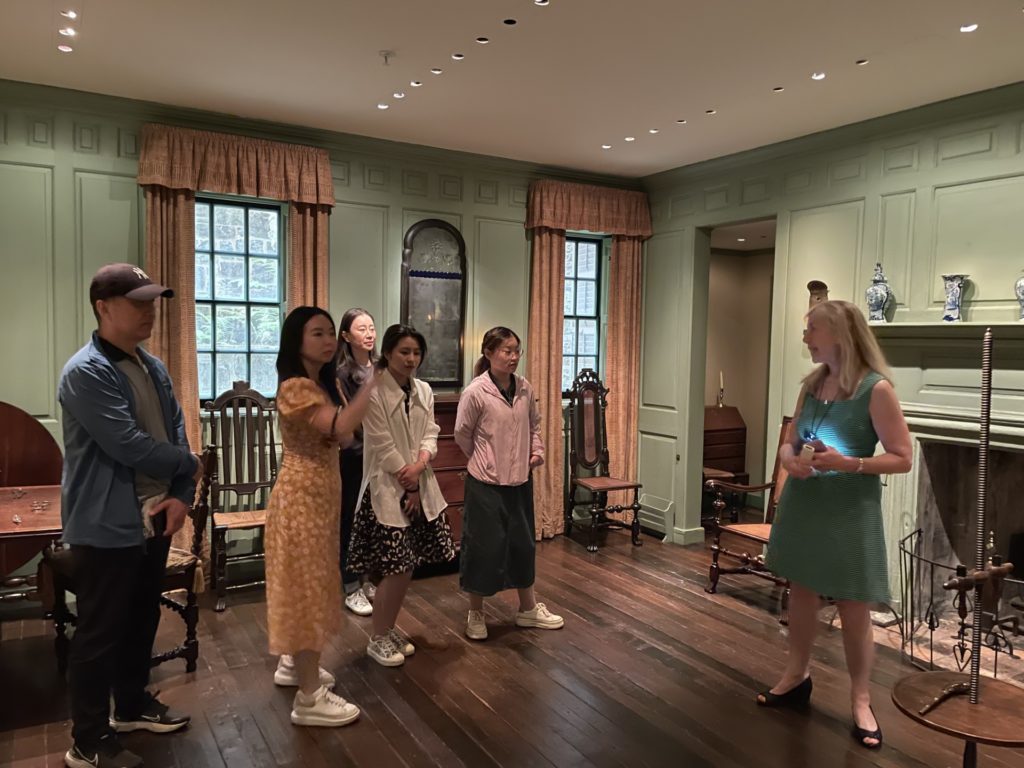
A Winterthur tour guide, at right, interprets the contents of the 175-room house at Winterthur for five visitors from China who organize excursions to the United States.

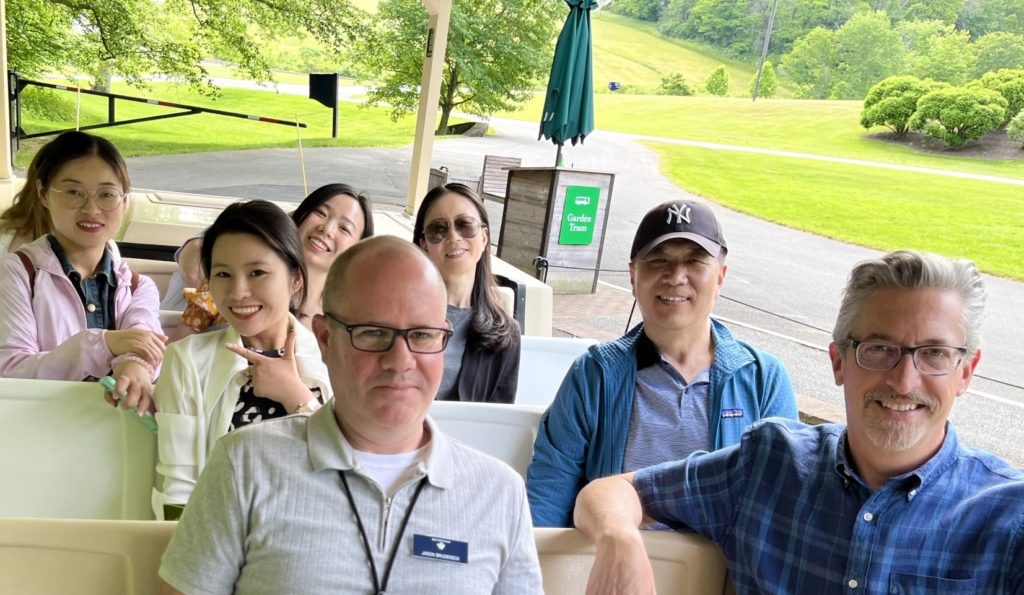
After a whirlwind trip through several rooms in the mansion, we embarked on a tram tour of the breathtaking garden. The group took in the flowers and foliage, the leafy trails and paved paths, and the magic of Enchanted Woods, a three-acre children’s garden that offers several play areas to climb in, on, and over, including a Faerie Cottage with a thatched roof, a giant Bird’s Nest, and an Acorn Tearoom for make-believe tea parties.

Five businesspeople from China who organize excursions to the United States are accompanied on a garden tram tour by Jason Brudereck, Winterthur’s communications manager, left foreground, and Greg Edevane, director of global development for Chester County Tourism.

It was tempting to get out and explore some of the sights we passed, and other guests on the tram did just that, but we had to press on.

Greg suggested skipping a visit to the Museum Store to maintain their schedule, but the guests from China wouldn’t hear of it. They checked out the multi-room retail space that houses a remarkable collection of gifts, books, jewelry, honey made from hives on the estate, and more.

They didn’t have time to walk the trails, dine in the Visitor Center Café, marvel at the exhibitions in the galleries, or gawk at the Campbell Collection of Soup Tureens before reboarding their van and continuing to another wonderful destination in the Brandywine Valley. But that gives them a reason to come back.

Gabby Chen, general manager of Now-Trip in Chengdu, the capital of southwestern China’s Sichuan province, said: “This will be a unique place to bring people. It is somewhere people might not think to go if they’re planning a trip to America for themselves.”

Winterthur offers many options for customizing your visit. If you’re considering organizing a large group tour to Winterthur, visit https://www.winterthur.org/group-tours/. If you’re planning a visit with a smaller group or as an individual, visit https://www.winterthur.org/visit/plan-your-visit/. We look forward to welcoming you soon!

The Joy of Juneteenth

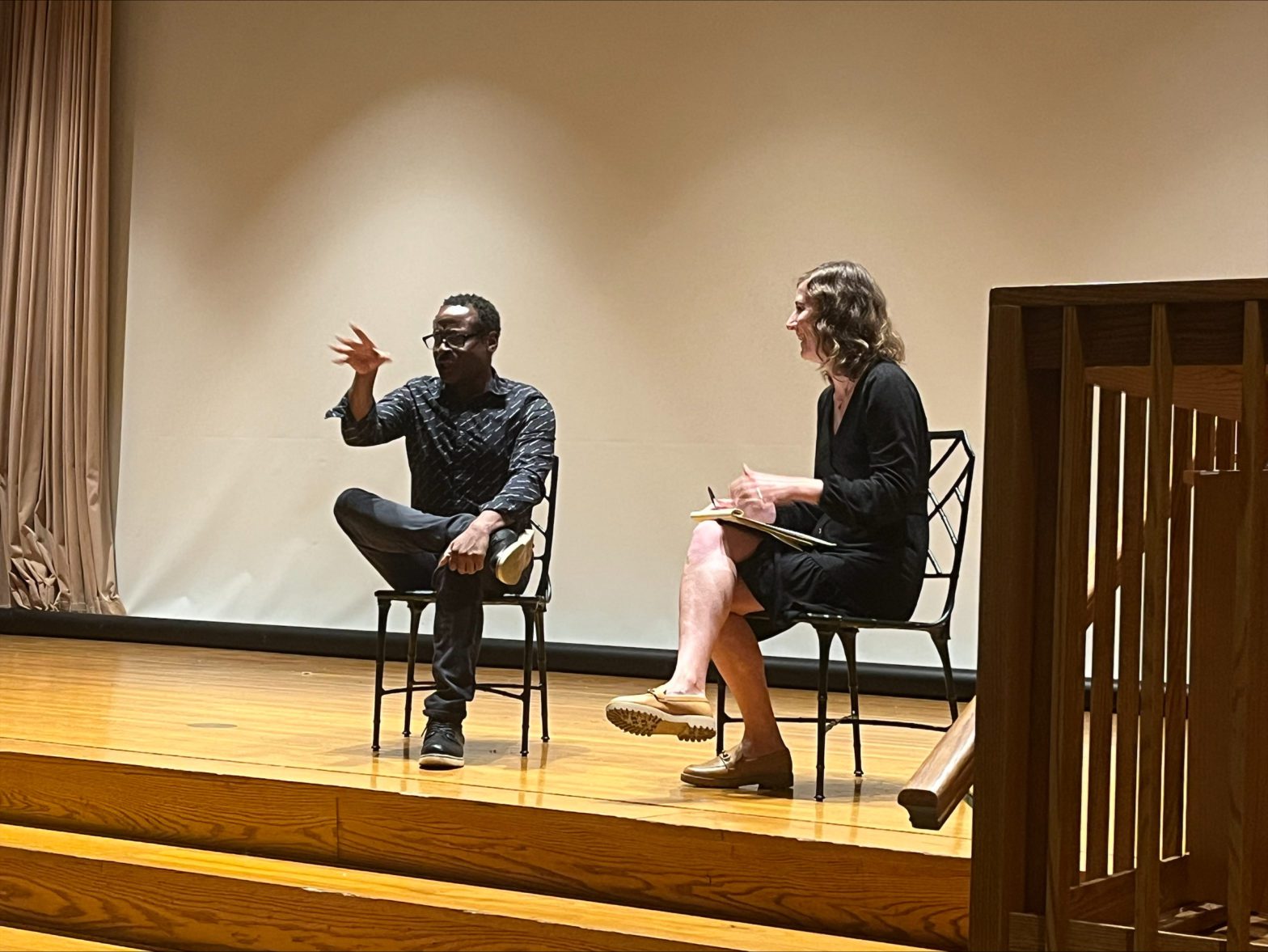
Benjamin Sterling Cannon hadn’t been to Winterthur since he was about 10 years old. Now the executive and artistic director of the Wilmington Ballet Academy of the Dance, Cannon never gave much thought to the local cultural institution, which he viewed as a “separate, large, and self-contained” system.

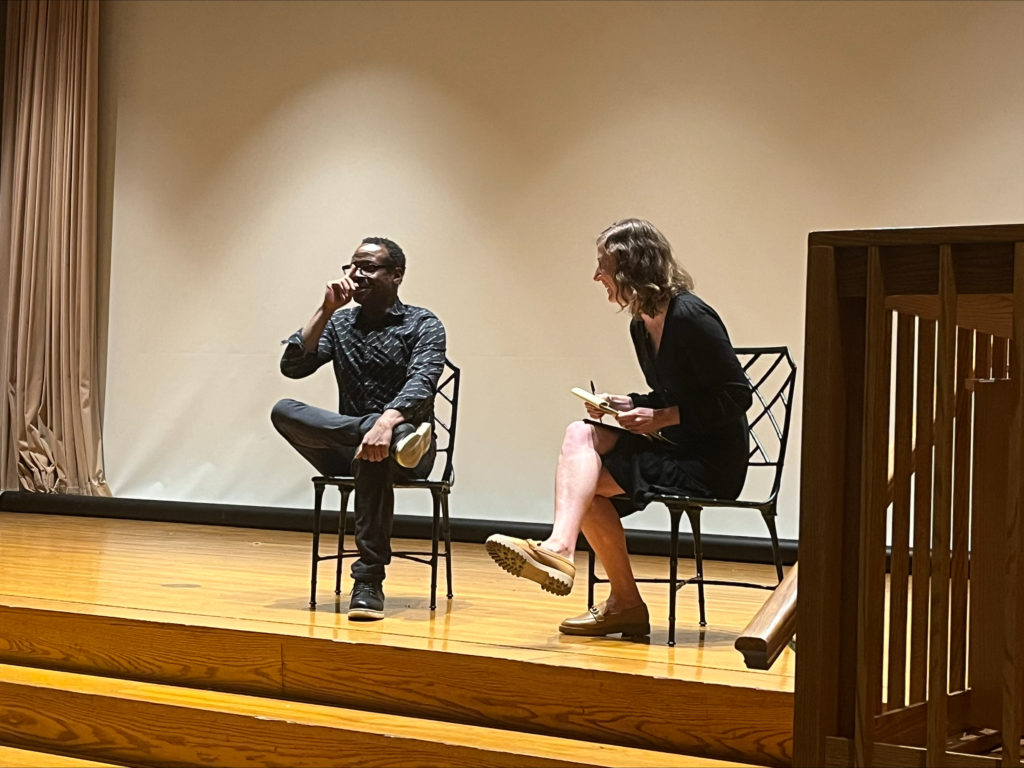
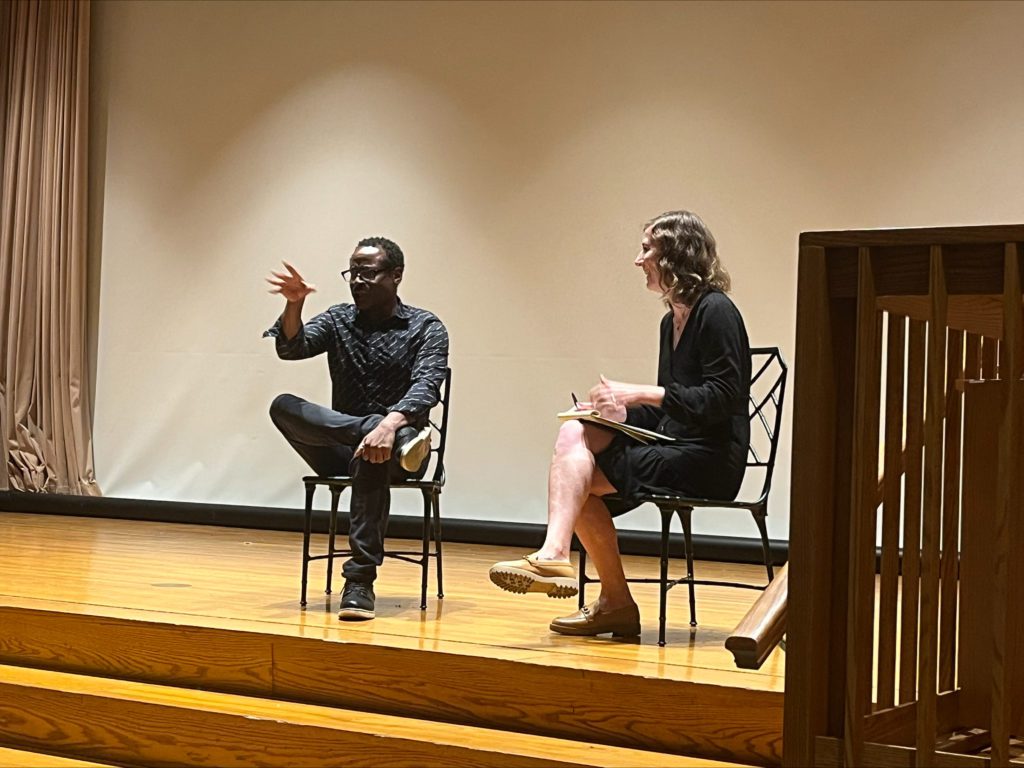
“I never thought I could have a partnership with a place like Winterthur,” Cannon said recently from the stage of Copeland Lecture Hall. But one day a few years ago he was approached by Mark Nardone, who was then communications manager at Winterthur. Nardone invited Cannon to visit and experience what we have to offer, and so Cannon did. He was delighted to find that his assumptions weren’t justified.

“I found the team at Winterthur to be, in a word, ‘curious,’” Cannon said.

He could have meant curious in the sense of the word’s secondary definition: “strange, quirky, or unusual.” And he wouldn’t be incorrect. We’re an interesting bunch. But he truly meant the primary definition of curiosity: “eager to learn.”

On his first visit back as an adult, Cannon fell in love with Winterthur, and the team here likewise fell in love with the Wilmington Ballet. When Cannon drives on to the estate these days, he doesn’t feel like a trespasser. “I like to pretend I live here,” Cannon said.

Winterthur’s collaboration with Cannon developed into a relationship with a variety of area organizations. It’s been an enriching experience for Winterthur employees and visitors alike. One of the outcomes is our upcoming Juneteenth Celebration Day, which takes place here on Saturday, June 17, from 11 am to 4 pm. Juneteenth is a federal holiday in the United States that commemorates the emancipation of enslaved African Americans.

Throughout the day, a variety of storytellers, musicians, and dancers will fill Enchanted Woods and Copeland Lecture Hall with performances enriched by and deeply rooted in African American arts and culture. The activities in Enchanted Woods are included with general admission tickets and are free for Winterthur members. Purchase tickets in advance here.

Performances of The Whitney Project’s “A Celebration of Black Joy” will take place at 11 am and 3 pm in Copeland Lecture Hall. There is a separate fee for these performances. Register for “A Celebration of Black Joy” here.

For an overview of Juneteenth Celebration Day, visit this page.

Take a Hike!

By Collin Hadsell

“Winterthur has a lot to offer.” That’s a sentence I’ve used to start a lot of my talks about where I work and what I do. It’s so broad a statement that it feels like an easy out, but it’s true. The reason I say it so often is because Winterthur is a huge place, profuse with history and activity and so much to give, and I am always discovering more the longer that I am here.

Although I’m a horticulturist who works primarily in the almost 60-acre historic garden, some of my favorite spots and discoveries on the estate have been in our meadows and forests on the many hiking trails that lead you through them.

Since I am not a natural lands technician, I sat down with Jim Magee, our resident natural lands expert, and discussed the trails, meadows, and forests—what they have to offer and how guests can best explore these areas, learning and discovering new things while they wander.

Here is a quick list of 5 things to remember when visiting the “wild” areas (meadows and forests) at Winterthur:

1. Upon arrival, stop by the Visitor Center.

If you are a Member, please check in so that we know how many people are visiting us; if the Visitor Center is closed, wear your lanyard displaying your membership card.

If you are a nonmember, please purchase a ticket.

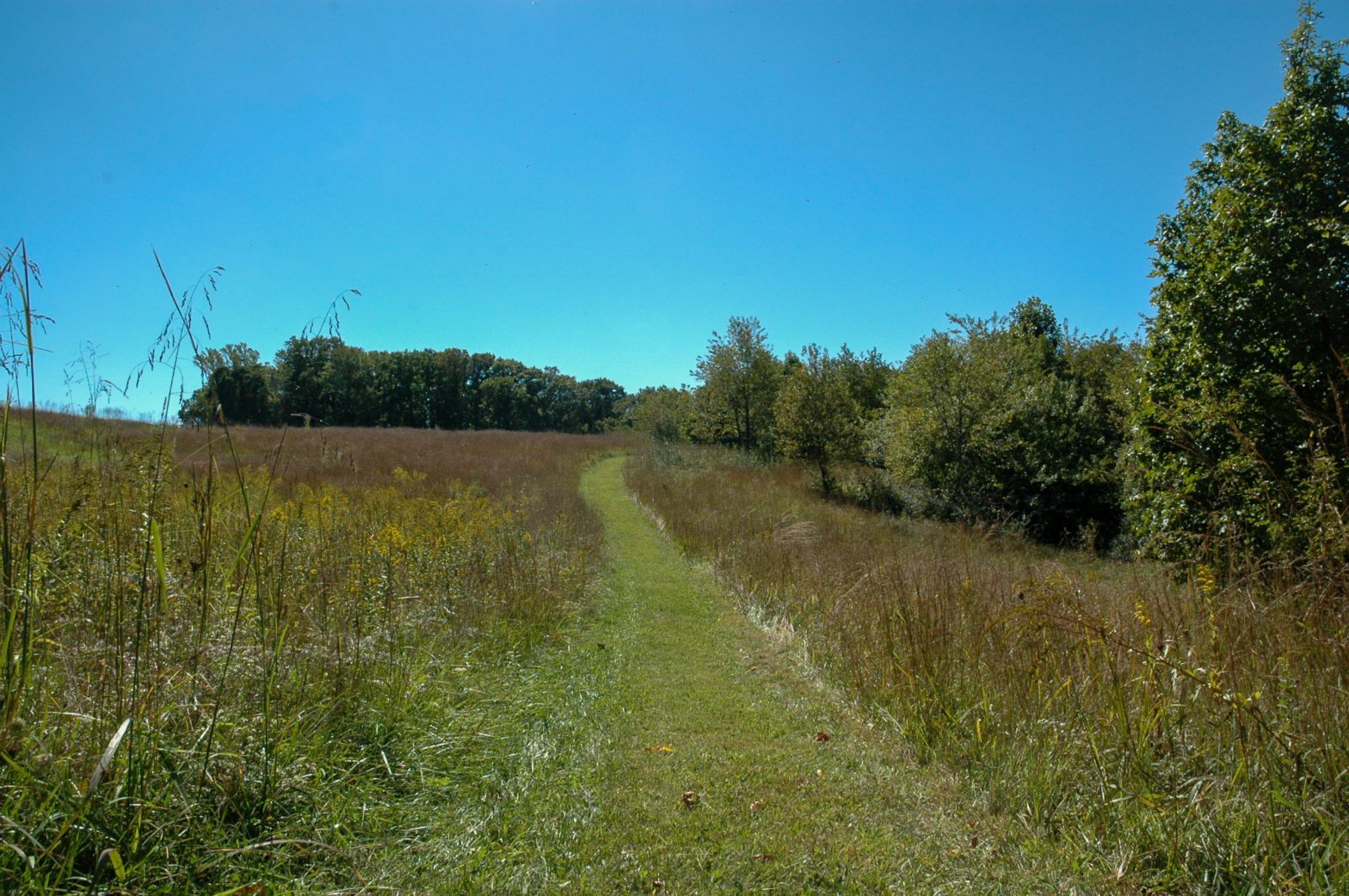
2. Get a map. These are available at the Visitor Center, or you can download them. There are 15 miles of trails to walk and hike, and we are always adding more, so visit us often to see all there is to see.

3. While hiking, be sure to leave nature in its place. “Leave no trace, take only memories.”

4. Dress for the weather. Wear comfy walking shoes, bring a bottle of water, and, after your hike, always check for ticks!

5. Most important, have fun, get lost, go on an adventure! There is always something new to see at Winterthur, whether you are hiking the trails or lounging in the shade of a tulip poplar at the forest’s edge.

Stars to Guide You

Philadelphia & the Countryside guide

Congratulations—or félicitations, as they say in French—are in order, even if we say so ourselves!

Much to our delight, Winterthur has been awarded a coveted three-star rating in Michelin’s first-ever Green Guide for our area: Philadelphia & the Countryside.

Like the famed Michelin star system for restaurants, this exceptional rating represents the highest and rarest honor. The Michelin Green Guide awards destinations with one, two, or three stars to let readers know whether a place is worth a visit, a detour, or a special journey, respectively. And if that weren’t enough, Winterthur is named one of the 10 “unmissable” must-see sites.

While announcing the new book at an event on May 18, Philippe Orain, editor in chief of the Michelin Green Guide collection, revealed why his team chose Philadelphia and its environs as the 8th U.S. destination to be featured. He called Philadelphia “the most important historical city in the U.S. as the birthplace of America” and an “East Coast Gateway” for international travelers to be introduced to the country.

The guide itself is exciting to read, and the entire tourism team—both here at Winterthur as well as our friends at the Philadelphia Convention and Visitors Bureau (PHLCVB), Chester County Conference & Visitors Bureau, and the Valley Forge Convention and Visitors Bureau—are thrilled that so many Delaware sites are included. “We aren’t the destination that we are without the attractions in the countryside,” said Gregg Caren, PHLCVB president and CEO.

Gregg Caren, PHLCVB president and CEO, announces the publication of Michelin’s first-ever green guide for our region.

Many Pennsylvanians—and I say this as a Pennsylvanian—forget how intertwined the First State is with the Keystone State. My colleagues sometimes like to joke that Delaware makes up “the three southernmost counties of Pennsylvania.” (It’s a comment that amuses Pennsylvanians. Delawareans, probably not.) As it is, I usually have one foot in each state, commuting from one end of the Delaware Valley to the other almost every day. I love where I live, and I love where I work, so I’m delighted that both places have received such prestigious recognition.

One thing we surely agree on is that this honor has left us starry-eyed, and we all look forward to welcoming more visitors from France and beyond to our beautiful region.

You can read about the guide here: https://www.discoverphl.com/blog/michelin-launches-first-ever-philadelphia-guide/. The French edition is out now, and the English version will be available to UK and North American travelers in June.

Celebrating the publication of the guide are, from left, Greg Edevane, director of global development for the Chester County Conference & Visitors Bureau (CCCVB); Nina Kelly, director of marketing & communications for the CCCVB; Jason Brudereck, communications manager for Winterthur; and Christine Heesters, director of marketing for Winterthur.

The Peony Garden

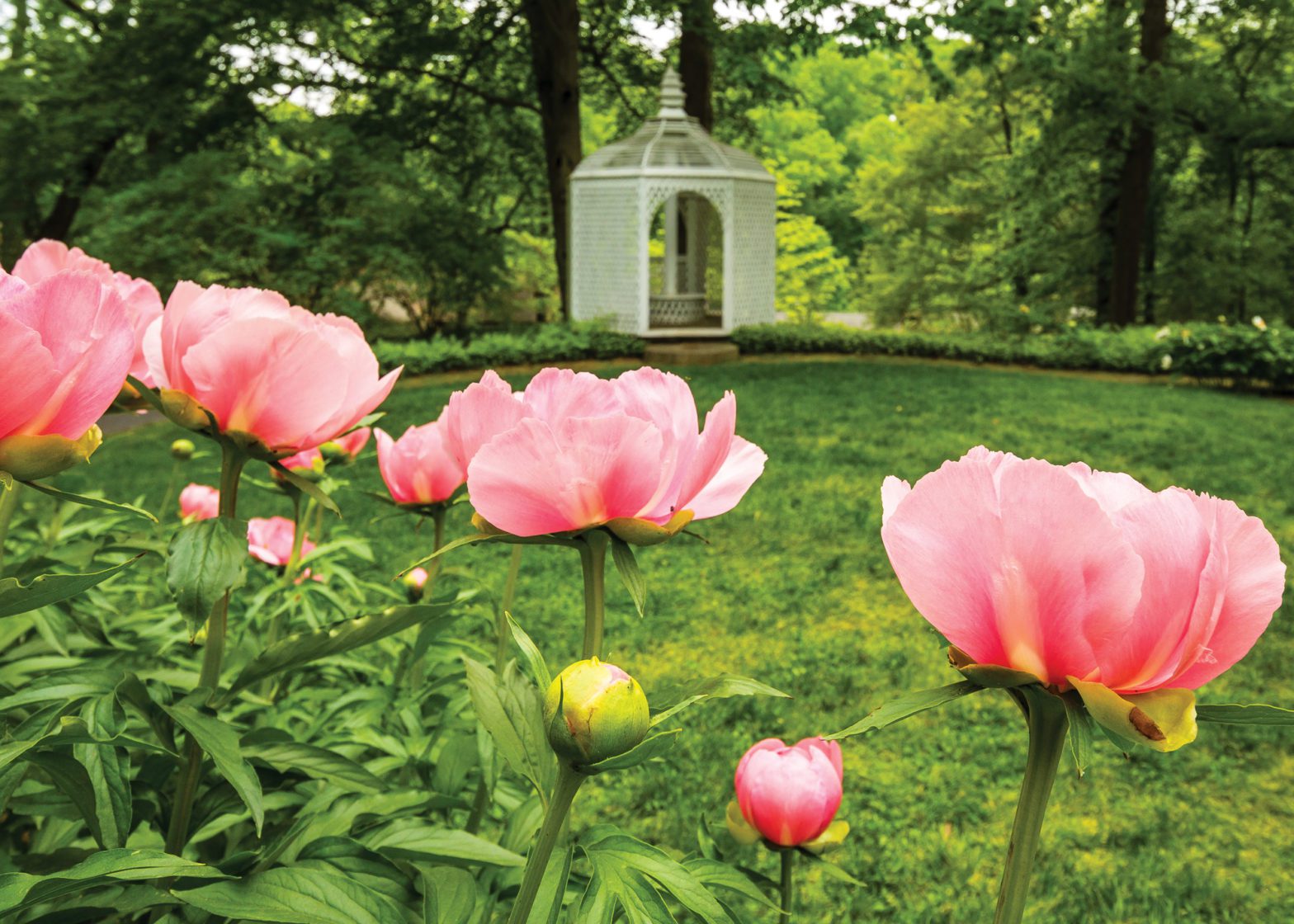
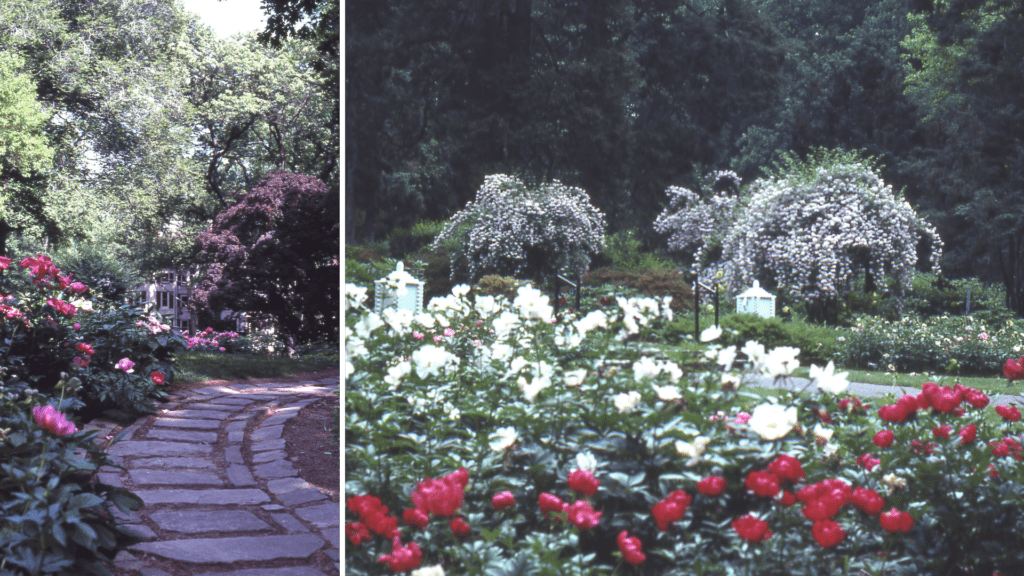
A celebration of full-blown spring, this area reaches its peak in late May. The peonies in this area are a horticultural treasure representing the best of the yellow, bronze, peach, and maroon Saunders peonies as well as an unparalleled planting of white, pink, and red herbaceous varieties selected with particular attention to flower form.  

When creating this garden, H. F. du Pont honored the work of Dr. A. P. Saunders, one of the great peony hybridizers of the 20th century. In addition to the herbaceous peonies, the garden features the lesser-known tree peony. (The term tree is misleading since they are actually shrubs that grow 4 to 6 feet tall.)   

Du Pont also added plants with similar flowering times, including beauty bush (Kolkwitzia amabilis), with its fountain of cascading pink blossoms. The lavender flowers of Chinese lilac (Syringa x chinensis) and Henry’s lilac (S. x henryi) also work well here. Surrounding the garden are additional complementary plants. Pink-flowering Weigela florida var. venusta, near the garden steps, harmonizes with the striking red-wine azalea (Rhododendron obusum ‘Amoenum’). A pink crabapple named in honor of du Pont (Malus ‘Henry F. du Pont’) flourishes along the path to the Visitor Center, as do Kurume azalea Coral Bells (Rhododendron ‘Coral Bells’).  

The charming Latimeria Summerhouse at one end of the garden was purchased from an estate in Wilmington, Delaware, in 1929, when Marian Coffin designed the Peony Garden. 

Scholars to reveal interpretations of unique centuries-old manuscript that illuminates life in the American borderlands

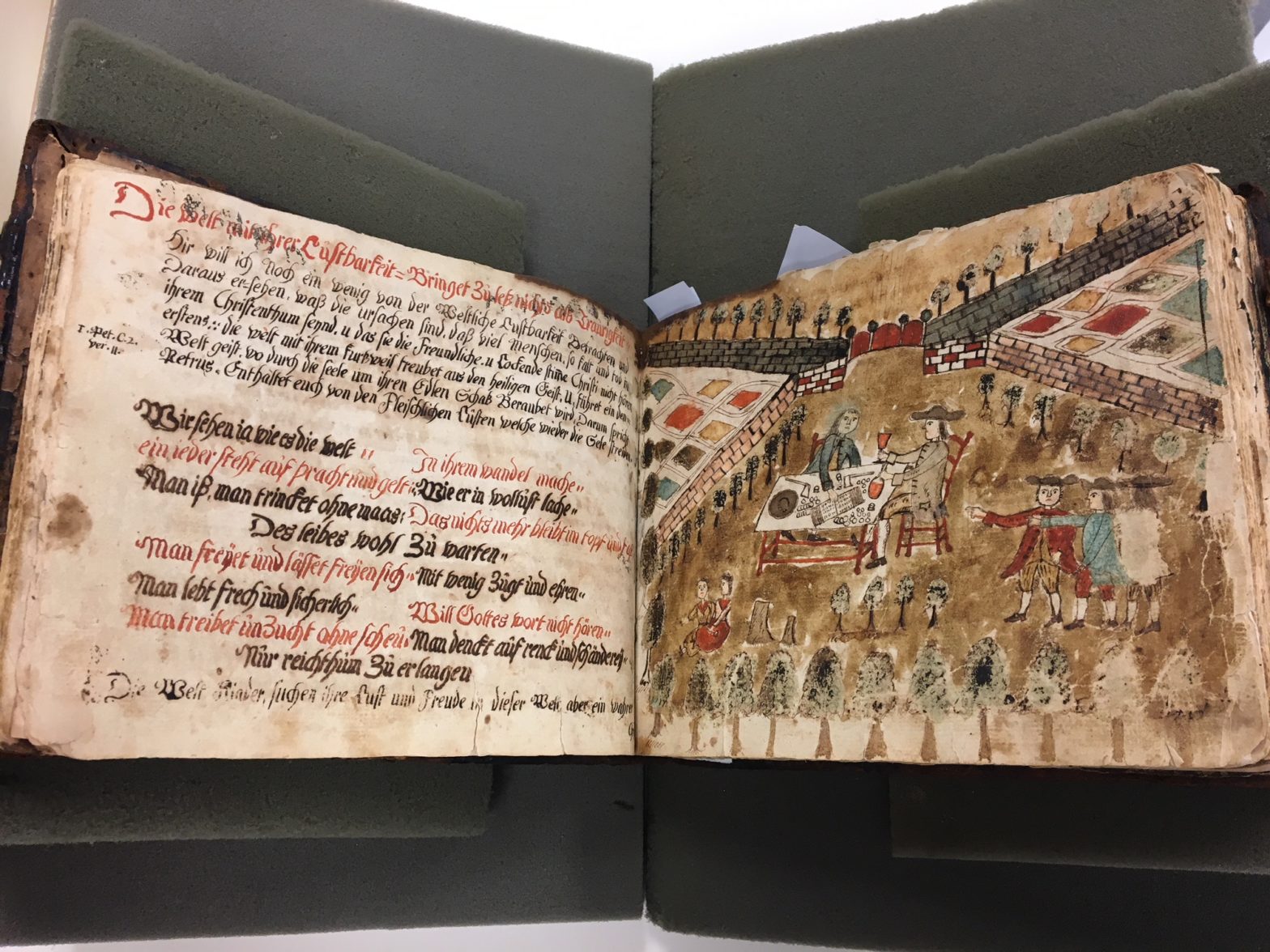
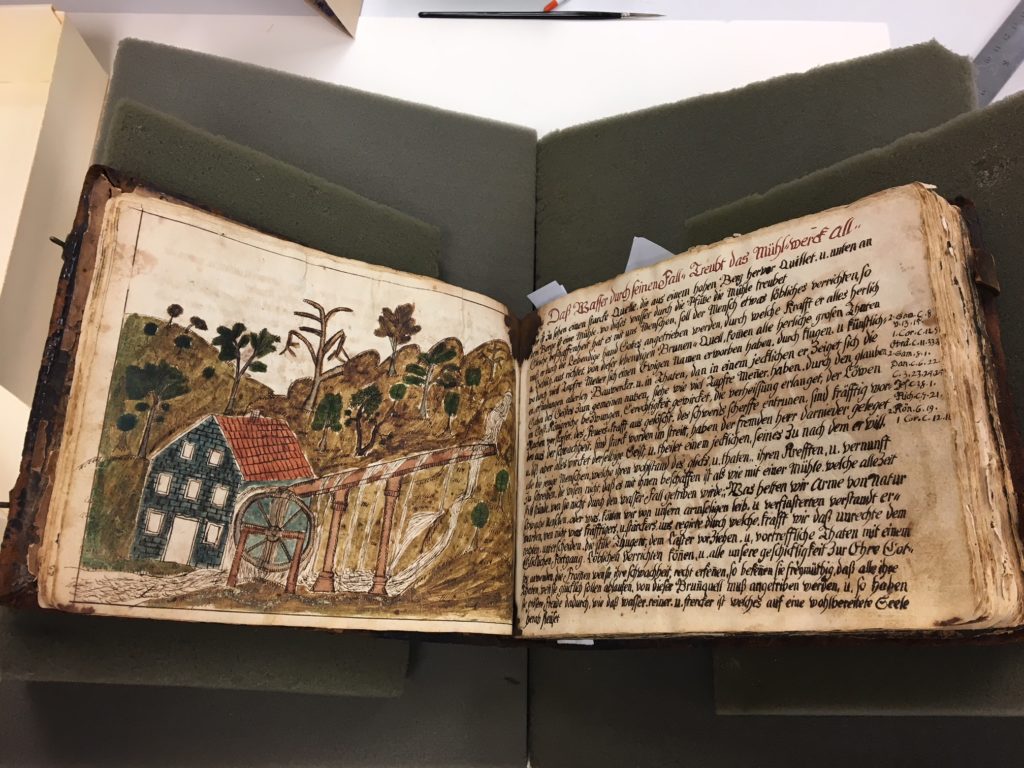
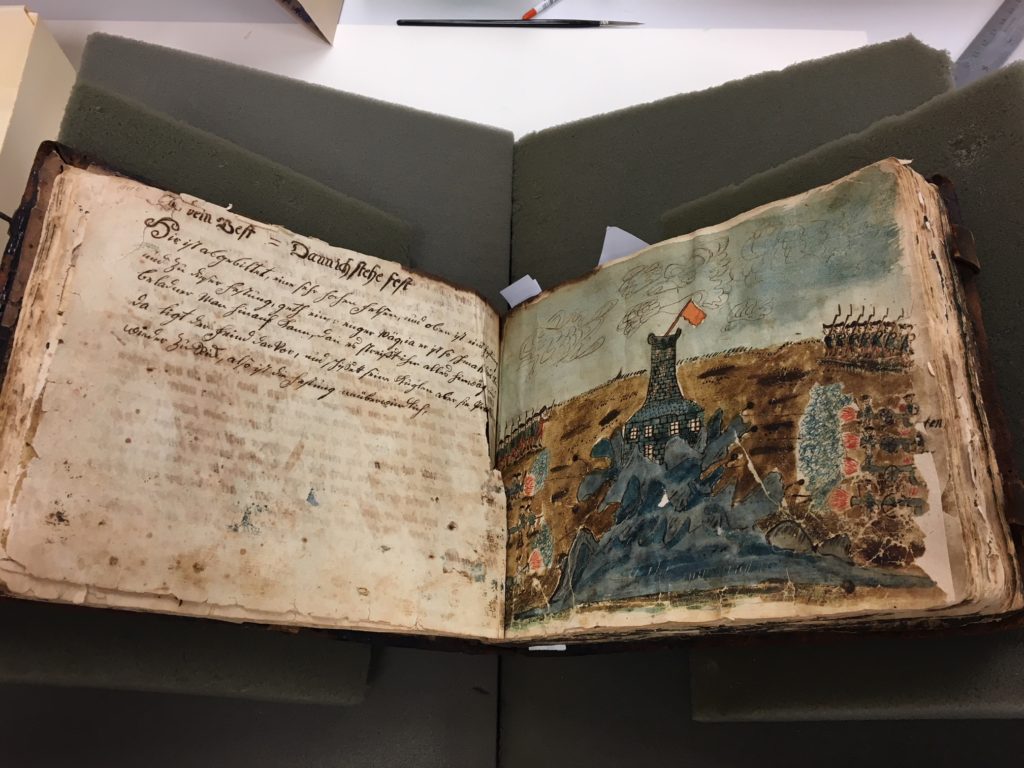
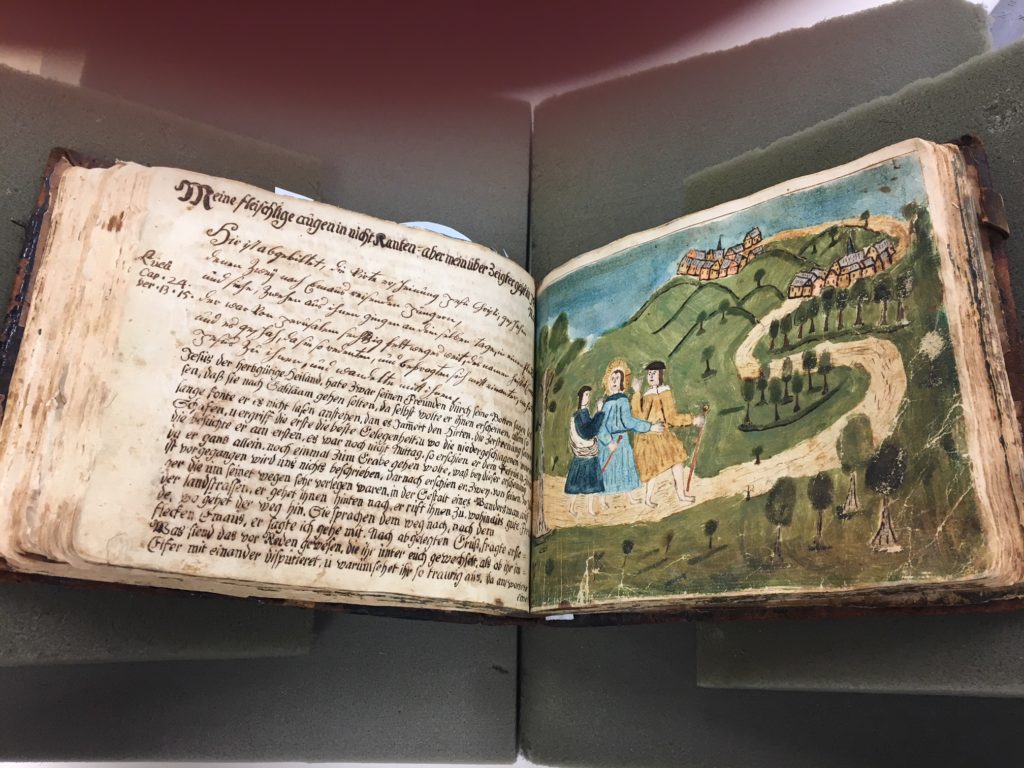
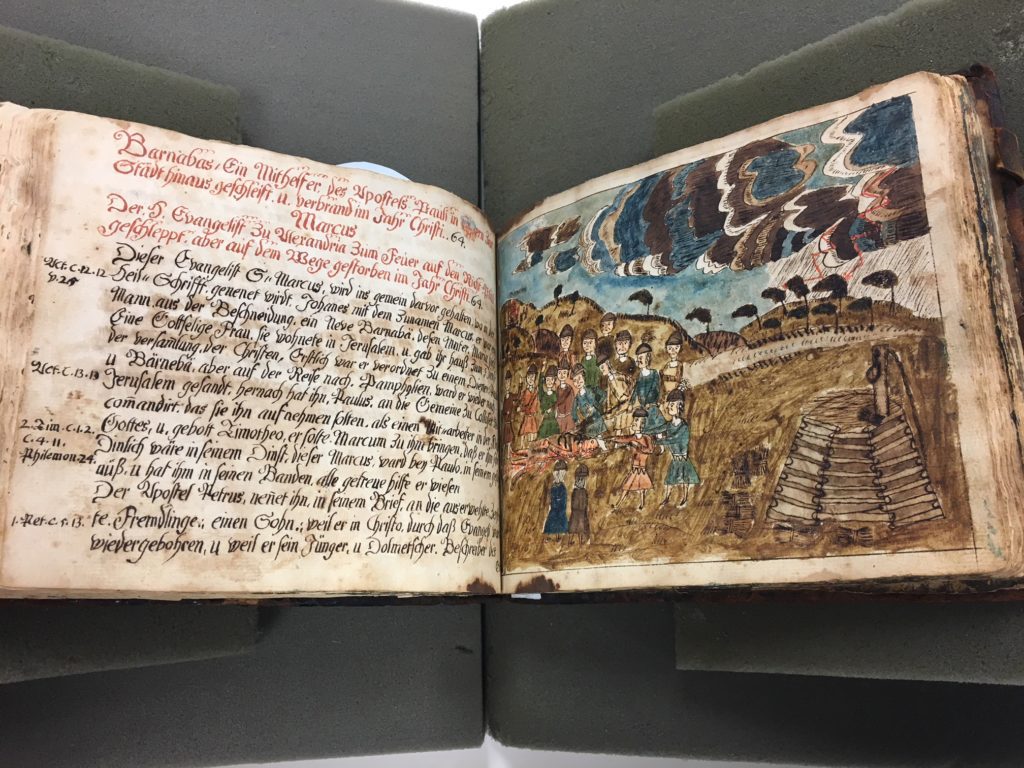
WINTERTHUR, DE (May 9, 2023) – A devotional manuscript made in the 1780s that is too fragile to display is being digitized and will be available to the public in 2024. On May 12, scholars and advisers will gather at Winterthur Museum, Garden & Library to discuss what the manuscript has revealed so far. They will share their work and perspectives on the manuscript and how it helps them better understand life and art in an early American borderland: the town of Lancaster, Pennsylvania.

The study day, from 9 am to 12:30 pm, is free to attend, but participants must register in advance at: https://tinyurl.com/denig

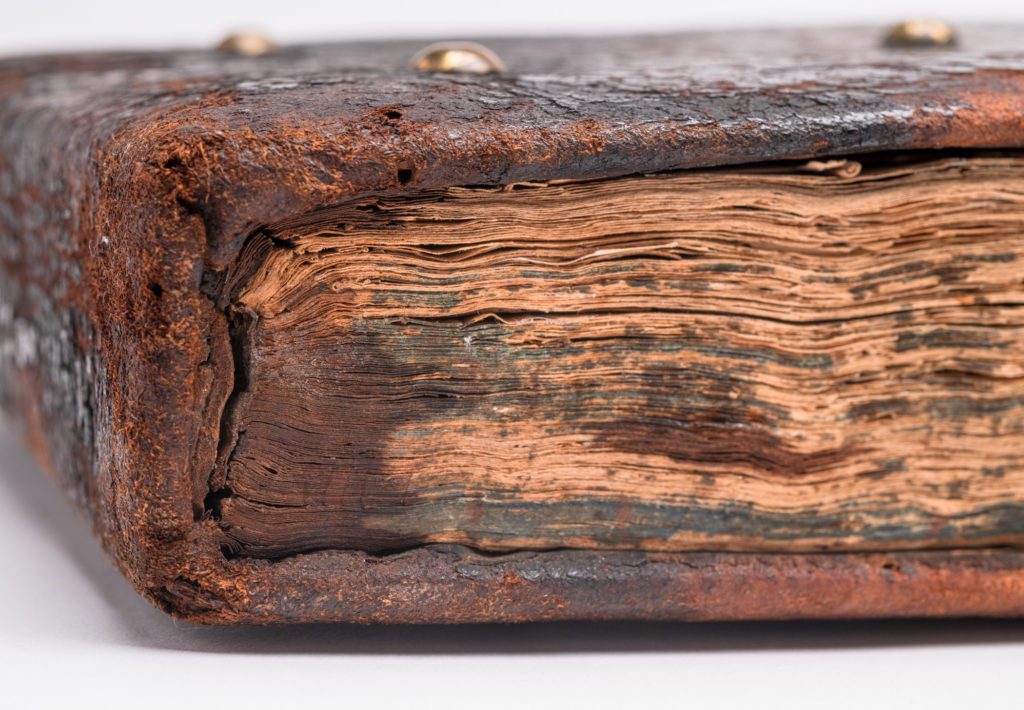
Early in 2020, Winterthur was given this extraordinary leather-bound illuminated manuscript made by Ludwig Denig (1755–1830), a shoemaker and apothecary who lived in Lancaster, Pennsylvania. The Denig manuscript combines intricate ink and watercolor drawings, personal and devotional texts, and sheet-music hymns, forming a compelling record of art and life in 18th-century America.

“Our job is not only to preserve the manuscript but also to curate it and make sure it’s available and relevant to a wider audience,” said Marie-Stéphanie Delamaire, Curator of European and American Art at the Carnegie Museum of Art. Delamaire, who previously served as Curator of Fine Art at Winterthur, is leading the project. “There’s nothing like it anywhere,” she added.

To experience the manuscript requires carefully leafing through more than one hundred sheets of brittle paper. Given the document’s fragility, each turn of the page threatens its physical integrity. To preserve this remarkable object while continuing to share its story, Winterthur is working with the Roy Rosenzweig Center for History and New Media, a team of specialists, and community partners to create a digital platform that will allow the public to explore its contents in rich detail through translations of the text, professional recordings of hymns, and essays by leading scholars.

The manuscript reflects the life and times of Ludwig Denig, a Pennsylvania German man born during the French and Indian War. He was a child at the time of the 1763 massacre of the Conestoga Indians in Lancaster, which took place within blocks of his home. Denig also served as a private during the Revolutionary War.

The manuscript was a gift to Winterthur from Alessantrina and David Schwartz and the Schwartz Foundation. An interdisciplinary team has been working on the project, which is funded by the Getty Foundation and the Schwartz Foundation.

Study day presentations and presenters include:

  • “The Materials and Art of the Denig Manuscript”: Marie-Stéphanie Delamaire and Joan Irving, Assistant Director of Conservation and Senior Paper Conservator, Winterthur
  • “Ludwig Denig: Cosmic Cobbler”: Alexander L. Ames, Director of Outreach and Engagement, Rosenbach Museum & Library
  • “Denig and the Specter of the Seven Years’ War”: Will Fenton, Associate Director of Research at the Center for Spatial and Textual Analysis, Stanford University
  • “Denig’s Omnivorous Musical and Spiritual Inspirations”: Christopher Herbert, Assistant Professor of Music and Vocal Area Coordinator, William Paterson University of New Jersey

The study day will begin with an introduction by Chris Strand, Charles F. Montgomery Director and CEO of Winterthur. It will conclude with a roundtable of discussion and reflections about the project with the above-named speakers as well as noted scholars and community leaders.

# # #

ABOUT WINTERTHUR MUSEUM, GARDEN & LIBRARY

Winterthur—known worldwide for its preeminent collection of American decorative arts, naturalistic garden, and research library for the study of American art and material culture—offers a variety of tours, exhibitions, programs, and activities throughout the year. Admission includes a self-paced house tour, exhibitions, a narrated tram ride (weather and space permitting), and the Winterthur Garden.

Winterthur is located on Route 52, six miles northwest of Wilmington, Delaware, and five miles south of U.S. Route 1. Winterthur is committed to accessible programming for all. For information, including special services, call 800.448.3883 or visit winterthur.org.

For immediate release                                                            

Press Contact: Jason Brudereck
Communications Manager
jbrudereck@winterthur.org

Bearing Witness to History

An Exhibition That Invites Visitors‘ Voices

By Kim Collison, curator of exhibitions

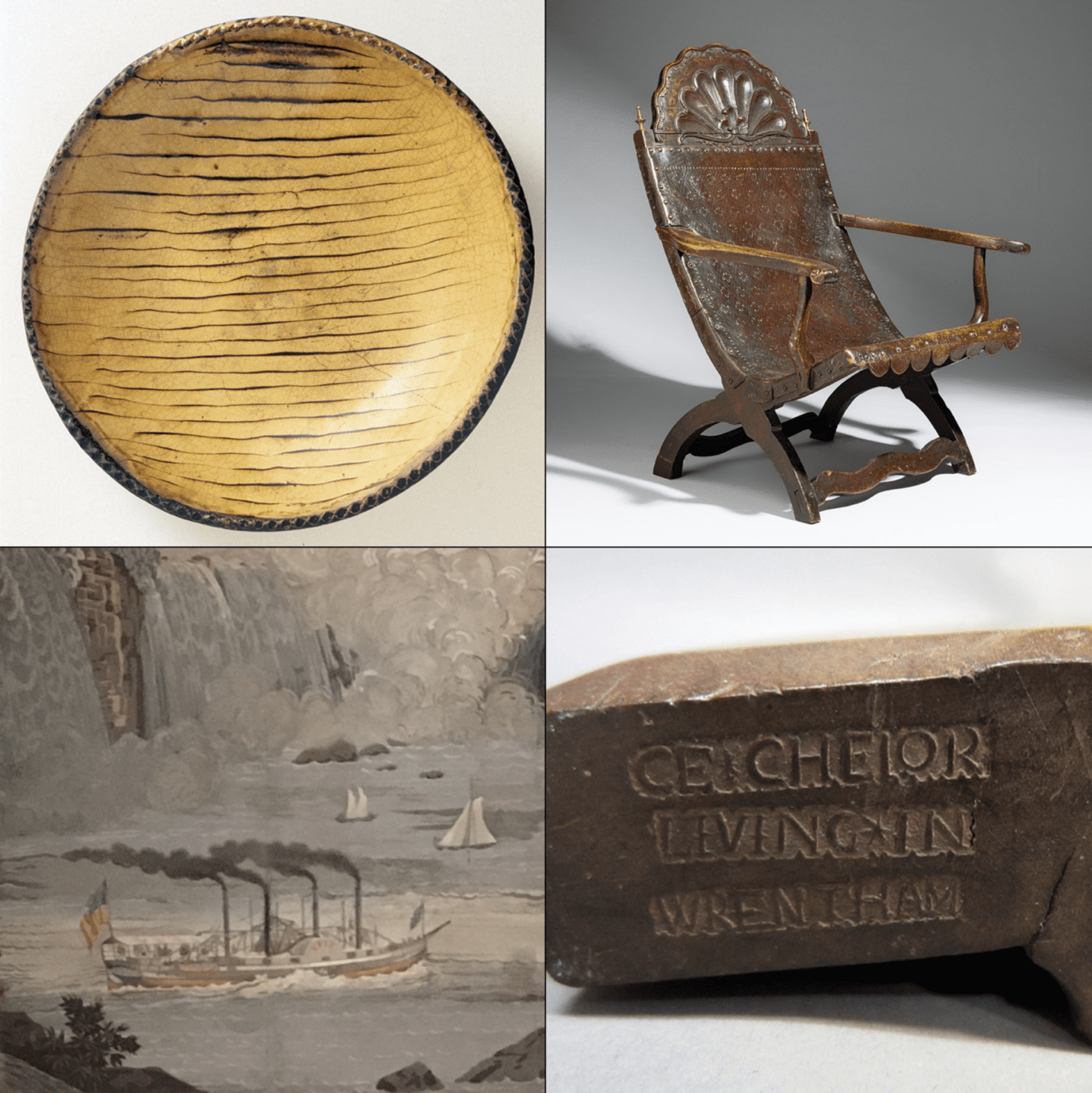
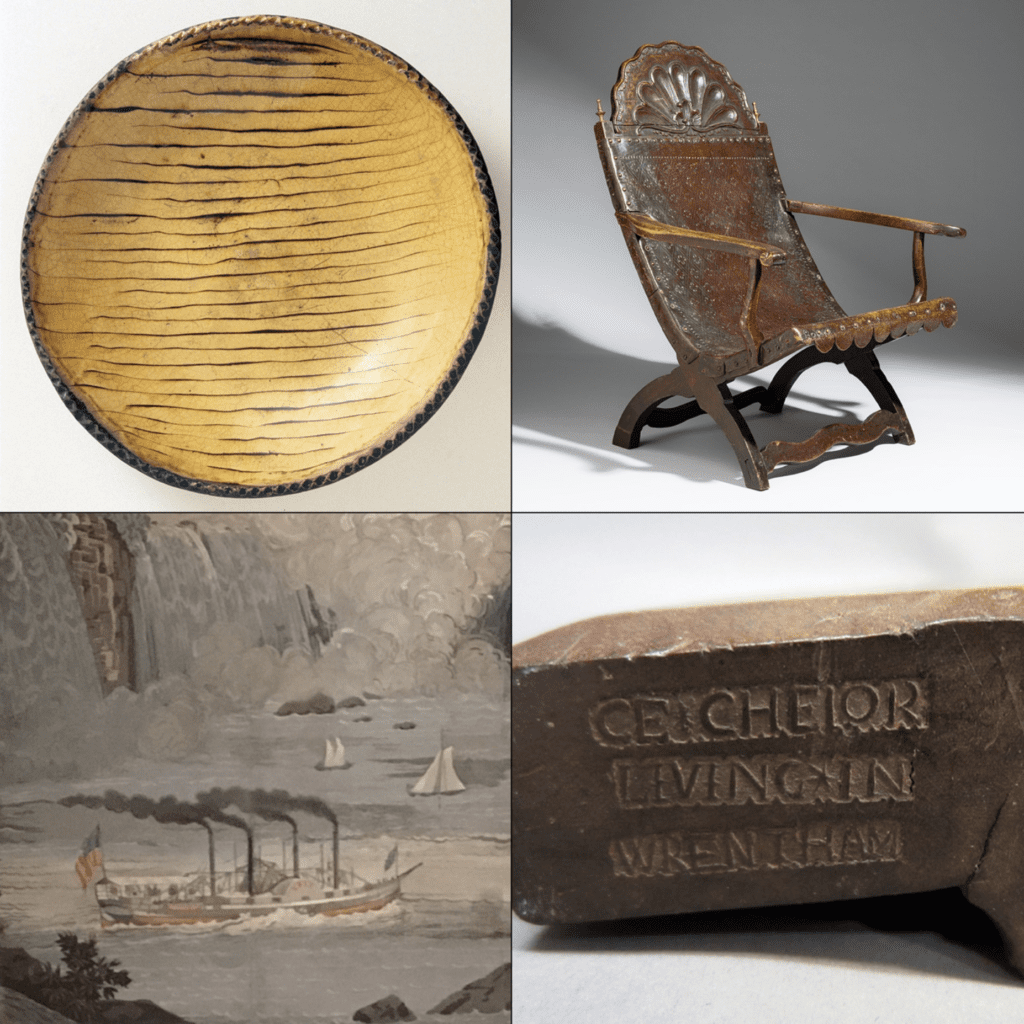
From left: Dish, England, 1720–80; earthenware, lead glaze. Bequest of Henry Francis du Pont 1958.1083 | Campeche chair, Campeche, Mexico, 1760–68; mahogany, original stamped leather seat (finials replaced). Museum purchase with funds drawn from the Centenary Fund 2022.0006 | Fragment of Views of North America (Niagara Falls), Zuber & Cie (manufacturer), Rixheim, France, ca. 1850–1900; woodblock printed wallpaper. Museum purchase with funds provided by the Henry Francis du Pont Collectors Circle 2018.0049.004 | Molding plane, Cesar Chelor (d. 1784), Wrentham, Massachusetts, ca. 1770; wood, iron; stamped “CE [star symbol] CHELOR / LIVING [star symbol] IN / WRENTHAM.” Museum purchase 1959.0074.002 

In museums, we are often asked to think about how art makes us feel. Labels created by staff members help us understand what a work may represent or what may have inspired an artist to create it. But what if that work is a dish, a chair that people used for hundreds of years, the wallpaper that hung in a historic house, or a tool that a craftsman used in his workshop? Whose stories do these objects hold? And who should speak for them?

The decorative arts in Winterthur’s collection range from high-style, intricately made objects that few people would have had the means to own to simple everyday items that anyone could have owned and used. Bearing Witness, an exhibition in the First-Floor Galleries, explores what a selection of objects bore witness to over time. These objects help us ask important questions, such as: 

Whose stories do these objects tell? 

How do they reveal the lives of people who made and used them but may not be remembered? 

What do they teach us about the past? 

And what do they teach us about today and our own experiences? 

Bearing Witness invites visitors not only to think about these questions but also to share their responses, both in the Galleries and online. Here are a few of the responses that visitors have shared.

When asked what emotions were evoked by objects in Bearing Witness, one visitor responded that they felt “intrigue about the human experience.”

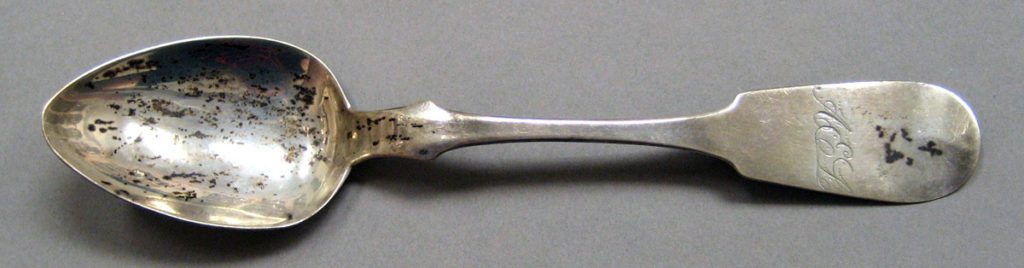
Teaspoon, marked by Hannah Robinson, Wilmington, Delaware, 1845‒55; silver. Gift of Dr. Margaret I. Handy 1961.0429.002 

One visitor reacted to spoons made by Hannah Walker and Hannah Robinson. The label describes them as “exceedingly rare.” The visitor commented, “This is, of course, because women were (and still are) discouraged to work in laborious jobs.” 

Another visitor shared, “Art can often sensationalize people’s responses to events. Artists can change people’s minds or further support preexisting ideas.”

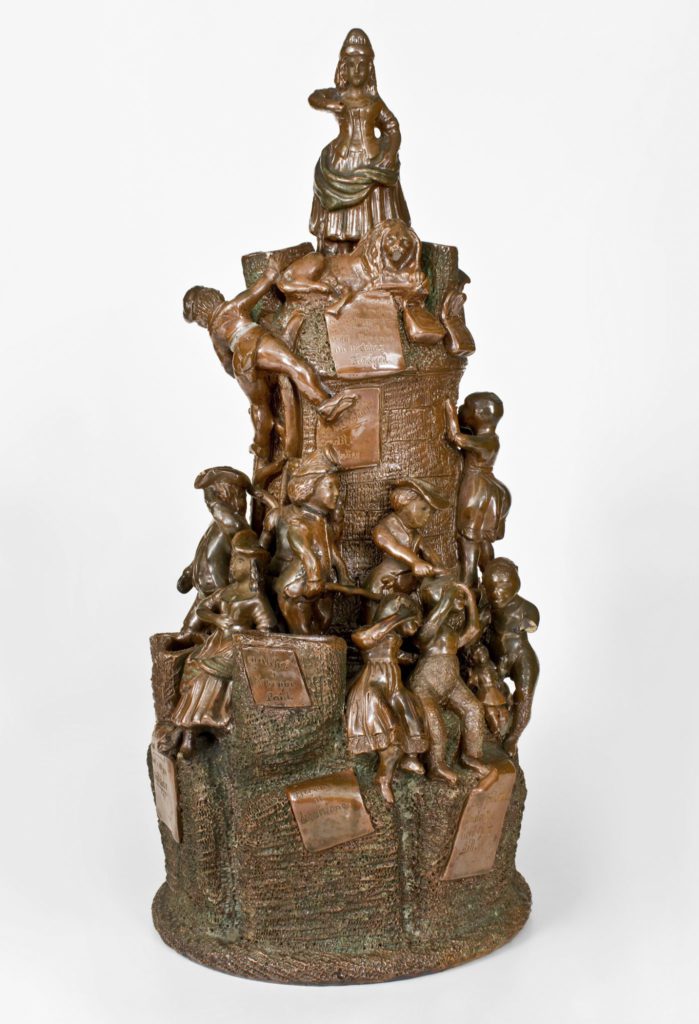
“Liberty Monument,” Wallace and Cornwall Kirkpatrick, Anna Pottery, Anna, Illinois, 1873; stoneware (molded and hand-modeled). Museum purchase 2021.0017

In response to the “Liberty Monument,” several visitors appreciated that stories like this one about the Colfax Massacre, a rarely taught event in America’s history, are on view. 

“It was surprising and gratifying to see this artist’s depiction of a little-known event in American history. It gives historical context to current events. Thank you for displaying it!”

“Many collections and museums have racist histories, so conflicting and controversial figures like this one need to be included.”

“Artifacts such as this provide witness to the truth and at least stimulate inquiry.”

Visit Bearing Witness in the Galleries or online, and join us in the conversation about these objects. What do they mean to you? Why are they meaningful today? How do they affect us and our experiences?