Search Site

Ways to Give

Your support of Winterthur will have direct and immediate impact as we continue to preserve our world-renowned collection of American decorative arts, rare books, and scholarly material, all situated within our idyllic, historic 1,000-acre landscape. Explore the many ways you can give to Winterthur today. 

Online

We encourage donors to choose from six areas to support, all of which provide critical resources for all aspects of Winterthur.

Your gift will be acknowledged by mail with appropriate tax language. Thank you! 


Check

Please make your check payable to Winterthur Museum, Garden & Library and indicate the area you want to support in the memo line. Your gift will be acknowledged by mail with appropriate tax language. Thank you! 

Mail to: Winterthur Museum, Garden & Library

Attn: Development Office

5105 Kennett Pike

Winterthur, DE 19735


Gift of Stock

We welcome gifts of stock and request information that can ensure accurate gift processing.  Please complete this fillable form and email to contributions@winterthur.org.


Wire Transfer

If you would like to make a contribution through a wire transfer, please complete this fillable form and email to contributions@winterthur.org.


Annual Giving

The Annual Fund contributes necessary dollars that help offset our operating costs each year. Your support will have immediate impact. Help us play a pivotal role in preserving our treasured collection, facilitating groundbreaking exhibitions, and ensuring access to Winterthur for generations to come. Your fully tax-deductible gift to the Annual Fund will support our work toward our vision to inspire exploration of American culture and landscapes through compelling stories and experiences.

Give Now!


Planned Giving

Align your legacy with H. F. du Pont’s, ensuring Winterthur endures as a haven for beauty, education, and access to treasures of material culture and the natural world. 

Including Winterthur in your estate plans makes donors eligible for inclusion in the Port Royal Society, our dedicated giving society for those who have aligned their legacies with a commitment to Winterthur’s future.

Learn More Now!

For more information, please contact Lucy Mason, Senior Associate Director of Major Gifts & Planned Giving, at 302.888.4707 or plannedgiving@winterthur.org.


Corporate Partnerships

By sponsoring a program, event, or exhibition, becoming a corporate member, or entertaining with us, your business provides critical support for our mission to inspire and educate through the collections, estate, and academic programs. Corporate sponsorship helps you to engage our visitors, entertain employees, and spread brand recognition across the region. Each sponsorship package will be customized to meet your company’s goals and also grants exclusive benefits, including general admission passes, discounts on event spaces, and invitations to signature events. 

Opportunities range from supporting museum, garden, or library projects to sponsoring events, programs, exhibitions, and more. Please contact the Development Office at 302.888.4878 or Alexandra Izzard at aizzar@winterthur.org for more information about current opportunities.


IRA Qualified Charitable Distribution (QCD)

The IRA Qualified Charitable Distribution (QCD) allows individuals age 70½ or older to make an outright gift to Winterthur from a traditional IRA (up to $108,000 in 2025). The withdrawal amount may count toward your annual required minimum distribution (RMD). The QCD must be paid directly from your IRA to Winterthur. For more information, please contact Lucy Mason, Senior Associate Director of Major Gifts & Planned Giving, at 302.888.4707 or email plannedgiving@winterthur.org.


Donor Advised Fund

A Donor Advised Fund (DAF) is a charitable giving vehicle created by an individual, family, or organization. It offers an immediate tax benefit and allows donors to make grants over time to nonprofit organizations of their choice. Winterthur can be named a recipient of your DAF. For more information, please contact Lucy Mason, Senior Associate Director of Major Gifts & Planned Giving, at 302.888.4707 or email plannedgiving@winterthur.org.


Tribute Gifts

Honor a loved one through a gift to Winterthur. Your thoughtful donation in memory of or in honor of a friend or family member helps Winterthur reach our vision to inspire exploration of American culture and landscapes through compelling stories and experiences. We will notify the honoree’s family of your generous contribution in their memory, without reference to the donation amount.


Gifting an Object

On occasion, Winterthur accepts gifts to the collection that align with our board-approved collections policy. If you would like to inquire about the possibility of an object donation, please contact the Museum Collections Division at museumcollections@winterthur.org. Thank you for your patience as we receive a high volume of inquiries. 

About Appraisals

Winterthur Museum staff cannot provide valuations of objects or give references to specific appraisers due to ethical considerations. To find a specialist that might best fit your specific appraisal needs, please consult the following organizations:

Appraisers Association of America, (212) 889-5404
American Society of Appraisers, (703) 478-2228
International Society of Appraisers, (202) 241-0359

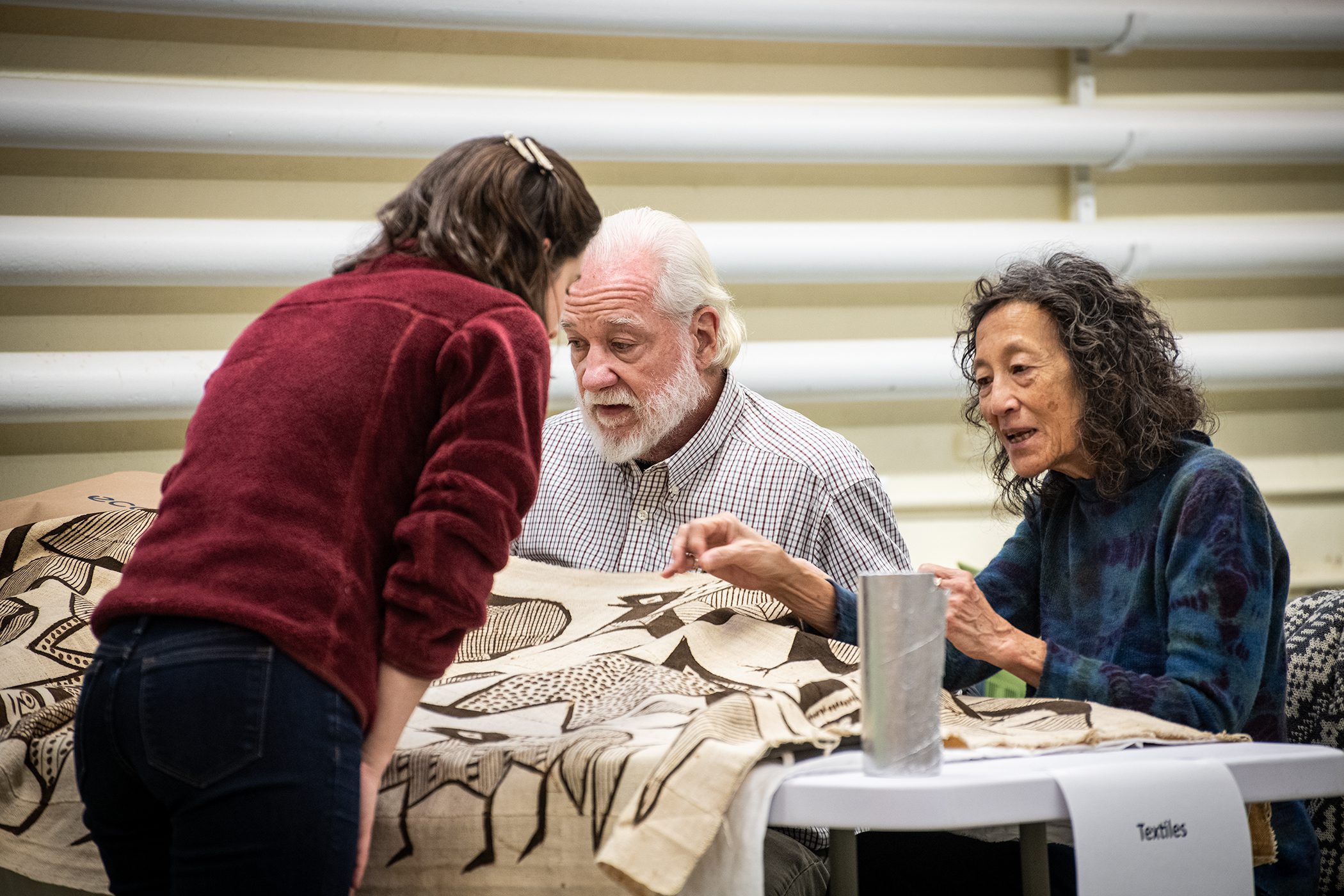
If you are seeking a conservation consultation, please visit our on-site monthly Conservation Clinics presented by Winterthur and the University of Delaware. 


Winterthur Rolls-Royce Rentals

Historic Automobiles at Winterthur

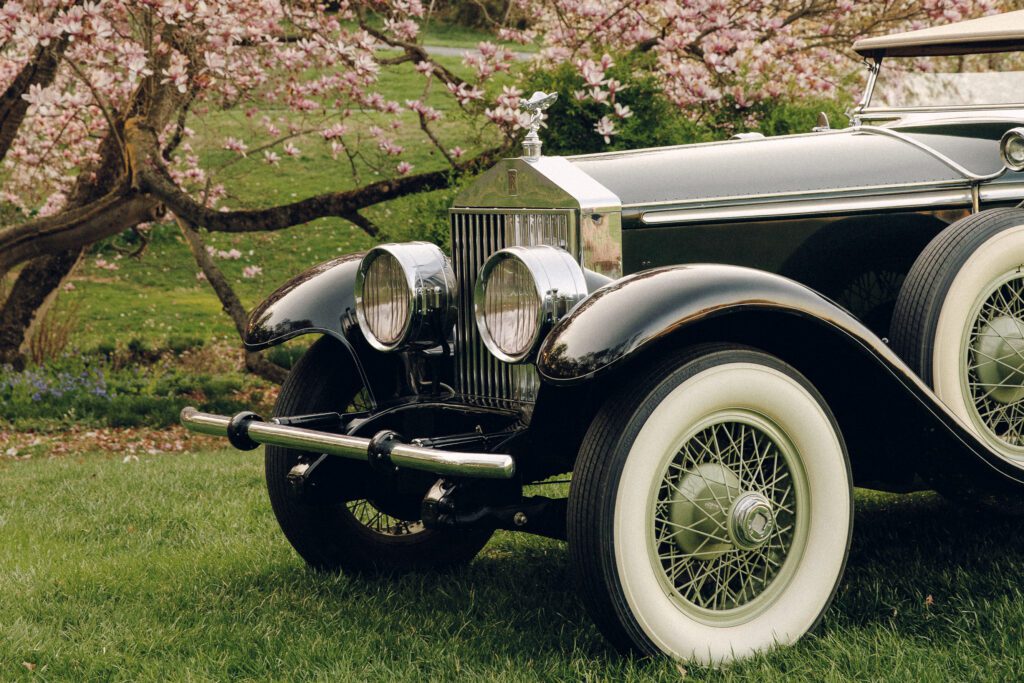
Henry Francis and Ruth Wales du Pont owned more than forty luxury vehicles during their lifetime, notably several Cadillacs and three Rolls-Royces, including a Phantom V. Thanks to a generous gift in 2008 from the Philip C. Beals estate of Southborough, Massachusetts, and later, a gift in 2018 from the David Lunger estate of Fairville, Pennsylvania, Winterthur is the proud owner of two 1927 Rolls-Royce Phantom I’s. These exquisite vehicles showcase classic design and engineering elements from the 1920s and 1930s—an important era in the Winterthur story that helped shape the country estate as we know it today.

A Winterthur team comprises members of the museum’s Conservation, Curatorial, Registration, Gardens, and Facilities Departments that oversee the care and periodic display of the car, making it possible to participate in select invitationals and available for hire during private events. 

1927 Rolls-Royce Phantom I S379FM

This PI sports a 1929 Brewster & Co. green Ascot Tourer body featuring polished aluminum trim, black fenders with ivory pinstriping, light green wheels, a light cloth top, medium-brown leather upholstery, and a wood dash. See more images.

1927 Rolls-Royce Phantom I S123PM

Ordered in 1926 and delivered in July 1927, this PI presents a Merrimac maroon Pall Mall body with red accents and pinstriping, black fenders, red wheels with chrome rings, a light cloth top, medium-brown leather upholstery, and a wood dash. See more images

Historical Background

Rolls-Royce Phantom I series cars were built in the newly created Springfield, Massachusetts, Rolls-Royce of America, Inc., facility. The plant began operations in 1921 with the production of Silver Ghosts and transitioned to building the “New Phantom” in late 1926. Before production ceased in the early 1930s, 1,2411 Phantom chassis were assembled in the Springfield plant. The Springfield-built Silver Ghosts and Phantoms are the only Rolls-Royce chassis ever built outside of the United Kingdom.

To secure superior coachwork in the United States, Rolls-Royce contracted with numerous coachbuilders, including Hibbard & Darrin, Murphy, Smith Springfield, Derham, Rolls-Royce Custom Coachwork, Merrimac, and Brewster. 

The Pall Mall coachwork on Winterthur’s S123PM was made by Rolls-Royce Custom Coachwork, Merrimac in Massachusetts. Its tall profile is traditional, very English, and incredibly spacious. The last Pall Mall body was produced in 1928, giving way to the new sleeker, lower, and more American-styled Ascot/Derby line represented by the Winterthur Phantom I, S 379 FM, whose Ascot Tourer body was made by Brewster & Co. of Long Island, New York. Noted as one of the most desirable body combinations of the era, there are twenty-eight Ascot-bodied Phantom I’s recorded as having been built by Brewster & Co. with an undetermined number surviving today.

Learn more.

Winterthur’s 1927 Rolls-Royce Phantom I Cars and Your Special Event 

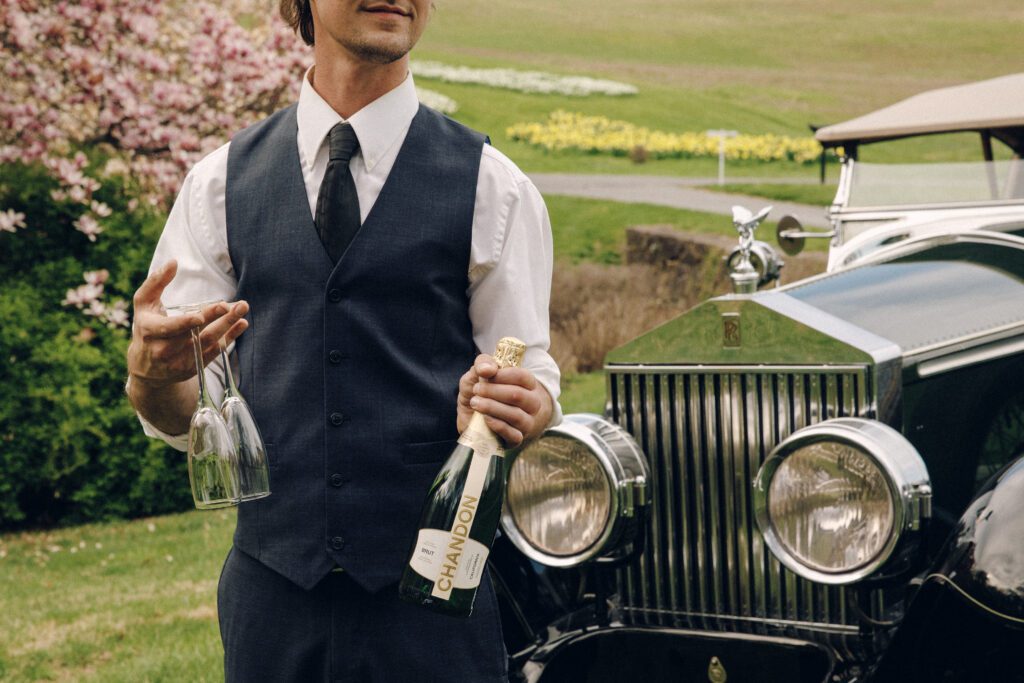
Select one of our 1927 Rolls-Royce Phantom I cars—the Ascot or Pall Mall—for photographs or photographs and transportation on the estate. These exquisite vehicles display classic design elements from the 1920s and 1930s, showcasing the sophistication of the era’s wealthy trendsetters and helping tell the story of your event in grand style.

Rental Option A:

Photographs only | $1,000/one hour

A member of Winterthur’s Rolls-Royce Stewardship Team will drive the Rolls-Royce (“the Vehicle”) to one location for a photo shoot for the participants (“the Client”). The driver will remain present during the photo shoot to assist and serve as the caretaker of the Vehicle.

Photography to be coordinated by the Client; if pictures of the Client inside the vehicle are desired, the Client must follow the driver’s instructions for how to safely enter and exit. Food and drink are not permitted inside the Vehicle.

Rental Option B:

On-estate transport | $2,000/one hour

Two staff members, including at least one member of Winterthur’s Rolls-Royce Stewardship Team, will operate and oversee the Vehicle for singular one-way transportation of up to two participants within the Winterthur estate. The originating and ending locations must be agreed upon in advance by the Client and the driver. Photography permitted and to be coordinated by the Client. The driver’s assistant will facilitate entering and exiting the Vehicle, while the driver will be focused on Vehicle operation. An auxiliary stool may be needed to enter and exit the Vehicle in some cases. Food and drink are not permitted inside the Vehicle.

For more information, contact Bill White at bwhite@winterthur.org.

Winterthur Announces Point-to-Point Will Not Be Held in 2026 to Make Way for Museum’s 75th Anniversary Celebrations 

WINTERTHUR, DE (October 13, 2025)—Winterthur Museum, Garden & Library announced today that its Point-to-Point steeplechase event will not take place in 2026. This decision comes as the institution prepares to mark the museum’s 75th anniversary next year, as well as the nation’s 250th. 

While Point-to-Point will not be held, Winterthur will host a special anniversary celebration next spring that commemorates the opening of the museum in 1951 and honors Winterthur’s rich history and vibrant present. Further details will be announced in the coming weeks. 

Winterthur will also use 2026 as a transition period to reimagine its signature spring event for 2027 and beyond with a focus on mission, vision, and community engagement.  

“Point-to-Point has been a tradition for many, and we understand this news may be met with some surprise and disappointment,” said Chris Strand, Charles F. Montgomery Director and CEO. “However, the museum’s 75th anniversary presents a unique and meaningful opportunity to reflect while looking ahead. We look forward to celebrating the museum’s milestone next year and continuing our work to create memorable guest experiences for generations to come.” 

### 


About Winterthur Museum, Garden & Library 

Winterthur—known worldwide for its preeminent collection of American decorative arts, naturalistic garden, and research library for the study of American art and material culture—offers a variety of tours, exhibitions, programs, and activities throughout the year. Admission includes a self-paced house tour, exhibitions, a narrated tram ride (weather and space permitting), and the Winterthur Garden.  

Winterthur is located on Route 52, six miles northwest of Wilmington, Del., and five miles south of U.S. Route 1. Winterthur is committed to accessible programming for all. For information, including special services, call 800.448.3883 or visit winterthur.org. Winterthur is closed seasonally from early January through late February. 

Winterthur Point-to-Point Steeplechase

As we prepare to celebrate Winterthur’s 75th anniversary in 2026, we will pause Point-to-Point for this milestone year. Next spring, we will host a special anniversary celebration that honors Winterthur’s rich history and vibrant present. As we look beyond 2026, we are exploring fresh and exciting ways to reimagine our signature spring events for 2027 and the years to come.

Stay tuned—we can’t wait to unveil the next chapter of Winterthur traditions.

ptp

In Good Taste: Winterthur’s Mushroom Soup

Recipe by our talented culinary team from Restaurant Associates. Available Tuesday-Sunday in our Visitor Center Café from 11:00 am–3:00 pm.

Taste the season in every spoonful of this comforting autumn favorite—hearty carrots, celery, and onion mingle with earthy mushrooms and garden greens in a rich, savory harmony. Makes 8-10 hearty servings.

Ingredients

  • 2 lbs button mushrooms, sliced (or mix of button & cremini)
  • 2 medium carrots, peeled & diced
  • 2 celery ribs, diced
  • 1 large onion, diced
  • 2 cloves garlic, minced
  • 2 Tbsp canola oil
  • 6 Tbsp butter (¾ stick)
  • 6 Tbsp all-purpose flour
  • 1 ½ tsp dried tarragon (or 1 Tbsp fresh, chopped)
  • 1 quart (4 cups) chicken or vegetable stock (plus a little more if needed)
  • 2 cups water
  • 1 cup heavy cream
  • Salt & pepper, to taste
  • A squeeze of fresh lemon juice (to brighten at the end)

Instructions

  1. Prep the vegetables: Dice carrots, celery, onion, and mince garlic. Slice mushrooms.
  2. Make the roux: In a saucepan, melt butter over medium heat. Stir in flour and cook 3–4 minutes, whisking until lightly golden. Set aside.
  3. Sauté the base: In a large pot, heat canola oil. Add mushrooms, onion, carrot, celery, and garlic. Cook until softened and fragrant, 8–10 minutes.
  4. Build the soup: Add stock and water. Bring to a simmer.
  5. Thicken: Whisk roux into the pot a spoonful at a time, stirring well to avoid lumps. Simmer gently 10 minutes until thickened.
  6. Finish: Stir in heavy cream and tarragon. Simmer 15–20 minutes, stirring occasionally.
  7. Season: Taste and adjust with salt, pepper, and a splash of lemon juice to balance the richness.

Explore the Campbell Collection of Soup Tureens

Artfully crafted in fascinating forms, the Campbell Collection of Soup Tureens features sculpted metals, precious porcelains, and elegant earthenwares among the materials found in this wide range of tureens and soup-related objects made in Europe, Asia, and America. The dates range from 1720 to modern times.

The genesis of the Campbell Collection dates to 1966, when John T. Dorrance Jr., chairman of the Campbell Soup Company, and W. B. Murphy, the company president, decided to begin collecting these splendid pieces. The collection came to Winterthur and the gallery opened in 1997. 

Come see for yourself why guests from around the world have enjoyed the Campbell Collection of Soup Tureens at Winterthur. Plan your visit today!

The Story Behind “Unus Americanus ex Virginia”: An Indigenous Encounter in Print from 1645

By Camille Williams, curatorial intern at Winterthur Museum, Garden and Library

Print, Unus Americanus ex Virginia, Europe, 1645. Museum purchase with funds provided by the Winterthur Founder’s Circle 2024.0009

This recently acquired half-length portrait engraving by artist Wenceslaus Hollar portrays a once-known young Native American man, thousands of miles removed from home, caught up in the Dutch Empire’s fraught colonization of North America (fig. 1). Measuring only 4 inches by 3 inches, this rare depiction came by the deft hand of 17th-century Europe’s most influential and prolific printmaker. Prague-born Hollar, who enjoyed steady patronage in Germany, England, and the Netherlands, distributed his prints widely. But who was this Native man?

Detail, print, Unus Americanus ex Virginia, Europe, 1645. Museum purchase with funds provided by the Winterthur Founder’s Circle 2024.0009

With his inscription in the print’s top left, Hollar recorded “Vnus Americanus ex / Virginia, Ætat: 23” or “An American from Virginia, aged 23”. At this time, Europeans used “Virginia” to refer to the territory along the eastern coastline of North America; the subject of the print likely belonged to the Munsee Delaware Algonquin-speaking people who inhabited much of the New Netherlands colony, from modern-day New York to Delaware. From the top right inscription, “Hollar ad vivum / delin: et fecit, 1645,” we know that Hollar drafted and executed the etching in 1645 when he was likely in Antwerp, Belgium.[i]

Using a precise cross-hatching technique, Hollar approached the subject with his characteristic scientific accuracy, drawing attention to the sitter’s musculature, facial tattoos, and shaved hairstyle. The subject wears a headdress of animal teeth, and his earrings and necklace consist of beads and shells. Known as wampum or “sewant” by the Dutch, these colored beads and shells served not only as currency for trade but also held spiritual importance for those who fashioned them.[ii] With his half-open, almond-shaped eyes and closed mouth with upturned corners, the subject is depicted with a peaceful expression. His direct but nonconfrontational gaze invites the viewer to look upon the man with respect and dignity. Yet this representation conceals the dark reality of the circumstances that brought him to Europe.

Scholar George Hamell identified the sitter as a Munsee warrior named Jaques. Legal records from September 1644 document that two soldiers of the West India Company entered into a contract with a Dutchman to exhibit a “wilde Indiaen”—or “savage Indian” named Jaques in exchange for money. According to the contract, Jaques sailed with the men to the Netherlands on the ship Count Maurits in 1644.[iii]

Jaques may have fought in Kieft’s War, a series of Dutch-Indian conflicts in present-day New York between 1643 and 1645, resulting in the loss of more than 1,000 Native lives. Sensationalized accounts of massacres spread across Europe, which perpetuated stereotypes of “cruel” and “ferocious Indians.”[iv] Other sources attested to the kidnapping of Native Americans to the Netherlands, as was the case with Jaques.[v]

Een Mahakuaes Indiaen, met hun Steden en woningen, Rare Book Division, The New York Public Library. New York Public Library Digital Collections.

Regardless of whether the man depicted here is truly Jaques, his likeness continued to circulate and came to represent Native Americans in the New Netherlands. When a Dutch missionary in Albany named Johannes Megapolensis wrote to his friends in Holland of his encounters with “savage” and “heathen” Mohawks and Mohicans in August 1644, they published them with a full-length engraving depicting a Native man strikingly similar to the one in Hollar’s print. The reverse orientation of the image and the decreased detail of the hatch marks suggest that the engraver traced and transferred Hollar’s image. Several times over the ensuing centuries, publishers reproduced these textual and visual accounts of the New World, extending the wider impact of Hollar’s original 1645 print.

Today, as Hollar’s print remains coveted in museum collections, it is important to remember Jaques—both the vitality of his image and the dispossession and erasure endured by indigenous people.


[i] Richard Pennington, A Descriptive Catalogue of the Etched Work of Wenceslaus Hollar, 1607–1677 (Cambridge: Cambridge University Press, 1982), cat. no. 2009, 317.

[ii] George Hamell, “The Iroquois and the World’s Rim: Speculations on Color, Culture, and Contact,” American Indian Quarterly 16, no. 4 (1992): 451–69.

[iii] George Hamell, “Jaques a Munsee from New Netherland,” unpublished; evidence from the translated Dutch contract is published in “Jaques,” New York Genealogical and Biographical Society, https://www.newyorkfamilyhistory.org/new_netherland_settlers/jaques#ftnt1.

[iv] Robert Grumet, The Munsee Indians (Norman: University of Oklahoma Press, 2009), 54–67.

[v] “In October 1644, The Eight Men, an elected advisory council in the New Netherlands, complained about the practice of gifting Native prisoners of war to soldiers,” New York Genealogical and Biographical Society, https://www.newyorkfamilyhistory.org/new_netherland_settlers/jaques#ftnt1

In Memoriam: Charles F. Hummel and His Remarkable Legacy

Winterthur recently lost an extraordinary colleague, mentor, supporter, and friend—Charles F. Hummel. He arrived in 1952 as a member of the second class in the graduate program Winterthur/University of Delaware Program in Early American Culture (today American Material Culture) and worked at Winterthur until 2022—the year of his second retirement.

Charlie’s contributions to Winterthur are exceptional. Following his graduation in 1955, Hummel was hired as a curatorial assistant, with steady promotions to assistant curator, associate curator, senior curator and head of the curatorial division, deputy director for collections, and senior deputy director for museum and library. He was also an adjunct professor at the University of Delaware and taught graduate students at Winterthur. At the time of his first retirement in 1991, he was named curator emeritus. But Charlie was only partway through his tenure at Winterthur. He continued to teach, research, and serve as a mentor to hundreds of students for another 31 years.

He played a key role in bringing the Dominy Shops—woodworking and clockmaking shops used by three generations of the Dominy family living in East Hampton, Long Island—to Winterthur. His major books, considered landmarks in the field, include With Hammer in Hand: The Dominy Craftsmen of East Hampton, New York; A Winterthur Guide to American Chippendale Furniture; and, with co-author Beatrice Garvan, The Pennsylvania Germans: A Celebration of Their Arts, 1683–1850.

He also was instrumental in establishing the Scientific Research and Analysis Laboratory in 1969 and the founding of the Winterthur/University of Delaware Program in Art Conservation in the 1970s. 

Perhaps his great legacy, and what his students, colleagues, and friends will remember most are his generosity, his enthusiasm, his warmth, and his genuine and kind personality. Charlie had an agelessness about him, and he enjoyed engaging in ongoing research and mentoring students in both of Winterthur’s graduate programs.

Charlie’s contributions will continue to impact Winterthur for decades to come.

Winterthur’s “Looking Back to the Future” Symposium Nov. 14-15 Explores Visionary 19th-Century “Afric-American Picture Gallery” Essay and How Museums Shape Collective Memory

WINTERTHUR, DE (September 29, 2025)—Winterthur Museum, Garden & Library will host a symposium, “Looking Back to the Future: Realizing the ‘Afric-American Picture Gallery,’” on November 14–15, 2025. Featuring leading scholars and conceptual artist-curator Fred Wilson, the event explores William J. Wilson’s little known but monumental 1859 essay as a framework for understanding Black visual culture, historical memory, and museum practice.

This two-day deep dive will culminate in a Q&A with Fred Wilson, an internationally recognized mixed-media and museum installation artist, whose groundbreaking 1992 exhibition Mining the Museum at the Maryland Historical Society (now the Maryland Center for History and Culture) critically examined the museum’s vast collections, unlocking long-ignored histories, and sparking new dialogues.

Alexandra Deutsch, John L. and Marjorie P. McGraw director of collections at Winterthur, will join Wilson in conversation to explore his artistic practice, history of intervention in museum spaces, and approach to interpreting collections.

Dr. Jonathan Michael Square, assistant professor of Black visual culture at Parsons School of Design and curator of Winterthur’s current exhibition Almost Unknown, The Afric-American Picture Gallery, is a co-creator and leading voice in the symposium.

Almost Unknown is Square’s interpretation of William J. Wilson’s seven-part essay, which guides readers on a tour through an imaginary collection of artworks that both celebrates and critiques the experience of free and enslaved Black Americans in the 19th century.

According to Square, Fred Wilson’s pioneering vision for the role objects can play in creating dialogues about the past, the present, and the future was one of the many influences he drew upon when selecting objects from Winterthur’s collection for his immersive, theatrical, and multisensory installation that brings the pre-Civil War essay to life.

Square juxtaposes objects like a portrait of John Singleton Copley and a slave badge, and a bust of George Washington placed on pedestal wrapped in a Kente cloth-patterned fabric. Originating in Ghana, Kente symbolizes the complex cultural heritage of the African Diaspora.

Square also brings lesser-known stories forward while examining essay themes like Black childhood. At the exit from the exhibition, he’s included a message that encourages visitors to add their own object to the gallery by filling out a blank frame with their suggestions.

According to Square, a primary objective for the November symposium is to bring William J. Wilson’s essay into wider public conversation by examining how the text intersects with American history, museum practice, and Winterthur’s own legacy.

“We hope participants leave with new insights into how historical narratives are constructed and how they can be reimagined to center African American voices and experiences,” said Square. “I’m particularly excited about the expertise our speakers bring, ranging from leading scholars to artists like Fred Wilson, who challenge us to think critically about the role of museums in shaping collective memory.

“This gathering offers a rare opportunity for museum professionals, educators, scholars, and community members to come together in dialogue, exchange ideas, and consider how we can build more inclusive interpretations of the past,” Square said. “Conversations like these help us see that history is never fixed. It is continuously reinterpreted through the questions we ask, the voices we amplify, and the connections we make between past and present.”

Symposium Day One, November 14

Day one features a powerful lineup of speakers and concludes with an evening reception from 4:30-6:00 pm at Winterthur Museum’s Galleries Reception Area. Almost Unknown, The Afric-American Picture Gallery exhibition will be open for viewing.

The Afric-American Picture Gallery and Antebellum Afro-bohemia | 9:20 am
Britt Rusert, a Professor of Afro-American Studies at the University of Massachusetts Amherst and Executive Editor of the Massachusetts Review, will kick off day one following opening remarks. Rusert has been teaching and researching William J. Wilson and his picture gallery for the past 10 years.

Sketch as History: History as Sketch in the Anglo-African Magazine | 10:10 amDerrick R. Spires, Associate Professor of English at the University of Delaware

Artworks Made, Unmade, and Remade: Ephemerality and Iconoclasm | 11:30 amJennifer Van Horn, Professor of Art History and History at the University of Delaware

Almost Unknown: Colored Conventions and the Art of Memory | 1:20 pmP. Gabrielle Foreman, Professor of American Literature and Professor of African American Studies and History at Penn State

From Picture Galleries to Underground Archives in the Black Intellectual Tradition | 2:10 pmLaura E. Helton, Assistant Professor of English and History at the University of Delaware

Sarah Shimm’s Wonderful Sofa: Stitching L’Ouverture in Silk at the Cotton Centennial | 3:00 pmMariah Kupfner, Assistant Professor of American Studies and Public Heritage at Penn State University

Unseen Images in the Gardens of Atlantic Melancholy | 3:50 pmJonathan D. S. Schroeder, Lecturer in Literary Arts and Studies at the Rhode Island School of Design

Symposium Day Two, November 15

These Walls Can Talk: Reclaiming the Picture Gallery Through Black Imagination | 9:00 am
Square will open day two of the symposium exploring how Black artists, intellectuals, and curators have reimagined the gallery as a space not just for aesthetic contemplation but for historical intervention. From Fred Wilson’s Mining the Museum exhibition to Faith Ringgold’s Dancing at the Louvre and Beyoncé and Jay-Z’s modern interventions, he will consider how the gallery becomes a site of resistance, memory, and speculative possibility.

A Look Back to the Future | 9:50 am
Square and Reed Gochberg, Curator at the Boston Athenaeum, will discuss how Gochberg introduced Square to William J. Wilson’s essay, their collaborative work through the lens of the text, and how it has shaped their scholarship, teaching, and curatorial practice.

Moving Pictures: Looking for Tom in the Picture Gallery
| 11:10 am
John Ernest, Professor of English at the University of Delaware

Through Gimlet Holes: New Visions for American Art | 1:00 pm Stephanie Sparling Williams, Ph.D. Andrew W. Mellon Curator of American Art at the Brooklyn Museum

Building Communion: Black Place-Making, Sacred Kinships, and the Spirit of Delaware | 1:50 pm Hannah Grantham, Director of the Jane and Littleton Mitchell Center for African American Heritage at the Delaware Historical Society

Mining the Museum . . . Again | 2:50 pm
Fred Wilson, Mixed-Media Artist Q&A with Alexandra Deutsch

Event Details & Registration

“Looking Back to the Future: Realizing the ‘Afric-American Picture Gallery’” will take place at Winterthur Museum’s Copeland Lecture Hall on Friday, November 14 and Saturday, November 15, 2025. Registration is open now at www.winterthur.org, with general admission priced at $150 and discounted rates available for members and students.

Livestream Access: Join us virtually for the two-day symposium via livestream. This $40 ticket provides real-time access to most scheduled sessions and presentations as they happen.* Please note: Livestream access is available only during the event. There will be no recordings provided afterward.

The symposiumis intended for a broad audience: educators at university and secondary levels, museum professionals, scholars, enthusiasts of African American history, and the local Wilmington community.

Speaker bios, presentation summaries, and full schedules are listed on the event website.

Co-hosted by Winterthur’s Continuing Education and Collections & Interpretation divisions, this symposium is made possible with the support of the Terra Foundation for American Art.

Additional Background

Published under the pen name Ethiop, William J. Wilson’s “Afric-American Picture Gallery” first appeared in the pages of the Anglo-African Magazine. The text guides readers on a meandering and sometimes fantastical tour through an imagined collection of artworks. Though never physically realized, his concept prefigures modern-day calls for inclusive museums and community-driven curation.
In Winterthur’s Almost Unknown exhibition, guest curator Dr. Jonathan Michael Square has assembled prints, paintings, sculptures, books, and other decorative objects to represent Wilson’s gallery and Black life in the United States and across the African Diaspora.

Almost Unknown includes 25 objects from Winterthur’s collection and four on loan from other institutions. The selected objects do not directly replicate Wilson’s descriptions. Instead, the exhibition reflects Square’s interpretation of the text, highlighting its contemporary relevance and the resonances he has drawn between Wilson’s vision and the selected works.

Prior to joining Winterthur in 2019, where she oversees exhibitions, public programming, and interpretation, Alexandra Deutsch enjoyed a long tenure at the Maryland Center for History and Culture, where the impact of Mining the Museum still lingers decades after installation.

Deutsch first collaborated with Square at the Maryland Center for History and Culture while working on the Spectrum of Fashion exhibition. At the time, Square was an instructor at Harvard University. He helped Deutsch and museum staff identify and interpret livery worn in the 19thcentury by formerly enslaved individuals at Hampton Mansion in Towson, Maryland.

* Speaker Gabrielle Foreman’s session will not be aired on the livestream. The opening reception and exhibition tour will also not be shown via livestream.

###

About Winterthur Museum, Garden & Library
Winterthur—known worldwide for its preeminent collection of American decorative arts, naturalistic garden, and research library for the study of American art and material culture—offers a variety of tours, exhibitions, programs, and activities throughout the year. Admission includes a self-paced house tour, exhibitions, a narrated tram ride (weather and space permitting), and the Winterthur Garden.

Winterthur is located on Route 52, six miles northwest of Wilmington, Del., and five miles south of U.S. Route 1. Winterthur is committed to accessible programming for all. For information, including special services, call 800.448.3883 or visit winterthur.org. Winterthur is closed seasonally from early January through late February.

About the Terra Foundation for American Art 

The Terra Foundation for American Art expands narratives of American art through our grants, collection, and initiatives. With offices in Chicago and Paris, we work with organizations to foster intercultural dialogues and encourage transformative practices, locally and globally.

Winterthur’s 62nd Annual Delaware Antiques Show Returns to Wilmington, November 7–9, 2025

Opening Night Party November 6 Kicks Off Weekend of Shopping, Lectures, and Design Inspiration

WINTERTHUR, DE (September 17, 2025)—A treasured tradition in the world of American decorative arts, the Delaware Antiques Show returns for its 62nd year from November 7 to 9, 2025, at the Chase Center on the Riverfront in Wilmington, Delaware. Presented by Wilmington Trust, a Member of the M&T Family, this three-day event features more than 60 of the nation’s leading dealers in American antiques, fine art, silver, jewelry, porcelain, rugs, and furniture. An Opening Night Party on Thursday, November 6, provides early access to the show floor, with cocktails and conversation among collectors, designers, and connoisseurs.

Keynote Lecture by Nadia Watts of Nadia Watts Interior Design
Saturday, November 8, 10:00–11:15 am
Nadia Watts, principal of Nadia Watts Interior Design and great-great-granddaughter of Louis C. Tiffany, will deliver the keynote lecture titled “Designing with Soul: How Legacy, Nature, and Antiques Shape Interiors.” With two decades of experience and national acclaim, she’ll share how her family’s artistic heritage has influenced her creative vision and how legacy, a reverence for nature, and the thoughtful integration of antiques inspire her timeless interior designs. Based in Denver, Nadia launched her firm in 2009 after early roles with Elaine Stephenson Interiors in Virginia and the American Decorative Arts Department at The Metropolitan Museum of Art. Her projects, which blend antiques and artistry with livable elegance, have appeared in Architectural Digest, House Beautiful, Luxe Interiors + Design, Elle Décor, The Wall Street Journal, Galerie Magazine, and more.


Additional Lectures Throughout Weekend
Chipstone Lectures
Friday, November 7, 2025, 9:00–10:15 am

The Chipstone Lectures feature authors of articles in Ceramics in America 2024 and American Furniture 2024. Published annually since 2001 and 1993 respectively, these award-winning journals have been considered the journals of record for their fields and further the Chipstone Foundation’s mission to promote appreciation and understanding of American material culture. Ceramics in America 2024 is edited by Ronald W. Fuchs II and Robert Hunter and American Furniture 2024 is edited by Martha H. Willoughby. After the lectures, the speakers will be on hand to sign copies of the 2024 journals.

  • Brock Jobe, Professor Emeritus of American Decorative Arts, Winterthur Museum, Garden & Library: “The ‘capricious, unprincipled, and ingenious’ William King, Furniture Maker of Salem, Massachusetts”
  • Adam Erby, Executive Director of Historic Preservation and the Martha Washington Chief Curator, George Washington’s Mount Vernon: “La Peinture: The Rediscovery of George and Martha Washington’s Presidential Biscuit Porcelain Figures and Their Incredible Provenance”

Historic Ceramic Patterns & Modern Design Lecture, Plus Book Signing
Saturday, November 8, 2:00–3:00 pm
Wendy Kvalheim, CEO and Design Director of Mottahedeh, will present “Not Your Grandma’s China: A Contemporary Look at Historic Ceramic Patterns.” She’ll highlight historic pieces and patterns, and how historic decorative arts collections like those at Winterthur can inspire contemporary tableware design for the next generation. Kvalheim has used her training in art history, design, ceramics, and printmaking to inform more than 30 years of her work at Mottahedeh. A signing for her book, Splendid Settings: 100 Years of Mottahedeh Design (Pointed Leaf Press, 2024), will follow.


Americana Insights Lectures
Saturday, November 8, 4:00–5:00 pm
Three researchers featured in Americana Insights 2025, the third volume of an annual series that presents the latest discoveries in traditional Americana, folk art, and material culture, will share their insights. Book signing to follow.

  • Lisa Minardi, Editor, Americana Insights and Executive Director, Historic Trappe, “From Hubener to Medinger: Redware Potters of Southeastern Pennsylvania”
  • Christopher Malone, Curator, Historic Trappe, “Black, White, and Green All Over: The Potter Once Known as Solomon Grim”
  • Laini Farrare, University of Delaware, “‘God Bless You All in Food and Drink’: Sgraffito Teaware in Pennsylvania”


Student Scholars Lectures
Sunday, November 9, 2:00–3:30 pm
Sponsored by The Decorative Arts Trust, this program showcases new research by Lois F. McNeil Fellows from the Winterthur Program in American Material Culture, established in 1952 by Winterthur and the University of Delaware to promote the interdisciplinary study of American decorative arts and material culture. The program’s alumni hold distinguished positions internationally in museums, antiques and auction houses, preservation organizations, historical societies, colleges and universities, and libraries.

  • Eleanor Shippen explores Southern cabinetmaking in “An American Story: Interpreting Regionality in an East Tennessee Desk”
  • Ashley Vernon analyzes the intersection of Shakespeare and ceramics in “Just Being Theatrical: Elements of the Stage Portrayed on Delftware Tiles”


Other Details for the 62nd Annual Delaware Antiques Show
Opening Night Party

Thursday, November 6, 6:00–9:00 pm

Celebrate the opening of the show with early access and cocktails.

Show Hours

  • Friday, November 7: 11:00 am–6:00 pm
  • Saturday, November 8: 11:00 am–6:00 pm
  • Sunday, November 9: 11:00 am–5:00 pm

General Admission
$25; $20 for Winterthur Members. Free for children under 12. Tickets valid for all three days of the show and for admission to Winterthur Museum, Garden & Library on show days.

Location
Chase Center on the Riverfront, 815 Justison Street, Wilmington, Delaware. Conveniently located less than one hour south of Philadelphia and midway between New York City and Washington, D.C.

Sponsorship & Proceeds
The Delaware Antiques Show is presented by Wilmington Trust, a Member of the M&T Family. Sponsored by Chubb and Freeman’s | Hindman

Proceeds support Winterthur’s mission of educational programming, including free school visits, reduced-price tickets for qualifying families through Museums for All, and Discover Winterthur, a free day of exploration for the local community.


Tickets & Information

All lectures are included with admission. More information is on the event website, including the list of antique dealers. To purchase tickets, visit winterthur.org/DAS. Email das@winterthur.org or call 800.448.3883 for assistance or questions.

###

ABOUT WINTERTHUR MUSEUM, GARDEN & LIBRARY

Winterthur—known worldwide for its preeminent collection of American decorative arts, naturalistic garden, and research library for the study of American art and material culture— offers a variety of tours, exhibitions, programs, and activities throughout the year. Admission includes an introductory house tour, exhibitions, a narrated tram ride (weather and space permitting), and the Winterthur Garden.

Winterthur is located on Route 52, six miles northwest of Wilmington, Delaware, and five miles south of U.S. Route 1. Winterthur is committed to accessible programming for all. For information, including special services, call 800.448.3883 or visit winterthur.org. Winterthur is closed seasonally from early January through late February.

Contact: Lisa McVey
lmcvey@winterthur.org
302.888.4803

A Mansion Made of Paper

By Quinn Hammon, Winterthur Academic Affairs intern

We don’t usually confuse a child’s toy for a surreal piece of art, but this item in the Winterthur Library collection finds itself in a strange and whimsical middle ground. Known officially as Folio 288, this large hardcover book is called a collage album, or, perhaps more aptly, a paper dollhouse. Paper dollhouses were a popular toy for girls during the late 19th and early 20th centuries. Made in the 1880s or ‘90s, Folio 288 most likely belonged to a girl who used the pages as a home for her paper dolls. In fact, this book is accompanied in the collection by three tiny paper girls, each no more than two inches tall.

Collage album – Scrapbook house, 1879–99 (Folio 288), Winterthur Library

Making paper dollhouses like this one allowed children to flex their imaginations through interior design and provided an affordable setting for paper doll play. The images throughout the book were cut from furniture catalogs, wallpaper samples, and other free or inexpensive print sources. Even the paste was handmade with water and flour.

Every page in the album represents a unique room in this abstract sort of dollhouse, complete with carefully arranged paper furniture and even interactive features like moveable curtains and textured floors and cushions. Although each room exists on a two-dimensional plane, the folio’s owner found imaginative ways to bring the flat spaces to life. Some rooms have windows or doorways cut out of the page, allowing the viewer a glimpse into the next area. Others include all sorts of decorations covering the figurative walls.

Folio 288 was created mainly as a toy but survives now as a piece of art in its own right. The creator of the collage rooms put obvious care into the construction of each imaginary space. On the page labeled “nursery,” the author took the time to paste several woodgrain-patterned bits of paper into the fireplace as if for fuel to keep the paper children warm. Several pillows in the book feature a hand-drawn “B” insignia, the author further customizing items as her own.

Because of the found material used in the collages, some of the rooms play with scale and perspective in uncanny, visually interesting ways. For example, the kitchen features an image of what appears to be a pocket watch pasted halfway up the wall. The scale of the watch compared to the chairs and tables pasted below, however, allows it to read effectively as a wall clock. One bedroom features an image of a kitten on a massive scale compared to the rest of the room. Another room has a giant sunflower and huge hairbrushes. And another has a tiny chair at a humongous table. The mixed-media, highly textured, adds to the often strange visual appeal of these dollhouse rooms, which make them striking pieces of visual art. Yet, at the same time, they retain an aura of childlikeness that is very cute.

At once skillfully crafted and unabashedly nonsensical, Folio 288 is fascinating as an artifact of visual culture as well as a wonderful insight into the adorably familiar mind of a late-19th-century child. You can view Folio 288 in our Digital Collection, or in person at the library with an appointment.