Fashioned from the Garden
Transforming Natural Materials into Fashion Inspired by the Work of Ann Lowe
By Kim Collison
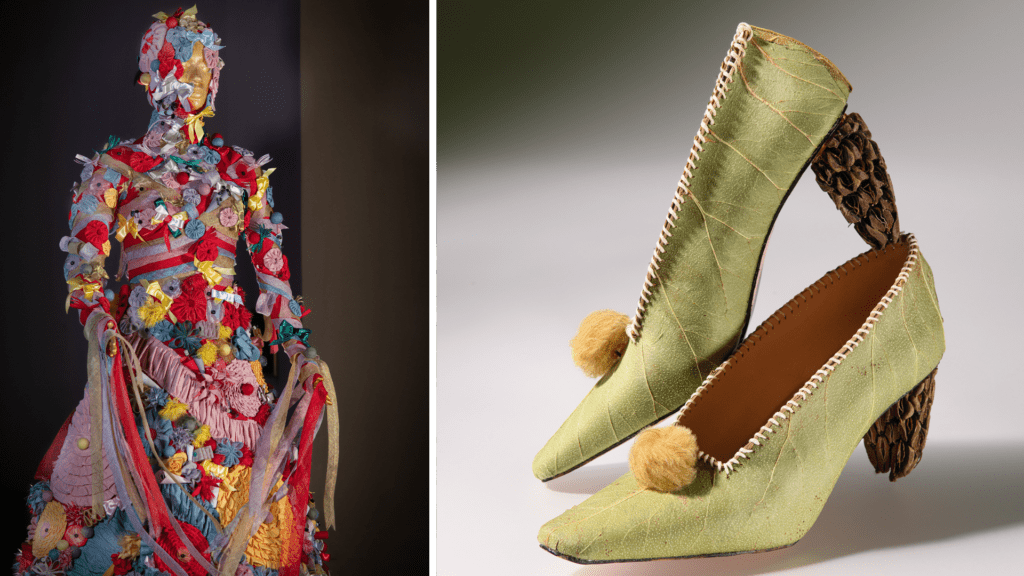
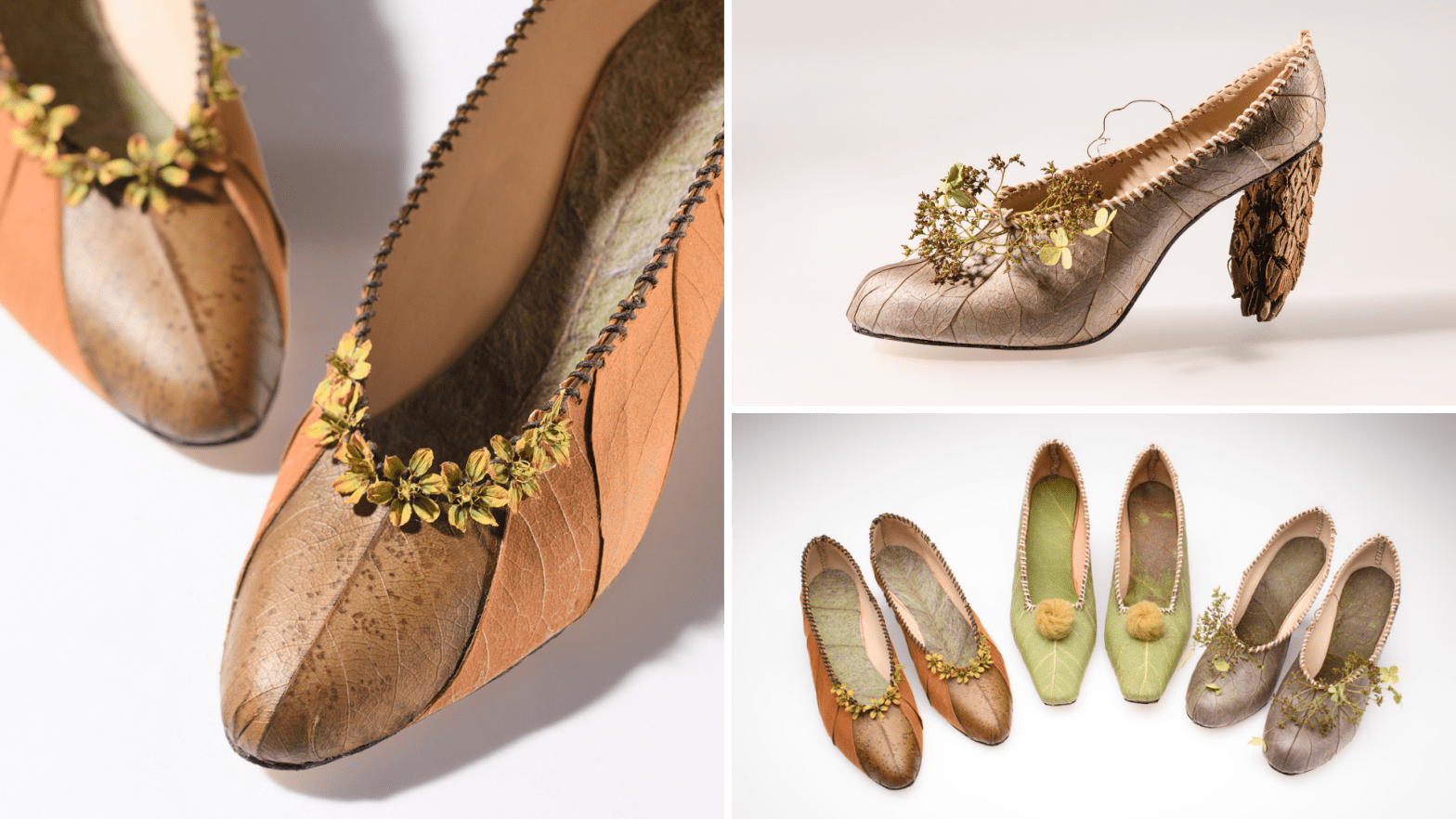
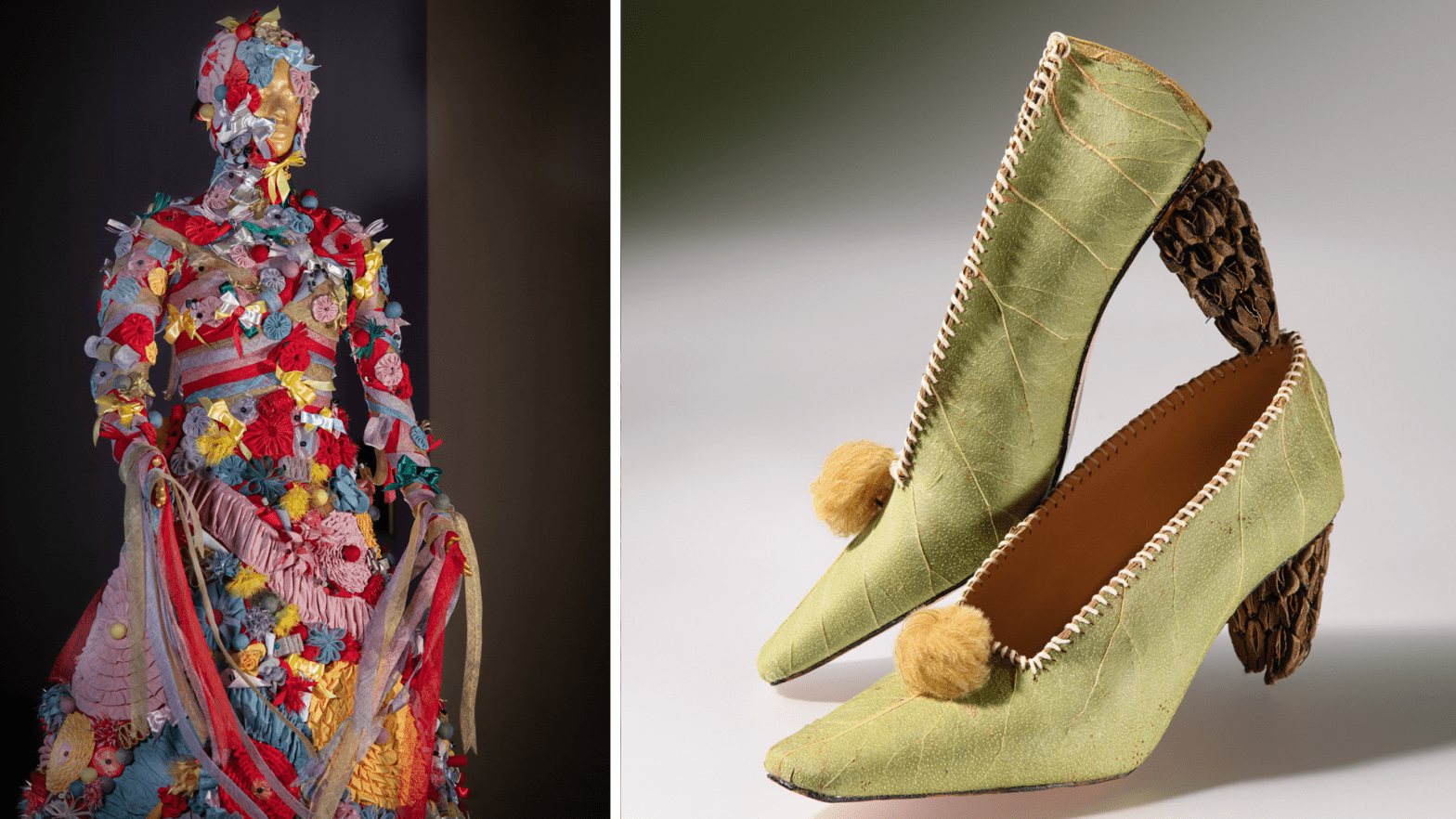
Shoes shaped from leaves and adorned with seed pod heels. A larger-than-life dress crafted from textiles and greenery and bursting with every floral shape. These Transformations works by local artists Lenny Wilson and Katya Roelse join staff-created trees and couture fashion designs for this year’s Yuletide display, inspired by our exhibition Ann Lowe: American Couturier. As part of Transformations: Contemporary Artists at Winterthur, they are the latest in a series of contemporary works reflecting artists’ connection to Winterthur’s collections.
Vivid colors and creative patterns found both indoors and out throughout the Winterthur garden and the collection have inspired floral artists and creators for decades, so it comes as no surprise that the couture works by Ann Lowe in the Galleries have also brought fresh creative vision to many. Henry Francis du Pont said, “I have always loved flowers and had a garden as a child, and in almost every flowering plant there is order, proportion, color, detail and material, and if you have grown up with flowers and really seen them, you can’t help to have unconsciously absorbed an appreciation of [these things].” Surely Ann Lowe could relate to this sentiment, as most of her work features colorful floral elements, including fabric-sculpted roses trailing the length of a dress, Bermuda lilies framing the neckline of a bridal gown, and delicately “fussy-cut” floral appliques hemming a 1930s dress.
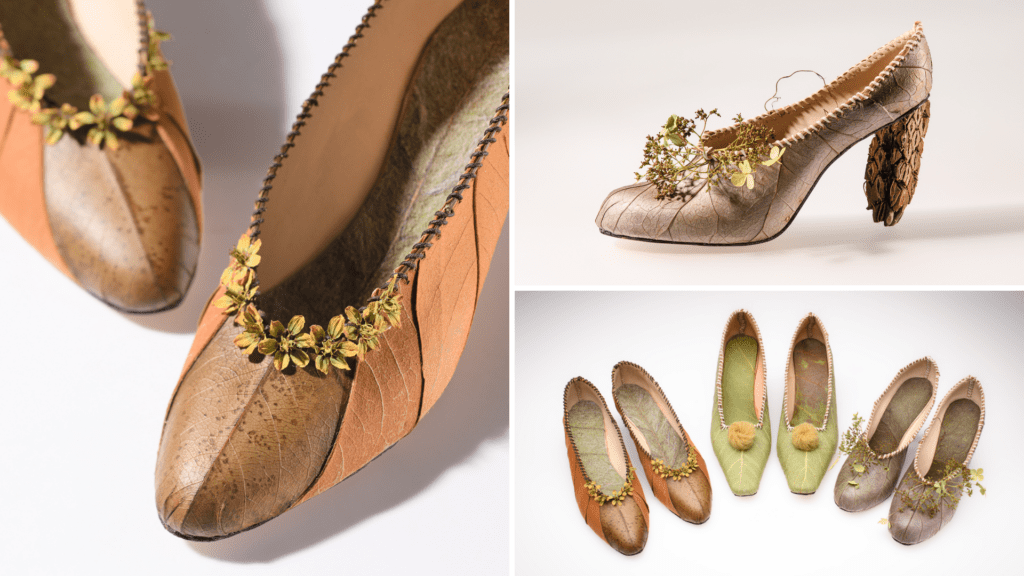
No shoes appear with Lowe’s designs, but three pairs of nature-inspired shoes created by Delaware native Lenny Wilson are on view just outside the exhibition. Wilson learned to make shoes at a leather-trades college in London before beginning a career in public horticulture. His artwork combines shoemaking with horticulture, resulting in life-size shoes made from plant leaves and seed pods—a unique biographical expression.
He says, “I believe shoes are a symbol of good luck. Archeologists have found shoes among the ruins of ancient homes that were placed in the walls by their inhabitants. Shoes have been tied to the back bumpers of cars of couples that were ‘just married.’ Dorothy’s ruby slippers protected her and transported her back to safety. Shoes reveal a lot about a person. To walk a mile in another’s shoes is to gain familiarity to that person’s experiences. Even though these shoes have never been worn, they assume a personality all their own.”
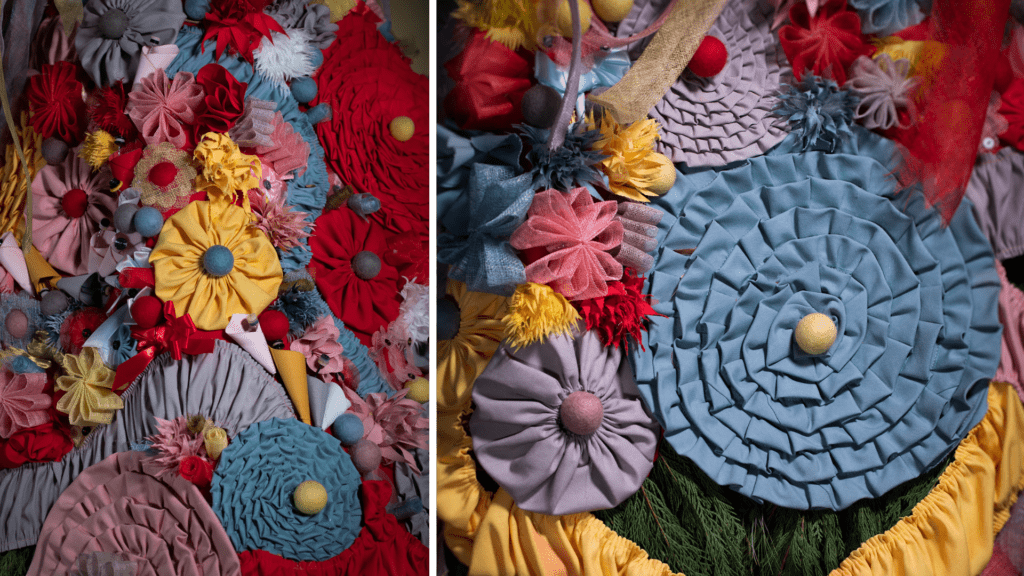
Like Wilson’s shoes, the vibrant dress outside the Galleries abounds with personality. A combination of greenery and fabric, it shares design elements with the bridal gown Ann Lowe created for Jacqueline Bouvier Kennedy’s wedding. Designed by Katya Roelse, who recreated Kennedy’s wedding dress on view in Ann Lowe: American Couturier, the 8-foot-tall dress incorporates the gown’s iconic fabric rosettes and features the many floral creations, construction techniques, and decorative elements Lowe used in other gowns. Roelse, an instructor in the Fashion and Apparel Program at the University of Delaware, explains, “I wanted to create a dress that showcases what might have been Ann Lowe’s unbridled imagination and her favorite sources of inspiration. If you look closely enough, it drops clues about her work and the Kennedy gown. You see details about the Kennedy gown that you may not be able to see otherwise.”
On your Yuletide visit, come to the Galleries. Admire Roelse’s artistry in both gowns. Be enchanted by Wilson’s whimsical shoe creations. Explore the gardens and grounds of Winterthur and be inspired as well!
The Art of Tablescaping
By Rachel Schmid
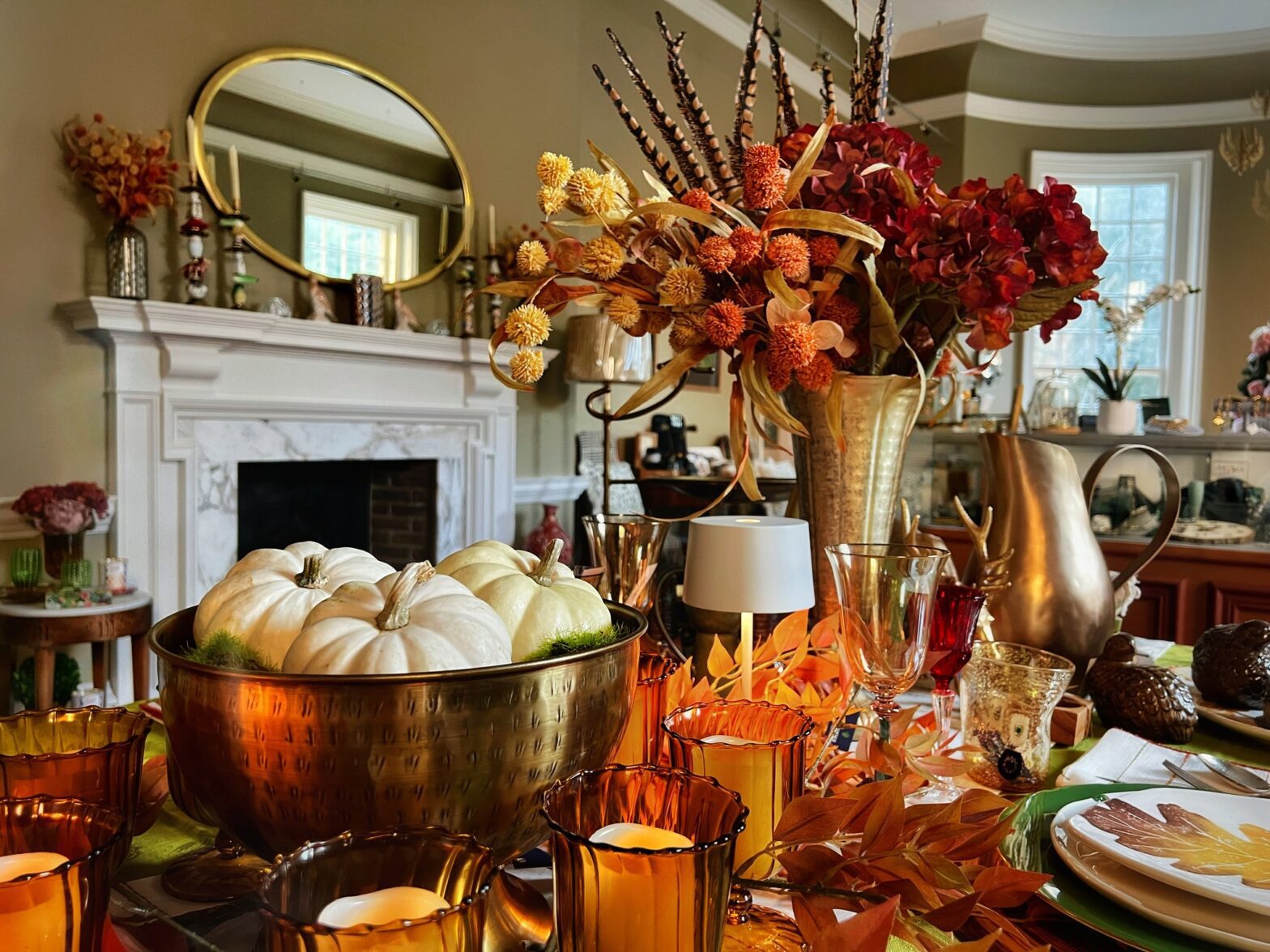
When planning a table setting, I like to think about the feeling I want my guests to have, not only when they see the table for the first time but also while they enjoy their meal. I want to encourage conversation by creating a festive, welcoming, and comfortable space. The rules for setting a table have been rewritten countless times over the years, and most people believe that there are three main styles of table settings: basic, casual, and formal. When I create a tablescape, I prefer to blend the three, drawing elements from each to make my visitors feel like they are both honored guests and close friends.
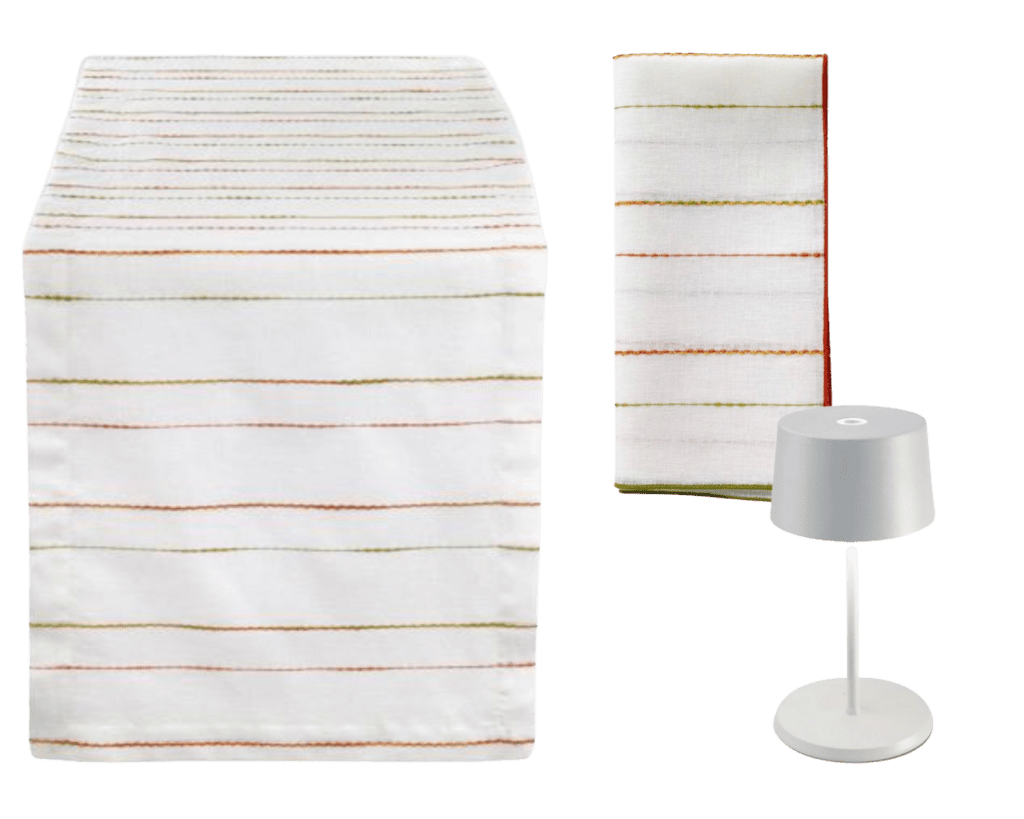
Porto Table Runner, $50
Porto Napkins, Set of 2, $40
Mini Cordless Table Lamp, $149
I choose my linens first, based on the occasion or season. In the spring and summer months, I prefer to keep things lighter, reflecting the airy nature of the weather. In the autumn and winter months, I gravitate toward moodier tones and heavier fabrics, often layering linens and patterns for added coziness.
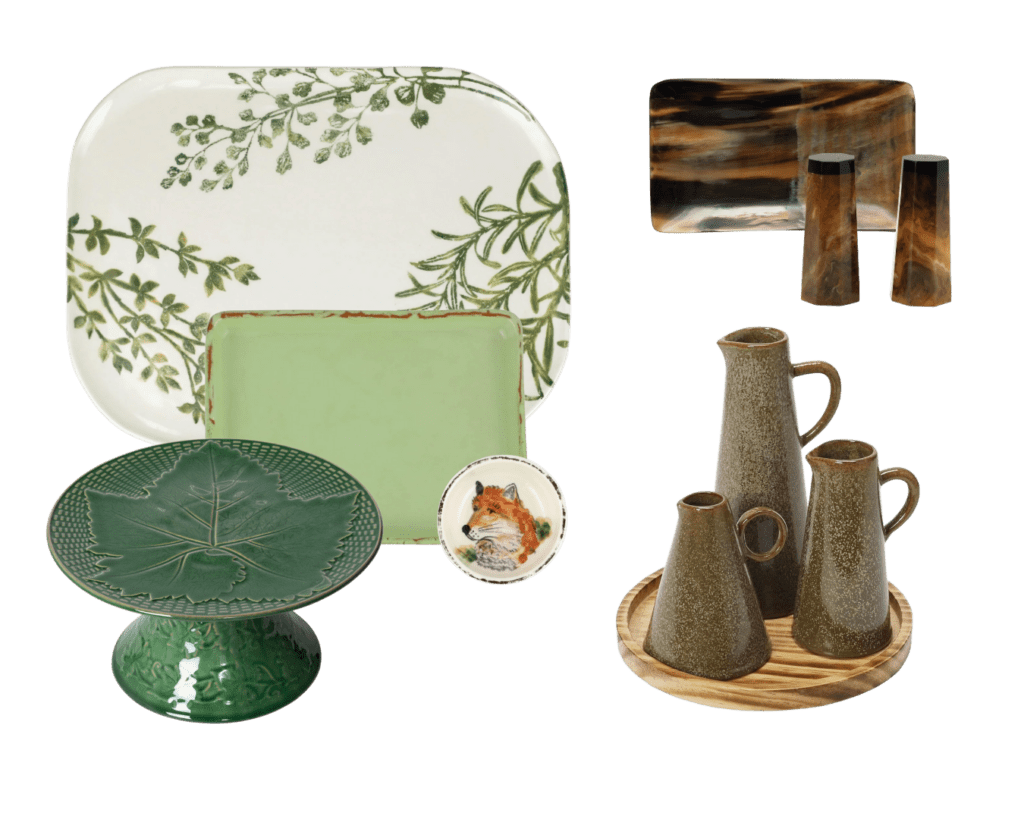
Flora Fauna Platter, $133
Green Cucina Fresca Tray, $45
Wild Fox Condiment Bowl, $35
Small Green Glazed Cake Stand, $46
Horn Tray, $28
Horn Finish Salt & Pepper Shakers, $20
Stone Pitchers on Pine Tray, Four-piece Set, $62
After the cloths are in place, I create the centerpiece. The centerpiece is the showstopper of a table setting, the focal point that will capture your guests’ attention. When planning a centerpiece, I keep three things in mind: height, texture, and lighting. I also build centerpieces in levels. First is the base, the lowest level. Then comes the middle level, which sits just above the base. Last is the top level, which is the highest. Using this structure helps elevate the setting and move the guests’ eyes upward to what is typically the most impressive part of the table. However, I never want to obscure anyone’s vision, so I choose narrower items for the tallest pieces or place them where I know they won’t be in the way.
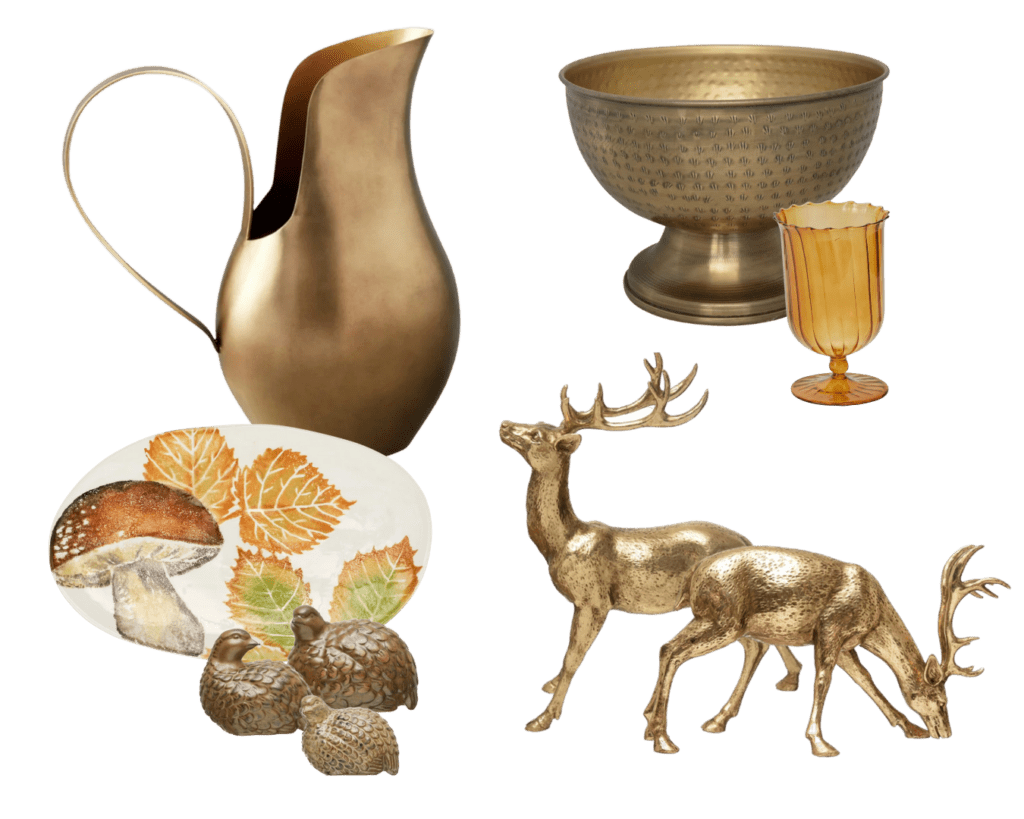
Aged Bronze Cobbled Pitcher, $90
Mushroom Platter, $133
Glazed Ceramic Quails, Set of 3, $25
Antiqued Brass Footed Bowl, $50
April Amber Glass Vase, $18
Gold Standing Deer Figure, $55
Gold Feeding Deer Figure, $50
At the base, I like to use a simple garland for texture and a pop of color. I add smaller odds and ends, such as butter dishes and salt and pepper shakers. For the middle level, I will include a central element, such as a decorative figure or a bowl filled with small pumpkins. Adding lighting also creates extra ambiance. While candles are a classic choice, I enjoy using cordless table lamps, as they are low-profile and modern, and I don’t have to worry about wax drippings! Finally, I will add the top level, which typically has a tall but slender vase and a seasonal flower arrangement.
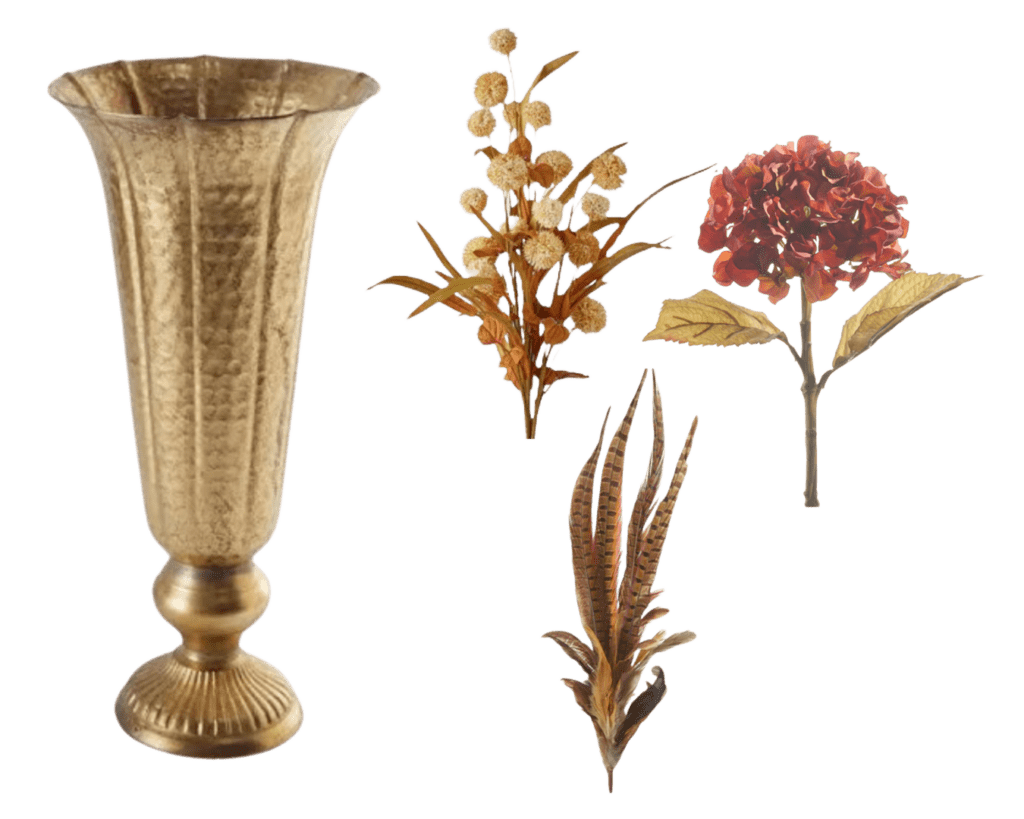
Vita Gold Vase, $40
Faux Pom Pom Bush Spray, $19
Mixed Pheasant Feather Spray, $21
Faux Dried Red Hydrangea Spray, $12
After the centerpiece is complete, I place my dishes and glasses. I like to keep the layout simple yet elevated, using a charger, a dinner plate, and, depending on the menu, a salad plate or small bowl. These elements are also perfect for playing with color or mixing patterns, adding dimension and interest. If the gathering is casual, the napkins will be folded flat to the side with flatware resting on top. If the mood is formal, the napkins will be folded on the plates in a decorative manner, such as fanned, knotted, or bowtie.
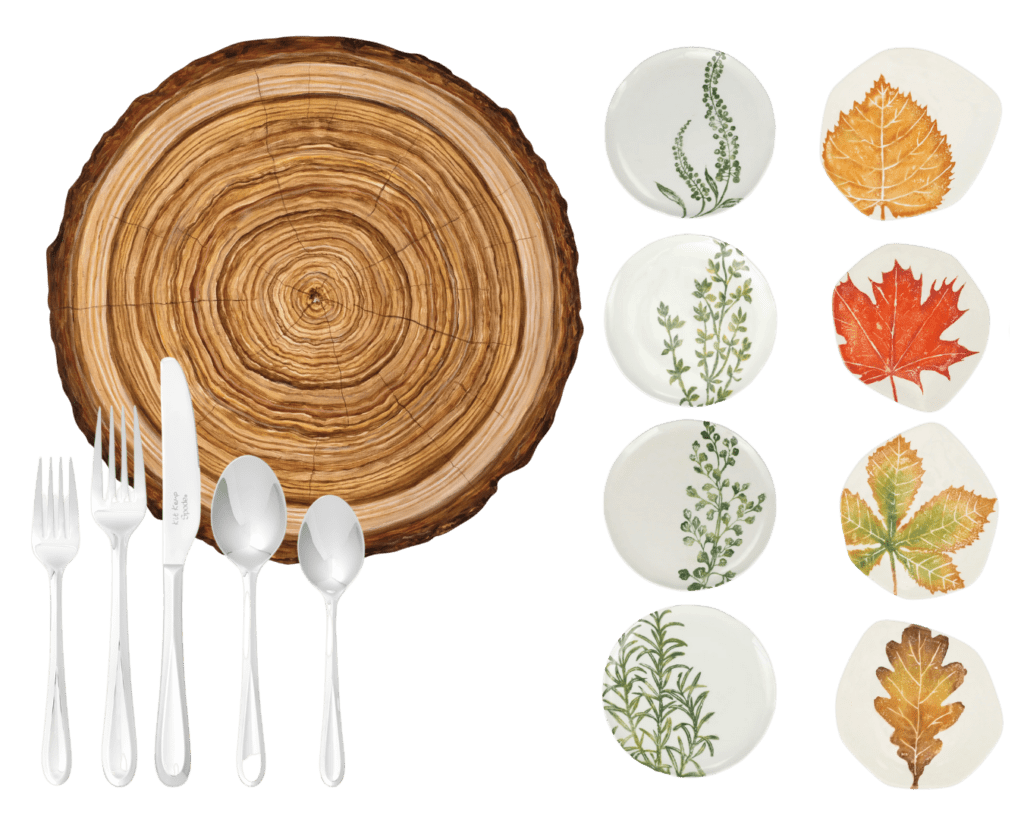
Wood Slice Paper Placemats, Pack of 12, $38
Scoop Stainless Steel Flatware, Five-piece Set, $125
Flora Fauna Plates, Set of 4, $200
Autunno Salad Plates, Set of 4, $195
Next, I choose my glassware. I like to include a variety but will limit my selection to three styles to minimize clutter. My go-to choices are wine glasses, cordial glasses, and water tumblers, creating a simple sophistication. Glassware offers yet another opportunity to add an accent of color, though I always make sure my glasses coordinate with each other. Once the glasses are in place, the table is complete! Now all that’s left is to enjoy.
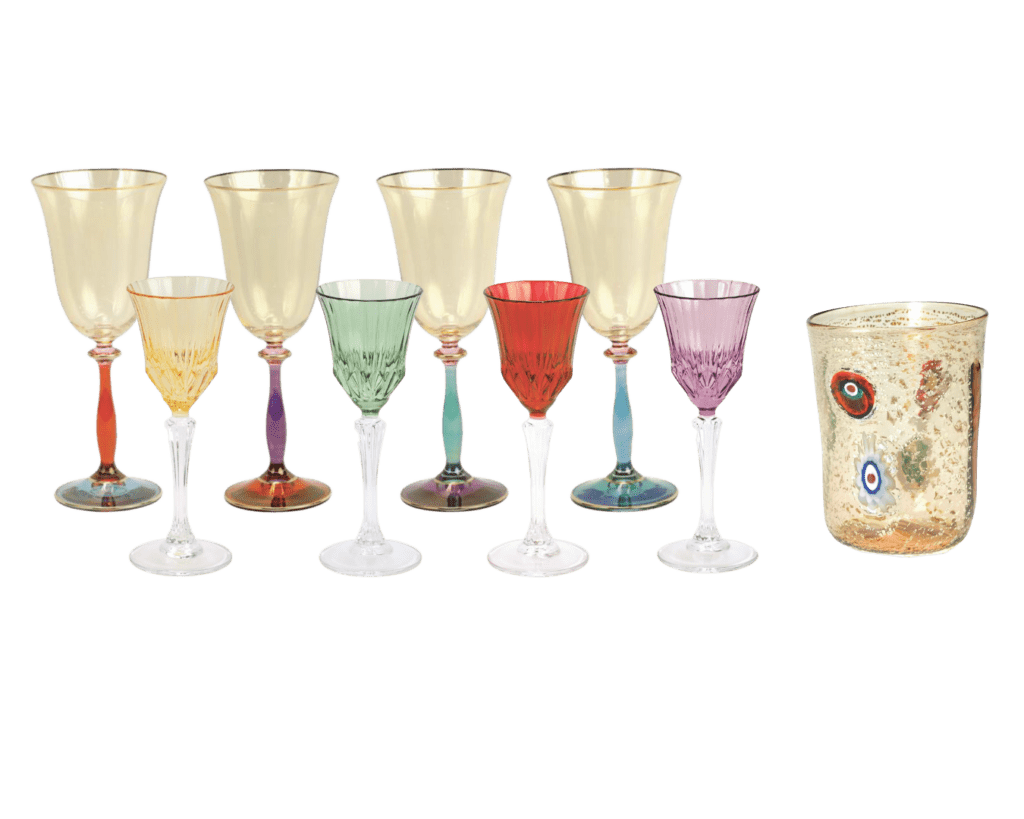
Regalia Wine Glasses, Set of 4, $300
Regalia Cordial Glasses, Set of 4, $205
Amber Murano Glass Tumbler, $110
You can recreate our autumn tablescape with these unique and beautiful items from our Museum Store.
Winterthur’s e-commerce shop is not ready yet, but we are still here to help. To purchase any of these or similar items, visit our Museum Store Tuesday–Sunday, 10:00 am–5:00 pm. You can also take advantage of our shopping concierge service! Simply call 302.888.4822 or email museumstore@winterthur.org, and our staff will help you select the item. Admission to Winterthur is not required to visit the Museum Store.
A Gingerbread Wonderland
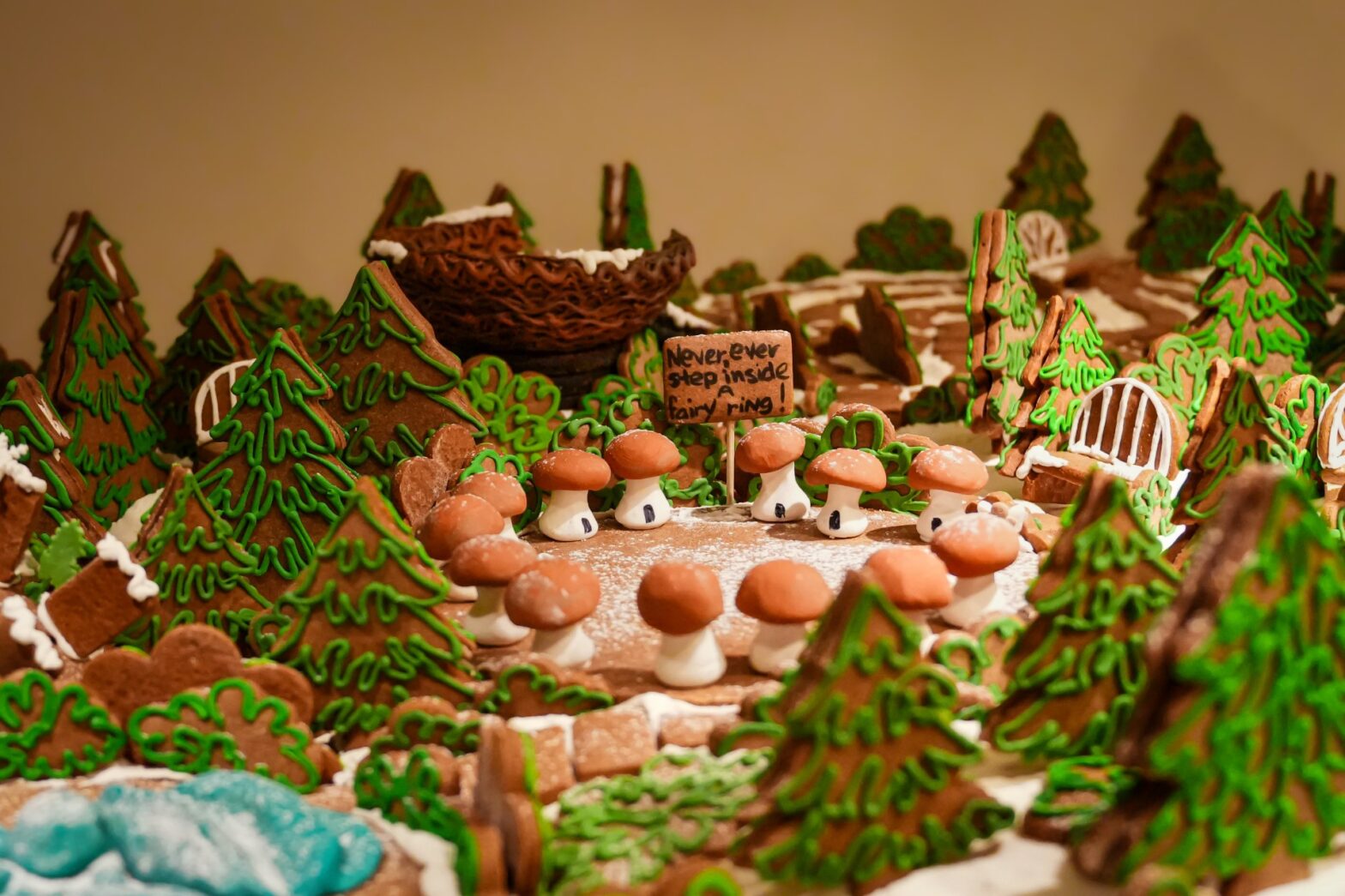
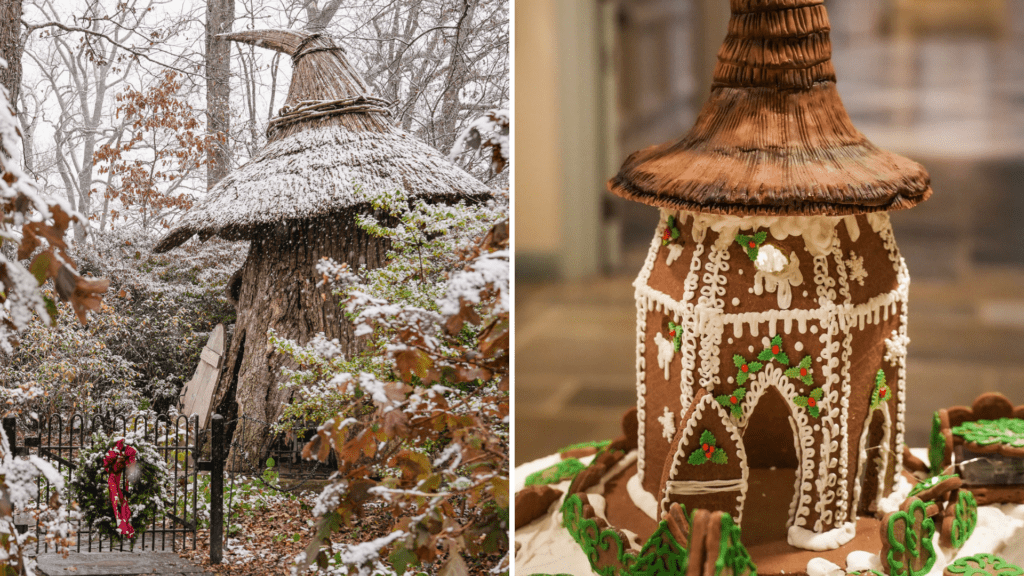
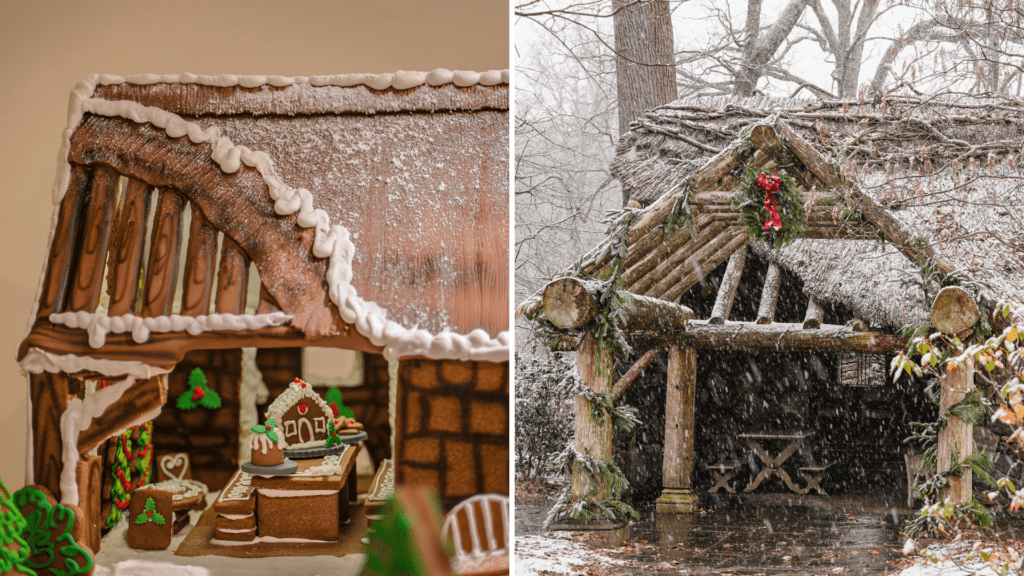
Combine the warmth of a holiday culinary classic with the magic of Winterthur’s Enchanted Woods, and what do you get? A breathtaking 4-by-8-foot replica of the whimsical three-acre children’s garden, meticulously crafted from gingerbread. This 147-pound masterpiece, a highlight of Winterthur Museum, Garden & Library’s Yuletide celebration, transports visitors into a fairyland of delight, through January 7, 2024.
The Culinary Artistry
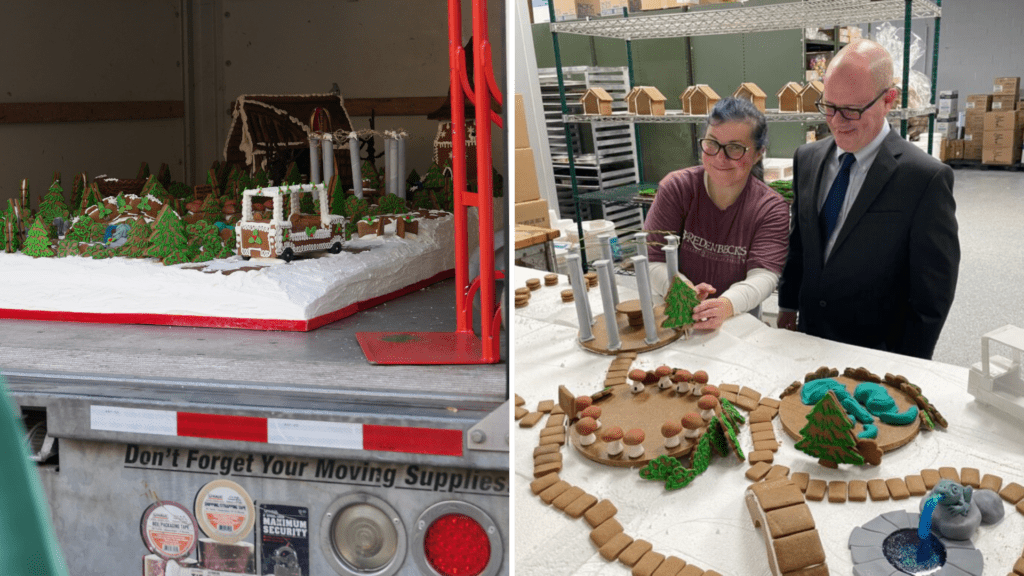
For weeks, the skilled hands of eight artisans from Bredenbeck’s Bakery in Philadelphia have toiled to create this edible marvel. A follow-up to last year’s impressive gingerbread rendition of the 175-room mansion at Winterthur, this year’s sculpture has been a labor of love for Bredenbeck’s head sugar artist Diana Anello and bakery co-owners Jacob Boyd and Irvin Boyd.
Diana’s Dedication
Diana alone poured over 100 hours into designing and assembling this edible wonder. Her passion is evident as she shared, “I wake up thinking about it. I dream about it.” This sentiment extends to the entire team, whose collective effort involved not only baking and constructing but also infusing the project with dedication and creativity.
Enchanted Inspiration
Drawing inspiration from Enchanted Woods, Diana’s journey began in July when she first visited the children’s garden to envision the gingerbread gem. “There were so many kids here enjoying it,” Diana said of Enchanted Woods. “It was a real magical fairyland experience.” Recalling the atmosphere filled with joyous children, Diana’s eyes sparkled as she helped deliver the finished product to the museum recently. This year’s sculpture includes a functioning water element, illuminated structures, five hidden fairies, and 44 snowflakes adding to the enchantment.
The Legend of Enchanted Woods
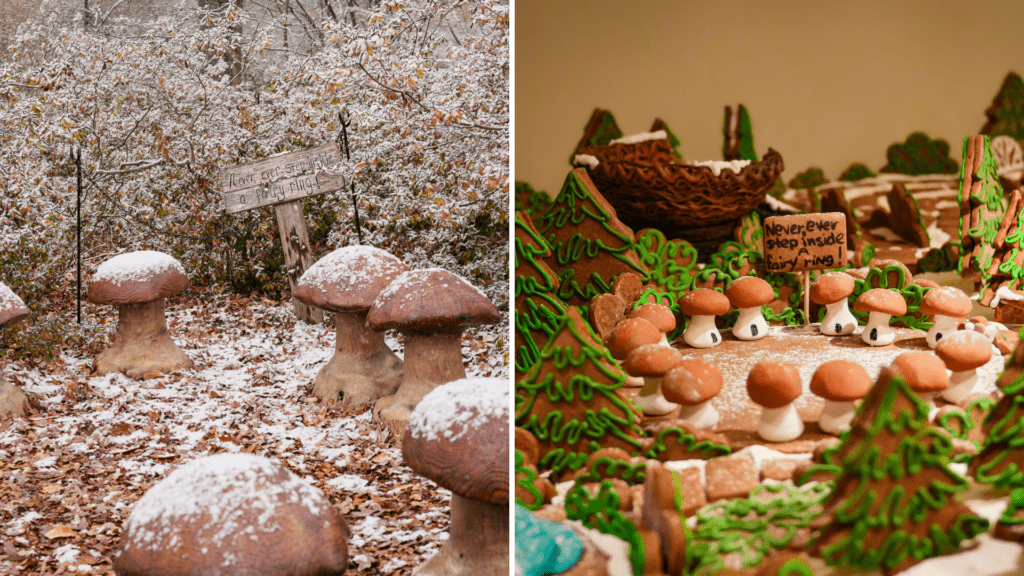
Enchanted Woods, designed to appear as though crafted by fairies, weaves its own tale, free of references to popular children’s stories, which makes the garden feel timeless, a blank slate that children can paint with the full power of their imaginations. Its creation myth speaks of the fairies and sprites—missing the laughter of children who once played there—gathering artifacts from the Winterthur estate to build a spellbinding haven.
Gingerbread Adventure
A feast for the eyes and a treat for the imagination, each element of Enchanted Woods comes to life in gingerbread form. Wander among the enticing Story Stones, cross the Troll Bridge, say hi to Harvey the frog at Water’s Edge, navigate the intricate Fairy Flower Labyrinth, follow the S-s-serpentine Path, visit the delightful Faerie Cottage, explore Frog Hollow, enter the Tulip Tree House, have a party at the Acorn Tearoom, jump into the Bird’s Nest, and discover the secrets of the Green Man’s Lair.
Recently, the Atlas Obscura podcast devoted an episode to Enchanted Woods. During that 11-minute segment, you can hear the history of the spellbinding children’s garden from Winterthur’s director, Chris Strand.
Beyond the Gingerbread Wonderland
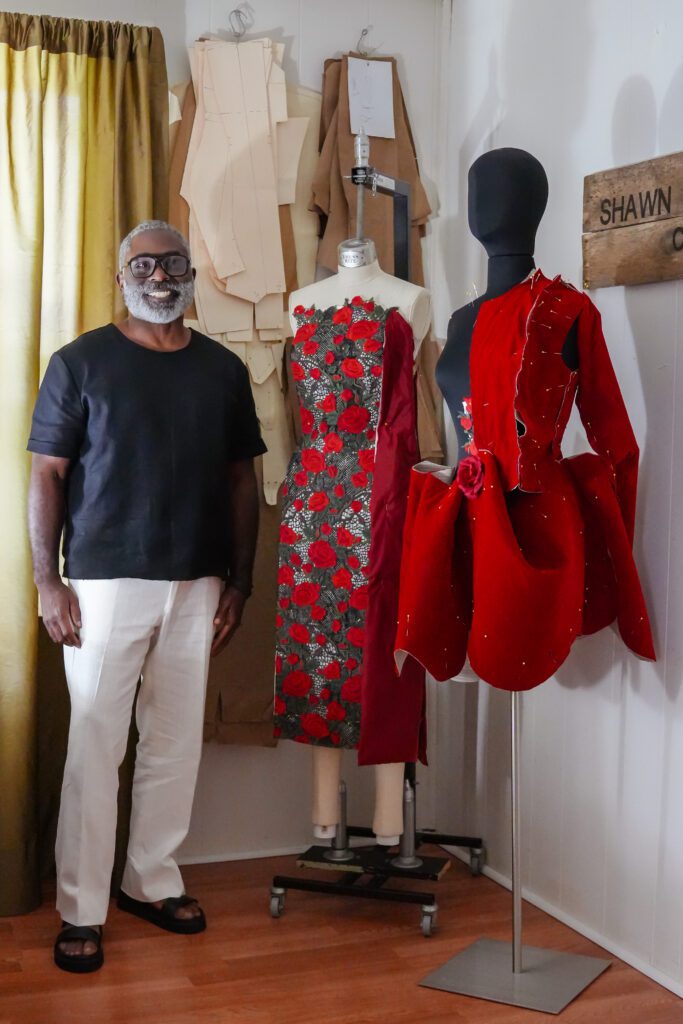
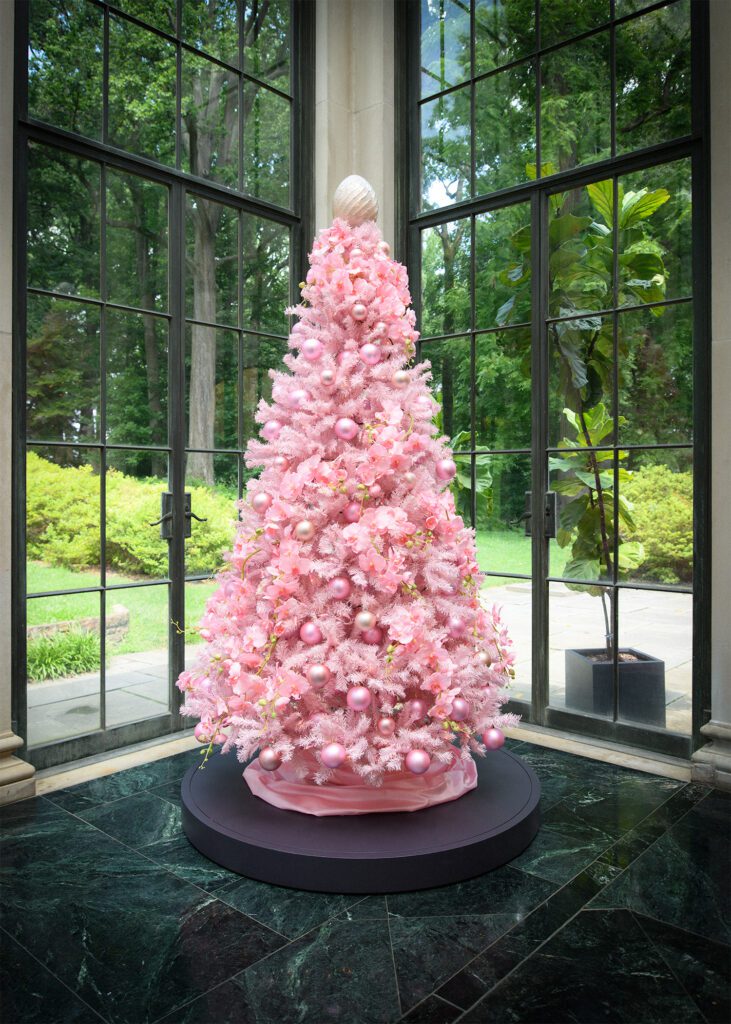
The enchantment doesn’t end with the gingerbread sculpture. Winterthur’s Yuletide celebration is inspired by the current Ann Lowe: American Couturier exhibition, featuring custom fashion by Delaware designers Shawn Baron Pinckney and Asata Maisé Beeks, whose creations reflect the history of Winterthur and the design sensibilities of Lowe and Winterthur founder Henry Francis du Pont. The Yuletide Tour showcases Winterthur’s signature traditions, including the Dried-Flower Tree, and new displays such as Christmas trees inspired by Ann Lowe gowns, and a spectacularly set Christmas dinner table.
Holiday Extravaganza
As part of the Yuletide experience, the Museum Store beckons with daily holiday shopping, offering unique home décor, gifts, jewelry, and more that celebrate Winterthur’s beauty both indoors and out.
This holiday season, the fashion artistry, the festive décor, and the gingerbread masterpiece depicting Enchanted Woods invite visitors to step into a world of imagination and wonder, making this Yuletide celebration truly extraordinary.
Object Highlight: Animal Box
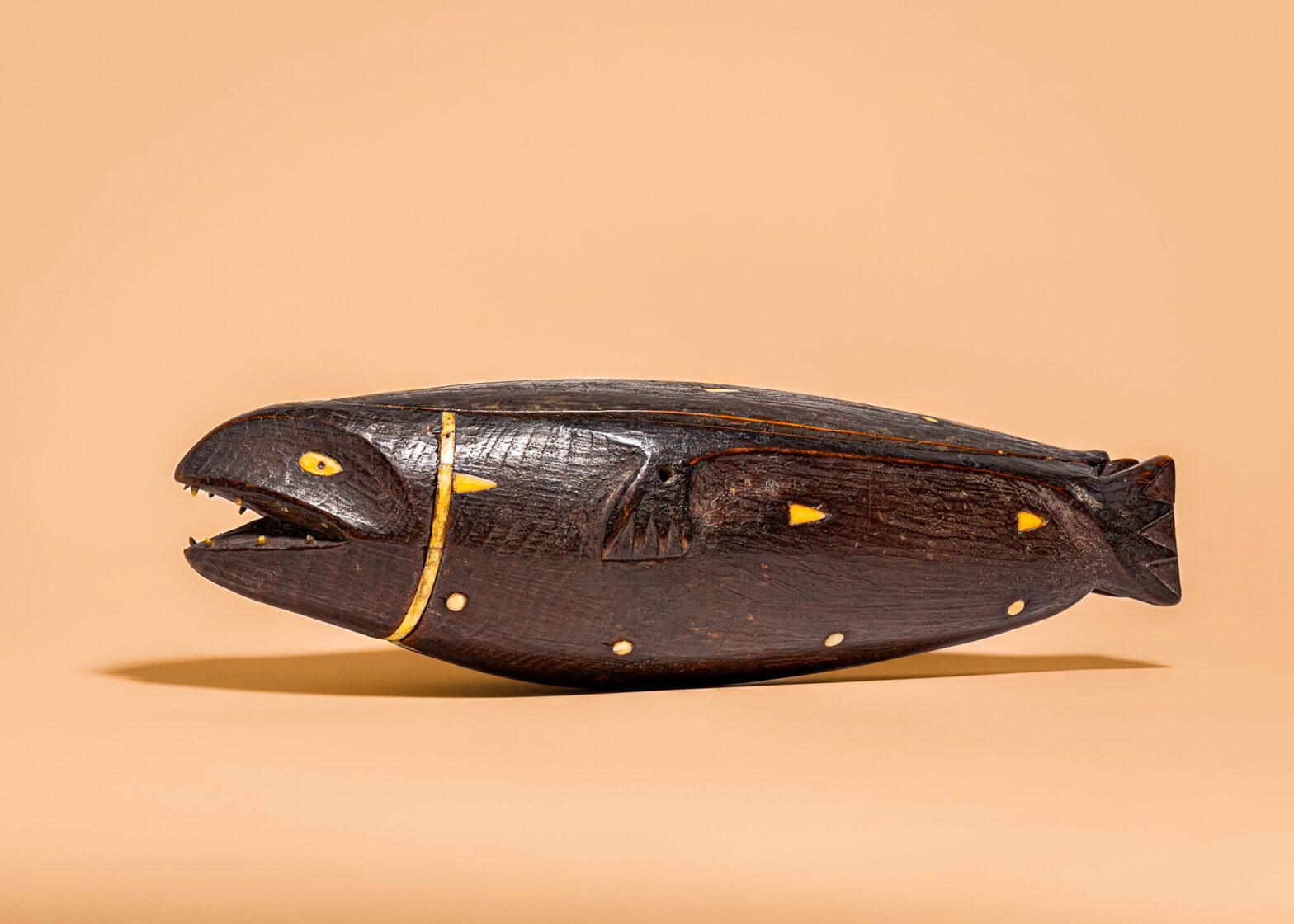
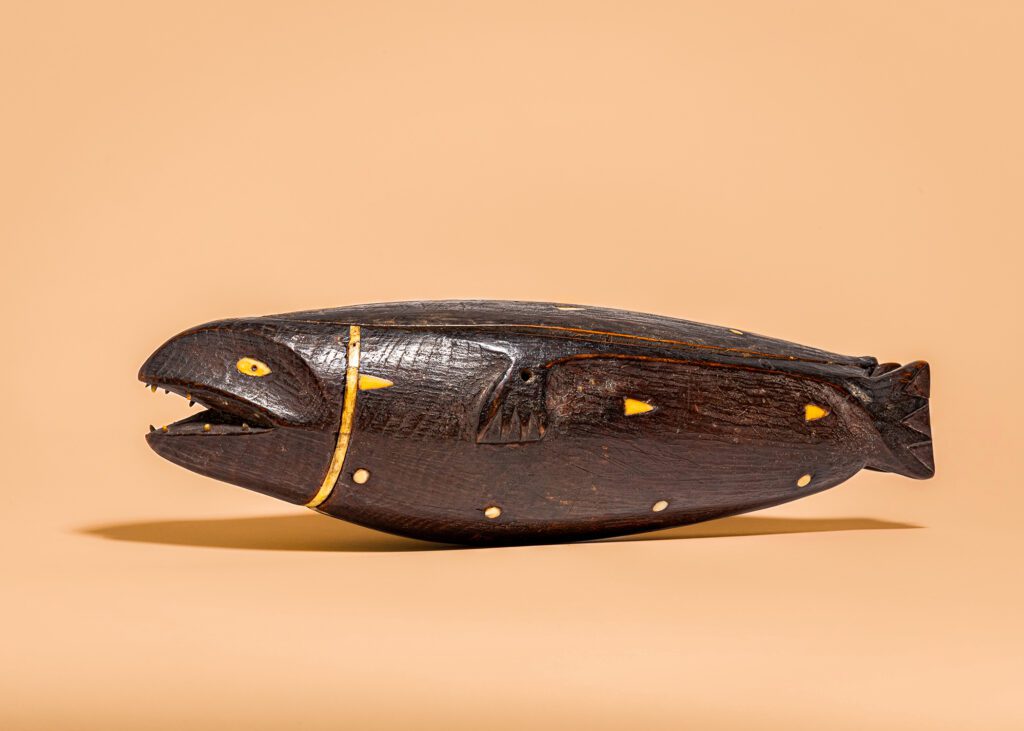
November is American Indian and Alaska Native Heritage Month and we’re highlighting a unique object in our collection from an indigenous maker. A Native American carver of the Yup’ik (or Cup’ik) culture created this small, lidded box and the visual evidence inside indicates it served its owner for a long period of time. Animal form boxes (“yaassiik”) had many possible uses, including holding harpoon heads and fishing tools, mineral pigments, arrow points, mask parts, and other small items. The maker sculpted a transformative shape, a seal with the concave cheeks of a fish head, with flippers carved in low relief on either side and vertical tail flukes carved in the round.
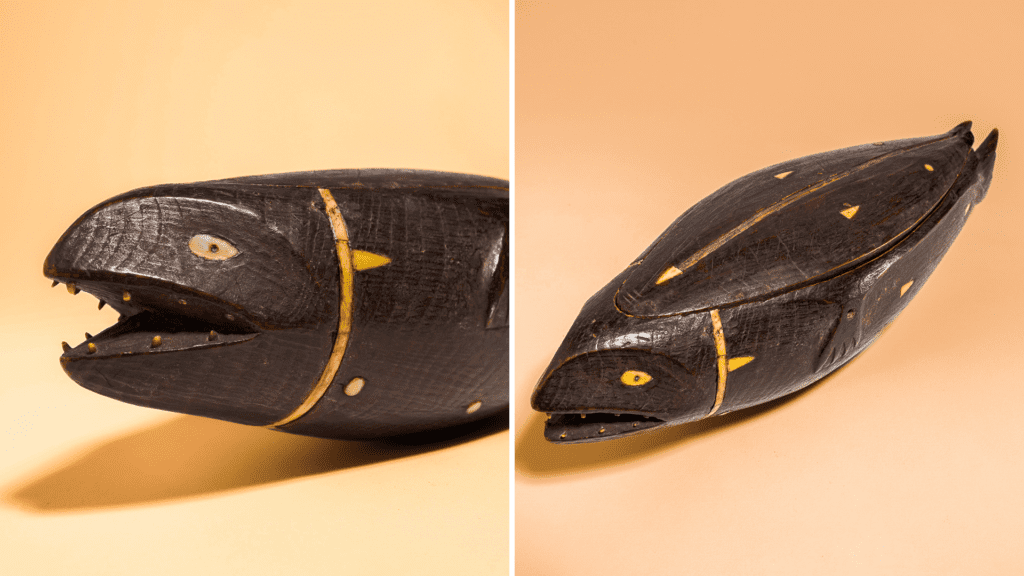
The animal’s facial features are accented with inlayed elements, including horn and the ivory teeth of a small mammal in the open mouth. The conforming, curved lid rests on the opening of the hollowed-out interior cavity forming the box. It may have once been fastened by a sinew or tie. A set of three short lines carved on the top of the lid near one end is possibly a symbol used by the box’s owner’s. The later English inscription on the underside was likely added by a Euro-American collector or antiques dealer.
Box (Animal)
Yup’ik or Cup’ik Artist (Maker)
Alaska, United States, North America; 1850-1900
Wood; Ivory (tooth); Bone; Horn; Paint
Bequest of Henry Francis du Pont 1965.1840 A, B
Yuletide at Winterthur will be a stylish season
WINTERTHUR, DE (November 1, 2023) – Yuletide at Winterthur brings the wonder and delight of the season to life from November 18, 2023, to January 7, 2024. Prepare to be captivated by a spellbinding celebration of American elegance and holiday spirit, infused with the style of the current exhibition, Ann Lowe: American Couturier.
Yuletide and the Ann Lowe exhibition are included with admission.
Fashion Meets Tradition
Yuletide at Winterthur showcases the seamless blend of fashion and history with custom designs by Delaware-based couturiers Shawn Baron Pinckney and Asata Maisé Beeks, paying homage to the design sensibilities of Winterthur founder Henry Francis du Pont and iconic fashion designer Ann Lowe. On December 6, from 6 pm‒7:30 pm, guests will be able to take a tour of the mansion and then chat with Pinckney and Beeks in the Galleries Reception Area or the Lowe exhibition afterward for “Meet the Artists” night.
The mansion will be adorned in all its holiday finery, featuring our signature attractions including the show-stopping Dried-Flower Tree, artistic Christmas trees inspired by Ann Lowe gowns, and a spectacular table set for Christmas dinner. This year’s Yuletide Tour will evoke the splendor and design influence of florals in fashion.
Key Features and Activities
- Exquisite Exhibits: Marvel at Ann Lowe’s legacy through her timeless creations and explore specially designed trees inspired by her designs, including an 8-foot-tall dress made of flowers at the Galleries entrance, designed by the fashion instructor who recreated Jackie Kennedy’s wedding dress for the Lowe exhibition.
- Enchanting Decor: Wander through Winterthur’s grounds illuminated with lit trees, and tour the house, where breathtaking decorations evoke the magic of the season.
- Special Events: Join us for enchanting events, including a one-man captivating rendition of “A Christmas Carol” by the great-great-grandson of literary master Charles Dickens, the OperaDelaware Holiday Candlelight Performance, Holiday Joy by the Wilmington Ballet, and Brunch with Santa.
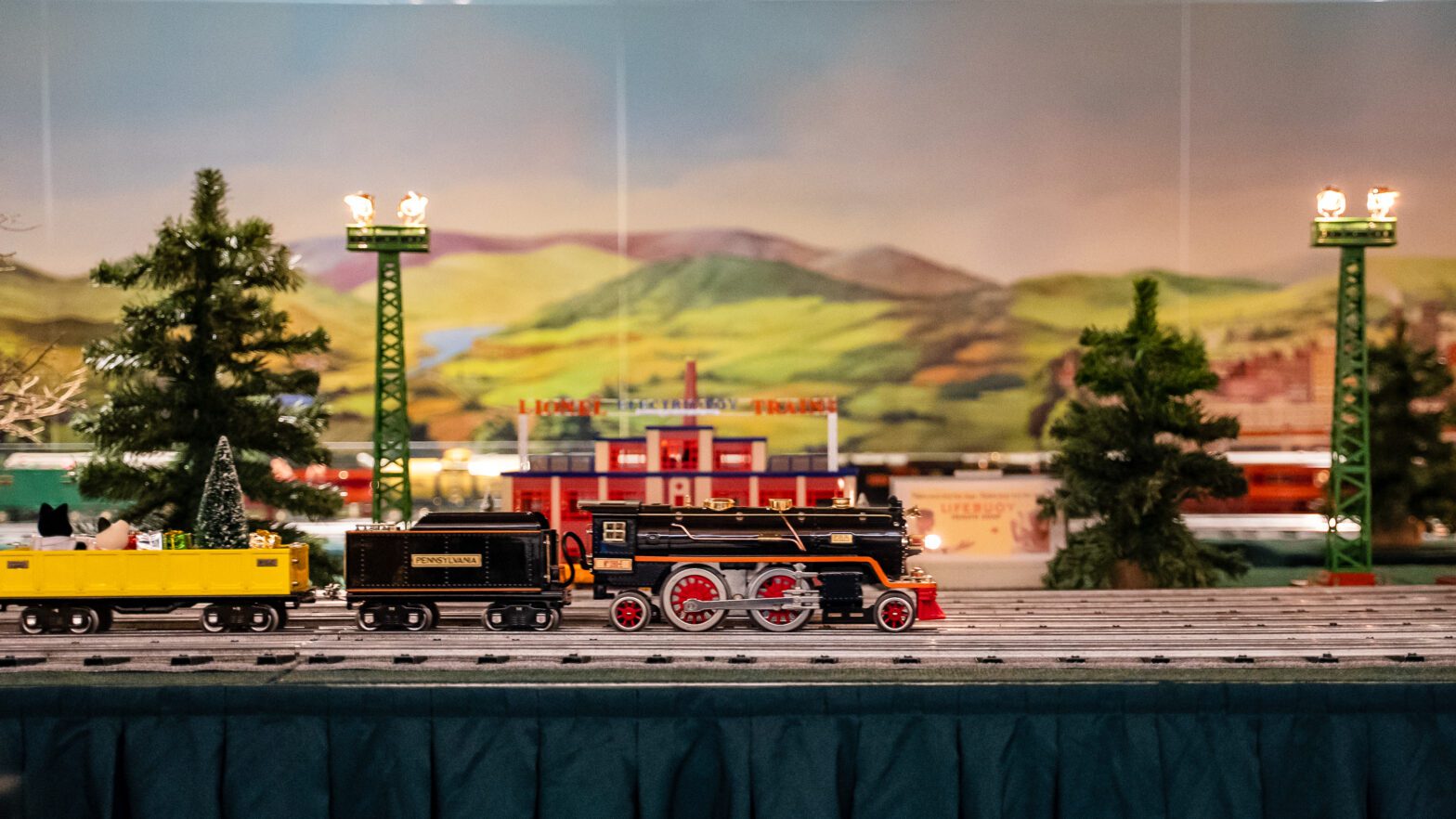
- Family Fun: Delight in family-friendly activities, including a gingerbread recreation of Enchanted Woods, our dollhouse, and a craft area, all season long, plus a toy train display from December 22 to January 2.

During Yuletide, Winterthur is open seven days a week with extended hours on Wednesday evenings. Winterthur is closed on Thanksgiving and Christmas Day. Tickets can be purchased on-site or online at Winterthur.org.
The Museum Store is open daily for holiday shopping, featuring unique home décor, gifts, jewelry, and more that celebrate Winterthur’s beauty, indoors and out.
The media is invited to download photos and a file on photo captions at this link.
Beyond the Holidays
Winterthur offers a year-round destination for art and culture enthusiasts and scholars. Explore the museum’s unparalleled collection of nearly 90,000 American decorative arts objects displayed in the magnificent 175-room house. The 1,000 acres of protected meadows, woodlands, ponds, and waterways provide stunning views throughout the year. Winterthur is also home to a vibrant array of programs, including lectures, concerts, and live performances, making it a hub for the study of American art and culture.
ABOUT WINTERTHUR MUSEUM, GARDEN & LIBRARY
Winterthur—known worldwide for its preeminent collection of American decorative arts, naturalistic garden, and research library for the study of American art and material culture— offers a variety of tours, exhibitions, programs, and activities throughout the year.
Winterthur is located on Route 52, six miles northwest of Wilmington, Delaware, and five miles south of U.S. Route 1. Winterthur is committed to accessible programming for all. For information, including special services, call 800.448.3883 or visit winterthur.org.
Brittle Beauty: Understanding and Conserving Chinese Export Lacquer
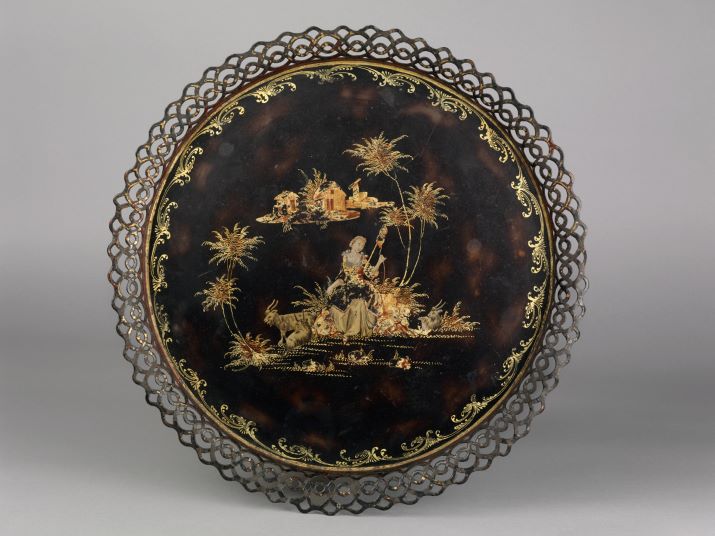
This exhibition explores the materials and processes of Asian and Chinese export lacquer, the harmful effects of age on this fragile material, and the groundbreaking study and work in Winterthur Museum’s conservation laboratory to restore Chinese export lacquer in the museum collection.
Winterthur’s 60th Annual Delaware Antiques Show, November 10-12
WINTERTHUR, DE (October 23, 2023) – One of the nation’s most acclaimed shows of antiques, art, and design, the Delaware Antiques Show, returns to the Chase Center on the Riverfront in Wilmington from November 10 to November 12. The show features more than 60 of the country’s most distinguished dealers in American antiques, furniture, paintings, rugs, porcelain, silver, jewelry, and other decorative arts.
From the newest collector to the most knowledgeable connoisseur, there is something for everyone. Tickets include lectures, book signings, and admission to the show and to Winterthur Museum, Garden & Library on the days of the Show.
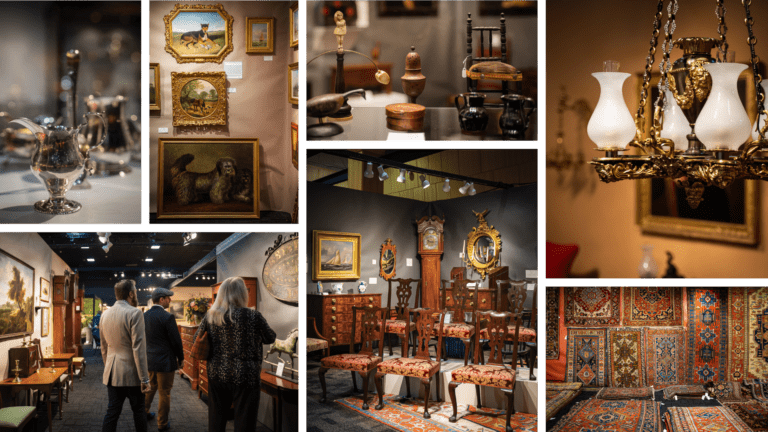
Highlights include a keynote lecture entitled The New Antiquarians and the Future of Connoisseurship by art historian, designer, and author Michael Diaz-Griffith on Saturday, November 11 at 10:00 am, followed by a book signing. The New Antiquarians: At Home with Young Collectors is his first book. The book features young antiques connoisseurs whose interiors exemplify unorthodox approaches to living with objects that reflect life and history.
Diaz-Griffith is executive director of the Design Leadership Network. Prior to joining the DLN, he served as executive director of Sir John Soane’s Museum Foundation and as associate executive director of The Winter Show, America’s most prestigious and longest-running art and antiques fair.
Young Scholars lectures, presented by students in the Winterthur/University of Delaware Program in American Material Culture and sponsored by The Decorative Arts Trust, will take place Saturday, November 11, at 3:00 pm. Becca Lo Presti will deliver her lecture The Last Tall Clock in America? A Winterthur Tall Clock and Time Telling in Nineteenth-Century America.
Taylor Rossini, will speak about Empire on a Plate: Imperial Rivalry and Cartographic Knowledge in Overton’s Trading Part of the West Indies (1741).
The Sunday Lecture entitled A Storied Past: Collections of Historic Odessa will be delivered on November 12 at 2:00 pm by Philip D. Zimmerman. Author of A Storied Past: Collections of Historic Odessa (Rowman & Littlefield, 2023), Zimmerman will present this eponymous lecture about the recent and ongoing research and interpretations of the furnishings and other decorative arts at Historic Odessa in southern New Castle County, Delaware. Historic Odessa has beautifully restored 18th and 19th-century houses and an outstanding collection of furnishings and fine and decorative arts. Many pieces of original family furniture were made by prominent Delaware cabinetmakers of the 18th century. The collections include major works of regional paintings, prints, textiles, silver, pewter, and other metals.
Zimmerman will discuss new findings and interpretations as well as the interlocking histories of many of the objects in this remarkable collection. A museum and decorative arts consultant based in Lancaster, Pennsylvania, Zimmerman is a prolific author, teacher, and lecturer and author of numerous books, essays, and articles in books and periodicals such as American Furniture and The Magazine Antiques. He holds a doctorate in American and New England Studies from Boston University and a master’s degree from the Winterthur Program in Early American Culture / University of Delaware. Book signing to follow the lecture.
Tickets are valid for each day of the show and include admission to Winterthur Museum, Garden & Library on show days. To purchase tickets, visit Winterthur.org/DAS or call 800.448.3883. For more information, please email das@winterthur.org.
The Delaware Antiques Show benefits educational programming at Winterthur.
The 60th Annual Delaware Antiques Show
Opening Night Party—Thursday, November 9, 5:00–9:00 pm
Celebrate the opening of the show with cocktails and exclusive early shopping.
Show Hours
Friday, November 10,11:00 am–6:00 pm
Saturday, November 11,11:00 am–6:00 pm
Sunday, November 12,11:00 am–5:00 pm
General Admission
$25 per person, $20 for Winterthur Members. Children under 12 free. Tickets valid for all three days of the show and for admission to Winterthur on show days.
The Chase Center on the Riverfront is located at 815 Justison Street, Wilmington, Delaware, less than one hour south of Philadelphia, midway between New York City and Washington, D.C.
For additional information and updates about this year’s Delaware Antiques Show, please email das@winterthur.org, visit winterthur.org/DAS, or call 800.448.3883.
The Delaware Antiques Show is presented by Wilmington Trust, a Member of the M&T Family.
ABOUT WINTERTHUR MUSEUM, GARDEN & LIBRARY
Winterthur—known worldwide for its preeminent collection of American decorative arts, naturalistic garden, and research library for the study of American art and material culture— offers a variety of tours, exhibitions, programs, and activities throughout the year.
Winterthur is located on Route 52, six miles northwest of Wilmington, Delaware, and five miles south of U.S. Route 1. Winterthur is committed to accessible programming for all. For information, including special services, call 800.448.3883 or visit winterthur.org.
.
How to Photograph Fall at Winterthur
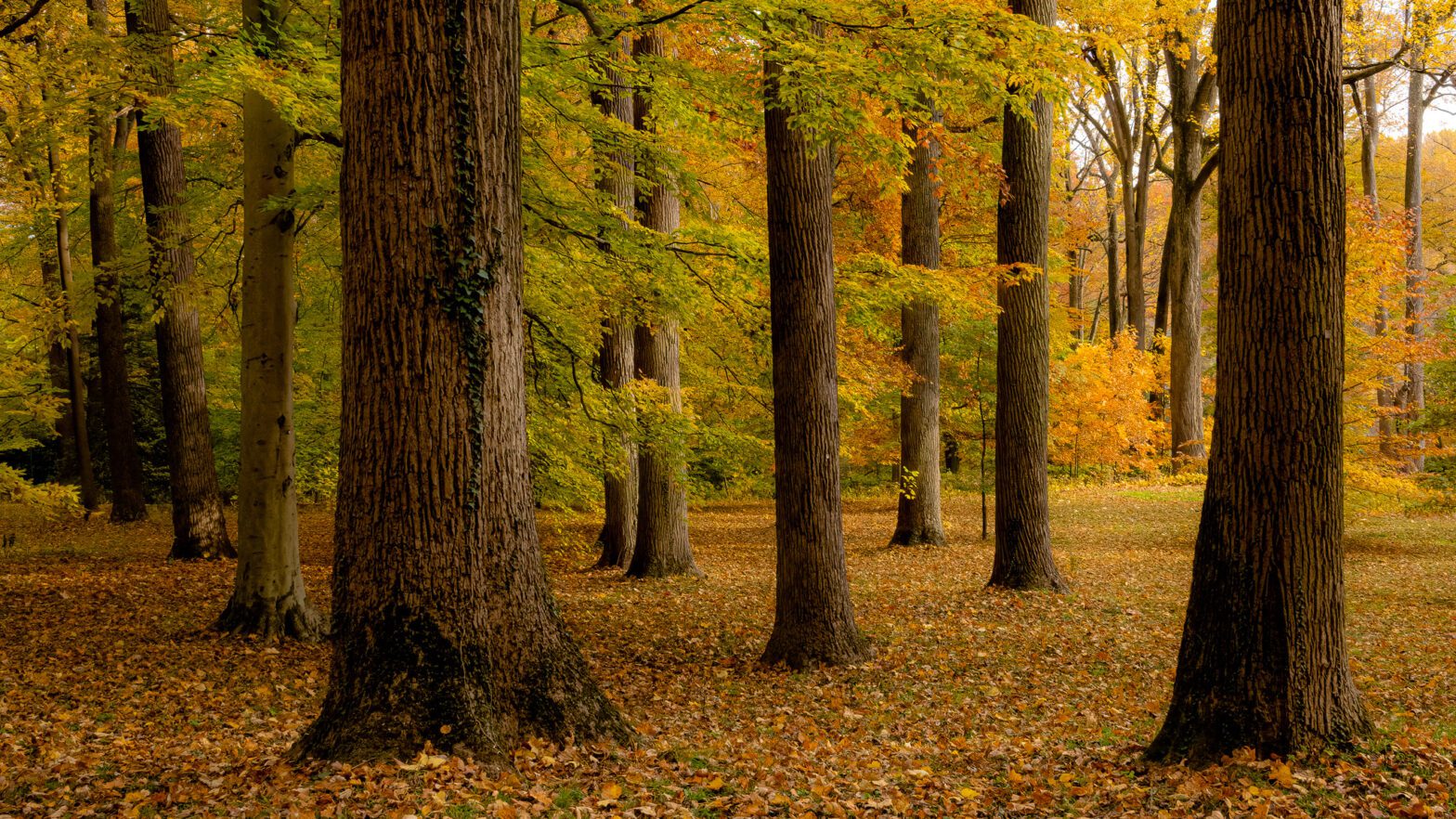
Written and Photographed by Eileen Tercha
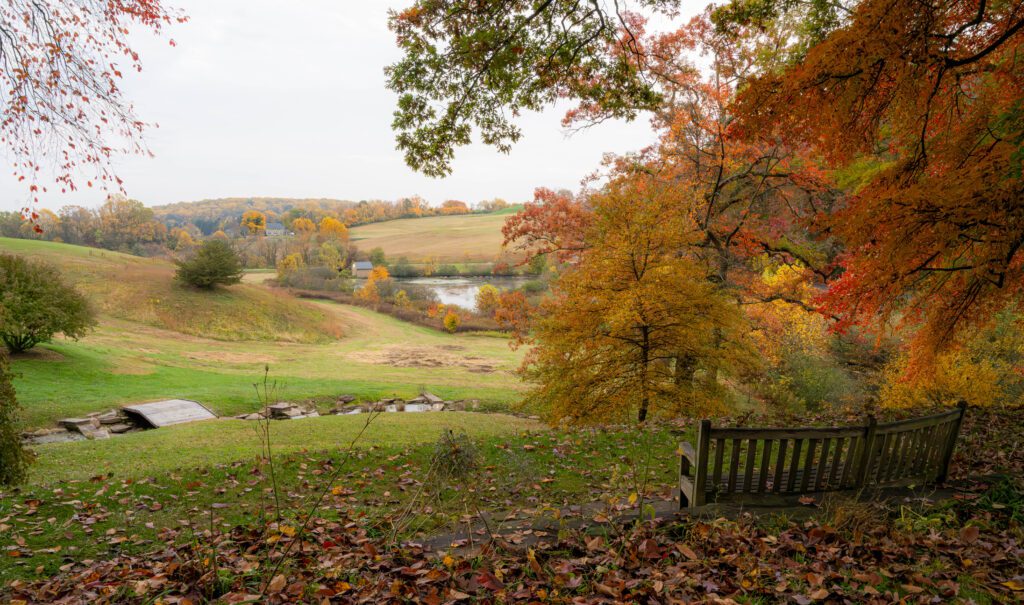
A favorite vista of Henry Francis DuPont … ”keep this view open forever.”
Winterthur is enchanting in every season…and truly magnificent in autumn.
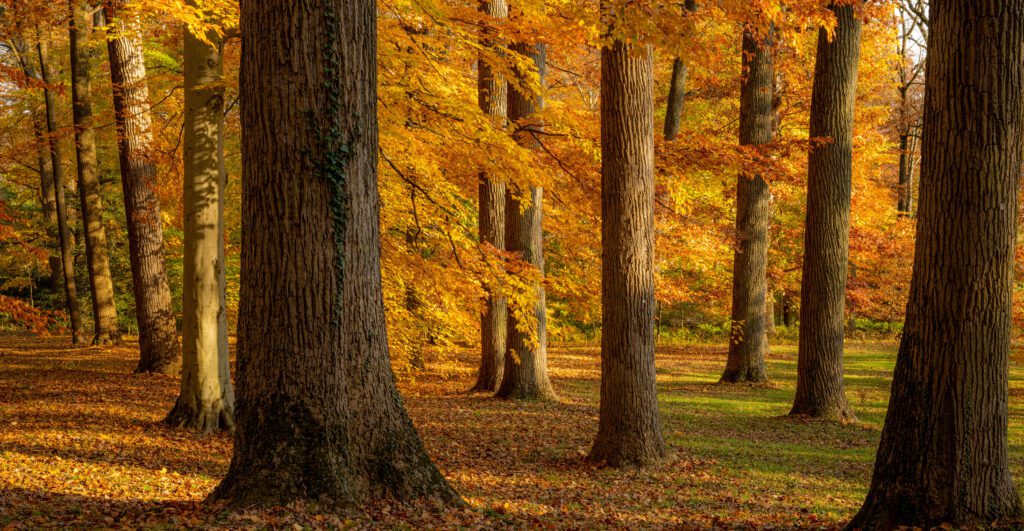
Photographers feel energized to get outside to photograph nature as the weather gets cooler. Whether your creative inspiration comes from grand vistas, a small group of trees, or an intimate macro, Winterthur is a fantastic way to savor the colors and textures of autumn.
“Peak fall color” isn’t just a day or two—autumn is a continuum.
Fall color slowly develops over a month or more, with photographic opportunities all along. Different species and microclimates develop on different schedules, and you can always find something beautiful to photograph. This reduces the urgency to chase “peak” color; there isn’t a definitive “perfect peak” time to visit.
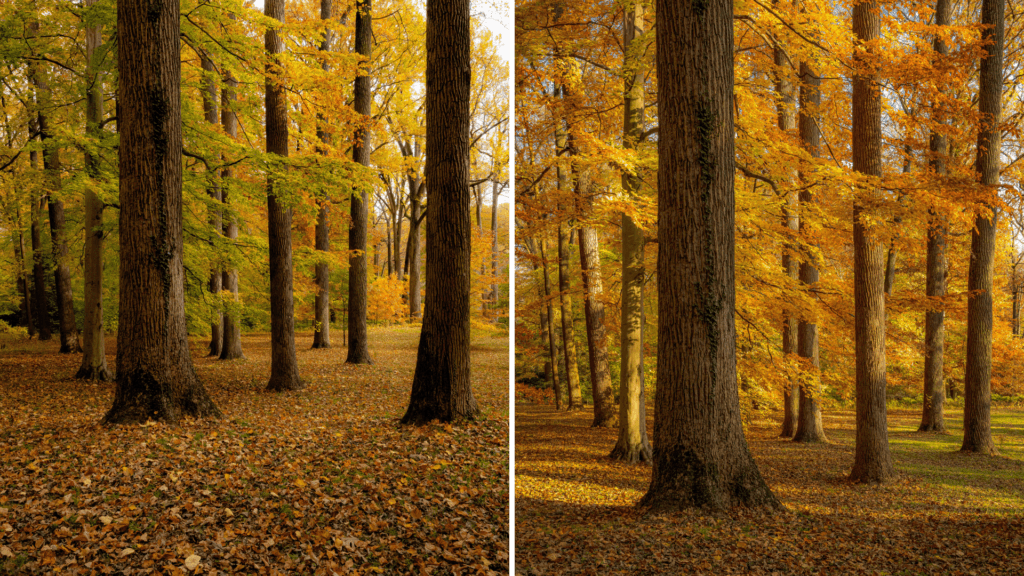
Identical grove of trees photographed six days apart; in less than a week, the mixed greens and golds developed into glowing orange.
Enjoy the subtle beauty of early or late seasonal color. Temperature and precipitation can vary exact timing, but color generally starts in mid October and runs through mid November.
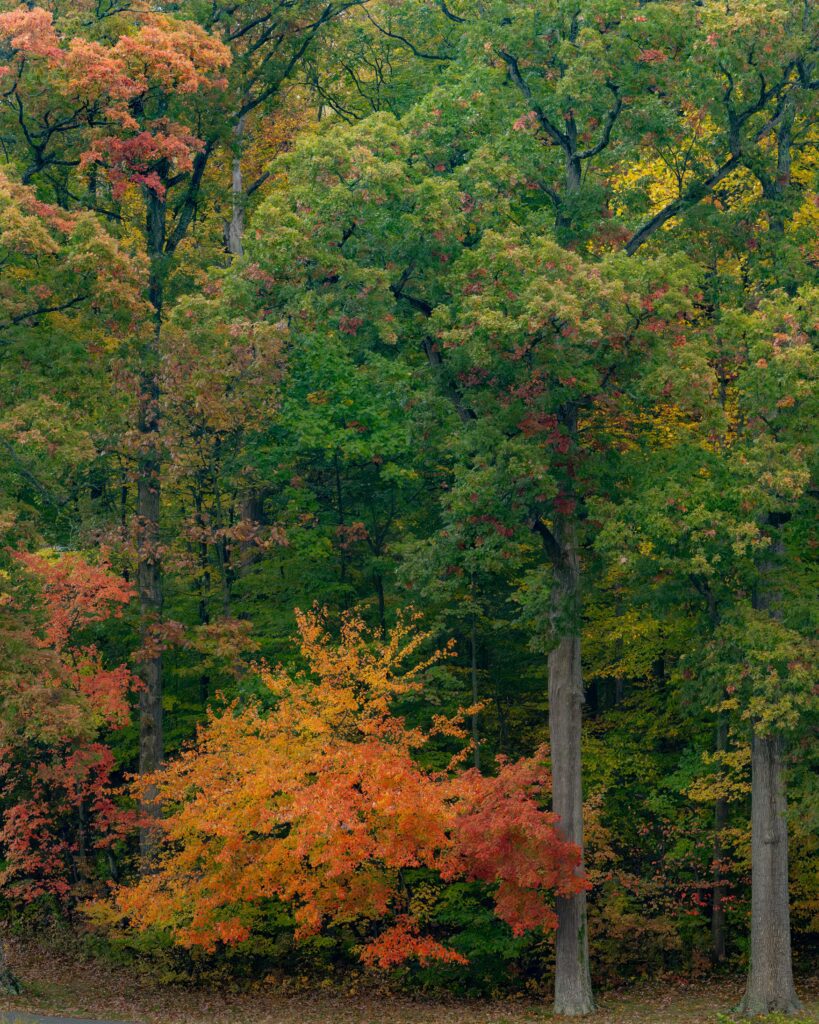
Early autumn brings isolated color on individual trees, and the surrounding green makes the colors pop.
Revisit and photograph your favorite locations as the color develops.
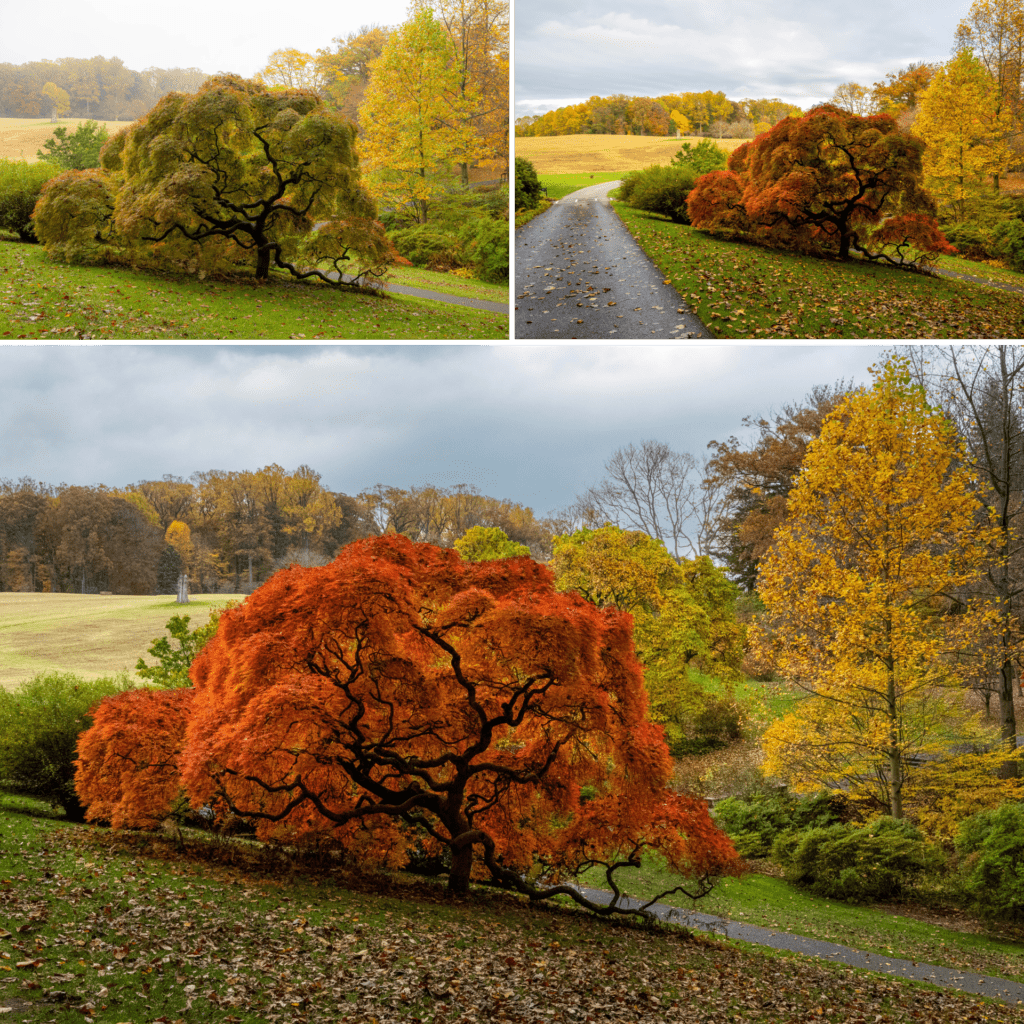
There can be significant color transition in just a few weeks. Once cooler nighttime temperatures set in, color develops rapidly.
These three images were photographed approximately five days apart and exhibit dramatic color development. Notice that by the time the Japanese Threadleaf Maple was fully orange, surrounding trees were showing some leaf drop. So, would you call the second image “peak” color? Or the third image?
There isn’t a single “most favorable weather or time of day” to visit.
Go beyond the classically pretty days of blue skies and puffy clouds.
- Golden Hour gives warm soft light for approximately an hour at either end of the day; autumn leaves are beautiful when lit by low angle light.
- Overcast skies are not particularly attractive but the diffused light is wonderful for photography. Eliminate white skies from your composition and fill the frame with your subject. Or shoot macros.
- Stormy, dark-gray skies give fantastic contrast with autumn leaves.
- Rain adds great texture to macro photography. Rain can add interest to a landscape shot; use a fast shutter speed to freeze the motion of falling raindrops.
- Fog is wonderfully moody and can add to the perception of landscape depth.
Emotional connection is important.
Engage with the landscape and come away with something meaningful and authentic.
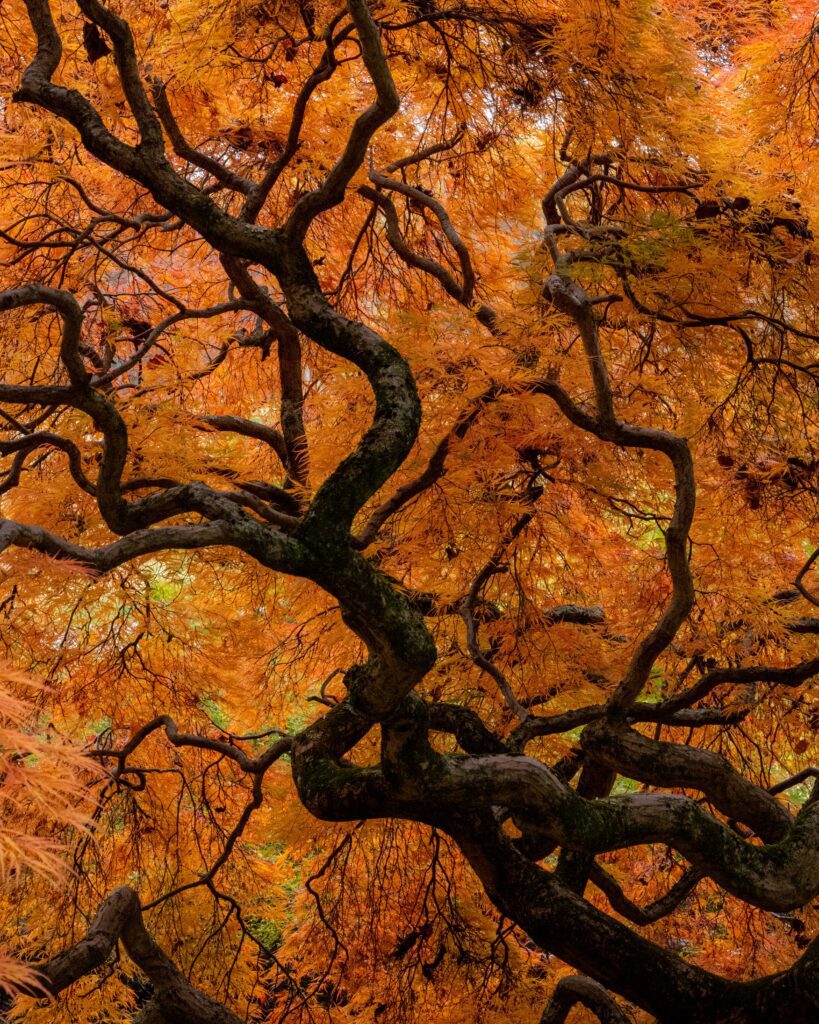
Photographed while lying on the ground and looking up into the canopy of the Japanese Maple.
Photography is about the experience as much as the result.
Be open to serendipity and enjoy the creative experience of being outdoors.
Autumn is a perfect time to become a Member.
Membership provides garden access from dawn to dusk, a valuable benefit for photographers.
As autumn settles in, we invite you to explore the grounds, take photographs, and tag us at @WinterthurMuse.
Eileen Tercha is a Winterthur Volunteer Photographer and nature photographer based in Chester County, PA. View more of Eileen’s work @EileenTercha on Instagram.
A Feather in Her Cap
Thousands of hours of work have been reverently spent preparing Winterthur’s new exhibition, Ann Lowe: American Couturier.
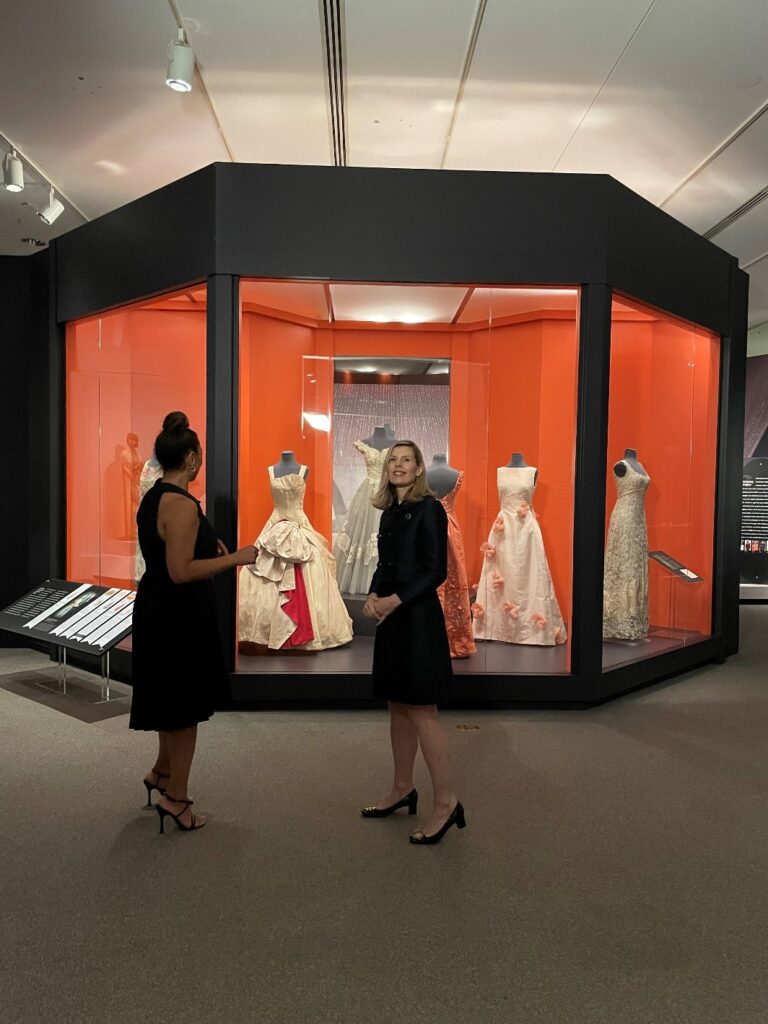
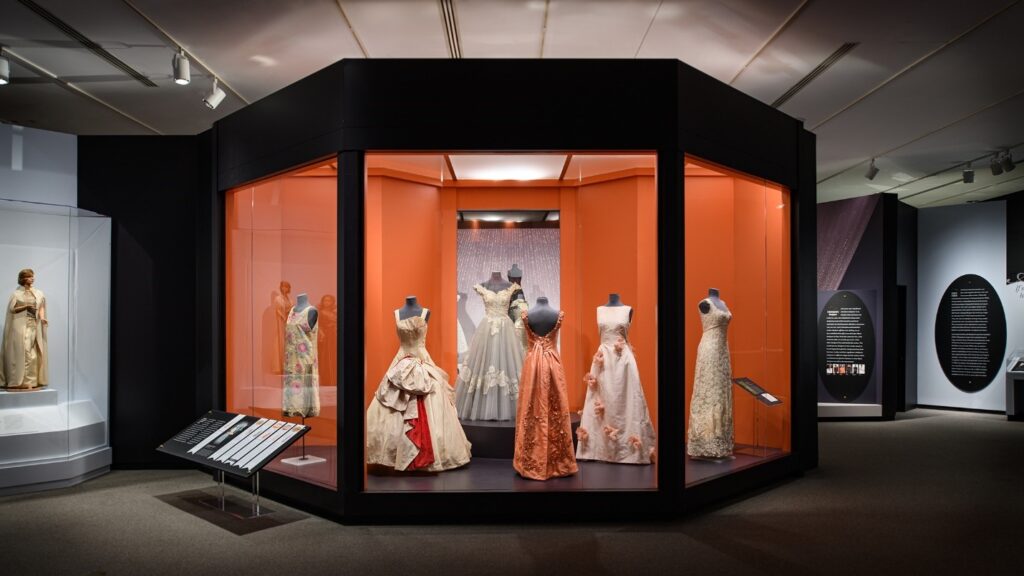
The show celebrates the largely unsung achievements of a fashion designer who worked mostly in anonymity—largely because she was black—among high society for decades. One of the highlights of her career was creating the wedding gown that Jacqueline Bouvier wore when she married John F. Kennedy in 1953. The dress had to be recreated in exquisite detail for the Lowe exhibition because the original gown is too fragile to display.
But each of the unique dresses in the exhibition has its own marvelous details.
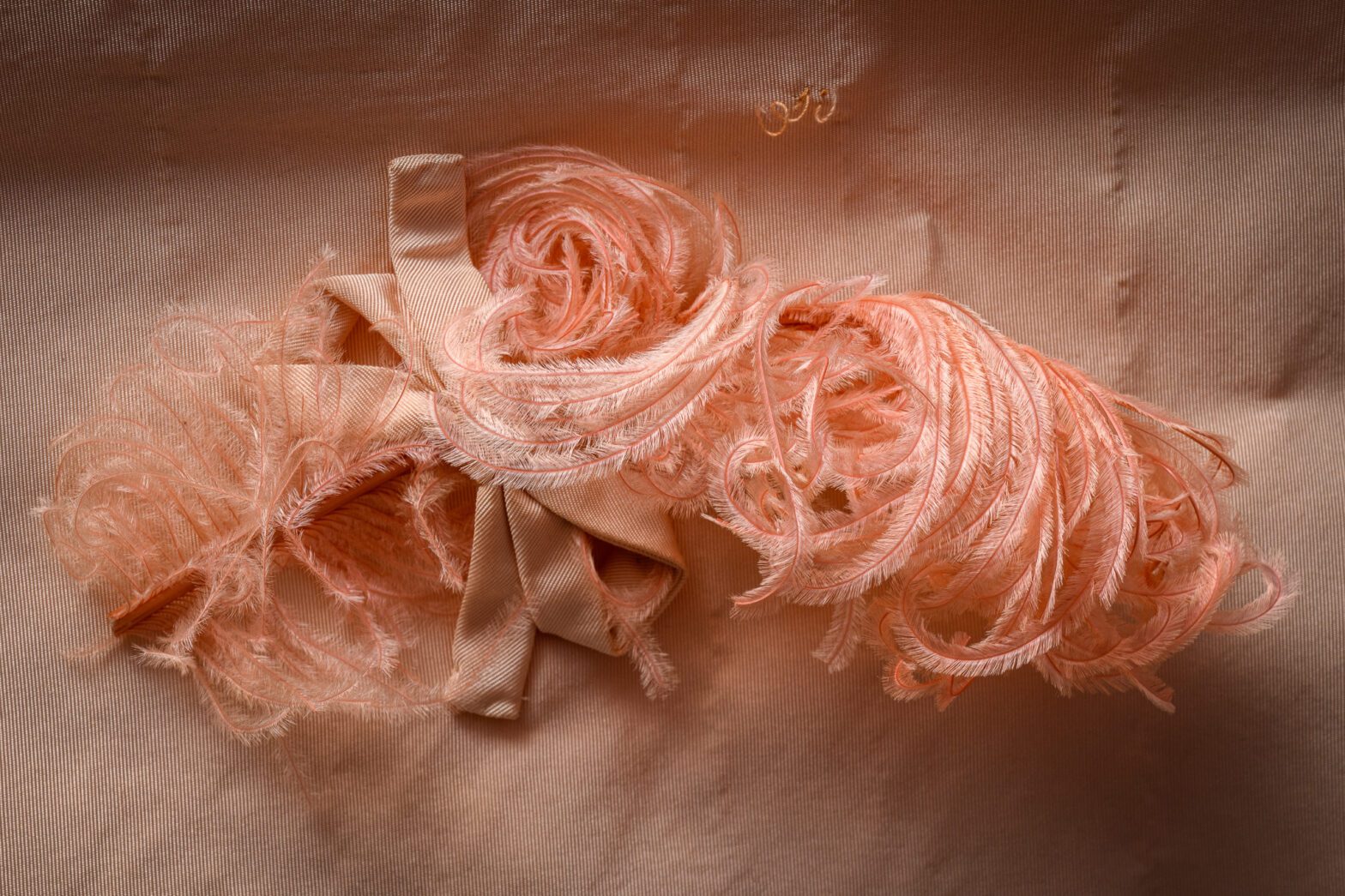
One such detail is the ostrich feathers that adorn a light salmon dress from the collection of Sharman Stoddard Peddy. Lowe made the dress for Madeleine Couture in New York in 1964.
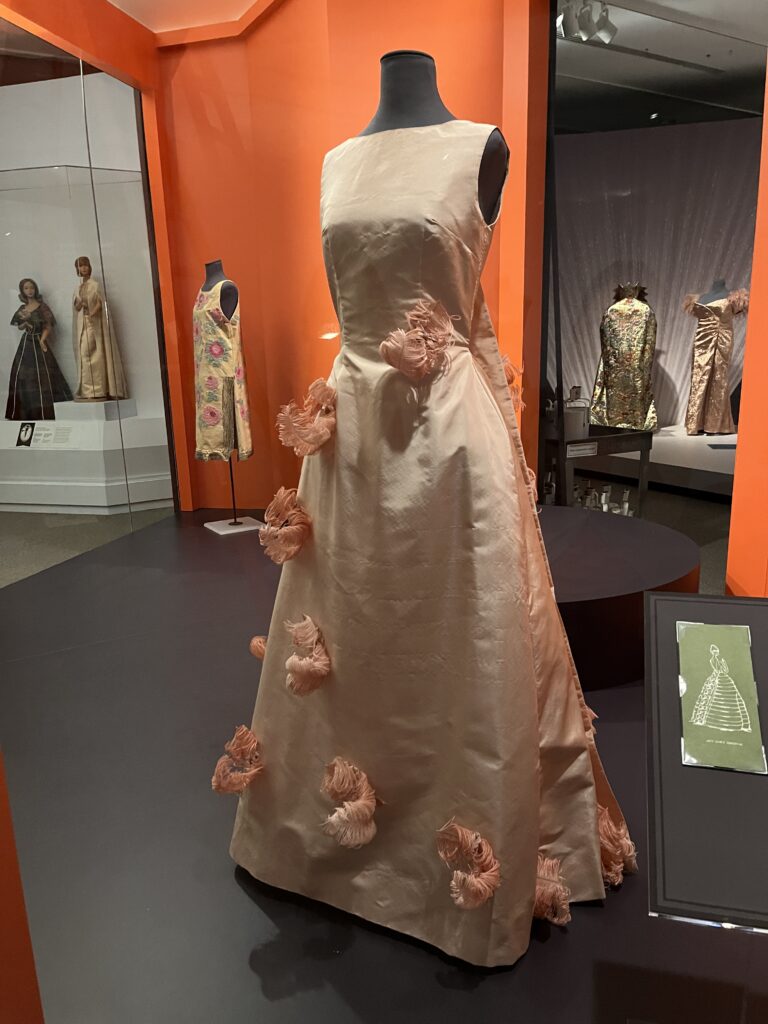
Unfortunately, though not unexpectedly, the original feathers on the gown had become fragile and flattened from both storage and time. In conversation with the lender, it was decided that new feathers would better represent the original intention for the dress design.
Someone had to undertake the painstaking process of recreating the authenticity of the original feathers, both in appearance and hue.
That job fell to Andrea Goldstein, a post-graduate textile conservation fellow working in the textile conservation lab at Winterthur.
As she worked on this process over the summer, she commented, “We really want to do justice to the nature of the dress as Lowe intended.”
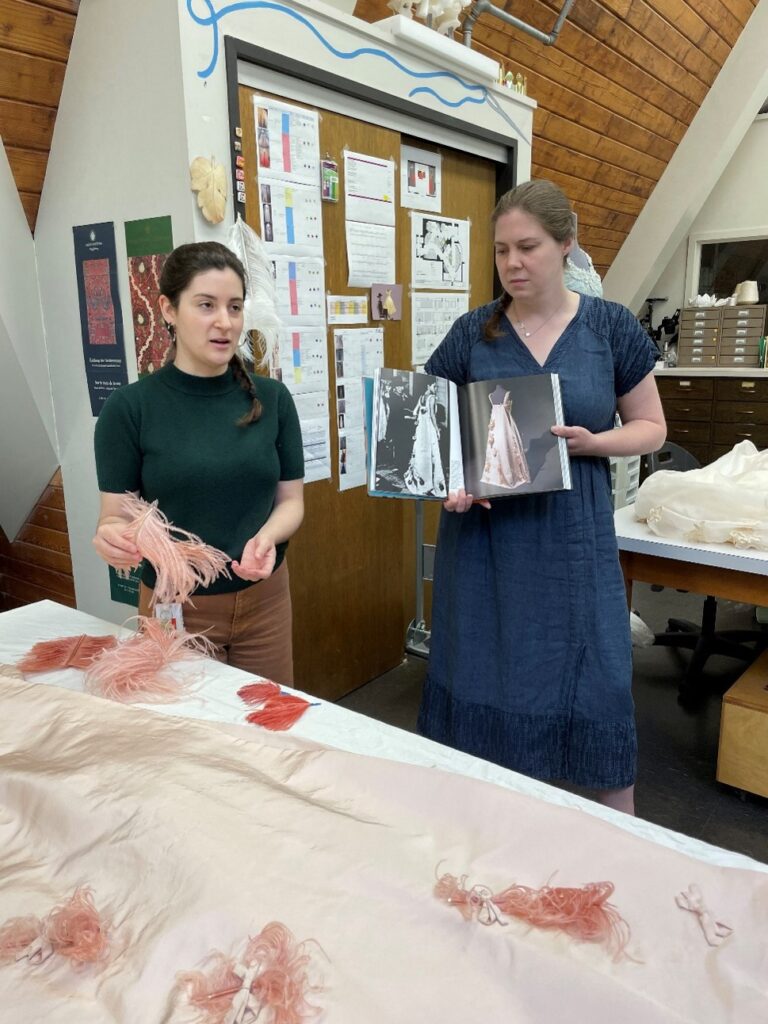
Goldstein’s first attempt at dyeing new feathers with acid dyes resulted in a shade of pink that was too dark and too red. With each following attempt, she subjected the feathers to different modifications to the dye recipe for varying lengths of time.
“I’ve been trying a few different color recipes,” Goldstein said.
Finally, after countless hours of dyeing feathers, spraying them with “conservation hairspray,” and curling them, with the assistance of volunteer Gail Bush, she succeeded.
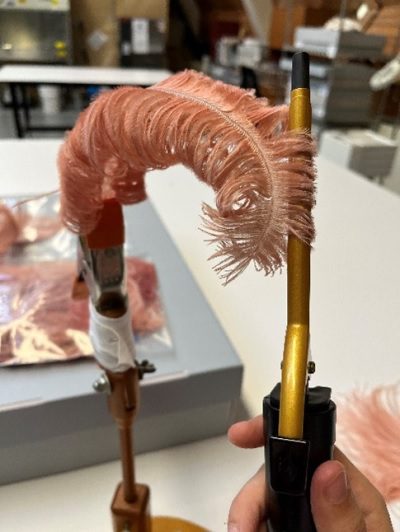
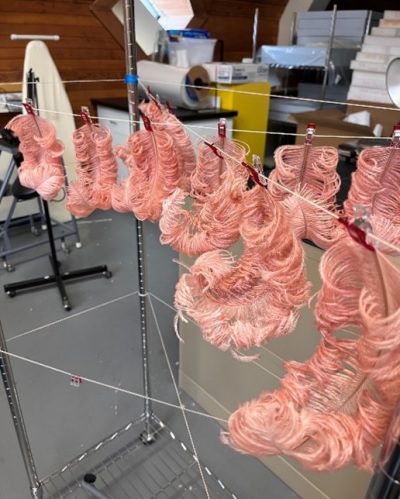
In September as the exhibition opened, a film crew from the Costume Society of America was visiting the exhibition to tell Lowe’s story when they paused in front of the dress during a live webinar.
Kim Collison, curator of exhibitions, noted to the audience: “A real kudos to our conservation labs for the work that they did to recreate this dress.”
Webinar host Graham Wetzbarger, who had interviewed Goldstein weeks earlier, added his approval of how the feathers turned out.
“The feathers,” he said, “for being brand new, they certainly look ‘of the period.’ I think they did a great job of maintaining the integrity of a dress many decades old. It doesn’t pop out to you like, ‘Oh that’s been replaced.’”
Lowe’s dresses were one-of-a-kind.
For instance, a concert dress she created in the late 1960s had a bow at the rear of the dress off to one side so that the pianist could comfortably sit on a piano bench, according to Kate Sahmel, textile conservator and head of the textile conservation lab.
Also, many of Lowe’s dresses have low-cut backs, Sahmel observed.
“Lowe said she wanted a dance partner’s fingers to touch the woman’s skin instead of fabric so that dirt and oil wouldn’t transfer to the dress,” Sahmel said.
Lowe worked hard to satisfy her clients, no matter the level of detail.
That level of detail shines in the exhibition thanks to all those like Goldstein who worked on the show.
The 40 dresses will be on display at Winterthur until January 7, 2024.