Search Site

Richard Saja

About the Artist

Richard Saja is an artist making work in Catskill, New York. After first attending the University of the Arts in Philadelphia to study surface design, he devoted his studies to the great books of Western Civilization at St Johns College in Santa Fe, NM and received a BA as a math and philosophy major. After a brief stint working as an art director on Madison Avenue, all his interests coalesced and a small design firm, Historically Inaccurate Decorative Arts, was born in the early aughts and gradually evolved into a fine art practice. 

Though he occasionally feels the need to explore avenues of expression beyond that of the needle, the majority of Saja’s work focuses on creating interferences on the formal patterns of French toile through embroidery. 

He has exhibited internationally with shows in London, New York, Paris, Berlin and South Korea and will have a solo exhibition at the Toile de Jouy Museum in Jouy en Josas, France in 2023. 

Evolving Utopia | Port Royal Parlor

Richard’s enduring love and fascination for textiles derives from the absolutely unlimited interplay of pattern, color and texture – there is no other medium where this trinity is so fully realized. He came up with the embellished toile concept while waking from sleep years ago. The original idea was to embroider Maori facial tattoos onto figures in the print but he soon discovered there were no toile prints available where that concept could be realized because of the relatively small scale of nearly all toile prints.  He thus amended the concept slightly to include any and all embellishment. Historically, toile de Jouy is a print that through its dense repetition becomes anonymous. It’s a tabula rasa begging for context not unlike a child’s coloring book. The act of selectively embellishing small areas of it automatically inverts its historical usage: suddenly the anonymity of the print is broken and it evolves through its subversion which appeals greatly to Richard. With an economy of means, a whole new context is created. There is another story there, it just needs to be drawn out. 

Samara Weaver

About the Artist

Samara grew up making artwork her whole life. Having an artist for a father deeply influenced her. Samara received a bachelor’s and master’s in architecture from Temple University which further enhanced her artistic abilities and added another layer of reasoning and functionality to her work. Through college she was also able to add other skills to her artistic repertoire, taking oil painting and glass blowing alongside architecture classes. Samara uses many different mediums, including paper, watercolor, clay (ceramic), wood, photography, glass, wool (felt), dyes, oil paint, and metal. Using these different mediums allows her to choose the best ones for the project she’s working on. Her work has been displayed at venues including the Delaware Contemporary, The MEzeanine Gallery, Delaware Art Museum, and the Blue Ball Barn.

Conception to Realization | Readbourne Stair Hall

Samara has always been fascinated with materiality, resulting in her artistic exploration of various materials, using them to explore texture, color, and perspective. She combines large numbers of smaller, often simple elements into multi-faceted compositions, gaining complexity and space from their combination. In Conception to Realization Samara drew inspiration from objects in Readbourne Stair Hall and Parlor—the undulating pattern of the Anna Maria Garthwaite –designed silk depicted in the gown Ann Shippen Willing wears in her portrait and the intricately rolled paper pieces in the quillwork sconces. The work also resonates with these Winterthur objects made by, or depicting women, drawing attention to the skill and creativity of women makers from the past and today.

Heather Ossandon

About the Artist

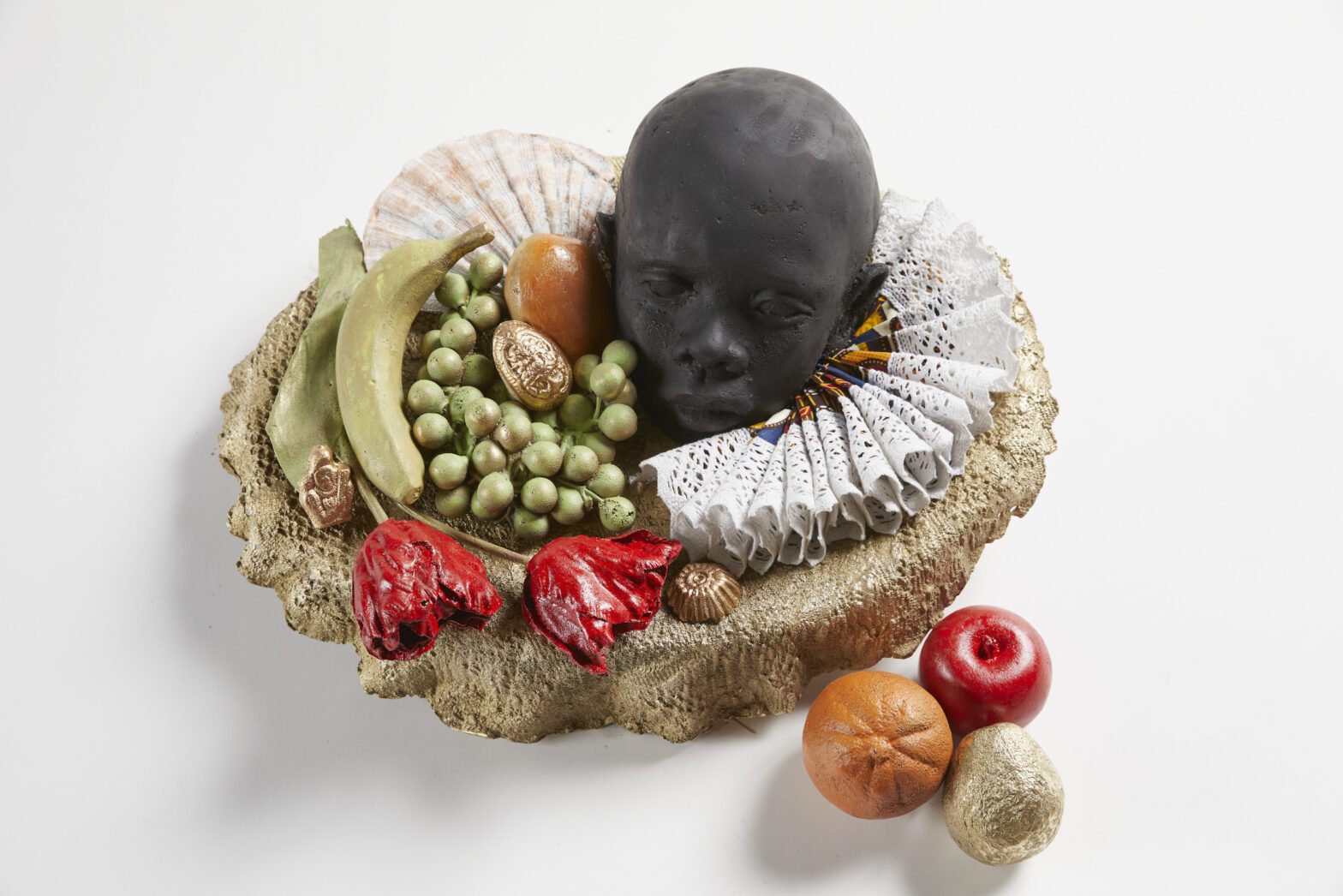
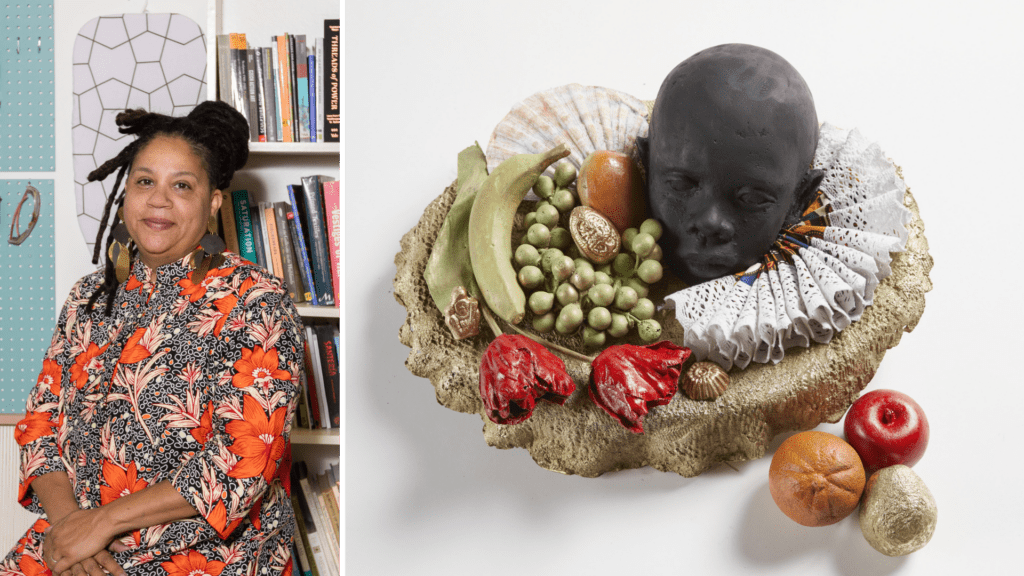
Heather Ossandon creates ceramics that reflect her distinct background. Throughout her career, she has traveled through Asia, Central America, Europe, and the United States exploring and researching ceramics. These experiences have cultivated techniques and methods that are incorporated into her studio practice. Focusing on functional pottery and sculptural still lifes, traditional practices and everyday objects take the spotlight of her work. Ossandon creates and lives in Baltimore, Maryland, and is a Professor of Art at Prince George’s Community College in Maryland. She has shown her artworks both nationally and internationally and is represented by M.T. Burton Gallery, New Jersey. 

The Dinner Party | Du Pont Dining Room

Dishes with printed and painted decoration often encapsulate imagery of an idealized vision, a moment, or historical dramas. They are forever a curious and complicated object that exemplify the nuance of class, society, consumption, but also utility, ubiquity, and charm. Pink transfer-printed dishes adorning a pine cupboard that Henry Francis du Pont credited as inspiration for beginning a collection became the starting point for the “The Dinner Party” installation.  

The details of the miniature narratives found on these pink ceramics such as Abbey Ruins, European Landscape, and Willow Pattern were used to create a newly formed ceramic assemblage. The motifs and imagery that pepper the table create a playful vision of that stretches somewhere between the 2-dimensional and 3-dimensional world. The assemblage was intended to be a puzzle of sorts, inviting the viewers to dissect and discover objects hidden within.

Read more about Heather’s previous installation at Winterthur.

Sharon Williams

Gee’s Bend Quilt | Montmorenci Stair Hall

Sharon and Jemica Williams are part of a community of quilters from Gee’s Bend (also known as Boykin), Alabama. Sharon learned to quilt from her mother and grandmother, and passed on this tradition with her daughter, Jemica. The quiltmakers in Boykin are well-known for making colorful patchwork designs that embody creativity, beauty and resilience. While museums and private collectors around the world have owned and showcased Gee’s Bend quilts for decades, the remote location of Boykin made direct sales from the quilters difficult. However, recent support from Nest, a nonprofit promoting greater gender equity and economic inclusion for makers, connected the quilters with Etsy where they can sell to customers around the world.

Andrew Raftery

About the Artist

Providence, Rhode Island

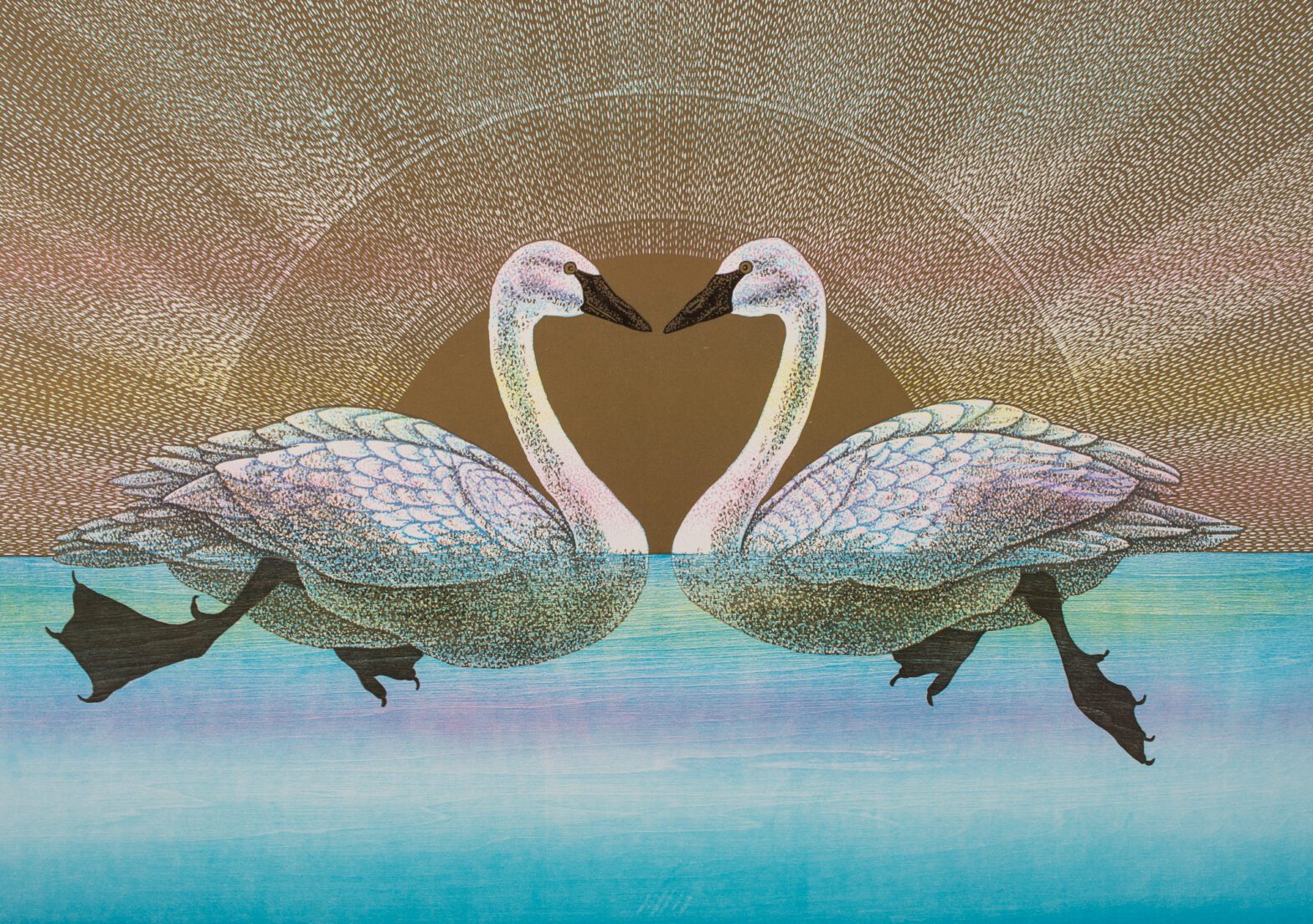
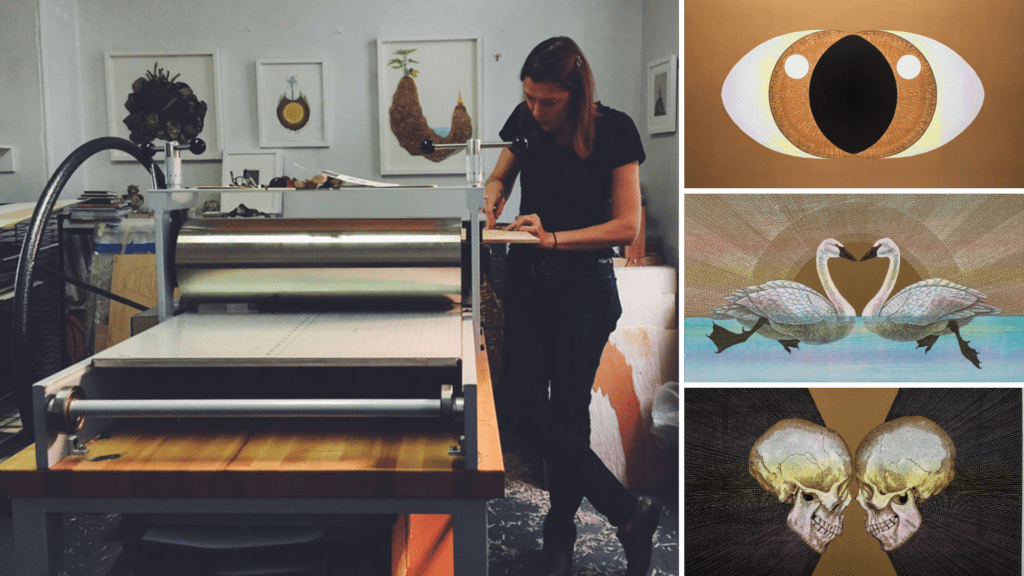
Andrew Raftery is an artist specializing in fictional and autobiographical narratives of contemporary American life. Andrew loves prints for their ubiquitous role in our world: on wallpaper, ceramics, textiles, and other functional objects, such as bandboxes. He welcomes the challenge of using seemingly antiquated techniques such as engraving to treat contemporary subject matter. Andrew’s studio practice is research based, branching out into collaborations with museums and scholars. He is Professor of Printmaking at Rhode Island School of Design and is represented by Ryan Lee Gallery in New York. His home and studio are in Providence, Rhode Island.

Website: RISD.edu

Vues d’Italie by Dufour – Scene I and II | Baltimore Drinking Room

The rooms in this house-turned-museum are filled daily with the modern clothes, technology, and behaviors of the visitors and staff who walk these halls. Artist Andrew Raftery explores this collision of old and new, often adding intentional glimpses of museum life to his recreations of the scenes he observes, which he calls “a pictorial fiction.”  In 2021 Raftery first visited Winterthur and, over many visits, spent hours sketching and “reverse engineering” the Vues d’Italie wallpaper in this room. He decided to make sketches “that showed how I see the room, not what it looks like.”

Visit the Transformations exhibit in the Winterthur Galleries from June 8, 2024 – January 5, 2025 to see the Bandbox Project by Andrew Raftery and a collective of printmakers. 

Bandbox Collective | Galleries

As part of the Hatbox/Bandbox Collective, I covered my boxes with my own letterpress wallpapers and excerpts from my narrative engravings. I asked Benjamin Bartgis to make boxes based on classic nineteenth-century forms. These iconic volumes loved receiving the patterns. At first glance, they might be perceived as old. But the colors are very bright, and the wallpapers are modified by images culled from my engravings of contemporary life and my art historical tribute prints. The insides are articulated by issues of The New York Review of Books and the Art Newspaper from 2023. 

This project opened a new way for me to combine old and new to create visual experiences addressing the past and the present. As a printmaker, I was able to move beyond two dimensions to make an object, covered with prints, that exists in the round and has an inside and outside. I found a fresh viewpoint on my work and indulged my deep love of craft.

A Delectable New Addition

By Ann Wagner

Chocolate Set, 1915, Made by Gorham Manufacturing Company, Providence, Rhode Island, gilded silver. Museum purchase with funds provided by the Henry Francis du Pont Collectors Circle,  2023.0003.001-011

Abstaining from hot chocolate should never be a New Year’s resolution!

It’s a new year, and we are welcoming a new addition to our collection. Winterthur recently acquired a one-of-a-kind, gilded silver hot chocolate set with dainty poppy-shaped vessels, made in 1915. While this set does not represent how most consumers sipped hot cocoa in the early 1900s, and certainly not today, antique ceramic and silver chocolate pots remind us how internationally revered this beverage has been throughout its multi-century history.  Hot chocolate came to America in the 1600s, and when this set was new, tins or boxes holding cakes of powdered cacao were combined with hot milk and sweetened to taste with sugar. Yum!

H.O. Wilbur & Sons, Trade Card, © 1898. Courtesy, The Winterthur Library, The John and Carolyn Grossman Collection

This illustrated trade card for Wilbur’s Chocolate Company features Cupid sipping from a gilded white porcelain cup and saucer—likely enjoying the Breakfast Chocolate in the bright blue box behind his head. 

Porcelain cups and ceramic mugs are ideal for protecting the lips from that first scalding sip, but the chocolate set we acquired has six silver poppy cup frames with no liners. It is hard to imagine adults drinking from such tiny openings, which seem more to scale for the fairies inhabiting Winterthur’s Enchanted Woods. A porcelain liner creates a fluted opening more apropos for a human and adds another insulating layer to preserve the chocolate’s heat while shielding the lips. 

Cup frames of sterling silver, silver electroplated with gold, or silver-plated base metals were not uncommon products in the early 1900s. However, while Europeans drank their hot beverages from a clear glass placed in a metal frame, Americans drank theirs from white porcelain liners set in metal cup frames. This set’s maker, Gorham Manufacturing Company (headquartered in Providence, Rhode Island), worked with Trenton, New Jersey manufacturer Lenox Ceramic Art Company to craft a liner reflecting the American-style hot beverage drinking glass: gold-rimmed white porcelain liners fitted to their coffee, tea, and hot chocolate cup frames. 

Although our poppy cup frames no longer contain their original liners, Gorham’s early 1900s sales catalogues survive to help us imagine them. This page shows a chocolate cup and two teacups from the 1908 Catalogue Addenda and was shared by a silver scholar who sourced it in the Gorham Archives, John Hay Library, Brown University. 

Since the hot chocolate set we acquired was created as a special order for Anita Baldwin, owner of the historic estate, Anoakia, of Arcadia, California, it never appeared in the Gorham catalogues. Our chances of finding an antique liner with the cups’ exact dimensions were close to zero.

However, we wanted to display these poppy cup frames with a Lenox liner, so a near match was located with this narrow demitasse shape. It extends about one inch above the frame, and you can see how the liners visually complete the set’s overall design. We are delighted to welcome this lovely set into our ever-growing collection. As you gaze at each of its components, you realize that even in small doses the irresistible smell and taste of hot chocolate was a prized indulgence a century ago – just as it is today. 

Henry Francis du Pont was an avid collector of American art and antiques representing the finest craftsmanship and styles of early America, and we invite you to come to Winterthur and enjoy our vast collection of treasures like this elegant hot chocolate set. And, of course, to continue to enjoy hot chocolate the way you like it best! 

Winterthur welcomes Kirk Trasborg as new Chief Financial Officer

WINTERTHUR, DE (January 22, 2024) – Kirk Trasborg has been selected as Winterthur Museum, Garden & Library’s new chief financial officer. Trasborg brings a wealth of experience and expertise to Winterthur.

Chris Strand, Charles F. Montgomery Director and CEO at Winterthur, expressed his enthusiasm about the new hire, stating, “We are delighted to welcome Kirk to our leadership team. His impressive background in financial management, business process redesign, vendor management, and staff development aligns perfectly with our vision for the future of Winterthur.”

Trasborg’s previous role as chief strategy and operations officer at The American College of Financial Services in Philadelphia showcased his ability to lead diverse teams, including Strategy and Operations, Administrative Services, Institutional Effectiveness, Career Services, and the college’s multiple Centers for social impact.

His extensive experience includes notable positions such as chief financial officer for technology services at the University of Pennsylvania, executive director of finance and planning at Laureate Education in Baltimore, and contributions to renowned organizations like Armstrong World Industries, the Hershey Company, and First Data Corporation.

Kirk Trasborg, Winterthur CFO
Kirk Trasborg

With multiple degrees, including a Master in Law, a Master of Business Administration, and a Bachelor of Science in accounting, information systems, criminal justice, and behavioral science, Trasborg brings a comprehensive and well-rounded skill set to Winterthur.

Expressing his excitement about his appointment, Trasborg said, “I’m thrilled to be joining an organization that is strengthening its ties with its community through school programs and welcoming events while also expanding its great experiences to an audience that is assuredly worldwide. Winterthur is coming off a year that saw the institution featured on national television, in hundreds of newspapers across the country, in international magazines, and in radio broadcasts on both sides of the Atlantic. It’s truly an exciting time to be arriving at Winterthur.”

Winterthur, currently closed for the season as it prepares for an eventful 2024, offers its members daily, year-round access to the garden and estate. Winterthur is set to reopen its doors to all visitors on March 2, 2024.

ABOUT WINTERTHUR MUSEUM, GARDEN & LIBRARY

Winterthur—known worldwide for its preeminent collection of American decorative arts, naturalistic garden, and research library for the study of American art and material culture— offers a variety of tours, exhibitions, programs, and activities throughout the year.

Winterthur is located on Route 52, six miles northwest of Wilmington, Delaware, and five miles south of U.S. Route 1. Winterthur is committed to accessible programming for all. For information, including special services, call 800.448.3883 or visit winterthur.org.

Journey Through Time: Toy Trains and the Historic Railway of Winterthur

Children of all ages have loved toy trains for more than a century, and what better way to celebrate this enduring fascination than with a visit to our toy train display at Winterthur? For the fourth year, Kirk Lindvig and other volunteers have transformed the Brown Horticulture Learning Center into a Yuletide wonderland, showcasing a mesmerizing toy train world for visitors to enjoy from December 13-31.

This display, created by Kirk and Jeannette Lindvig, Chris Bogus, Joe Blossic, and Randy Satzler, features trains from local members of the Standard Gauge Module Association, a nationwide collectors group. The Lionel Standard Gauge toy trains transport visitors into a landscape of nostalgia. Featuring an array of tracks, stations, and figurines, the display is a testament to the enduring charm of these timeless toys.

For Lindvig, the allure of toy trains is a lifelong passion. Fondly reminiscing about receiving his first train set at the age of four, he shared his enthusiasm with a reporter from Chadds Ford Live, joking, “It has been all downhill ever since.”

Lindvig is not alone in his fascination; hundreds of thousands of toy train enthusiasts, united by their love for both vintage and contemporary standard gauge trains, have found common ground through the Standard Gauge Module Association. Established in 2006 to commemorate the 100th anniversary of these special toys, the association’s captivating displays have graced public venues across the country.

Kirk Lindvig, setting up the toy train display at Winterthur

The roots of the Standard Gauge toy trains trace back to 1906 when the Lionel Manufacturing Company introduced them, later followed by offerings from Ives and American Flyer. These colorful, large-scale, all-metal wonders mirrored America’s captivation with the burgeoning technologies of railroads and electricity at the turn of the 20th century. A symbol of luxury, these toy trains were crafted for affluent families, such as the du Ponts.

Enchanting railway scenes fill the room with holiday delights

The Winterthur estate is rich in history entwined with railroads. The train station, situated at the back of the property near Route 100, served as a stop on the Wilmington and Northern Railroad and as Winterthur’s post office from 1900 to 1967. Henry Algernon du Pont, father of museum founder Henry Francis du Pont, served as president of the Wilmington and Northern Railroad from 1879 to 1926.

The train station at Winterthur

Functioning primarily for freight service, the rail line facilitated the delivery of coal, farm supplies, and mail, up to four times a day. Winterthur’s postmaster, Anna Upright, lived above the station, overseeing mail distribution and managing deliveries.

Anna Upright

At its core, Winterthur was a family home, and the train station played a pivotal role in maintaining familial connections. During his boarding school days, H. F. du Pont received flowers and food from the estate by train to lift his spirits.

The annual Christmas party at Winterthur, a cherished tradition for estate workers and their families, holds fond memories for those who grew up here. Children especially treasured the Lionel Standard Gauge toy train—a popular toy during H. F. du Pont’s era.

The train station at Winterthur

Winterthur’s train station stands as a testament to time, unchanged since the late 19th century. While freight trains still traverse Winterthur’s rails today, they no longer make stops at the station, which is now a private home for a Winterthur employee. The shingled Queen Anne-style building, designed by architect Theophilus P. Chandler, is one of the few surviving examples of his work, alongside the Trinity Episcopal Church in downtown Wilmington. The station and the toy train display invite visitors to remember the golden age of rail travel.

As you round out your holiday plans, make sure to visit our toy train display. Add it to your list of delightful offerings to enjoy this year during Yuletide at Winterthur.