By Lauren Ullman
When you enter the house on a tour and admire the objects and their placement, have you ever considered how beautifully lit the rooms are? Have you noticed the many historic light fixtures throughout? Let’s explore lighting in the house and look at a few of the fascinating lighting fixtures at Winterthur.
American merchants in the colonial era sold imported chandeliers, candlesticks, snuffers with trays, and other essential items, often made of iron, copper, and tin. These historically expensive and sometimes exotic goods caught the eye of Henry Francis du Pont, who added them to his museum rooms.
In 1958, du Pont acquired his first Argand lamp. Created in 1780 by French physicist Aimé Argand, these lamps revolutionized lighting with their incredible light output four-to-ten-times brighter than a candlestick. Du Pont also purchased a few dozen fat lamps, an ancient form of lighting traditionally presented to young brides as wedding gifts by their parents. This example, created in 1848 by John Long of Lancaster, Pennsylvania, features his maker’s name and the year, the name of the woman it was designed for, and a brass bird embellishment.
Du Pont also collected elaborate chandeliers and candlesticks. Prior to the invention of the self-consuming wick in the mid-19th century, a candlewick had to be trimmed every seven minutes. While that task was simple for handheld objects, it was difficult in an elevated, delicate chandelier, so they were mainly owned by people who could afford to have footmen and servants tend them.
Winterthur’s collection boasts many redesigned chandeliers, some purchased already altered, while others were sent to du Pont’s connections around the world to alter. One such chandelier hangs in the Chinese Parlor, which can be seen on the self-guided tour. Likely created in 1780, it contains various English elements that were added prior to du Pont’s purchase, including a receiver bowl (once a dessert dish) and a lower canopy (once the foot of a glass candlestick).
In the Readbourne Parlor hangs a rare silver chandelier from Ireland, which was crafted by Galway goldsmith Mark Fallon. It is engraved with dedications to the Dominican monastery for the Order of Preachers and names two sisters, Bridget and Ann Lynch. On the lower ball of the chandelier, the sisters’ names are joined by that of their brother, John Lynch.
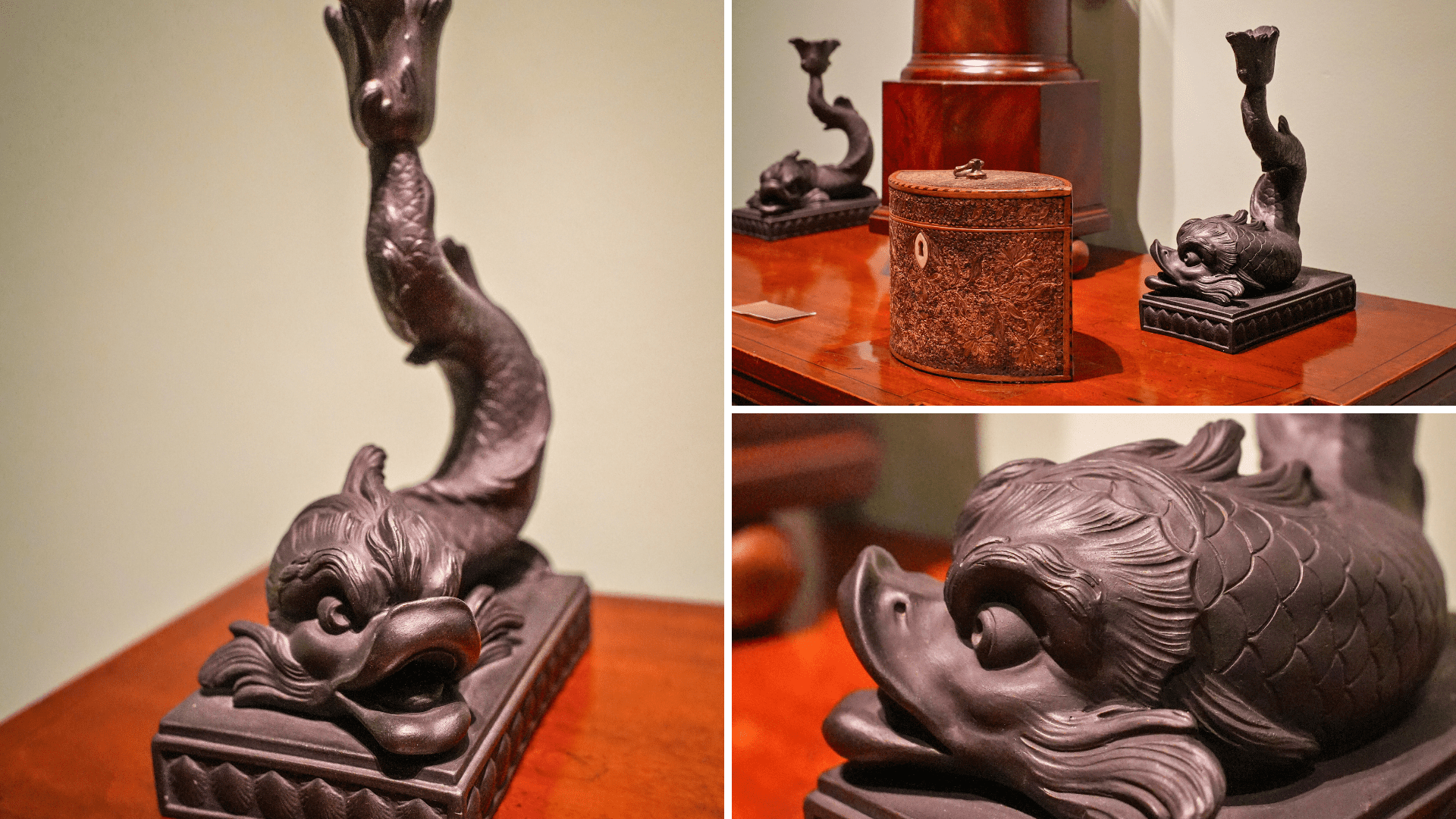
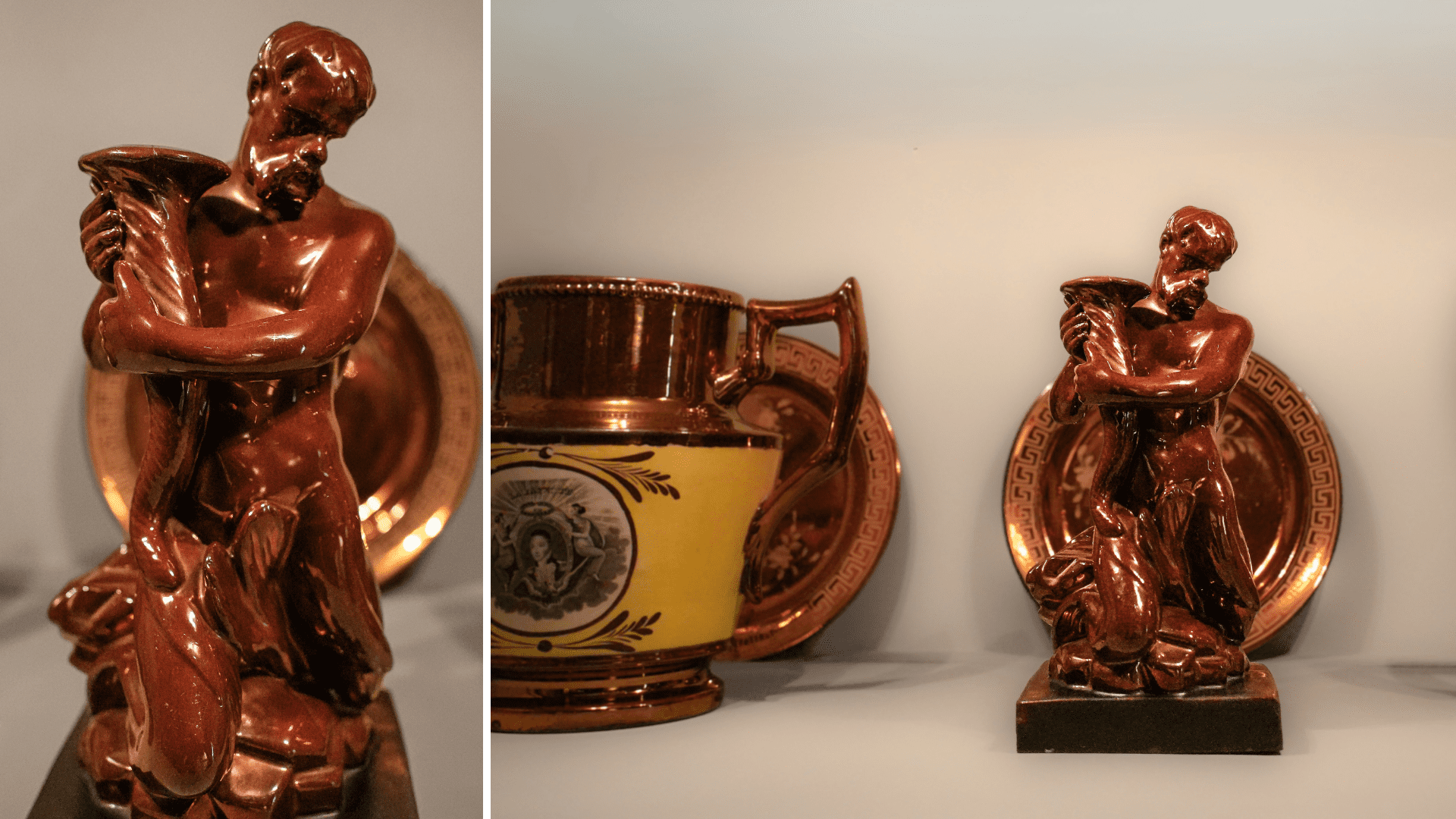
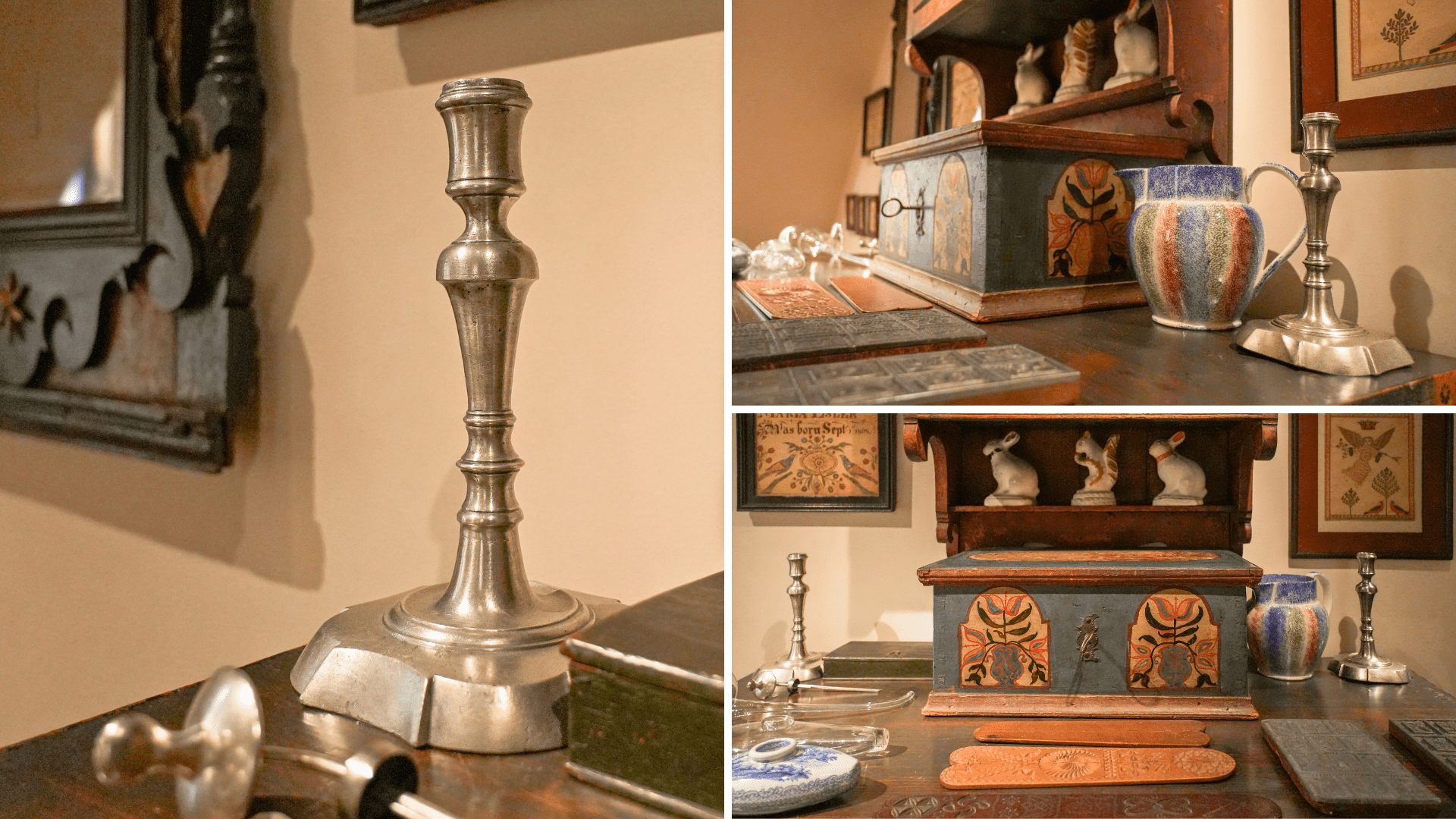
Candlesticks also fill many of the museum rooms, and there is even a room just for candlesticks. Some of these include a pewter candlestick crafted by German artist Hinrich Gottfried Wellman in 1794, a Triton candlestick made by potter Enoch Wood and chandler James Caldwell, and a black basalt dolphin candlestick created by Wedgwood and Sons in the early 1800s.
Relighting 175 Rooms
When the museum first opened, it was lit by electrified candles and daylight, and tour guides equipped with flashlights led guests through the rooms. The rooms were dim, and window filters added later decreased the ambient light even more.
In 1997, Winterthur began the House Lighting Project to address these issues. A delicate and monumental undertaking, the project required all the objects in each room to be carefully packed and stored. Phased closure of each floor in the house allowed for extensive reconstruction. Electrified candles and lamps were replaced since the original versions designed during du Pont’s time did not pass the current safety code.
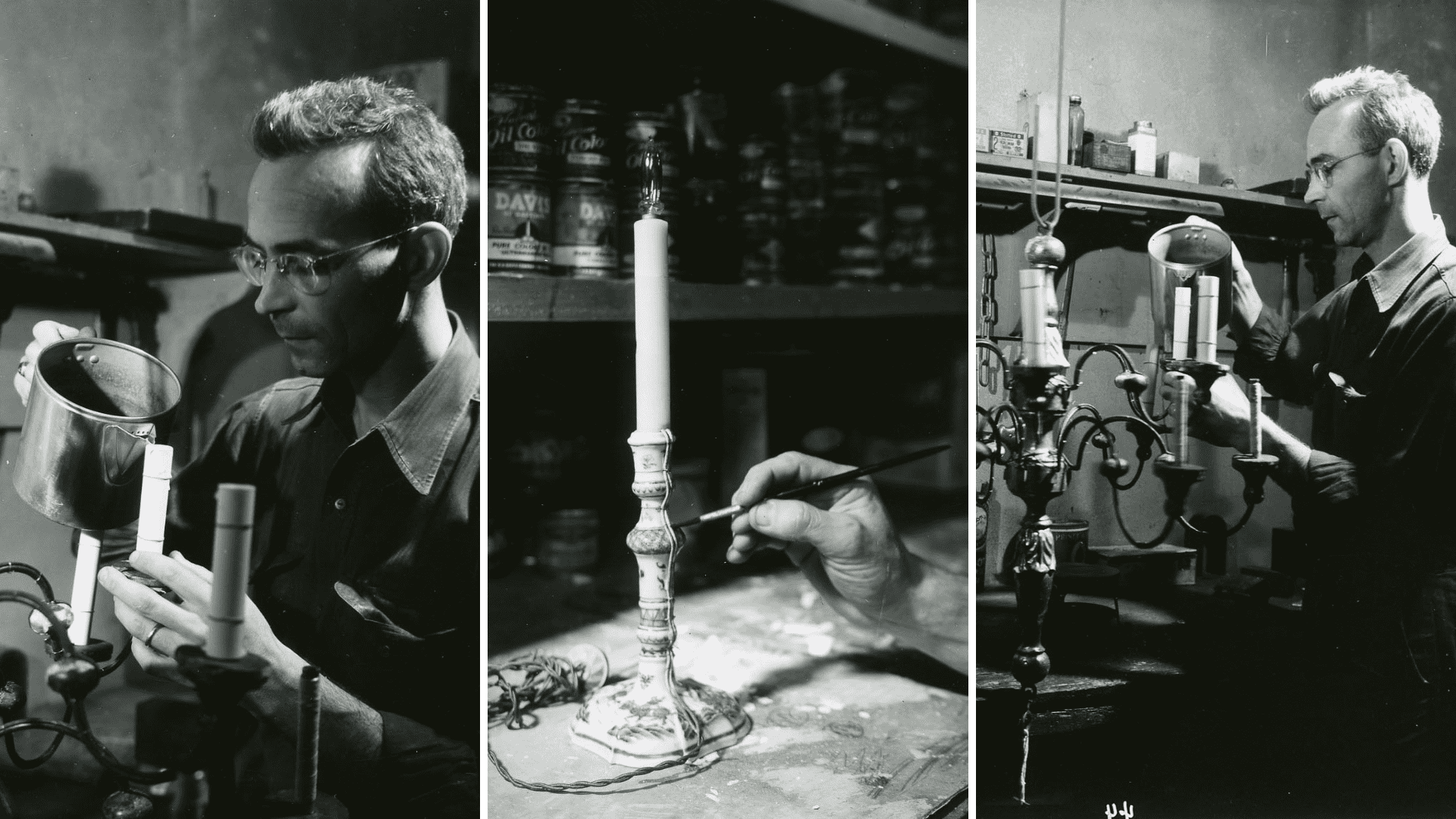
Today, lighting is organized by zones, designed in layers, and controlled with handheld remotes. Each room appears to be lit from windows and candlelight, undisturbed by the modern world.
Daily maintenance, careful consideration, and years of study inform the lighting in each museum room at Winterthur. Various implements in the house demonstrate methods of lighting throughout history and the artistry of each creator. The next time you take a tour in the house, notice how the lighting in each room contributes to your experience. If you’re interested in the history of lighting, the mural across from the entrance to the Touch-It Room, painted by artist Elizabeth Lindsay, depicts the history of lighting fixtures in America.
Links:
- Argand lamp, Matthew Boulton’s Soho Manufactury, Birmingham, Eng., 1784–86. Bequest of Henry Francis du Pont 1958.2950
- Chandelier, England, 1900–1930. Bequest of Henry Francis du Pont 1959.1483
- Chandelier, Galway, Ire., 1742. Bequest of Henry Francis du Pont 1956.0519 A-GG
- Candlestick, Hamburg, Ger., 1777–1817. Gift of Henry Francis du Pont 1956.0038
- Triton Candlestick, Staffordshire, Eng., 1791–1818. Bequest of Henry Francis du Pont 1957.0794
- Candlestick, Staffordshire, Eng., 1800–1820. Bequest of Henry Francis du Pont 1958.1174