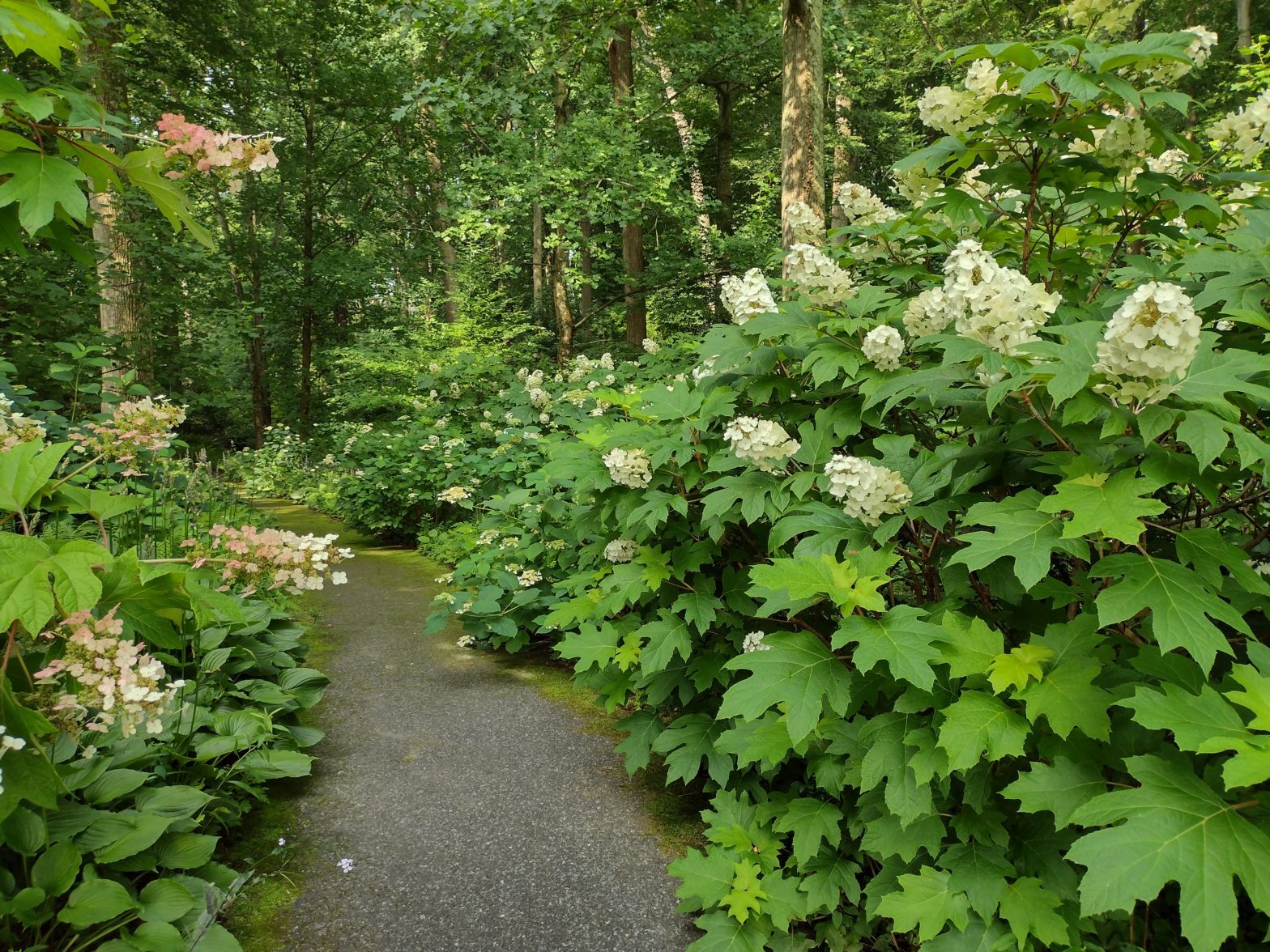
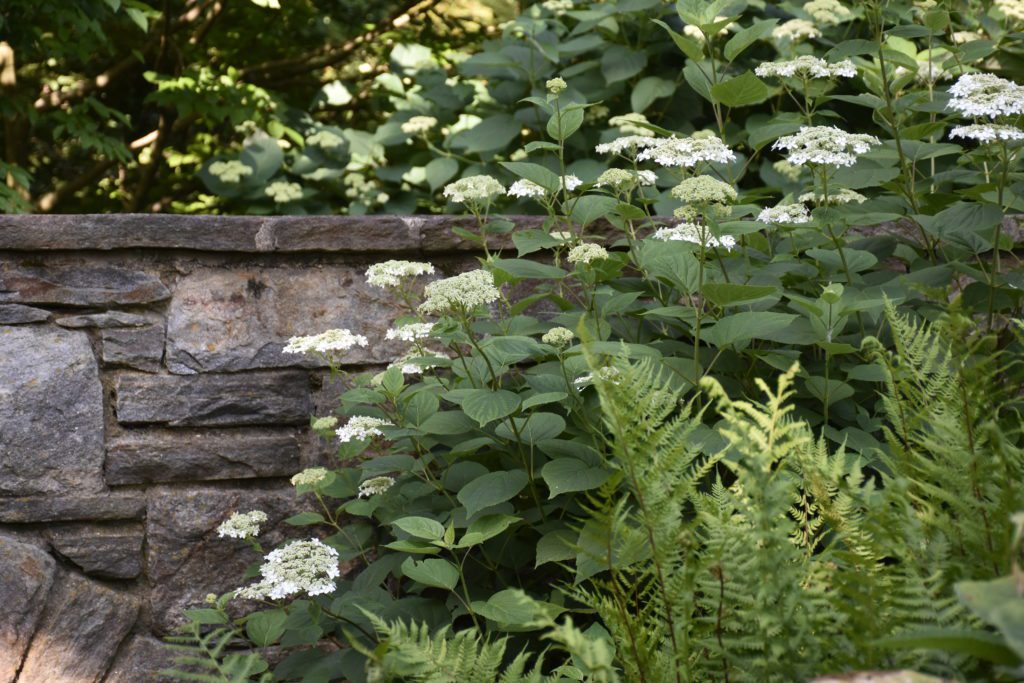
Songbirds and butterflies are attracted to summersweet clethra for its nectar and seeds. This plant is prized for its four seasons of interest. In winter they produce dried seed capsules which are delicate and lovely to behold. In the spring summersweet delights with silky, showy green leaves; summer is the season when they show off most, with spiky white or pink fragrant flowers. And at last, fall is when you’ll find their green leaves turn a vivid golden yellow setting the garden floor ablaze with warmth. How could ask for anything more?
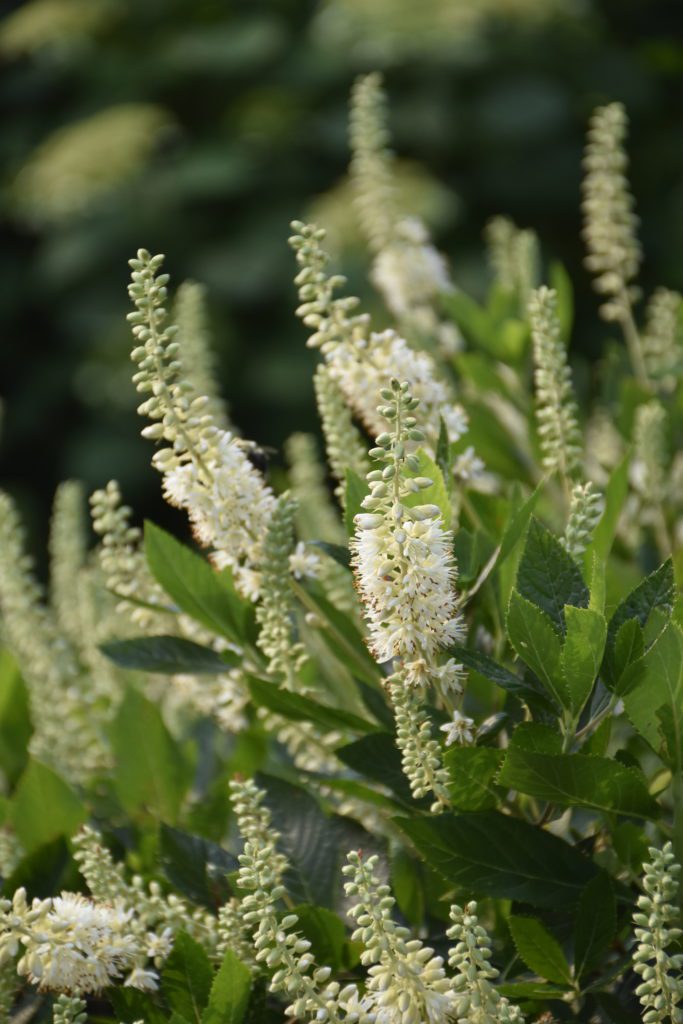
Clethra is native to the eastern United States and there are multiple cultivars, such as the Hummingbird cv. seen here.
The Hummingbird summersweet clethra grows 2 to 3 feet high and wide making it a more rounded cultivar with white flower clusters that are larger and open earlier than the true species.
Plant clethra in part shade to full sun and give it some room to spread out by its suckering root system. These pants like a moist to wet area and can be easily pruned to keep control of, especially since they flower on new wood.
Find Summersweet “Hummingbird” in Winterthur’s Enchanted Woods.
Daucus carota Queen Anne’s Lace
Did you know?
Queen Anne’s Lace, also known as “wild carrot”, is actually a cousin to the carrot, and it produces a carrot-like taproot, just like a carrot. Both carry the scientific name Daucus carota.
They are not native to North America; they were brought here by early European settlers.
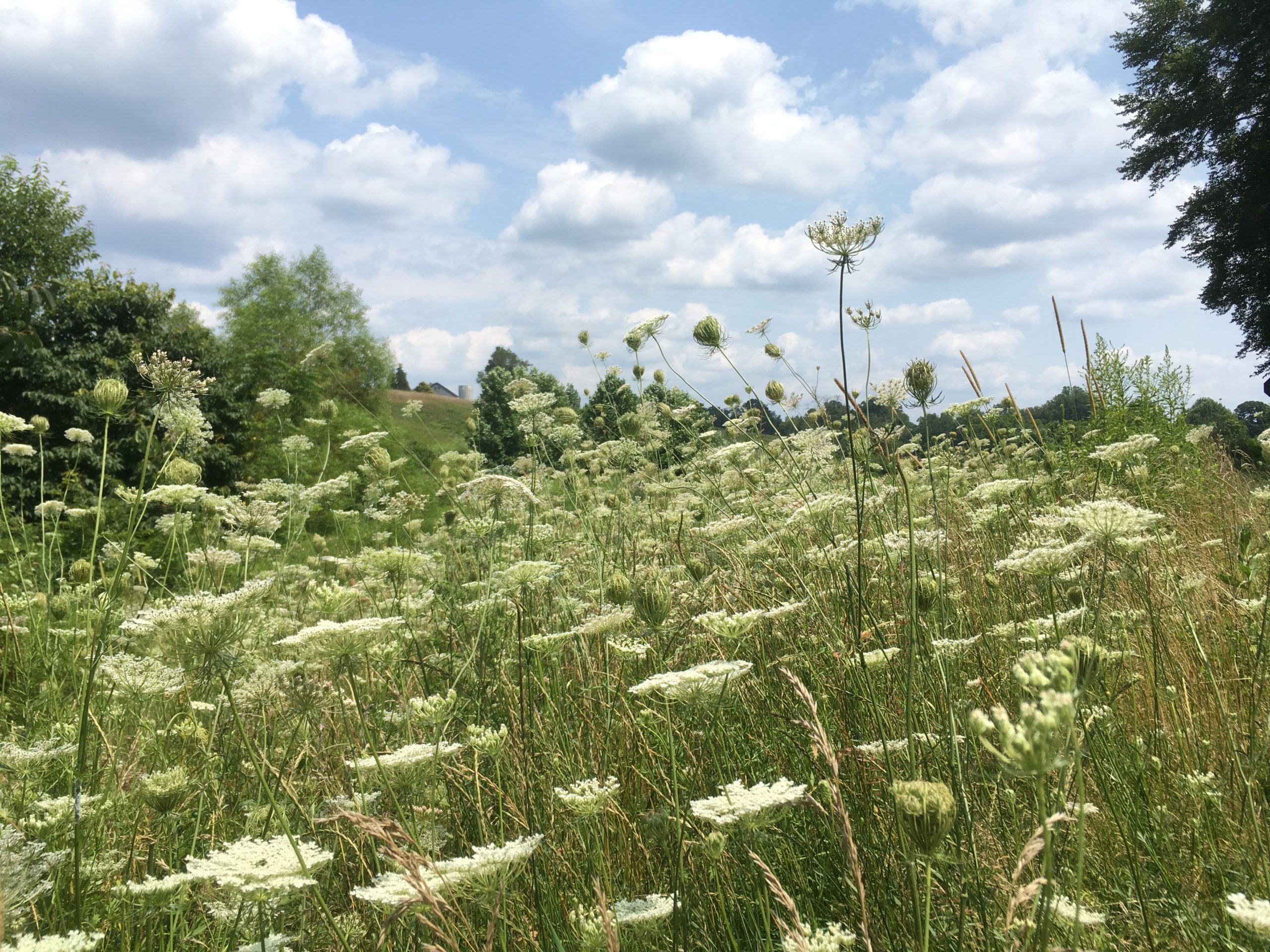
Queen Anne’s Lace can be found growing in 48 N. American states and is listed as an invasive plant in fourteen of those states. It does grow wild and will take over so one should plan its planting with caution. Don’t let their growing habits scare you, as they will fill a meadow garden with elegant blooms that will surely delight you.
Queen Anne’s Lace looks very much like poison hemlock, giant hogweed and cow parsley. Hemlock and hogweed are poisonous to humans, livestock and pets; be sure you know what you are picking or digging out before you start!
There are many common names given to this plant, such as Wild Carrot, Bishop’s Lace, Bee’s Nest and Bird’s Nest Flower. Take your pick of which one you like best!
You probably guessed that the name Queen Anne’s Lace comes from Queen Anne, wife of King James I. The truth is unsure as there are multiple stories surrounding the name and how the flower was connected to royalty. Most believe that it actually stems from Queen Anne II. The stories are interesting, read more below:
Agapanthus is a perennial from the subfamily Agapanthoideae from the Amaryllidaceae family.
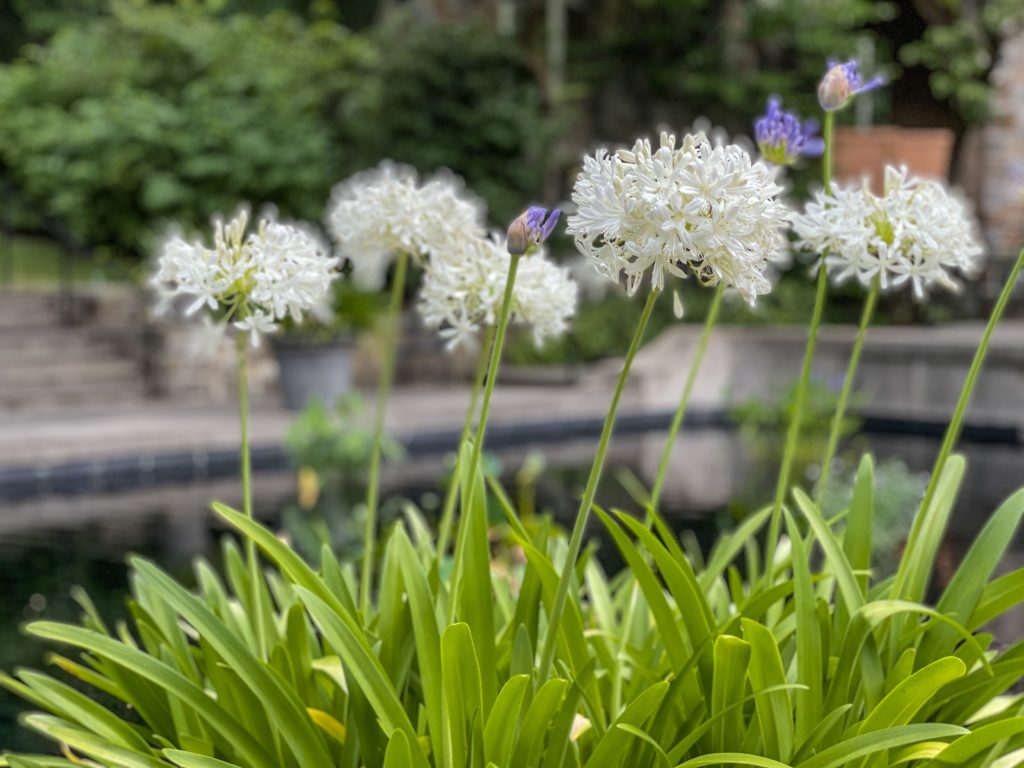
There are many cultivars of Agapanthus varying from white (shown here) to rich blue with a purple stripe and violet blue with a blue stripe.
The care and planting of this specimen depends completely on the variety plant you choose for your garden; are you planting a deciduous or an evergreen agapanthus? Knowing this makes all the difference when planning Lily of the Nile for your garden.
Find information on the care of Agapanthus by visiting The Spruce’s online site.
Search the Winterthur Garden map to find your favorite garden area or to plot an exciting new area to explore!
What’s blooming at Winterthur now? Download the full report below:
Songbirds and butterflies are attracted to summersweet clethra for its nectar and seeds. This plant is prized for its four seasons of interest. In winter they produce dried seed capsules which are delicate and lovely to behold. In the spring summersweet delights with silky, showy green leaves; summer is the season when they show off most, with spiky white or pink fragrant flowers. And at last, fall is when you’ll find their green leaves turn a vivid golden yellow setting the garden floor ablaze with warmth. How could ask for anything more?
Clethra is native to the eastern United States and there are multiple cultivars, such as the Hummingbird cv. seen here.
The Hummingbird summersweet clethra grows 2 to 3 feet high and wide making it a more rounded cultivar with white flower clusters that are larger and open earlier than the true species.
Plant clethra alnifolia in part shade to full sun and give it some room to spread out by its suckering root system. These pants like a moist to wet area and can be easily pruned to keep control of, especially since they flower on new wood.
Find Summersweet “Hummingbird” in Winterthur’s Enchanted Woods.
Daucus carota Queen Anne’s Lace
Did you know?
Queen Anne’s Lace, also known as “wild carrot”, is actually a cousin to the carrot, and it produces a carrot-like taproot, just like a carrot. Both carry the scientific name Daucus carota.
They are not native to North America; they were brought here by early European settlers.
Queen Anne’s Lace can be found growing in 48 N. American states and is listed as an invasive plant in fourteen of those states. It does grow wild and will take over so one should plan its planting with caution. Don’t let their growing habits scare you, as they will fill a meadow garden with elegant blooms that will surely delight you.
Queen Anne’s Lace looks very much like poison hemlock, giant hogweed and cow parsley. Hemlock and hogweed are poisonous to humans, livestock and pets; be sure you know what you are picking or digging out before you start!
There are many common names given to this plant, such as Wild Carrot, Bishop’s Lace, Bee’s Nest and Bird’s Nest Flower. Take your pick of which one you like best!
You probably guessed that the name Queen Anne’s Lace comes from Queen Anne, wife of King James I. The truth is unsure as there are multiple stories surrounding the name and how the flower was connected to royalty. Most believe that it actually stems from Queen Anne II. The stories are interesting, read more below:
Agapanthus is a perennial from the subfamily Agapanthoideae from the Amaryllidaceae family.
There are many cultivars of Agapanthus varying from white (shown here) to rich blue with a purple stripe and violet blue with a blue stripe.
The care and planting of this specimen depends completely on the variety plant you choose for your garden; are you planting a deciduous or an evergreen agapanthus? Knowing this makes all the difference when planning Lily of the Nile for your garden.
Find information on the care of Agapanthus by visiting The Spruce’s online site.
Search the Winterthur Garden map to find your favorite garden area or to plot an exciting new area to explore!
What’s blooming at Winterthur now? Download the full report below:
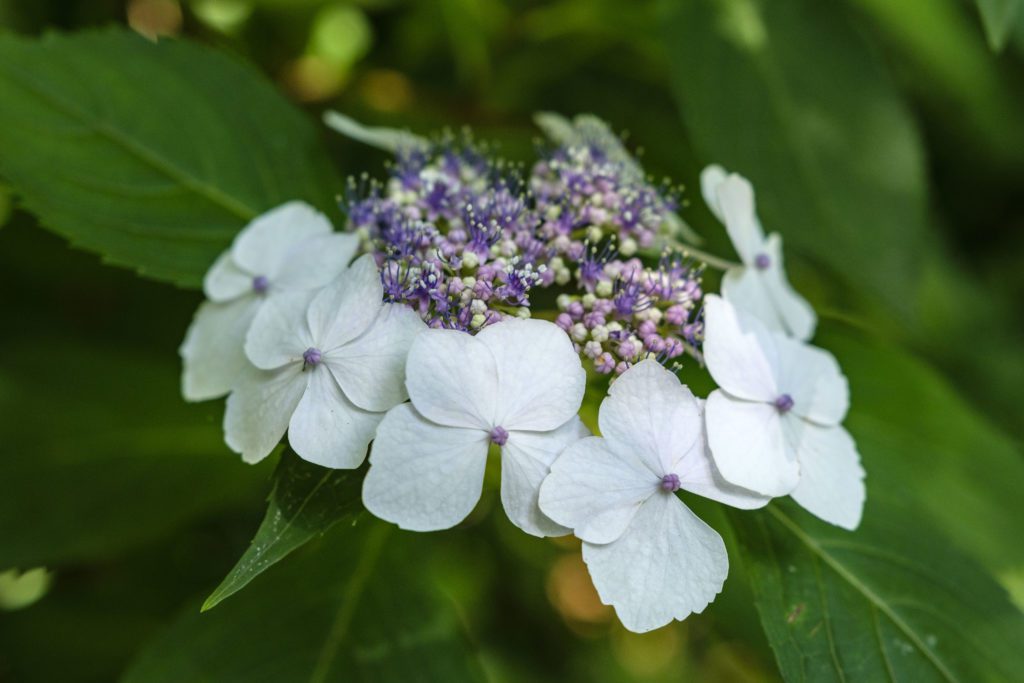
To the left you are viewing Hydrangea Macrophylla “Tokyo Delight”
Hydrangeas – with both mophead/hortensia and lacecap flowers, including bigleaf (Hydrangea macrophylla), smooth (Hydrangea arborescens), oakleaf (Hydrangea quercifolia) and mountain (Hydrangea serrata).
The Garden is filled with a rich variety of blooming Hydrangeas; the greatest variety of species can be found in Enchanted Woods.
Are you a Hydrangea enthusiast? Check out the American Hydrangea Society website to learn more about these incredible plants! https://americanhydrangeasociety.org/
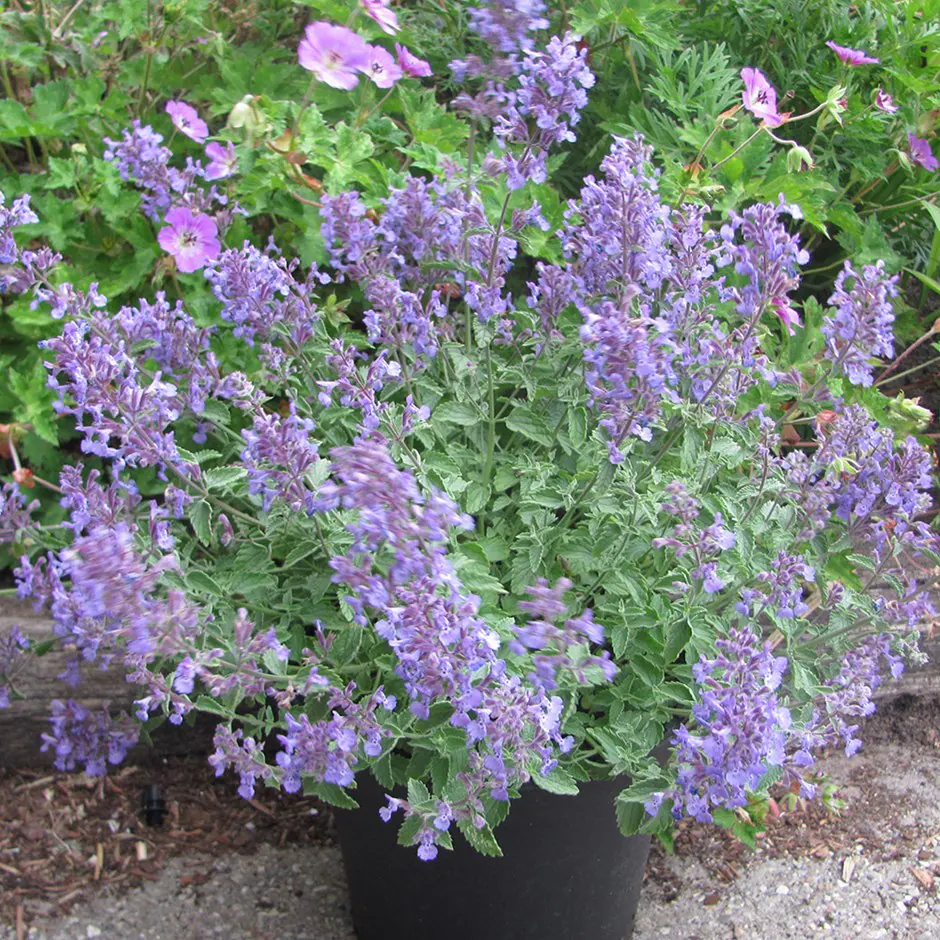
Nepeta faasenii ‘Junior Walker’ (catmint blue)
COMMON NAME
JUNIOR WALKER CATMINT
Botanical Name
Nepeta faasenii Junior Walker
Zones
5, 6, 7, 8, 9
Light Required
Full Sun/ Part Shade
Flower Color
Purple
Flower Size
1″ Flowers
Mature Height
14-16″ Tall
Mature Spread
31-35″ Wide
Growth Rate
Medium
Bloom Time
Late Spring to Early Summer
Foliage
Blue-Green
Soil Type
Loamy, Sandy, Well-Drained
Soil Moisture
Dry-Average
Advantages
Bee friendly, attracts butterflies, deer resistant, easy to grow, fragrant flowers, good in containers, rabbit resistant.
Planting Time
Spring/Summer
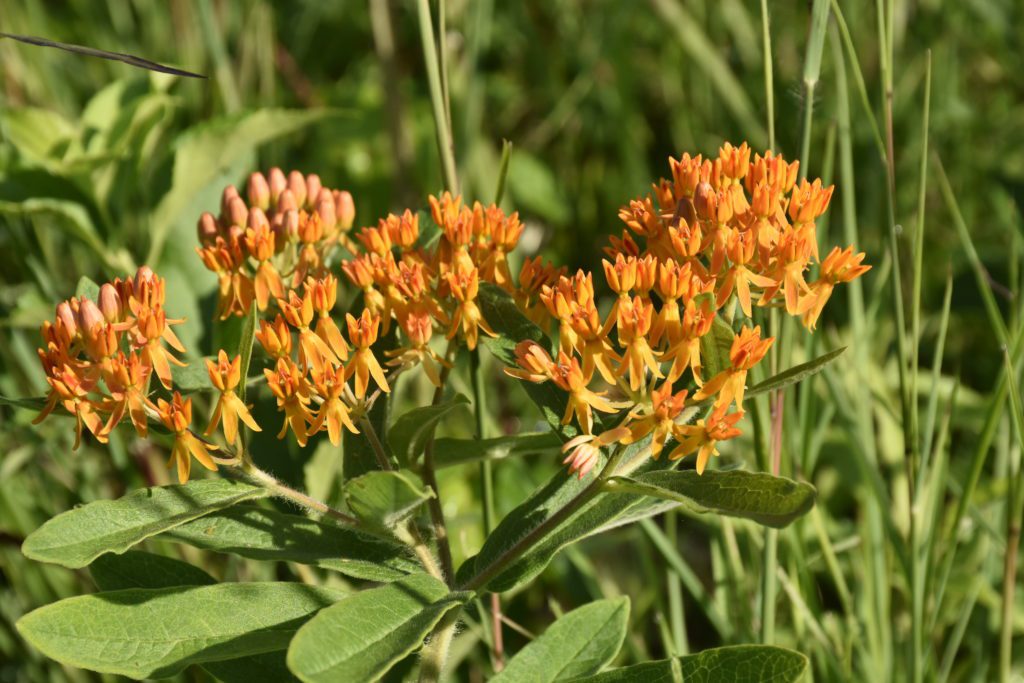
Asclepias tuberosa Butterfly Milkweed
Butterfly weed is an herbaceous perennial that is easy to care for and also beloved for its ability to attract a variety of helpful and beautiful insects to the garden. Butterfly weed can be found growing as a native wildflower in many untamed environments, such as meadows, prairies, and forest clearings. Gardeners will plant butterfly weed, hoping to draw the namesake winged insects into their garden. This clump-forming perennial grows from tuberous roots to a height of one to two feet tall and is characterized by glossy-green, lance-shaped leaves and clusters of bright orange-to-yellow blooms that are rich with nectar and pollen.
Butterfly weed is generally planted in the warm soil of late spring and is fairly slow to become established. It does not bloom the first year and may even take as long as three years to bloom. Flowers bloom as clusters of bright orange-yellow and will display from late spring until late summer for about two months. Butterfly weed does not have caustic milky sap like other milkweeds, but it does produce the characteristic seed pods that release silky-tailed seeds.
You can find Butterfly Weed growing at the Lagoons near Clenny Run and in the meadows. Just follow the butterflies in flight or you may search the Winterthur Garden map to find the areas where Butterfly weed is blooming.
What’s blooming at Winterthur now? Download the full report below:
Hydrangeas – with both mophead/hortensia and lacecap flowers, including bigleaf (Hydrangea macrophylla), smooth (Hydrangea arborescens), oakleaf (Hydrangea quercifolia) and mountain (Hydrangea serrata).
The Garden is filled with a rich variety of blooming Hydrangeas; the greatest variety of species can be found in Enchanted Woods.
Are you a Hydrangea enthusiast? Check out the American Hydrangea Society website to learn more about these incredible plants! https://americanhydrangeasociety.org/
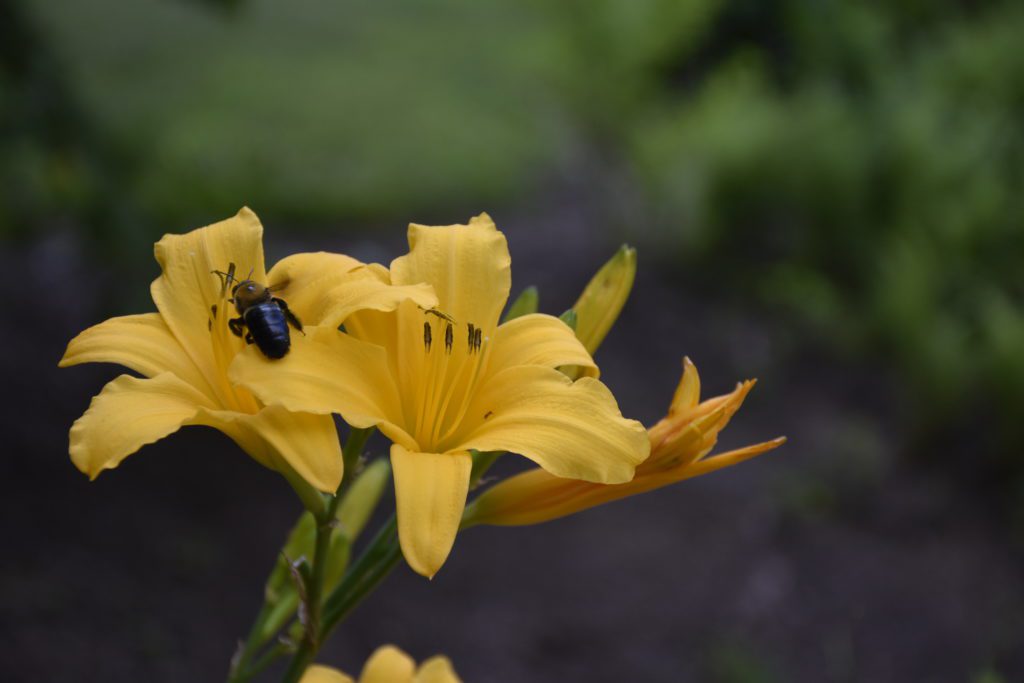
Hemerocallis lilioasphodelus Yellow Daylily
Did you know?
There are approximately seventy different types of daylilies
There are thousands of daylily cultivars
Daylilies have been grown for 2,000-3,000 years
They were thought to be medicinal, in the time of Confucious
Many are toxic to humans and animals
Daylilies grow in clumps and each flower only lasts a single day, hence the name, Daylily
Black cohosh grows in zones 3-8. It is a naive plant to North America and Canada and can be found growing wild within forested areas. Landscapers have long loved this large, bushy perennial plant because it blooms when many other flowers have come and gone, and their flowers can last three weeks or longer.
The suspected reason behind the common name, fairy candles comes from the idea that they grow best in the woodlands (among the fairies) and their flowers, being bright white, seem to light up the woodland floor…like a candle.
Black Cohosh has been used medicinally for many years and is thought to help with a variety of ailments from mood swings to settling hot flashes in menopausal women. (Be sure to discuss taking any medication, even natural herbs and flowers, with your doctor to avoid severe reactions.)
Search the Winterthur Garden map to find your favorite garden area or to plot an exciting new space to explore!
What’s blooming at Winterthur now? Download the full report below:
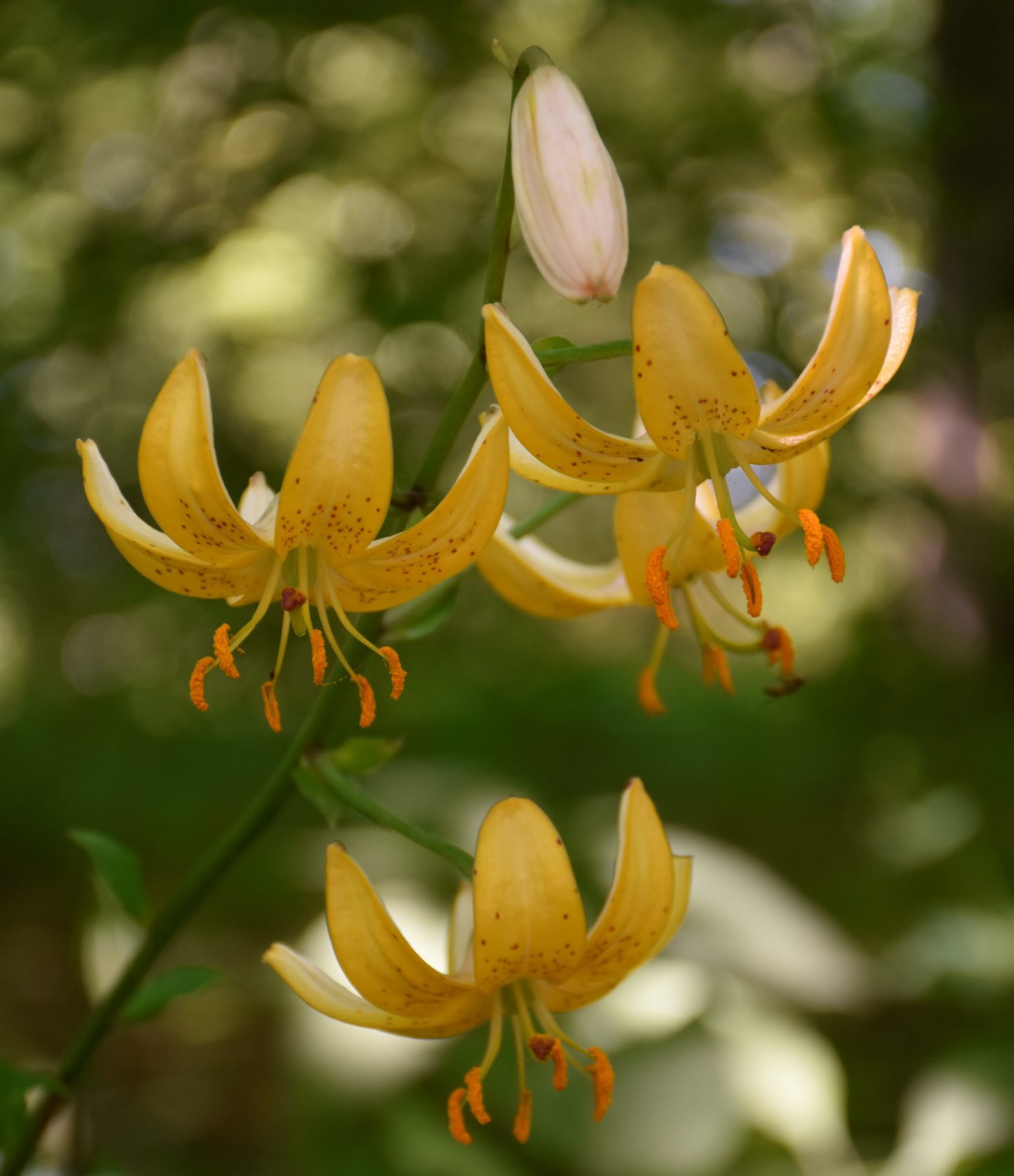
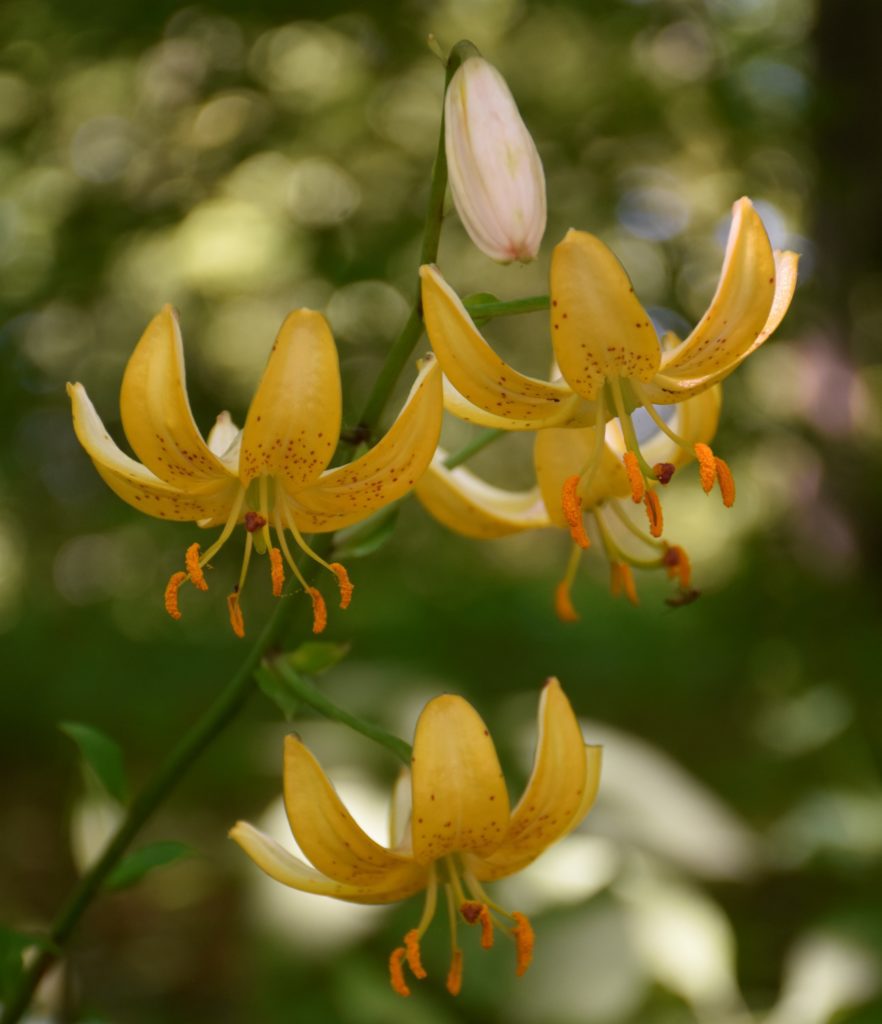
The martagon lily (Lilium martagon) is a species of flowering plant in the lily family. Native to Europe, it is widely cultivated as an ornamental and can be found growing wild in many parts of North America. The flowers are often described as having a “Turk’s cap” shape, with reflexed petals that give them a unique look.
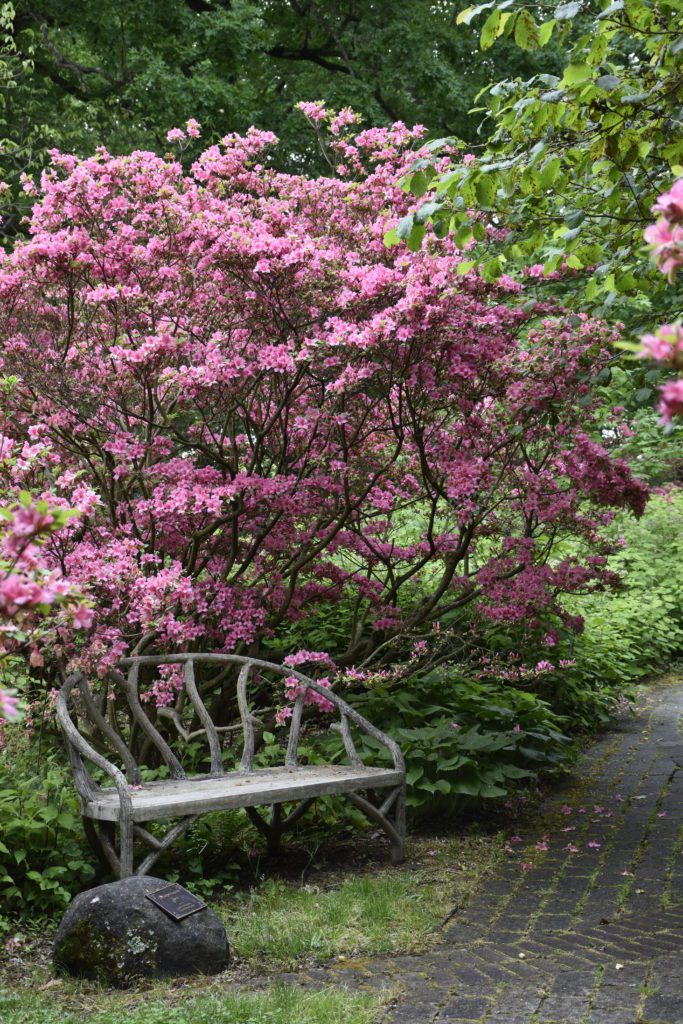
Umbrellaing over a quiet spot in Enchanted Woods you’ll find one example of the many glorious azaleas grown throughout the Winterthur Garden.
Torch azalea is a woody, evergreen to semi-evergreen shrub in the Ericaceae (blueberry) family. The genus name derives from the Greek words rhodo, which means rose, and dendron, meaning tree. The list of other Torch Azaleas hybrids is vast, and worth looking into. You’ll find many while strolling through the Winterthur Garden. Enjoy!
Proliferae Primula
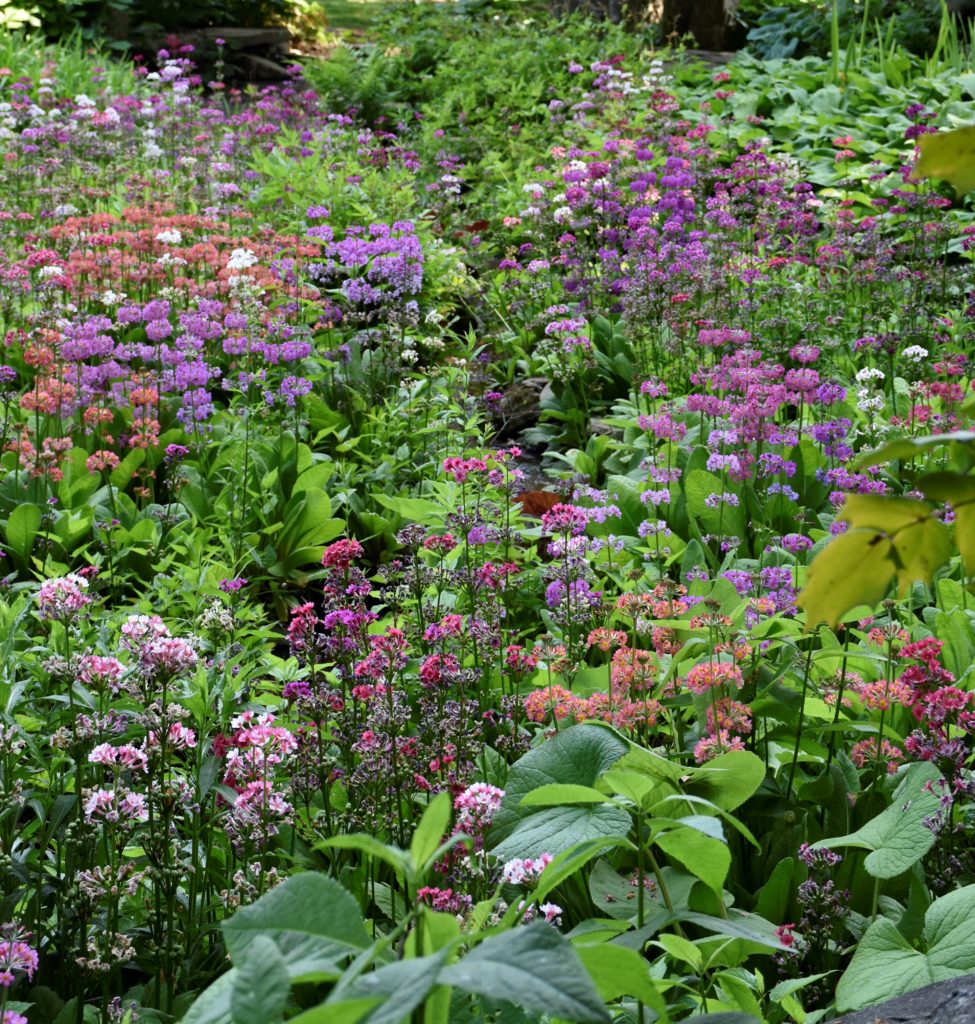
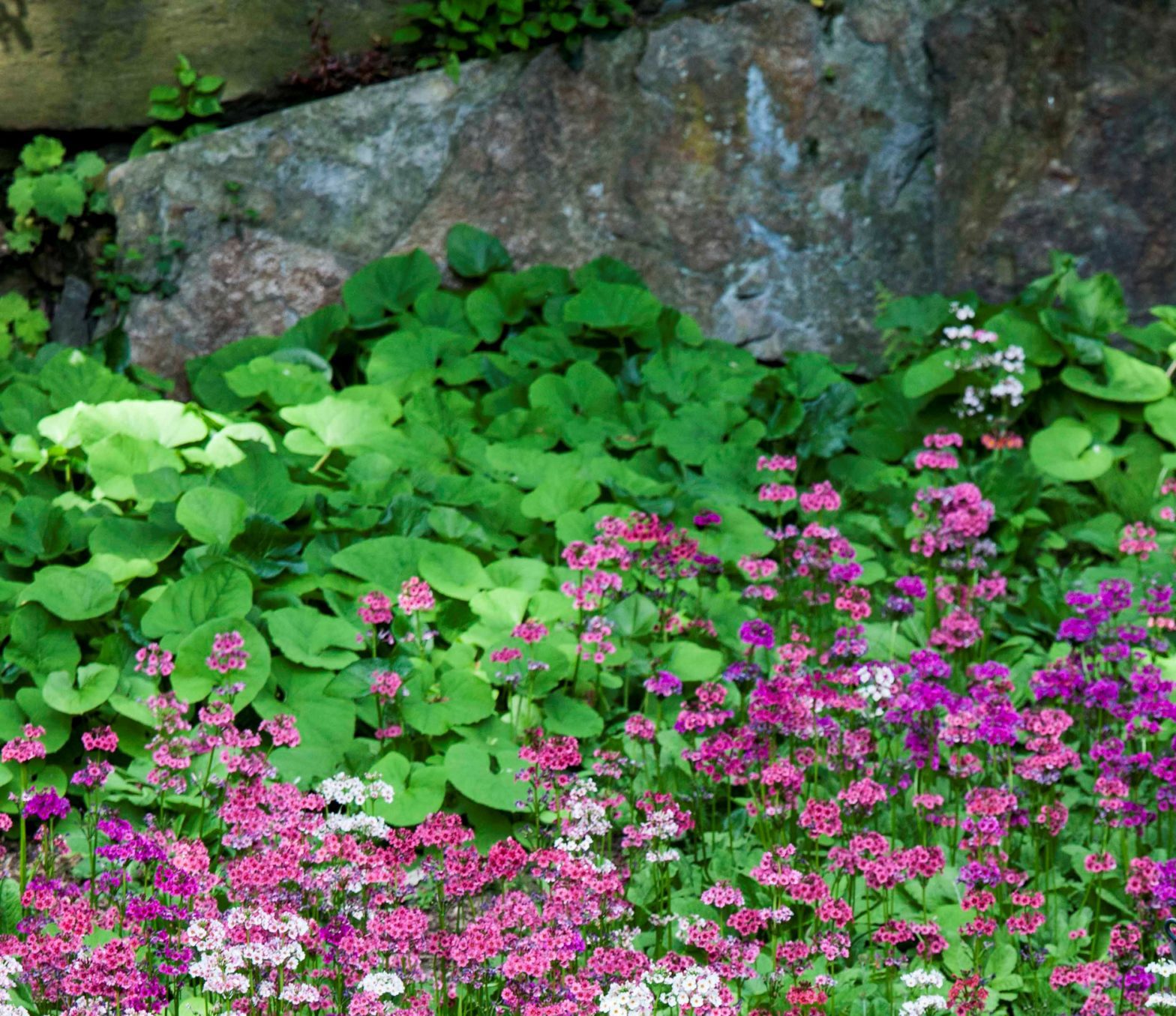
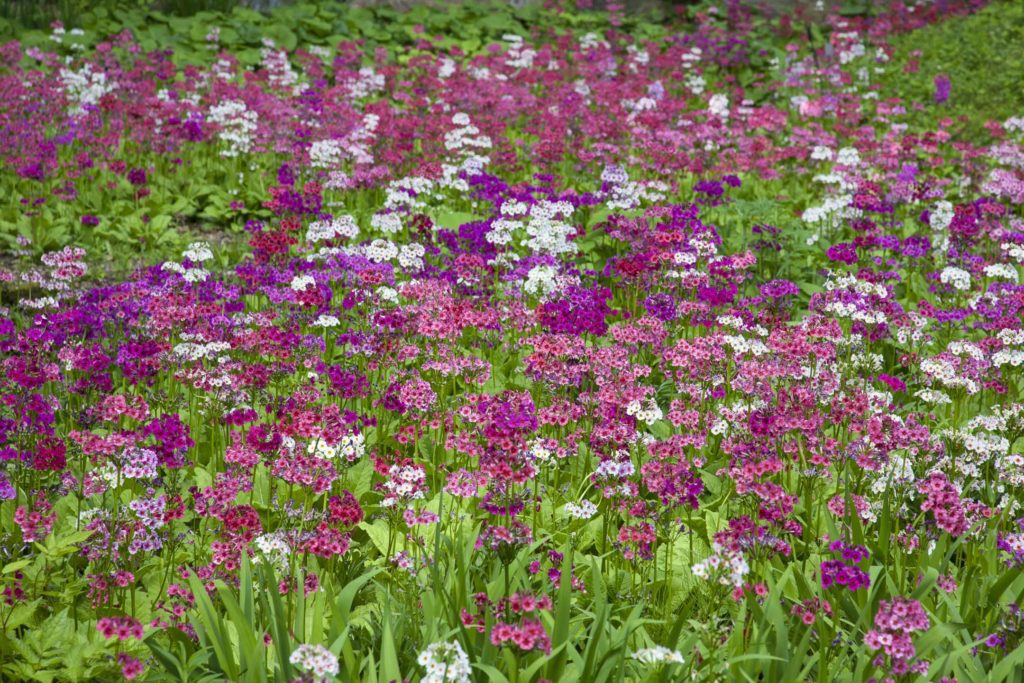
Primula, also known as Primrose, has many varieties all with spectacular colors and lovely foliage. Proliferae Primrose was called Candelabra primrose until recently, but you will still find it listed as Candelabra in many markets and on different websites.
The proliferae primrose is relatively low maintenance. It prefers slightly soggy ground but does not care to stand in heavy water. Light shade, trickled with sunlight will keep this plant happy.
You will find primrose growing in late spring and through early-summer along Oak Hill, the Visitor Center walking path, and along the Glade; but is at its most breathtaking seen growing in the Quarry Garden.
You can find Primula in the Quarry Garden by searching the Winterthur Garden map.
What’s blooming at Winterthur now? Download the full report below:
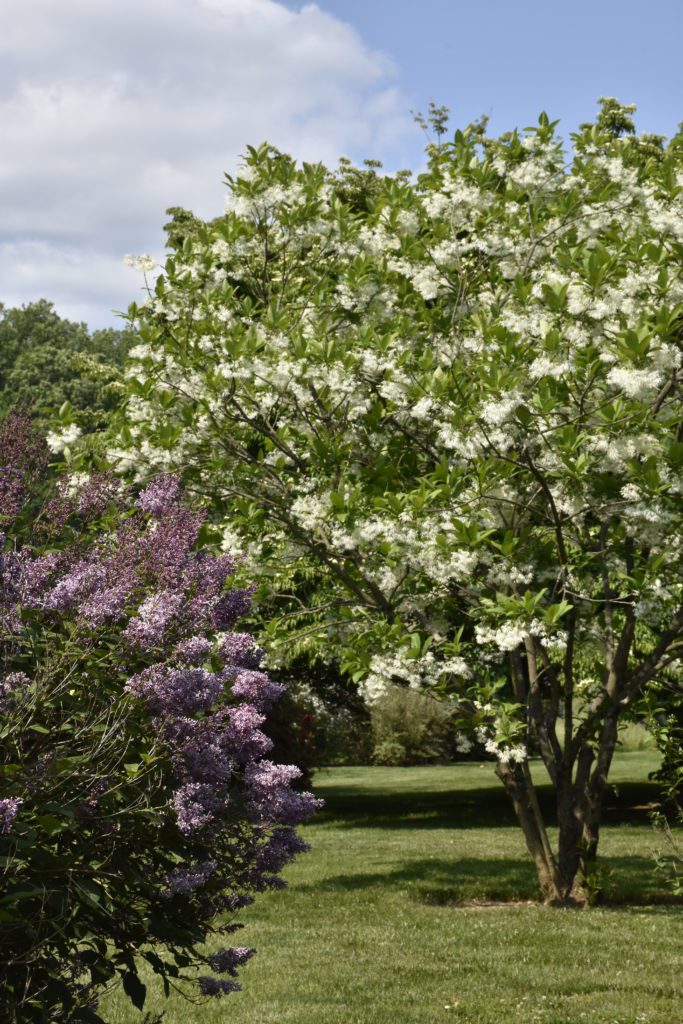
Sycamore Hill Show: The trees and shrubs are in peak bloom.Colors include the bright reds of Weigelia ‘Red Prince’ & ‘Edith Rathke’ (she’s also showing off near the princess tree (Paulownia tomentosa) along Garden Lane), of the tall climbing rose (Rosa ‘Bess Lovett’), and of red buckeye (Aesculus pavia); the pastels of alternate leaf butterfly bush (Buddleia alternifolia) and lilacs (Syringa species); and the white of showy deutzia (Deutzia x maxima), American fringe tree (Chionanthus virginicus), mock orange (Philadelphus species), Kousa dogwood (Cornus Kousa), tree lilac (Syringa retusis), the American yellowwood tree (Cladrastis kentuckea), beaked stewartia (Stewartia rostrata), and Oyama magnolia (Magnolia sieboldii ’Colossus’).
Everywhere: But, listed only here:
The airy white umbels of viburnums (mostly Viburnum dilatatum – linden viburnum & some Viburnum dentatum – arrowwood viburnum) are found throughout the Gardens and Estate this week.
The yellow, green & orange flowers of tulip poplars (Liriodendron tulipifera) can be seen on the trees & also on the ground. Look up or down to see them.
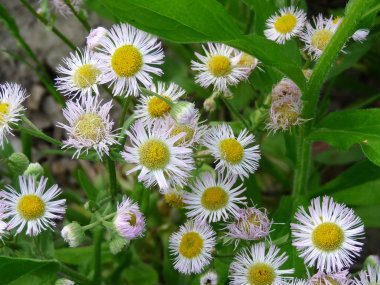
The tiny white-to-pale-pink daisies of fleabane (Erigeron annuus) are blooming throughout the Estate.
The purple, lavender, and white flowers of Dame’s rocket (Hesperis matronalis) are present in lesser or greater abundance in the gardens and fields.
White clover (Trifolium repens) in the fields and lawns is providing nectar and pollen for the pollinators and nitrogen for the soil.
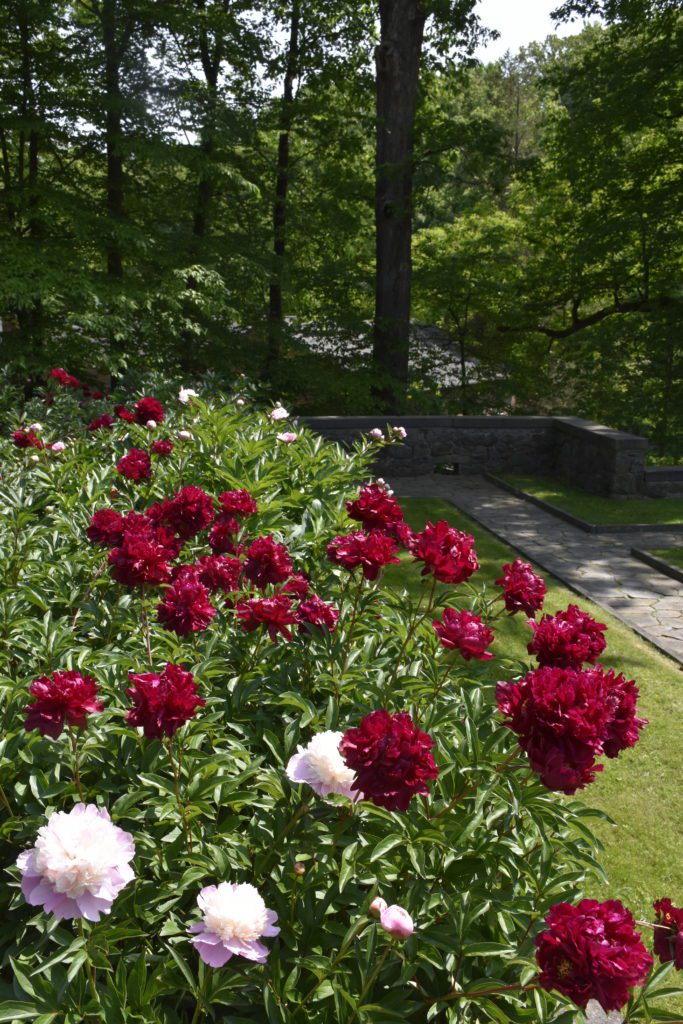
Peonies are all the rage in the Lower Peonie Garden. Breathtaking!
Peonies in lower garden
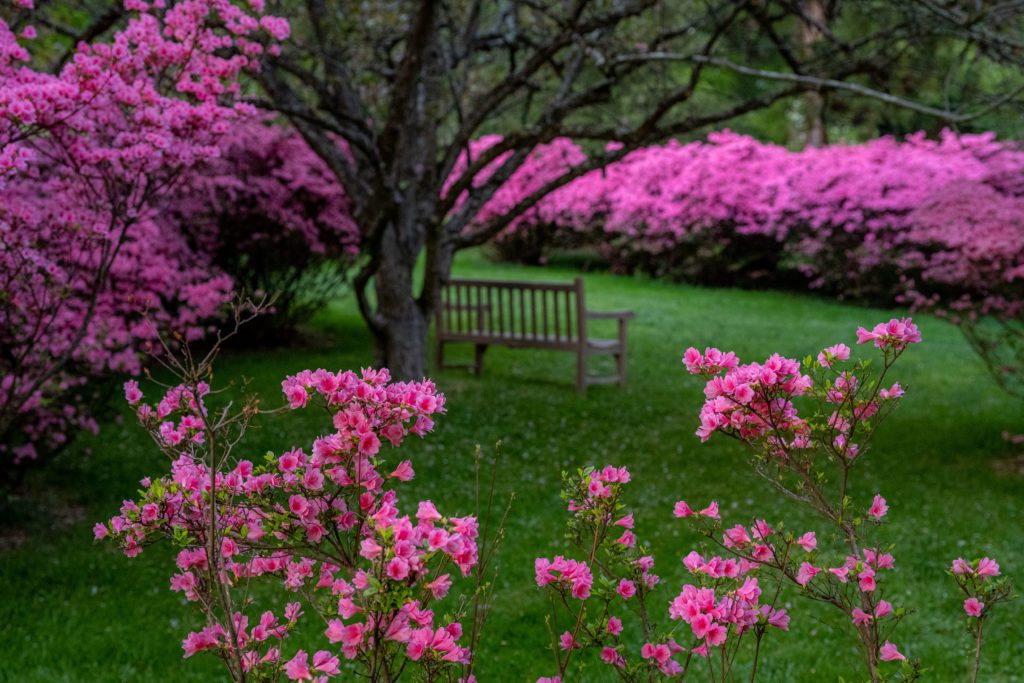
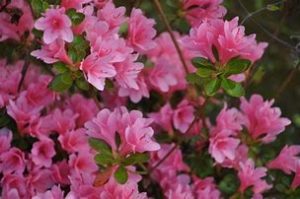
Hybrid Torch azaleas are real showstoppers in Enchanted Woods and elsewhere through the Garden.
Torch azalea Hybrid
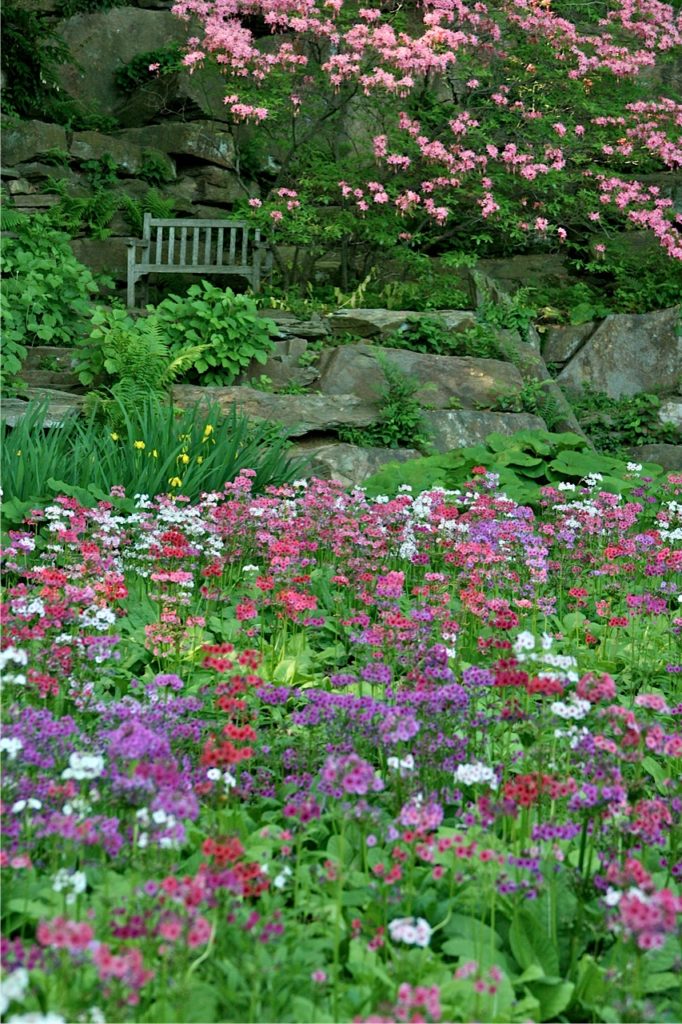
Primula with their various colors and lovely foliage delight throughout the Garden, especially in the Quarry Garden, as seen below.
cadelabra primroses
What’s blooming at Winterthur now? Download the full report below:
Primula species in the Quarry Garden-photo by Jeanette Lindvig
(Click on photo above for information on the Candelabra Primrose by The American Primrose Society)
Check these out:
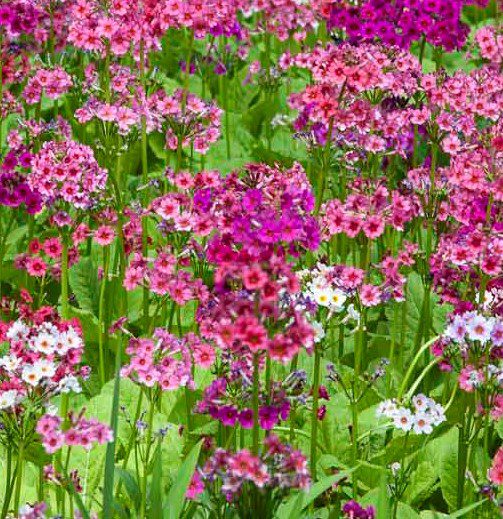
Primroses: (See photo above) The Quarry is showy with bright pink Japanese primroses (Primula sieboldii) and red and pink candelabra primroses (Primula species), which are also blooming along the Glade path.
Azaleas & Rhododendrons: The azaleas and rhododendrons in Azalea Woods and the native azaleas in the Pinetum and on Oak Hill are at their best this week, accompanied by azaleas throughout the gardens. The gardens are overflowing with brilliant colors!
Azalea-photo by Eileen Tercha
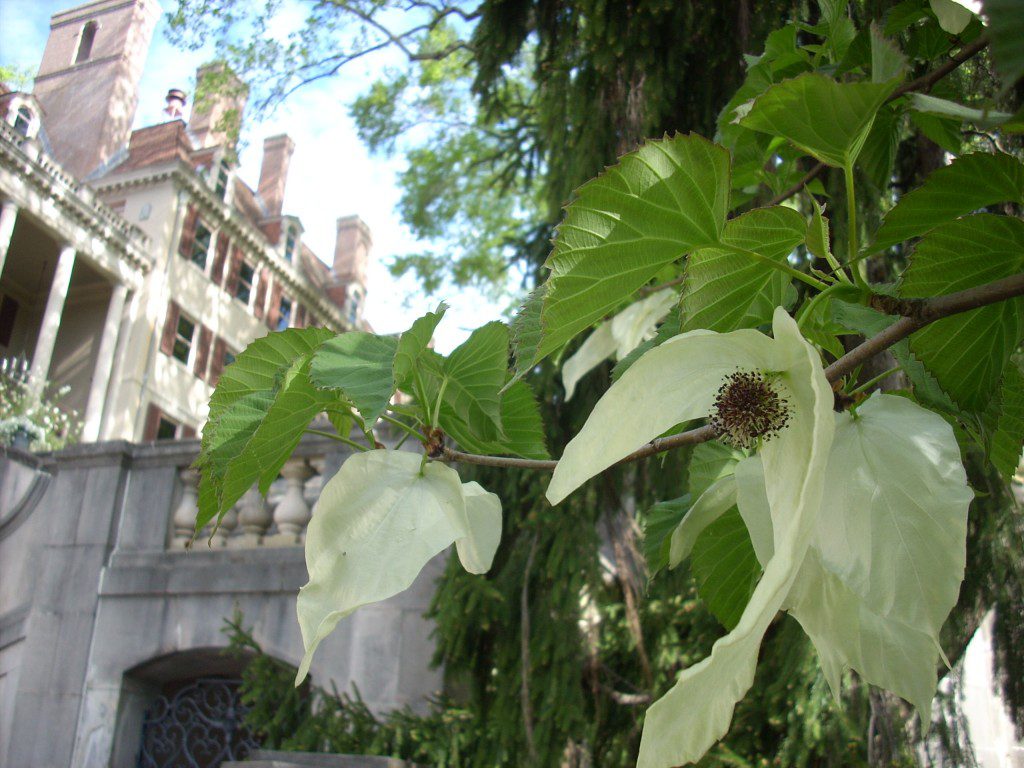
Dove Tree: Check the corner created by the back of the glass Soup Tureen corridor & the Library to see the fluttering white bracts of the rare Dove Tree, or Handkerchief Tree, (Davidia involucrata var. vilmoriana) in bloom.
Davidia involucrata var.vilmoriana (Dove Tree)
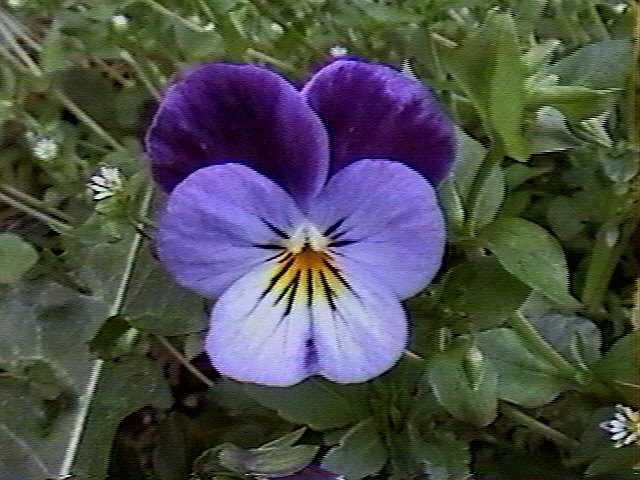
Violets: Blue, blue & white, white, & yellow violets (Viola species) are blooming throughout the gardens and fields.
VIOLA- photo courtesy of the American Violet Society
Starting: The tiny white-to-pale-pink daisies of fleabane (Erigeron annuus) are beginning to bloom throughout the estate. They will become numerous as the season progresses. They are listed only here.
Fleabane (Erigeron annuus)
What’s blooming at Winterthur now? Download full report below!:
(Click on photo above for information by Missouri Botanical Garden on the Dove Tree)
Check these out:
Dove Tree (photo above): Check the corner created by the back of the glass Soup Tureen corridor & the Library to see the fluttering white bracts of the rare Dove Tree, or Handkerchief Tree, (Davidia involucrata var. vilmoriana) in bloom.
Azaleas: Azalea Woods is filled with azaleas in full bloom and most of the native azaleas in the Pinetum are blooming as well. The gardens are overflowing with brilliant colors!
RHODODENDRON ‘HINOMAYO’
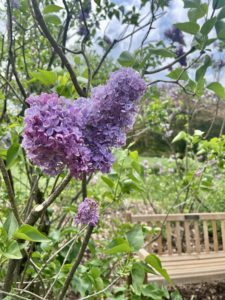
Lilacs: Lilacs (Syringa species & cultivars) are in full bloom and fragrance near the Greenhouse, in the Peony Garden, and in the Sundial Garden.
LILACS AT SUNDIAL GARDEN
Primroses: The Quarry is showy with bright pink Japanese primroses (Primula sieboldii) and red and pink candelabra primroses (Primula species), which are also blooming along the Glade path.
CANDELABRA PRIMULA
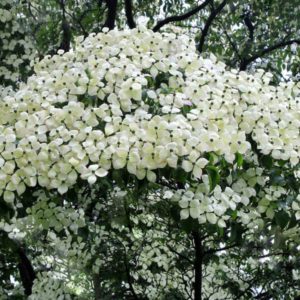
Dogwoods & Doublefiles: Dogwoods (Cornus florida species & cultivars – most white, few pink) are blooming throughout the Gardens & the Estate. They create a white highlight along the edge of Brown’s Woods. Their white is echoed by the doublefile viburnums (Viburnum plicatum forma tomentosum).
CORNUS KOUSA ‘MILKY WAY’
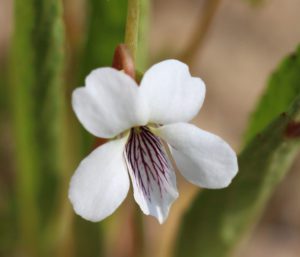
Violets: Blue, blue & white, white, & yellow violets (Viola species) are blooming throughout the gardens and fields.
VIOLA LANCEOLATA
What’s blooming at Winterthur now? Download full report below:
Dove Tree: Check the corner created by the back of the glass Soup Tureen corridor & the Library to see the fluttering white bracts of the rare Dove Tree, or Handkerchief Tree, (Davidia involucrata var. vilmoriana) in bloom.
Pearlbush: The Latimer Gates are highlighted by the white flowers of Wilson’s pearlbush (Exochorda giraldii x wilsonii) while a smaller pearlbush cultivar (Exochorda macrantha ‘The Bride’) is blooming in the Pinetum and the Sundial Garden.
Lilacs: Lilacs (Syringa species & cultivars) are in full bloom and fragrance near the Greenhouse, in the Peony Garden, and in the Sundial Garden.
Primroses: The Quarry is showy with bright pink Japanese primroses (Primula sieboldii) and red and pink candelabra primroses (Primula species), which are also blooming along the Glade path.
Redbuds: Eastern redbuds (Cercis canadensis) are creating a pinkish lavender glow on the hillsides lining the Quarry path along Sycamore Hill. They are lighting up other parts of the Gardens as well. The white-flowered cultivar (Cercis canadensis ‘Alba’) blooms in Enchanted Woods and Azalea Woods.
Dogwoods: Dogwoods (Cornus florida species & cultivars – most white, few pink) are blooming throughout the Gardens & the Estate. They create a white highlight along the edge of Brown’s Woods.
Violets: Blue, blue & white, & yellow violets (Viola species) are blooming throughout the gardens and fields.
Daffodils Everywhere: Daffodils (Narcissus species and cultivars) are blooming throughout the Estate in small clumps and huge expanses. There are too many to count!
Pearlbush: The Latimer Gates are highlighted by the white flowers of Wilson’s pearlbush (Exochorda giralidd x wilsonii) while a smaller pearlbush cultivar (Exochorda macrantha ‘The Bride’) is blooming in the Pinetum and the Sundial Garden.
Another Blue Wave: Azalea Woods is filled with the delicate blue and white daisy-like Italian windflowers (Anemone apennina) and light blue Virginia bluebells (Mertensia virginica). They spill down the March Bank and fill parts of Icewell Terrace and Enchanted Woods and decorate other areas in the gardens.
Primroses: The Quarry is showy with bright pink Japanese primroses (Primula sieboldii) and red candelabra primroses (Primula species), which are also blooming along the Glade path. Pale yellow oxlip primroses (Primula elatior) are blooming in Azalea Woods and along the path to Icewell Terrace.
A Colorful Show: The Quince Walk is a flurry of flowers with the flowering quince (Chaenomeles cultivars) showing off in blazing red-orange, orange, red and cooler pale orange & white with a supporting cast of white spiraea (Spiraea cantoniensis & Spiraea prunifolium cultivars) and a carpet of pale blue starflower (Ipheion uniflorum).
Violets: Blue, blue & white, & yellow violets (Viola species) are blooming throughout the gardens and fields.