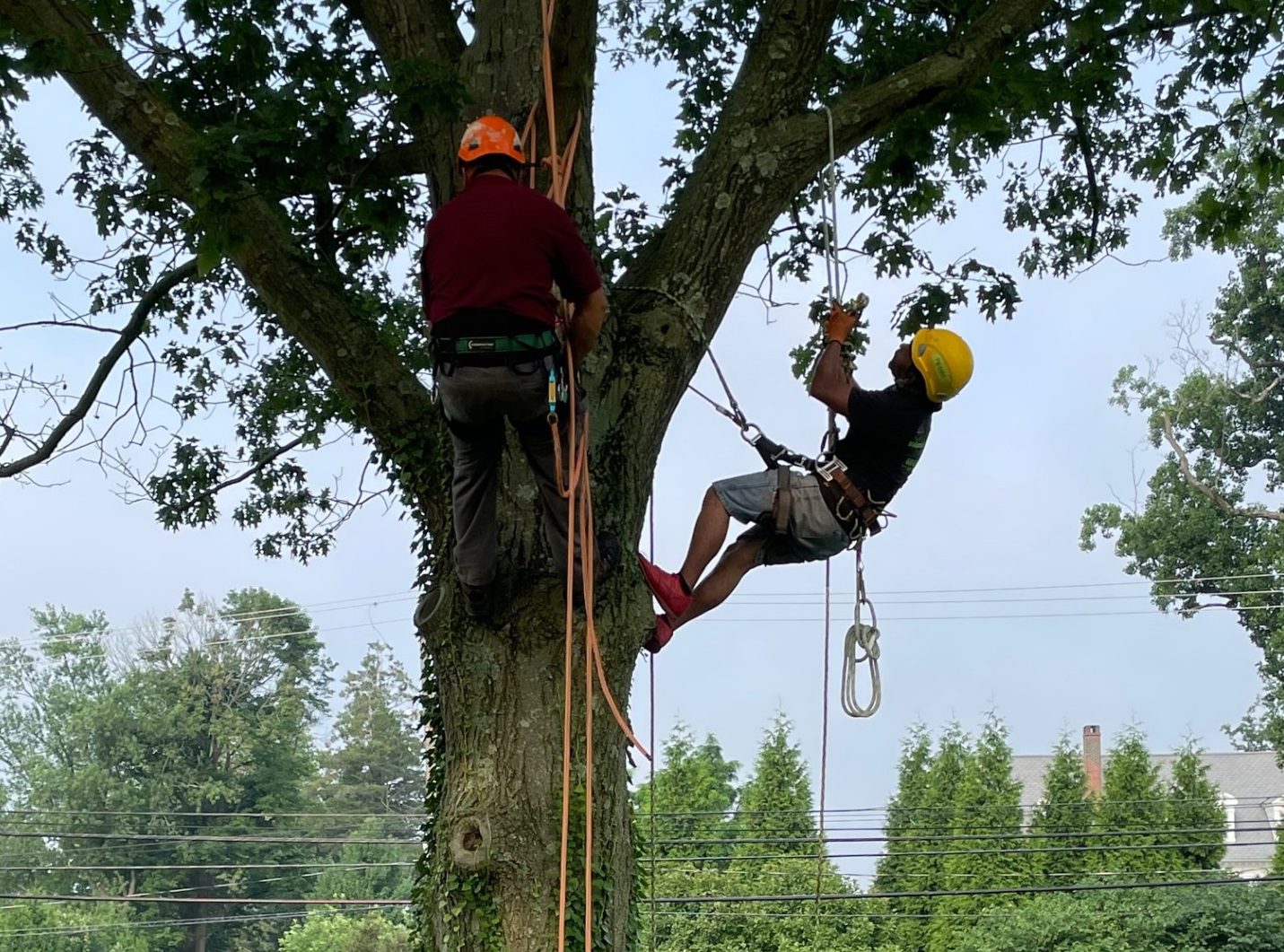
The muscles in Dennis Coker’s arms tightened as he adjusted his grip on the rope that held him securely from a more-than-100-foot-tall tree at Winterthur.
He looked above him to assess the tree and determine his next move. It’s a skill he learned this week at a three-day tree-climbing school held on the Winterthur estate.
“You have to assess the tree to make your plan of attack,” he said.
His plan was successful, and Coker was soon high among the branches.
“I’ve been wanting to climb a tree my whole life, and learning how to tie three knots was the only thing holding me back,” joked Coker, 71, Chief of the Lenape Indian Tribe of Delaware.
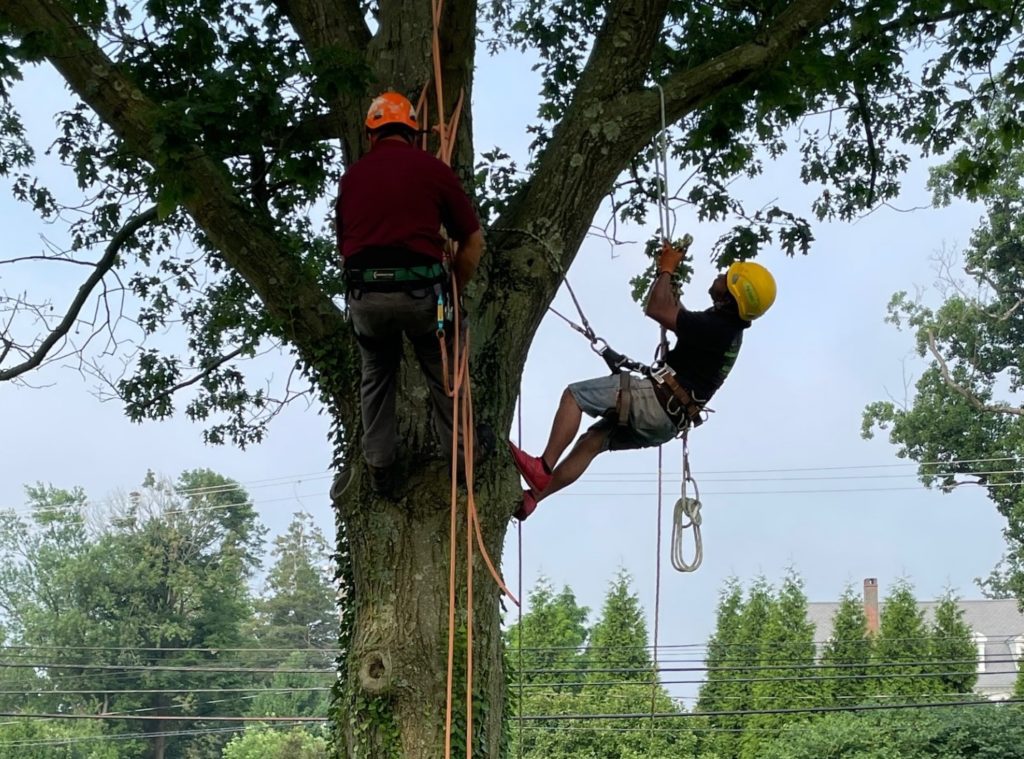
Dennis Coker, chief of the Lenape Indian Tribe of Delaware, prepares to ascend a tree.
The course taught the 27 participants about tying knots, safety/safe climbing practices, equipment/use of hand tools, tree terminology, tree disease and insect diagnosis, pruning, and more.
Most participants work at landscaping companies, and a handful were from youth programs.
But there was one significant outlier.
“In this tree, we have state park workers, a Longwood Gardens (horticulture) instructor, and a professional chemist,” said Kevin Braun, Winterthur’s supervisor of arboriculture and natural lands. “She took three days off to do this. Yesterday she said she was nervous about whether she’d like it. But then she said, ‘I love it!’”
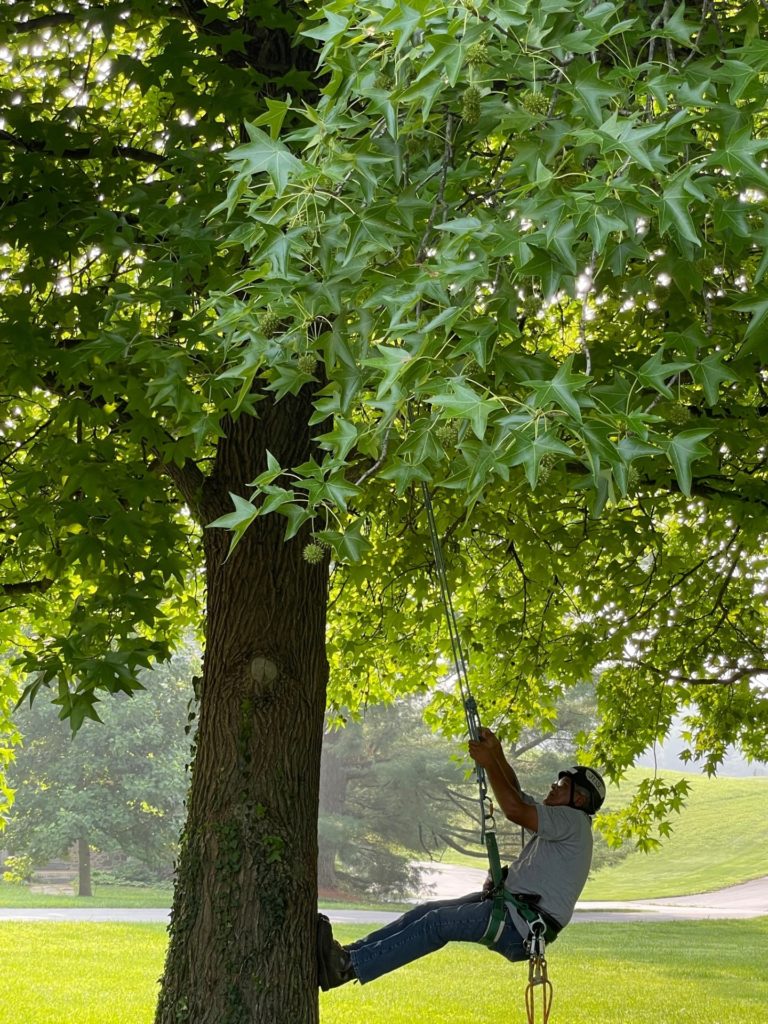
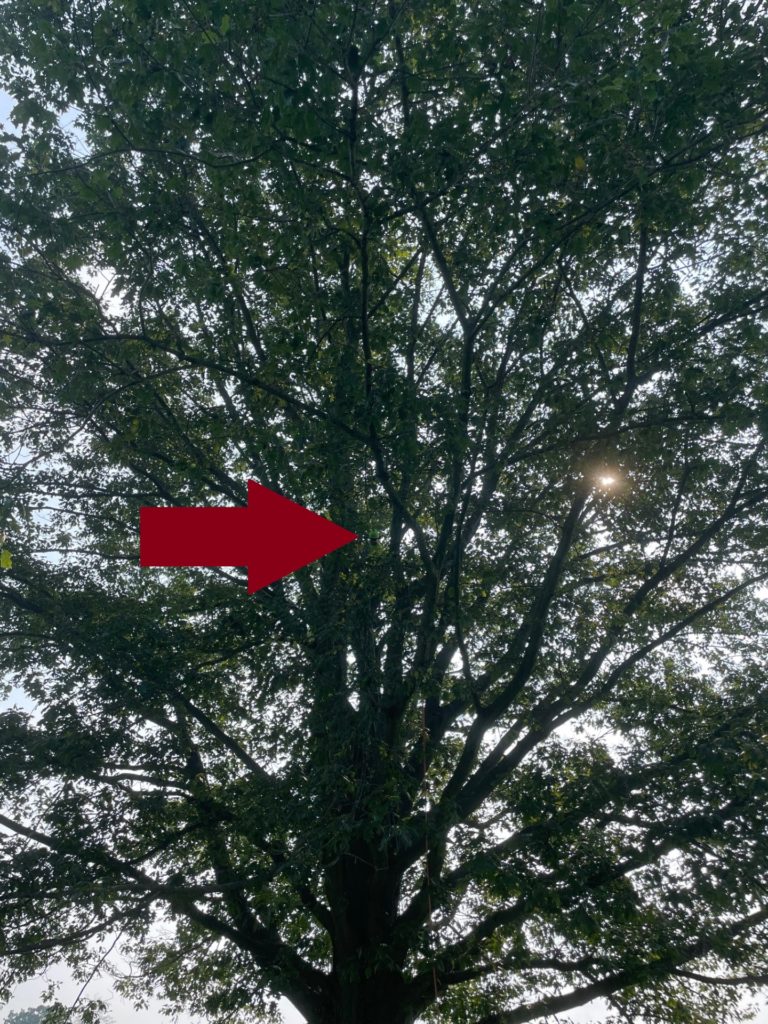
Difficult to spot from the ground, Kevin Braun, Winterthur’s supervisor of arboriculture and natural lands, works with ropes in an oak tree.
Kadine Mohomed said her decision to take a vacation from her work as a materials scientist at W. L. Gore & Associates (the Gore-Tex company) made sense because she’s a rock climber, powerlifter, outdoorswoman, and sustainability enthusiast.
When an ad for the school popped up in her social media newsfeed, she understood why an algorithm had targeted her.
She described her experience at the school as a “happy accomplishment.”
“Something that I’m feeling pretty proud of is when I show my kids pictures when I go home at the end of the day. They get excited,” she told a reporter from DelawareLive.com. “It’s nice for my boys to see that as a woman in my 40s with teenage boys, I could accomplish things that they don’t typically see women doing.”
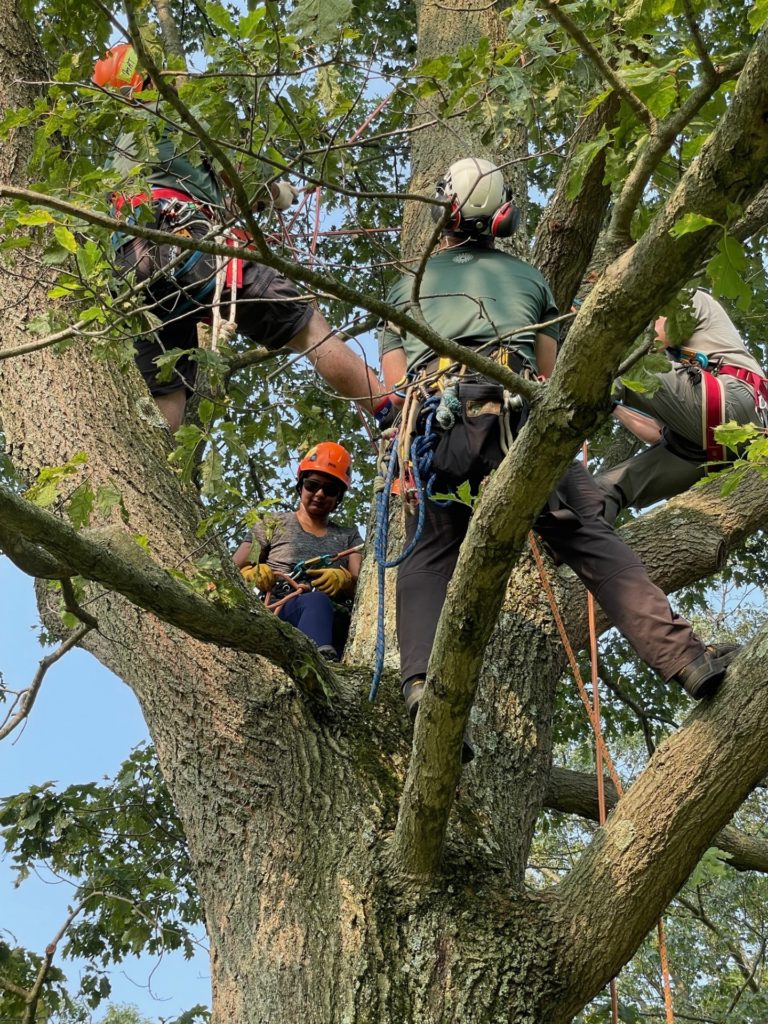
Kadine Mohomed, bottom left and facing camera, works with fellow students.
Mohomed plans to use her new skills to take down dead and loose branches from woods near her house so her kids can be safe when playing there.
A feeling of responsibility for trees and a connection to them was a shared quality among school participants.
“To care for a tree, you must first learn how to care for a tree,” said Coker, the Lenape chief who is retired from a job in road construction.
Coker said he would recommend the course.
“Climb a tree as soon as you can,” he advised.
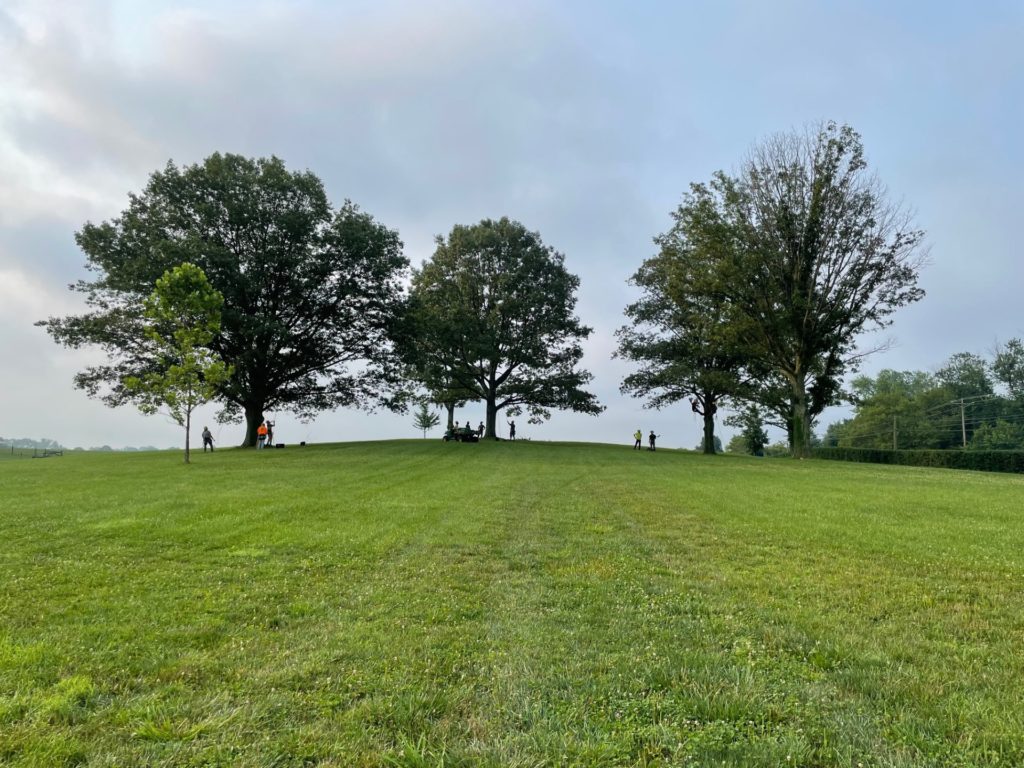
Tree-climbing students prepare to ascend towering oaks at Winterthur.
The school came about due to a request from the Lenape Tribe to put it on as a job-training program. Four tribe members participated.
The one-of-its-kind course may be offered again in Delaware, said James Savage, lead instructor for the school and an assistant professor of plant science for Penn State.
The school at Winterthur was the first ever held in Delaware, Savage said. The school was a joint initiative of Greenbridge CDC, the Penn State Extension, the University of Delaware Cooperative Extension, and Winterthur Museum, Garden & Library.
James Savage, lead instructor for the tree-climbing school.
The course takes students from knowing nothing about climbing trees to feeling comfortable maneuvering about in a tree, Savage said.
The waiting list of people to register for the class was just as long as the list of class participants. There’s a strong demand for such courses.
“This is the only class like it in the country because there’s climbing schools, but most of them are, ‘Here’s how you do it, now go home and do it,’” Savage said. “We show you how to climb, watch you and help you do it, and show you what you’re doing wrong.”
Winterthur’s Artisan Market is fast approaching. Here are just a few of the many vendors who will be at showcasing their wares at Winterthur on July 15 and 16. To better understand their craft, we asked these vendors some questions, and here are their answers! Meet the artisans.
Maria Maurio
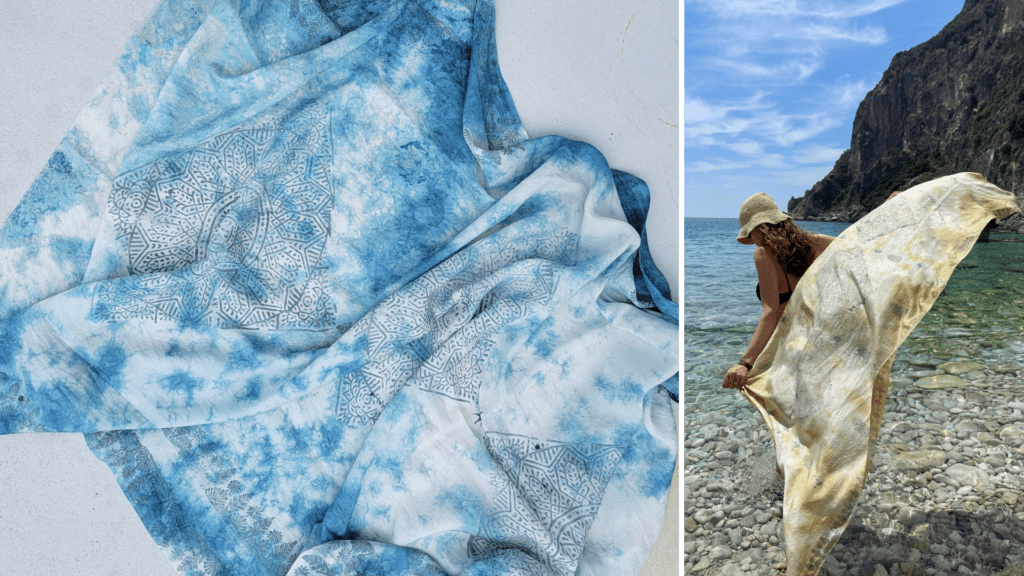
Maria Maurio has been creating artisanal textiles since 2017. Hand dyeing in small batches and hand block printing using antique wood blocks, which are her hallmark, are often combined with Japanese resist to create one-of-a-kind Ojetti de arte to wear. Working solely with sustainably sourced natural and botanical dyes along with foraged and food waste each unique design has a rich story to tell from the origins of natural dyes, the textiles and employed heritage craft.
How did you begin your craft, and what first inspired you?
The groundwork for my craft was laid at a young age, watching over my aunt’s shoulder in her bridal boutique as she hand-dyed exquisite lace in a cup of tea to “age” it for a custom made wedding gown. That transformation in color, I would learn many years later, was due to tannins, and I was not only inspired but hooked! After a decades long career in the apparel industry, my desire to create something unique and part of the Slow Fashion Movement led me to take a deeper dive into natural dyes and sustainability. I began teaching myself through trial and error how to use natural dyes, foraging for dyestuff and even using kitchen waste to create color for which there seems no end! By incorporating hand printing and Japanese resist, I am reaching back to my days of study and fascination for ancient art too!
What is your “rose and thorn” of owning a small business based on your craft?
One of the best moments as an independent designer is watching the expression on someone’s face and in their eyes as they acknowledge the subtle beauty of my natural dye work and understand the craft without giving any explanation of the process! It’s absolutely energizing to hear their compliments and, of course, the “I have to have it” moment! A thorny moment for me is when I’ve set up a dye vat for a specific color for a bespoke order, and unknowingly a modifier of some sort, has entered the dye bath and completely shifts the color! Natural dyes are uber sensitive to everything from the pH of water to the type of metal pot and just about any additive that is acidic or alkaline.
What is one unique thing you would like people to appreciate about your specific work that may not be obvious?
I trace everything I purchase to ensure a positive impact is being made from living wages to sustainably sourced and environmentally friendly dyes to fabrics and labels.
Favorite summer libation?
A Martini-“Radio Silence” with Brooklyn Gin is my favorite.
Miche Scott Handmade
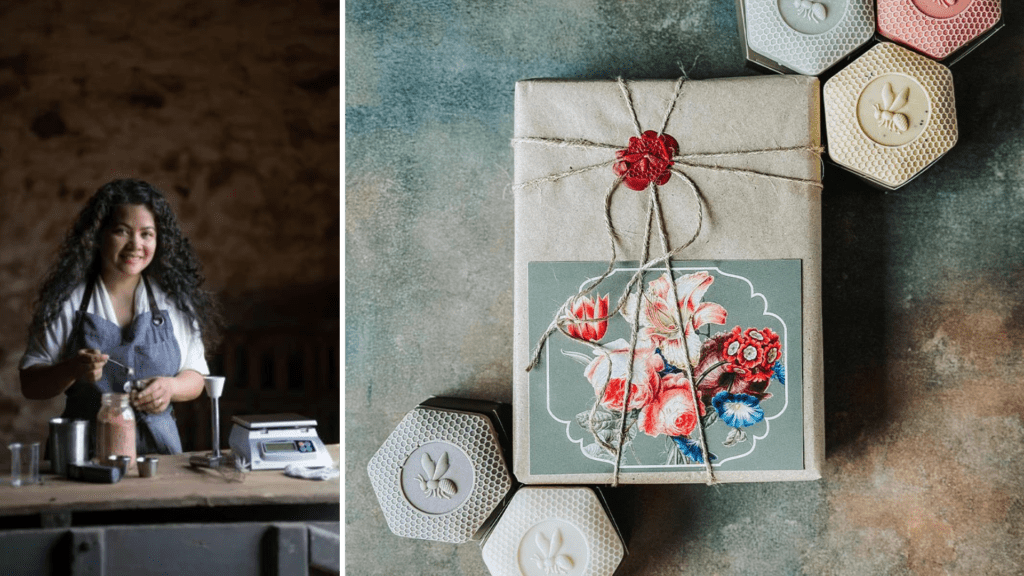
Miche Scott Handmade has been been making handmade soaps since 2013. A kind woman whom she met at the Dubai Sunday market shared generously her knowledge of how to make handmade soaps. She didn’t give her recipes. Instead, she taught her how to formulate her own. And just like that, she embarked on this wonderful journey of soap making.
How did you begin your craft, and what first inspired you?
It started out as a way to quiet the background noise. Living in Dubai, Mumbai, Kuala Lumpur, the gift of working my hands bridge the need for something more. I connected with Local NGOs and taught how to make handmade soap. Mentoring refugees from Myanmar, providing handmade soap for Days for Girls Org.My craft taught me many life lessons. It took seven years before I started to turn my craft into a business.
What is your “rose and thorn” of owning a small business based on your craft?
It is a wonderful feeling when someone enjoys my handmade soap and shares their delight. Appreciate their beauty and be part of their self-care ritual. “Your soaps are too pretty to use” can be both a compliment and a thorn in my heart. Life is short – use pretty soaps.
What is one unique thing you would like people to appreciate about your specific work that may not be obvious?
It takes about a year to two years of planning, researching, and creating a collection before launching it to our customer base. It starts out with inspiration board, followed by ethical sourcing and fair-trade research. It takes at least eight weeks to cure before we sell it to the public.
Favorite summer libation?
Lemonade.
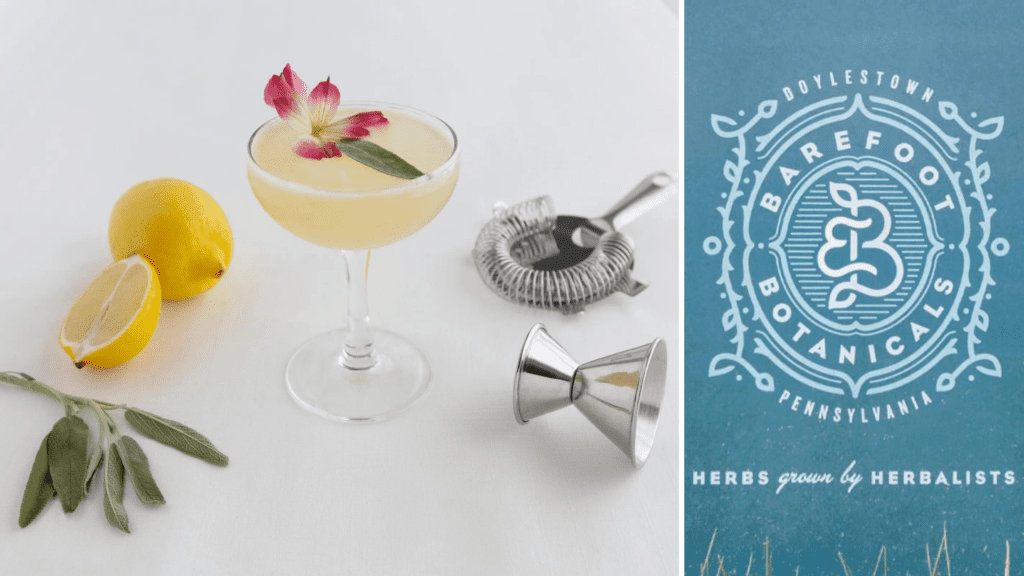
Bluestem Botanicals
Bluestem Botanicals aims to connect people with plants for food, for medicine and for a more resilient collective future. Founders Linda Shanahan and Eric Vander Hyde value ecology over economy and people over profit. They envision a world in which people live in support of and in balance with the natural systems they depend on.
How did you begin your craft, and what first inspired you?
We (Linda and Eric) are farmers to the core. Since Linda is also an Herbalist, our move towards medicinal herbs was a natural progression as the vegetable farm scene heated up in Bucks County. Eric’s curiosity about the herbs also gave us a natural pivot into our craft cocktail and mocktail drink kits!
What is your “rose and thorn” of owning a small business based on your craft?
On the one hand, connecting people with the plants is our biggest rose – this is our mission and purpose behind everything. The flavors, the aromatics, the education, it’s what drives us. Being farmers, we are always at the mercy of working within the seasons and the ever-changing weather fluctuations and that is our biggest challenge.
What is one unique thing you would like people to appreciate about your specific work that may not be obvious?
We are a true seed-to-bottle, farm-crafted-by-hand micro-operation. People are often surprised that our tiny crew plants, cultivates, harvests, crafts, bottles, labels, caps, and boxes up everything we sell. It’s all done with our own hands.
Favorite summer libation?
Our No Thyme for the Blues mocktail (sometimes with gin)!
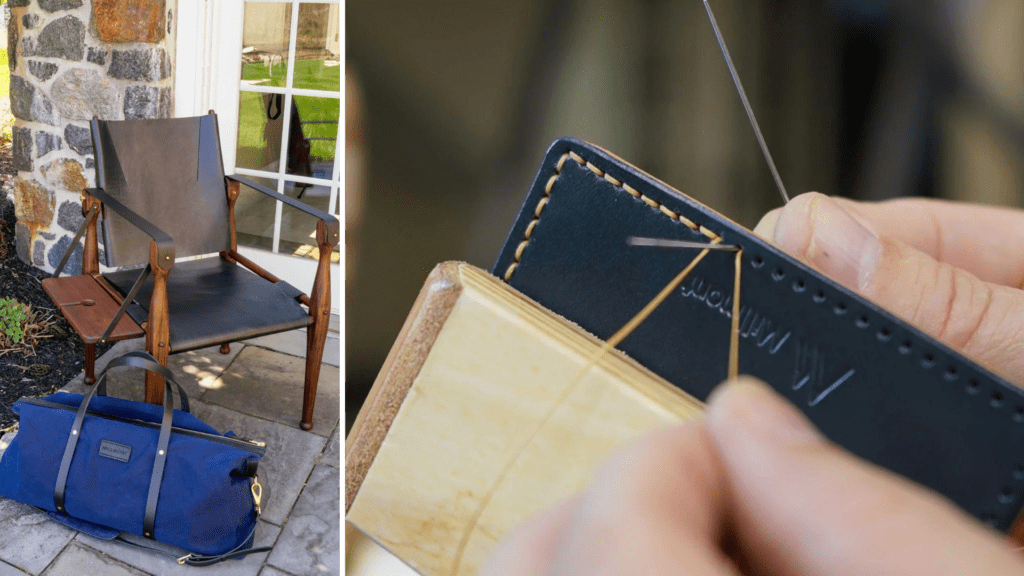
Classic Elegance
Classic Elegance, a family-owned leather products and furnishings wholesaler, is dedicated to producing high quality, classically styled leather-centric seating and home furnishings.
How did you begin your craft, and what first inspired you?
John and I both love leather seating, and our initial inspiration was simple practicality. Our craft evolved from the intention to create high quality, leather-centric furniture for our own home rather than choosing mass produced ‘leather’ furniture in the retail marketplace. We were further inspired by the comments of our friends and family over the results of our initial efforts, which then blossomed into our current craft. John takes particular inspiration from his affinity for the Victorian-era works of Jules Verne, which often feature what is now known as Steampunk, the combination of leather, wood and metal fittings.
What is your “rose and thorn” of owning a small business based on your craft?
We often discuss the pros and cons of our craft, and while the ‘thorns’ sometimes change, especially as we age, making detail work more and more difficult, the ‘rose’ never changes. We are so grateful for the many enduring friendships we have formed during this craft adventure, never considering at first that we’d have family visits by, be asked to go out socially with, or receive birth announcements from former customers… truly a rose worth every thorn.
What is one unique thing you would like people to appreciate about your specific work that may not be obvious?
We’re pretty sure the average person doesn’t understand the amount of hard “grunt work” involved in restoring an antique to like-new condition for daily use. There are always hours of stripping old finishes with harsh products, hours of sanding, and difficulties with restoring older joinery. We’re thrilled at how many people appreciate our craft while admiring the look of a finished piece, but there’s a lot more “under the hood” as a car enthusiast might say.
Favorite summer libation?
Olya – a chilled glass of Chardonnay. John – a cold glass of minted iced tea.
Millmont Leather
Millmont Leather was born out of a search for utility and design without compromising craftsmanship. Millmont pieces satisfy both modern daily needs and the desire for high quality workmanship. Without a question, fine saddle-stitched leather wins over mass-produced products any day.
How did you begin your craft, and what first inspired you?
I found it difficult to find leather products with modern utility and design but made with traditional leathercrafting techniques and the highest quality materials – so began the journey to make the items I wanted for myself.
What is your “rose and thorn” of owning a small business based on your craft?
Ever product I design and craft I use, so from gratification of a well-done product to the continual ideation of enhancements is double edged – the never-ending cycle of satisfaction/desire to improve.
What is one unique thing you would like people to appreciate about your specific work that may not be obvious?
The specialized techniques, done by hand, and attention to detail required to produce a high-quality leather product (such as saddle stitching, skiving, burnishing, and even sanding).
Favorite summer libation?
Rice vodka.
Kara Hinson Fine Art
Kara Hinson Fine Art prominently features representations of black women in a variety of mediums, including vivid, layered watercolor portraits and illustrative ink/digital drawings. Surrealistic colors create a dreamlike atmosphere in which her paintings focus on the diversity and strength of women.
How did you begin your craft, and what first inspired you?
I have always been drawing and painting since I can remember, starting as a kid. I have several artists in my family and have always been inspired and encouraged by them to explore my creativity through art. After mainly focusing on pencil drawing and oil painting, I found inspiration in the looseness and unpredictability of watercolor.
What is your “rose and thorn” of owning a small business based on your craft?
My “Rose” of owning a small business based in my artwork is creating paintings I love that other people connect with. My “Thorn” is the administrative duties that come with the business – especially finding time while working a full-time job as well.
What is one unique thing you would like people to appreciate about your specific work that may not be obvious?
None of my portraits are of “real” people. Although I don’t typically use models, I love creating mood boards of colors, hairstyles, plants and places to use as a reference point when sketching the beginnings of a painting – I then fill in the rest with my imagination.
Favorite summer libation?
Cold Pinot Grigio.
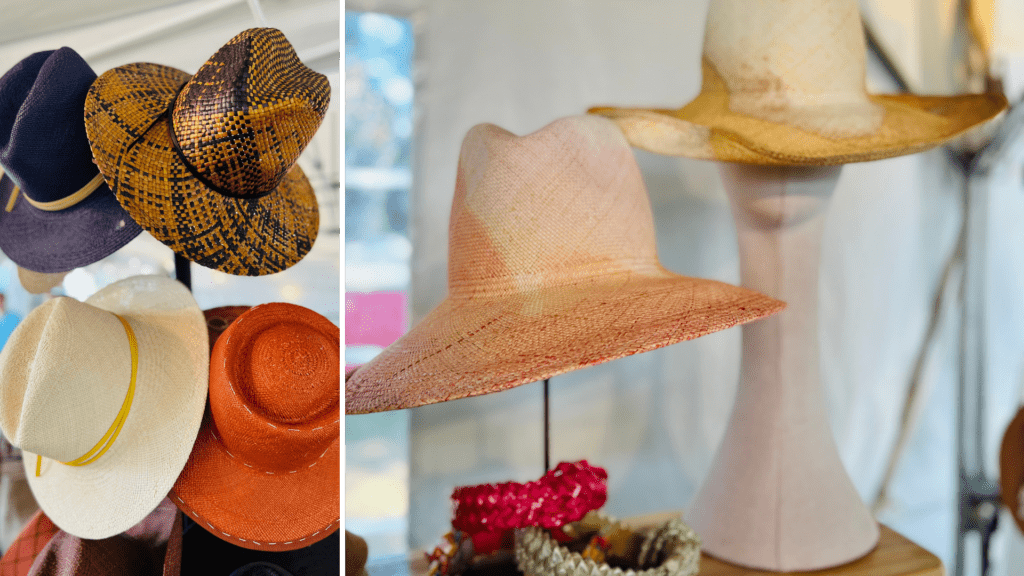
Jennifer Hoertz Millinery
Jennifer Hoertz Millinery was established in 1993. Her career has spanned nearly three decades, with designs featured in fashion magazines ranging from Vogue to Harper’s Bazaar, Town and Country to InStyle,Essence to Lucky and People. Jennifer’s millinery expertise highlights the elegance of her London training combined with her unique modern sensibility, while her choice of fabrics and attention to detail illustrate her artistry.
How did you begin your craft, and what first inspired you?
I began my millinery business after graduating college. I studied my junior year in London and took classes there, and as happens with most milliners fell in love with it. For me it was the sculptural aspect of blocking the pieces into wearable shapes that are not only functional but also transform the wearer. A hat evokes emotion and is a very personal accessory. Helping customers find the right hat is such a rewarding part of millinery. Most people want to wear one but sometimes don’t know where to start or feel a bit self-conscious. But when they put the hat on and feel beautiful, that transformation and confidence begins.
What is your “rose and thorn” of owning a small business based on your craft?
The thorn of owning a small millinery house is the questioning of pricing. A well-made hat is created by hand and sized particularly for the customer. There is a huge difference between a hat that is on a rack, and one purchased from a milliner or hat maker. When you buy direct from someone like me, you are buying a piece that is made for you basically custom/bespoke. There are also the materials used, quality of craftsmanship and wearability. Someone like me buys smaller quantities from suppliers and spends a lot of time sourcing all the components of the hat, which adds to the cost and time involved. The rose of being a milliner is when you explain all of this to a customer, and they understand and begin working with you. Educating people about what you do and what goes into hand crafted small batch items is important no matter what your artistry.
What is one unique thing you would like people to appreciate about your specific work that may not be obvious?
Each hat is made by me in my studio. I do everything from sourcing materials to making and then selling. I am the shipper, the website and social media person, etc. One could say I wear many hats. It is a ton of work, but I love what I do. It’s important to note that every hat can be custom sized to your head measurement. I also offer a service to refresh, re-trim or resize hats that they have purchased from me and work on refurbishing some vintage pieces.
Favorite summer libation?
As a lover of all things English, because I was born in London and their hat culture, that would be Pimm’s Cup.
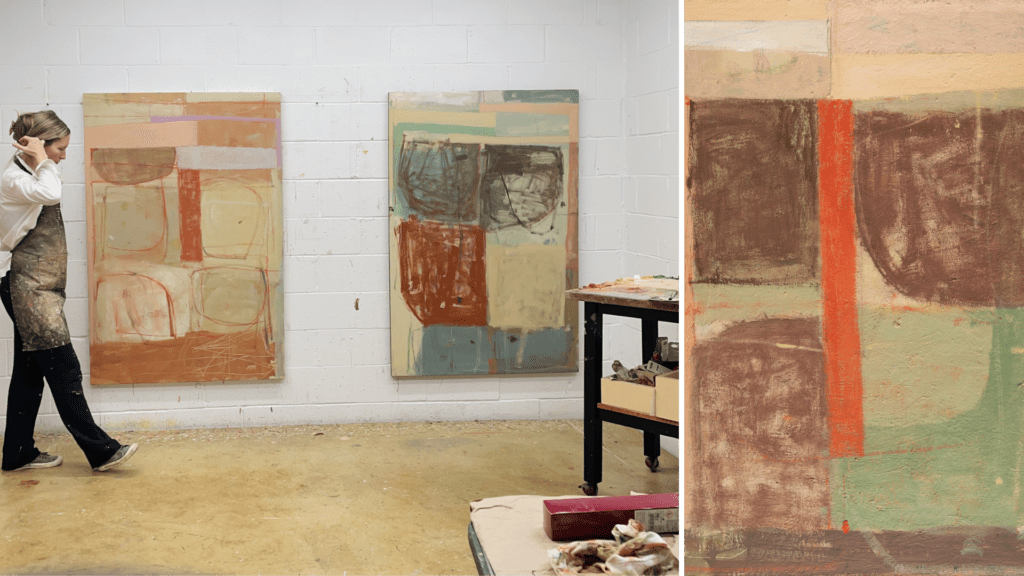
Temre Art
At Temre Art, painting is a conversation about renewal, using abstract elements to explore this conversation and drawing from the natural world, especially the landscape in the Brandywine valley region, for inspiration.
How did you begin your craft, and what first inspired you?
I’ve always been painting but started seriously pursuing painting during my last year in college as a fine arts major.
What is your “rose and thorn” of owning a small business based on your craft?
The best part is each year it gets more and more marvelous watching ideas unfold and develop into paintings. This is going to sound ridiculous, but I can’t find a thorn at the moment because being an artist is a lifestyle choice.
What is one unique thing you would like people to appreciate about your specific work that may not be obvious?
These artworks are like meditations- or like witnessing a garden unfold through the year. Each painting can take weeks, but more commonly months, to develop just the right balance.
Favorite summer libation?
Kombucha. It’s beautiful in color, cool, and tingly.
Revolution Bees
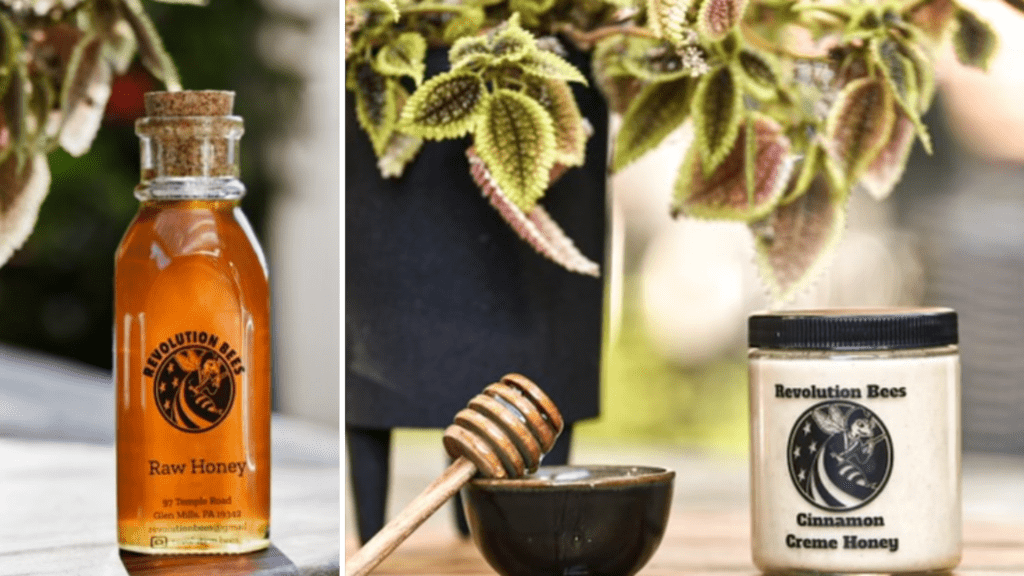
Revolution Bees is a small local business built by three beekeepers from Delaware and Chester counties, focusing on the promotion and education of responsible, sustainable beekeeping. They started out as hobby apiarists, and now they are one of the top resources for local honey and artisanal honey products.
How did you begin your craft, and what first inspired you?
I am an enthusiastic home gardener, and for me, beekeeping was the next step in home gardening.
What is your “rose and thorn” of owning a small business based on your craft?
I love talking bees with our customers. Their enthusiasm always amazes me and picks me up on long market days. I’m a beekeeper, so the “thorn” is being stung. You never get used to it.
What is one unique thing you would like people to appreciate about your specific work that may not be obvious?
Honey production is agriculture, and we are as dependent on the weather and climate as fruit and vegetable farmers are.
Favorite summer libation?
Strawberry basil lemonade.
Henisee Pottery
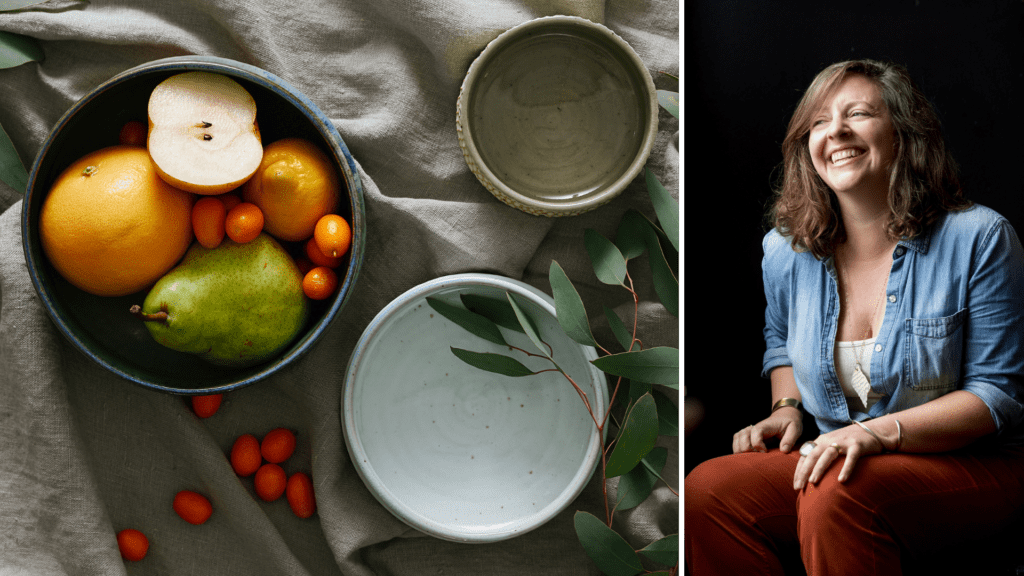
For Henisee Pottery, ceramics is the perfect marriage of fine art and industrial design backgrounds, creating beautiful, functional forms by hand.
How did you begin your craft, and what first inspired you?
A year after graduating Philly U with a degree in Industrial Design, I was missing the collaborative studio environment and I wanted to find a creative, community-oriented outlet to fill that role. I decided to take a course in ceramics at a local art studio, Chester Springs Studio at Historic Yellow Springs. Ceramics was the perfect creative space for me to use my design background – it combines form and function – and I was immediately hooked. I love the physicality of working with clay, the collaborative nature of firing the work, and the design process that shapes how a user interacts with an object so fundamentally hand made.
What is your “rose and thorn” of owning a small business based on your craft?
My rose is that I could spend a lifetime exploring clay and all the ways it can be processed, manipulated, glazed, and fired. It is a craft of endless possibility, and the more I dive deeper, the more I discover there is to try and learn. My thorn is that there’s never enough time in the day to explore all those possibilities!
What is one unique thing you would like people to appreciate about your specific work that may not be obvious?
My work is largely fired in a wood kiln, which I love for two reasons. First, the effects of a wood kiln are hard to predict and absolutely magical. My work is at the mercy of the changing atmosphere in the kiln, with smoke and ash and licking flames playing across the surfaces. Where each piece sits in the kiln changes its fate. It’s almost as if the kiln itself is the final collaborator in the artistic process – I glaze and position pieces with intention, but the kiln gets the final say. Second, firing the wood kiln is a fantastically, fundamentally shared process. The kiln I fire is one I helped build with my amazing community of ceramic artists. The wood kiln, which cannot be fired solo, brings us together and has made us family. We load it together, ignite the flames, and stoke the fire continuously for 36 hours until it reaches 2350 degrees Fahrenheit. All the while, we share meals, stories, and the duties of watching over each other’s pots as their final forms are realized. Each firing is a little family reunion and has become such a special part of my artistic process.
Winterthur served as home to three generations of the du Pont family and was a self-sufficient community with more than 250 people living here and a thriving farming operation that included beef and dairy cattle, sheep, pigs, poultry, horses, fruit, and vegetables.
Today we’re going to tell you some stories that were collected in 1973 from Maurice Gilliand, who began in 1944 to serve as a footman to Winterthur founder Henry Francis du Pont. As Gilliand would quickly learn, du Pont was a renowned horticulturist with specific tastes, a love of food, an eye for décor, and a complicated disposition that could be both prickly and kind, often simultaneously.
Gilliand came from France to America in 1930 and worked in houses on Long Island before coming to Winterthur. His wife, Doris, was hired as a chambermaid, and the couple lived in a small house on the estate. At the time, there were about five footmen and a butler among a staff of twenty. After two years, Gilliand was promoted to butler. Gilliand was flattered when du Pont made the offer, although he noted that du Pont warned him at the time that he was demanding and expected perfection. Gilliand nonetheless accepted and went on to learn a lot from du Pont.
“My duties were to set the table, of course, serve the meals, serve the teas, and serve cocktails and all that, and I was the man responsible to Mr. du Pont for the rest of the staff,” Gilliand recalled during an interview that is part of ongoing initiatives to preserve the history of the estate.
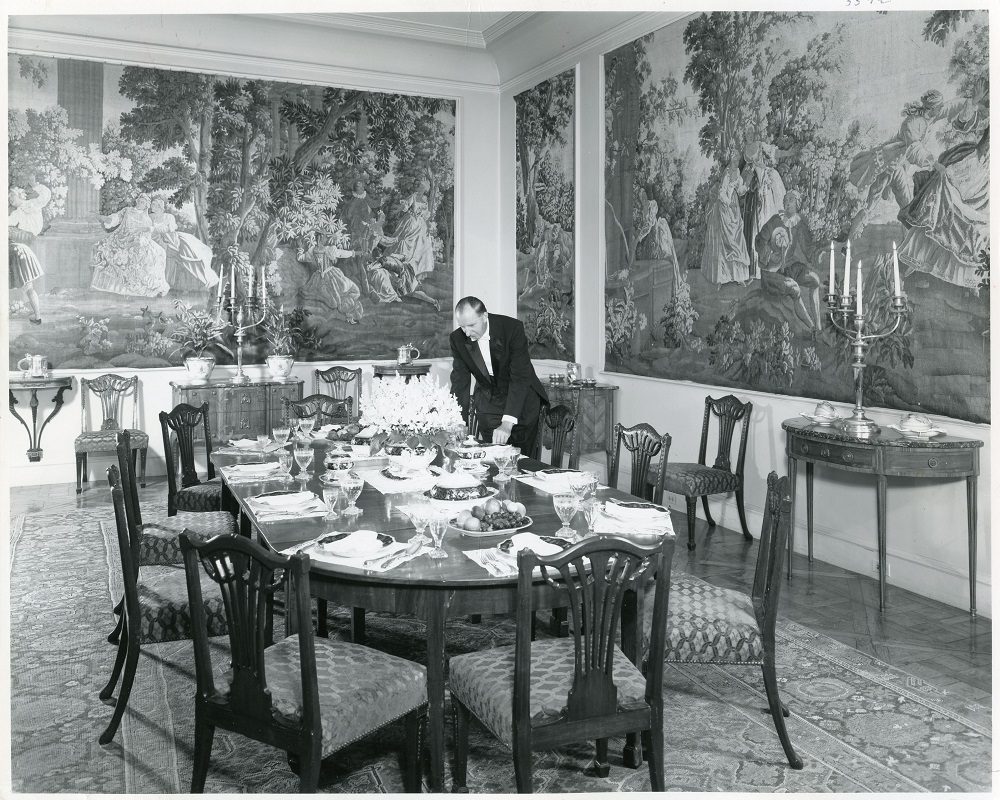
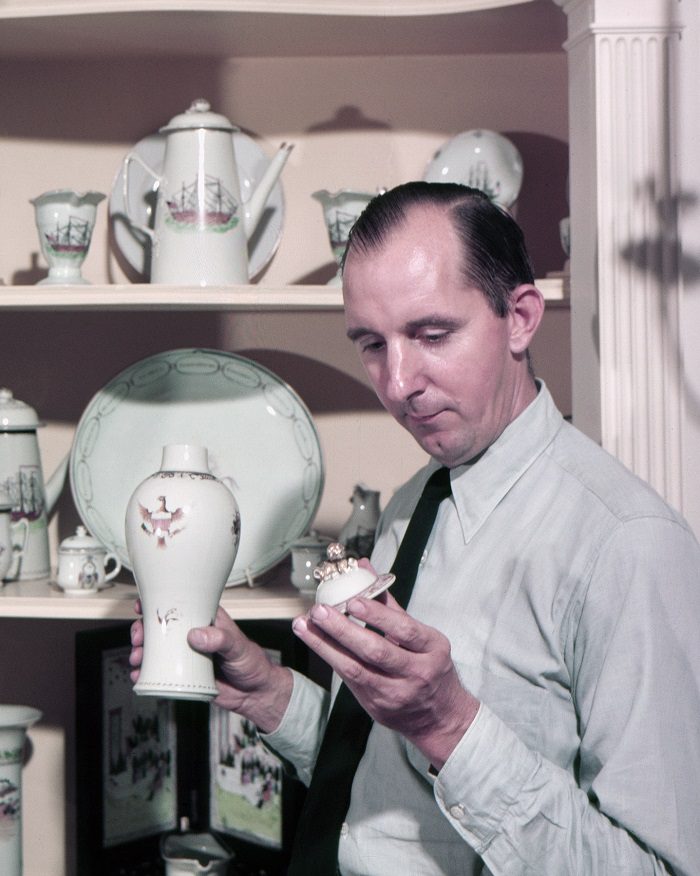
Maurice Gilliand prepares for guests
“And you directed the rest of the staff?” the interviewer inquired.
“I must say Mr. du Pont was the head butler,” Gilliand replied.
“Just as he was head gardener,” the interviewer observed. “Was the operation here different in any way from the other houses you had worked in? Was Mr. du Pont special in his approach?”
“Well, yes, much more so because any other house where I worked, the lady was in charge, but here Mr. du Pont was in complete charge of the house and planned everything, planned all the menus, and planned all the table settings,” Gilliand said.
On the weekends, the house would be filled with 16 to 18 house guests, with other visitors invited for meals, making two dozen people for a formal dinner. On Wednesdays, a gardener would bring flower samples into the house for du Pont and Gilliand to match with the china, table mats, and glassware for dinner.
“Sometimes Mr. du Pont would ask me my opinion and then would say, ‘Maurice, Maurice, you must be color blind!’,” Gilliand remembered. “Now and again, Mr. du Pont would give me a free hand to make a selection. On one occasion, when guests entered the dining room, they exclaimed, ‘Oh, Harry, Harry what a beautiful combination,’ and Mr. du Pont replied, ‘Oh yes, I have had this set of china for a long time, and this is the first that I was able to match it successfully.’ As I was standing nearby, he looked at me with the corner of his eye and winked, but he said, ‘I must admit to you it was Maurice who achieved this masterpiece.’ After dinner, Mr. du Pont put his hand on my shoulder and said, ‘Maurice, you have learned your lessons well; you are not color blind any longer.’ This shows you that when you knew Mr. du Pont’s likes and dislikes, it did not take much to make him happy.”
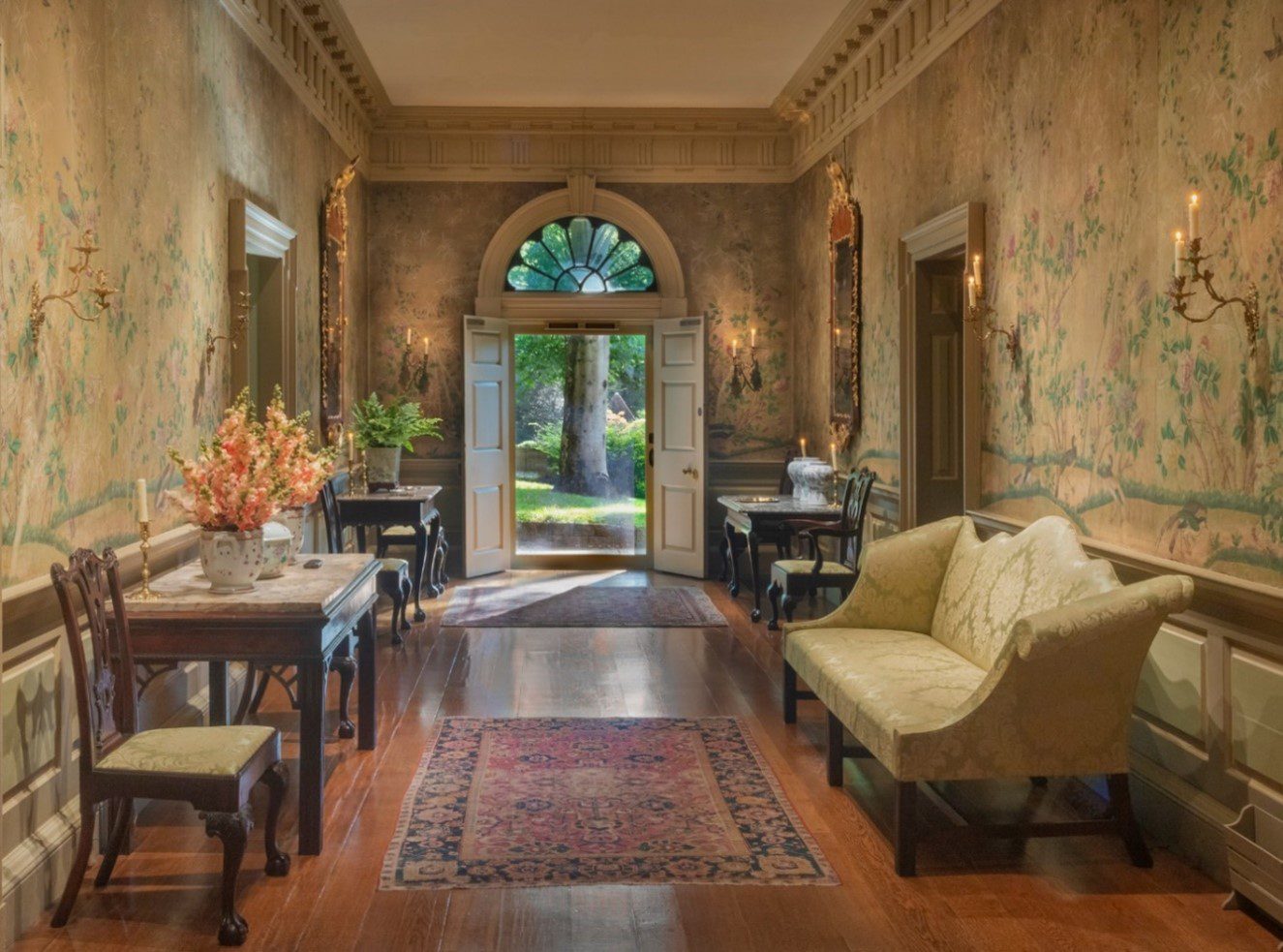
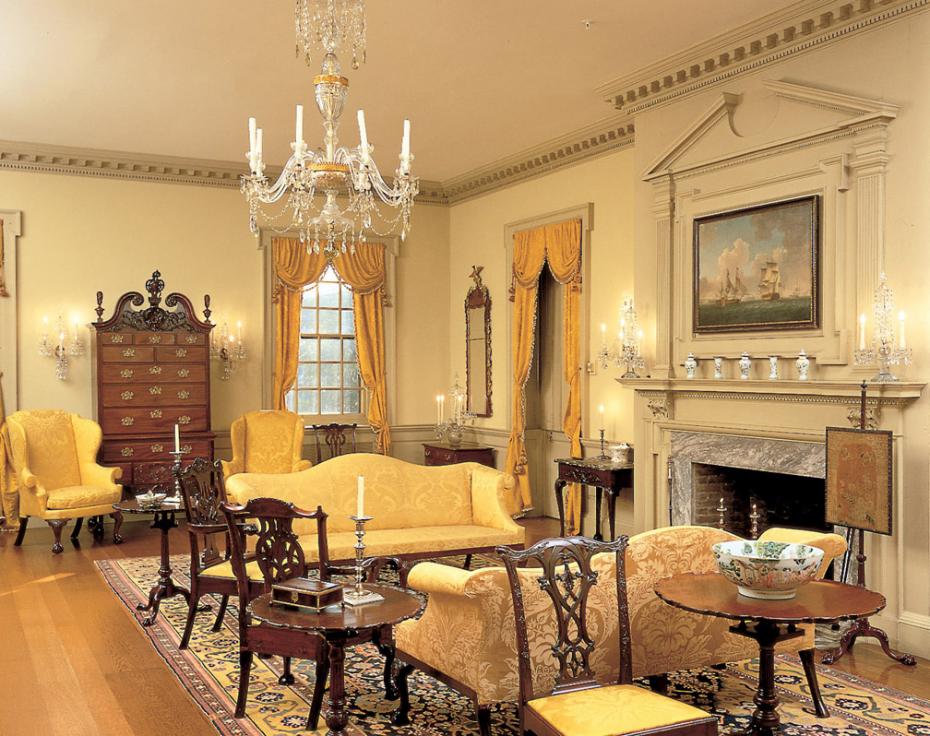
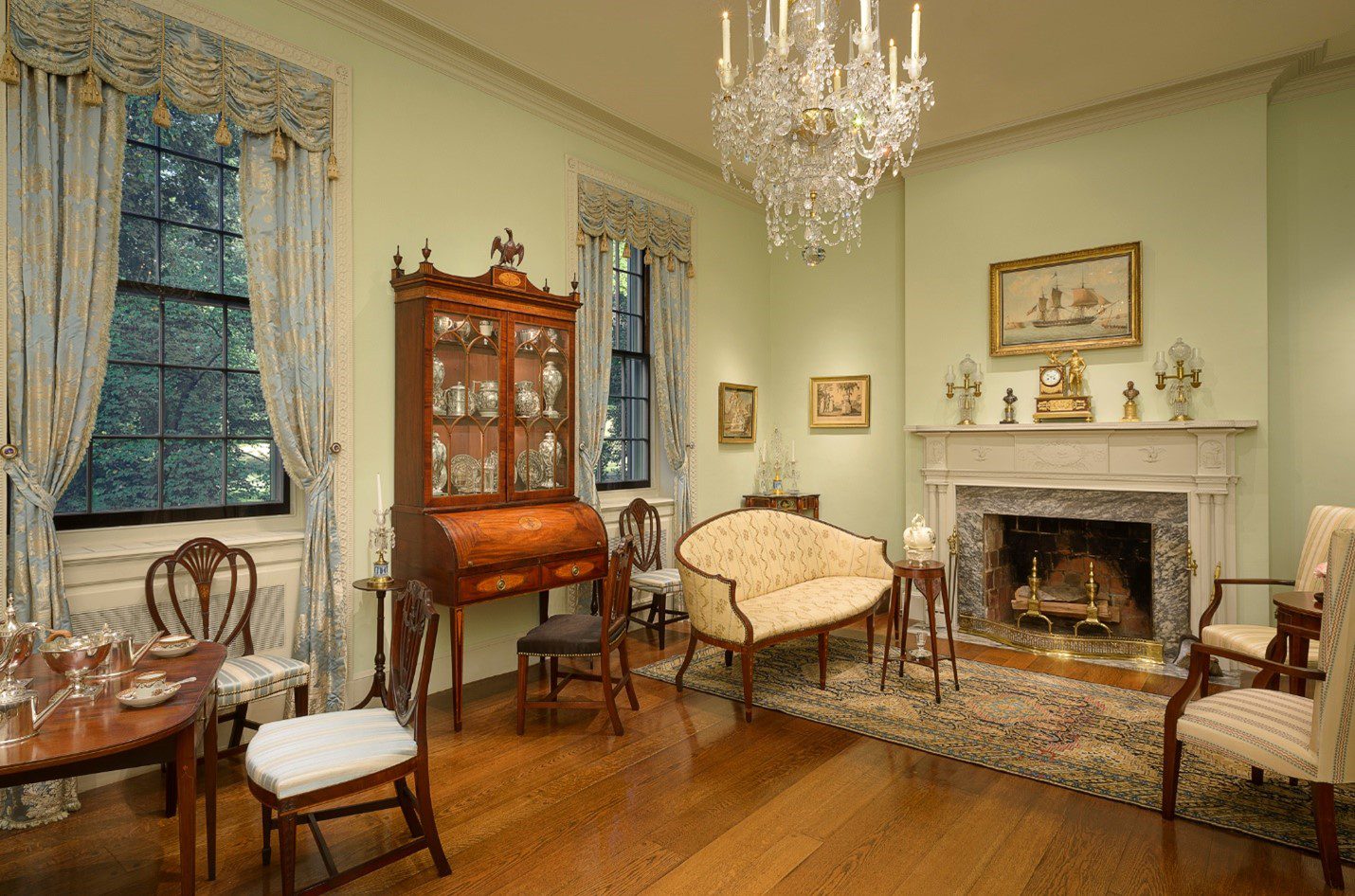
Port Royal HallPort Royal Parlor
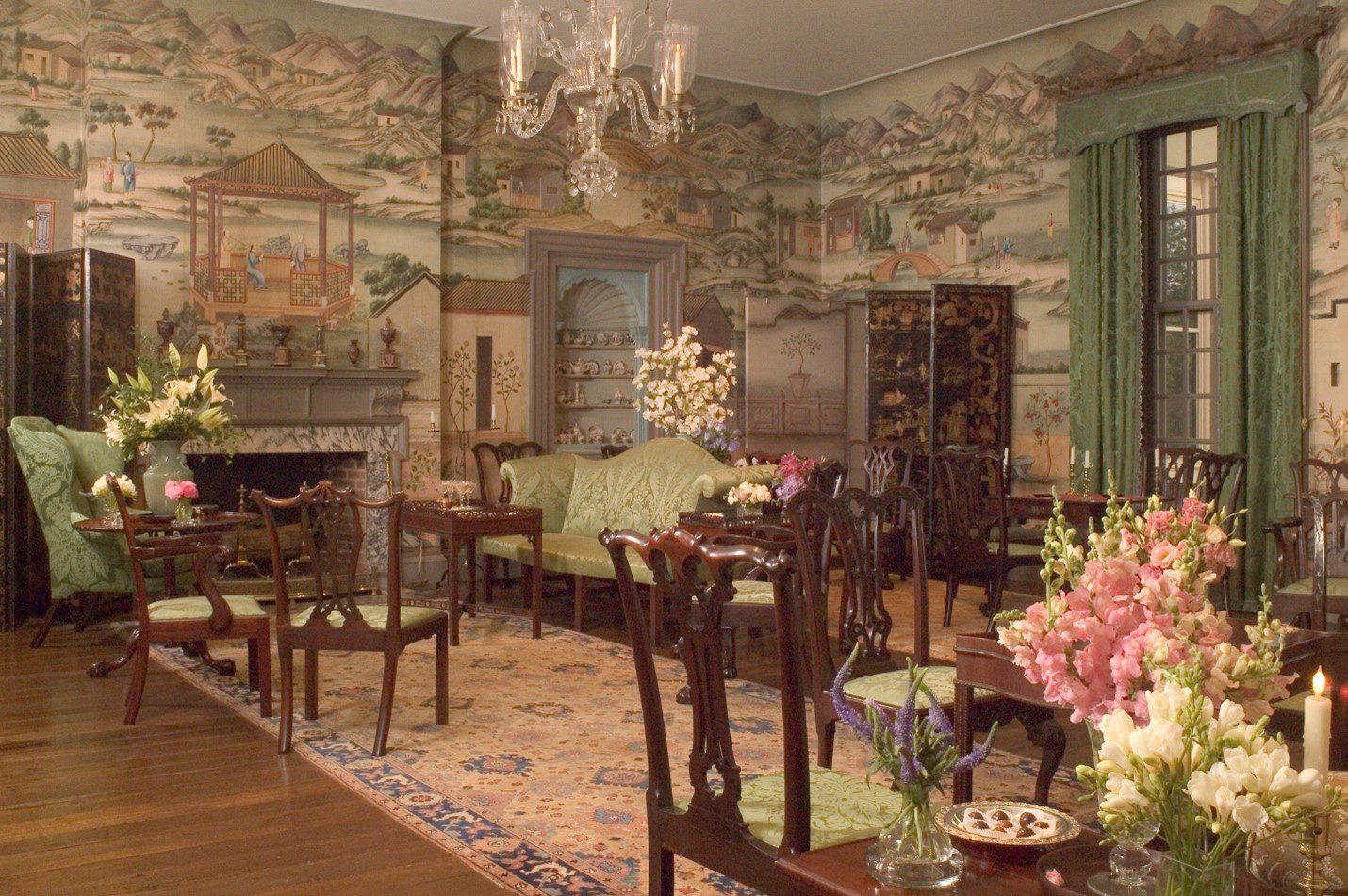
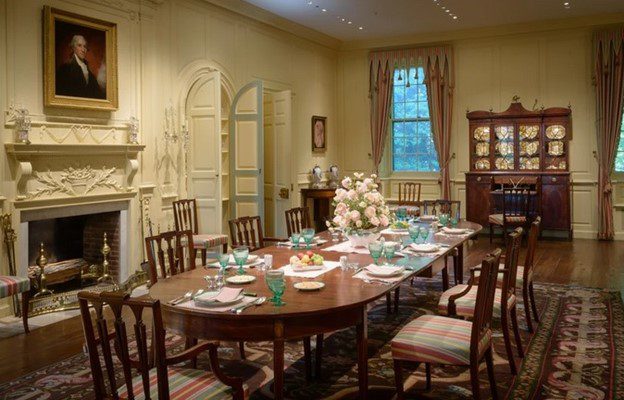
The weekend guests arrived on Friday afternoons and were received in Port Royal Hall, where it was mandatory for them to sign the guestbook. Then tea was served in the adjacent Port Royal Parlor, after which guests were taken to their rooms. The footmen served cocktails at 8:00 pm in the Chinese Parlor and dinner at 8:30 pm in the Du Pont Dining Room.
“The food was plain, but the best, as it was nearly all produced on Winterthur Farms,” Gilliand recalled.
Chinese ParlorDu Pont Dining Room
While the guests were dining, footmen and chambermaids took turns scrambling upstairs to tidy the guests’ bedrooms and put away all their clothes and belongings. They also removed the “good bedspreads” so no one would lie on them. Those bedspreads were just for decoration.
The du Ponts and their guests played bridge after dinner (du Pont was an expert) in the Chinese Parlor and the Marlboro Room.
Marlboro Room
Footmen served refreshments and sandwiches at 11:00 pm, and the game would resume until the wee hours of the morning.
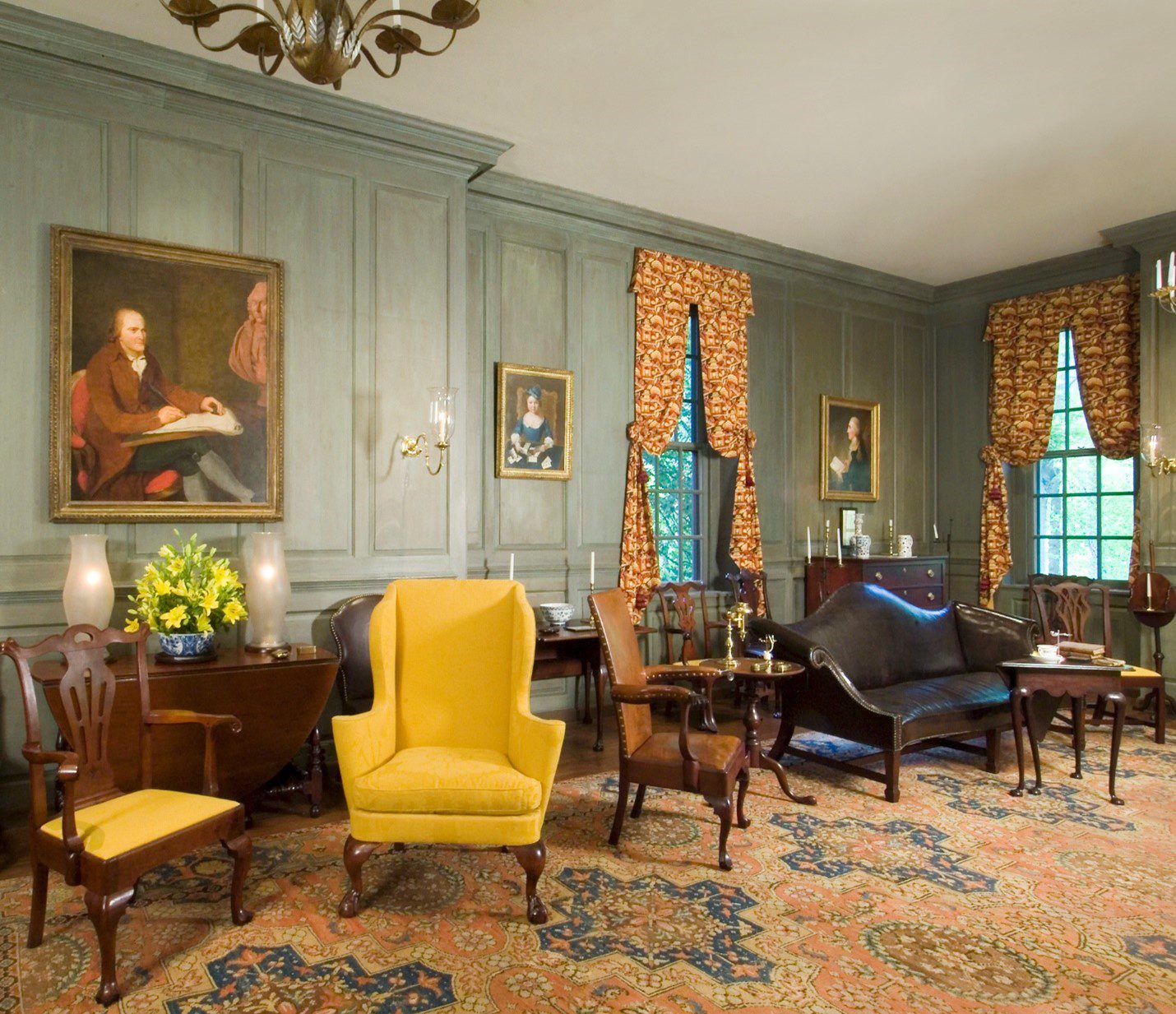
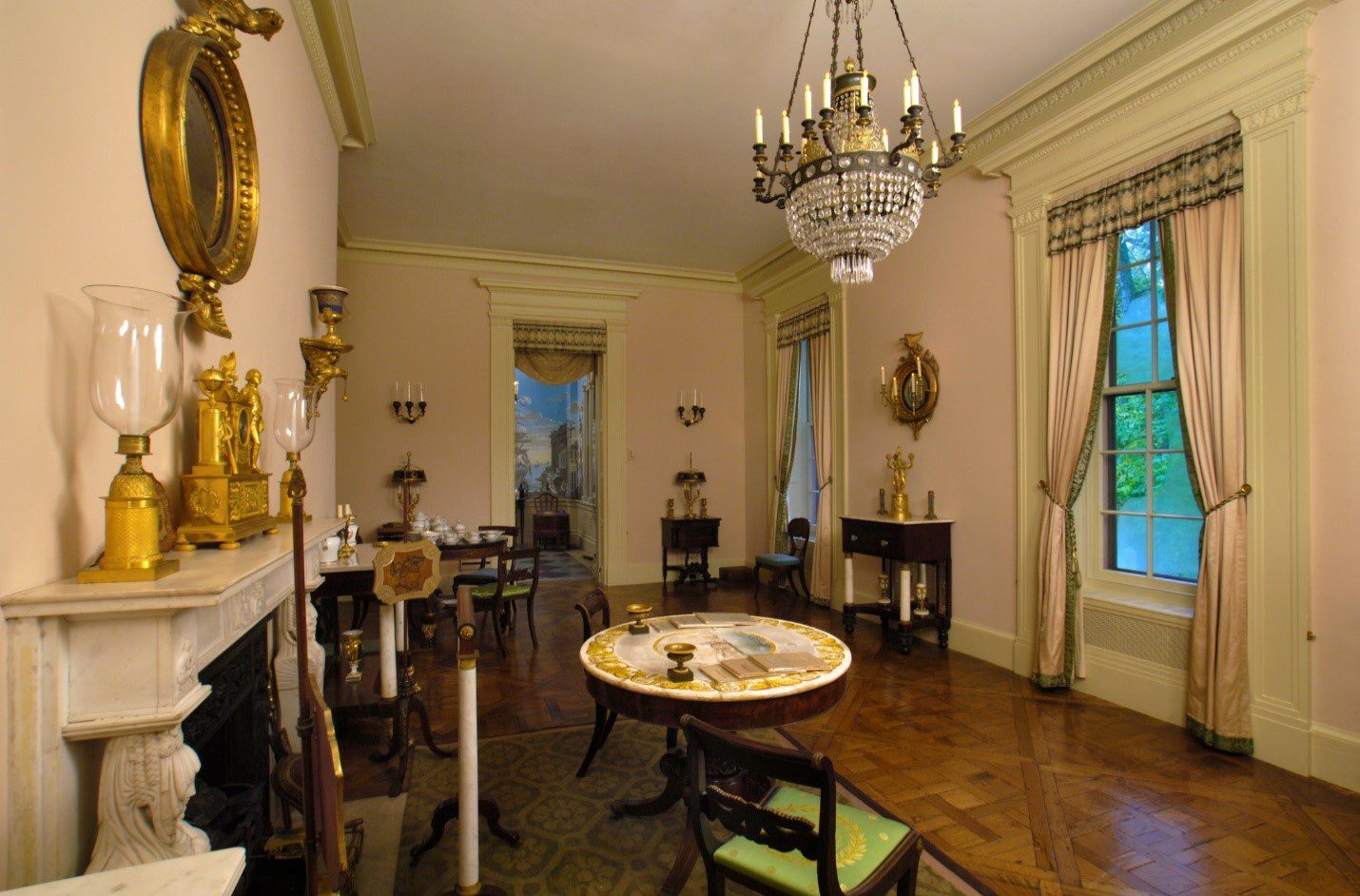
Other nearby rooms—the Baltimore Room, Chestertown Room, and Empire Parlor—were never used for entertaining.
Baltimore RoomEmpire Parlor
“Guests were never allowed to sit. Mr. du Pont was very strict about that. If he caught any sitting or leaning—no, those were not used.”
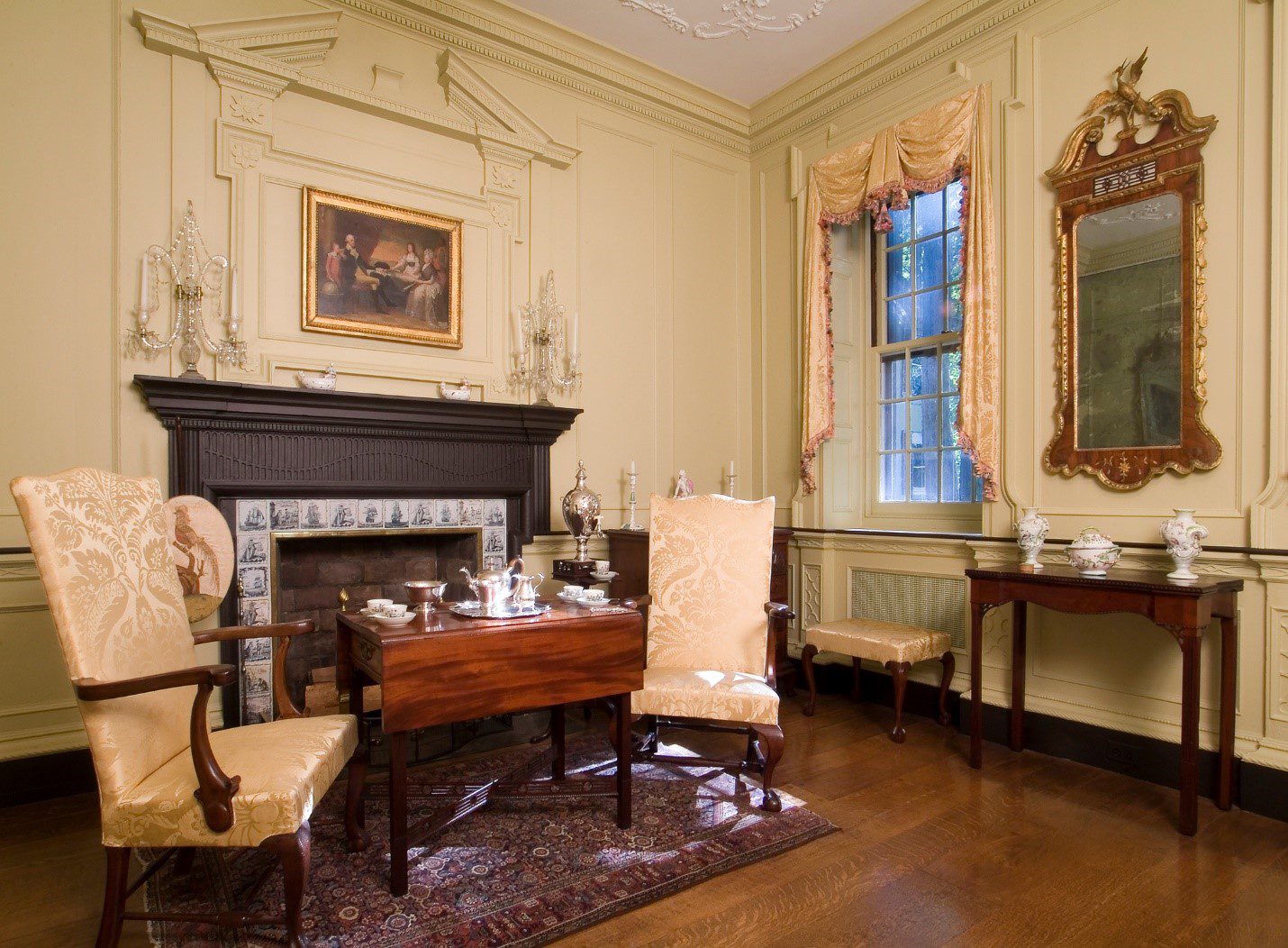
Chestertown Room
Though the Chestertown Room was referred to as the “breakfast room,” the du Ponts and guests never ate there. They were always served breakfast in their bedrooms.
Gilliand said he believed he had only ever made one serious mistake for Mr. du Pont, and it wasn’t leaning on the furniture.
“I’ll never forget it the rest of my life,” Gilliand said.
Du Pont had told Gilliand to telephone a woman and include her on the guest list for an upcoming occasion. Unfortunately, Gilliand misunderstood the name.
“I came back to Mr. du Pont, and I said, ‘Mr. du Pont, Mrs. So-and-So accepts with pleasure,’” Gilliand said. “He said, ‘What lady?’ I said, “Mrs. So-and-So you invited.’ He said, ‘Maurice, damnation, damnation, how could you do such a thing, how could you? I didn’t want that lady for this dinner.’”
At that point, it was up to Gilliand to find a gentleman who could accompany the woman to the dinner. Or, at least, those were Mr. du Pont’s orders. But Gilliand chose to solve the problem in a more straightforward way: He called her back and admitted his mistake. He asked the woman if he could tell Mr. du Pont that she had overlooked a scheduling conflict and could not attend. He also asked whether she would keep the matter between herself and Gilliand.
She said, “Oh, don’t worry, Maurice, it won’t go any further.”
Gilliand returned to the study where du Pont was speaking with someone. He immediately told Gilliand to enter, as he always did, and the butler explained, “Mrs. So-and-So didn’t realize she had a previous engagement, and she will not be able to keep your dinner date.”
Du Pont replied, “Maurice, too bad, too bad, sorry to hear about that.”
Gilliand said he did not know du Pont’s wife, Ruth, very well because she dealt exclusively with the female servants. But Gilliand did know that she liked to tease her husband by pretending she could not hear him.
“So, he would repeat it, and she would say, ‘What did you say, Harry?’ and he would blow his top,” Gilliand said. His wife would laugh and smile.
One time, du Pont yelled at Gilliand for something similar. Gilliand legitimately did not understand something du Pont was saying, partly because he was speaking while holding a cigarette in his mouth. After Gilliand twice asked du Pont to repeat himself, du Pont began to yell.
“So, I just walked out very quietly into the pantry and stayed there for a couple of seconds, and I walked back and said, ‘Now, sir, what is it you are trying to tell me?’ Very nicely he came and told me what he wanted. After that, he never shouted at me, never.”
Du Pont treated his staff well and worked alongside them, Gilliand said. During the week, du Pont would be up at 6:00 am and have a simple breakfast of “a glass of milk and a glass of orange juice.” He would then receive all the supervisors of the estate in his study to get an update on operations.
On the occasion of a large wedding with several hundred guests at the estate, du Pont threw a party for the staff when the wedding and reception were over.
“He left me enough wine, champagne, and whiskey to share with the staff,” Gilliand said.
Maurice Gilliand
“Mr. du Pont was a very good employer, kept many of his people for a lifetime,” Gilliand said. “He never was too busy to chat, or discuss problems, if any, and help you if he could. To me, he was a friend. I am still grateful for all the knowledge he gave me of American art, and he is missed by many of us.”
Have you ever wandered around Winterthur and felt like it all wasn’t real, as if you were on a movie set? But one thing was missing—the soundtrack. Inspired by the magical garden and grounds, we decided to make some playlists to capture the moods of summer at this glorious country estate.
There’s something about the early days of summer, especially in June when the temps haven’t risen too high. Our June playlist is full of country and folk music. Upbeat and full of rhythm, it’s perfect for moving your body and taking a hike around the estate. We hope this kickoff-to summer playlist will give you the feeling of reaching the highest peak and then finding satisfaction in coming back down the mountainside. The sounds of The Chicks, Shania Twain, Waxahatchee, boygenius, and more will accompany you on your journey.
By July, we’re in the mood for picnics, lazing in the sun or lounging in the grass, and finding the perfect shady spot to read this summer’s best seller. That feeling of fun and freedom on hot summer days spent with the best of friends and loved ones is told through the music of MUNA, Snail Mail, Hoku, Tessa Violet, and many more. This July is all about upbeat pop.
Before we know it, the dwindling days of summer will arrive, bringing images of one last blowout of the season—think Gatsby-esque parties and big band music and decadence in the sweltering air. A little bit of jazz and big band mixed with elements of pop and hip-hop sound just about right to wrap up the hottest of days.
As the days unfold outside and inside at Winterthur, we’ll continue sharing playlists that paint pictures like these and help you create new stories of your visits here.
Delaina Jolley has always felt like an artist. “I remember being five and saying my career would be as an artist,” she recalled recently. “My mom, Yvonne, is an artist. She did a lot of portraits. So, I’ve always been an artist, but now I am learning how to be a working, professional artist,” said Delaina, now 23.
Growing up in Newark, Delaware, Delaina spent hours looking through books just for the illustrations, creating her own mini-comics, and thriving in her art classes.
“This passion led me to attend the Pennsylvania College of Art & Design, where I graduated in May of 2022 with a Bachelor of Fine Arts degree, majoring in illustration,” Delaina said. “I learned not only how to be an artist and designer but also the importance of using my work to create positive changes in my community and those around me.”
Delaina will be one of the more than 100 artists, musicians, and vendors featured in Winterthur’s Artisan Market on July 15 and 16. She received an Artisan Market grant to participate. The grants encourage emerging artists and start-up businesses to take part in the event.
“Receiving this grant means that the first step in my career as an artist starts in my home state,” said Delaina, an admissions counselor at Delaware College of Art and Design in Wilmington. “This will be my first time creating my own booth and showcasing my own work. I’m just excited about being around other artists, designers, and artisans. This is kind of like my first rodeo.”
Receiving the grant is also about serving as an example to artisans who, like her, are just starting out. As she explains, “I can show other young local artists that they can take chances, create what they love, and even sell their work, too.”
Artist Delaina Jolley (photo courtesy of Nick Gould Photography team)
“I enjoy incorporating portraits with bold colors and abstract shapes, and a lot of my work includes writing, lyrics, and songs,” Delaina said. “Sometimes I just want to convey what I am feeling, and sometimes I am inspired by different songs, quotes, or people. I recently did a portrait of (poet, author, and activist) Amanda Gorman.”
“Amanda Gorman” by Delaina Jolley
Delaina said her work has two different sides – catching people’s attention with color and raising awareness about broader issues.
“Sometimes there is the pressure of having to create a finished piece. But sometimes you just need to take out your sketchbook and just draw. Sometimes I just need something to do that’s not being on my phone. I just want to sit and let my mind be free. It helps with my mental wellness.”
Maintaining a schedule of creation is key to succeeding as an artist, Delaina said.
“That starts you on a path to success,” she said. “Being able to continue to communicate through my work is a big thing. If I need to communicate something, I need to do it through art.”
In addition to selling her own work, Delaina has ambitions to become a creative director, leading projects through a creative process.
“I would love to do book covers as well,” she said. “If I could get my art on a book cover, that would be something amazing.”
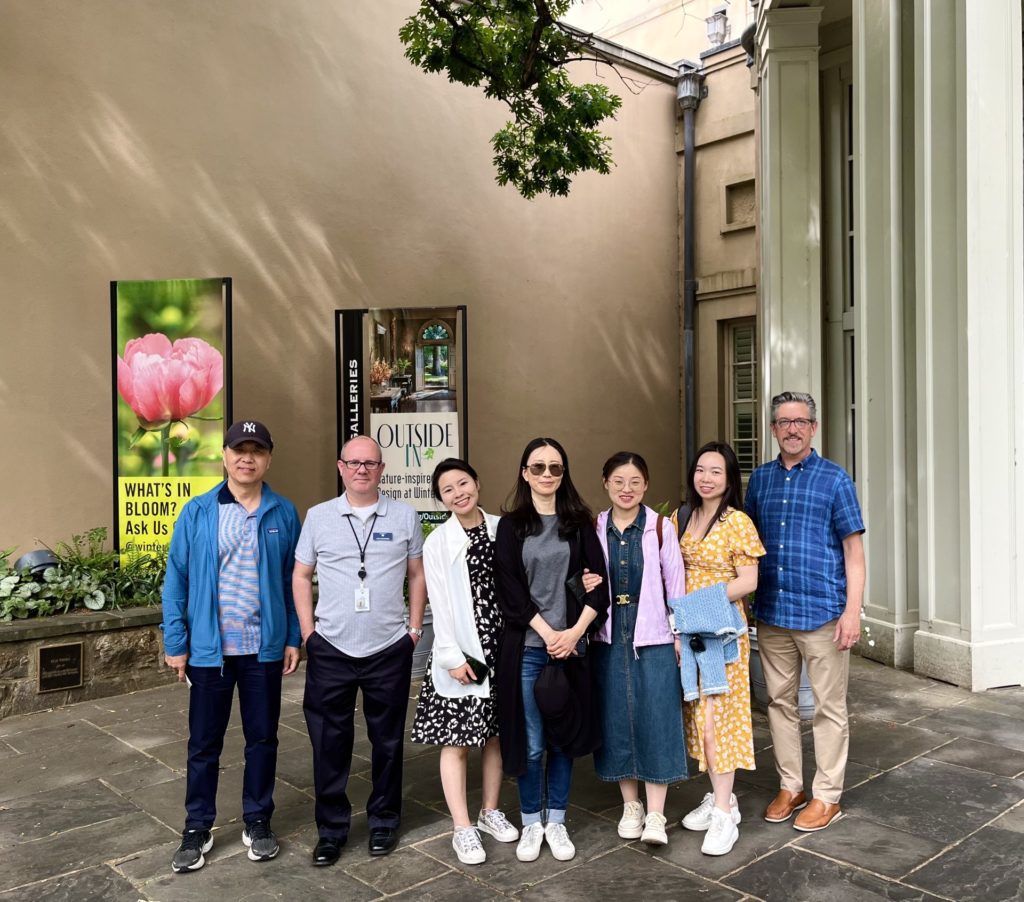
Five people who organize group excursions from China disembarked a little late from a chartered van that pulled up to our Visitor Center. They were on a mission to scout the region for potential stops on tours they could bring here from China, the largest outbound tourism market in the world. The group was escorted by Greg Edevane, director of global development for Chester County Tourism, which promotes the entire Brandywine Valley.
The five guests had already seen other area attractions that weekend and had more to enjoy later in the day. So with their ambitious schedule in mind, we set out to experience everything Winterthur offers. Unfortunately, we didn’t have time to do it all.
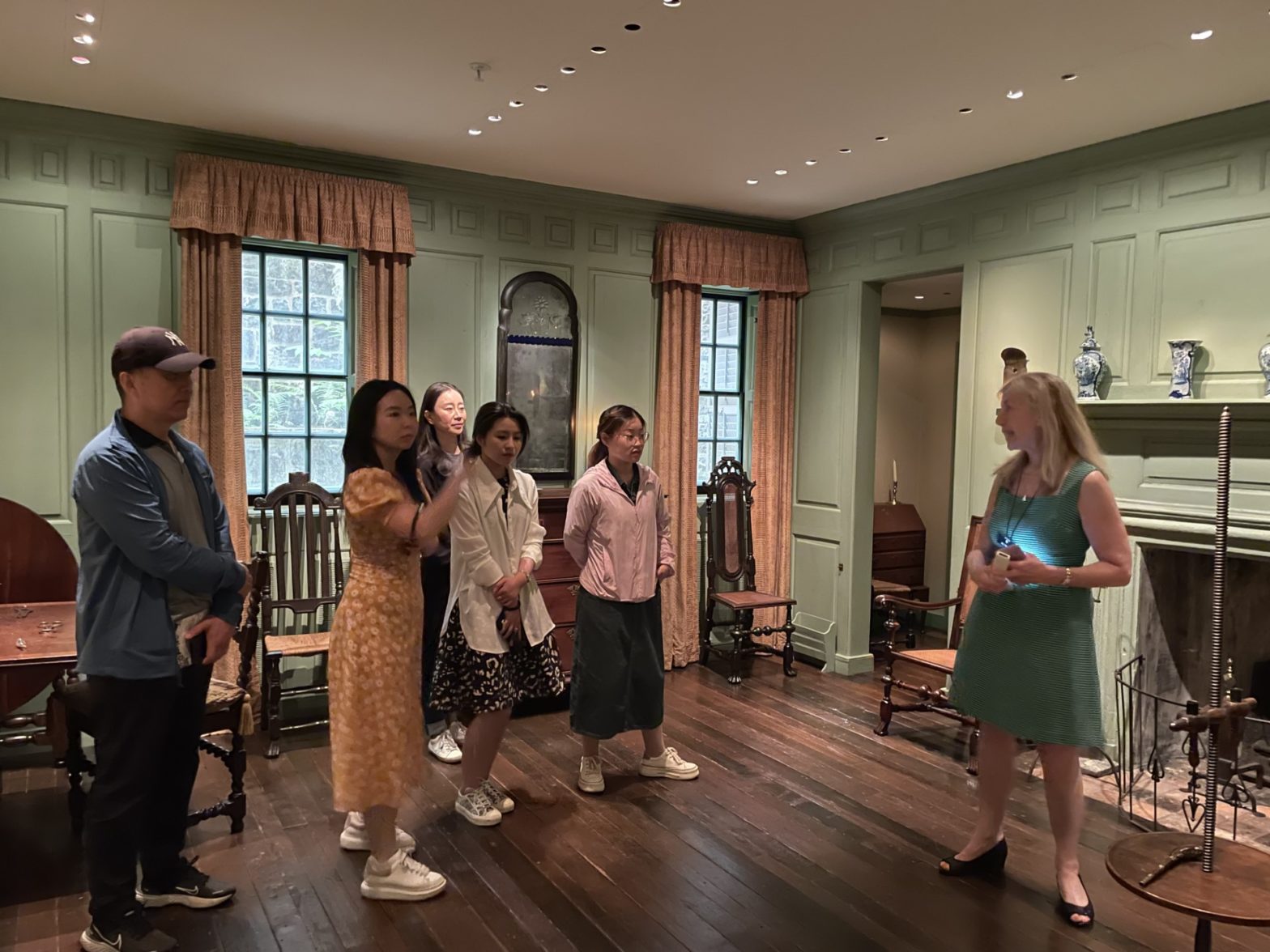
First, we took a house tour, which allows visitors to see highlights of the 175-room former home of museum founder H. F. du Pont. They delighted in the décor, photographed the furniture, and appreciated the antiques.
A Winterthur tour guide, at right, interprets the contents of the 175-room house at Winterthur for five visitors from China who organize excursions to the United States.
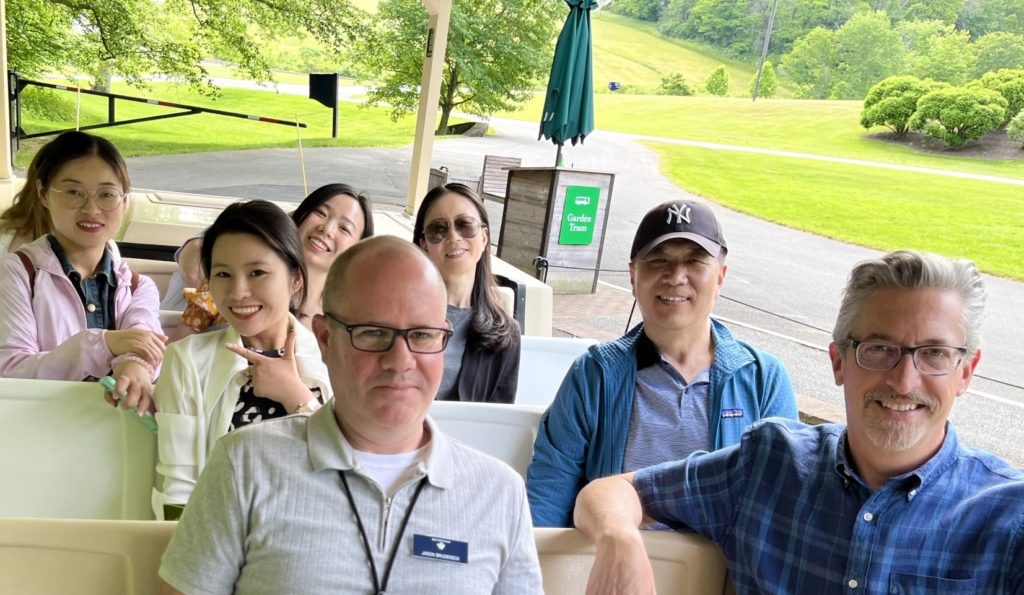
After a whirlwind trip through several rooms in the mansion, we embarked on a tram tour of the breathtaking garden. The group took in the flowers and foliage, the leafy trails and paved paths, and the magic of Enchanted Woods, a three-acre children’s garden that offers several play areas to climb in, on, and over, including a Faerie Cottage with a thatched roof, a giant Bird’s Nest, and an Acorn Tearoom for make-believe tea parties.
Five businesspeople from China who organize excursions to the United States are accompanied on a garden tram tour by Jason Brudereck, Winterthur’s communications manager, left foreground, and Greg Edevane, director of global development for Chester County Tourism.
It was tempting to get out and explore some of the sights we passed, and other guests on the tram did just that, but we had to press on.
Greg suggested skipping a visit to the Museum Store to maintain their schedule, but the guests from China wouldn’t hear of it. They checked out the multi-room retail space that houses a remarkable collection of gifts, books, jewelry, honey made from hives on the estate, and more.
They didn’t have time to walk the trails, dine in the Visitor Center Café, marvel at the exhibitions in the galleries, or gawk at the Campbell Collection of Soup Tureens before reboarding their van and continuing to another wonderful destination in the Brandywine Valley. But that gives them a reason to come back.
Gabby Chen, general manager of Now-Trip in Chengdu, the capital of southwestern China’s Sichuan province, said: “This will be a unique place to bring people. It is somewhere people might not think to go if they’re planning a trip to America for themselves.”
Benjamin Sterling Cannon hadn’t been to Winterthur since he was about 10 years old. Now the executive and artistic director of the Wilmington Ballet Academy of the Dance, Cannon never gave much thought to the local cultural institution, which he viewed as a “separate, large, and self-contained” system.
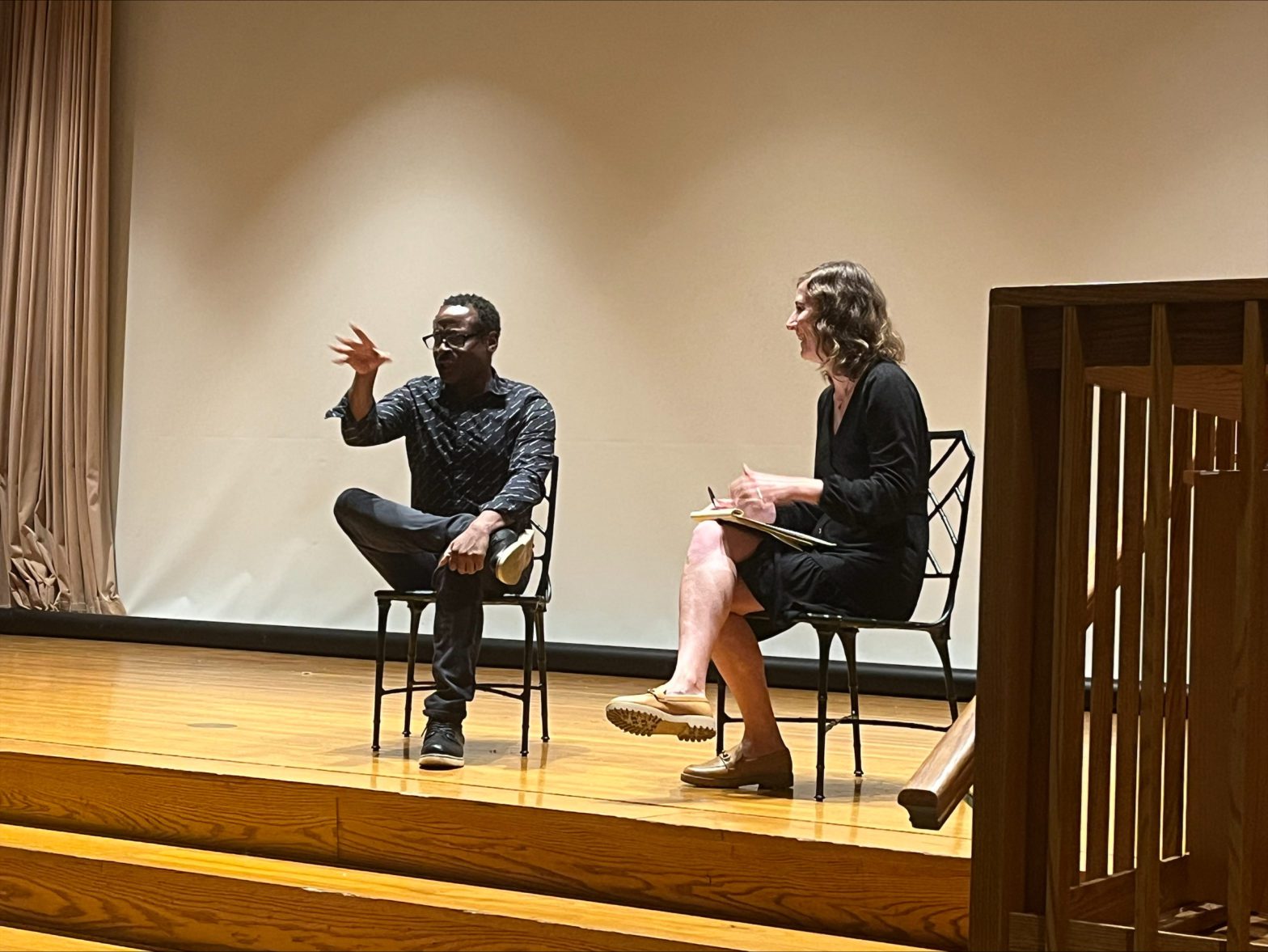
“I never thought I could have a partnership with a place like Winterthur,” Cannon said recently from the stage of Copeland Lecture Hall. But one day a few years ago he was approached by Mark Nardone, who was then communications manager at Winterthur. Nardone invited Cannon to visit and experience what we have to offer, and so Cannon did. He was delighted to find that his assumptions weren’t justified.
“I found the team at Winterthur to be, in a word, ‘curious,’” Cannon said.
He could have meant curious in the sense of the word’s secondary definition: “strange, quirky, or unusual.” And he wouldn’t be incorrect. We’re an interesting bunch. But he truly meant the primary definition of curiosity: “eager to learn.”
On his first visit back as an adult, Cannon fell in love with Winterthur, and the team here likewise fell in love with the Wilmington Ballet. When Cannon drives on to the estate these days, he doesn’t feel like a trespasser. “I like to pretend I live here,” Cannon said.
Winterthur’s collaboration with Cannon developed into a relationship with a variety of area organizations. It’s been an enriching experience for Winterthur employees and visitors alike. One of the outcomes is our upcoming Juneteenth Celebration Day, which takes place here on Saturday, June 17, from 11 am to 4 pm. Juneteenth is a federal holiday in the United States that commemorates the emancipation of enslaved African Americans.
Throughout the day, a variety of storytellers, musicians, and dancers will fill Enchanted Woods and Copeland Lecture Hall with performances enriched by and deeply rooted in African American arts and culture. The activities in Enchanted Woods are included with general admission tickets and are free for Winterthur members. Purchase tickets in advance here.
Performances of The Whitney Project’s “A Celebration of Black Joy” will take place at 11 am and 3 pm in Copeland Lecture Hall. There is a separate fee for these performances. Register for “A Celebration of Black Joy” here.
For an overview of Juneteenth Celebration Day, visit this page.
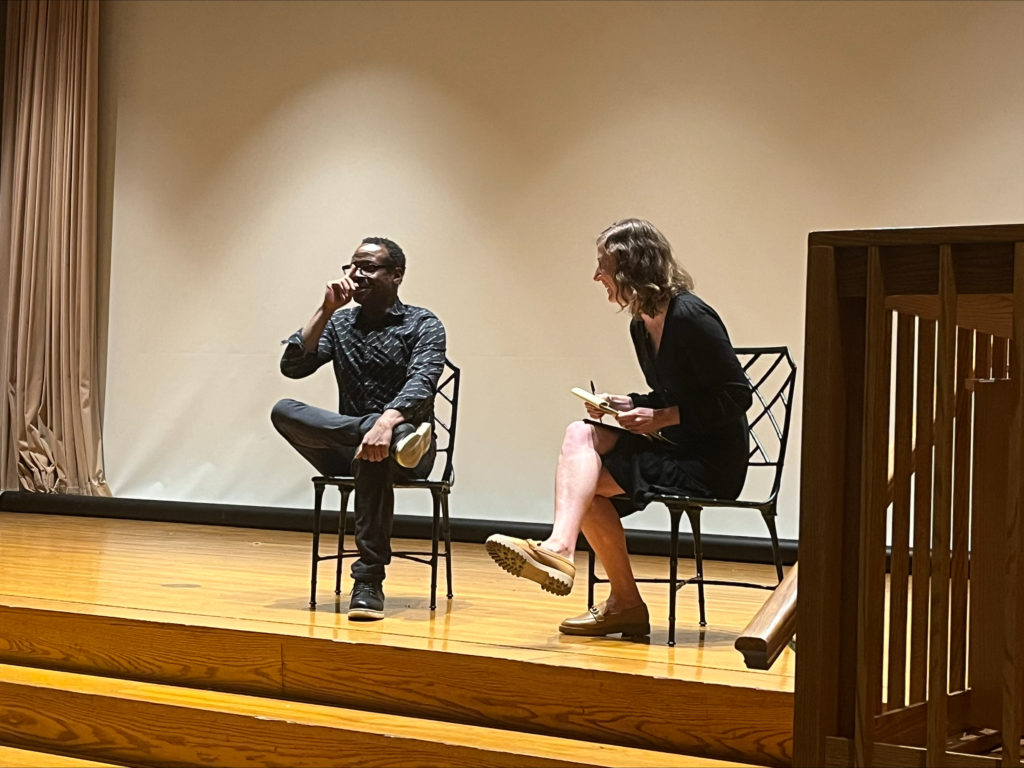
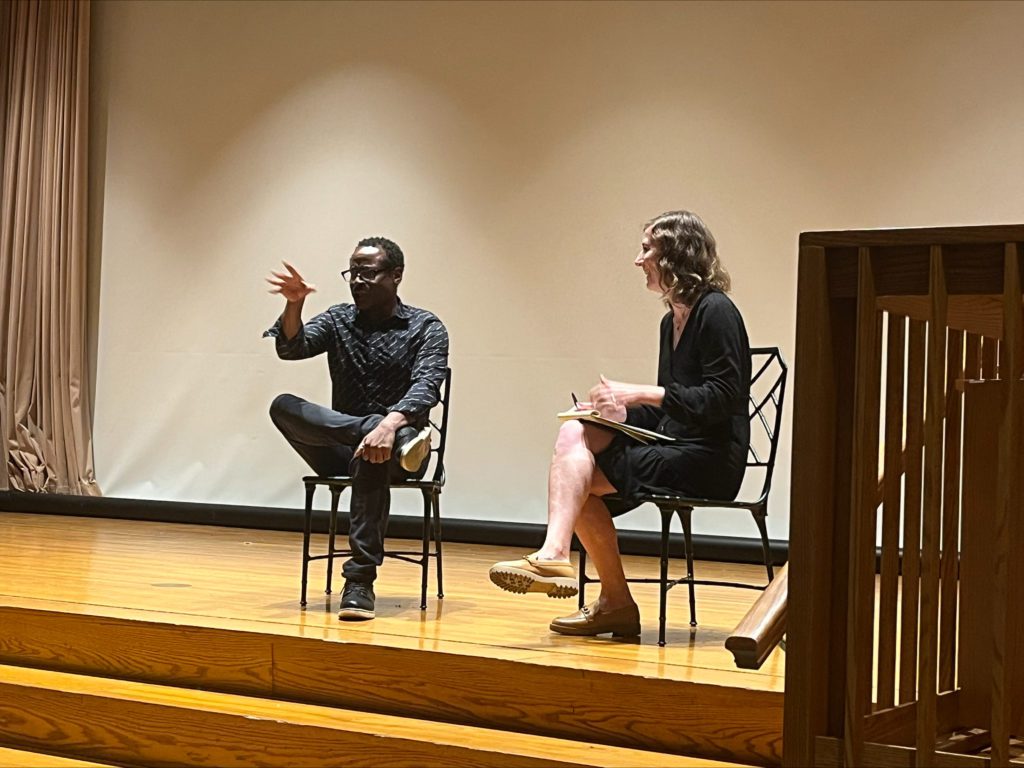
Benjamin Sterling Cannon, executive and artistic director of the Wilmington Ballet Academy of the Dance, speaks about his experience collaborating with Winterthur while being interviewed by Eliza Jarvis of Flux Creative Consulting in Copeland Lecture Hall.
“Winterthur has a lot to offer.” That’s a sentence I’ve used to start a lot of my talks about where I work and what I do. It’s so broad a statement that it feels like an easy out, but it’s true. The reason I say it so often is because Winterthur is a huge place, profuse with history and activity and so much to give, and I am always discovering more the longer that I am here.
Although I’m a horticulturist who works primarily in the almost 60-acre historic garden, some of my favorite spots and discoveries on the estate have been in our meadows and forests on the many hiking trails that lead you through them.
Since I am not a natural lands technician, I sat down with Jim Magee, our resident natural lands expert, and discussed the trails, meadows, and forests—what they have to offer and how guests can best explore these areas, learning and discovering new things while they wander.
Here is a quick list of 5 things to remember when visiting the “wild” areas (meadows and forests) at Winterthur:
1. Upon arrival, stop by the Visitor Center.
If you are a Member, please check in so that we know how many people are visiting us; if the Visitor Center is closed, wear your lanyard displaying your membership card.
If you are a nonmember, please purchase a ticket.
2. Get a map. These are available at the Visitor Center, or you can download them. There are 15 miles of trails to walk and hike, and we are always adding more, so visit us often to see all there is to see.
3. While hiking, be sure to leave nature in its place. “Leave no trace, take only memories.”
4. Dress for the weather. Wear comfy walking shoes, bring a bottle of water, and, after your hike, always check for ticks!
5. Most important, have fun, get lost, go on an adventure! There is always something new to see at Winterthur, whether you are hiking the trails or lounging in the shade of a tulip poplar at the forest’s edge.
Congratulations—or félicitations, as they say in French—are in order, even if we say so ourselves!
Much to our delight, Winterthur has been awarded a coveted three-star rating in Michelin’s first-ever Green Guide for our area: Philadelphia & the Countryside.
Like the famed Michelin star system for restaurants, this exceptional rating represents the highest and rarest honor. The Michelin Green Guide awards destinations with one, two, or three stars to let readers know whether a place is worth a visit, a detour, or a special journey, respectively. And if that weren’t enough, Winterthur is named one of the 10 “unmissable” must-see sites.
While announcing the new book at an event on May 18, Philippe Orain, editor in chief of the Michelin Green Guide collection, revealed why his team chose Philadelphia and its environs as the 8th U.S. destination to be featured. He called Philadelphia “the most important historical city in the U.S. as the birthplace of America” and an “East Coast Gateway” for international travelers to be introduced to the country.
The guide itself is exciting to read, and the entire tourism team—both here at Winterthur as well as our friends at the Philadelphia Convention and Visitors Bureau (PHLCVB), Chester County Conference & Visitors Bureau, and the Valley Forge Convention and Visitors Bureau—are thrilled that so many Delaware sites are included. “We aren’t the destination that we are without the attractions in the countryside,” said Gregg Caren, PHLCVB president and CEO.
Gregg Caren, PHLCVB president and CEO, announces the publication of Michelin’s first-ever green guide for our region.
Many Pennsylvanians—and I say this as a Pennsylvanian—forget how intertwined the First State is with the Keystone State. My colleagues sometimes like to joke that Delaware makes up “the three southernmost counties of Pennsylvania.” (It’s a comment that amuses Pennsylvanians. Delawareans, probably not.) As it is, I usually have one foot in each state, commuting from one end of the Delaware Valley to the other almost every day. I love where I live, and I love where I work, so I’m delighted that both places have received such prestigious recognition.
One thing we surely agree on is that this honor has left us starry-eyed, and we all look forward to welcoming more visitors from France and beyond to our beautiful region.
Celebrating the publication of the guide are, from left, Greg Edevane, director of global development for the Chester County Conference & Visitors Bureau (CCCVB); Nina Kelly, director of marketing & communications for the CCCVB; Jason Brudereck, communications manager for Winterthur; and Christine Heesters, director of marketing for Winterthur.
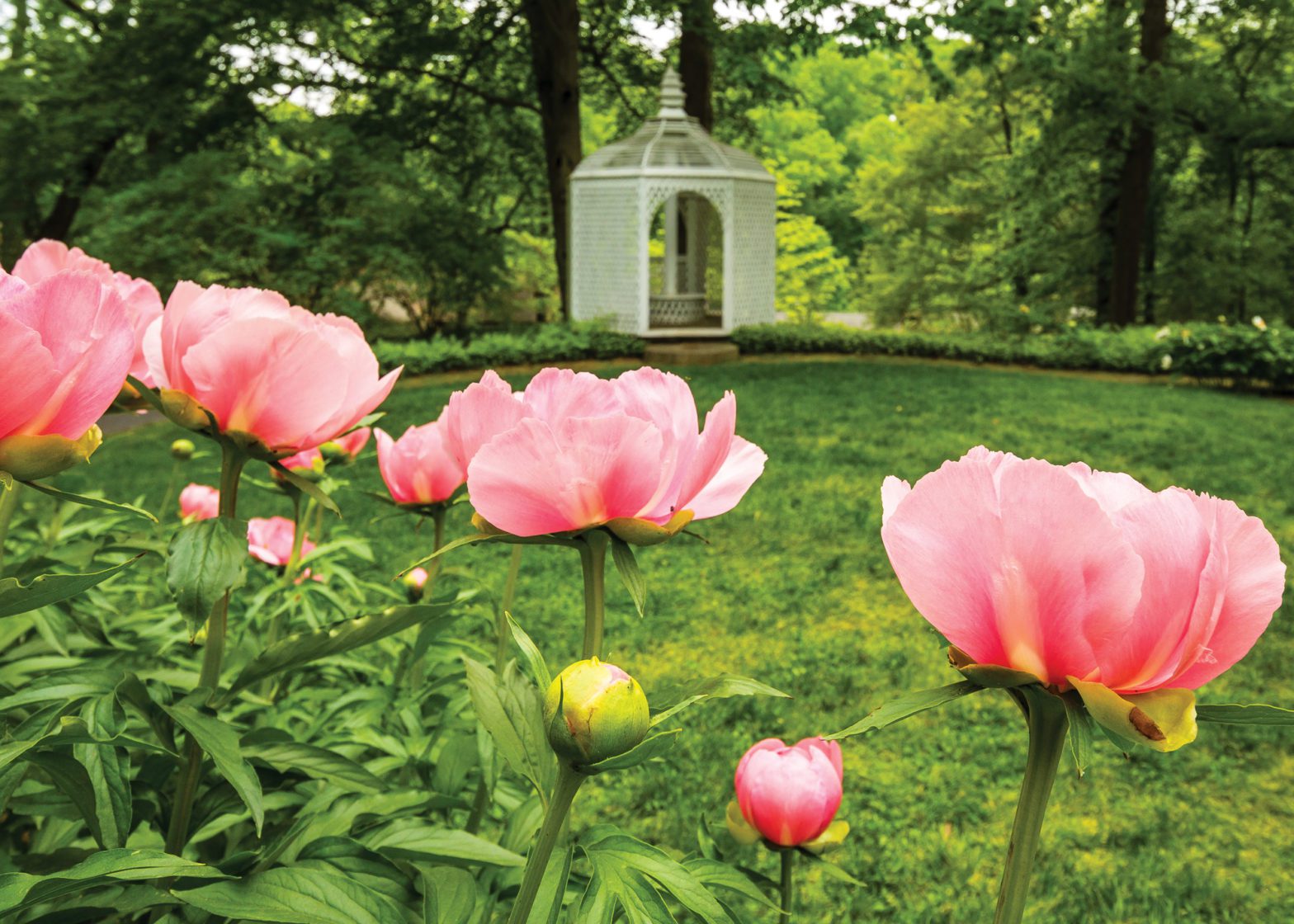
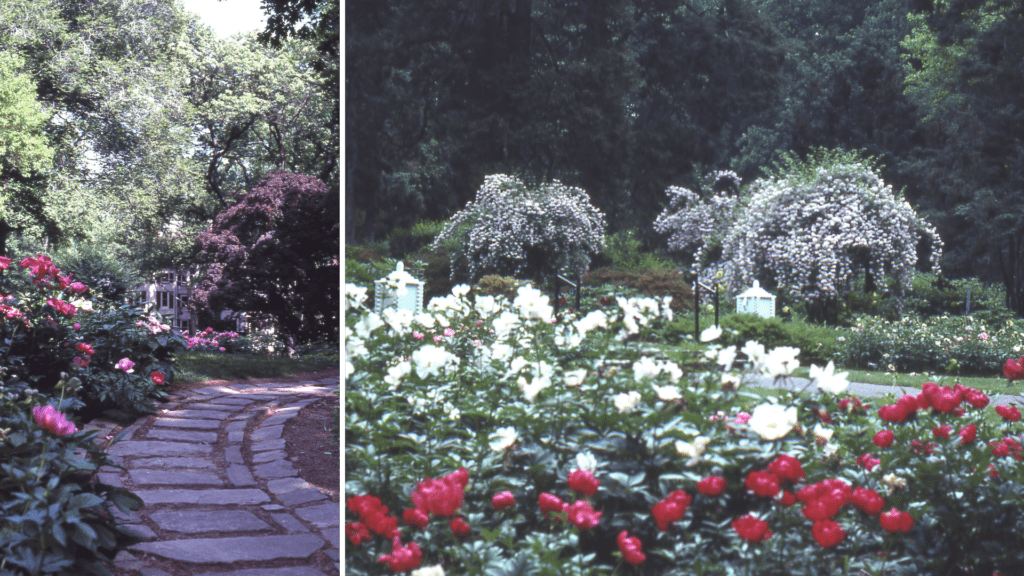
A celebration of full-blown spring, this area reaches its peak in late May. The peonies in this area are a horticultural treasure representing the best of the yellow, bronze, peach, and maroon Saunders peonies as well as an unparalleled planting of white, pink, and red herbaceous varieties selected with particular attention to flower form.
When creating this garden, H. F. du Pont honored the work of Dr. A. P. Saunders, one of the great peony hybridizers of the 20th century. In addition to the herbaceous peonies, the garden features the lesser-known tree peony. (The term tree is misleading since they are actually shrubs that grow 4 to 6 feet tall.)
Du Pont also added plants with similar flowering times, including beauty bush (Kolkwitzia amabilis), with its fountain of cascading pink blossoms. The lavender flowers of Chinese lilac (Syringa x chinensis) and Henry’s lilac (S. x henryi) also work well here. Surrounding the garden are additional complementary plants. Pink-flowering Weigela florida var. venusta, near the garden steps, harmonizes with the striking red-wine azalea (Rhododendron obusum ‘Amoenum’). A pink crabapple named in honor of du Pont (Malus ‘Henry F. du Pont’) flourishes along the path to the Visitor Center, as do Kurume azalea Coral Bells (Rhododendron ‘Coral Bells’).
The charming Latimeria Summerhouse at one end of the garden was purchased from an estate in Wilmington, Delaware, in 1929, when Marian Coffin designed the Peony Garden.