Search Site

A Bicentennial Longrifle with a Powder Horn and Pouch Join Our Historic Arms Collection

By Ann Wagner, Curator of Decorative Arts at Winterthur

Today, cultural institutions seek to understand the nuanced and varied impacts of the War for Independence on colonists and Indigenous Americans, especially those directly involved. In 1976, our nation’s Bicentennial, they focused on artists, including gunsmiths and hornsmiths, who were dedicated to preserving craft knowledge and recreating early arts.

In step with our collection of American black powder rifles, in 2022 Winterthur acquired a special-order Bicentennial longrifle that was designed and produced for the state of Pennsylvania in 1976 (see fig. 1). This is our first firearm by a contemporary artist, and it inspired another artist to create a powder horn to accompany it.

Figure 1. John F. Bivins Jr., Pennsylvania Bicentennial Commemorative Longrifle, North Carolina, 1976–77. Maple, hickory, iron, brass, flint, and varnish. Museum ​purchase with funds drawn from the Centenary Fund 2022.0026 A, B

John F. Bivins Jr. (1941–2001), a gunsmith and scholar working primarily in North Carolina, was recognized for his publications and work with the Museum of Early Southern Decorative Arts at Old Salem in Winston-Salem, North Carolina, and for his legacy as a teacher. In 1975 he accepted a commission from the State of Pennsylvania to create their Bicentennial Commemorative Longrifle Project. Two hundred rifles were contracted from Bivins and his collaborating artists for the project; Winterthur’s rifle is number 105. In Bivins’s description, its modestly ornamented architecture was not a reproduction of a Kentucky-style flintlock but “a contemporary statement of an ancient craft” and technically superb.
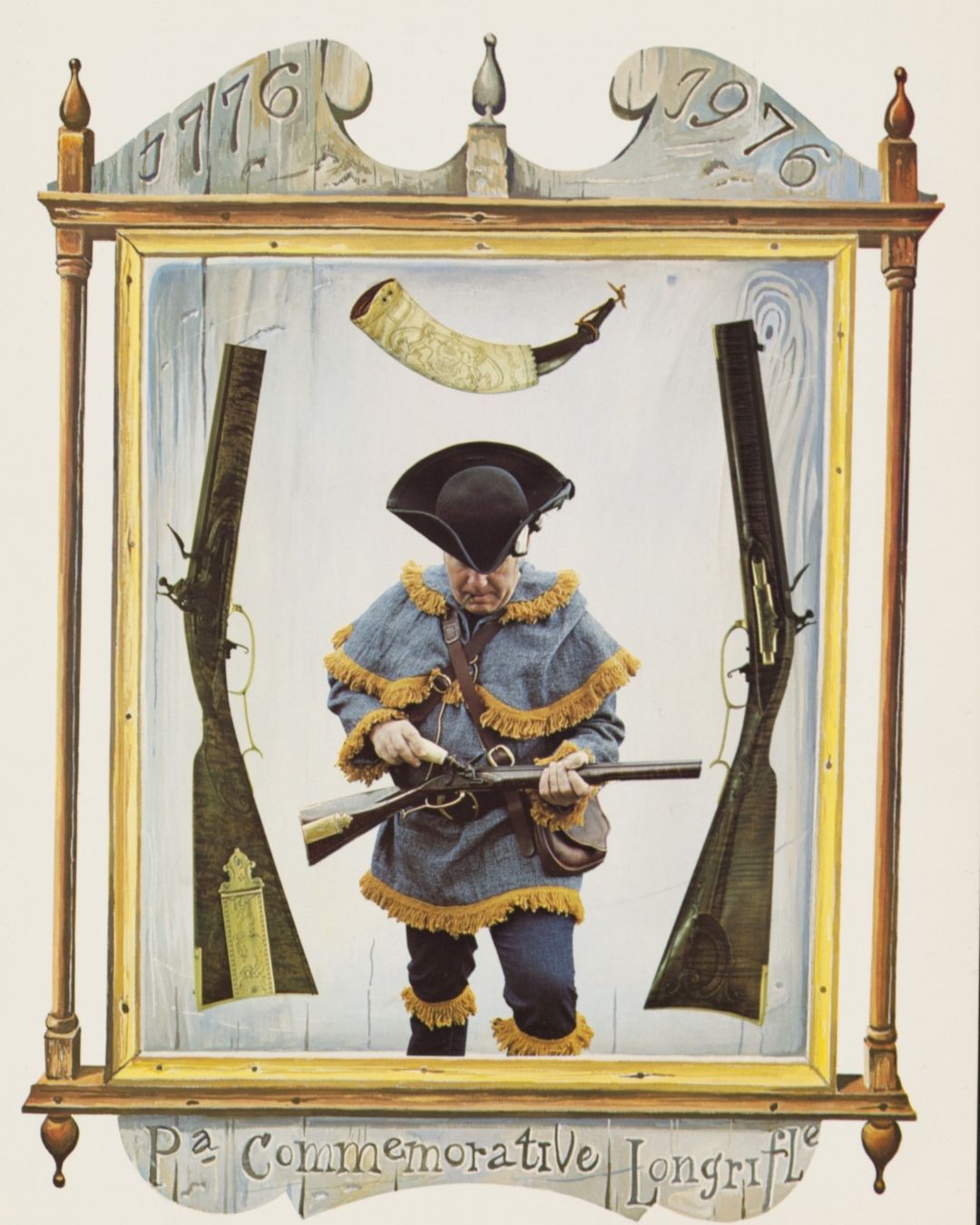
Figure 2. Detail of page 3 of the Pennsylvania Bicentennial Commission, Pennsylvania Commemorative Longrifle Set brochure (Johnstown, Penn., 1975). Winterthur Library, Joseph Downs Collection 828

The Pennsylvania commission offered a full commemorative set including a powder horn bearing the state seal (see fig. 2). Although he is not mentioned in the promotional material, master hornsmith Roland Cadle also assisted with the project.  When I lectured at the Hornsmith Guild’s annual meeting in 2024, Roland Cadle learned of Winterthur’s newly acquired longrifle. He was moved to reprise his role from nearly fifty years ago and donate a powder horn to the museum (see fig. 3). He carved a historically accurate Lancaster-style screw-tip horn with polychrome decoration. He included the seal and colonial landmarks from Fort Pitt to the city of Philadelphia and personalized it with the rifle’s “105” and the Winterthur “W” (see fig. 4). To complete this set, he also made a fringed hunting pouch.
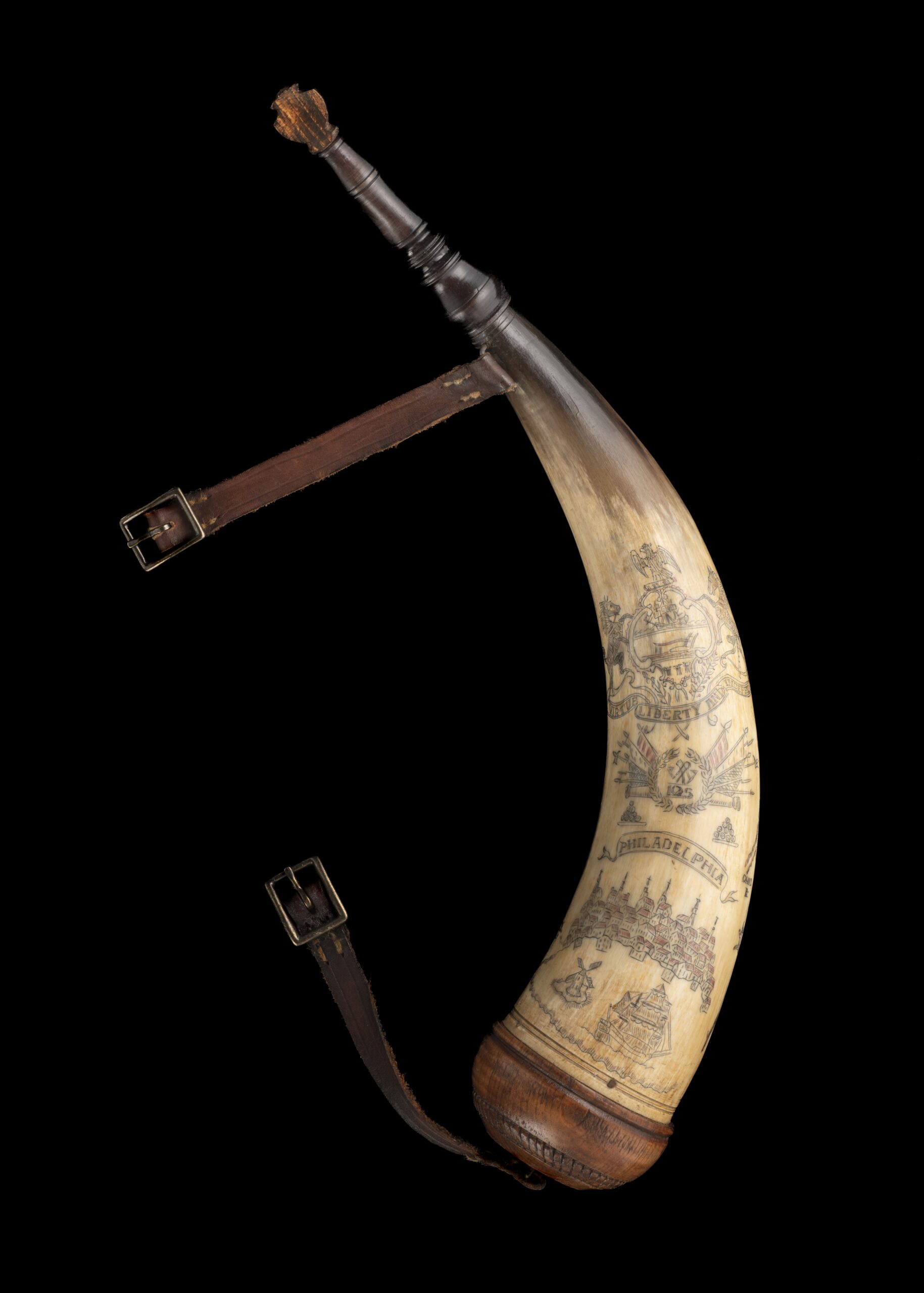
Figure 3. Roland Cadle, powder horn, Hollidaysburg, Penn., 2024. Horn (bovine), wood, iron, leather. Gift of Roland Cadle 2024.0012 B-D

Like many of North America’s cultural institutions, Winterthur is exploring ways to share the nation’s 250th anniversary with visitors. Contemporary artists whose creativity is inspired by historical collections and those dedicated to preserving craft practices speak a visual language all can appreciate. Winterthur is fortunate that Roland Cadle’s deep knowledge and lifelong passion for hornsmithing embodies his conceptual connections to earlier artisans, whether they worked in 1776 or 1976. Likewise, Bivins’s Bicentennial longrifle captures a moment in time that inspired many to try their hand at gunsmithing and to appreciate the historical craft knowledge he helped preserve.
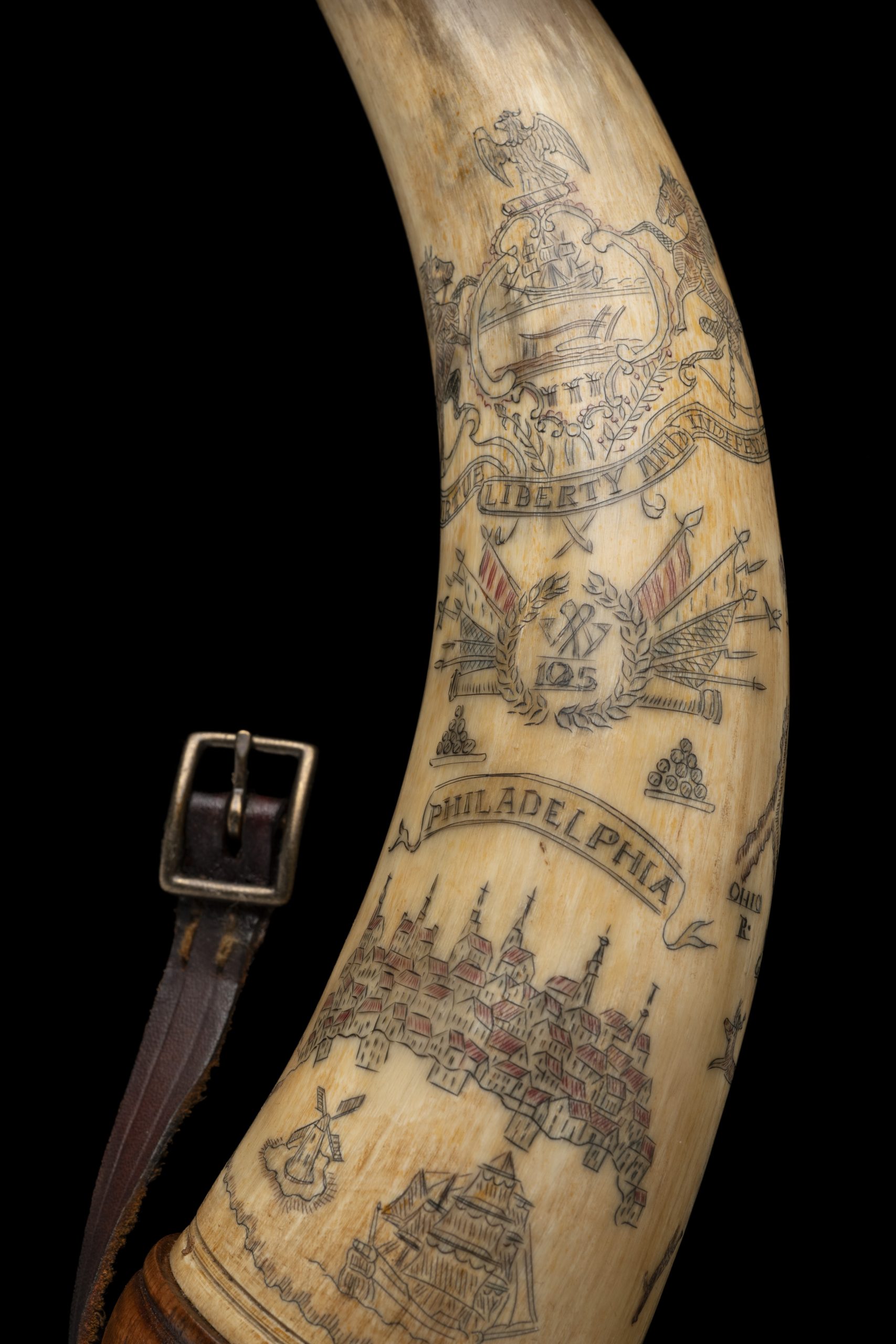
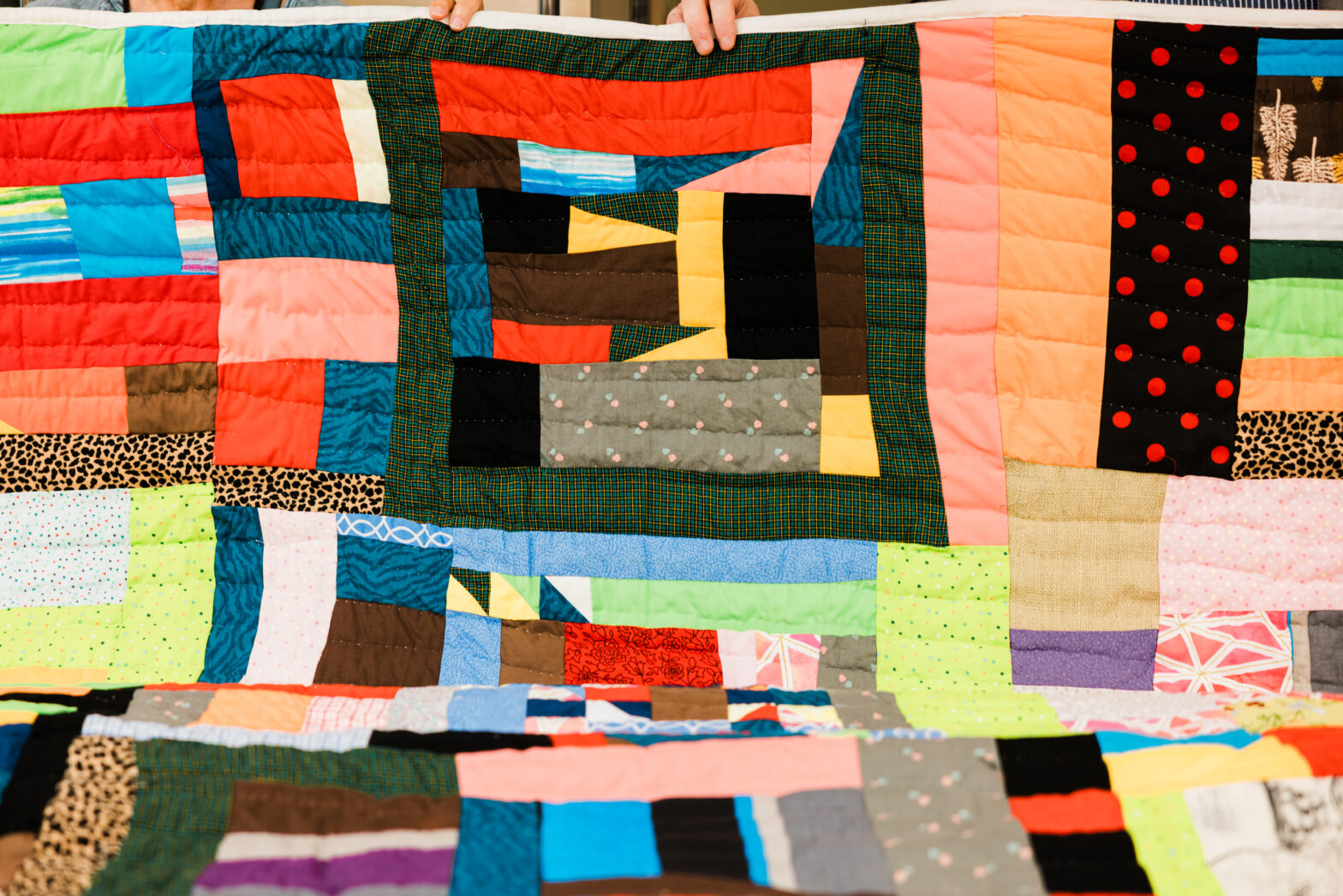
Figure 4. Powder horn (detail)

Quilting Freedom “My Way” in Honor of Martin Luther King Jr.

By Matthew Monk, Linda Eaton Associate Curator of Textiles at Winterthur

Each January, Martin Luther King Jr. Day invites us to pause and reflect on the unfinished civil rights work in the United States. At Winterthur Museum, Garden & Library, that reflection is often shaped by objects that people made to care for one another, to create feelings of home, and to claim dignity in the face of hardship. Three objects recently added to Winterthur’s collection—a contemporary quilt and two potholders made in Gee’s Bend, Alabama—embody that legacy of resilience, creativity, continuity, and community.

Sharon Pettway Williams and Jamica Williams, quilt, Alabama, U.S., 2023. Museum purchase with funds from the bequest of Barbara P. Katz 2023.0026. Photo by Azuree Holloway.

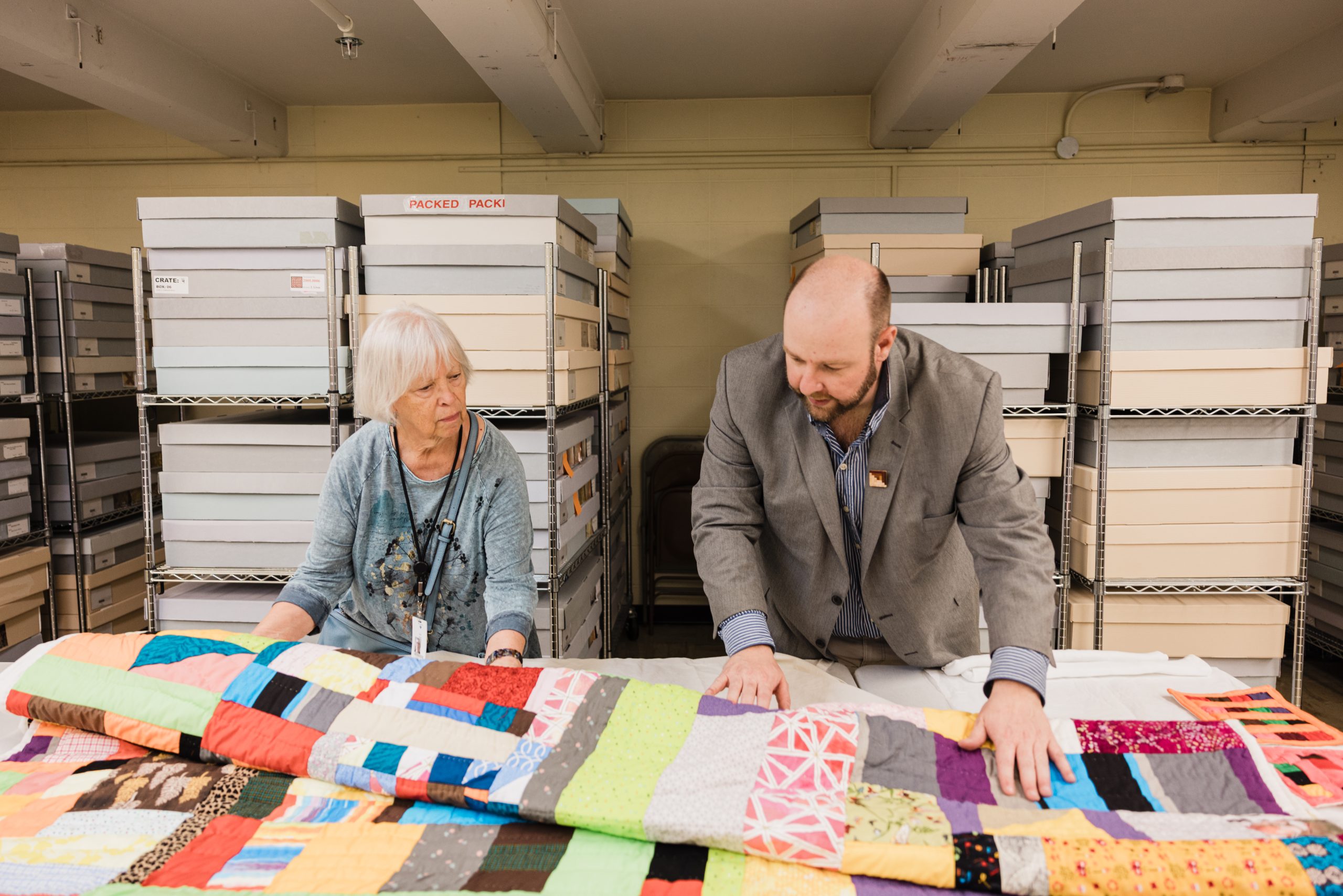
Sharon Williams and her granddaughter Jamica made these quilted objects in 2023, but these objects and their makers belong to a living tradition that stretches back generations in Gee’s Bend, a small, predominantly Black community on a bend of the Alabama River. Williams describes her design style as “My Way,” marked by free-pieced quilting that relies on intuition, bold geometry, and the creative reuse of available materials. Williams learned this tradition from her mother and grandmother and passes it down to her descendants today. Her quilt at Winterthur is composed of cotton fabrics, vintage and contemporary prints pieced together into a dynamic kaleidoscope of patchwork. The quilt is machine pieced and hand quilted. The quilt is also a living lesson between grandmother and granddaughter. It is at once deeply personal and unmistakably part of a collective Gee’s Bend aesthetic.

Gee’s Bend quilts are widely celebrated today, but they were born from necessity. For much of the 20th century, families in Gee’s Bend lived in relative isolation, many as descendants of people once enslaved on nearby cotton plantations. Women used worn clothing, flour sacks, and other textiles at hand to create quilts that provided warmth and protection in drafty homes. In doing so, they developed a distinctive visual language, one that later came to be recognized as one of the most important artistic traditions in American quilting.

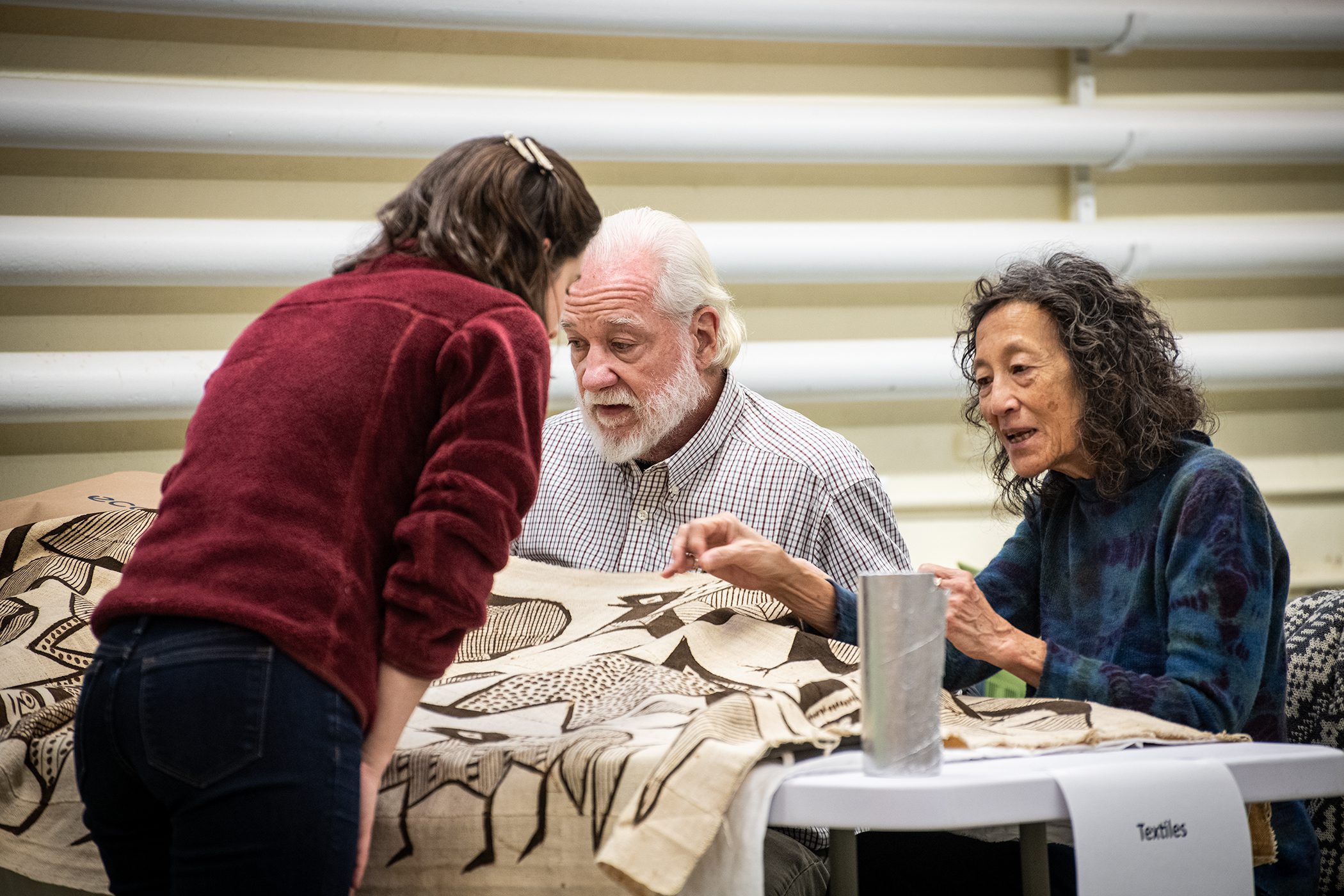
Gail Bush, Winterthur textile conservation volunteer, and Matthew Monk, Linda Eaton Associate Curator of Textiles, examine the Gees Bend quilt. Photo by Azuree Holloway.

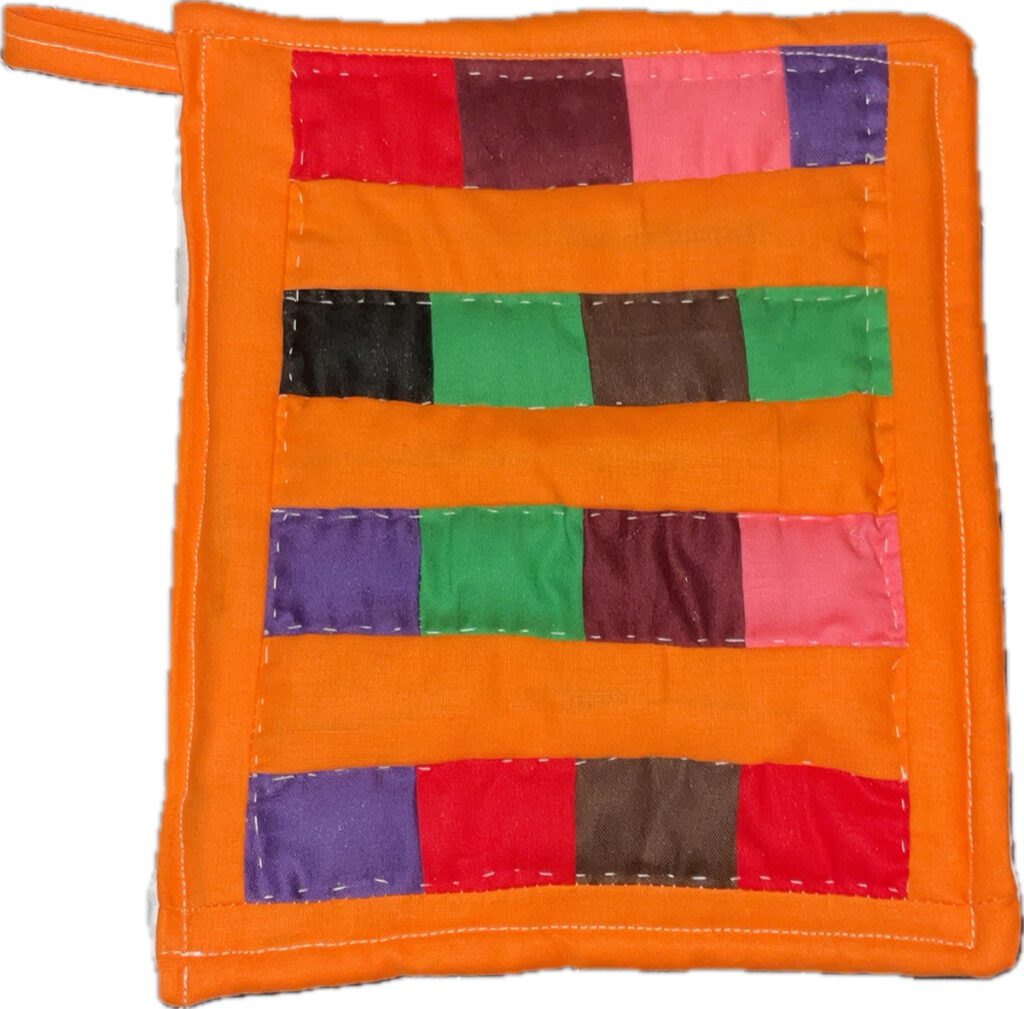
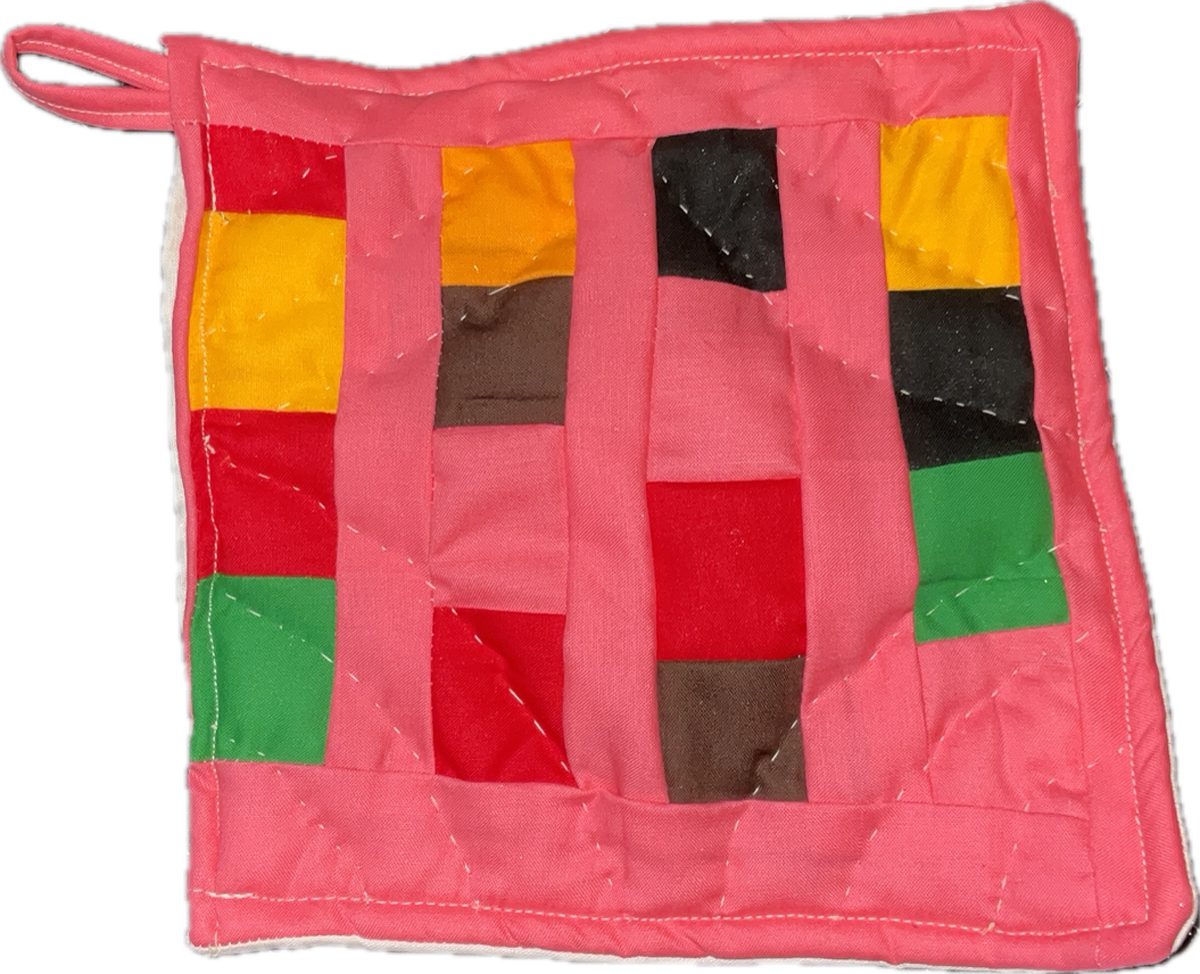
The two potholders Winterthur acquired alongside the quilt may be small, but they carry the same powerful story. Also made by Sharon and Jamica Williams in 2023, they use the same free-pieced “My Way” approach, translated into everyday kitchen textiles. Their bold blocks of color and asymmetrical patterns echo the quilt’s design, reminding us that art and daily life are not separate in Gee’s Bend; they are stitched together.

Pot holder, 2023. Gift of Sharon Pettway Williams 2025.0021.001
Pot holder, 2023. Gift of Sharon Pettway Williams 2025.0021.002

Honoring these objects on Martin Luther King Jr. Day is especially meaningful. Dr. King fought for civil rights, not only in speeches and marches, but in the affirmation of Black dignity, creativity, and self-determination. Gee’s Bend quilts are part of that same story. They are material expressions of endurance in the face of segregation, poverty, and exclusion. They are also material reminders of the power of community to sustain itself through making.

At Winterthur, these works also expand the museum’s narrative of American design, linking the contemporary and modern to the historical. For the first time, our collection includes a contemporary Gee’s Bend quilt and potholders by a named maker, recognizing Sharon Williams not only as part of a tradition, but as an artist in her own right. Her work connects the past to the present, showing that the history of Gee’s Bend, while rooted in a difficult past, is not frozen in time and continues to grow, adapt, and inspire.

As we commemorate Dr. King’s legacy, these three textiles invite us to consider how everyday acts of making can be acts of freedom and expressions of choice. They remind us that the struggle for justice is woven not only through laws and movements, but through the hands of people who, against all odds, kept creating beauty for themselves and their communities in their own ways.

Preventive Conservation and Community

By William Donnelly, Winterthur’s Associate Preventive Conservator and WUDPAC Affiliated Assistant Professor

As Winterthur’s preventive conservator, I safeguard the health of the collection, its environment, and its long-term care. Preventive conservation functions as an umbrella discipline, encompassing and coordinating many aspects of museum stewardship. At its core, it’s a community-centered approach to cultural heritage preservation—whether practiced in an institution, in private collections, or by volunteers supporting local churches, veterans’ organizations, and community groups.

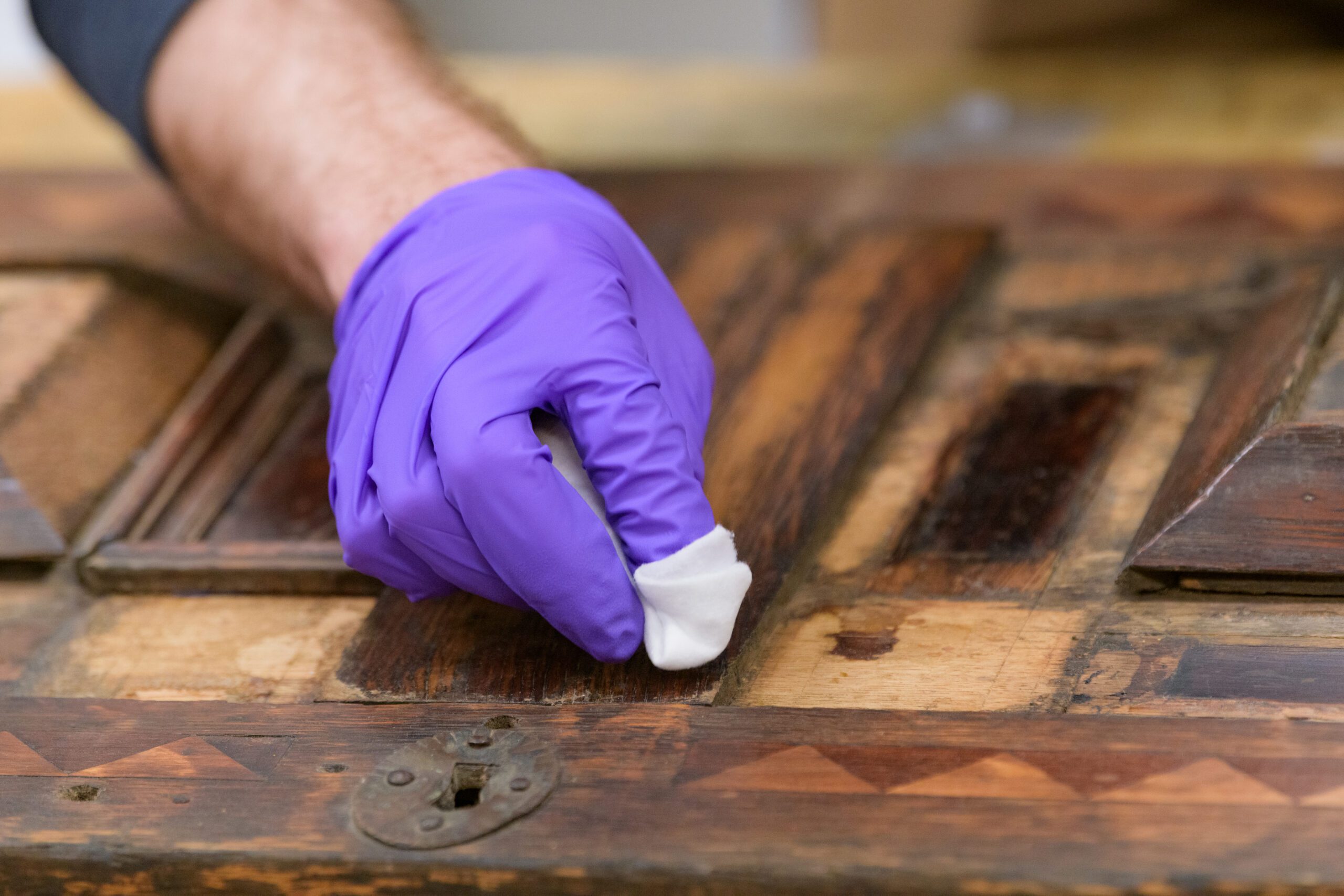
One of the areas I oversee at Winterthur is integrated pest management. A dedicated team of preventive technicians maintains a network of monitoring traps that alert us to potential issues with the building envelope (which separates the interior of a building from the exterior, and includes the roof, walls, floors, windows, and doors) and possible infestations affecting collection areas. When pests are detected, we apply targeted eradication methods, including low-temperature and carbon dioxide treatments.

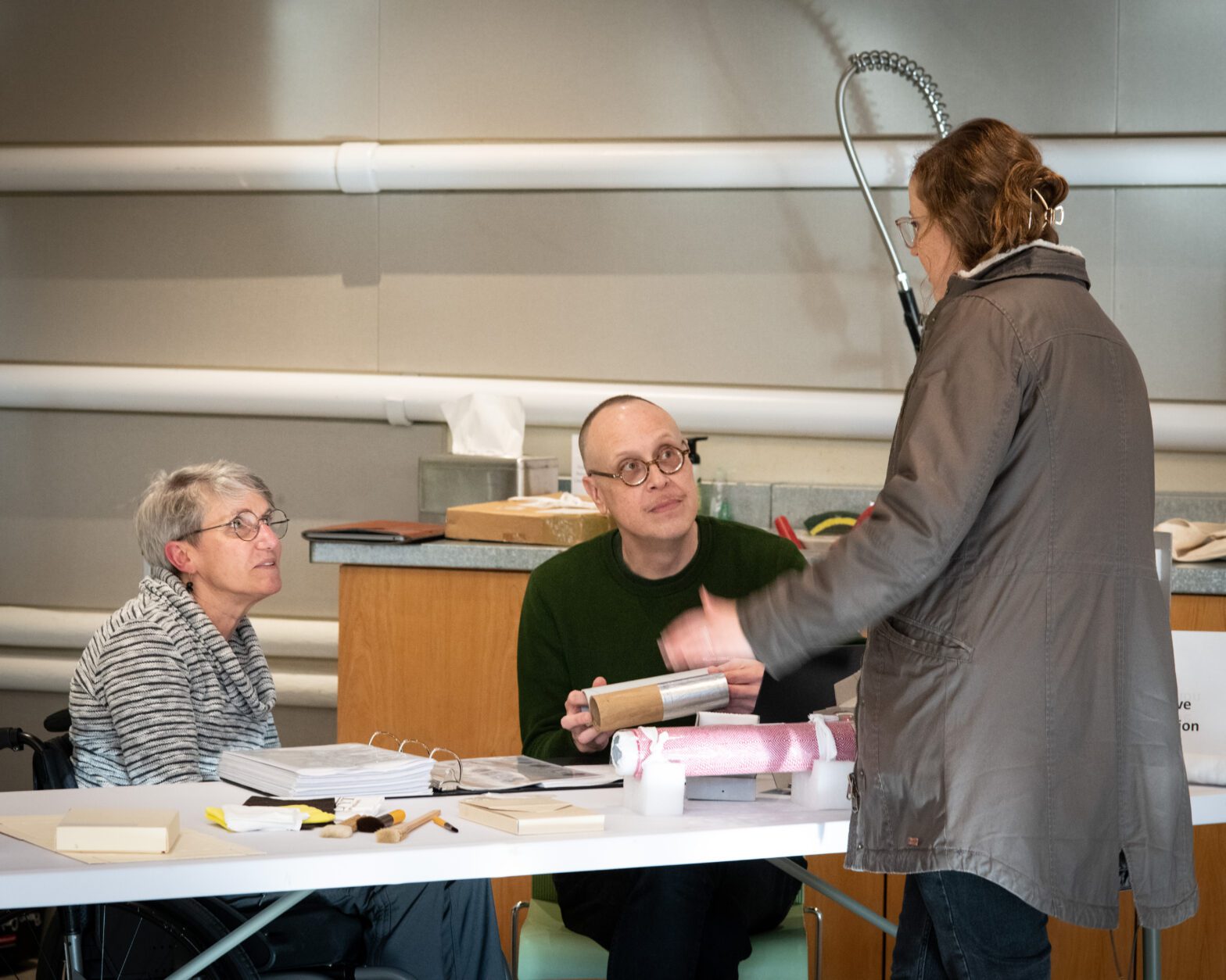
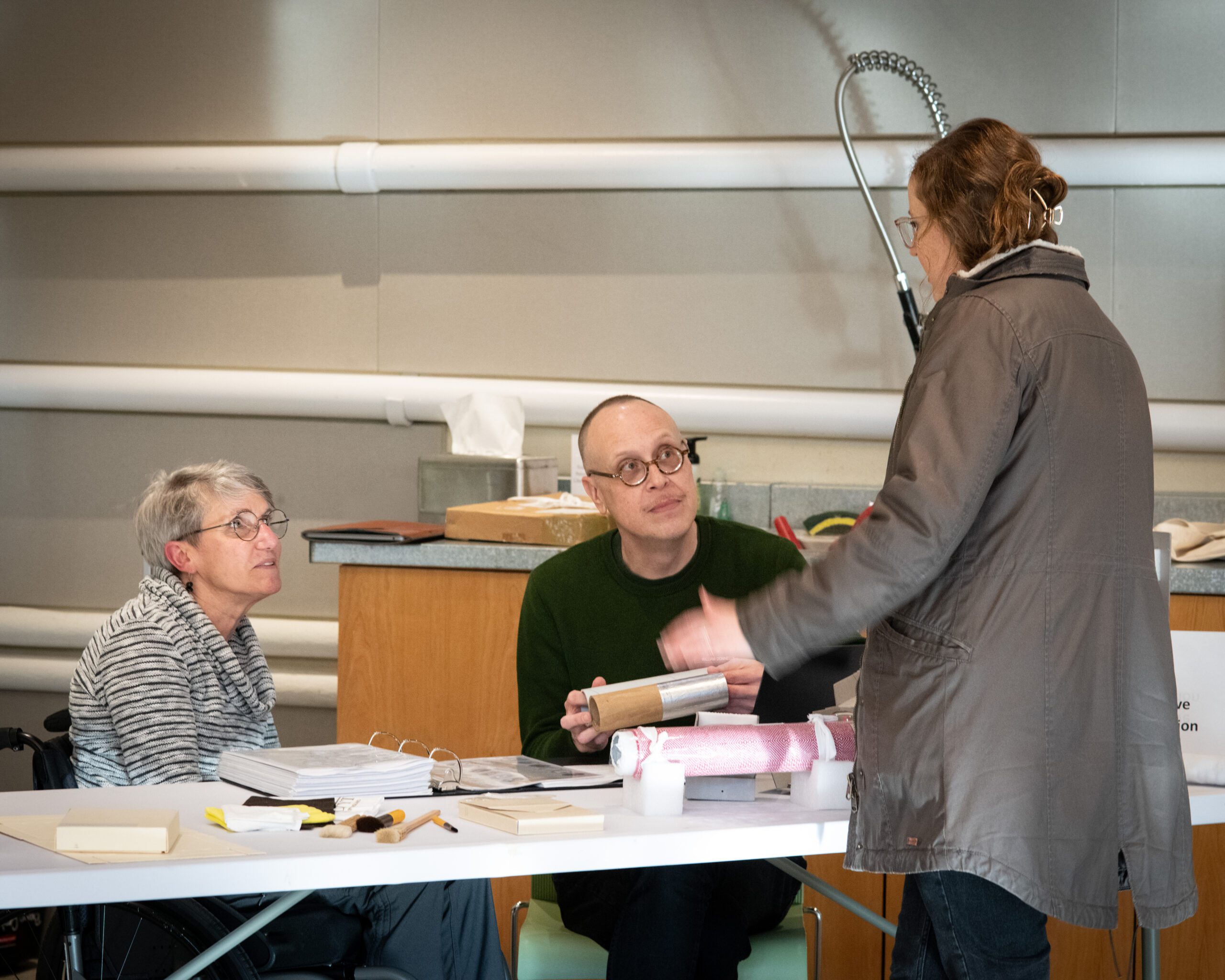
Graduate students in the Winterthur / University of Delaware Program in Art Conservation (WUDPAC) working on stabilizing and conserving objects in the conservation labs of Winterthur Museum and Gardens.

I also work as a professor in the Winterthur/University of Delaware Program in Art Conservation and I advise students on object treatment and preventive strategies, which occasionally involve pest mitigation. Many students are interested in working with ethnographic and indigenous materials, which require cultural sensitivity and specialized handling. With that in mind, I decided to pursue a museum studies certificate through the Institute of American Indian Arts.

The program consists of ten courses, and I am currently completing the ninth, which focuses on Indigenous Intellectual Property (Indigenous IP). The course explores how legal frameworks intersect with cultural values. United States intellectual property law mainly protects individual rights, while Indigenous IP is rooted in collective ownership and designed to endure indefinitely. This contrast reveals how conventional legal systems often fail to encompass the cultural realities of Indigenous communities.

When I began the certificate program, I expected to learn primarily about the care and handling of materials. While I have gained those practical skills, the deeper lessons have been far more transformative. I now understand that community-centered work requires entering a project without an agenda. Most importantly, I’ve learned more of what it means to preserve cultural heritage. When communities define their own goals and have a true stake in the outcome, the results are more authentic and lasting. Many Indigenous traditions rely on oral histories to carry forward identity and knowledge. Sacred or ceremonial objects, when needed for rituals, are passed down with the understanding of their care and, when necessary, the ability to reproduce them for future generations.

At Winterthur I often encounter family archives that serve a similar purpose—preserving stories and memories through meaningful objects. Whether in a museum or family home, these collections link people to their pasts and ensure their stories live on. In a world that can feel fractured, it’s grounding to remember that preservation connects us through shared human desires: to be remembered, to honor our histories, and to safeguard the legacies entrusted to our care.

Architecture of Independence

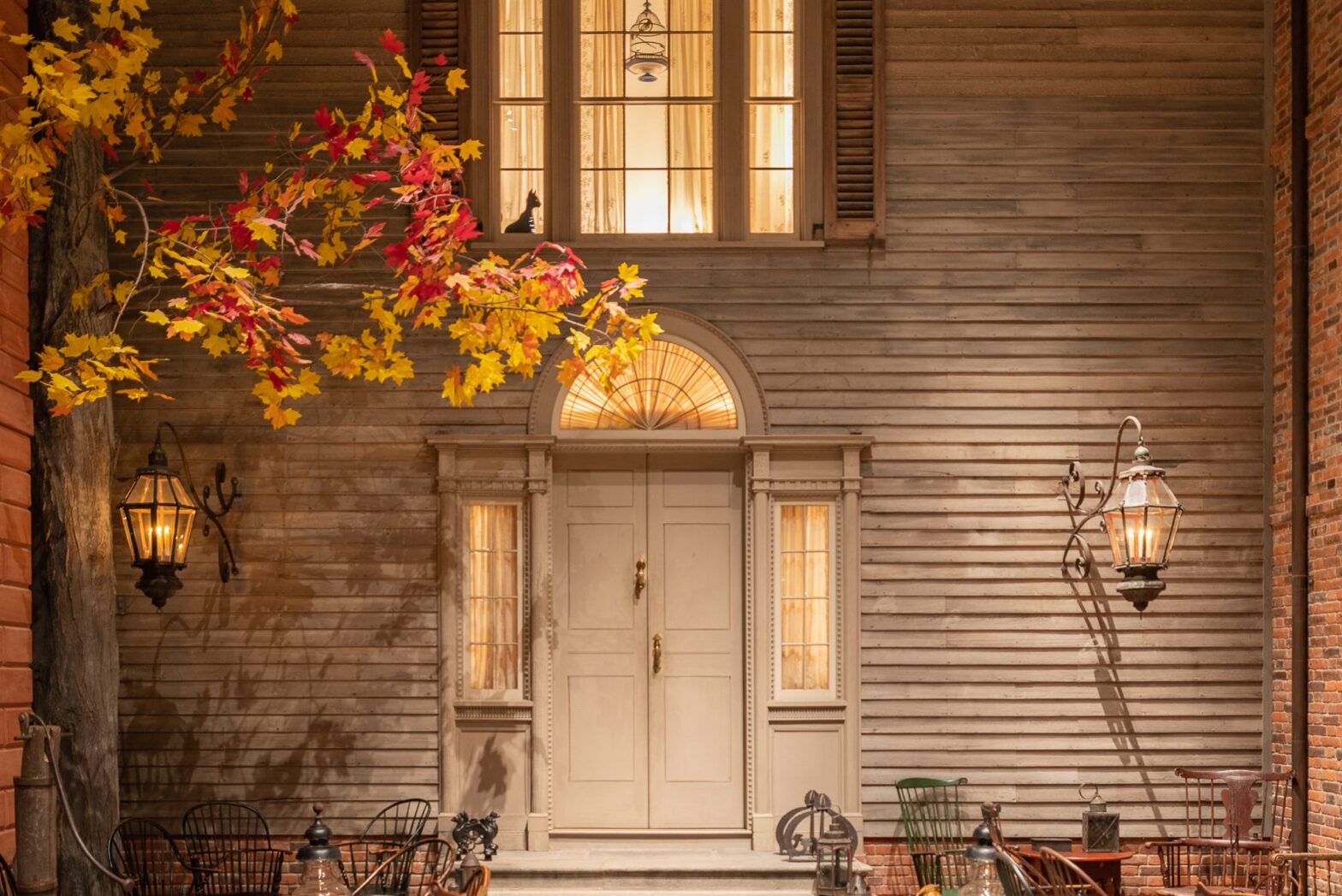
Explore the founding of our nation through the complex stories preserved within the architecture of the original thirteen colonies. Discover the history of the Charleston Dining Room, from its origins as the William Burrows House to its transformation under free Black entrepreneur Jehu Jones in the early 1800s, and its later years as a boarding house. Reservations required. For ages 8 and up. $15 with admission; $5 for Members.

Tuesdays–Sundays starting May 1 | 2:30–3:45 pm

Purchase tickets.

Secret Spaces

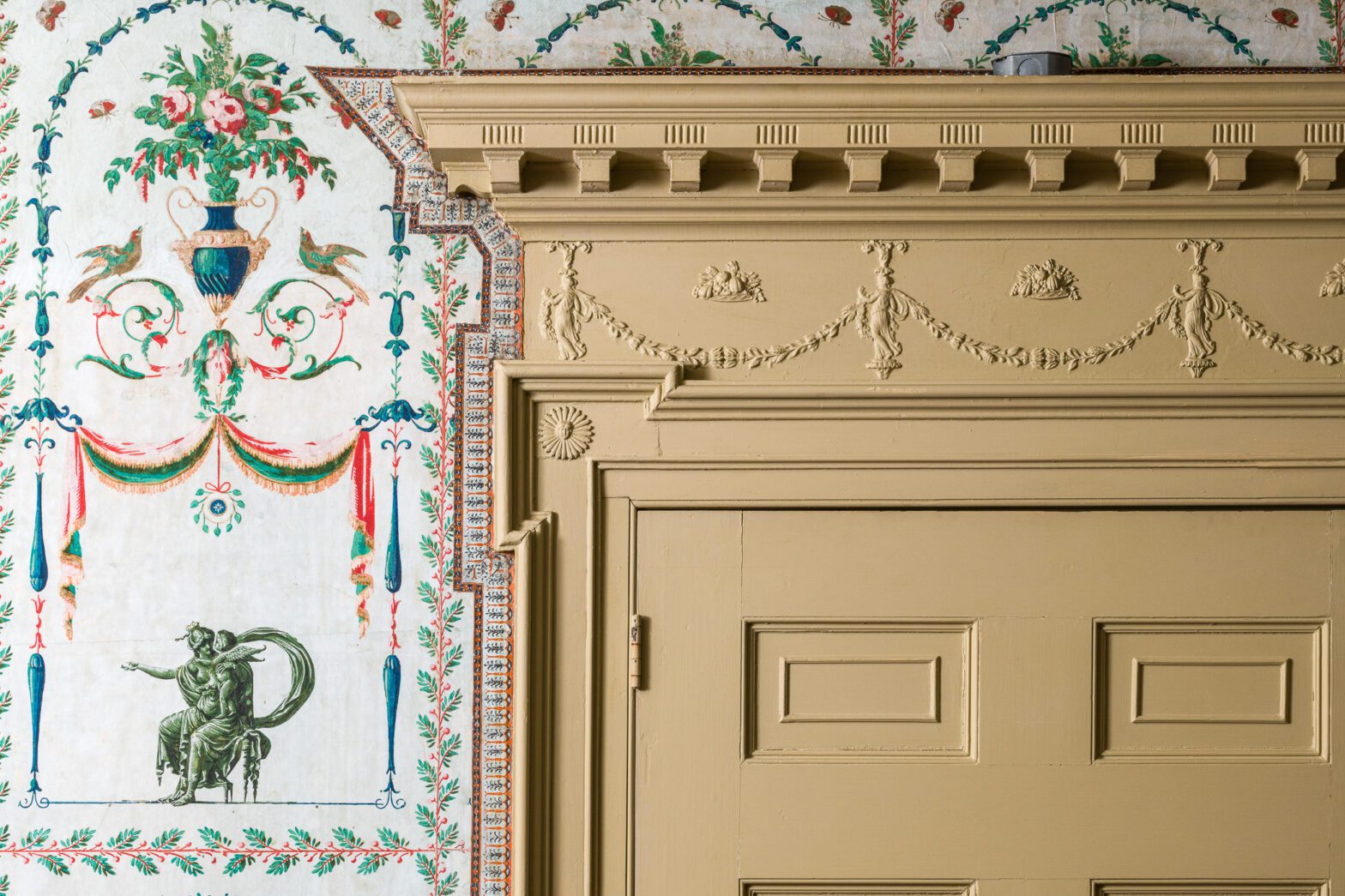
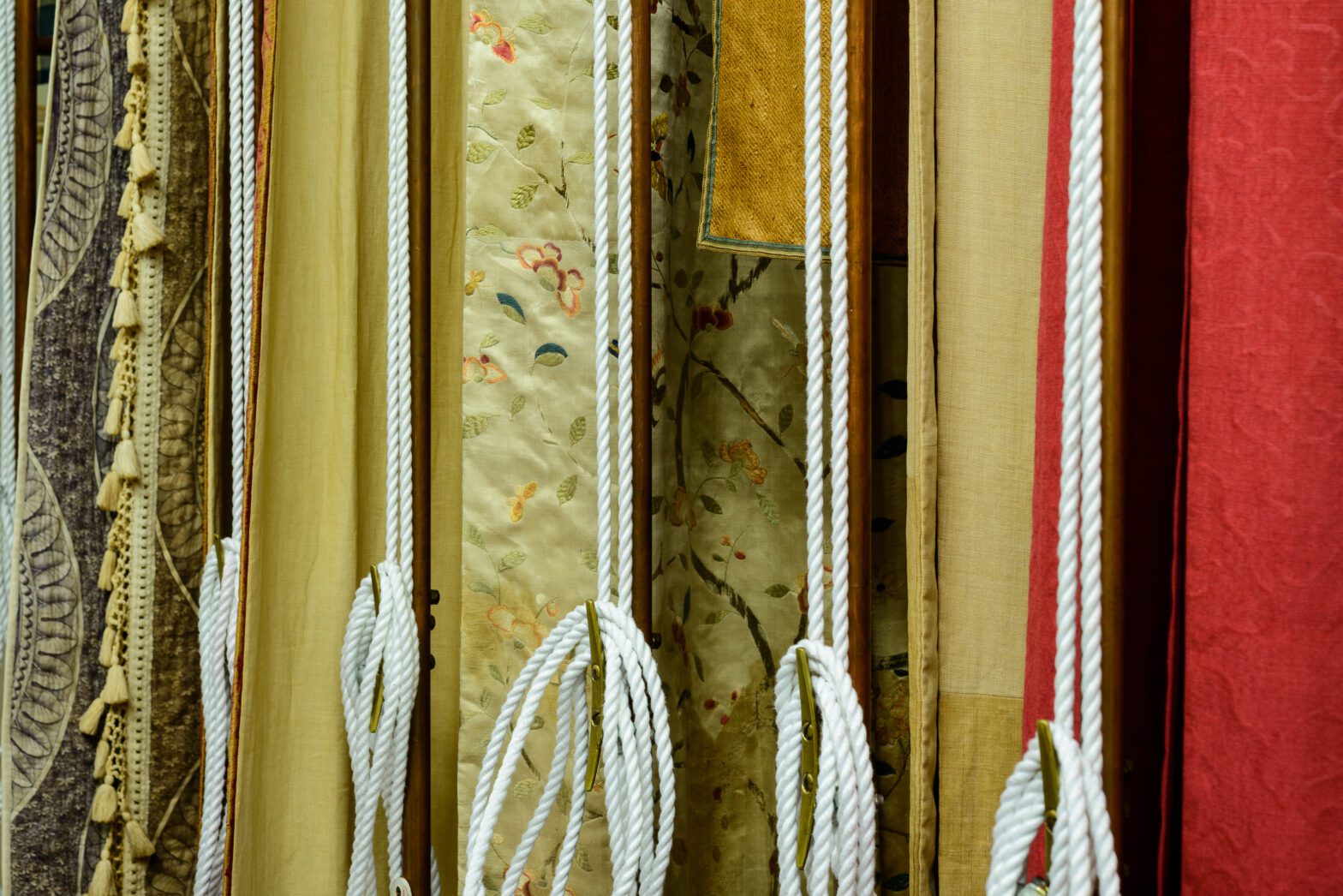
A rare, behind-the-scenes glimpse into hidden museum spaces and protected places, followed by a sparkling toast overlooking the Reflecting Pool can be paired with our Field and Fête anniversary celebration for a spectacular, unique experience at Winterthur. Includes hidden doors and access points, the former servants spaces, collections study and storage areas for glass, ceramics, curtains, and needlework, plus the rooms where flower are brought in, prepared, and arranged before being displayed in the house. $110; $100 for Members. Ticket includes Field & Fête event on Saturday, May 16.* Please check in at the Visitor Center by 3:30 pm. Limited capacity. Reservations required.

A Yuletide Tour Seek and Find

Photo by Holden Barnes.

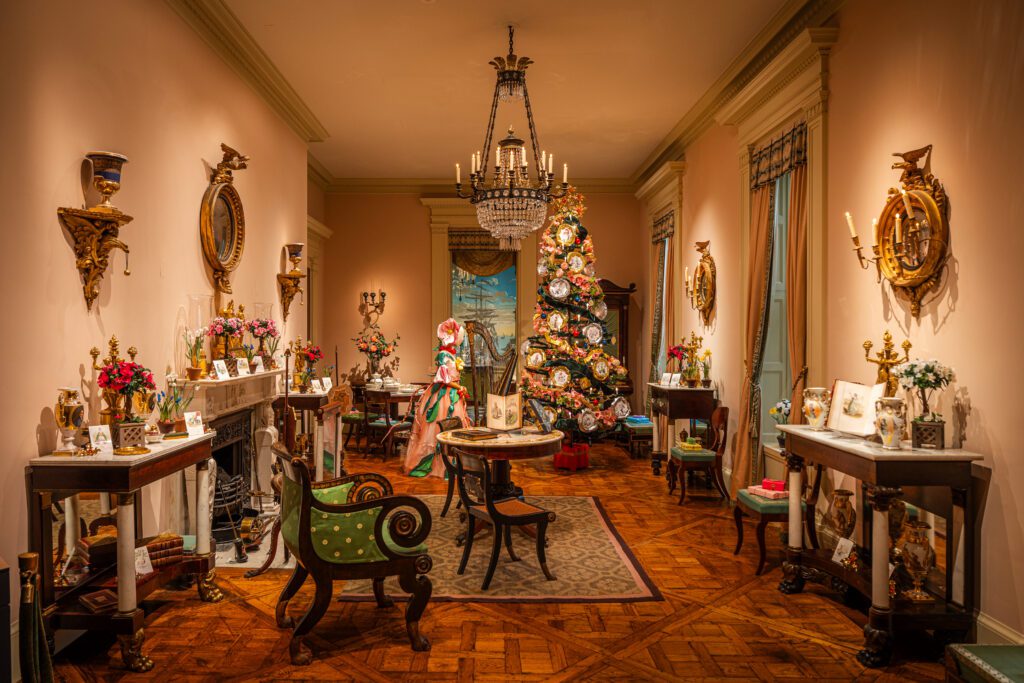
We hope you enjoy all the special touches in this year’s Yuletide Tour. In addition to all the stunning trees and beautifully decorated rooms, numerous delightful or unexpected details are artfully tucked into our literature-themed displays. See how many you find!

1. “Tri-Sarah-Tops” dinosaur figurine named by one of our staff members. Yes, she’s hard to spot!

2. A tiny yeti  (Hint: it’s hidden inside a wooden log)

3. Two vases with illustrations from the book Les Fleurs Animées, on loan from a private collector

4. A Cheshire Cat tree inspired by the mysterious grinning feline in Alice in Wonderland

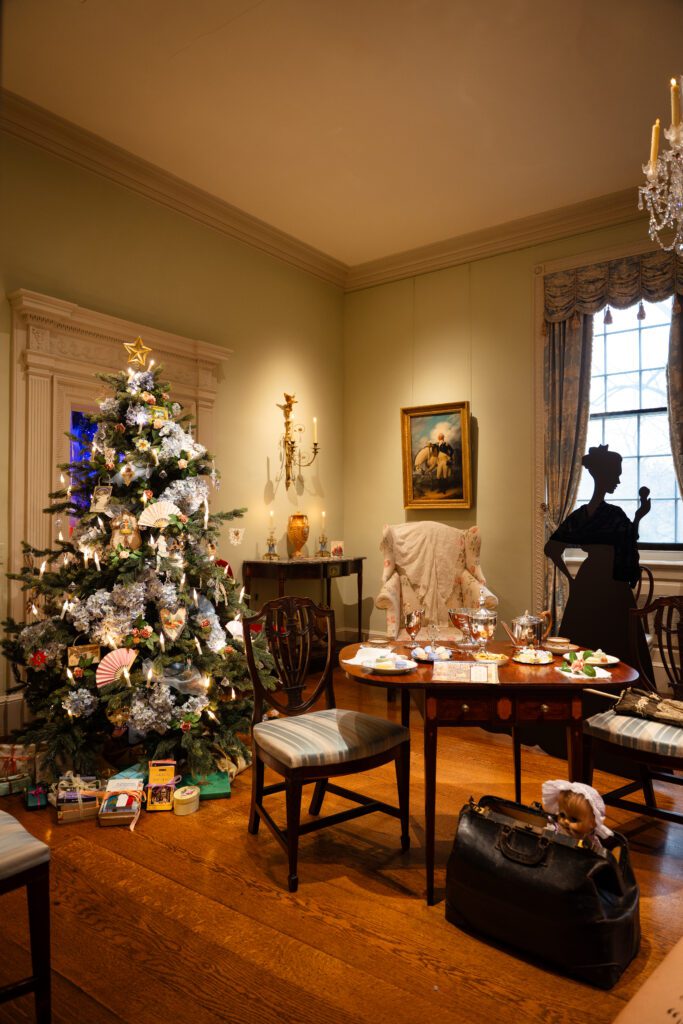
5. A baby doll in a handbag representing Jack, a major character from Oscar Wilde’s The Importance of Being Earnest, A Trivial Comedy for Serious People. Jack was found in a handbag at a train station, an incident that may affect his marital prospects. 

Photo by Holden Barnes.

6. A sailboat on a tree, inspired by the ships in Herman Melville’s novel Moby Dick

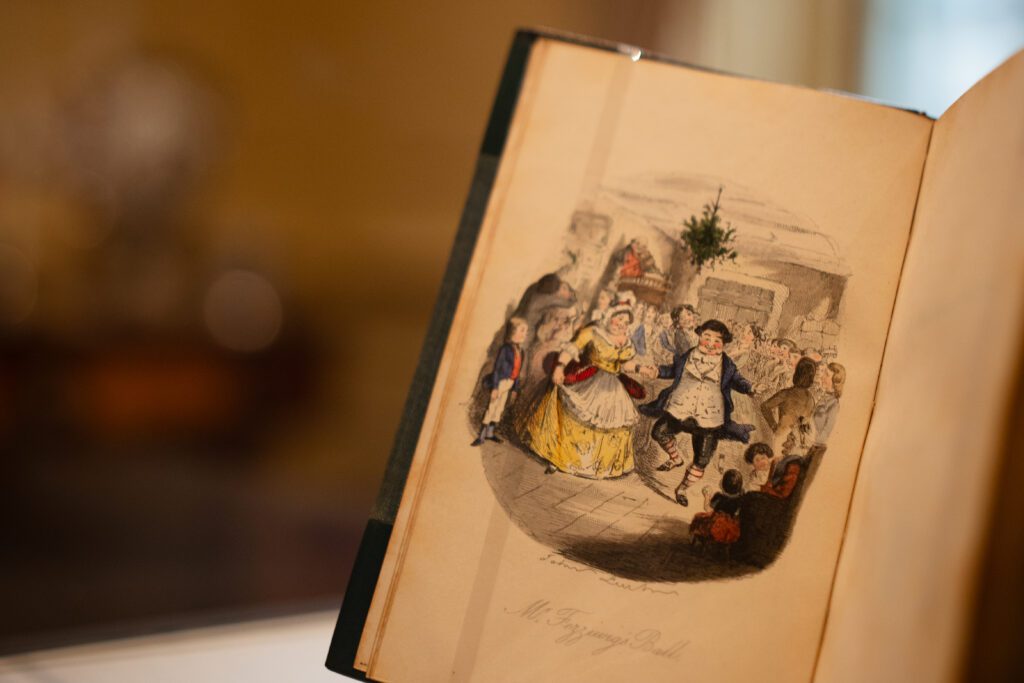
7. The 11th edition of A Christmas Carol. Released in 1843, Dickens’s classic tale was such a bestseller that by 1846 publishers had to release an 11th edition.

8. The Tardis from the popular television series Doctor Who. Hint: it’s on a tree

9. The Grinch from How the Grinch Stole Christmas by Dr. Seuss

10. Winterthur Farms milk bottles and a canister, a tribute to our historic dairy farm

11. The Winterthur guest book signed by H. F. du Pont’s guests, highlighting the social life at Winterthur

Photo by Holden Barnes.

Answers

By room name and theme.

1. Montmorenci Stair Hall — The one with the grand staircase where you start your tour

2. Marlboro Room — The one about MacBeth

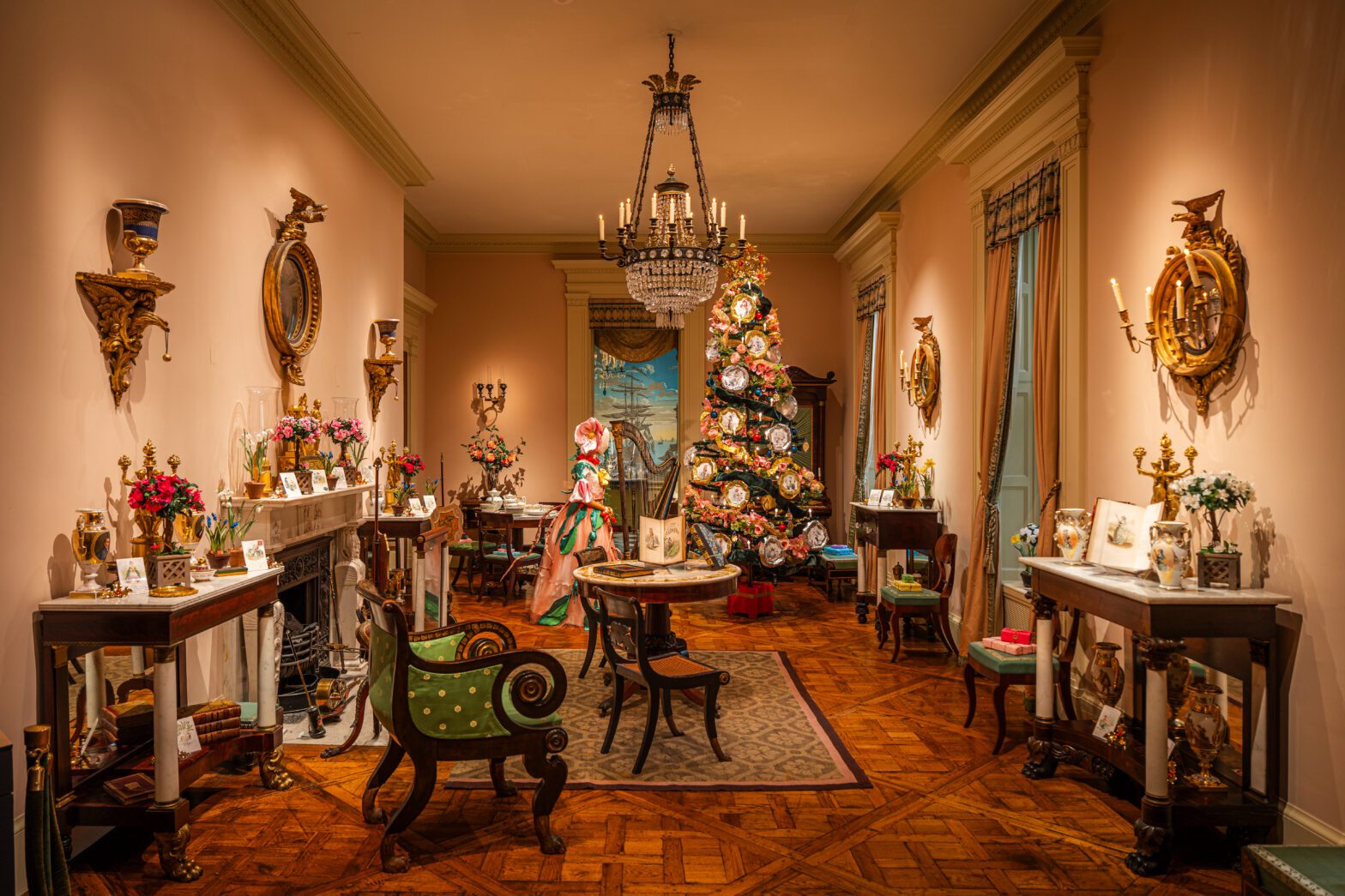
3. Empire Parlor — The one with Flowery mannequin

4. The fifth floor to sixth floor staircase — The one about Alice in Wonderland 

5. Baltimore Drawing Room — The one . . . with the babydoll in a handbag!

6. Chestertown Room — The one about Moby Dick

7. Du Pont Dining Room — The one about Fezziwig’s Christmas party in A Christmas Carol

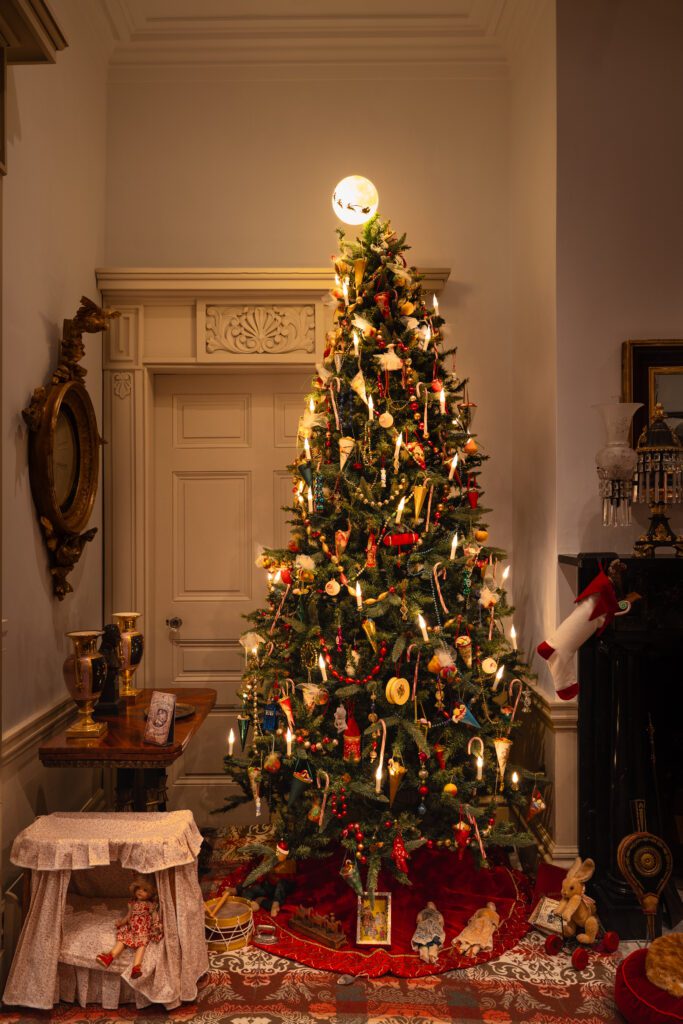
8. Georgia Dining Room — The one about “A Visit from St. Nicholas”

9. Latimeria Room — The one about Humpty Dumpty and Through the Looking Glass

10. Port Royal Entrance — The one with the purple cow

11. Port Royal Parlor — The one about The Great Gatsby

Photo by Holden Barnes.

Experience the Yuletide Tour

Our self-paced Yuletide house tour is offered Tuesdays–Sundays, 10:00 am–5:00 pm (last tour at 4:15 pm). Plus, on select Friday and Saturday nights we’re open until 8:00 pm (last tour at 7:15 pm) through January 4. 

John Lewis Krimmel’s Christmas Sketches

By Tyler Johnson, Winterthur’s Assistant Manager of Estate Tour Programs

The Winterthur Library is home to more than a million objects, books, and ephemera. Contained within this vast treasure trove are seven sketchbooks in watercolor, pencil, and pen and ink kept by German-born genre artist John Lewis Krimmel (1786–1821). The son of a confectioner in Württemberg, Krimmel emigrated to the United States in 1809 and began painting portraits, street scenes, and miniatures.

Krimmel’s paintings and sketchbooks are filled with his observations of daily American life and have been used in many interpretations across the museum’s history. Winterthur owns three of his paintings, The Quilting Frolic, Self-Portrait of John Lewis Krimmel with Susannah Krimmel and Her Children, and Election Day in Philadelphia. These works could each have their own blog post as they inspire many conversation points and discussion topics.

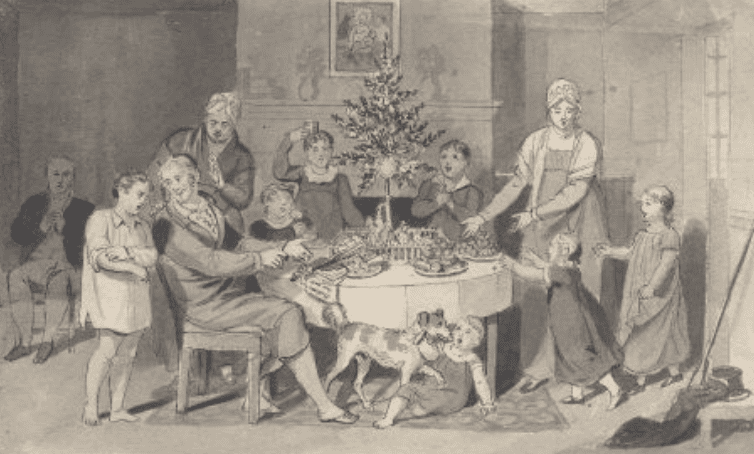
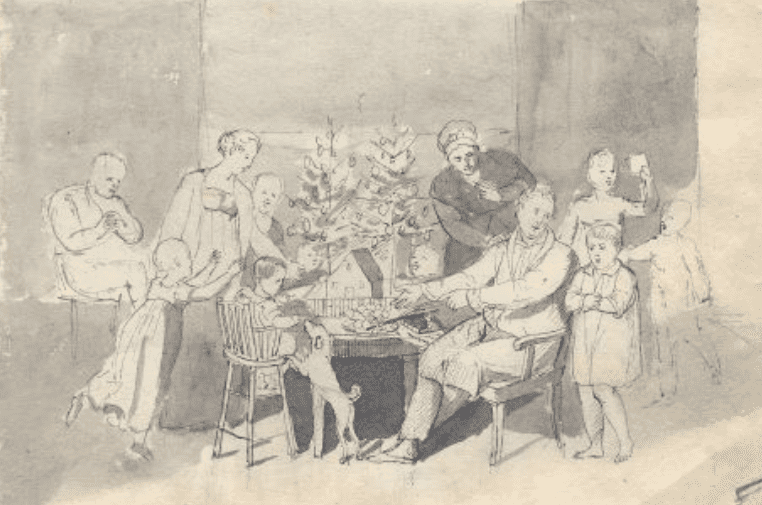
Special to the Yuletide season, one of Krimmel’s sketchbooks contains some of the earliest known depictions of Christmas trees in American art. His two Christmas Eve watercolor sketches show a multi-generational family gathered around tabletop trees (two trees in the first sketch, one in the second). Drawn between 1812 and 1820, they feature broadleaf evergreens, perhaps holly bushes, decorated with springerle cookies. The table holds plates filled with cookies and paper cornucopias stuffed with tiny treats which were left for the children by the Belsnickel, a Germanic gift giver, as their Christmas gifts.

John Lewis Krimmel, Sketchbook 2, 1812–13. Watercolor, pencil, and pen-and-ink drawings. Winterthur Library 308 59×5.7, ll. 7, 8
Krimmel’s first of two sketches, more symmetrical in nature.

Until the mid-1800s, Christmas trees in America were usually placed on tabletops. As in Krimmel’s sketches, the edible ornaments doubled as gifts, making the tree a one-day wonder. The trees were decorated in secret to surprise the children, who immediately devoured the goodies when they spotted them on Christmas Eve. Around the time of the American Civil War, people started combining gifts on the Christmas tree with purely decorative ornaments, heralding its transformation into an icon of the season.

Krimmel’s two Christmas Eve sketches are similar in scope but have some variations, especially with the young child and dog interactions. The first sketch features two small Christmas trees flanking a tiny house, while the second features one larger, taller tree, with many of the family members positioned differently. Each shows Krimmel’s penchant for capturing a special moment in time.

There are many early holiday traditions, and for people of Pennsylvania German descent, John Lewis Krimmel’s sketches display a staple of their holiday practices—a tabletop tree decorated with ornaments made of traditional sweets for an edible extravaganza. And family members of all ages enjoying the season and each other’s company in a delightfully festive setting.

John Lewis Krimmel, Sketchbook 2, 1812–13. Watercolor, pencil, and pen-and-ink drawings. Winterthur Library 308 59×5.7, ll. 7, 8
More complete than the previous sketch, with some characters repositioned. The dog claiming a treat from the child is a top-notch detail; my dog is jealous when I eat cookies too.

For more information about John Lewis Krimmel, look for the book John Lewis Krimmel: Genre Artist of the Early Republic by Dr. Annelise Harding.

At Home At Winterthur

Opening May 23, 2026

Discover the many lives of Winterthur and explore the estate as a place of home, community, and inspiration. From a country landscape that supported hunting, gathering, and farming to its evolution into a renowned museum, garden, library, and center for conservation and academic study, Winterthur has been shaped by the people who called it home and work and by the community of visitors and friends who have come to experience its beauty. Through personal stories, rarely seen objects, and rich historical context, At Home at Winterthur invites you to reflect on what it means to create a place, to belong to a place, and to share in its legacy.

Challenging Masterpieces: Art and Identity in American Furniture

Opening September 26, 2026

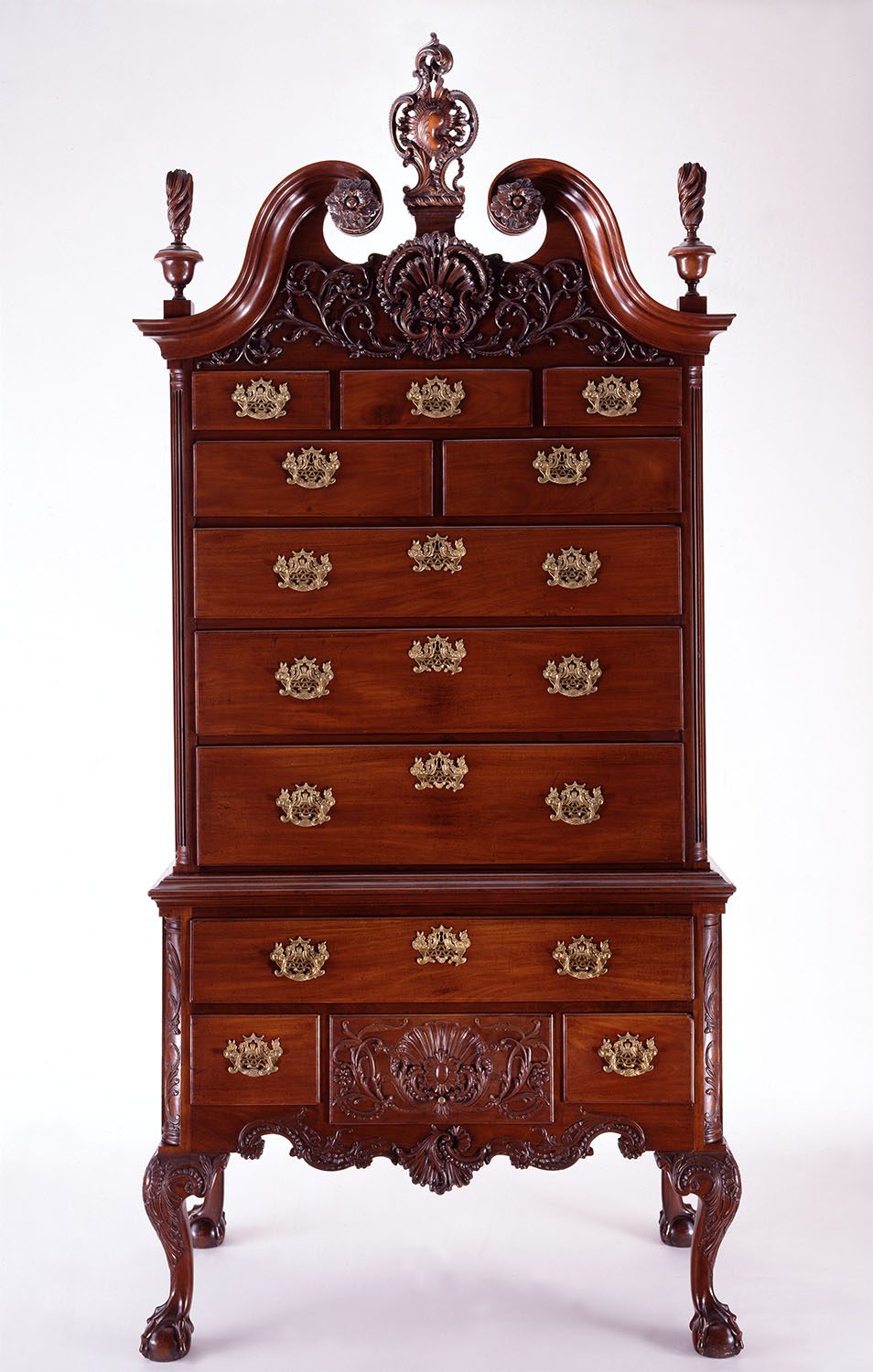
In 2026, Winterthur Museum will celebrate its 75th anniversary—and America’s 250th—with a bold and beautiful exhibition showcasing more than 70 standout pieces from the collection, each chosen for its exceptional craftsmanship, inventive design, or use of rare or unexpected materials.

But this isn’t just about admiring fine furniture. It’s about rethinking what makes something a “masterpiece.” Through immersive displays and up-close looks at construction details, the exhibition invites you to explore deeper questions: Who gets to decide what’s considered great design? Whose stories have been left out? And is the term “masterpiece” still appropriate today?

Whether you’re drawn to the artistry of a hand-carved leg, the cleverness of a hidden drawer, or the cultural stories behind a chair’s design, Challenging Masterpieces offers a fresh perspective that celebrates creativity, identity, and the evolving legacy of American furniture—designed to spark curiosity and conversation.