Search Site

Claire Minihan

About the Artist

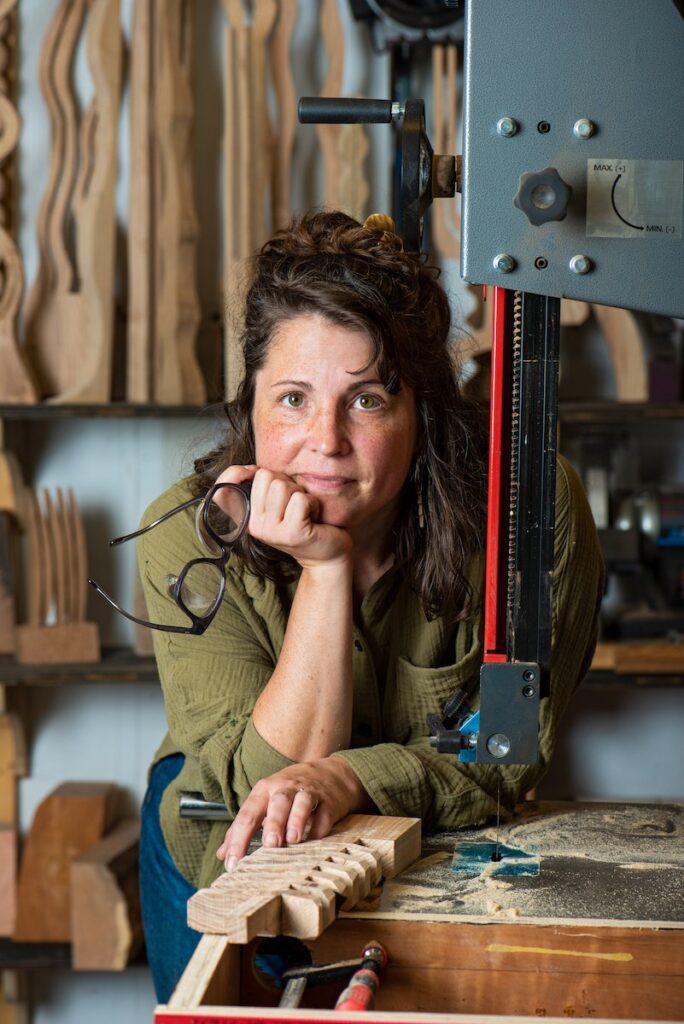
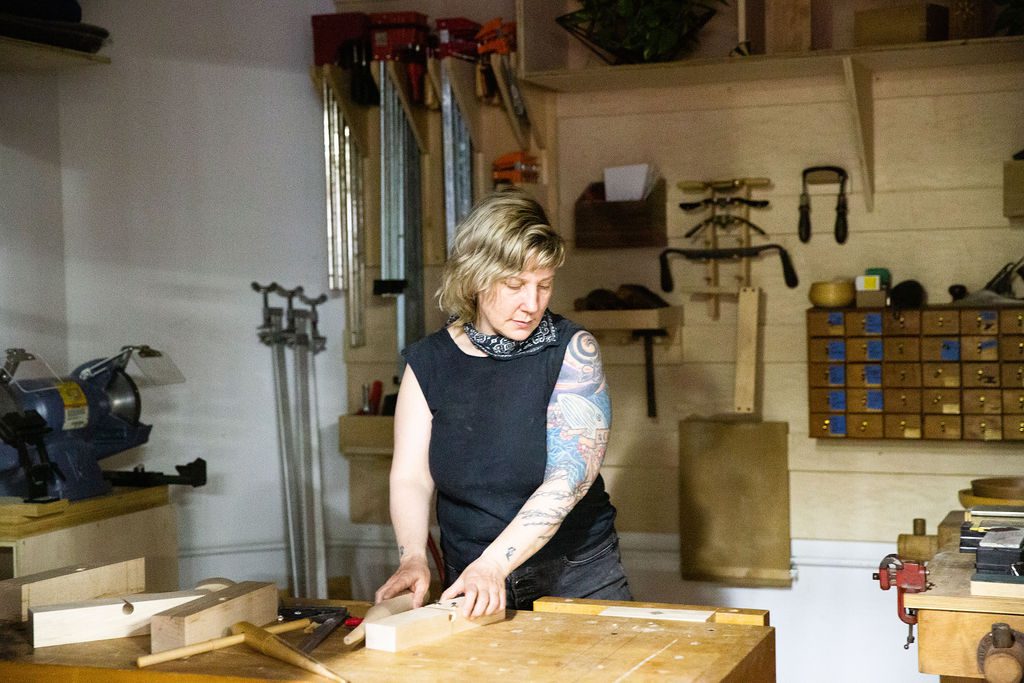
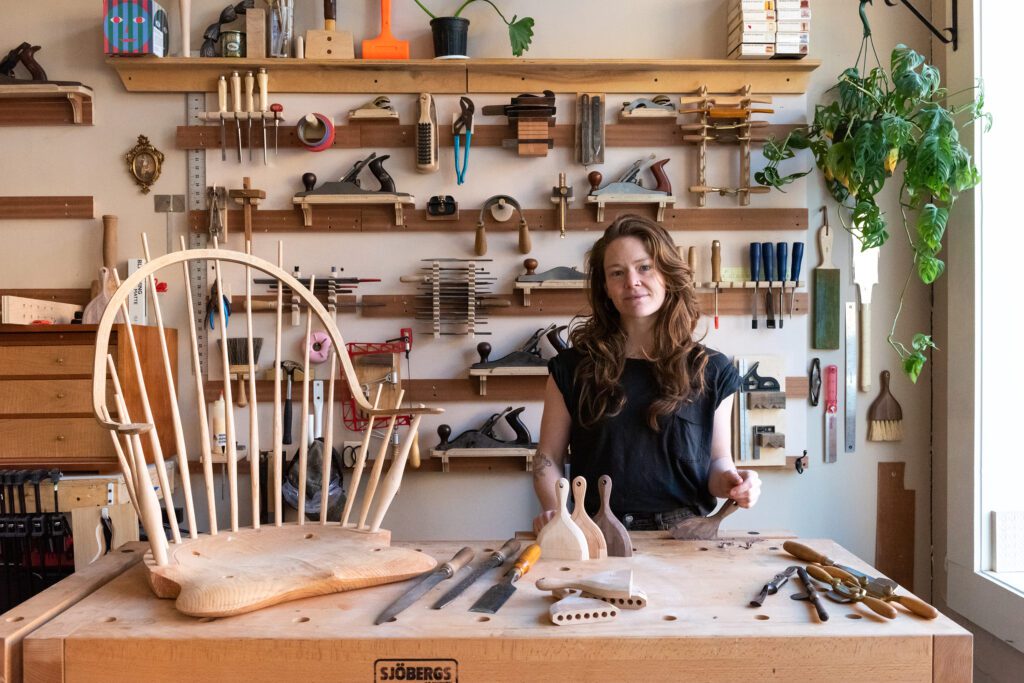
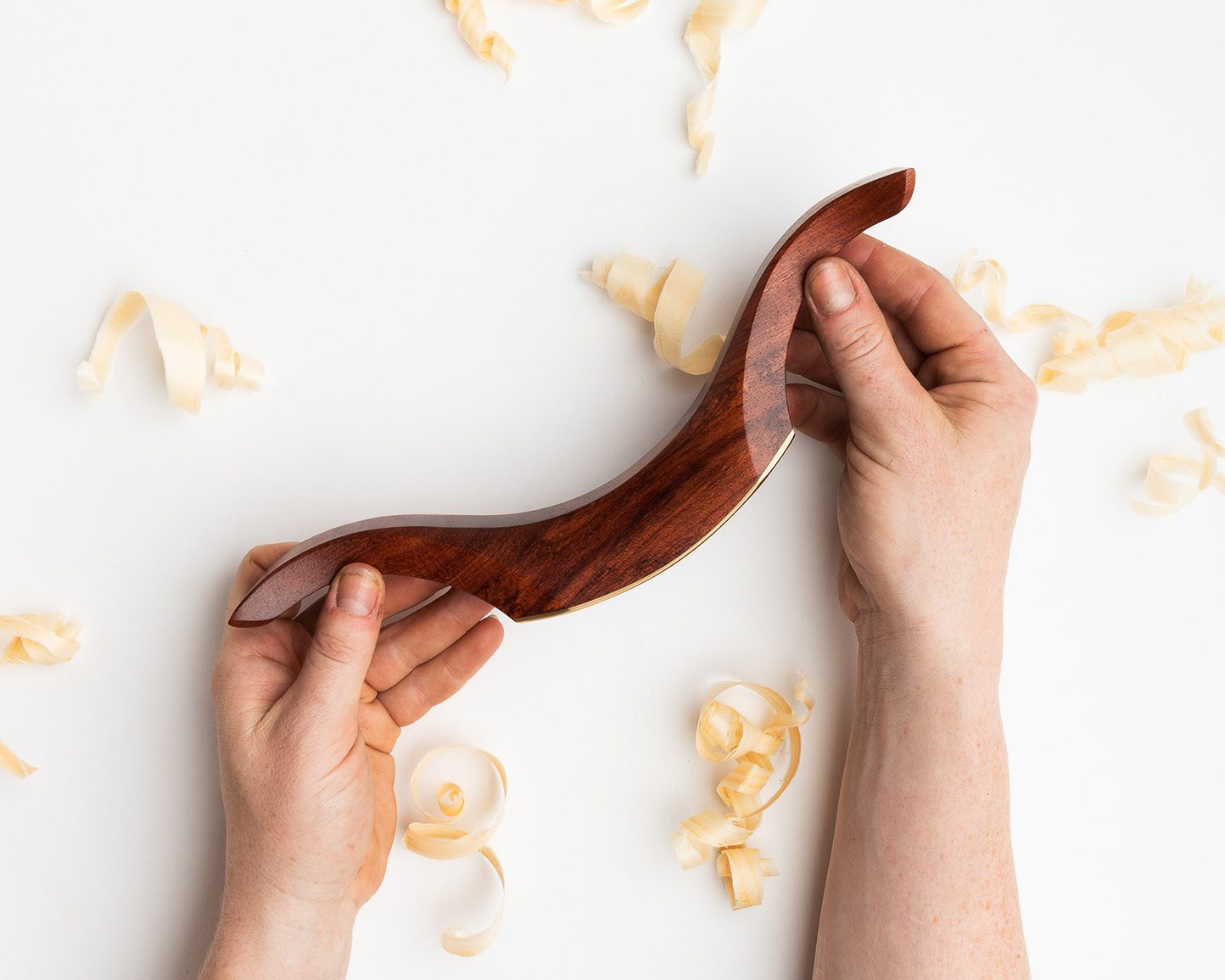
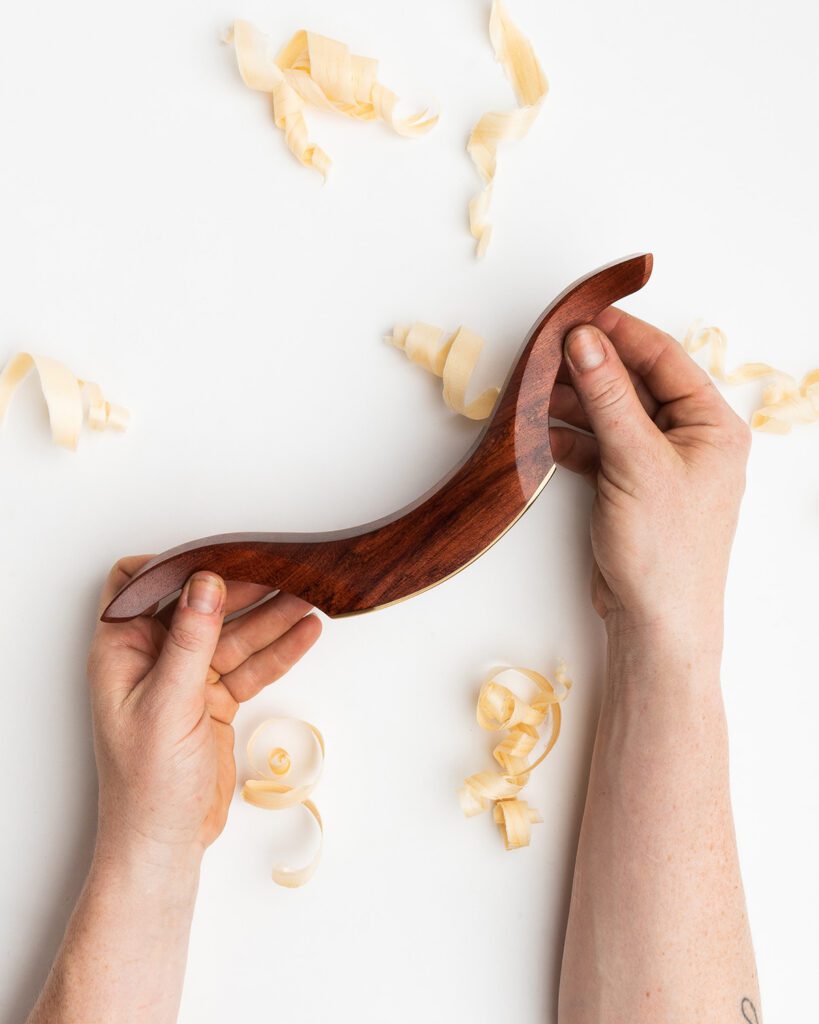
Claire started out with a furniture background, graduating from the North Bennett Street School’s cabinet and furniture program in 2010, picking up work at a cabinet shop for a few years after that. Over the past nine years, she has grown a small business making travishers, which are specialized woodworking tools used for carving, shaping, and finishing chairs and stool seats. She has demonstrated how they work and how they are made at domestic and international fairs and, occasionally, has sprinkled in a travisher making class. She continues to make travishers and explores different ways to build solid cabinets and community.  

Website: CMinihanWoodworks.Blogspot.com
Social Media: @CMinihanTravishers
Artist Statement

A wood blank for the body is roughed out and faired, or smoothed. All blades are bent using a cold press technique, where I work the pre-hardened steel at room temperature, clamping it in a vise between a negative and positive jaw shaped to the desired curve. Once the blade is bent, it then gets hardened, tempered, and sharpened. The brass for the sole is then custom bent to each unique blade. Both pieces of hardware get attached to the body. The sole gets beveled and filed down to achieve the desired blade exposure and throat clearance. Once assembled, the travisher then gets its final shape by hand using various shaves, files, and rasps. 
Rachel Kedinger and ME Hitt

About the Artist: Rachel Kedinger

Philadelphia, Pennsylvania

Rachel Kedinger is an artist currently living in Philadelphia, Pennsylvania, creating her own work. Rachel primarily makes objects out of metal with a focus on utilitarian use. Before moving to Philly in early 2018, she participated in the Core Fellowship Program at Penland School of Craft in North Carolina. She has also lived in Detroit, Michigan, and Rehoboth Beach, Delaware, seeking opportunities to work with various artists and metalsmithing shops. Prior to living and working in Michigan, Rachel grew up in Wisconsin and went to school at the University of Wisconsin–Milwaukee, where she received her bachelor of fine arts degree in jewelry and metalsmithing in 2012.  

Website: RachelKedinger.com
Social Media: @RKedinger

About the Artist: ME Hitt

Morill, Maine

ME is a carpenter and woodworker who lives in midcoast Maine. In addition to their shop space in Rockland, where they pursue personal work and commissions, they work full time as a carpenter for a local frame-to-finish builder.

Artists’ Statement

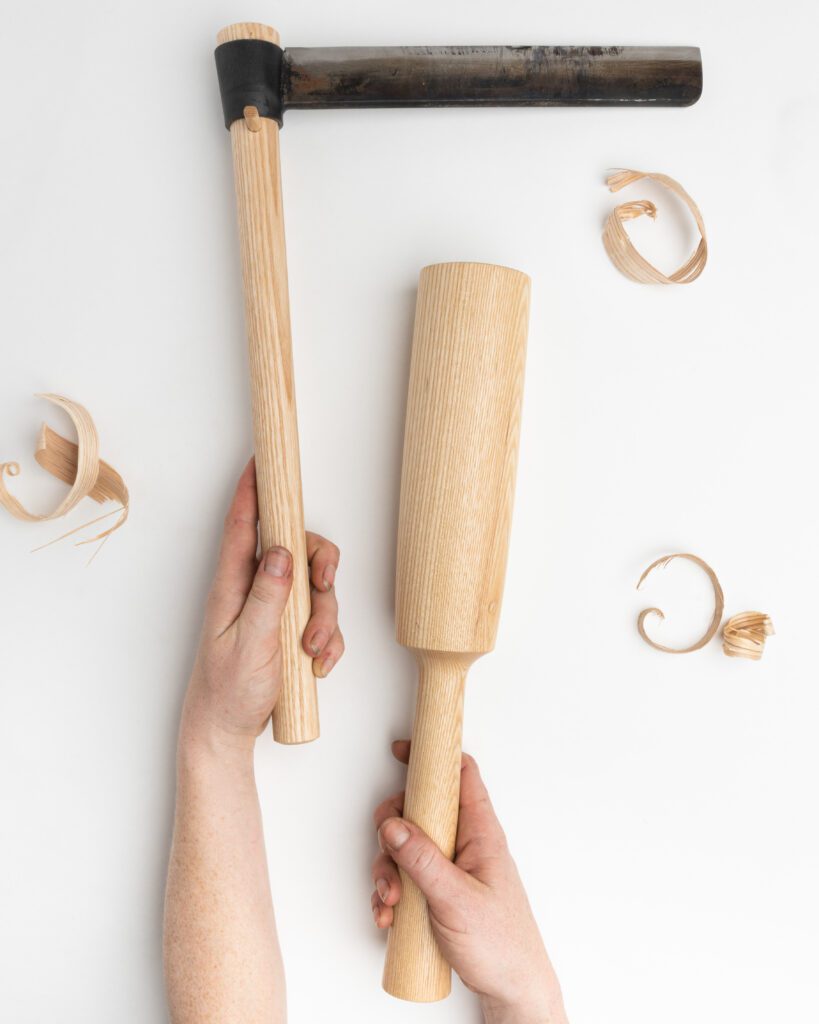
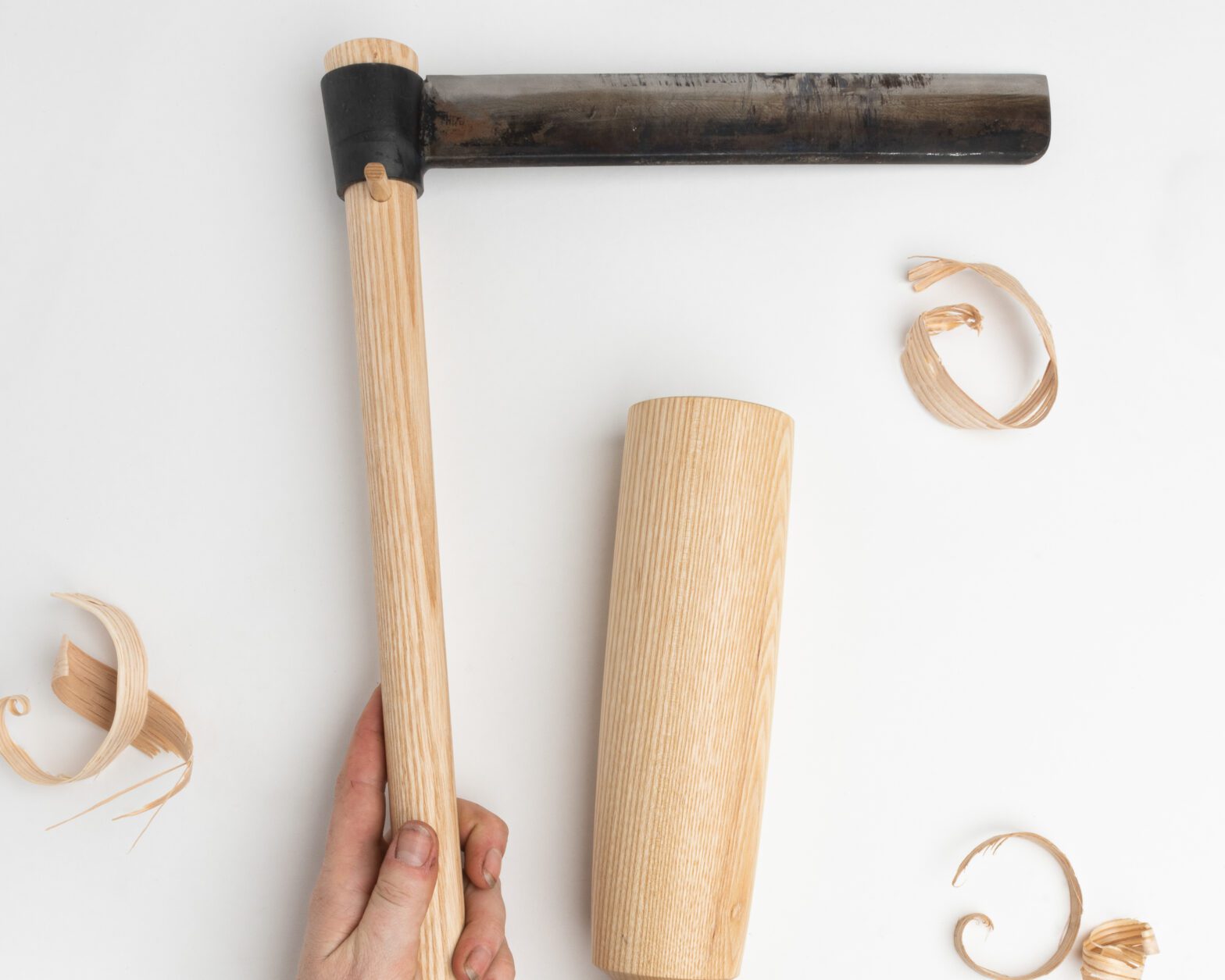
This froe, a tool used for cleaving wood by splitting it along the grain, is the right width and thickness to give power and control when riving, or splitting. The geometry and size of a froe are essential to its function. The subtle curve in the cross section adds to the ability to guide splits. The addition of a cross pin allows the user to disassemble the tool for travel but ensures that the handle stays in place when in use. 

The handle and pin are made of ash, turned on a lathe, and individually fitted to the eye of each blade. The mallets are also made of ash and are finished with shellac and wax. Ornate versions of the froe are available in ash, dyed black, and with a brass pin.

Eleanor Ingrid Rose

About the Artist

Eleanor Ingrid Rose was born in Monterey County, California. She is a queer, craft-based sculpture artist, toolmaker, metalsmith, woodworker, and proud cat mom. Eleanor is one half of the collaborative project Ladies Who Wood, alongside Stacy Motte. Eleanor holds a bachelor of fine arts degree from Pratt Institute and a master of fine arts degree from University of Wisconsin–Madison. She currently teaches sculptural woodworking at Indiana University of Pennsylvania and the occasional class at Workshop of Our Own. When she isn’t teaching or making art, she can usually be found trying to make updated versions of antique tools or spending too much time looking at eBay.  

Social Media: @Off_Artisan

Artist Statement

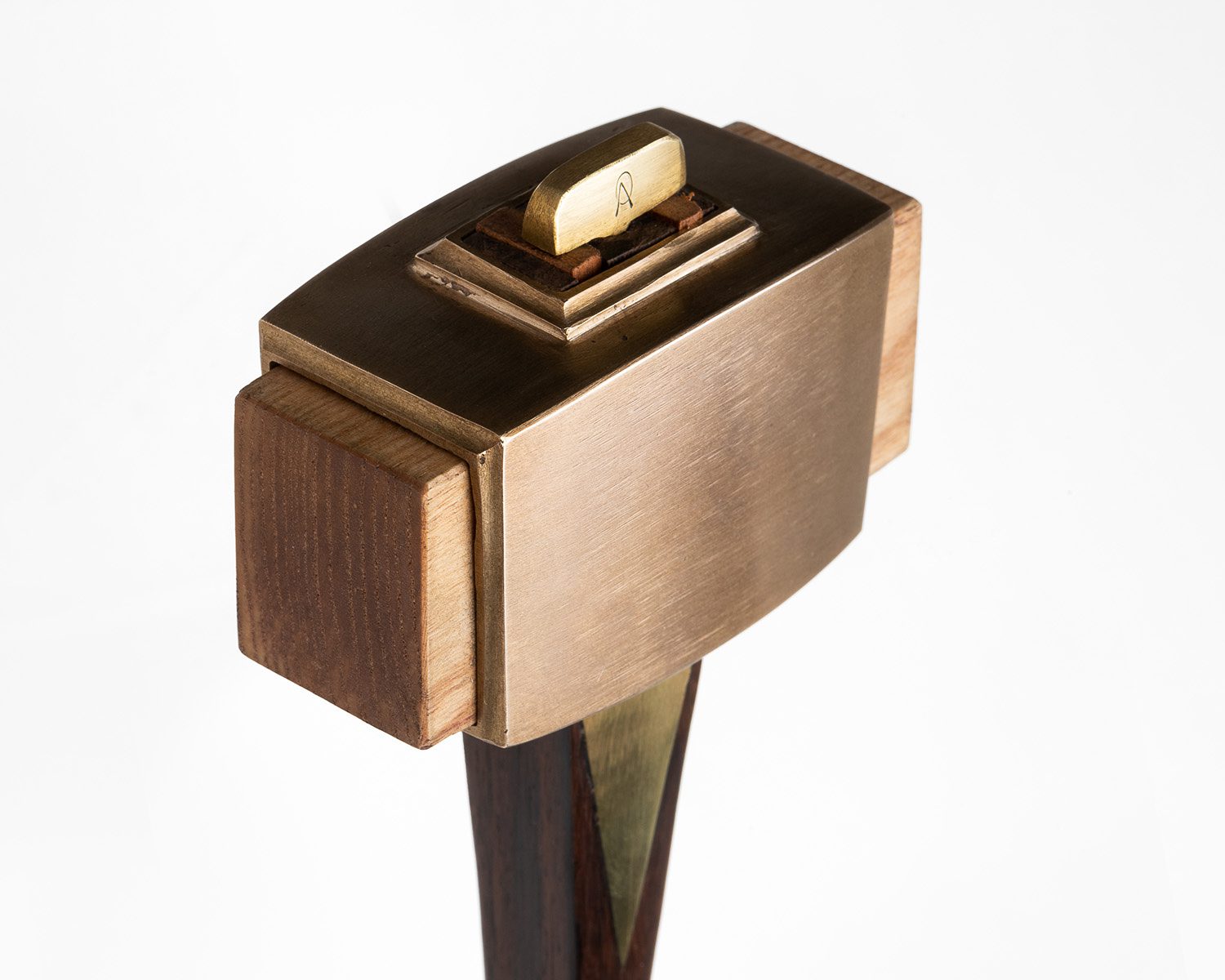
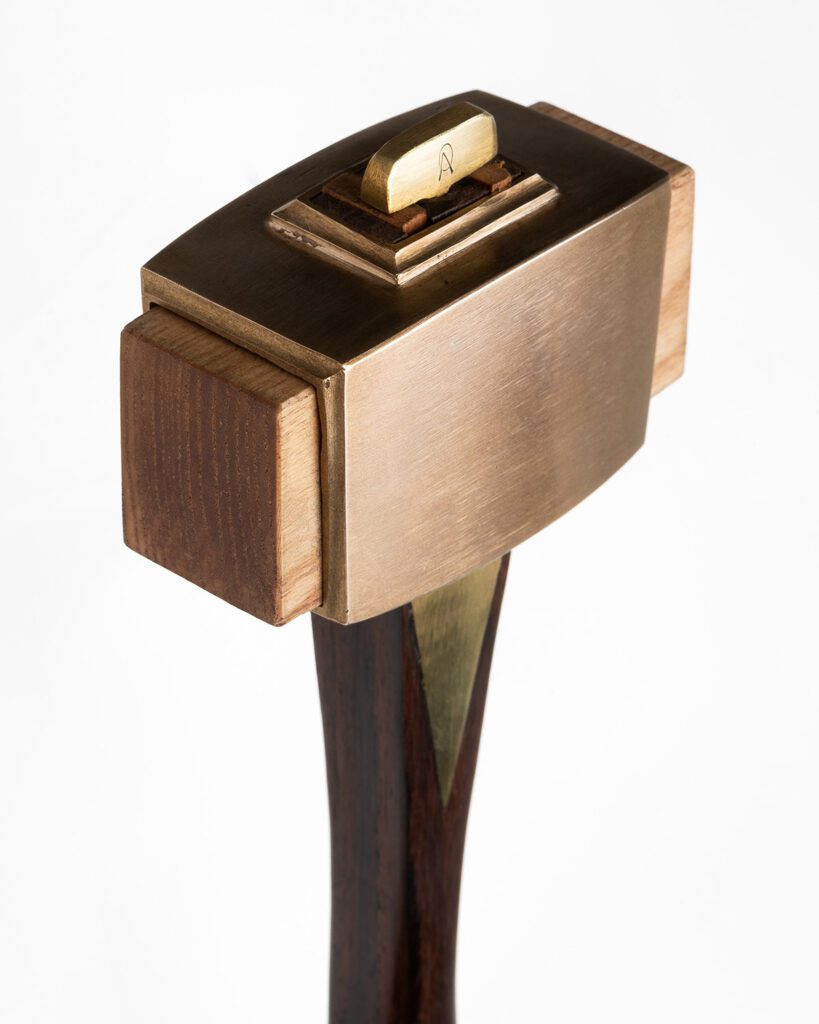
Reproduction of the iconic H. O. Studley Infill Mallet. All work is done in house including casting, inlay, and woodwork. Metals are a brushed finish to be more historically accurate. The head and handle are designed for quick removal, allowing for easy change out or replacement of the infills. The handle is made of dyed hickory to avoid use of endangered rosewoods. The only alteration is a threaded insert to hold the head together instead of wedged steel and bronze.  

Ellie Richards

Baskerville, North Carolina
Website: Ellie-Richards.com
Social Media: @EllieInTheWoods

About the Artist

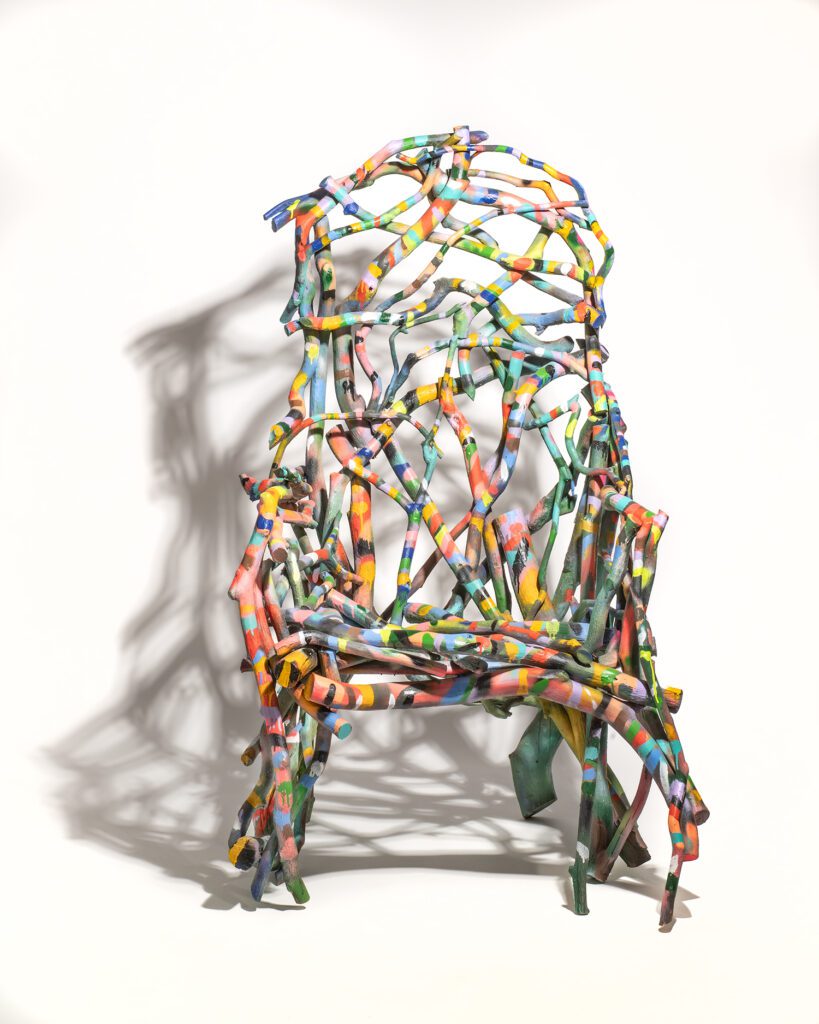
Ellie Richards is a furniture designer and sculptor interested in the role furniture and domestic objects play in creating opportunities for a deeper connection between people and their sense of place. Ellie looks to the tradition of both woodworking and the readymade to create eclectic assemblage, installation, and objects exploring intersections of labor, leisure, community, and culture. She has traveled extensively to investigate the roles play and improvisation have on the artistic process. Her work, both furniture and sculpture, has been included in exhibitions at the Mint Museum; Center for Craft, Creativity, and Design; SOFA Chicago; and the Society of Contemporary Craft. 

Artist Statement

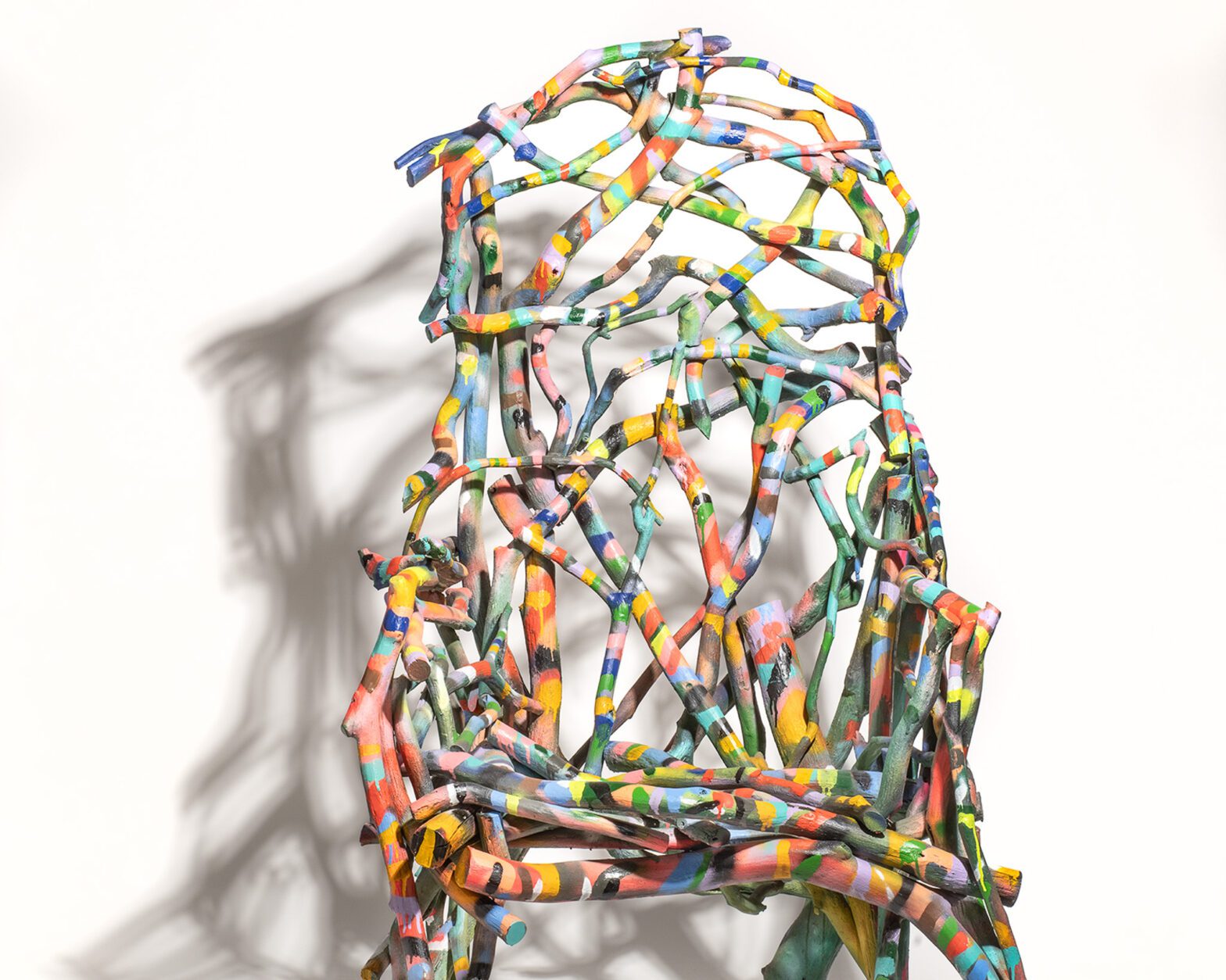
Laurel, as a material, connects my work to a specific region, while the twisted design of the wood recalls rustic furniture designs popular in the nineteenth century. Making work within the fields of sculpture and furniture has expanded my perspective on how a person’s interaction with both natural and built spaces can be a potent indicator of societal and cultural identities. Craft can be a powerful vehicle for sharing culture and accessing otherwise tacit values. Absorbing these characteristics allows sculptural objects to extend a common language that paves the way for a shared experience. I believe shared experiences lead to strong connections and greater empathy among us, and I hope to activate inquiry in the individual that leads to a more meaningful relationship with their environment and its extensions. 

Kathryn Sullivan

Dallas, Texas
Website: KathrynSullivanRestoration.com
Social Media: @KSullivanRestoration

About the Artist 

Kathryn is a woodworker focused on restoration and conservation. Informed as a cultural and legal anthropologist, Kathryn treats the trade with a blend of artistic academia and practical woodworking. Their creative focus is to challenge tradition in both word and practice, and they bring intersectional approaches to the study and creation of wooden decorative art. Kathryn is a guest instructor at the American School of French Marquetry, a contributing writer for Fine Woodworking, and an enthusiastic member of the Furniture History Society. 

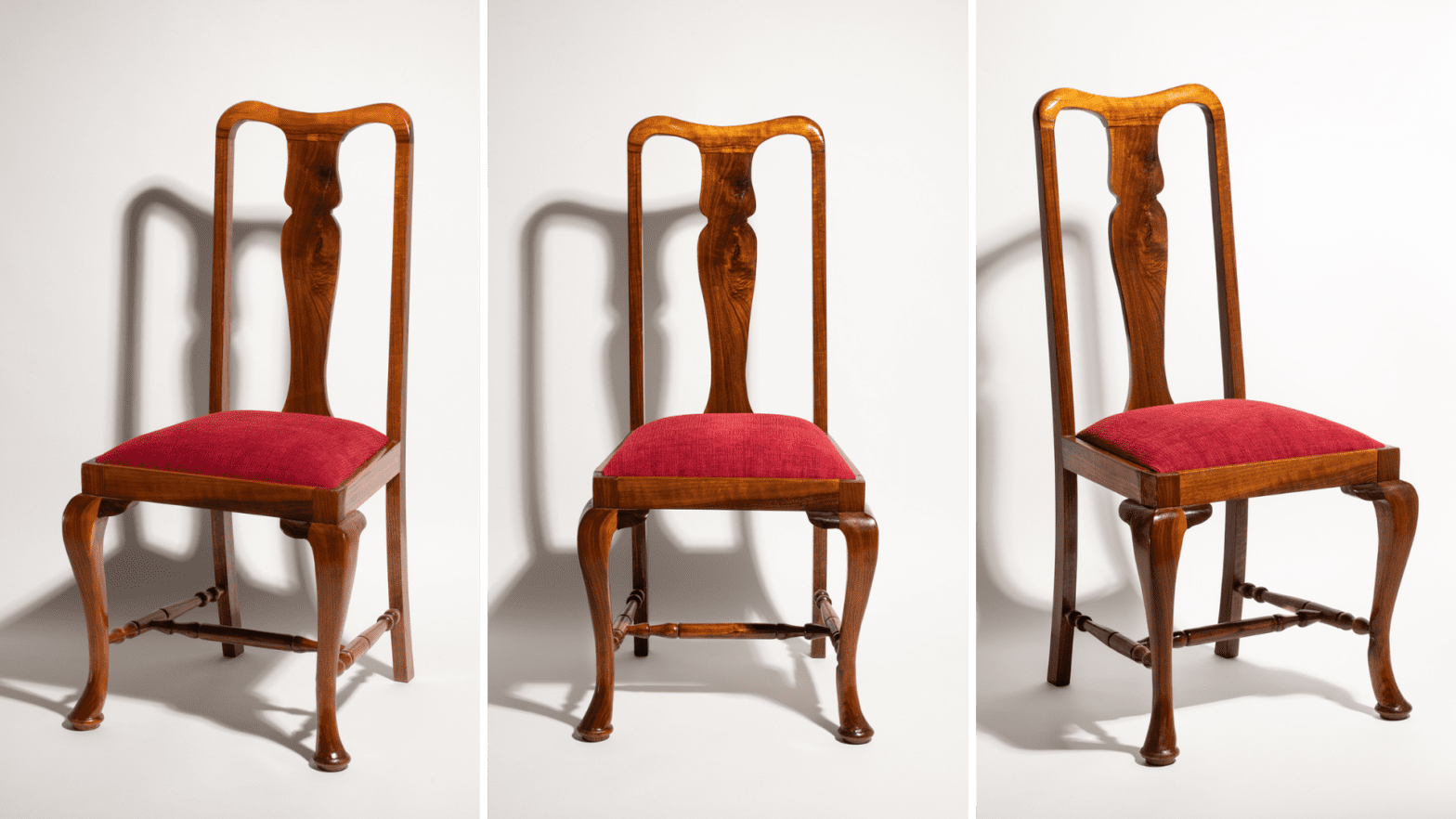
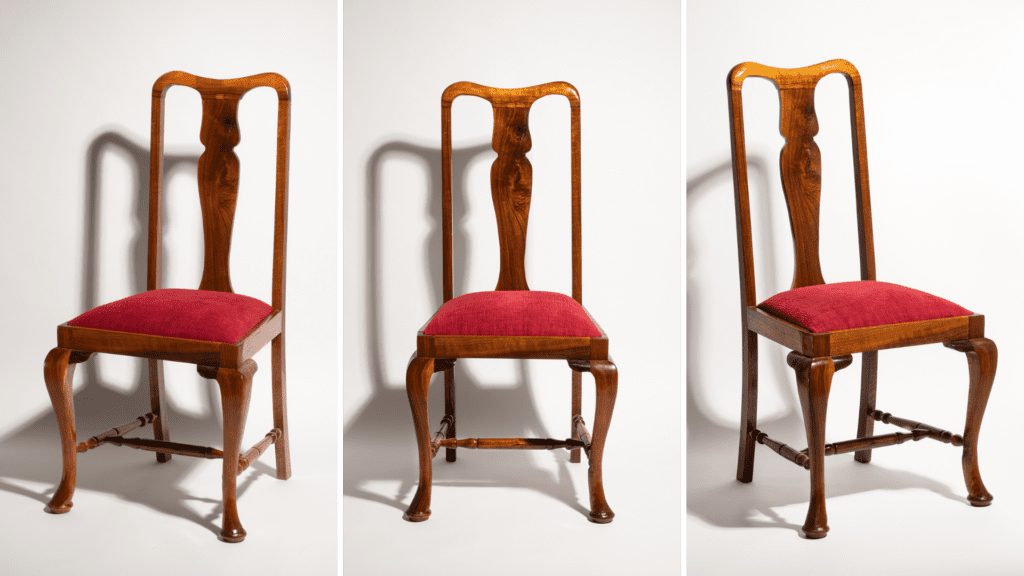
Walnut Chair © 2024 Kathryn Sullivan 

Artist Statement

To challenge the consumption of fashion, colonization, and material culture in general, these chairs were built of scrap lumber. They re-articulate regularly tossed out “waste” from custom home construction and counter reproductions that further a muddy global supply chain of imported trees and devalued labor.   

Kelly Harris

About the Artist 

Brooklyn, New York

Kelly Harris is a woodworker, furniture maker, designer, and educator. She designs and builds both collections and custom pieces in her shop located in Brooklyn, New York. When she is not busy in the shop, you can find her teaching woodworking classes and leading workshops to share her love of the craft with others. Kelly’s work is primarily in wood with a focus on solid joinery, simple yet playful design, shape exploration, and hidden splashes of color. 

Website: StudioHappis.com
Social Media: @KellyHappis

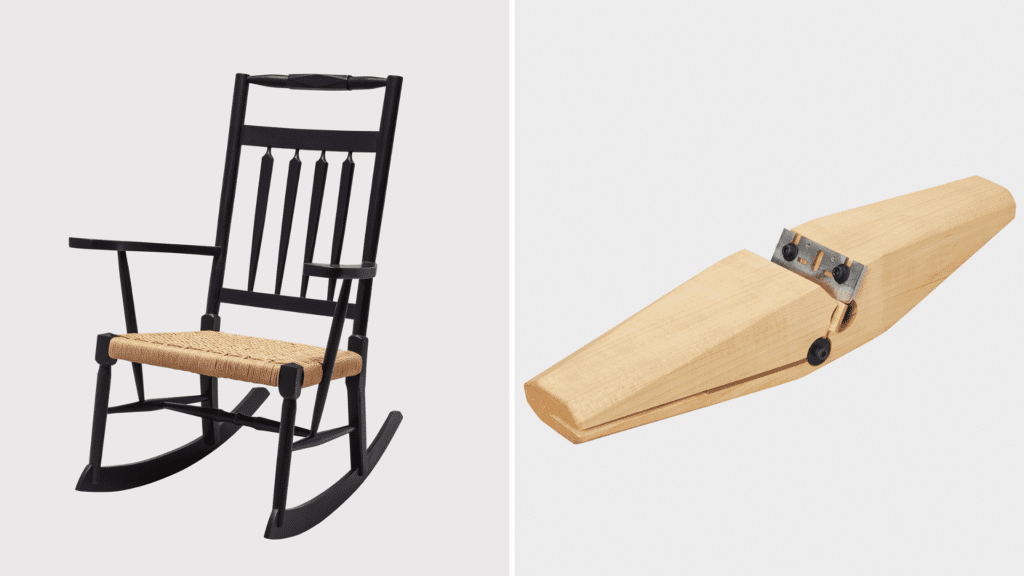
Observatory Rocking Chair © 2024 Kelly Harris 

Artist Statement

Kelly Harris’s motivation in her personal practice changes over time, and she appreciates how woodworking keeps her moving, both intellectually and creatively, while allowing her to feel connected to herself, the earth, and other people. “I want to make things that are needed and wanted. My first woodworking project was making muddlers for a restaurant where I was a bartender for almost a decade. Now I am a toolmaker. I love tools of the trade.” Kelly is currently working on the production of a tapering plane of her own design in partnership with The Chairmakers Toolbox

Aspen Golann

About the Artist

Newton, Massachusetts

Aspen Golann is a furniture maker, artist and educator whose work explores gender and power through the manipulation of iconic American furniture forms. Trained as seventeenth- to nineteenth-century woodworker, she mines the intersections of sexuality, identity, decorative arts and contemporary craft in a range of works including fine furniture and sculpture. 
 

In 2020 Aspen founded The Chairmakers Toolbox—a project intending to increase access and equity in the field of chairmaking. She is published in The New York Times, Architectural Digest, Fine Woodworking, and American Craft, and exhibits internationally. She teaches at Rhode Island School of Design and holds a degree from The North Bennet Street School. 

Websites:

Social Media:

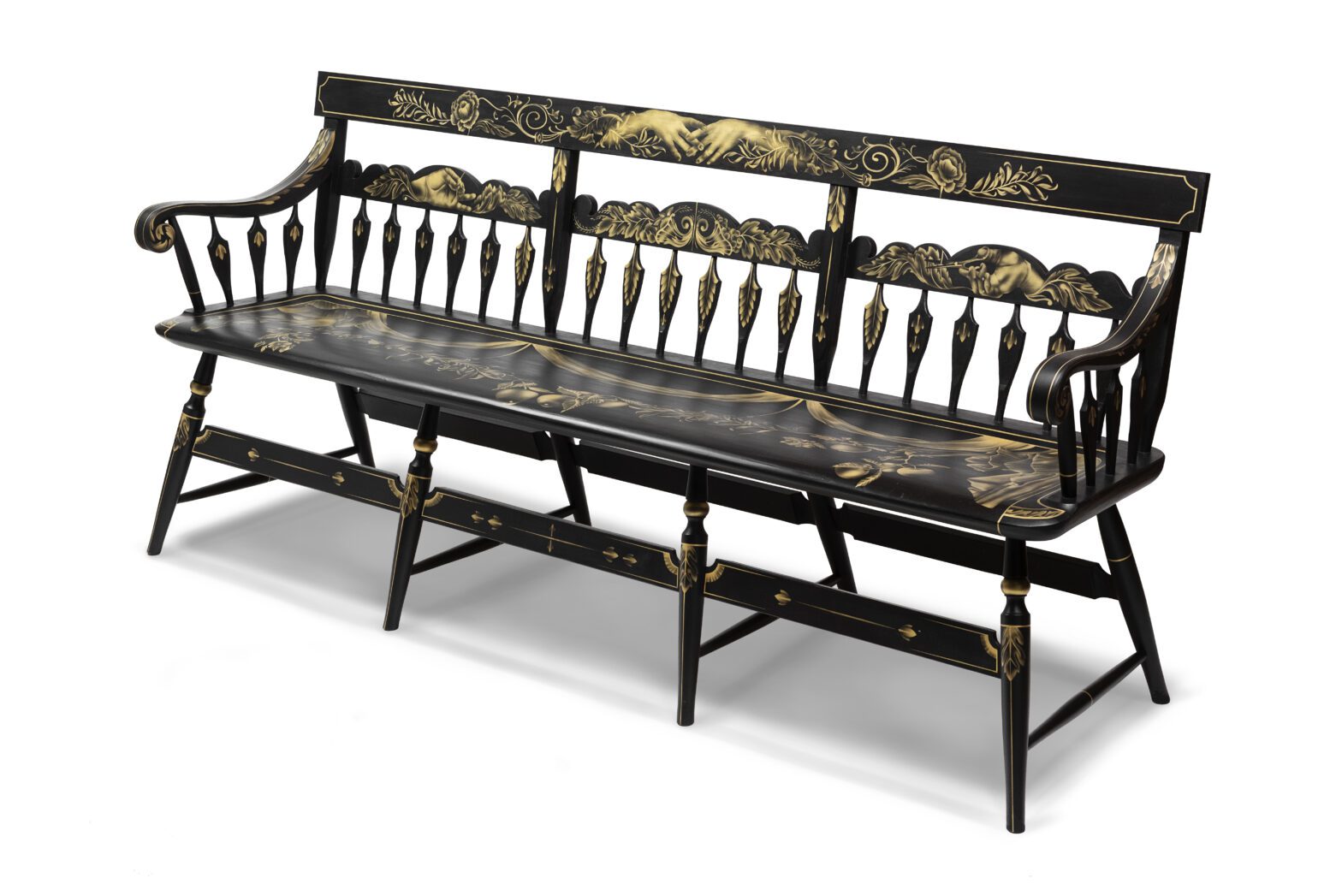
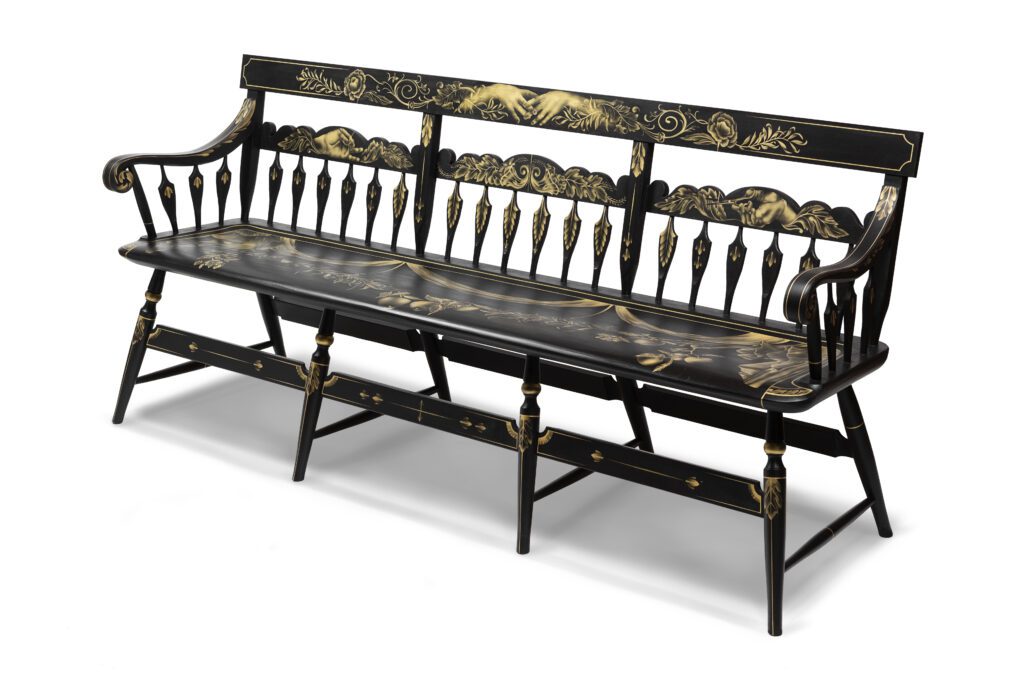
In the Garden Settee © 2024 Aspen Golann

Artist Statement

Aspen co-built In the Garden Settee with Greg Pennington at his shop in Hendersonville, Tennessee. Her bench references a style of furniture associated with nineteenth-century Connecticut maker Lambert Hitchcock, who often used interchangeable parts and stenciled gold designs on painted backgrounds. Aspen’s fresh take on this style incorporates personal elements like images of her own hands.  

Rebecca Gilbert

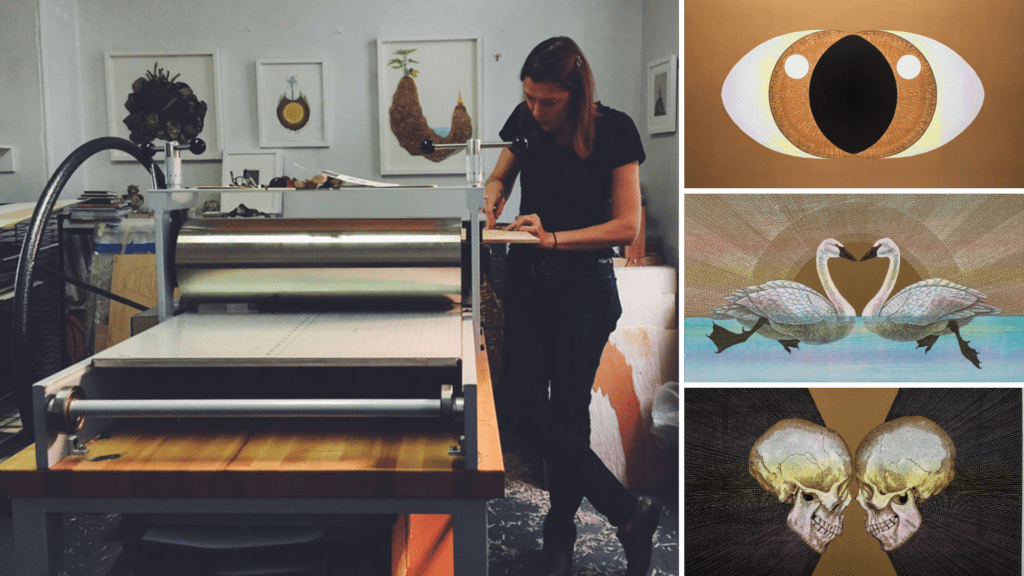
Cyclops / Memento Mori © 2024 Rebecca Gilbert 

About the Artist

Philadelphia, Pennsylvania

Rebecca Gilbert is a Philadelphia-based artist whose work exemplifies a dedication to traditional printmaking processes. Influenced by her years of experience in book arts and rare book conservation, her innovation in executing these processes in combination with cut paper and assemblage, push the boundaries of what a print can be. 

Rebecca’s prints can be found in numerous public collections, including the Victoria & Albert Museum, Ashmolean Museum, Zuckerman Museum of Art, St. Bride Foundation, and Princeton University Library’s Graphic Arts Collection. She maintains an active exhibition record, and has extensively exhibited her work regionally, nationally, and internationally, including in galleries and museums in New York, California, Spain, Canada, Korea, Estonia, and England. 

Among Rebecca’s most recent awards are a Victor Hammer Fellowship from Wells College in Aurora, New York; an Illuminate the Arts Grant to support her current project, A Dance of Death in Two Parts; a Creative Research and Innovation Grant; an Independence Foundation Fellowship; and a Winterthur Artist/Maker Fellowship. 

Rebecca holds a master of fine arts degree in printmaking and book arts, has extensive experience teaching fine art at numerous institutions, is an active member of The Wood Engravers’ Network, and is represented by The Print Center in Philadelphia. 

Website: RebeccaPrint.com
Social Media: @Rebecca_Print

Artist Statement 

Representations of portals, longing, mystery, and communication between the realms of the living and the dead are embedded throughout much of Rebecca Gilbert’s work. She interprets these ideas in woodcut, wood engraving, etching, and letterpress as those processes allow the integration of a high level of detail and meticulously refined craftsmanship. 

The pieces in this exhibition are part of a recent body of work titled Visions of Plenty: Observation, Perception, Illusion, and Reverie. Inspired by historic moveable book structures and optical devices, the work invites viewers to explore optics, perception, and the act of seeing by transforming intricately detailed prints into dimensional works on paper. The dimensional elements of the imagery and the constructions allude to different planes of existence. 

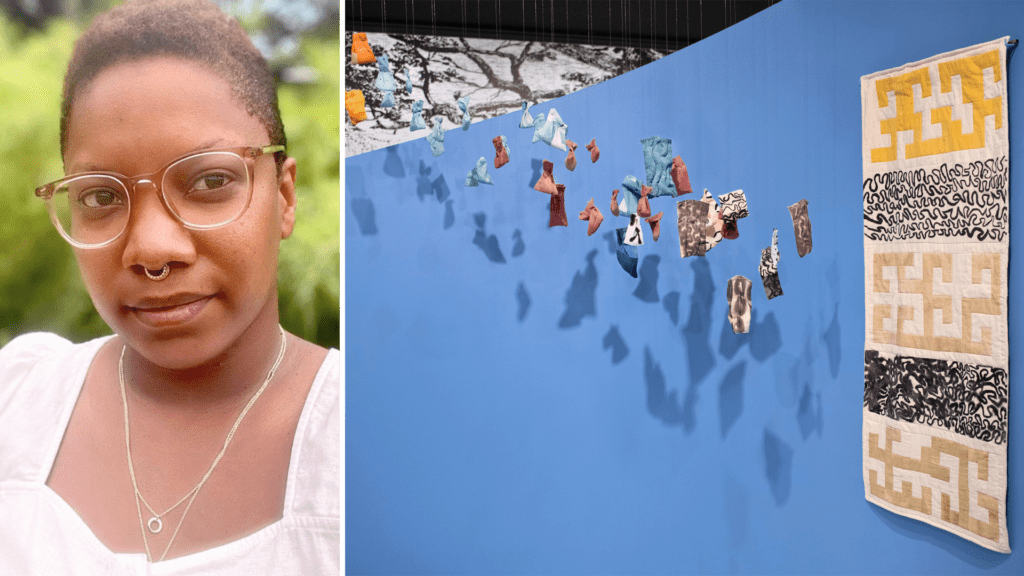
Jennifer Steverson

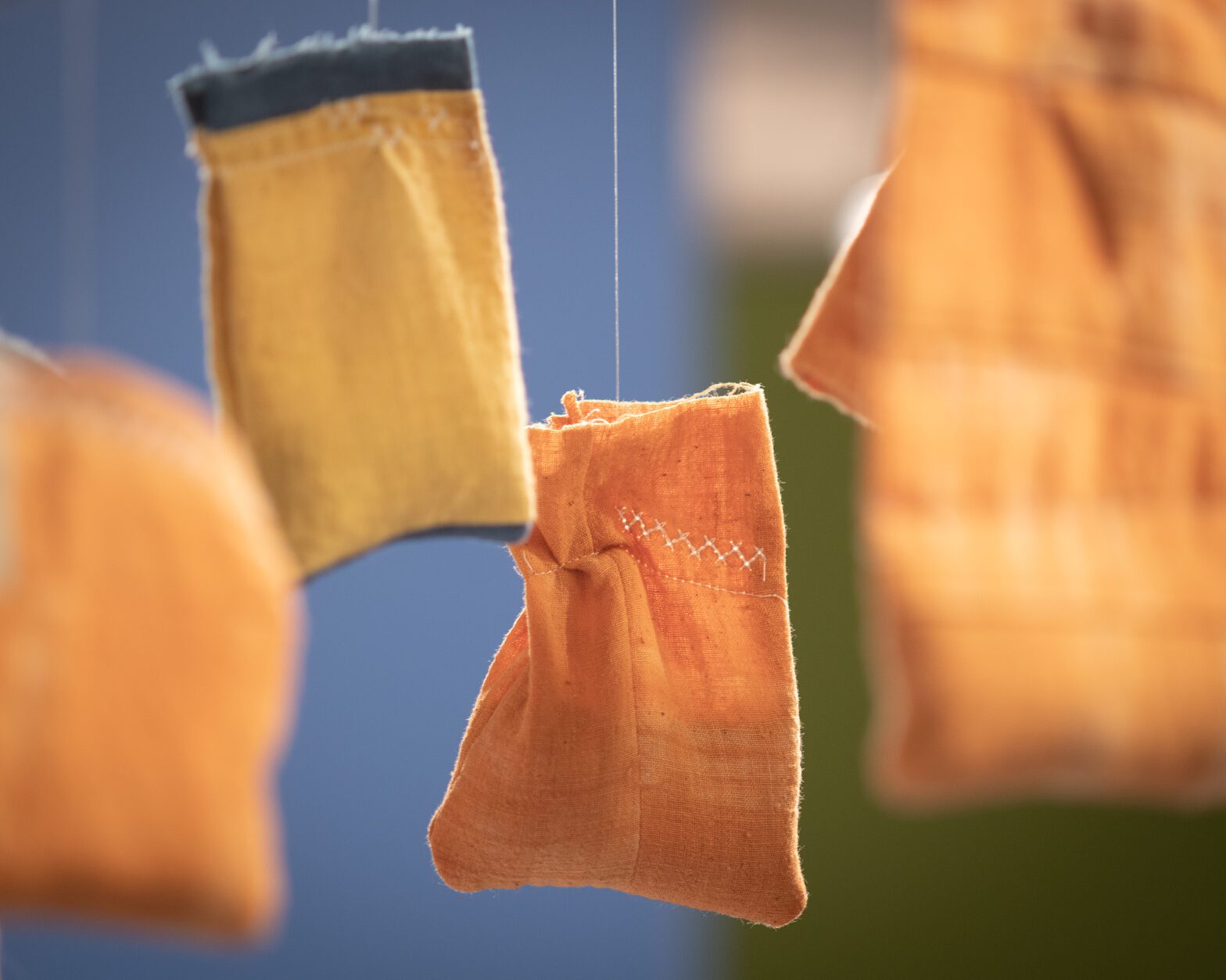
Mojo Bags © 2024 Jennifer Steverson  

About the Artist 

Austin, Texas

I am a textile artist and independent scholar based in Central Texas. The textile traditions of the Black Diaspora are the heart of my practice. I explore the complexity of Black geographies through quilt making, botanical dyeing, archival photographs and texts.  

My studio is named after my grandmothers, Barbara Jean and Geneva. I draw inspiration from my family’s legacy of being nomads and from the skills, materials and plants that they carried with them throughout their journeys.  

I teach group workshops that are focused on the meditative process of creation. These workshops are suitable for both beginner and experienced makers. 

From 2021–2022, I was Virtual Artist and Scholar Resident with the Black Botany Studio at University of California Santa Cruz. I was a Winterthur Maker-Creator Fellow in 2022.

Website: GenevaJean.com
Social Media: @Geneva_Jean_

Artist Statement 

Mojo for Climate Change is inspired by the design of antique seed bags from Pennsylvania. The small cloth seed bags remind me of mojo bags, protective, spiritually charged talismans that are a Black Southern spiritual practice. Mojo is medicine that is imbued with power to help the recipient. My mojo bags are an offering to the ancestors who were forced to labor in the racist and colonial economies that created the current climate catastrophe. The materials were chosen carefully to create medicine for a just, abundant world where power and resources are shared equitably. The project materials were grown and processed in ways that nourish the earth and justly compensate artisans. 


Charting Chintz: Making the Fabric

Alka Raman

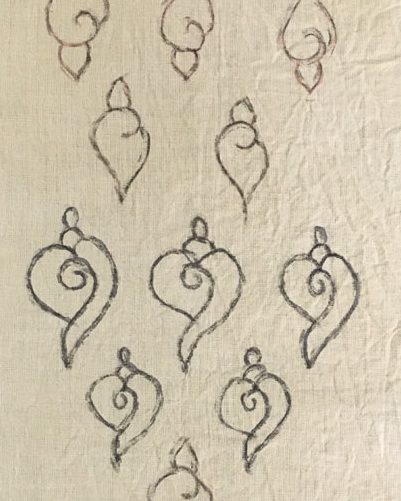
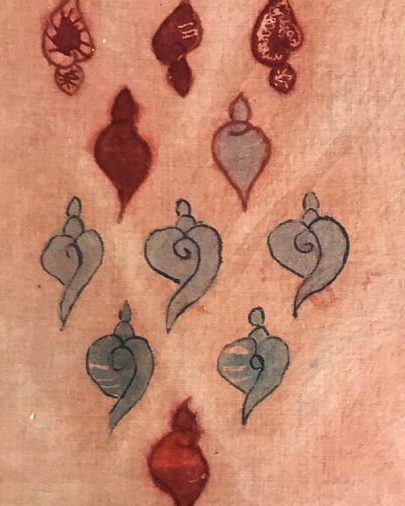
Sample 1: Drawing with Alum and Iron Mordants

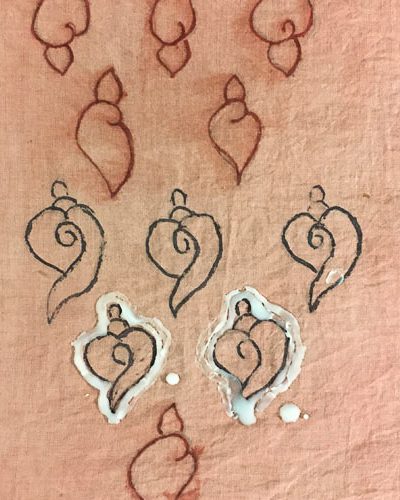
This sample shows the cloth at one of the earliest stages of chintz making. The cloth underwent preparations involving scouring, myrobalan soak and boil, as well as a myrobalan and milk soak. Designs were then outlined on the cloth with a charcoal pencil. All conch 1 shapes (top five and bottom one) are outlined in a liquor made of alum and sappanwood, where red or its variations are required. All conch 2 shapes are outlined in a mixture of iron water and acid congee (fermented rice water) where a black outline is required.  

Left: Conch 1; Right: Conch 2

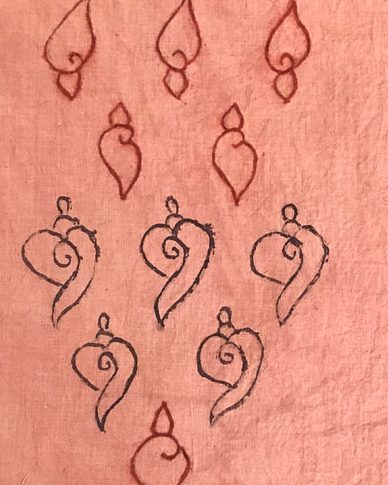
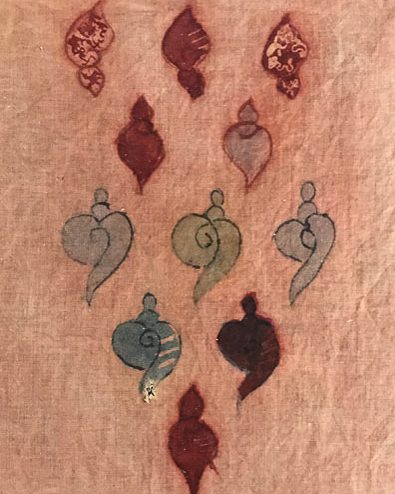
Sample 2: First Maddering  

After the outlining of the designs with the alum and iron mordants, the cloth underwent its first madder bath. It was immersed in a bath made of powdered madder root and water, and brought up to heat in the bath, with temperature maintained under 60°C, for 2 hours. This cloth shows the vivid outlines in red and black after the process of the first “maddering.”  

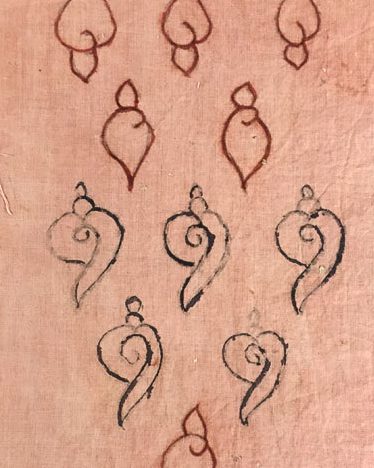
Sample 3: First Dunging and Bleaching  

This sample shows the cloth after its first dunging-plus-bleaching. The cloth will undergo four dungings and bleachings in all during the process of chintz making. In the absence of kid-dung, which was recommended by the Beaulieu manuscript for dunging, a modern version of soaking cloth in a mixture of wheat bran and chalk (calcium carbonate) mixed with warm water, was adopted. For bleaching, the cloth was dried under full spectrum sun lamps to imitate sunlight.  

Sample 4: Wax as Resist

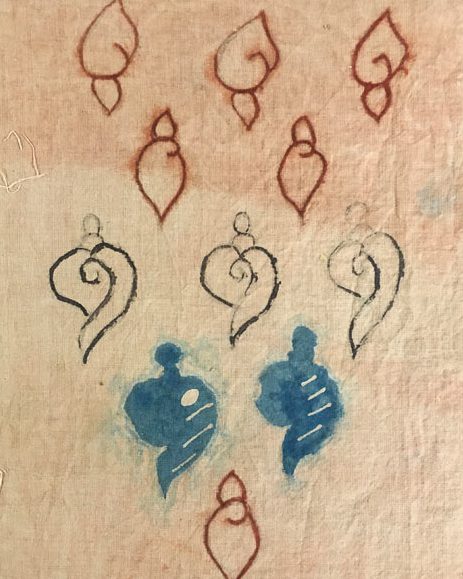
Following the first round of dunging-bleaching, rice starch was applied to the cloth. Once the starched cloth was dry, it was ready for wax as a resist, to prevent indigo from going into parts of the cloth where it was not required. This sample shows wax applied to the outlines of specific designs where blue was required within the shape, as well as to parts where inside the shape certain areas needed to remain free of the blue.  

Sample 5: Vatting-Direct Indigo Application  

The Beaulieu manuscript refers to both vatting as well as direct application of indigo to the cloth at this stage. This sample illustrates only direct application of indigo, to demonstrate that not only is it possible, but it also remains an effective and efficient method of indigo application. This sample shows the indigo directly applied with the aid of soy wax as resist, the cloth scraped in hot water to remove the wax, and the cloth having gone through its second dunging-bleaching following the removal of the wax.  

Sample 6: Streaking

White, red, blue/green, yellow/orange, brown/violet

At this stage, Beaulieu witnessed the Indian artisan applying colors in a series of steps to achieve variations of white, red, blue, green, yellow, brown, and violet on the cloth. Blue and yellow are clearly visible on the cloth at this stage, violet and brown less so, though they are yet to go through the next round of maddering to solidify the colors.  

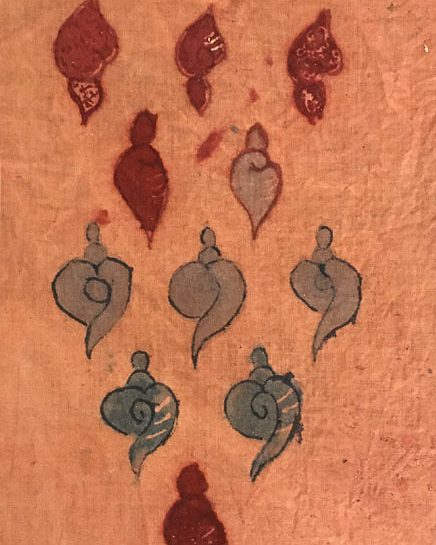
Sample 7: Second Maddering

This is what the sample looks like after the second round of concentrated maddering for four hours. The cloth has taken on a very dark red color over the background, indicating that the quantities of madder were likely too high in the bath. Equally, the overwhelming red within the designs where yellow, orange, brown, and orange were to be visible indicates issues with the measurements of the liquors used to achieve these colors on the cloth. Given the unclear measurements within the Beaulieu manuscript, it would have been a long process of empirical trial and error to arrive at the right measurements resulting in the right colors on cloth.  

Sample 8: Stain Removal, Dunging, and Washing  

This sample has undergone a special natural stain removal as suggested in the manuscript—scrubbing with pieces of lime. Where the scrubbing has been efficient, there the background of the cloth is clearer. Following the stain removal, the cloth was washed in a solution of soap berries. While some of the madder attached to the background has come off, the cloth remains overwhelmingly red, indicating too much madder in the second bath.  

Sample 9: Final Yellow/Green

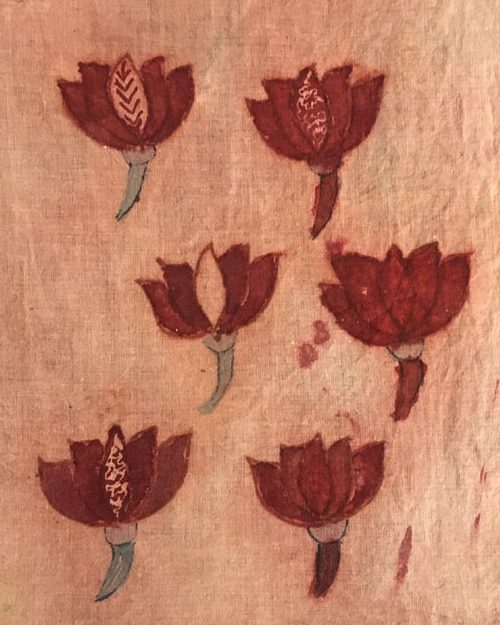
This sample has only one motif (conch 2b) covered in a mixture of cadouca-myrobalan-madder applied on blue to allow for the development of green. The motif shows negligible traces of yellow on blue, indicating another instance of trouble with measurements. This sample has also undergone the final dunging-sanding-soaping, which removed any residues of loosely attached cadouca-myrobalan-madder to the motif.  

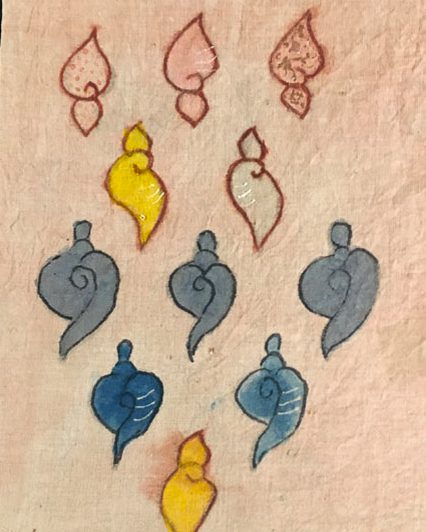
Sample 10: The Final Cloth

Following the instructions in the Beaulieu manuscript as closely as possible and making reasonable adjustments, as far as possible, without using insights available through modern techniques of natural dyeing, the final sample shows red, black, blue, brown/violet and techniques that would have illustrated white, green, yellow, and orange in the hands of a more experienced and skilled artisan. 

Conclusions

The transfer of cotton printing-painting knowledge from India to Europe exhibits a case of partially useful knowledge requiring adjustments and adaptations in line with local European conditions. Certain variable elements, like deciphering the exact measurements of materials to obtain required results, would have been achievable through prolonged trial and error, as well as empirical investigations. However, certain fixed elements required by the process, like ample sunlight as part of the process of bleaching, or the use of chay root, which was unavailable in Europe, acted as fixed and largely unsurmountable constraints in Europe. Two of the earliest innovations in textile printing in Europe were aimed at overcoming these fixed constraints via the development of chemical bleaching and the isolation of alizarin for the color red.  

Glossary

Myrobalan: A fruit-bearing plant that produces a buff to brown color dye or a teal color if overdyed with indigo
Madder: A plant used to create a red dye
Alum: A binder used to fix dyes
Sappanwood: A flowering tree used to create red dye
Congee: Rice porridge
Mordant: Dye fixatives used to set dyes in fabric
Dunging: traditional process using cow dung to fix or remove mordants

Note on the Process

Charting Chintz attempts to be as close to the chintz-making process described in the Beaulieu manuscript as possible, only using technique or product substitutions where either products were unavailable or technique not possible in its described form, or both. Key substitutions made are as follows: 

  • Initial scouring (recipe unknown) substituted with synthrapol and soda ash 
  • Chay root substituted with madder root 
  • Dunging using kid dung substituted with dunging with wheat bran and chalk 
  • Beeswax for resisting (recipe unknown) substituted with soy wax 
  • Sunlight substituted with full spectrum sun lamp