Search Site

Mowing the Meadows

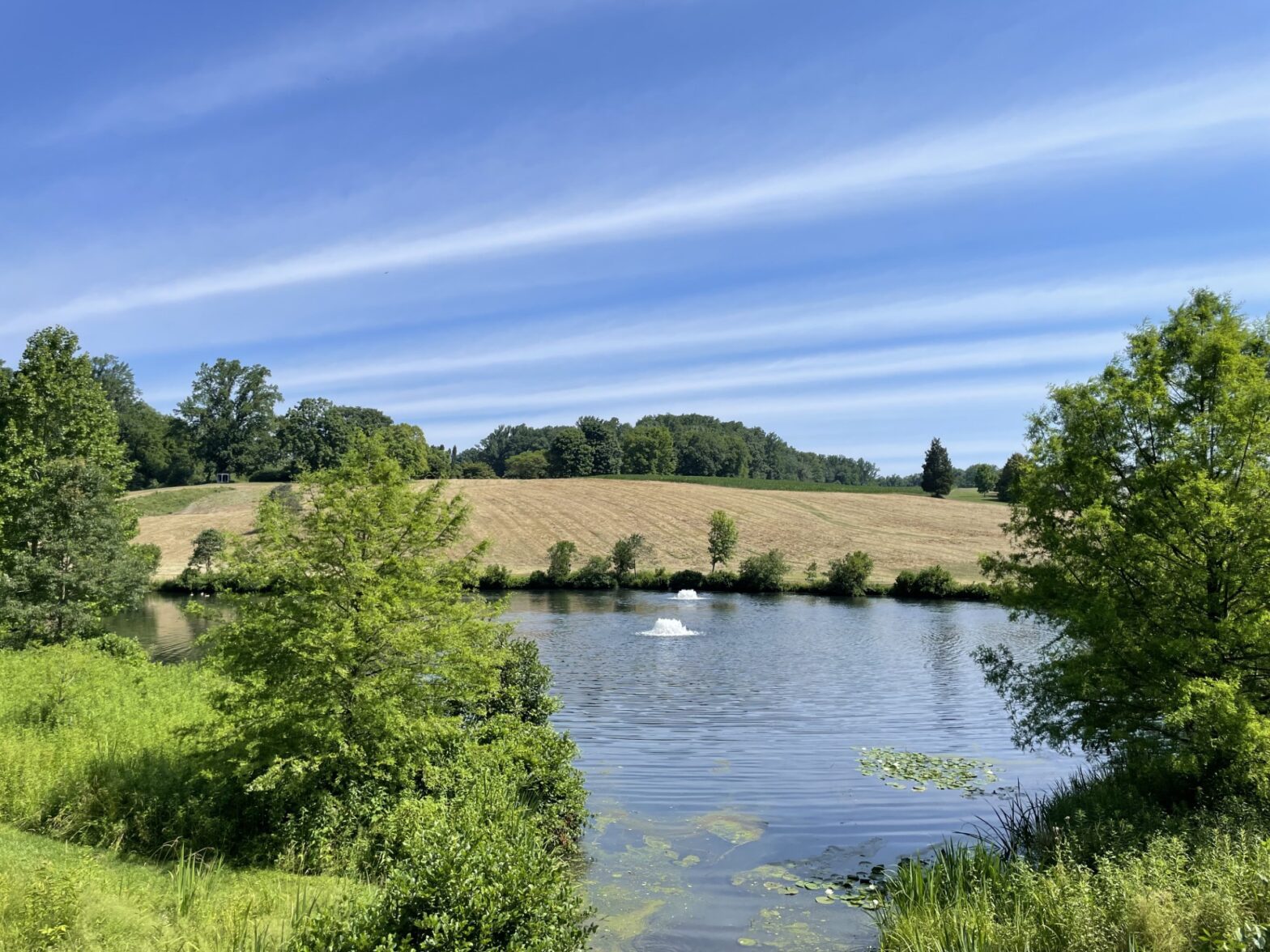
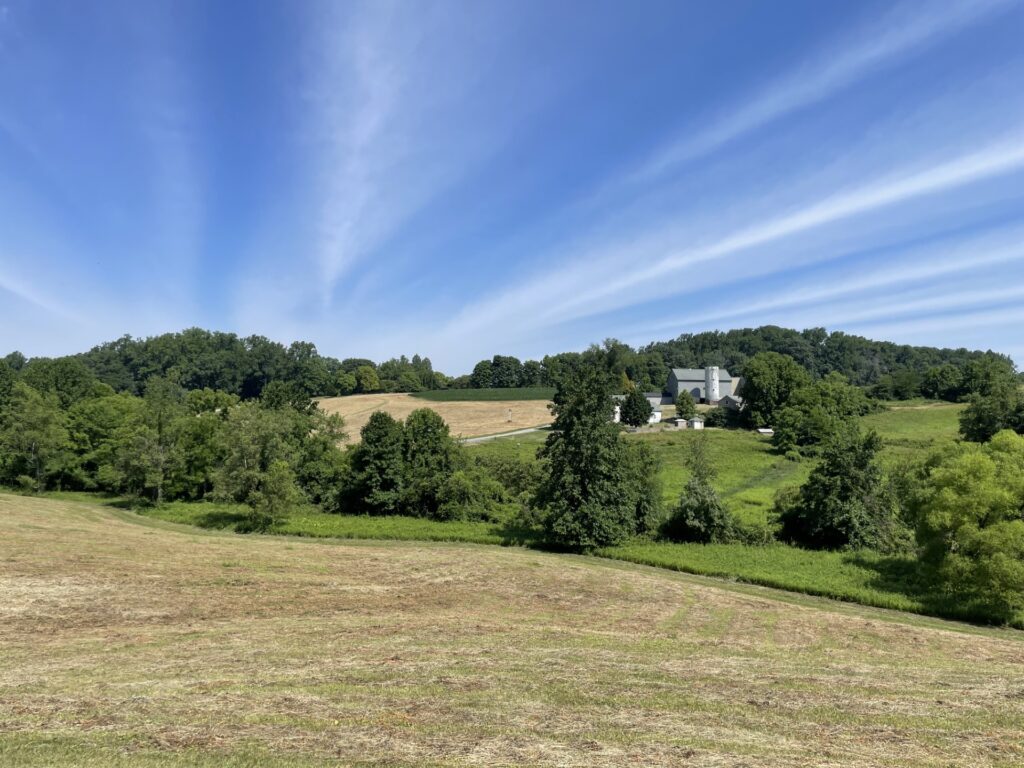
While Winterthur’s museum and galleries are home to impressive artwork and craftsmanship, the Winterthur estate of nearly 1,000 acres is also a canvas of breathtaking woodlands, meadows, and wetlands.

We know many of you share our passion for this magnificent Delaware treasure. Our Members often savor (and photograph) serene walks past our meadows brimming with tall grasses, wildflowers, and a dazzling array of dragonflies, butterflies, and birds.

One Member was recently concerned upon seeing that some of these meadows had been mowed. They reached out to question whether this mowing might have disrupted the habitat that so many creatures call home.

We thought this was a great opportunity to share the story behind our meadows and why mowing them is an essential part of their care.
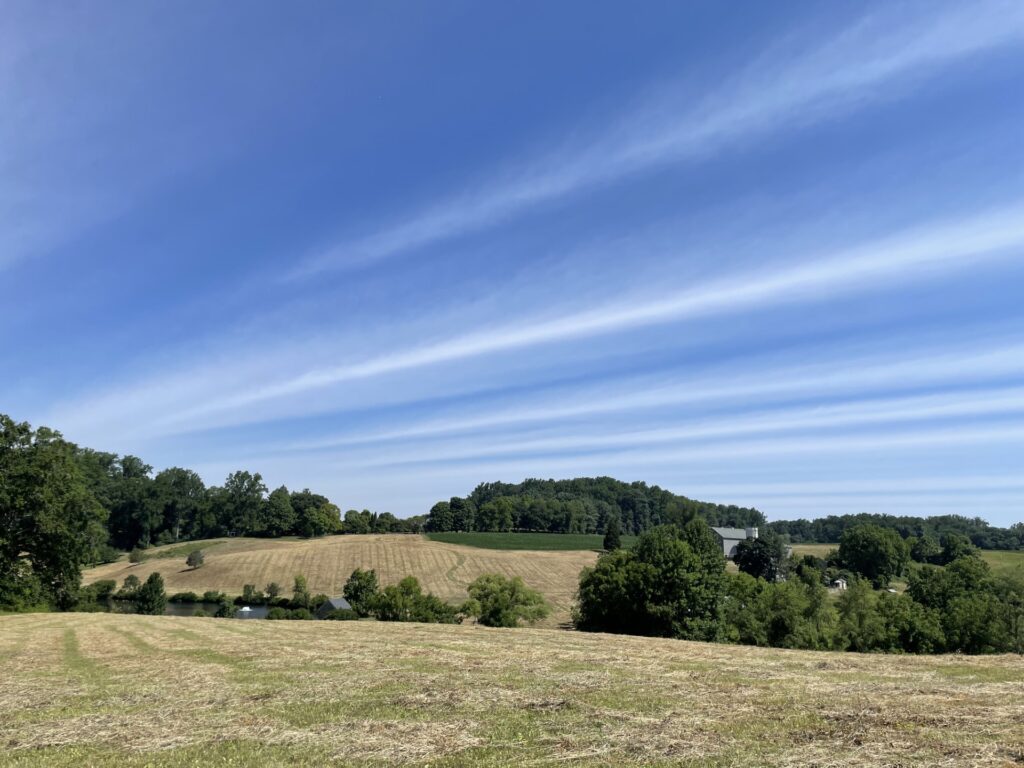
Fields were recently mowed in the East Barn Meadow at Winterthur.

Why Do We Mow Our Meadows?

Our meadows are not just picturesque—they are vital habitats for many species. Mowing is a key part of maintaining their health. It helps control the spread of weedy and invasive plants that can overshadow the native flora, which is crucial for the well-being of our pollinators and wildlife.

Our dedicated Natural Lands team carefully schedules mowing to minimize any impact on ground-nesting birds, pollinators, and other wildlife. For example, cutting plants like milkweed at specific times benefits monarch butterflies, as the regrowth provides an ideal environment for them to lay eggs as the last generation of monarchs for the season prepare for a long journey to overwinter in Mexico.
The Balance of Nature: Rotational Mowing

To maintain the delicate balance of our ecosystem, we practice rotational mowing. This means we always leave some fields uncut, allowing blooming plants to thrive and ensuring that pollinators have a continuous supply of flowers throughout the growing season.

Curious to learn more?

Check out our recent blog post on how prescribed burning plays a role in our land stewardship. You can also join us for the Director’s Garden Walks, held on the second Saturday of each month, where we’ll dive into unique topics like the intriguing chimney swifts at Farm Hill.

And don’t miss our Garden & Estate Insider walks every Tuesday for a deeper exploration of the estate’s hidden gems.

We cherish the support and engagement from all our visitors and Members. You inspire us to keep these lands flourishing and beautiful for generations to come.
Honoring Our Oldest Trees

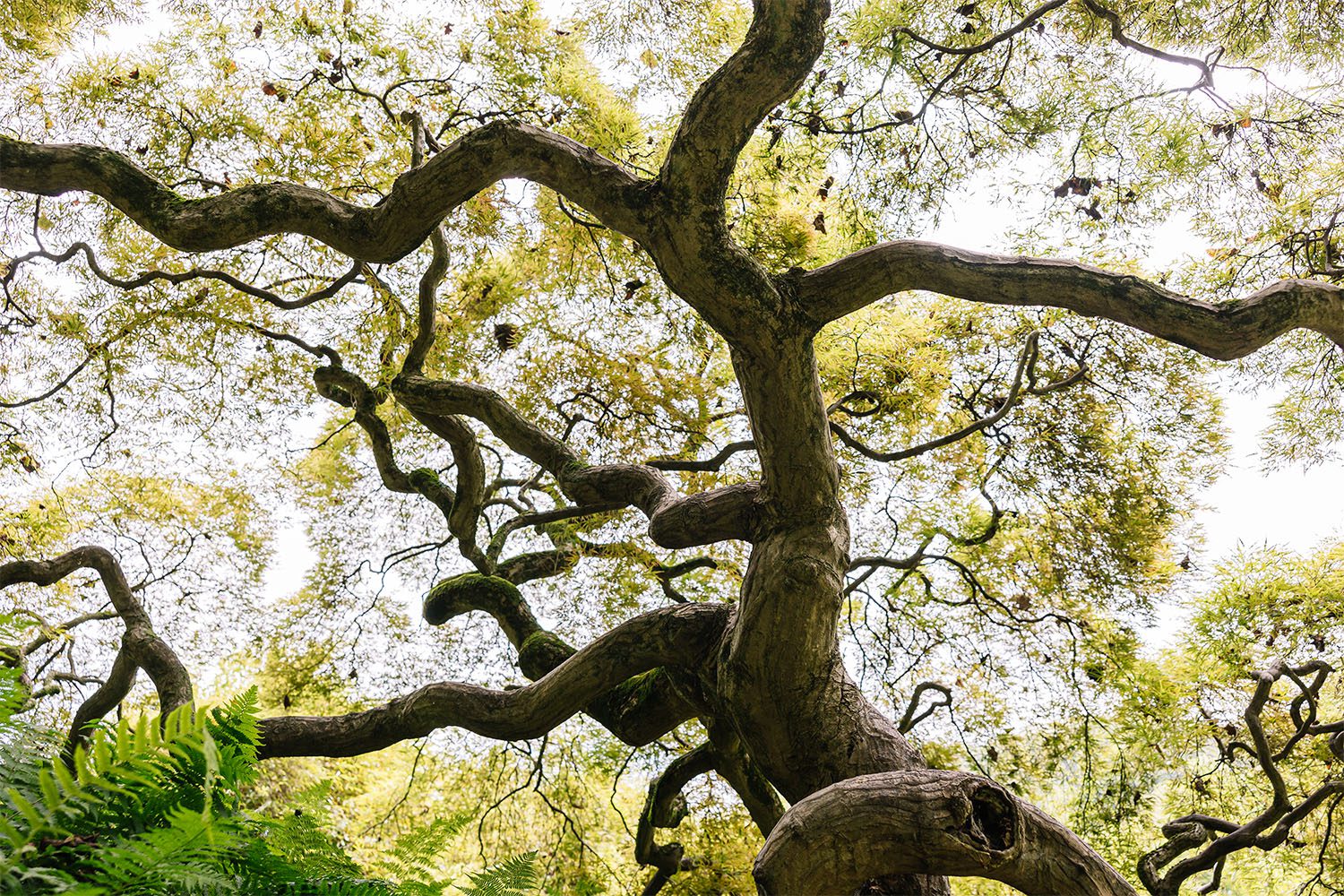
Five areas of forested land at Winterthur were recently inducted into the Old-Growth Forest Network.

Tree species in the five areas include white oak, red oak, American beech, tulip poplar, black gum, redbud, and flowering dogwood. The trees date between 100 and 300 years of age and are in Browns Woods (17 acres), Chandler Farm Woods (53 acres), Old Quarry Woods (44 acres), Duck Pond Woods (46 acres), and Negendank Farm Woods (12 acres). A tulip poplar in Chandler Farm Woods has been designated as a Penn Tree. Found in Delaware, New Jersey, Pennsylvania, and the Eastern Shore of Maryland, these trees were living when William Penn first visited Pennsylvania in 1682.

The forests at Winterthur are the homelands of the Lenape peoples who inhabited the region centuries before European settlers arrived. The du Pont family moved to Winterthur in 1839, and over four generations they left the woodlands largely untouched.

Winterthur is the fourth old-growth designation in Delaware and the second in New Castle County, joining more than 240 other forests in the national network of protected old-growth areas open to the public.

The Old-Growth Forest Network (OGFN) connects people with nature by creating a national network of protected, mature, publicly accessible, native forests. Founded in 2012, OGFN recognizes exceptional forest advocates, educates about the ecological benefits of old-growth forests, and speaks out regarding immediate threats to specific ancient forests.

There are 10 miles of roads and 25 miles of paths and walking trails on the estate, many of which pass through woodlands, so try to find time to visit Winterthur and its trees this summer.

Juneteenth celebration will inspire visitors June 15

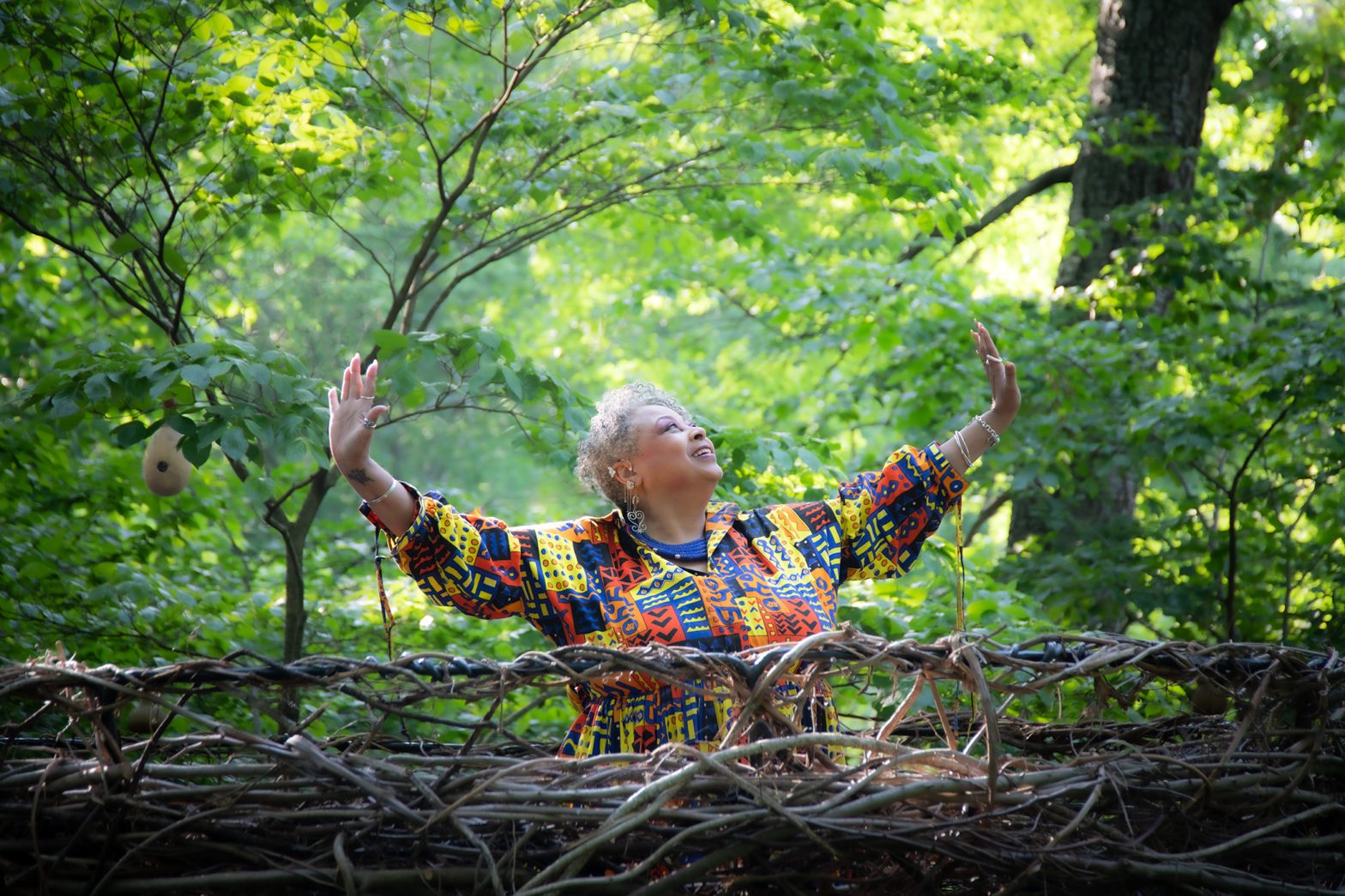
WINTERTHUR, DE (June 11, 2024) – Storytellers, musicians, and dancers will help visitors celebrate Juneteenth at Winterthur Museum, Garden & Library on Saturday, June 15, 11:00 am–3:00 pm.

Most activities are included with admission and are free for members.

The Wilmington Ballet and the Whitney Project will fill Winterthur’s Enchanted Woods and Copeland Lecture Hall with performances enriched by and deeply rooted in African American arts and culture.

The day will also include a World Marketplace in Enchanted Woods featuring A Flicker of Daisy, Created by LA, CreationsbyT, and Soleil Dancewear.

Register for the event at https://www.winterthur.org/calendar/juneteenth-freedom-day/

The festivities begin at 11:00 am with a “Celebration of Black Joy” performance in Copeland.

The World Marketplace will be open 11:00 am–3:00 pm in Enchanted Woods, with:

  • African dance demonstrations, 11:30 am and 12:15 pm.
  • Lift Every Voice at 12:45 pm.
  • Drum circle at 12:50 pm.
  • Storytelling at 1:15 pm.
  • Community dance jam at 2:00 pm.
On June 15, 2024, the Wilmington Ballet and the Whitney Project will fill Winterthur’s Enchanted Woods (pictured here) and Copeland Lecture Hall with performances enriched by and deeply rooted in African American arts and culture.

ABOUT WINTERTHUR MUSEUM, GARDEN & LIBRARY

Winterthur—known worldwide for its preeminent collection of American decorative arts, naturalistic garden, and research library for the study of American art and material culture— offers a variety of tours, exhibitions, programs, and activities throughout the year.

Winterthur is located on Route 52, six miles northwest of Wilmington, Delaware, and five miles south of U.S. Route 1. Winterthur is committed to accessible programming for all. For information, including special services, call 800.448.3883 or visit winterthur.org.

New Life for the Old Gatehouse

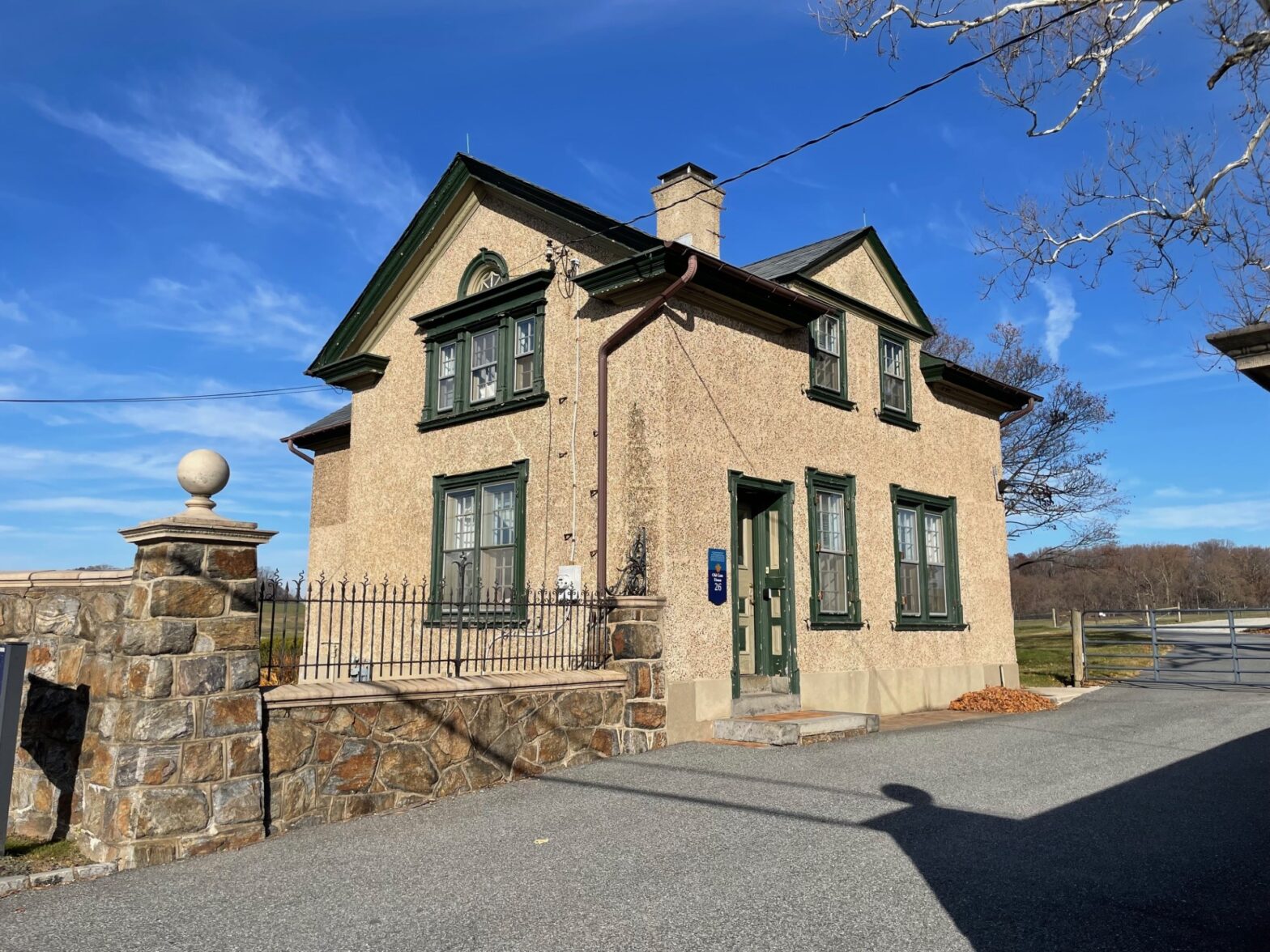
Winterthur recently received a grant to preserve its historic Old Gatehouse. Located on Kennett Pike, south of the main entrance, the building is one of the more prominent and recognizable parts of the estate.

The gatehouse stands by the drive that was the main entrance onto the estate from 1839 to 1961. Ruth du Pont Lord, a daughter of Winterthur founder Henry Francis du Pont, wrote: “Driving from the railroad station, we would soon reach real country on the other side of the Gatehouse—owl country, fox country—and would speed down the winding mile-long driveway through the enormous woods and up the hill to the house.”

Designed in 1902 by Robeson Lea Perot, a Philadelphia-based architect, the two-story colonial/neoclassical revival building was also the residence for the gatekeeper and his family. Today, the building serves as offices for some of Winterthur’s development staff.

Winterthur requested and received $125,000 for the project and is contributing a matching $125,000. The award was part of $25.7 million in Save America’s Treasures grants from the National Park Service, in partnership with the National Endowment for the Arts, the National Endowment for the Humanities, and the Institute for Museum and Library Services. The funding supports 58 projects in 26 states, the Virgin Islands, and the District of Columbia. Save America’s Treasures requires applicants to match the grant money dollar-for-dollar with nonfederal funding.

The project includes restoring the gatehouse’s iron railing and gate; conserving the historic shutters; painting the exterior of the gatehouse, and more. All work will be completed by the summer of 2025.

At its peak, the Winterthur estate had 12 temperature-controlled greenhouses, a 23-acre orchard, a 5.5-acre vegetable garden, and a 4-acre cutting garden. It also had a butcher shop, sawmill, tannery, post office, train station, and a dairy barn where du Pont bred and raised award-winning Holstein cattle. Ninety-nine cottages housed 250 members of Winterthur’s staff and their families.

Restoring the Old Gatehouse honors its historic heritage and will ensure its stately beauty for years to come, and we are grateful for this grant, which has made it possible. 

Furniture Makers to Create Magic Wands for Winterthur Guests

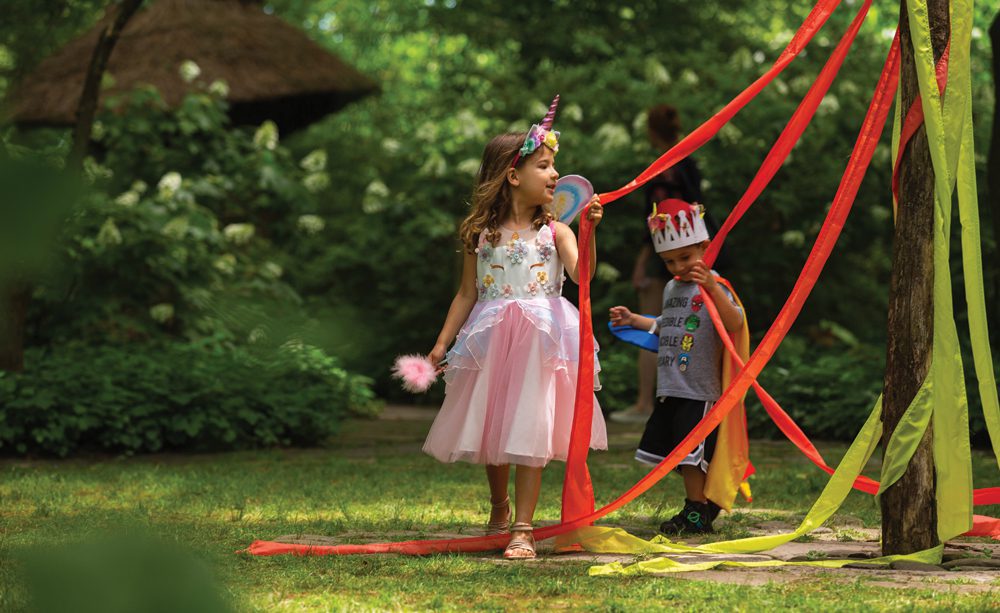
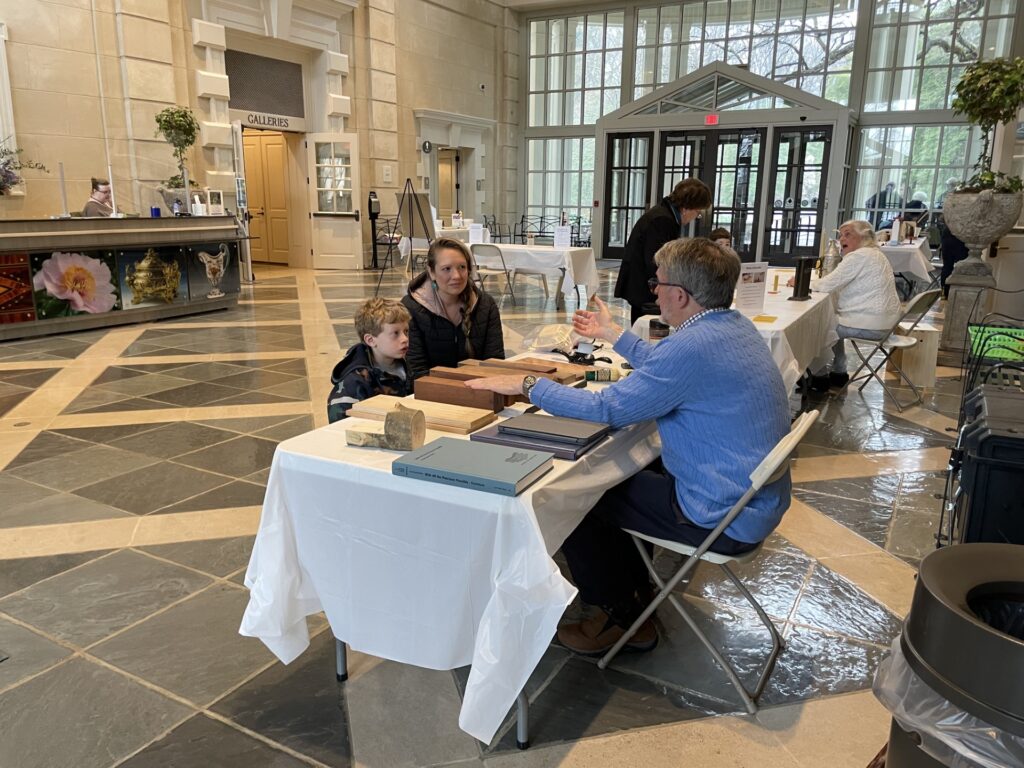
On Enchanted Summer Day, a group of volunteers will use their hands and tools to turn wooden dowel rods into fantastical magic wands for children. These volunteers hail from the Society of American Period Furniture Makers (SAPFM), a group that is quickly turning into a valued partner for Winterthur.

This will be one of many activities for children during Enchanted Summer Day on June 8.

Charlie Driggs, a board member of SAPFM and co-leader of the Chesapeake Chapter, said of making magic wands: “It’s not hard.” What might be more difficult, Charlie said, is keeping children patient if there is a wait for wands.

Charlie has had a long relationship with Winterthur. This partnership with SAPFM is more of a relaunch, he said, adding, “I didn’t think we’d be at this point for a few years.”

But SAPFM volunteers quickly stepped up and Winterthur staff enthusiastically embraced the partnership.

“This particular program, if it successfully brings people the understanding needed to appreciate how things are made, satisfies… SAPFM’s commitment to providing education,” Charlie wrote in a recent article for SAPFM’s member magazine Pins & Tales.

Charlie is in awe of the furniture-making literature in the Winterthur Library that’s available to anyone from the public.

“Your collection on how to perform techniques from the18th century, 19th century, and some17th century is one of the best in the world,” Charlie said.

SAPFM members can be found in the library poring over works such as With All the Precision Possible, the first English translation of the 18th-century woodworking masterpiece L’Art du Menuisier by André-Jacob Roubo (1739-1791).

So, what does Charlie think about Winterthur’s famed and extensive collection of period furniture?

“I like at least half of it,” he said in all seriousness. “And that’s OK because that’s why there are different styles.”

SAPFM volunteers will also be at several upcoming events, such as Terrific Tuesdays, in July and August, and at  Handcrafted on August 31. Handcrafted is a way to celebrate Labor Day weekend with demonstrations by craftspeople who practice traditional handcrafts dating to preindustrial America.

“This particular event has been supported by SAPFM members several times, and the SAPFM attendees tend to dazzle kids and make adults curious,” Charlie wrote in Pins & Tales.

Charlie Driggs of the Society of American Period Furniture Makers speaks with visitors to Winterthur at a recent event.

Artist-in-Residence: Wonders of Nature through Art in Winterthur’s Greenhouses

Sarah Rafferty walks a lot.

“When I walk, I am deep in concentration, looking at plant silhouettes, their form, and how they might render as a future cyanotype,” she says.

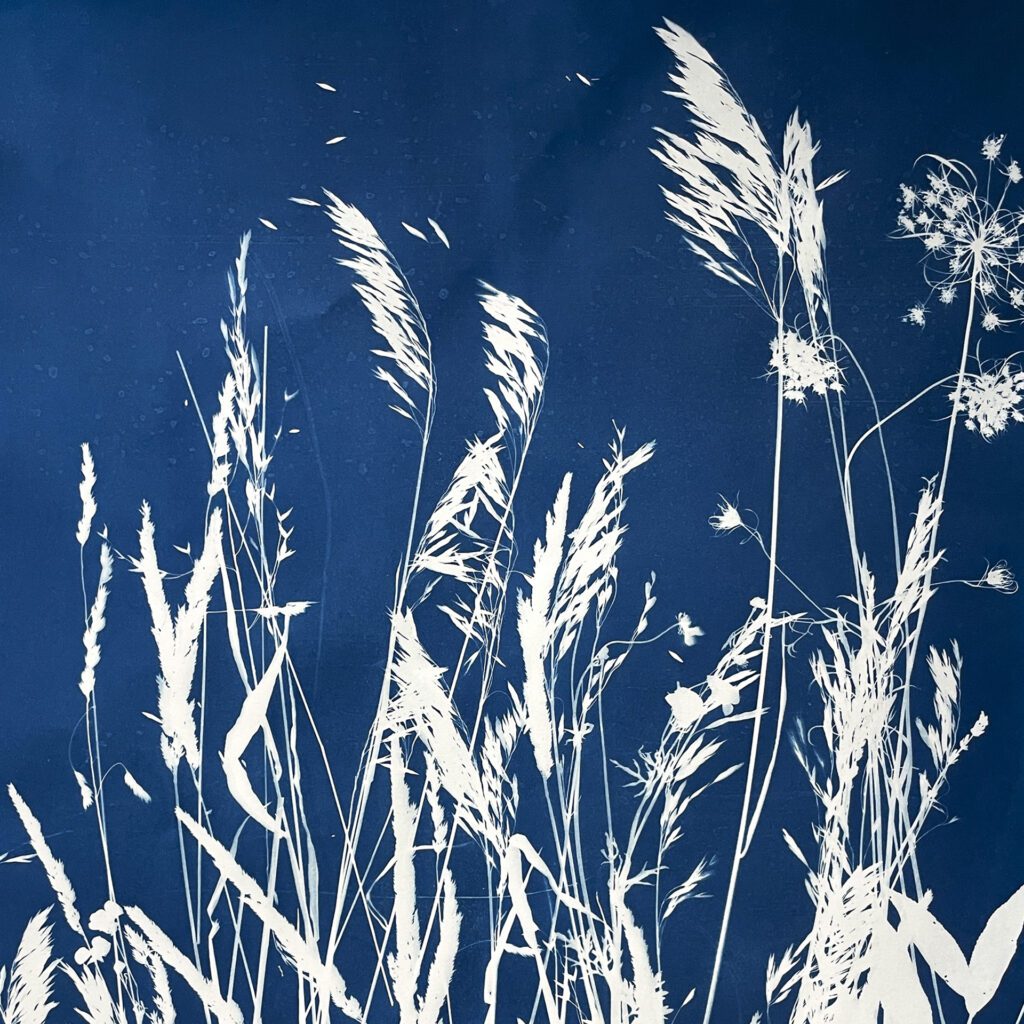
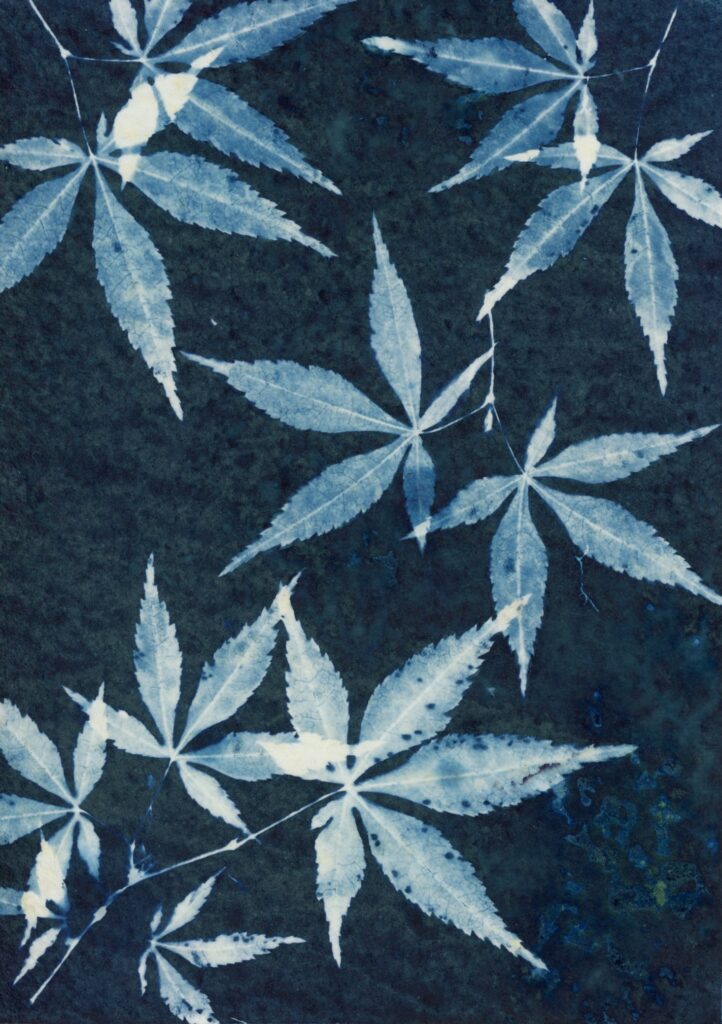
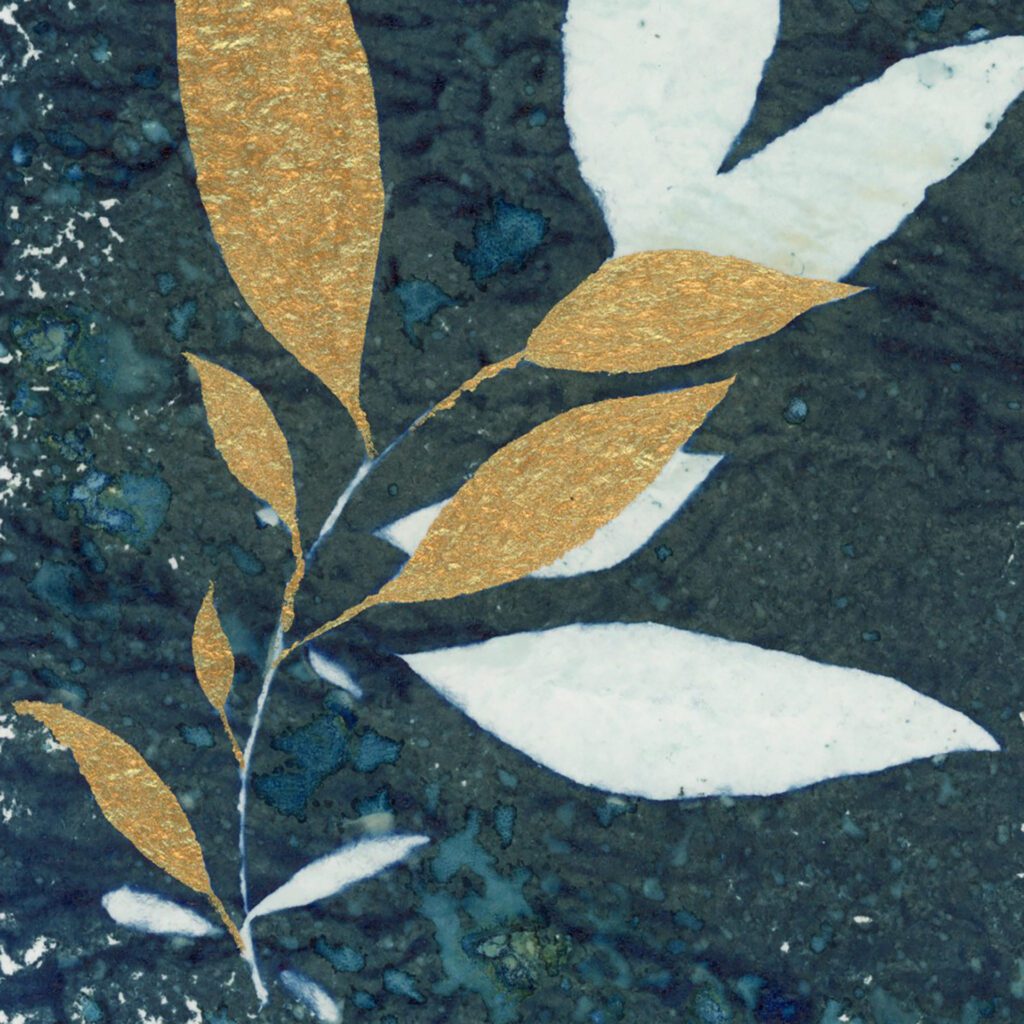
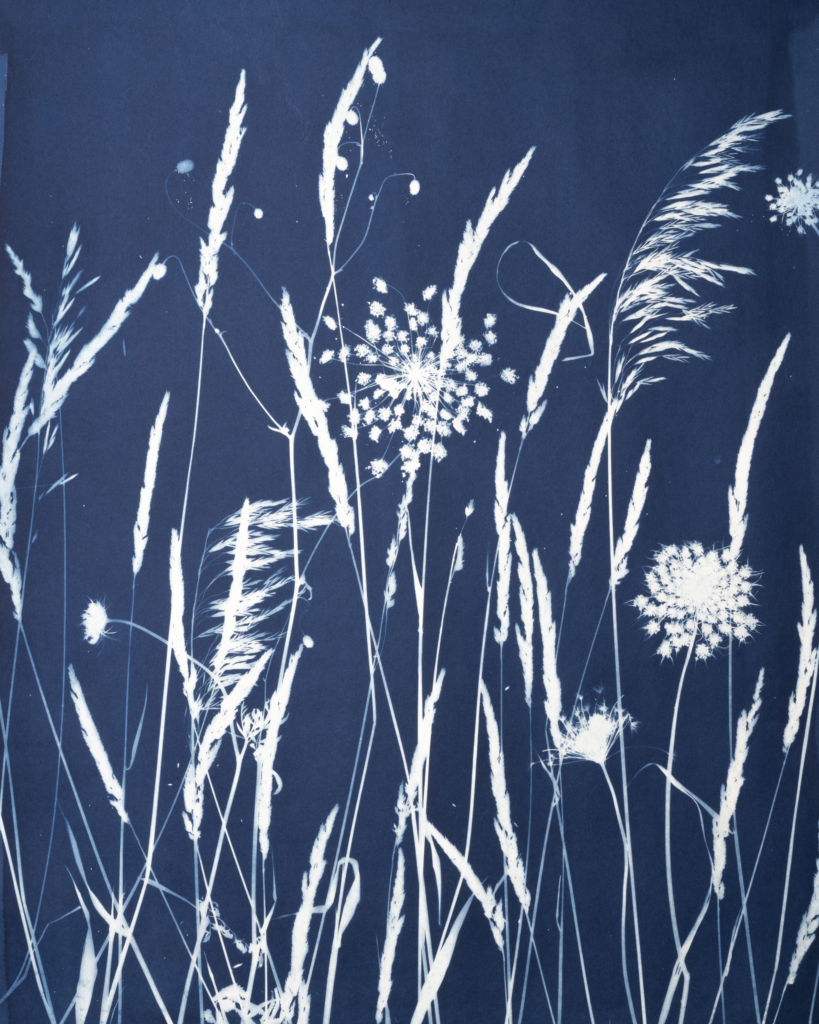
Cyanotype photography is a unique, cameraless technique. The process was first used in 1842 by Sir John Herschel, mainly to reproduce documents, Sarah explains. About a year later, Anna Atkins famously used the cyanotype process to document physical algae specimens and became the first person to illustrate a book using photographic images.

Cyanotypes are created using a 1:1 ratio of ferric ammonium citrate and potassium ferricyanide. Once combined, they become reactive to the sun.

“Using hand-coated and light sensitive paper, I expose my work to the UV rays of the sun in order to produce the botanical composition of each piece,” Sarah says.

“Each cyanotype is a representation of a moment in time, like a visual poem marking the sun, the wind, and the clouds of a given day,” she continues. “No two are ever the same. These moments get to live on your wall and bring the reminder of the natural world into your home.”

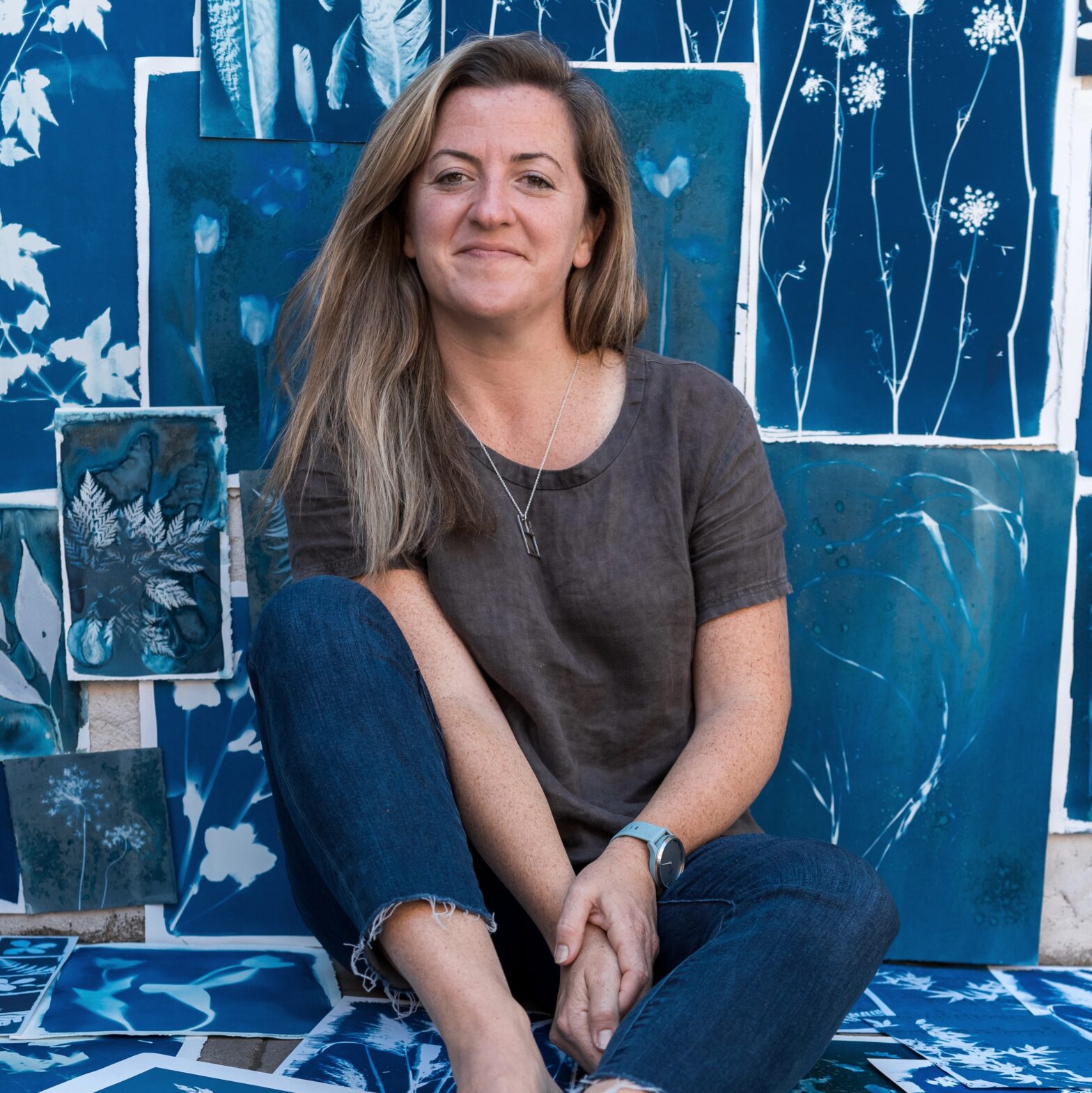
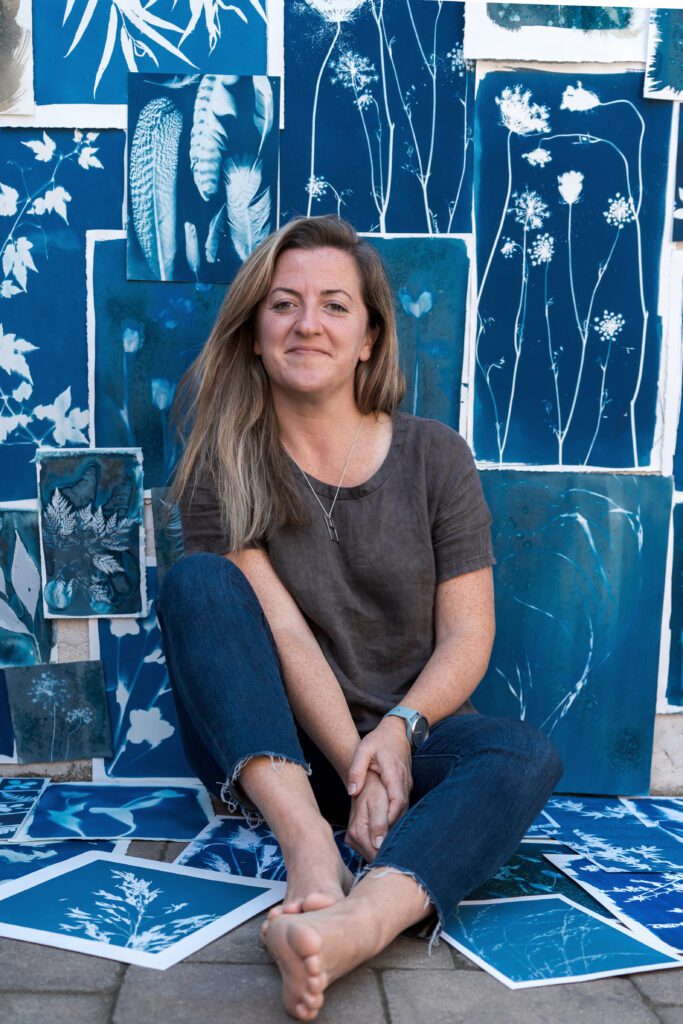
Winterthur is delighted to welcome Sarah Bourne Rafferty of Atwater Designs as our summer Artist-in-Residence. While she is here, Sarah will showcase and teach the fascinating process of cyanotype.

A prolific local artist trained at Warren Wilson College in Asheville, NC, and the University of the Arts in Philadelphia, Sarah has extensive experience in both darkroom and digital photography. She launched Atwater Designs after many years of teaching and has since showcased her work globally. Her art has been featured in Town & Country magazine, Ralph Lauren collaborations, and other prominent projects. Sarah, who resides locally, draws inspiration from the beauty of the Brandywine Valley.

Artist in Residence Sarah Rafferty

Engage with Sarah throughout the Summer

Artist-in-Residence Program, June 8–16: Working in Winterthur’s historic greenhouses, Sarah will create her cyanotypes using elements from the nearby cutting garden and the greenhouse metalwork. Her works on both paper and fabric will be displayed around the greenhouses throughout the week, inviting guests to stop by and learn. As visitors pass, Sarah will demonstrate the cyanotype process and discuss its historical significance and connection to Winterthur and early horticultural specimen collection and recording. This is a drop-in event. No reservations are necessary; just come and watch. Sarah’s work will be available for purchase.

Midsummer, June 22: Celebrate the summer solstice, reconnect with nature, and enjoy bonfires, dancing, food inspired by the garden, and a cyanotype demonstration and display.

Artisan Market, July 19–21: Some of the region’s most talented craftspeople, including Sarah, will present their outstanding wares as tent vendors.

Sun, Cyanotype, and Sundial, August 18: Join us to celebrate the sun! Sarah Bourne Rafferty of Atwater Designs will demonstrate the process of cyanotype against the backdrop of the Sundial Garden, and a gallery of her work will be on display and available for purchase.

Kate Sekules

About the Artist 

New York, New York

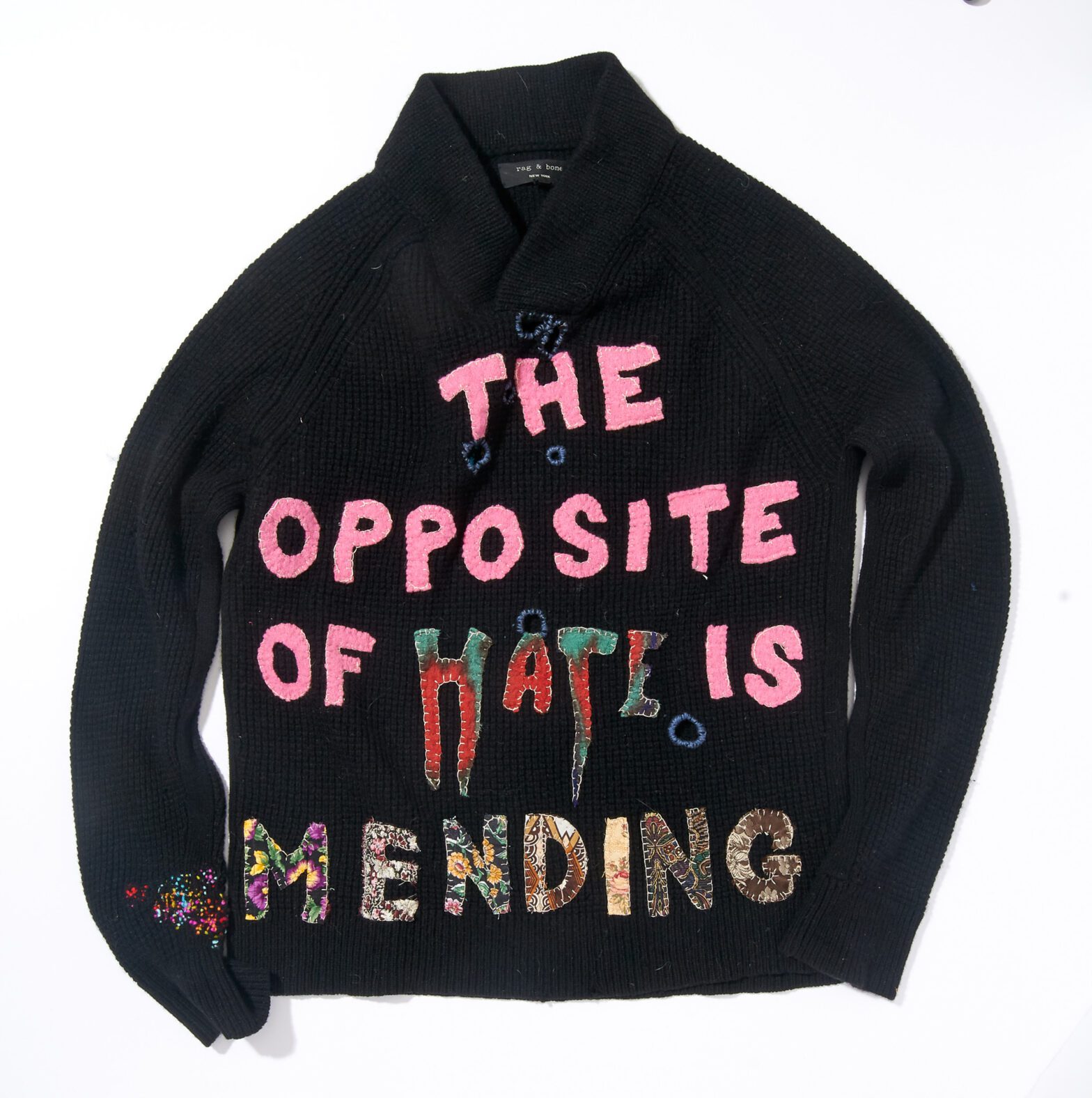
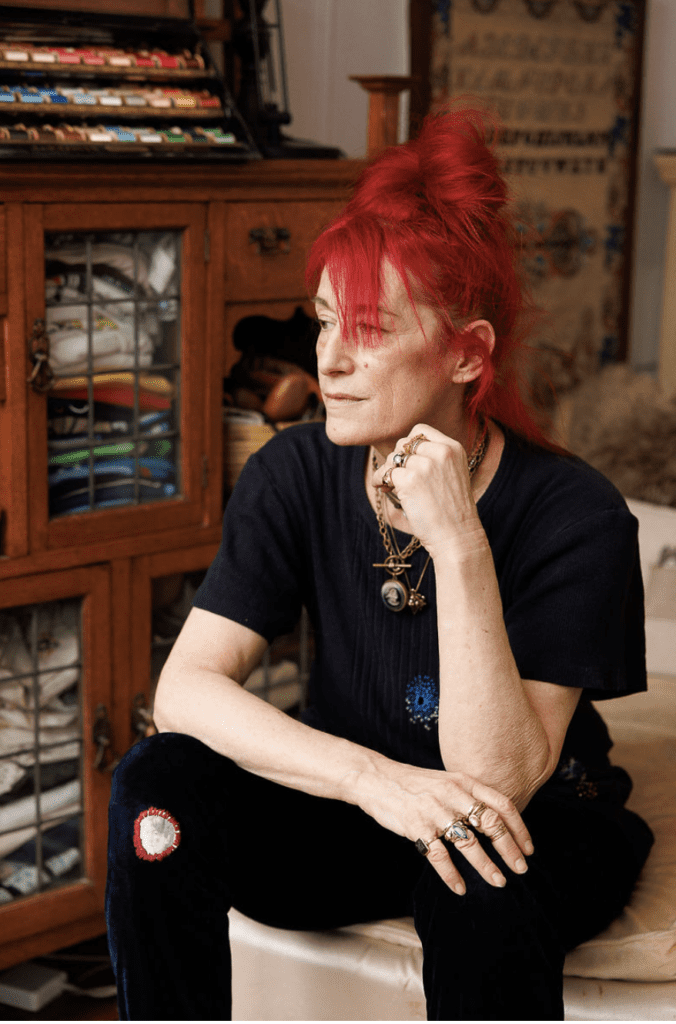
Kate Sekules is a mending advocate, activist, educator, and researcher. She is assistant professor of fashion history at Pratt Institute, Brooklyn, and of “Mending Fashion” at Parsons School of Design, and she lectures frequently for institutions and organizations including the Textile Society of America, American Studies Association, Association of Dress Historians, Fashion Institute of Technology, Rhode Island School of Design, and the British Museum. She hosts #MendMarch on Instagram, as well as regular mending groups, and runs MAWG (Mending Archives Working Group) and visiblemending.org a crowdsourced world map. Sekules is the author of MEND! A Refashioning Manual and Manifesto (Penguin, 2020), and her doctoral dissertation is titled “A History and Theory of Mending” (Bard Graduate Center, 2025). Her work in Transformations includes visible mends and an example of her recent work with “punk smocking,” a way to cover stains or tears, or to just mend out the boring!  

Website: VisibleMending.com
Social Media: @VisibleMend

Artist Statement

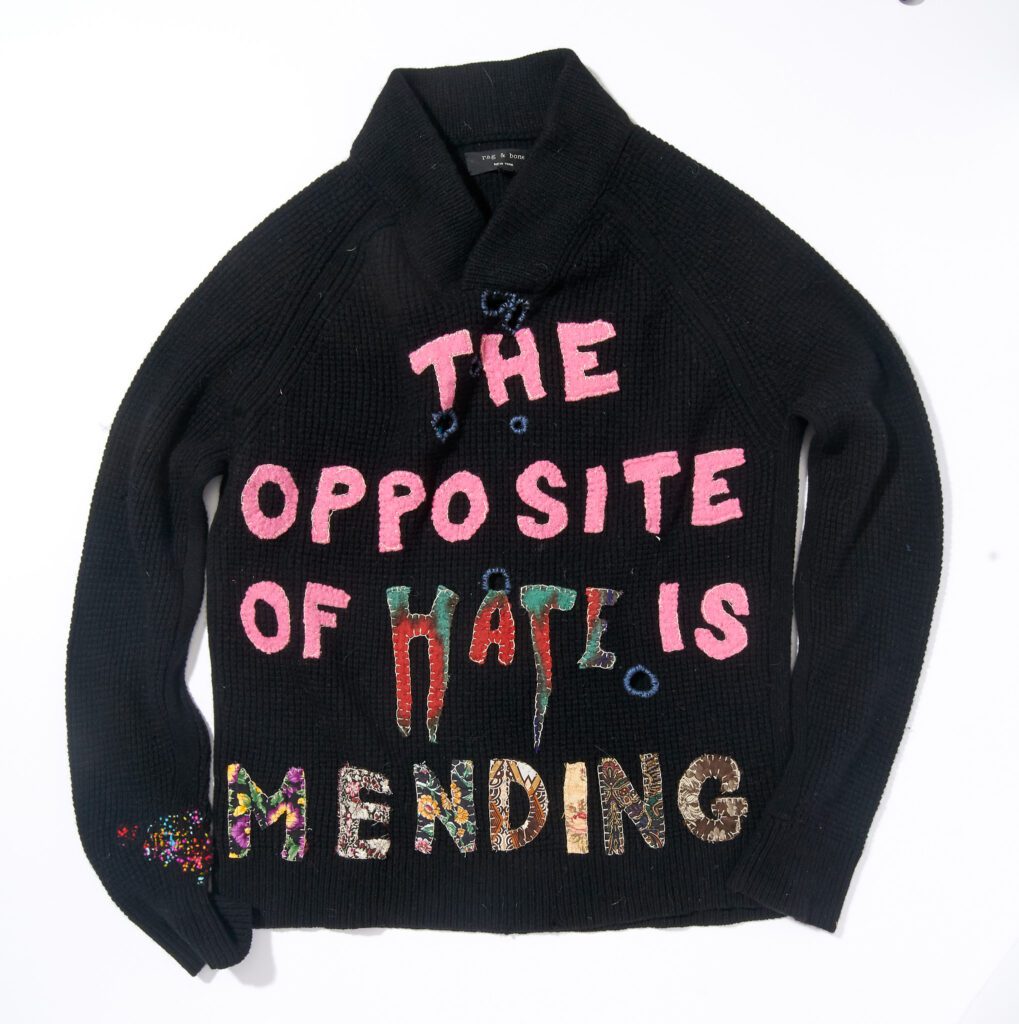
This sweater is obviously a statemend, but all my mends, or co-designs, are meant to stand out. To me, mending is an artistic intervention, a structural, methodological, even metaphysical interference in the life path of a textile object; its application more choice than chore, since it consumes the luxury of time. This counters the history of the mend. For centuries, or millennia, stitchers, usually women, strove for minimal transformation when addressing—relentlessly, inescapably, thanklessly—the effects of time and wear on personal and household textiles. Patches and darns signaled inaccessibility of replacement goods and announced poverty, causing shame. Today, mass-produced faux-patches and industrially ripped denims signal not poverty but fashion. Textile is disvalued. Hyperproduction in insulting conditions, planned obsolescence, trend-based dressing, brand hegemony, discarding disguised as donation or decluttering—I mend in relationship to all of that, gleefully customizing and conserving—in this case punk smocking—what was made for landfill.  

Socksisters Project

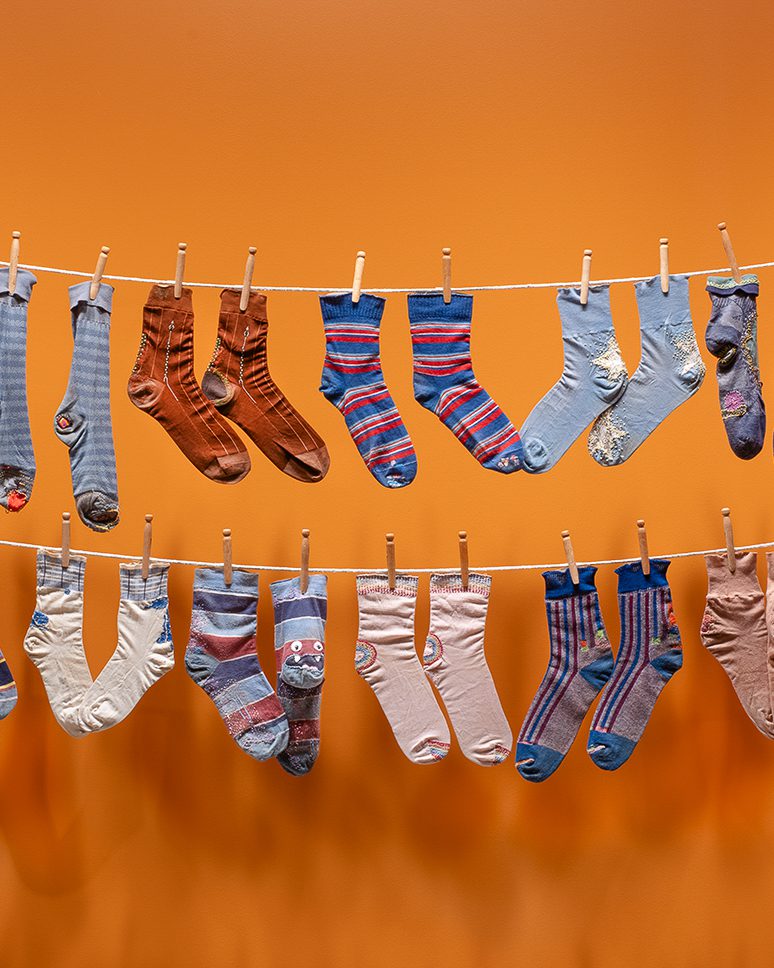
Estella Lawall Doerr Haase (1896–1994) kept a collection of her late husband Louis Theodore George Haase’s (1892–1945) worn socks intact for forty-nine years. Kate Sekules acquired this group for her own collection. Many had holes in the left big toe and rear right ankle. Only some had partial repairs…so Kate Sekules contacted an international network of menders through Instagram and asked them, “Who wants to mend a pair?” What started as a joke became a serious project with The Socksisters, twenty-five women in eight countries* who were given free rein to extemporize and repair Louis’s socks in a unique fashion. 

The Socksisters

Sue BamfordBelfast, Ireland 
Glenda BarnettDevon, England 
Hannah Blair Daly City, California 
Elsa Buijs  Hilversum, Netherlands 
Anna Chapman-Andrews  Kew, London 
Linda Collignon Buffalo, New York 
Annabelle Cooke  Florence, Italy  
Martina Cox New York, New York 
Hanne Dale Bergen, Norway 
Sarika Dopp  Queens, New York 
Charlotte Jenner Wiltshire, England 
Anja Lampert  Vienna, Austria 
Rosie Leech Oxford, England 
Emei Ma  Toronto, Ontario 
Emma Mathews  London, England 
Kate Miller  Vancouver, British Columbia
Torill Josefine NorhagenOslo, Norway 
Jane PimlottLondon, England 
Katie ReimersBuffalo, New York 
Sally Robinson  Lincolnshire, England 
Elysha Schuhbauer Kitchener, Ontario 
Kate Sekules Brooklyn, New York 
Daisy Smith West Hollywood, California 
Bridgett St. MeaveBellingham, Washington 

Bandbox Collective

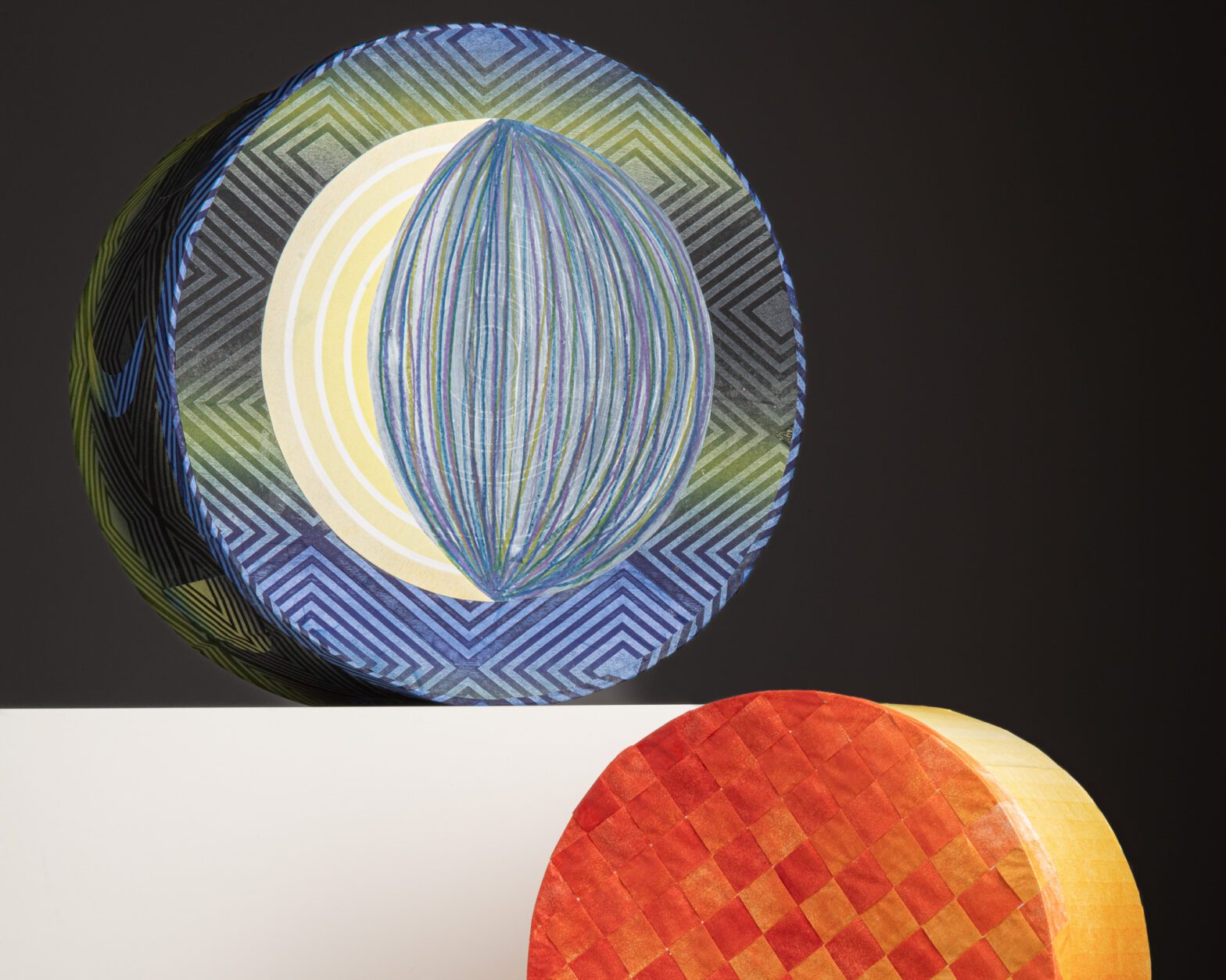
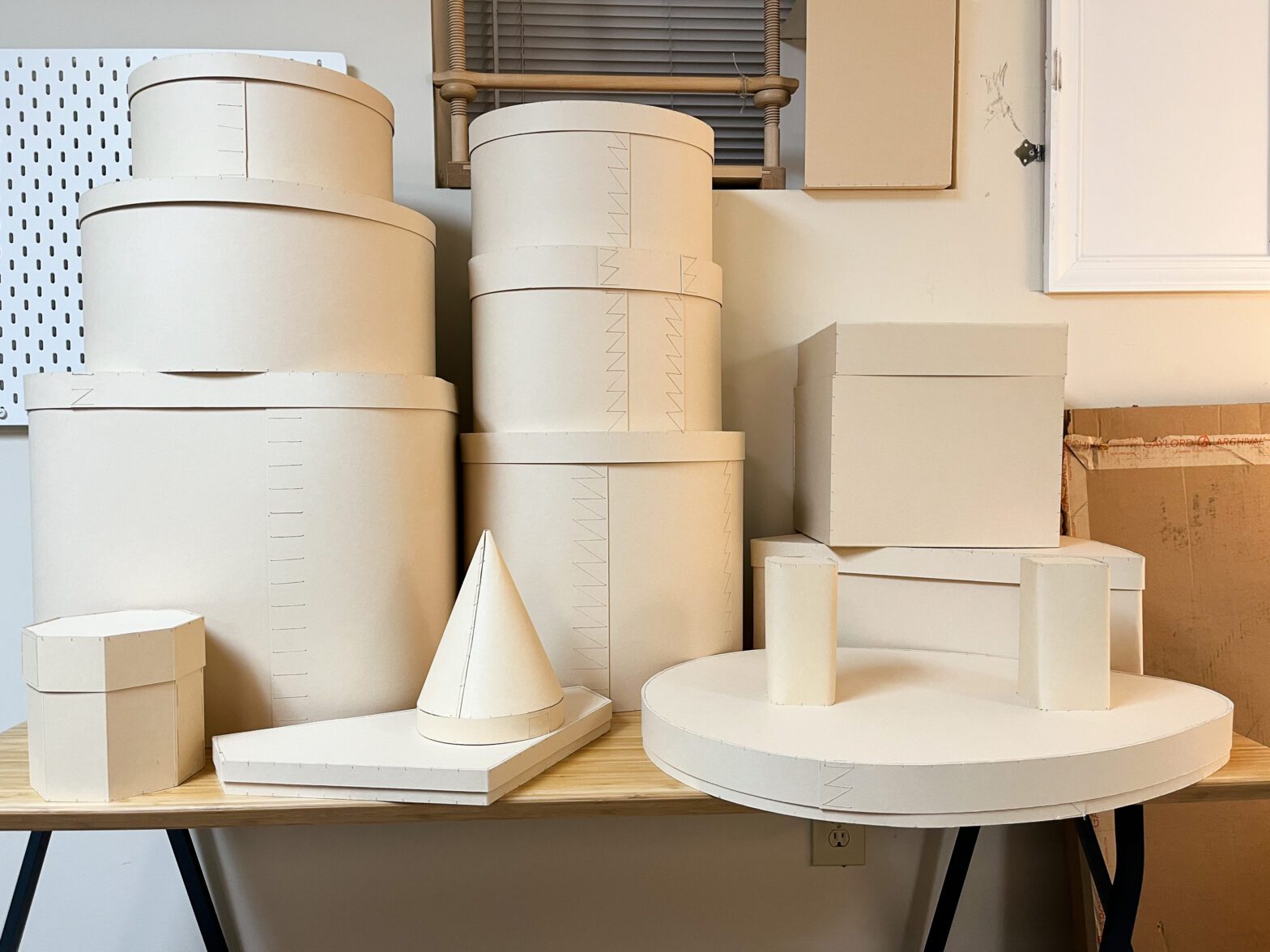
Bandboxes were used, primarily by women, to store and transport hats, clothing, and other personal items in the 1700s and 1800s. Fashioned out of pasteboard or thin wooden boards, they were typically decorated on the outside with block-printed papers and often lined on the interior with contemporary newspapers and journals, creating three-dimensional scrapbooks that combined pattern design and current events. The group of bandboxes in Transformations are all custom made by historical stationer Benjamin Bartgis to the specifications of the individual artists using historical methods. Coordinated by Andrew Raftery, a former Maker-Creator Fellow and professor at Rhode Island School of Design, each of these artists then covered the boxes and the interiors with prints of their own design. 

The Artists

Showing of 8 results
Yoonmi Nam
Yoonmi Nam is an artist born in Seoul, South Korea, and has…

<a href="https://www.winterthur.org/yoonmi-nam/" class="read-more" ><span class="sr-only">Click to read more</span>More Info</a>

Benjamin Bartgis
Ben Bartgis is a conservation technician and independent artist specializing in reproduction…

<a href="https://www.winterthur.org/benjamin-bartgis/" class="read-more" ><span class="sr-only">Click to read more</span>More Info</a>

Judith Solodkin
Judith Solodkin received a master of fine arts degree from Columbia University…

<a href="https://www.winterthur.org/judith-solodkin/" class="read-more" ><span class="sr-only">Click to read more</span>More Info</a>

Katie Commodore
Despite years of her insisting that their daughter was going to be…

<a href="https://www.winterthur.org/katie-commodore/" class="read-more" ><span class="sr-only">Click to read more</span>More Info</a>

Maxime Jean Lefebvre
Maxime Jean Lefebvre is an interdisciplinary artist who works mainly with printmaking…

<a href="https://www.winterthur.org/maxime-jean-lefebvre/" class="read-more" ><span class="sr-only">Click to read more</span>More Info</a>

Julia Samuels
Julia Samuels was born in Portsmouth, New Hampshire, and she earned her…

<a href="https://www.winterthur.org/julia-samuels/" class="read-more" ><span class="sr-only">Click to read more</span>More Info</a>

Amber Heaton
Amber Heaton creates colorful, geometric installations, mixed media works, paintings, and works…

<a href="https://www.winterthur.org/amber-heaton/" class="read-more" ><span class="sr-only">Click to read more</span>More Info</a>

Andrew Raftery
Andrew Raftery is an artist specializing in fictional and autobiographical narratives of…

<a href="https://www.winterthur.org/andrew-raftery/" class="read-more" ><span class="sr-only">Click to read more</span>More Info</a>

Yoonmi Nam

About the Artist 

Lawrence, Kansas

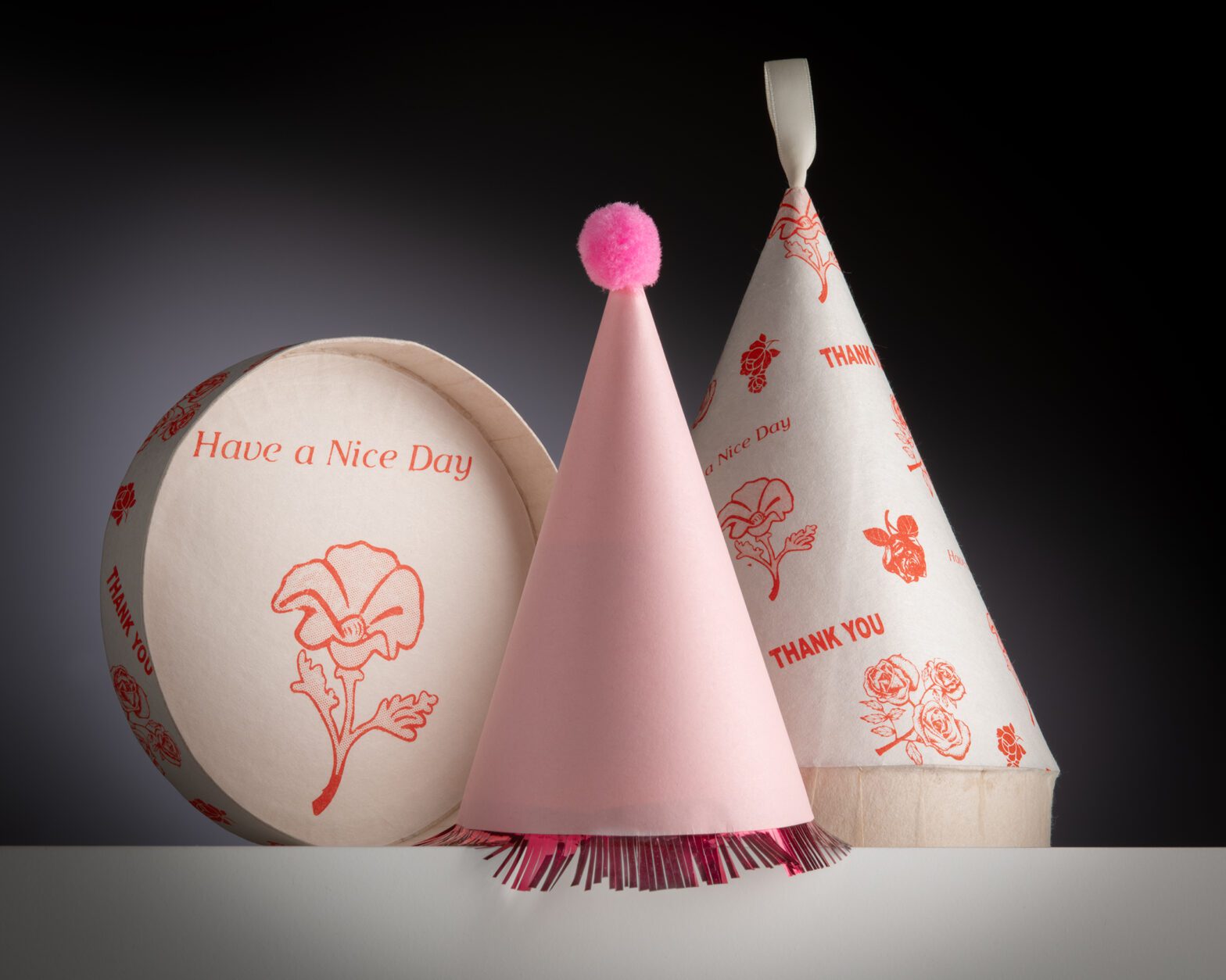
Yoonmi Nam is an artist born in Seoul, South Korea, and has studied in Korea, Canada, the United States, and Japan. Yoonmi is interested in the observation and depiction of everyday objects and occurrences, especially when they subtly suggest contradictions—a perception of time that feels both temporary and lasting and a sense of place that feels both familiar and foreign. Growing up as an only child with working parents, she often engaged in quiet observations of things around her. Experiences of living in disparate cultures with different people and their histories allowed her to notice what often is unobserved in one’s own familiar spaces. She works in traditional printmaking processes such as mokuhanga (Japanese-style water-based woodblock printing) and lithography to make imagery as well as explore other materials such as clay, glass, and paper to make three-dimensional still lifes.

Website: YoonmiNam.com
Social Media: @Yoonmi_Nam

Artist Statement 

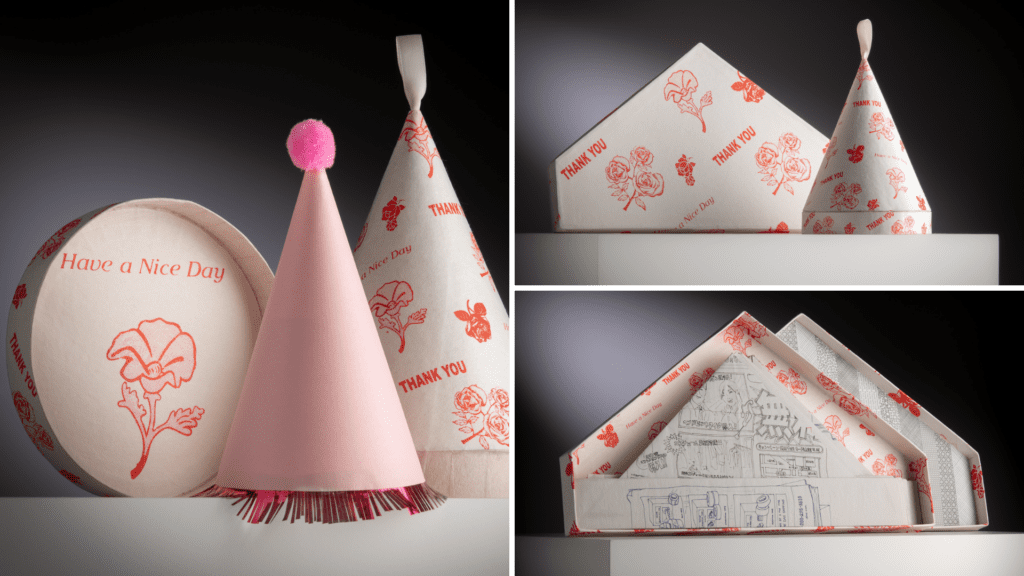
Both bandboxes were designed specifically to hold hats that we use for special occasions. A party hat and a stack of origami folded paper hats. So, I’ve also included these two kinds of hats that the bandboxes hold as part of my works. These hats are temporary and disposable. In my work, I am always drawn to objects that suggest a sense of time that seems both fleeting and eternal, so I wanted to make hatboxes for the hats that also speak to that nature. I also designed the pattern on the lithograph that I printed to cover the bandboxes. The flower images and the texts that make the patterns are taken from various plastic bags with flower images on them.

Benjamin Bartgis

About the Artist 

Annapolis, Maryland

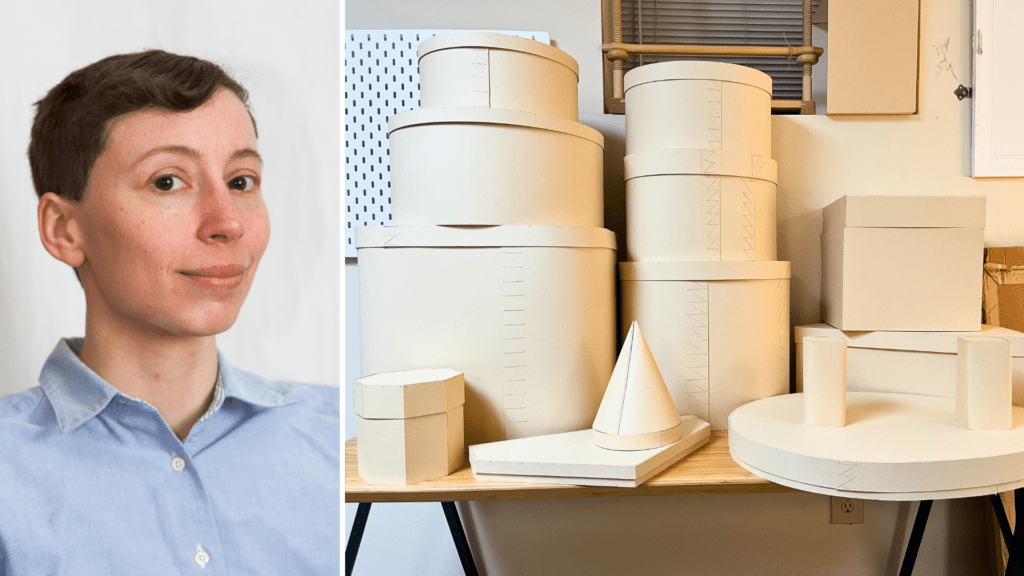
Ben Bartgis is a conservation technician and independent artist specializing in reproduction stationery products and bandboxes, based in Annapolis, Maryland. They became interested in historic box making materials and techniques while building custom housings for museum artifacts. Outside of their full-time federal career in conservation, Ben has pursued their study of early American book and paper history through courses at Rare Book School and was a scholar at the 2022 “Revolution in Books” Summer Institute at Florida Atlantic University. Ben’s bandboxes have appeared at historic sites such as the Coggeshall Farm Museum in Bristol, Rhode Island.  

Social Media: @BenjaminBadgers

Artist Statement 

Boxes have been a presence in my conservation career from my first years as a book conservation intern making slipcases and portfolios to my time as a conservation specialist operating a CNC machine to mass produce archival boxes. I find both bookbindings and boxes curious halfway things: sometimes primarily regarded for their ability to store or protect something else, discarded when they wear out; sometimes valued artifacts in and of themselves. I was drawn to researching and reproducing bandboxes because they are made of the same materials as rare books—thread, paper, board, and glue—but as containers, they are collected, curated, and studied completely differently. As the boxmaker for this project whose board forms will be covered up with exquisite papers, my craft as an artisan mirrors my work in conservation: foundational, collaborative, and sometimes hidden in plain sight.