By Kedra Kearis, Ph.D., Associate Curator of Art and Visual Culture at Winterthur
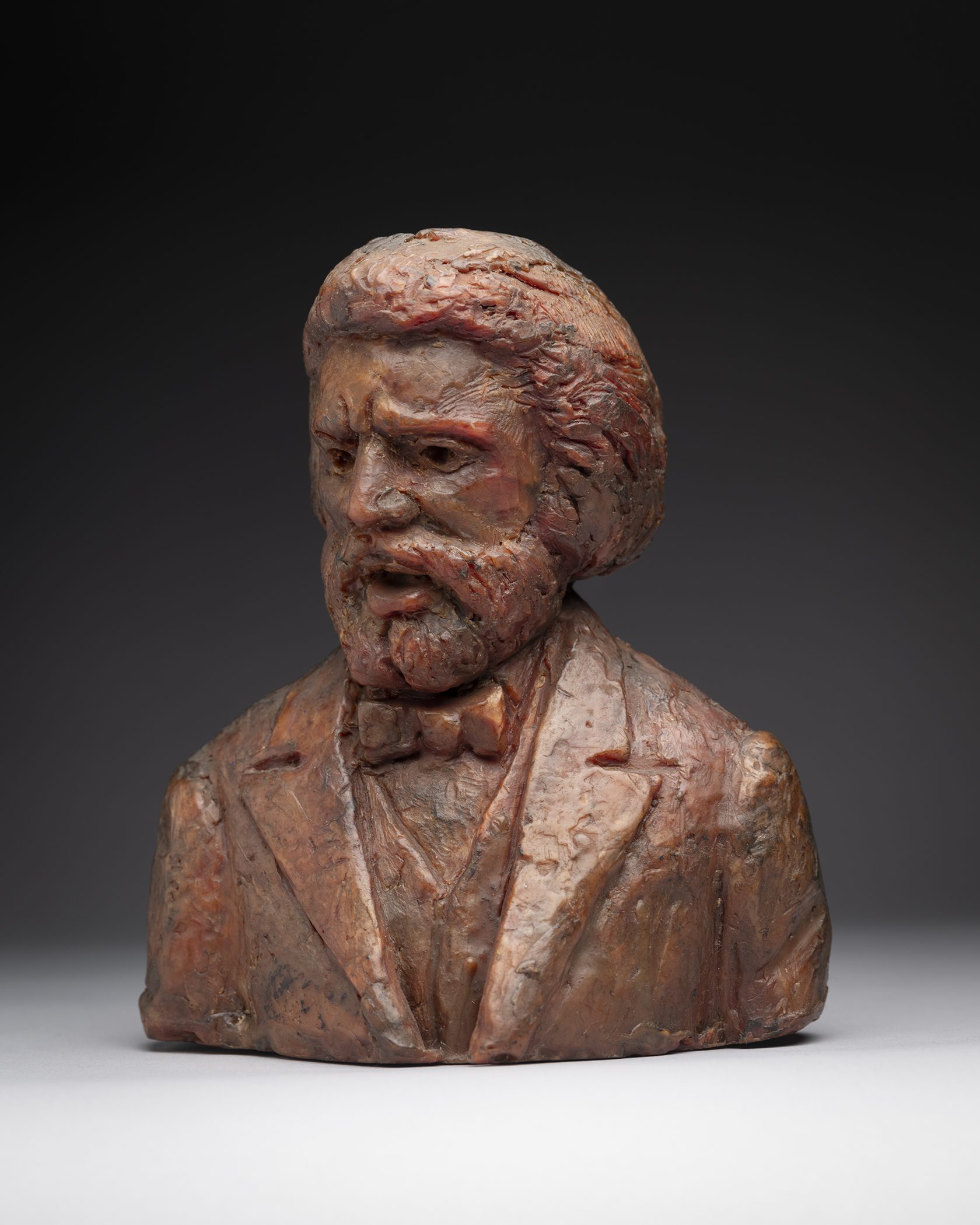
This wax model of abolitionist Frederick Douglass, presented as an orator, reveals sculptor John W. Rhoden’s skills in subtly manipulating his materials—whether wax, clay, wood, or metal—to tell a powerful story.
Rhoden, who grew up in segregated Alabama, reminisced in a 1966 interview about his early experience with clay:
I think it started when I was just a little boy—on a hill of slippery red clay near the house where I was born in Birmingham. We would spray the hill with water and slide down it. There, I came to know the feel of clay on my feet and hands. It seemed a wonderful thing to take huge handfuls and shape it into different forms. Even then, it was exciting, and even then, I think I knew it was sculpture. Well, I have never lost that excitement. I am still excited by pure form, and shaping it is an act of love. Treat any material with love, and I think you can almost make it come alive.[1]
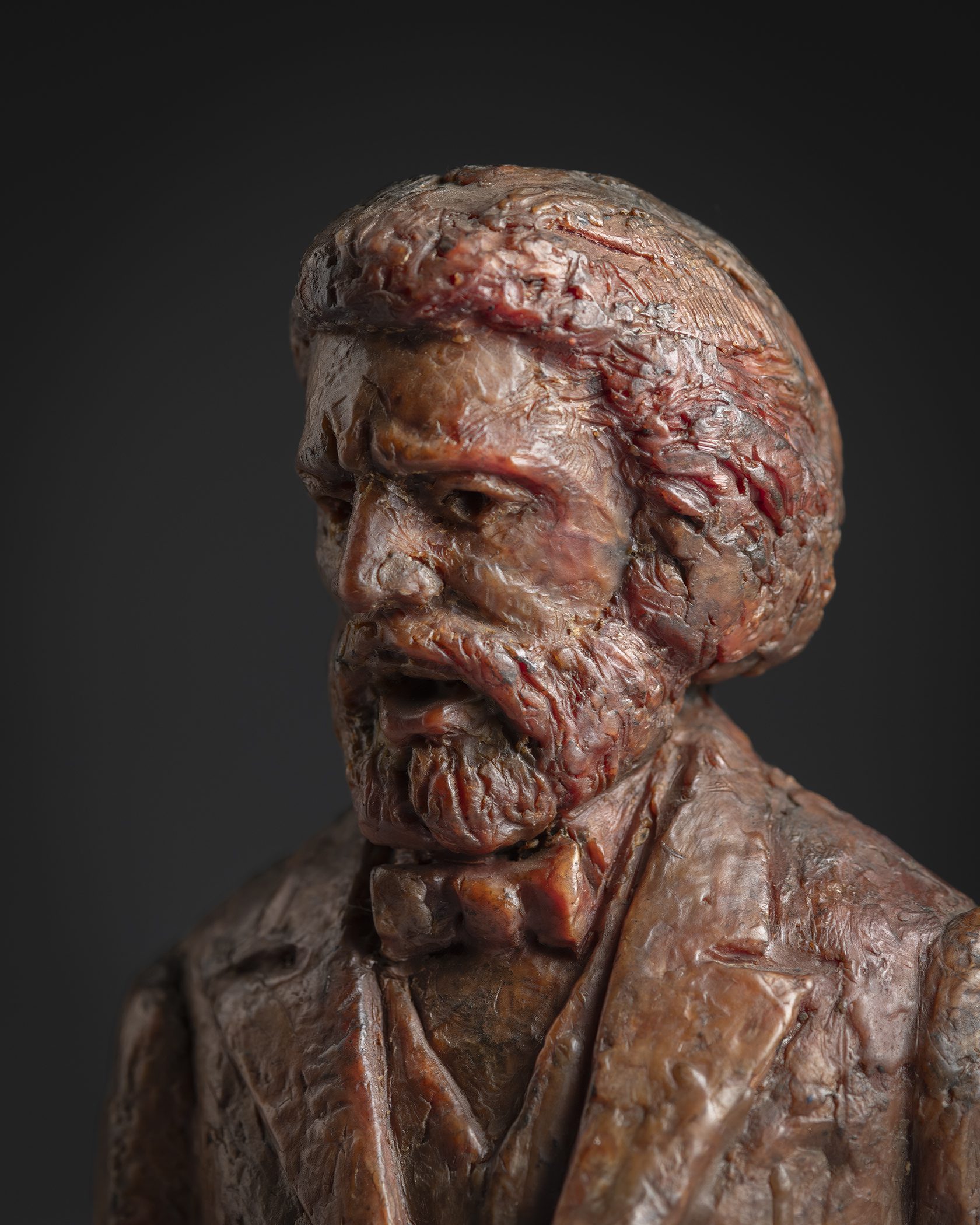
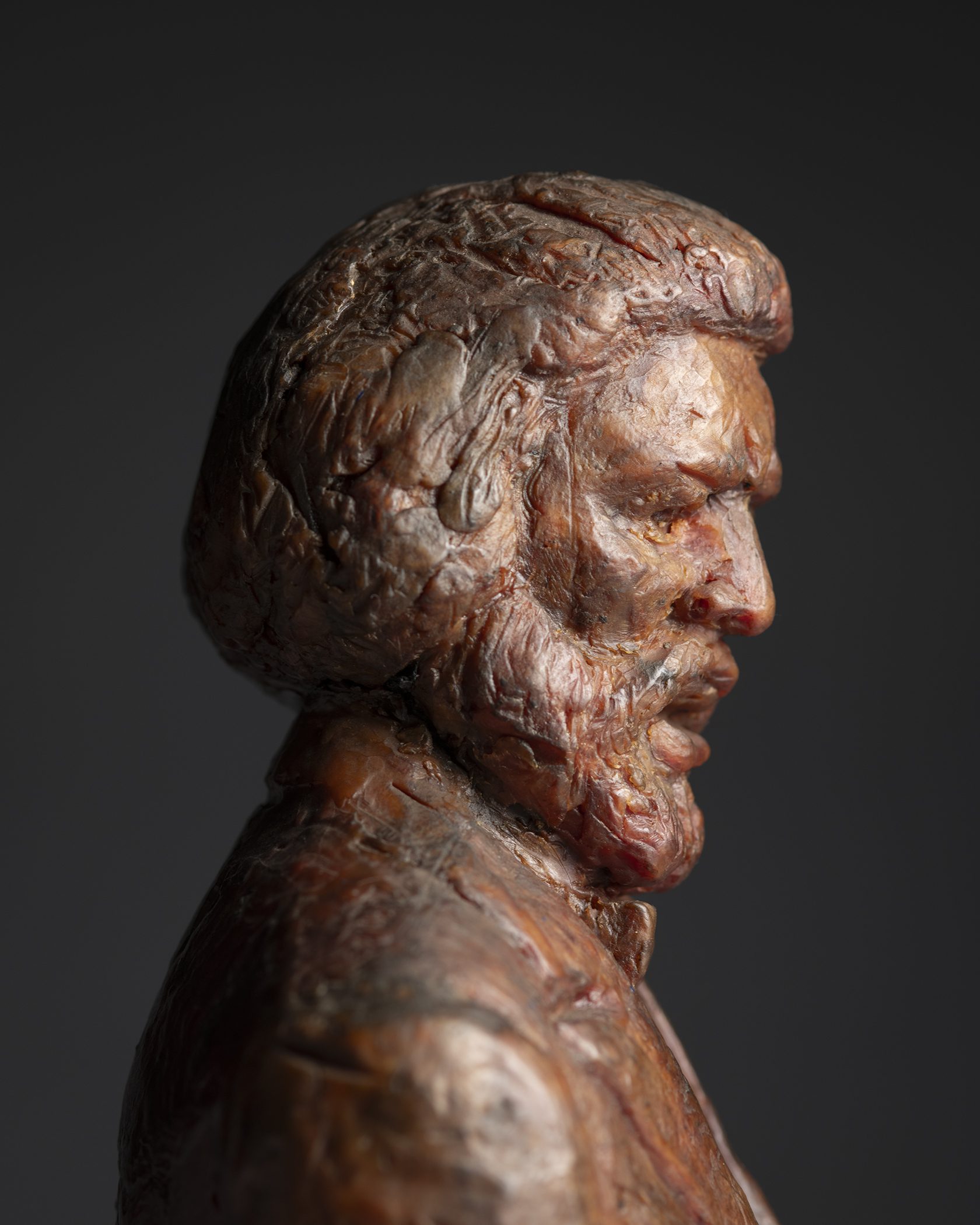
Bringing the subject to life became his artistic calling throughout his career.
In 1979, Rhoden set to work on a monumental statue of Frederick Douglass, commissioned by Lincoln University, the first degree-granting historically Black college in the United States. New to the Winterthur collection, his wax study, or maquette, also dates from the Lincoln University commission. It presents Douglass as speaking, highlighting how his voice was a crucial element in the abolitionist movement and the fight for racial equality.
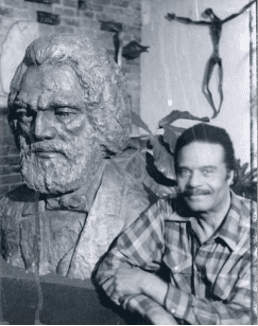
This version and the final full-length statue of Douglass, installed in 1989 at Lincoln University, represent rare instances when Rhoden took up a historical narrative in his sculpture. Another, his bronze work, The Slave Ship (1989, Pennsylvania Academy of the Fine Arts), portrays the Middle Passage, the forced voyage of enslaved Africans across the Atlantic Ocean to the Americas. Both subjects represent effective and galvanizing images for artists of the African diaspora.
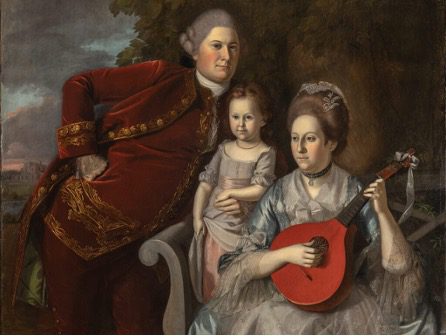
Currently on display in Winterthur’s first-floor gallery, Conversations with the Collection, the wax maquette appears near paintings featuring the Peale family in the exhibit The Peale Painters: Global Perspectives in the Winterthur Collection. One large-scale painting, The Edward Lloyd Family by Charles Willson Peale, represents the Lloyd family’s home, Wye Plantation, in Talbot County, Maryland. Douglass, who was enslaved there, recalled the home in his third autobiography, The Life and Times of Frederick Douglass, as the “’great house’ with all its pictures within and pillars without.”[2] While Douglass describes how essential goods and basic housing were denied to the enslaved people of Wye, Peale captures the Lloyd family’s display of wealth through their land, clothing, and jewelry.
Despite the many challenges he faced as a Black man coming of age in Appalachia in the American South in the 1930s, Rhoden went on to become an award-winning sculptor who traveled, studied, and exhibited in museums and galleries around the world. In addition to being awarded fellowships from the Rockefeller and Guggenheim foundations, Rhoden was the first African American visual arts fellow at the American Academy in Rome.
1 “A Visit with John Rhoden,” Topic Magazine, no. 5, special issue, The Negro in the American Arts (1966), 28–29.
2 Frederick Douglass, The Life and Times of Frederick Douglass (Hartford: Park Publishing Company, 1881), 88.