By Eric Schott, Delaware Master Naturalist, with Nicole Schmid. Photos by Holden Barnes.
I recently attended a ninety-minute forest bathing session at Winterthur. Known as shinrin-yoku in Japan, the practice uses all five senses to connect with nature. While it could be a solitary activity, I experienced it with a group led by Nicole Schmid, a certified forest therapy guide, who helped us connect with the beautiful surroundings of the estate.
She explained how this practice began. In 1982, the Japanese government intervened when they saw a decline in their citizens’ health and productivity due to disconnecting from the natural world and becoming overwhelmed with work. Employers encouraged workers to take breaks outside and experience nature, which resulted in well-being, happiness, and improved productivity.
Like yoga and transcendental meditation, shinrin-yoku traveled to California and worked its way east across the United States.
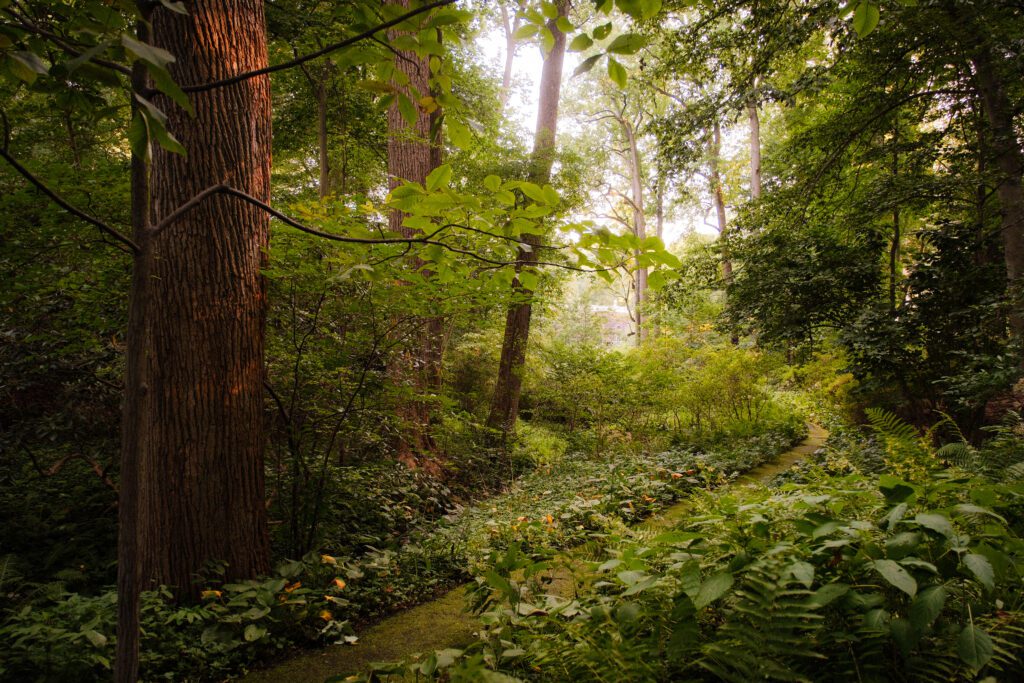
After walking for about a mile and a half, Nicole encouraged us to use all five senses to increase our awareness and engage with our surroundings. Talking was kept to a minimum, and we each separated from the group for about five to ten minutes to practice focusing on one of our senses.
I smelled the heavy, moist air and heard many sounds: the garden tram, a tractor, jets flying overhead, and, more importantly, a variety of birds singing their special songs. After we were called back to the group by Nicole’s personal “owl hoot,” some of us offered a glimpse into what we experienced. We were not required to speak but invited to participate, if we wished to.
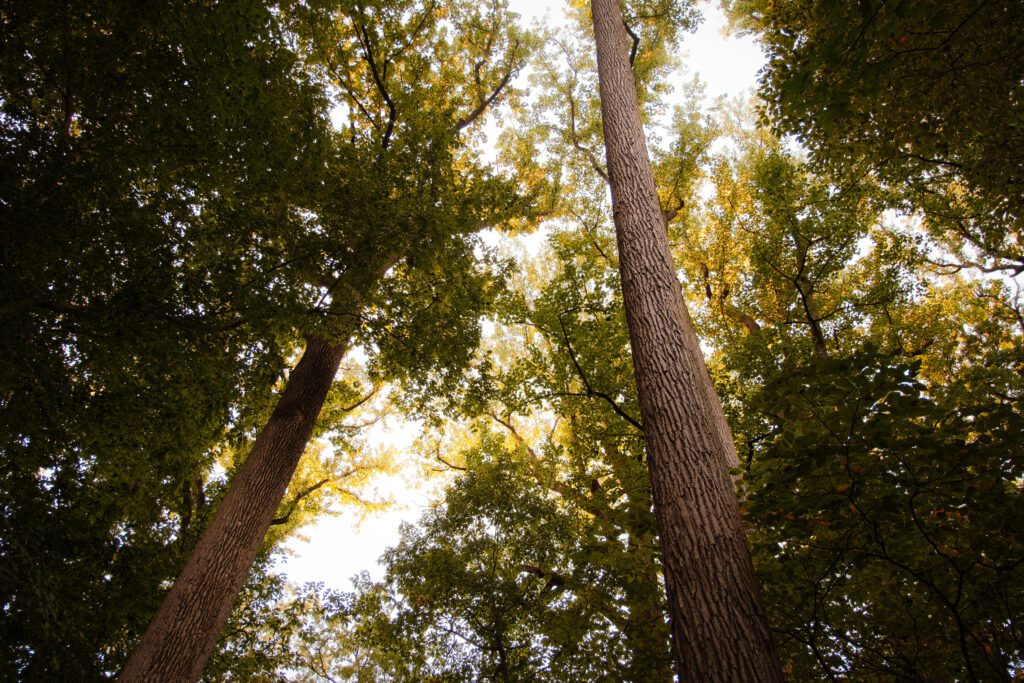
At another stop, we again branched off by ourselves, and I focused on feeling the trees. From the rough touch of the tulip poplar to the smoother bark on the white oak to the smooth caress of an American beech, I gained a new understanding of the trees I have walked by for years. Touching them strengthened my appreciation for these living things that will likely be alive long after I am gone.
At our last stop in the Pinetum, Nicole suggested we look closely for something we may not usually notice. I found a small crabapple, while others brought back a collection of bark, twigs, leaves, mushrooms, and a molted insect. We all examined these findings and noticed features we would have normally overlooked.
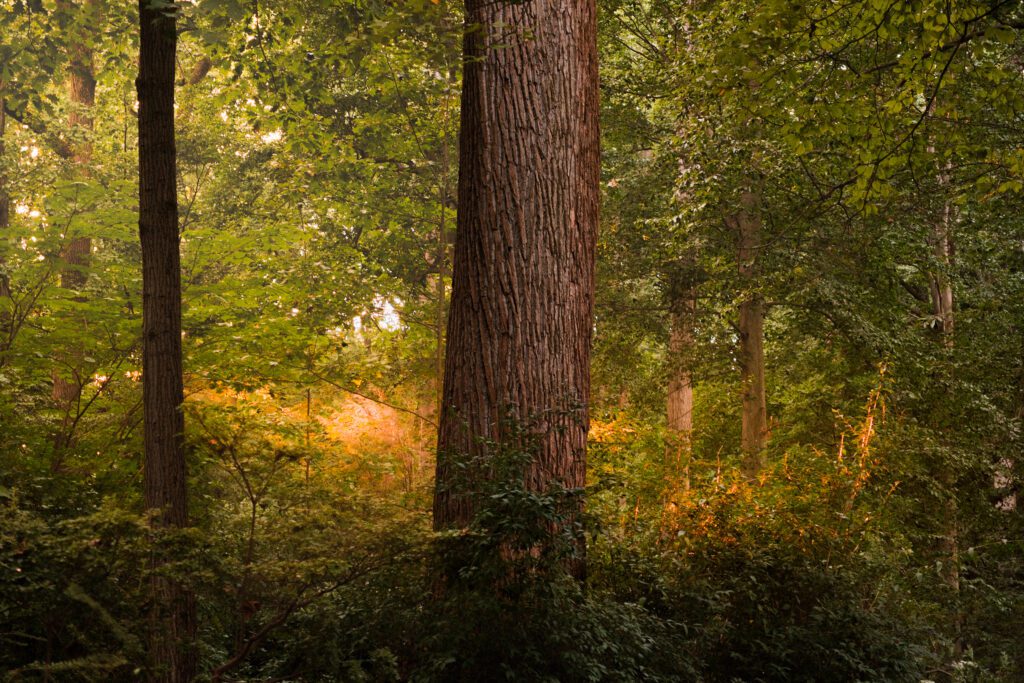
As we walked back through the March Bank, I felt relaxed and revived.
After we finished our walk, Nicole invited everyone into one of the greenhouses to enjoy a ceremonial tea, featuring cups of vibrant blue butterfly pea flower tea. She poured the first sip of tea onto the ground, thanking the earth for the incredible gifts we were given. And we, in turn, thanked our guide for the wonderful experience. We ended our time with a true forest bathing, as we were soaked by a pop-up rainfall.
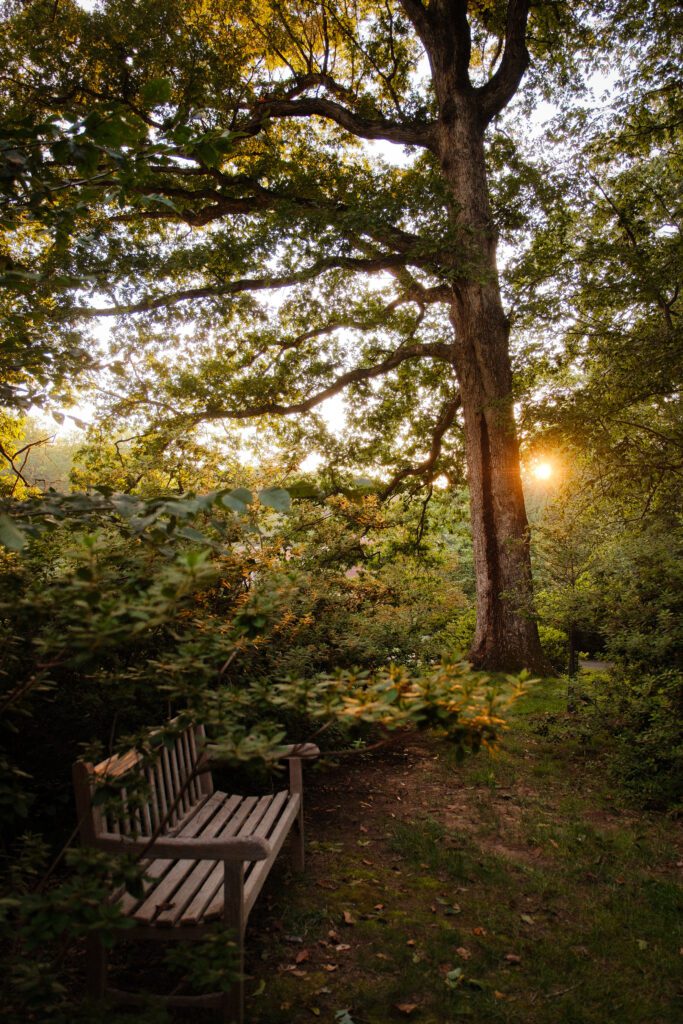
Forest bathing was featured in our monthly series, Rooted in Wellness, which blends nature, mindfulness, and self-care in a relaxing setting.