By Lauren Fair, objects conservator and assistant director of conservation
“How do I polish my silver?” is the most common question I am asked as an objects conservator. We all appreciate the shine of a brightly polished silver object, be it a necklace, candlestick, or a tea kettle. But silver tarnishes quickly due to sulfur in the air, so it requires routine cleaning if left out in the open.
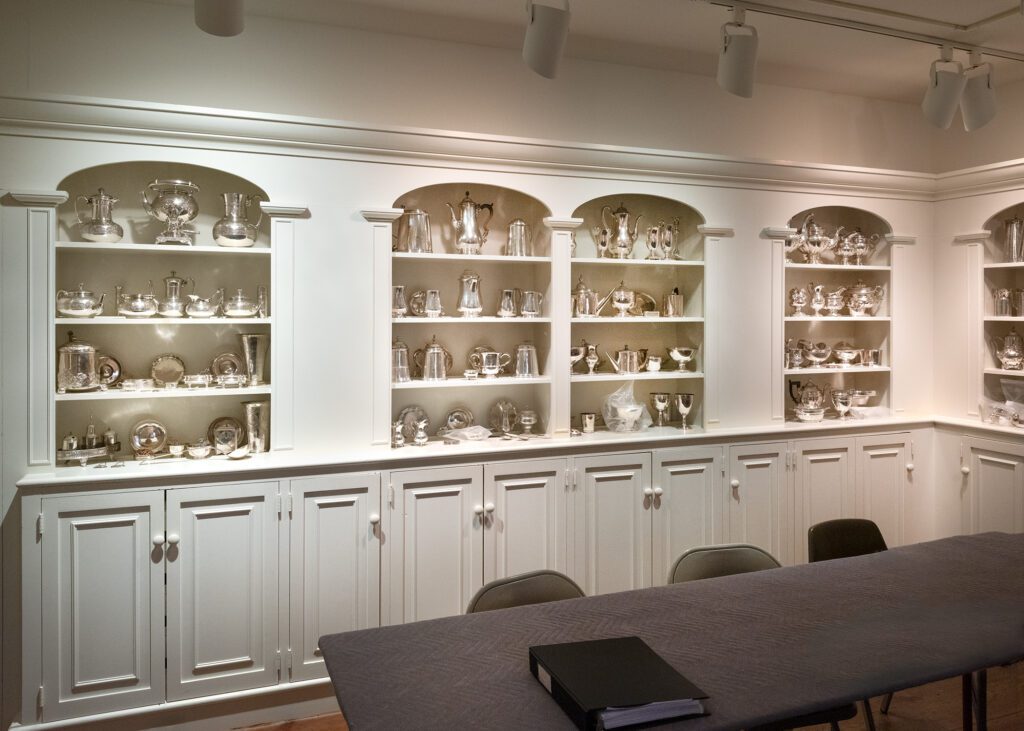
Before polishing your silver, you should first consider if other materials are present. Organic components such as ivory or wooden handles should be protected from any water or cleaning solution. When polishing silver-plated objects and those with decorative gilding or intentionally applied patinas, use extreme care to avoid wearing away the surface finish. In fact, any abrasive polishing removes a small amount of silver, so gentle cleaning is best.
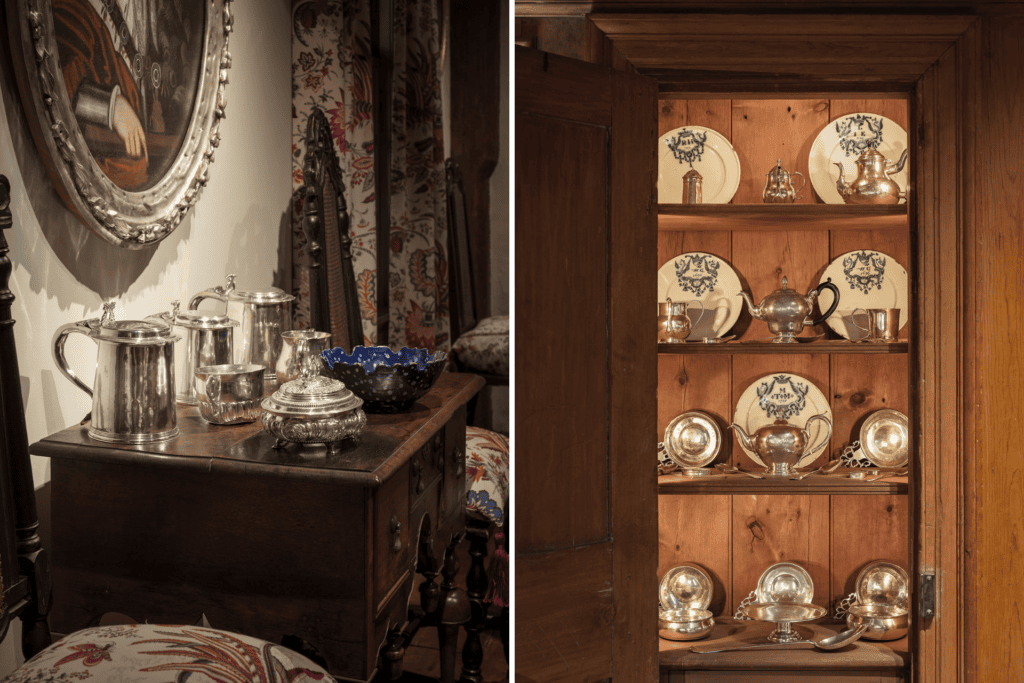
While many commercial products are available for polishing, they often contain chemicals that can harm your silver and other metals in the long run. We recommend the following steps for cleaning most silver items:
1. Place the object in a large water bath with a drop of mild dishwashing detergent. Gently clean the surface with a soft brush—like a soft toothbrush—to remove old polish from crevices.
2. Rinse thoroughly in clean water and dry completely but gently with clean, soft cotton rags.
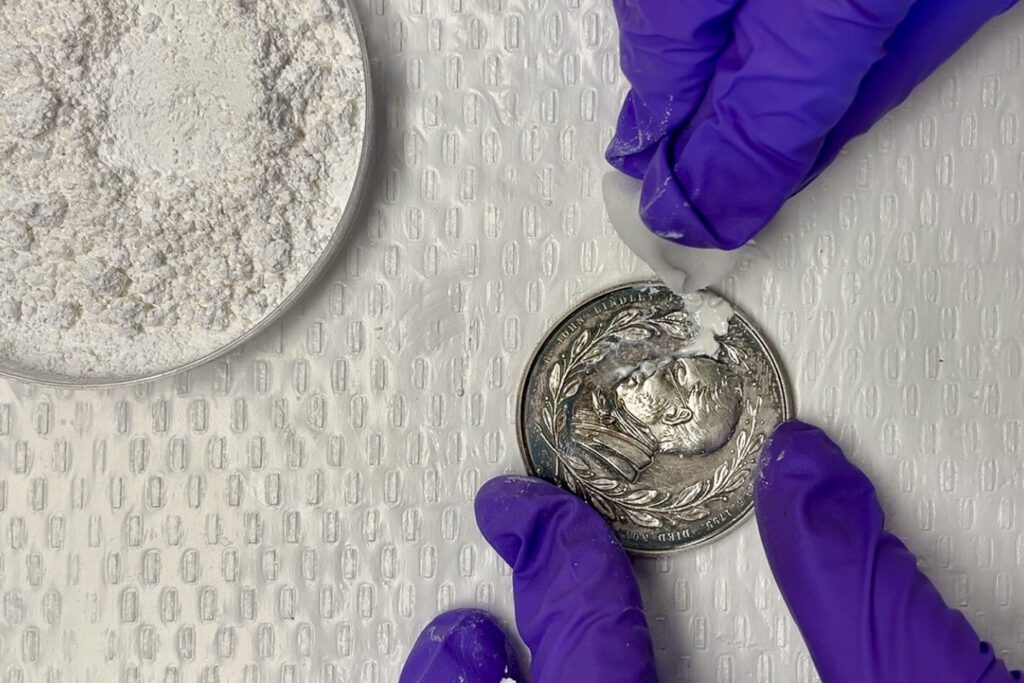
3. For heavier tarnish, we recommend purchasing calcium carbonate from a chemical supplier, which ensures uniform particle size without filler materials that can damage your silver. Make a creamy paste by mixing the calcium carbonate with water, then gently rub the mixture over the metal surface with a soft cotton cloth or cotton flannel. Use only light pressure, as vigorous cleaning can scratch the surface or remove plating. As the cotton becomes dirty, change to another part of the cloth or use a fresh one.
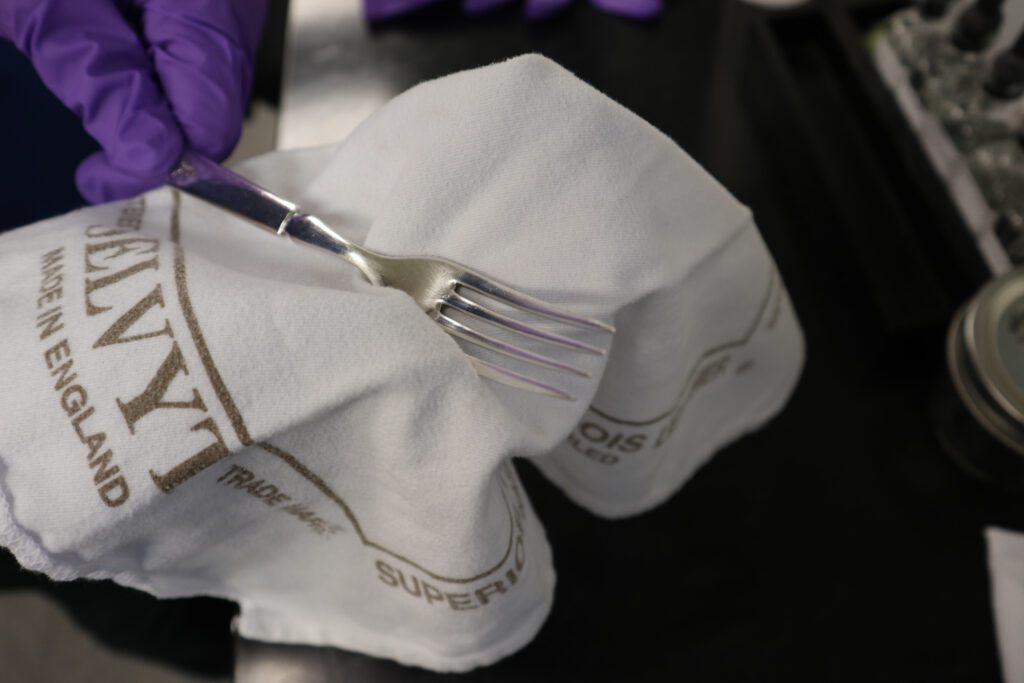
For light tarnish, you can buff with a polishing cloth such as Selvyt PR, a woven cotton velvet with a raised surface and no embedded abrasives.
4. Once finished, wipe away dry residue and follow the cleaning and rinsing procedure outlined in steps 1 and 2. Make sure you remove all polish residue, as remaining residue builds up over time, traps moisture against the surface, and increases tarnishing.
You can minimize new tarnish formation by displaying your silver in an area that stays at a consistently low relative humidity (below 50 percent). Routine dusting helps, as dust accumulation holds moisture to the surface and accelerates tarnishing. If you have the option, enclosing your object in a display case, cabinet, or drawer is even better.
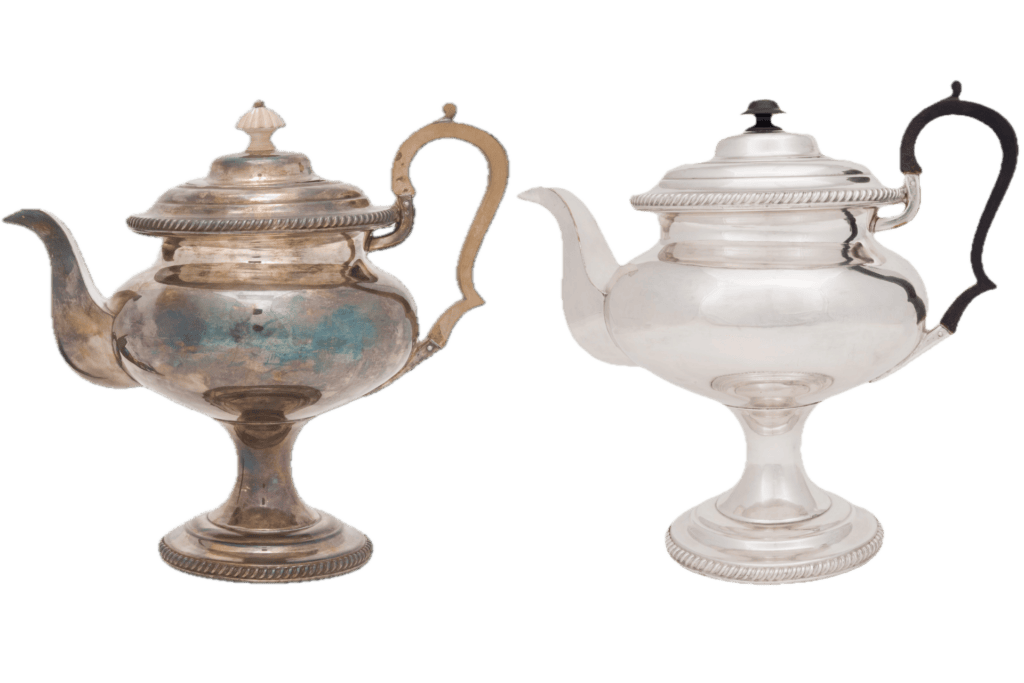
If your object is not displayed, the best way to limit tarnish is to wrap it in acid-free tissue followed by a cloth or paper that can prevent tarnish, such as Pacific Silvercloth or 3M Anti Tarnish Strips. You can then place the wrapped silver inside a plastic zip bag, box, cabinet, or drawer.
For more information, including sources for materials, read more.