By Eleanor Shippen, a Lois. F. McNeil Fellow in the Winterthur Program in American Material Culture
Flickering candlelight illuminates the soft red, white, and blue hues of an American flag. While this might at first seem to be a scene from a bygone colonial past, the object at the center of this patriotic vignette was created nearly two hundred years after the signing of the Declaration of Independence. This hold-to-light postcard, produced for the Bicentennial in 1976, is one of many commemorative objects that visitors will see in #AllinfortheSemiquin: Postcards and Public Memory at Delaware 250. On view just outside the library, the exhibit explores how people commemorate the past through objects and reveals how postcards, despite their small size and ephemeral nature, can carry complex layers of meaning and memory found at the heart of commemoration.
This exhibition considers those questions as Delaware—the first state to join the Union—marks 250 years of independence alongside the nation’s own semiquincentennial (250th), anniversary. My experience as both a Lois F. McNeil Fellow in the Winterthur Program in American Material Culture and the marketing and engagement intern for Delaware 250, the state’s commission for celebrating both semiquincentennial anniversaries, inspired this exhibition as I had a unique opportunity to examine firsthand the intersections between commemoration, materiality, and meaning in the First State as experienced by its citizens.
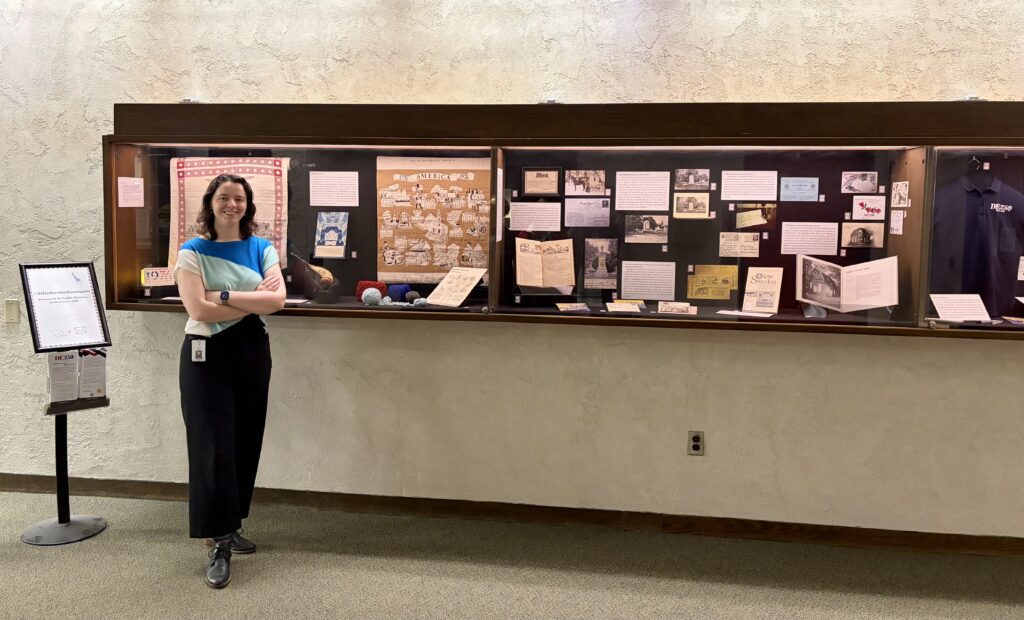
While the postcards, handkerchiefs, embroidery kits, and other souvenirs on display by no means illustrate the breadth of commemorative objects or fully represent the diverse ways people have used such objects to celebrate the 1876 centennial, 1926 sesquicentennial, and 1976 bicentennial, these objects demonstrate shifting state, national, and commercial interpretations of which histories are commemorated, and how those histories were communicated to the American public. Other objects draw attention to the everyday, highlighting the ordinary yet incredibly special moments where someone, somewhere, felt something was worth remembering. Delaware 250’s “To me, Delaware is…” initiative prompted me to consider how postcards speak directly to moments like these and add to our understanding of past commemorations.
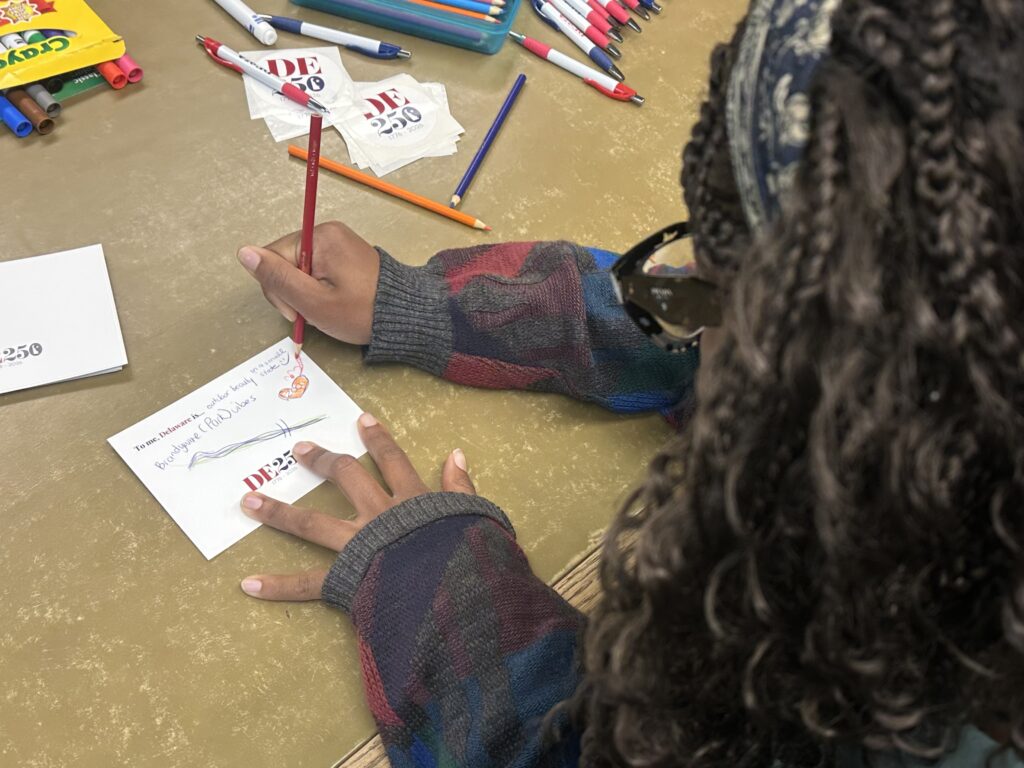
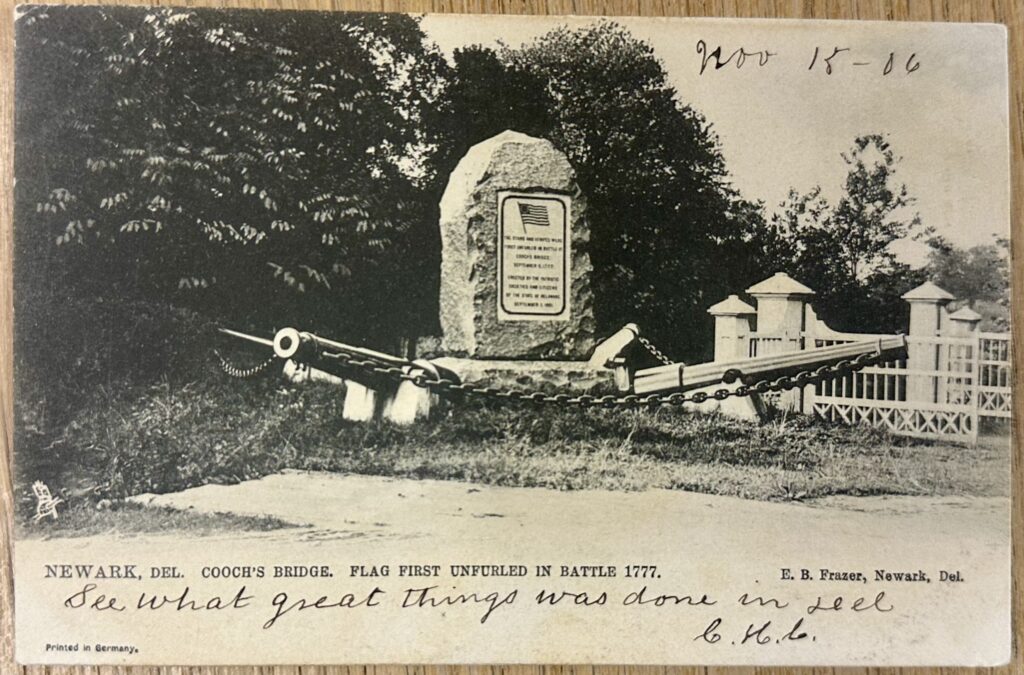
This Delaware 250 public outreach program was created to promote the semiquincentennial celebrations, encouraging participants to reflect and share on a postcard what Delaware means to them. These postcards describe Delaware as everything from a “world of history” to “home.” Submitted at local festivals, museum programs, and state fairs, the postcards are a record of how today’s Delawareans view the state, understand the role their memories play within its history, and share their hopes for the future. When considered alongside early twentieth-century postcards, it is clear that generations of Delawareans have and will continue to add their own interpretations of the past to their local memory of historical sites, figures, and events.
Working with such an actively growing archive has been both a privilege and a challenge. While this exhibition reflects only a fraction of the commemorative celebrations and postcards shared by Delawareans across decades, everyone has the opportunity to help shape what the state’s future holds and create their own piece of Delaware history.