By Quinn Hammon, Winterthur Academic Affairs intern
We don’t usually confuse a child’s toy for a surreal piece of art, but this item in the Winterthur Library collection finds itself in a strange and whimsical middle ground. Known officially as Folio 288, this large hardcover book is called a collage album, or, perhaps more aptly, a paper dollhouse. Paper dollhouses were a popular toy for girls during the late 19th and early 20th centuries. Made in the 1880s or ‘90s, Folio 288 most likely belonged to a girl who used the pages as a home for her paper dolls. In fact, this book is accompanied in the collection by three tiny paper girls, each no more than two inches tall.
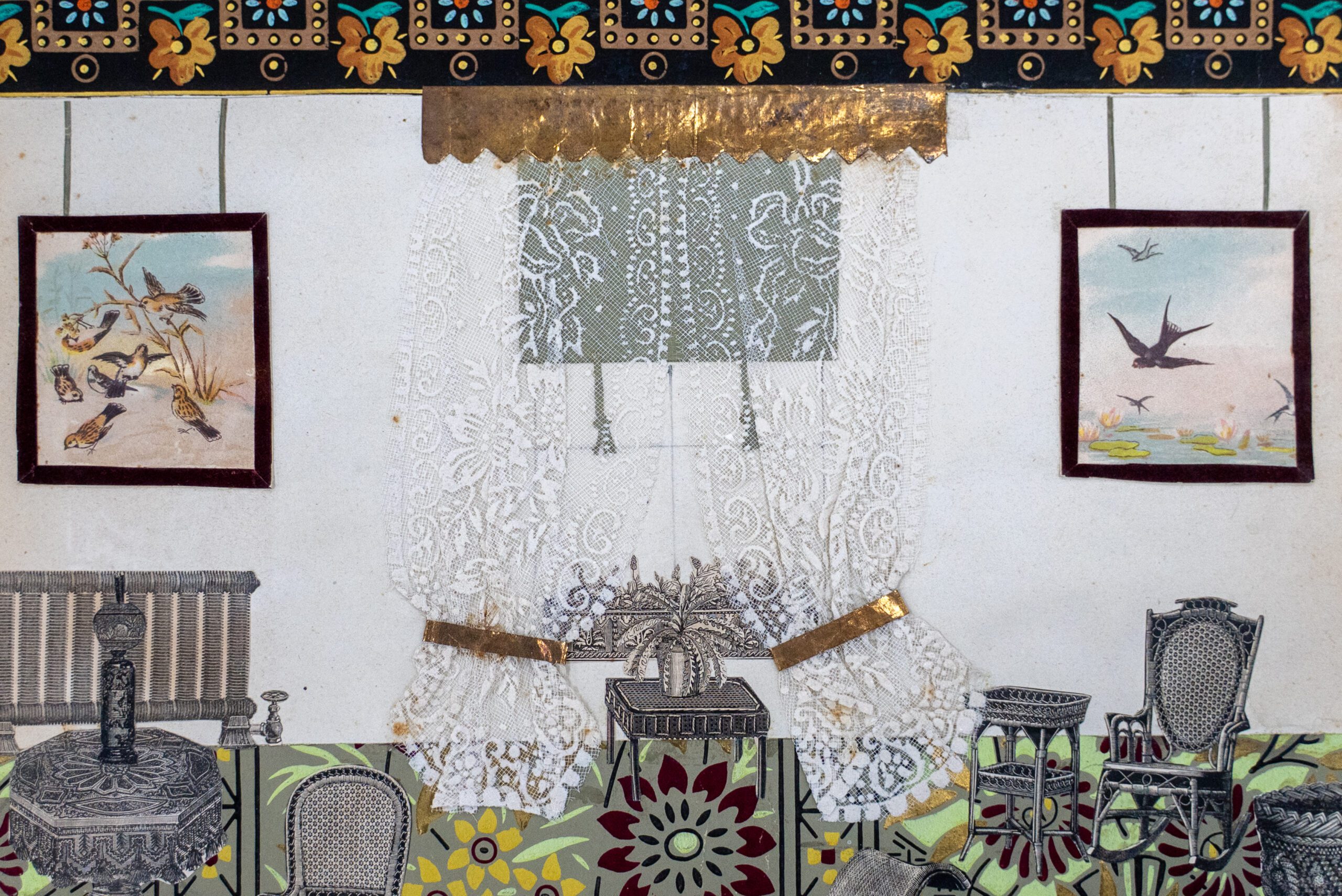
Making paper dollhouses like this one allowed children to flex their imaginations through interior design and provided an affordable setting for paper doll play. The images throughout the book were cut from furniture catalogs, wallpaper samples, and other free or inexpensive print sources. Even the paste was handmade with water and flour.
Every page in the album represents a unique room in this abstract sort of dollhouse, complete with carefully arranged paper furniture and even interactive features like moveable curtains and textured floors and cushions. Although each room exists on a two-dimensional plane, the folio’s owner found imaginative ways to bring the flat spaces to life. Some rooms have windows or doorways cut out of the page, allowing the viewer a glimpse into the next area. Others include all sorts of decorations covering the figurative walls.
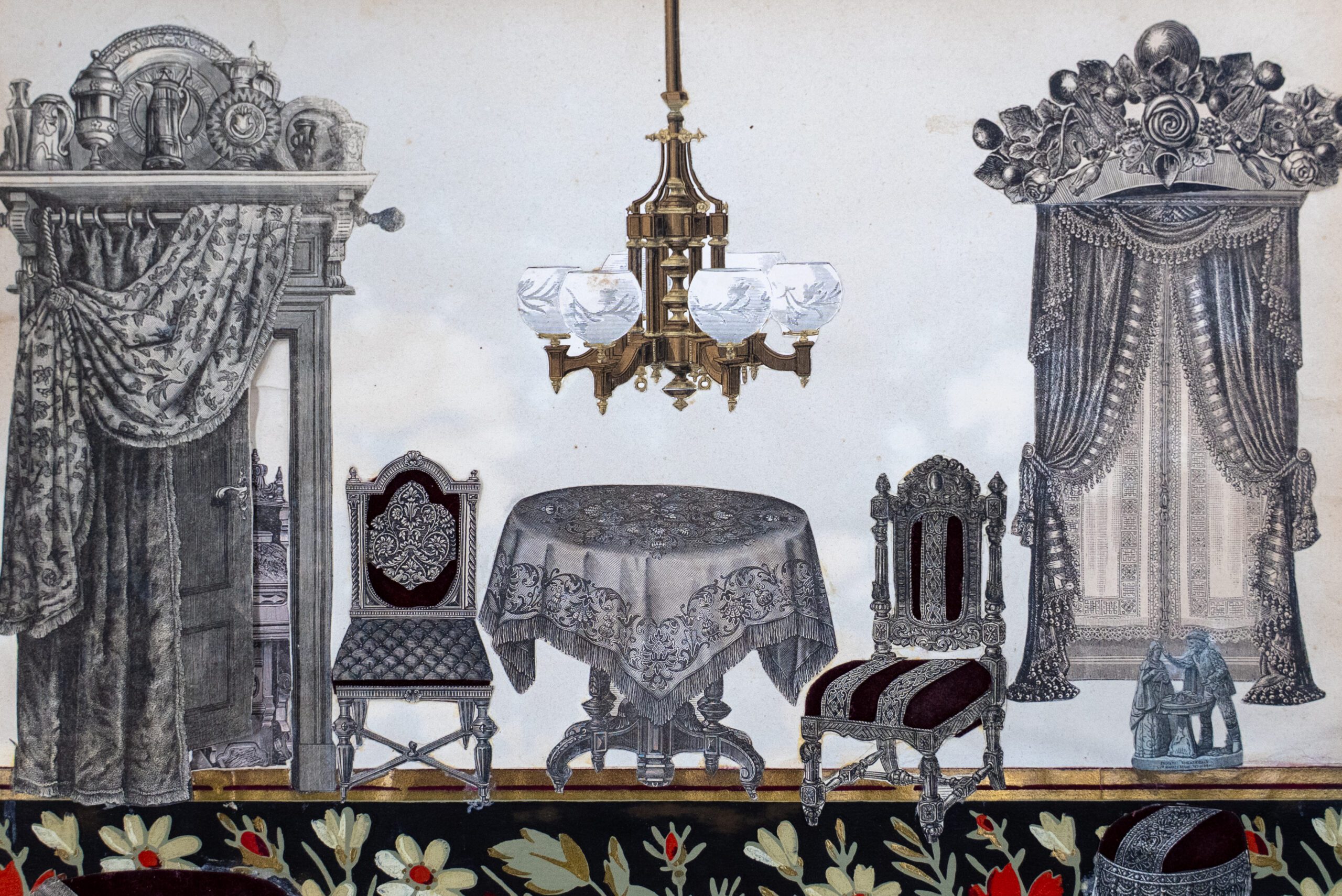
Folio 288 was created mainly as a toy but survives now as a piece of art in its own right. The creator of the collage rooms put obvious care into the construction of each imaginary space. On the page labeled “nursery,” the author took the time to paste several woodgrain-patterned bits of paper into the fireplace as if for fuel to keep the paper children warm. Several pillows in the book feature a hand-drawn “B” insignia, the author further customizing items as her own.
Because of the found material used in the collages, some of the rooms play with scale and perspective in uncanny, visually interesting ways. For example, the kitchen features an image of what appears to be a pocket watch pasted halfway up the wall. The scale of the watch compared to the chairs and tables pasted below, however, allows it to read effectively as a wall clock. One bedroom features an image of a kitten on a massive scale compared to the rest of the room. Another room has a giant sunflower and huge hairbrushes. And another has a tiny chair at a humongous table. The mixed-media, highly textured, adds to the often strange visual appeal of these dollhouse rooms, which make them striking pieces of visual art. Yet, at the same time, they retain an aura of childlikeness that is very cute.
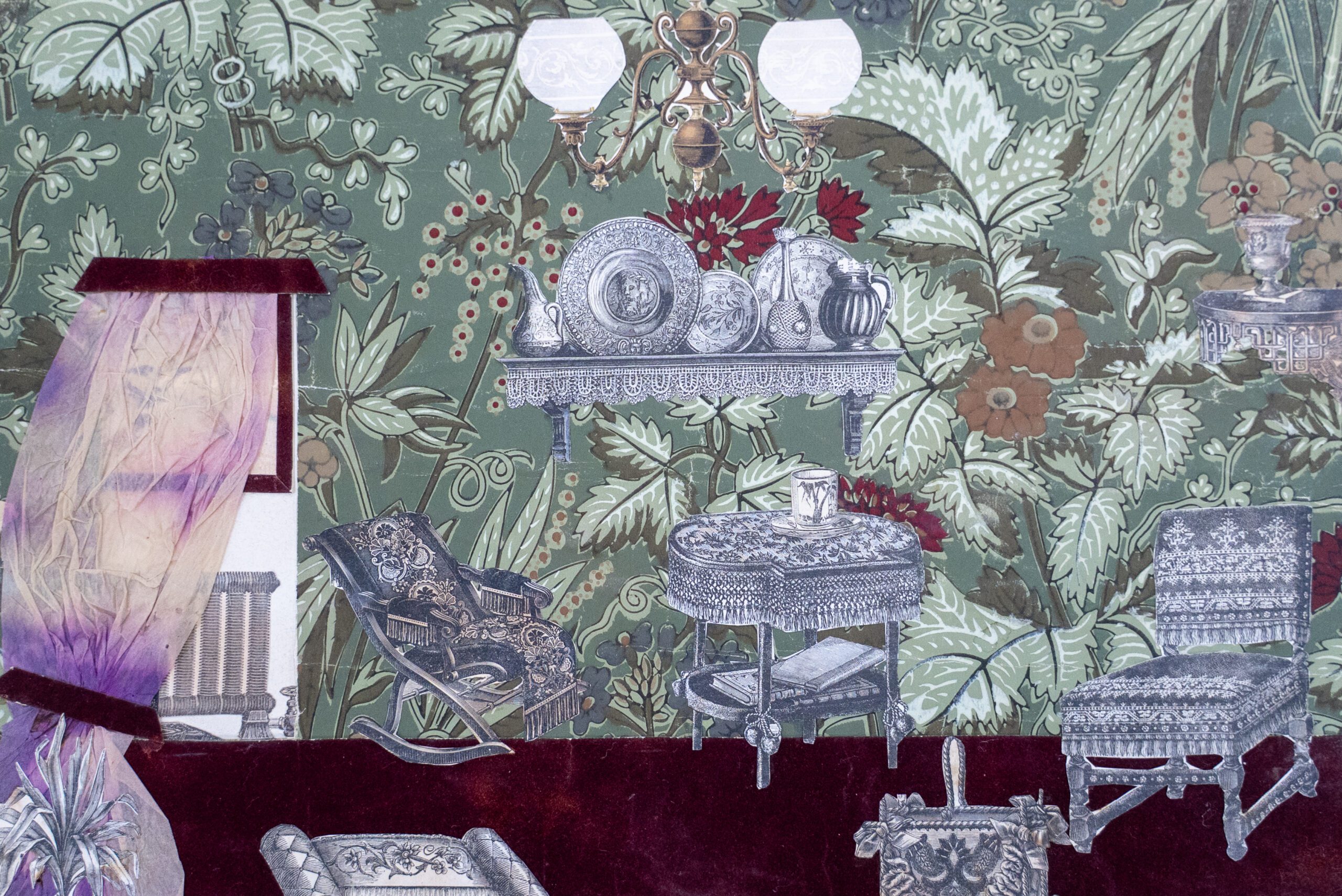
At once skillfully crafted and unabashedly nonsensical, Folio 288 is fascinating as an artifact of visual culture as well as a wonderful insight into the adorably familiar mind of a late-19th-century child. You can view Folio 288 in our Digital Collection, or in person at the library with an appointment.