By Ann Wagner, Curator of Decorative Arts at Winterthur
Today, cultural institutions seek to understand the nuanced and varied impacts of the War for Independence on colonists and Indigenous Americans, especially those directly involved. In 1976, our nation’s Bicentennial, they focused on artists, including gunsmiths and hornsmiths, who were dedicated to preserving craft knowledge and recreating early arts.
In step with our collection of American black powder rifles, in 2022 Winterthur acquired a special-order Bicentennial longrifle that was designed and produced for the state of Pennsylvania in 1976 (see fig. 1). This is our first firearm by a contemporary artist, and it inspired another artist to create a powder horn to accompany it.
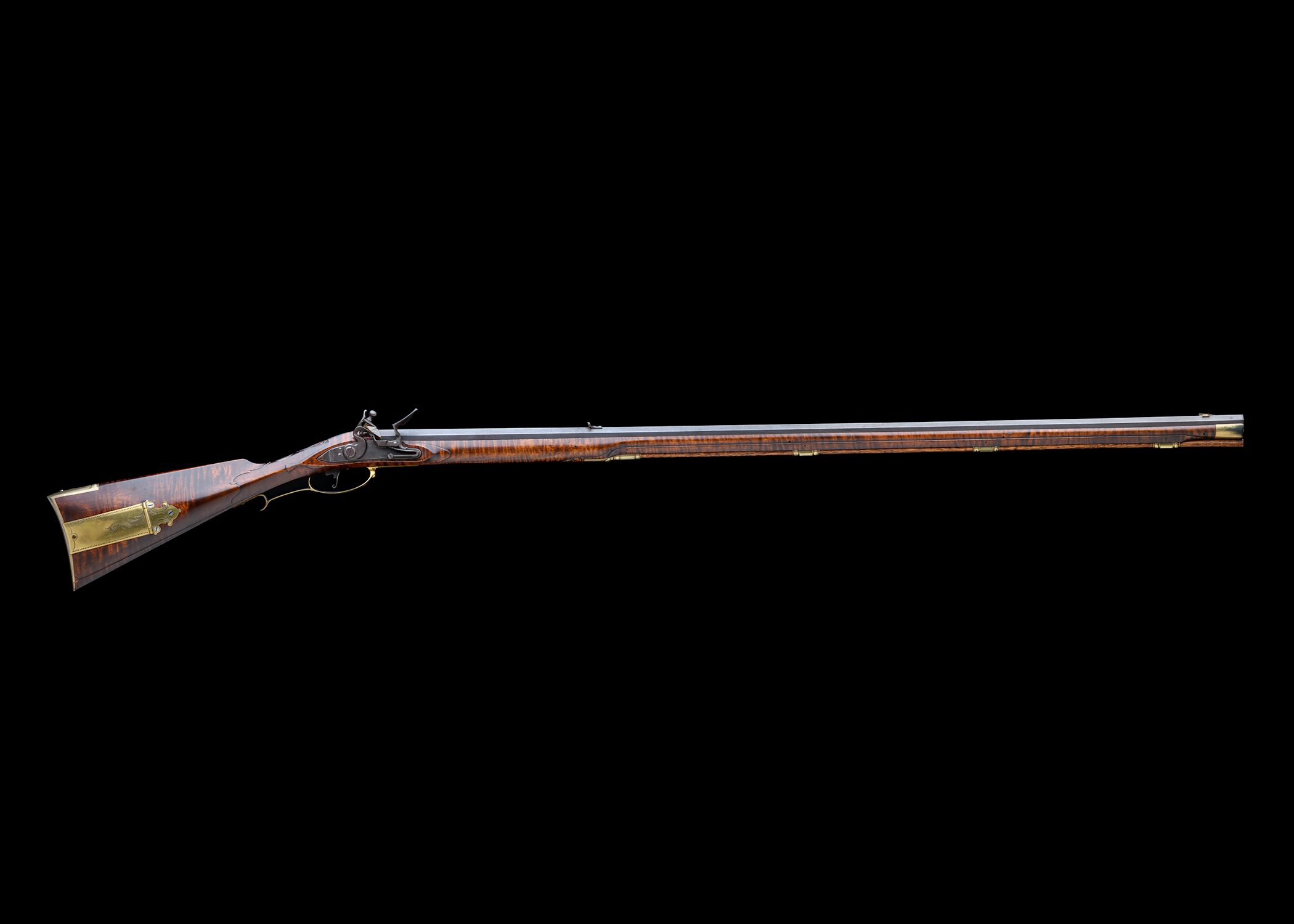
John F. Bivins Jr. (1941–2001), a gunsmith and scholar working primarily in North Carolina, was recognized for his publications and work with the Museum of Early Southern Decorative Arts at Old Salem in Winston-Salem, North Carolina, and for his legacy as a teacher. In 1975 he accepted a commission from the State of Pennsylvania to create their Bicentennial Commemorative Longrifle Project. Two hundred rifles were contracted from Bivins and his collaborating artists for the project; Winterthur’s rifle is number 105. In Bivins’s description, its modestly ornamented architecture was not a reproduction of a Kentucky-style flintlock but “a contemporary statement of an ancient craft” and technically superb.
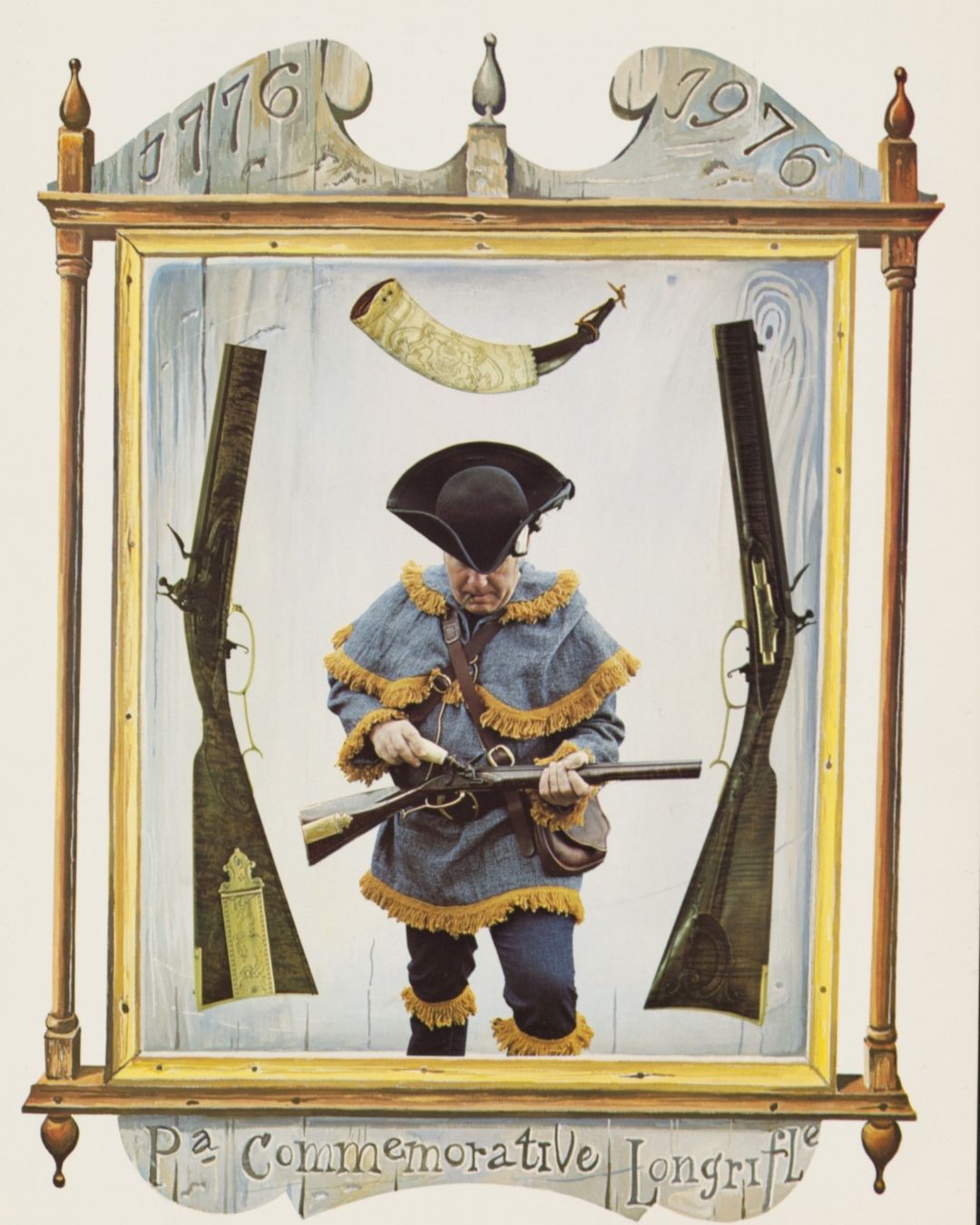
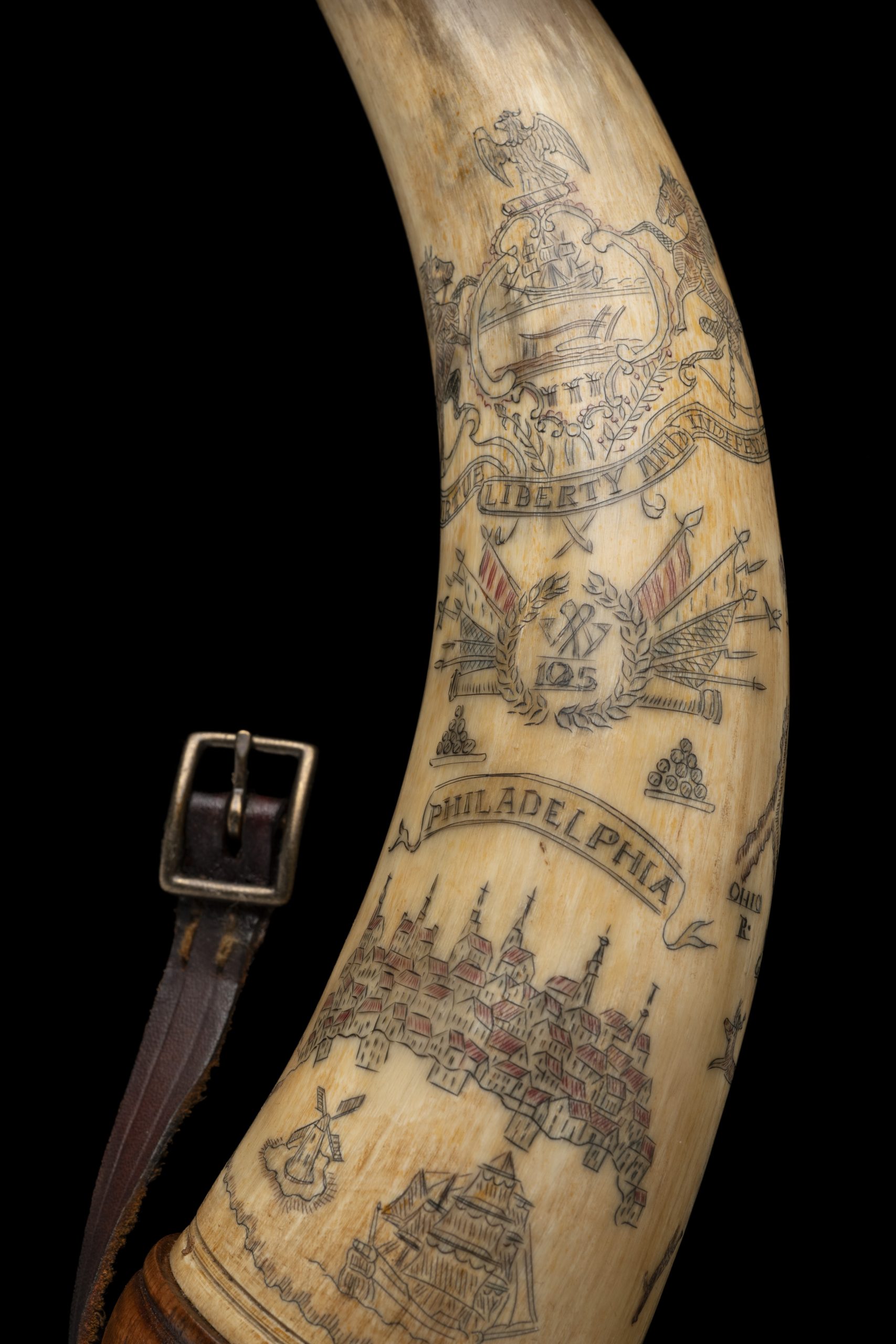
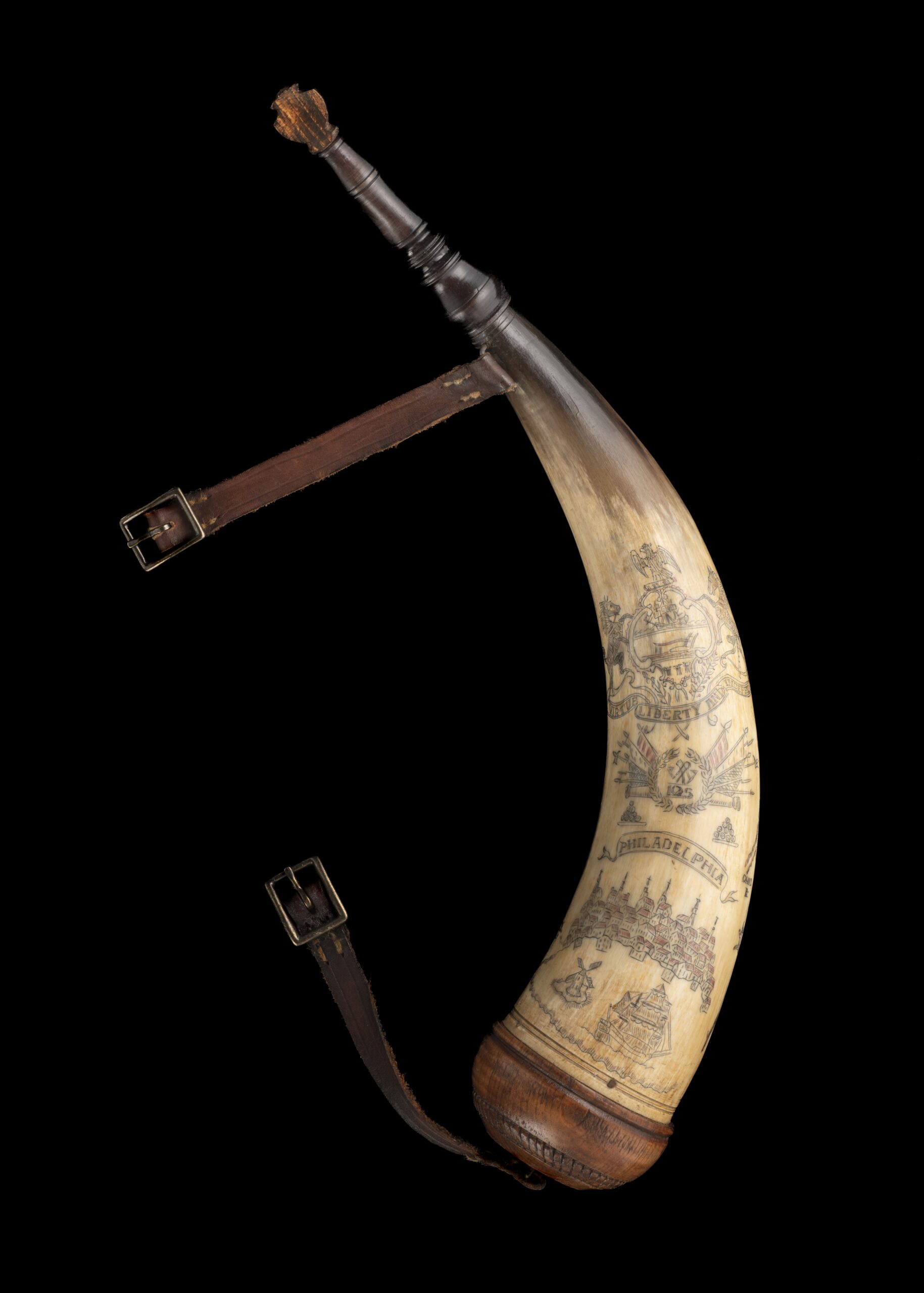
The Pennsylvania commission offered a full commemorative set including a powder horn bearing the state seal (see fig. 2). Although he is not mentioned in the promotional material, master hornsmith Roland Cadle also assisted with the project. When I lectured at the Hornsmith Guild’s annual meeting in 2024, Roland Cadle learned of Winterthur’s newly acquired longrifle. He was moved to reprise his role from nearly fifty years ago and donate a powder horn to the museum (see fig. 3). He carved a historically accurate Lancaster-style screw-tip horn with polychrome decoration. He included the seal and colonial landmarks from Fort Pitt to the city of Philadelphia and personalized it with the rifle’s “105” and the Winterthur “W” (see fig. 4). To complete this set, he also made a fringed hunting pouch.
Like many of North America’s cultural institutions, Winterthur is exploring ways to share the nation’s 250th anniversary with visitors. Contemporary artists whose creativity is inspired by historical collections and those dedicated to preserving craft practices speak a visual language all can appreciate. Winterthur is fortunate that Roland Cadle’s deep knowledge and lifelong passion for hornsmithing embodies his conceptual connections to earlier artisans, whether they worked in 1776 or 1976. Likewise, Bivins’s Bicentennial longrifle captures a moment in time that inspired many to try their hand at gunsmithing and to appreciate the historical craft knowledge he helped preserve.