By Kate O’Neal
Step onto Shop Lane to experience the rhythms of daily life in the early 1800s. These shops hold much more than just household objects. They tell stories of how people worked, lived, and built relationships together. This interior space—formerly a bowling alley for the du Pont family—was transformed to make you feel like you are outdoors and wandering along a 19th-century shop lane.
Henry Francis du Pont believed in preserving the architectural settings and elements that gave the objects their meaning. Each storefront has its own history and journey to Winterthur, with elements coming from communities along the East Coast.
Connecticut Shop
Visitors step “inside” to find themselves in front of the exterior of the Connecticut Shop. Originally built in 1805 in Connecticut, this storefront’s bowed windows hold finely crafted silver and Chinese export porcelain that was once exclusive to wealthy shoppers. Over time, this dinnerware became affordable for middle-income people as well.
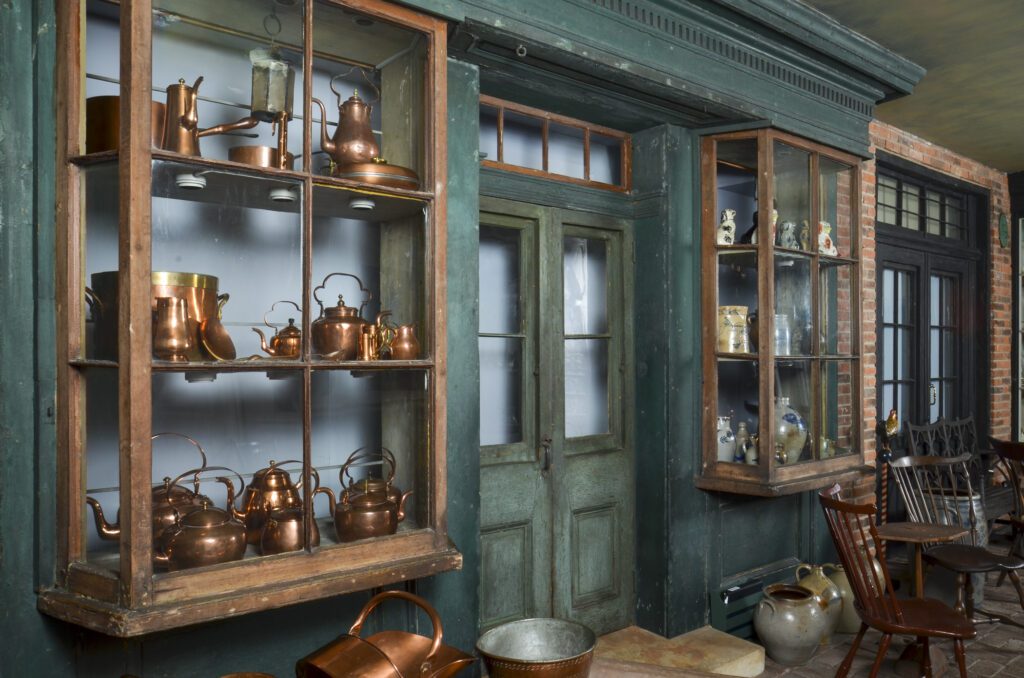
Baltimore Shop
Unlike the luxury china in the Connecticut Shop, the Baltimore Shop houses stoneware for everyday goods and popular decorative objects. Among these decorative objects is a spotted dog, which was modeled after a well-known figure in England. This storefront was initially built in 1840 in Baltimore, Maryland, and is stocked with items made in the Mid-Atlantic alongside English pottery.
Image: The Baltimore Shop features shining brass and whimsical dog figurines.
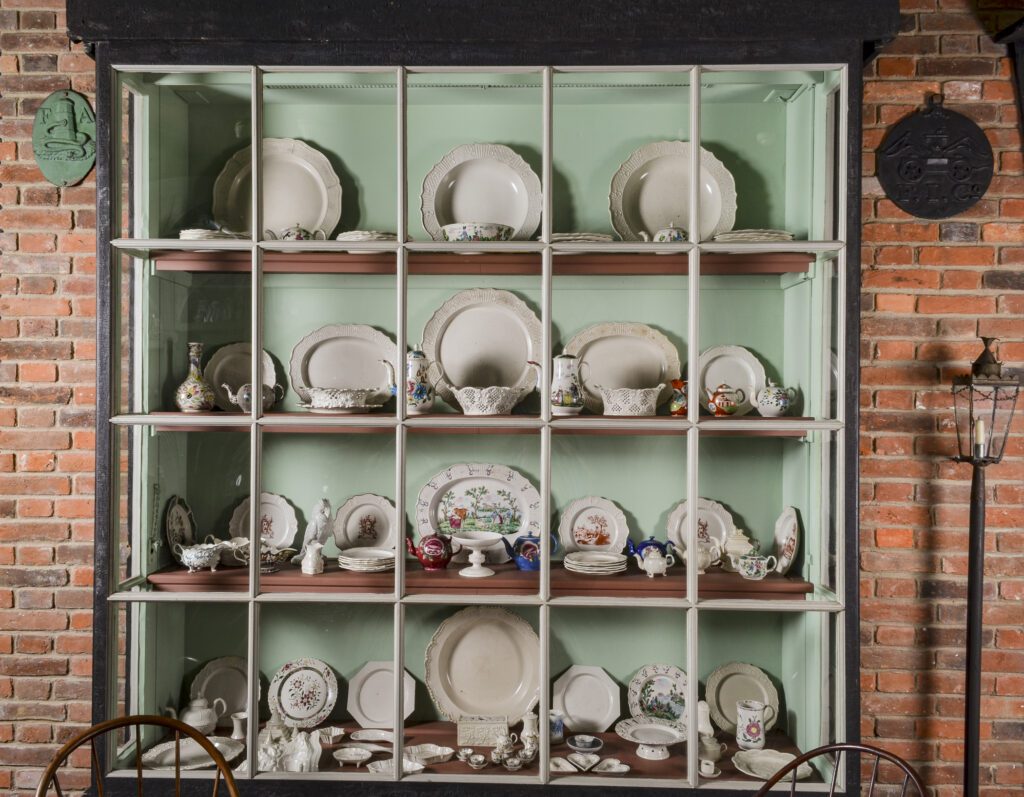
Peck’s Slip Shop
Peck’s Slip Shop features high-quality white salt-glazed stoneware produced in Staffordshire, England, which was popular in the American market. The storefront dates back to the mid-1700s in New York City, and the shop offered stoneware and other goods to the middle and upper classes. Similar white salt-glazed stoneware was also excavated from sites such as George Washington’s home at Mount Vernon, Virginia.
Image: Peck’s Slip Shop displays high-quality white salt-glazed stoneware.
Kingston Shop
Across the street, the Kingston Shop carries Staffordshire transferware ceramics picturing romantic or American scenes. Located in the Rondout section of Kingston, New York, this storefront once stood on the waterfront of the Hudson River. H. F. du Pont acquired the shop windows and door following World War II, after the seller had painted the original marble trim the light blue color it is now.
Shop Lane is just a glimpse into the everyday life of Americans in the 19th century through objects, architecture, and the stories preserved in each storefront. As part of the Architecture of Independence tour, this room highlights some of the architecture that holds the history of America.
Come see Shop Lane and much more on the Architecture of Independence tour, which runs through November 20.