By Kathy Z. Gillis, Elizabeth Terry Seaks Senior Furniture Conservator
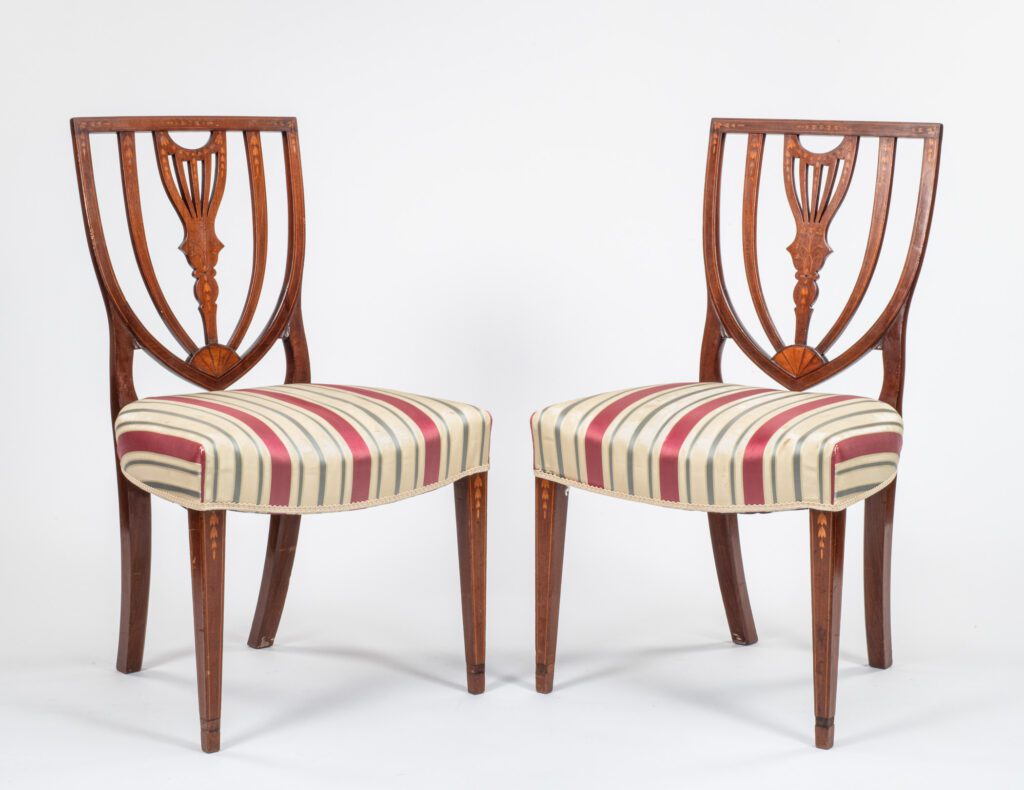
Winterthur’s new exhibit in the Conversations with the Collection gallery features side chairs that originally graced the dining room of Alexander Hamilton’s home, The Grange, in New York City. Uncovering Historical Upholstery: Hamilton’s Chairs traces their journey from 20th-century taste and interpretation to 21st-century conclusions based on evidence from the chairs themselves and from historical trends at the turn of the 19th century when these chairs were designed and constructed.
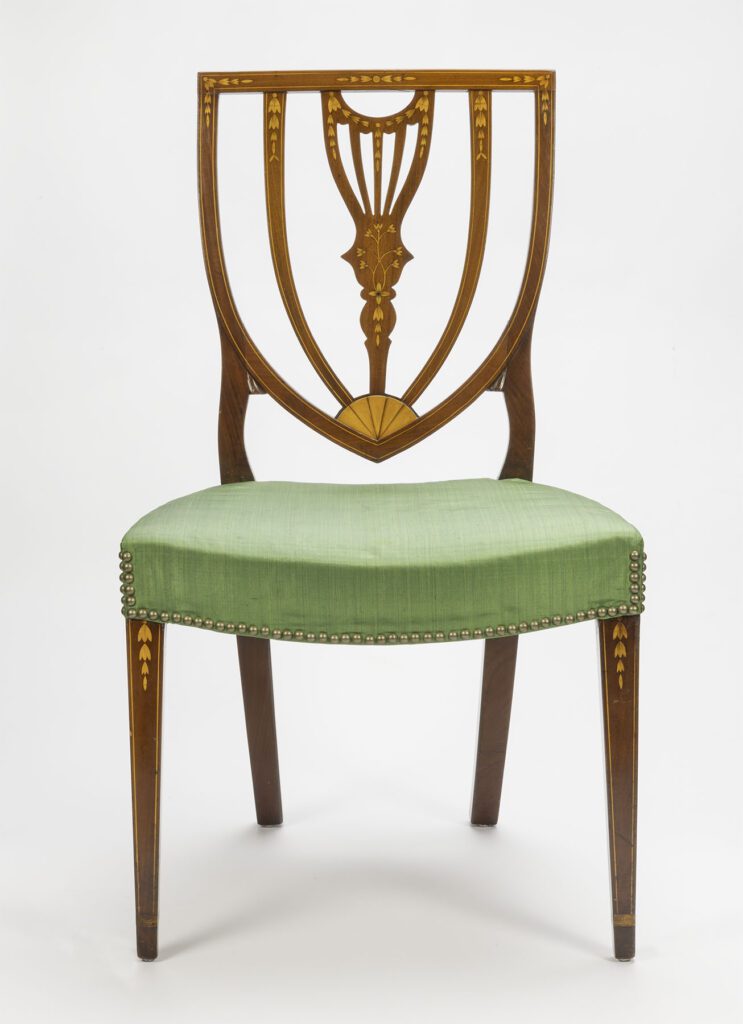
Winterthur has owned a side chair from Hamilton’s set since 1952, when Henry Francis du Pont purchased one and had it reupholstered with historical fabric.
Image: Side chair, possibly Elbert Anderson, New York, N.Y., 1795–1805. Mahogany, beech, maple (chair), webbing, horsehair stuffing, bast-fiber cloth, cotton batting, linen, silk show cover (upholstery). Bequest of Henry Francis du Pont 1952.0131
Pamela Cunningham Copeland, a member of the du Pont family by marriage, also acquired six chairs, including two armchairs, from this set at some point. In 2021 her son Lammot du Pont Copeland Jr. and his wife, Deborah Copeland, gifted the chairs to Winterthur. These chairs match side chairs in other collections, including at the Metropolitan Museum of Art and the Albany Institute of History and Art—and all are believed to be from the original set made for the Hamiltons.
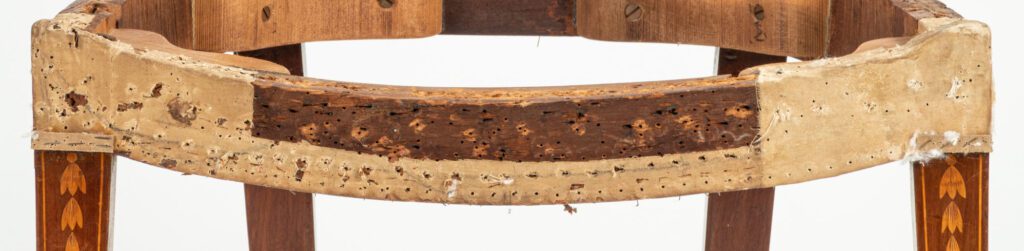
The approach to recovering upholstered furniture has changed drastically in the seventy years between the two acquisitions. Traditional upholstery techniques involved multiple fasteners—nails for webbing, tacks for linen, and brass nails for decoration—to secure the many layers of upholstery foundation. This was the norm in the 1950s. Unfortunately, repeated recovering of the chairs with a new layer of fabric, stuffing, and fasteners applied over older materials (known as upholstery campaigns) not only weakened the wooden structures but also muddied the evidence of what came before.
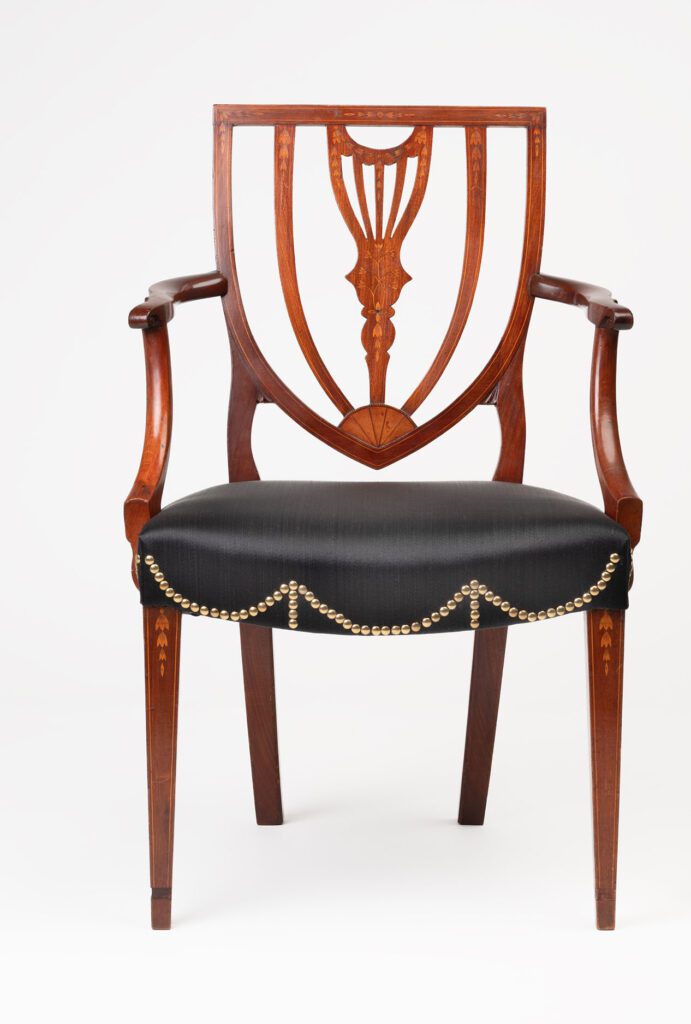
Starting in the 1980s, conservators have used techniques to present the appearance of an upholstered chair without nailing fasteners into seat rails that have already withstood multiple nailing from previous campaigns.
Image: This armchair features a minimally intrusive upholstery cap created to look like real upholstery but without any nailing into the wood. Armchair, New York, N.Y., 1795–1805. Mahogany, beech, maple (chair) Carbonfiber, epoxy resin, Ethafoam®, cotton batting, felt, linen, horsehair cloth, brass nails (upholstery). Gift of Mr. and Mrs. Lammot Copeland Jr. 2021.0002.001
Today, closely examining the nail patterns and plucking fabric threads from the oldest holes reveals the original configurations. Covering the chairs to give the impression of an upholstered seat involves minimally intrusive methods of wrapping and capping them (no new nails). These methods help preserve the structural integrity of the wood and allow the evidence to remain undisturbed so future conservators can use more advanced investigative techniques as they become available.
We welcome you to visit the Conversations with the Collection gallery and discover the story of these remarkable chairs.