By Allison Edmonds and Barb Root. Photos by Kelly Levin.
On a cool spring morning, Winterthur staff members, certified Delaware Master Naturalists and trainees, and local tree professionals gathered beneath towering beech trees—not for a nature walk, but for specialized training to help protect some of the estate’s most valuable assets from a non-native microscopic worm. Visitors strolling the grounds may not realize that behind the scenes, staff and volunteers are working to combat an emerging threat to one of Winterthur’s signature tree species—the beech tree.
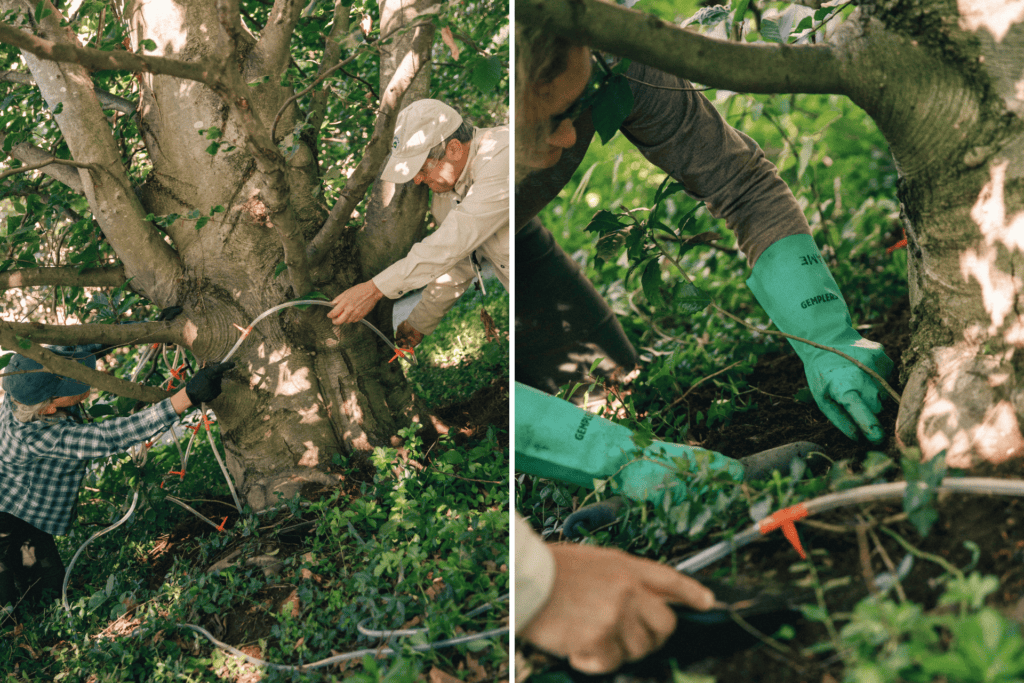
Beech leaf disease was first identified in northern Ohio in 2012 and has spread steadily across numerous states ever since, even into parts of Canada. In 2025, it arrived at Winterthur.
Visitors may notice dark banding between the veins of beech tree leaves or a more open canopy caused by leaf loss. During the summer, foliar nematodes—those microscopic worms—are active within the leaf tissue and migrate into newly developing buds. They feed on bud tissue throughout the winter, and the leaves that emerge the following spring display dark bands. Over time fewer leaves emerge, and those that do are often leathery and deformed. The tree prematurely drops the leaves and eventually starves due to progressive canopy loss. Current evidence suggests that additional stressors such as drought, insect pests, and poor soil conditions may weaken trees and make them more susceptible to infestation.
Fortunately, effective treatment options are now available. But because treatment takes a significant amount of money and time, it’s best suited to a limited number of high-value trees on any given site. For most properties, that means making hard choices about which trees to protect.
What This Means for Winterthur
Beeches are especially important at Winterthur, which is home to some of the largest and oldest trees in the Mid-Atlantic region. They make up roughly 25 percent of our canopy. About 500 grow in the 60-acre garden alone, with thousands more scattered across the property. Many are towering, centuries-old specimens that help define the character of the estate.
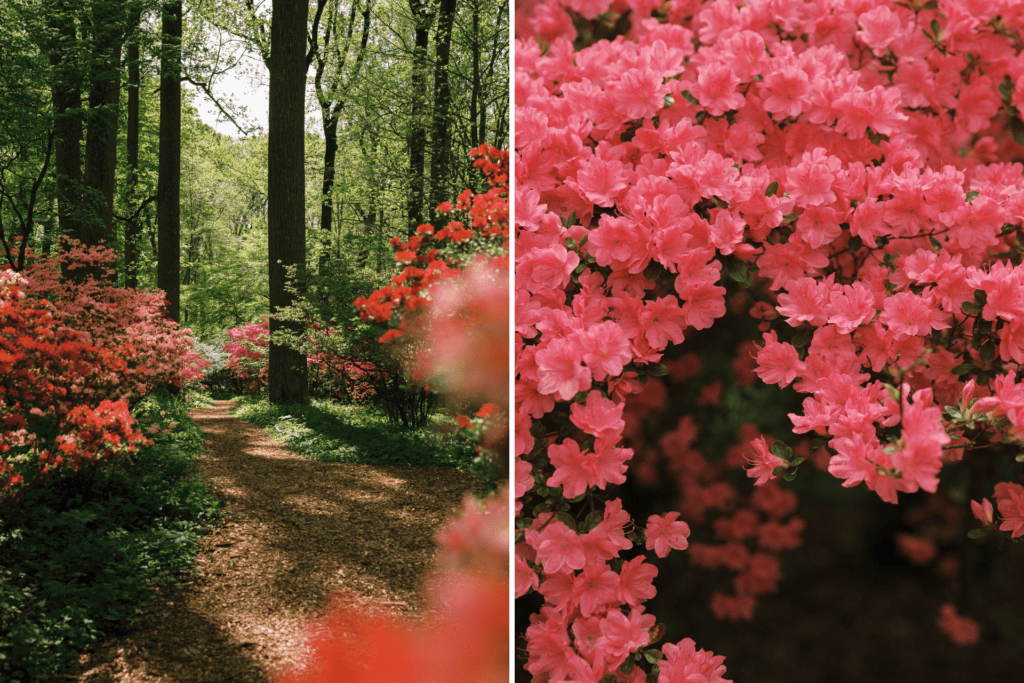
These trees provide food for wildlife, contribute to forest structure, and support biodiversity. The shade and shelter their canopy creates allow our historic azalea and rhododendron collection to thrive. Losing a quarter of our trees would dramatically change the look and feel of the garden and alter the environment these treasured plants depend on—to say nothing of the loss of wildlife habitat that would come with it.
How We Are Responding
Thanks to generous donors, work is well underway. And thanks to our beech leaf disease intern, John Blochberger, and the Delaware Master Naturalist volunteers, we are on track to reach this year’s target of 120 trees by the end of July, focusing on those identified as having the greatest need. Our arborists began by assessing all 500 beech trees in the garden, noting treatment type and any conditions that might rule a tree out. From there we built a treatment plan that prioritizes our highest-hazard areas first, and we developed a survey tool to track both our treatments and the canopy’s symptoms over time.
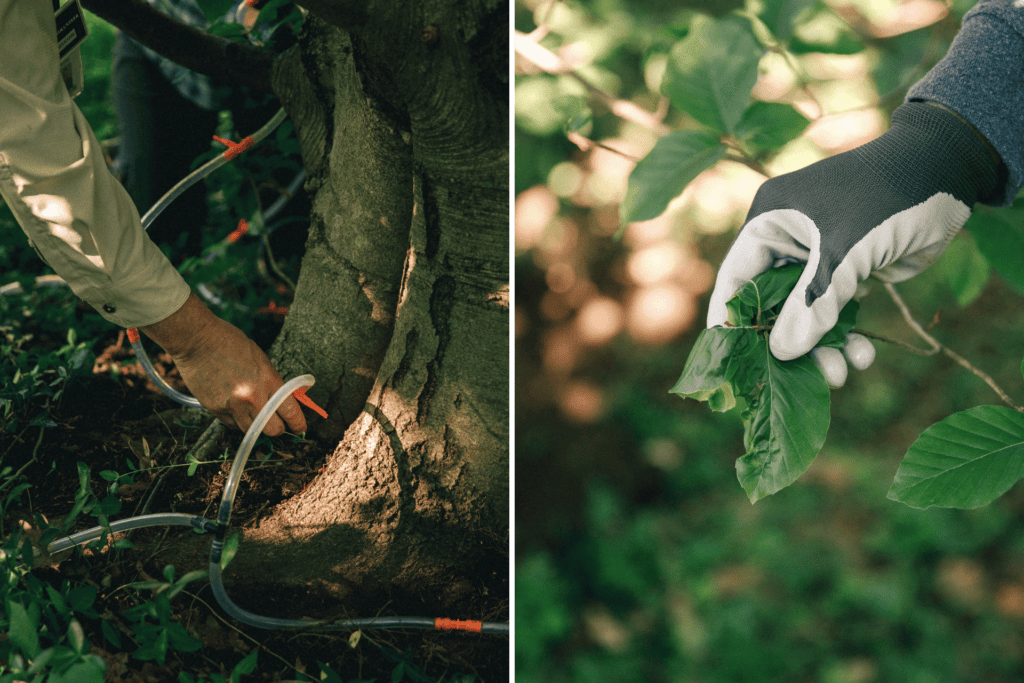
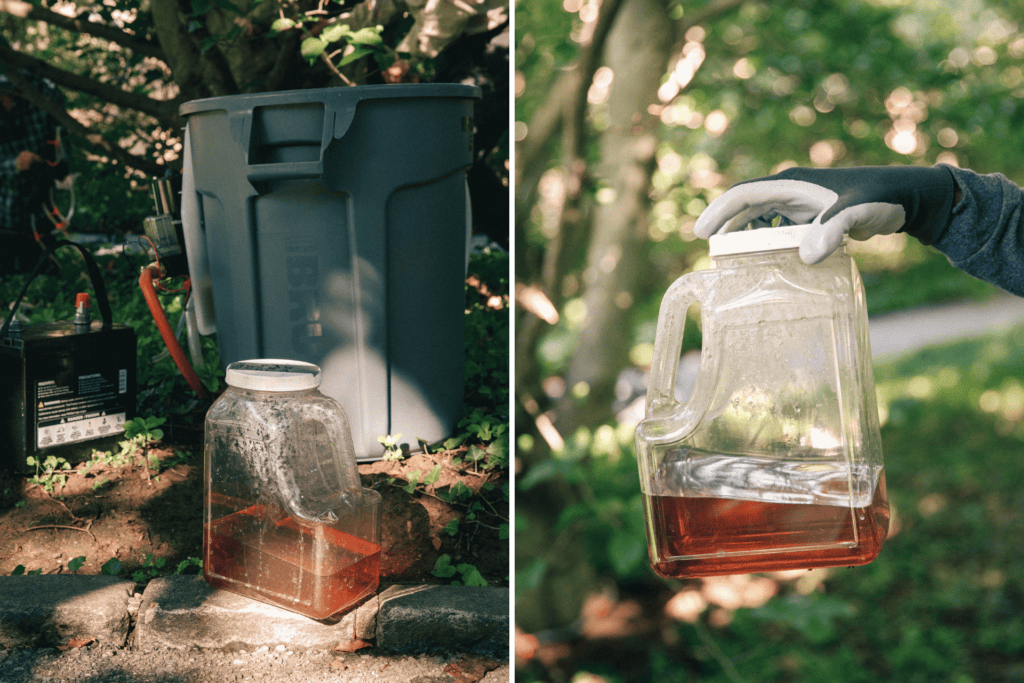
Staff members and volunteers apply a treatment mixture prepared according to the size of each tree. Small holes are drilled near the base of the tree, where tubing is installed to deliver the treatment solution, which is then pumped into the tree. The process takes about one hour per tree and must be continuously monitored to ensure the tubing remains secure. Each treatment costs about $6 per diameter inch of the tree, and each application remains effective for about two years.
We have also begun bark spray applications to bolster the defenses of trees too small for injectable treatments as well as trees in our natural areas. With every treatment, the team collects data—product details, treatment duration, weather conditions, and canopy health—to better understand patterns and efficacy in the years ahead.
Beech trees are a defining feature of our landscape, and we intend to give them every chance to remain so. Through the combined efforts of staff, volunteers, and interns, Winterthur is working to preserve these remarkable trees for future generations to enjoy.
To learn more about beech leaf disease, visit Holden Arboretum’s excellent site. To find out how you can help fund our beech trees’ ongoing treatment, please contact lmason@winterthur.org.