By Esme Krohn, student guide and Winterthur Program in American Material Culture, Class of 2026
Forgetting is an integral part of memory, frustrating as it may be. We all have our lapses: misplacing our keys, losing an address, or letting a deadline unknowingly pass us by. Today we have a variety of digital tools to help our faulty brains, from voice memos to automated calendar alerts. Back in the 18th and 19th centuries, people also had ways of enhancing memory. Ivory memorandum books were pocket-sized erasable tablets of elephant ivory, which could be written on in pencil and easily erased as needed (fig.1). While they were made from the 17th century well through the 20th, they were most popular in America between 1750 and 1840. My recently completed master’s thesis for the Winterthur Program in American Material Culture focused on the production and use of these objects in America, covering their connections to the trade in enslaved people, the craftsmen who made them, and the people who wrote in them.
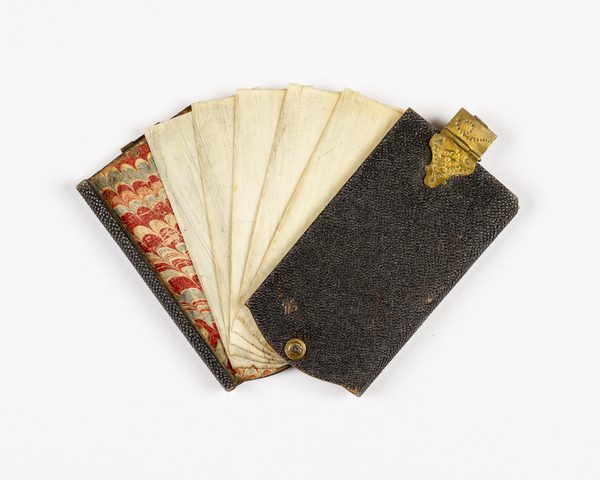
Winterthur is lucky enough to own nine ivory memorandum books, although there are hundreds in museums across the world. These two ivory memorandum books from Winterthur’s collection show the range of forms and uses of these unique objects.
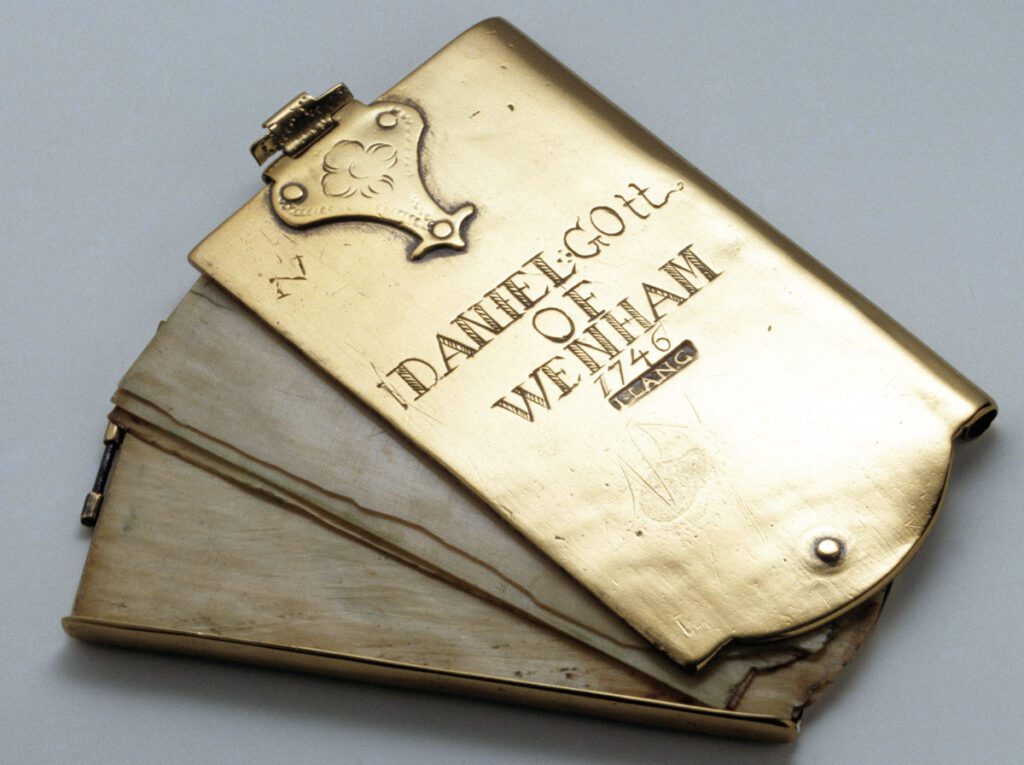
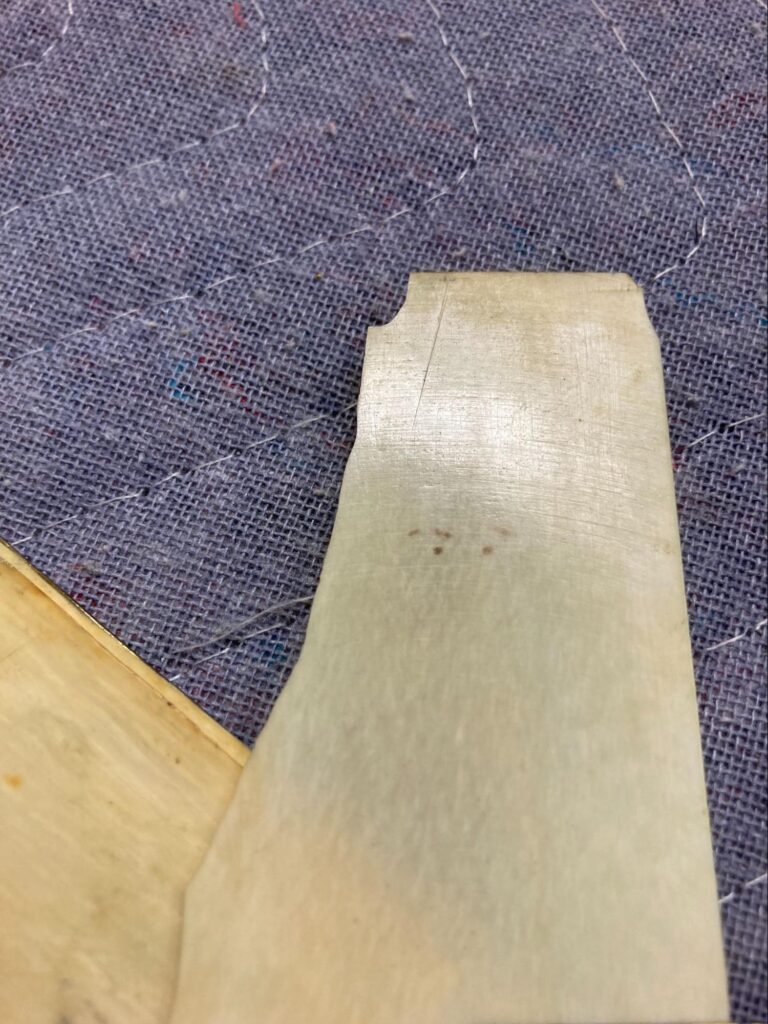
The earliest ivory memorandum book in our collection is dated 1746 and was made by Salem, Massachusetts, silversmith Jeffrey Lang (fig.2). Lang’s silver appears in collections such as the MFA Boston, the Peabody Essex Museum, and the Metropolitan Museum of Art, but this is his only surviving work in brass. Above Lang’s maker’s mark on the front cover is the name of the book’s owner, Daniel Gott of Wenham, Massachusetts. According to contemporary newspaper records, Gott was a tanner, operating a tanyard that could process 500 skins a year at its height. Inside the book are four ivory leaves, which Gott may have used to track business expenses or remind himself of appointments. It also appears that one of his four children may have gotten their hands on their father’s prized possession—drawn on the last page in indelible iron gall ink is a small cartoon face, which has long outlasted the more serious matters noted on these pages (fig.3).
Decades later, a wealthy New York City woman named Elizabeth De Lancey made a special bequest in her will:
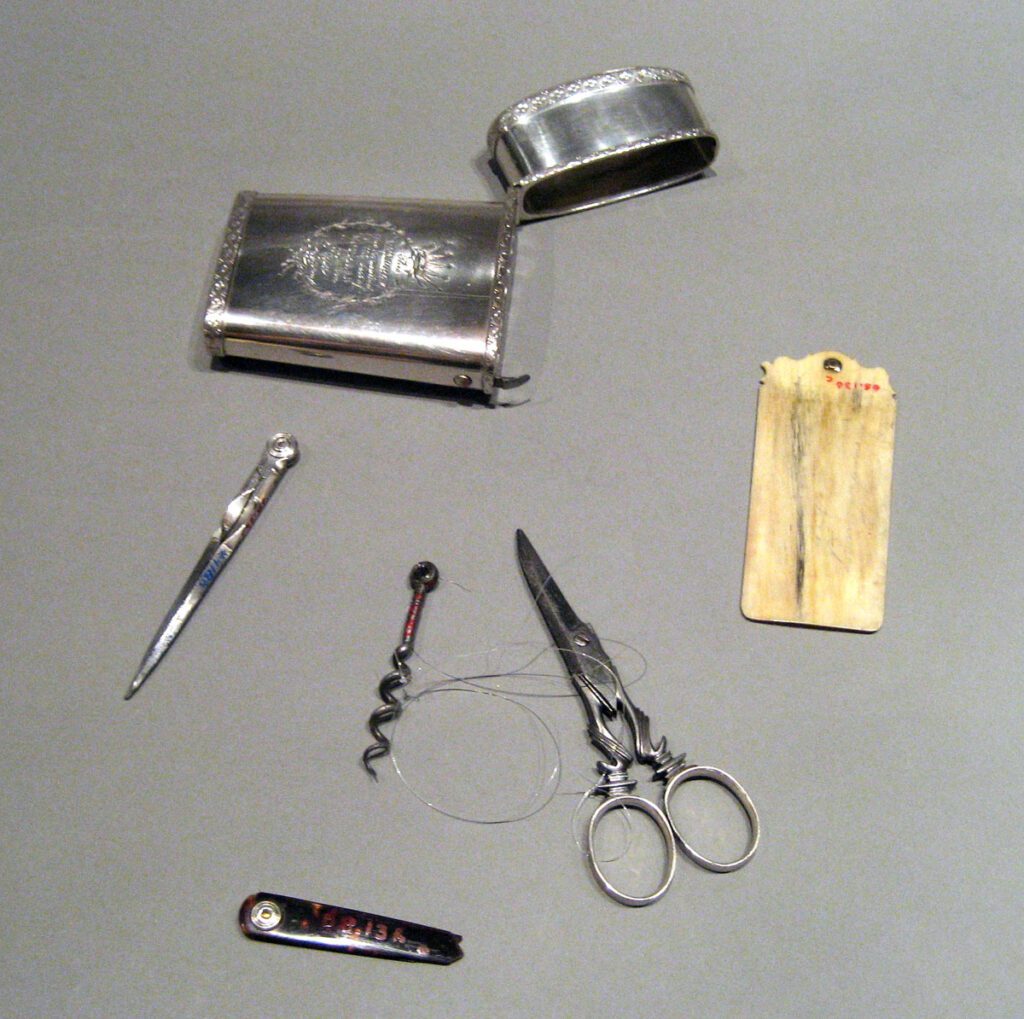
to my said son Stephen and to each of my sons John, James, Oliver, and Warren a silver pocket case of Instruments to be made in the neatest manner of the value of six Guineas with the following engraving on them: “When you receive this token, the Parent who gives it will be no longer here on earth— let us live so as to hope to meet in heaven.”
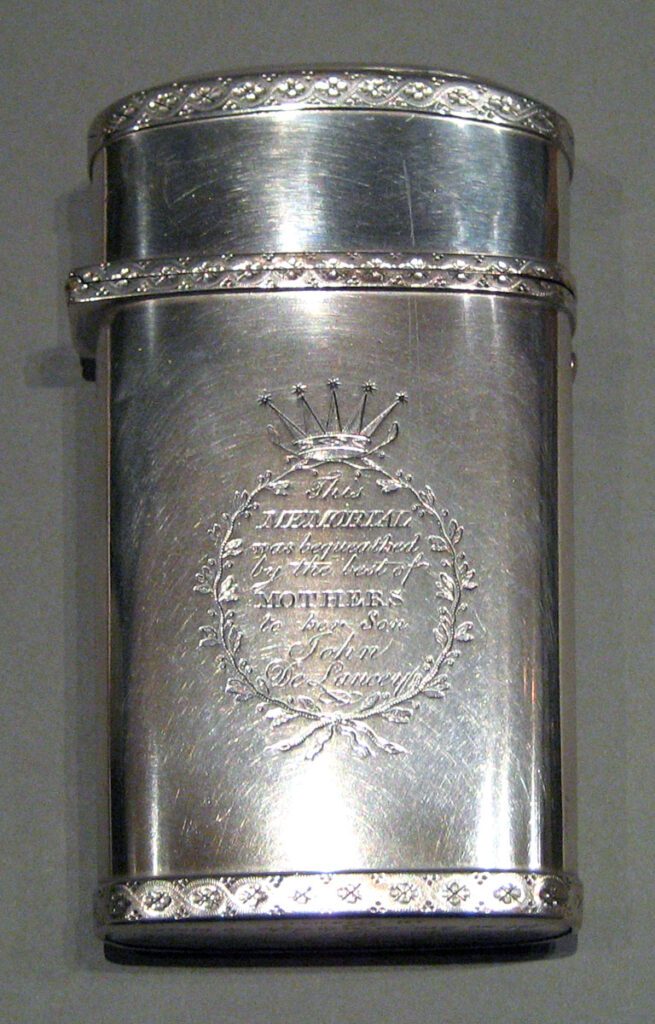
After her death two years later, a silversmith, likely New York City’s William Garret Forbes, took up Elizabeth’s instructions, making a set of silver étuis, or pocket cases, that exemplify the Federal style popular at the time (fig. 4). Three of the five still exist today: Winterthur has John De Lancey’s, the Yale University Art Gallery has Oliver’s, and James De Lancey’s appeared for sale in 2008. All three include, among their various implements, two decoratively cut ivory memorandum leaves pinned together (fig. 5). Much like the Swiss Army knives of today, these sets of miniature tools represent a readiness for any given situation, making these cases a practical as well as sentimental legacy from a mother to her faraway children.
These are just two of the many stories revealed by the ivory memorandum books in Winterthur’s collection. If you want to explore more of these fascinating objects, you can search Winterthur’s online collections database or my searchable online catalog of ivory memorandum books.