By Ellery Coleman, tour program assistant
Wandering around a Winterthur hallway in low-level conservation lighting, you notice a lot of gleaming wood, metal, glass, and porcelain. However, sometimes (even as a guide) you might come across an object where the material is a bit of a mystery. Very often what you have found is an organic material. Is it bone? Horn? Porcupine quill? Shells? On our latest tour, Focus on Bones, Shells, and Teeth, you can learn more about these unusual materials which were once popular and are often absent from our homes today.
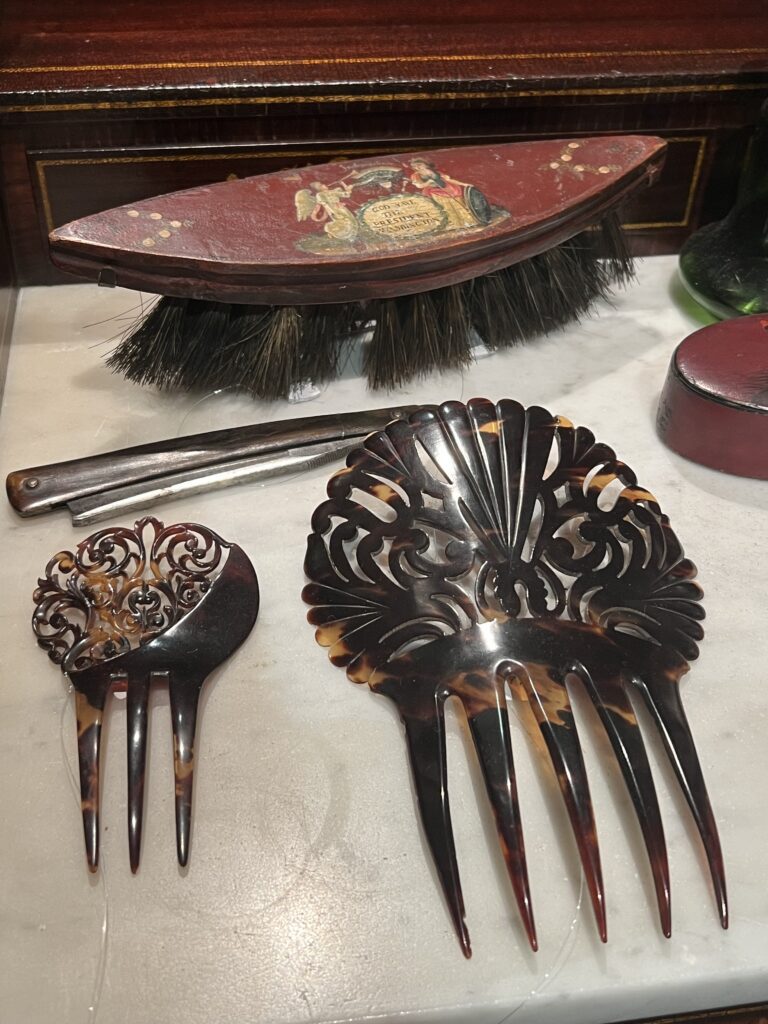
Organic materials (organic meaning something that came from an animal) are often unfamiliar, sometimes even unrecognizable to us at first because many of these substances are legally protected today. Some of the most valuable and beautiful organics—tortoiseshell, ivory, and rhino horn, for example—come from animals that are critically endangered, like the hawksbill sea turtle, the African elephant, and the white rhino (the northern variety of which is extinct). Other materials like porcupine quills and ostrich feathers are not endangered but rarely appear in a modern home. The exception is leather, also an organic, which is almost as ubiquitous now as it was in the past.
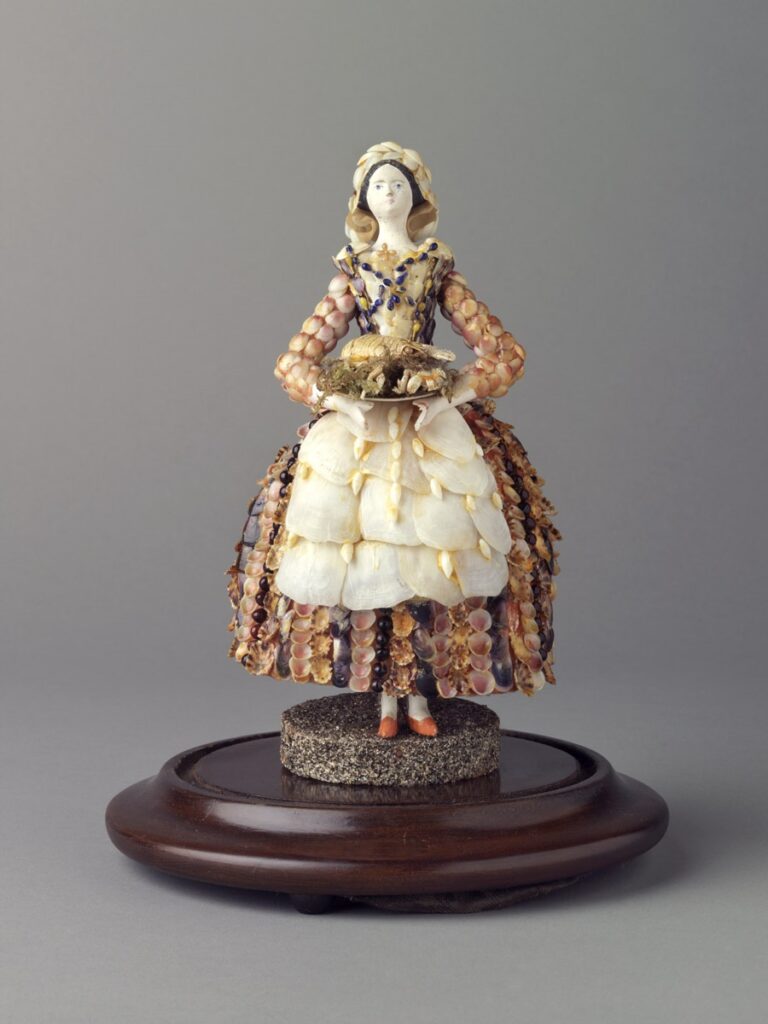
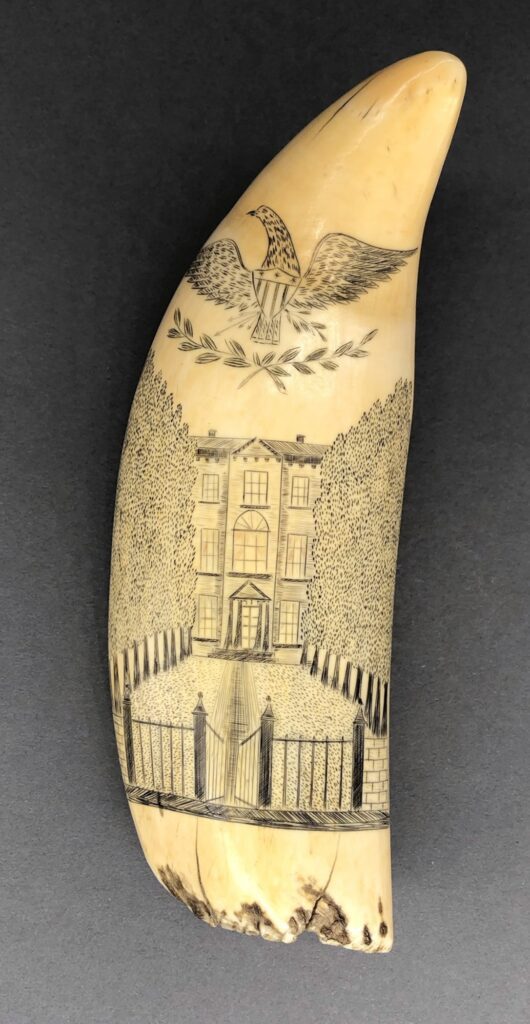
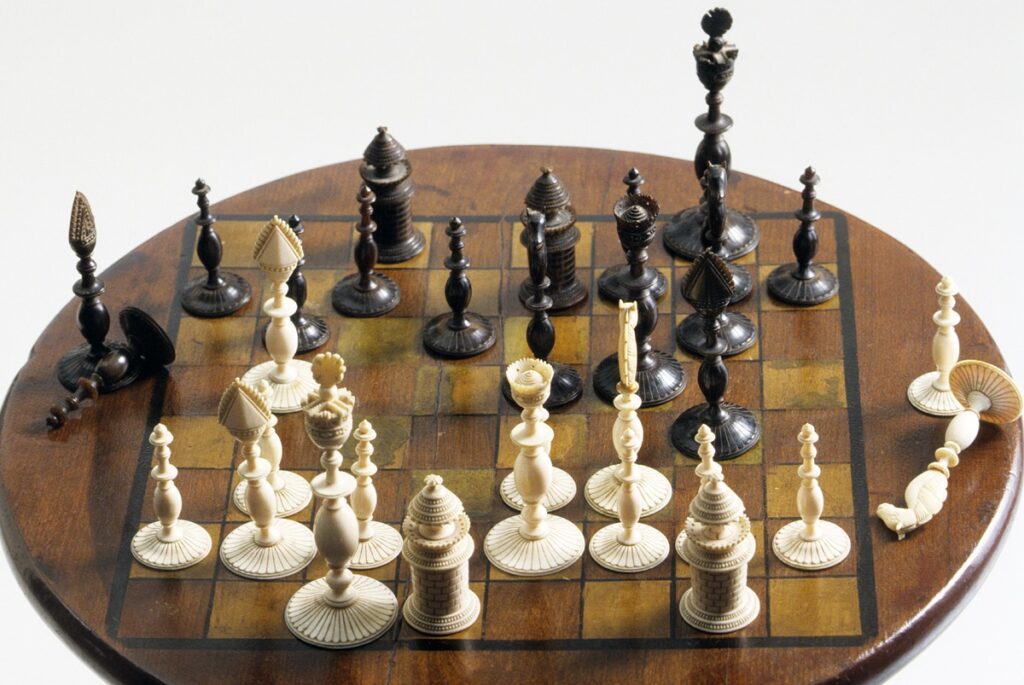
Animals and art intersect on this tour, which also features some of my favorite rooms in the house. It was a delight to research and come to understand objects like horn cups and flasks, elephant ivory chess pieces, leather chairs and pitchers, engraved whale teeth, statuettes made of seashells, and more. Many of these pieces are stunningly beautiful not only for their aesthetic value, but also because of the sad yet resilient story of the species sacrificed for the object.
Of course, the topic of organic materials raises questions about sustainability and reducing our reliance on plastics and petroleum-based materials. Before modern plastics existed, people used natural materials like horn, tortoiseshell, and leather because they offered the flexibility that plastics have; for example, when heated, horn and tortoiseshell can be molded much like plastic. Ironically, plastic waste now harms some of the very animals whose materials it was meant to replace.
Today we commonly see plastic versions of natural materials—faux tortoiseshell glasses, imitation bone buttons, and plastic “mother-of-pearl.” Even leather can be synthetic, and many types of vegan leather are made from plastics rather than plants.
Although attitudes toward using organic materials have changed over time, the aesthetic appeal of these traditional materials remains strong, and designers continue to replicate their look in new, modern forms.
Join me or one of my colleagues for a thought-provoking tour of unique objects located on four floors of the house. Lions and tigers and bears—not quite. Whales and rhinos and cows, oh my!
NOTE: CITES (the Convention on International Trade in Endangered Species of Wild Fauna and Flora), signed in 1973, is an international agreement that aims to ensure that international trade in specimens of wild animals and plants does not threaten the survival of the species. It accords varying degrees of protection to more than 40,000 species of animals and plants, whether they are traded as live specimens, fur coats or dried herbs