By Tyler Horne, tour program assistant
If you know the Winterthur collection well, you’re probably familiar with one of its most iconic pieces—a billiard table crafted by cabinetmaker John Shaw between 1797 and 1800. Believed to be the earliest surviving billiard table made in America, it’s not just a piece of furniture; it offers a profound connection to the history of the nation and the experiences of African Americans.
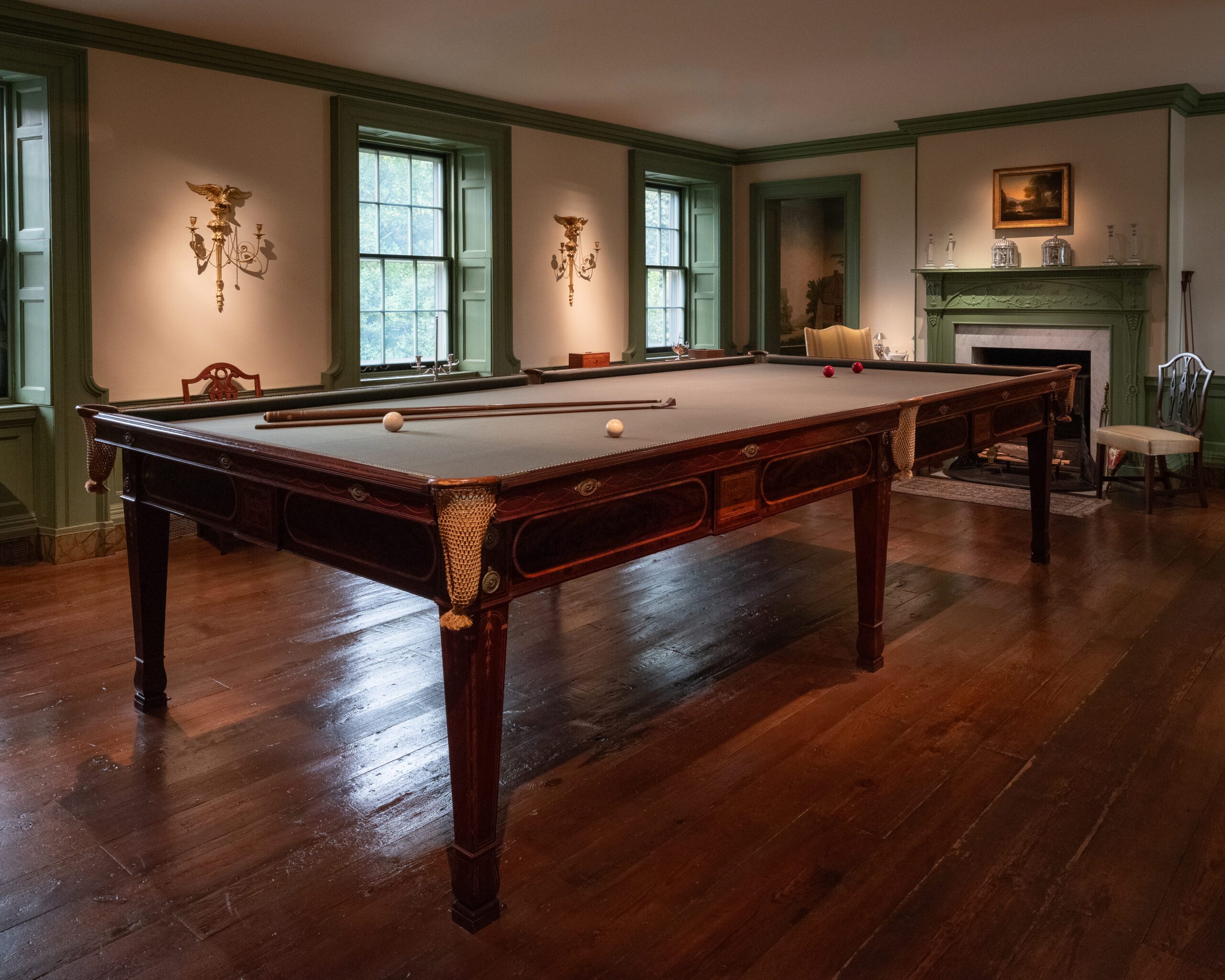
This billiard table was once owned by the Lloyd family at Wye Plantation in Maryland, whose family portraits can also be seen in the Winterthur collection. Constructed from satinwood and mahogany—materials harvested by enslaved people—the Lloyds’ billiard table is displayed alongside cue balls made from ivory, illustrating the interconnected nature of luxury goods and the injustices of the transatlantic slave trade. It also has a direct link to Frederick Douglass, who spent his early years enslaved at Wye Plantation.

Douglass is recognized as one of the most prominent African American abolitionist figures, largely due to his powerful documentation of life under slavery. In each of his autobiographies, he reflects on his time at Wye, where as a child he worked as a footman, among other domestic duties. He describes hearing the sounds of billiard balls echoing through the upstairs room of the plantation’s orangery, starkly contrasting the leisure enjoyed by the Lloyd family with the lives of those living downstairs, who labored to maintain that lifestyle.
In the past year, the billiard table served as a focal point in our Continue the Journey guided tour, which emphasized African American history. This year it will play a significant role in the Architecture of Independence tour, serving as an entry point to discuss African American history in Maryland and across the United States.

With the country’s 250th anniversary just around the corner, the upcoming tour is a good opportunity to look at the larger scope of American history and the diverse groups of people who make us who we are today. Honoring the contributions of African Americans throughout our nation’s history is essential in recognizing narratives that have long been overlooked. Here at Winterthur, we reinforce our commitment to tell a rich and inclusive history of the United States, and we hope you’ll join us in celebrating Black History Month.