By Emily Bavaria, museum guide
Each year thousands of guests stream through the doors of Winterthur, often taking specialized tours, eager to see some of our nearly 90,000 objects on display. While it’s easy to focus on the furniture or the objects placed in the rooms and hanging on the walls, experiencing the rooms fully also includes examining the walls themselves. They contain various architectural elements and, in many, historical wallpapers and wallcoverings. Fifteen period wallcoverings are on display in the museum, including early English flock wallcoverings, French scenic wallcoverings, hand-painted Chinese wallpapers, and some of the earliest American wallpapers.
A Brief History of Wallpaper
Wallpaper originated in China, where artists originally hand painted designs on rice paper. Block printing also originated in China, with designs carved into wooden blocks and paint applied to the non-recessed wood, using one block for each paint color. In European homes of the 1500s, wallpaper was considered the poor relation of the decorative arts, and tapestries were still in vogue to cover walls. The earliest decorative papers in Europe were block printed on small sheets and relegated to cupboards and small rooms. By the 1600s, however, wallpaper became common in European homes, some requiring thousands of blocks to create. By the late 1600s, France and England were competing to produce the best wallpapers of the western market, though hand-painted Chinese wallpaper was still considered the finest.
Around this time, flock papers were also introduced, created by block printing a gluten-based adhesive on paper or canvas, then dragging it through wool waste powder for a damask design. In the mid-to-late-1600s, sheets of paper were joined together to form rolls, which encouraged large repeats, so papering a room became more affordable and common. Wallpaper was imported into the American colonies prior to 1700 but not domestically produced until 1760.
The following are a few examples of the fifteen wallpapers on display in the museum.
Vauxhall Room
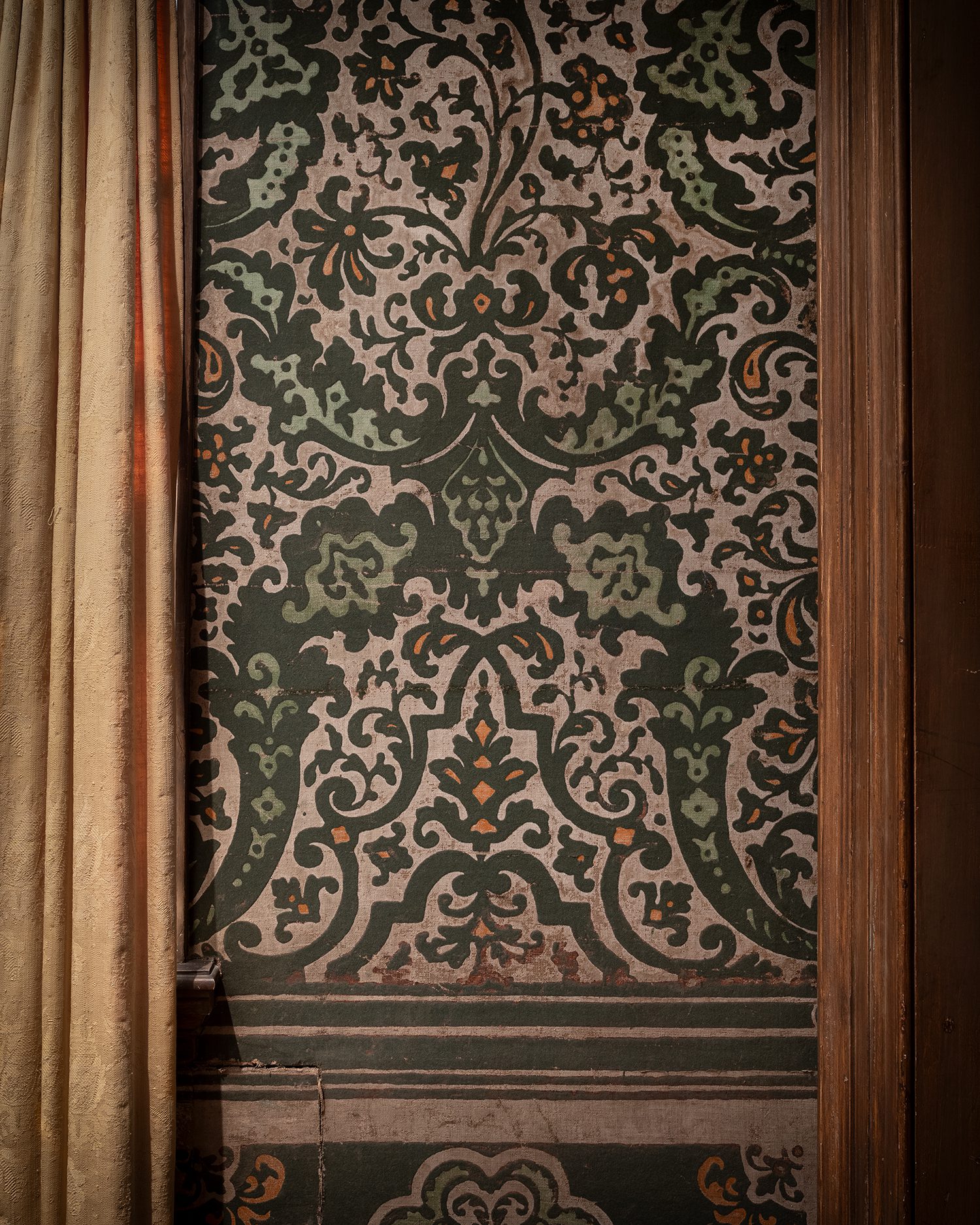
This room contains some of the oldest wallpaper in the museum. Dated from 1675 to 1730, these flock wall coverings were invented by Le Francois of Rouen in 1620 and manufactured in England. At Winterthur, the wallpaper was restored and installed by James B. Wilson, a decorative contractor from New York, who placed the period paper on modern backing and glued it to a canvas-prepared plaster wall. H. F. du Pont also hired Wilson to paint the collection’s wallpapers each winter.
Centreville Stair Hall
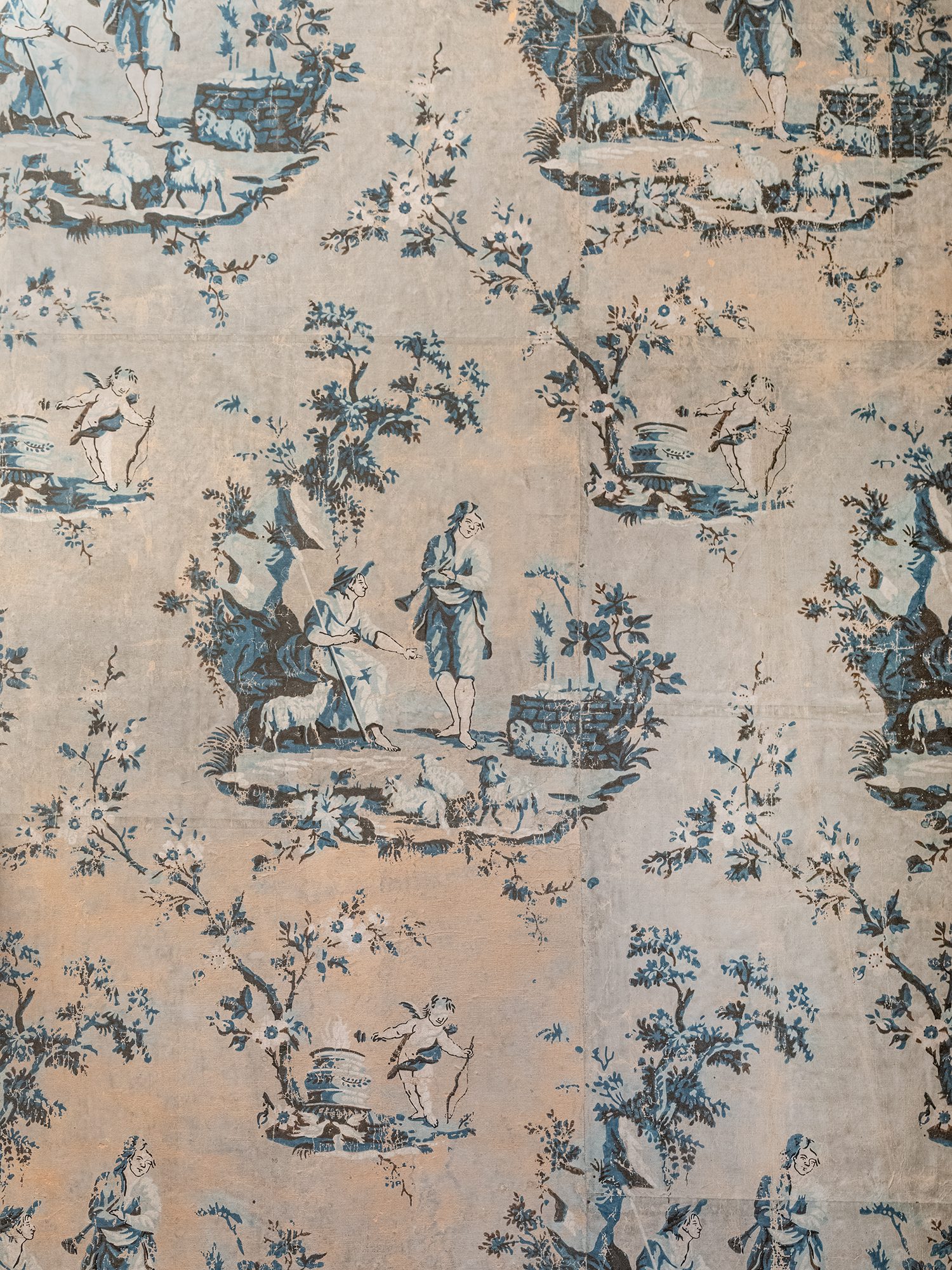
The concert champêtre wallpaper in this room was made near Lyon, France, between 1783 and 1810. A genre of 16th-century painting, this style emphasized entertainment and refreshment in a picturesque setting, and by the 18th century, women were prominently featured along with allegorical or mythological figures. As part of Winterthur’s House Lighting Project in the late 1990s, all fifteen wallcoverings in the museum were cleaned and conserved. The lighting project included moving a water main. It failed, and water flowed down the interior walls of Winterthur, severely damaging this lovely example of French wallpaper.
Federal Parlor
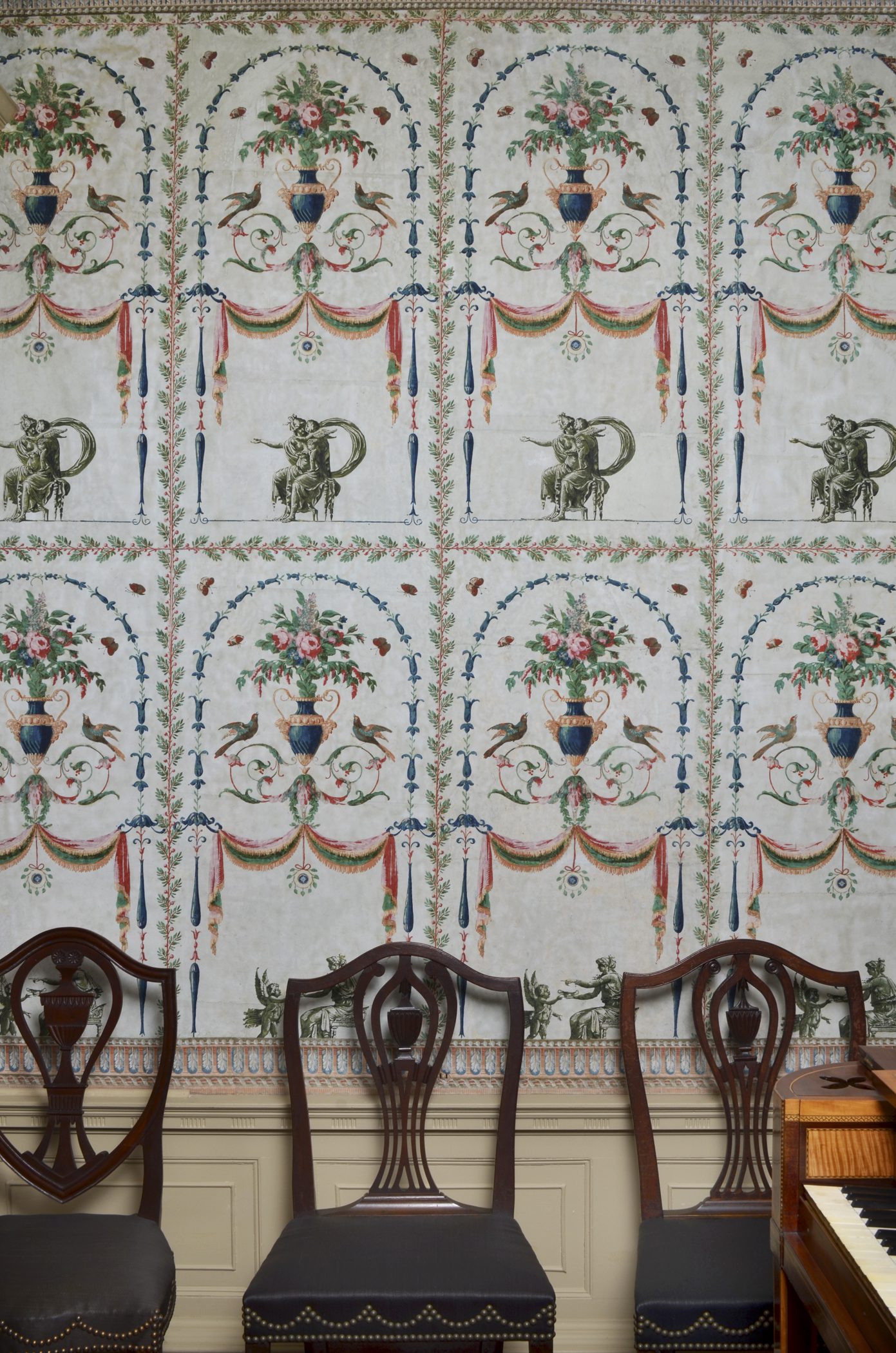
This room features an arabesque-style Parisian wallpaper created around 1791 by Jacquemart et Bernard, produced with Etruscan-patterned wood blocks. Its designs align along a central axis and feature neoclassical themes, influenced by archeological discoveries of ancient art in places like Pompeii in the mid-1700s. It was purchased in 1794 by Oliver Phelps for the dining room in his Suffield, Connecticut, home, and H. F. du Pont acquired the wallpaper when highway construction threatened the house.
Philadelphia Bedroom
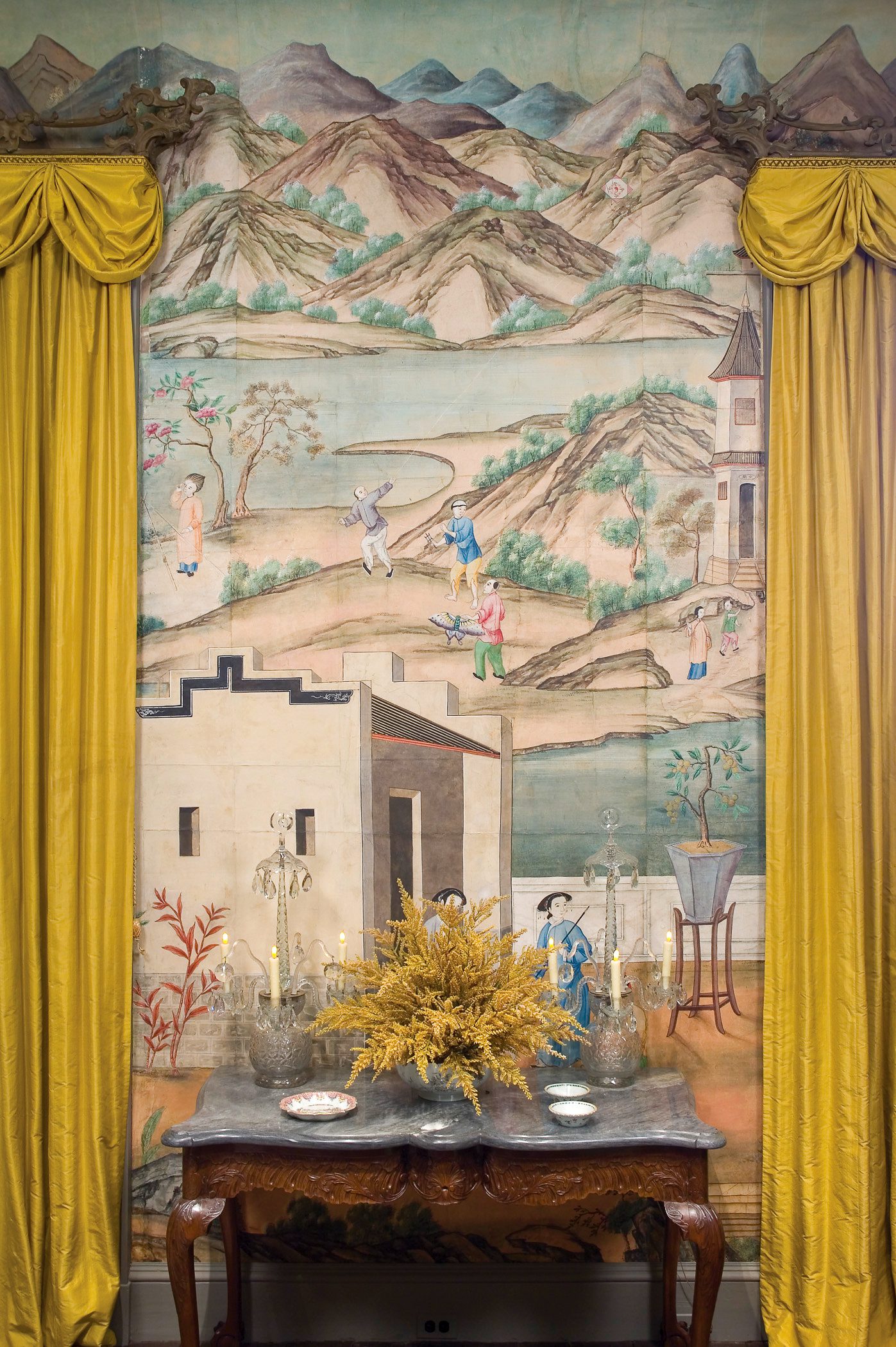
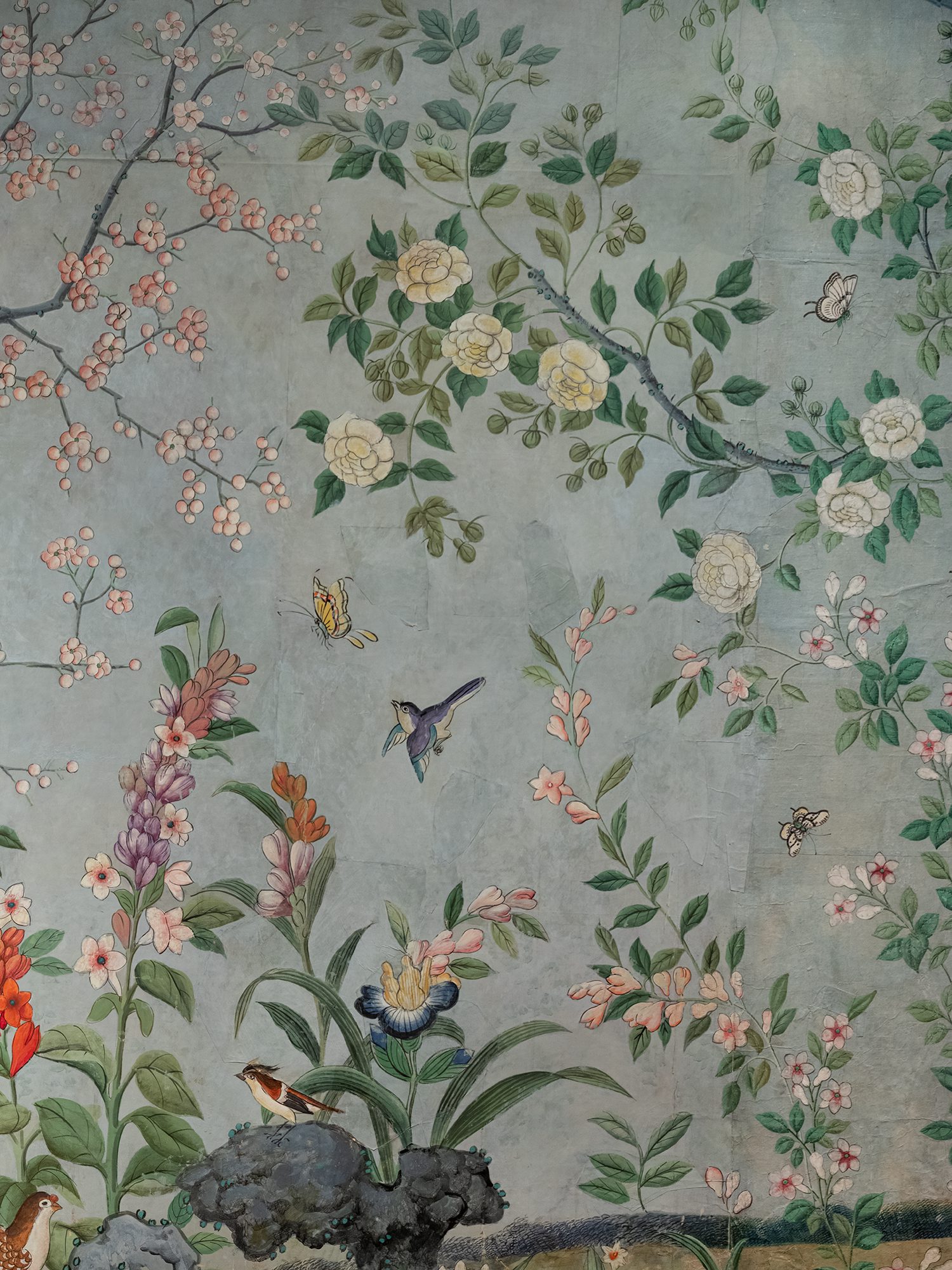
The Philadelphia Bedroom is papered with hand-painted Chinese wallpaper from the late 18th century, with exotic birds among tree peonies, chrysanthemums, and cherry blossoms. More exclusive and expensive than French or English block-printed wallpaper, it was hand-painted in China and exported to France. This room was installed in the museum by Rudolph Guertler of New York. He mounted the period wallpaper on muslin and rice paper with new paper designed around the old, a common practice used by H. F. du Pont, who often combined contemporary wallpaper with period wallpaper. The room contains 29 panels, 14 of which are original, dating from 1770 to 1790.
Imlay Room
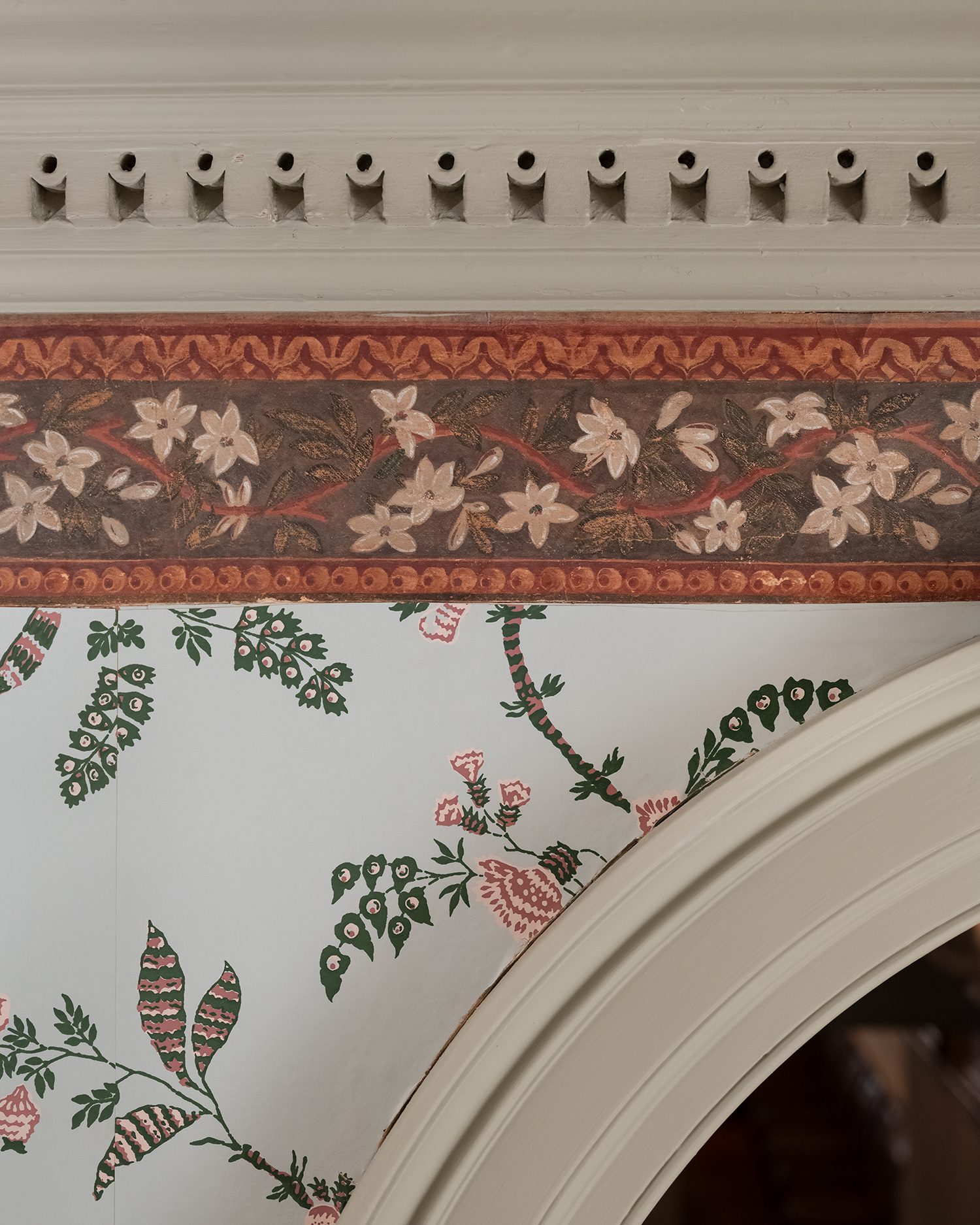
The wallpaper in this room was purchased in 1794 by John Imlay, a Philadelphia shipping merchant, from William Poyntell’s shop on South Second Street in Philadelphia. Winterthur purchased the wallpaper in an upstairs parlor of the Imlay mansion, and the Metropolitan Museum of Art purchased the wallpaper from a downstairs parlor as well as the 1794 receipt. Because the price of the upstairs paper purchased by Winterthur was less expensive than the downstairs paper purchased by the Met, it is generally accepted as domestic wallpaper and among the oldest American wallpapers on display.
We hope you enjoyed this glimpse into some of the beautiful wallpapers at Winterthur. As you enter the museum doors, whether on a self-paced tour or one of our specialized tours, be sure to take in the exquisite walls surrounding each carefully designed room, knowing there’s a story behind each one.