By Matthew Monk, Linda Eaton Associate Curator of Textiles
Each January, Martin Luther King Jr. Day invites us to pause and reflect on the unfinished civil rights work in the United States. At Winterthur Museum, Garden & Library, that reflection is often shaped by objects that people made to care for one another, to create feelings of home, and to claim dignity in the face of hardship. Three objects recently added to Winterthur’s collection—a contemporary quilt and two potholders made in Gee’s Bend, Alabama—embody that legacy of resilience, creativity, continuity, and community.
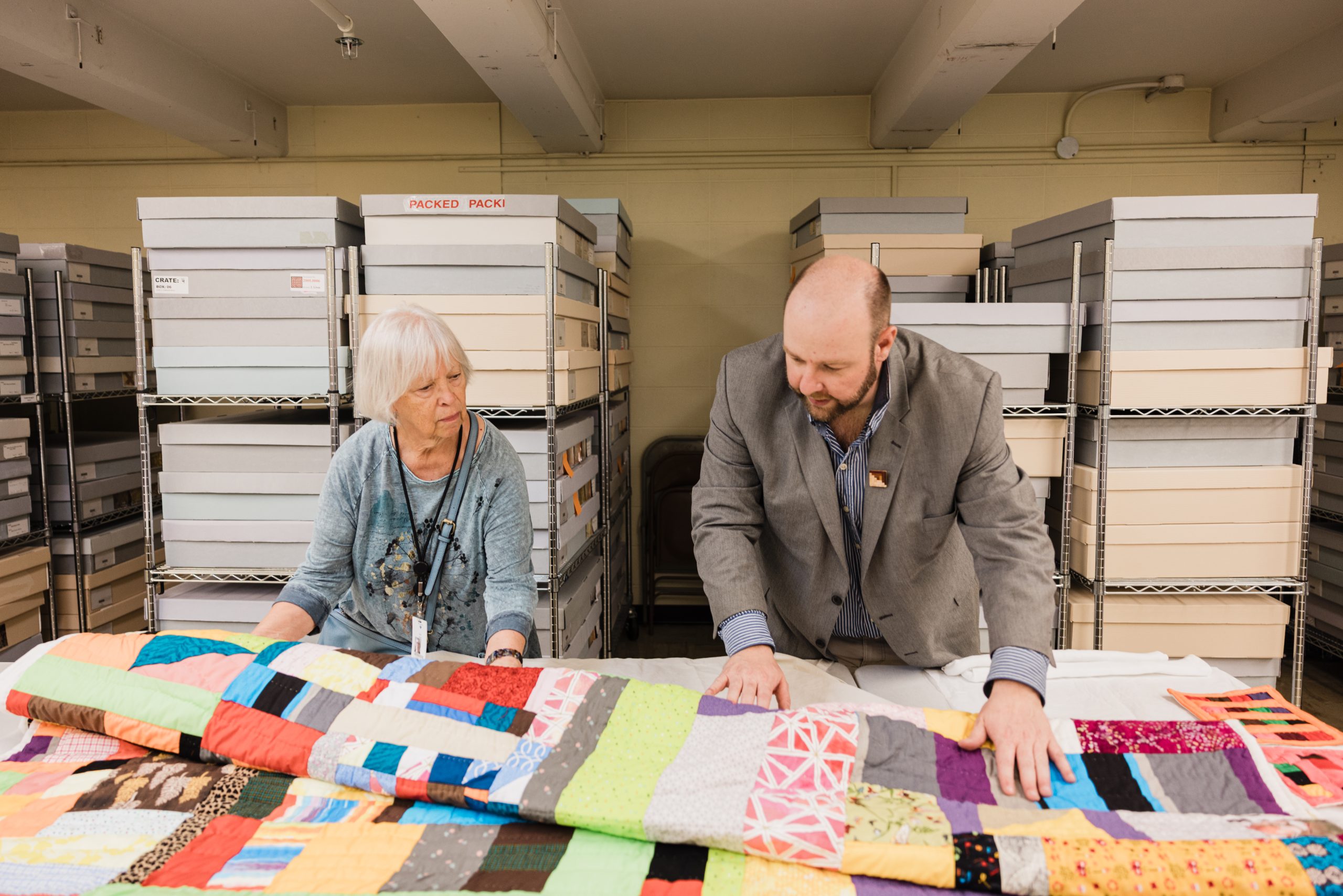
Sharon Williams and her granddaughter Jamica made these quilted objects in 2023, but these objects and their makers belong to a living tradition that stretches back generations in Gee’s Bend, a small, predominantly Black community on a bend of the Alabama River. Williams describes her design style as “My Way,” marked by free-pieced quilting that relies on intuition, bold geometry, and the creative reuse of available materials. Williams learned this tradition from her mother and grandmother and passes it down to her descendants today. Her quilt at Winterthur is composed of cotton fabrics, vintage and contemporary prints pieced together into a dynamic kaleidoscope of patchwork. The quilt is machine pieced and hand quilted. The quilt is also a living lesson between grandmother and granddaughter. It is at once deeply personal and unmistakably part of a collective Gee’s Bend aesthetic.
Gee’s Bend quilts are widely celebrated today, but they were born from necessity. For much of the 20th century, families in Gee’s Bend lived in relative isolation, many as descendants of people once enslaved on nearby cotton plantations. Women used worn clothing, flour sacks, and other textiles at hand to create quilts that provided warmth and protection in drafty homes. In doing so, they developed a distinctive visual language, one that later came to be recognized as one of the most important artistic traditions in American quilting.
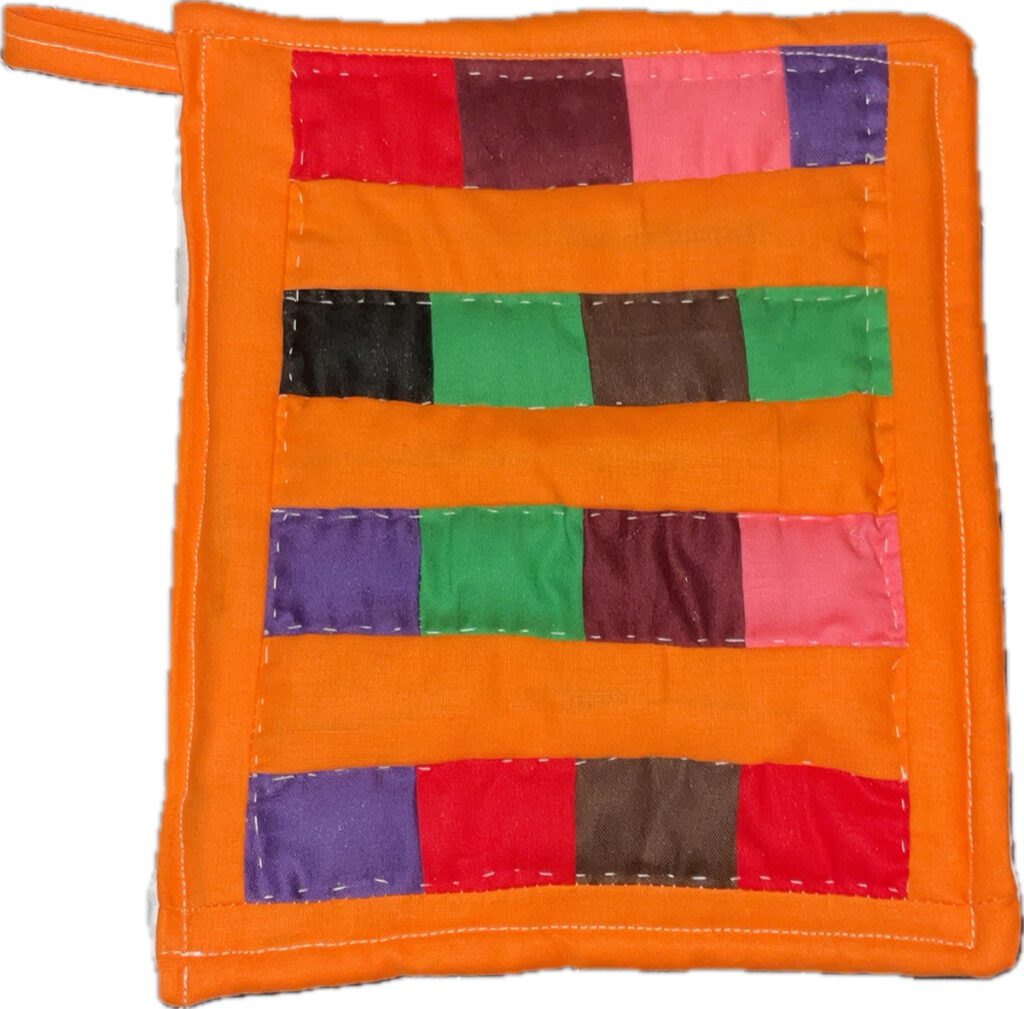
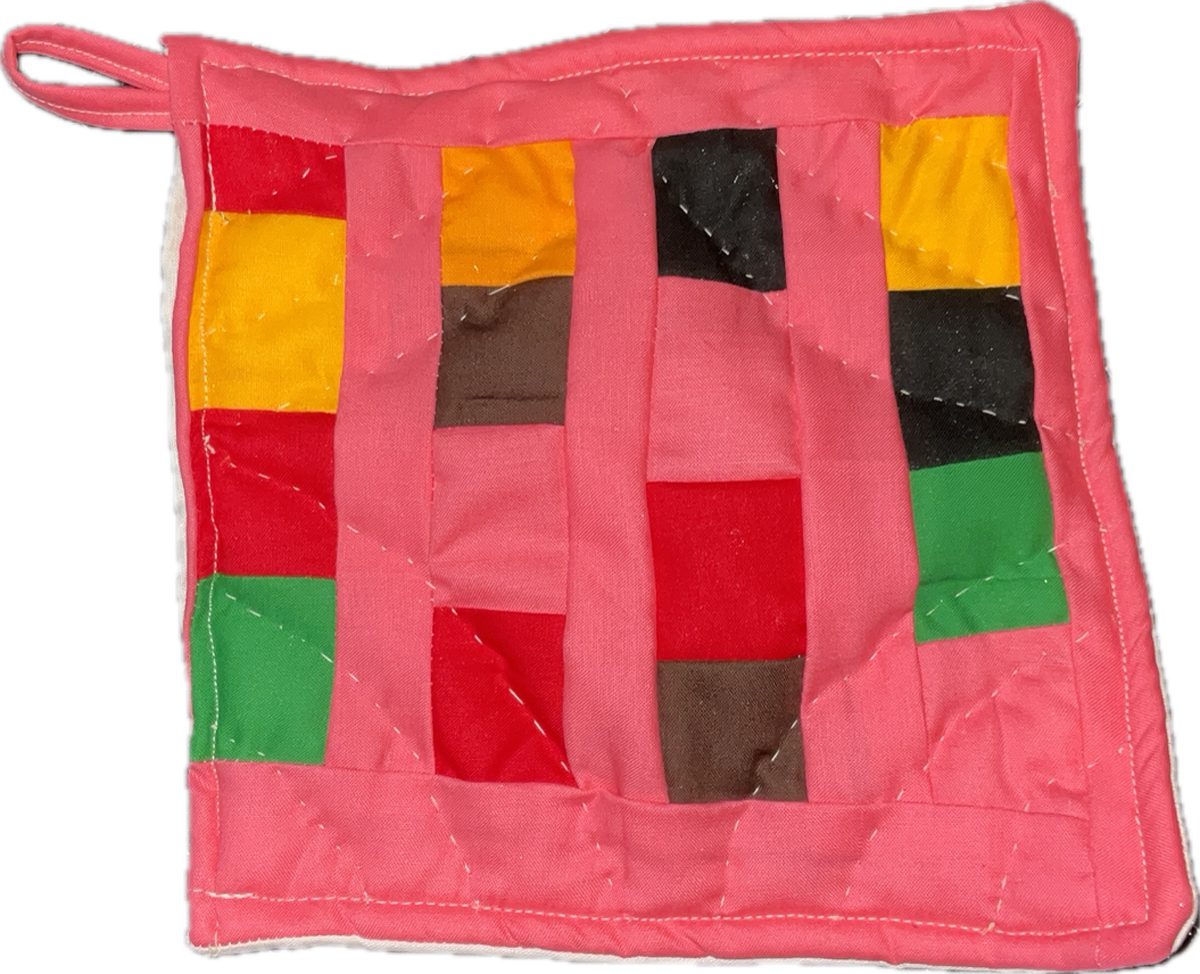
The two potholders Winterthur acquired alongside the quilt may be small, but they carry the same powerful story. Also made by Sharon and Jamica Williams in 2023, they use the same free-pieced “My Way” approach, translated into everyday kitchen textiles. Their bold blocks of color and asymmetrical patterns echo the quilt’s design, reminding us that art and daily life are not separate in Gee’s Bend; they are stitched together.
Honoring these objects on Martin Luther King Jr. Day is especially meaningful. Dr. King fought for civil rights, not only in speeches and marches, but in the affirmation of Black dignity, creativity, and self-determination. Gee’s Bend quilts are part of that same story. They are material expressions of endurance in the face of segregation, poverty, and exclusion. They are also material reminders of the power of community to sustain itself through making.
At Winterthur, these works also expand the museum’s narrative of American design, linking the contemporary and modern to the historical. For the first time, our collection includes a contemporary Gee’s Bend quilt and potholders by a named maker, recognizing Sharon Williams not only as part of a tradition, but as an artist in her own right. Her work connects the past to the present, showing that the history of Gee’s Bend, while rooted in a difficult past, is not frozen in time and continues to grow, adapt, and inspire.
As we commemorate Dr. King’s legacy, these three textiles invite us to consider how everyday acts of making can be acts of freedom and expressions of choice. They remind us that the struggle for justice is woven not only through laws and movements, but through the hands of people who, against all odds, kept creating beauty for themselves and their communities in their own ways.