By Tyler Horne, tour program assistant
In honor of Indigenous Peoples Month, Winterthur is highlighting a remarkable side chair that tells a story of artistry, adaptation, and cultural exchange. The chair was made by Mi’kmaq artists in what is now Nova Scotia or northern Maine, sometime between 1850 and 1900. It features a seat and back covered in dyed porcupine quills that were carefully punched through birch bark to form bright geometric patterns. These kinds of quilled objects were often created for the tourist market, which means the chair also reflects how Indigenous makers navigated new economic realities during a time of colonial expansion.
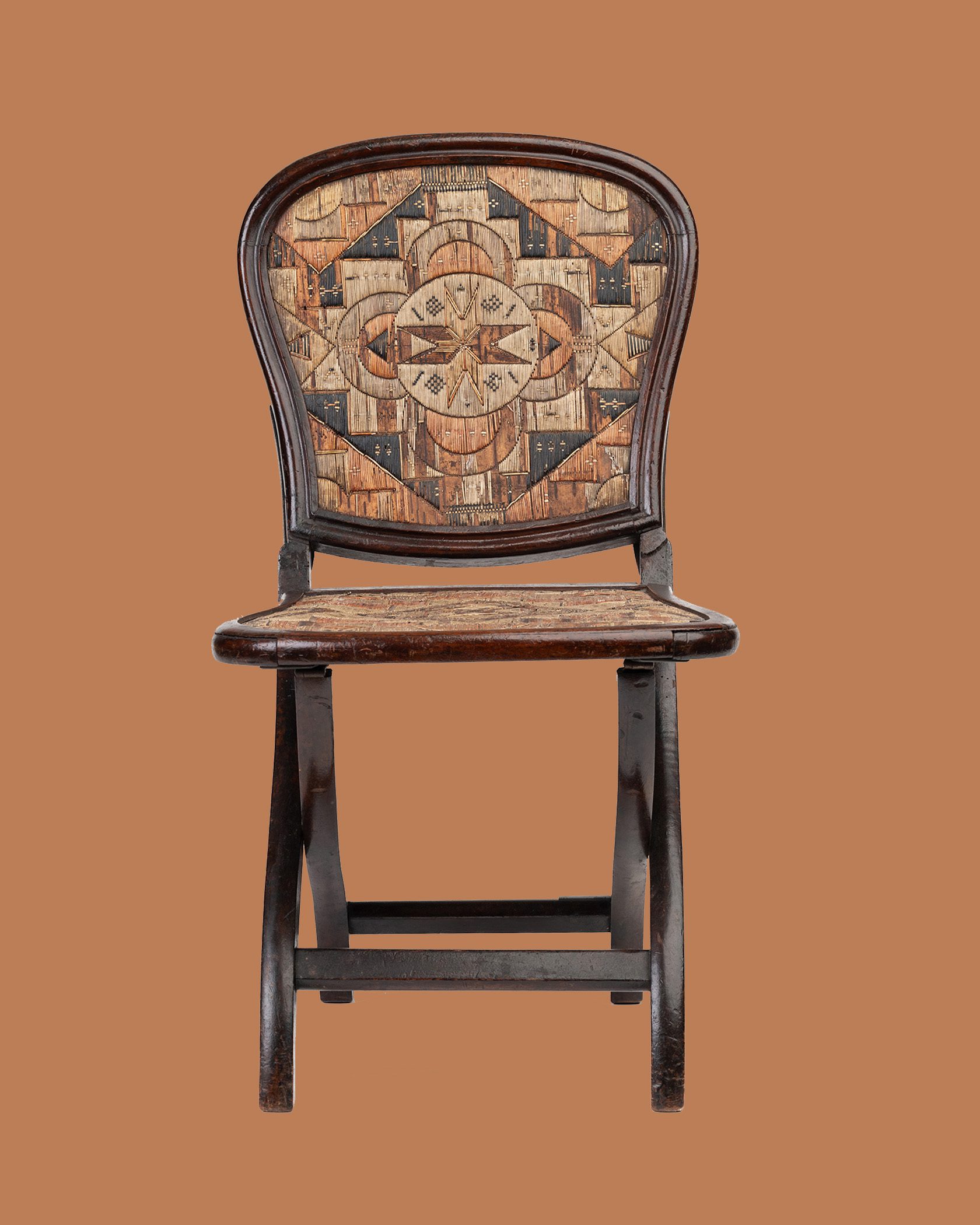
Quillwork boxes in the collection are already a visitor favorite. People are drawn to their color, texture, and the way the artisans turned natural materials into art with real presence. This new chair joins those five boxes but stands apart as the only piece of furniture decorated with quillwork at Winterthur.

Quillwork is one of the oldest Indigenous art forms in northeastern North America and has long been practiced and passed down, primarily by women. While Mi’kmaq women made quilled souvenirs for Canadian and American markets in the 19th and early 20th centuries, chairs like this were never produced in large numbers, which makes this one particularly rare.
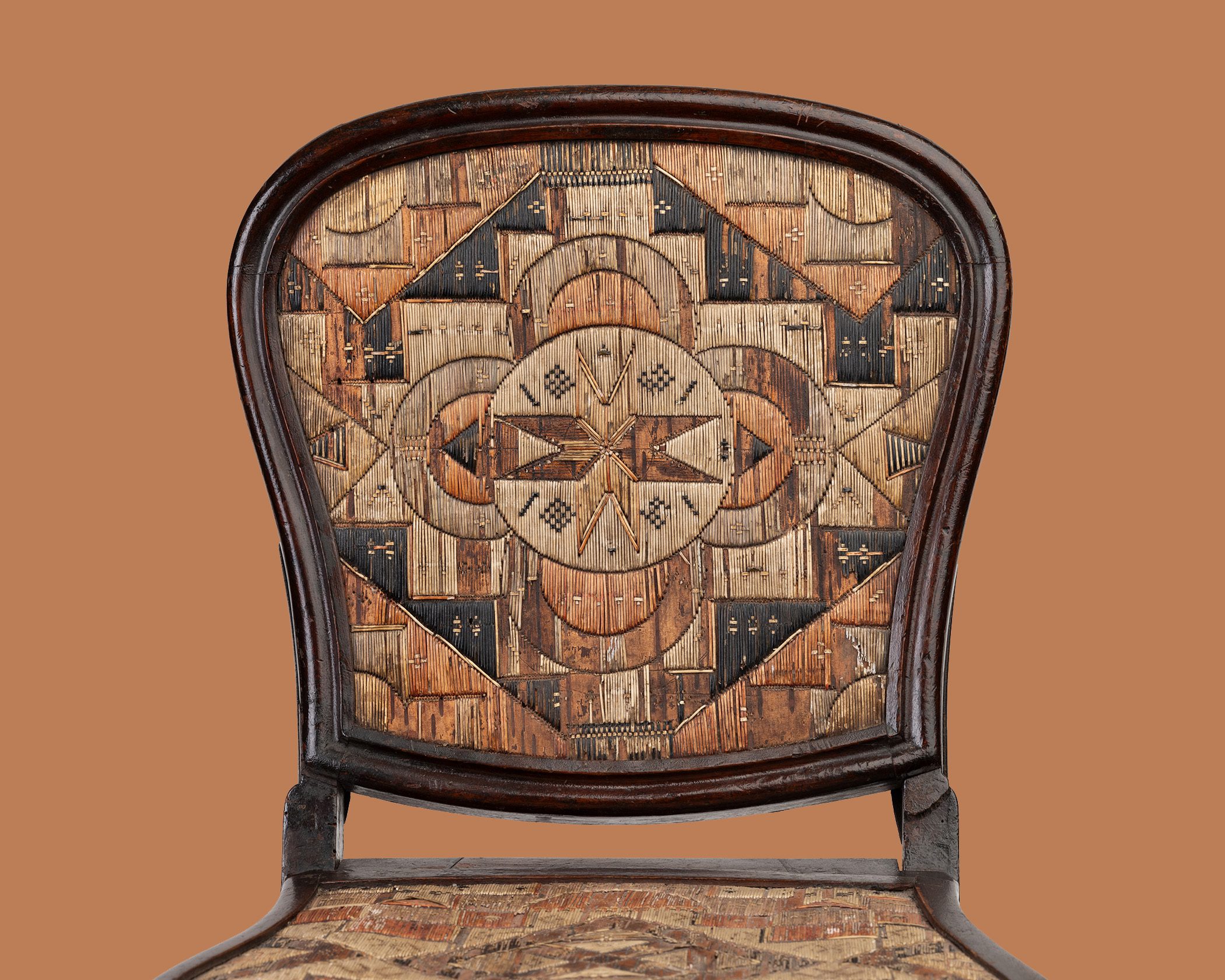
There is still much we don’t know about the specific makers of the chair and the quillwork itself. Even so, the piece offers a powerful window into how Indigenous artists have shaped American material culture. It reminds us that Indigenous communities did not simply endure colonial pressure. They adapted and created work that continues to inspire admiration today.