By Lauren Ullman
The Collections
Historic games in the house and library collections cultivate a lively and carefully designed environment, and their preservation helps us understand how people of all ages entertained themselves in the past.
Children’s Games and Toys
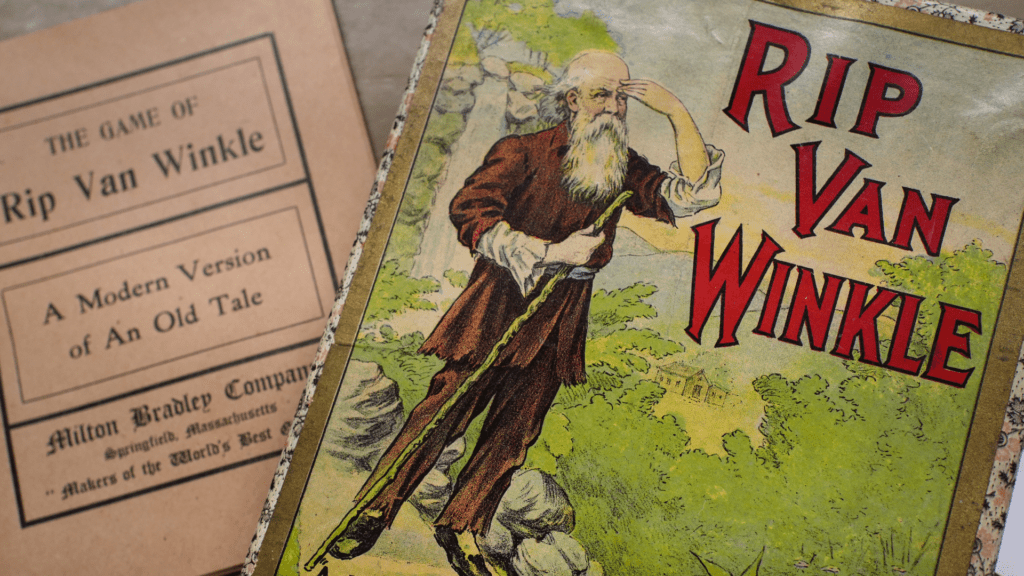
Throughout history, games have engaged children in learning lessons about right and wrong as well as developing life skills. The historical game collection in the library includes many examples. The Rip Van Winkle game, released by the Milton Bradley Company in 1909, features a storybook printed with several words left blank, an instruction booklet, and 50 cards. Children used the cards to fill in the spaces with the correct words.
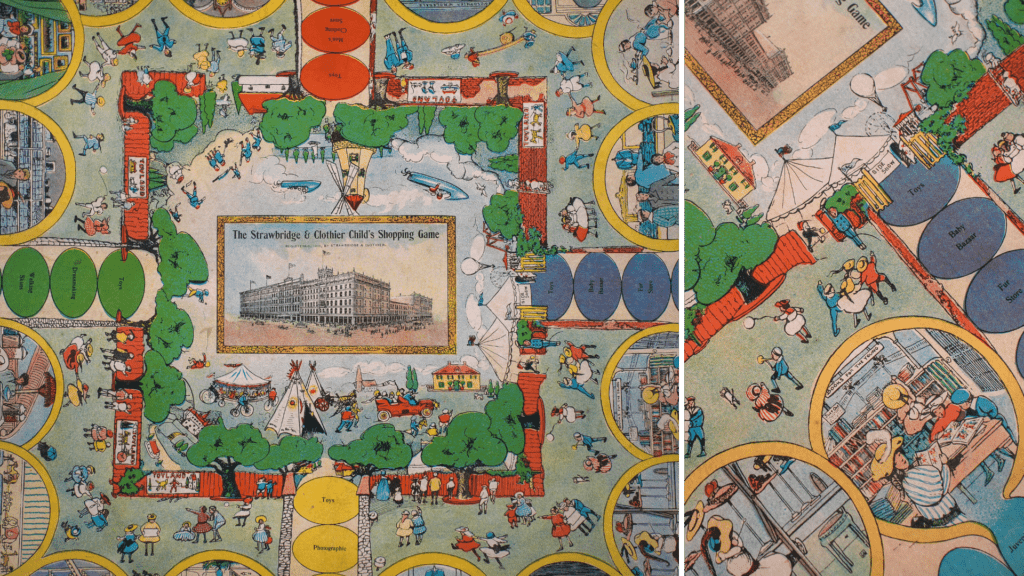
In the Strawbridge & Clothier Child’s Shopping Game from 1908, children “shopped” in Philadelphia’s foremost department store—whose interior is featured on the game board—by visiting several departments. The first child to complete the circuit went to Toyland. The game encouraged department store shopping, and in the process of playing, children practiced budgeting skills.
Another game in the library’s collection is Avilude or Game of Birds, designed by the West & Lee Game and Printing Co. and patented in 1873. In the game, players used the 64 printed cards to correctly pair species of birds with their vivid descriptions.
Games for Adults
Musical Dominoes was published by Theodore Presser Co. of Pennsylvania in 1893 and is in the library collection. It contains two sets of directions: one with game instructions, and the other with instructions for how to throw a musical domino party. The party instructions include invitation outlines and directions and dialogue cues for game “conductors.” It recommends awarding prizes “of a musical nature, viz.: busts and photographs of the great tone-masters, books of musical history, biography, fiction, or nicknacks [sic] relating in some way to music.”
While Winterthur was still a private home, H. F. du Pont entertained weekend guests with tea on the terrace, elaborate dinner parties, recreation on the estate grounds, and constant bridge games. The display in the Bertrand Room on the third floor includes an 18th-century bridge table with cut-outs for counters, felted covers to prevent cards from sliding, and special indents to hold candles.
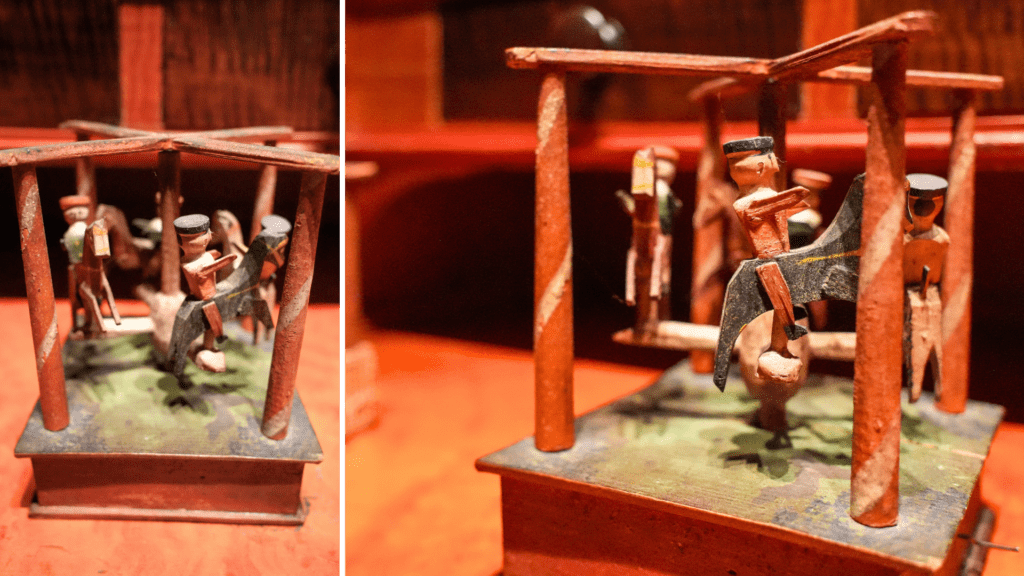
Many other game-related objects are sprinkled throughout the house, including various miniature portable game sets, ranging from dominoes to dice cups. Some games, like the Circular System of Major and Minor Keys game board in the Imlay Room, were intended to teach serious skills like reading sheet music. A carved ivory chess set is also on display here.
Children’s toys, games, and more are displayed on the seventh and eighth floors. On the seventh floor, a glass case holds miniature cards, houses, and tea sets. In the Child’s Room on the eighth floor, cards, dolls, a tabletop croquet game, a spinning top, and more create a fascinating picture of childhood from long ago.