Winterthur’s Enchanted Woods is a fantastical place for kids to be kids. Their grownups love it, too.
At the time Enchanted Woods was created, not many visitors brought their children to Winterthur, so the garden staff set out to create a place especially for them. This was no easy task. The space would need to fit the history of the estate while meeting the high standards of Winterthur founder Henry Francis du Pont, whose garden designs are among the finest in the world.
Twenty-five years after it opened—and now hosting a second generation of visitors—Enchanted Woods stands as a masterwork of design and intent, a place where kids can be kids, but also a place where they and their grownups find great beauty.
When Enchanted Woods was conceived in the late 1990s, most children’s gardens were gardens in name only. They were essentially playgrounds, purpose-built places full of features decorated in primary colors.
Winterthur staff wanted to create a true garden, a place that would delight and inspire, and they paid close attention to what children wanted: high spaces that offered a view, nooks to hide in, and water, water everywhere, all scaled to the size of a child.
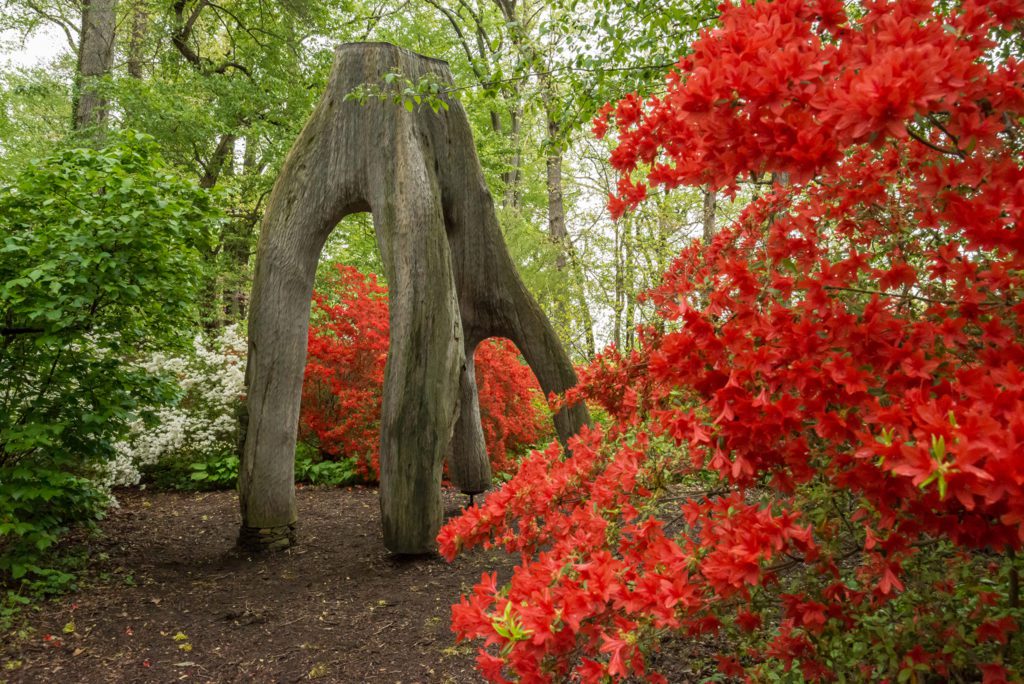
The designers identified a site: three acres on Oak Hill that were flat and undeveloped, full of mature trees, an understory, azaleas, and some footpaths. The Quarry and Sundial gardens were near enough to encourage further exploration. There were restrooms in the vicinity, the area was served by the tram, and there was a tie to estate history: du Pont’s daughters played there as girls. Most important, they were not undoing any historical design that was important to H. F. du Pont.
The designers were also fortunate to have a store of objects and artifacts collected by four generations of preservationists. Old hairpin fencing and a feed trough from the Winterthur Farms, columns from a long-gone rose garden, stone benches, unused sculptures, urns, millstones, fenceposts, and stones from the original port cochère were all incorporated.
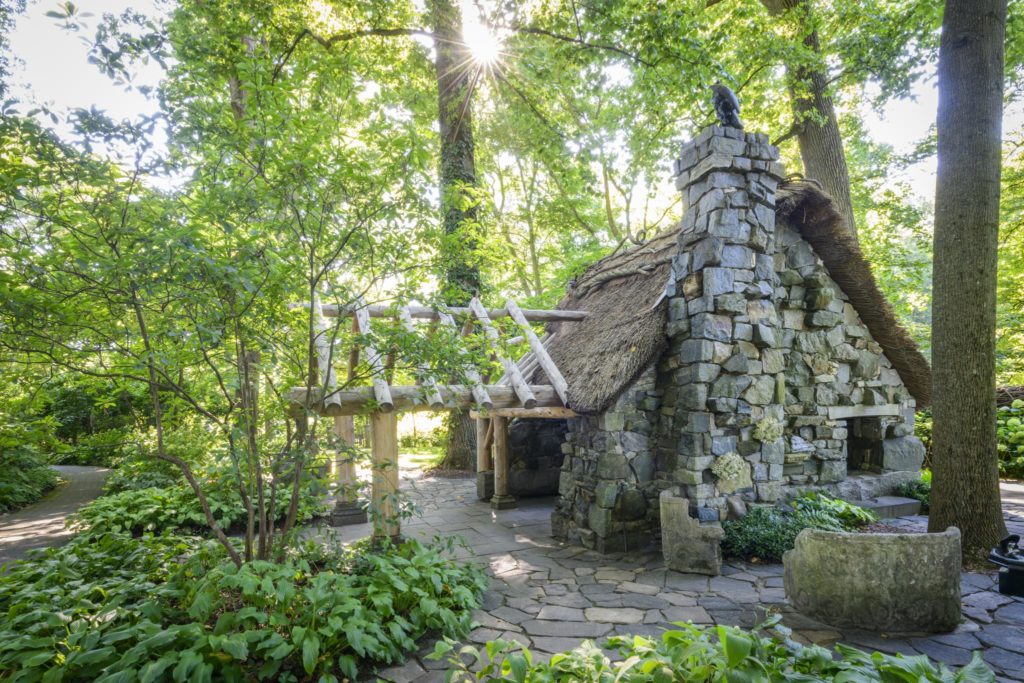
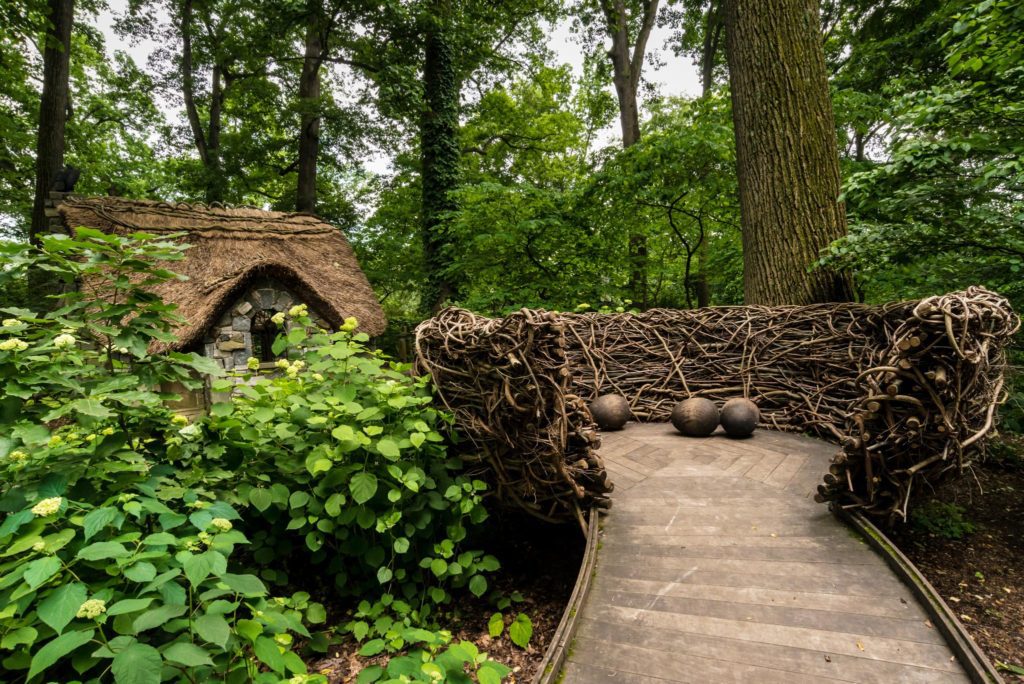
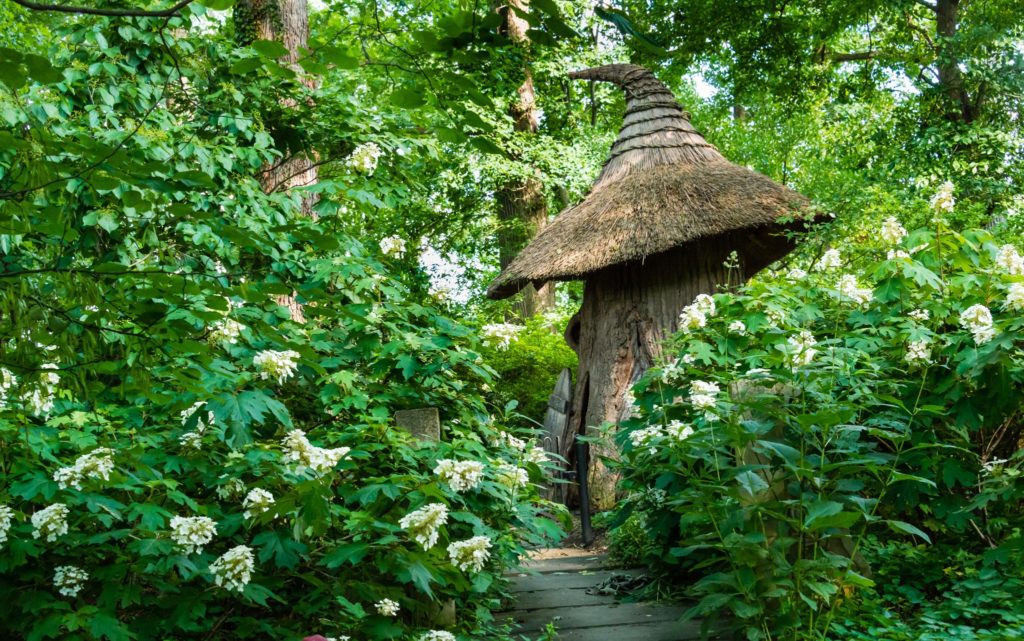
Winterthur’s skilled arborists, carpenters, and painters maintain features such as a giant Bird’s Nest of large woven branches, which offers an elevated view of the garden and a labyrinth; the Tulip Tree House, fashioned from an upright hollow poplar trunk where kids can hide and seek; and the Faerie Cottage, a fantastical playhouse built with large wooden beams, a hearth and walls of stone, and a roof that was recently re-thatched in the traditional manner.
A small grove of tree stumps encourages athletic footwork. The mushrooms of the Forbidden Fairy Ring, also recently restored, spray cool vapor on hot days. Hidden among the azaleas, the giant face of the Green Man emerges from the earth. Story Stones, a fascinating assortment of stone architectural fragments, mimics nature with its spiral arrangement. A circle of columns forms the Acorn Tea Room, in keeping with the tradition of hospitality and entertaining at Winterthur. A small pond and footbridge hide dozens of green frogs, and the area teems with other small animals such as chipmunks and squirrels.
Free of references to such popular tales such as Snow White or Peter Rabbit, the garden feels timeless, a blank slate that children could paint with the full power of their imaginations.
The effect of the design wasn’t lost on Olivia Kirkpatrick, even if she couldn’t articulate it at the time. Kirkpatrick was about five years old when started visiting the new Enchanted Woods. Playing there set her young imagination free and inspired her decision to major in landscape architecture at the University of Delaware. A Winterthur garden internship a few years ago was the perfect way to learn more about garden maintenance and to think about design.
“We don’t think about it but every single space you enter is going to influence the way that you react to it,” says Kirkpatrick, a gardener for the historic Wister Rhododendron Collection at nearby Tyler Arboretum since 2019. “Whether you’re going in there as an adult or a child, it implores you to look at the world a little differently and interact with it a little differently. It encourages that playfulness and whimsy. Even now, I get so excited when I get to play around in the garden. It’s such a such a nice space. I still go there, and it has never stopped being exciting.”